The Design Of The Class 378 Trains Keeps The Gospel Oak To Barking Line Running
In some ways, London Overground’s Class 378 trains are the ultimate Electrostars.
These ten-year-old trains are no high-performance trains, but they are people carriers par excellence.
Wikipedia describes their interiors like this.
The design is similar to the Class 376 trains used by Southeastern, featuring the same wider metro-style sliding pocket doors for more efficient boarding and alighting. However, it also has significant differences from the Class 376, such as fully longitudinal seating similar to that used on London Underground rolling stock to give more standing and less seating capacity and reduce overcrowding, suitable for the high-volume metro-style services on London Overground.
This picture shows a view through the five cars of a standard-length train.
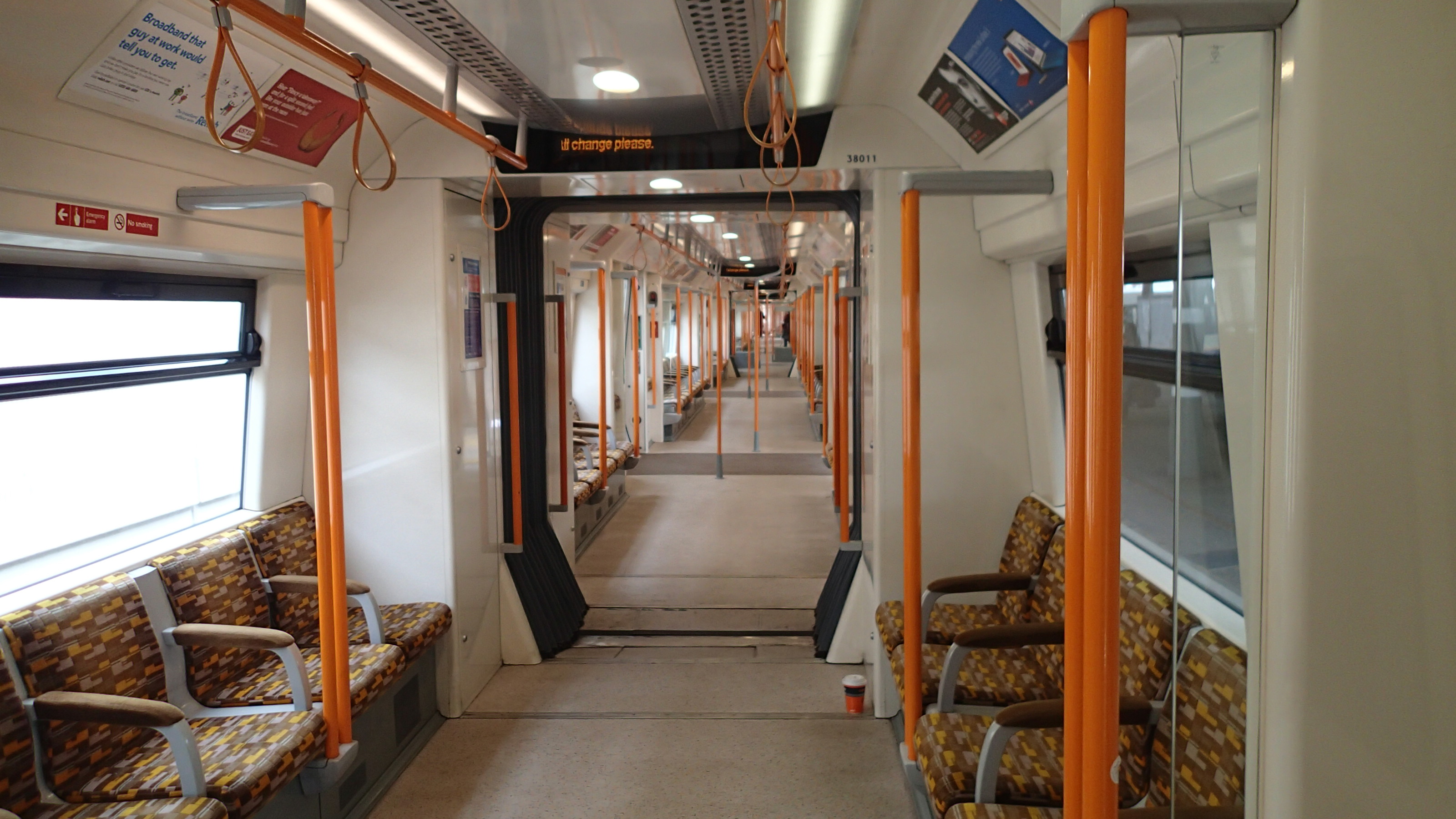
At the present time they are the only heavy rail train with this seating layout. Although London Overground will soon be running some Class 710 trains with a similar layout.
- The seats are reasonably comfortable.
- All passengers get at least one arm-rest.
- Passengers can walk between cars to find a seat or more space.
- The aisle between the seats is wide enough for passengers to stretch their legs and others to walk through, when all seats are taken.
- There’s plenty of space for standees and lots of handholds.
- In less busy times, everybody gets at least one seat.
There are also wide lobbies and doors for easy embarking and alighting.
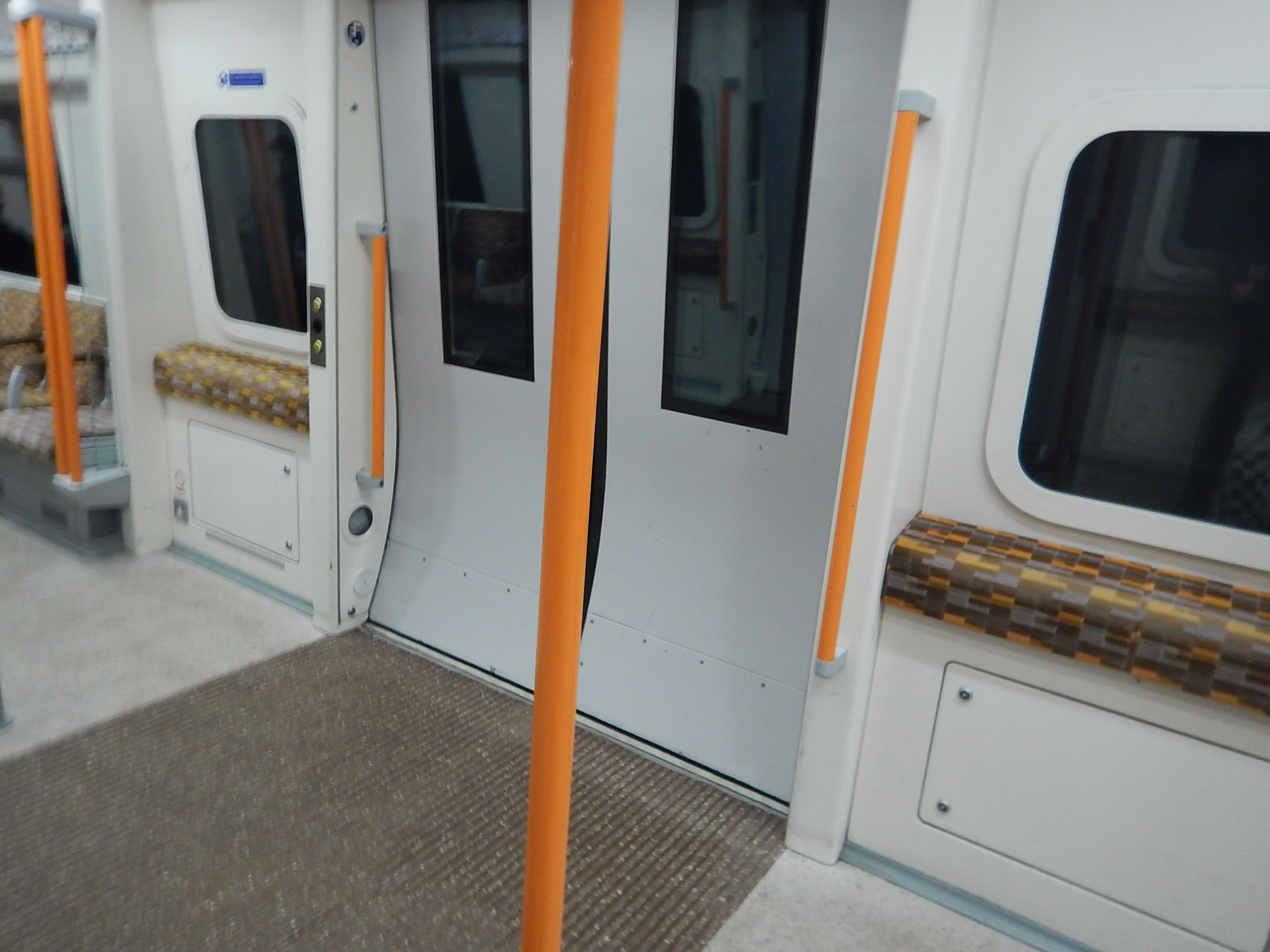
Note the perches either side of the door and the numerous handholds.
In my travels across Europe, I’ve never found a better inner-city commuter train.
To run a four trains per hour (tph) service on the Gospel Oak to Barking Line, ideally eight trains are needed; six to run the service, one in maintenance and a spare.
But all London Overground can scrape together is three Class 378 trains shortened to four-cars.
- This limited number of trains can only run a two tph service.
- The four-car Class 378 trains have 152 seats (including tip-up seats) and thirty-two double perch seats.
- The two-car Class 172 trains have 124 seats.
This gives these seats per hour for the two services.
- Class 172 trains – four tph – 496
- Class 378 trains – two tph – 432
The Class 378 trains may offer less seats, but each four-car train can hold a lot of standees.
This article on Railway Gazette is entitled London Overground Class 378 Ready To Enter Service, says that four-car versions of Class 378 trains can hold up to 700 passengers.
If you’ve ever travelled on the East and North London Lines around Dalston in the Peak, you’ll know how many people these trains can hold at a push!
Since the two tph service started yesterday I’ve done several trips on the Gospel Oak to Baring Line over two days.
- 09:20 – Gospel Oak to Barking
- 10:33 – Barking to Blackhorse Road
- 14:27 – Harringay Green Lanes to Gospel Oak
- 14:50 – Gospel Oak to Barking
- 15:33 – Barking to Gospel Oak
- 07:33 – Barking to Gospel Oak
Only the last trip can really be considered to be in the Peak.
I have the following observations on the Off Peak trips.
- There were typically at least twenty per cent of seats available.
- No-one was ever forced to stand, although some were.
- A proportion of passengers were doing short trips of one or two stops.
- Some stops like Crouch Hill, Blackhorse Road and Leyton Midland Road seemed to have more passenger traffic than others.
- The trains had more passengers towards the Barking end of the route.
- I asked a few passengers, if they’d had to wait long and all said, they’d read the timetable and arrived accordingly.
- The usual accessories like dogs, buggies and baggage were carried by a proportion of passengers.
- Two station staff said passengers were only complaining about the frequency.
It appears to me, that Off Peak journeys on the route will be adequate if not as frequent as passengers want.
I have the following observations for the single Peak journey at 07:33 this morning.
- Nearly all seats were taken for the whole route.
- Dwell times were slowed at certain stations, due to the numbers wanting to enter and alight.
- All standees had a decent hand-hold.
- Some passengers were still doing short trips of one or two stops.
- Blackhorse Road with its connection to the Victoria Line was busy.
- A staff member told me, that it all gets less busy after eight o’clock.
I should also say, that one passenger was complaining hard, as he had to stand for his short journey from Crouch Hill to Gospel Oak. But then he was dressed like he would pay for a First Class seat.
On arrival at Gospel Oak, I took a North London Line train to Hampstead Heath and that was carrying more passengers per car.. This added a perspective to the trip.
But then, in my part of London, at times, there are more overcrowded trains that I use regularly.
- The Central, Victoria and Northern Lines on the Underground.
- The North and East London Lines of the Overground.
- The Northern City Line into Moorgate station.
Today’s Peak trip was no worse, than some I’ve experienced in the North of England.
Conclusion
The three gallant Class 378 trains are coping well and if they don’t suffer any failures, I suspect they can hold the line, until reinforcements arrive.
My trip today, illustrated the strengths of the train design as a large number of passengers were transported in a half-hour journey across North London.
Bombardier must also be pleased that it is three of their ten year-old-trains, that have been quickly reconfigured and have made up for their software shortcomings, that are causing late delivery of the Class 710 trains.
Changing Trains At Scarborough – March 13th, 2019
I took these pictures, whilst changing from the York to Scarborough train to one going to Hull.
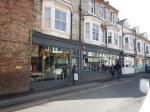
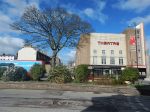
There used to be a cafe in the Stephen Joseph Theatre, but they pointed me to the Eat Me Cafe in the road behind.
I visited the cafe at the wrong time of day. Otherwise, I would have had lunch, as they had gluten-free options.
Bridlington Station – 13th March 2019
I took these pictures as I passed through Bridlington station.
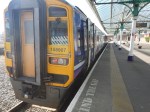
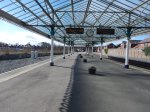
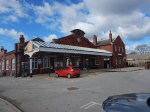
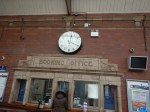
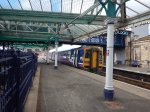
There is an interesting comparison to be made with Felixstowe station, that I know well.
- Felixstowe only has one operational platform to Bridlington’s three.
- Bridlington has twice the service and twice the passengers than Felixstowe.
- Both are a walk of ten minutes or so from the actual town centre.
- Both are Grade II Listed
- The towns are of a similar population.
In Bridlington – March 13th 2019, I discussed how Felixstowe could be getting a four trains per hour tram-train service from Ipswich and how a similar service could benefit lots of towns, including Bridlington.
Sunday On The Gospel Oak To Barking Line With Three Trains
I went to have a look this morning to see how many passengers were braving the cold and limited service on the Gospel Oak to Barking Line.
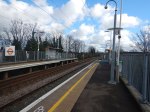
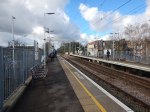
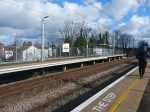
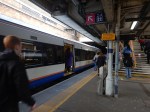
The pictures show, that there weren’t too many punters about.
I used the train all the way from Gospel Oak to Barking and by the time it reached the destination, there was perhaps a dozen empty seats.
Incidentally, there were few long faces and no-one seemed to be complaining about the lack of trains.
It will probably be different in tomorrow’s Peak.
Is this good news, that I have clipped from the on-line timetable?
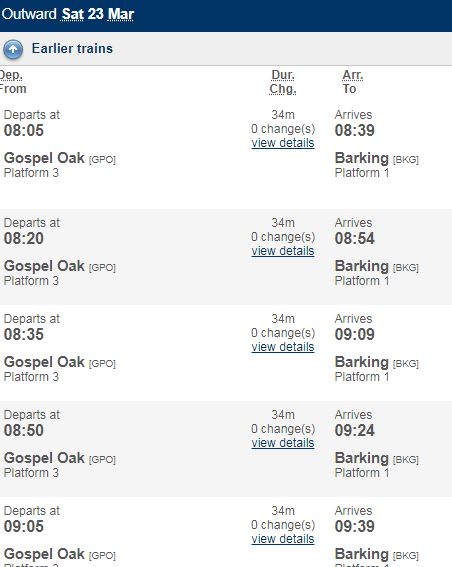
Let’s hope so!
Could Hull Become A Tram-Train Terminal?
Hull Paragon station is a station on the edge of the City Centre.
On Wednesday, I arrived at the station on a train from Bridlington and was very hungry. I also needed a drink, so that I could take my medication.
Like most of the East Cost of England from Newcastle to Felixstowe, there is a shortage of gluten-free food in the stations.
So Hull joins a big club including Clacton, Felixstowe, Great Yarmouth, Ipswich, Lowestoft and Middlesbrough.
Asking in the station, I found there was a Marks and Spencer in the City Centre, that was about a twenty minute walk.
So I walked it and luckily got the last gluten-free egg sandwich in East Yorkshire.
This map shows the City Centre of Hull and its relationship to the station.
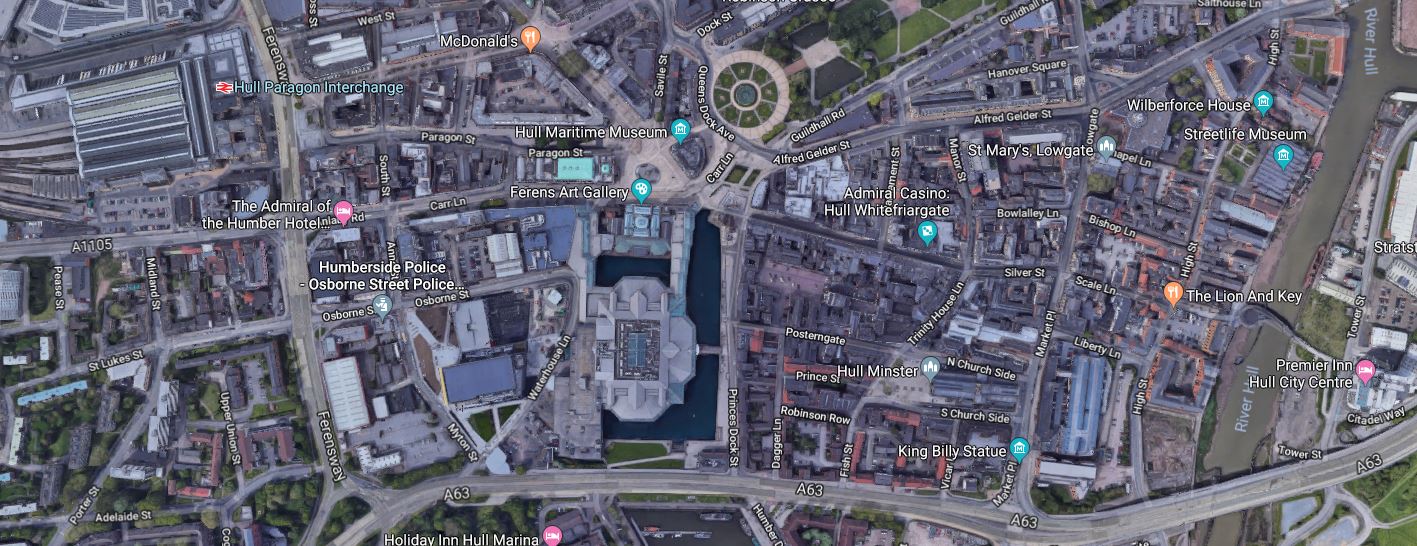
The station is in the top-left hand corner and most of the shops, galleries and other buildings are in the middle.
You will also notice, that there is no small amount of space and quite a bit of water.
These pictures show the City Centre.
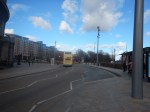
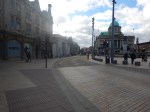
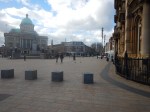
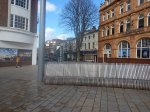
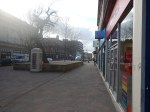
From what I have seen in other cities on the Continent, I think that a tram loop could be created in the city.
Tram-trains would be used, as they would need to run on both a tram network and National Rail tracks.
- Tram-trains would arrive at an inbound platform in Hull station from the West and North.
- They would stop in the station, so that passengers could change to and from buses and long distance trains.
- They would then go through the station and take to a loop around the City Centre.
- After stopping at perhaps half-a-dozen places, the tram-trains would reenter the station and stop in the outbound platform, before leaving the station.
I don’t know Hull or the travel habits of Hullensians, that well but these are a few thoughts.
The Tram-Trains
These would probably be similar to the Cardiff variant of the Class 399 tram-trains used in Sheffield’s tram-train extension to Rotherham.
The Cardiff tram-trains will be fitted with batteries to allow for a certain amount of catenary-free street running.
I’m sure battery power would cope with the steepest hills in Hull City Centre.
The City Centre Loop
Loops like this are not very common in the UK, but there are two successful examples.
- The Wirral Line Loop under Liverpool
- The Heathrow Loop on the Piccadilly Line.
There were also numerous loops for merry-go-round trains, that used to deliver coal; to power stations.
This Google Map shows the enormous Drax power station, which has a capacity of nearly 4 GW.
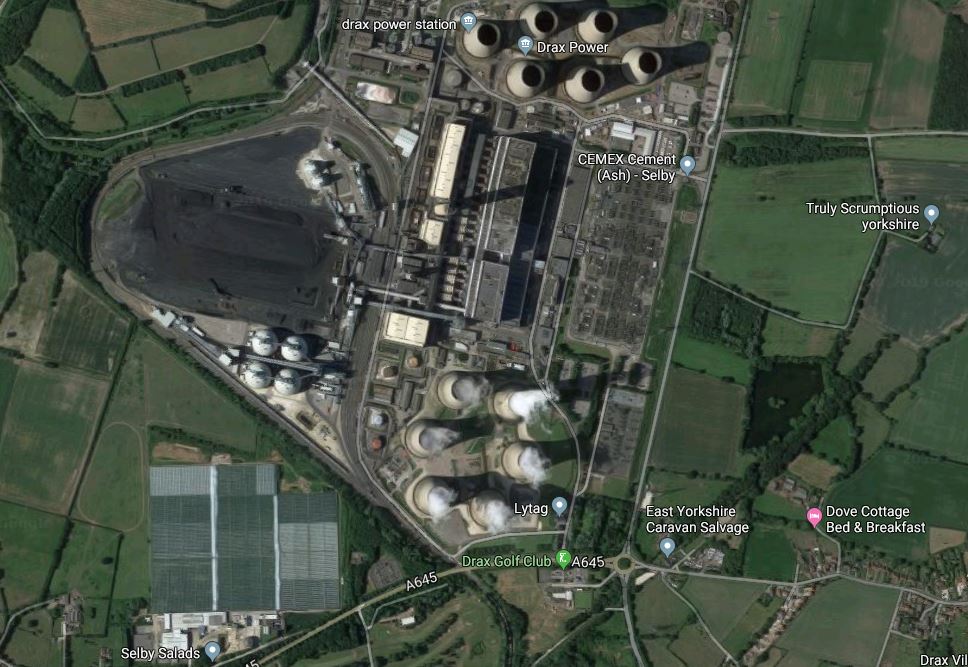
Note.
- The loop on the West side, which trains use to deliver the biomass, that is now the main fuel for the station.
- Below the loop , there are extensive greenhouses, which use waste heat and carbon dioxide from the power station to grow salads.
- There is also a plant that makes building blocks from the waste ash on the site.
Power station do a lot more than just generate electricity.
Loops have several advantages.
- The track needs is very simple and often single-track.
- Signalling only needs to work in one direction.
- They can handle a large number of trains.
Loops are particularly suited to trams, as they can have tight turning circles.
Main Line Electrification
Hull needs an economic boost and I believe that i the next ten years, the route between Hull and the East Coast Main Line will at least be partially-electrified.
Consider.
- The distance between Hull and Selby by rail is thirty-one miles.
- It is double-track.
- It runs across fairly flat country.
- The main problem would be the historic Selby swing bridge.
- From my hrlicopter, it doesn’t look to be the most difficult line to electrify.
Partial-electrification with dead sections on the swing bridge and under any low bridges would be a solution. But it would need trains to be bi-mode or have battery power to jump the gaps.
Hull Trains and First TransPennine wouldn’t object.
Where Will The Tram Trains Go From Hull?
The largest tram-train network in the world is the the Karlruhe Stadtbahn.
The longest route is S4, which goes all the way to Öhringen, which is a distance of over fifty miles from Karlsruhe.
The lines are electrified, but technology moves on and ranges of fifty miles on batteries are being predicted by those who are designing trains, trams and tram-trains.
Distances and times from Hull include.
- Beverley – 9 miles – 13 minutes
- Bridlington – 32 miles – 50 minutes
- Brough – 11 miles – 11 minutes
- Doncaster – 42 miles – 68 minutes
- Goole – 25 miles – 35 minutes
- Scarborough – 53 miles – 87 minutes
- Selby – 31 miles – 35 minutes
- Sheffield – 60 miles – 113 minutes
- York – 40 miles – 71 minutes
Note how slow the services are. Are they timed for Pacers?
I could see a two route strategy being developed.
This Google Map shows the KCOM Stadium which is about a mile out of Hull station.
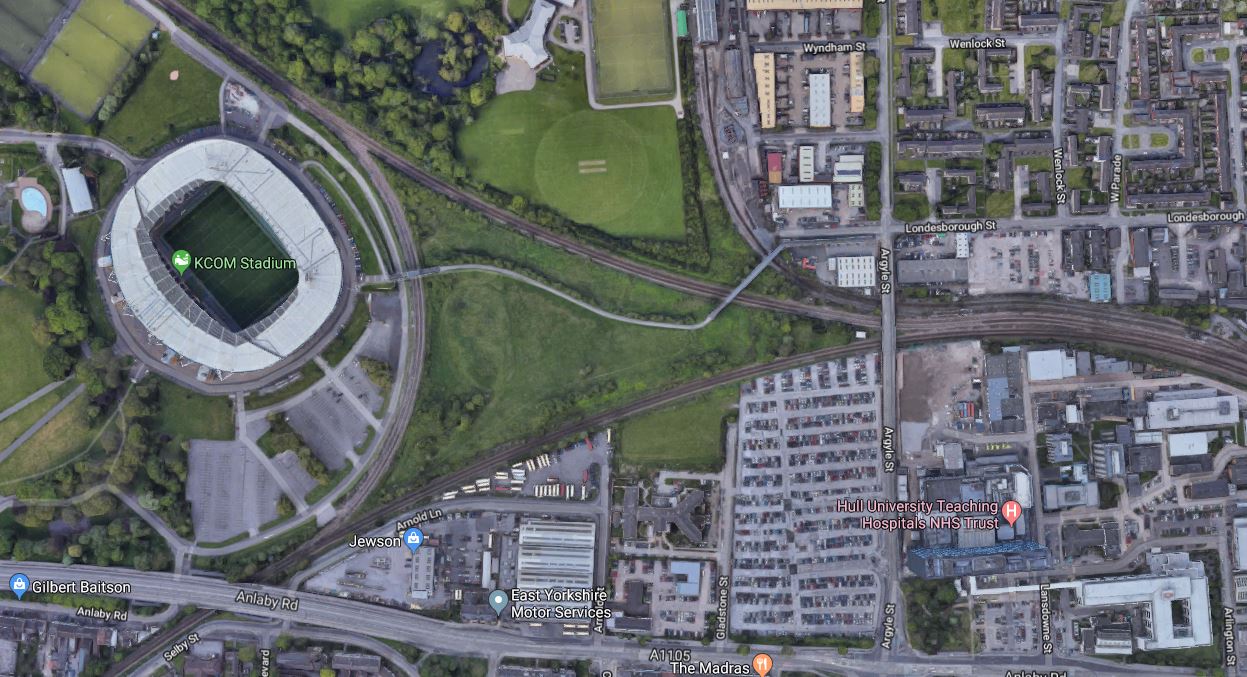
The rail lines are as follows.
- The line going North West goes to Beverley, Bridlington and Scarborough.
- The line going South West goes to Brough, Goole, Selby and Doncaster.
- The line going East goes to Hull station.
It should also be noted that in the South East corner of the map, part of Hull Hospital can be seen.
My initial plan would start by electrification of the line between Hull and Selby.
This would enable.the following.
- Hull Trains to run their Class 802 trains between London and Hull on electric power. Desel power would still be needed between Hull and Beverley for one train per day in each direction.
- First TransPennine to run their Class 802 trains between Liverpool and Hull on electric power. Diesel power would still be needed between Manchester and Selby.
- Class 399 tram/trains could operate on the electrification between Hull and Selby.
- Class 399 tram/trains could replenish their batteries using the electrification.
Fully-charged battery tram-trains would then have free-reign to explore, on any suitable track.
- They could go walkabout in Hull City Centre to set down and pick up passengers.
- They could run a second service to Beverley or Driffield on battery power.
- They could run a third service to Goole on battery power from Gilberdyck.
Extra stops could be added at important locations, like the Hull Hospital and the KC Stadium.
Could there be a network with three routes.
- Hull and Brough via Hull Hospital, KCom Stadium, Hessle and Ferriby
- Hull and Beverley via Hull Hospital, KCom Stadium and Cottingham
- Hull and Goole via Hull Hospital, KCom Stadium, Hessle, Ferriby, Brough, Broomfleet, Gilberdyke and Saltmashe
Some things ease getting a good route structure.
- Known traffic patterns might show where to add extra stops.
- There are two disused platforms at Brough station.
- Brodlington has a convenient bay platform.
Others don’t.
- There are no closed stations between Hull and Berverley, Brough and Goole.
- Beverley and Goole stations don’t look to be good terminals.
I’m sure a good route structure can be created.
Service Frequency
Ideally all branches should have four trains per hour (tph) for a Turn-Up-And-Go service.
A reasonable two tram-trains per hour to Beverley, Brough and Goole, would produce the following services.
- A six tph frequency through the City Centre.
- Hull station, Hull Hospital and the KCom Stadium would have six tph service in both directions.
- Because two routes go via Brough, all stations to Brough, would have a four tph service both directions.
- All stations to Beverley or Bridlington would have a two tph service in both directions.
All services would be augmented by limited stop services from Hull to Doncaster, Leeds, London, Scarborough, Sheffield and York.
Construction Needed
The following works would need to be done.
- Electrify Hull to Selby with 25 KVAC overhead wires.
- Build the tram-train loop in Hull City Centre.
- Adjust platforms, so that they can provide at least good access between all tram-trains, trains and platforms.
Hopefully, this will be enough to allow the tram-trains to start operating.
How Many Tram-Trains Would Be Needed?
My rough calculations show that a full service could be provided by between eight and ten tram-trains. The variation is because, the performance of the tram-trains will affect the numbers required.
Conclusion
I have only roughly sketched how a tram-train network based on a loop round Hull City Centre could be developed.
In my view for it to be viable, the first thing, that needs to be done is to electrify between Hull and Selby.
The Orchestra Pit At Waterloo Station – 14th March 2019
These pictures show the area nicknamed the orchestra pit at Waterloo station.

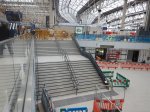
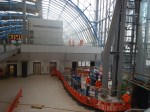
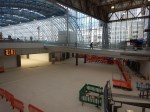

It looks like it could be open soon!
Although Network Rail and their pandering to the terrible tastes of the average rail traveller, this are will probably filled with gluten-rich junk food.
I’d like to see a Leon added to Waterloo, as they already have two Marks and Spencers and a Carluccio’s.
Bicycles And Class 800 Trains
I was at Paddington station this morning, having breakfast in Leon.
Afterwards, I noticed that Great Western Railway were using a nine-car Class 800 train on the 10:52 to Oxford.
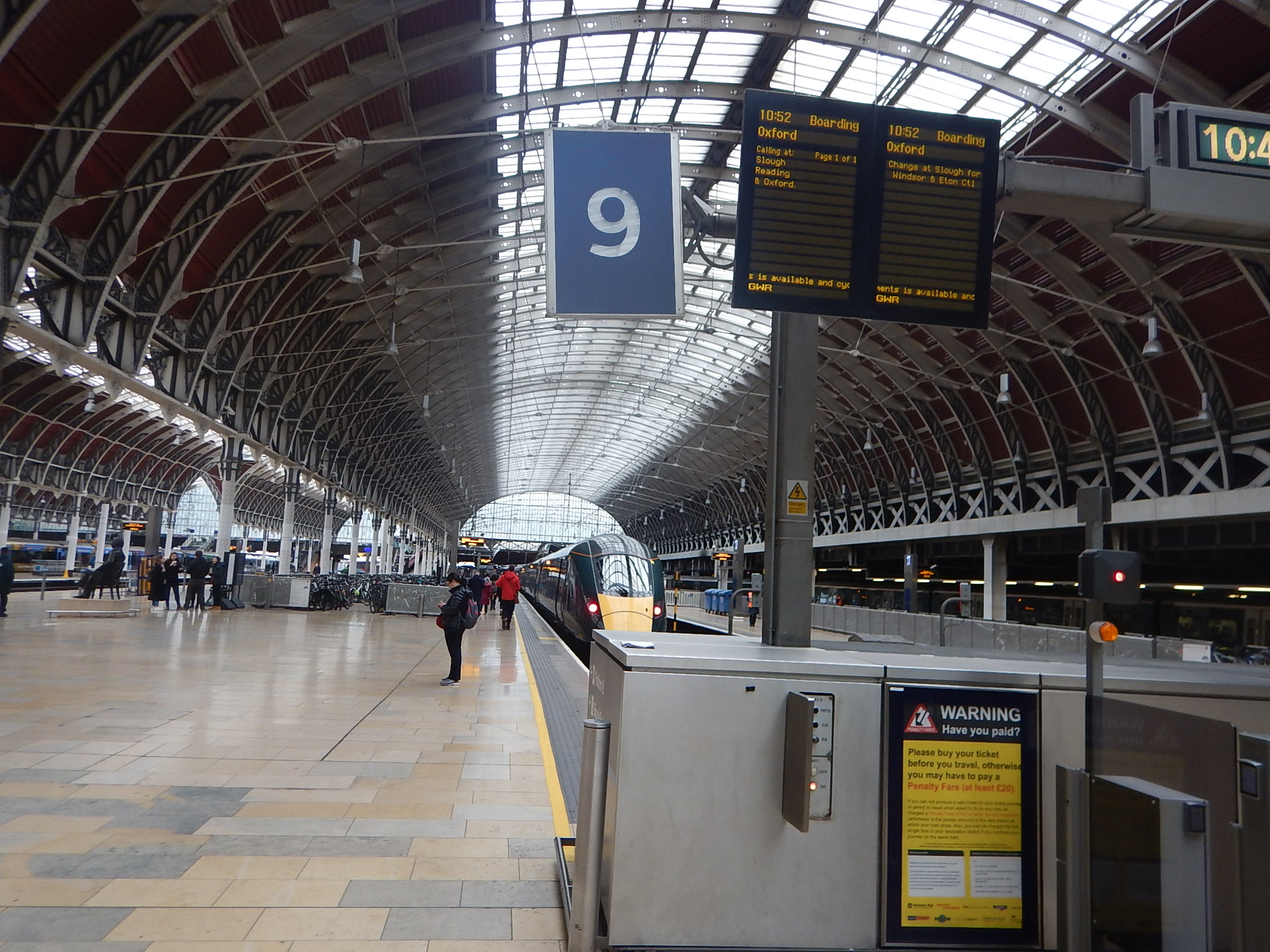
I also noticed from the information displays, that all bicycles needed to be booked. That is a bit different from the days of the InterCity 125s, which had lots of space in the back of the locomotive.
On one trip to Plymouth, I saw several surfboards swallowed by the locomotive.
I got in a conversation with a station guy about bicycles and surfboards and from the knowing look on his face, I suspect it is a bit of a pain.
With the growing popularity of cycling, surely a turn up and go regime is needed.
Heat From HS2 Trains Will Warm 500 New Homes
The title of this post is the same as that of an article in today’s copy of The Times.
This is the third paragraph.
HS2 Ltd, the company building the £56 billion high-speed line, has produced plans to recycle waste heat from the electric motors and brakes of trains approaching and departing from a £1 billion “super hub” station at Old Oak Common, near Willesden, North West London.
Other points from the article include.
- Five air source heat pumps will be used.
- , Each heat pump costs around £11,400.
- The carbon footprint of each house could be reduced by a fifth.
- Plans are at an early stage, but the technology is proven.
- Similar technology could be applied to tunnels on the Northern routes to Leeds and Manchester.
I can only see one problem with the idea.
The companies bidding to make the trains for HS2, will design trains with the following features.
- Highly-efficient aerodynamics of both trains and tunnels, to reduce energy losses and power required to move the train.
- Regenerative braking to onboard electricity storage.
- Train systems like air-conditioning, lighting and toilets that use smaller amounts of electricity.
HS2 will also draw heavily on proven innovative ideas from similar projects, to reduce the energy used by the trains, whether in the tunnels or the open.
But, I would also suspect that HS2’s proposal is based on a good assessment of the energy dissipated by the trains.
 The Anonymous Widower