TfL Plans To Sell Part Of Its Tube Trains To Raise £875m For New Piccadilly Line Fleet
The title of this post is the same as this article on the International Business Times.
Why not?
London’s Underground and Overground trains are well-built and well-cared for assets, that will probably be in service for excess of forty years.
Both parties win!
- Transport for London, get a pile of cash, that can be invested in new trains.
- The leasing company get a safe investment, in which to invest pension funds and other funds looking for long term investments.
In some ways, the leasing company’s biggest risk, is that new technology comes along, which means that TfL decide to change the trains and the trains are returned to the leasing company.
So long as the terms and costs are right, I’m all for it!
Would Third-Party Rail Ticket Machines Be A Good Idea?
I travel extensively on the UK rail network and my journeys are generally of three types.
- Local journeys within the London Zone 1-6 Travelcard area, for which I use my Freedom Pass.
- Journeys to places like Brighton, Hastings, Ipswich and Rochester, where I generally buy a ticket from a machine.
- Long distance journeys, where I use the Internet and pick up the ticket at a machine.
I suspect that many travellers across the UK, have a similar pattern of use.
The Changing Nature Of Cash Machines
Forty years ago, there were an adequate number of cash machines, but they were generally associated with bank premises.
I can remember my delight, when I first found a machine in a motorway service area.
Now, cash machines are everywhere and all are free. Although, there are mutterings, that charges might be made and the number of machines will drop, due to contactless cards.
A Third-Party Rail Ticket Machine
At present, the nearest to this are the ticket machines on the London Overground.
The latest ones allow you to do all the normal ticketing functions, with these valuable additions.
- Buying a ticket between any two stations in the UK.
- Buying an extension ticket from the London Zone 6 boundary.
- Prices are generally the lowest you can purchase, on the Internet without using Advance Tickets for specific trains.
These feature means, that if say I’m going to a football match outside London in a few days, I’ll buy my ticket from the Overground.
Ticket machines will add more and more features.
- Train information.
- Itinerary printing.
- Buying Advance tickets for a specific train.
- Seat reservations.
- Special tickets like Plus Bus, Plus Tram and Rover and Ranger tickets.
- Selling railcards
Imagine turning up in a city and being presented with a screen on the same machine, which allows you to buy Travelcards and tickets for local attractions.
As the machines get more sophisticated, I believe there will be less need for ticket machines to be at train stations.
So could we see companies like The Trainline putting ticket machines in places like shopping centres, superstores and the smaller shops that service Oyster in London?
If the financial model stacks up, I’m sure we will see ticket machines everywhere!
Ticket Machines On Platforms And In Ticketed Areas
In Germany, there is often a ticket machine after you have passed the gate.
I find it very useful, as they can be used to buy tickets for a later journey or look up future connections.
I only know of one ticket machine inside the ticketed area in the UK and that is on Platform 8 at Stratford station.

We need more of these!
Would a third-party company be more likely to provide them? Especially, as they’d quickly identify the most profitable places, where there were large numbers of interchange or waiting passengers.
Collateral Benefits
Making rail tickets more available will surely increase sales. Suppose you live in Nottingham and your mother lives in Peterborough. You’ve just had a bad drive across the Midlands to see her for her birthday.
Will a ticket machine in your local superstore, lead youto investigate the trains as an alternative?
If it does, it must surely lead to more passengers on the trains.
Train companies are notoriously bad, at making sure that a weekend service has enough carriages.
Making it easier to buy tickets would surely give them a better estimate of passenger numbers.
But would the train companies make use of the information?
Conclusion
We’ll see a lot more ticket machines.
Some will be from third-party operators. Just like cash machines!
Why I Went To Redhill
My trip to Redhill this morning had two purposes.
Although, I was interested to see the recent Platform 0 works, the main purpose was to get a feel of the town for a US Corporate Lawyer, who helps companies set up bases in the UK. Redhill was the subject of my visit, as one of his clients wants to set up a base near to an Airport with myriad links to Europe.
The town appears to fit the bill in this case.
Platform 0 At Redhill Station Is Now Open
I took these pictures at Redhill station and in the town of Redhill today.
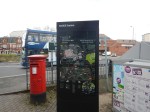
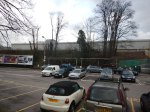

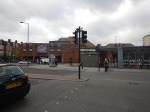

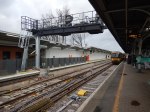
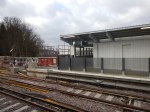
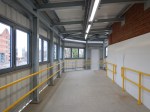
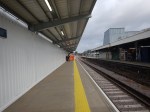
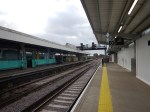
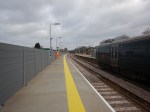
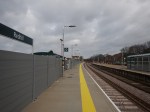
Note.
- Platform 0 at Redhill station is very long, Could it accept two eight-car Class 700 trains working as a pair?
- Platform 0 has four train information displays.
- Platform 1B is used to reverse Great Western Railway’s Class 165 trains, that run between Reading and Gatwick Airport stations.
- Platform 1 appears to be fully-electrified.
When finished, it would appear that Platform 0 like all Platforms at Redhill station will have full step-free access.
Conclusion
It looks to me, that the works at Redhill station have done a good job in future-proofing the station for any operations, that train companies might propose.
- Platform 0 seems to have been built for the longest possible trains that might use the route.
- Platform 1 seems to have been rebuilt into a long bay platform, that would accept an eight-car train on Reading-Gatwick services.
- Platform 1 is electrified, so that it could be used efficiently by a bi-mode train or one with batteries.
I would expect to see changes to Redhill services in the next few years.
London Bridge Station Gets The Last Five New Platforms
The last five platforms, numbered 1 to 5, at London Bridge station, opened this morning.

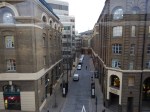
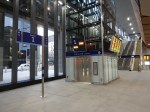

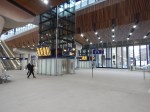
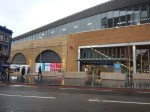
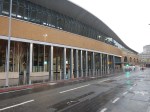
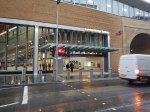
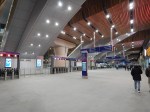
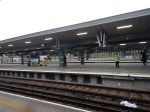

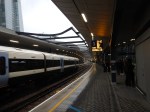
It is now possible to judge the station as a whole.
The Spacious Concourse
In my experience, the layout of the spacious concourse is unique in all the stations I have visited. And I’ve visited quite a few! And not just in the UK, but all over Europe.
Effectively, it is like a city square, with separate stations on viaducts above.
- The one-platform station (Platform 1) for trains from Cannon Street to SE London and Kent.
- The two-platform island station (Platforms 2 and 3) for trains from SE London and Kent to Cannon Street.
- The two platform island station (Platform 4 and 5) for trains for Thameslink services going North and South,
- The two-platform island station (Platform 6 and 7) for trains from Charing Cross and Waterloo East to SE London, Kent and Sussex
- The two-platform island station (Platform 8 and 9) for trains from Waterloo East to SE London, Kent and Sussex to Charing-Cross and Waterloo.
- The six-platform terminal station (Platforms 10-15) for trains to SE London, Surrey And Sussex.
All platforms have two or more escalators, stairs and a lift to and from the spacious concourse.
- The circulation space is uncluttered with just one fast food outlet discretely to one side. Others will be slotted in.
- The lighting is excellent, with lots of natural light. Many stations are dingy, despite having been built or rebuilt in the last few years.
Ticketing and security is ensured by several lines of ticket gates, leading to a surrounding unticketed concourse.
The Double-Concourse Design
|Effectively, London Bridge station has two concourses.
The ticketed concourse, that connects to all the platforms and the trains.
There is also a second concourse surrounding the ticketed concourse.
- This second concourse extends through the station from Tooley Street to St. Thomas Street.
- The streets outside the station are effectively parts of the second concourse.
- Level walking routes to the Underground, the River, Guys Hospital and London Bridge are provided.
- A separate escalator connection links to the bus station, from the second concourse.
- There are more shops and a ticket office.
Where else could this concept be employed?
The obvious example is surely Manchester Piccadilly station, where there will effectively be three stations.
- The HS2 station.
- A terminal station for trains going to and from the South.
- A two-platform through station capable of handling sixteen trains per hour, replacing the dreaded Platforms 13 and 14.
All would be linked by a huge London Bridge-sized area under the tracks, with both a ticketed and unticketed area.
- The tram station would be at the same level as the concourse, accessible from the unticketed area.
- Shops would be mainly in the unticketed area, with a minimum in the ticketed area.
- A clutter-free design is needed.
The aim would be to ensure that quick and easy interchange between various transport modes was created.
The concept would also work at a rebuilt Euston and should probably have been used instead of the very passenger and staff-unfriendly design at St. Pancras, where interchange between separate services is not for those that are not 100% fit.
I also think that a similar concept of a split concourse, with ticketed and unticketed areas could be applied at a traditional terminal station like Brighton, Liverpool Street, Liverpool Lime Street or Waterloo, where significant numbers of passengers interchange between services at the station.
- A second ticketed concourse could be created between the gate line and the actual platforms.
- The concourse outside the ticket gates should be extended into the surrounding streets, as it effectively has been at Kings Cross.
- A lot of decluttering should go on.
Hopefully, as each new station is designed, the concept will be improved.
Wide Island Platforms
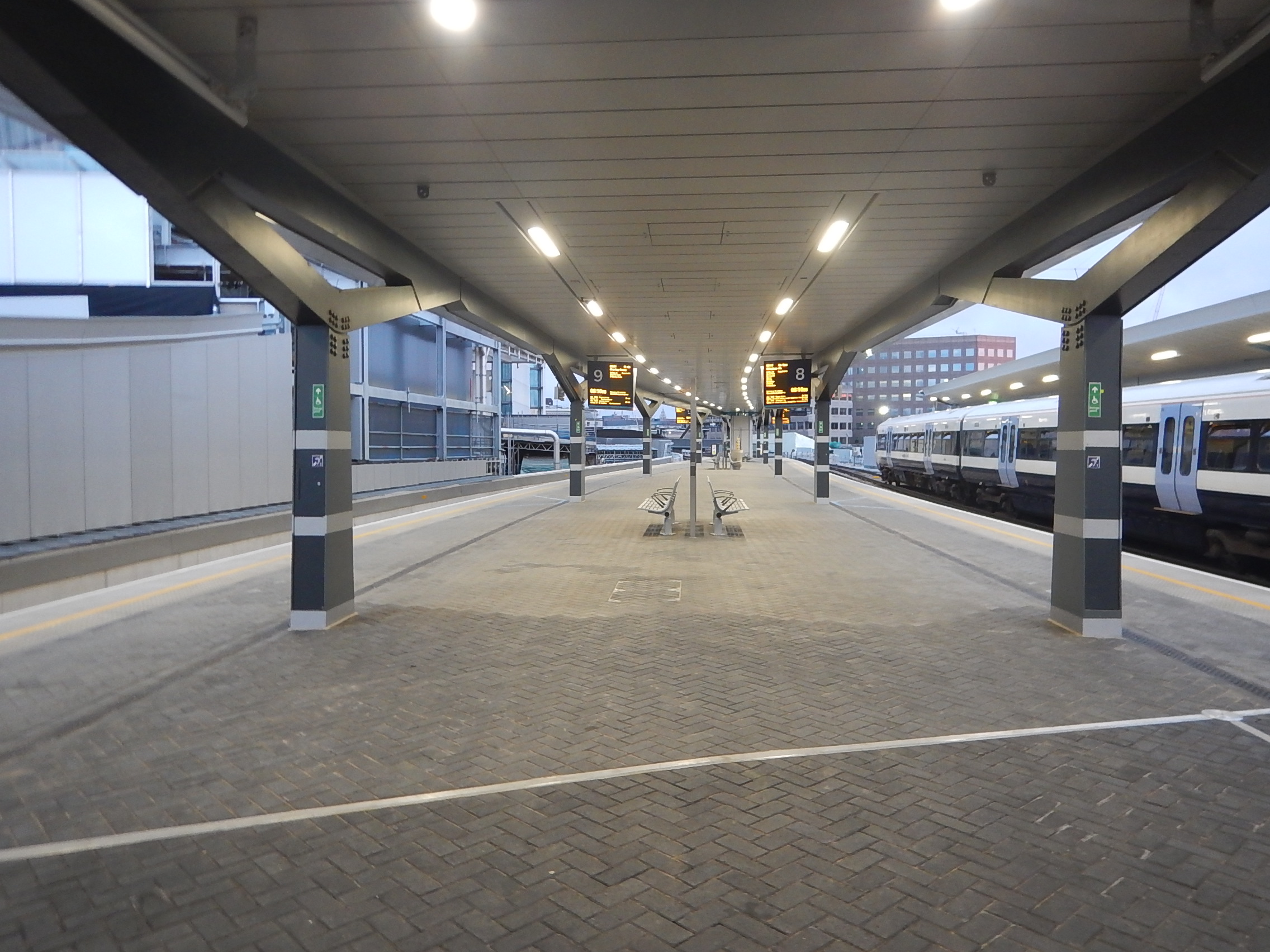
Can platforms be too wide? Probably only accountants can answer that question.
But we certainly need more island platforms!
They make it so easy for passengers to reverse direction, without going up onto a bridge or down into a subway.
If say you were going between Bedford and Cambridge on Thameslink, perhaps with a heavy case or in a wheel-chair, it might be easier to go as far South as London Bridge station, where you could just cross the platform for the second train.
Unfortunately, no-one thought to build the important Thameslink station at St. Pancras with an island platform.
Lights Above The Ticket Gates
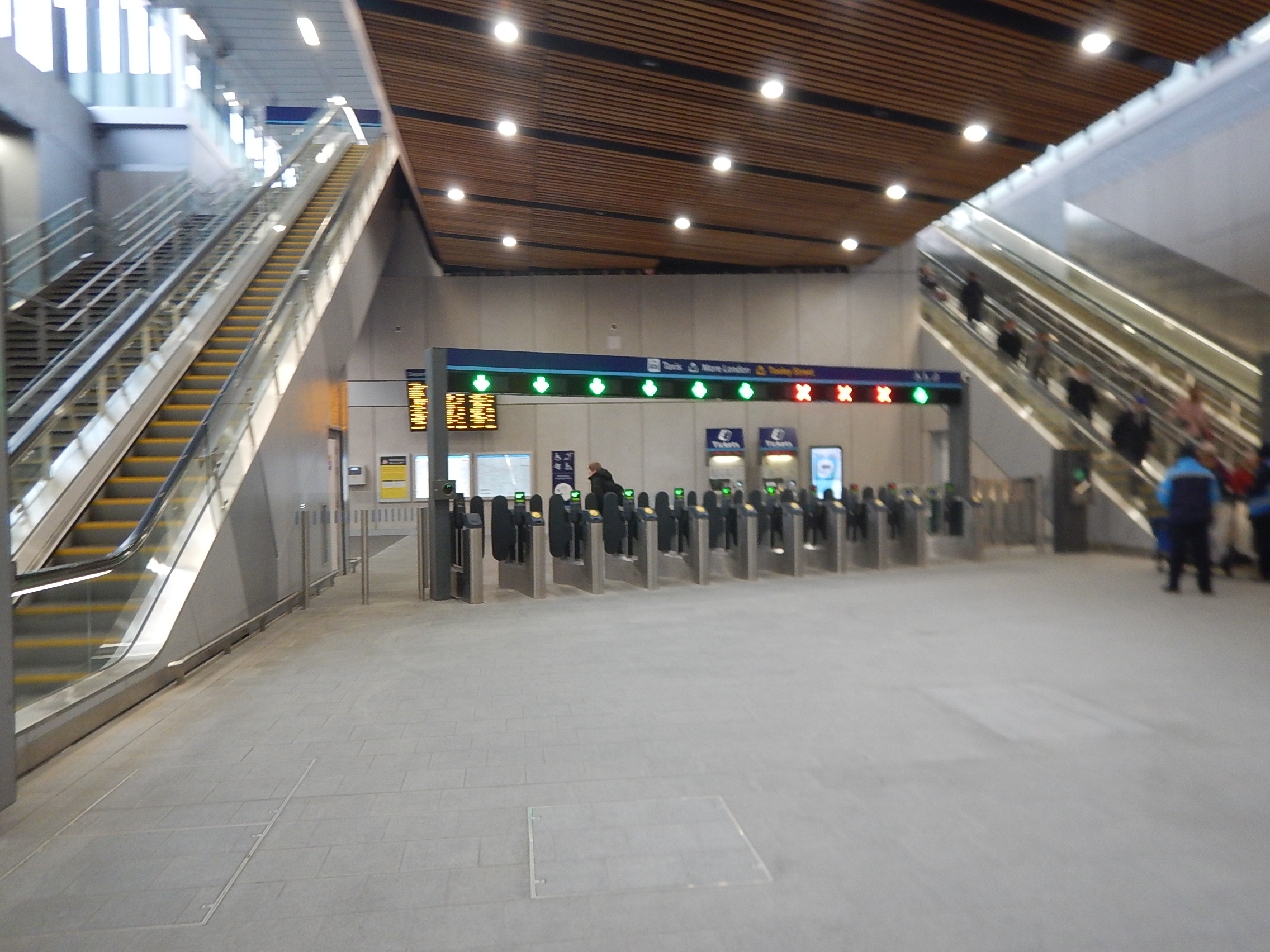
The lights on some of London’s ticket gates are difficult to see, as you approach, but these are so much better.
Surely, as people will line up a few metres away and walk straight towards the gate, this might increase passenger throughput.
Can we have more of this please?
Information Above The Escalators And Stairs
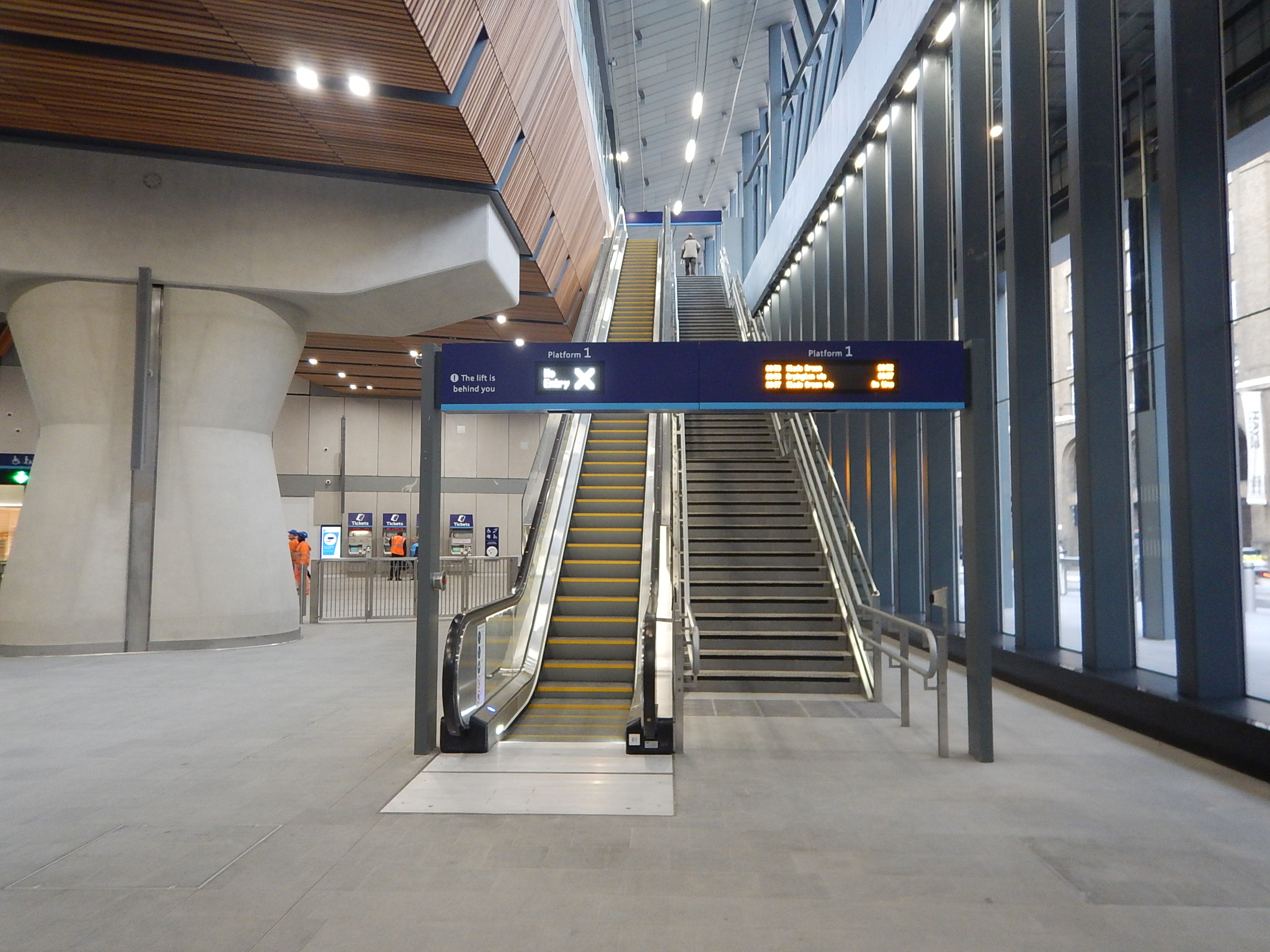
This is good, but it could be better.
Imagine a one-line display on top of the main display, which could be used for title, important or emergency information.
Examples could be.
- Trains To Waterloo East And Charing Cross
- Way Out!
- Do Not Enter!!
- RMT Call Off Strike Tomorrow!
The standard display for the various platforms at London Bridge could be.
Platform 1 – Cannon Street To SE London And Kent
Platform 2 and 3 – To Cannon Street
Platforms 4 and 5 – Thameslink – 4 To South – 5 To North
Platform 6 and 7 – Charing Cross To SE London, Kent And Sussex
Platforms 8 and 9 – To Waterloo East And Charing Cross
Platforms 10 to 15 – To SE London, Surrey And Sussex
Ticket Machines
There are no ticket machines in the ticketed area.
In Germany, there is often a ticket machine after you have passed the gate.
I find it very useful, as they can be used to buy tickets for a later journey or look up future connections.
I only know of one ticket machine inside the ticketed area in the UK and that is on Platform 8 at Stratford station.
We need more of these!
The need will get more urgent after Crossrail and Thameslink are fully open.
Suppose you are doing a journey from somewhere in the Oyster/contactless card area like Ealing Broadway or Ilford to perhaps Hastings, Ipswich or Oxford, which are not.
- You might not be starting your journey at a station with a ticket office.
- Because you never go outside the Oyster/contactless card area, you haven’t bought a ticket in some time.
- You might like me be a Freedom Pass holder.
So you might arrive at London Bridge or Stratford, without a valid ticket for the rest of your journey.
Currently, at London Bridge station, you have to go outside the ticketed area to get your onward ticket.
A ticket machine or machines inside the ticketed area would be better.
It could also.
- Provide information.
- Print intineraries
- Display advertising.
Perhaps, like cash machines, ticket machines might be provided by third-party operators?
Seats
Are there enough seats?
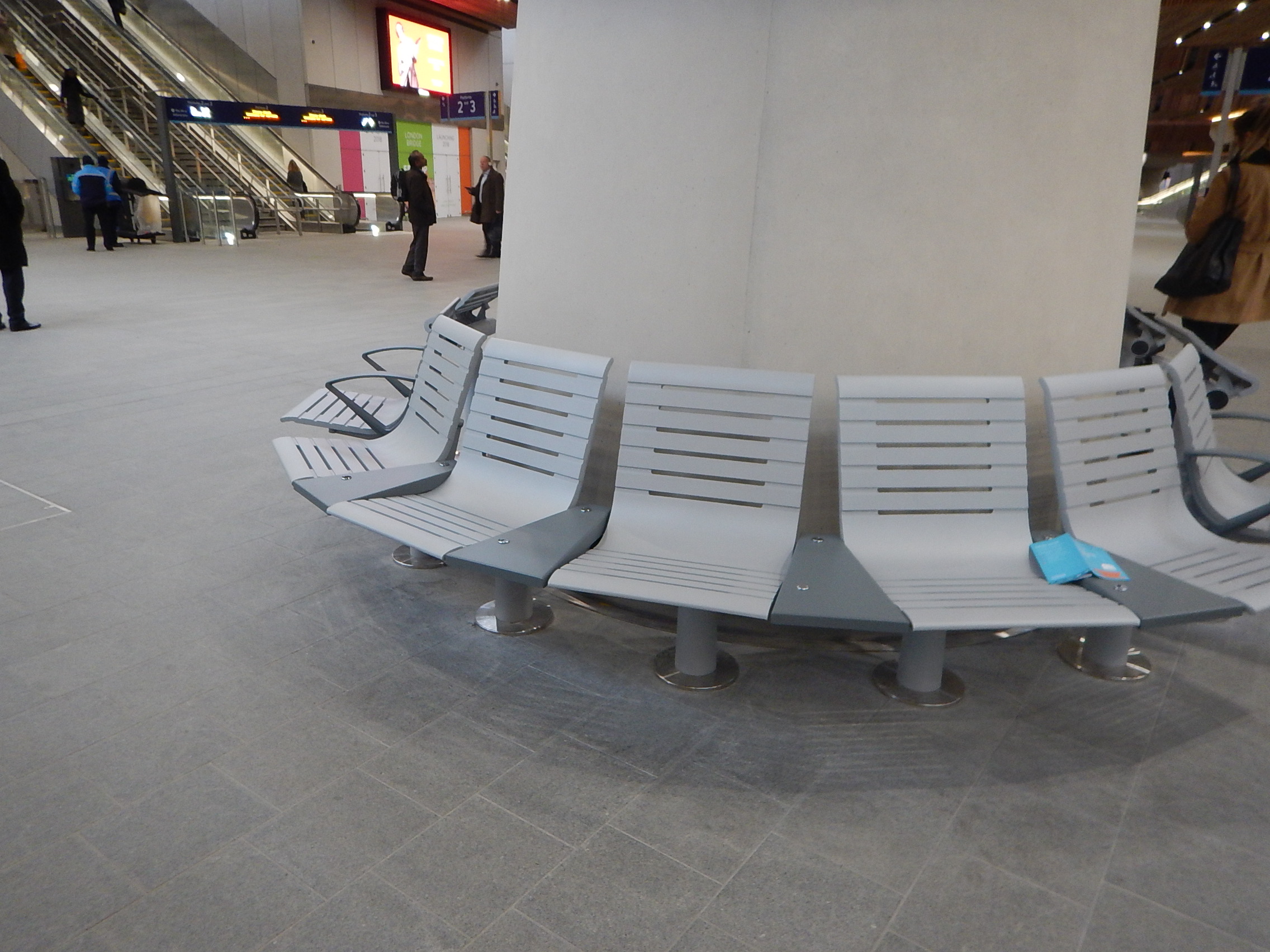
Time will tell! But I think more will be added!
New Tiling On The Northern Line Platforms At Moorgate Station
These pictures show the tiles and other fitments as the Northern Line platforms at Moorgate station are fitted out for Crossrail.
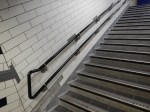
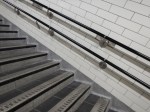
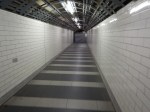
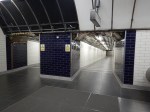
Lifts are being installed to complete the station.
When everything is finished on the Northern Line platforms and the parallel Northern City Line platforms that are above these platforms, there will be step-free access between these platforms and the Crossrail platforms at the massive double-ended Liverpool Street Crossrail station, that connects to Liverpool Street at one end and Moorgate station at the other.
The Future Of Diesel Trains
Many feel that diesel trains have no future in the modern world, because of all those carbon and particulate emissions.
However, this article in Rail Technology News, which is entitled ScotRail To Trial Hydraulic Tech To Cut Of Carbon Emissions.
This is the first paragraph.
A new hydraulic pump could reduce Scotland’s carbon emissions by 4,000 tonnes of carbon dioxide per year.
This sounds impressive, but how is it done?
Many modern diesel muiltiple units, like the Class 170 trains, used in the ScotRail trial have hydraulic transmissions, where a pump fitted to the engine creates hydraulic power, which then drives a hydraulic motor to power the train.
But modern trains also need to have electricity in each car for lighting, air-conditioning and other services.
So typically, a hydraulic unit in each car is used to generate the electricity required.
It is this hydraulic unit, that has been replaced by a much more efficient digitally-controlled hydraulic unit.
That sort of hydraulic unit has one Scottish company’s stamp all over it; Artemis Intelligent Power, which started as a spin-off from Edinburgh University.
Artemis Intelligent Power has a page about Rail applications on their web-site.
This is the introductory paragraphs to their work.
Whilst electrification has enabled the de-carbonisation of much of the UK’s rail sector, the high capital costs in electrifying new lines means that much of Britain (and the world’s) railways will continue to rely on diesel.
In 2010, Artemis completed a study with First ScotRail which showed that between 64 and 73 percent of a train’s energy is lost through braking and transmission.
In response to this, Artemis began a number of initiatives to demonstrate the significant benefits which digital hydraulics can bring to diesel powered rail vehicles.
Two projects are detailed.
The first is the fitting of a more efficient hydraulic unit, that is described in the Rail Technology Magazine article.
Under a heading of Faster Acceleration, Reduced Consumption, there is a technical drawing with a caption of The Artemis Railcar.
This is said.
We are also working with JCB and Chiltern Railways on a project funded by the RSSB to reduce fuel consumption and improve engine performance by combining highly efficient hydraulic transmission with on board energy storage in the form of hydraulic accumulators, which store energy during braking for reuse during acceleration.
Note.
- The use of hydraulic accumulators to provide regenerative braking.
- The involvement of JCB, whose construction equipment features a lot of hydraulics.
- The involvement of Chiltern Railways, who like their parent company, Deutsche Bahn, have a lot of diesel-hydraulic multiple units and locomotives.
The article goes on to detail, how a test railcar will be running before the end of 2017.
This technology could have tremendous potential in the UK.
The Benefit Of Regenerative Braking
In the Wikipedia entry for Regenerative Brake, this is said.
Savings of 17%, and less wear on friction braking components, are claimed for Virgin Trains Pendolinos. The Delhi Metro reduced the amount of carbon dioxide (CO2) released into the atmosphere by around 90,000 tons by regenerating 112,500 megawatt hours of electricity through the use of regenerative braking systems between 2004 and 2007.
The entry also says that some London Underground trains save twenty percent.
It would be a large benefit to the train operating companies, if they could just have a similar saving on the cost of diesel fuel.
Could Existing Trains Be Converted?
In England, Wales and Scotland,currently there are around two hundred modern Turbostar diesel multiple units. of which thirty are used by Chiltern Railways.
Whether these can be converted, depends on the engineers and the result of the current trial, but the economic benefits of a successful conversion route could be very beneficial.
Conclusion
This is technology to watch!
Electrification At Bromsgrove – 26th December 2017
These pictures show the electrification works at Bromsgrove station and up and down the Lickey Incline.


Nearly all the gantries seem to have been erected and much of the wiring seem to have been added.
It would appear that there is every chance that Bromsgrove will be able to run an electric service on Birmingham’s Cross-City Line in May 2018.
Onward From Bromsgrove With Electric Trains
It is worthwhile to look at the options for taking electric trains onward from Bromsgrove station.
The distances to and from Bromsgrove are as possible.
- Birmingham – 25 miles – Electrified
- Worcester – 16 miles – Not Electrified
- Hereford – 42 miles – Not Electrified
West Midlands Trains‘ fleet of four-car diesel CAF Civity trains would handle Birmingham to Hereford with ease.
Abellio, who are a partner in West Midlands Trains, have ordered Stadler bi-mode Class 755 trains for Greater Anglia.
These trains are ideal for routes like Norwich to Stansted and Cambridge to Ipswich, but they would also be efficient on the Birmingham to Hereford route.
So perhaps we might see bi-mode trains or trains with batteries on suburban routes from Birmingham.
I doubt a battery train could go further than Worcester.
The Lickey Incline
Electrifying from Birmingham to Bromsgrove means that the steep Lickey Incline will be included in the works.
Once the Lickey Incline is electrified, I would think it more likely that bi-mode trains could be seen on the routes to Hereford and Worcester.
What A Waste Of Space!
This picture shows two two-car Class 170 trains working together as a four-car unit.
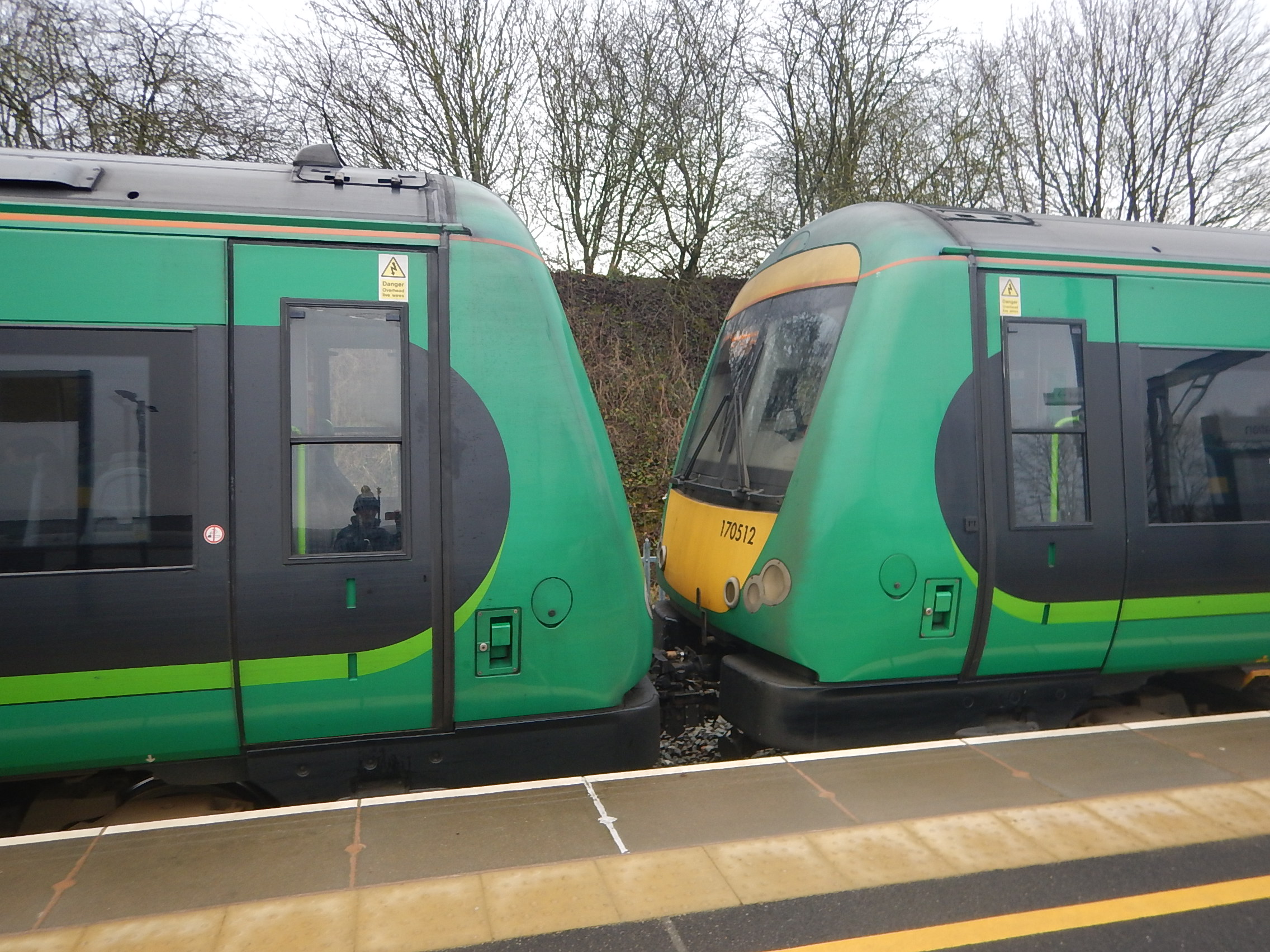
Look at how much space is wasted in the length of this train, by the two middle cabs!
If these Class 170 trains were to be replaced with a four-car train, this would surely increase the capacity of the train, as there would be more space to put seats!
It should be noted that West Midlands Trains have ordered some four-car CAF Civity trains.
 The Anonymous Widower