Are The Geordies Backing The Extended Borders Railway?
This article in the Morpeth Herald is entitled The Positive Impact Of Dr Beeching.
The author reviews what Doctor Beeching did and gives him credit for the good to go with the bad.
This is a paragraph.
It is often thought that Dr Beeching was negative, closing lines and stations, but his positive suggestions resulted in InterCity express trains and high density ‘commuter’ services, while his most dramatic change was to create bulk-load freight services, Freightliners, using containers. These have been really successful.
The author then goes on to give reasons, why the Borders Railway should be extended South, including using the line to bring timber from the maturing Kielder Forest to where it is needed.
He also suggests that the route from St. Boswells to Tweedmouth be reinstated to create an inland diversion route for the East Coast Main Line, which runs close to the sea.
The article makes some very valid points and it all builds a strong case for improved railways in the Borderlands between Edinburgh, Carlisle and Newcastle.
The Rigid Overhead Conductor Rails At St. Pancras Thameslink Station
Whilst waiting for a train in St. Pancras Thameslink station, I noticed that the station has been fitted with rigid overhead conductor rails.
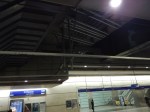
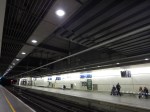
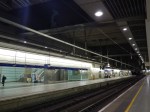
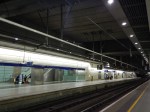
I couldn’t remember it being there before. But I don’t often go to the station.
However, I did find this page in Rail Forums, which is entitled Conductor Rail At St. Pancras Thameslink.
Apparently, the change was made at Easter 2013. This is one reply.
Installed over Easter. Known as conductor beam. The contact wire is fixed to the underside. Much more robust than regular OLE, and practically zero maintenance.
It has replaced a tricky tension length of OLE between approx half way along St Pancras LL platforms and the middle of the old KX Thameslink platforms. The curvature, cant and gradient change through this section made the OLE pretty difficult to keep in the right place and had high wear rates.
Likely the conductor beam will be extended north through to Dock Jn and through the new Canal tunnels, not confirmed yet.
Given the robust nature and lower maintenance costs, I think we’ll be seeing lots more of this type of electrification.
My Football Routine
I usually arrange my Saturday football around a schedule something like this.
- 09:00 Go to Islington Marks and Spencer, Boots and Chapel Market, as my grandmother would have done over a hundred years ago, to do my weekend shopping.
- 11:00 Listen to Fighting Talk on Radio 5.
- 12:45 Leave home and catch a bus to Liverpool Street.
- 13:30 Catch the train for Ipswich.
- 14:43 Arrive in Ipswich and walk to Portman Road
- 15:00 Watch the match.
- 17:09 Catch the train back from Ipswich.
- 18:30 Arrive back in London
- 19:00 Arrive back home.
Sometimes I vary the routine, by having lunch in Spitalfields before I get the train.
I should say that as I’m a coeliac, I find getting acceptable gluten-free food in Ipswich difficult, so I never eat anything in the town.
You might think what is wrong with my schedule.
It’s the dreaded Rail Replacement Buses, that seem to interrupt many weekends, when there is football at Ipswich.
The time taken by the buses means, I have to allow an extra ninety minutes over the normal rail journey.
I know there is a lot of work to do on the line, but why can’t it be done on days when there is no football. As a widower, who lives alone, I find it tiresome.
I’ve even talked to some Norwich supporters about this and they’re as angry as I am.
Out Of Thin Air
This article on Global Rail News is entitled Could Building Above London’s Railways Solve The Capital’s Housing Crisis?.
This is said.
Around a quarter of a million homes could be built in London by developing above the capital’s railways, a new report has claimed.
A report published by engineering consultants WSP suggests that building apartments above open London Underground and Overground lines could provide much-needed housing capacity in the city.
WSP Global is one of the world’s leading consultancy companies, with probably their best known project in the UK, being The Shard.
They call the concept Rail Overbuild and the full report is at this document on the WSP web site.
This is a picture from the report.

The report is an informative read and the techniques don’t apply just to London, but could be used over many City Centre rail lines throughout the world.
One section of the report is entitled the Twelve Benefits of Rail Overbuild.
- Building over existing infrastructure requires no new land.
- Overbuilds in inner city locations are ideally located for residents: the ultra-close proximity to transport facilities provides greater mobility options and could tempt homeowners to either forego car ownership altogether or else reduce multi-car ownership, thereby increasing notional disposable income.
- Overbuilds can increase public transport ridership. In turn this will mean lower greenhouse gas emissions and require less carparking space.
- Rail overbuilds can better integrate a station into its surroundings; the station development becomes a connector within the urban realm. And by incorporating adjacent site development, rail overbuilds spread their communal benefit over a wider area.
- Mixed-use rail overbuild environments contribute to public safety, particularly for pedestrians, given they foster activities throughout the day and much of the evening.
- Rail overbuilds provide opportunities to create new pedestrian-friendly environments, creating social value and forming attractive places where people want to live.
- Rail overbuilds offer financial incentives for rail asset owners who may gain commercial benefit from the development and from which they
can reinvest the proceeds into improving city infrastructure. - Uplift can be created in the value of the mmediate surrounding area and generate household and business rates, as well as other revenue for the local authority.
- Rail overbuild schemes can fulfil local authorities’ preference for higher densification and be used as tools of economic development.
- Provide a sustainable solution to urban development
- In resolving rail-bridging issues – e.g. structural, acoustic, air quality, vibration,
utilities, economy – the overbuild provides precedents for future developments. - The station/transport hub becomes a destination in itself thanks to the resulting retail and commercial development in and around it.
They also give some substantial examples of where the proposed methods have been or will be used.
- Earl’s Court Regeneration
- Principal Place, Shoreditch
- Royal Mint Gardens, Tower Hill
- Stamford Bridge, Chelsea
- Riverside, New York
This is said about the rebuilding of Stamford Bridge.
Rail overbuild doesn’t just have to facilitate housing. Chelsea Football Club’s proposed new stadium is a fine example of how a site constrained by adjacent rail lines can be successfully built over to maximise development potential.
I recommend that you read the WSP report.
Will the Government and the Mayor of London do what the report suggests?
A Heritage Class 315 Train For The Romford-Upminster Line
The Romford To Upminster Line is slated to get a brand-new Class 710 train to work the two trains per hour shuttle.
This article in London Reconnections, which is entitled More Trains for London Overground: A Bargain Never to be Repeated, says that it is possible that this line could be served by a Class 315 train, held back from the scrapyard.
This would mean a new Class 710 train could be deployed elsewhere, where its performance and comfort levels would be more needed.
Surely, a single Class 315 train, would be enough capacity for the line and a lot cheaper than a new Class 710 train! Provided of course, that it was reliable, comfortable and could maintain the current service.
A Heritage Unit
Why not market the train, as an updated heritage unit?
- It could be painted in British Rail livery from the 1980s.
- It would have wi-fi!
- It might have an information car, describing the history of the line and the area.
- It might even have a coffee kiosk!
It would be very much a quirky train to asttract regular passengers and even tourists.
But of course, it would be run as professionally as any other train on the network.
An Educational Purpose
I feel strongly, as do many in education, that not enough people are choosing subjects like engineering as a career.
Could it be used to show that engineering and particularly rail engineering could be a worthwhile career move?
Surely, it could also be used for training staff!
A Technology Or Capability Demonstrator
Eversholt Rail Group own sixty-one of these Class 315 trains, which although they are nearly forty-years old, don’t seem to feature much on BBC London’s travel reports.
They are reportedly destined for the scrapyard, but if they were to show they could still perform after a refurbishment, they might find a paying application somewhere.
Research
Regularly, innovations are suggested for the railway, but often finding somewhere to test them can be difficult.
However, as the Romford to Upminster Line is an electrified single-track line without signalling, the line is about as simple as you can get.
So supposing a company wanted to test how a sensitive electronic instrument behaved on a moving vehicle, this could be done without any difficulty.
Conclusion
If it is decided that a Class 315 train is to be used on the Romford to Upminster Line, I believe that the service could be marketed as a quirky heritage unit, that in conjunction with its main purpose of providing a public service, could also be used for other education, training, marketing, innovation and research purposes.
Eversholt Rail Group might even shift a few redundant Class 315 trains!
Musical Trains On The Overground
The November 2017 Edition of Modern Railways (MR) has a news item entitled Nine More Class 710s Planned.
This is the first paragraph.
Transport for London is proposing the acquisition of nine additional Class 710 EMUs from Bombardier to support the London Overground rxtension to Barking Riverside and an enhanced service on the East London Line.
Transport for London (TfL) are ordering six five-car and three four-car Class 710 trains.
This article on London Reconnections (LR) is entitled More Trains for London Overground: A Bargain Never to be Repeated.
The title gives a clue as to the first part of the article and it talks about how it may be necessary for TfL to get their order in now to get the best terms and price for the trains.
Putting the two articles together, some interesting train use could be happening on the various lines of the Overground.
The East London Line
Certain improvements have been planned for the East London Line.
The Class 378 Trains
The current fleet of 57 Class 378 trains are now five cars in length, after starting at just three cars.
Many of the stations on the East London Line could accept six-car trains and the other could be worked using selective door opening.
So TfL probably have an option to increase capacity on the East London Line by twenty percent, by adding an extra car to the Class 378 trains on the line.
The Class 378 trains are also certified for working the Thames Tunnel, whereas the Class 710 trains don’t appear they will be.
The Night Overground
A 24-hour service on Friday and Saturday nights, between New Cross and Dalston Junction/Highbury and Islington stations.
Crossrail And The East London Line
This will happen in December 2018, when Stage 3 of Crossrail opens between Abbey Wood and Paddington stations, with a connection to the East London Line at Whitechapel station.
When you consider that Whitechapel will be served by 12 x nine-car Crossrail trains per hour (tph) from December 2018 and 24 x nine-car tph from May 2019, you do wonder if the East London Line’s sixteen x five-car tph will cope with the extra passengwe.
Increased Frequencies
TfL have said they will increase the core frequency of the East London Line from sixteen tph to twenty in 2021.
I wrote about this two years ago in Increased Frequencies On The East London Line, so the plan is an old one, even if it has slipped a bit.
The original plan envisaged the following extra trains on the East London Line.
- Two tph – Dalston Junction to Crystal Palace in 2018
- Two tph – Dalston Junction to Clapham Junction in 2019
It would need the following.
- More Class 378 trains, as the Class 710 trains are not certified for the Thames Tunnel.
- Improved digital signalling in the core, which would eventually enable twenty-four tph.
The LR article suggests that there may be capacity problems at Clapham Junction station and two tph to Battersea Park station is suggested as an alternative.
Battersea Park Station
Battersea Park station is already served by the Overground, with this service, which is detailed in Wikipedia.
1 train per day to Highbury & Islington / 1 train per day from Dalston Junction.
Wikipedia adds this comment.
Until December 2012, Southern operated a twice-hourly service from London Victoria to London Bridge via Denmark Hill. This ceased when London Overground’s Clapham Junction to Dalston Junction service commenced at that time. However, since December 2012, a skeleton London Overground service has run to/from Battersea Park (instead of Clapham Junction) at the extreme ends of the day to retain a “parliamentary service” between Battersea Park and Clapham High Street.
This map from carto.metro.free.fr shows the track layout at Battersea Park station.
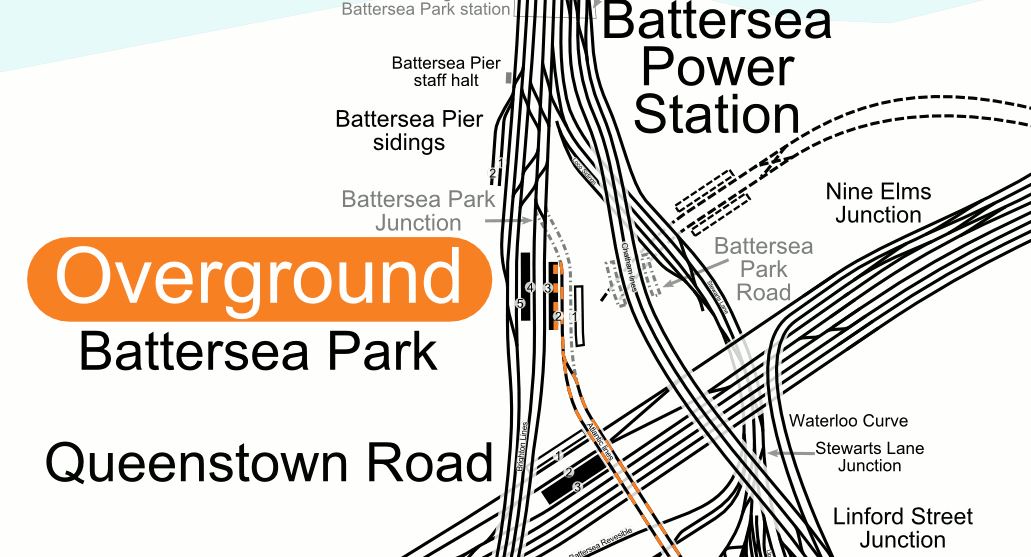
Note.
- The single track going in to Platform 2.
- Platform 1 at Battersea Park station is disused.
- The close proximity of the station to the new Battersea Power Station station, that opens in a few years.
These are some selected pictures of Battersea Park station.
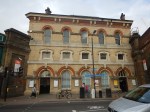
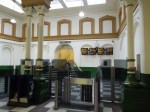
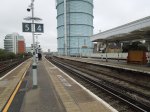
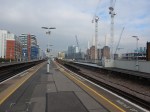
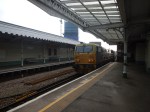
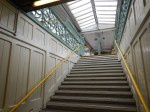
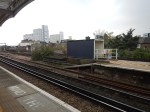
I think it is true to say, that it is a Victorian station, that wasn’t designed for the modern age.
- The station is Grade II Listed.
- The booking hall is a tidy Victorian example.
- There is a lot of excellent Victorian detailing.
- Platform 2 and 3 is wide with sensible stairs.
- Platform 2 is a well laid out terminal platform.
- Platform 4 and 5 is narrow with terrible stairs.
- Plstforms 3 and 4 seem to be long enough for ten-car trains.
It could be turned into what Roy Brooks would have called something better than a ruin. For those of you born since 1960, check the link to a memory of one of the world’s late great honest estate agents.
I’m sure Londoners used to buy the Sunday Times, just to read his adverts.
I can remember my late wife sitting on the sofa, laughing loudly, as she read aloud an advert about a flat, that wouldn’t suit an owner with a cat,.
Battersea Park station and a two tph service from Dalston Junction across South London have a lot going for them.
- I’m sure a budding Lord Foster or Zaha Hadid could come up with a scheme to fix the platform access and make the station passenger friendly and their name.
- The station is a short walk from Battersea Power Station station and must open up routes across London.
- Battersea Park station could easily handle two tph on a single platform.
- In A New Station For Battersea, I talked about a proposal to create a station at Battersea that linked the new tube station to the Southeastern lines into Victoria.
- In Four Trains Per Hour Between Dalston Junction And Battersea Park Stations, I write about how on the 6th November 2017, because of a track fault, London Overground ran a four tph shuttle between the two terminals.
Will all of this be tied together?
Train Requirements On The East London Line
Doing a quick calculation, I think that each of the four branches need the following number of trains for four tph.
- Dalston Junction to Clapham Junction – 8 trains
- Highbury and Islington to Crystal Palace- 8 trains
- Dalston Junction to New Cross – 2 trains
- Highbury and Islington to West Croydon – 8 trains
Which gives a total requirement of 26 trains.
Up the frequency to six tph on each branch or one train every 2½ minutes, which would be 24 tph through the Thames Tunnel and you get the following.
- Dalston Junction to Clapham Junction – 12 trains
- Highbury and Islington to Crystal Palace- 12 trains
- Dalston Junction to New Cross – 3 trains
- Highbury and Islington to West Croydon – 12 trains
Which gives a total requirement of 39 trains.
If you just have an increase to six tph on just the Clapham Junction and Crystal Palace routes as London Overground are proposing for 2020, you get the following.
- Dalston Junction to Clapham Junction – 12 trains
- Highbury and Islington to Crystal Palace- 12 trains
- Dalston Junction to New Cross – 2 trains
- Highbury and Islington to West Croydon – 8 trains
Which gives a total requirement of 34 trains, providing a service of one train every 3 minutes, which would be 20 tph through the Thames Tunnel.
This is eight more trains than at the present time.
It’s all rather impressive for the Thames Tunnel, which was built between 1825 and 1843, by the Brunels.
The Ultimate Capacity Of The East London Line
If we look perhaps ten years into the future, the following will have happened.
- Signalling will have improved.
- Crossrail will be running more than 24 tph through Whitechapel.
- Automatic Train Operation (ATO) will be driving the trains, with the driver keeping a vigilant watch, just as happens on the Victoria Line now!
- Passenger information and management will have improved and passengers will be able to handle the increased frequency of trains easily.
So if Dear Old Vicky can manage thirty-six tph in a 1960’s tunnel, will the East London Line be able to manage the same frequency in an 1840’s tunnel?
The Brunels would have made sure it happened and if it is needed, so will their engineering successors!
Let’s cut it back a bit and aim for 32 tph through the Thames Tunnel, as that was the sort of target engineers were looking at, for the Victoria Line in the 2000s, when the East London Line was being proposed.
How many trains will be needed to run the eight tph on the four routes, that would comprise thirty-two tph through the Thames Tunnel?
- Dalston Junction to Clapham Junction – 16 trains
- Highbury and Islington to Crystal Palace- 16 trains
- Dalston Junction to New Cross – 4 trains
- Highbury and Islington to West Croydon – 16 trains
Which gives a total requirement of 52 trains.
The London Overground has fifty-seven Class 378 trains. I can’t believe that the original fleet was sized on eight tph in operation through the tunnel and a few as hot spares and in maintenance!
But surely eight tph is impossible, as turning the trains at the terminal platforms would be too much!
Think again!
- The Victoria Line at Brixton and Walthamstow Central stations handles 36 tph using two platforms or 18 tph per platform.
- The Northern Line is targeting 36 tph on both lines, when it has been split into two.
With ATO, I’m sure each terminal platform can handle more than eight tph.
More Trains On The East London Line
According to the LR article, the planned new services on the East London Line will require another eight trains. This fits with my calculation.
- These trains have to be Class 378 trains, due to evacuation issues in the Thames Tunnel.
- These trains have to be able to work on lines with third-rail electrification.
London Overground has ordered six five-car Class 710 trains and they will be run on the North London Line and West London Line, where they will displace some five-car Class 378 trains for running on the East London Line.
Some five-car Class 378 trains on the Watford DC Line will also be replaced by four-car Class 710 trains.
So it would look like the East London Line will get some of the eight Class 378 trains that it needs.
Improvements To The North London Line/West London Line
The LR article says this.
London Overground have a long-held desire to increase the frequency on the WLL from 4tph to 6tph. They also aspire to another 2tph (at least) from Clapham Junction continuing to Stratford, to further increase the frequency on the North London Line (NLL). This would enable 10tph on eastern end of the North London line. This is due to be implemented with with main order of the new Class 710 stock.
The article also suspects that London Overground want to run the following services.
- 6 tph – Stratford to Richmond
- 6 tph – Stratford to Clapham Junction
This would deliver a twelve tph service between Stratford and Willesden Junction.
Living about halfway between those two stations, I’m not complaining.
But the article concludes, that London Overground’s objective can’t be achieved until some freight is moved to the Gospel Oak to Barking Line after the electrification of that line is completed.
As I said earlier, the pair of lines will get six extra five-car Class 710 trains and displace some Class 378 trains to the East London Line.
So will London Overground stick with a mixed fleet on these lines? Or will they perhaps run one class on each route?
I have no idea, but there are quite a few Class 378 trains, that could be displaced by new Class 710 trains to allow the East London Line frequency to be increased.
The Watford DC Line
Currently the Watford DC Line has a three tph service and I suspect that this needs six five-car Class 378 trains to run it.
The LR article says that London Overground want to run four tph on this line and I calculate this will need eight four-car Class 710 trains.
The new trains will probably be a few minutes faster and they will offer an hourly capacity increase of six percent.
But they will release six five-car Class 378 trains to strengthen services on the North, East and West London Lines.
Step-Free Access
Step-free access from platform to train is not good on the Watford DC Line.
You step up into a Class 378 train and step down into a Bakerloo Line 1972 Stock train.
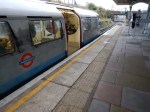
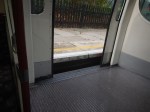
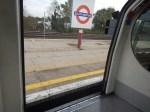
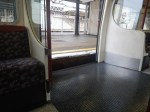
These pictures show the problem with the Class 1972 trains. When I got off one of these trains at Willesden today it was a jump.
It is some of the worst step-free access on the Underground.
On my short trip on the Bakerloo Line today, I deliberately sat in the last carriage. On most stations the the last carriage was aligned with the end of the platform, which leads me to the conclusion, that most stations are about as long as the trains, which are over 110 metres long.
Can a step-free platform be designed, that will work with the following trains?
- The current Class 378 trains
- The future Class 710 trains
- The current Underground 1972 Stock.
- Any future deep-level Underground trains
The latter could make design more difficult, if the train is built for Unattended Train Operation (UTO) and if platform edge doors are needed at all stations with UTO.
The only solution I can think of, is one that is used in Karlsruhe in Germany and is now being used at Rotherham Central station to accommodate main line trains and Class 399 tram-trains.
The platform is long enough to have two sections, with different platform heights.
- A high section is used with the main line trains.
- A low section is used with the Underground trains.
- Platform edge doors could be fitted to the low section.
- A gentle slope would connect the two sections.
- Entry to the combined platform could be near where the two sections join.
Also, consider the following.
- Given that the length of a Class 710 train is around 80 metres and that of a 1972 stock is in excess of 110 metres, it will be a long platform.
- Selective door opening will be installed on all trains.
- I do wonder, if the new trains for the Watford DC Line are only four cars to ease the problem of step-free access. The reduced length could knock twenty metres off every platform.
- Could we even see the new Underground trains built to a shorter length?
I’m sure that a workable platform design is possible.
The Bakerloo Line And The Watford DC Line
The Bakerloo Line is being extended to the South, but nothing has been said about how it will be changed in the North.
Possibilities for Northern terminals for the line could include.
- Queen’s Park
- Stonebridge Park
- Harrow and Wealdstone
- Watford Junction
It’s also complicated because the depot is at Stonebridge Patk.
I wouldn’t rule out extending the of the Bakerloo Line to Watford Junction, as is talked about in Wikipedia under Re-extension to Watford Junction.
What would be the consequences, if the following were to be done?
- An extended Bakerloo Line has an increased frequency of at least twenty tph between Watford Junction and Lewisham.
- The new trains for the Bakerloo Line are faster.
- The new Bakerloo Line trains had a capacity increase from the current 700, so they carried about the same as the five-car Class 378 trains.
The increased frequency of Bakerloo Line service, would probably result in London Overground’s Euston to Watford service to be discontinued.
The benefits would be as follows.
- Stations from Queen’s Park to Watford Junction would get a more frequent service, of possibly a train every three minutes.
- The problems of step-free access and platform-edge doors would be solved, as all trains would be on the Bakerloo Line.
- London Overground would not need any platforms at Euston, which could help in the rebuilding of Euston for HS2.
It would also mean that London Underground got another high-frequency Underground Line without any junctions, that could be run very efficiently.
But it would mean Kilburn High Road and South Hampstead stations would lose their connection to Euston.
A Willesden Junction To Stratford Via Kilburn High Road, South Hampstead and Primrose Hill Service
Reopening Primrose Hill station has been mooted in the past. This is said in the Wikipedia entry for the station.
It has been proposed to re-open Primrose Hill station by bringing the short stretch of line between South Hampstead and Camden Road stations back into the regular passenger service by incorporating it into the London Overground network.
A reopened Primrose Hill station, would only be a short walk to Chalk Farm station.
At Willesden junction station, there is even a convenient South-facing bay platform, that is numbered 2 and could handle four tph.
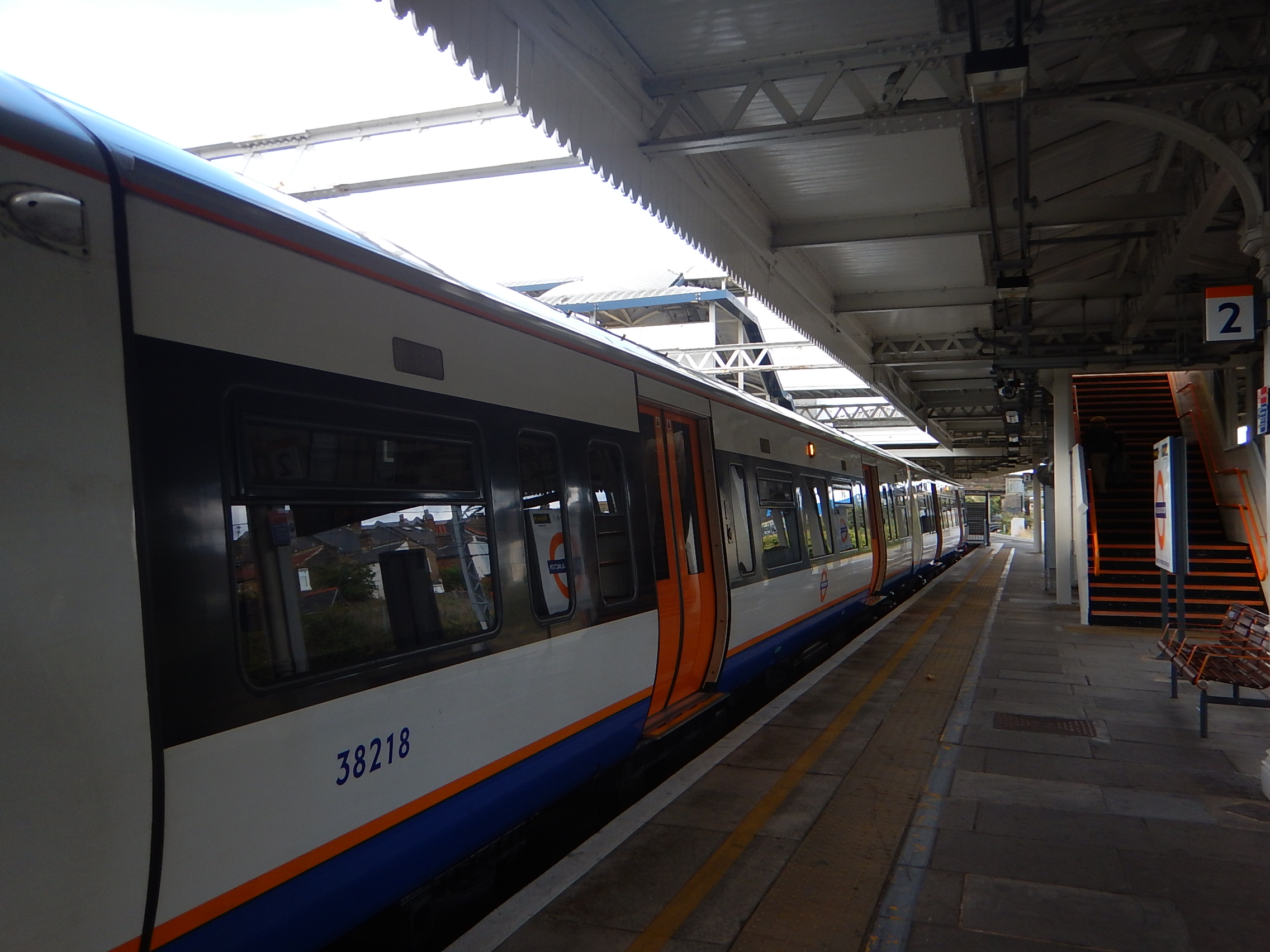
The picture shows a Class 378 train in Platform 2 at Willesden Junction station, was taken on Sunday, the 2nd of October 2016, during engineering works, when a Rail Replacement Train was run between Willesden Junction and Stratford stations.
But there are problems.
- Where would you terminate the service at its Eastern end? Highbury and Islington, Stratford or somewhere else, like perhaps a reopened Maiden Lane station?
- Kilburn High Road and South Hampstead stations sill lose their srtvoce to Euston and they would have to change at Highbury and Islington.
- Organising the time-table might be difficult.
- I also think, it would mean that Kensal Green station would be very difficult to make step-free, if it had to be served by both Overground and Bakerloo Line trains.
On the other hand, Queen’s Park station is an excellent example of a step-free cross-platform interchange between the two types of trains and Willesden Junction station could be equally good.
Crossrail, The Bakerloo Line And The Watford DC Line
All these three lines either serve Watford Junction or it has been suggested that they do.
- Plans to extend Crossrail up the West Coast Main Line would probably include a stop at Watford Junction, if they materialise.
- Extending the Bakerloo to Watford Junction is suggested from time-to-time.
- The Watford DC Line already serves Watford Junction station.
Given that a high-frequency efficient extended Bakerloo Line running between Watford Junction and Lewisham would serve the smaller stations on the way to Watford very capably, I suspect that whatever happens to Crossrail and the Watford DC services, the Bakerloo Line will be extended to Watford Junction.
The extended Bakerloo Line would have the following characteristics.
- Probably all trains running between Watford Junction and Lewisham.
- A frequency of upwards of 20 tph
- No junctions and end-to-end running like the Victoria and Jubilee Lines.
- Full step-free access at all stations.
- New faster, walk-through trains with wi-fi and 4G.
- An efficient connection to Crossrail at Paddington will be opened in December 2018.
- National Rail connections at Charing Cross, Elephant and Castle, Lreisham, Marylebone, Paddington, Waterloo and Watford Junction
It may be London’s forgotten line, but once extended, it could be a new star. Especially, if it gets to be linked directly into Old Oak Common station for all the services including HS2, that will be available there.
The Watford DC Line doesn’t connect to Crossrail, which makes me feel, that when everything gets decided about the extended Bakerloo Line and the new station at Old Oak Common, then the Watford DC Line could miss out.
Through Running Between North And East London Lines
I seem to remember reading in Modern Railways about ten years ago, that there was an ambition in TfL to extend some East London Line trains to Willesden Junction.
Look at this map from carto.metro.free.fr, which shows the lines at Highbury and Islington station.
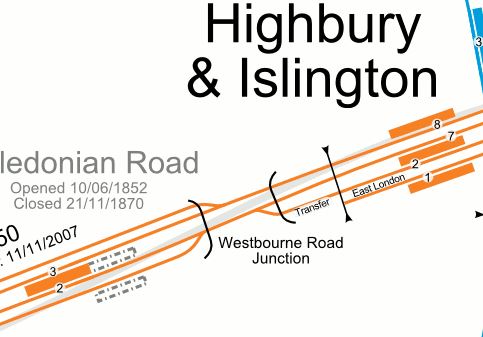
Note the single line labelled Transfer, that connects Platform 2 at Highbury and Islington station to the Westbound North London Line, that runs through Platform 7.
I think it would be possible to make Platform 2 into a bi-directional through platform.
- All Westbound trains on the Westbound North London Line would leave from the island platform between platforms 2 and 7.
- Voltage changeover between 750 VDC and 25 KVAC would take place in Platform 2.
- A four tph service in both directions would mean a train every 7-8 minutes.
- The four-track section of the North London Line between Highbury and Islington and Camden Road stations, includes two reversible lines.
Was this all future-proofing to allow services to run between the North London and East London Lines?
It is interesting to note, that Platform 2 is used for services to and from West Croydon station.
These services take around 51-55 minutes and currently need eight trains for a four tph service.
This screen capture shows the train timetable, when I rode between Highbury and Islington and Willesden Junction stations.
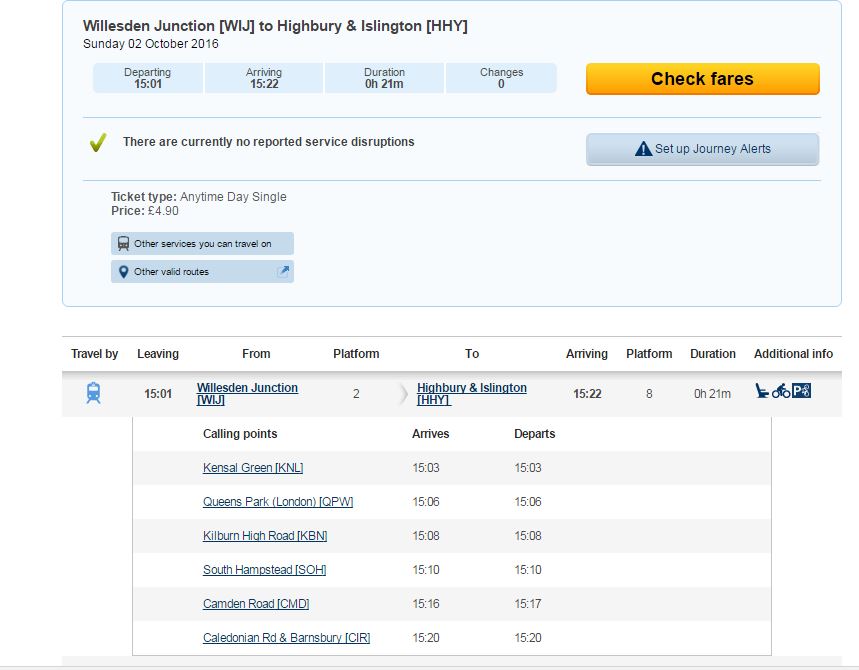
Note that the journey takes 22 minutes.
I am led to the conclusion, that it would be possible to run a service between West Croydon and Willesden Junction stations.
The service would run via Kilburn High Road, South Hampstead and and a reopened Primrose Hill stations.
It would have a frequency of four tph.
Trains would change voltage at Highbury and Islington station.
I would certainly like the service for these reasons.
- I regularly travel along the North London Line from the West to Dalston Junction station. The change between the North and East London Lines at Highbury and Islington can be very busy.
- Going West along the North London Line from Dalston Junction can involve a lot of walking up and down at Highbury and Islington station.
- Using Dalston Kingsland station to go East can be difficult, as there are masses of passengers changing between rge two Dalston stations.
- I like to go to Primrose Hill and London Zoo.
- Could the service also ease the pressure on Camden Town station, until the upgrade is complete?
I have no idea if London Overground would do this, but if there was a vote, I’d say yes!
The Gospel Oak To Barking Line
I have never seen a detailed analysis of running trains on the Gospel Oak to Barking Line (GOBLin).
Currently, eight Class 172 trains provide the four tph service. Consider this round trip.
- Leave Gospel Oak station at 09:05
- Arrive Barking station at 09:42
- Leave Barking station at 10.03
- Arrive Gospel Oak station at 10.45
Note.
- It is a very generous timetable.
- There is a twenty minute turn-round time at both ends of the route, which is good for recovering the timetable after a delay.
- The Class 710 trains could save time at every one of the ten stops, as they accelerate faster, have smooth regenerative braking and should have a better platform-train interface.
This leads me to the conclusion, that the Class 710 trains could run a faster service on the line.
Extending Services To Barking Riverside
Barking Riverside station will only be a short distance from Barking station and I suspect, it would only add ten minutes at most to the end-to-end journey time.
As there is a twenty minute turn-round time, I suspect that a train will be able to go from Gospel Oak to Barking Riverside and back again in under two hours.
This would mean that the current service of four tph could be possible on the extended route, with the same fleet of eight trains.
This is said in the MR article about the Class 710 trains.
The remaining two additional four-car units would support the extension of Gospel Oak to Barking services to Barking Riverside.
This leads me to one of these conclusions.
- The service is going to be extended somewhere else.
- The frequency on the route is going to be increased to five tph.
The next few sections deal with the various options.
Extending To The West Along The North London Line From Gospel Oak
I sometimes change between the GOBLin and the North London Line, as I can get a convenient bus from my house to Harringay Green Lanes station.
Allowing GOBLin services to continue along the North London Line would need extensive and expensive remodelling of Gospel Oak station to create an Eastbound plstform for the GOBLin.
The tracks to the West of the station, would probably need to remodelled to allow efficient operation.
The GOBLin trains would also be four-car trains, as opposed to the five-car trains on the North London Line.
Extending To The North Along The Midland Main Line
By using the Carlton Road Junction after Upper Holloway station, GOBLin trains could access the Thameslink tracks and go North to a convenient station.
Unfortunately, the track layout is such, that crossing to the Dudding Hill Line is difficult.
But continuing to the proposed Brent Cross Thameslink station is surely a possibility.
Although, I can’t see anything happening until plans for the West London Orbital Railway are agreed and Brent Cross Thameslink station is opened.
So it can probably be discounted for a few years yet!
Extending Across The Thames From Barking Riverside
Barking Riverside station is being built so that an extension under the Thames is possible.
But as a tunnel would be involved, I can’t see this extension being started or even planned fully for several years.
Five tph On The GOBLin
If two extra trains are added to the GOBLin fleet, this would mean that there are ten trains, which would be enough to run a five tph service between Gospel Oak and Barking Riverside stations.
I think this will be the most likely use of the two extra trains on the GOBlin.
Romford To Upminster
The Romford To Upminster Line is slated to get a brand-new Class 710 train to work the two tph shuttle.
The DR article says that it is possible that this line could be served by a Class 315 train, held back from the scrapyard.
This would mean a new Class 710 train could be deployed elsewhere, where its performance and comfort levels would be more needed.
Surely, this would be enough capacity for the line and a lot cheaper than a new Class 710 train! Provided of course, that it was reliable, comfortable and could maintain the current two tph service.
I discuss this in detail in A Heritage Class 315 Train For The Romford-Upminster Line.
Conclusion
It looks like Transport for London are planning for a large increase in services on the East London Line.
Uxbridge Station
These pictures show Uxbridge station.


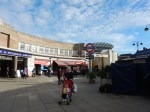
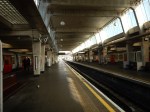
Note.
- The station was designed by Charles Holden and is Grade II Listed.
- It is in the centre of Uxbridge, which is where it should be!
- It is step-free.
- It’s got a beautiful station clock.
It is a station that has great potential for turning it into one of the London Underground’s best stations.
Rayners Lane Station
These pictures show Raynes Lane station.


Note.
- The station, like many of the period, was designed by Charles Holden and is Grade II Listed.
- The Metropolitan and Piccadilly Lines divide to the East of the station.
- There is no step-free access.
- The pictures show the step-down into a Piccadilly Line train.
I don’t think it will be easy to convert this station to full step-free access for both Metropolitan and Piccadilly Line trains.
Is There Going To Be More Change At Ealing Broadway Station?
Ealing Broadway station is being upgraded for Crossrail.
In the November 2017 Edition of Modern Railways, there is a Capital Connection supplement, which discusses London’s railways.
On Page 7 in a section about the sub-surface lines, this is said.
One possibility being discussed is that the Piccadilly should take over the District’s Ealing Broadway service. This would free up space on the South side of the inner-London circle for more City trains off the Wimbledon branch, one of the sub-surface network’s most-crowded routes.
On Page 15 in a section about the Mayor’s plans, this is said.
It is suggested Piccadilly Line services run to Ealing Broadway instead of the District Line, enabling increased frequencies on the latter’s Richmond and Wimbledon branches.
As the plan is mentioned twice, certainly the proposal is being thought about.
The Lines At Ealing Broadway Station
This map from carto.metro.free.fr shows the lines at Ealing Broadway station.
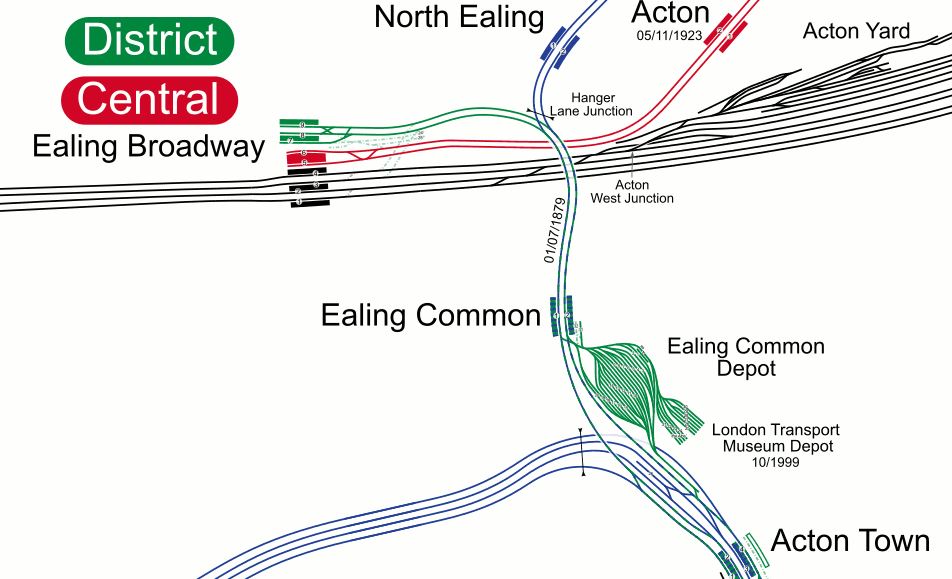
Note how the Piccadilly and District Lines share tracks from Ealing Common station, which then split with District Line trains going to Ealing Broadway station and Piccadilly Line trains going to Rayners Lane and Uxbridge stations.
If the change happened and Ealing Broadway station was only served by the Piccadilly and Central Lines of the Underground, then there might be opportunities to improve the efficiency of the Underground side of the station.
Crossrail Effects On Access To Heathrow
Crossrail will change the way a lot of passengers go to and from Heathrow Airport.
Crossrail To Heathrow
From May 2018, the service will be.
- 4 trains per hour (tph) between Paddington and Heathrow Central and Heathrow Terminal 4
After December 2019, the service will be.
- 4 tph between Abbey Wood and Heathrow Central and Heathrow Terminal 4
- 2 tph between Abbey Wood and Heathrow Central and Heathrow Terminal 5
In addition these services will serve all station including Canary Wharf, Liverpool Street, Bond Street,Paddington and Ealing Broadway.
Effect On Heathrow Express
It will be difficult to predict what will happen to Heathrow Express, but I suspect several groups of passengers will desert it.
- Passengers wanting to go anywhere East of Paddington without changing trains.
- Passengers wanting any Crossrail station.
- Passengers, who don’t like the prices of Heathrow Express.
- Passengers using Oyster or contactless cards.
- Passengers who want to ride on London’s spectacular new Crossrail.
After Old Oak Common station is opened, the numbers will further decrease.
Will Heathrow Express survive?
Effect On Piccadilly Line
The current Piccadilly Line route to the Airport will not be closed, as for many it will still be a convenient route to the Airport
- Passengers who live on the Piccadilly Line and don’t want to change trains. Think Southgate, Knightsbridge, Hammersmith and Osterley!
- Passengers to the East of Acton Town station.
- Passengers, workers and others needing to go to Hatton Cross station.
If Crossrail connected with the Piccadilly Line at say Holborn, it would be all so different.
Effect On District Line
When Crossrail opens, the District Line will become a loop from Crossrail, between Ealing Broadway and Whitechapel running along the North Bank of the Thames via Earls Court, Victoria, Charing Cross and Monument.
The step-free interchange at Ealing Broadway could become busy with passengers travelling to and from the Airport.
Effect On Piccadilly Line Overcrowding
Heathrow trains on the Piccadilly Line can get very overcrowded with so many passengers with heavy cases.
It must sometimes be very difficult to get on a Piccadilly Line train between Heathrow and South Kensington stations.
Crossrail should take the pressure from these trains, by allowing passengers to use the District Line with a change at Ealing Broadway.
Effect On My Personal Route
My personal route to the airport is to take a 141 bus to Manor House station and then get the Piccadilly Line. It takes 94 minutes.
After Crossrail fully opens, if I took the East London Line from Dalston Junction to Whitechapel and then used Crossrail, I’d take 57 minutes.
Conclusion
Crossrail will affect the way many get to Heathrow Airport.
But there are large areas of London, who still will need to change trains twice to get to the airport.
Piccadilly Line To Ealing Broadway Effects
Adding Ealing Broadway station as a fourth Western terminus to the Piccadilly Line will have effects, but not as important as the opening of Crossrail.
Some Improved Journey Times To Heathrow
Some Piccadilly Line stations will see improved journey times to Heathrow.
Hammersmith to Heathrow currently takes 37 minutes by the Piccadilly Line.
Taking a Piccadilly Line train to Ealing Broadway and then using Crossrail could save a dozen minutes.
The District Line Connection To Crossrail At Ealing Broadway Is Lost
Passengers along the District Line from Monument to Hammersmith will lose their direct access to Crossrail at Ealing Broadway.
Cross-platform access to the Piccadilly Line at Hammersmith and Turnham Green will probably be provided or improved, but it will be a second change.
Note that until the Piccafilly Line gets upgraded and new trains arrive around 2023, the District Line with new trains and the soon to be installed new signalling may well be a better passenger experience.
More Trains To Richmond
This will certainly be possible, if some Ealing Broadway trains are diverted to Richmond.
But Crossrail has another delight in its cupboard for Richmond.
Old Oak Common station is scheduled to open in 2026 and will offer an interchange between Crossrail and the North London Line.
Richmond will certainly be getting a better train service to Central and East London.
More Trains To Wimbledon
This will certainly be possible, if some Ealing Broadway trains are diverted to Wimbledon.
The Ealing Common Problem
At Ealing Common station, the Piccadilly and District Line share the same tracks and platforms.
Some commentators have suggested that the new trains on the Piccadilly Line will be designed to work with platform-edge doors for improved safety and dwell times.
So if platform-edge doors were to be fitted to all stations on the Piccadilly Line as has been suggested, there would be no way the doors would fit the new S7 Stock of the District Line.
Swapping Ealing Broadway from the District to Piccadilly Lines would solve this problem and give more flexibility, but it might give London Underground other problems with regard to access for District Line trains to Ealing Common depot.
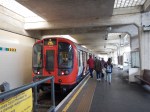
These pictures show Ealing Common station.
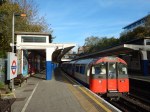
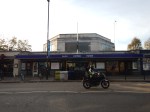
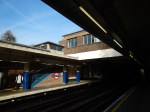

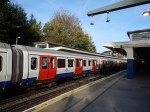
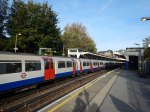
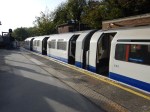
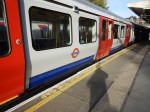
Note the difference of levels between the Piccadilly and District Line trains.
There would be no way to provide level access for both types of train using a Harrington Hump.
So is making a station that serves both deep-level and sub-surface lines, step-free, a problem that is still to be cracked?
This Google Map shows Ealing Common station.
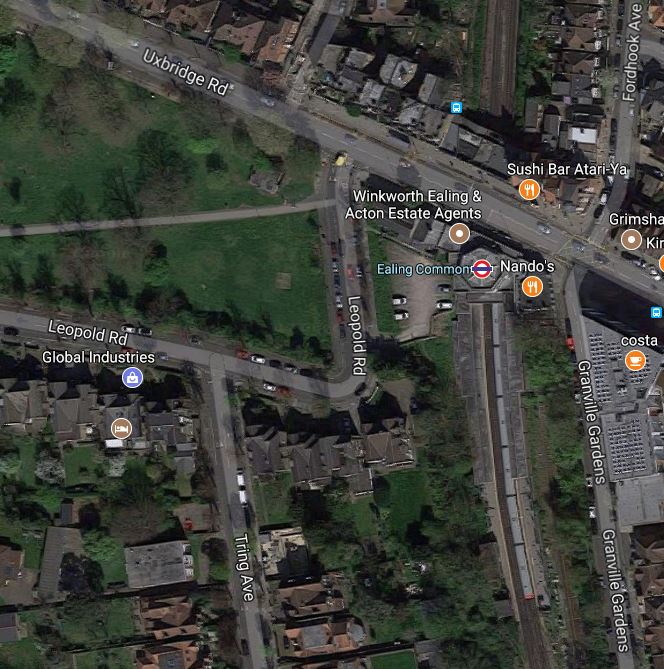
It doesn’t look that it is a station, where two extra platforms could be squeezed in, so both lines could have their own platforms.
Could Ealing Common station be one of the main reasons to serve Ealing Broadway station with the Piccadilly Line?
Acton Town Station
On a brief pass-through of Acton Town station, it would appear that the Ealing Common problem exists.
So making Acton Town station, a Piccadilly Line-only station, would ease making the station step-free, as it would only be served by one type of train.
Chiswick Park Station
Chiswick Park station only has platforms on the District Line and would need to be remodelled, if Ealing Broadway became the terminus of the Piccadilly Line.
One suggestion I found was to add two new District Line platforms to the Richmond branch.
This Google Map shows the station.
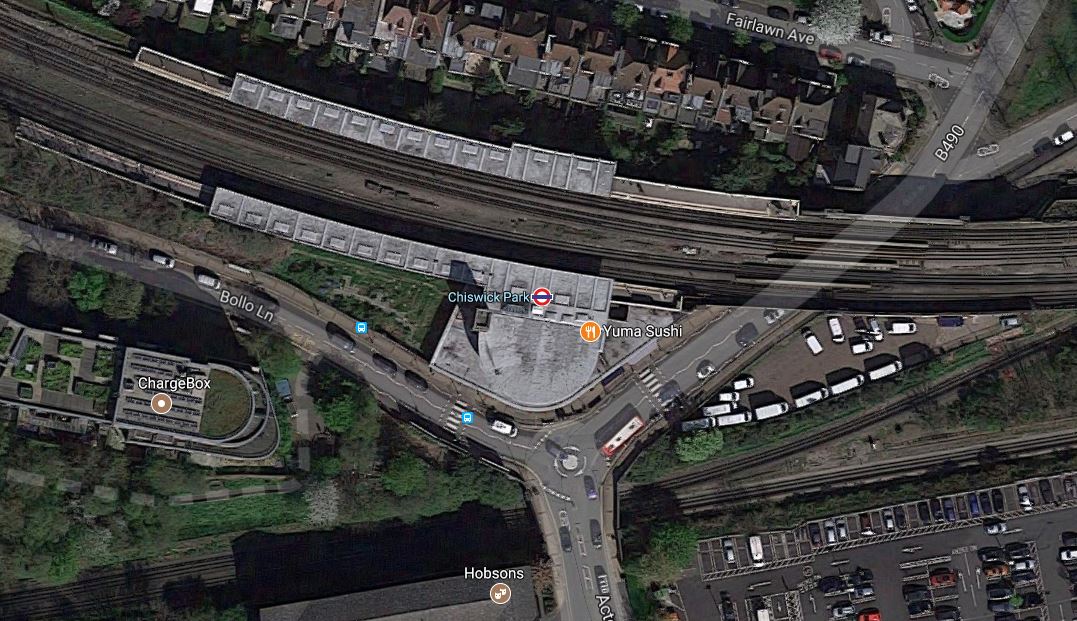
Note the Richmond branch passing South of the station.
Chiswick Park station is Grade II Listed and I’m sure that a good architect can find a more than acceptable solution.
Conclusion
It appears to me, there are two opposite forces on either side of a possible proposal to serve Ealing Broadway station with the Piccadilly Line, rather than the District Line.
- The District Line will form a loop South of Crossrail between Ealing Broadway and Whitechapel stations.
- Making a station step-free that handles both deep-level and sub-surface lines, is not an easy undertaking.
Running the Piccadilly Line to Ealing Broadway means that a change is required at Turnham Green, Hammersith or Barons Court stations to use the loop described in point 1.
But this change would enable the step-free access to be created in all stations in the area.
I think that the change of terminus will go ahead, with the following additions.
- Improved access to Ealing Common depot.
- Improved cross-platform access at Turnham Green, Hammersith or Barons Court stations.
- Two extra platform on the District Line at Chiswick Park station.
What started out as a simple change could end up as a substantial project.
But overall, because it sorts out step-free access in the area, I think it is a good proposal.
Could Bombardier Build A Hydrogen-Powered Aventra?
In Is A Bi-Mode Aventra A Silly Idea?, I looked at putting a diesel power-pack in a Class 720 train, which are Aventras, that have been ordered by Greater Anglia. I said this.
Where Would You Put The Power Pack On An Aventra?
Although space has been left in one of the pair of power cars for energy storage, as was stated in the Global Rail News article, I will assume it is probably not large enough for both energy storage and a power pack.
So perhaps one solution would be to fit a well-designed power pack in the third of the middle cars, which would then be connected to the power bus to drive the train and charge the battery.
This is all rather similar to the Porterbrook-inspired and Derby-designed Class 769 train, where redundant Class 319 trains are being converted to bi-modes.
I also suggested that a hydrogen power-pack could be used.
After writing Is Hydrogen A Viable Fuel For Rail Applications?, I feel that a similar hydrogen power pack from Ballard could be used.
 The Anonymous Widower