Cargo Hub Is Latest Plan To Get Manston Airfield Off Ground
The title of this post is the same as a news item in the business section of The Times today.
This is the first paragraph.
It is the airport that refuses to take off. But the latest attempt to turn the Battle of Britain airfield if Manston into a sstainable commercial proposition could take wing this autumn.
The Plan
The plan for Manston Airport is roughly on the following lines.
- The airport becomes a passenger and freight airport.
- Help create employment in a depressed area.
- Talk of a £300 million investment.
- A potential to take air cargo out of Gatwick and Heathrow.
But I’m fairly sceptical given that so many attempts have failed in the past.
This Google Map shows the position of the airport.
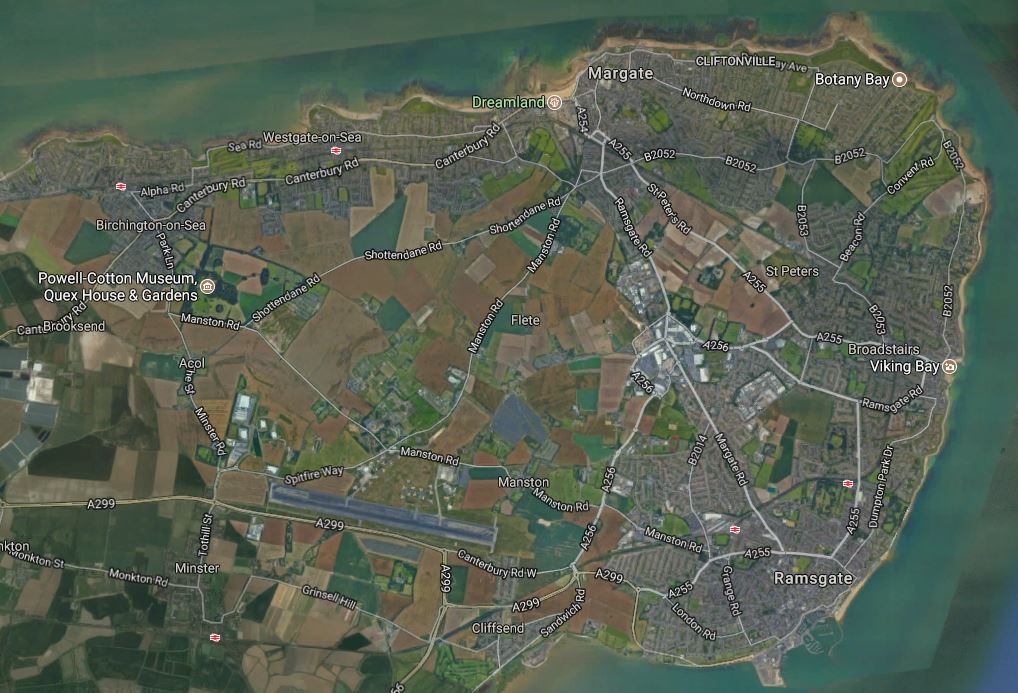
Note how the airport is ringed by the Thanet towns.
This Google Map is a close-up of the Airport.
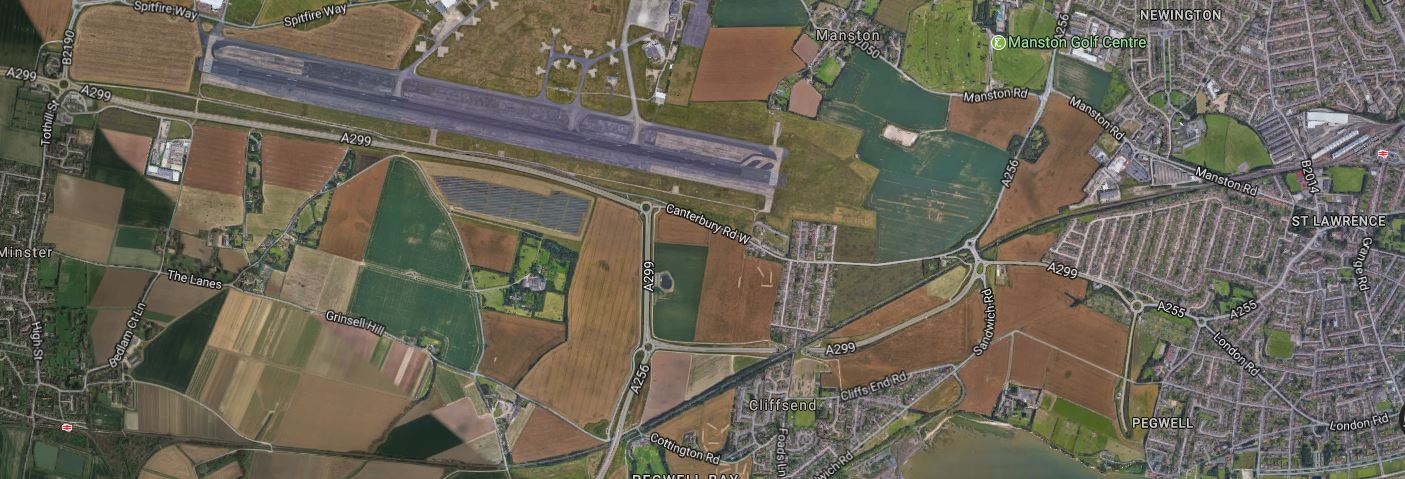
Note
- The Ashford to Ramsgate railway line running East-West to the South of the airport.
- Minster station is in the South-West corner of the map with Ramsgate station in the East.
- The A299 road runs along the South of the airport.
These are my observations.
Local Residents
The runway is roughly East-West on an alignment of 10-28.
Most take-offs and landings will probably we towards the West using Eunway 28.
I don’t know the area well, but I did get this image from Google Maps.
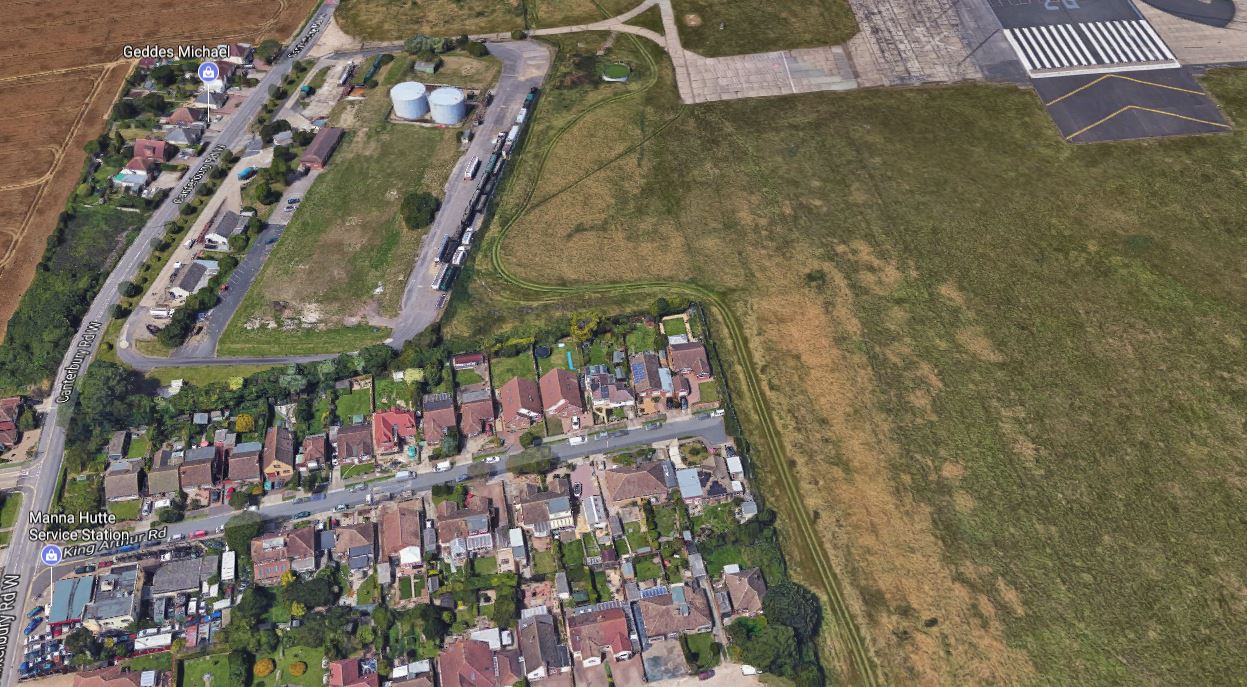
Note this housing just to the South of the final approach to Runway 28.
This Google Map shows the housing, the runway and the A299.
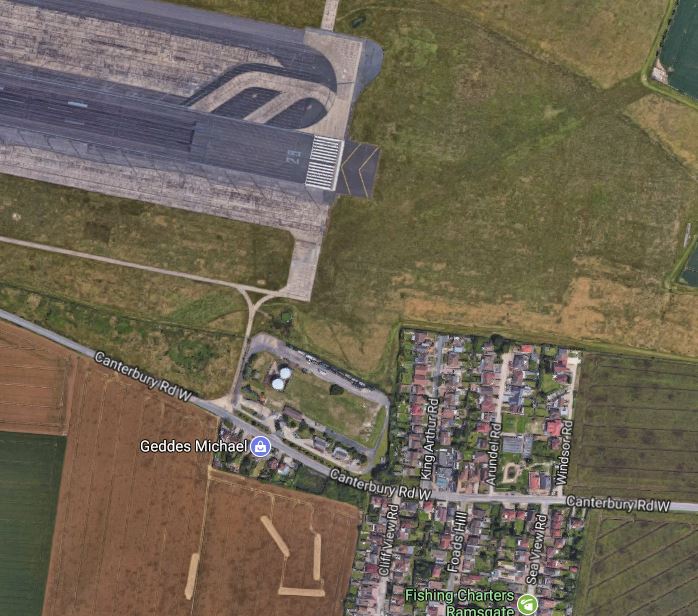
The residents can’t be too pleased of the plans.
Especially, as Google StreetView shows some of these houses to be newly-built sizeable bungalows.
Road Access
Road access to the airport would need to be substantially improved.
I can’t expect that the residents of Thanet will be pleased if a motorway is built across the countryside from the A2 South of Canterbury.
Rail Access
London’s newest airport is Southend Airport on the North bank of the Thames. The airport is growing as a base for easyJet and other low-cost airlines.
Southend Airport has several advantages, one of which is that the terminal is only a hundred metres from Southend Airport railway station, which is fifty minutes from Liverpool Street station.
In this day and age, I don’t believe that planning permission will be given for Manston Airport, unless a large proportion of freight, travellers and airport workers travel to and from the airport by rail.
Consider the current situation.
- As the Ashford to Ramsgate Line passes just to the South of Manston Airport, I would expect that the development would involve diverting this rail line, so it passed close to the airport.
- Current passenger services on the line, link to Ashford, Canterbury, Dover, Margate and Ramsgate, so at least it would be ideal for local airport workers.
- There are also a couple of trains per hour (tph) to and from London Victoria.
- Class 395 trains or Javelins also run using HS1 into St. Pancras. Currently, the fastest trains from |St. Pancras to Ramsgate take 79 minutes, so I suspect that to Manston Airport will take about 75 minutes.
The new Southeastern Franchise, which is currently being bid for will see improved access to this area of Kent, which could include.
- A second HighSpeed route opened into either Victoria or Waterloo using the route that used to be taken by Eurostar to Waterloo.
- Increase in HighSpeed services to Kent.
- Replacement of all the slow trains to speed up faster services.
I wouldn’t be surprised to see that Ramsgate gets the following HighSpeed services to London in every hour, that would call at Manston Airport.
- Two fast trains to St. Pancras.
- Two fast trains to Victoria
- Two fast trains to St. Pancras via the Medway towns.
Certainly, the frequency will be good.
Getting Passengers To And From The Airport
It is 2026 and these will be the times from Oxford Circus to the various London airports.
- Birmingham – 45 minutes – via HS2
- Gatwick – 68 minutes
- Heathrow – 27 minutes
- London City – 20 minutes
- Luton – 43 minutes
- Manston – 75 minutes
- Southend – 60 minutes
- Stansted – 43 minutes
Access from London might be by HighSpeed train, but people complain about the time it gets to Stansted now, so a time of 75 minutes may be a discouragement, when there are so many alternatives.
I believe that coupled with road access, which will be difficult to improve, that Manston Airport, will never be a significant player in the passenger market.
Getting Cargo To And From The Airport
The local residents are not going to want large numbers of trucks taking cargo to the airport.
But I believe that a lot of parcel and pallet transport, can go by train.
Doncaster-Sheffield Airport, which is also serious about cargo, is proposing to divert the East Coast Main Line, so that cargo trains can call at the airport. Manston Airport would have equally good rail access.
The interesting concept is what I call a HSPT or High Speed Parcel/Pallet train. The idea was first proposed in the June 2017 Edition of Modern Railways there is an article entitled Freight, Not All Doom And Gloom, which talks about high-value parcel carriers.
I have developed the concept, as I’m inclined to do in The Go-Anywhere Express Parcel And Pallet Carrier (HSPT).
I would use some of the soon-to-be redundant Class 321 trains and convert them into parcel and pallet carriers.
- They are four-car 100 mph dual voltage electric multiple units.
- They can run in lengths of twelve-cars if required.
- There are over a hundred of them of which the large proportion will need new caring owners.
- The trains may be thirty-five years old, but they are reliable and built out of steel to take punishment.
- They can easily be converted to bi-mode units, by adding underfloor diesel engines, so they can go anywhere in the UK.
- They could even go through the Channel Tunnel and run on the the French 25 KVAC network.
How many trucks would be taken from the UK’s crowded roads.
An Integrated Cargo Airport
An integrated cargo airport may have appeal.
Consider.
- Air cargo is increasingly containerised.
- Gatwick and Heathrow Airports are short of slots for passenger aircraft.
- Manston has a long runway, that could handle the largest cargo planes.
- The airport could easily have rail access to the |Channel Tunnel.
- The proposed HSPTs could use the Channel Tunnel with the correct signalling.
I worry that the poor road access would be a problem.
The Competition
Doncaster Sheffield Airport could be a serious competitor with equally good train and much better road access.
Conclusion
As in the past, it will be a difficult project to get working well
I also think the road access problems might kill it.
Improving The UK Rail Network
The BBC is moaning today about the time it takes to get by train across the North.
Somebody has already texted in about the South-West and I suspect that other areas will complain as well.
In Faster Trains For Slower In Scotland, I examined the effects of introducing new Class 385 trains in Scotland, where a lot will replace older electric trains.
These new trains will have the following characteristics.
- 100 mph maximum speed with faster braking and acceleration.
- The ability to execute a station stop with the minimum possible dwell time.
- On-board wi-fi and possibly 4G signal boosters.
- Regenerative braking, which is possibly handled by onboard energy storage.
I came to the following overall conclusion.
Modern 100 mph trains with the ability to execute fast stops at stations are good for operators and passengers alike.
I will illustrate the importance of new trains like these with a few simple examples.
Waterloo To Chessington South
The current Class 455 trains between Waterloo to Chessington South stations take around 36-38 minutes with nine stops on the journey.
So a typical return journey takes the following times.
- Waterloo to Chessington South – 36 minutes
- Turning train at Chessington South – 15 minutes
- Chessington South to Waterloo 38 minutes
Giving a total time of 89 minutes.
This means that three trains are needed to provide a two train per hour (tph) service on the route.
The new franchise holder; South Western Railway, is going to replace the Class 455 trains with new Class 701 trains
Wikipedia says this about the trains.
The Class 701 will feature regenerative braking, wide gangways between coaches, wide doors for ease and efficiency of boarding and alighting, 2+2 seating arrangement, Wi-Fi and at-seat USB charging points, as well as real-time passenger information screens, air conditioning and accessible toilets for disabled passengers.
Comparing the new and current trains shows.
- The Class 701 trains are 100 mph trains, whereas the Class 455 trains are only capable of 75 mph.
- The Class 701 trains will be capable of running under ERTMS, which will allow higher frequencies between Wimbledon and Waterloo.
But most importantly, the Class 701 trains could be able to save between one and three minutes at each station stop.
Also on this route.
- The outer four stations are on the double-track Chessington Branch Line, so there is probably time to be saved by good driving.
- Surely, the turnround time at Chessington South can be reduced.
On this example route, I think it is highly likely that the return journey can be reduced to a few minutes under the hour.
This would mean that two trains would be needed for the two tph service and it also opens up the possibility of providing a four tph service on the route with just four trains.
Would four five-car trains per hour, be better than two ten-car trains for both the operators and passengers?
Ipswich To Cambridge
The current Class 170 trains between Ipswich and Cambridge stations take around 80 minutes with seven stops on the journey.
So a typical return journey takes the following times.
- Ipswich to Cambridge – 80 minutes
- Turning train at Cambridge – 5 minutes
- Cambridge to Ipswich 80 minutes
Giving a total time of 165 minutes, which is bulked up to three hours with a generous turn round at Ipswich.
This means that three trains are needed for 1 tph and six trains would be needed to provide a 2 tph service.
Greater Anglia have said they will do the following.
- Run a train between Peterborough and Colchester at a frequency of 1 tph.
- This extra service will overlap with the Ipswich to Cambridge service and provide a much-needed 2 tph service between Ipswich and Bury St. Edmunds.
- Replace the Class 170 trains with Class 755 trains.
But a 2 tph service is needed on the whole route.
So how will the new Class 755 trains help achieve this aim?
- Although the Class 170 trains are relatively modern having been built around the Millenium, the new Class 755 trains will quite likely have an improved dwell time. So expect to see a small saving at each stop.
- Both trains are 100 mph trains, but the route is probably timetabled for a Class 153 train, which is only a 75 mph train.
- Greater Anglia have said, they will use electrical power in every place possible.
- The Ipswich to Cambridge route, shares the track between Ipswich and Haughley Junction with the electrified Great Eastern Main Line, so the trains may well save more minutes on this section with its two stops at Needham Market and Stowmarket.
- Network Rail can also do their bit, by removing some of the many level crossings and improving the speed limit on the sections of the route without electrification. The Class 755 trains will take advantage.
- Stadler have been experimenting with onboard energy storage and have committed to supply trains with batteries to Merseyrail. Handling regenerative braking under diesel mode using energy storage would give a fuel saving and improved accelerastion.
I suspect that Greater Anglia’s have to a plan to eventually reduce the journey time between Ipswich and Cambridge to an hour.
This would mean that only two trains would be needed for a 1 tph service or four trains for a 2 tph service.
Having lived along that line for over thirty years, I know that passengers will flock to an enhanced service.
As Greater Anglia have ordered 14 x three-car and 24 x four-car trains to replace about thirty assorted diesel trains, they certainly have ambitious plans.
Manchester Victoria To Huddersfield
The current slow services between Manchester Victoria and Huddersfield stations take around 45 minutes with six stops on the journey.
Northern is replacing the current 75 mph Class 156 trains with new 100 mph Class 195 trains, which have a much shorter dwell time.
So could we see the forty-five minute timing improved to a thirty minutes service, which is achievable by TransPennine Express with their current Class 185 trains?
I think we could, and it could even be fast enough to achieve a two tph stopping service with the same number of new trains.
Summing Up
In these examples, I have applied the following improvements to the current routes.
- Trains with a 100 mph operating speed.
- Trains with an improved station dwell time.
- Trains with regenerative braking using onboard energy storage, where possible.
- Rewritten timetables assuming faster modern trains are always available.
- Selective Network Rail improvements like removal of level crossings and improved signalling.
In most cases, this results in the following.
- Improved journey times.
- Higher frequencies.
Generally, this can be achieved with the addition of a couple of trains.
In addition there are all the benefits of new or refurbished trains.
- Better passenger facilities.
- Wi-fi and increasing 4G connectivity.
- Reduced fuel and/or electricity consumption.
- Increased reliability and better timekeeping.
- New trains generally are longer or have a higher capacity.
I can’t see a loser, if new or refurbished trains are introduced on a route.
Unless of course, the trains introduced are real dogs!
Extensive Fleet Renewal
These are some of the franchises, that have been renewed in the last few years.
- Greater Anglia
- Northern
- Scotrail
- South Western Railway
- TransPennine Express
- West Midlands Trains
All have embarked on extensive fleet renewals.
The reasons are as follows.
- The current fleet contains a lot of scrapyard specials.
- The passengers want better facilities.
- New trains allow faster and more frequent services, as I outlined earlier.
- Money is freely available at realistic prices, from competitive train leasing companies.
- Saying you will buy new trains, helps you succeed in your bid for the franchise.
The only problem, is if a franchise promises too much and gets the sums wrong.
Improving The Infrastructure
To get the most of the new and refurbished trains, the infrastructure will need to be improved, in various ways.
- Improved track layouts, with perhaps new chords and passing loops.
- Removal of level crossings .
- Improved signalling.
- New stations.
There might even have been some elective new electrification.
Conclusions
The trains in this country can be improved significantly, by just getting rid of all the slow trains and improving the infrastructue to cope in small ways.
The train operating companies have realised this and are adjusting their franchise bids accordingly.
Waterloo Upgrade August 2017 – Waterloo To Sevenoaks
During this week Network Rail are working on the OverJubilee or the lines between London Bridge, Waterloo East and Charing Cross, so capacity from places like Sevenoaks station is reduced.
To compensate Southeastern are running a two trains per hour (tph) service between Sevenoaks and Platform 22 at Waterloo station.
- One train goes to Dover Priory station and the other goes to Ramsgate station.
- The trains take the old Eurostar route into Waterloo station over the Waterloo Curve or the Nine Elms Flyover.
So I thought I’d have a look, hoping to perhaps have a lunch in Sevenoaks.
These are a few pictures I took.

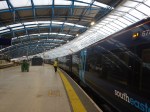










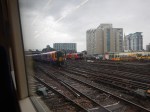
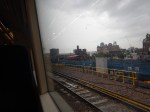

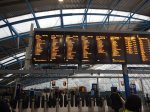
There would have been more, but it was chucking it down and the ones I took were terrible.
The Linford Street Junction And The Waterloo Curve
This map from carto.metro.free.fr shows the Linford Street Junction and the Waterloo Curve.
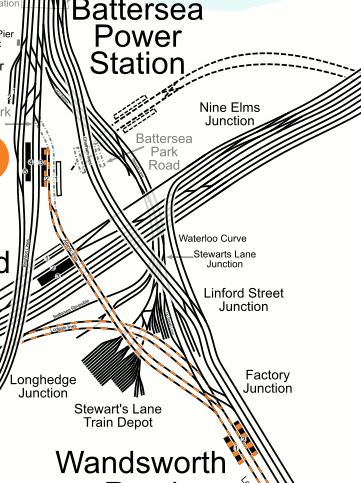
The Junction and the Curve are used by trains to connect from Waterloo in the North East, to the lines from Victoria that go across South London via Denmark Hill and Peckham Rye stations.
Note how the train going into Waterloo and the train coming out passed on the flyover. I assume this was for safety so that trains could leave and join the lines to Victoria at Linford Street Junction.
These pictures of the flyover were taken on another journey to Clapham Junction station.


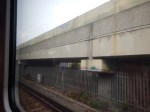

The flyover is recent and was built for Eurostar and completed in May 1993. There’s a page called Nine Elms Flyover on the Kent Rail website, which gives a detailed history of the flyover.
The Route Between Waterloo And Sevenoaks
The journey between Waterloo And Sevenoaks passed through the following stations without stopping.
- Vauxhall
- Wandsworth Road
- Clapham High Street
- Denmark Hill
- Peckham Rye
- Nunhead
- Lewisham
- Hither Green
- Grove Park
- Elmstead Woods
- Chislehurst
- Petts Wood
- Orpington
- Chelsfield
- Knockholt
- Dunton Green
From Lewisham station onwards the route is on the South Eastern Main Line.
Overall Impressions
The route seemed to work well, although between Waterloo and Lewisham, the train was rather slow, with a slight delay joining the lines out of Victoria.
The journey was timed at 47 minutes, with the fastest normal services between London and Sevenoaks being around ten minutes faster.
It certainly seems to be providing an extra two tph between London and Sevenoaks. In Eurostar days, it handled up to six tph.
I also suspect it could handle twelve-car trains, although my journey was in an eight-car train.
Future Developments Along The Route
There are going to be more developments to rail services along the route and also into Kent. Many will be driven, by the bidding for the new Southeastern Franchise.
Ashford International Station
In Kent On The Cusp Of Change – Ashford Spurs, I talked about the completed upgrading of Ashford International station, so that more Eurostar and other Continental services can call.
As the station is going to get more Highspeed services, I can envisage some innovative ways to make more and better use of this station.
Bakerloo Line Extension To Lewisham
The Bakerloo Line Extension will provide passengers with the option of using the Underground from Lewisham to access Central and North London.
Brockley Lane Station
The Lewisham Line runs between Peckham Rye and Lewisham stations and is used by Southeastern trains from both Victoria and Waterloo.
There used to be a Brockley Lane station, where the route crosses the current London Overground’s East London Line, close to Brockley station.
This is said under Future in the Wikipedia entry for the station.
According to the Department for Transport and the Transport for London rail prospectus report released in 2016, it has been listed as one of the Southeastern franchise planned improvements in the document entitled “New interchange at Brockley”, suggesting that there might be a case to reopen the station.
Creating an interchange here would certainly open up lots of travel opportunities.
It should be noted that Brockley station will from 2020, have a ten tph service to Canada Water and Whitechapel stations, with all their Crossrail and Underground connections.
Charing Cross Station
Charing Cross station is bursting at the seams, with typically fourteen and more trains in each hour.
This extract comes from Network’s Kent Route Study.
Charing Cross has just six 12-car platforms and Platforms 4, 5 and 6 are very narrow, leading to operational restrictions.
Class 465 units cannot operate in 12-car into these platforms and selective door operation is used on Class 375 units.
A major rebuild of the station could allow it to be extended south over the river, like Blackfriars, providing compliant platforms and greater passenger circulation.
At concept level, a new link to Waterloo from a southern entrance to Charing Cross may supersede Waterloo East allowing the station area to be used for additional track capacity, but there are likely to be many issues with a project on this scale.
One of the many issues would be how to keep services running during the rebuild of the station.
I suspect that Waterloo could have a role to play in handling some of the services.
Fawkham Junction Link
In Kent On The Cusp Of Change – Fawkham Junction Link, I talked about the proposal to reopen the Fawkham Junction Link, which was originally used to allow Eurostar trains to get to Waterloo station.
If this link were to be reopened, coupled with what has been happening between Waterloo and Sevenoaks, this would enable extra Southeastern HighSpeed services to Thanet to be run to either Victoria or Waterloo.
Victoria Station
Victoria station will periodically need work and might even be subject to a major upgrade project.
As with Charing Cross, I’m sure Waterloo could be used as an alternative terminus for a few trains.
Could Southeastern Services Into Waterloo Become Permanent?
I suspect that as has been successfully shown this week, that it is a feasible proposition.
But whether it actually happens would be up to the train operators.
Consider.
- Eurostar used to run a 6 tph service on this route.
- A single well-designed platform can handle 4 tph.
- The new platforms can handle twelve-car trains.
But most importantly, the train operators will have all the passenger data!
Conclusion
Southeastern and Network Rail have certainly shown it is possible to run a two tph service successfully between Sevenoaks and Waterloo.
If nothing else, it could prove to be a useful alternative route during engineering works or other diversions.
Waterloo Upgrade August 2017 – A First Trip Into Platform 1
I took these pictures as my train went from Clapham Junction into Platform 1 at Waterloo station.
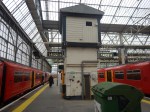
It appears that if your train is going into Platforms 1 to 6, Platform 6 shows on the National Rail web site.
Then just outside the station, it appears that this changes to the actual pltform when it is allocated.
My train was actually held for a minute or two, whilst another train left the platform.
It all seems to happen very smoothly.
Despite the rain!
I certainly think that they’ll achieve their objective of running twenty-two trains per hour into platforms 1 to 6.
Note how in this display from about 16:00.
- There are still quite a few delayed and cancelled trains due to the overrunning engineering work.
- Platforms 1 to 4 and 6 have a departure.
- Platforms 20-24 don’t appear. in the display.
It appears that a lot of the objectives have been completed.
Waterloo Upgrade August 2017 – A First Trip Out Of Platform 4
I took these pictures as my train left Platform 4.
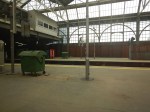

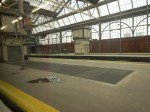
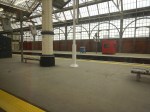
It does seem that most of Platforms 1 to 6 have been seen in the Departures display.

Note how in this display from about 16:00.
- There are still quite a few delayed and cancelled trains due to the overrunning engineering work.
- Platforms 1 to 4 and 6 have a departure.
- Platforms 20-24 don’t appear. in the display.
It appears that a lot of the objectives have been completed.
Waterloo Upgrade August 2017 – 28th August 2017
I took a quick trip to Waterloo station and took these pictures from a train departing from Platform 19.


There certainly seems to be less piles of track and other construction materials.
Slow Trains Outside The South-East
This article on the Times and Star website is entitled Mind the snores! Snail’s-pace trains four times slower outside South East.
This is said.
Trains connecting Britain’s major towns and cities are up to four times slower outside the South East, according to new research.
Press Association analysis of the quickest possible trains on 19 routes found that services from London travel at average speeds of 65-93mph, compared with just 20-60mph elsewhere.
The slowest route featured in the study was Liverpool Central to Chester, which takes 41 minutes to make the 14-mile journey (as the crow flies) at 20mph.
The example that they give between Liverpool Central and Chester stations, is one that I can use to illustrate the problem.
- Currently, services on this route are run by nearly forty-year-old Class 508 trains, that are only capable of 75 mph.
- The speed limit on the Wirral Line is just 70 mph, so the well-maintained elderly trains can’t even stretch their legs properly.
- The route has thirteen stops.
The timing is dreadful, if you consider that Merseyrail has exclusive use of the line.
The new Stadler Flirt trains are promised to save nine minutes between Southport and Hunts Cross stations, because they are better designed for passenger entrance and exit with faster speed and better braking and acceleration.
Applying this saving to the Liverpool Central to Chester route would reduce the time from 41 minutes to 35 minutes.
If these Swiss trains can get a roll on, I do wonder if they could do the round trip in under an hour, which would mean Merseyrail could run a four trains per hour (tph) service with just four trains. The slower Class 508 trains need six trains.
This logic can apply to a lot of rail lines in the UK.
Conclusion
The reasons for slow trains can be summed up as follows.
- Trains are timetabled for the slowest trains that work the route.
- A lot of routes, including quite a few in the South-East are timetabled for elderly scrapyard specials.
- Line speeds can often be improved by five or ten mph.
- Modern trains like Merseyrail’s new Flirts are designed to minimise the time it takes to stop at a station. This is referred to as the dwell time.
- Platforms and trains don’t always match up well.
- Level crossings can be a nuisance on some lines like the York to Scarborough Line, which has 89 of the little darlings in forty-two miles.
Trains can be speeded up by doing the following.
- Improving platforms, track and signalling to the highest possible standard and safe line speed.
- Choose trains that can make use of the good infrastructure.
- Consign scrapyard specials like Pacers and Class 508 trains to a well-deserved but long-overdue retirement.
- Make sure that train entry and exit for wheelchair users, persons of reduced mobility, buggy pushers and wheeled-case draggers is level.
- Have well-trained staff and excellent information on the platform.
This is the London Overground’s philosophy and it looks like Merseyrail are applying it.
Courtesy On London Buses
Today, a 30 bus was at the stop that takes me on my way in the morning. Especially, if like today, I was tryibg to get to the Angel I say trying, as Thanes Water are having a big construction party as they try to sort out the water mains on Upper Street. Normally, I have three routes that I can take. But due to the works, only the 30 is a sensible option, as the others go via Silicon Roundabout.
Courtesy 1 – The driver was about to leave as I approached, but he saw me coming and waited.
Courtesy 2 – The bus was pretty full with the only one empty seat for persons of restricted mobility. So I had one of those non-arguments with a pregnant lady about who would not have the seat. On seeing a vacant seat towards the back of the bus, I walked past and she eventually sat down. You see these after you situations a lot. The funniest, I saw was when an elderly Orthodox Jew and a black lady about twenty, delayed a bus whilst they decided who got on first. So charming!
Courtesy 3 – The seat I went for had a lady’s bag on it, but she quickly removed it, when she saw I was coming for the seat.
Courtesy 4 – At Highbury Grove a guy pushing a lady in a wheelchair needed to get on! As the ramp descended a guy who’d parked his baby in a buggy in the space made a quick exit, to allow the wheelchair to be parked.
Courtesy 5 – At the next stop, a lady with a buggy and two other children, needed to get on, but after other passengers told her the wheelchair space was occupied, she moved on.
London buses are generally friendly places and people often talk to each other.
I’ve actually never seen an argument over the wheelchair space in London.
I do wonder if this courtesy is helped, by London’s bus design, which always has a separate entrance and exit. The exit doubles as the wheelchair entrance.
Waterloo Upgrade August 2017 – A Progress Report From London Reconnections
This article on London Reconnections is entitled Back to the Future: (Re)lengthening and Shortening at Waterloo.
It describes in detail why and how the platforms at Waterloo station are being lengthened and shortened and information on other important topics can be gleaned.
Why Did The Train Hit The Barrier Train?
It doesn’t actually say why, but it does discuss the need for the barrier train to protect the workforce. As the train hit the barrier train, it seemed to have worked.
If you want to know more, I suggest you search for barrier in the comments added to the article by others. If nothing, you’ll realise there’s a lot to go wrong.
Why Weren’t The International Platforms Used Earlier?
The platforms were designed to handle six trains per hour (tph) with a long dwell time in the platform and after modification they will handle 18 tph for the Windsor Lines. So a lot of serious work was needed!
There was also complicated ownership of the five platforms.
Looking at it from a planning point of view, the provision of a terminal for Eurostar in London could have been handled better.
Why Are The International Platforms Only Being Used For A Few Weeks And Then Reopening in 2018?
The platforms are needed for this August’s blockade, but there is still a lot of work to do.
Effectively, the remodelling of the International Platforms have been almost split into two independent projects.
I like the way they’ve done this.
How Will Suburban Capacity Change?
In addition to the five platforms in the old International station, platforms 1-6 will also be remodelled for suburban use.
Currently, the slow lines through Wimbledon can handle 18-19 tph into four platforms.
After completion . these same slow lines will handle 22 tph, but they will have the use of two extra platforms.
In An Analysis Of Waterloo Suburban Services Proposed To Move To Crossrail 2, I showed that if you were running 4 tph on the four branches to Chessington South, Epsom, Hampton Court and Shepperton, which will transfer to Crossrail 2, then you need.
- New 100 mph trains.
- A capacity of 20 tph between Waterloo and Wimbledon.
Both these conditions will be met.
How Will The Passenger Experience At Waterloo Change?
Read the article and there are some snippets in there, that give me hope, that passengers will like it. See what you think!
Conclusion
It is a highly intricate and difficult project, that will be performed in a short time.
An Alternative View On HS3
This article on CityMetric is entitled Is Crossrail For The North The Biggest Priority For The North?
The article presents a lot of information and finishes with this paragraph.
None of which is to say that HS3 (I’m sticking with that name) is a bad idea: the existing trans-pennine links are shocking, and it’s pretty gross that transport secretary Chris Grayling scrapped plans to invest in rail in the north in literally the same week he called for another £30bn railway line for London. But if money is scarce, there may be better things we can do with it.
In Lord Adonis On Crossrail Of The North, I came to this conclusion.
Improvements are much-needed in the North, which could include.
- A short/medium term plan to deliver the best possible service with the new trains ordered by Northern and TransPennine Express.
- A long term plan to deliver a genuine 140 mph service across the North of England.
- A plan to improve the Calder Valley and Hope Valley Lines across the Pennines.
- A plan to improve some of the poor connections across the North.
- A strategy to make the best use of the two connections with HS2 at Manchester and Leeds .
A detailed plan is needed that lays down what should be done in the next ten to twenty years.
The plan is also needed as soon as possible.
Perhaps, a high speed route or routes across the North of England could be paired with improved local rail, tram and bus services in all urban areas.
 The Anonymous Widower