Waterloo Upgrade August 2017 – 4th August 2017
These pictures show everything ready for the start of the first partial closure of Waterloo station from tomorrow.

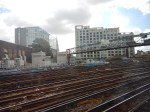
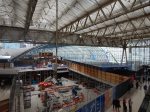
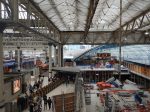
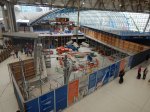
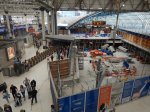


From tomorrow, the five platforms in the old International station will come into use until the 28th of August.
Note.
- The piles of track ready to be used to reorganise the lines into Platforms 1 to 9.
- The new destination board in front of Platforms 20 to 24.
- The lowered concourse in front of Platform to 24, which will become retail units.
I shall be there in the morning.
What Is Happening At Waterloo In August?
There have been various alarming headlines promising chaos at Waterloo sation for the whole of August.
This article in Rail Engineer, which is entitled Waterloo and South West Route Upgrade, gives a factual view of what should happen.
An Outline Of The Work To Be Done
This is a list from the article, which lays out the work being done.
- Redevelopment of the previous International terminal and platforms;
- Extension of Platforms 1-4 to accommodate 10-car trains in place of the present eight-car units;
- Platform extension at 10 outlying stations – Feltham, Chertsey, Camberley, Egham, Virginia Water, Sunningdale, Ascot, Martins Heron, Bracknell and Wokingham;
- Track and signalling alterations on the approaches to Waterloo to create longitudinal space for the platform alterations;
- Thirty new five-car Desiro class trains;
- Improvements in access to the Bakerloo, Northern and Jubilee tube lines from platforms 1/2 and 3/4 and from the former International terminal.
This Google Map shows the platform ends at Waterloo station.
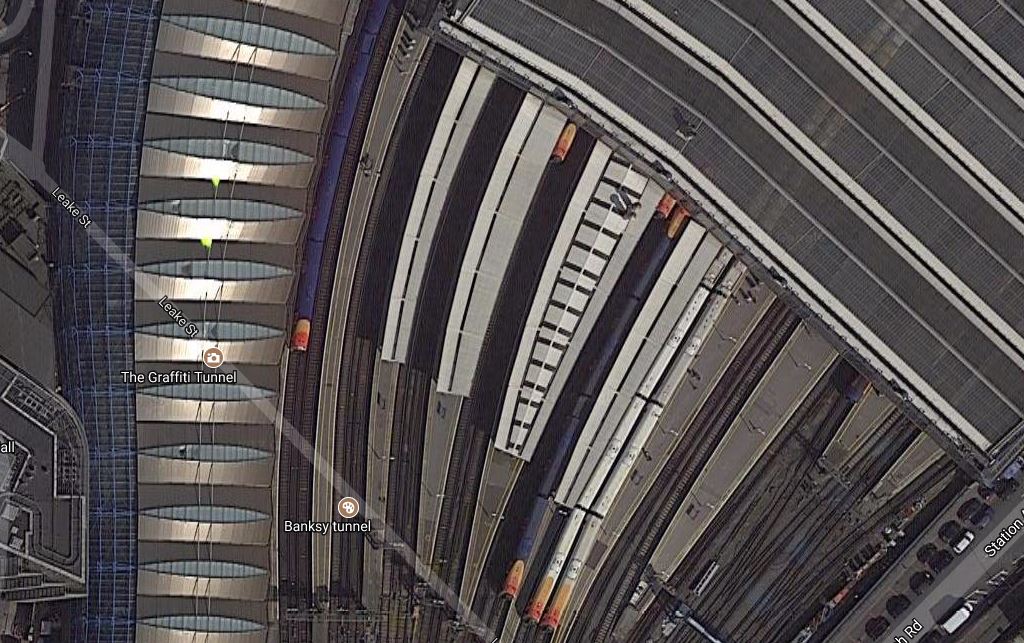
Note.
- The curved roof of the International station at the left
- The square roof of the main station, at the top right.
- Platforms are numbered from 1 to 24 from right-to-left.
- The five platforms in the International station are numbered 20-24.
- Platforms 1/2 and 3/4 are the shortest platforms to the right and will be lengthened to ten-cars.
- Platforms 5/6 and 7/8 are the medium length platforms. .
- Trains are visible in Platforms 8, 9 and 10.
- Platforms 11/12, 13/14, 15/16, 17/18 are all longer platforms.
- A train is visible in Platform 19, which lies alongside the International station.
This Google Map shows Platforms 1/2, 3/4 and 5/6.
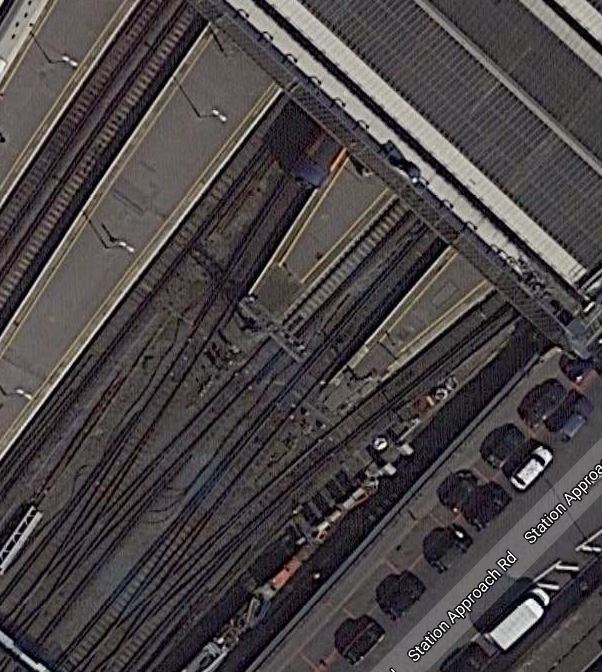
Note.
- The complicated track layout, linking the tracks out of Platforms 1 to 4 together.
- The nose of an eight-car train in Platform 4.
- Platforms 1-4 will probably need to be lengthened by something like forty metres.
- The black cabs and a white one alongside the station, which are 4.6 metres long.
It certainly isn’t a small and simple project.
The Work Schedule For August
This is a shortened extract from the article describing how the work will be done.
The overall programme commenced in 2016 with the initial redevelopment stages of the International platforms. They have been shortened at their far ends to take 12-car trains.
When these platforms are ready for use by Windsor line services on 5 August this year, Platforms 1 to 10 will be closed between then and 28 August. This closure will allow Platforms 1 to 4 to be extended to accommodate 10-car trains and Platforms 5 to 8 will be modified.
An even more severe closure, of Platforms 1-14, between 25 and 28 August, over the Bank Holiday weekend, is needed in order to complete the track and signalling alterations.
Extension of the platforms at the outlying stations is now complete apart from the work at Feltham, which is complicated by the proximity of a level crossing.
The end result of this, the largest investment for decades, will be an increase in peak time capacity into Waterloo of 30 per cent.
There is a lot more information in the full article.
What’s Wrong With The Class 707 Trains?
As I wrote earlier under point 5 in An Outline Of The Work To Be Done, thirty Desiro City Class 707 trains were to be bought for this capacity upgrade .
But the new operator; South Western Railway has decided that these trains are not wanted.
Why?
I’ve ridden both the Class 700 trains, which are the Thameslink version of the Class 707 train and Crossrail’s Class 345 train, which is a version of Bombardier’s new Aventra, which South Western Railway have ordered to replace their suburban fleet.
- In my view in terms of noise, vibration and harshness, the Bombardier product is better.
- The Class 345 train also gives a strong impression of space with its seating layout and large windows with slim pillars.
- The Class 345 train is a bit more spartan, but then it is effectively a large Underground train, rather than a long-distance commuter train.
- The Class 345 train has wi-fi and 4G connectivity, whereas the Class 700 trains have none.
Some of the trains being replaced by South Western Railway are refurbished Class 455 trains. They may be thirty-five years old, but after a high-class refurbishment, they do a good job and set a very high standard, that any new train must exceed.
If I was on a route across London , where I had a choice of one of these Class 455s or a new Class 700 train, I’d choose the older British Rail product, if there was no difference in time.
But it can’t just me passenger reaction to the two new trains, that have made South Western Railway ditch the trains. Although it is very important.
Bombardier have not disclosed all of the technical details of the Aventra and I think that these technical details are the key to the decision.
I have been suspicious for some time that Aventras are fitted with batteries to handle the regenerative braking and other issues.
In Do Class 800/801/802 Trains Use Batteries For Regenerative Braking?, I describe the electrical systems of Hitachi’s new trains and come to this conclusion.
I will be very surprised if Class 800/801/802 trains don’t have batteries.
Will the Class 385 trains for ScotRail have similar traction system?
So if Hitachi are using batteries, why shouldn’t Bombardier? In Is The Battery Electric Multiple Unit (BEMU) A Big Innovation In Train Design?, I write about my trip in Bombardier’s prototype battery train in February 2015.
So does an Aventra have a sophisticated battery system to handle the regenerative braking?
As an Electrical Engineer, I believe that using a battery to handle regenerative braking energy is much more efficient than returning the energy through the third rail or overhead wire, as another train needs to be close to use the energy.
Regenerative braking is quoted as saving up to twenty percent of the energy, but how much could be saved by an integrated train-track electrical system? Bombardier are understandably keeping their mouths shut.
But every Watt saved is less operating cost for the train operator!
Trains with onboard energy storage could give Health and Safety advantages, in places like stations and level crossings. If all trains using a level crossing were had onboard storage or were diesel, could the third rail be cut back to reduce the daanger to tresspassers?
There is also the facility for joining two five-car trains into a ten-car train automatically, which I’m sure is available on Aventras, just as it is with the Hitachi trains.
Splitting and joining at an intermediate station, as Sputheastern do at Ashford International, Great Northern do at Cambridge and Southern do at Gatwick, gives the following advantages.
- Only one train path is needed between London and the intermediate station.
- Between London and the intermediate station, capacity is maximised.
- The two split services have more appropriate capacity to their routes.
- Train companies probably spend less on track access charge and electricity.
- Train companies might even need less trains.
The only disadvantage is that passengers must get in the right portion of a train.
Is the major problem with the Class 707 train, that they don’t have the ability to couple and uncouple automatically?
Harlow Council Leader Jon Clempner Hopes Crossrail 2 Will Extend To Town
The title of this post is the same as this article in Essex Live.
You might feel that Jon Clempner has a point, if you look at this diagram of the West Anglia Main Line between the M25 and Stansted Airport.

Note that Harlow Town station is only five and a half miles North of Crossrail 2’s proposed terminal of Broxbourne.
Greater Anglia’s New Trains
Greater Anglia are replacing ten twelve-car Class 379 trains on Cambridge and Stansted Airport services with ten twelve-car Class 745 trains.
You might ask why bother with this replacement, if the number of trains and carriages are the same, which initially will result in the same number of services.
I answer that question in Why Are Greater Anglia Replacing Class 379 Trains With New Stadler Class 745 Trains?
But this doesn’t mean the current frequency is cast in stone, as the other fleet of Class 720 trains have a similar performance to the Class 745 and 755 trains, so they can mix it on the West Anglia Main Line.
I feel that all the trains would have these features.
- Trains would be fitted with the latest signalling, so they could work with headways between trains as low as two or three minutes.
- Trains will all be 100 mph trains or faster.
- Trains would be designed to stop and restart at a station very quickly.
- Trains could couple and decouple to make a longer train in a couple of minutes.
They will offer lots of opportunities to improve services.
The Current Service North Of Broxbourne
These current services stop at Broxbourne station in both directions..
- One train per hour (tph) between Cambridge and London Liverpool Street – fast – stopping at Bishops Stortford and Hsrlow Town
- One tph between Cambridge and London Liverpool Street – semi-fast – stopping at Stansted Mountfichet, Bishops Stortford, Sawbridgeworth, Harlow Mill, Harlow Town and Roydon
- One tph between Stratford and Bishops Stortford – local stopping at Roydon, Harlow Town, Harlow Mill and Sawbridgeworth
- One tph between Stratford and Bishops Stortford – local stopping at Harlow Town and Sawbridgeworth
- Two tph between Hertford East and London Liverpool Street
In addition, there are four tph between Stansted Airport and London Liverpool Street (Stansted Express).
This means that the frequency of trains through various stations are as follows.
- Broxbourne – 10 tph – Six stop (not Stansted Express)
- Harlow Town – 8 tph – Four stop and some Stansted Express stop
- Bishops Stortford – 8 tph – Two stop, two terminate and some Stansted Express stop.
So there is a maximum of ten tph or just one train every six minutes at Brombourne.
Given that Crossrail and Thameslink handle twenty-four tph through their central tunnels, eight tph is not very high!
Crossrail 2 At Broxbourne
Crossrail 2 will have its own dedicated tracks between London and Broxbourne and could be running twelve tph.
So if there were to be cross-platform interchange between the North of Broxbourne services and Crossrail 2, passengers could change between services as they needed.
The trains going North of Broxborne would be as follows.
- 2 tph to Cambridge or Cambridge North
- 2 tph to Bishops Stortford
- 2 tph to Hertford East.
- 4 tph to Stansted Airport
There would be a lot of scope to create an efficient service between all stations on the West Anglia Main Line and the two london termini of Liverpool Street and Stratford.
The Hertford East Branch
The Hertford East Branch isn’t a problem now, but the two tph between Liverpool Street and Hertford East station take up valuable paths on the lines to London.
The branch also has the following characteristics.
- The platforms may not be long enough for ten-car Class 720 trains.
- It is mainly double-track with a short length of single-track through Ware station.
- It is fully electrified.
- It is just seven miles long.
- It might be possible to add a chord so that trains can access the branch from the Harlow direction from the West Anglian Main Line.
I suspect Network Rail and Greater Anglia have a plan with at least the following objectives.
- Keep a direct service between London Liverpool Street and Hertford East.
- Increase the frequency of trains to and from Hertford East to four tph.
- Avoid as much infrastructure work as possible.
Because of the new trains ability to couple and uncouple, I wonder if we could see two five-car Class 720 trains arrive at Broxbourne as a ten-car unit, with one train going to Hertford East and the other going to Bishops Stortford.
This would have the following advantages.
- Hertford East gets four tph, including two new tph from Stratford.
- Bishops Stortford get four tph, including two new tph from Liverpool Street,
- Two tph could serve each of the London termini of Liverpool Street and Stratford.
- The number of trains along the West Anglia Main Line between Tottenham Hale and Broxbourne is unchanged.
- Hsrlow Town and Sawbridgworth get another two tph to Liverpool Street.
I’m probably wrong, but there will be a better idea somewhere.
Conclusion
Crossrail 2 doesn’t need to go to Harlow Town, but Greater Anglia’s new trains should give a better service.
Why Are Greater Anglia Replacing Class 379 Trains With New Stadler Class 745 Trains?
On the West Anglia Main Line, Greater Anglia are replacing ten twelve-car Class 379 trains on Cambridge and Stansted Airport services with ten twelve-car Class 745 trains.
In some ways this is a bit puzzling as the Class 379 trains were only built in 2010-2011 and with the same number of trains, they will probably only be able to run the same level of services between Liverpool Street, Cambridge and Stansted Airport.
Effectively, Greater Anglia have reorganised their fleet which currently is rather diverse into just two train types.
- Stadler Flirts – Electric Class 745 and bi-mode Class 755 trains.
- Aventras – five and ten-car Class 720 trains.
This probably gives tremendous advantages to Greater Anglia in terms of train operation and maintenance and staff utilisation and training.
It also means that as the trains have been specified at the same time, the passenger experience will be similar.
The interiors of the two Stadler Flirts will probably be identical and this must be something the operator will exploit.
Liverpool Street To Ipswich and Norwich
Greater Anglia are saying that they will run three Class 745 services between Liverpool Street and Norwich every hour in ninety minutes. These Great Easstern Main Line services will also do the shorter Liverpool Street to Ipswich journey in sixty minutes.
Greater Anglia have also said they will run a fourth service in each hour to Ipswich. They have also said that some of these extra Ipswich services would be extended to Lowestoft. As the East Suffolk Line is not electrified, the services would require a bi-mode Class 755 train.
When running between Ipswich and Liverpool Street, the Class 755 train would be identical in performance and experience to its electric big sister.
One advantage of the electric and bi-mode trains being the same, is that on electrified routes in the event of a Class 745 train being unavailable, two or even three lass 755 rains could deputise.
Perhaps the only difference would be the lack of a buffet.
Greater Anglia could also use the Class 755 trains to provide a direct Liverpool Street to Bury St. Edmunds service, if they felt the need was there.
Liverpool Street To Cambridge And Stansted Airport
Just as I believe they will be mixing the Class 745 and Class 755 trains on the Great Eastern Main Line, Greater Anglia have said they’ll be mixing the two types on the West Anglia Main Line.
An hourly Norwich to Stansted Airport service will be introduced using a Class 755 train.
Additional Class 755 Services
Greater Anglia have ordered fourteen three-car and twenty-four four-car Class 755 trains, which is a lot more trains than they use at present for the routes.
So in addition to increasing frequencies on routes like Cambridge to Bury St. Edmunds, Ipswich, Norwich and Peterborough are they thinking of expanding services?
In the past the following services have been run.
- Liverpool Street to Norwich via Cambridge.
- Liverpool Street to Peterborough via Ipswich
- Liverpool Street to Great Yarmouth via Norwich.
In addition, there are two services that Greater Anglia might take over from other operators.
- CrossCountry runs an hourly service from Stansted Airport to Birmingham New Street using three-car Class 170 trains.
- East Midlands Trains runs an hourly service from Liverpool to Norwich via Nottingham using two-car Class 158 trains.
Note.
- Both services seem to get overcrowded at times.
- Very little of either route is electrified.
- Liverpool to Norwich currently takes five and a half hours.
- After Norwich-in-Ninety is achieved, it will be possible in four and a half hours via London.
- Birmingham to Stansted Airport currently takes nearly three and a half hours. Time can be saved by going via London.
With the opening of Crossrail and other faster services, I can see that these two routes will increasingly be important local routes, rather than ones used by masses of long distance travellers.
In the public consultation document for the new East Midlands Franchise, this is said about these services.
At the eastern end of the route, options might exist to provide direct services between Nottingham and a wider range of stations in East Anglia, such as Cambridge and Stansted Airport. Some options could also result in changes to the destinations served by the existing Birmingham to Stansted Airport service currently operated by the Cross Country franchise.
It looks to me that there will be a lot of serious discussions going on.
Conclusion
Where does this all fit with Greater Anglia and their fleet of Class 755 trains?
I just think that on some routes, they are ideal to provide new services or boost existing ones and they will give passengers the same experience as they get on the flagship London to Norwich services.
The Class 379 trains don’t give the flexibility and the homogeneous passenger experience.
Does The North Get A Raw Deal In Trains To And From London?
In the August 2017 Edition of Modern Railways, this is said, when talking about Great Western Railwat’s new Class 800 trains.
Thus both Bristol Temple Meads And Bristol Parkway will get four trains an hour to London, an even better service than Manchester’s three trains.
Admittedly, the Manchester service is a few minutes over two hours, whereas the Bristol service will be 90 minutes.
So what sort of service do other cities get?
- Birmingham – 7 trains per hour (tph)
- Cardiff – 2 tph
- Edinburgh – 3 tph
- Exeter – 3 tph
- Glasgow – 2 tph
- Leeds – 2 tph
- Leicester – 4 tph
- Liverpool – 1 tph
- Newcastle – 3 tph
- Norwich – 2 tph going to 3 tph in 2020.
- Nottingham – 2 tph
- Sheffield – 2 tph
- Southampton – 3 tph
- York – 4 tph
They are an interesting set of frequencies and you can read your own theories into the numbers.
Extra Track Up The Lea Valley
Yesterday, Network Rail released this document on their web site, which is entitled Extra track to be installed in Lee Valley this autumn for a bigger and better railway.
This is the opening sentence.
Work to build a new track between Stratford and Angel Road is being stepped up this autumn as part of the £170m Lee Valley Rail Programme to increase services and boost local regeneration.
Network Rail will carry out the following work as part of its Railway Upgrade Plan:
- Strengthening the River Lea rail bridge near Tottenham Hale to support the new third track
- Installing foundations for the new overhead line structures to provide power for trains using the third track
- Installing foundations for the new island platform and footbridge at Tottenham Hale station to help people move around the station easier
- Installing foundations for a new island platform at Northumberland Park to allow access to trains that will use the new track
- To make the most of the closure, track will also be renewed near Lea Bridge station as part of the track renewals programme
It certainly makes my pictures clearer.
I took these pictures yesterday.
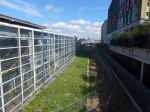
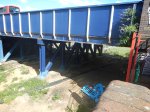

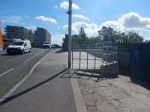
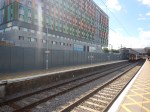
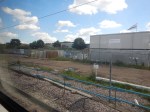
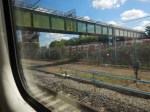
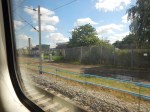
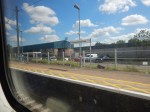
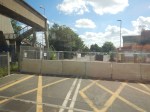
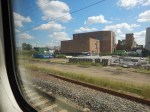
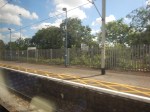
Note.
- The current platform 1 at Tottenham Hale station will be turned into an island platform.
- It will be tight to squeeze everything in at Tottenham Hale.
- It looks like the space for the track between Tottenham Hale and Angel Road stations has been cleared.
- The current platform 1 at Northumberland Park station will be turned into an island platform.
- The level crossing at Northumberland Park station has been closed.
It would appear a good start has been made.
This Google Map shows the footbridge that goes over the tracks and the Victoria Line Depot.
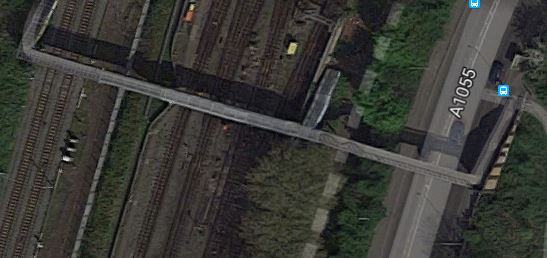
Note that when it comes to squeezing in a fourth track, there is more space than first appears.
Has Network Rail Opened The Door To A New Railway Age?
The title of this post is the same as this article on Construction News.
It is a good read!
Musings On The West Anglia Main Line
The West Anglia Main Line is the main railway between Liverpool Street station in the City of London and the Scientific Powerhouse of Cambridge via Stansred Airport.
This post started off as The Mother Of All Level Crossing Jams, when I got caught in a jam caused by the level crossing at Enfield Lock station.
It has since grown into a long post of the inadequacies of this important main line.
The Mother Of All Level Crossing Jams
These are pictures I took at Enfield Lock station in mid-morning.
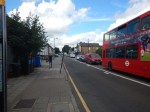
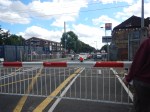
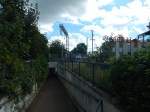

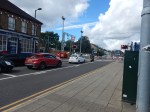

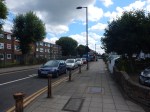
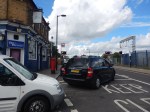
I had arrived at the station at 11:04 and my train had departed on its way at 11:08.
I was in no hurry taking the pictures and I left at 11:22 after eight trains had gone through, without the gates being raised.
In two of the pictures, you can see a discarded broken gate. Was it caused by an irate motorist?
After I got back to the station, the barriers were still going up and down like a whore’s drawers and talking to a fellow passenger, she said it happens all the time.
Improving The West Anglia Main Line
Consider the following, which could effect what happens in the future.
- Stansted Airport, Greater Anglia, Transport for London, the London Borough of Enfield, Cambridge City Council and the local MPs, all want the line to be four-tracked so that services to Cambridge and Stansted Airport can have their own dedicated fast lines.
- ,Greater Anglia have ordered lots of new trains and I suspect they want to run much-needed extra services into both Stratford and Liverpool Street stations.
- Enfield Lock could be a Crossrail 2 station in ten years or so.
- Crossrail 2 would want to run up to twelve trains per hour (tph).
It is a certainly a case of squeezing a couple of gallons into a pint pot.
Enfield Lock And Brimsdown
To make matters worse there is another equally congested level crossing at the next station to the South; Brimsdown.
This Google Map shows the area.
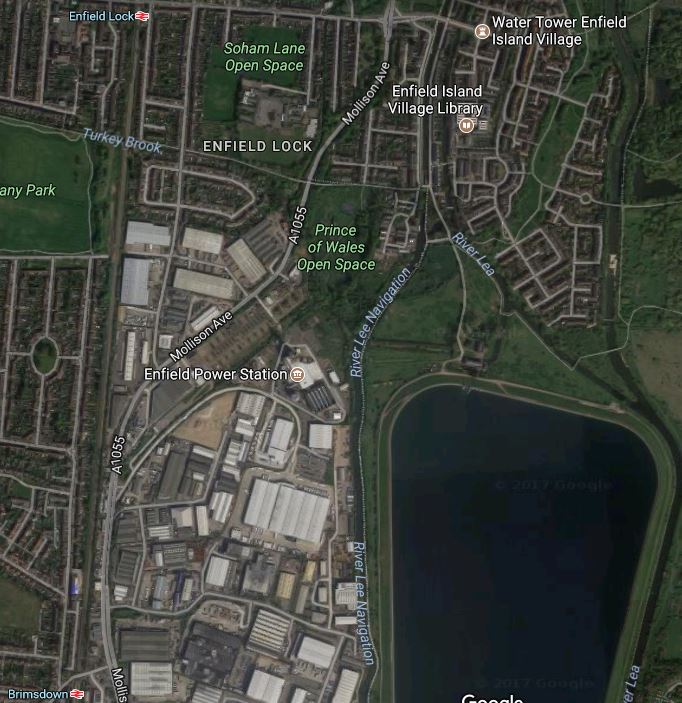
Note.
- Enfield Lock station is in the North West corner of the map, with Brimsdown in the South West corner.
- Mollinson Avenue, which tracks along the railway to its East, is nearly all dual carriageway.
- These is a lot of industrial premises in the area.
- There are a lot of distribution depots that need road access for heavy trucks.
- It is going to use all the ingenuity that Network Rail can muster to squeeze two extra tracks between those two stations.
If ever there was an area that needs an increased rail service it is this stretch of the West Anglia Main Line between Tottenham Hale and Cheshunt stations.
Improving The Lea Valley Lines
I suspect that British Rail foresaw the problem in the 1950s, as by 1960, they had electrified all the Lea Valley Lines including the goods-only Southbury Loop, which is now part of the London Overground, who run two tph on the route.
Both London Overground and Greater Anglia are getting new Aventra trains, which should increase the capacity and speed up services on both routes.
However, this could create a problem, in that they are such good trains, they may persuade more commuters to leave their cars at home and take the trains.
More Frequent Services
London Overground like to run four tph on their various routes.
At present, their Lea Valley services are as follows.
- 4 tph from Liverpool Street to Chingford.
- 2 tph from Liverpool Street to Enfield Town, with more services in the Peak and when Spurs are playing at home.
- 2 tph from Liverpool Street to Cheshunt.
I suspect that they would like to run four tph all day and that after Crossrail opens and releases some platforms at Liverpool Street, this might happen.
However in Increased Frequencies On The East London Line, I publish a table, which says that from 2019, Enfield Town will get four tph.
Greater Anglia must be looking to improve services on the West Anglia Main Line, so that all stations South of Broxbourne get four tph, with perhaps two tph to each of Liverpool Street and Stratford.
And then there’s STAR, which is a new service between Stratford and Angel Road stations. This article on IanVisits, which is entitled One of London’s quietest train stations set for major upgrade, gives a good explanation of this service, which will provide four tph between Stratford and a rebuilt Angel Road station, which will be renamed Meridian Water.
More Terminal Capacity In London
Adding these services together, I feel that more capacity is needed at the London terminals of Liverpool Street and Stratford.
There are two short term solutions and one long term one.
Create More Capacity At Liverpool Street
This is the simplest short-term solution.
In the Wikipedia entry for Liverpool Street station, this is said.
Once Crossrail opens, platform 18 at the main Liverpool Street station will be decommissioned to allow platforms 16 and 17 to be extended, enabling them to accommodate longer trains.
I would assume this platform-lengthening is to accommodate the full-length Class 345 trains, that will run the Peak Hour service between Liverpool Street and Gidea Park stations.
I suppose too, having two platforms in Liverpool Street, that are capable of handling Crossrail trains must also be useful in special or exceptional circumstances.
Platform 18 is a curiosity, in that it is used by c2c as a diversion platform, when Fenchurch Street station is closed because of engineering works.
So after the work on platforms 16 and 17 is complete, will it be recommissioned?
That leaves fifteen platforms for Greater Anglia and London Overground to argue over.
If you compare the way Liverpool Street is organised compared to some more modern stations, I suspect that more modern trains can be handled without any expensive modifications to the existing station.
Modern practice means that a single platform can easily handle four tph, so as destinations like Norwich and Southend will only have three tph, could it mean that these destinations can be served by a single platform?
It would certainly make it easy for me, if I knew the fast Ipswich trains always left from platform 9.
I suspect that as London Overground has only three destinations; Cheshunt, Chingford and Enfield Town, whiich have a maximum frequency of four tph, that they could easily manage with four platforms; one for each destination and a spare.
This would give Greater Anglia eleven platforms.
Note this about Greater Anglia’s new trains.
- The Class 745 trains will be of a fixed formation of twelve cars.
- Will the three-car and four-car Class 755 trains have the ability to join and split automatically?
- Will the five-car Class 720 trains have the ability to join and split automatically?
Having seen how Class 395 trains and others can do this in under a couple of minutes and the flexibility of destinations it gives, I will be very surprised if Greater Anglia haven’t specified this capability.
- As an example, two four-car Class 755 trains could start at Lowestoft and Bury St. Edmunds respectively and then join at Ipswich, before proceeding to London as an eight-car train.
- Would it be sensible that all trains go into Liverpool Street at maximum length?
- Trains might split and join at Ipswich, Colchester and perhaps Chelmsford. All that is needed is a long platform.
Perhaps Greater Anglia’s platforms at Liverpool Street could be allocated something like this.
For Flirts (Class 745 and Class 755)
- Norwich
- Ipswich/Lowestoft
- Stansted Airport
- Cambridge
For Aventras (Class 720)
- Bishops Stordford/Broxbourne/Hertford East
- Colchester/Harwich
- Clacton/Walton
- Chelmsford/Braintree
- Southend
On this rough assessment, it would appear that at least for a few years Liverpool Street station could cope.
Developing Stratford As A Second Terminal
Consider these facts about the railway hub at Stratford.
- Stratford has not been fully developed as a terminal for the West Anglia routes and only handles two tph to and from Bishops Stortford.
- Stratford has two platforms 11 and 12, that were built to serve the West Anglia routes; the West Anglia Main Line and the Lea Valley Lines.
- Platforms 11 and 12 are on the High Meads Loop, which would reverse the trains on West Anglia routes.
- Stratford is well connected to Crossrail, Central and Jubilee Lines of the Underground, the DLR, the Overground , Highspeed services to Kent and Greater Anglia services on the Great Eastern Main Line.
- Stratford has better connections than Liverpool Street to London Bridge and Waterloo
- Stratford could have excellent connections to Highspeed services to Kent and Continental services at Ashford International.
- Stratford will be only a few minutes from Liverpool Street on Crossrail.
Stratford is also a destination in its own right, with the Queen Elizabeth Olympic Park and the massive shopping complex.
This map from carto.metro.free.fr shows the complex at Stratford.
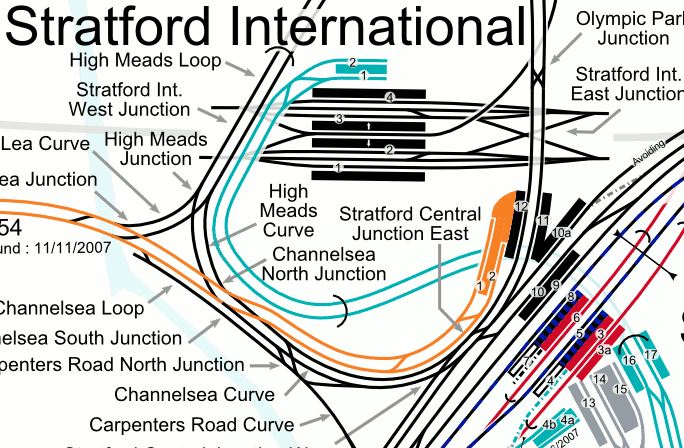
It is very much capable of development.
- Better connections could be made between Stratford International and the main station.
- The subways in the complex could be improved.
- The Hall Farm Curve could be reinstated to give direct connections between Stratford and Walthamstow/Chingford.
I would not be surprised if Greater Anglia increased their services to and from Stratford.
I could also envisage a timetable, where trains alternate between the two terminals., as every passenger will have their favoured terninal.
Crossrail 2
Crossrail 2 is the long-term solution.
Upwards of ten tph will run between Broxbourne and Tottenham Hale, before entering the tunnel to Central and South West London.
It will obviously handle all the local services South of Broxbourne, with just the services from the North continuing to Liverpool Street and Stratford.
Following Abbey Wood, Reading and Shenfield stations on Crossrail, I think that we would see Broxbourne station developed as a simple interchange between longer distance services and Crossrail 2.
Both services would have their own tracks to London.
Conclusion
The West Anglia Main Line urgently needs improvement and this improvement can be broken down into a series of smaller projects, the first three of which have already started and could be completed by 2020.
- Creation of STAR – The Stratford-Angel Road Metro – Already started.
- Building of new Meridian Water station to replace Angel Road station – Already started.
- Rebuilding of Tottenham Hale station – Already started.
- Post-Crossrail Improvements at Liverpool Street and Stratford stations.
- Removal of level crossings at Brimsdown, Enfield Lock and Waltham Cross
- Four-tracking between Tottenham Hale and Broxbourne.
- Step-Free Stations
- Reinstatement of the Hall Farm Curve.
These projects will also get the main line Crossrail 2-ready.
This process has already started with the creation of STAR, which will create a third track as far as Angel Road station. In the article on IanVisits, this is said.
Along the tracks nearby there are already hi-vis wearing Network Rail contractors clearing the land to prepare it for the Stratford to Angel Road (STAR) rail upgrade project which will see a third railway track added. Passive provision for a fourth track will be included for Crossrail 2.
This work has already closed the level crossing at Nothumberland Park station.
In Innovation In Railway Projects, I describe how Network Rail are aiming to create a pipeline of smaller projects.
I feel that some parts of the updating of the West Anglia Main Line can be done in this way.
Innovation In Railway Projects
This article in Rail Technology Magazine is entitled NR routes to publish ‘pipeline’ of third party opportunities by year end. It lays out a new philosophy of how rail infrastructure projects could be handled in the future. I suggest you give the article a careful read.
Some politicians will say it is privatisation by another name. But to me it is just a way of getting a project built faster in a safe manner.
This is a paragraph.
By the end of this year, NR’s routes will publish ‘pipelines’ of projects that they want to put out to market. The infrastructure owner will also be working with government on producing a list of third-party opportunities. Initially these opportunities may be at the smaller end of the spectrum such as new stations, depots and car parks.
Take the simple example of a depot. These days fleets of new trains often mean a large increase in depot capacity as trains are longer and fleets are larger. As fleets are often bundled in with maintenance, there is a specialised multi-million pound asset that needs to be created. Big investors create office blocks, sporting venues and shopping centres and lease them to other businesses, so why shouldn’t they build the infrastructure that the railway needs?
This article in the EADT is entitled New rail depot unveiled by Greater Anglia at Brantham on Suffolk/Essex border.
The article dates from February 2017 and says that design is starting and the depot will be open by the end of 2018.
Not a bad timescale for a depot covering 22 acres with fifteen electrified tracks, two of which are under cover.
Why should the taxpayer get involved in a project like this?
Network Rail’s only involvement should be to ensure that the depot interfaces with the railway correctly.
This article on the BBC is entitled Crossrail stations in west London delayed until 2019.
I took this picture at one of the of the five stations; West Ealing, yesterday.
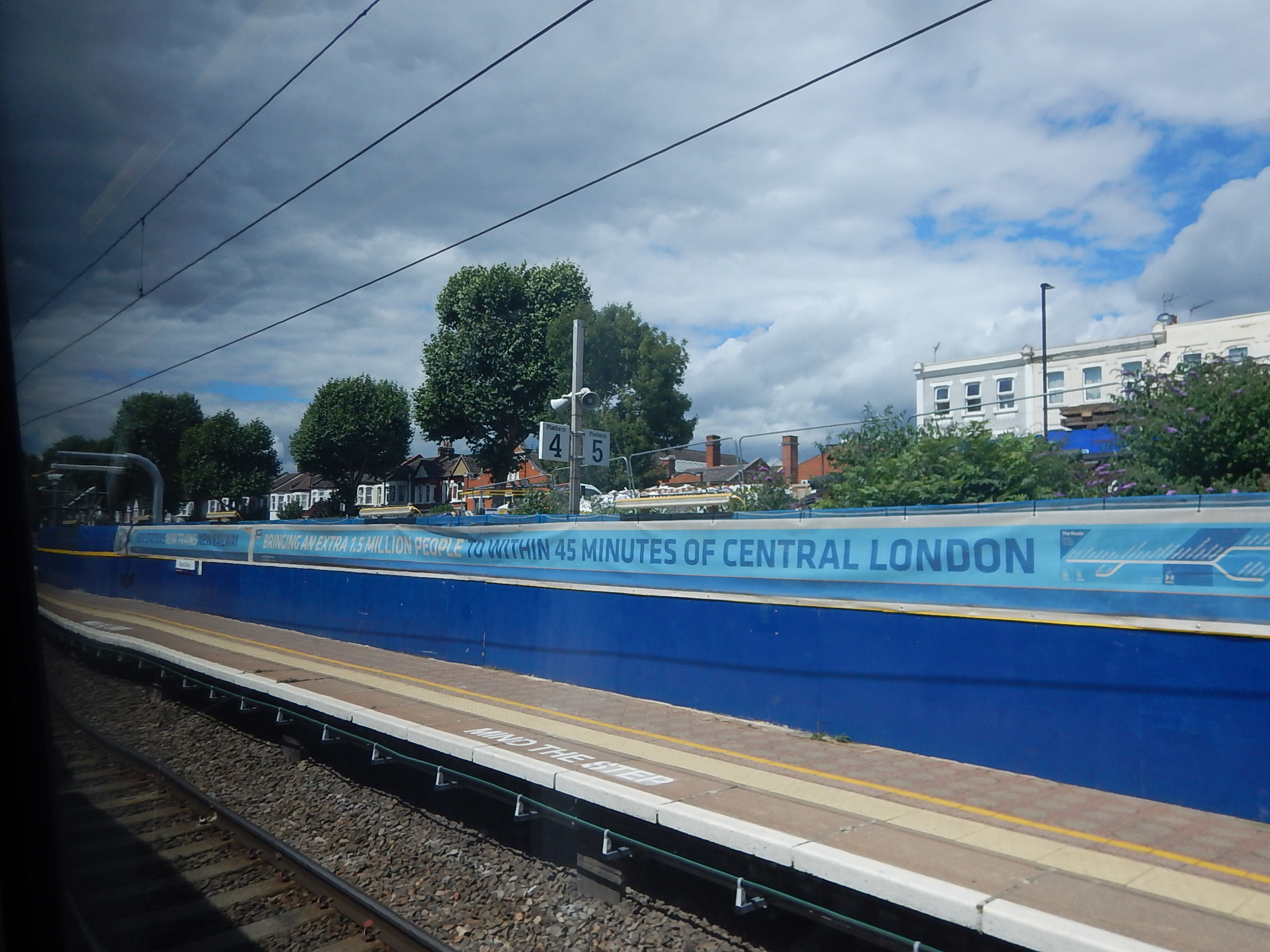
Nothing appeared to be going on, despite the fact that much of the construction is well to the side of the railway. Compare this with the situation at Abbey Wood station, that I saw a few days ago.
I suspect Crossrail wish they had taken control of the Project Management of the five West London stations themselves.
Network Rail seem to have a culture that if assets are built a few years late, it is totally acceptable.
This culture must stop!
 The Anonymous Widower