West Anglia Route Improvement – Angel Road Stations – 20th March 2017
I took these pictures.as I walked from the current Angel Road station to the works, which could be the construction of the new Meridian Water station.
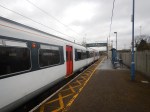

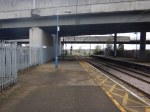






There is obviously a lot of serious work going on in the area, as some of the trains seem to be slowing appreciably.
But most of the work so far, seems to have been setting up the site, moving the signalling cables and generally clearing up the rubbish.
Could Enfield Lock Station Have A Bay Platform?
In West Anglia Route Improvement – Modern Railways March 2017, I mentioned that Crossrail 2 might like to have turnback platform at Enfield Lock station.
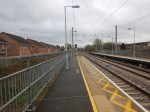
As this morning, I turned back myself at Enfield Lock station, as it’s the Freedom Pass limit, I took these pictures.

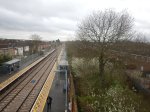
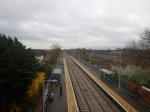


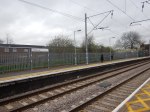
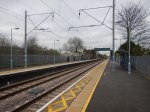
This Google Map shows the middle of the station.
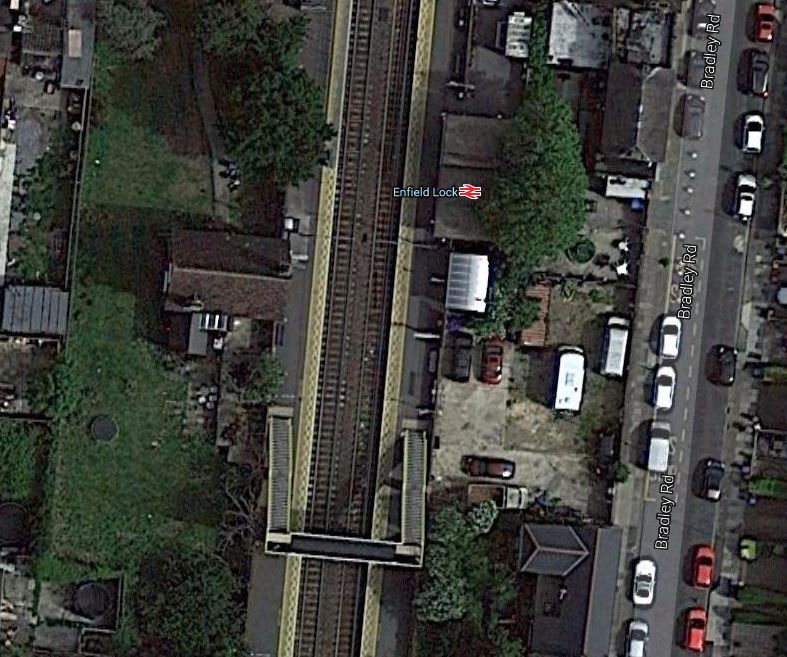
If you look at the West side of the station by the Down line, you’ll notice the house, which from the pictures could be a candidate for demolition.
So I do think, it might be possible to squeeze an extra platform, by the Down Line.
This Google Map shows the Southern end of the platforms.
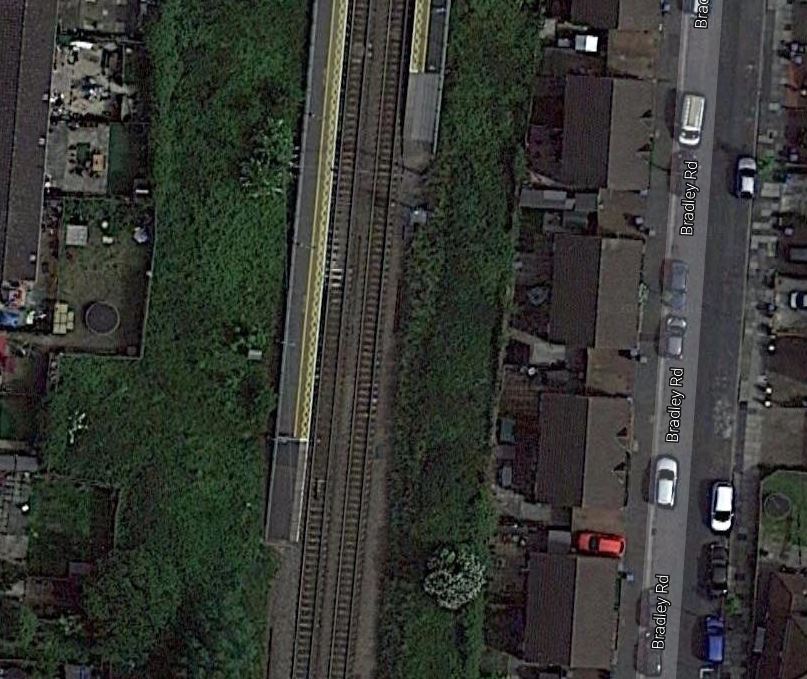
The space available would certainly be enough for an extra platform, but will there be enough for two fast lines between the current Up Line and the houses?
I suspect that there is, if the current lines could be moved slightly to the West.
But as at Tottenham Hale and Brimsdown, fitting the two fast lines through \Enfield Lock, is going to need a cunning plan.
H
West Anglia Route Improvement – Lea Bridge Station To Enfield Lock Station – 20th March 2017
I took these pictures of the works between Lea Bridge and Enfield Lock stations from the 09:06 train from Lea Bridge.
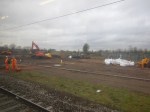
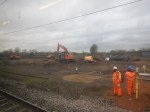
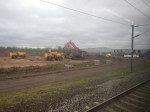
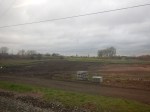
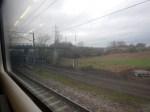
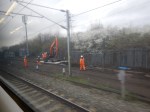


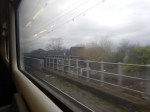
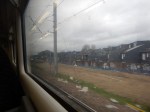






Work seems to be progressing.
- It looks like the area to the South of the Chingford Line is being levelled.
- The route of the Hall Farm Curve is being cleared.
- The level crossing at Coppermill Lane has been closed.
- The bridges are being rebuilt to take at least a single-track.
- The track-bed appears to be being created.
Incidentally, there still isn’t any sign of any overhead line equipment.
From Stockport Station To Liverpool Lime Street Station By Train
In a comment a friend said this about going by train from Stockport to Liverpool.
When we first moved here, there was no direct train to Liverpool, we had to go into Piccadilly, cross to Victoria and get a train to Liverpool. And before the trams that was a complete pain!
So how is it now?
Using National Rail Enquiries, I find that every hour there is a direct train from Stockport station to Liverpool South Parkway and Liverpool Lime Street stations at around twenty-five minutes past the hour, that takes a few minutes over the hour to get to Liverpool Lime Street.
They seem to be run by East Midlands Trains, so they will be a Class 158 train, which is fine.
If say you were to drive to Manchester Airport first, you can get a refurbished electric train, that takes virtually the same time to Liverpool.
Stockport To Manchester Airport
Until I wrote this, I hadn’t realised that Airport trains don’t go via Stockport, but they use the Styal Line that by-passes Stockport.
Looking at maps of the area, it would appear that there might be a way of trains going from Manchester to the Airport via Stockport.
Trains might take the Mid-Cheshire Line and then access the Styal Line at a new junction North of Gatley station.
This Google Map shows the area where the railway lines cross.

Gatley station is at the South-West corner of the map and the Styal Line runs Northwards past the motorway junction between the M60 and the A34.
The Mid-Cheshire Line runs across the map South of the motorway junction and the Alexandra Hospital.
I suppose the cost was too high, but then how do you put all the travellers’ cars on the train?
The fact that the rail link between Stockport and Manchester Airport wasn’t created at the same time as the motorway junction is a design crime of the highest order.
It looks to me that there is even space for a Park-and-Ride for Stockport and Manchester in the area.
The Ordsall Chord
The Ordsall Chord, will link Manchester Victoria and Piccadilly stations with a huge bridge across the Irwell, before the end of 2017
It will have four trains per hour (tph) in both directions, between Manchester Airport, Manchester Piccadilly, Oxford Road, Deansgate, Salford Central and Manchester Victoria stations. There is probably capacity for this service to go to eight tph,
Initially, trains will be refurbished four-car Class 319 electric trains, that currently work Liverpool to Manchester services.
These trains are no suburban trundlers, but will be able to cruise near to 100 mph on parts of the journey, thus knocking a few minutes off the time between Manchester Piccadlly and the Airport.
What Will The Ordsall Chord Do For Stockport?
I have to ask this question and until the timetables are published late this year, everything I say here will be speculation.
- I would be very surprised if there wasn’t at least 1 electric tph that went to Manchester Victoria station.
- Eventually, this service could be made more frequent and perhaps extended to Blackburn, Burnley, Huddsersfield or Stalybridge.
- If Manchester Victoria has been designed right, there should be same-platform interchange at the station to TransPennine services to places like Hull, Leeds, Newcastle and Edinburgh.
- I also suspect train companies will use the chord to provide new services like perhaps Chester to Leeds, that could go through Stockport.
Forget HS3 for the moment, this is the reality of 2017.
Liverpool to Manchester Airport
Several stations in Liverpool have an hourly service to Manchester Airport and this will probably get better as more Class 319 and Class 319 Flex Trains are brought into service.
It’s rather ironic, but from what I have found, that it would appear that Liverpool gets at least as good a service to Manchester Airport as does the much Stockport!
And Liverpool’s service is likely to double in frequency in the near future!
The Liverpool and Stockport services to Manchester Airport, do have one thing in common though! Both have intermediate stops at Manchester Piccadilly!
But why would you want to go to Manchester Piccadilly, when you’re just going a few miles down the road? Especially, as if you’re going to Manchester Piccadilly, you already have in excess of four tph.
Leeds To Manchester Airport
Currently, Leeds to Manchester Airport has a two tph service via Huddersfield.
When the Ordsall Chord opens that Leeds to Manchester services will go to a higher frequency via Manchester Victoria, thus improving the service to the Airport from Leeds, by giving Leeds passengers access to Manchester local tram and train services to the Airport.
Conclusions
Services from Stockport through Manchester will improve, due to the opening of the Ordsall hord and other electrification works.
But, Stockport needs a quick non-stop service to the Airport with a frequency of at least two tph for economic prosperity.
Perhaps to get a good service to Manchester Airport, your city must begin with L or M.
Could There Be An Overground Station At East Brixton?
This post is based on another snippet from the Kent Route Study, which you can download from this page on the Network Rail web site.
The study says this about the possibility of reopening East Brixton station.
5.15.17. There was a station at East Brixton on the rail route between
Denmark Hill and London Victoria which closed in 1976. The station
site sits within the London Borough of Lambeth.5.15.18. As with Camberwell, there have been numerous calls from
local stakeholders to reopen the station over the years. The London
Borough of Lambeth is keen to reopen the station to improve the
connectivity of Brixton town centre to orbital rail routes, building on
the success of the London Overground route to Clapham Junction
which opened in 2012. If reopened the station would be served
solely by London Overground services operating to and from
Clapham Junction via the East London Line.5.15.19. The London Borough of Lambeth are therefore leading a
review of the business case and demand for East Brixton station
with support from Transport for London and Network Rail. This
review will include consideration of the impact of a new station on
local development opportunities. It is expected to complete during
early 2017 and will determine whether or not the station has a
viable business case. Any further developments will be reported in
the final Route Study.
If you look at this map from carto.metro.free.fr.
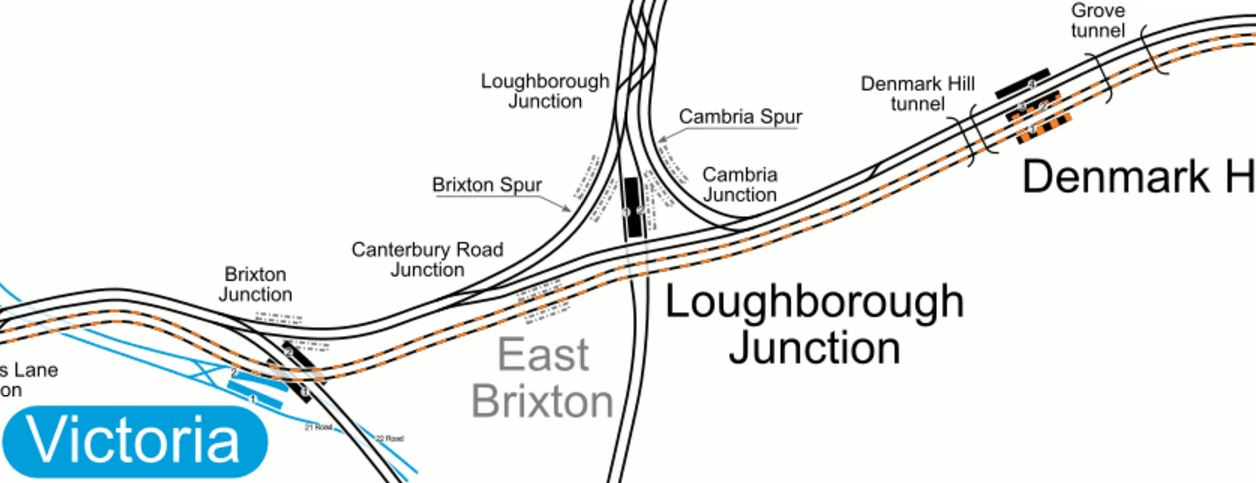
East Brixton station is clearly shown on the tracks now used by the East London Line.
These pictures show the railway and what remains of the station on Moorland Road.



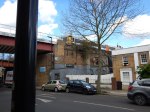
I spotted the station because of the signature brickwork of the window, which you see in several stations in South London like Peckham Rye station, which was designed by Charles Henry Driver.
This Google Map shows the location of the station.
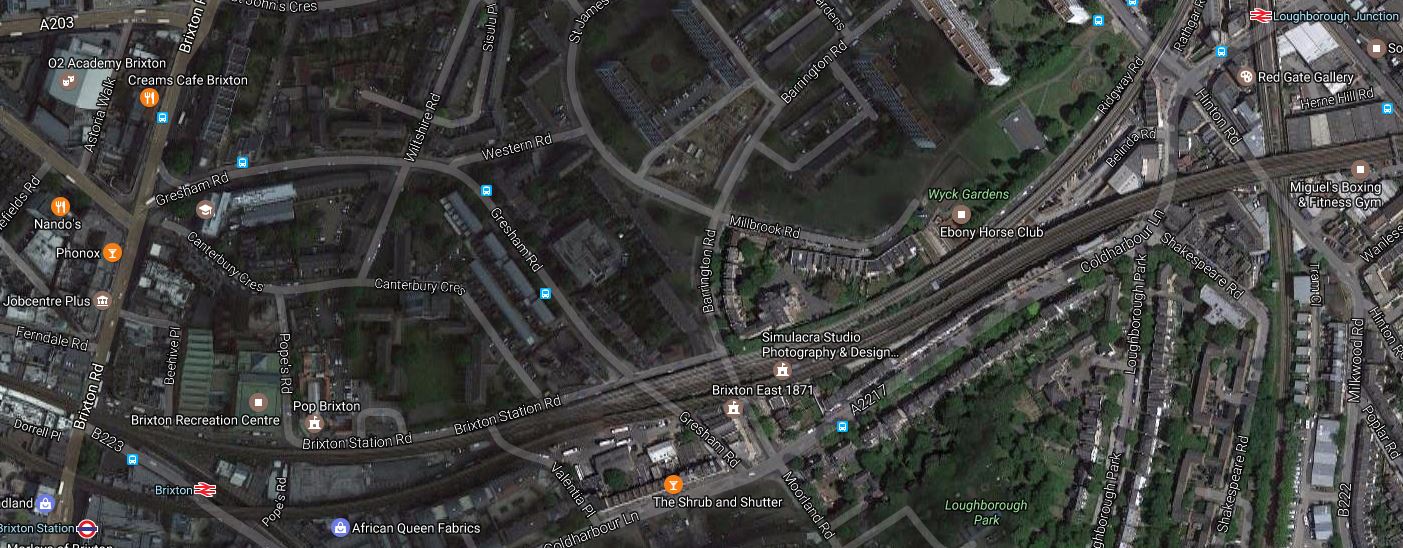
Loughborough Junction station is in the North-East corner of the map, with Brixton station in the South-West corner.
Note that the venue; Brixton East 1871 is shown in the pictures and on the map.
In an ideal world Loughborough Junction and Brixton stations should have platforms on the Overground, but budgets are not limitless, so neither of them has.
But perhaps an option to build a station at East Brixton is a good compromise and will break up the long stretch between Denmark Hill and Clapham High Street stations.
It may look a stiff climb to the platforms, but it is no more than some other Overground and DLR stations. Lifts would be essential.
The Metropolitan Reversible Line
When you read some of Network Rail’s published documents, you sometimes get snippets of information that point to their thinking.
This page on the Network Rail web site, allows you to download the Kent Route Study.
The study talks about the Metropolitan Reversible Line, which allows trains to access Cnnon Street station from the West.
Network Rail want to replace the line with a 12-car siding, to support operations at Peak times. This is what they say.
Replace the Metropolitan Reversible line with a single 12-car siding to serve
London Cannon Street.The line currently allows empty coaching stock movements between
London Cannon Street and London Blackfriars, but will become redundant
following implementation of the revised Thameslink service in 2018. It is
therefore proposed that the Metropolitan Reversible line be modified into
a single 12-car siding to facilitate peak services into London Cannon Street station.
They even supply a nice map in the document.
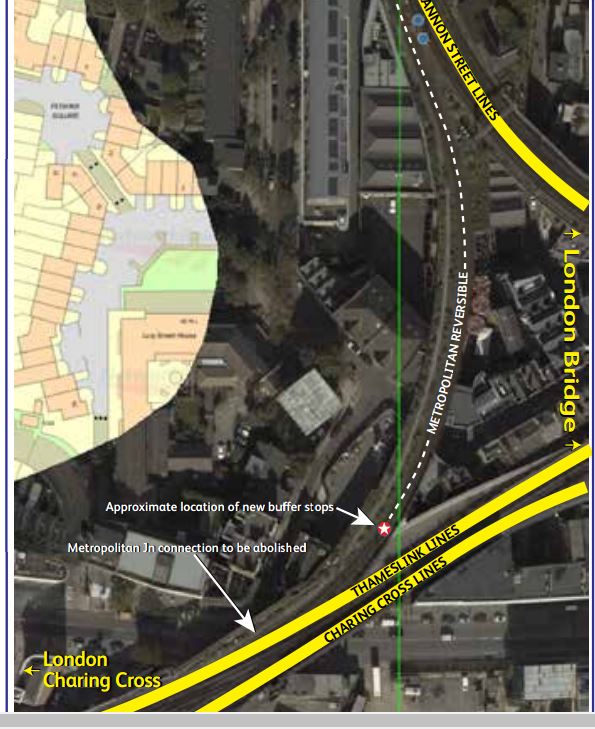
Hopefully, they aim to get this work completed by 2024 at a cost of up to £10million.
This is a Google Map of the area.
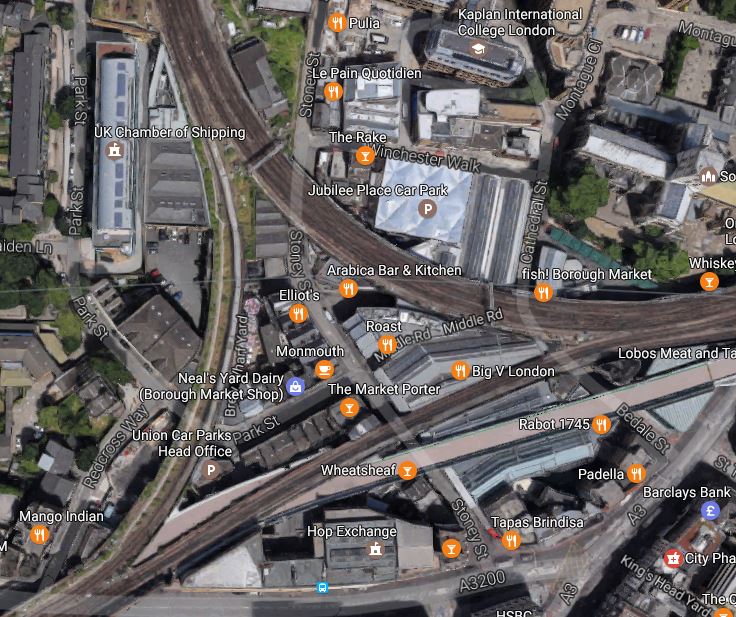
I don’t know what the land around the Metropolitan Reversible Line is used for, but it does strike me that the location of the line could be a lucrative development site.
So perhaps a sympathetic developer could build a new housing or office complex and put the required siding in the basment as a sweetener for Network Rail.
Development of this simple siding, could be a win for a lot of stakeholders.
I took these pictures as I walked from the Market Porter public house to Southwark Street.


I don’t know what development is happening in this particular area, but it can certainly be improved.
If money was no object, which of course it never is, I would do the following.
- Replace the rather plain bridge over Park Street with something better.
- The arches must be filled in so they can have a valid commercial purpose or opened up, so they can be used for cafes or just walking through to Borough Market.
- The massive girder bridge over Southwark Street is not a beautiful object and it was built to carry a lot more weight than it will, when the Metropolitan Reversible Line is converted into a siding. So perhaps the bridge can be remodelled to improve its dreadful looks.
It is worth looking at this Google Map of the Southern part of the Metrolitan Reversible Line.
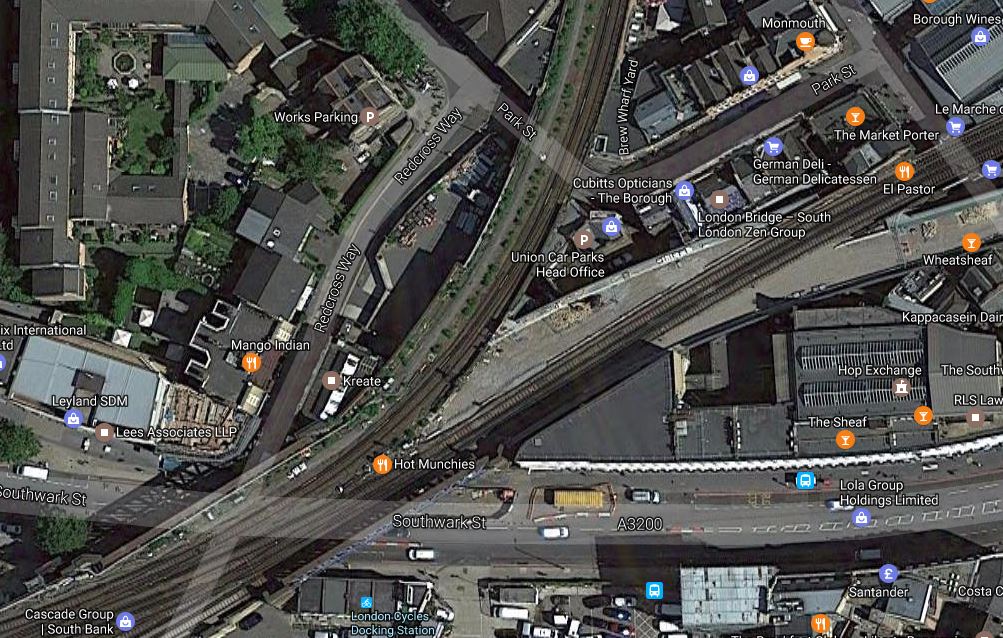
The Metrolitan Reversible Line starts at the top of the map, curves to the West and goes out the South-West corner.
Note, how only a small space on the viaduct and the bridges is used for track. The siding will use no more space than now!
The rest has the distinctive greenish tinge of grass.
I believe that this piece of free land in the sky, should be used for a positive purpose.
I said about putting the siding in the basement. But really, I meant putting the siding in a garage on the ground floor under the building, which if it was designed correctly, it wouldn’t interfere with the views of London’s disgrace; the Shard. You usually only get buildings as bad as that built with friends in the right places!
But seriously, if the design of the siding development was right and it was only a few storeys high, it would be hidden from view by the railway lines crossing all over the place.
The space could even become a spectacular cycling superhighway or walkway stretching along the side of the railway from Waterloo to the South Bank or even across Cannon Street railway bridge to the City.
Network Rail are converting the Metropolitan Reversible Line into a siding to increase the capacity of services into Cannon Street station.
I believe that if this creation of a siding is done with imagination, then other developments can be enabled, that would be to the benefit of all those living, working anf enjoying themselves in the area.
Could Charing Cross Station Be Rebuilt With South Bank Entrance?
This question was asked in an article in SE1.
It points to this page on the Network Rail web site, where you can download the Kent Route Study.
This is said in the study.
5.11.2. Charing Cross has just six 12-car platforms and Platforms 4, 5 and 6 are very narrow, leading to operational restrictions. Class 465 units cannot operate in 12-car into these platforms and selective door operation is used on Class 375 units. A major rebuild of the station could allow it to be extended south over the river, like Blackfriars, providing compliant platforms and greater passenger circulation. At concept level, a new link to Waterloo from a southern entrance to Charing Cross may supersede Waterloo East allowing the station area to be used for additional track capacity, but there are likely to be many issues with a project on this scale.
5.11.3. The relieving of terminal capacity constraints at Cannon Street and Charing Cross will then move the bottleneck to other locations on the route, including North Kent East Junction, Lewisham, Parks Bridge Junction and the two track section between Orpington and Sevenoaks.
It could be an interesting idea.
My big issue, is that increasingly, I am using London’s latest high capacity link, from London Bridge to Charing Cross via Waterloo East as a cross-London link.
It is now my preferred way to get to where I live from Waterloo station or Trafalgar Square, as I just get a convenient 141 bus from the forecourt of London Bridge station. Often after buying my supper or a few supplies in the convenient M & S in the entrance of the station under the Shard.
Sorting Out The Kirkby, Ormskirk And Southport Branches Of Merseyrail’s Northern Line
A Lot of changes will and could happen at the Northern end of Merseyrail‘s Northern Line in the next few years.
- New bespoke Stadler trains will be introduced, that will run services from Liverpool to Kirkby, Ormskirk and Southport stations.
- Class 319 and Class 319 Flex trains will start to appear at stations like Kirkby, Ormskirk and Southport, where Merseyrail’s network joins Northern Rail’s lines from Bolton, Manchester, Preston and Wigan.
- A new station at Maghull North will be built.
- Skelmersdale, which is one of the largest towns in the North-West without a rail connection, could be linked to Merseyrail’s network.
- A new Headbolt Lane station could be built to create a proper connection between Merseyrail and Northern’s trains using the Kirkby Branch Line to Wigan Wallgate station and onwards to Bolton, Manchester and Manchester Airport.
- Ormskirk station could be remodelled to allow direct services Liverpool and Preston.
- The Canada Dock Branch could be electrified and be opened to passenger trains.
- The Burscough Curves could be reinstated.
- The Southport to Manchester Line could be electrified.
- Everton could be building a new stadium at Bradley Moore Dock.
In the next series of sections, I will cover some of these changes and issues raised in more detail.
Turn-Up-And-Go Services
Where I live in Dalston in East London, the London Overground run services at what they call a Turn-Up-And-Go service of four trains per hour (tph).
Merseyrail use this frequency on some of their lines, as do Birmingham and Leeds.
I wouldn’t be surprised to see this on some more routes in the North-West, where there is sufficient demand.
Can Stadler’s New Trains And Class 319 Trains Share The Same Tracks and Platforms?
I’m not sure about this, as until we see the new trains and/or their specification making a comparison is difficult.
- Both trains can run on third rail electrified lines, although most of the current Class 319 trains working in the North West have had their third rail equipment removed.
- The Stadler trains must be designed to work with the current Class 507 and Class 508 trains, which they probably must do during the introduction phase.
- So could there be size problems between Stadler’s and the Class 319 trains?
But seeing how Stadler are always a company for the main chance, I wouldn’t put it past their engineers to design a train, that can work the same routes as all variants of the Class 319 trains, as replacing them in a few years time would be a nice little earner.
There is also plenty of words in the media, which state that 25 KVAC overhead capability can be added to the Stadler trains, so they can work lines out of Liverpool Lime Street.
As an aside here, I should mention the Halton Curve, which is to be upgraded to create a new route between Liverpool and Chester.
Under Upgrade in the Wikipedia entry for the Halton Curve, this is said about the building of the curve and its future services.
The Liverpool City Region Combined Authority approved the work in April 2016, utilising Government’s Local Growth Fund (LGF) funding £10.4 million, adding an additional £5.67 million from the city’s LGF. Work is hoped to start in June 2017 and to be completed in May 2018. This should lead to an hourly service between Liverpool and Chester from December 2018 along the curve with some services extending into North Wales.
With their dual voltage and electro-diesel capability, the Class 319 Flex trains must be an ideal train to work services to Chester and North Wales via the Halton Curve.
So I suspect there could be a lot of compatibility between the current Merseyrail trains, the new Stadler trains and the Class 319 trains, as otherwise it could be tricky to work the Halton Curve to Chester, until the new Stadler trains are delivered.
This leads me to say that there should be no problems with both sets of trains sharing platforms and tracks on the surface branches of the Northern Line to Kirkby, Ormskirk and Southport.
I suspect that the Class 319 trains could also work the Northern Line tunnels, but I suspect that would be a step too far for Merseyraiil and they would prefer their network to be reserved for their new Stadler trains as much as possible.
Canada Dock Branch
The Canada Dock Branch will have a large influence on what happens to the rail services in the North of Liverpool.
There will be a massive increase in capacity of Liverpool Docks after the completion of Liverpool2.
Under Freight Use in the Wikipedia entry for the Canada Dock Branch, this is said.
Due to the construction of Liverpool2 container terminal at the port of Liverpool the line will increase in freight traffic. In May 2016 it was announced that the line’s final section into the dock estate would be upgraded to double track from single track to increase capacity to the port. Combined with improved signalling at Earlestown, the improvements will enable up to 48 trains a day to enter the port. Work on the line is expected to be completed by 2019.
How many trucks is that going to remove from the M62?
Under Passenger Use in the Wikipedia entry for the Canada Dock Branch, this is said.
The line is also being seriously assessed for reopening to passengers with Everton F.C. and Liverpool F.C. stadia both located on the line’s route.
On 16 July 2007 the Liverpool Daily Post reported that Liverpool F.C. may partially fund the reopening of the line to passenger services providing a direct rail link to the proposed Stanley Park Stadium however this project has since been dropped by the club. This was highlighted on the Network Rail North West development plan as a potential project to be undertaken by Network Rail, rather than Liverpool F.C..
The Department for Transport’s Rail electrification document of July 2009, states that the route to Liverpool Docks will be electrified. The Canada Dock Branch Line is the only line into the docks.
Add this to 48 freight trains per day running into the Docks and this must surely result in the Canada Dock Branch being electrified between Liverpool Docks and where the Branch joins the electrified Liverpool and Manchester Lines at Wavertree Technology Park station.
This is also said about passenger services.
The electrification of this branch line would greatly assist in recommissioning passenger trains, as costs would be reduced. The electrification of the Liverpool and Manchester line will reduce travel time from around 45 minutes to 30 minutes between the two cities due to the greater acceleration achieved by electric trains in clearing lines quickly, and the raising of the speed limit along the line from 75 to 90 mph. These advantages will cascade onto the Canada Dock branch line. Class 319 dual-voltage, 3rd rail and overhead wires, EMUs will be fully refurbished and transferred from the Thameslink route to operate between Liverpool, Wigan and Manchester. The dual voltage trains can operate on Merseyrail’s 3rd rail network giving greater scope for route planning.
There is also a serious suggestion to introduce passenger services on this line in the Local Transport Plan for Merseyside. This was again mentioned in Merseytravel’s 30-year plan of 2014.
Putting the comments about electrification, passenger services and 319 trains together with Network Rail’s performance as regarding electrification in the North-West, I now feel that Porterbrook, Northern Rail and Rail North have thrown a very large drum of lubricating oil into the mix in the shape of the Class 319 Flex train.
A passenger service could be run along the Canada Dock Branch, as soon as the following conditions are met.
- Some stations have been built or reopened.
- The route is appropriately signalled, tested and certified.
- A small number of Class 319 Flex trains are available.
Electrification can come later.
This Google Map shows Kirkdale station on the Merseyrail Northern Line.
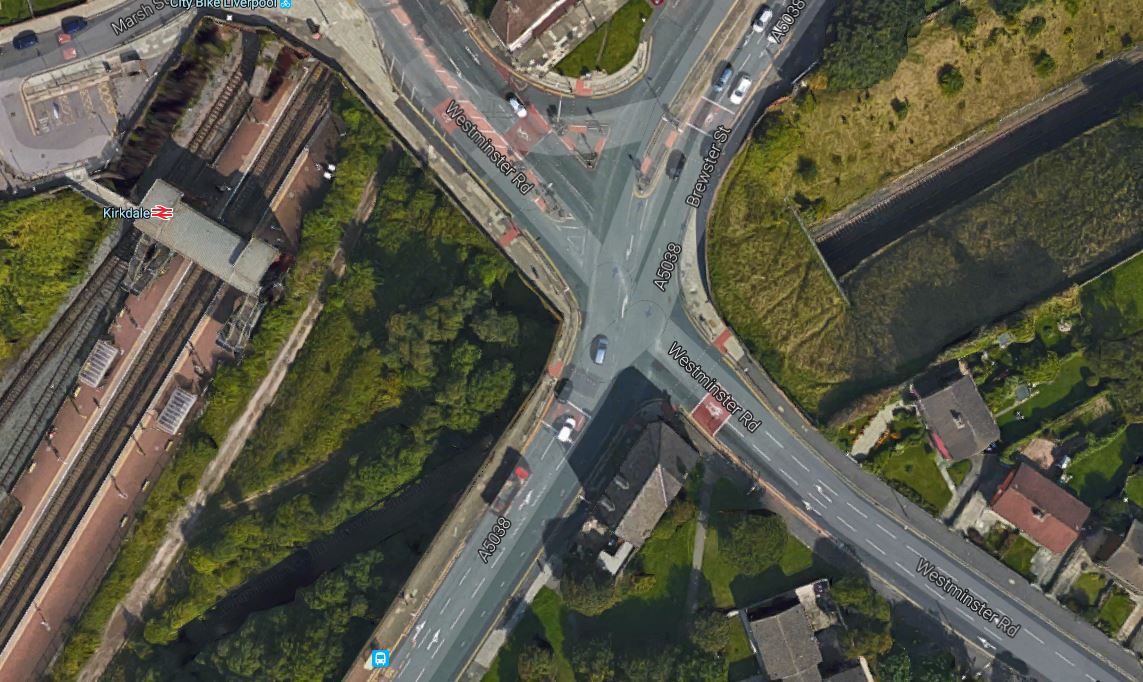
Note the dark cutting going North-East to South-West across the map. With a more detailed resolution, I can see railway tracks in the bottom.
This is the Canada Dock Branch.
So what do I think will happen and where would I put my money?
- Electrification
- A passenger service.
- A station to serve Liverpool and Everton Football Clubs
- Some other stations
- An interchange at Kirkdale station between the Canada Dock Branch and the Northern Line.
It will be interesting to see what happens to the Canada Dock Branch.
Headbolt Lane Station
Headbolt Lane station is Merseyrail’s solution to connecting the single-track Kirkby Branch of the Northern Line to the double-track Kirkby Branch Line from Wigan Wallgate station in an efficient manner.
I wrote about this station in An Overview Of Headbolt Lane Station
Kirkby Or Headbolt Lane To Manchester
In this section, by Kirkby, I mean Kirkby and/or Headbolt Lane. The former would apply now and the latter, when it is built.
Currently, a train running between Kirkby and Salford Crescent stations takes around 60 minutes, via Atherton.
If I apply Irene’s Law, which admittedly applies to London Underground journeys, but seems to work in a rough manner on intensive urban and suburban lines, I reckon that an electric train can do the following.
- Salford Crescent to Manchester Piccadilly – 6 minutes
- Salford Crescent to Manchester Victoria – 4 minutes
So it leads me to think that a Class 319 Flex train, which is faster than the current Class 156 train, could probably do Kirkby to either of the two Manchester stations in under an hour.
This would mean the following.
- To provide a two tph service to Manchester would require four trains.
- To provide a four tph service to Manchester would require eight trains.
Where the benefits come, is when all the lines are electrified, which means faster speed and quicker stops.
Take the four tph service between Dalston Junction and New Cross. As the service takes 22 minutes, the round trip can be done within an hour, giving drivers time to turn the train and have a comfort break or a coffee.
So this shorter route will only need four trains to porovide a four tph timetable.
Anything that can be done to reduce the journey time, means the required frequency can be attained with a smaller number of trains.
Going back to the Kirkby to Manchester service.
There is a bay Kirkby/Southport-facing platform at Wigan Wallgate station, which is shown in this Google Map.
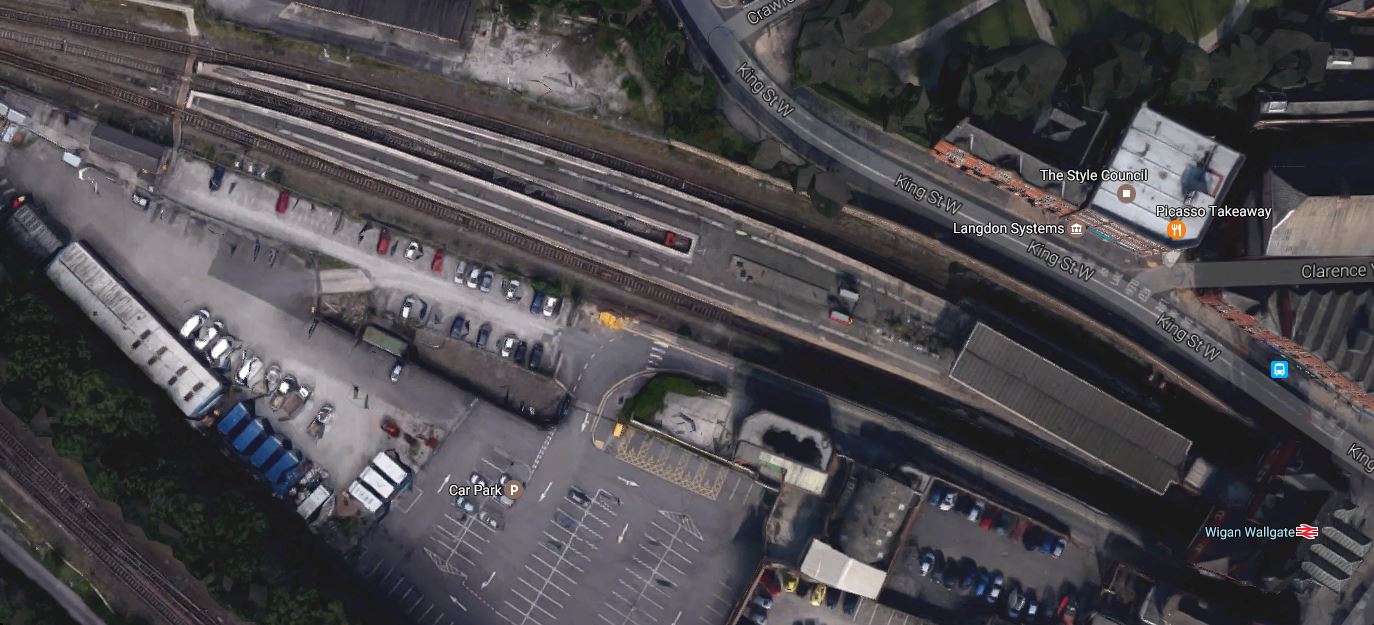
And here’s a picture of the platform.
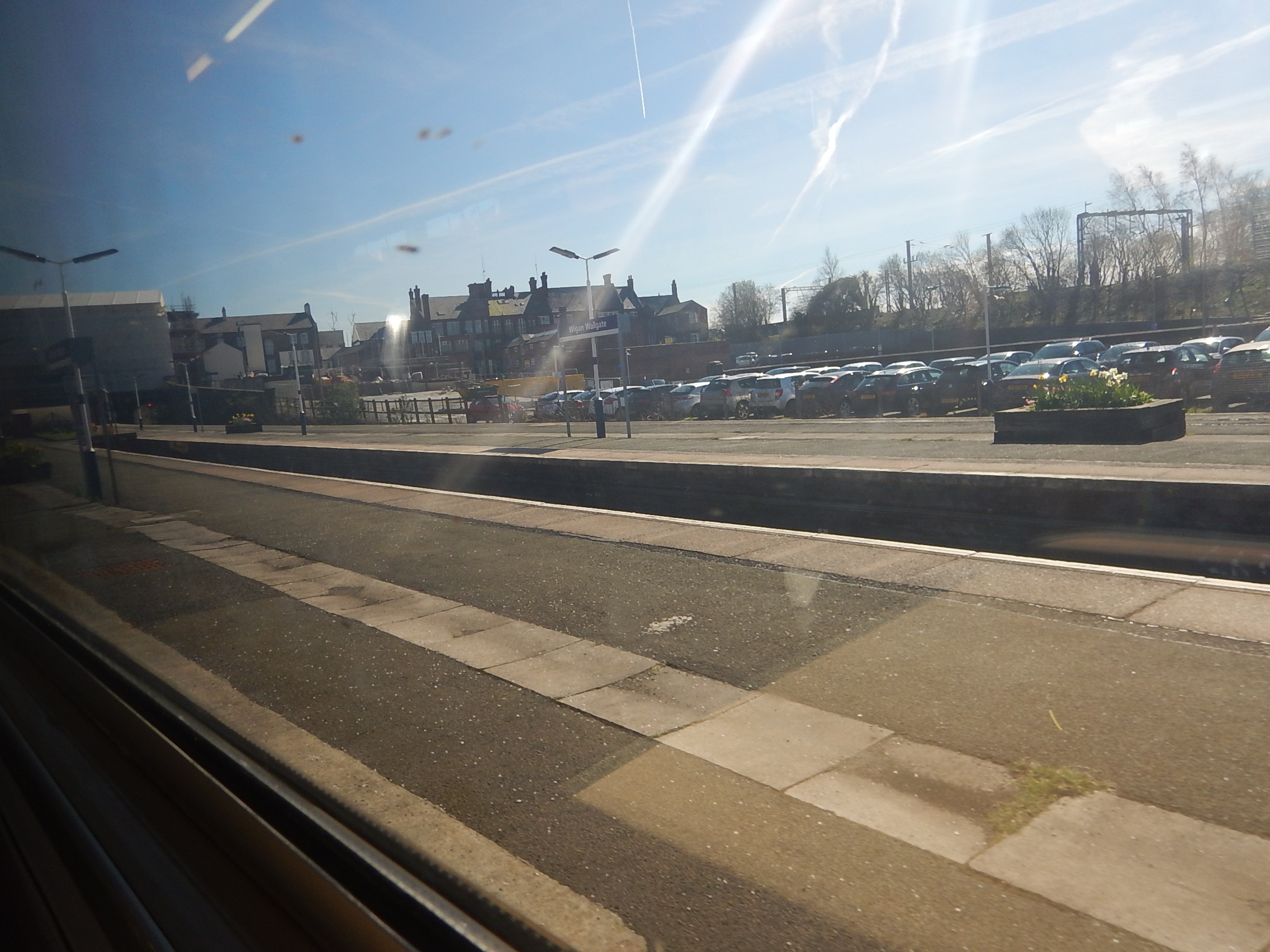
According to Wikipedia, the bay platform is for trains for Southport and Kirkby.
Wigan to Kirkby is currently scheduled at 24 minutes, which I suspect is so that a Class 142 Pacer can do a complete trip within the hour.
So this would mean the following.
- 2 tph between Kirkby and Manchester would need 4 trains.
- 2 tph between Kirkby and Wigan Wallgate would need 2 trains.
So two trains have been saved.
But Kirkby to Wigan Wallgate is run at a Turn-Up-And-Go frequency of 4 tph, where the trains have cross-platform access to Liverpool to Kirkby trains with the same frequency.
Southport To Manchester
I wasn’t intending to look at Southport to Manchester now, but as I’ve just looked at Kirkby to Manchester and the two routes both go through Wigan Wallgate station, I’ll do it to follow the Kirkby analysis.
Currently, a train running between Southport and Salford Crescent stations takes just over 60 minutes, via Atherton, with Southport and Wigan Wallgate taking thirty minutes.
So at a quick look, it would appear that
So this would mean the following.
- 2 tph between Southport and Manchester would need 4 trains.
- 2 tph between Southport and Wigan Wallgate would need 2 trains.
If the timings were aligned, every inbound Wigan Wallgate service from both Kirkby and Southport would arrive at Wigan Wallgate, in front of a Manchester service, which could take them to where they wanted to go, if it was beyond Wigan.
So with 12 trains, the following lines could get these services.
- 4 tph Kirkby to Wigan Wallgate
- 4 tph Southport to Wigan Wallgate
- 2 tph Wigan Wallgate to Salford Crescent via Bolton
- 2 tph Wigan Wallgate to Salford Crescent via Atherton
From Salfrord Crescent, passengers will after the Ordsall Chord and the related works have been completed, be able to get easily to Deansgate, Hazel Grove, Manchester Airport, Manchester Oxford Road, Manchester Piccadilly, Manchester Victoria, Salford Central, Stockport and probably a few others too.
Obviously, there are other and better patterns.
But it just shows what can be done, by creating a network of electrified and pseudo electrified lines into Manchester and funnelling them through a series of interchanges.
The Burscough Curves
There were some good thngs done by British Rail in the 1960s and 1970s, but there were some supreme examples of crap design.
This Google Map shows trhe Burscough Curves, which I suspect were originally designed to make operation of trains to the South East of Southport a lot more efficient.
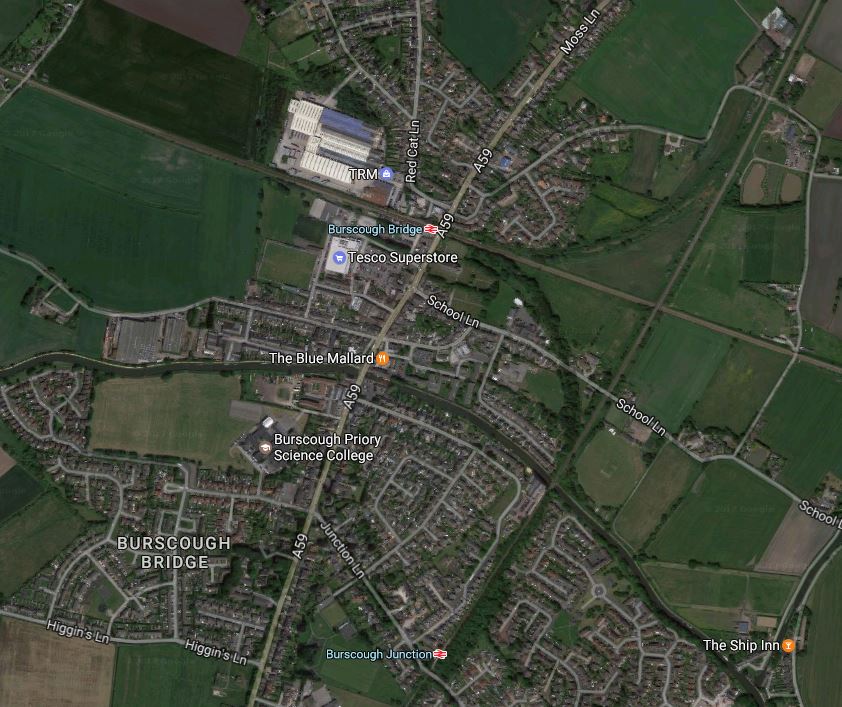
There are two railway lines on the map.
- Burscough Bridge station is on the Southport to Manchester Line, which is a major commuting route.
- Burscough Junction station is on the Ormskirk Branch Line, which is an extension of Merseyrail’s Northern Line, that links it to Preston.
Connecting them are the North and South Burscough Curves.
This description of the Burscough Curves, is a simplified version of that in Wikipedia.
During the rail restructuring of the 1960s and 1970s, the “Burscough Curves”, which formed a link between the Ormskirk-Preston and Southport-Wigan lines were removed, although the formation survives. The North Curve was taken out of use and severed in July 1969, being lifted in 1973: it was last used for a Saturdays only empty train from Blackpool to Southport. The South Curve was singled in 1970, but remained in use to serve the extensive sidings at the MOD depot located just to the north of Burscough Junction station. It saw its last train in 1982.
The passenger service from Ormskirk to Burscough Junction and on to Southport, which used the southern curve, was withdrawn in 1962
Pressure from local transport groups, has not so far persuaded Network Rail to reinstate the curves. Various schemes have been proposed, including the full electrification of the line from Southport via Burscough to Ormskirk using the same third rail system as Merseyrail. This proposal would allow users of the Ormskirk branch of Merseyrail’s Northern Line to reach Southport directly.
Wikipedia also says something of how they might be used in the future.
A new study being conducted by Merseytravel could see demand for a potential reinstatement and electrification of the curves in the near future. The uses of the curves in a new service pattern has been identified by Network Rail, if electrified along with the through lines.
One factor more than any other will decide what happens to the Burscough Curves and the possible opening of a through route from Ormskirk to Preston and that is new housing developments in the area.
It has already contributed to the need to open Maghull North station to relieve pressure on Maghull station
Midge Hall on the Ormskirk Branch Line could be the next to open.
Ormskirk To Southport
This is mentioned in my extract from Wikipedia’s entry for the Burscough Curves.
I suspect that any reinstatement of the Burscough Curves would develop this alternative route from Liverpool to Southport.
Ormskirk To Preston
If you take one of the new Northern Electrics from Liverpool Lime Street to Preston, it’ll take you 58 minutes.
If you go the other way by taking a Merseyrail train from Liverpool Central to Ormskirk and then a train for Preston, it will only take you just seven minutes longer.
The time could and probably will be reduced in the next few years.
- When the new faster Stadler trains are running to Ormskirk, it is likely that 6-7 minutes will be taken off the time.
- Eliminating the change of trainat Ormskirk could reduce the time.
- But new modern trains could go much faster on an improved Ormskirk Branch.
I would estimate that times of forty minutes could be achieved, with perhaps a frequency of two tph.
Higher frequencies like 4 tph, would probably need full restoration of the second track between Ormskirk and Preston.
This fast time would attract passengers and especially those living in the North of Liverpool and on the coast to Southport.
But other factors would also help.
- Fast trains to the North and Scotland will call at Preston and going via the Ormskirk Branch may be more convenient for many.
- Aintree station is five stations South of Ormskirk, so the route may offer a quick way to the races.
- The Open is at Royal Birkdale this year.
I have a feeling that extending the Northern Line from Ormskirk to Preston, with a well-thought out treatment of the Burscough Curves, may produce lots of passengers that the train companies didn’t think existed.
Everton’s New Stadium
Everton may well be building a new stadium at Branley Moore Dock, which is between Sandhills station and the City Centre.
For a new sports ground, that could be the centrepiece of a Commonwealth Gales in 2022 or 2026, it is well-placed and not far from Merseyrail’s Northern Line.
I have discussed this project in Everton’s New Stadium.
Except for possibly changes of services at times, it should not affect operation of services on the Northern Line.
Could We See A Plastic Station?
The Pedesta Bridge, that I talked about in Would You Trust Your Weight On A Thirty Metre Long Plastic Bridge?, has got me thinking.
Look at this picture of the soon-to-be-built Maghull North station.
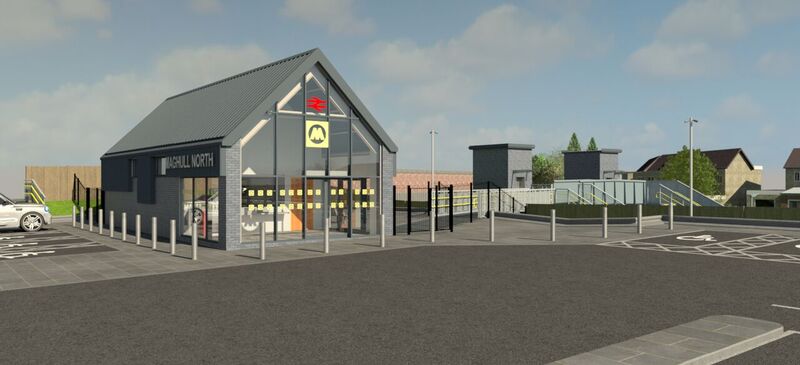
Maghull North Station Building
The station would appear to be in a cutting with lift towers sticking their heads above the cutting and these are connected by an open walkway to the station building.
Pedesta bridges would surely be a lot easier to slot between the station building and the lift towers., than the traditional heavy steel and glass constructions. From pictures on various web sites, the bridges could even have a roof to protect travellers from the weather.
But why stop at just the bridges?
Could we see prefabricated plastic steps for example?
Anything that cuts the cost of new stations, would surely mean more!
Worries About The Metropolitan Line Extension
The title of this article in the Evening Standard is Metropolitan line extension to Watford Junction could be axed due to £50m funding gap.
That obviously is causing worries.
In December 2016 I wrote Is The Croxley Rail Link To Be Given Lower Priority?, where I went through the design and concluded that a simler scheme might be enough and just as useful.
After looking at all the other possible new train services to Watford, which include.
- The Bakerloo Line Extension
- The London Overground
- Crossrail
- Southern
- London Midland
- Metropolitan Line Upgrade
- Chiltern Railways
I postulated if a lower cost link could be built.
And then I wrote this conclusion.
I believe that Watford will get a better train service, whether the Croxley Rail Link is built or not.
Politics will decide the priority of the Croxley Rail Link, with the left-leaning South Londoner Sadiq Khan on one side and right-leaning Bucks-raised Chris Grayling on the other. In some ways, Watford is a piggy-in-the-middle.
My feeling is that on a Londonwide basis, that the Bakerloo Line Extension to Watford, solves or enables the solution of a lot of wider problems and the Croxley Rail Link is much more a local solution.
I think it could turn out to be.
- A mainly double-track route from Watford Junction to Amersham, but with portions of single track.
- No new electrification.
- Stations at Watford High Street, Watford Vicarage Road, Cassiobridge, Croxley and then all stations to Amersham.
- Four Class 710 trains per hour (tph), running on existing electrification and batteries between Watford Junction and Amersham.
- A redeveloped Watford station keeps its four tph to London.
It might even be simpler.
It would certainly by more affordable.
 The Anonymous Widower