Smart Ticketing Delivery Board
This article on the Rail Technology web site has a section entitled Smart Ticketing Delivery Board.
This is the opening paragraph of the section.
Elsewhere in his speech Grayling announced his vision to introduce smart ticketing across Britain’s railway network, enabling passengers to use mobile phones, contactless cards or smart cards to buy their tickets along with more pay-as-you-go options.
I’m glad to see contactless cards mentioned, as in my view there is no other way to go.
Why shouldn’t one contactless credit or bank card get me all over the UK? Or Europe for that matter? But that’s being small. If I can use my Amex card in a restaurant, why can’t I use it on the train, bus or tram? Or even a plane!
Why Grayling’s Proposal For The East-West Rail Link Could Be Right?
I’m not saying it’s right that one company will build the line and then operate it, but I do think it could have advantages.
Track
With the exception of a few short lengths of existing track, most of the construction is a green field site or one where there is just rusty worthless track from decades ago.
This must give opportunities to design a future-proofed route, that in say the 203os or 2040s could run trains much faster, frequent, heavier and longer, than envisaged today.
The route can also be optimised for what is mow believed to be the likely scheduled service.
Stations
This line could have stations optimised for the modern level of working, that the line will.use.
Nothing should be ruled out in station design, if it makes for a more efficient railway.
I would also hope that stations could be modular, so that improvements and new stations could be added by the operator as ttaffic changes.
Get the design right and the company, passengers and staff will benefit.
It would be easier to get the design right, if all stakeholders are in the same team.
Electrification
Parts of the route are electrified and it will have connections to existing electrified lines at Bedford, Cambridge, Milton Keynes, Oxford and Reading.
I believe that there could be considerable savings to be made, by designing the electrification so that it is integrated with the trains bought for the line.
For instance, I believe in a few years time that all new trains will have on-board energy storage, so could this be taken advantage of to perhaps?
- Enable regenerative braking on trains, rather than trackside
- Not put overhead wires in stations.
It could be difficult for freight trains and other electric trains, but there could be scope to simplify the electrification.
Signalling
Go digital to save money.
Operation
I have sat in the cab of a High Speed Train as it went between Edinburgh and Inverness. You see a lot and surely some that drivers see could be safety related.
Surely, if the same company is responsible for both trains and track, reporting and fixing problems must be much more direct.
Conclusion
Good design could really.make the railway cheaper to build and operate.
So if it’s one company, with everybody working to the same objectives, it must benefit that company, if someone has a good idea at any point.
If they have a bad idea, then hopefully it will.be ignored.
Should The Overground Be Extended To Gatwick?
With no end in sight f the Southern dispute and Govia seeming incapable of managing their way out of a paper bag, surely the time has come to explore the possibility of making Gatwick Airport a terminus of the East London Line?
A service could stop at all stations to New Cross Gate, Anerley (for my friend Nick), Norwood Junction, East Croydon, South Croydon and Gatwick Airport.
I know I’m being selfish, but it would create a valuable route to the East of Thameslink.
Gatwick have ambitions to be a massive rail hub and are putting millions where their mouth is.
So why shouldn’t they become a terminus for a two trains per hour (tph) service from Highbury and Islington, that alternates with a two tph service to West Croydon?
- At present you can get to Gatwick from Highbury and Islington, with a single change at New Cross Gate.
- It takes 26 minutes to New Cross Gate and after a three minute wait, 44 minutes from New Cross Gate to Gatwick.
- So total time is 73 minutes.
By comparison getting to Heathrow by Piccadilly Line takes about 70 minutes, so it’s not that slow.
I started this post on holiday, as a bit of a light-hearted post, but it does strike me, that it would be feasible.
Consider.
- It gives the whole of East London from Walthamstow to Croydon, through Hackney, Tower Hamlets, New Cross a direct route to Gatwick.
- There is no new infrastructure required.
- Highbury and Islington is a well-connected terminal.
- Whitechapel gives a good connection to Crossrail.
I think that although it wouldn’t be something that some companies would welcome, it is the sort of idea, that an innovative Gatwick could fund to steal business from Heathrow.
A Good Idea For The Railways?
I’ve just read this article on the BBC, which is entitled Trains and Track Come Together In Rail Management.
It could be a good idea.
If I take the railway I know best, the London Overground, the track and stations, may still be owned by Network Rail but TfL work strongly with NR in deciding what gets done and when it gets done. You could almost say that LO is the tenant and NR is the landlord, but that both bofies sit together on the same management structure. It seems to work well however they do it. But it’s mainly good management and probably good people too.
You might ask, why doesn’t LO own the tracks and have their own maintenance teams! But do you do all the work on your house yourself or call in a specialist?
But as with a block of flats having a central.focus gives all owners and tenants a central point to get something fixed.
As the BBC article says, Network Rail has split itself into the various routes. So in East Anglia, NR’s local team are responsible for tracks and Greater Anglia for trains.
I can see interesting possibilities opening up. Say you are a developer and you have obtained planning permission to build a large industrial park or thousands of houses on an old military site, that lies alongside the railway.
As the joint management now has all the assets and permissions to fit a new station into their network, the developer might get the new station they need to make their development very successful.
Some will argue that trains and track should be in one enormous nationalised industry, but how would the little man on the Felixstowe Class 153 get a handle on that?
Improving Train Services Through Oxford
As the Didcot Parkeay to Oxford electrification is now going to be delayed until the mid-2020s, I thought this article in the Oxford Times offered an interesting solution.
It proposes that Chiltern’s Marylebone to Oxford service goes on to Didcot Parkway.
The Gare du Nord Now Has A Good Testaurant
Apparently, it’s called the L’Etoile Du Nord.
Class 230 Train Is Delayed
This article from Rail Technology Magazine is entitled Vivarail trial start date delayed from October to February.
The article goes on to say there are problems with the approval process.
There are now three new types of trains, that appear to be late in appearing in public service.
- Vivarail’s Class 230 train.
- The Class 399 tram/train in Sheffield.
- Bombardier’s first production train with on-board energy storage.
The delays may all be for different reasons, but could a problem like a shortage of properly qualified approval staff be a common cause.
A Walk From Oxford Station – 1st December 2016
This walk was a repeat of A Walk From Oxford Station, that I took in March 2015.
.
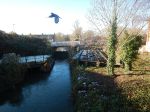
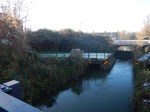




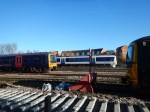


You wouldn’t notice much from the pictures, but being there I noticed changes.
It was all so much better organised, with a new bridge and extra tracks for Chiltern services.
Where’s The Emergency Train Power For Crossrail?
Things that can go wrong in a deep rail line do happen and even in the Channel Tunnel, there have been incidents.
There have been two major fires in the Channel Tunnel in 1996 and 2008 and there have also been various train failures.
I am not being alarmist, but as each Class 345 train can carry 1,500 passengers and twenty-four trains per hour will be going through the line for much of the time, there will be an awful lot of people underground at times.
If you look at the specification of a Class 345 train, it has features surely will help recovery if a train breaks down.
I found this snippet on the Internet which gives the formation of the new Class 345 trains.
When operating as nine-car trains, the Class 345 trains will have two Driving Motor Standard Opens (DMSO), two Pantograph Motor Standard Opens (PMSO), four Motor Standard Opens (MSO) and one Trailer Standard Open (TSO). They will be formed as DMSO+PMSO+MSO+MSO+TSO+MSO+MSO+PMSO+DMSO.
This formation and the train design could have positive implications for safety.
- It looks to me that the train will be two half-trains. Can they be driven independently, as Class 373 trains in the Channel Tunnel can?
- Half-trains must get around some train failures. If say the pantograph fails on one half-train, the other half-train can take the train to a suitable place like the next station to evacuate the passengers.
- The trains will also be walk through, so let’s assume that a passenger’s laptop or mobile catches fire, passengers can be moved to another safe part of the train.
I suspect that all the experience of running electric trains in long tunnels for several decades all over the World, will have been used in validating the design of Class 345 trains.
My biggest worry as an electrical engineer and a Londoner, is a complete electrical failure in the capital.
They don’t happen often, but this article on the BBC is entitled Blackout hits London’s Soho on Black Friday.
It describes London’s power failure of last week.
Power failures do happen, so what happens if a computer virus or extreme weather blacks out London?
I have just read this article in Rail Engineer, which is entitled Crossrail – approaching the final stages.
This is said about the power supply in the tunnels.
The Crossrail route will be powered by a 25kV overhead line system using a Cariboni 110mm deep rigid overhead conductor bar throughout the tunnels. Although from a different manufacturer, this design concept is similar to the one being installed in the Severn Tunnel that doesn’t require weights and pulleys.
In the central section, 25kV traction power for the Crossrail trains will be provided by two new bulk supply points from National Grid 400kV, at Pudding Mill Lane in the east and Kensal Green to the west. Super grid transformers have been installed and fitted with fans and additional coolants.
A 22kV high-voltage network will be installed in the central section from Royal Oak Portal in the west to Limmo Peninsula in the east with an 11kV high-voltage non-traction spur to be installed from Limmo through to Plumstead. This network will supply mains power to each Crossrail station, shaft and portal within the central section.
Note.
- It is a very simple power layout, for the trains, with a continous overhead rail providing power.
- There is only two feed points for the overhead power to the trains, but these feed points seem to be of a robust design.
- Trains in the middle will be fed by power coming a long way in the conductor rail.
- Conductor rail must be a more robust power supply to the trains, than the typical overhead wires.
- All Crossrail stations and shafts will use Crossrail’s own dedicated power supply.
The article though doesn’t mention two things.
- How is an emergency power failure handled?
- How is the power from regenerative braking fed back into the power network?
I’ll deal with the power failure first.
It would appear that a Central London power failure such as last Friday should have little effect on an independently-powered Crossrail. I wouldn’t expect anything less.
But there are always unexpected reasons, why a train may be isolated without power. So how does a train get to the next station or evacuation shaft, with its valuable load of passengers?
With respect to the regenerative braking, the power is usually fed into the overhead wires and used by another train nearby.
But, I do wonder if Crossrail will be doing things differently, as I like to think of the line as the latest and most energy-efficient of train lines.
Both the braking and failure problems are made easier, if the train is fitted with an on-board energy storage system or batteries in everyday parlance.
A fully-loaded Crossrail train going at its maximum speed of 145 kph will have an energy of 105 KwH, so if it stored this energy on the train when it brakes and stops, it could use it when it accelerated away.
Using batteries for regenerative braking has other effects.
- It relegates the overhead rail to providing top up power as the train proceeds through the tunnel.
- The overhead rail and its power supply, only has to cater for energy going to and not coming from the train.
- The engineering on the train is simpler, as braking energy doesn’t have to be raised to 25 KVAC to feed back into the overhead rail, using perhaps a heavy transformer.
But most importantly, it means that the train has stored energy to proceed to the next station or safe place, if the overhead power should fail.
I have no evidence that this is actually the case, but Bombardier have said that the train will have a remote wake-up facility as I discussed in Do Bombardier Aventras Have Remote Wake-Up?, so that the driver will turn up and find a train ready for action. Try doing that without a substantial on-board power source, without leaving the train plugged in to electricity all night.
Bombardier are only stealing ideas, from some of the latest cars, if I’m right.
Conclusion
I wouldn’t be surprised if Crossrail’s Class 345 trains are fitted with on board energy storage. The storage would handle.
- Regenerative Braking
- Emergency get you to safety power.
- Remote wake-up of trains.
The design would also mean that the Crossrail and its new trains would be more energy efficient.
Exploring The Great Western Branches – 29th November 2016
On this morning, I explored the three branches of the Great Western Main Line, that are closest to London, to look at the progress of electrifying their connecting stations on the main line.
I then repeated the trip to add in two more branches.
I was also looking to see how services could be run with say four-car Class 387 trains, that had been fitted with on-board energy storage, as I wrote about in Rumours Of Battery-Powered Trains.
All the branches are described in order from London.
Electrification At West Ealing Station And On The Greenford Branch
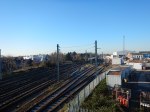
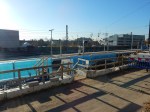
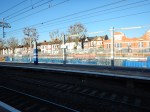
These pictures show the electrification at West Ealing station, where the Greenford Branch Line connects to the main line.
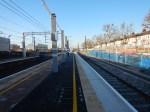





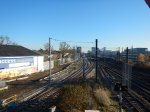


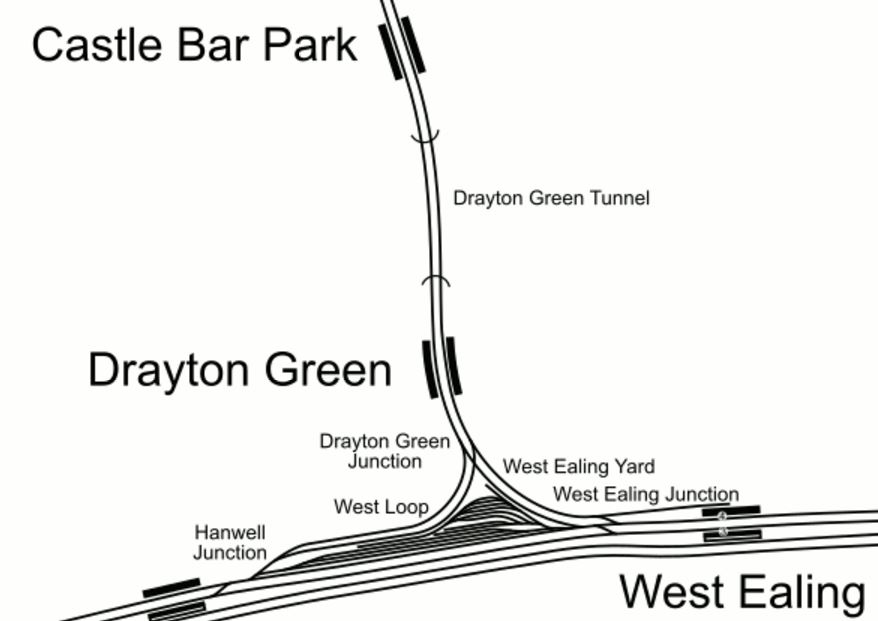
This map from carto.metro.free.fr shows the area in the photographs, at the Southern end of the Greenford Branch Line.
The Southern End Of The Greenford Branch
Notes and queries.
- The pictures of the lines were taken from a footbridge over the line, behind the Access Self Storage.
- The lines in the map show an older layout.
- The track in the bay platform 5 has access to both tracks on the Greenford Branch, which means that two trains could work the line to provide a four trains per hour (tph) service.
- The Up Slow line has access to both tracks on the Greenford Branch and to the new West Ealing sidings.
- The island for Platforms 4 and 5 appears to be more or less complete.
- Platform 3 needs to be lengthened.
- There are signs of foundations for the footbridge, past the end of the current Platform 3 and in the construction works beyond Platform 5.
- Will the Bay Platform 5 be double-sided? There’s no foundations for a bridge on the Platform 4/5 island.
- Will Platforms 1 and 2 be reconstructed or removed?
I suspect that the station is ready for a four tph diesel shuttle to Greenford, but the Bay Platform 5 can’t be wired until the bridge is in place.
Could Electric Trains With On-Board Energy Storage Work The Greenford Branch?
A few facts and thoughts.
- The service is not possible at present, as there are no wires in the Bay Platform 5 at West Ealing station, where the trains would need to charge their storage between trips.
- Trains would probably wait between three and five minutes at West Ealing station, which would be more than enough to top up the batteries.
- The bay platform at Greenford station and platforms at the other stations will probably need lengthening, but there would probably be little other infrastructure work.
- Incidentally, there is a tunnel on the branch, where blocks of housing have been built over the line, so electrification of the line could be difficult, unless provision was made, when the housing was built.
- Without doubt, the track layout at West Ealing has been designed, so that two trains could provide a four tph service.
- Two four-car trains could probably be parked in the bay platform. This could give operational flexibility.
Passenger routes between main line and Greenford Branch services would be as follows.
- With Eastbound services on the main line, the change would a very easy walk of a few metres across the island platform.
- With Westbound services on the main line, use of the bridge would be needed. But it looks like the footbridge has been positioned at the optimal position for both services and passengers joining or leaving the railway at West Ealing station.
As there will be frequencies of at least 8 tph on the main line and 4 tph on the branch, waiting will be a maximum of fifteen minutes.
The West Ealing Sidings
The pictures show the Orange Army swarming all over the new West Ealing Sidings, which will provide stabling for the new Class 387 trains.
I also took these pictures of the sidings as I returned to London.


Incidentally, as I passed through Old Oak Common on the way back to London, there were upwards of six of the new trains squatting in Hitachi’s new depot for the Class 800 trains.
If in the future, there is a variant of these trains with on-board energy storage, these sidings are certainly conveniently placed for the Greenford Branch.
Traffic On The Brentford Branch Line
These pictures were taken from Southall station of a train going onto the Brentford Branch Line.
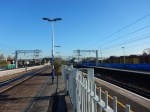

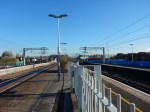
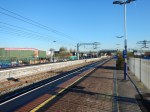
I’d never seen any traffic here before and I only included the pictures, as Hounslow Council have aspirations for a passenger service on this line, that I wrote about in Could The Golden Mile In Houslow Get A Station?
If it was decided to open the Brentford Branch Line to passenger trains, then Class 387 trains with on-board energy storage would be a possibility to provide services.
A Heathrow Connect Class 360 Train in Platform 5 At Hayes and Harlington Station
I didn’t expect to see this.
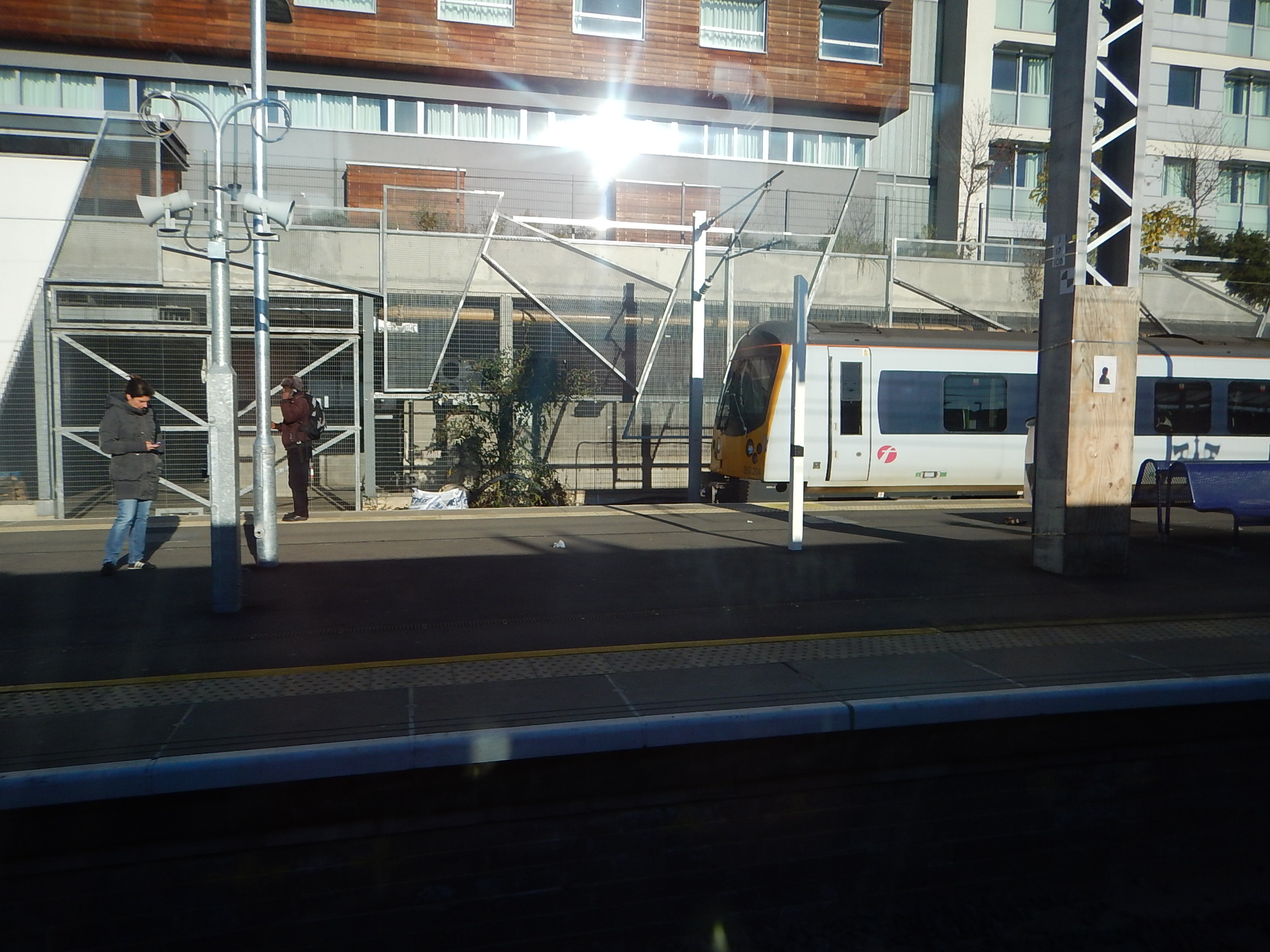
A Heathrow Connect Class 360 Train in Platform 5 At Hayes and Harlington Station
But there were signalling issues, so they appeared to be using the Class 360 train as a shuttle to Heathrow.
Electrification At Slough Station And On The Windsor Branch
These pictures show the electrification at Slough station, where the Windsor Branch Line or more correct, the Slough to Windsor and Eton Line connects to the main line.

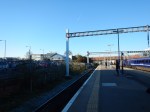



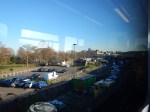
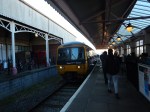
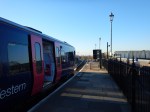


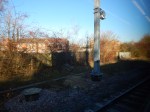


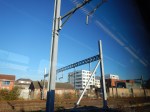

Note.
- There are overhead gantries over Platform 1 at Slough station, which is the bay platform for the Windsor Branch Line.
- There is a line of overhead line gantries on the outside of the curve, as the Windsor Branch Line leaves Slough.
- The gantries on the branch are lighter than those on the main line.
- The Class 166 train in the picture had three-cars, so the platform could probably be lengthened for a four-car Class 387 train.
As there appears to be no work anywhere else on the branch, I have to assume, that the electrification doesn’t go very far along the Windsor Branch Line.
This Google Map shows the lines at the start of the Windsor Branch Line.
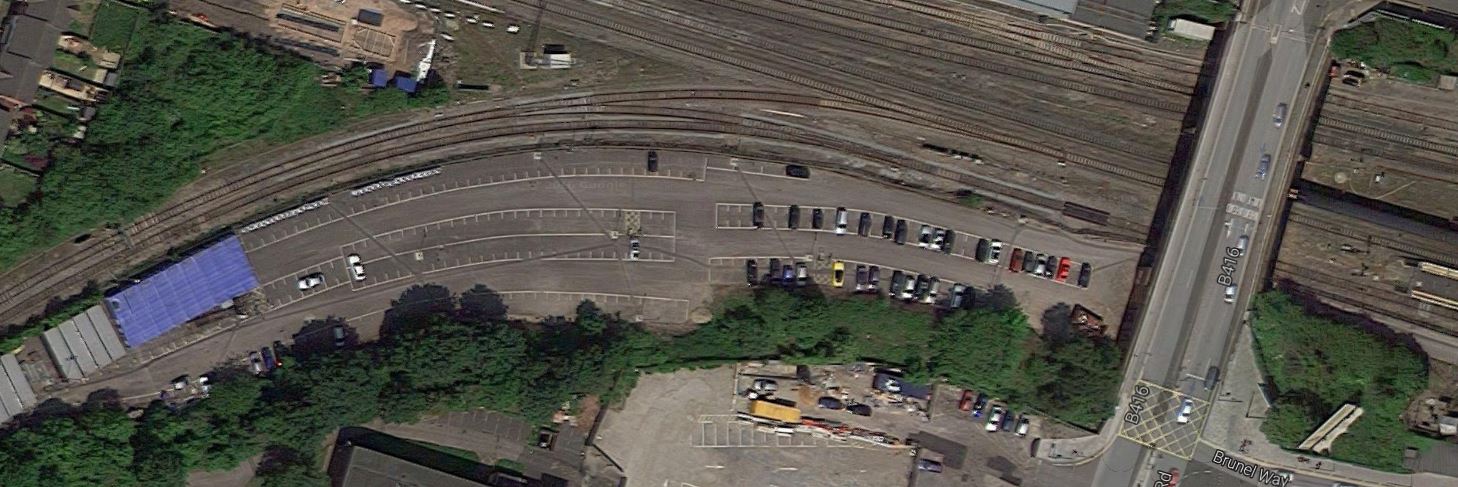
There are two main tracks at the start of the Windsor Branch.
The track closest to the blue building, is the actual branch.
- It is a single track that goes between Windsor and Eton Central station and the Bay Platform 1 at Slough station.
- Trains take six minutes for the journey.
- The current frequency is three tph.
- The bay platform 1 and a short length of the branch could be electrified.
The track furthest from the blue building is a long spur off the Down Main, that allows trains to be moved to and from the Windsor Branch Line.
- It appears to be long enough for train to be parked on the spur.
- It appears that the spur is being electrified for about a couple of hundred metres.
- The spur could be extended or reconfigured to become a passing loop.
There also appears that there is a crossing that allows trains to move to and from the bay platform 1.
Could Electric Trains With On-Board Energy Storage Work The Windsor Branch?
Operation of the Windsor Branch would be as follow with a train fitted with on-board energy storages.
- Trains enter the branch by going to the end of the spur and reversing into the bay platform 1.
- Trains charge their on-board energy storage in Platform 1.
- Trains run to and from Windsor using on-board energy, charging after each trip.
- Trains leave the branch by going to the end of the spur and reversing onto the Down Main.
I have a feeling that if needed, that with small modifications, four tph might be possible, using two trains.
One of the possibilities unlocked by four tph could be to use the train to get passengers to the town from a Park-and-Ride site, beside Junction
Windsor And Eton Central Station
I took these pictures of Windsor and Eton Central station.
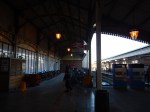
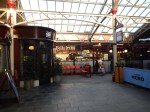
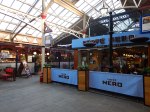

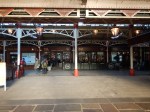
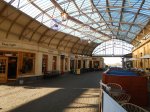


It certainly has several quality food outlets.
Electrification At Maidenhead Station And On The Marlow Branch
These pictures show the electrification at Maidenhead station, where the Marlow Branch Line connects to the main line.

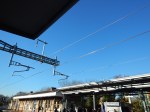
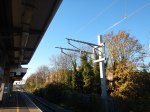
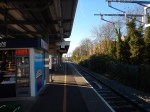
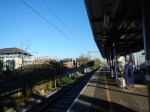
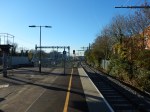
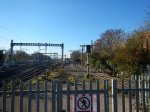
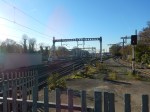

Note.
- Platform 5 is almost fully-electrified and the wires curve away onto the Marlow Branch.
- Platform 4 and its connection to the Marlow Branch appears to be fully electrified.
- There is a reversing siding to the West of the station in there somewhere.
- There is an unfinished gap in the electrification of all lines to the East of Maidenhead station.
I wouldn’t think it would be long before all the electrification work is finished at Maidenhead station.
Could Electric Trains With On-Board Energy Storage Work The Marlow Branch?
So how will the various services to and from Maidenhead and on the Marlow Branch be handled, if Class 387 trains with on-board storage were available?
- Between London and Maidenhead services would be worked using overhead power.
- Between Maidenhead and Bourne End, services would be worked using on-board energy storage, that would be charged in Platform 5 at Maidenhead or on the main line to and from London.
- Between Bourne End and Marlow, the trains couldn’t run as they are too long and a two-car Class 166 would work the service and connect at Bourne End.
From the layout of the overhead wiring, I suspect that which of Platforms 4 or 5 is used at Maidenhead is flexible and which is actually used by a particular service would depend on many factors.
Electrification At Twyford Station And On The Henley Branch
These pictures show the lack of electrification work at Twyford station, where the Henley Branch Line connects to the main line.

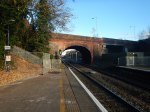
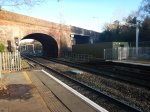
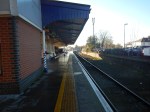
The two slow platforms 3 and 4 at Twyford station, which will be used by Crossrail and Platform 5 which is used by the Henley Branch trains, show no signs of electrification, although work has been done on the fast platforms 1 and 2.
In the December 2016 Edition of Modern Railways, there is an article by Roger Ford entitled Electrical Clearances: The Plot Thickens.
As the stations either side of Twyford, which are Maidenhead and Reading, are both almost fully wired, there must be a serious reason why there isn’t any work started on Platforms 3, 4 and 5 at Twyford. Could it be that without either rebuilding the bridge or lowering the track and rebuilding the platforms, the new regulations can’t be met?
However, there could be a possible solution.
These trains will be using the station in a few years.
- Class 800 trains, which are bi-mode.
- Class 345 trains, which I believe could be fitted with on-board energy storage for other reasons, like tunnel emergencies.
- Class 387 trains, which I believe could be fitted with on-board energy storage.
So could we see Platforms 3 and 4 at Twyfrord station without wires?
I’ve no idea!
But it does seem strange that no electrification work has been started at Twyford station, except on the fast lines, through Platforms 1 and 2.
Could Electric Trains With On-Board Energy Storage Work The Henley Branch?
So how will the various services on the Henley Branch be handled, if Class 387 trains with on-board storage were available?
Consider.
- The branch is only a short one with a total length of 4.5 miles.
- There are one tph on the branch, with extras to Paddington in the Peak.
- Trains turn round in about four minutes.
- From 2018, Twyford station will be served by 2 tph from Crossrail and 4 tph from GWR in each direction.
- Platforms at all stations seem long enough for at least four-car trains.
- There used to be a passing loop at Shiplake station.
- Trains going to and from Paddington could charge their energy storage on the main line.
Two trains working a reconfigured branch could possibly create a 4 tph service.
Creating a four tph service on the Henley Branch, is the sort of problem, that engineers solve in the traditional way. – In a suitable hostelry!
I think that spending the money on a passing loop, some means of charging the trains and possibly a rebuilt Shiplake station, will be much better value, than electrifying the branch and the Crossrail platforms at Twyford station.
Electrification At Reading
In the December 2016 Edition of Modern Railways, there is an article entitled Loco-Hauled EMUs On GWR.
The article starts by saying.
GWR’s new Class 387 trains will be loco-hauled to and from their depot at Reading, until electrification between Maidenhead and Reading is completed.
Could this all be because, Network Rail don’t have a plan to electrify Twyford?
At least the depot seems electrified.

I didn’t see a Class 387 in their depot, but there were at least half-a-dozen parked at Hitachi’s depot at North Pole.
Electrification From Didcot To Oxford
The Cherwell Valley Line between Didcot and Oxford can be described as follows.
- It is a double-track hemmed in on both sides.
- The two stations at Radley and Culham are on narrow strips of land and could be difficult to electrify.
- There is a tail of electrification gantries from Didcot Parkway onto the branch, which is typical of some other branches like Windsor and Marlow.
- There were electrification piles in several places, either in the ground or just lying around.
- The track could have be reconfigured to incorporate a new South-facing bay Platform at Oxford station.
These are some pictures.

One of Chiltern’s Class 168 trains was also hanging around, training drivers.
Could Electric Trains With On-Board Energy Storage Work Didcot To Oxford?
Didcot to Oxford is about 10.5 miles, so I suspect range is not a problem, especially if the new Southern Bay Platform is built, which would mean trains would not have to cross the lines wasting energy North of the station.
What would drive this, is not technology, but if Chiltern are running a service at their usual standard from Oxford to Marylebone, it could be take passengers from the GWR.
New Class 387 trains with on board energy storage could be a good weapon with which to fight back!
But then so would Class 800 trains!
Oxford Station
I took these pictures at Oxford station on the 1st of December.


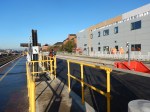
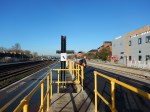
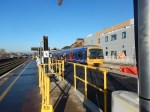
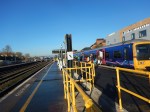
Note GWR’s 13:01 arrival from Banbury into the new bay Platform 2.
Was I watching the first scheduled train into the new platform?
There certainly wasn’t any dignitaries!
National Rail’s Arrival and Departure details on the Internet certainly showed that Banbury services were using the new Platform 2 later in the day.
Conclusions
From my explorations I have come to the following conclusions.
- There is a large gap in the electrification works at Twyford station.
- It looks to my untrained eye, that the Greenford, Windsor and Marlow branches are being wired, so the branches could be served by electric trains with on-board energy storage.
- The Orange Army is furiously at work creating new sidings at West Ealing for the Class 387 trains.
- It is possible for trains to use the new bay Platform 2 at Oxford station.
It will be interesting to take a Chiltern service to Oxford, when the service opens on the 11th of December.
It certainly was a good day to take photographs.
 The Anonymous Widower