Do We Need More Angels?
Before my reader, thinks I’ve gone all religious, I’m talking about the Angel tube station.
The station was substantially rebuilt in the early 1990s and this is said in Wikipedia in a section about the rebuilding.
For years since its opening, the station regularly suffered from overcrowding and had a very narrow island platform (barely 12 feet (3.7 m) in width), which constituted a major safety issue and caused justified fear among passengers. Consequently, the station was comprehensively rebuilt in the early 1990s. A new section of tunnel was excavated for a new northbound platform, and the southbound platform was rebuilt to completely occupy the original 30-foot tunnel, leaving it wider than most deep-level platforms on the system. The lifts and the ground-level building were closed and a new station entrance was opened on 10 August 1992 around the corner in Islington High Street together with the northbound platform while the southbound platform opened on 17 September 1992. Because of the distance between the new entrance and the platforms, and their depth, two flights of escalators were required, aligned approximately at a right angle.
So that explains why the station is unusual and safe. Rather than unusual and scary!
This map from carto.metro.free.fr shows the layout of the tunnels through Angel station.

Note.
- The dotted lines of the original tracks.
- The track to the North (top) was the original Northbound track.
- The Southbound track still has the same layout.
- The original twelve-foot island wide platform has now been widened to create the platform labelled 2.
- The platform labelled 1 and the track labelled 1992 is new work.
- The other dotted line was a siding.
I suppose the only complaint, is that the new station is not step-free, but then the work pre-dated the time from when disabled-access became commonplace.
London Bridge station went through a similar process in the late 1990s.
This map from carto.metro.free.fr shows the track layout of the Northern and Jubilee Lines at the station.
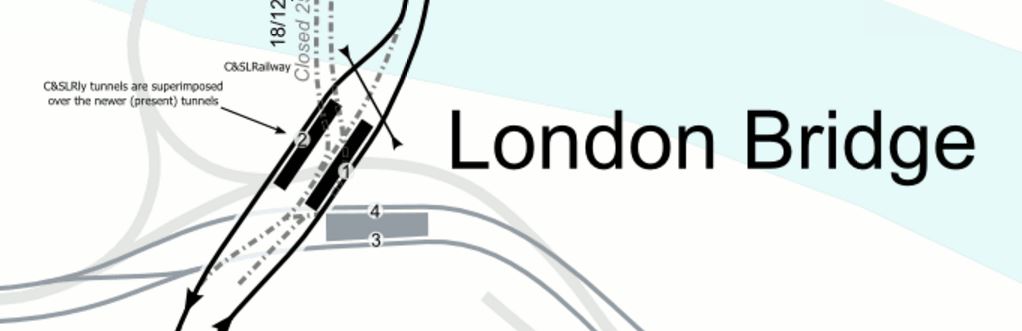
London Bridge Tube Station
The work that will be carried out at Bank station follows some of the things that were done over twenty years ago at Angel.
This map from carto.metro.free.fr shows the current layout at the station.
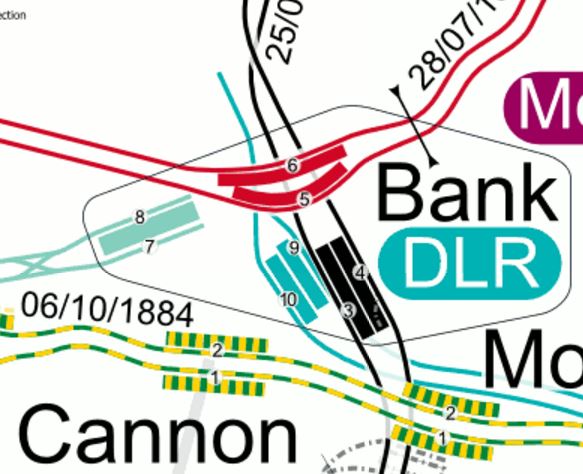
bank Tube Station
Note the following about the current layout and future developments.
- Platforms 3 and 4 are the current Southbound and Northbound platforms respectively, with non-traditional on the right running.
- A new single-track Southbound tunnel is being built to the West of the current one, to create a space between the lines.
- The current platform 3 will become part of the passenger space as it has at Angel.
- Platforms are being widened.
- Better step-free access is being created.
- There will be escalators direct to the Central Line.
- Oversite development is being added on the top of the new station entrance on Cannon Street.
- In some ways too at Bank station, the precedents set by the new Walbrook Square entrance are also being followed.
This visualisation, shows what the new Bank station will look like.
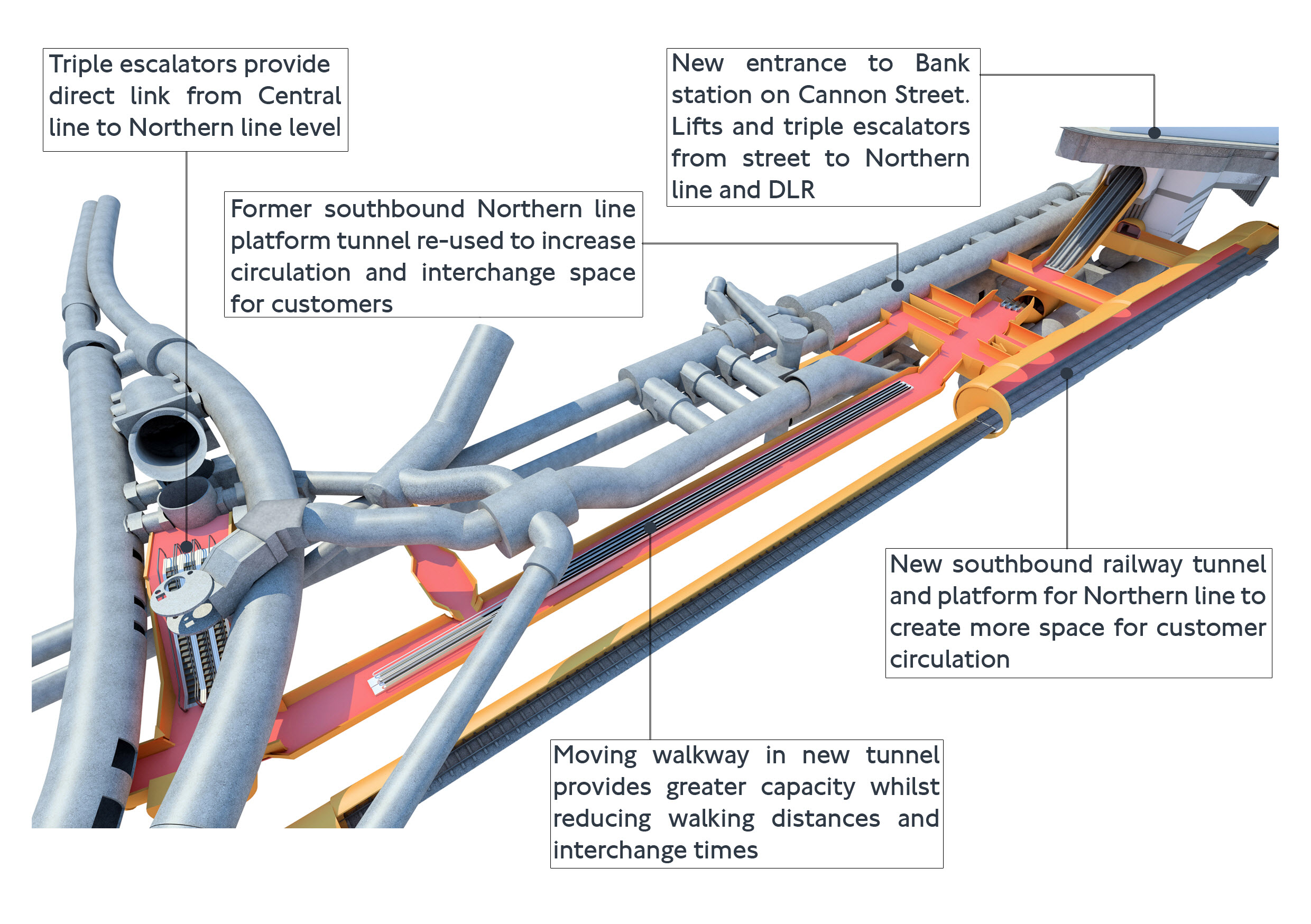
I think more stations can be rebuilt along using similar techniques.
Clapham North and Clapham Common stations are the last two Northern Line platforms with an island platform in the tunnel and must be towards the top of any list. This map from carto.metro.free.fr shows their locations.

Note their closeness to Clapham High Street station, I am sure, that eventually a better solution to these two stations will come about because of property development in the area.
- Euston station must be added, but this will probably be sorted with HS2 and the rebuilding above.
- Camden Town station is planned for a major upgrade with property development on top.
- Finsbury Park station is being improved, but given the station’s future importance, is what is planned enough?
And then there is always Highbury and Islington station, which is probably the worst station on the Victoria Line for platform access.
This map from carto.metro.free.fr shows the lines through the station.
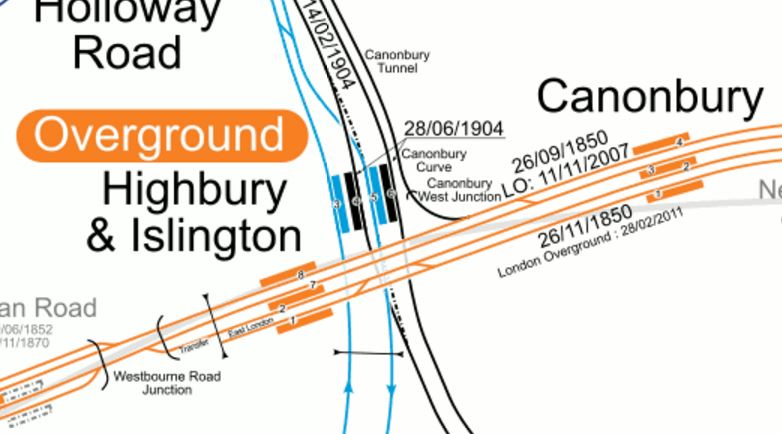
Note the following about Highbury and Islington station.
- The Overground has been sorted with step-free access.
- The bridge outside the station, which was decidedly dodgy will be fixed soon.
- Islington Council have ambitious plans for Highbury Corner.
- The Northern City Line is being upgraded to a high frequency with new Class 717 trains.
- The frequency on the North London Line is going to be increased a notch or so.
- There will be more trains to the South on the East London Line.
- The Victoria Line is going to get closer to forty trains per hour.
All of this adds up to a desperate need to rebuild the station with more escalators and lifts, probably on both sides of the Holloway Road.
There is a further unlikely possibility at Highbury and Islington station.
Note the Canonbury Curve in the map, which lies on a single-track electrified line that links the North London Line to Finsbury Park on the East Coast Main Line, Thameslink and the Northern City Line.
If, as I suspect, that in a few years the Northern City Line is upgraded to a higher frequency, once the new Class 717 trains, there will be an even bigger need to sort out this station.
The Future Of Commuting
I take the title from this article in this Guardian, which is entitled Cattle-class: are Thameslink’s new ‘tube-style’ trains the future of commuting?
This is the sub-title to the article.
As the UK south-east’s rail nightmare continues, a new class of commuter trains has been quietly revealed – long, metro-style carriages without tables, built to accommodate as many standing passengers as possible. Is this the new normal?
The New Class 700 Trains
I have travelled on the new Class 700 trains and I wrote about my journey in A First Ride In A Class 700 Train.
These are things I thought some people might not like.
- The lack of audible messages. – I liked the quiet, but I’m not blind.
- The lack of tables in Standard Class compared with say the Class 387 trains, that currently work the line.
- The lack of wi-fi.
- The length of the train at 242.6m., if they get in the wrong carriage.
- The high step up into the train.
The last one is possibly to be compatible with other trains and is being addressed at East Croydon station, by raising the platforms. I didn’t go to Gatwick, but imagine large numbers of heavy cases being loaded and unloaded.
I think that the problem is that some bright spark in the Department of Transport or the Treasury, decided that the trains should be a one size fits all and that they had to cope with a lot of stations, where the platforms wouldn’t be seriously modified.
Thank goodness this idiot didn’t order the same trains for Crossrail.
The Routes Compared
It is interesting to compare the route and trains of Thameslink with Crossrail
The trains are similar in length, with about a third of the passengers getting seats at full capacity of 1500 for Crossrail’s Class 345 trains and 1800 for Thameslink’s Class 700 trains.
But I think there will be a big difference in passenger loading between the two lines.
These are times from four selected end points to Farringdon, where the two lines cross.
- Bedford (Thameslink) – 60 minutes
- Brighton (Thameslink) – 86 minutes
- Reading (Crossrail) – 58 minutes
- Shenfield (Crossrail) – 43 minutes
So it looks like the average commute on Thameslink could be longer, so possibly their trains should reflect that, with wi-fi, lots of tables etc.
But whereas Brighton and Bedford will get a few trains every hour to Central London, Shenfield will get ten.
Shenfield and Reading will also have long distance services coming in from further out and going direct to the capital.
Unfortunately, trains can’t start further South than Brighton.
Another big difference, is that Crossrail serves a lot of the places, commuters and visitors to the capital want to go. For example.
- Bond Street for the shops and the Underground
- Canary Wharf with a cross-platform change, if not direct.
- Heathrow for the planes
- Liverpool Street for long distance trains and the Underground.
- Moorgate for a walk to the City.
- Old Oak Common for long distance trains and the Overground.
- Paddington for long distance trains.
- Stratford for the Queen Elizabeth Olympic Park, shopping and the Underground.
- Whitechapel for the Overground.
Thameslink’s list is shorter and less impressive.
- Blackfriars for a walk to the City.
- City Thameslink for a walk to the City.
- Gatwick for the planes.
- Kings Cross St. Pancras for Eurostar and long distance trains.
- London Bridge for a walk to the City and the Underground.
I might be wrong, but this leads me to think that Crossrail will act like a high-capacity Underground Line across Central London,and will for example, be used by visitors wanting to have a walk in the City and then go to do some shopping in Oxford Street. Thameslink doesn’t have similar casual uses across Central London.
Another difference, is that Crossrail’s Shenfield and Reading branches are very much all-stations branches, whereas Thameslink’s have a lot of semi-fast trains.
This thinking leads to an important difference.
Crossrail’s train design and capacity depends heavily on the needs from Stratford to Old Oak Common, wheras Thameslink’s trains are more about the needs of long-distance commuters.
But then, Crossrail has been designed as a system of trains and routes to satisfy the capital’s needs, whereas Thameslink has been created by stitching together a series of Victorian lines, that all have different needs.
A Redesign For Thameslink
I think a few years after Crossrail and Thameslink open, Thameslink services will have a big redesign.
So what will happen?
It will be driven by the statistics of where passengers need to go.
But I can see the following happening.
Upgrading Of The Class 700 Trains
The more I read about the two sets of trains, the more I feel that passengers will moan about the Class 700 trains on Thameslink, when they experience the Class 345 trains on Crossrail.
Points of annoyance could include.
- The lack of wi-fi and charging sockets.
- Nowhere to put a coffee.
- The number of tables.
- The layout of the seats.
- Bicycles
But then these trains weren’t specified by the operator, unlike those on Crossrail, where Transport for London had a big input.
Creation Of More Cross-Platform And Same-Platform Interchanges
The only quality interchange between Thameslink and other services is London Bridge. But that has been designed recently.
East Croydon has been the victim of make-do-and mend for decades.
Gatwick Airport could be so much better.
St. Pancras is truly terrible and was designed so that passengers are kept fit, by walking long distances underground to reach other services.
West Hampstead Thameslink could be another Stratford, but it falls short.
I think we’ll see improvements to some of these stations to create better same-platform or cross-platform interchange between Thameslink and longer distance services.
As an example Alexandra Palace and Finsbury Park seem to have been improved so that Thameslink has a good interchange with local services out of Kings Cross and Moorgate.
On Thameslink East Croydon, Gatwick and West Hampstead Thameslink must be updated to improve connectivity between Thameslink and longer distance services.
Separation Of Short And Longer Distance Trains South Of The River
On Crossrail, passengers going further East can change at Liverpool Street or Stratford in the centre or Shenfield in the East and those going further West can change at Paddington in the centre or Reading in the West.
Four of the five interchange stations; Liverpool Street, Paddington, Reading, Shenfield and Stratford, are large stations with excellent facilities and lots of trains and I can see that Shenfield will be improved by some pragmatic use of the current platforms and the nearby High Street.
North of the River on Thameslink, the interchange between short and longer distance distance trains isn’t perfect, but Finsbury Park, Kentish Town, Welwyn Garden City and West Hampstead are better and have more spare capacity than East Croydon.
The only decent interchange South of the River is the recently-updated London Bridge. But it is too close to the centre of London.
South of the River, Thameslink needs a station like Reading or Shenfield, where passengers have a cross-platform or same-platform change to and from a proper long-distance commuter train to a comfortable high-density shuttle across London, as an alternative to getting one train all the way.
The Brighton Belle Will Return
The Brighton Belle was the way to commute between London and Brighton until it ceased running in the 1970s.
I may have ridden it once as a child of about seven with my father, but we may have made our trip to Brighton on an ordinary train.
Having travelled to Brighton many times, the route could probably sustain a higher quality service than it currently gets.
Currently, there are three services on the route.
- Thameslink, that when complete will go via Gatwick, East Croydon and London Bridge to all points North of the River.
- Southern to Victoria, that will go via Gatwick Airport, East Croydon and Clapham Junction.
- Gatwick Express to Gatwick and Victoria.
All are operated by the same franchise, Govia Thameslink Railway.
In my view, this is part of the commuting problem to the South Coast and especially Brighton.
There are no paths for a high-class operator on the route between either Victoria or London Bridge and Gatwick, but I think that better use could be made of the current services to increase capacity and the quality of the trains.
So I believe that as it was after the initial privatisation, Gatwick Express should become a separate franchise.
In its simnplest reincarnation, it would offer a high-class operator between Vicrtoria, Gatwick and Brighton, perhaps calling at Three Bridges and/or Horsham, just as did the original Brighton Belle called at Horsham.
But I’ve believed for some time that with the electrification of the Great Western Railway, that a service between Reading and Gatwick, should come under the control of Gatwick Express.
Consider.
- A network of upmarket Gatwick Express services could be developed centred on Gatwick.
- A Class 387 train, running from Reading to Gatwick would do the journey faster than using Crossrail/Thameslink, without all the problems of even a simple change.
- A Gatwick to Ebbsfleet or Ashford service would be possible.
- Gatwick could have Gatwick Express services to Luton Airport using Thameslink via London Bridge and St. Pancras.
- The current services to Victoria and Brighton would continue.
- It would have dedicated platforms at Brighton, Gatwick, Victoria and possibly Reading.
Properly structured it could be a mix of high-class Airport and commuter services.
- It must have nothing to do with Govia Thameslink Railway.
- The Class 387 trains are probably good enough for the franchise.
- Something like a Chiltern-style Class system might be best.
- Surely, modern technology should be able to create a decent buffet car.
- Ticketing would be as now and must include contactless bank card and Oyster.
- If it wants to extend services to Eastbourne, Portsmouth and Southampton, it should be taken seriously.
I’m certain, a bright marketing man would come up with an iconic name for the service.
The only problem would be that Govia Thameslink Railway would object like mad, but in some ways they’ve brought it on themselves.
Only Twelve-Car Trains Through The Central Tunnel
It is essential that to maximise capacity of the line, that in the most restricted section through the central tunnel, that all trains through the tunnel are twelve-car trains.
So this would mean that Sutton Loop Line services would have to terminate at Blackfriars station, as was originally intended until MPs intervened.
In the Wikpedia entry for The Sutton Loop Line, this is said.
Recent proposals were to increase the frequency of the Thameslink service but terminate at Blackfriars. This would allow the trains through the core section to be replaced with longer trains which could not use the loop, but this has not proceeded due to objections from loop passengers about the withdrawal of their through service.
It might be difficult to bring in now, due to the layout of Blackfriars station. This means that passengers going South will need to Cross under the lines to get to the bay platforms on the other side of the station.
It should be noted, that under the latest plans, passengers coming South on Thameslink and wanting to go to Sevenoaks, will have to negotiate this down and up at Blackfriars. It will be easier, if they are on the Midland branch, as they could get any of the four Sutton Loop Line trains and change at Elephant and Castle. But those passengers on the East Coast branch have only the 2 tph Maidstone East service that goes through Elephant and Castle.
Sufficient Trains On Each Section Of Thameslink
If you look at the current proposed timetable in All Change On Thameslink, you can summarise each section as follows.
- Bedford to St. Pancras – 16 trains per hour (tph)
- Bedford to Luton – 8 tph
- Luton to St. Albans – 10 tph
- St. Albans to Kentish Town – 14 tph
- Kentish Town to St. Pancras – 16 tph
- Peterborough/Cambridge to St. Pancras – 6 tph
- Peterborough to Hitchin – 2 tph
- Cambridge to Hitchin – 4 tph
- Hitchin to St. Pancras – 6 tph
- St. Pancras to Blackfriars – 22 tph
- Blackfriars To Elephant and Castle – 8 tph
- Elephant and Castle to Sutton Loop – 4 tph
- Elephant and Castle to Swanley- 4 tph
- Swanley to Maidstone East- 2 tph
- Swanley to Sevenoaks – 2 tph
- Blackfriars to London Bridge 16 tph
- London Bridge to Orpington – 2 tph
- London Bridge to Rainham via Greenwich and Dartford – 2 tph
- London Bridge to East Croydon- 12 tph
- East Croydon to Gatwick – 10 tph
- Gatwick to Brighton – 4 tph
- Gatwick to Horsham – 2 tph
- Gatwick to Littlehampton – 2 tph
My numbers are probably not totally correct, but it does show there are reasonable frequencies everywhere.
Note.
- Rainham to Luton via Dartford, Greenwich and London Bridge looks a service for an area of South East London that needs development.
- Rainham to Luton calls at Abbey Wood for Crossrail, so it also is a valuable extension to Crossrail services at Abbey Wood.
- Swanley seems to be developing into an interchange for services to Kent, with four tph to Blackfriars and two tph to each of Maidstone East and Sevenoaks.
- Gatwick gets a frequency of 10 tph to London on Thameslink.
- There are 8 tph between Gatwick and Luton airports.
These frequencies have changed from those given in Wikipedia
The Effect Of The Northern City Line
The original service plan for Thameslink to the North of London, showed the following.
- 4 tph to Bedford
- 2 tph to Peterborough
- 4 tph to Cambridge
In total sixteen sixteen services were planned go up the Midland Main Line and eight up the East Coast Main Line and the Cambridge Branch.
But as I showed in All Change on Thameslink, it is now planned to be.
- 8 tph to Bedford
- 2 tph to Peterborough
- 4 tph to Cambridge
The service to Finsbury Park and Welwyn Gsrden City has also disappeared, so although the total number of services on the Midland Main Line remains the same, the number of services on the East Coast Main Line has dropped to six.
Could this be because the Northern City and the Hertford Loop Lines are going to be given an increased role in providing services, when the new Class 717 trains arrive in a couple of years?
It certainly looks as if Govia Thameslink Railway could be organising their services out of Kings Cross and Moorgate to augment the Thameslink services.
It looks like the following is happening.
- Short distance services up to about Hitchin and Letchworth Garden City are being served by trains from Kings Cross and Moorgate.
- The increase in the number and quality of the Class 717 trains is being used to provide an improved local service.
- Trains from Thameslink and Great Northern will provide the bulk of the long distance commuter services to Cambridge and Peterborough.
- GTR have also said that their Class 387 trains, will be working between Kings Cross, Cambridge, Peterborough and Kings Lynn.
I don’t think anybody will be complaining.
Embracing The East London Line
If you were going from say Gatwick Airport to Hatfield, when Thameslink is fully open in a few years time, you would probably get one of the direct trains, which will run at a frequency of 4 tph.
But rail enthusiasts and masochists might travel by this route.
- Gatwick Airport to East Croydon on Thameslink or Southern.
- East Croydon to Norwood Junction on Southern
- Norwood Junction to Highbury and Islington on the East London Line
- Highbury and Islington to Finsbury Park on the Northern City Line
- Finsbury Park to Hatfield on Great Northern or Thameslink.
I know it’s rather convoluted, but it does show how the East London Line is an important cross-London route, with strong links to railways controlled by Govia Thameslink Railway.
It is well-connected at the North, but connections at the South to Southern and Thameslink at the important station of East Croydon are woeful.
Thameslink must embrace the East London Line fully, just as it is embracing the Northern City Line.
Swanley Station
Swanley station could prove to be an important station for Thameslink.
Currently services call at the station are as follows.
- 4tph to London Victoria via Bromley South
- 2tph to West Hampstead Thameslink via Catford
- 2tph to Sevenoaks via Bat & Ball
- 1tph to Ashford International via Maidstone East
- 1tph to Canterbury West via Maidstone East
- 1tph to Dover Priory via Chatham
But if the current plans for Thameslink are fulfilled there will be the following Thamesline services through Swanley.
- 2 tph – Maidstone East to Cambridge
- 2 tph – Sevenoaks to Blackfriars
Adding these to the current services gives.
- 4tph to London Victoria via Bromley South
- 4tph to Blackfriars via Catford
- 2tph to Cambridge via Catford and Blackfriars
- 2tph to Sevenoaks via Bat & Ball
- 4 tph to Maidstone East
Effectively, Swanley will get a turn-up-and-go 4 tph service to Blackfriars, Maidstone East and Victoria.
This map from carto.metro.free.fr shows the layout of lines at Swanley station.
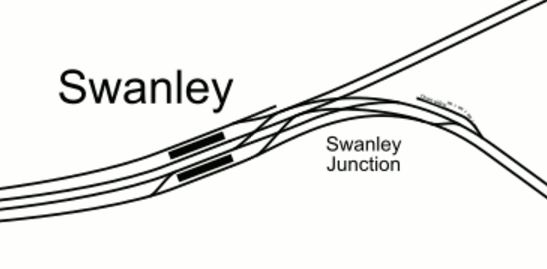
Swanley Station
Note.
- Swanley station has two island platforms.
- The line going North-East is the Chatham Main Line.
- The line going South-East is the Maidstone Line, leading to Maidstone East and Sevenoaks stations.
- At present, the platform arrangement is not one island platform for each direction.
This station could be dramatically improved to be a cross-platform interchange with London-bound and coast-bound services each with their own island platform. If of course, this were to be possible for other operational reasons.
The only passengers who would be inconvenienced, would be those who were travelling between stations on different lines to the East.
- The East London Line having cross-platform interchange vwith Thamesllink.
- Sortout the dreadful St. Pancras with good interchange between Thameslink and other lines.
- Gatwick acts as a collector station, where passengers from all over the South change trains to a high-capacity Gatwick to Luton/Bedford shuttle.
Thameslink will be radically different to how it is planned to be today.
Sometimes You Win Slow
Announcements on the East West Rail Link, haven’t exactly come thick and fast, the last one being the route of the section between Bedford and Cambridge, that I talked about in Is Cambridge University Being Pragmatic About The East West Rail Link?, was published in March 2016.
This article on Mix96 is entitled Winslow’s Station Is One Step Closer.
This is said.
Now a station for the town is one step nearer as Bucks County Council has paid £900,000 for a site to build it.
That looks like nine hundred thousand small steps to me.
Winslow station is to be built to the North-West of the town and this Google Map shows the location.
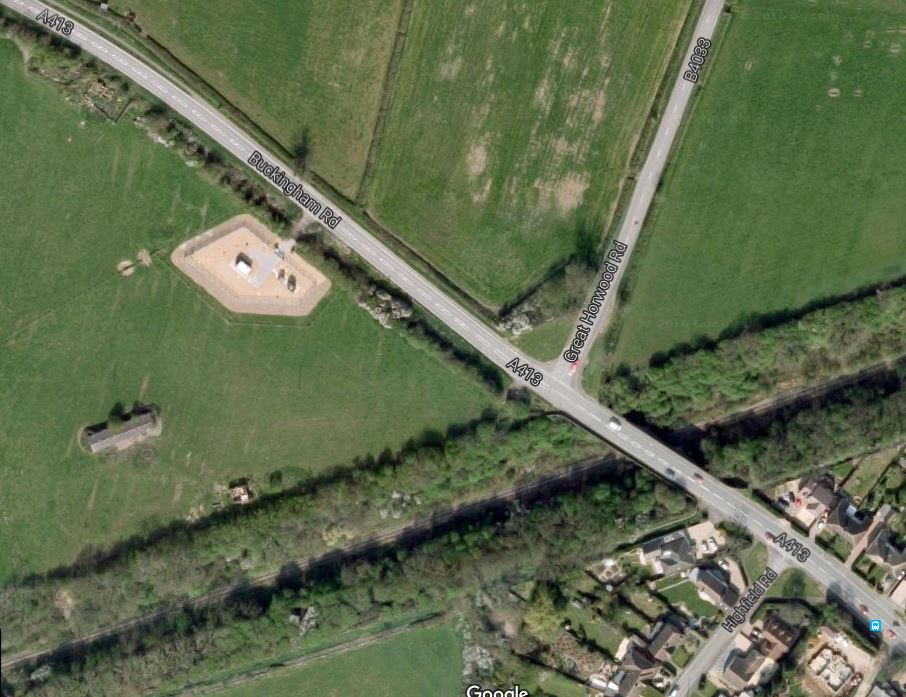
Winslow Station Site
The lower black scar contains a rusty single-track and is all that remains of the original Varsity Line
When open the station will have two services.
- London Marylebone to Milton Keynes Central via Aylesbury, Winslow and Bletchley
- Reading-to Bedford via Oxford, Winslow, Bletchley and possibly Milton Keynes Central.
Wikipedia talks about opening one train per hour on both services in 2019.
Could Electrification Be Removed From The Chingford Branch Line?
This article in Rail Engineer also quotes Jon Shaw of Bombardier on onboard energy storage in the new Aventra trains, like the Class 710 trains that will work the Chingford Branch Line.
As part of these discussions, another need was identified. Aventra will be an electric train, but how would it serve stations set off the electrified network? Would a diesel version be needed as well?
So plans were made for an Aventra that could run away from the wires, using batteries or other forms of energy storage. “We call it an independently powered EMU, but it’s effectively an EMU that you could put the pantograph down and it will run on the energy storage to a point say 50 miles away. There it can recharge by putting the pantograph back up briefly in a terminus before it comes back.
I believe that once the concept of onboard energy storage is accepted, that Network Rail and operators, will question whether there is a need for so much electrification.
In a few years time, all trains, except perhaps a few engineering ones, on the Chingford Branch Line North of St. James station will be new Class 710 trains with the following characteristics.
- Enough onboard energy storage to handle regenerative braking and handle the twenty mile out-and-back trip on the branch.
- By using onboard energy storage, the trains have a remote wake-up facility, as discussed in Do Bombardier Aventras Have Remote Wake-Up?.
- The ability to raise and lower a pantograph quickly.
So would it be possible to remove electrification, North of Clapton Junction.
This map from carto.metro.free.fr shows the area of Coppermill junction, with the Chingford Branch Line shown conveniently in orange.

Coppermill Junction
I will now list the advantages of removing the electrification between Clapton Junction and Chingford.
Maintaining The Overhead Wires
Overhead wires get damaged, vandalised and stolen at a surprisingly high frequency.
Network Rail would love to see the wires come down.
The only objectors would be the thieves, who nick the wires to sell.
The Sidings At Chingford Could Be Without Electrification
As all the trains stored there would have their own onboard energy storage, they would move in and out under their own power.
The Chingford sidings could thus be without electrification.
This would.
- Reduce maintenance costs for the sidings.
- Enable track layouts to be changed without changing the electrification.
- Increase safety levels for everybody working in the sidings.
The only electrification needed at Chingford might be a short stretch of overhead wire to top up trains low on electricity.
All Height Restrictions Could Be Removed At The Highams Park Level Crossing
After the recent accident on the M20, reported in this story on the BBC,, which is entitled M20 motorway shut after lorry crash causes bridge collapse, I don’t think it is wise to underestimate the stupidity of some drivers.
So if there were no overhead wires at the Highams Park level crossing, it might avoid a serious incident.
Easing Station Rebuilding and Building
Wood Street station needs to be rebuilt to make the station step-free and it would be much easier and less disruptive to train services, if there were no overhead wires to get in the way.
If any new stations are added to the line, then the cost of building must be more affordable, if there are no overhead wires to get in the way.
Less Visual and Noise Intrusion
Obviously, removal of overhead wires will reduce the visual intrusion.
But, it will also reduce the noise, as overhead wires are a source of noise from electric trains.
Note too, that as the new trains will use regenerative braking at most times, there will be much less noise from wheel-brakes.
A Safer Railway
There is no doubt, that a railway without electrification is a safer railway, as there is no electricity, except for points and signals.
Conclusion
It would be advantageous for several reasons if electrification could be removed from the Chingford Branch Line.
Related Posts
Improving The Chingford Branch Line
Could Reversing Sidings Be Used On The Chingford Branch Line?
Could The Hall Farm Curve Be Built Without Electrification?
New Stations On The Chingford Branch Line
Rumours Of Curves In Walthamstow
Will Walthamstow Central Station On The Victoria Line Be Expanded?
Crossrail 2 And The Chingford Branch Line
The Chingford Branch Line will be effected both during construction and after opening by Crossrail 2..
In Rumours Of Curves In Walthamstow, I said this.
But with the design stage of Crossrail 2 well underway, I do wonder, if connecting Chingford station and the related sidings to the West Anglia Main Line, might give Crossrail 2 better options to build the line or provide alternative services, whilst the West Anglia Main Line is rebuilt through the area.
I still think that the Chingford Branch Line will be an invaluable resource to help get the Northern end of Crossrail 2 built.
If the Coppermill Curve is built in the near future, I feel the main reason will be to help build Crossrail 2 and rebuild the West Anglia Main Line to four-tracks.
Once Crossrail 2 is open, I think that the two lines will be connected together at Seven Sisters/South Tottenham. There is a lot of scope for a major passenger-friendly interchange and as it will be a few years after Crossrail, the design will draw on the experience of theearlier line.
Conclusion
The Chingford Branch Line will end up being tightly linked to Crossrail 2.
Related Posts
Improving The Chingford Branch Line
Could Reversing Sidings Be Used On The Chingford Branch Line?
Could The Hall Farm Curve Be Built Without Electrification?
New Stations On The Chingford Branch Line
Rumours Of Curves In Walthamstow
Will Walthamstow Central Station On The Victoria Line Be Expanded?
Could Reversing Sidings Be Used On The Chingford Branch Line?
In Improving The Chingford Branch Line, I showed how the new Class 710 trains and some adjustment to timetables could run eight trains per hour (tph) to Chingford, with 4 tph each going to Liverpool Street and Stratford, by getting the trains to cross at the level crossing at ighams Park station.
Several stations in London, including some on the Underground, have what is known as reversing sidings. In How Trains Reverse At West Croydon, I described the working of the reversing siding there, which London Overground trains use to swap tracks to get back to Dalston Junction station.
So could a strategically placed reversing siding be placed to turn back some services, before the Highams Park level crossing?
I don’t think a reversing siding would be needed until the Coppermill Curve was reinstated to allow trains to go to and from Tottenham Hale to Walthamstow, And even then, it would only be needed if more than eight tph were running to Walthamstow.
A reversing siding would allow the following.
- More than eight tph to go to Walthamstow.
- The creation of a triangular service from Tottenham Hale to Lea Bridge via Walthamstow.
- Services between Chingford/Walthamstow and Seven Sisters/South Tottenham for a future Crossrail 2.
- Services between Chingford/Walthamstow and Gospel Oak along the Gospel Oak to Barkjing Line.
This map from carto.metro.free.fr shows the railway lines around Seven Sisters station.
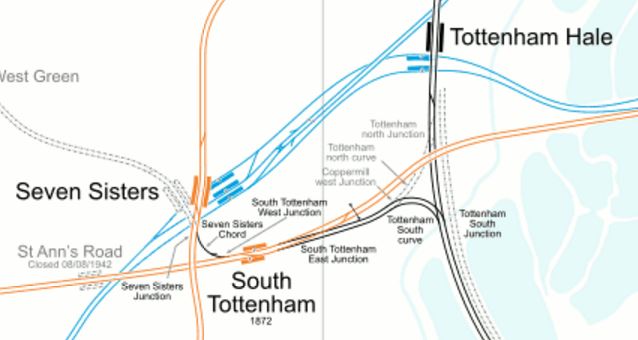
There are certainly a lot of possibilities.
- The Seven Sisters Chord gives access to Seven Sisters, Enfield Town and Cheshunt.
- The Gospel Oak to Barking Line gives access to Cricklewood, Gospel Oak, Richmond and West Hampstead.
- The Gospel Oak to Barking Line gives access via Cricklewood to the Dudding Hill Line for Acton..
- The Gospel Oak to Barking Line gives access via |Willesden Junction to the West London Line for Clapham Junction.
If another four tph service is created to Walthamstow, I suuspect it will be a third long East-West service, which will give eight tph on the busy part of the Gospel Oak to Barkling Line west of South Tottenham.
There are only three stations or four if you add in Forest Road, which I talked about in New Stations On The Chingford Branch Line.
- St. James Street
- Walthamstow Central
- Wood Street
- Forest Road.
I’ll look at each in detail.
St. James Street Station
This is probably too difficult and it’s the first station.
Walthamstow Central Station
This Google Map shows the station.
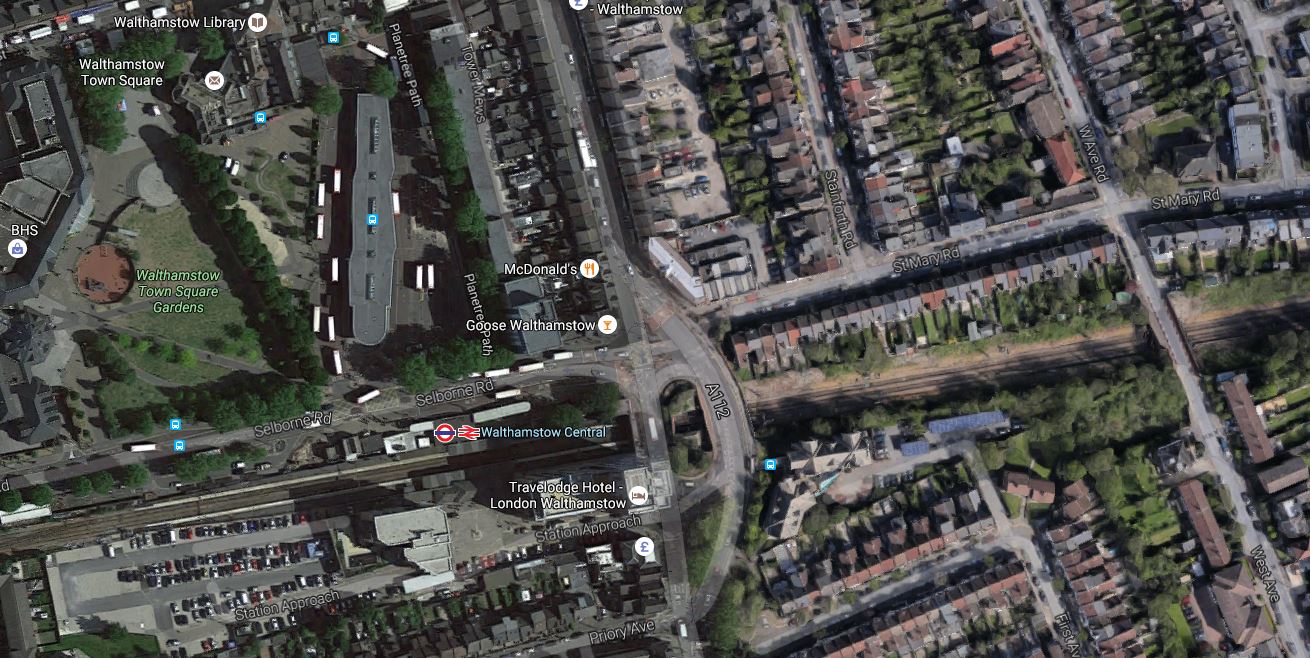
Walthamstow Central Station
I think it could be a possibility.
I think that the platforms are certainly able to accept eight car trains and might even take twelve, so there should be space for a reversing siding between the two lines to the East of the station.
Wood Street Station
This Google Map shows the station.
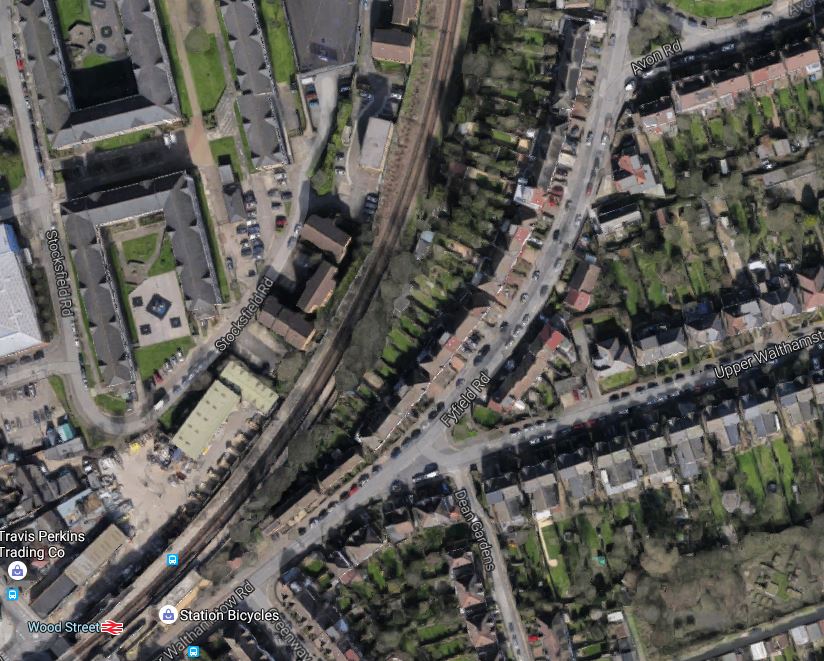
Wood Street Station
Again, I think this is a possibility.
Wood Street station will need a lot of rebuilding to make it step-free and there is space beyond the platforms towards Chingford to put in a reversing siding for a train.
These pictures show the station.



It is a station with potential.
Forest Road Station
This Google Map shows where Forest Road station will probably go.
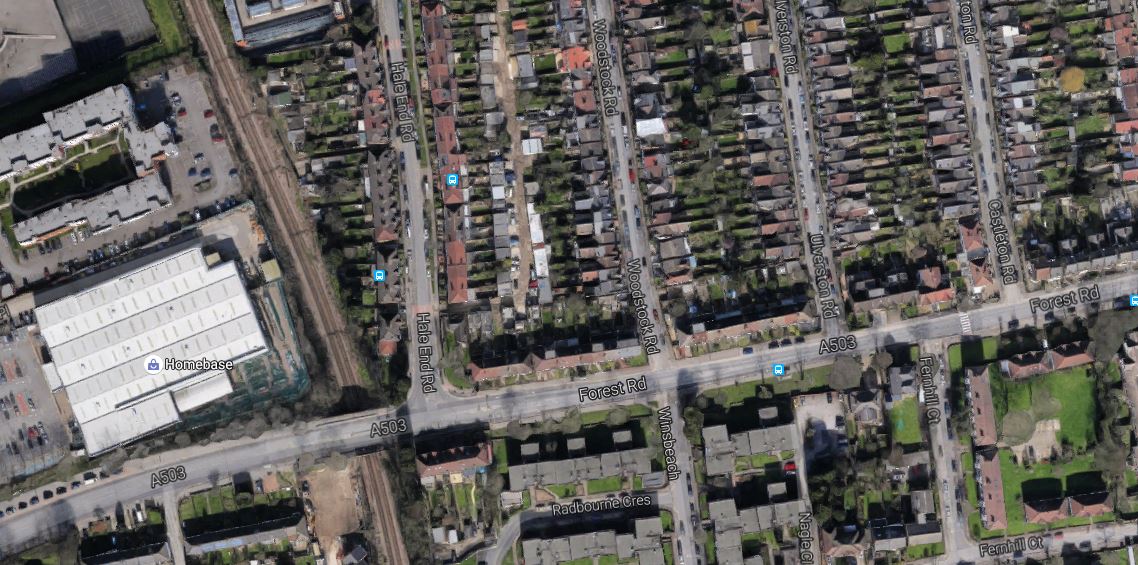
Forest Road Station
It could be just too restricted a site.
How Would The Trains Be Organised?
I think that Walthamstow Central or Wood Street will be the station with a reversing siding.
Say there are going to be three 4 tph services. They could be.
- Gospel Oak to Walthamstow Central or Wood Street
- Liverpool Street to Chingford
- Stratford to Chingford
The sequence at the reversing station would be.
- The train from Gospel Oak arrives in the down platform, discharges passengers and goes into the reversing siding.
- The two Chingford services arrive in the down platform, one after the other, pick up any passengers and go to Chingford.
- The two Chingford services arrive in the up platform, one after the other, pick up any passengers and go to Stratford and Liverpool Street.
- The train for Gospel Oak comes out of the reversing siding into the up platform, picks up passengers and goes on to Gospel Oak.
No passengers would have to change platforms to change trains.
Would It Be Sensible To Have A Reversing Siding Anyway?
I’m no expert, but I think the answer is Yes!
Crossrail have a reversing siding at Chadwell Heath station, that they say is for service recovery, in this page on their web site.
So perhaps, if say there was a problem on the highams Park level crossing, a train or two could be diverted to the reversing platform to await their slot on the return from Chingford.
Conclusion
A reversing siding at either Walthamstow Central or Wood Street would allow extra services to be developed around the Coppermill Curve and also be useful for service recovery.
Related Posts
Improving The Chingford Branch Line
Could Electrification Be Removed From The Chingford Branch Line?
Could The Hall Farm Curve Be Built Without Electrification?
Crossrail 2 And The Chingford Branch Line
New Stations On The Chingford Branch Line
Rumours Of Curves In Walthamstow
Will Walthamstow Central Station On The Victoria Line Be Expanded?
Wikipedia – Chingford Branch Line
New Stations On The Chingford Branch Line
I have pulled this post out of What Might Have Been At Walthamstow And Woodford, as I want to have a series of linked posts that described the various ways that the Chingford Branch Line could be improved.
In the Future Developments section of the Wikipedia entry for the Chingford Branch, it is said that there may be a station at both Forest Road and Chingford Hatch, either side of Highams Park station.
This map shows the area.
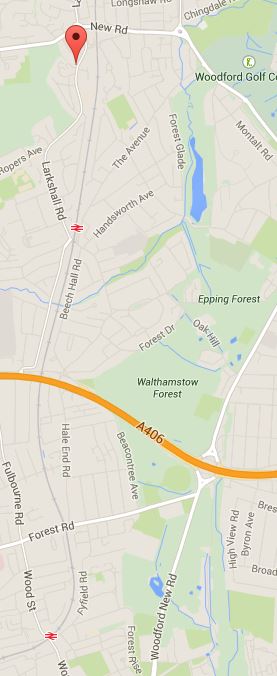
Around Highams Park
The red arrow indicates Chingford Hatch, with the two stations shown being Highams Park in the middle and Wood Street at the bottom.
Chingford Hatch Station
This Google Map shows the location of Chingford Hatch between Highams Park and Chingford stations.
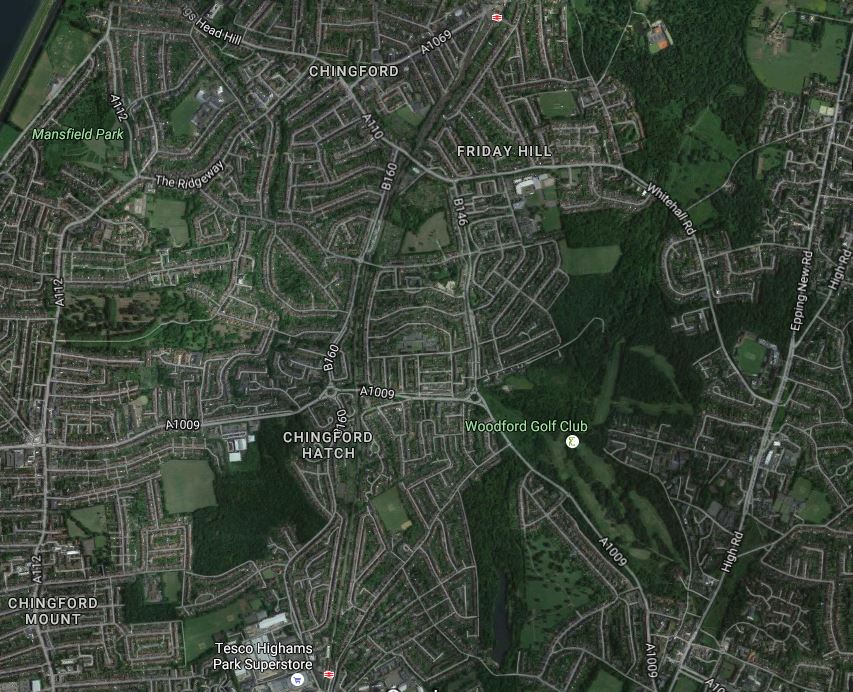
Chingford Hatch
Chingford station is at the top and Highams Park station is st the bottom.
I suspect if the station is built, it will be somewhere near the roundabout. The railway is a short distance to the East.
As the railway appears to be on a bridge, it won’t be a simple station to build.
Forest Road Station
This Google Map shows the probable location of a new station on Forest Road in Walthamstow.
Forest Road Station
The station would probably be built where Forest Road crosses the railway line.
I suspect that if the station was built, it would be a simple affair with platforms on either side of the current line.
At present there is no more information on either station.
Walthamstow Village Station
This Google Map shows the up-and-coming area of Walthamstow Village.

Walthamstow Village
The railway is in a deep cutting and I suspect despite what the locals might think a station wouldn’t be practical.
But I suspect, there would be space for a reversing siding, that could be used by trains reversing at Walthamstow Central station.
Conclusion
Both proposals look sound, but passenger statistics will define if new stations are built.
Related Posts
Improving The Chingford Branch Line
Could Electrification Be Removed From The Chingford Branch Line?
Could Reversing Sidings Be Used On The Chingford Branch Line?
Could The Hall Farm Curve Be Built Without Electrification?
Crossrail 2 And The Chingford Branch Line
Rumours Of Curves In Walthamstow
Will Walthamstow Central Station On The Victoria Line Be Expanded?
Wikipedia – Chingford Branch Line
Improving The Chingford Branch Line
The Chingford Branch Line has a four trains per hour (tph) service between Liverpool Street and Chingford via Hackney Downs and Walthamstow Central stations.
Those that I know who live in the area, have a few simple wishes.
- New trains with wi-fi and other passenger-friendly features.
- More trains to improve services and take the pressure off the Victoria Line.
- A service from Chingford and Walthamstow to Stratford and Crossrail.
- Perhaps some new stations.
- Step-free access at St. James Street and Wood Street stations.
The following sections tackle these wishes in more detail.
New Class 710 Trains
The biggest change to the line will come with the new Class 710 trains in a couple of years time.
Thirty new four-car Class 710 trains will replace the same number of Class 315 and Class 317 trains, that currently work the Cheshunt and Chingford services.
- As the number of trains and their length is the same, the service frequency and capacity will be no worse than at present.
- The trains will be modern and have air-conditioning and all the features that passengers now expect.
- The trains will be fitted with various driver aids to ensure accurate timekeepers.
- Nothing has been said about wi-fi, but most other new Aventras will have free wi-fi fitted, so I suspect it will be fitted or there will be a big argument.
- I am of the belief that all Class 710 trains will be fitted with enough onboard energy storage to handle regenerative braking and short movements not connected to the overhead wires.
- Onboard energy storage would also mean the trains could be fitted with remote wake-up, so that trains stabled overnight at Chingford, can be driver and passenger ready before the driver arrives to start the service in the morning.
It should be noted that London Overground has taken an option for another twenty-four trains. So could some of these trains be added to the fleet on the Chingford Branch to increase capacity and service on the Branch?
The Highams Park Level Crossing
In an ideal world, more services would be provided on the Chingford Branch to Liverpool Street for the following reasons.
- The Victoria Line from Walthamstow Central now has the trains to handle passengers to Central London, but the station doesn’t have the capacity to handle them, due to its cheapskate 1960s design.
- The Chingford Branch has direct access to Crossrail at Liverpool Street whereas the Victoria Line doesn’t connect to London’s new train line.
- The Chingford Branch has direct access to the North London Line at Hackney Downs and the new Class 710 trains, will mean that North London Line services will be increased.
- Crossrail could release extra platform space at Liverpool Street for more London Overground services.
But there is one major problem to increased services on the current Chingford Branch. They must all go through the level crossing at Highams Park Station.
- There is only long detours, if the crossing is closed.
- Extra trains would cause significant traffic congestion.
- Extra trains would mean the crossing would be closed for a large proportion of every hour.
As it is unlikely that the money could be found for a bridge or tunnel at Highams Park, the only thing that can be done, is make sure that all train services be at maximum length, which is probably eight cars.
Obviously, longer trains would help, but in the long term, I’m certain that London Overground would want to run more frequent services between Liverpool Street and Chingford.
I think it is true to say that the train frequency of the Chingford Branch through Highams Park is probably limited by a maximum of eight closures per hour of the Highams Park level crossing, unless the level crossing could be closed or by-passed.
But is maximum use being made of the level crossing closures now?
At present in the Off Peak.
- Trains arrive at Highams Park from Chingford at 14, 29, 44 and 59 minutes past the hour.
- Trains leave Highams Park for Chingford at 08, 23, 38 and 53 minutes past the hour.
I don’t think that this means that a Northbound and a Southbound train can share a single closure of the level crossing. This page on the National Rail web site, shows live departures at Highams Park.
If they could, then that would cut the number of times the crossing closed in the Off Peak by half.
Things that will help, is that the Class 710 trains will have extensive driver aids and probably onboard signalling, so the precise timekeeping that would be required, so two trains shared a level crossing closure, could be a lot easier.
Eight trains per hour in the Off Peak in both direction through Highams Park station is a distinct possibility.
This 8 tph frequency could be continued through the Peak, as it’s probably better than the current timetable.
Eight Trains Per Hour From St. James Street To Chingford
So it looks like that modern Class 710 trains running to a precise timetable could mitigate the problems of the Highams Park Level Crossing and allow eight trains per hour between St. James Street and Chingford.
|As there is no other trains using the branch, except moving empty and some engineering trains to and from the sidings at Chingford, there is probably little to interfere with an 8 tph schedule.
South From St. James Street
South from St. James Street station, the trains go through the Coppermill Junction area and cross the West Anglia Main Line.
The Chingford Branch then joins the line from Tottenham Hale to Hackney Downs, as this map from carto.metro.free.fr shows.
Coppermill Junction
The map shows Coppermill Junction, where the Chingford Branch Line crosses the West Anglia Main Line, that runs North from Liverpool Street to Tottenham Hale, Bishops Stortford, Stansted Airport and Cambridge.
I suspect that there would be a problem fitting another four tph through Hackney Downs station and on to Liverpool Street.
In Rumours Of Curves In Walthamstow, I talked about how two curves would be rebuilt, based on information from an informant with detailed knowledge.
- The Hall Farm Curve would be rebuilt as a bi-directional single-track connection between St. James and Lea Bridge stations.
- The Coppermill Curve would be rebuilt to give a connection between St. James and Tottenham Hale stations.
The Hall Farm Curve is the significant one for passenger services on the Chingford Branch Line, as it would mean that the current service of 4 tph between Chingford and Liverpool Street would be augmented by a second 4 tph between Chingford and Stratford.
- Waltham Forest would get an 8 tph metro service between St. James and Chingford stations.
- There are extensive bus connections at Chingford, Walthamstow Central and Stratford.
- The line has good connections to the Victoria Line, the Jubilee Line, the Central Line and Crossrail.
The only infrastructure needed would be the single-track Hall Farm Curve. If the Class 710 trains were to be fitted with onboard energy storage, this curve would not even need to be electrified.
Conclusion
By using the features of the new Class 710 trains, Chingford can be given four trains per hour to Liverpool Street and 4 trains per hour to Stratford, if a new single-track Hall Farm Curve without electrification is built between St. James and Lea Bridge stations.
Related Posts
Could Electrification Be Removed From The Chingford Branch Line?
Could Reversing Sidings Be Used On The Chingford Branch Line?
Could The Hall Farm Curve Be Built Without Electrification?
Crossrail 2 And The Chingford Branch Line
New Stations On The Chingford Branch Line
Rumours Of Curves In Walthamstow
Will Walthamstow Central Station On The Victoria Line Be Expanded?
Wikipedia – Chingford Branch Line
Comparing An Aventra IPEMU With An Electrostar IPEMU
The Concept Of An IPEMU
This article in Rail Engineer, which is entitled An Exciting New Aventra, quotes Jon Shaw of Bombardier on onboard energy storage.
As part of these discussions, another need was identified. Aventra will be an electric train, but how would it serve stations set off the electrified network? Would a diesel version be needed as well?
So plans were made for an Aventra that could run away from the wires, using batteries or other forms of energy storage. “We call it an independently powered EMU, but it’s effectively an EMU that you could put the pantograph down and it will run on the energy storage to a point say 50 miles away. There it can recharge by putting the pantograph back up briefly in a terminus before it comes back.
I believe that once the concept of onboard energy storage is accepted, that Bombarduier’s engineers have found other ways to use it to the benefit of passengers, operators and Network Rail.
- Regenerative braking energy can be stored on the train and used for a restart or other purposes, rather than just burning it off or returning it to the grid, through complicated transformers.
- Onboard energy can be used to move a train to the next station, if the overhead or third rail power should fail.
- Depots and stabling sidings don’t need to be fully electrified.
- Onboard energy storage enables train features like remote wake up, which I discussed in Do Bombardier Aventras Have Remote Wake-Up?.
- Trains can safely pass over short sections without electrification. Third rail trains can do this with contact shoes at both ends of the train.
Trains with onboard energy probably need to have intelligent current collection, so that pantographs and contact shoes can be intelligently deployed and retracted.
Take the simple example of a passing loop on a single track electrified branch line, which is needed for two trains per hour. The passing loop could be built without electrification and without altering the existing electrification, with just a set of points and appropriate signalling at each end.
- Trains using the existing line and electrification would travel as now.
- Electric trains using the loop would lower the pantograph a safe distance before the loop, go along the passing loop using onboard energy and then once on the main line, raise the pantograph.
This technique could probably be used to simplify building of new stations or adding new platforms to existing ones.
Network Rail are going to love trains with onboard energy storage.
Electrostars and Aventras
Bombadier have shown that onboard energy storage is possible in an Electrostar and there is various articles on the web saying it can be fitted to the new Aventra.
As both Aventras and Electrostars seem to come in four- and five-car versions, I’ll do the calculations for both lengths of trains.
I’ll use these assumptions.
- Electrostar cars weigh 40 tonnes and Aventra cars 32.5 tonnes.
- Each car has 50 passengers weighing an average of 80 kilos.
The various types of IPEMU are shown in the next four sections.
Four-car Electrostar
This would have the following characteristics.
- A mass of 160+16 = 176 tonnes.
- A formation of DMOS+MOS+PTSO+DMOS
- Braking from 100 kph would release 18.9 KWH.
- Braking from 200 kph would release 75.5 KWH.
- Onboard energy storage could be placed in probably the MSO or PTSO cars.
This could be created from a train like a Class 377, Class 378, Class 379 or Class 387 train.
We know that in the demonstration using a Class 379 at Manningtree, that that train could do 18.2 km. on the Mayflower Line, just by the use of battery power.
Five-car Electrostar
This would have the following characteristics.
- A mass of 200+20 = 220 tonnes.
- A formation of DMOS+MOS+PTSO+MOS+DMOS
- Braking from 100 kph would release 23.6 KWH.
- Braking from 200 kph would release 94.3 KWH.
- Onboard energy storage could be placed in probably the MSO or PTSO cars.
Four-car Aventra
This would have the following characteristics.
- A mass of 130+16 = 146 tonnes.
- A formation of DMOS+MOS+PMSO+DMOS
- Braking from 100 kph would release 15.6 KWH.
- Braking from 200 kph would release 62.6 KWH.
- Bombardier have stated that the MOS car is ready for onboard energy storage.
This could be created from a train like a Class 710 train.
Five-car Aventra
This would have the following characteristics.
- A mass of 162.5+20 = 182.5 tonnes.
- A formation of DMOS+MOS+PMSO+MSO+DMOS.
- Braking from 100 kph would release 19.6 KWH.
- Braking from 200 kph would release 78.2 KWH.
The five-car Aventra could have two sets of batteries or onboard energy storage.
Note this about all Aventras.
Bombardier have stated that the MSO car is ready for onboard energy storage, if the customer desires.
The MSO and PMSO cars can be considered a fixed pair of cars handling the electrical power for the train.
Can a PMSO and two MSOs be considered a trio on the five-car Aventra?
Aventras have a lot of motored cars, with lots of traction motor/generators.
The trains can have a remote wake-up feature, that would probably need some form of onboard energy. After all, your smart-phone doesn’t work if the battery is not fitted.
Can I draw any conclusions?
- The Aventra with its pair of electrifical cars has been designed to have onbosrd energy storage.
- The energy that needs to be handled is less with the lighter weight Aventra.
- Stopping from 200 kph releases a lot more energy. Four times more than from 100 kph in fact.
- The energy storage needed for 100 kph stop and restart operation, are within the battery size range of the battery in an electric car like a Nissan Leaf.
- There could be advantages concerning reliability and battery size with the five-car Aventra with its possible two sets of energy storage.
Obviously, the weight of the battery would need to be factored into the calculations, but if say it was a tonne, it would only increase energy figures by less than one percent.
The Definitive IPEMU
I said that two two sets of energy storage in the five-car Aventra could give advantages.
- Each set could be smaller.
- Two sets will be more reliable than one.
- The weight of the storage is shared between two MSO cars.
- The two MSO cars in the five-car Aventra IPEMU would probably be identical.
In the extract from the Rail Engineer article that started this post Jon Shaw of Bombardier is quoted as saying this.
it will run on the energy storage to a point say 50 miles away.
Two sets of onboard storage would obviously help this, with each set needed to keep the train going for 25 miles. This is not the onerous task it could appear. Especially in an Aventra.
- The train is designed to minimise aerodynamic losses.
- The train is designed to minimise the very small rolling losses of steel wheel on steel rail.
- All passenger systems like wi-fi, lighting and air-conditioning are designed to use minimum electricity.
- Driving aids on the train will help the driver to drive in an energy efficient way.
- When the brakes are applied, the energy is recovered and stored in the onboard energy storage.
- The train will stop at a station using much less energy than a conventional train.
But the most important thing, is that the train has been designed from the wheels up as an efficient package.
Conclusions
I believe the following.
- Five cars will be one of the most common lengths for Aventras. Abellio have already ordered eighty-nine.
- The range on energy storage of a five-car Aventra with two sets of energy storage will be at least fifty miles.
- Aventras with an IPEMU-capability will be used to reduce electrification work.
- Aventras with an IPEMU-capability will be used to develop new electrified routes.
- As the IPEMU technology develops, Bombardier will develop a solution, so that later Electostars will be able to store their own braking energy and travel a limited distance away from electrification.
- All train manufacturers will look seriously at energy storage on trains.
If I was asked what would be the ultimate range of a train using this technology, I would say, that trains with an IPEMU-capability will within a few years be running the whole route between Waterloo and Exeter.
I
Slow Line Traffic Into Paddington
I was thinking today, as I came back from my trip from Paddington, that I described in A Low Key Launch Of New Electric Trains, that when all of the new trains are running on Crossrail and the GWR, the slow lines will be very busy.
According to Wikipedia, Crossrail will be running.
- 4tph Abbey Wood – Heathrow Terminal 4
- 2tph Abbey Wood – West Drayton – Peak Hours Only
- 2tph Shenfield – Reading
- 2tph Shenfield – Maidenhead
In addition there will be non Crossrail services on the line.
- 4 tph Heathrow Express
- 2 tph Paddington Main Line – Bedwyn
- 2 tph Paddington Main Line – Oxford
- 2 tph Paddington Main Line – Hayes and Harlington
So that gives eighteen services an hour, with probably all except the Heathrow Express on the slow lines.
As the Shenfield Branch of Crossrail is going to handle 16 tph, 14 tph would seem to be within the capacity of the slow lines to Reading, even leaving some space for freight.
I do wonder that as GWR has ordered forty-five Class 387 trains, which in view of today will probably be run mainly as eight-car trains, for where they are going to add services to the network.
So how many trains will they need for current services?
- 2 tph to Hayes and Harlington – Under half an hour, so 2 trains, or 4 if running as a pair.
- 2 tph to Oxford (stopping) – Two hours, so 8 trains or 16 if running as a pair.
- 2 tph to Bedwyn – 90 minutes, so 6 trains or 12 if running as a pair.
Oxford and Bedwyn will also be served by fast Class 800 long distance trains.
This gives a total of 32 Class 387 trains.
So what happens to the other thirteen trains?
There has been talk of giving some of the trains an IPEMU-capability, which I reported in Rumours Of Battery Powered Trains to run the branch lines to Henley, Marlow and Windsor and the Reading to Gatwick service.
I just wonder, if the Electrostar might have made a good demonstrator for the IPEMU technology, but that an IPEMU based on an Aventra is so much better, that there is little point in creating an Electrostar IPEMU.
Or are Bombardier wanting to get the Aventra fully designed in all its variants before they tackle creating an Electrostar IPEMU?
So how many trains with an IPEMU-capability would be needed for the branch lines and Reading to Gatwick?
- Gatwick to Reading takes 90 minutes, so 6 trains could provide 2 tph.
- 4 tph on the Greenford Branch, would need 2 trains charging at West Ealing.
- 2 tph on the Henley Branch, would need 1 train charging at Twyford.
- 2 tph on the Marlow Branch would need 2 trains charging at Maidenhead. – By a bit of fiddling, the trains might pass at Bourne End or there could be a passing loop.
- 2 tph on the Windsor Branch, would need 1 train charging at Slough.
This adds up to the missing thirteen trains, if you add in a spare. In Modern Railways for June 2016, one paragraph in a larger article gives some news about the progress of Bombardier’s IPEMU technology. This is said.
Industry sources confirm that options for some of the GWR order to be produced as independently powered EMU (IPEMU) variants fitted with batteries for operation away from electrified routes are still being explored. This would enable GWR services to Gatwick Airport and on some of the Thames Valley branches to be worked by ‘387s’ prior to electrification. Any decision to look seriously at this proposal will depend on final electrification timescales being confirmed by Network Rail.
Ordering the number of trains they have means that GWR can offer a workable solution on all routes in the Thames Valley, depending on what Network Rail deign to deliver and if Bombardier come up with an affordable IPEMU solution.
- No electrification, no IPEMU – Use refurbished diesel multiple units.
- Electrification – Use Class 387 trains as electric multiple units.
- No electrification, IPEMU – Use Classs 387 trains in IPEMU mode.
Obviously, if Network Rail decide to electrify any part of the network later, the trains can be driven and controlled accordingly.
I’m also sure, there will be routes in the Bristol area, where a Class 387 train with an IPEMU-capability could be very useful.
 The Anonymous Widower