The Bridges Of Walthamstow
I have been meaning for some time to walk the route of the Gospel Oak to Barking Line (GOBlin) between Walthamstow Central station in Selborne Road to Blackhorse Road station.
But now the line is closed for electrification work, I thought it would be an appropriate time to do it, taking photographs as I walked.
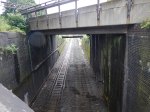
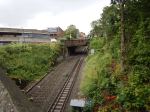

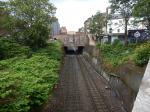
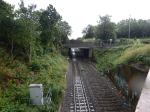
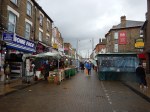
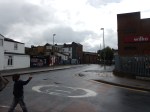
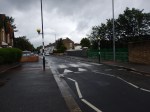
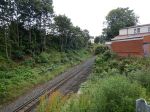
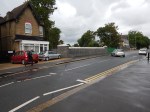


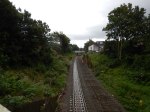


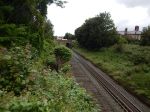


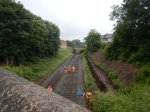


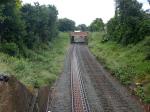
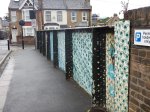
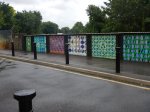


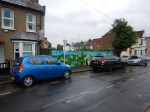

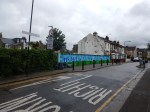
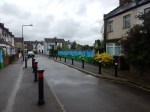
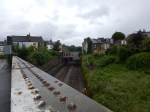



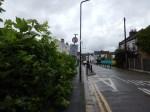
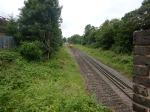


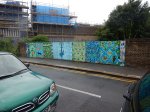

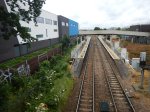
To cross all the bridges, I was constantly doubling back on myself, using a route of.
- West on Selborne Road.
- Right onto Vernon Road
- Left onto Walthamstow High Street
- Right onto Palmerston Road
- Left onto Northcote Road
- Right onto Pretoria Avenue
- Right onto Warner Road and back to Northcote Road
- Left onto Palmerston Road
- Left onto Walpole Road, Suffolk Park Road and The Links
- Right onto Pretoria Road
- Left onto Forest Road
After a short detour to look at the bridge on Blackhorse Road, I arrived at the station, where I took a bus alongside of the GOBlin to Tottenham Hale station.
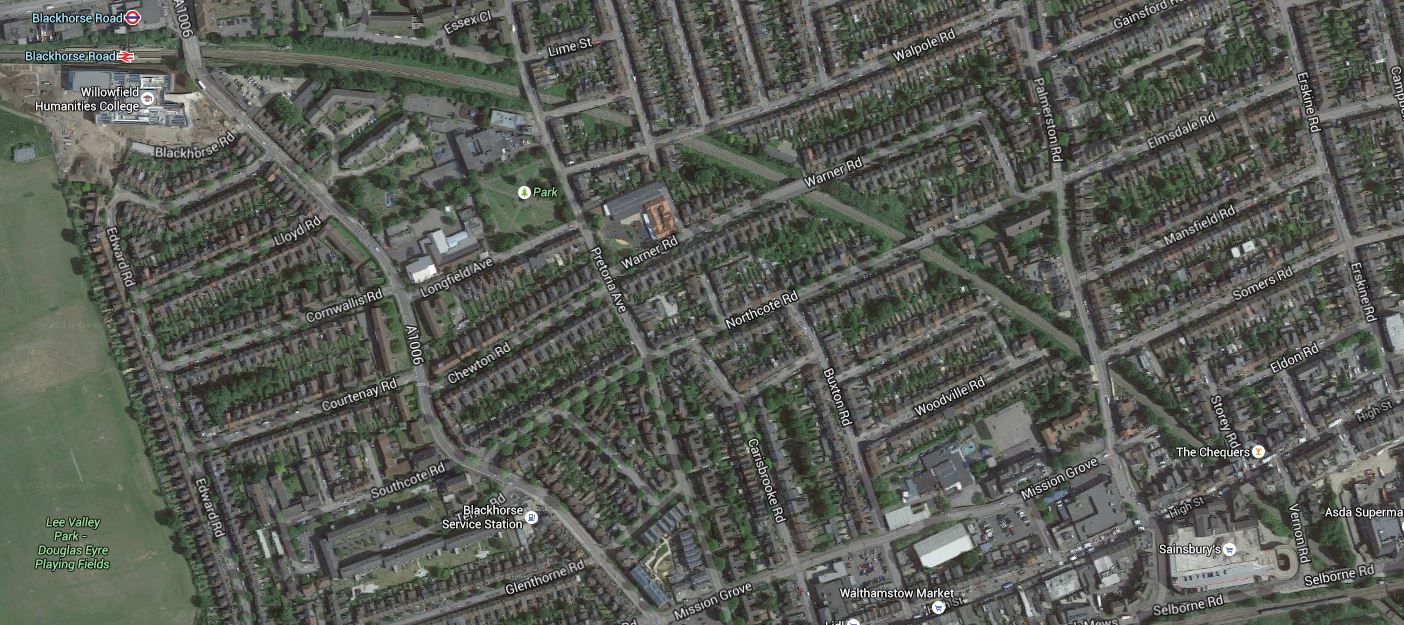
This Google Map shows Walthamstow Central and Blackhorse Road stations, and the portion of the GOBlin in the area.
The Bridges Of Walthamstow
Note in both the photographs and the map.
- There are eleven bridges including those at Blackhorse Road and Selborne Road.
- Most seem to be in good condition, with Palmerston Road having been recently replaced and others looking as if they have been thoroughly refurbished.
- Only Suffolk Park Road and Stoneydown Avenue Bridges have restrictions on access.
- It would appear that the track going towards Blackhorse Road has been lifted and laying of new track has started at that end.
- There does appear to be some new sheet piling to stabilise the cutting.
- There is ample space on both sides of this section of the line to erect the masts and gantries for the overhead wires.
- I wonder what William Morris would think of the bridge designs.
- I can’t find any information on whether more work needs to be done on the bridge at Suffolk Park Road, except a mention of new public art from 2015.
So in this section at least, it doesn’t appear that there’ll be much problem putting up the overhead wires for the electrification.
Alongside The GOBlin – June 14th 2016
I took these pictures of the Gospel Oak to Barking Line from the top of a 123 bus going between Blackhorse Road and Tottenham Hale stations.
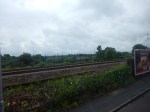
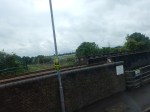

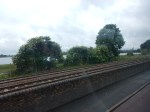




This bus ride will be an easy way to ascertain progress on the electrification.
Nothing much seems to be happening yet!
Will Shoreditch High Street Be Connected To The Central Line?
Every Londoner has their own personal pet hates about the Underground.
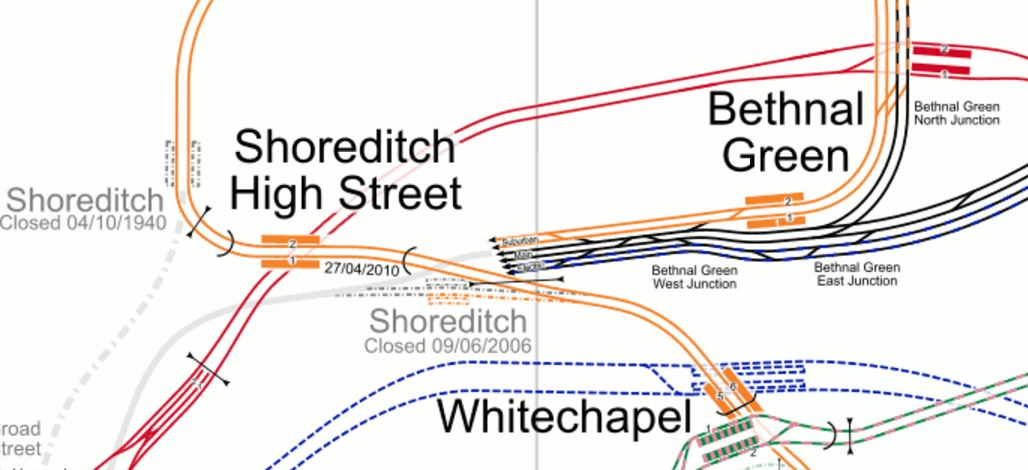
One of mine is the lack of an interchange between the East London Line and the Central line at Shoreditch High Street station. The Central line passes under the East London Line and some web sites say that provision was left in the new station for the connection.
This map from carto.metro.free.fr shows the lines around Shoreditch High Street station.
Shoreditch High Street Station
Note how the Central Line platforms at Liverpool Street are in the South West corner of the map.
Some sites also say that the reason for not building the connection, is that the Central line is too crowded and a decision will not be taken until after Crosrail opens. This is the comment on an article about the connection in London Connections.
Don’t expect an interchange with the Central Line until Crossrail 1 is fully operational. The Central Line in its present, heavily overcrowded, state could not possible cope with even more stations.
Perhaps in about 10 years…
It does sound sensible.
Getting West on the Central Line can be difficult from where I live.
I can take a bus to either Bank or St. Paul’s stations, but coming back is a problem, as the bus stops aren’t well placed.
After Crossrail opens, I might take the same bus to Moorgate for the new line or I could get to Crossrail using the East London Line connection at Whitechapel.
It shows how Crossrail is going to add masses of possible new routes to everybody’s travel in London.
Crossrail links with the Central line at Stratford with a cross-platform interchange and more conventionally at Liverpool Street, Tottenham Court Road, Bond Street and Ealing Broadway.
As the East London Line links to Crossrail at Whitechapel, will passengers going from say Anerley to Epping, be happy with a double change at Whitechapel and Stratford? Especially, as the second one would be just a walk across the platform.
I think they will.
But obviously Transport for London will have all the traffic statistics and would know when creating the Interchange at Shoreditch High Street will be worthwhile.
But looking at the map of the lines at Shoreditch High Street station, leads me to wonder if it would be possible to put in an escalator connection to the Eastern end of the Central Line platforms at Liverpool Street station. This map from carto.metro.free.fr shows the Central Line through both stations in detail.

Liverpool Street And Shoreditch High Street Stations
As all of the office blocks on both sides of Bishopsgate, were planned and designed before Crossrail and the London Overground, I do wonder that if they were being designed now, they would build a travelator connection between Shoreditch High Street and Liverpool Street stations, which incorporated another set of escalators to the Central Line.
The Platform For The Future
The June 2016 Edition of Modern Railways has a section about The Railway Industry Innovation Awards 2016.
One is labelled the Platform for the Future.
That probably sounds rather boring, but I’m a great believer in disruptive technology and using new and innovative methods to replace something that is rather dull, with something that is better, quicker to be installed and get working and more affordable.
This is said.
Abellio Greater Anglia and Dura have pioneered the use of a composite platform at Needham Market station in Suffolk, which was installed in just 36 hours.
This installation might be considered surprising as Needham Market station is a Grade II Listed building. So it can’t look like.
A monstrous carbuncle on the face of a much-loved and elegant friend.
But the product comes with these advantages.
- The design life is sixty years.
- A financial saving of 25% is reported.
- As the platforms are built in a factory, the quality should be tip-top.
- Other features like Harrington Humps could be built-in.
Hopefully, this would dissuade even the most determined member of the Heritage Taliban from objecting.
There’s more here on the Dura website. There’s also this video, of the platform being installed at Needham Market station.
This is a picture I took from a p[passing train.
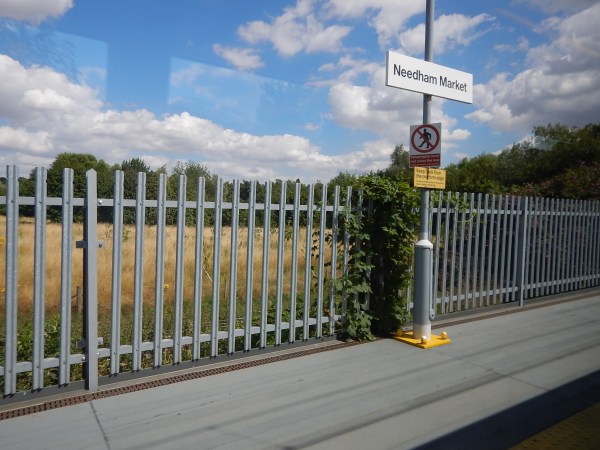
It looks good and who would think it was long-life hard-wearing plastic.
Only members of the Taliban tendency of the Green and Heritage lobbies would probably object!
I think that this product could find lots of applications, in traditional heavy rail, light rail and tramways. Certainly, it could be used to create some of the needed extensions to platforms on the Gospel Oak to Barking Line.
Look at these pictures taken at Harringay Green Lanes station.
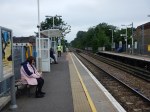
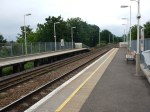

Would composite platforms make extending these platforms an easier process?
The company might also have the solution to the dual-height platforms, that some people feel are needed for tram-trains. The Germans certainly use stepped platforms so that different types of tram-trains have step-free access.
In fact, why restrict it to rail applications?
It could be used to provide a disabled viewing platform at somewhere like a horse racecourse or other sporting venue.
Or how about helping to create step-free bus stops, that I wrote about in One Of London’s Step-Free Bus Stops?
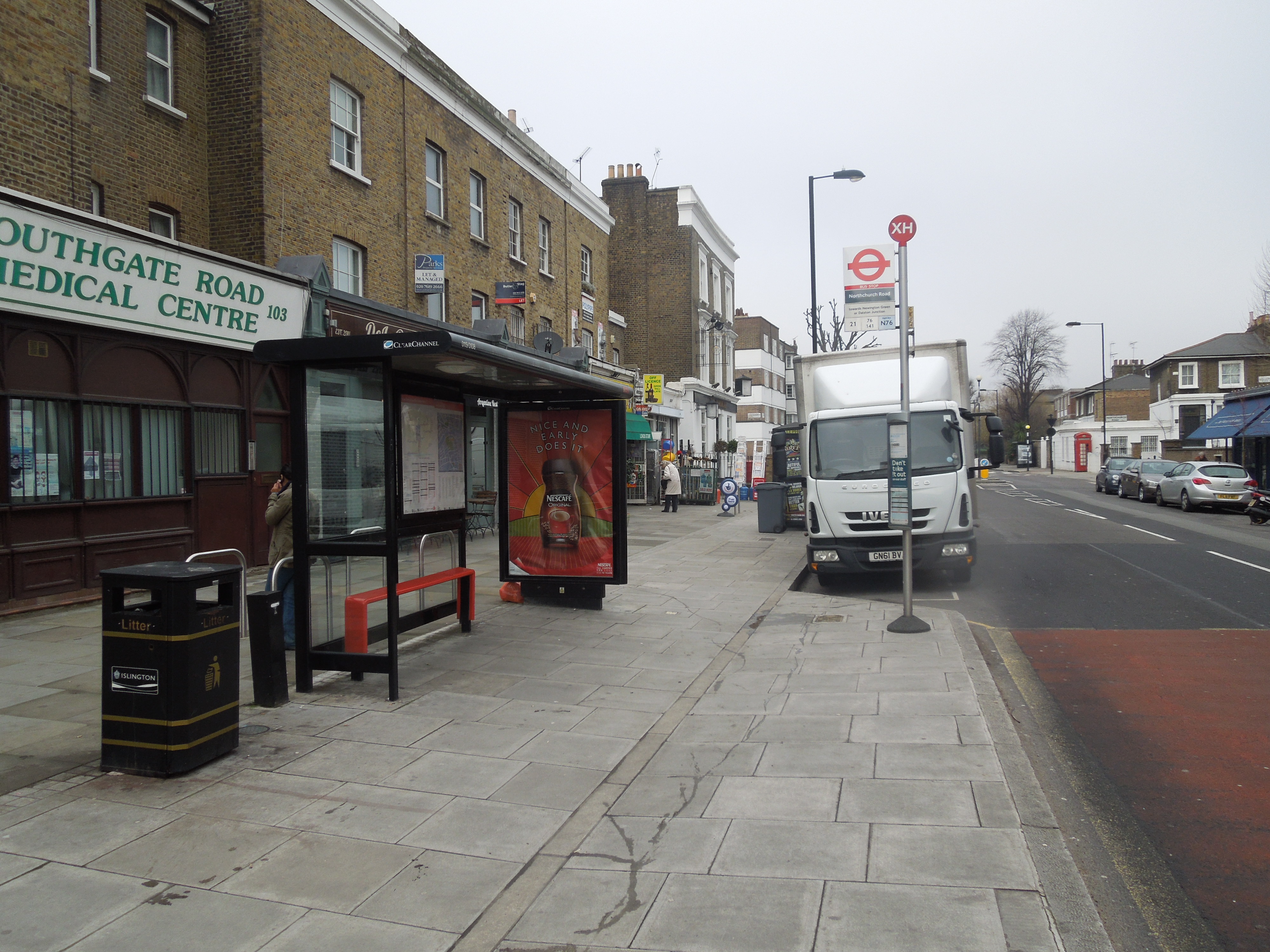
One Of London’s Step-Free Bus Stops
It’s certainly a very good innovation.
What Will Be The Service On The Great Northern Lines After Thameslink Opens?
When I did the short trip from Essex Road station on the Northern City Line, that I wrote about in Never On Sunday, I was surprised to see that the frequency of the service was Transport for London’s turn-up-and-go frequency of 4 trains per hour (tph), with 2 tph to going to Hertford North, with 1 tph extended to Stevenage and 2 tph to Welwyn Garden City.
The services at Essex Road station in the Off Peak include these trains.
- 6tph to London Moorgate
- 3tph to Welwyn Garden City via Potters Bar
- 3tph to Hertford North (1tph extended to Letchworth Garden City)
It is interesting to note that between 0800 and 0900 on a weekday morning, thirteen trains arrive at Moorgate.
From 2018, the new Class 717 trains will start to run on the Northern City Line. The number of passengers on this line will surely grow as the Southern terminus of Moorgate station will be on Crossrail from December 2018.
Assuming these six-car Class 717 trains can carry about half that of a 12-car Class 700 train, then in that hour they could bring 4,329 passengers into Moorgate station.
Will the low-level platforms at Moorgate station be able to cope?
Probably easily, if there is a direct tunnel and escalator access to Crossrail.
This map from carto.metro.free.fr shows the various lines at Moorgate.
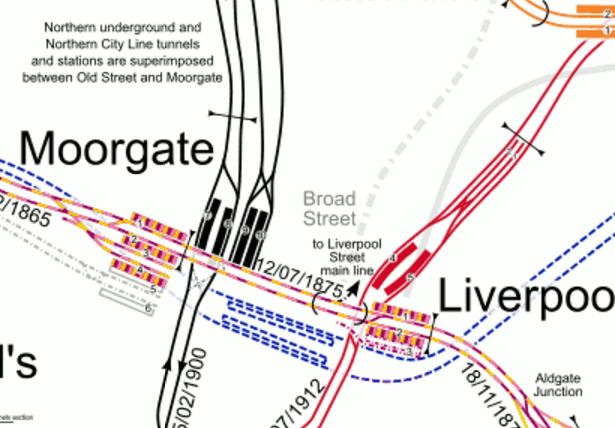
Note.
- The Northern City Line is superimposed on top of the Northern Line at Moorgate station.
- The 200 m. long Crossrail platforms almost stretch between Moorgate and Liverpool Street stations.
- Interchange between the Northern Line at Moorgate and the Central Line will probably be a three hundred metre walk.
- Crossrail should mean that all Liverpool Street to Moorgate interchanges will be desert dry in the wettest weather.
If this massive interchange doesn’t create a need for more capacity on the Northern City Line, I’ll be very surprised.
As there have been improvements to the lines on the Great Northern Route, between Finsbury Park and Alexandra Palace stations, I wouldn’t be surprised that when Crossrail opens, this Cinderella line, that nobody wanted is running eight, ten or even more tph between Moorgate and Finsbury Park stations and further up the route.
The services on the Great Northern Route are intense, but despite that, the route has some of the most crowded trains in the UK..
Thameslink is coming and that will change everything dramatically.
At present Cambridge has 4 tph to Kings Cross in the Off Peak, of which two tph are non-stop Cambridge Cruisers.
When Thameslink connects to Cambridge, the provisional timetable says it will add 4 tph semi-fast trains between St. Pancras Thameslink and Cambridge.
Thameslink haven’t said what services they will retain between Kings Cross and Cambridge, but I did read somewhere that they want to hold on to the Class 387 trains to run the Cambridge Cruisers.
At present, Peterborough has 2 tph Great Northern services to Kings Cross, in addition to several non-stop expresses.
As with Cambridge, Peterborough will get an additional 4 tph, when Thameslink opens.
I think the outcome will be lots of direct services between Cambridge or Peterborough in the North and Kings Cross or St. Pancras Thameslink in the South.
If you are prepared to change just once, you’ll be able to travel between any station North of Finsbury Park to any of the three London terminals; Kings Cross, Moorgate and St. Pancras Thameslink.
I believe that because Thameslink has such a large number of stations and connections, that many passengers will have a wide choice of route.
There is also the performance and quality of the various trains on the routes to consider.
- The current Class 365 trains are 100 mph trains built in the 1990s. They are starting to look dated as I wrote in The Class 365 Trains Are Looking Dated.
- The Class 387 trains are 110 mph trains built in the last few years. They are a quality long-distance commuter train.
- The Class 700 trains are 100 mph trains, that are being delivered at the present time.
- The Class 717 trains could have a similar performance to the Class 700 trains. I will be very surprised if they are not 100 mph trains.
A succession of 100 mph plus trains speeding up and down the Great Northern Route won’t be a slower service than is currently offered.
There would probably be four semi-fast trains to and from both Northern destinsations, stopping at all major stations, with well-connected stopping trains serving the intermediate stations.
There might even be service patterns like say four tph between Moorgate and Welwyn Garden City stopping at all stations, which have a same platform interchange with four tph stopping services to Cambridge and Peterborough. So from say Foxton to New Barnet, you’d always change at Welwyn Garden City.
As an example of how the new improved Thanmeslink will help passengers, look at the routes from my home to Cambridge.
I could.
- Take a 277 bus to Highbury and Islington station and get a Victoria Line train to St. Pancras for a Thameslink train to Cambridge.
- Take a 38 bus or walk to Essex Road station and get a Northern City Line train to Finsbury Park for a Thameslink train to Cambridge.
- Take a 141 bus to Moorgate station and get a Northern City Line train to Finsbury Park for a Thameslink train to Cambridge.
- Take a 277 bus or walk to Highbury and Islington station and get a Northern City Line train to Finsbury Park for a Thameslink train to Cambridge.
- Take a 30 bus to Kings Cross station and get a Cambridge Cruiser to Cambridge.
The possibilities will be endless.
I wouldn’t take the first option, as St. Pancras is A Fur Coat And No Knicker Station, with a long walk between the Victoria Line and Thameslink.
My choice of route, will probably be decided by the first bus that arrives and the quality of the smile on the driver’s face.
Never On Sunday
There have always been things that were banned on Sundays or because of personal reasons, you never did on that day.
- A Welsh friend at Liverpool University called David Roberts didn’t use to drink on Sundays when I first met him. But we soon cured him of that!
- My late wife, who had been a Sunday school teacher in her time, wouldn’t go to the cinema on Sunday, as her mother thought it ungodly.
- For myself, I don’t think I went to a football match on a Sunday until I was about forty, as they were never staged on Sundays.
I also remember the first day, that C and myself went to the first 1000 Guineas at Newmarket on a Sunday. Now horse racing and most other sport on a Sunday is considered normal, just as it is in the rest of the world.
It also used to be that the Northern City Line didn’t run at weekends, despite having three stations that served The Emirates Stadium.
This morning before it rained, I took a trip to Harringay station to view the Wightman Road Bridge, by taking a 38 bus to Essex Road station and then going three stops to the North.


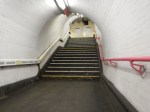

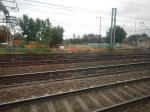
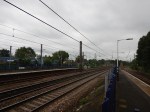
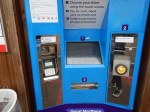
The line is getting new Class 717 trains, but I do feel that some work to improve the stations might not be a bad idea.
I actually wanted to buy a ticket on that dreadful machine from the Zone 6 boundary to Guildford, but unlike London Overground and some other companies ticket machines, it doesn’t sell such a useful ticket, which I wrote about in The Price Of Freedom.
More details of the Class 717 trains are given in this article in Rail Magazine, which is entitled New Govia Thameslink Railway trains to be Class 717s. This is said.
They are similar to the Class 700s being built by Siemens for GTR (of which 16 are in the UK), but they must have end doors as per safety regulations due to their operation in the Moorgate Tunnels. The design of this is at an advanced stage, with construction due to start this year.
I have felt that the Northern City Line, would be a classic application for an IPEMU for some time, as this would enable the Moorgate tunnels to be electrically-dead, as the trains would use batteries between Drayton Park and Moorgate stations. This would have the following effects.
- The third-rail electrification could be deactivated or even removed.
- The trains could also be 25 VAC only, if they wouldn’t be going into any other third-rail territory.
How would this impact tunnel safety regulations?
Whatever happens to this line, running a seven day a week service, will make the Northern City Line a valuable rail line in my part of London.
On a personal note, the line and Essex Road station in particular, will help me cut-out the dreaded Highbury and Islington station, with its long passageways and lack of lifts.
Common Sense Between Exeter And Plymouth
After the failure of the South Devon Sea Wall in 2014 and the cutting of the main line at Dawlish, something had to be done to make sure there was an alternative rail route between Exeter and Plymouth.
In the June 2016 Edition of Modern Railways there is an article entitled Cheaper Okehampton Route Proposed, which puts forward the latest thinking. The article starts like this.
The Peninsular Rail Task Force is advocating the reopening of the former Southern Railway route between Exeter and Plymouth via Okehampton as a secondary route rather than as a bypass for the existing line via Dawlish.
The Task Force has produced a 20-year plan for investment in the south west’s rail network. This link can access a draft summary report.
The old Southern Railway route between Exeter and Plymouth is described in Wikipedia as Partly Closed, but with much of the infrastructure intact, although the track has been lifted in places. It sounds that it has been left in a similar state to the Waverley Route and the Varsity Line, after cuts in the 1960s and 1970s. These two routes have been or will be partly or fully reopened.
Exeter to Plymouth via Okehampton is certainly in a better state with regard to trains than either the Waverley Route or Varsity Line were before work started.
- Trains run on the Tarka Line from Exeter to Crediton, before that line goes off to Barnstaple.
- The Dartmoor Railway also uses the route to take passengers between Exeter and Okehampton.
- From Okehampton to Tavistock, the track has been lifted.
- Tavistock is getting a new station and being connected to the Tamar Valley Line at Bere Alston.
- The Tamar Valley Line then takes passengers to Plymouth.
It may have the air of being assembled from Beeching’s left-overs, but it looks like it would work. Especially, as there should be no problem in the next few years in acquiring high-quality new or refurbished diesel trains for the line.
The Modern Railways article also says.
- The line’s function would be to provide a modest service serving local stations and to offer diversionary capability.
- Eight new stations would be provided.
- The line would be unlikely to be electrified.
- To help funding new housing would be built along the line.
A double-track railway with diesel trains would do the following.
- Improve the economy of Devon around the fringes of Dartmoor.
- Help in the development of much-needed housing in the area.
- Provide a much-needed freight route to and from the peninsular.
- Provide sufficient capacity in the event of problems at Dawlish.
But knowing Murphy’s Law, if the line were to reinstated, the sea at Dawlish would behave itself.
I also think that once the decision is made to reinstate the line, that it would be a project to build in a series of smaller related projects.
- Build the station at Tavistock and connect it to the Tamar Valley Line Line at Bere Alston, to create an hourly Plymouth to Tavistock service.
- Upgrade Okehampton station and the Dartmoor Railway to create an hourly Exeter to Okehampton service.
- Acquire some new or refurbished diesel trains for the routes and also for other local services in Devon. The trains would need to be weather-proofed for the Dawlish route.
- Build new stations at Okehampton East, North Tawton and Bow on the Okehampton to Exeter section.
- Reinstate the Tavistock to Okehampton route with stations at Lydford and Sourton Parkway.
Done in small stages, I think that other than getting a railway delivered at an affordable cost on an earlier date, it would have other advantages.
- Once the first two phases are complete, all but about sixteen miles of the route would be running trains.
- Hourly services at both ends of the line would give reliable forecasts as to expected passenger usage of the completed line.
- The hourly services would surely have a Borders Railway-style effect on tourism.
- Building in small stages could minimise heritage issues, that probably don’t come into play until the Tavistock to Okehampton section is designed and built.
Like the Borders Railway and the Varsity Line, it strikes me that this route from Exeter to Plymouth was wrongly closed in the 1960s and 1970s. But then Harold Wilson, that well-known friend of trains, flew to his cottage on the Scilly Isles.
I believe that this plan is a good one and I’m looking forward to exploring the complete line in the future.
Phince Philip On Crossrail
Matthew Parris , who admits he is no royalist, has an article in today’s Times entitled The Debt We Owe To A Thoroughly Modern Philip, in which he praises Prince Philip’s attitude to engineering, science and technology amongst other things.
He finishes the article like this..
Earlier this year, at 94, Prince Philip descended into the main tunnel of London’s Crossrail project to see more. They told him it would open in 2018.
“Too late foe me,” he said. Then he thought again. “Or perhaps not.”
I hope not.
I would agree with Matthew.
Wightman Road Bridge Is Falling Down
I went to IKEA this morning on a 341 bus (As one does?) and the area around Harringay Green Lanes station.was locked solid.
A quick check on the Internetfrom my phone, told me that Wightman Road is closed.
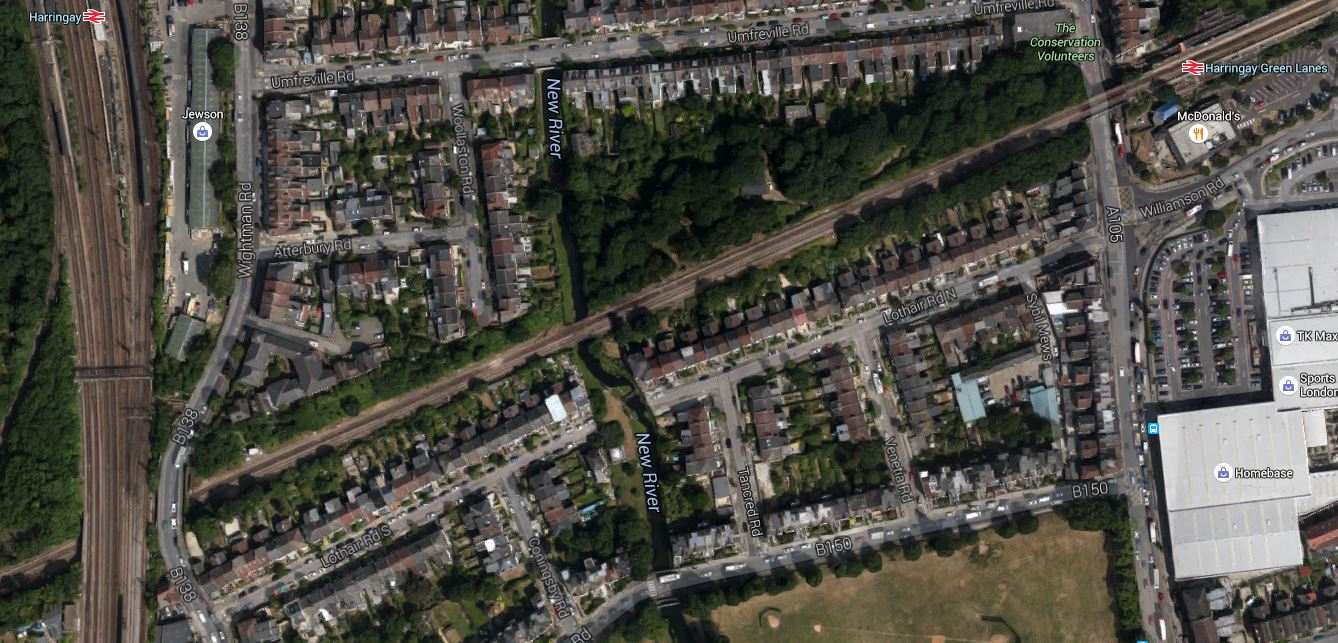
This Google Map shows the area between Harringay Green Lanes station and Harringay station.
Wightman Road Bridge
If you follow the Gospel Oak to Barking Line (GOBlin) westward from Harringay Green Lanes station, you come to the important bridge where the East Coast Main Line goes over the GOBlin. To the East of this bridge is a road bridge that takes Wightman Road, which is a major route numbered B138 over the railway.
This would appear to be the bridge that is causing the trouble.
I can only find one authorative document on the web and that is this page on the Haringey Council web site, which is entitled Bridge Reconstruction Work in Wightman Road. This is said.
Work is under way to replace the defective bridge over the railway lines on Wightman Road. The bridge is showing signs of severe deterioration. Network Rail are carrying out the work to coincide with the closure of the Gospel Oak-Barking line, which is undergoing electrification. Both projects are being carried out at the same time to help minimise transport disruption.
The main construction work will run from March to September 2016. While every effort will be made to minimize disruption to traffic, there will be a period when complete road closure will be unavoidable. A temporary footbridge will be put in place to provide access for pedestrians and cyclists while the work is in progress.
Incidentally,. I’ve not heard anything on the news or seen anything in the papers. When I checked a few minutes ago, there was nothing I could find on the Transport for London or Network Rail web sites.
So is this another case of Network Rail not giving the truth about bad problems in the hope they’ll not be spotted?
Or do they think that informing the general public is not important?
These are some pictures, I took at a visit to the bridge on a quiet Sunday morning.
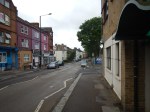

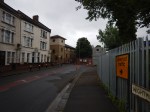


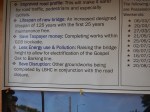
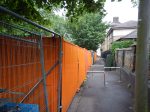


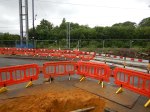


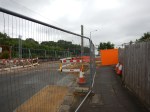
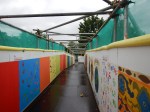
There’s certainly more useful infrormation at the bridge site, than on the web.
One notice labelled Wightman Road Overbridge says this.
- What: The existing Wightman Road Overbridge is to be demolished to bridge abutments to enable a complete bridge reconstruction.
- When: The construction phase is due to start in March 2016 and run until September 2016.
- Installation of scaffold walkway and access platform planned for March 2016.
- Diversion of services and removal of road surface are planned for April 2016 & May 2016.
- Removal of existing highway and bridge is planned for June & July 2016.
- Installation of new bridge deck planned for July 2016.
- Reinstatement of the highway, VRS and services is planned for July & August 2016.
- Why: The Wightman Road Overbridge is now at the end of its design life.In 2005 the structure was assessed and it was decided to renew the life-expired structure to modern-day standards.
A second notice says this.
- Improved Road Profile: This will make it safer for road traffic, pedestrians and especially cyclists.
- Lifespan of New Bridge: An increased design lifespan of 125 years with the first 25 years maintenance free.
- Save Taxpayer Money: Completing works within GOB blockade.
- Less Energy Use And Pollution: Raising the bridge height to allow for electrification of the Gospel Oak to Barking Line.
- Save Disruption: Other groundworks being completed by LBHC in conjunction with the road closure.
The pictures show that good progress appears to be being made. It would appear that services are being diverted, but that the original road surface is still in place. There were also notices prominently displayed saying that on the weekends of the 25th June and 2nd July the pedestrian walkway would be closed, as a crane would be working. Could this be when the old bridge is lifted out and the new one is lifted in?
Let’s face it, 125 year old bridges do get tired! The bridges at Upper Holloway, South Tottenham and Highbury and Islington stations have all been or are being replaced!
I do wonder, if the urgent need to replace this bridge might explain the progress on the GOBlin electrification. Network Rail and Murphys seemed to have had a simple plan, which was proceeding in the early months of 2016. Then they found they needed a six month closure of the railway to replace the Wightman Road bridge and that blew a big hole right through everything.
But that doesn’t explain, why TfL and Network Rail haven’t disclosed the detailed truth to the people of North London!
At least when they’ve replaced the bridge, they’ll have a strong structure that they could use to support the overhead wires.
 The Anonymous Widower