The Victorian Methods Worked
In Victorian Construction Methods, I noted how the Crossrail contractors, were throwing men and traditional methods into getting Hayes and Harlington station ready for the start of a Hayes Shuttle on the 16th of May.
These pictures, which I took today, would appear that they have made substantial progress.


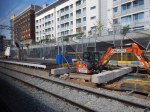
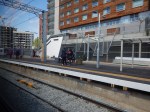
Intriguingly, when I looked at the time-table a few days ago, I think it changed on the 16th of May. Now only one service has been moved backward by two minutes.
It would appear that perhaps Great Western Railway haven’t finalised the time-table yet. Perhaps they haven’t obtained the required trains yet!
Two Beautiful Seats At West Acton Station
This seat forms the waiting area at West Acton station on the Central Line.
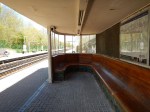

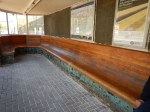

With the rounded window, it must be one of the most beautiful platform shelters on any rail station.
Note the picture of the second one on the other track.
Wikipedia says this about the design of the station.
The current station, replacing the original building, was designed by the Great Western Railway, on behalf of London Transport as part of the LPTB’s 1935-40 New Works Programme improvements and extensions to the Central line, by the GWR’s architect Brian Lewis and was completed by November 1940.
So it was actually designed by the Great Western Railway.
The Acton Dive-Under From The Noel Road Bridge
In From Ladbroke Grove To Ealing Broadway, I showed various pictures of the Acton Dive-Under from a train.
In the post, I used this Google Map of the Acton Dive-Under which was probably captured a few months ago.

The Acton Dive-Under
I took these pictures of the Dive-Under from the Noel Road bridge.
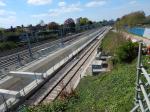


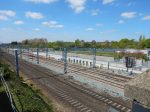


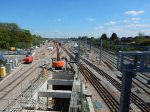
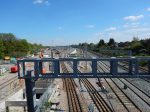
I got to the bridge by getting a 440 bus from North Action station. Afterwards, I walked to West Action station to get a tube to Ealing Broadway station.
Leicester Station
I took these pictures as I passed through Leicester station.
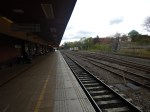
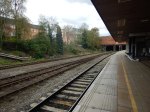
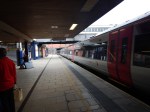
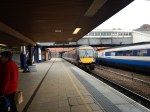
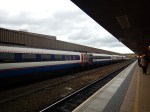
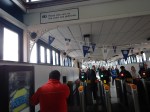

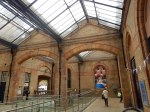
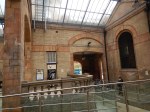
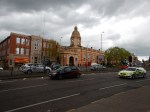
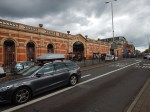
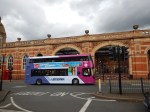
It has a just slightly less than magnificent façade, but the problems are more with the tracks and layout of the platforms.
This Google Map shows the station from above.

Leicester Station
There are various plans for the future of Leicester station.
I will now speculate.
My train back from Leicester didn’t stop at all and took six minutes over the hour.
The biggest problem on the journey was that it was the second train into the platform at St. Pancras station and I had to walk miles to get off the platform and then the adjacent escalators were set to up. The more I use St. Pancras, the more I realise what a disaster for passengers it is.
Nearly a billion pounds was spent to create se by A Fur Coat And No Knickers Station. Everybody concerned with the design and rebuilding of the station, should be sent to put a railway on St. Helena.
But that has nothing to do with Leicester, which has a station that generally works well.
I believe that electrification will transform journeys between London and Leicester.
Bombardier have stated that their new Aventra trains will be 125 mph high-speed trains, that will also handle commuters and could have on-board energy storage. I wrote about that in A High Speed Train With An IPEMU-Capability.
These trains could do the following.
- Go between Leicester and London in an hour.
- They might even be able to do this with a single stop at Bedford for Thameslink, so commuters could avoid St. Pancras.
- Probably be eight, ten, or even twelve cars long, so that they fit the inadequate platforms at St. Pancras better.
- They would have a modern interior, that satisfied the needs of those on business or leisure journeys and regular commuters.
But as the trains could be IPEMUs with an on-board energy storage capability, Leicester station might not be electrified and the trains would use batteries for stopping and restarting in the station. Think of the disruption and construction costs that would save. The freight loop down the East side of the station could be electrified, so that electric locomotives could pull freight trains through the station.
The April 2016 Edition of Modern Railways has an article entitled Leicester Remodelling Recommended For CP6. This is mentioned.
- Grade separation at Wigston North Junction, where services to Nuneaton branch off South of Leicester.
- Improvements at Syston Junction, where services to Peterborough branch off North of Leicester.
- Four tracking between the junctions.
- New platforms at Leicester station.
- Better separation of services.
- A second platform at Syston station.
Cost is given as up to a billion pounds.
This map clipped from Wikipedia shows the rail lines through Leicester.
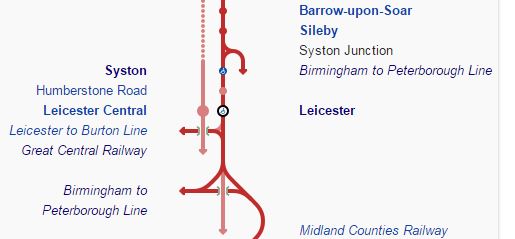
Leicester Lines
Cost could be saved by not electrifying between the two junctions if IPEMUs were to be used on the Midland Main Line.
Intriguingly though, as it is unlikely that the Birmingham to Peterborough Line will be electrified in the near future, a short length of electrification through Leicester would enable the cross-country route from Birmingham to Peterborough and on to Stansted Airport to be run using the same trains with an IPEMU capability, that could be working the Midland Main Line.
Leicester also needs better connection between the city centre and the station.
I think it needs some form of battery tram as in Seville, shuttling down Granby Street.
I say more about this in Leicester City Centre.
Victorian Construction Methods
Brunel would have recognised the philosophy behind all the construction going on to complete the platforms and trackwork at Hayes and Harlington station, possibly in time for the timetable change on May 16th.
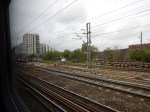

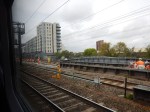
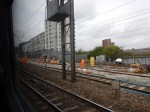
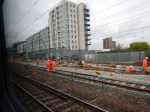
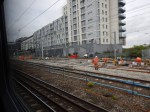

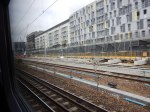
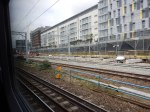
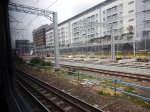

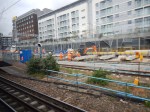


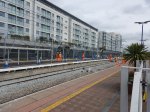
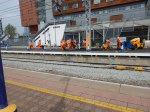
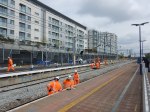


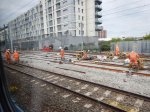

As you can see the contractor is using as many bodies as they can!
I remarked on this to a guy with a clipboard and he smiled widely. He certainly looked like he was enjoying his day in the sun!
If the Great Western Railway cn beg, borrow or steal some electric trains for the sixteen of May, I don’t give up hope of seeing an electric shuttle between Paddingdon and Hayes and ~Harlington stations.
After all the Great Western Electrification needs a victory and the industrious orange army seemed to be doing their best! Let’s hope it’s not all in vain!
The Oracle is still giving the current timetable and hasn’t been changed yet!
From Ladbroke Grove To Ealing Broadway
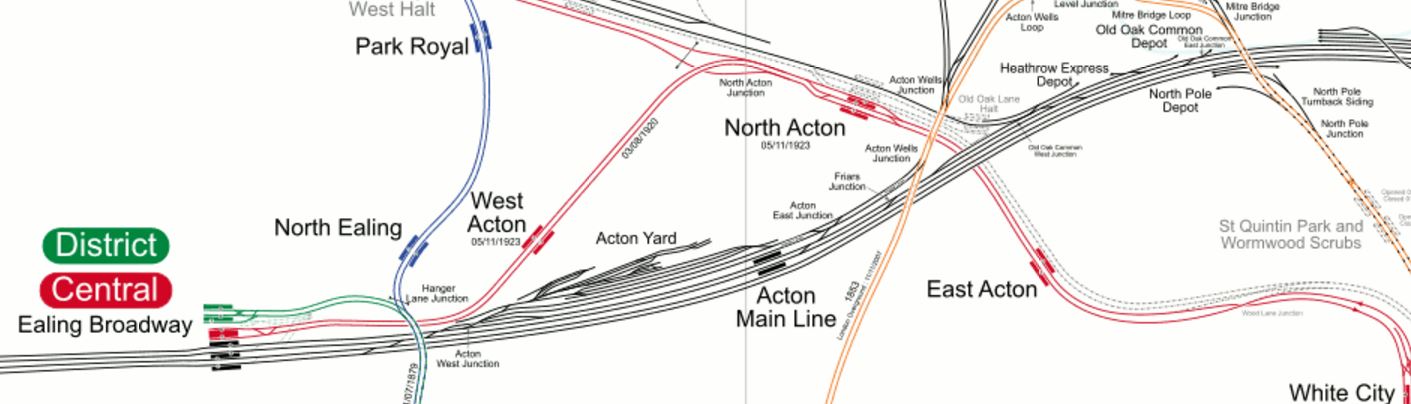
I took a train to West Drayton this morning and on the way, I took these pictures of the Crossrail works . The map from carto.metro.free.fr, shows the line between Ladbroke Grove and Ealing Broadway station.
Labroke Grove To Ealing Broadway
These are the pictures I took on the same stretch of line.
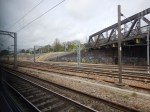
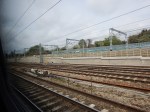
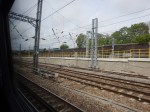

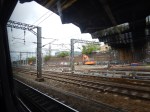

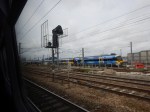


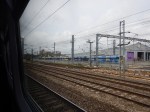
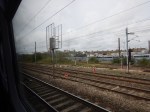


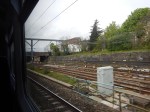



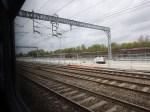

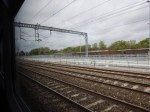
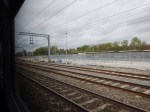
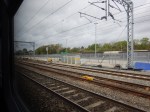

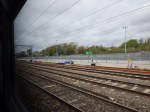
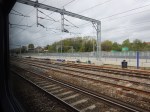
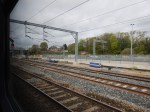
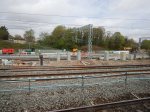
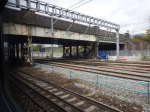
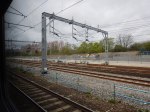


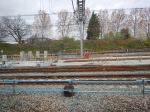
The pictures show various features of the line.
- The route by which empty trains move between Paddington station and the depots at Old Oak Common.
- The depots at Old Oak Common.
- Where the Acton-Northolt Line leaves the Great Western Railway.
- The Acton Yard
- The now almost-complete Acton Dive-Under.
This Google Map of the Acton Dive-Under was probably captured a few months ago.
The Acton Dive-Under
Note the buttresses and how the other lines cross over between them.
The best information I can find on the structure of the Acton Dive-Under is this article from IanVisits. Ian sums up the Acton Dive-Under like this.
When it is all finished, that small but complex bit of work, a single line of track in a cutting will do more to cut delays on the mainline into Paddington that could ever be appreciated by its simple size and design.
I wouldn’t be surprised to see the knowledge learned in this project, put to good effect in other places on the UK rail network.
Incidentally, it looks like the project cost around twenty million.
Disappointing Bristol
On Thursday last week, I went to Bristol with the aim of perhaps doing a bit of a wander around some of the local railways in the area.
I know the centre of Bristol quite well and I’ve visited the usual attractions and walked along the Avon. After a previous visit, I wrote Walking Around Bristol. I’ve have also visited the SS Great Britain a couple of times, but it is not an attraction, that you can walk past and enjoy, like say HMS Belfast or the Cutty Sark in London. After a previous visit, I wrote The Disappointing SS Great Britain.
I had thought, that I might go to Severn Beach, as I’d read that the trip is one of the most scenic of railways.
But trains were only every two hours and I’d just missed one. How visitor-friendly is that? Anybody going on the off-chance would love to be stuck at Bristol Temple Meads station for two hours.
Services like those to Severn Beach should be at least twice an hour and preferably four times to attract passengers to the route.
I couldn’t even buy any gluten-free food, as the only place to buy anything was WH Smith. The nearest Marks was in the Centre. As there are no shops at Paddington at the moment due to rebuilding, I was starting to get hungry.
It’s also quite a boring and long walk between Bristol Temple Meads station and the City Centre. So I wondered if there was a local bus that could be used to get to Cabot Circus, where I might have some lunch. But there was no information, that I could find.
So, I did what my family always does at times like this. I did a runner! In this case to Bath!
Bristol may be getting new electric trains all the way to London, but they need to think seriously about providing a more welcoming experience for visitors.
I certainly wouldn’t recommend to anybody going to Bristol by train for a day out! Portsmouth, Liverpool, Cardiff and even Birmingham are so much better.
If Bristol was in Europe or had a bit more ambition, which I’ve always felt the city lacks, it would have a tram system.
This Google Map shows the City Centre.
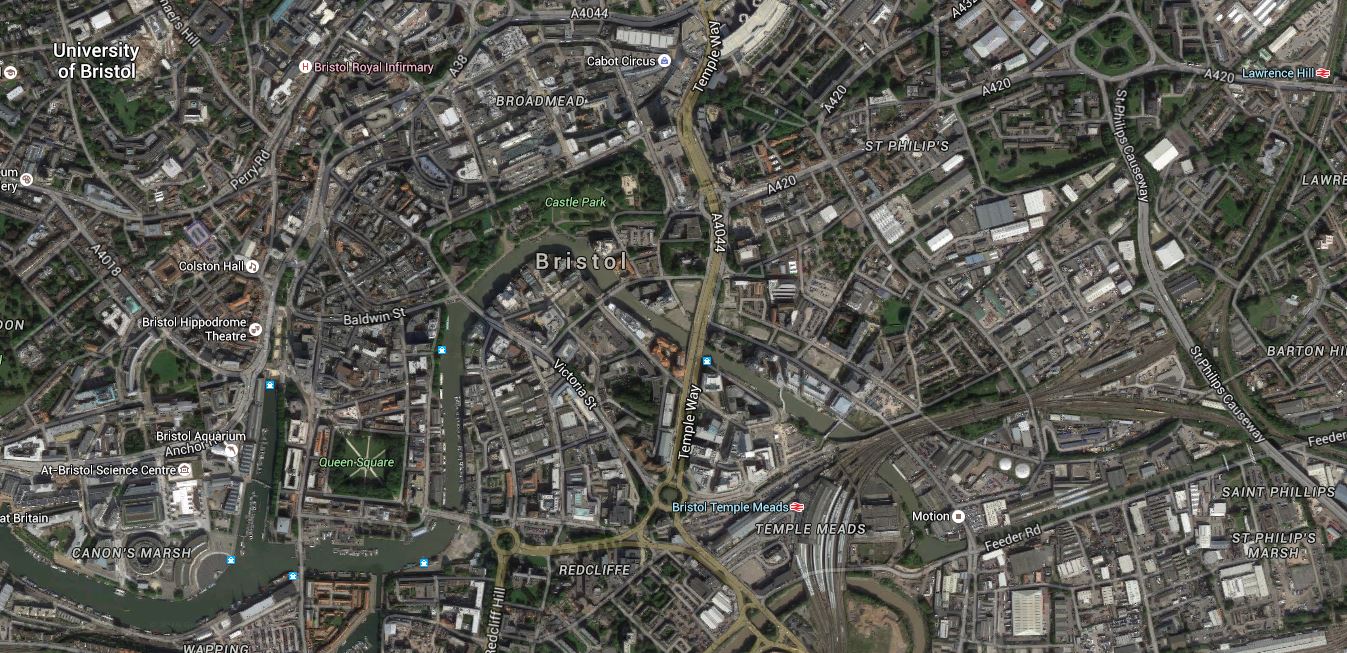
Bristol City Centre
Bristol Temple Meads station is in the middle at the bottom. Only one other station is shown on the map and that is Lawrence Hill station in the North-Eastern corner of the map. Wikipedia describes the station as having minimal facilities. This extract from Wikipedia, describes the services at the station.
As of the December 2013 timetable, Monday to Friday, three trains every two hours run along the Severn Beach Line from Bristol Temple Meads to Avonmouth via Clifton Down, with one extended to St Andrew’s Road and Severn Beach. Most services start at Bristol, but one evening service to Avonmouth begins at Weston-super-Mare. On Saturdays only two trains per hour each direction call. Sunday sees an hourly service to and from Bristol, with only two services extending to Severn Beach, except during the May–September timetable period when all services are extended. The first and last Sunday trains towards Bristol are extended to Taunton via Weston-super-Mare, and there are similar workings in the other direction.
No wonder, the station only has minimal facilities, that level of service will struggle to attract the proverbial one man and his dog.
If as I believe there should be at least a two trains per hour service on local lines, then if the Severn Beach Line and the service to Avonmouth had this frequency, then there would be four trains per hour service across the eastern side of the city centre.
Bristol is trying to organise MetroWest, but compared to say Cardiff, Liverpool and other large cities, it has a distinct lack of rail lines and stations in or near the City Centre.
Talk is of a start in 2019, but I doubt, anything will start until the late 2020s, at the earliest.
In 2014 I wrote Is Bristol Left Behind? After my visit on Thursday, I can’t help feeling that the City is the most disappointing one in England.
Discontinuous Electrification Using IPEMUs
In Basingstoke To Exeter By Electric Train, I started to work through, how short lengths of third-rail electrification could be used to power an electric train with an IPEMU-capability.
Third-Rail Electrification
This picture shows typical third-rail electrification at Kidbrooke station in South East London.
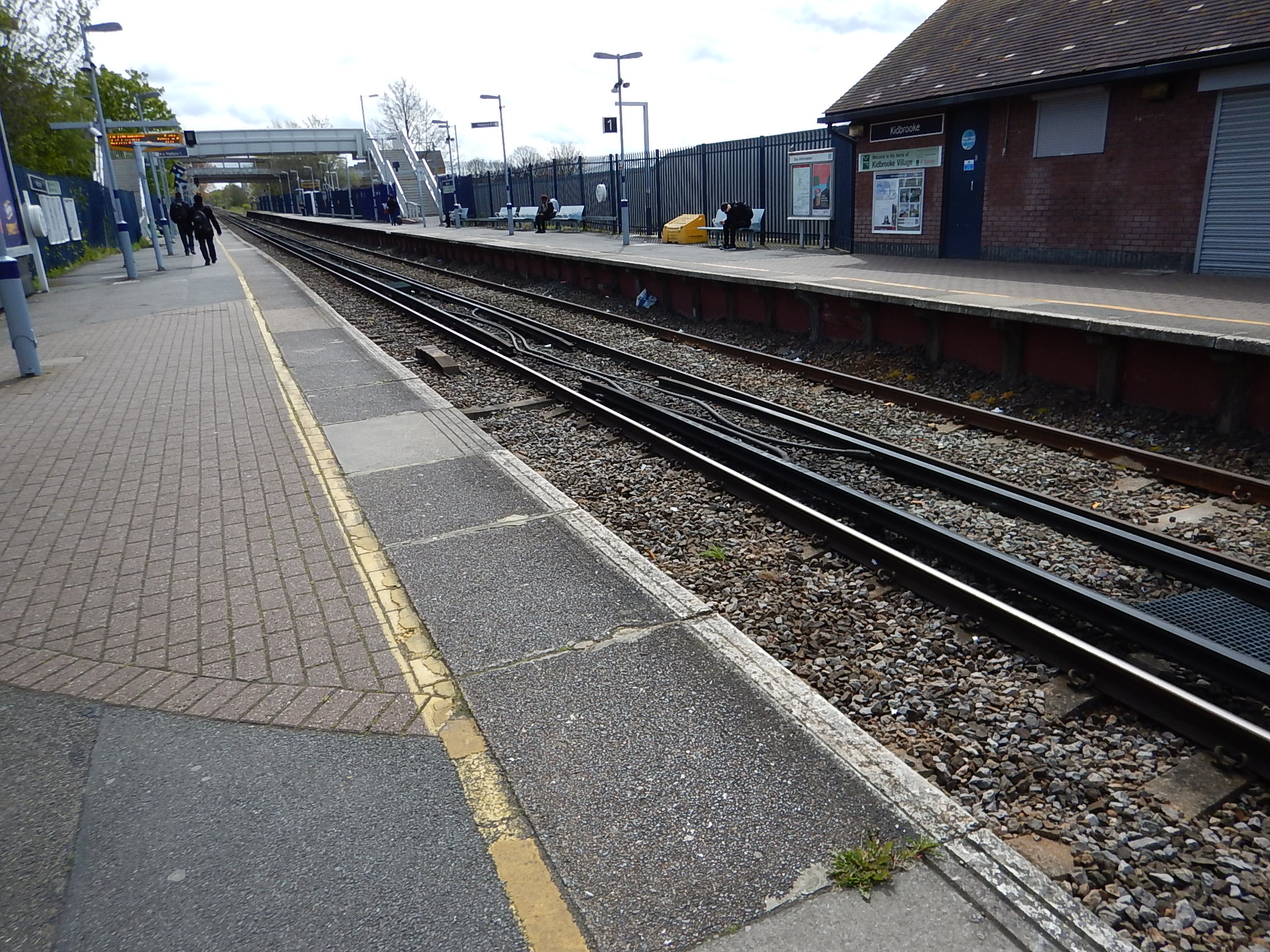
Note the following about the station and the electrification.
- The two tracks are between two platforms connected by a footbridge, which is a typical layout for hundreds of stations. Some stations might use a subway for connection.
- The two 750 VDC conductor rails are placed together in the middle of the track, well away from the passengers.
- There is a gap in the third rail, which I assume is for staff or emergency services personnel to cross the track in an emergency.
It is a simple and very safe layout.
With many years of installing third-rail systems in stations, Network Rail has the expertise to create safe systems in stations with island or just a single platform.
A Typical Electrical Multiple Unit
The Class 377 train is a typical modern electrical multiple unit common on third-rail routes.
- There are a total of 239 trainsets in service with lengths of three, four and five cars.
- The trains can work in combinations of two and three trainsets.
- The trains are a member of Bombardier’s Electrostar family.
- The slightly older Class 375 trains can be converted into Class 377 trains.
- The first trains entered service in 2003, so they still have many years of life.
- Some of the trains are dual-voltage and all could be equipped to use 25 kVAC overhead line equipment.
- They have a top speed of 90 mph.
- Bombardier have stated that these trains can be given an IPEMU-capability.
In addition everything said about the Class 377, can also be said about the later Class 379 and Class 387 trains, although these trains are faster.
The traction current supply to the trains has a very comprehensive design, that ensures trains get the electricity they need. Wikipedia says this.
All units can receive power via third-rail pick-up which provides 750 V DC. There are eight pick-up shoes per unit (twice the number of previous generation 4-car Electric multiple units), and this enables them to ride smoothly over most third-rail gaps. The units in the 377/2, 377/5 and 377/7 sub-classes are dual-voltage, and are fitted with a pantograph to pick up 25 kV AC from overhead lines. On these units the shoe mechanism is air-operated so that when powered down, or working on AC overhead lines, they are raised out of the way.
You don’t hear many reports of trains being gapped these days, when they are unable to pick-up electricity at somewhere like a level crossing.
So there could be a large number of electrical multiple units available with an IPEMU capability, which could be ostensibly 25 kVAC units, but could also pick up electricity from a 750 VDC third-rail.
A Charging Station At Oxted
I feel that Network Rail has the expertise to fit short lengths of third-rail electrification into stations, so that IPEMUs could pick up power, when they are stopped in the station.
These pictures show the recent installation of third-rail in the bay Platform 3 at Oxted station.

Note how the conductor rail is enclosed in a yellow shield.
Could this installation at Oxted, have been done, so that IPEMUs can run a shuttle to Uckfield?
Staff at the station didn’t know, but said the platform is used to terminate or park the occasional train from East Grinstea
d
IPEMUs To Lowestoft
Imagine such an installation at a station like Lowestoft, which has been suggested as a destination for trains with an IPEMU-capability.
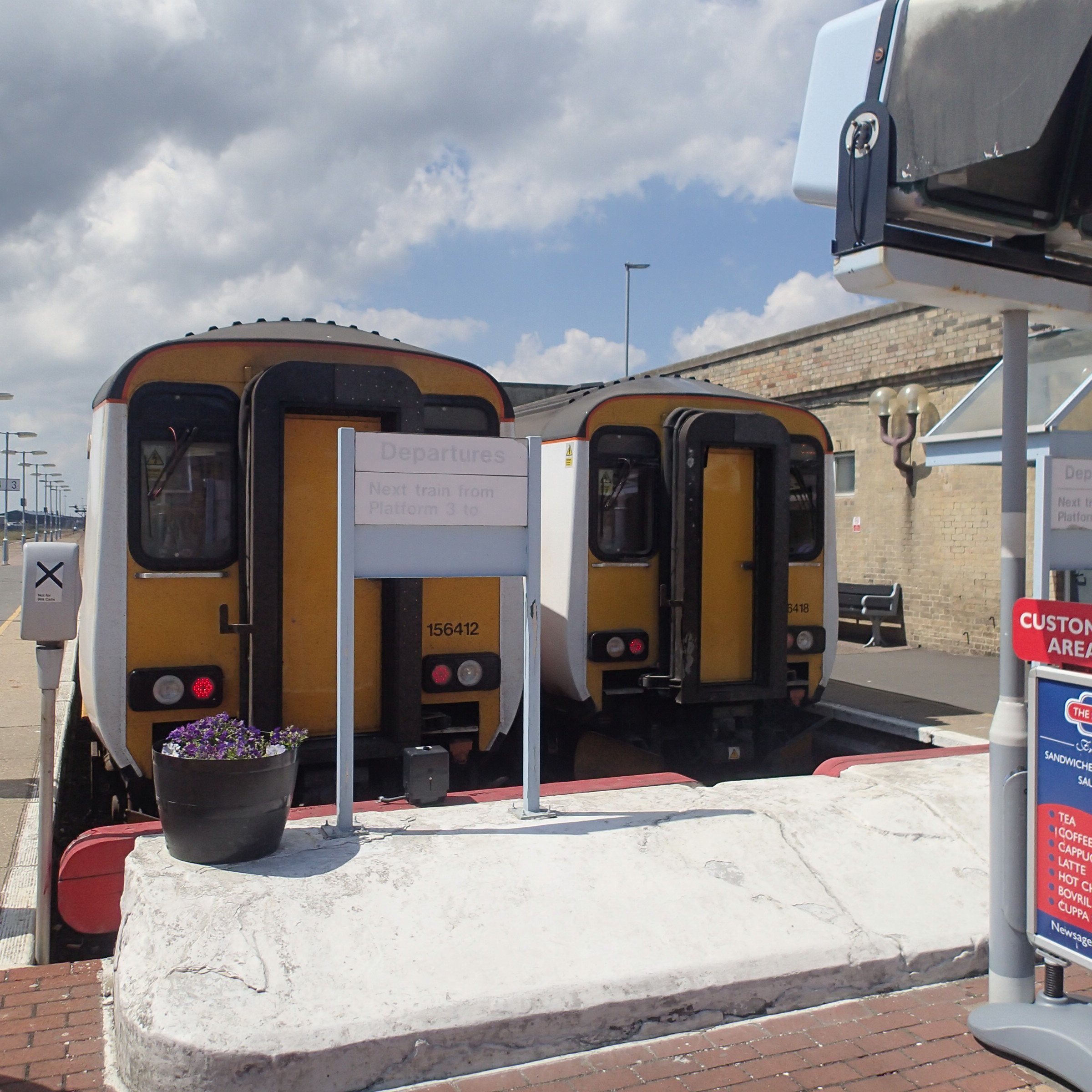
The picture shows two Class 156 trains at Lowestoft station.
Surely, two lengths of 750 VDC third-rail can be fitted between the tracks.
- The electrified lines would be no closer to passengers, than the third-rail installation at Oxted.
- The power supply would only be needed to supply electricity to charge the batteries.
- When no train was in the platform, the electricity supply to that platform would be switched off.
- The waiting time in the station would need to be sufficient to make sure the battery had enough charge to get to the overhead wires at Ipswich or Norwich.
- There would be little or no modification to the structure of the station.
- There would be no electrification needed between Lowestoft and both Ipswich and Norwich.
The biggest problem would be installing the power supply, but it would only be a transformer and rectiofier to provide 750 VDC. It would not have to cope with all the problems of regenerative braking, as the IPEMU capability of the train would take care of that.
It would appear that by using trains with an IPEMU-capability and well-proven simple technology at Lowestoft, the town can be provided with direct electric train services to Ipswich, Norwich and London.
At present the only trains with sufficient speed to not be a restriction on the Great Eastern Main Line, that can be given an IPEMU-capability are Class 379 and Class 387 trains. But Bombardier told Modern Railways, that a 125 mph Aventra is possible.
It would appear that the infrastructure modifications could be very affordable too!
The major cost would be the extra trains, but hopefully an increase in passenger numbers because of the better service would create the cash flow to lease them!
Perhaps the biggest advantage of using IPEMU trains to Lowestoft, is that electrification of the tracks through a beautiful part of East Anglia will not need to be performed.
It should also be said, that what works for Lowestoft, would also work for services to Sheringham and Great Yarmouth.
The technique would also work for branch lines from an electrified main line, where the out and back distance was more than the range of an IPEMU running on batteries. Examples would include.
- York to Scarborough
- Doncaster to Hull
- Edinburgh to Tweedbank
- Peterborough to Lincoln
- Manchester to Sheffield
But there are many more lines, where a charging station would bring much-needed electric trains to all over the UK.
Longer Lines
Some longer lines, where both ends are electrified and the distance is less than sixty miles, like Norwich to Cambridge and Carlisle to Newcastle, could be served by an IPEMU with sufficient range, that was charged at both ends of the line.
So that leaves longer lines over sixty miles, with no electrification at either end or just one electrified end.
Many, but not all, are through beautiful countryside and would the heritage lobby accept miles of overhead line gantries, marching through the hills and valleys.
I believe that on some longer lines, by using short lengths of third-rail electrification in selected stations, services could be run by electric trains with an IPEMU-capability.
Imagine an electric train an IPEMU-capability, approaching a station on a typical fast line with perhaps a 90 mph speed limit, like say the West of England Main Line, which is not electrified past Basingstoke.
- As the IPEMU applies its brakes, all of the energy generated by the regenerative braking would be stored in the train’s on-board energy storage, ready to be used to accelerate the train back up to line speed after the station.
- When the train makes contact with the third rail in the station, if the battery is not full, it can start to charge the battery from the rail.
- Once the battery is full, the charging would stop.
- On starting away from the station, the train could use power from the third rail, until it lost contact, after which it would use the energy stored on the train.
I think it should be possible that the train would leave the station with a full battery.
I would suspect that Bombardier and Network Rail are doing all sorts of calculations to find the best strategy, so that IPEMUs can be used to avoid the problems and costs of electrification.
Lines that could be electrified in this way would be ones, where trains stop at several stations along the route. Electricity supply at the stations, is no problem these days, as it could be connected to the mains or to some form of local generation.
It could be a very green concept!
Lines that could be electrified in this way would include.
- Cumbrian Coast Line
- Far North Line
- North Wales Coast Line
- Settle To Carlisle
- West of England Main Line
Selected stations would be fitted with charging and the trains would stop accordingly.
I’ve included the Far North Line because I believe it is possible to electrify the line in this way provided you could get a good enough electricity supply to the required number of stations. Obviously, you may decide not to do it, as you may have enough quality diesel trains.
Conclusion
If you could run electric trains on the Far North Line using charging at stations, you could run electric trains on any line in the UK.
Around Kidbrooke Station
In Development At Kidbrooke Station, I wrote about how a partnership had been formed between Transport for London and developers, that is aimed at creating revenue for London.
I also said I would be going with my camera.




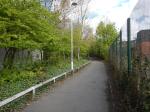
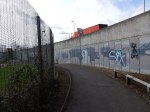

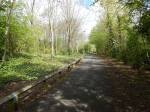
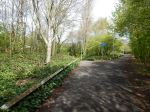



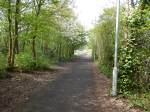
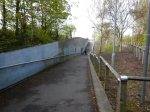
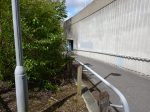
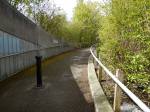
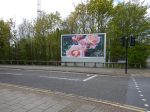
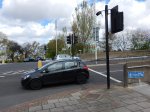

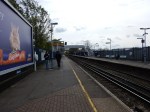
In some ways it was all a bit depressing.
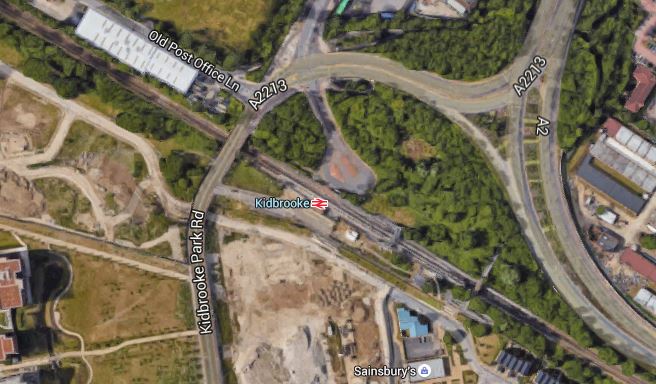
This Google Map shows the area where I walked.
Kidbrooke Station
It looked like a rather nice wooded landscape had been trashed to build the A2 through the area in the last century.
Pretty it is not!
I would hope if housing is developed at Kidbrooke to the north of the station, that something could be done to improve the dreadful feel of the area.
Is This The Worst-Placed Bus Map In London?
These pictures show the bus map at Kidbrooke station.

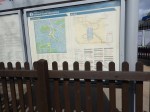
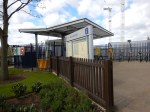
I was checking if I could get a bus to Abbey Wood station.
To read anything, you had to stand in the flower bed, but then the fence was in the way of the entries under A.
You can’t! But how could I find out?
 The Anonymous Widower