Electrification Of The Felixstowe Branch And Other Lines In East Anglia
I’m using the Felixstowe branch as an example, as I used to live near Felixstowe station and I know the area well. I’ll make these assumptions.
- In this rail forum, the cost of electrification was given in 2010 as £100,000 per single track kilometre.
- The passenger line from Ipswich to Felixstowe is about 16 miles with only 6 miles being double-track. So that is effectively 22 miles or 35.4 kilometres of track.
- The Port of Felixstowe is exclusively served by diesel locomotives of various noisy and environmentally-non-friendly types, although sometimes these are changed for an electric Class 90 locomotive at Ipswich. So we can probably leave the Port out of the calculations, especially as they don’t seem to keen on electrification.
- Of the four stations on the line a couple would need to have lengthened platforms for a four-car train.
- The passenger service is roughly hourly and can be run by a single train.
- As the line has a W10 loading gauge, all of the bridges would probably be big enough to accept overhead electrification.
So we get a very rough electrification cost that will be £3.5million at 2010 prices to enable electric trains to go to Felixstowe station. You would have to add any platform costs.
At present the service is run by one inadequate single car Class 153 train.
This train pulls into a bay platform without electrification at Ipswich, which is certainly long enough to take one four car Class 387 train and could probably be lengthened to take an eight-car or two separate trains.
It would probably be necessary to electrify enough of the platform and the route to the branch , so that an IPEMU could be fully charged before it left Ipswich station for Felixstowe. As all of this electrification would be linked to the current electrification on the Great Eastern Main Line, it wouldn’t be an unaffordable cost.
I don’t know the cost of leasing a four-car Class 387 train, but I have read here that forty-five Class 710 Aventra trains, will cost £260million or about six million each. This cost is probably inclusive of servicing, financing and other costs.
This calculation is obviously only very rough, but it does show the advantages of electrifying a branch line using IPEMUs rather than traditional electrification.
- If the line has sufficient gauge clearance for the IPEMU, there are no bridge reconstruction or track lowering costs.
- Only sufficient electrification to charge the train is needed.
- Where the branch is linked to an electrified main line, connection costs of the minimal electrification are minimised.
- Platforms will need to be lengthened as necessary.
From this rudimentary analysis, it would appear that the cost of electrifying a branch line is roughly the same as the capital cost of a new IPEMU.
Looking at the two approaches for the Felixstowe branch for passenger trains only, we get something like.
- Traditional electrification would cost about £3.5million plus the cost of the train, which would probably be an old EMU ready for the scrapyard at a million or so.
- A new IPEMU would cost £6million and there would probably be a cost of under a million to upgrade the line.
But the IPEMU approach would give you other advantages.
- The train company would be running a modern train only a few years old at most.
- New trains attract passengers.
- The train could also run on main lines to create new routes and services.
The only losers in the IPEMU approach are the construction companies, putting up the wires and rebuilding bridges.
Passengers, train companies, local residents and the environment would all gain.
I’ll also look at some of the other branch lines in East Anglia.
The Gainsborough Line
The Gainsborough Line from Marks Tey to Sudbury is just over nineteen kilometres long, so it could easily be within the capability of an IPEMU, which charged on the main line at Marks Tey station.
This line shows the advantages of the IPEMU approach.
- The line goes over the Chappel Viaduct, which is Grade II Listed and one of the largest brick structures in England. Overhead wires could be a problem with both the engineers installing them and the heritage lobby.
- This branch could be extended towards Cambridge and surely to extend a branch without electrification would be easier.
- Passenger numbers might show that some trains should perhaps go to or from Colchester and/or Ipswich. IPEMUs are fast enough to mix it on the main line, with its 100 mph speed.
- The stations on this line are very basic and an IPEMU wouldn’t require any lectrification works.
But the reason, I’d use IPEMUs on this branch, is that a higher capacity line with trains to Marks Tey and perhaps Colchester, would probably take traffic off the congested roads to Sudbury.
The East Suffolk Line
It is my belief that the East Suffolk Line from Ipswich to Lowestoft ,will be electrified using IPEMUs.
- The new franchise has stated that the operator will run direct services between Liverpool Street and Lowestoft. Will the operator want to run this using diesel trains?
- A chord is possibly to be built at Reedham to allow direct Lowestoft to Yarmouth trains.
IPEMUs are not necessary as diesel trains could be used, but four car trains would create much needed capacity between Yarmouth, Lowestoft and Ipswich.
The line is fifty miles or just under eighty kilometres long, so charging would be needed at Lowestoft and/or Yarmouth.
I think the Reedham Chord is integral to Network Rail’s plans for the line and the related Whery Lines, as it is only mentioned in this document on their web site, which is entitled Improving Connectivity.
An Ipswich-Manningtree-Colchester Metro
I think that due to the flexibility of the IPEMU and its ability to run on the main line, could lead to something like an Ipswich-Manningtree-Colchester Metro.
There would certainly be advantages in terms of train and platform utilisation, if branch lines were able to run services in a back-to-back manner passing along the main line.
There could be a core route on the main line perhaps serving.
- Marks Tey
- Colchester
- Ardleigh -possible reopening
- Manningtree
- Bentley – possible reopening
- Ipswich
Services would start and finish on the various branch lines.
- Sudbury on the Gainsborough Line
- Harwich on the Mayflower Line
- Colchester Town
- Clacton-on-Sea and Walton-on-the-Naze on the Sunshine Coast Line.
- Felixstowe on the Felixstowe Branch.
Obviously, if such a system were to be created, the design would depend on how passengers used the system and where new developments happen.
The Wherry Lines
The Wherry Lines reach east from Norwich to Lowestoft and Yarmouth. None of the lines are very long, but they suffer from a shortage of suitable rolling stock and especially trains that could go between London and Yarmouth in the summer.
IPEMUs would solve the rolling stock problem and could serve these routes.
- Liverpool Street to Yarmouth via Ipswich and Norwich
- Liverpool Street to Yarmouth via Cambridge, Cambridge North, Ely and Norwich
- Norwich to Yarmouth and back to Norwich
- Norwich to Lowestoft and back to Norwich
- Norwich to Lowestoft via Yarmouth and Reedham and back to Norwich.
Services could also link to the East Suffolk Line for Ipswich to give a second route between Ipswich and Norwich.
The Bittern Line
The Bittern Line reaches North from Norwich to Cromer and Sheringham and like the other Norfolk branch lines at thirty miles it is well within the range of an IPEMU.
Rackheath Eco-Town lies close to Salhouse station and plans for the town envisage a new station and a frequent service to Norwich.
There has been talk of tram-trains, but IPEMUs could also be used.
I think the biggest problem at the moment is getting the town built.
The Main Lines Without Electrification
The following lines are not electrified.
- The Breckland Line between Cambridge and Norwich.
- The Ely to Peterborough Line
- The Ipswich to Ely Line
All of these lines could have electrified services provided by IPEMUs.
The Network Rail document; Improving Connectivity, also mentions changes at Newmarket.
Currently, there are two services between Ipswich and the West.
- Cambridge to Ipswich
- Ipswich to Ely and Peterborough
They provide a rather uneven hourly service across Suffolk.
Network Rail are proposing an island platform at Newmarket. The Cambridge to Ipswich service will be as now, but it will have cross-platform interchange with a new Newmarket to Peterborough via Ely service at the updated station.
This will mean that there will be an increased frequency on the line and passengers from Ipswich wanting to go West will be able to get any train and change if necessary at Newmarket.
Could the platform used by the Newmarket to Peterborough service at Newmarket have facilities to charge IPEMUs?
I wrote about an update Newmarket station and other topics in Better East-West Train Services Across Suffolk.
New Stations
In this analysis Cambridge North station, which serves the Cambridge Science Park, keeps cropping up. According to Wikipedia, this is the proposed service pattern.
5tph to Cambridge, with 2tph continuing to London King’s Cross; 1tph continuing to London Liverpool Street and 1tph continuing to Stansted Airport. 4tph to Ely, with 1tph continuing to King’s Lynn, 1tph continuing to Birmingham New Street and 1tph continuing to Norwich.
It may be all right if you’re going to Cambridge, London or Norwich, but what about those who want to go to Bury St. Edmunds or Ipswich.
Is this just another manifestation of the prejudice, that Suffolk is full of yokels and idiots?
Look at the rail maps of East Anglia and there are disused stations and places that appear to need one all over the four eastern counties.
I think just as Yorkshire and Devon have developed a penchant for building new stations, I think we’ll see a few built in the area.
Remember that IPEMUs with their regenerative braking and large doors are stop-start specials, that can call at a station, discharge and load passengers, and be on their way, much quicker than the current diesel multiple units.
Long Distance Services
There are still two services starting and finishing in East Anglia, that travel across the country.
- Norwich to Liverpool
- Birmingham to Stansted Airport
Both could be run using IPEMUs.
I do wonder if it would be better to improve services between Cambridge, Cambridge North, Ely, Ipswich, Norwich, Peterborough and Stansted Airport and link up with these cross-country services at Cambridge, Ely and Peterborough.
When the new franchise is awarded in June 2016, thins will probably be clearer.
Conclusion
Remember that Abellio Greater Anglia were very much part of the testing and demonstration of the IPEMU technology last year, so I suspect that they would like to rid the franchise of diesel trains, as most in East Anglia aren’t the best.
The requirements for the new franchise include.
Improve the quality of trains running on East Anglia’s network, providing a modern service with state of the art trains – extra points will be awarded to bidders who include plans to trial new technologies in rolling stock.
Abellio’s and other studies have probably shown, that electrification of passenger trains in East Anglia can be completed using IPEMUs.
So be prepared to see a new franchise awarded, that promises to eliminate diesel trains from East Anglia.
I think this analysis also shows how when in an area, there is a fair amount of electrification, IPEMUs can successfully fill in all the missing links.
Other areas where IPEMUs could do the same thing now or after the current electrification programs are completed include.
- Birmingham
- Bristol
- Glasgow
- Merseyside and the North West
- Newcastle and Middlesborough
- South Wales
- Sussex
I already feel, that one new line; the Barking Riverside Extension of the Gospel Oak to Barking Line has been designed without electrification.
Will We See IPEMUs In Hastings?
I have just been pointed to this article in the Hastings Observer, which is entitled Hybrid trains alternative to electrifying 1066 country railway. This is said.
Battery-powered high-speed trains were proclaimed as the way to decrease rail journey times in 1066 country at a transport summit today (Friday, March 18).
Hybrid Javelin trains would eliminate the need to electrify the Marshlink but still reduce the time it takes to get to London, according to transport representatives at Sussex Coast College.
Network Rail’s senior strategic planner in the south east Paul Best explained how they are proposing an ‘incremental approach’ to electrifying the railway between Ashford and Bexhill.
He said they can increase speed limits in certain places but also look into using hybrid trains with a battery so they can be used on the normal track and electric line from St Pancras to Ashford, which would reduce journey times
So let’s look at this statement in detail. Note that I use Independently-Powered Electric Multiple Unit or IPEMU instead of battery trains.
I think it will be unlikely, that if this comes to pass, that the trains will be Class 395 trains, colloquially known as Javelins.
- I don’t think Hitachi could deliver their made-in-Japan product for some time due to busy production schedules.
- Hitachi have not disclosed any plans for a battery variant of a Class 395 train.
- Paul Best of Network Rail isn’t reported as mentioning Javelins.
Hitachi may be able to deliver such a train in the future and I may be wrong about their capabilities.
I think if we see Paul Best’s hybrid trains working between St. Pancras and 1066 country, then there is only one proven train; an IPEMU or battery-powered version of the Class 387 train.
- Soon, there could be several of the trains sitting in sidings or being built at Bombardier’s factory in Derby.
- All or most of the Class 387 trains are owned by Porterbrook. Leasing companies are not charities and like their assets to sweat.
- Bombardier and Network Rail demonstrated the IPEMU technology in public service over twelve months ago.
- Class 387/2 trains destined for Gatwick Express have been extensively tested on the West Coast Main Line. Has their 200 kph capability been explored?
- Southern, who have lots of experience of running Class 387 trains, are responsible for the services between Hastings and Ashford International.
- Adding the required signalling and certifying the Class 387 trains for HS1, shouldn’t be a difficult problem.
- Jumping the electrification gap of the Marshlink Line, is well within the capability of a Class 387 train with an IPEMU capability.
The only problem I can see, is that they are only a 110 mph train as opposed to the 140 mph of the Class 395 train, when that train runs on HS1. So would this cause route planning problems? But then the line can accommodate slower freight trains.
But I did say the following in Will Southern Create A South Coast Express Using IPEMUs?, about an electrified service on the Marshlink Line.
Using IPEMU trains would simplify the job and mean no electrification would be needed.
It would appear that Network Rail are thinking along similar lines.
The High Speed Battery Train
Are Bombardier creating a genuine high speed train with a 200 kph capability and the ability to run for at least fifty miles on battery power.
- Bombardier certainly have the experience to build a 200 kph train for the UK, in that both Class 221 trains and Class 222 trains were built by Bombardier.
- If they had to settle for the 175 kph of the current Class 387 train, that wouldn’t be too serious a problem. Especially, if they could squeeze the extra 25 kph in a few years, with an upgrade.
- Class 387 trains have been running on Thameslink since December 2014.
- A lot of technology like LED lights, regenerative braking, efficient air-conditioning and automatic train control systems are available to make trains use less electricity.
- The battery technology has been reported as going through extensive testing in Mannheim.
Without doubt Bombardier can produce a 175 kph (110 mph) train based on the Class 387 train and they could be able to stretch that to a 200 kph (125 mph) one!
That would be some train!
The IPEMU Market
If they can produce a high speed train with an onboard energy storage, it is not a speculative product without a market.
In addition to the Marshlink Line, all of these lines have a proportion of running at around 160 kph or over and then an extension, that is not electrified.
- Liverpool Street to Lowestoft – This route is in the new Greater Anglia franchise.
- Liverpool Street to Yarmouth via Cambridge, Ely and Norwich.
- Liverpool Street to Peterborough via Cambridge.
- Ipswich to Cambridge, Ely and Peterborough.
- Kings Cross to Grimsby, Hull and Lincoln.
- Kings Cross to Hartlepool, Middlesbrough and Sunderland.
- Liverpool to Newcastle and Edinburgh via Manchester, Huddersfield and Leeds.
- Liverpool to Hull via Warrington, Manchester, Sheffield and Doncaster.
- Blackpool to Leeds via Preston and the Calder Valley Line.
- St. Pancras to Corby and Leicester
- Euston to Barrow, Blackpool, Chester, Huddersfield and Shrewsbury
- Paddington to Bedwyn, Henley, Marlowe, Newbury, Oxford and Windsor
In addition, there are some routes , which could be served, with some short stretches of electrification or a means of charging the train at the terminus.
- Waterloo to Exeter via Salisbury.
- York to Scarborough
- Edinburgh to Tweedbank
- Settle to Carlisle
- Carlisle to Newcastle.
And then there’s all the branch lines!
Conclusion
Could we be witnessing a rail revolution powered by batteries?
I certainly think we are and have thought so for some time.
Who’ve have thought that Network Rail would spill the beans in Hastings about a rather charming line across the Romney Marsh?
The Scottish Borders Have Caught London Overground Syndrome
The Scottish Borders would appear to be suffering from that new benign disease;London Overground Syndrome!
This disease, which is probably a modern version of the Victorian railway mania, was first identified in East London in 2011, when it was found that the newly-refurbished East London Line and North London Line were inadequate due to high passenger satisfaction and much increased usage. It has now spread across other parts of the capital, despite various eradication programs.
- Lengthening the trains from three to five cars.
- Adding step-free access or rebuilding stations like Brondesbury, Hackney Central, Hackney Wick, Hampstead Heath, Kensal Rise, West Hampstead and Whitechapel.
- Extending the system with a new branch to Clapham Junction station.
- Taking over the Lea Valley Lines to Cheshunt, Chingford and Enfield Town.
- Modernising and electrifying the Gospel Oak to Barking Line.
- Extending the Gospel Oak to Barking Line to Barking Riverside.
- Taking over the unwanted Romford to Upminster Line.
The latest pressure would seem to be to take over more of London’s suburban routes.
Londoners can’t seem to get enough of the life-improving orange.
Rail Plans For The Scottish Borders
This article on the BBC is entitled Borders Railway: Future Goals For New Routes Drawn Up.
Reading the article, it would appear that the following are proposed or are possibilities for the Borders Railway to mitigate the effect of London Overground syndrome.
- Building on the current success.
- Extending the railway to Hawick.
- Add some dynamic passing loops to increase service resilience.
- Add some more parking.
- Improve the wi-fi.
- More capacity and especially for tourism-related reasons.
- More steam trains.
- A possible branch to Peebles.
It would appear to be all well-thought out ideas, some of which will happen.
- More car parking at Tweedbank and Stow
- Longer trains with space for bicycles.
- Perhaps a longer passing loop. to enable increased and faster services.
- A turnback facility at Tweedbank to aid the running of stem trains.
- Better wi-fi.
But most of these projects are easily costed and the benefits can be calculated. So they are ones that accountants like and can fund or turn down.
Onward To Hawick
The Wikipedia entry for the Borders Railway, says this about a proposed extension to Hawick and Carlisle.
The Campaign for Borders Rail has called for the continuation of the line to Melrose and Hawick, and eventually to Carlisle. According to the group, Hawick suffered more than any other town in the Borders from the closure of the Waverley Route, and only the return of the railway could halt the area’s economic decline. At the time of the closure of the Waverley Route, Hawick was a 70-minute journey from Edinburgh. At Melrose, the southbound station platform and building exist alongside the Melrose Bypass. Network Rail has confirmed that there is nothing to prevent the extension of the line beyond Tweedbank, although commentators have remarked that the Bypass could pose problems. A major realignment of the road would be required, as well as the reinstatement of embankments and bridges.
I have traced the route of the Waverley Route beyond Tweedbank station on Google Maps and you can see a lot of the original route to Hawick, which only seems to have one viaduct at Ale Water.
Note that there appear to be a succession of viaducts to the South of Hawick, so perhaps Hawick would be a town to take a breather. I’ve also traced this section on Google Maps and if it was ever rebuilt, it would certainly be some railway.
I think that they could spend a lot of money going all the way to Carlisle, but an affordable extension to Hawick via the Borders Hospital and Melrose might be so successful as to get the politicians to allow the engineers to go all the way to Carlisle station, which as I reported in If Manchester Victoria and Birmingham New Street Were The First Two Courses, Is Carlisle The Third?, is being rebuilt to give all friendly visitors a warm welcome.
Power To The Peebles?
I’ve borrowed the corny sub-heading from a section in the BBC report, that prompted me to write this post.
The report says this.
It also recognises the success of the Borders Railway as encouraging hopes of reopening other lines.
It said some might not be suitable for redevelopment but cited the former route between Edinburgh and Peebles as one worth considering.
I think the route to Peebles is the Peebles Railway, which leaves the Borders Railway, just South of Eskbank station, goes South Westerly to Peebles and then Easterly to rejoin the Border Railway North of Galashiels station.
This sudden appearance of a plan for a Peebles Branch of the Border Railway has got my suspicions that a group of engineers have resorted to the methods of Brunel and Stephenson to solve the problem of increasing the double track on the Borders Railway.
I suspect the engineering fag packets and used envelops were produced together with a bottle of Scotland’s finest malt whisky and everybody went to the garden of a suitable hostelry, that overlooked the line and got thinking.
They looked at some of the single track sections like Newbattle Viaduct and thought that rebuilding railways in Syria might be easier.
Then they looked at the route of the Peebles Railway and felt if it was rebuilt, it would kill three birds with one stone.
- Peebles and a few other places would be connected to the rail network.
- The Borders Railway would get a much needed passing loop.
- Various tunnels and viaducts on the Borders Railway would not need to be double-tracked.
The Peebles Branch could be single or double-tracked according to the terrain and the costs.
A Second Borders Railway
It would also appear that because of the success of the Borders Railway, that there are suggestions to add new stations on the East Coast Main Line at Reston and East Linton. This is said under Future in the Wikipedia entry for East Linton station.
Proposals to reopen the station, along with the former station at Reston, have received the backing of John Lamont MSP, who has taken the case to the Scottish Parliament. A study published in 2013 proposed that East Linton and Reston stations be reopened. Since Abellio ScotRail took over the franchise in April 2015, they have now committed to reopening East Linton and Reston Stations as part of the local Berwick service by December 2016 but due to the shortage of rolling stock this will now commence in December 2018.
So it would appear there is a high chance it will happen.
This Google Map shows the location of East Linton between Dunbar and Edinburgh.

East Linton and Dunbar
East Linton is indicated by the red arrow and Dunbar is on the coast to the East.
Dunbar station is on the East Coast Main Line, with services to Edinburgh and Berwick-on-Tweed.
This Google Map shows the proposed location of Reston station, which is between Dunbar and Berwick-on-Tweed.

Reston And Berwick-on-Tweed
Reston is indicated by the red arrow. The river at the bottom is the Tweed, with Berwick on the coast and the border.
This scheme looks to be a very sensible use of an existing main line. It also follows a pattern of adding Parkway stations to main lines and the recent opening of the new Cranbrook station on the West of England Main Line.
There would appear to be a few other closed stations on the line.
As they are not mentioned with respect to East Linton and Reston stations, I would assume that there is not a great deal of pressure for reopening.
If we look at the possible opening of services to East Linton and Reston stations in 2018, when Abellio Scotrail have trains available, this will only be a year before First TransPennine extend their Newcastle services to Edinburgh.
So could this hourly service stop at other places between Newcastle and Edinburgh, other than the proposed Morpeth?
The Berwickshire Railway
When I was looking at the Wikipedia entry for Reston station, I noticed that the Berwickshire Railway linked the station to St. Boswell’s station on the Waverley Route, which could be part of the extension of the Borders Railway to Hawick.
I suspect someone has looked at this line to create a route to Galashiels from the South East via Reston, St. Boswell’s, Melrose and Tweedbank.
But this report of the Storm of 1948 probably told them to forget the idea.
Will Old Oak Common Station And The Wimbledon To Sutton Tramlink Extension Get The Go-Ahead?
This article in Rail Engineer is entitled TfL Budget Confirms Rail Projects. This is said.
The GLA budget, announced in February 2016, included a £250 million fund for two new overground stations at Old Oak Common, linking with Crossrail, national rail and HS2, and £100 million towards a potential extension to the tram network to Sutton.
So will we be seeing a start to the planning for these two projects?
Obviously, nothing will be decided until the new Mayor is elected.
Wolverhampton Says Go
Wolverhampton station has a few problems in the past.
- It was short of capacity and a new through platform 4 has been built.
- It needed to be linked to the buses, and a new bus station has been built nearby.
- The Midland Metro terminated in the City Centre, not at the station.
This Google Map shows from the station to the current tram stop.
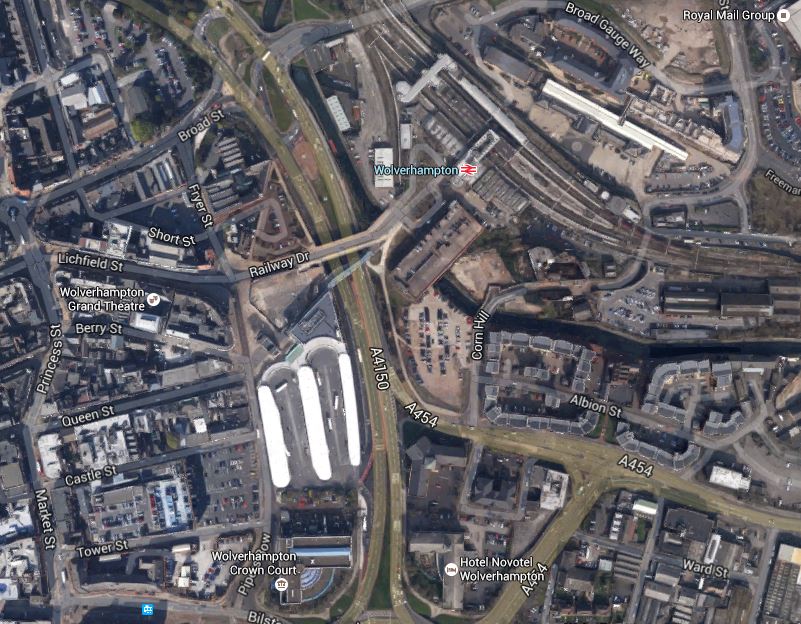
Wolverhampton City Centre
Note the bus station, which is the three pronged building to the South West of the station on the other side of the dual carriageway.
The current tram stop at St. George’s is the blue dot in the bottom left corner of the map.
Today, this article has been published in the Wolverhampton Express and Star, which is entitled Wolverhampton train station’s new look revealed. This is said.
The artist’s impressions were revealed at an international property conference being held in Cannes as part of the council’s presentation showcasing the city’s regeneration successes and future developments.
Work is due to start on the new railway station next year following the extension and refurbishment of the railway station multi-storey car park, which is expected to be completed by Christmas.
The revamp is part of the £120 million Interchange project that will also see a Metro line extension, including a new stop at the station.
So positive things seem to be happening. This is a visualisation.
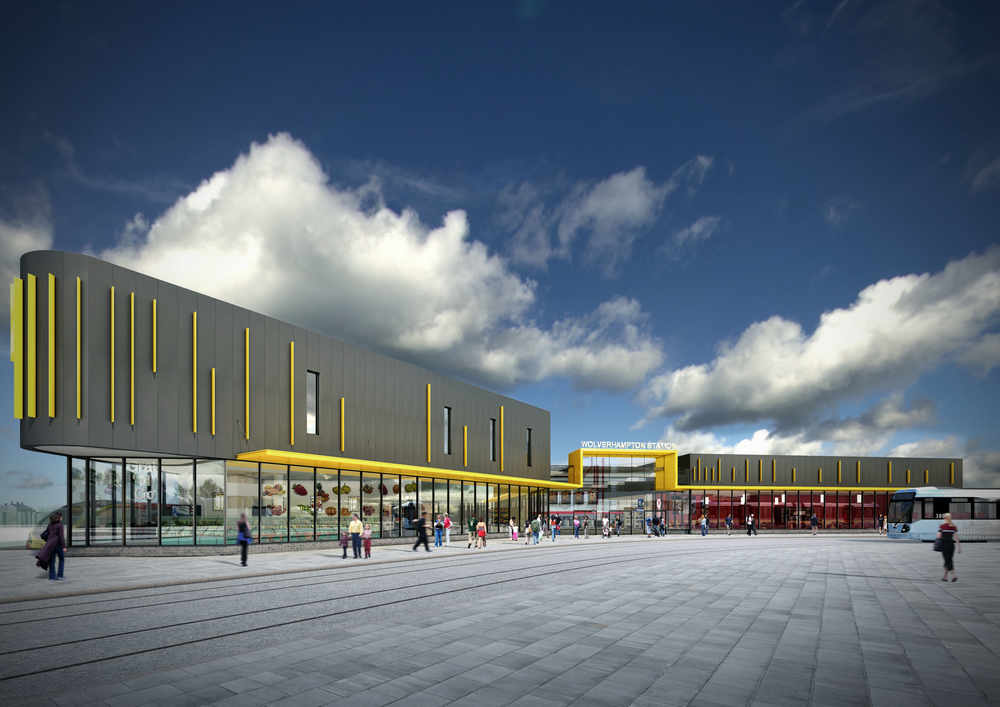
The Planned Wolverhampton Station
Note the tram and the lines in front of the station.
This section in Wikipedia details how the trams will link to the station. This is an extract.
In March 2014, it was announced that the Wolverhampton Extension would go ahead as part of a £2bn connectivity package. The new line would see two new stops built at Piper’s Row and Wolverhampton Railway Station, which will see trams terminate alternately at the Rail station and at the existing St George’s stop.
It’s a pity, that the tram isn’t being extended to Molineux.
Azuma Has Arrived
This article on Global Rail News is entitled Richard Branson unveils Virgin East Coast’s ‘Azuma’ Class 800/1.
You wouldn’t expect Branson to play second-fiddle to Great Western Railway on new trains.
Azuma means East, so will GWR give them a name that means West in Japanese?
Crossrail In Docklands
This map from carto.metro.free.fr shows the route of Crossrail through Docklands.
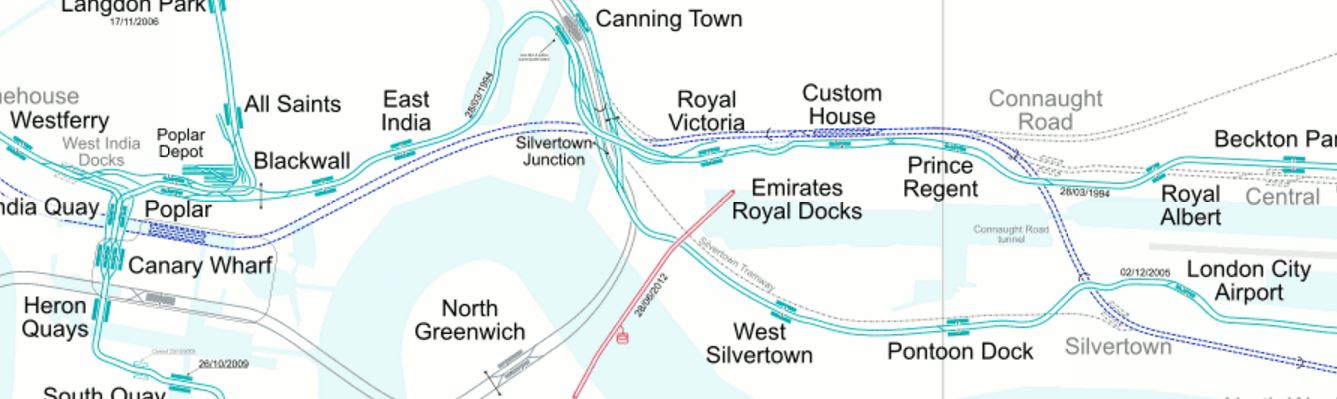
Crossrail In Docklands
Cossrail is shown in a blue-purple colour and it goes horizonrally across the map.
The Crossrail stations in the area are as follows from West to East.
Whitechapel
Whitechapel station is off the map to the west.
I have included it, as it will be Crossrail’s Jewel In The East and the most important interchange for the line in East London.
- It links both eastern branches of Crossrail to the Metropolitan and District Lines.
- It provides an interchange to London’s important but sometimes forgotten East London Line.
- An extended Whitechapel station would provide much better access to the East of the City of London.
But perhaps more importantly, Whitechapel is the reversal station for passengers travelling between one Eastern branch of Crossrail and the other.
Canary Wharf
Canary Wharf station is Lord Foster’s architectural set piece for the line, which is probably more about showing off, shopping and leisure, than transport.
I have my worries about this station, in that interchange between Crossrail and the Jubilee Line and the DLR, may turn out to be long walks interspersed with a couple of long escalators.
I also think that many passengers for Canary Wharf will prefer to come to the area on the light and airy Docklands Light Railway, rather than on a deep, dark line with no views. Cinderella always comes out on top, as that’s where she belongs.
But then this station wasn’t designed for the needs of normal passengers.
I think that when Trip Advisor and other sites, start to rate Crossrail that this station will not be liked, except by those who live and work in the area.
Custom House
Custom House station is being built primarily to serve the Excel Exhibition Centre and the surrounding area.
But it will also provide a valuable easy connection to the Docklands Light Railway, which is lacking at Canary Wharf
Silvertown
Silvertown station is not planned, but the site has been safeguarded, so that it can be built when required.
I think it will be built in the next few years.
- It would link Crossrail to the London City Airport.
- It would give London City Airport a direct connection to Heathrow and a one-change connection to Gatwick.
- It would link Crossrail to the Southern branches of the DLR.
- Hopefully connections would be better than at Canary Wharf.
But the building of this station, will be mainly driven by the developments to the south of the Royal Docks.
This is a Google Map of the area, which shows the North and South entrances to the Connaught Tunnel, which takes Crossrail under the Docks.
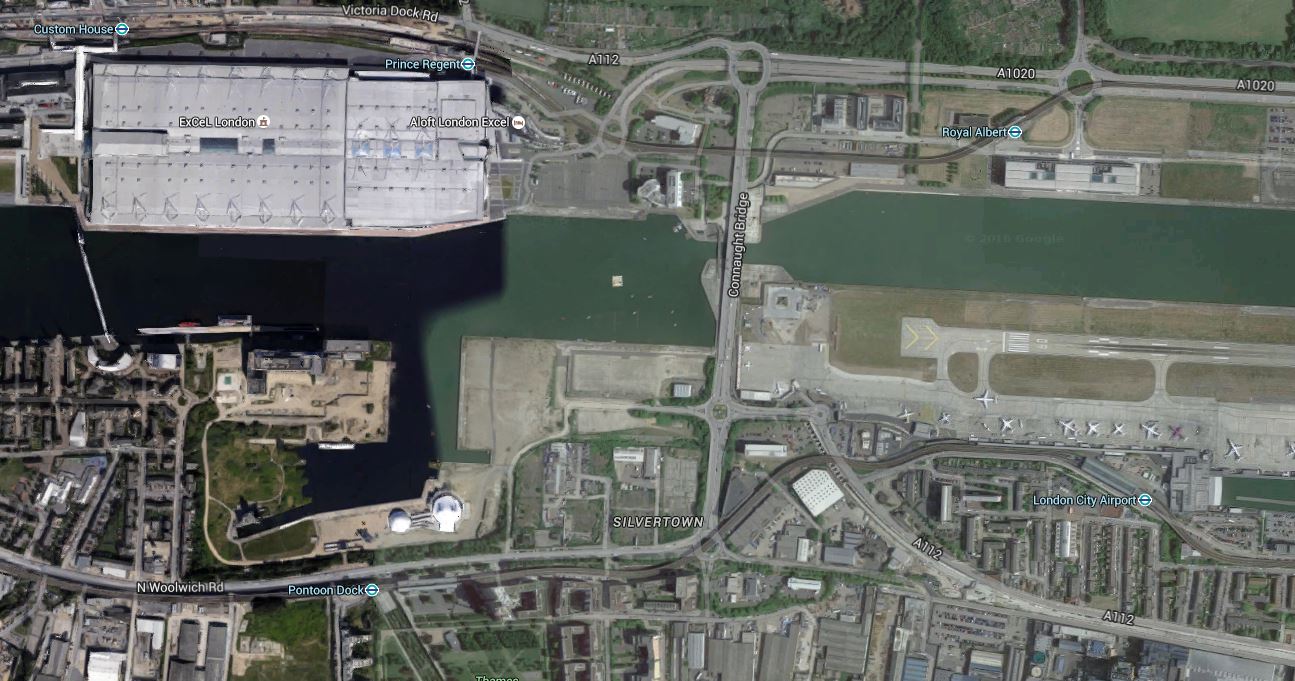
The Route Of The Connaught Tunnel
This second Google Map, shows the Southern entrance to the Tunnel in detail.
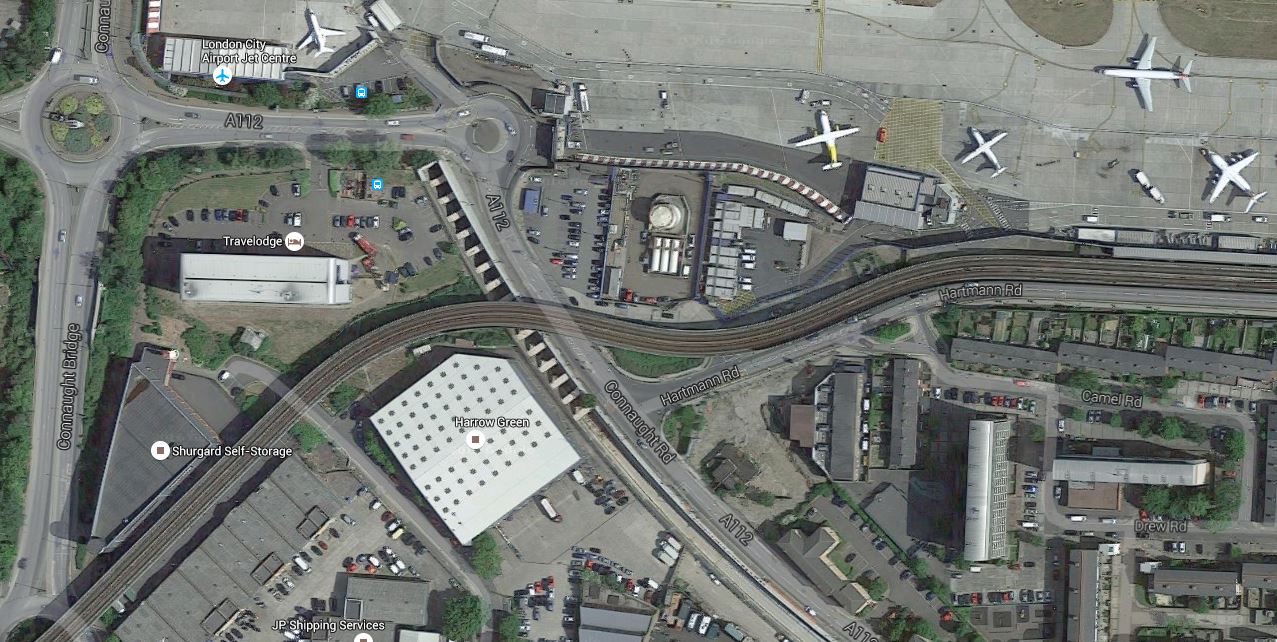
Silvertown Station Site
The proposed Silvertown station would be in this area. As to the precise location, I can’t find any information.
Woolwich
Woolwich station is to the east of Docklands on the South bank of the Thames.
It has been built solely to serve the new housing on the Royal Arsenal site and has very poor connectivity with other rail lines.
This is a Google Map of the area.
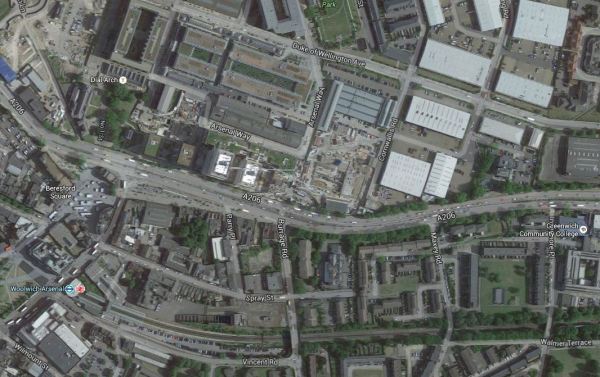
Woolwich Stations
Note Woolwich Arsenal station and the co-located DLR connection to the South West of the map.
Woolwich station is somewhere underneath the blocks to the North.
There is certainly a need to create a decent walking route in the area.
Conclusion
Looking at these stations, it strikes me that although connectivity between Crossrail and other lines is there, it is not of the best at some stations.
Scoring them out of ten, I would give scores as follows.
- Whitechapel – 10
- Canary Wharf – 4
- Custom House – 8
- Silvertown – 7
- Woolwich – 3
Obviously, when the line opens, good design may improve matters.
But I do feel that building Silvertown station would make the whole line a lot better.
The Shape Of Stations To Come
Oakwood, Southgate or Arnos Grove it isn’t but this image from Transport for London is the new Nine Elms station on the Northern Line Extension.
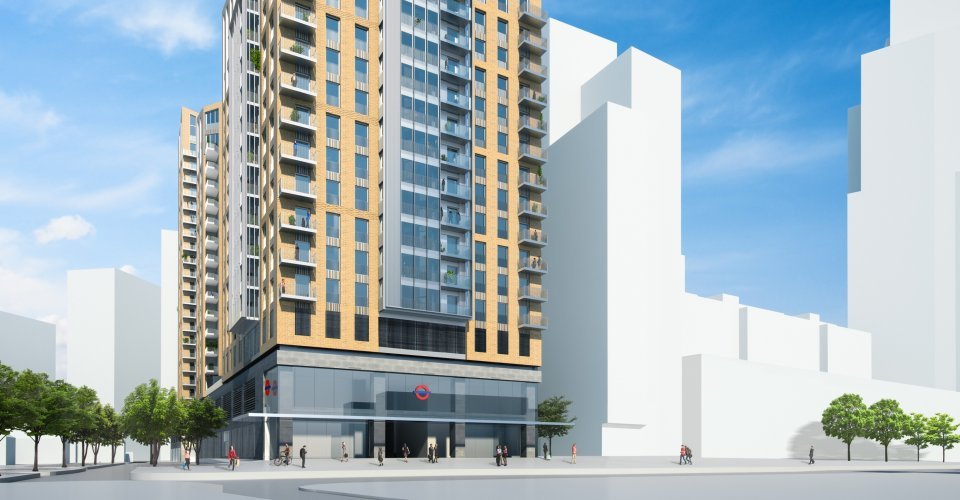
Nine Elms Station
But is it so different to Clapham South station?
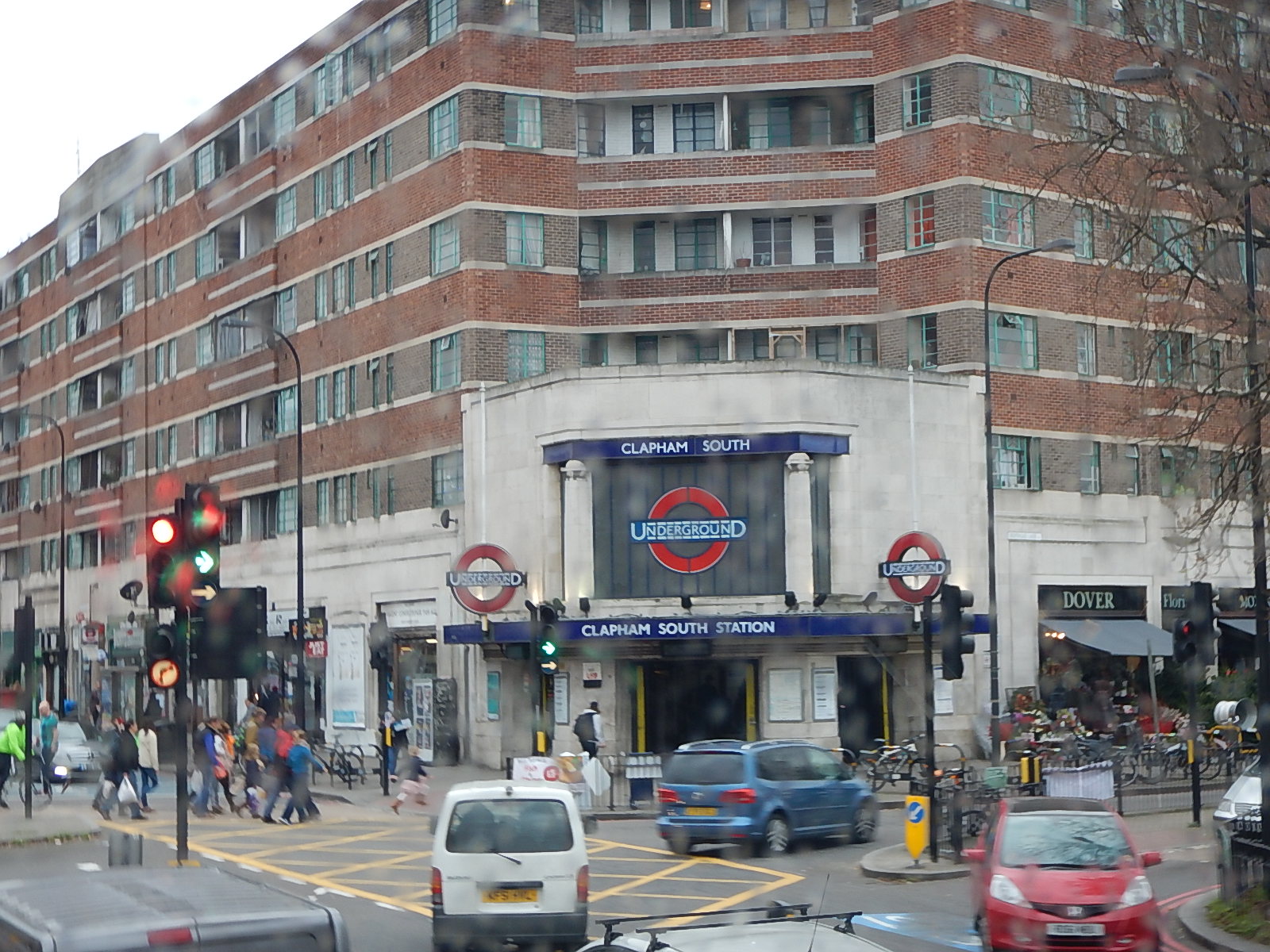
Clapham South Station
Except that the architecture is from a different era and the over-site development is higher.
We will be seeing a lot more stations like Nine Elms.
Some have already seen that type of development or developments are in progress.
- Angel
- Archway
- Baker Street
- Canary Wharf – Crossrail
- Elephant and Castle
- St. James’s Park
- Wembley Central
There should be more.
I think we’ll see different types of station design. Some with developments and others without.
The Station With Appropriate Towers On Top
These will be interpretations of the Nine Elms or Clapham South principles.
There certainly should be more stations with housing, offices, schools, universities or hospitals on the top.
A property developer told me, that he was developing schemes for housing on or close to stations in London, with little or no car parking. They are popular, sell like hot cakes and are very profitable.
The Station Under A Landscaped Area With Clusters Of Towers Around
This design is emerging and I suspect that the definitive prototype could be built at Old Street station. This is a visualisation from Transport for London.
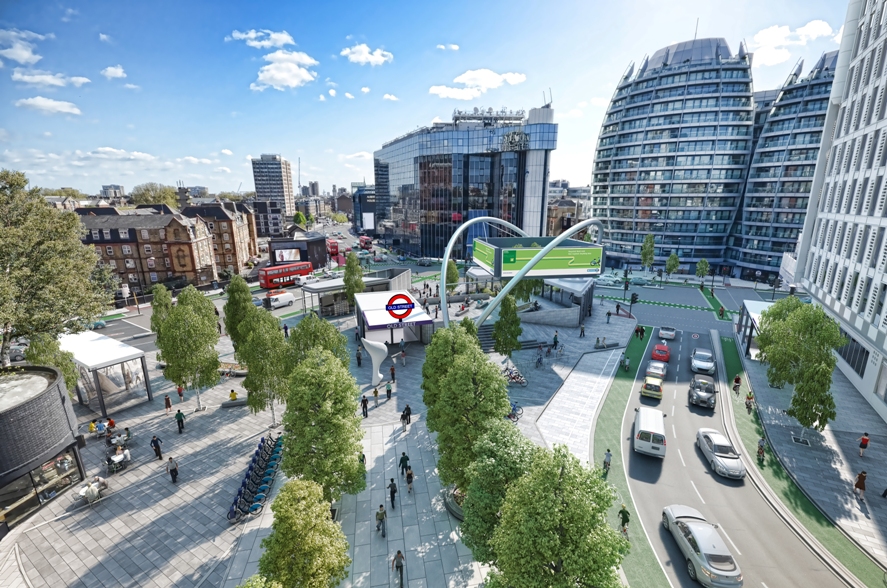
The Future Old Street Station
I suspect we’ll see similar approaches at Elephant and Castle, Highbury and Islington and other stations on a roundabout, square or park.
I like this approach for various reasons.
- The design improves the passenger experience.
- It is very cycling- and walking-friendly.
- TfL seem to have taxi-ranks in their thinking.
- It gives the opportunity to make the train-bus interface an easy one.
- Cafes and kiosks are easily incorporated.
- As development around the station is spread around, it is probably easier to bring together and finance, than a tower-on-top solution.
- It doesn’t require much modification or demolition of existing buildings.
But there are disadvantages.
- Badly done, it can be a nightmare on a wet or windy day.
- The approach can also have negative effects on other road users.
Although there doesn’t seem to be too many complaints about the half-finished scheme at the Elephant, which will enable the new station, in the media.
My taxi-driver was complaining about Highbury Corner last night, but then that scheme hasn’t even started and the extensive works to replace the bridge and sewers are ongoing.
The Roofed Station
We have a tradition in this country of giving rail stations spectacular roofs.
Surely the latest and one of the best is the new roof over Manchester Victoria station, which I wrote about in Victoria Gets A Posh Umbrella. Here’s one of my pictures.

If you think it was all amazing expensive read this article from the Manchester Evening News entitled Stunning pictures show latest progress of £44m Victoria Station refurbishment.
Good design is often much more affordable than crap design.
Imagine electric trains, trams and possibly electric buses and taxis under an umbrella, with developments all around. Someone will and it will be the most spectacular and passenger-friendly station in the world.
The Innovative Solution
I don’t discount totally innovative solutions like the new Blackfriars station, although that station is more of a spectacular architectural set-piece, than a practical station.
- I’ve had complaints from staff, saying it is a cold and draughty place to work at times.
- Changing between Southbound Thameslink services and the bay platforms is not easy.
- There should be a walking route across the Thames incorporated in the station.
- I’ve never seen a train in the bay platforms.
But to be fair, I think that the Blackfriars station, we see now, is not the one that was envisaged by Thameslink. Original plans called for all Sutton Loop services to terminate at Blackfriars. But this was overturned, by those knowledgeable enthusiasts for good design, the elected members of the House of Commons.
Conclusion
Innovate and go forward, rather than cast the past in stone.
Scotland To Keep Class 170 Trains
This article on Global Rail News, which is entitled Scotland promises bumper timetable from 2018, says this.
ScotRail will introduce 200 additional services to its timetable from 2018 after extending its lease on 13 Class 170 diesel multiple units.
Additional funding from the Scottish government will allow ScotRail to retain 39 Class 170 carriages beyond 2018.
The deal, which was announced yesterday (March 15), represents 20,000 extra seats daily.
It’s all a bit of a surprise to me, in that I had assumed that the Class 170 trains, that will be released by brand-new Class 385 trains would be moved elsewhere.
So it could be that Scotland’s gain is a loss in England and Wales?
But there could be another reason, why there has been no adverse comment from the rest of the UK!
New trains could be coming to lines that desperately need replacements for elderly diesel multiple units.
Already we’ve had the order for CAF Civity trains, but this non-transfer tells me something else could be on the cards.
- Another order for new trains.
- The predicted Class 387 IPEMUs will finally appear.
It will be interesting to see what happens.
Developing Rail Systems In Eastern Europe
I like travelling in Eastern Europe and so I was pleased to see this article in the International Rail Journal, which is entitled EU funds help to unlock rail’s potential in Eastern Europe.
It gives a long summary of the rail projects in the East, which I think are essential to improve the prosperity of the area.
I’m looking forward to the day, when I fly to Helsinki and take a ferry to Tallinn in Estonia.
From there I will take Rail Baltica through the Baltic States to Warsaw and Berlin, before taking a direct train from the German capital to London.
You might ask, what benefits spending money in Eastern Europe does for the UK other than opening up tourism for those who like travelling on trains?
The roads of Eastern Europe are clogged with trucks bringing exports and imports all across Europe.
One of the aims of these projects is to get freight on rail. As the last time I went on the M25, there seemed to be loads of East European trucks, surely freight trains through the Channel Tunnel will cut the numbers.
The other large aim is to link Eastern Europe better to Western Europe and help loosen the economic ties to Russia.
 The Anonymous Widower