Could IPEMUs Be Used On The Windsor Link Railway?
I quite like the concept of the Windsor Link Railway.
When I wrote Walking The Proposed Route Of The Windsor Link Railway, I was unsure about how they woud arrange the power supplies on the route.
Now that the concept of an IPEMU or independently-powered electrical multiple unit is better defined and probably nearer to delivery, I think that the train may have an application on the Windsor Link Railway.
In researching the branches of the Great Western, in Towards A Thames Valley Metro, I came to the conclusion, that Slough to Windsor should be worked by an IPEMU.
If the Windsor Link Railway is ever built, then the Windsor Tunnel doesn’t need to be electrified, as at five hundred metres, it is short enough for an IPEMU to get through on batteries.
The tunnel would be smaller and simpler.
Heathrow Express And Crossrail
There is an interesting report on the front of the Business section of the Sunday Times entitled Heathrow starts fight over bill for Crossrail link.
Apparently, the airport want to charge passengers using Crossrail to the Airport for using the part of the Airport Rail Link, that was funded by the Airport. The Airport wants to raise a total of £40million every year.
My first reaction is to think this is an story worthy of April the First or someone in the negotiations for the route of Crossrail has made a big mistake.
If I wanted to build a new railway into say a small town, before I started to construct the railway, I would make sure all of the legals were tightly sown up and agreed.
Surely with a fourteen billion pound project like Crossrail, where since 1974, there has been talk of a link to Heathrow, you wouldn’t start construction of the project, unless you had everything nailed before starting construction.
The Crossrail Bill was approved in 2005 and has since been backed by all Governments and most political parties.
According to Wikipedia, Heathrow Airport Holdings,owns or part owns the Heathrow Airport branch of Crossrail. So it would appear that they may have some basis for charging passengers to use the line.
As I said the Crossrail Bill was signed in 2005 and then because of competition concerns, the company was made to divest themselves of most of the other Airports, that it owned. Competition Concerns in the Wikipedia entry for Heathrow Airport Holdings details the competition concerns.
Wikipedia describes Heathrow Airport as being owned like this.
The airport is owned and operated by Heathrow Airport Holdings, which itself is owned by FGP TopCo Limited, an international consortium led by the Spanish Ferrovial Group that includes Caisse de dépôt et placement du Québec and Government of Singapore Investment Corporation.
From what I can gather the Spanish group took over the old BAA plc, which had been privatised in 1986, in July 2006. So surely, as the Crossrail Bill had been signed in the previous year, they would have known all about the rail project.
So why just four years before Crossrail opens and everybody in London is getting excited about the project and especially the link to a major airport, should Heathrow Airport come up with a demand for forty million pounds a year?
I think there is a clue in the comments placed on the article, by subscribers to the Sunday Times web site. who are probably a fair cross section of the people who regularly use Heathrow.
There is not one comment, that thinks that Heathrow has a valid case and many are hostile even about the existence of Heathrow.
So has Heathrow just done a bit of research on the Heathrow Express?
They will have found some or all of the following.
- Heathrow Express only goes to Paddington.
- Passengers for Heathrow come from all parts of London and the South-East and don’t use Heathrow Express because getting to Paddington is difficult.
- Many of the workers at the airport, take public transport to get to the Airport and few use Heathrow Express.
- Crossrail will serve Central London and other important districts like Canary Wharf, Reading and South Essex.
- Crossrail links directly to Thameslink and the services out of Liverpool Street.
- Many passengers will use Crossrail instead of driving to and from the Airport.
- Crossrail will run all night.
- Londoners see London Overground and Underground as theirs and use them.
- Crossrail will be part of Transport for London’s system.
- Crossrail will use hassle-free contactless ticketing. Most travellers will just use a bank card and expect no waiting time.
- There will be a big row, if pensioners can’t use their Freedom Passes on Crossrail to Heathrow.
- No Mayoral candidate in next May’s election will back Heathrow over Transport for London.
- Gatwick Airport will introduce contactless ticketing in a few months.
- Paddington to Terminal One takes fifteen minutes on Heathrow Express and will take only nine minutes longer on Crossrail.
- A big enthusiasm for Crossrail
- As seen in the Sunday Times comments, deep resentment for Heathrow and Heathrow Express.
They will also probably have had some very forthright comments about the cost of tickets for Heathrow Express.
At the moment Heathrow Express is the only fast and comfortable train service to get between Heathrow and Central London.
But Crossrail will be a game-changer, as it will be not much slower, spacious, frequent, more convenient and hopefully comfortable.
For a few years, Crossrail will also have the new factor and passengers will at least give it a try.
I think that all this means there will be a massive shift of passengers away from Heathrow Express to Crossrail.
So seeing this projected loss of revenue, they have come to the conclusion that they must get another income stream to make up the losses.
But travellers are not stupid any more and unless their company is paying, now chose the most convenient route to their ultimate destination at the best price.
I may not be typical, but I have five convenient local airports, so on many flights, I have a choice of airport. Unfortunately for Heathrow, more and more of their possible travellers, have this luxury of choice.
All this leads to my view, that Heathrow will be forced to apply the-if-you-can’t-beat-em-join-em principle, as I think Heathrow possibly needs Crossrail, more than Crossrail needs Heathrow.
Consider the following.
- Crossrail links at Farringdon to Thameslink, which serves Luton and Gatwick Airports.
- Crossrail links directly to the City and Canary Wharf.
- Crossrail avoids the bottleneck at Paddington.
- Crossrail will link Heathrow to the West Coast Main Line and the future HS2 at Old Oak Common.
- Crossrail will expand in the next few years to give better connectivity to many more places.
- Heathrow needs to build a direct link to Reading.
- Heathrow needs to link Crossrail to Terminal 5.
- Routes are possible, that could link Crossrail 2 to Heathrow.
- Heathrow will lose credibility and passengers, if it is not just seen as a stop on London’s transport network.
If Crossrail didn’t serve Heathrow for the first few years after it opened, I don’t think that Transport for London would get the blame!
In some ways, Heathrow’s best policy might be to cut their losses and sell the Heathrow Airport Links and its stations to Crossrail, after agreeing extensions to the Airport Rail Links.
But that would give in the eyes of some, London’s Mayor too much control over airports policy for the South East! Surely, he or she would know more about Heathrow and the problems the airport causes, than a faceless multi-national.
New Trains For The North
That is the headline on a two page article in Modern Railways magazine.
It is an article that is strong on promises, in what it says that First TransPennine and Arriva Northern Trains will do.
Under a sub-heading of Bi-Modes for TransPennine, this is said.
FirstGroup is to invest over £400 million in a fleet of 44 new five-car 125 mph trains, which are expected to be based on the Hitachi AT300 design already being procured by sister operator Great Western Railway.
It also states that twelve will be electric only and the rest will be bi-modes.
The timetables state that the first bi-mode will enter service in December 2017.
Under a sub-heading of New and Upgraded Fleet for Northern, this is said.
Arriva is to invest £400 in 98 new air-conditioned 100 mph trains comprising 281 carriages, of which 43 will be three- and four-car EMUs and 55 two- and three-car DMUs. The latter will enable the withdrawal of all Pacers by the end of 2019.
The delivery schedule for the new trains stretches to 2020.
All these promises are all well and good, but I do wonder if they are deliverable with new trains.
AT300
Hitachi have been clever and have bought AnsaldoBreda, so they can build AT300 trains in Italy. This is said in the Wikipedia entry for the AT300, which is based on the Class 800 train, they are building in Newton Aycliffe.
In mid 2015 Eversholt Rail, a rolling stock operating company signed a £361m contract with FGW to purchase 173 new AT300 carriages, consisting of 22 five-car and seven nine-car trains. The AT300 trains are to be built at Hitachi Rail Italy’s Pistoia plant.
The trains are expected to enter service with Great Western Railway from December 2018. and are also expected to reduce journey times from London to Exeter by up to 5min, to Plymouth by up to 6min, and to Penzance by up to 14min.
It puzzles me how First TransPennine will be able to introduce the first bi-mode into service in December 2017, as where will the train be built?
It can’t be built in Italy, as Hitachi won’t have even delivered their first train until December 2017.
The only possibility will be to take trains from Newton Aycliffe and delay deliveries to Great Western Railway and Virgin Trains East Coast. Wikipedia and other sources is rather short on dates for the delivery of the Class 800 and Class 801 trains.
Hitachi in Newton Aycliffe are also involved in the building of AT200 trains for Abellio ScotRail. This is said in Wikipedia.
Abellio ScotRail will introduce a fleet of 46 three car and 24 four car Hitachi AT200 electric trains from December 2017, to operate services on the lines being electrified as part of the Edinburgh to Glasgow Improvement Programme, if it granted a three-year optional franchise extension, it will order a further 10 three car units
I doubt that we’ll see more than a token AT300 running on First TransPennine before the end of 2017.
Class 185 Trains
The Modern Railways article says this about TransPennine’s Class 185 trains
First is expected to retain 28 of the current 51×3 car fleet of Class 185s; the units to be retained will be refurbished.
This means that twenty-three of the Class 185 trains will be available for cascade.
Modern Railways says the two franchises will be jointly managed from Leeds, so would it be sensible to perhaps keep the current fleet together for refurbishment and maintenance?
So perhaps if the answer is yes, then common sense would dictate that the cascaded twenty-three trains would go to Arriva Northern.
Class 319 Trains
Handsome is as handsome does, goes the old horseman’s phrase and you couldn’t call a Class 319 train beautiful.
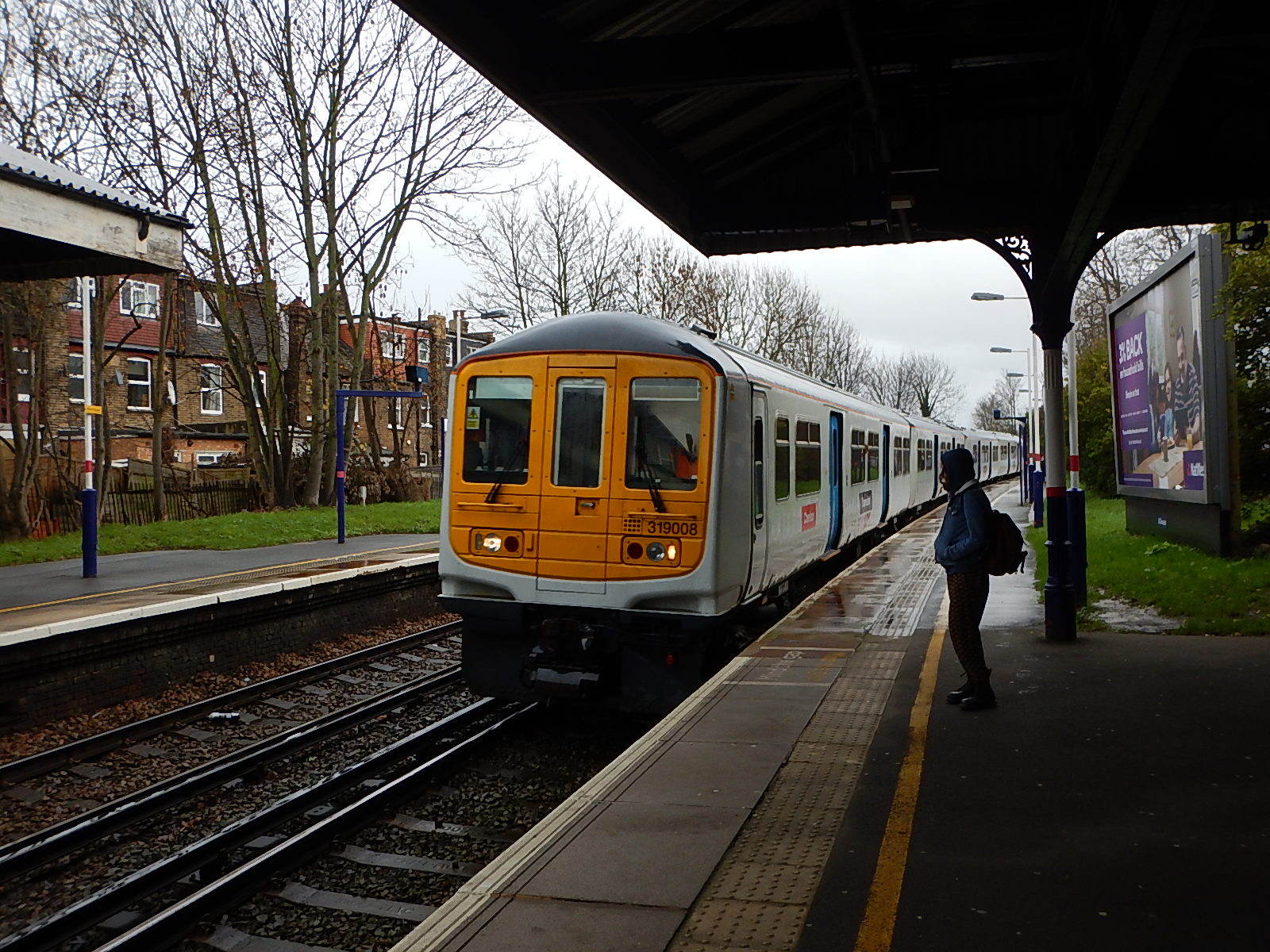
But for some of the electric routes in the North, they’re all we’ve got! And like some elderly actresses, they scrub up well.
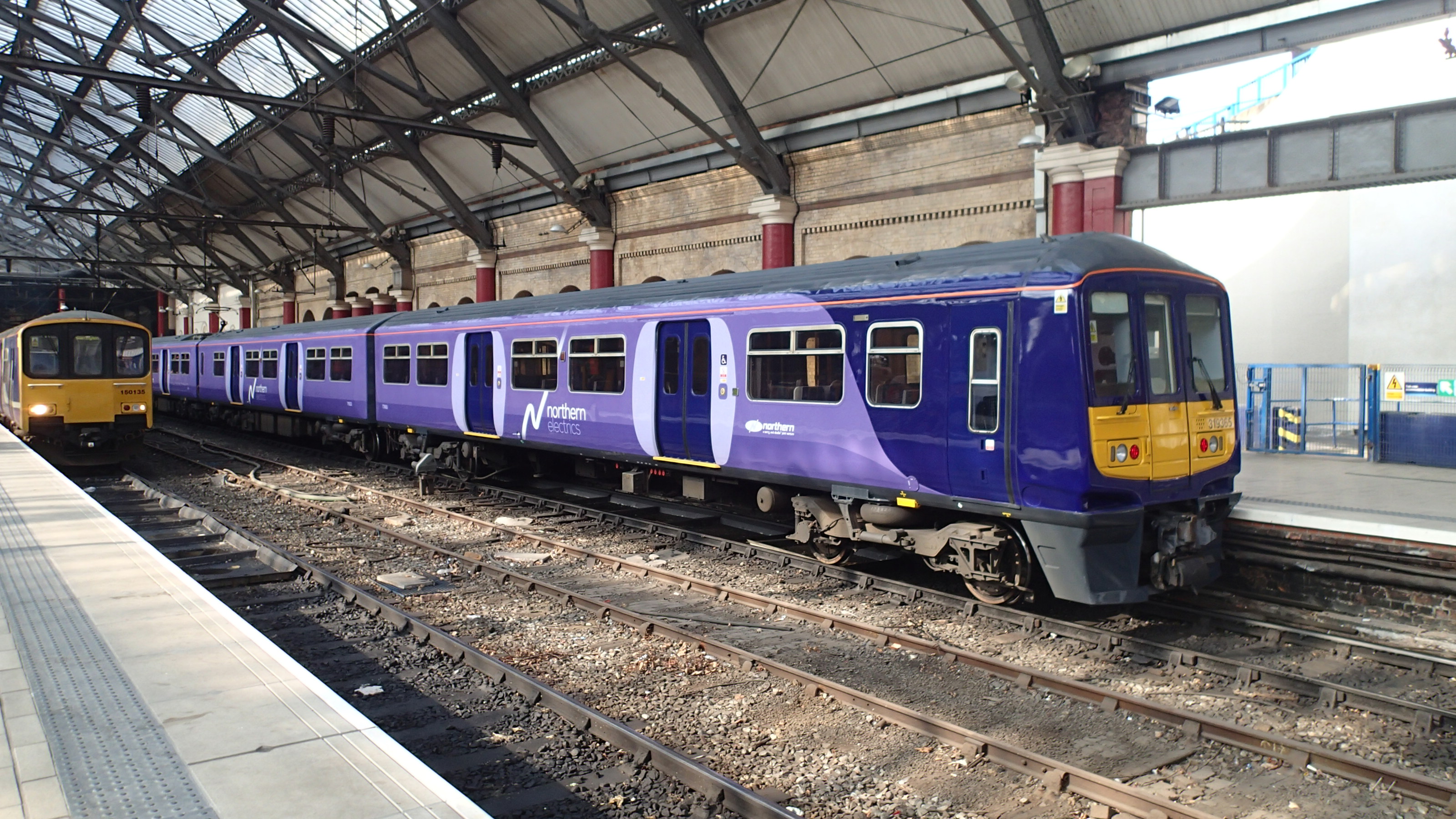
The Modern Railways article says this about Northern’s use of the Class 319.
It is understood that refurbished Class 319s will be used on these services on an interim basis until new build units arrive.
I suspect that these will soldier on for a few years yet!
At least there are eighty-six of these 100 mph four-car trains.
There must be a lot of laughter at reunions of engineers from BREL York, when they see how far their Bedpan Special has gone. after being built especially for the Bedford-Brighton route through the tunnels under London via St. Pancras in the 1980s.
He who laughs last, laughs longest!
Class 442 Trains
This is said in the Modern Railways article about Class 442 trains.
First says it did evaluate the use of Class 442 EMUs displaced from Gatwick Express workings hauled by diesel locomotives.
But they found it was too challenging and have discounted them.
So it looks like the Class 442s won’t be going anywhere in the North and probably have no worthwhile future.
Class 390 Trains And The West Coast Main Line
Virgin Trains have aspirations to run their Class 390 trains that work the West Coast Main Line, at their design speed of 140 mph in as many places on the route as possible. This section in Wikipedia gives more details.
At present because of signalling and regulations, trains are limited to 125 mph, but it is likely that once ERTMS is fully implemented, that pressure will increase to allow 140 mph in places on the West Coast Main Line.
TransPennine’s Scottish Services
TransPennine are increasing their Scottish services and this timetable is given.
- December 2018 – Liverpool-Glasgow service launched
- December 2019 – 12 new electric trains introduced on Anglo-Scottish services.
- December 2019 – Liverpool-Newcastle services extended to Edinburgh
This is said about the Class 350 trains currently running their Scottish services.
The 10 four-car Class 350/4 EMUs currently used on Manchester-Scotland services are expected to be phased out over the first three years and offered to other franchises. First say these trains are too small to run on many diagrams as single units.
So it looks like trains with this specification will be needed.
- Electric power only
- 140 mph top speed, as parts of the West Coast Main Line, will probably get upgraded to this speed, within the service lifetime of the trains.
- Five cars or longer.
- The ability to work in pairs. As all Glasgow trains will probably call at Preston, it might be sensible to join and split Liverpool and Manchester trains there to save train paths on the West Coast Main Line.
- Full on-board customer service.
The specification fits the Hitachi AT300 well, as these trains are available in five car sets and can be upgraded with minor modification for 140 mph running.
But will the timetable of 2019 for twelve new trains, fit the production capabilities?
As delivery into service by December 2019, to give TransPennine their promised service might be exceedingly challenging, could we be seeing something from another manufacturer?
After all, there are several around the world, who could create five-car 140 mph electric express trains?
- Some open-access operators like Alliance Rail are talking about using Pendolinos on Scottish routes, so Class 390 trains or an updated design of Italian-built Pendolino train must be a very real possibility.
- Siemens must also have a suitable train perhaps based on a German ICE design.
- The Chinese, Koreans, Spanish and Swiss shouldn’t be discounted.
If Hitachi can’t deliver, I’d put my money on a five-car Pendolino. After all, it is proven on the West Coast Main Line.
EMUs For Northern
Arriva have said, they will be buying forty-three 100 mph air-conditioned electric multiple units (EMUs), in a mixture of three- and four-car units.
These are probably the easiest trains to source and they might even already have been ordered or even built, in the shape of Class 387 trains. These have the following specification.
- Modern air-conditioned four car electric train.
- 110 mph capability
- Proven performance and certification.
- Bombardier can probably build them alongside all their Aventras at Derby.
But there are few electrified routes in the North, where they can be run.
However on the other hand!
I’ve believed ever since I rode the Class 379 BEMU or IPEMU demonstrator, that battery-powered trains based on this technology, are ideal for some of Northern’s routes.
Partially electrified routes or ones that run between electrified hub stations at Carlisle, Doncaster, Leeds, Liverpool, Manchester, Newcastle and York, could have virtually brand-new four-car electric trains, as soon as Bombardier can add IPEMU systems to Class 387 trains, currently in service or on order and staff can be trained.
A few months ago, I wrote Rumours Of Battery Powered Trains, where I said there were rumours of some of Great Western Railway’s order for Class 387 trains would be delivered as IPEMUs to help solve the shambles of the Great Western Main Line electrification.
Using an IPEMU is an attractive approach for several reasons.
- IPEMUs have a range of around sixty miles on the battery, if it is fully charged.
- IPEMUs have regenerative braking at all times, whether there is an electric supply or not! This improves efficiency and increased on-battery range!
- Bombardier feel that all trains should have energy storage for myriad operational reasons and the upcoming Aventra will be designed to accept an energy storage device as standard.
- Passengers will have the same experience on overhead line or battery power.
- On many routes, IPEMUs need no modifications to be able to run, except perhaps lengthening platforms for four-cars.
- On a scenic line or one in the middle of nowhere, the problems of electrification and its maintenance can be avoided, if services can be run by IPEMUs.
- Electrified hubs can be upgraded or created to charge the trains. In the North, Carlisle is being upgraded and Hull and Middlesbrough could be electrified.
- Some lines are currently run by some of the better diesel multiple units (DMUs) like Class 158 trains. Releasing these would probably eliminate a few of the dreaded Pacers on other lines.
All stakeholders will like these trains.
- Operators know that new four-car trains will attract more fare-paying customers.
- Network Rail will save money on electrification and can skip difficult bits.
- On many routes, opening up bridges and tunnels for the overhead wires is difficult, very disruptive and a time- and money-consuming process.
- Passengers and staff like new trains.
- More places can be served by electric trains.
- New four-car trains replacing ageing diesels will improve the prosperity of an area.
Routes that could be easily converted include.
- Barrow to Manchester Airport
- Chester to Manchester Victoria
- Windermere to Manchester Airport
- Blackpool North to Manchester Airport
- Liverpool to Manchester Airport via Warrington
Add in some electrified hubs and short lengths of tactical electrification to charge the trains and other lines like the scenic Tyne Valley Line between Newcastle and Carlisle could be run using new four-car electric trains.
I believe that these trains have enough energy storage to actually bridge the notorious forty mile gap in the electrification between Manchester Victoria and Leeds, thus creating an electric train service from Liverpool to Edinburgh via Manchester, Leeds, York and Newcastle
Note that news on development of IPEMU trains has been very quiet for several months and the only report is this article in the Derby Telegraph, which is entitled Battery-powered trains win award for Bombardier.
So someone other than I do, think the technology works and deserves its place on the railways of the UK.
Class 323 Trains
Before leaving Northern’s EMUs something must be said about the seventeen three-car Class 323 trains, that run services out of Manchester.
As they are being transferred to London Midland, they will need to be replaced.
Also, according to Wikipedia at times, some of the Class 323s are currently replaced by a pair of Pacers. So perhaps they need a bigger fleet anyway!
So until new units are ordered, will we see Class 319s working these routes? Or could they be a home for some of Porterbrook’s Class 387s?
It’ll all come out in time and in the contracts?
DMUs For Northern
Arriva have said, they will buy fifty-five two- and three-car DMUs.
Two factors could decrease this number.
- If Arriva go down the Class 387 IPEMU route, more routes will be running electric trains.
- The twenty-three Class 185 trains cascaded from TransPennine should they end up with Arriva.
- It seems likely that other companies including Great Western Railway could use the IPEMU route, thus making some high-quality DMUs available.
I won’t speculate on how many new DMUs will be actually ordered and built. If any!
Northern Connect
Northern Connect will be a sub-brand comprising a dozen long distance routes across the North.
Modern Railways publishes a table of the routes and indicates eight routes will be run by new DMUs, two by refurbished trains and two by new EMUs.
Obviously, Northern have a plan to create five of these routes by the end of 2018 and the rest by the end of 2019.
Where will the various classes of train fit?
- Some routes could be run by EMUs, with Class 319s providing an interim service until the new build arrive.
- Some routes could be run by Class 387 IPEMUs, once they are delivered.
- Some of the longer routes around Sheffield and Hull would be ideal for Class 185s.
If the long-rumoured Class 387 IPEMUs do appear, Barrow and Windermere to Manchester Airport, would be ideal routes on which to trial and showcase the technology.
Northern’s Train Philosophy
The Modern Railways article also says this.
Arriva says that it is still in negotiations with the supply chain but expects to sign a contract by April. It also says that the new fleet ‘has the capacity to grow’ with the trains ‘ordered as a family that are expandable’. The first 92 carriages will enter service by the end of 2018, with a further 163 by the end of 2019 to ensure all Pacers are replaced and the final 26 in 2020.
That is a very sound train procurement philosophy, which has a fairly relaxed delivery schedule, given the shortage of train building capacity in the UK and Europe. I suspect the Chinese could build them, but would that be politically acceptable?
I would not be surprised if Arriva went for a purchase of Class 387 trains, of which a proportion were IPEMU variants and some tactical electrification to produce electrified hubs in places like Huddersfield, Hull, Scarborough and Sheffield. It would be an afordable way of getting the benefits of new electric trains at an affordable price.
They would still need a few diesel multiple units, over and above the good ones they replaced with electric trains. But London Overground and hopefully Great Western Railway should be releasing some that are suitable.
Only as a last resort, would any new ones be ordered.
Class 387 Trains
I believe that the Class 387 Trains will play a large part in Northern’s plans.
They are a 110 mph four-car modern unit and currently there are twenty-nine units in service and another twenty-eight on order, if you ignore the separate order of twenty-seven trains for the Gatwick Express.
Thirty seven units are destined for the Great Western Railway and in Rumours Of Battery Powered Trains, I wrote about unconfirmed reports that some of these trains for the GWR would be IPEMU variants. I suspect that this will be confirmed, as it will enable electric services to be started on the shambles that is the Great Western.
The Gatwick Express variant of the Class 387 is going to be a train, worth looking at, as it will be the first Airport train we’ve ordered since the Heathrow Express.
There are to be twenty-seven four car trains replacing twenty-four five-car Class 442 trains.
There may be a few less carriages, but they are designed for the route.
They are also built as dual-voltage trains. Is that just so they can be tested on the West Coast Main Line, as was reported in this article in Rail Magazine, or because they think the type will have other Airport applications, like possibly Manchester, Cardiff, Glasgow, Luton, East Midlands and Stansted.
I can’t wait to ride one in the near future, as I think it might offer, a whole new experience of getting to an airport by train.
A lot of the services in the North West go via Manchester Airport. So would a follow-on order of this variant be ideal to get passengers to the fast growing airport?
Some questions have to be asked.
- As some of these services go all the way to Scotland, could the train be certified to the 125 mph of the West Coast Main Line?
- Could an IPEMU variant be created to bridge the gap between Manchester and Leeds?
- Could an IPEMU variant link Manchester Airport to Barrow, Blackpool North, Liverpool and Windermere?
- Can Class 387 trains be built in five-car formations?
If the answer to all or some of these questions is in the affirmative, Manchester Airport and the Nortrh might receive some interesting trains from Derby to create a 125 mph network of five-car Airport trains all across the North.
I suspect that Bombardier are working hard to see if they can fulfil that dream, as if they can, the rewards to the company, Arriva Northern, First TransPennine, Network Rail and the North in general, could be substantial!
There would be no waiting until 2018 for true bi-mode trains.
Could the silence on the IPEMUs be just because all parties don’t want to show their hands until all of the tiniest details are totally settled?
Political And Commercial Considerations
I mentioned in the section on the Class 387 trains, how important to get any trains, that can improve services in the North is to the companies involved and Bombardier in particular.
Bombardier have been going through a rough patch and were bailed out by the Quebecois. They seem to be sorted with large orders, but creating some more Class 387 trains, must be good cash-flow and profitable.
Network Rail are in a deep mess over electrification everywhere and desperately need some help in creating lines for electric trains. Peter Hendy is trying to sort out the shambles and there is a report in Modern Railways this month with a headline of Hendy Finds £2.5 Billion To Save Enhancements. The article says assets will be sold and there will be more money from the Government.
Arriva and FirstGroup have spent a lot of time and effort to create plans to give the North a modern world-class railway system. It is unlikely, that the train manufacturers will fail to deliver to agreed contracts, as all trains proposed for the North or either in service or at the certification and trial stage. The problem is the tracks. They will not be pleased if Network Rail fail to deliver, the electrification they have promised on time, as pictures of new trains stored in sidings are not good publicity.
Read a lot of the stories about new trains to run on newly electrified lines and dates have a vague air about them.
I suspect all will become a lot clearer, when Peter Hendry fills out his plan for Network Rail in the Spring. All we are getting at the moment are worthwhile aspirations.
And then there is the small matter of the local elections in May!
If the shambles is still persisting before the election, Corbyn and the Labour Party will have a field day, when they say they will nationalise the railways.
This would be a disaster for Arriva, FirstGroup and probably Peter Hendy. The companies would probably lose millions and Peter Hendy would have totally failed.
With my engineering hard-hat on, I’m getting more and more convinced that those clever engineers in Derby will pull the IPEMU rabbit out of the hat.
They have form for this, as in the 1970s, they created the peerless InterCity 125, after the wreckage of the APT.
Conclusion
Wait for April and hopefully before then a lot more will be revealed!
Connectivity Around Clapham
I’ve talked a lot lately about improving the rail lines and especially their connectivity in South London in quite a few posts lately.
So I extracted this map from carto.metro.free.fr
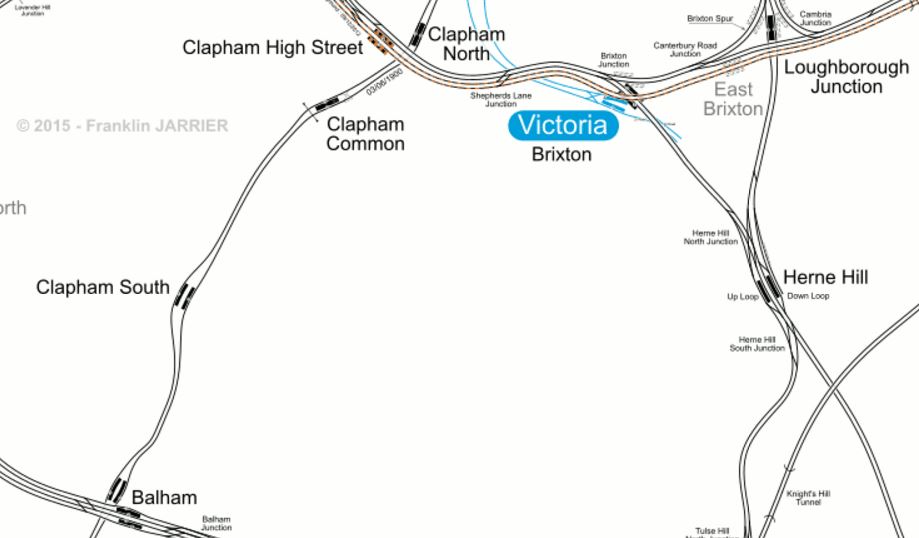
Clapham Lines
I think we have to congratulate the French behind these accurate metro maps.
Note the following.
- In a few years time, there will be two high-capacity North-South routes through the area; Thameslink and the Northern Line, which meet with the Bakerloo Line at Elephant and Castle station.
- Thameslink at Farringdon station and the Northern Line at Moorgate and Tottenham Court Road will have excellent connections to Crossrail.
- Thameslink goes through Herne Hill and Loughborough Junction and will have at least six eight-car trains all day, with extra services in the peak.
- Herne Hill is a big railway bottleneck, with as yet no sensible proposal to solve it.
- The Northern Line will have at least twenty trains per hour all day, between Morden and Kennington stations.
- The Victoria Line is also important to the area, as it will provide a thirty trains per hour service to from Brixton to Walthamstow Central via Stockwell on the Northern Line.
- The East London Line connects Clapham Junction in the west via Clapham High Street and Surrey Quays to Highbury and Islington in the north-east.
- The East London Line is getting crowded and increased frequencies will happen in 2019.
- The Law of New Routes, Stations and Trains will mean that Thameslink will attract traffic and the trains will quickly get busy.
- In the future Balham station could be served by Crossrail 2.
I believe that expecting Crossrail 2 to solve South London’s transport problems, is a bit like waiting for the United States to help the beleaguered good guys out in the First and Second World Wars.
Like the Americans, Crossrail 2 will arrive, but we have to make the best of what we’ve got in the meantime.
Perhaps these projects will help.
More And Better Designed Stations
Transport for London (TfL) have very sophisticated train and passenger modelling systems, which enable them to propose where improvements to stations should be made.
Sometimes this type of analysis, gives surprising results, that are counter-intuitive.
For example, I pointed out in Faster London Trains Could Make Your Commute Even Longer, how French research had shown this premise, to sometimes be true.
But the research also showed that in certain cases, extra stations could make journeys faster.
From my personal observations at Angel station, I sometimes think that trains arrive and depart faster on the wider southbound platform, rather than the narrow northbound one.
Camberwell Station On Thameslink
A couple of miles north of Loughborough Junction station is the disused Camberwell station, which Transport for London are proposing to reopen.
In their report on the Bakerloo Line Extension, TfL give this concise summary on reopening Camberwell station.
A new station at Camberwell would be a significantly lower cost option to a Tube extension, whilst serving the same catchment area. Investigations show significant journey time improvements could accrue to Camberwell passengers and that operationally there may be scope to integrate re-opening of the station into the launch of the completed Thameslink programme.
We will therefore undertake further planning work with Network Rail and the London Borough of Southwark to assess the proposal.
From their statement, it would appear that TfL have done an extensive analysis.
I would not be surprised, if this enthusiastic statement wasn’t followed through.
Northern Line Stations
Several of the Northern Line stations are relics of the line’s Victorian past and stations are slated for major improvements over the next few years.
- Bank – A big development has just been announced.
- Camden Town – I wrote about the proposed development of Camden Town station in The Camden Town Upgrade Exhibition.
- Elephant and Castle – A big property development is planned, which incorporates a new Northern Line station.
- Moorgate – Crossrail will improve the station.
- Old Street – Developments are planned in the area, which could result in an improved station.
These developments will probably mean that after the Northern Line Extension to Battersea is completed, most major stations between Camden Town and Kennington will have been upgraded.
Only the two Northern branches and the Morden branch will have not received a substantial number of upgraded stations with complete step-free access, wide safe platforms and escalators.
I think we’ll see other improvements to stations, especially an upgrading of the two island platform stations at Clapham North and Clapham Common.
The Herne Hill Loop On The Victoria Line
One constraint on the efficiency of the Victoria Line, is reversing the trains at Brixton station. There have been proposals in the past to crete a reversing loop with another station on the loop at Herne Hill station. I wrote about it in detail in Will The Victoria Line Go To Herne Hill?
This extension will only be built, if it is value-for-money in improving the Victoria line, despite the positive secondary effects it might have in the Herne Hill area!
An Interchange Hub At Streatham Common Station
Transport for London has recently proposed a interchange hub at Streatham Common, which I wrote about in Puzzled Over Streatham Common Station.
In my article, I showed that a well-designed hub could connect the following lines.
- The Sutton Loop Line Of Thameslink – Linking To Wimbledon and Sutton
- The Brighton Main Line
- Tramlink – With the possible use of tram-trains.
- East London Line – Linking to East London, Kent and Essex
- West London Line – Linking to Old Oak Common for HS2 and the West Coast Main Line
I very much think that the idea of an interchange hub at Streatham Common is a masterstroke.
Especially, as it will take the pressure off Wimbledon and East Croydon!
Another Branch Of The East London Line
The East London Line currently has four trains per hour in both directions across South London to and from Clapham Junction station.
This branch is getting very busy and from 2019, an extra two trains per hour will use this route.
But will Clapham Junction be able to cope with the extra services?
If it can’t, a possible alternative would be to run some trains from Peckham Rye via Tulse Hill to a terminus at Streatham Common.
Clapham High Street, Brixton And Brockley Interchanges
These are three possible interchanges with the Easst London Line in South London.
- Clapham High Street and Clapham North stations could be connected, if it was decided to improve the Northern Line through Clapham.
- Interchange between all the lines at Brixton station has been mentioned by TfL and I wrote about it in Could The Various Lines At Brixton Be Connected?
- TfL have also suggested that Brockley station could be a potential interchange hub and I wrote about it in A Report On The Bakerloo Line Extension
Each will have advantages and disadvantages.
Conclusion
There are a lot of possible projecs to improve the train services in the Clapham area.
What TfL have in their traffic database will decide the pattern of trains the area.
A Journey Round The Clapham Stations
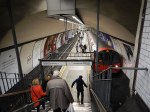
This morning, I took a train to Clapham High Street station, before visiting the three Clapham stations on the Northern Line.
- I walked to Clapham North station.
- I took the tube to Clapham South station.
- I walked to Clapham Common station.
I then took the Northern Line back to Central London.
These are some of the pictures I took on the way.
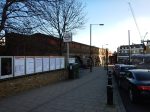
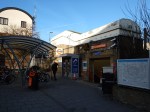









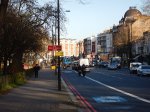



One of main reasons for going was to look at the deep level shelter at Clapham South station that is mentioned in this article in the Wandsworth Guardian entitled Clapham’s Second World War shelter to become cafe and exhibition, You can’t miss it, as it is right before you as you come out of Clapham South station.
In my view it is an ideal place for a cafe. If it had been built, when C and myself lived in the Barbican, I can envisage us taking the three boys to have lunch in a cafe like that! The elder two had to walk and George got a ride in one of the first McClaren buggies. The massive push chairs used today, wouldn’t have gone on a Routemaster of that era.
I also wanted to see the two dangerous island platforms at Clapham North and Clapham Common, which are the last two left on the Northern Line. I can remember the island platform at Angel station, which was removed, when the station was rebuilt in the early 1990s. Today, in an article on Global Rail News, which is entitled Green light for Bank station upgrade, the details are given of the plans to widen the cramped and dangerous platforms at Bank station.
Having seen Clapham North and Clapham Common stations today, I do wonder if a diversion could be dug as at Angel, Bank and London Bridge, to create safe new stations. This new tunnel could surely be part of the works to add step-free access to one or both stations and connect the tunnels to Clapham High Street station.
What with the Northern Line Extension to Battersea, the rebuilding of Bank and Camden Town stations and all the resignalling of the past few years, the Northern Line could at last be fulfilling its potential.
Is This Tube Advert Going To Upset Nicola?
I saw this advert on a Metropolitan Line tube train today.
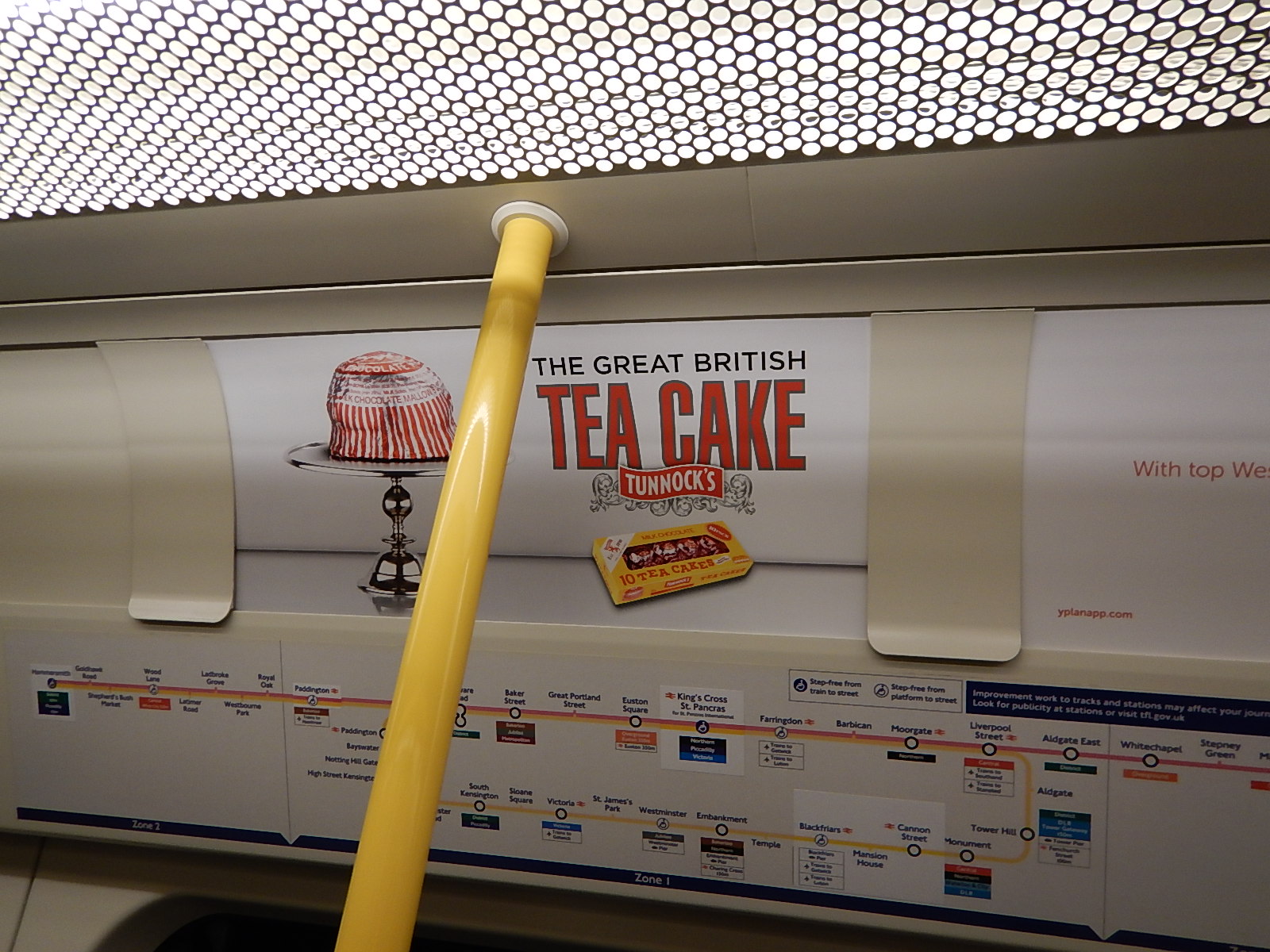
Is This Tube Advert Going To Upset Nicola?
Are some Scots, going to dislike the advert?
Whitechapel Station – 22nd December 2015
I decided to take one last look at Whitechapel Station before Christmas.


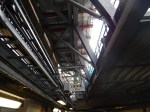

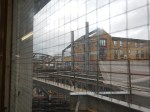
The steelwork is getting higher and in some ways it’s getting more claustrophobic.
But it would appear that the steelwork is getting higher to hold up a roof with windows, so the sun can filter down to the Overground platforms underneath the Underground platforms. How do you explain that contradiction to Mr. and Mrs. Cruz from Texas?
The platforms also seem to be extending to the North, which they will eventually do, so that when Crossrail opens Whitechapel station can handle five-car trains without selective door opening.
According to a station woman, the next big change is on the 18th of January, when the entrances and exits all change.
One of North London’s Forgotten Lines Is Awakening
Four of the nearest stations to my house are Moorgate, Old Street, Essex Road and Highbury and Islington. which all lie in an arc on the Northern City Line to Finsbury Park and on to North London and Hertfordshire, where it terminates at Hertford North, Letchworth, Stevenage and Welwyn Garden City.
Traditionally, the line has always only run on a five day-a-week basis, with no service at weekends. As it serves Arsenal’s past and future stadia, I’ve always thought this was a bit short-sighted.
But then I’ve always felt that British Rail considered it was a railway, that they didn’t really want after they acquired it from London Underground following the Moorgate Tube Crash.
So when this month, when they decided to run a weekend service and the weekday service until 23:59, I did not notice any announcement. I use Highbury and Islington station several times a week and I certainly didn’t see a poster.
This is one of those things that should be filed under At Last! Especially, as the southern end of the line in a few years time will connect a large number of lines together.
- Moorgate – Northern, Metropolitan and District Lines and Crossrail (2019)
- Old Street – Northern Line
- Essex Road
- Highbury and Islington – East London, North London and Victoria Lines
- Drayton Park
- Finsbury Park – Piccadilly and Victoria Lines and Thameslink (2019)
If Crossrail 2 ever gets built, it will connect to this line too!
The forgotten nature of the Northern City Line is illustrated, by the elderly Class 313 trains on the line. There are currently forty-four three-car sets on the line, usually working as six car services, so giving effectively twenty-two trains.
But the days of the Class 313 are numbered as according to this article on Rail Magazine, the operator; Govia Thameslink Railway has just ordered twenty-five six car Class 700 trains from Siemens. This is said about the trains.
The new trains will be Class 700s, and will be a variant of the 1,140 vehicles currently being delivered by Siemens to GTR for Thameslink. They will run on routes from Moorgate and London King’s Cross to Welwyn, Hertford, Stevenage and Letchworth. They will be fixed length with full width inter-vehicle gangways, air-conditioning, real time information and power points.
Of all the lines in London that could benefit from a fleet of new trains, this must be one of those routes, where they will give the greatest improvement.
Especially, as for the operator, it is just more of the same trains, they will be using on Thameslink.
But will they be exactly the same?
This is said in the Wikipedia entry for Class 313 trains.
Since they were designed for use on Great Northern Suburban Inner Suburban services from Moorgate to Welwyn Garden City or Hertford North, Letchworth Garden City which included a section of ‘tube’ line built to take standard size trains between Drayton Park and Moorgate, they are built to a slightly smaller loading gauge than conventional trains. They are standard length and width, but the roof is lower, most noticeable due to the lack of a “well” for the Stone Faiveley AMBR pantograph on the centre coach. They have to comply with regulations for underground trains, such as having doors at each end of the train for evacuation onto the tracks, and when on 750 V DC supply the traction supply for each motor coach is separate, whereas on conventional 750 V DC trains each coach in a unit is linked by a 750 V bus line. Due to this, each motor coach has shoe gear on both bogies, whereas normally it would only be on the leading bogie. They are fitted with trip-cocks that are struck by a raised train-stop arm at red signals and will apply the brakes if the train passes one.
I suspect there will be some intensive work to make the Class 700 trains meet the regulations for underground trains.
To say some of the stations at the southern end of the route are tired and/or difficult for those who need step-free access, would be an understatement.
Moorgate is getting improved for Crossrail and Finsbury Park is getting a much-needed redevelopment. This will only increase the pressure to rebuild stations like Old Street, Essex Road, Highbury and Islington and Drayton Park.
As it goes further north, I do wonder if we’ll see new stations to serve future housing developments, especially on the Hertford Loop Line.
The other possibility of improving services from Moorgate is that the top speed of the new Class 700 trains is 100 mph, whereas the speed limit on the Hertford Loop is only 75 mph.
So will we see the extra three trains available used to move services off the crowded section of the East Coast Main Line over the Digswell Viaduct onto the Hertford Loop Line.
With some clever rescheduling, this might create a path or two on the East Coast Main Line.
The operator is not going to spend those millions on a new set of trains and not make them sweat!
I certainly think, that we’ll see good connectivity between trains on the Northern City and Hertford Loop Lines with Thameslink services to Peterborough and Cambridge.
It will be interesting to see their plans, when they are revealed.
My one worry is that all those new trains will tempt a lot of passengers out of the woodwork!
But one of London’s railways will not be forgotten for very long!
Overground Humour
This article in the Standard, shows the lengths to which London Overground are going to discourage fare dodgers. A sign was put up saying.
Attention. Anyone caught travelling without a valid ticker or Oyster will be told the ending to the new Star Wars. (and also get a Penalty Fare).
It may not work, but people have found it very funny.
Many stations in London put up something funny every day. Does this happen in other cities across the world with large transport networks?
On A Bus From Kennington To Tooting Broadway
These are pictures I took from a 155 bus, as it trundled along the Northern Line between Kennington station and Tooting Broadway station.

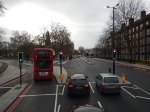

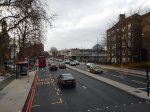

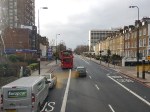
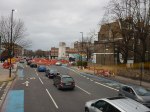
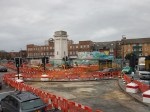


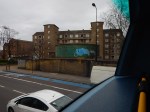
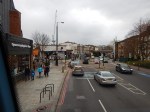
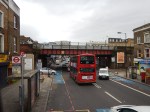
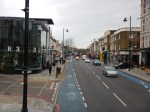
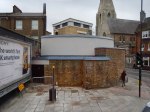
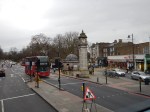
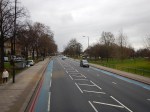
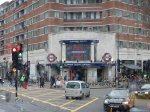
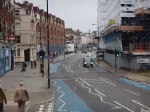

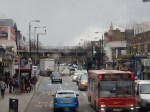
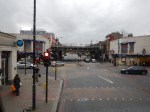
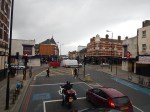
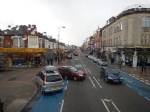
In some ways, it is a curious journey with several ventilation shafts for the Northern Line and the deep shelters under some of the stations.
I was surprised at the number of deep level shelter entrances you can see. But at least according to this article in the Wandsworth Guardian entitled Clapham’s Second World War shelter to become cafe and exhibition, Transport for London are thinking about using these relics of World War II in a positive way.
Only from a bus do you notice the closeness of Clapham High Street station on the East London Line and Clapham North station on the Northern Line. This Google Map show the two stations.
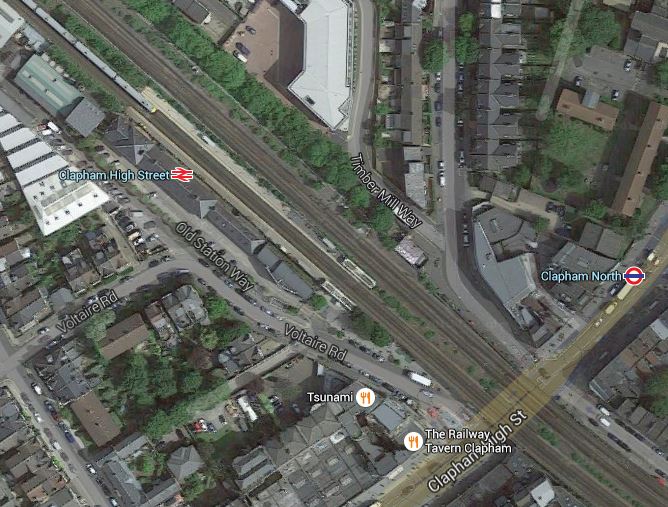
Clapham High Street And North Stations
Clapham North is one of those Northern Line stations with an island platform. This is a detailed line map from carto.metro.free.fr.
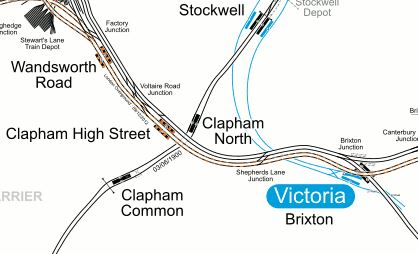
Lines Around Clapham High Street
It would appear that if Transport for London decided to sort out the dangerous (in my view!) platforms at Clapham Common and Clapham North stations, which both have escalators, then there could be some scope for an innovative step-free station linking the new platforms at Clapham North to Clapham High Street station.
It is a classic place where some extreme fag packet and used-envelop engineering washed down with several pints of real ale in the public bar of a local hostelry, could come up with an inspiring solution.
 The Anonymous Widower