Did Being In Hospital Trigger My Hay Fever?
I have just watched an item on Country File about hay fever.
I think now, that I’ve always sufffered from Hay fever and it was probably the reason why, I had such a bad school attendance record. I can remember in my first year at Minchenden, I virtually missed the whole of the second term.
But looking back, I’ve always suffered a little bit each year and can remember feeling better after I went on a gluten-free diet. But in the spring, I’ve often suffered an itchy bottom , sneezing and other hay fever like symptoms. C always said that I used to sneeze three times, then turn over before I went to sleep. I don’t do that now.
After she died, I changed small things in my lifestyle. For a start, I started to sleep in a totally closed room, whereas she had often kept a window open. I have always had a thing about draughts and thus, I always kept the house closed. The house was probably cleaner too, as now there was only one person living in it. I was also only down to one dog and she spent a lot of time with my secretary’s pack. So perhaps, I was living in too clean an atmosphere. Remember, I was usually driving a Jaguar with an efficient pollen filtering system. I didn’t go for too many walks in the countryside either.
Over the last three years or so, I have got the symptoms of hay fever of a runny nose, leg pains and lethargy and could it be caused because I’m not giving myself exposure to pollen in a graduated way. At one time, I was going to the continent a lot and was suffering badly. I put it down to different pollens in the two locations.
Then last year, just as the pollen was coming into season in the UK, I started on my trip around the world and had the stroke in Hong Kong.
There and when I returned to the UK, I was in an air-conditioned and hopefully sterile hospital, so my pollen defences weren’t aroused in the usual way as they are each season.
I now believe that the high pain I suffered last year was nothing more than a severe reaction to the pollen.
Let’s hope I’m on the right track, as if so, some simple immunotherapy might just sort it out. Especially, if Country File’s expert was right about how sometimes a too sterile environment makes hay fever worse.
London’s Floating Cinema
When I was watching the MS Deutshland leave, there was an interloper.

London's Floating Cinema
It is London’s floating cinema, that cruises the canals and rivers in the east of the city.
The Olympic Opening Ceremony
A letter writer in The Times today has said that the Olympic opening ceremony is sport.
What tosh!
I’m with the Duke of Edinburgh on this, who said famously that you need someone to do a welcome speech and then just say “Let the Games begin!”
There should be another day of athletics or some real sport.
I shall not be watching the Opening or Closing Ceremonies, as watching some real football on Hackney Marshes will be more exciting.
The Caroline Law
I like this story in the Guardian. Here’s an extract.
A London judge has made legal history by becoming the first to deliver a verdict on her own after discharging a jury.
Recorder Caroline English performed the unprecedented role at Wood Green crown court because a friend of the accused was alleged to have been in regular contact with a woman juror and have passed information on voting intentions.
Under the 2003 Criminal Justice Act, judges may continue a trial on their own if satisfied the jury has been subject to interference and that the defendants can still have a fair trial. The provision had never previously been used.
I also have a friend, who is a judge with the same first name. She has a reputation for a similar robustness and sensible interpretation of the law.
So the next time, you’re in the dock, make sure the judge isn’t a Caroline or perhaps a Charles!
C’s Judgement Was Right
One of the characters on the periphery of the phone hacking was well known by C, my late wife. They sat on a committee together and she had a very low opinion of him and felt he wouldn’t rise to the level everybody said he would. He hasn’t! He did at least write me a letter of condolence when C died.
Who Ate All The Pies and Won the Lottery?
There is only one answer to this. The couple is here.
They say they are going to keep playing the lottery. It looks like though they’ll have enough money to at least keep them in junk food and pay their medical bills.
Perhaps the exercise in collecting and opening all the begging letters will do them a bit of good.
But I doubt it!
I’m Going Off The Angel
I don’t know why it is, but it seems to be getting impossible to go past the Angel these days without getting accosted by a chugger.
One day last week, it was a group wanting me to save the tiger. Of course, I want to save the tiger, but the way to do this is to put pressure on various countries that use tiger parts in quack medicine. So where are the protests in places like Beijing and Hong Kong? Annoying me, doesn’t help this at all.
Today it was more chuggers and a protest about saving the NHS. I was accosted by an obese man smoking a cigarette. When I said I don’t support protestors who smoke, I giot a mouthful of abuse. So I just walked on. The protest was also using the only dry place in the rain as a shelter, so we had to get very wet to get past. So not intent of just breathing smoke on us, they were trying to give us pneumonia.
The trouble is that to get across the road from the station to Waitrose, M & S, Chapel Market, the other main shops and the cinema, is that there is only one crossing, so you have to run the gauntlet of chuggers and protestors every time you do it.
Bring Back the Corvette
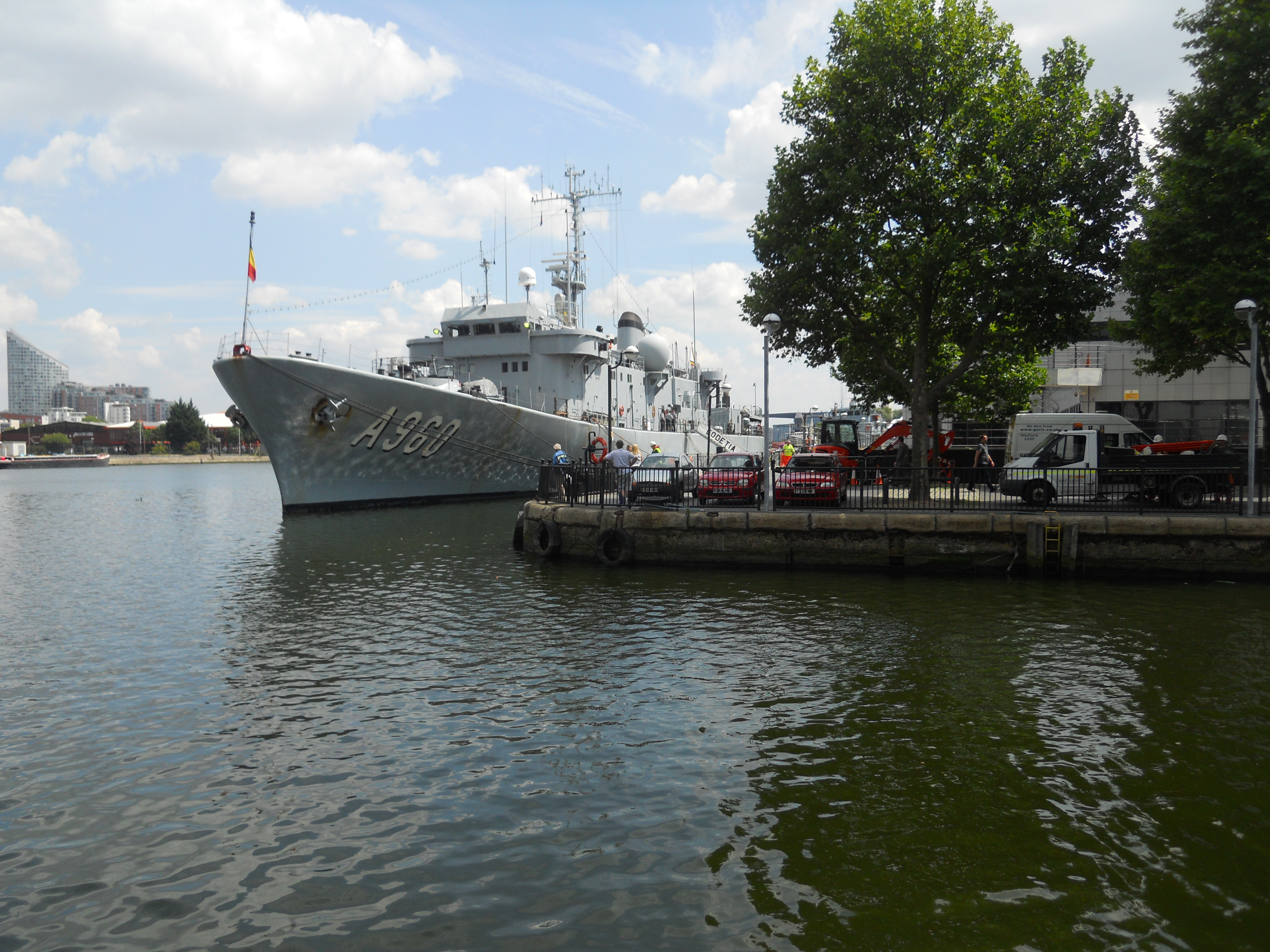
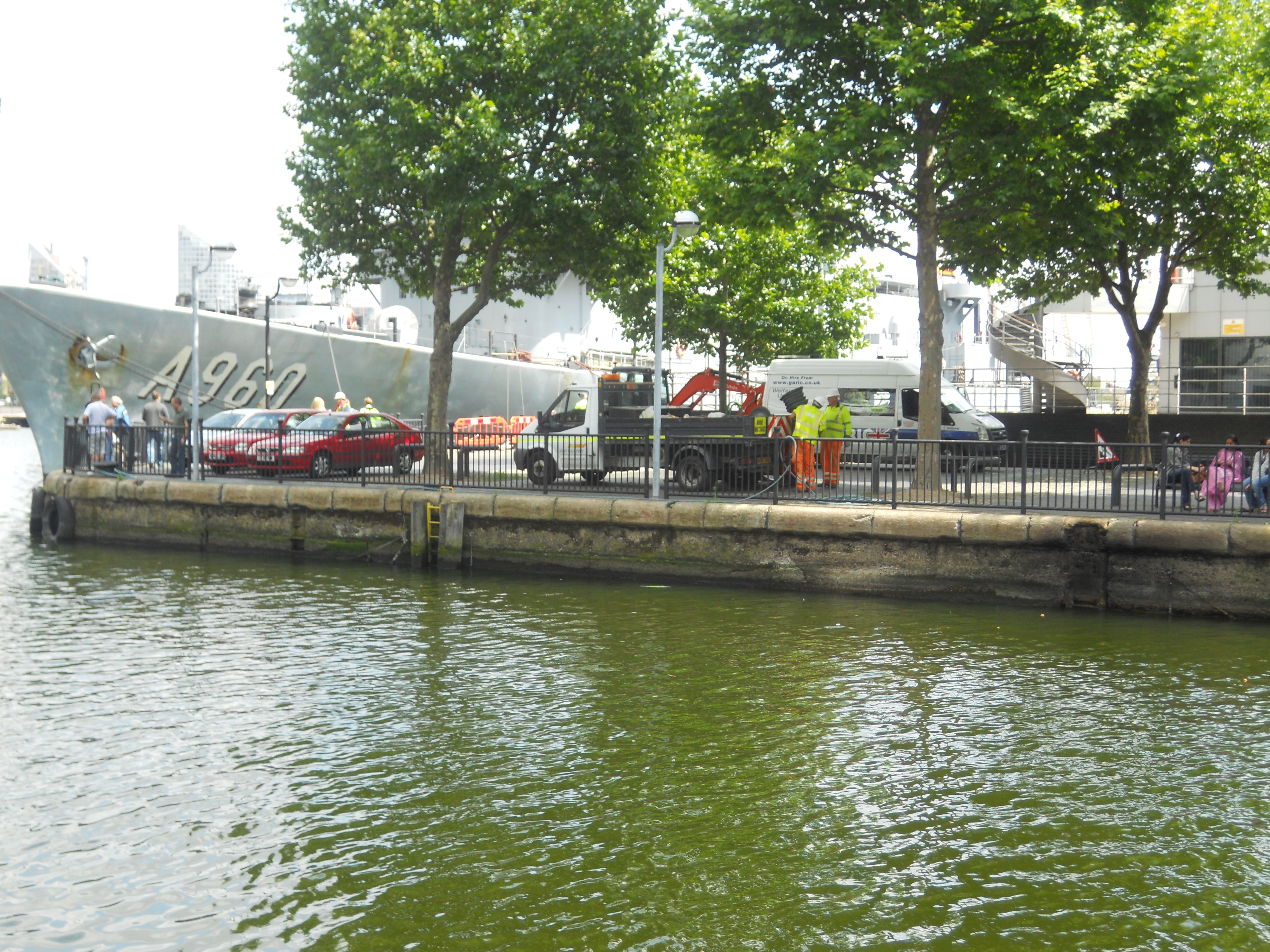
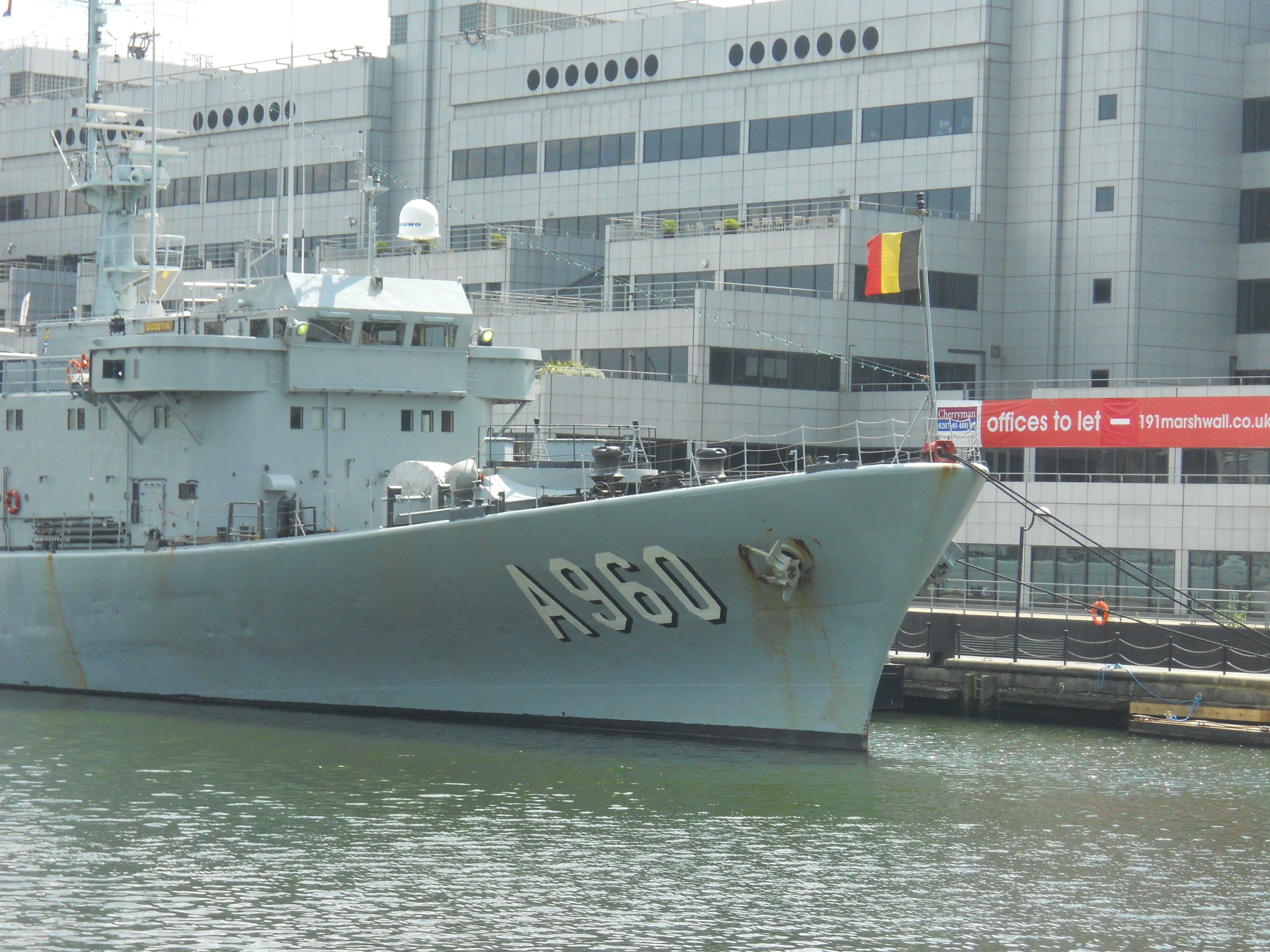
When I was watching the MS Deutschland depart yesterday, a Belgian ship the Godetia, was alongside the quay. Wikipedia says this about the history of the ship.
The Godetia is the successor of the HMS Godetia (K226), a British Flower class corvette which was manned by Belgian sailors during Second World War.
So what was a Flower class Corvette? There is a long wikipedia article here.
They were built as simple ships, originally to escort coastal convoys. But as the war progressed, and things got worse in the North Atlantic, these simple ships were used to protect convoys from U-Boats. I know a bit about this, as my next door neighbour in Felixstowe had served on corvettes during the Second World War. He could have written this.
Service on Flowers in the North Atlantic was typically cold, wet, monotonous and uncomfortable. Every dip of the fo’c’sle into an oncoming wave was followed by a cascade of water into the well deck amidships. Men at action stations were drenched with spray and water entered living spaces through hatches opened to access ammunition magazines. Interior decks were constantly wet and condensation dripped from the overheads.[9] The head (or sanitary toilet) was drained by a straight pipe to the ocean; and a reverse flow of the icy North Atlantic would cleanse the backside of those using it during rough weather. By 1941, corvettes carried twice as many crewmen as anticipated in the original design. Men slept on lockers or tabletops or in any dark place that offered a little warmth. The warships were nicknamed “the pekingese of the ocean”. They had a reputation of having poor sea-handling characteristics, most often rolling in heavy seas, with complete 80-degree rolls (40 degrees each side of the normal upright position) being fairly common; it was said they “would roll on wet grass”.[10] Many crewmen suffered severe motion sickness for a few weeks until they acclimatised to shipboard life.[9] It should be noted however, the general design of the Flowers was extremely seaworthy (just poor sea-handling characteristics), as no Allied sailor was ever lost overboard from a Flower during World War II, outside of enemy action.
So why should we bring them back?
Our armed forces are strapped for cash, just as those of virtually every other nation is.
We also are suffering from multiple threats like piracy around the coast of Africa and South-East Asia and probably other places soon, as the world economy gets worse. There are also fishery protection and humaritarian needs, where large ships are a massive overkill.
These uses will probably not meet anybody more heavily armed than with an RPG or a heavy machine gun.
So would a modern design built on a steel hull in larger numbers, be the ideal ship for these types of actions? Some years ago, there was a proposal for an Osprey class frigate, which would have been based on the profile of a cross-channel ferry. But the civil servants, who dispense what the Navy gets, decided in their wisdom that the sleek aluminium hulled ones were so much better. I always remember talking to an officer on a Sealink ferry, who had gone to the Falklands War. He said that the seas were so bad, that the ferries had to slow down to allow the sleek naval ships to keep up.
Interestingly, the Americans have come up with the concept of a Littoral combat ship.
I suspect that there is a sensible design in there, which would probably be something like this.
- Steel hull and superstructure
- Small crew, but the ability to cater for quite a few more.
- Ability to carry a modular mission payload. Just like Thunderbird 2!
- Ability to land and refuel a helicopter and/or perhaps a drone.
- Diesel engine powered
- Moderate range and enough speed to get out of the way of pirates with RPGs in rubber boats
- Good commuication and other systems, so that groups from different navies could work together in serious situations.
I also feel that if the modules could be similar in size to standard shipping containers, then when there is a humanitarian emergency in a place that is difficult to get to, then they can be used to bring in supplies and equipment. All this would need would be for the ships to have similar module loading.
Perhaps what is needed is something with the seaworthiness of a lifeboat, the strength of the average ferry and the adaptability of a Lockheed Hercules!
The Balaena Lives
Not quite, but there is a lot of Balaena thinking behind Shell’s new FLNG.
So what was the design I worked upon in Cambridge for Balaena Structures all those years ago like?
The problem with offshore oil platforms is that they are very expensive and once they’ve extracted all the oil from the oilfield on which they sit, they are very difficult to take down.
In the mid-1970s, some very clever structural engineers from Cambridge University came up with a design for a reuseable platform, that could be built in a ship yard, that would normally build supertankers.
The design was simply a steel cylinder, perhaps about a hundred metres long and thirty or so in diameter. I can’t be sure of the size as it is nearly forty years ago and I have kept no records. The idea was that it would be built horizontally and then towed into position, where it would be turned through ninety degrees to sit on the ocean floor above the oilfield.
So the eventual bottom end was closed off and would have had a skirt that sat in the ocean floor and held the platform in position by a sort of gum boot principle. The other end was also closed and supported a square working deck about twenty metres high on a stem about the same length.
My part was to do the calculations on the upending, which would have been accomplished by letting sea water into the enormous tank under control.
The calculations were not that simple, but because of my dynamic simulation experience, they were well within my compass and I was able to do them on a simple time-shared computer.
I did prove that because of the vast weight of steel and the not inconsiderable weight of sea water, that the Balaena would install itself as designed. Sadly it was one of those projects that after a considerable amount of effort never came to fruition.
Some other points about the design should be noted.
- The tank could be used to store the oil extracted and this could then be pumped to a waiting tanker.
- When it needed to be moved, the tank would be emptied and at the appropriate point, the Balaena would float vertically. It could then be towed still upright to a new position.
All of this might seem rather fanciful, but I suspect that some of the ideas in the Balaena have been used successfully in the other designs.
I started talking about the Balaena, when the Deepwater Horizon blew up in the Gulf of Mexico. At the time I was lying on a bed after a serious stroke in Hong Kong. I imagined an empty Balaena ready and waiting floating horizontally in the sea within a few hundred miles of the clusters of oil platforms. It would differ from the 1970s platform design, in that the working deck would be much simpler and probably only there to control the pumping. It would also not have a complete bottom to allow the oil to enter the tank.
Could it have been towed to the site and upended over the leaking well, as a crude but effective cap? The oil would still float to the surface, but inside the tank of the Balaena, from where it could be pumped out.
The idea may still be fanciful, but I can guarantee that the structure would upend as required, just by adding sea water to the tank. I did the calculations to prove it in the early 1970s.
Auf Weidersehen, Deutschland!
I couldn’t resist going to Docklands to see the departure of the MS Deutschland.
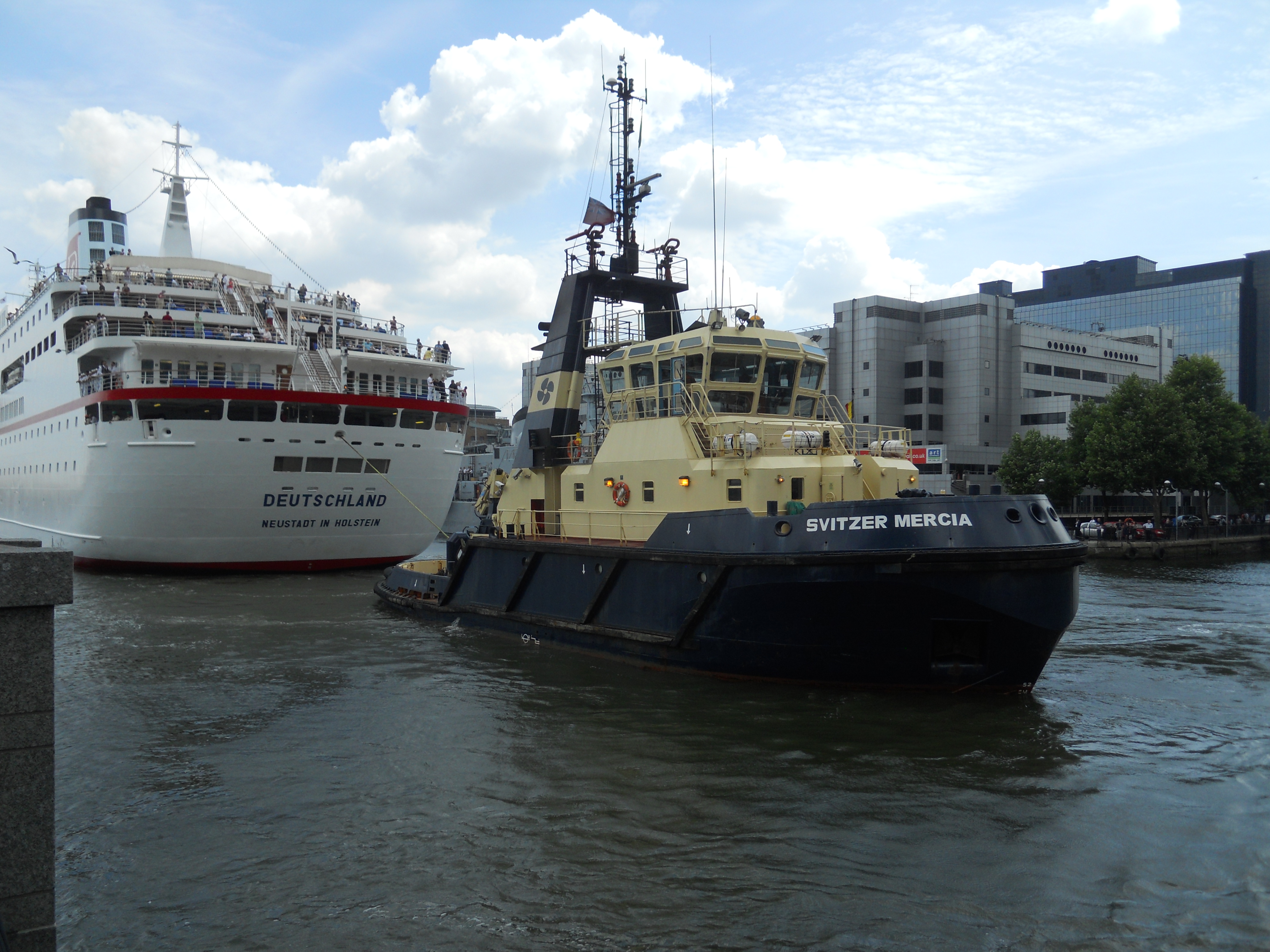

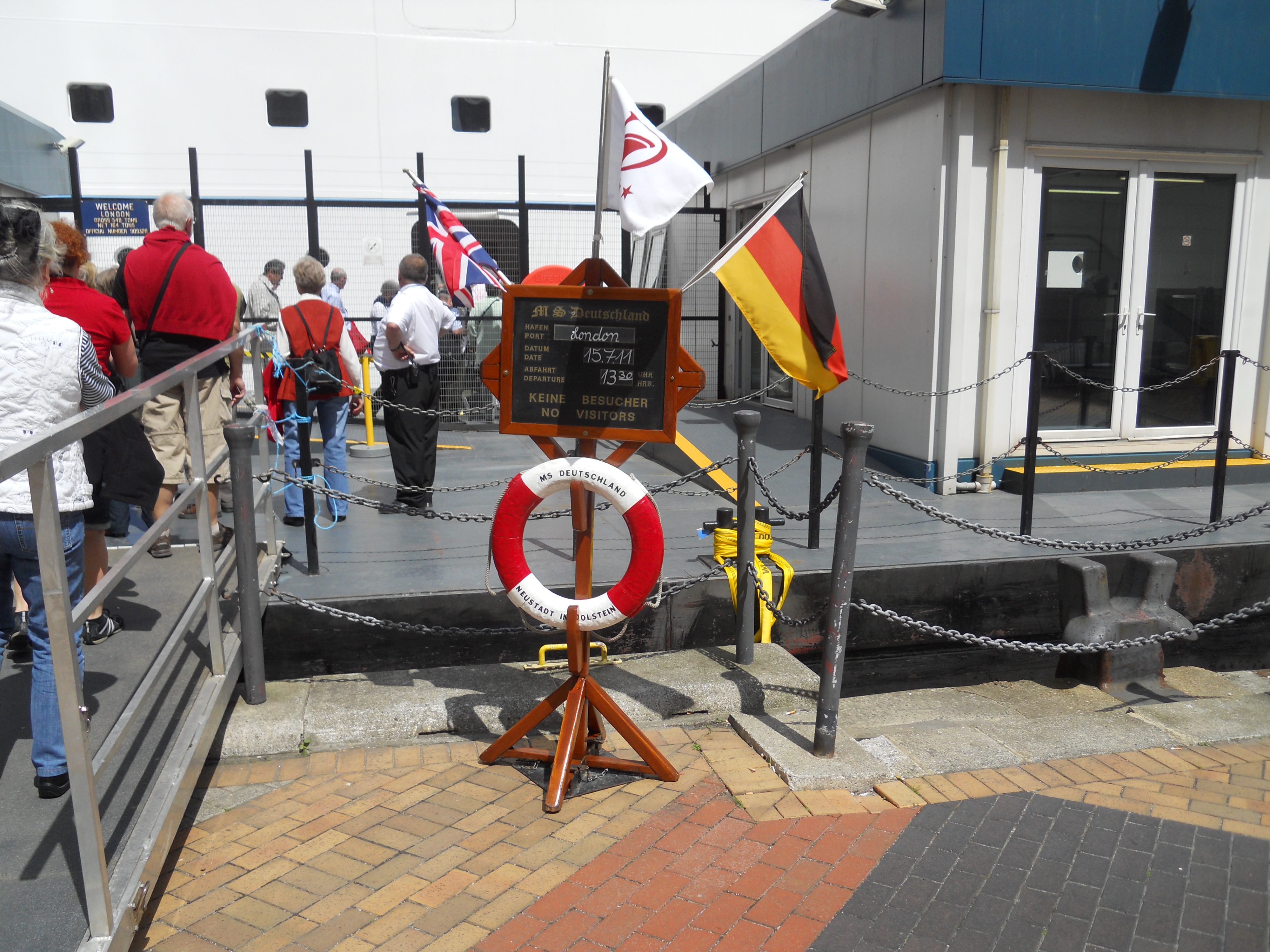
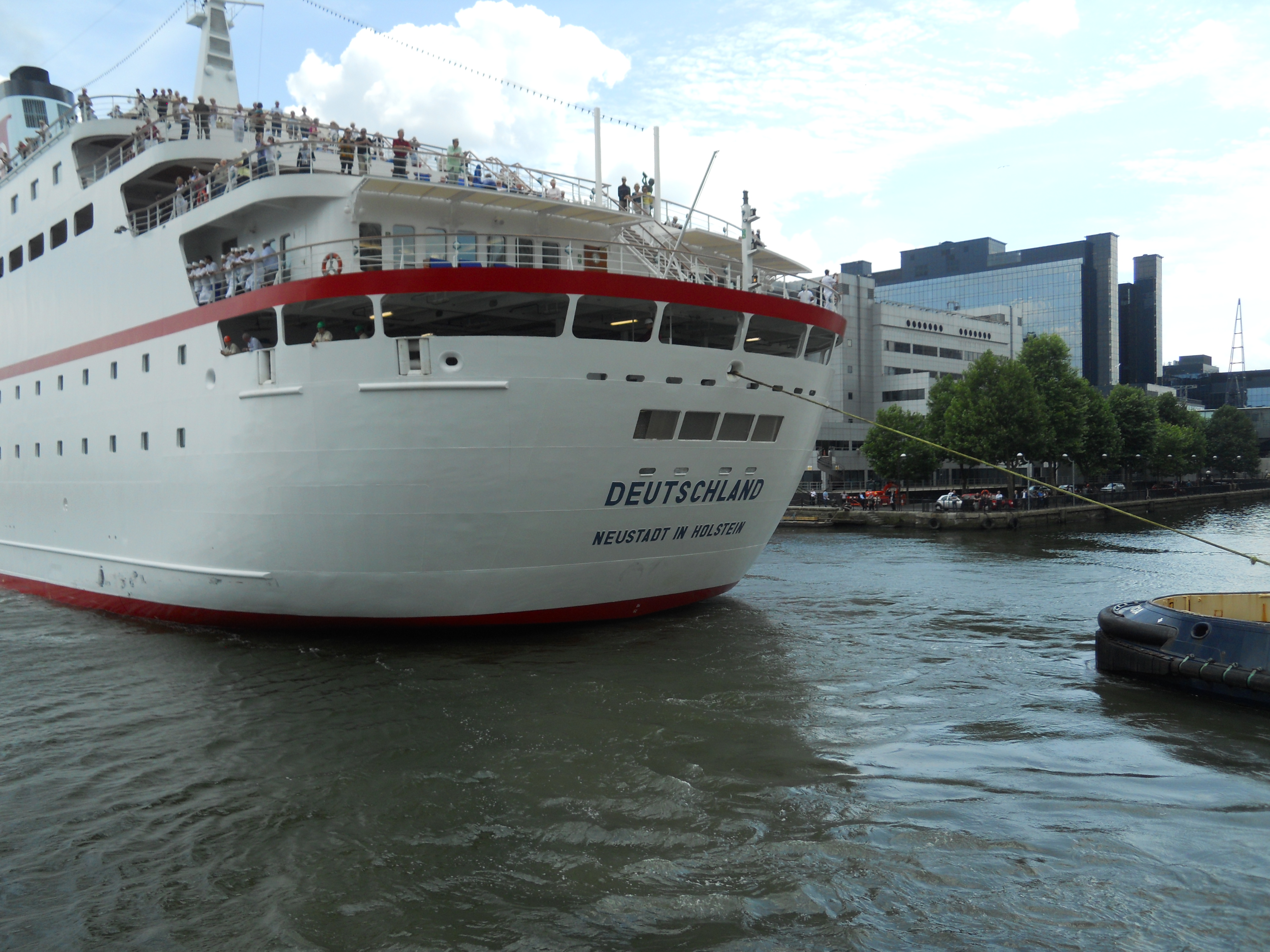
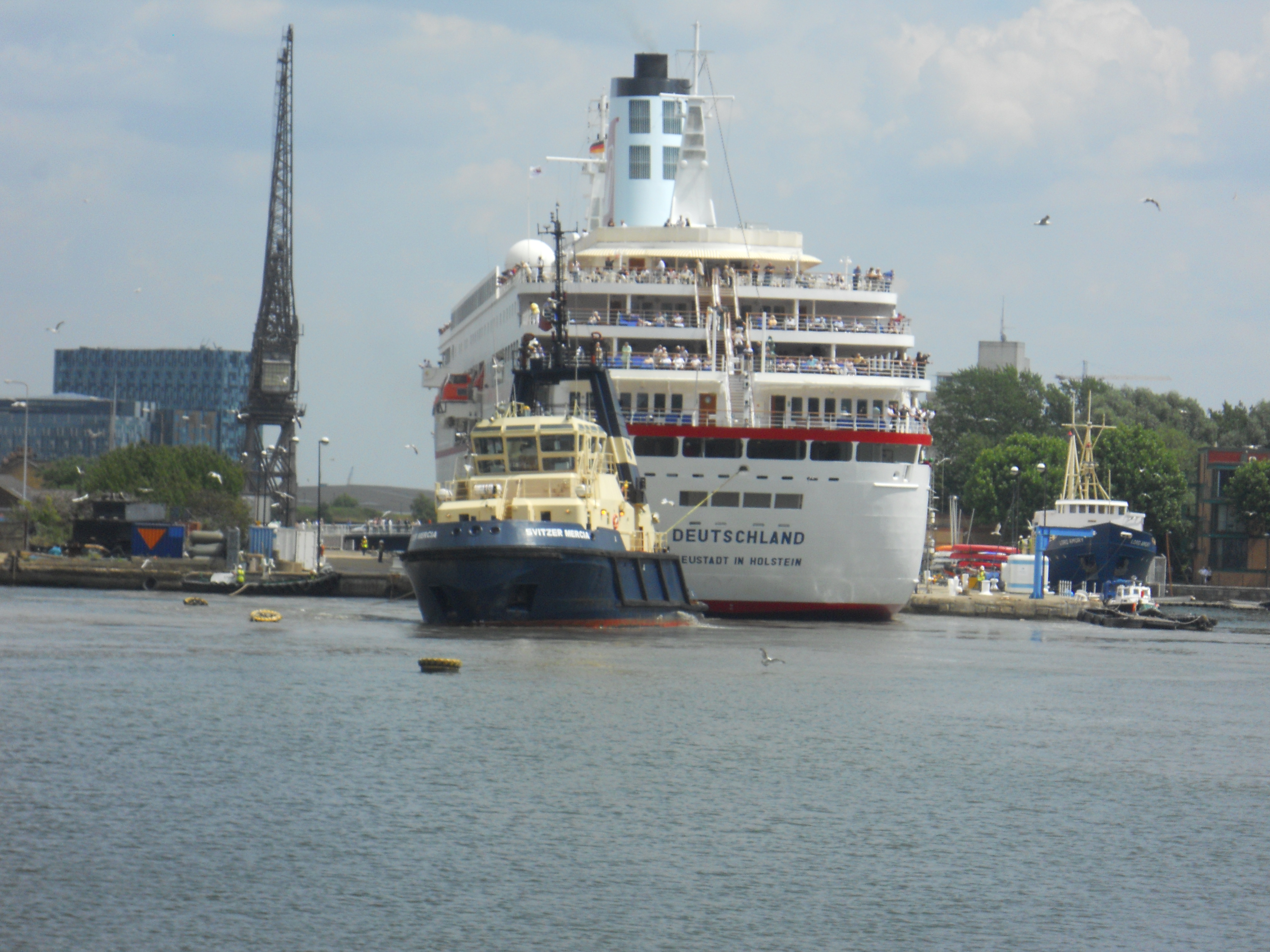
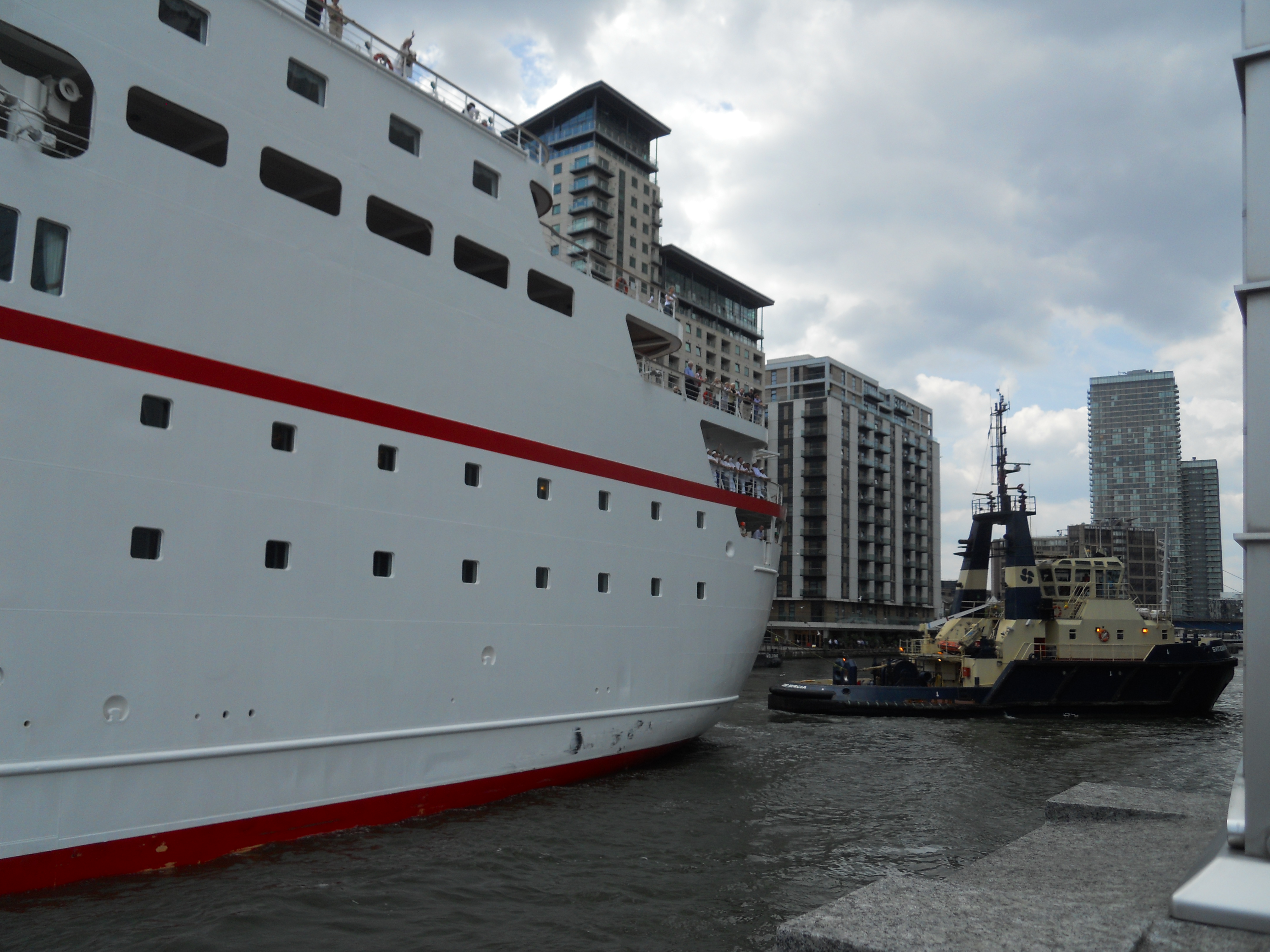
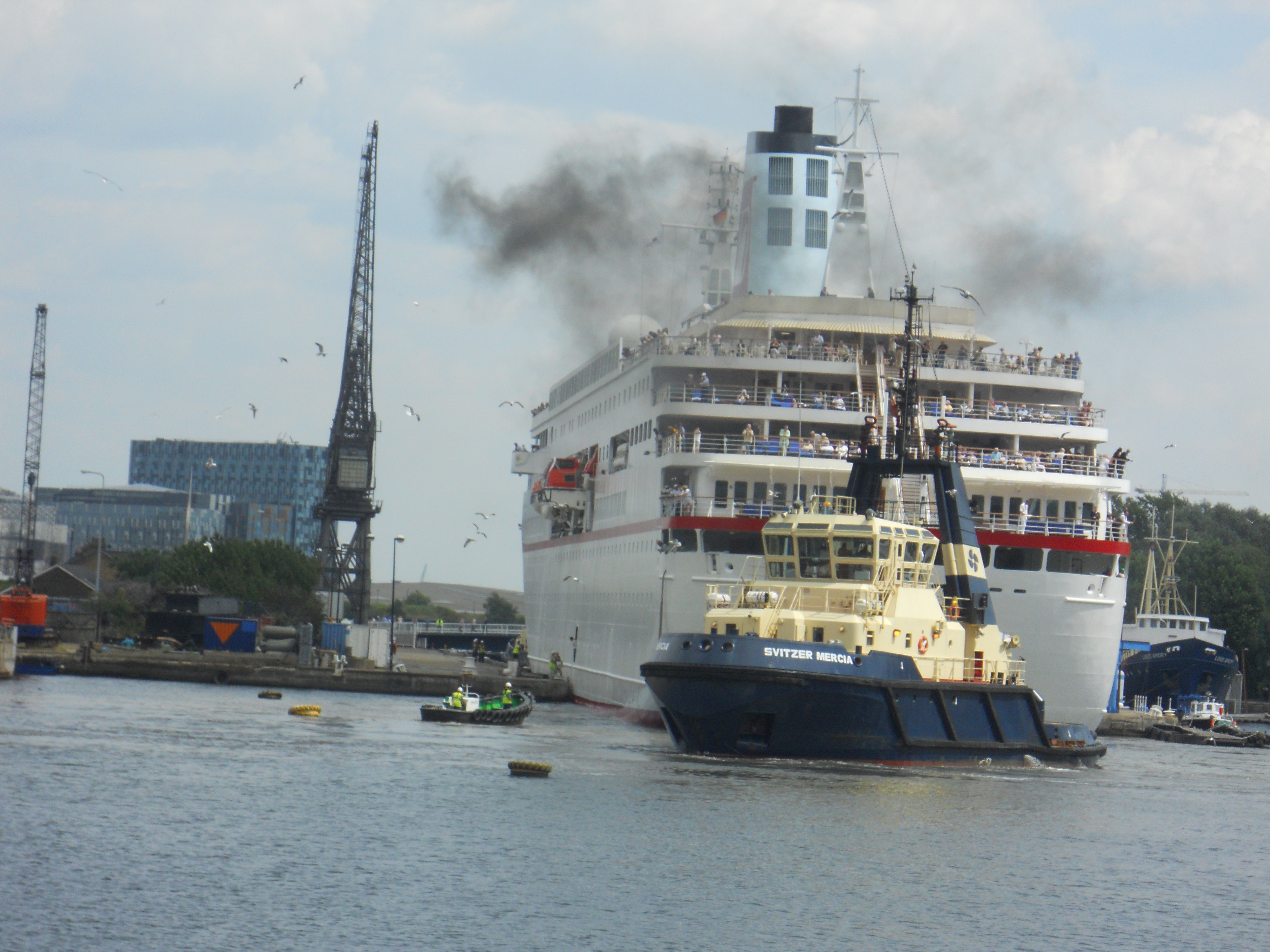
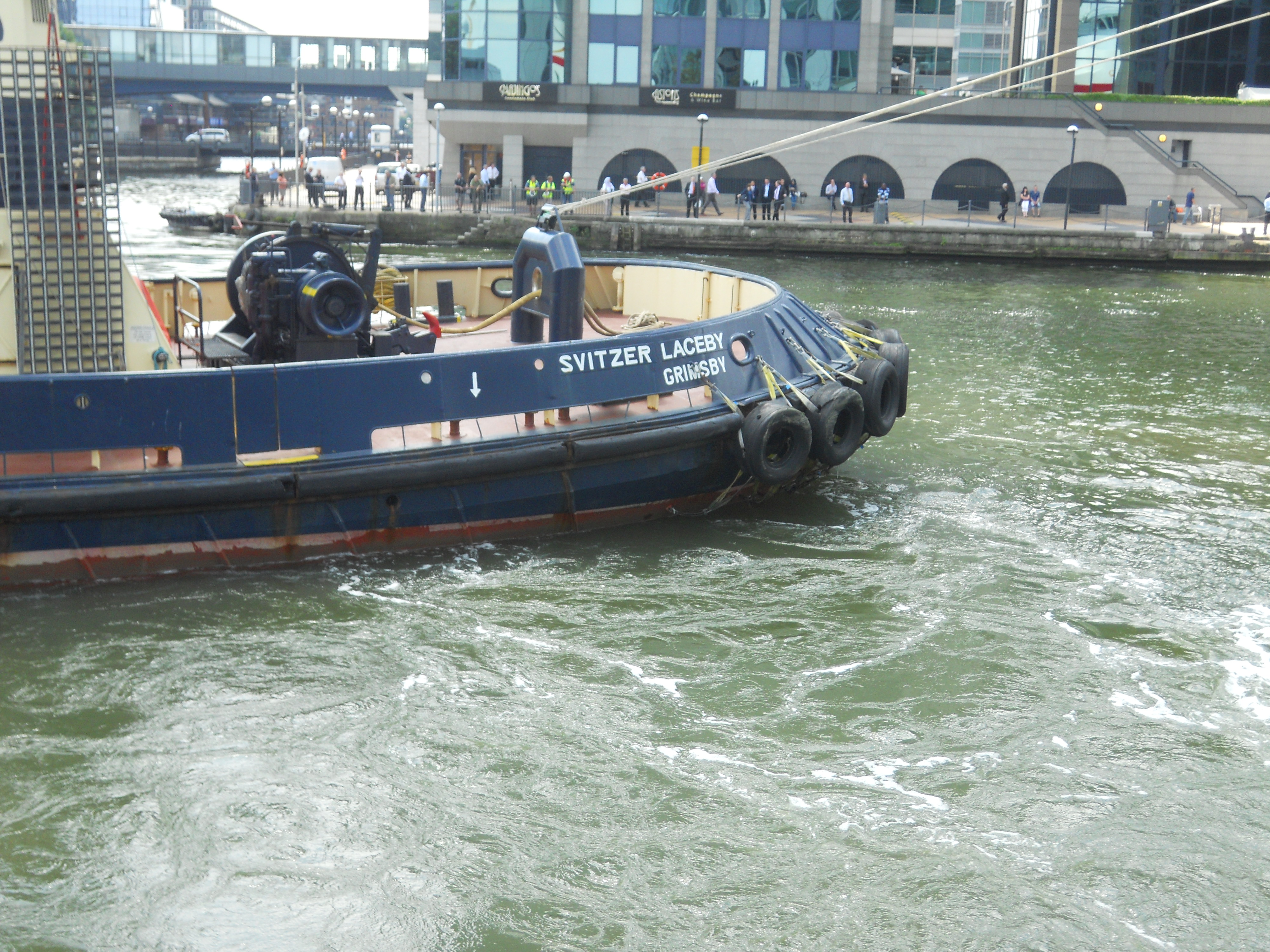
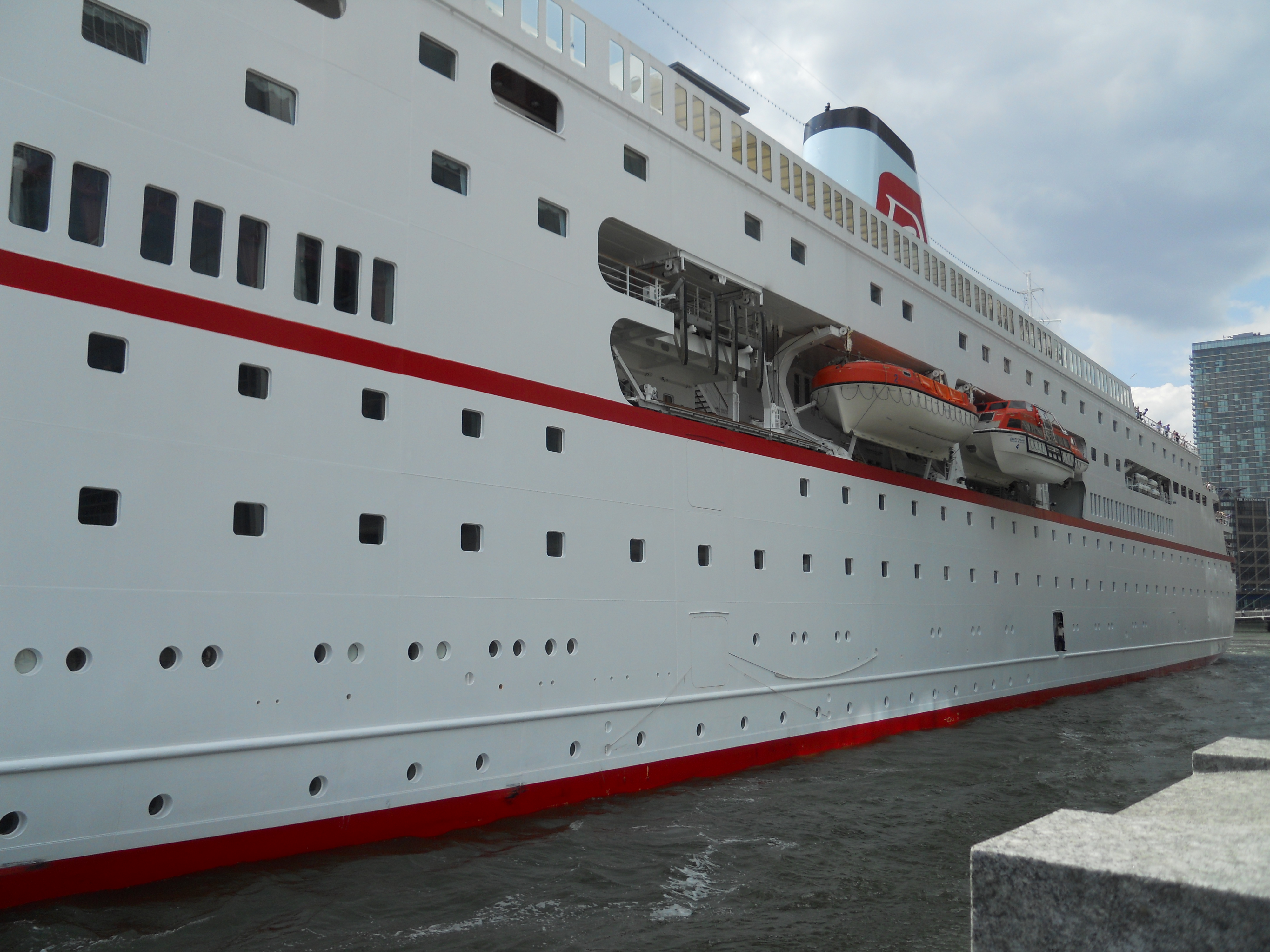
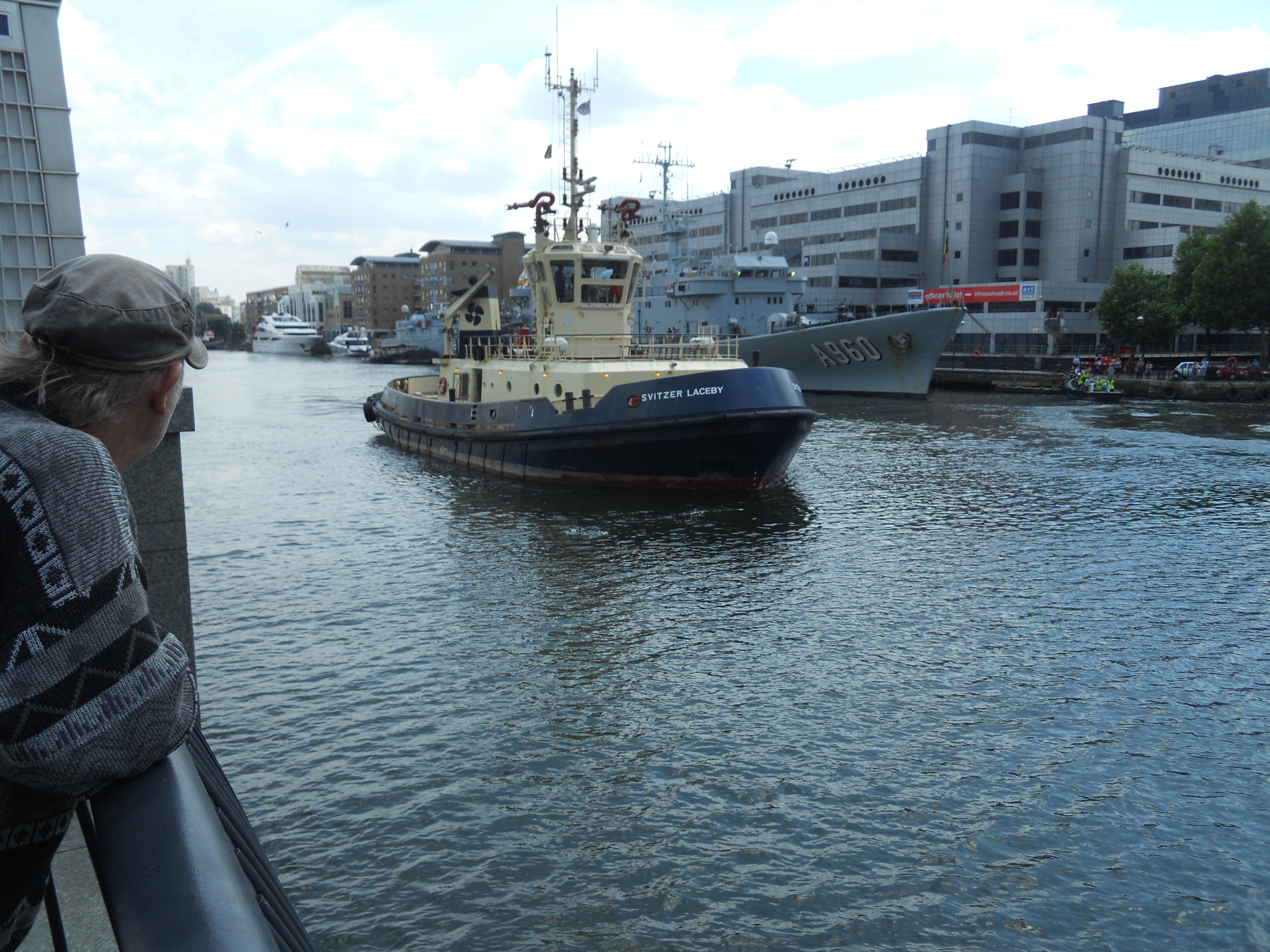
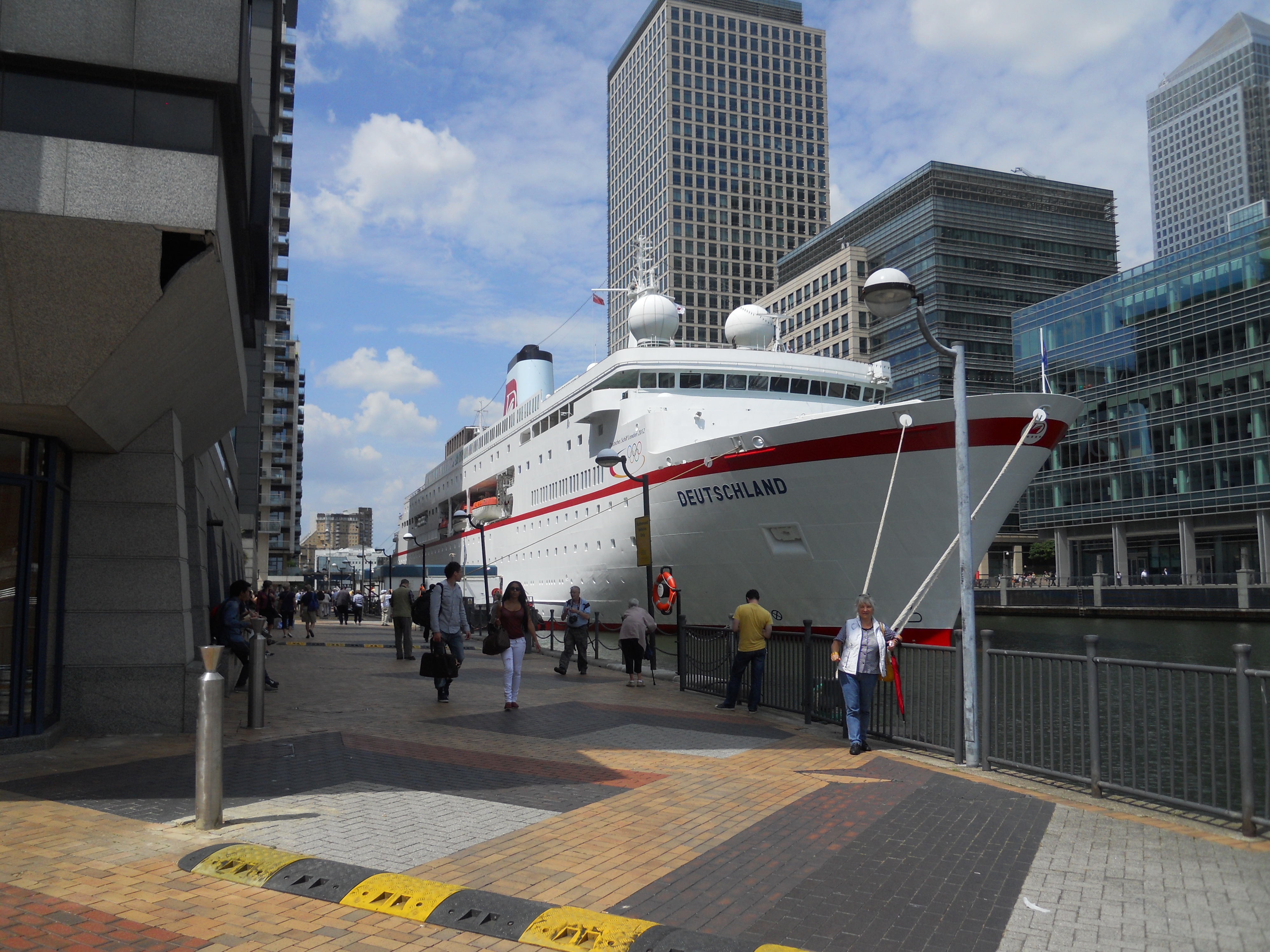

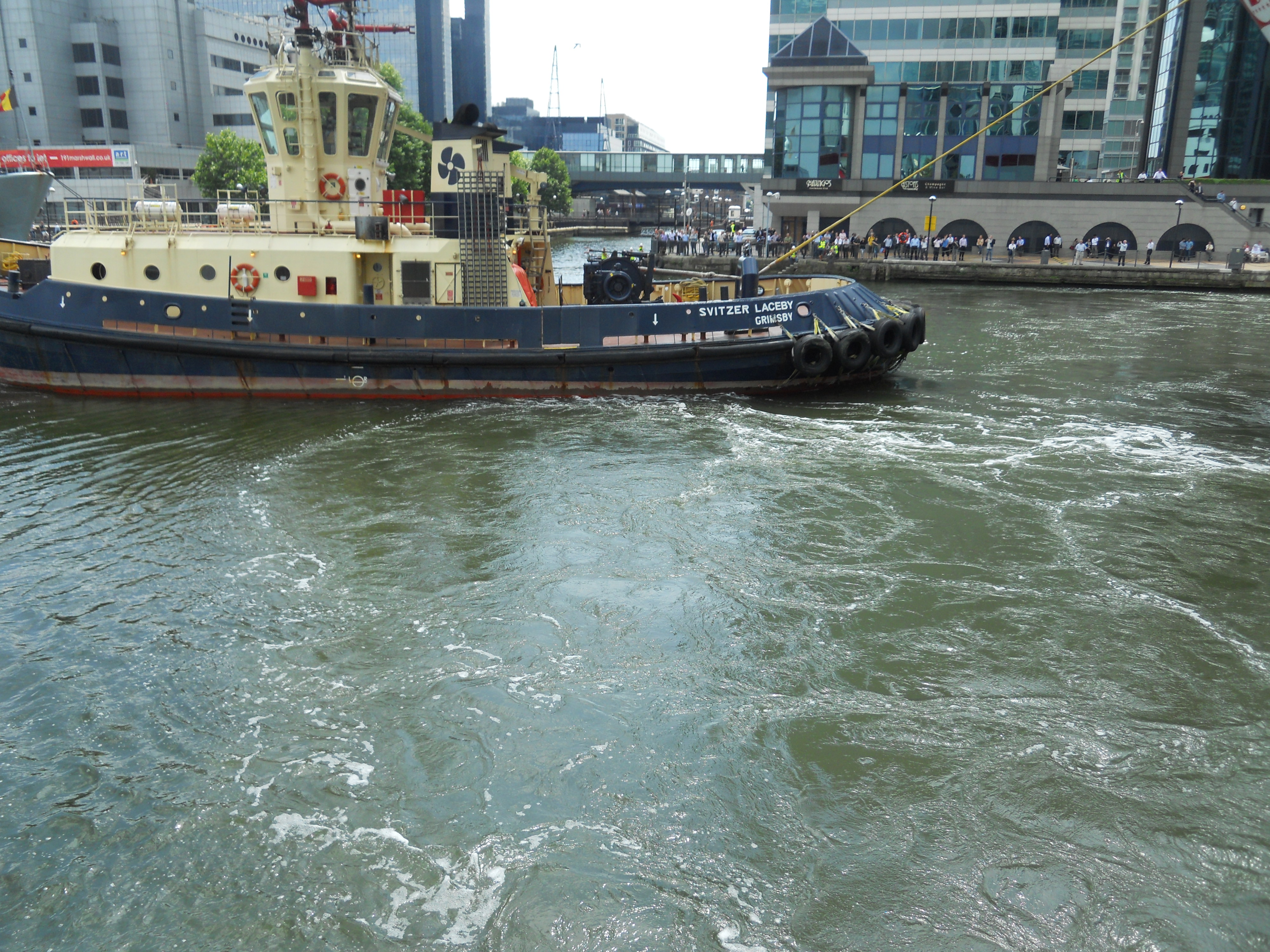

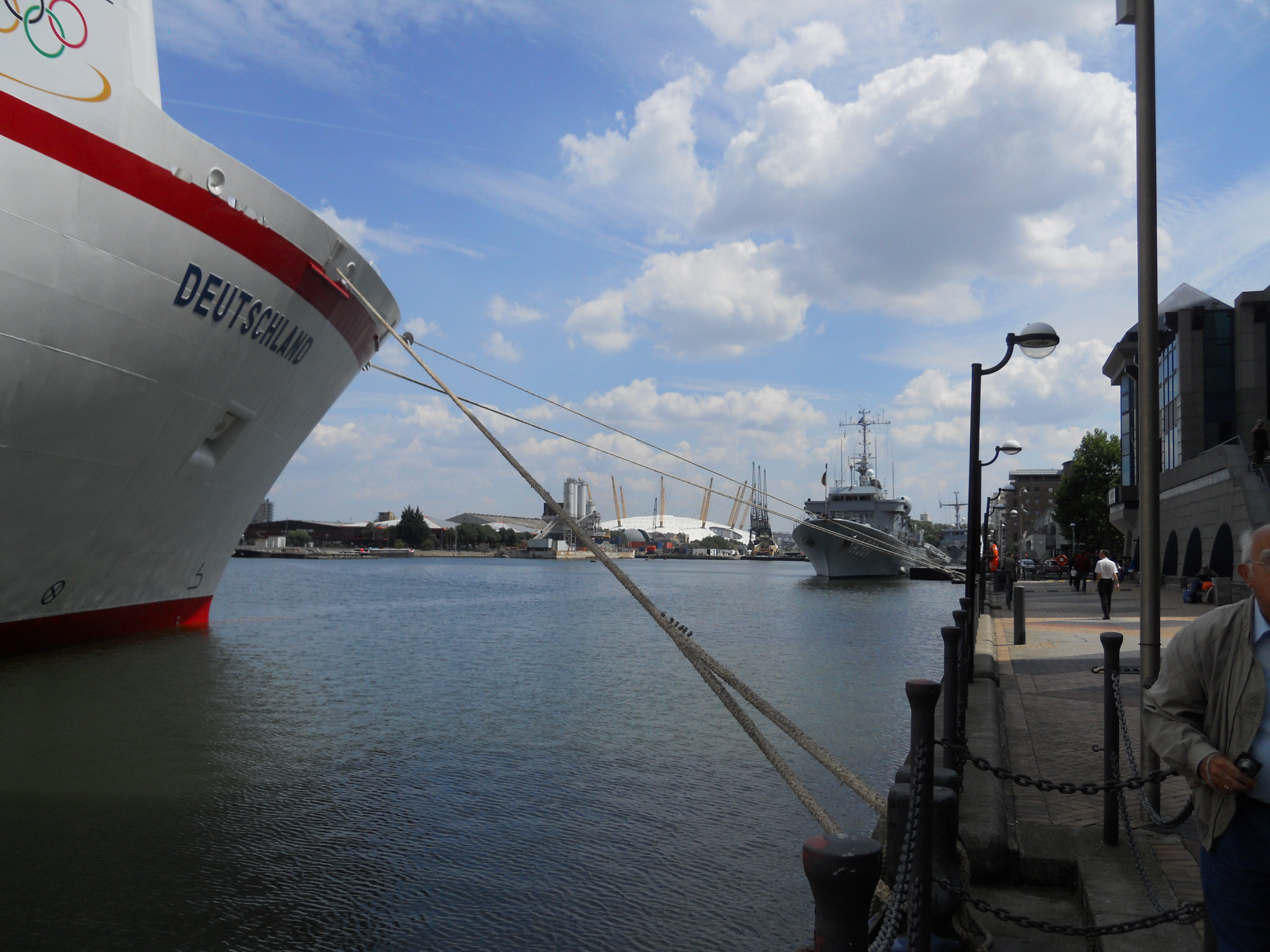
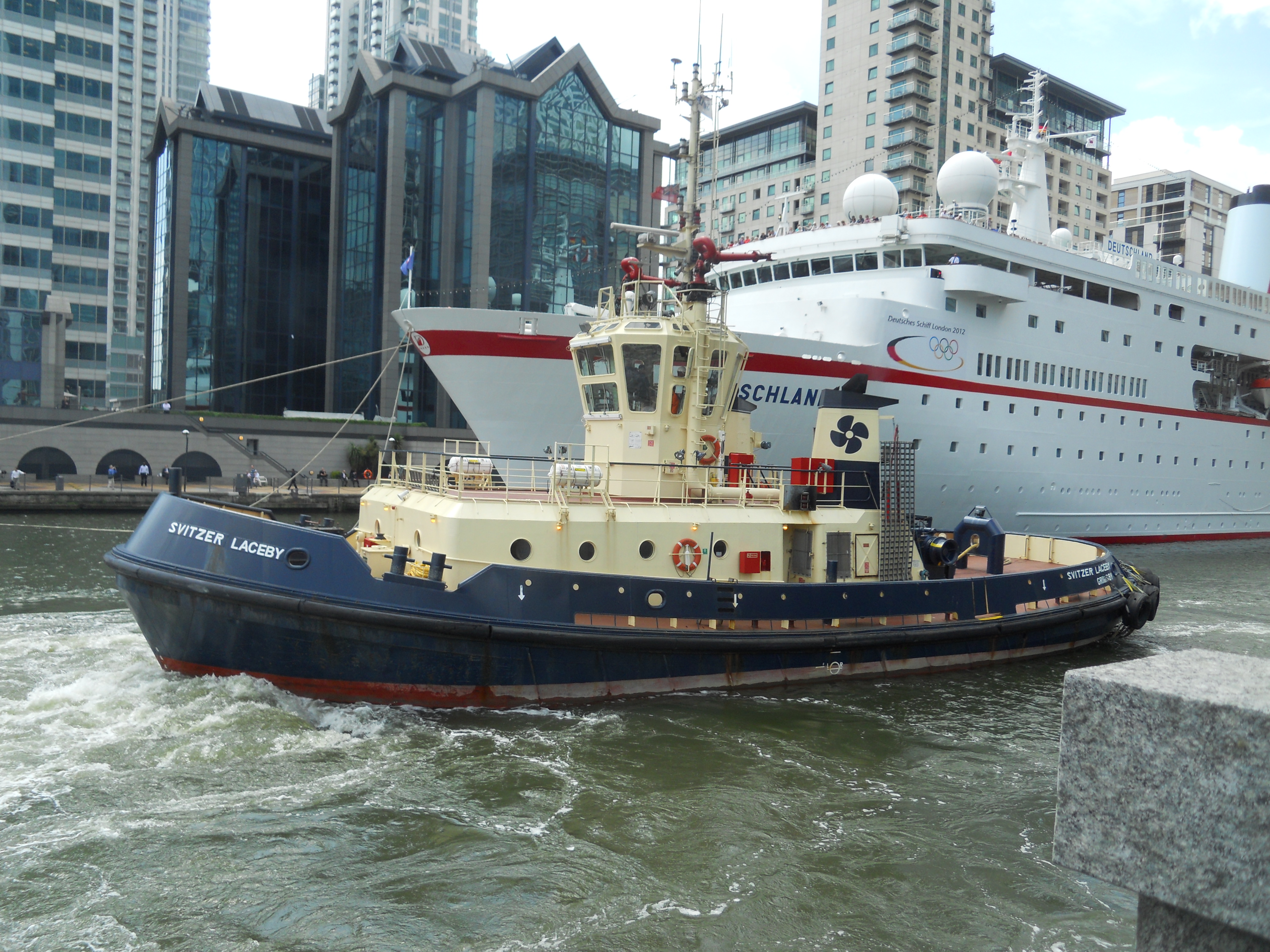

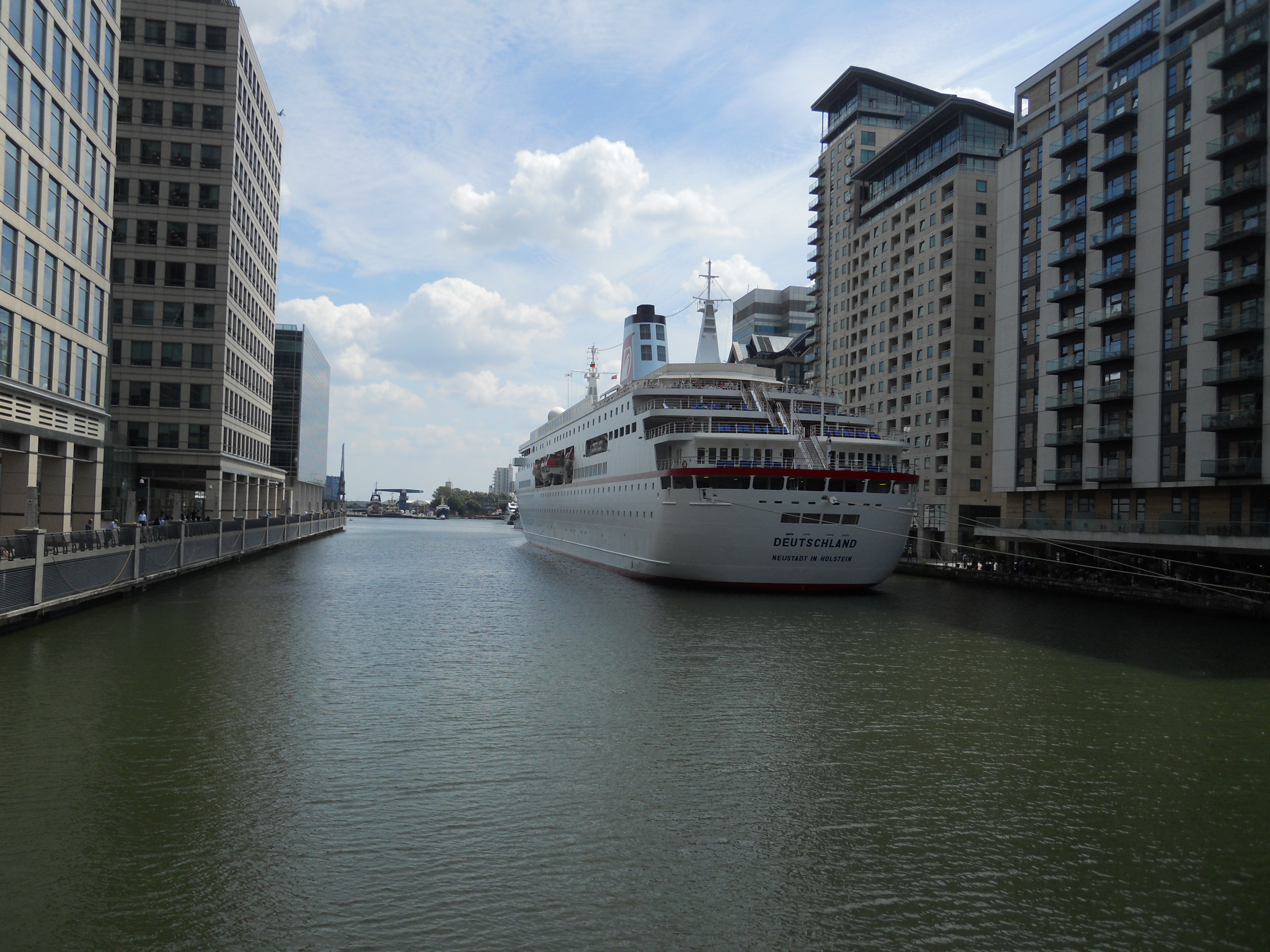
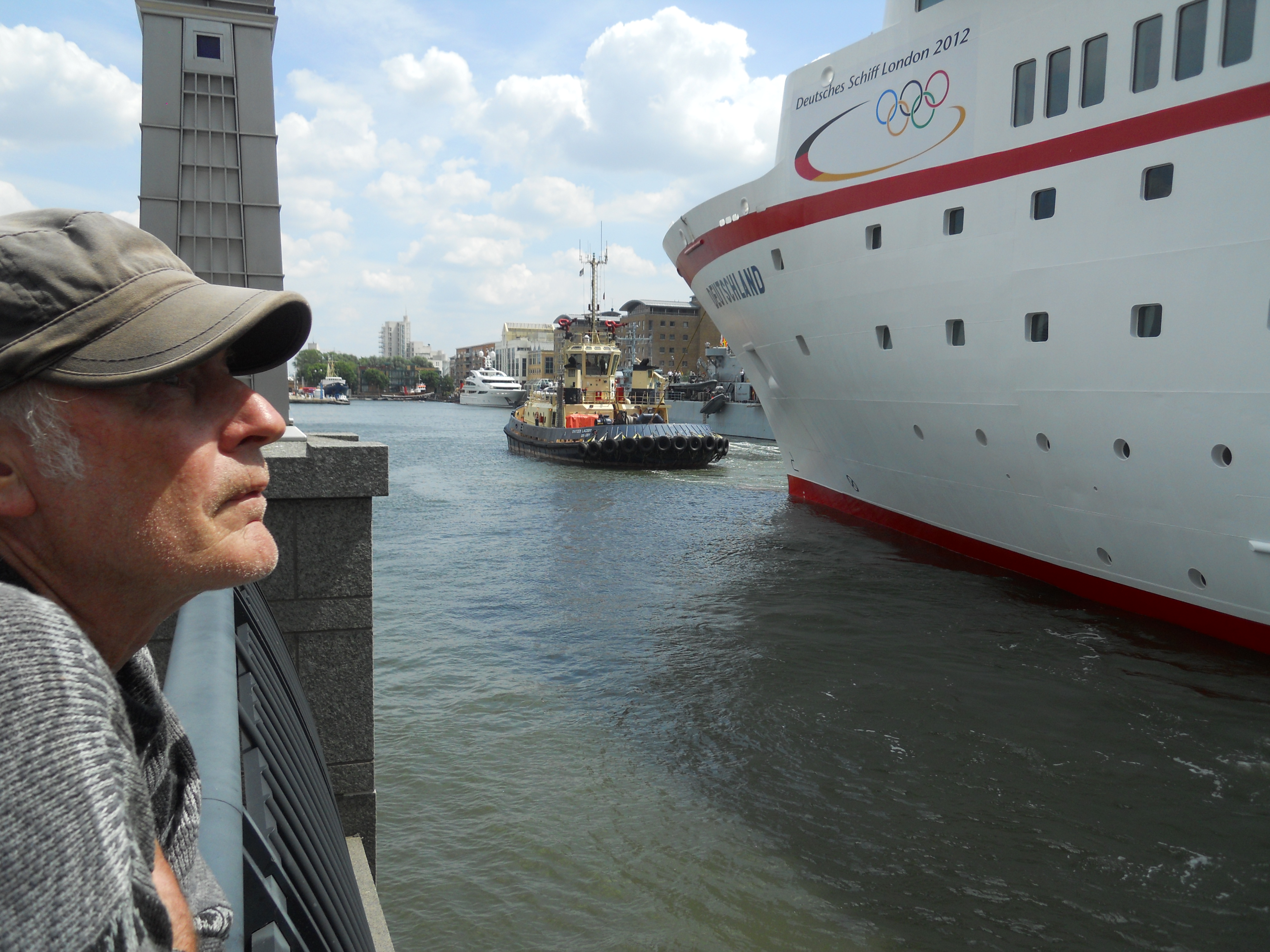
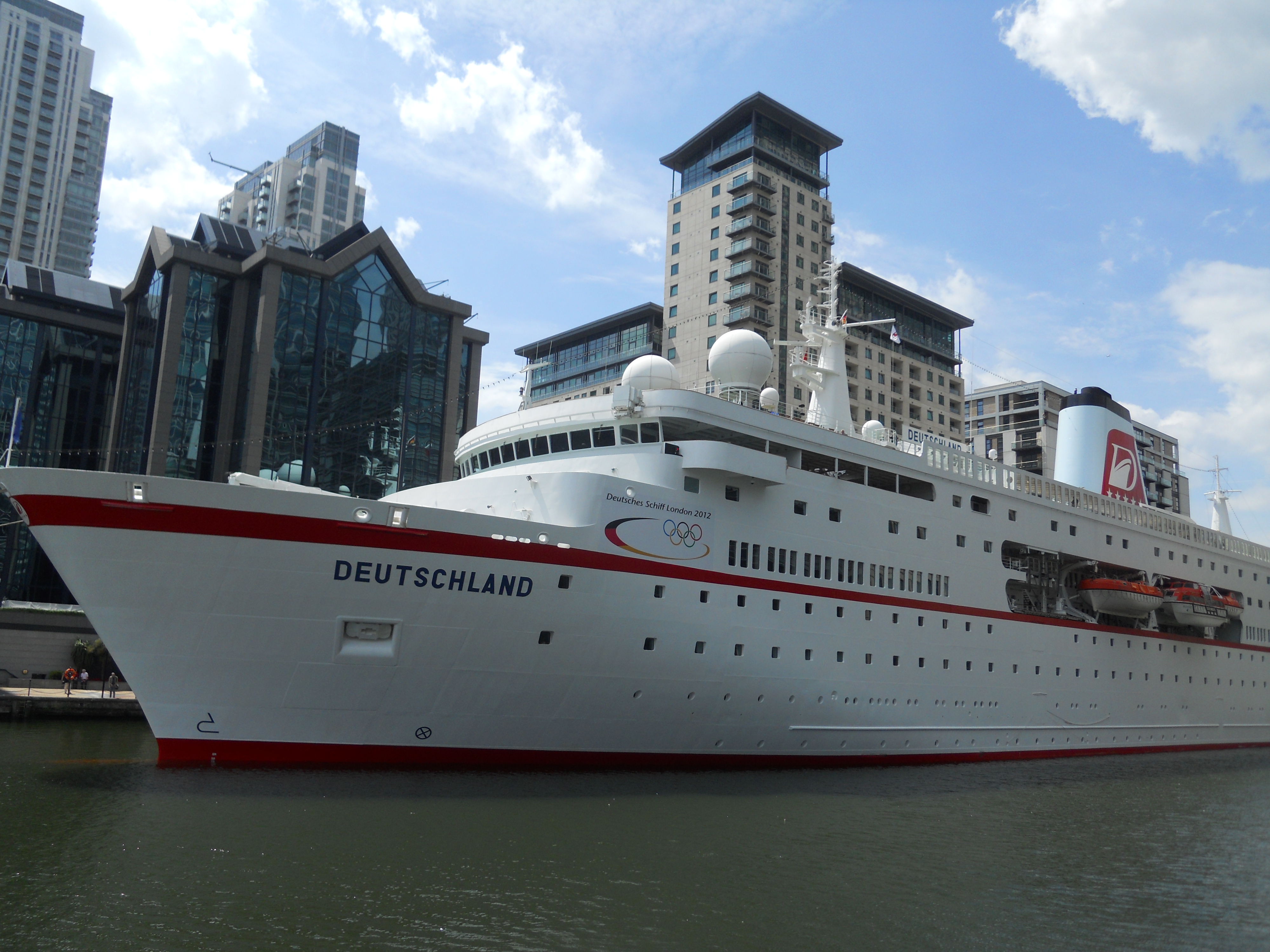
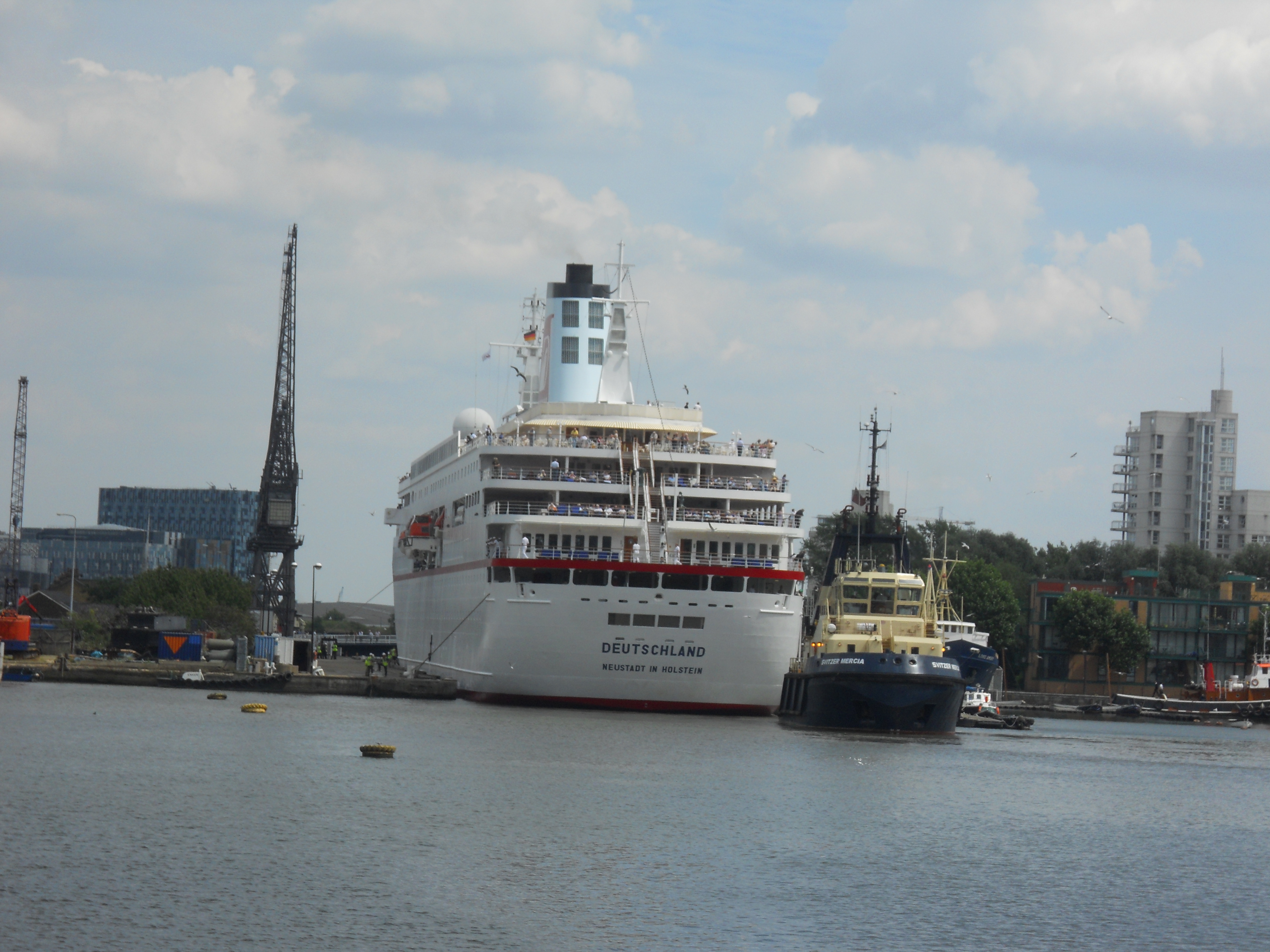
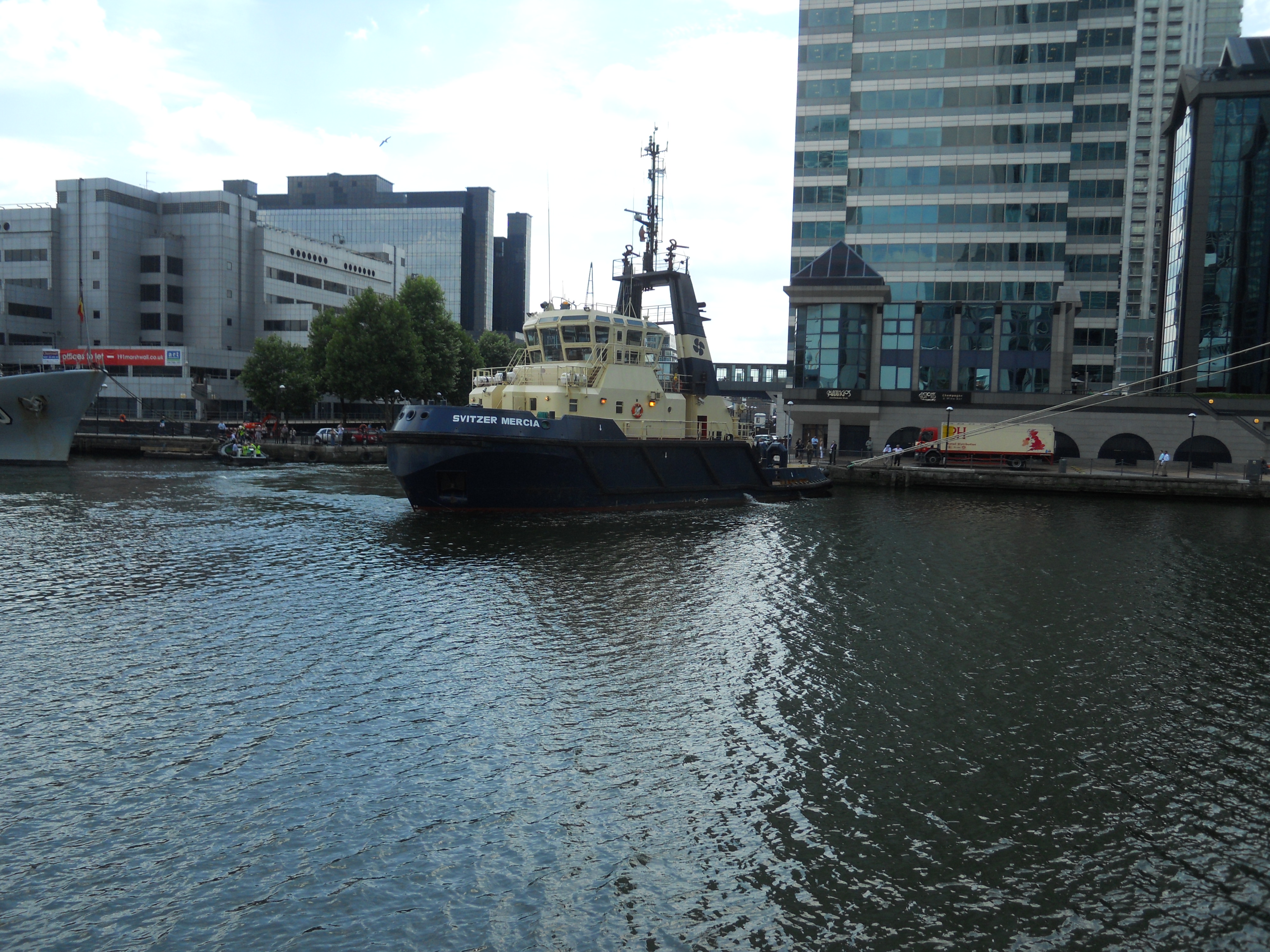
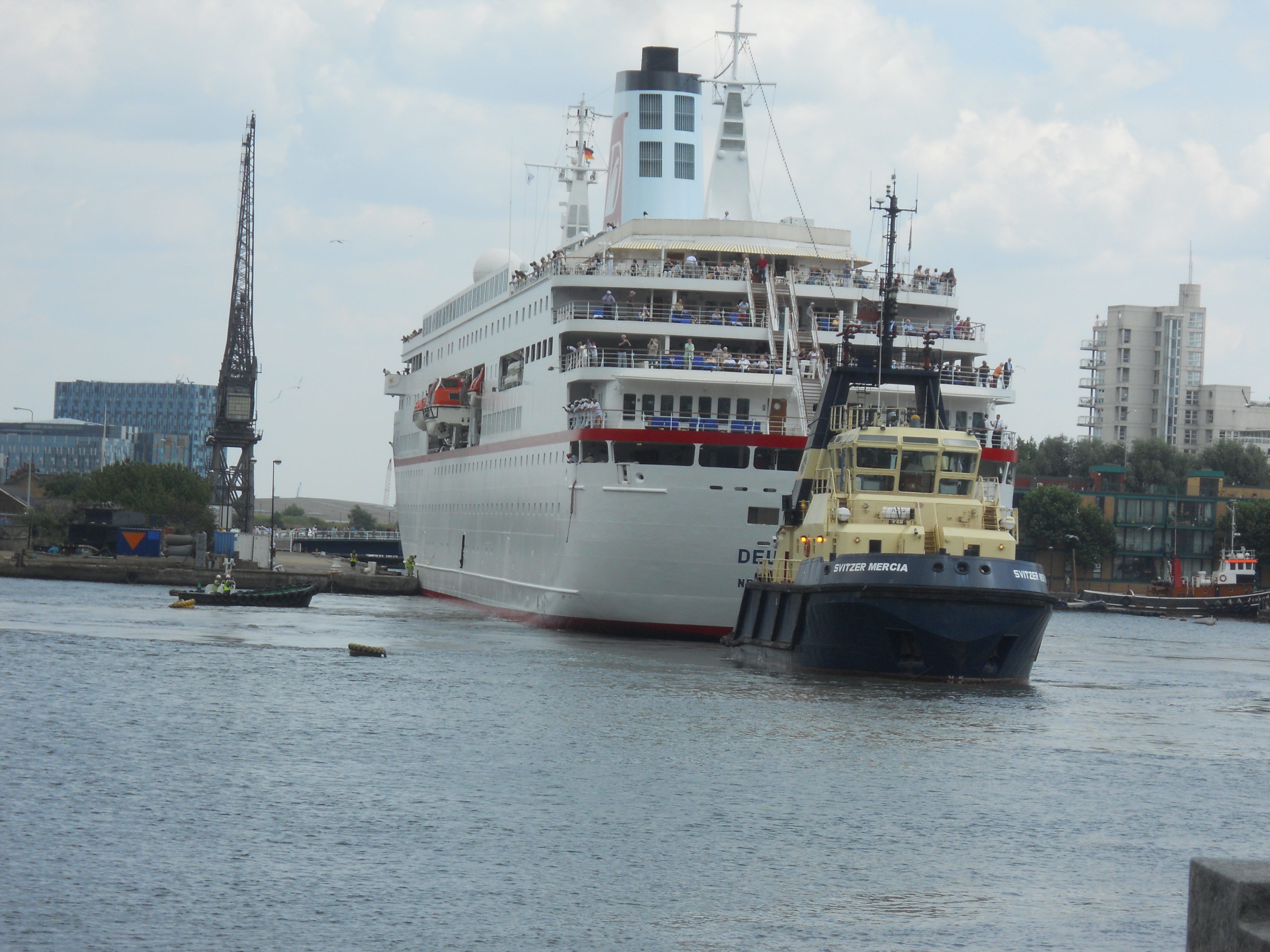
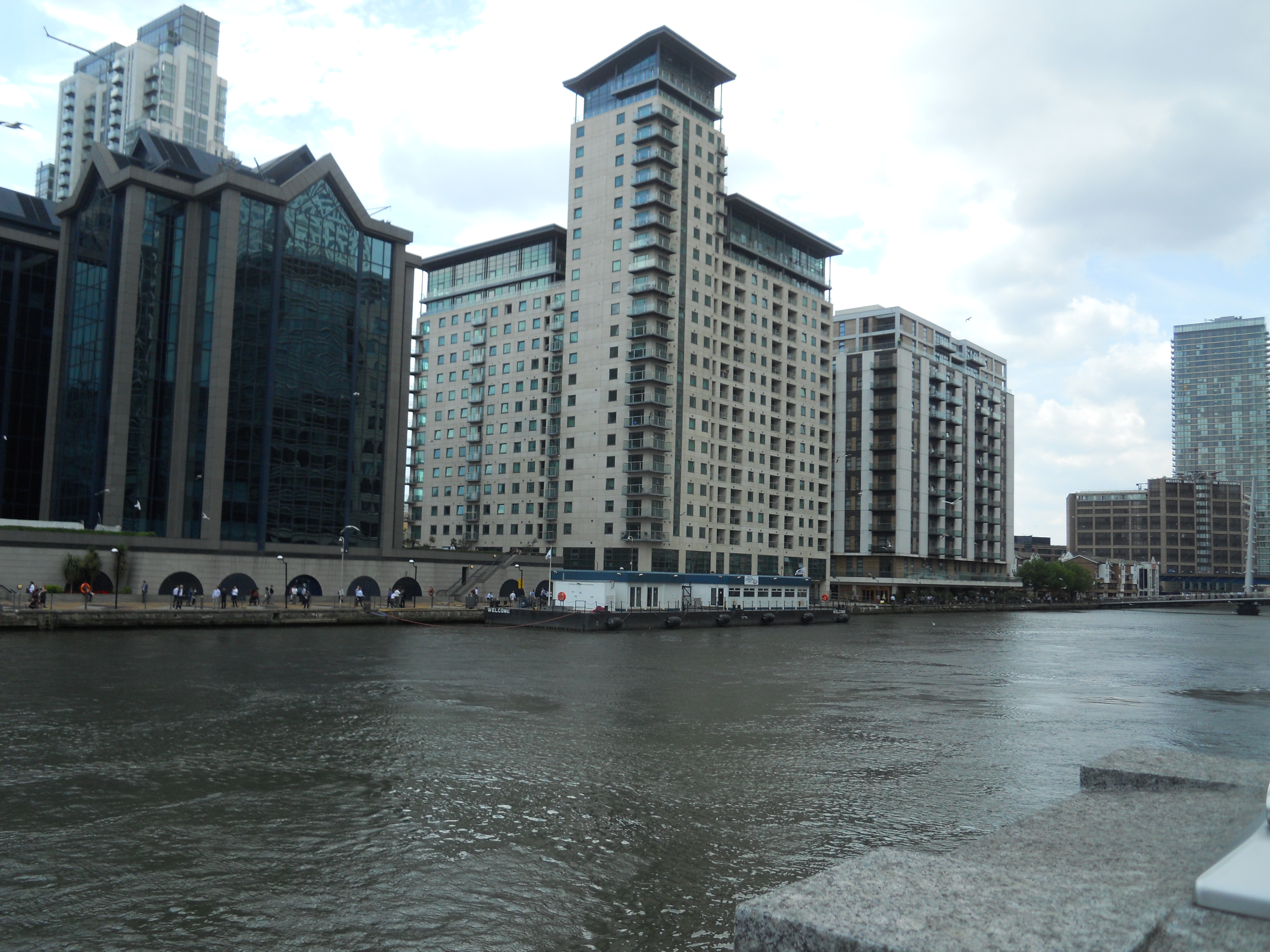

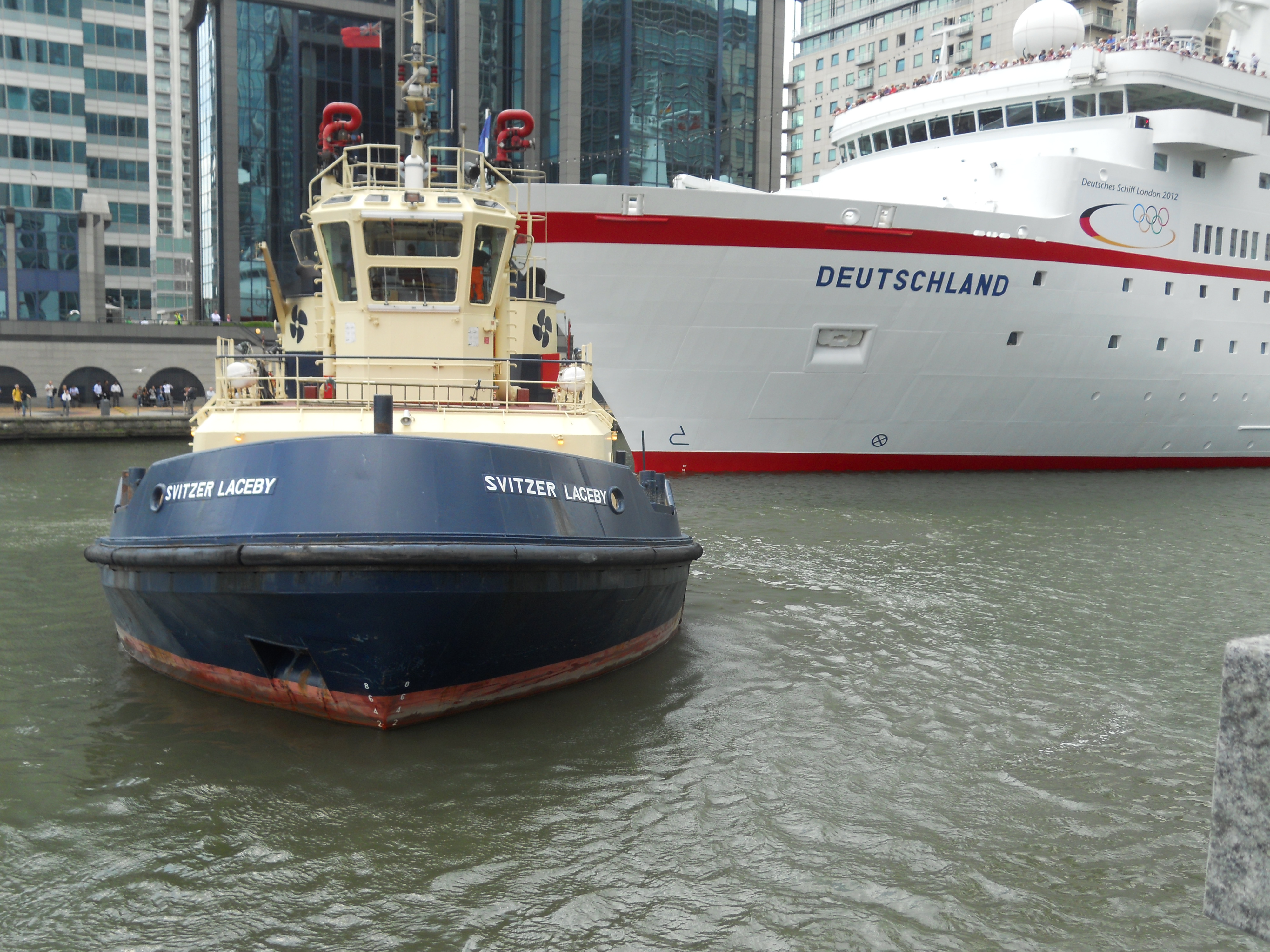

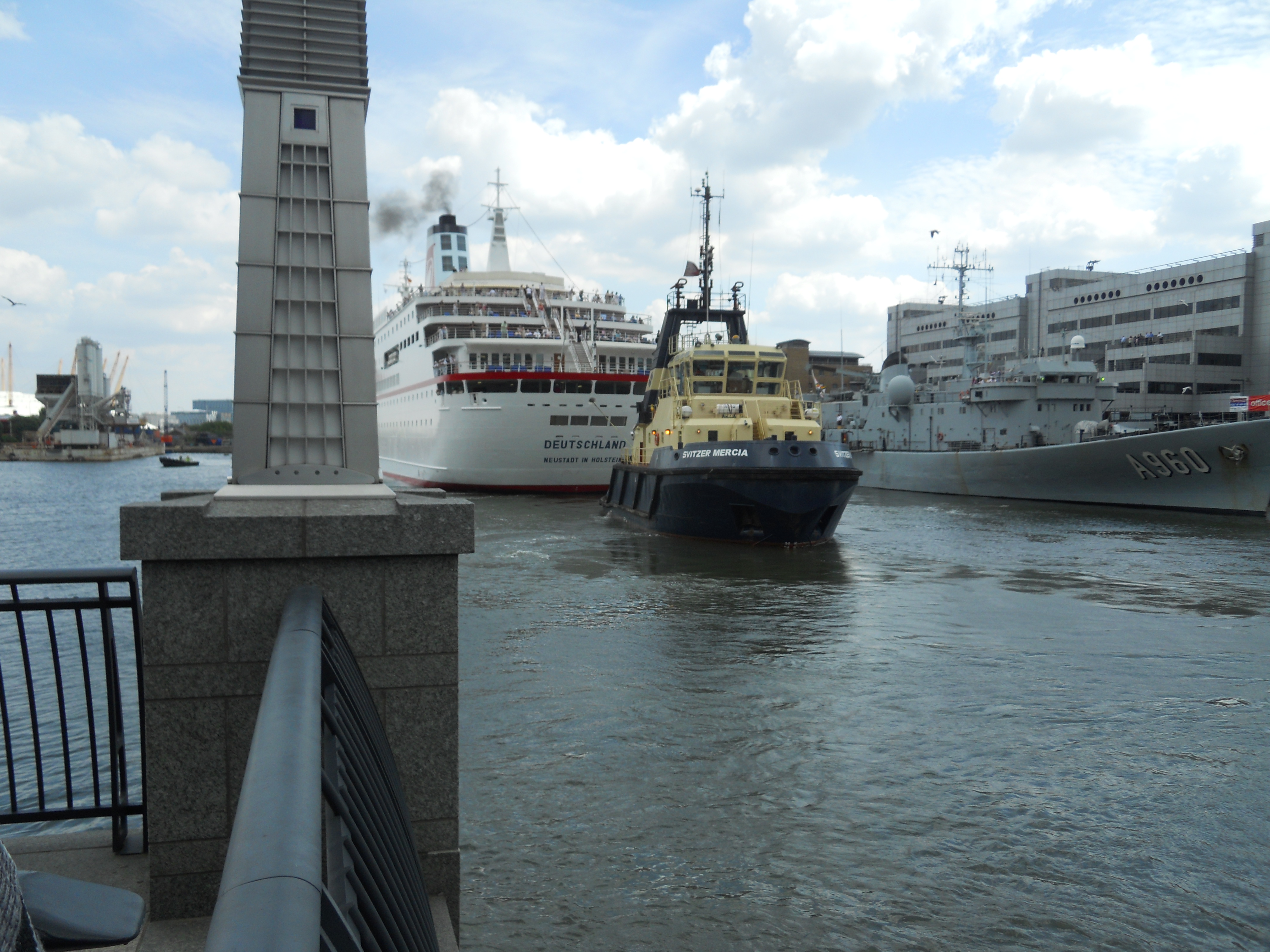
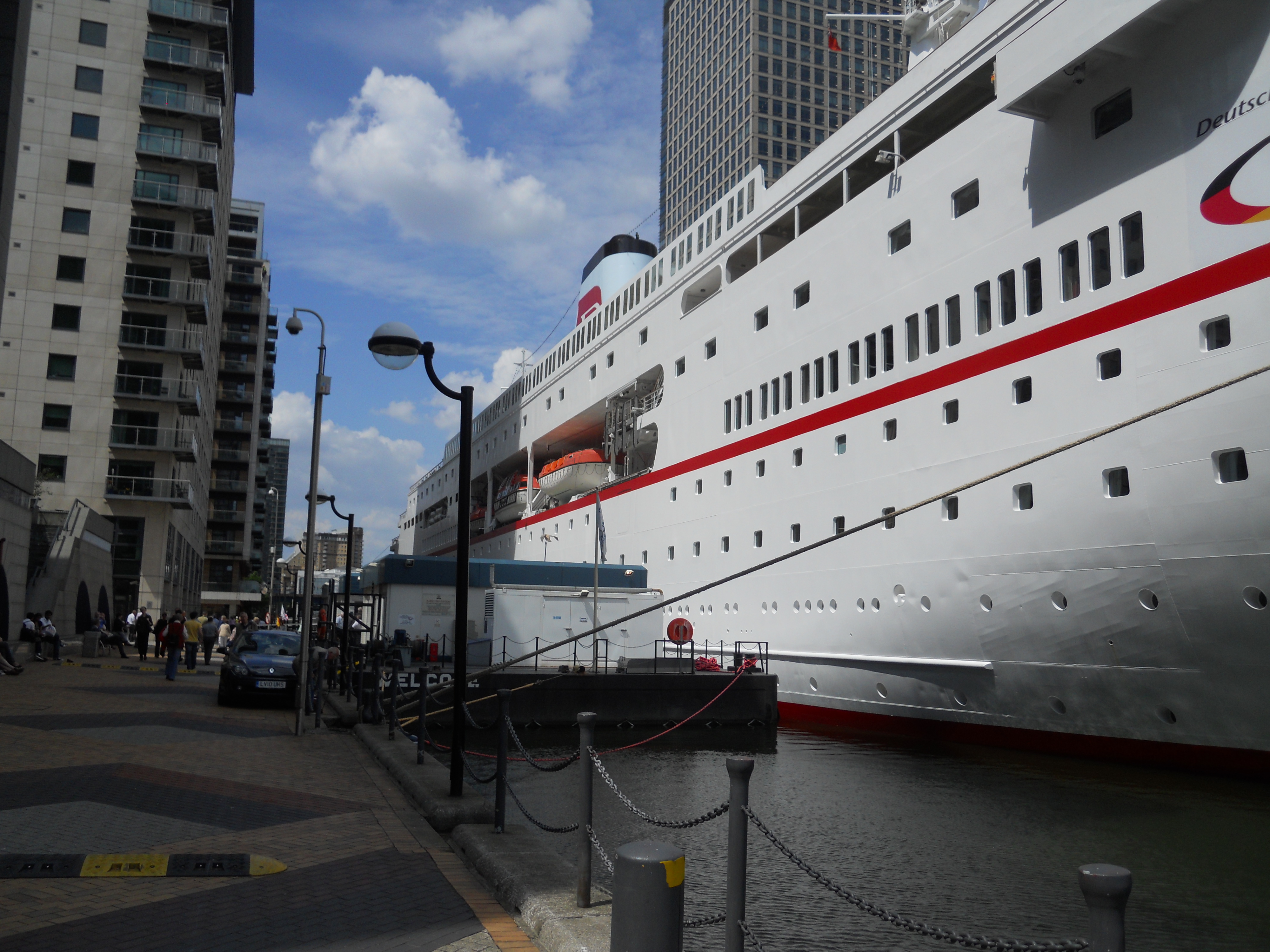
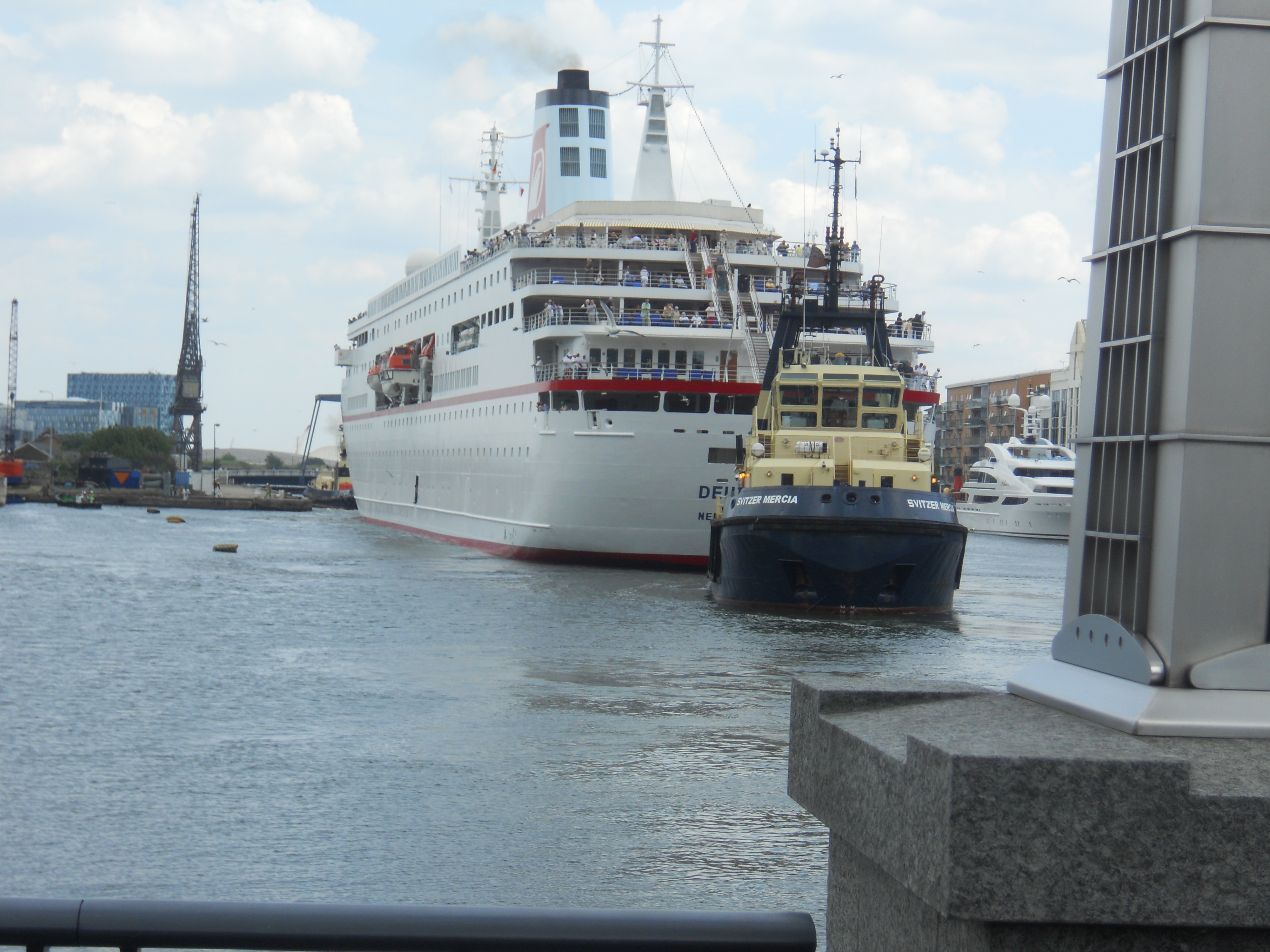
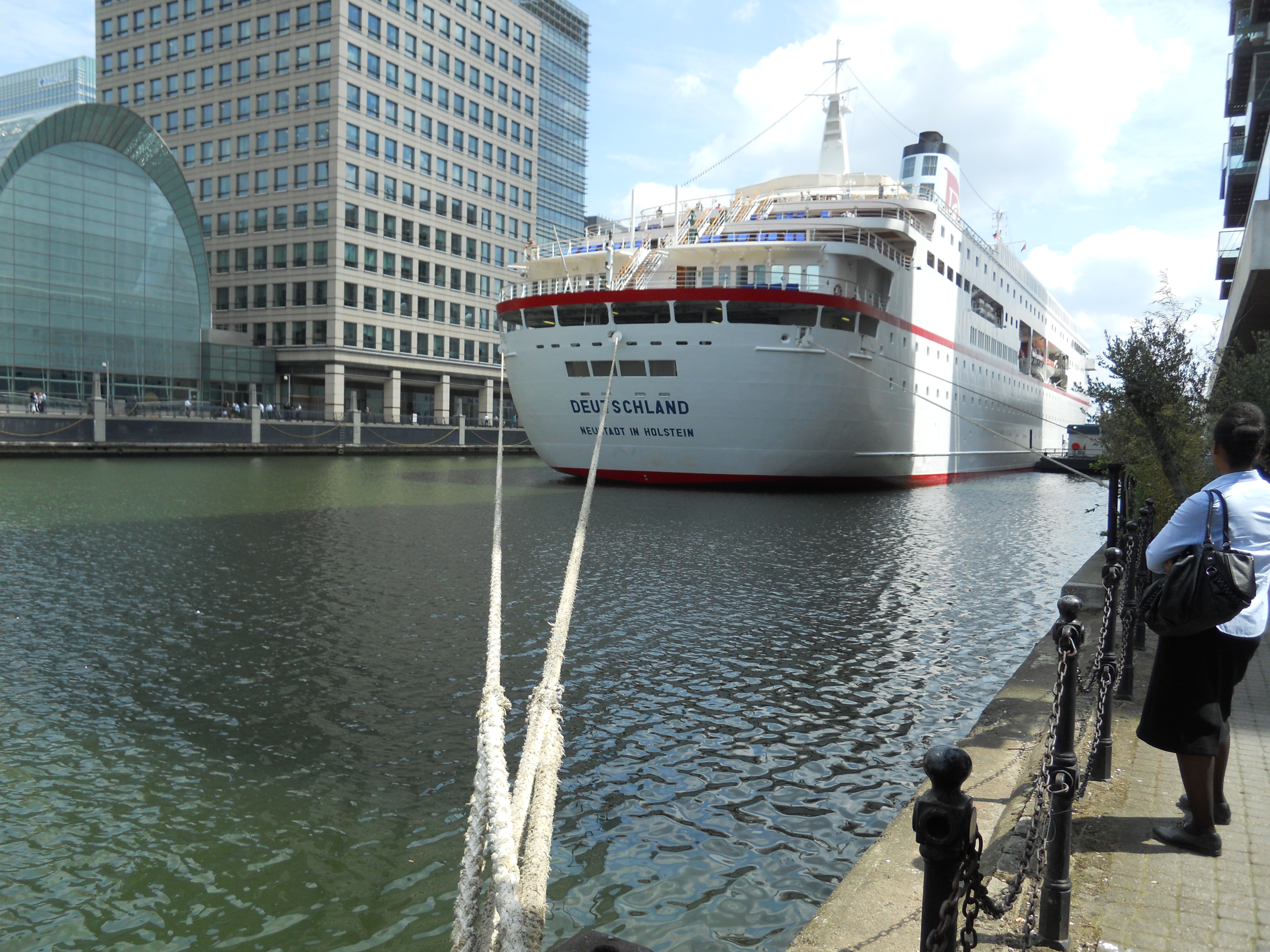
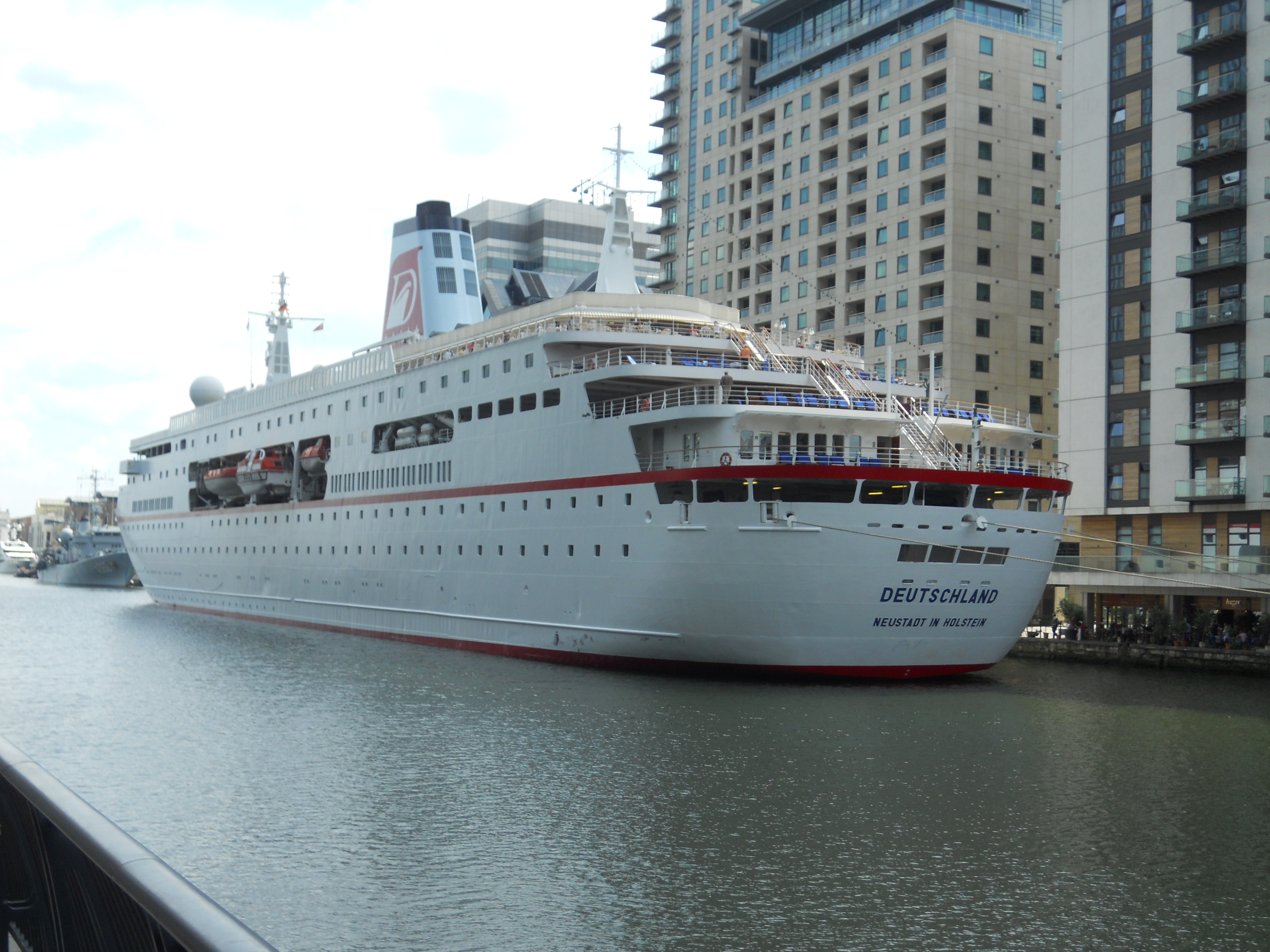
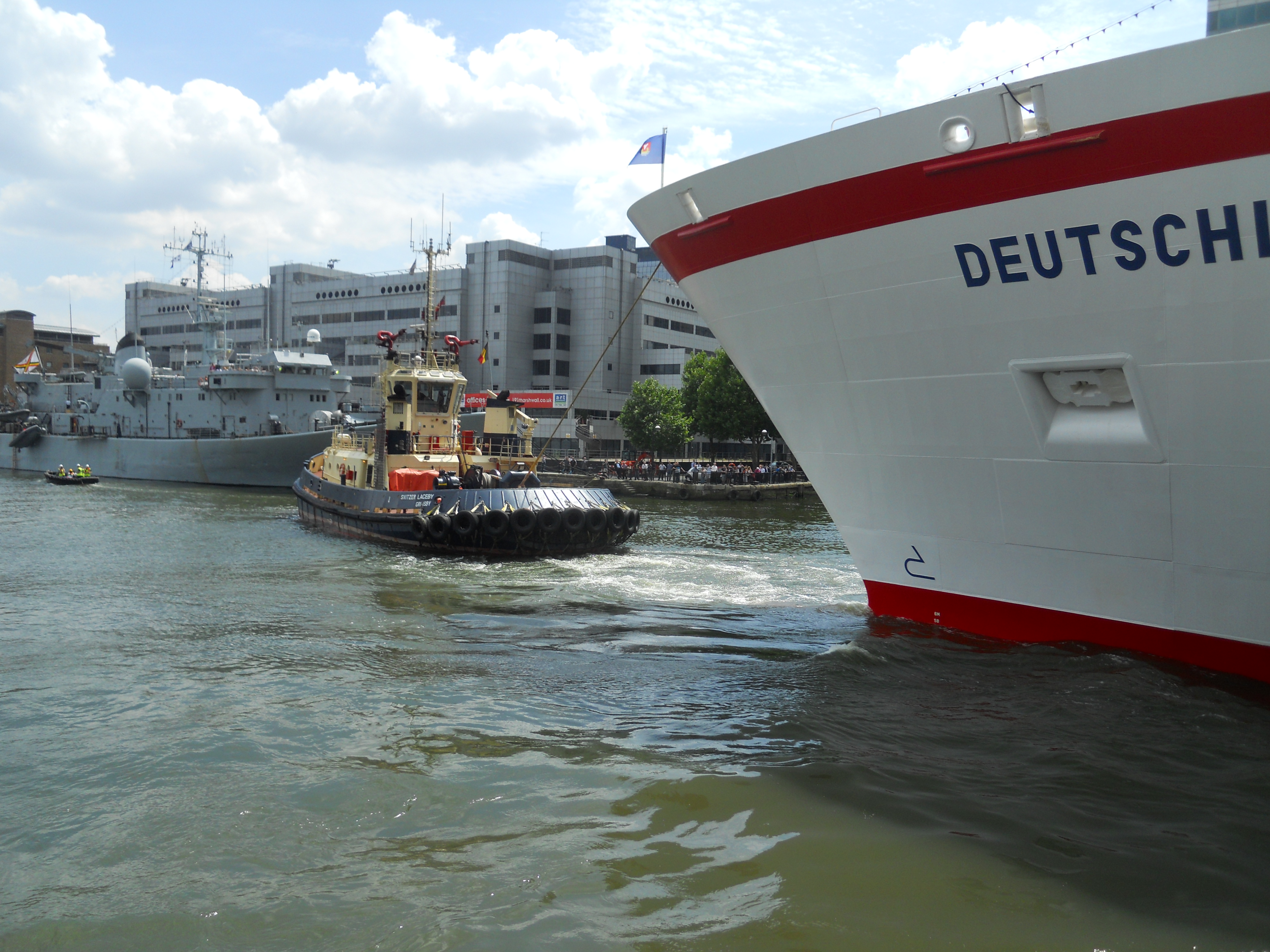
It was a tight squeeze to get out.
I think we’re going to see more ships like the MS Deutschland entering the docks at Canary Wharf and berthing on the South Quay. I suspect that a lot of people are wishing that the lock connecting the West India Docks to the River Thames was built a bit larger by the Victorians. This was published by Motor Boats Monthly.
The manoeuvre took just under three hours, and a huge amount of skill to complete. The ship itself is 175.3m long with a 23m beam, and the lock is just over this at 178m long and 24.4m wide.
So it was a very tight squeeze. Note that the largest ship of the nineteenth century was the SS Great Eastern, which wouldn’t have fitted into the lock to get in and out of the docks.
 The Anonymous Widower