An Alternative Lift At Caledonian Road and Barnsbury Station
I went to look at something this morning, that might have made a post for this blog.
But as it wasn’t worth photographing, I decided to come home and decided to take a train home from Caledonian Road and Barnsbury station.
The station is of a slightly unusual design, which is described in Is Caledonian Road And Barnsbury An Ideal Four-Track Station?.
There is a wide island platform, where the Overground trains call on either side, which is connected to the station exit, by a half-bridge with lifts.


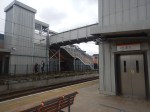
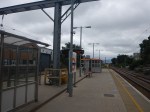
It was an affordable way to make the station accessible for all.
But today the lift on the island platform had failed.
- As I approached the bridge on entering the station, a London Overground station-man was waving at me from the island platform.
- He shouted at me, that the lift on the island platform had failed.
- So I took the working lift and then walked across to the central lift tower, with its failed lift.
- He met me at the top of the stairs and offered to escort me down.
- But I said, that if I could go down the right hand side, with my good arm on the rail, I’d be OK.
- He said that would be fine and he watched me descend, which I did safely.
- Whilst I was there, two mothers with young children in buggies arrived on a train. So after a quick chat, the mothers carried their children up the stairs and he carried the buggies.
London Overground had certainly setup an alternative approach, that should work well until the lift is repaired.
Getting Home From Caledonian Road and Barnsbury Station
The Balls Pond Road of Round The Horne and Beyond Our Ken fame in the 1950s and 1960s, runs between Highbury and Islington and Dalston Junction stations.
- I live about half way between the two stations and as, what would have been my nearest station; Mildmay Park closed in 1934, I have to get a bus from Dalston Junction to get home.
- Today, though, I took a slightly longer route, but one with minimal walking.
- I took a train four stops to Hackney Central station.
- I used the bridge with lifts to cross the tracks at Hackney Central station.
- I exited Hackney Central station through the second exit on Graham Road, that was opened in 2022.
- After crossing Graham Road on a light-controlled crossing, I was able to catch a 38 bus to within a hundred metres of my house.
There would be no case for reopening Mildmay Park station, but as I get older this route is the easiest.
Haventus, Sarens PSG Unveil ‘On-Land to Launch’ Floating Wind Solution
The title of this post, is the same as that of this article on offshoreWIND.biz.
This is the sub-heading.
UK companies Haventus and Sarens PSG have developed a low-cost solution for the integration and launch of floating offshore wind turbines.
These two introductory paragraphs add more details.
Haventus said that it is working to enable offshore wind project developers to acquire fully assembled floating bases and turbines at Ardersier, Scotland, as well as providing dry storage which does not require complex licensing.
A heavy-lift solution will enable safe on-land integration and launch to the harbour of fully integrated floating offshore wind turbines.
Note.
- Haventus introduce themselves on their web site, as an energy transition facilities provider, offering pivotal infrastructure for the offshore wind industry. The first facility, they are developing is the Port of Ardesier in the North of Scotland, to the North-East of Inverness.
- Sarens PSG introduce themselves on their web site, as specialists in turnkey heavy lifting and transportation solutions for offshore wind component load-in, marshalling, assembly, deployment, and integration.
It looks to me that the two companies are ideal partners to put together flotillas of large floating wind turbines.
These two paragraphs seem to describe the objectives of the partnership.
This should shorten supply chains through single-site sourcing of key components and remove the operational, safety, logistical, and engineering complexity that comes with storage and integration activities in the marine environment.
The companies also said that the solution can also drive down the costs and accelerate floating offshore wind deployment by simplifying transport and installation requirements and remove the obstacles of weather and design life variables that must be considered with ‘wet’ storage and integration.
I was always told as a young engineer to define your objectives first, as you might find this helps with the design and costs of the project.
I do wonder sometimes, if the objectives of High Speed Two smelt too much of a project designed by lots of parties, who all had different objectives.
The Location Of The Port Of Ardesier
This Google Map shows the location of the Port of Ardesier in relation to Inverness, the Orkneys and Shetlands, and Norway.
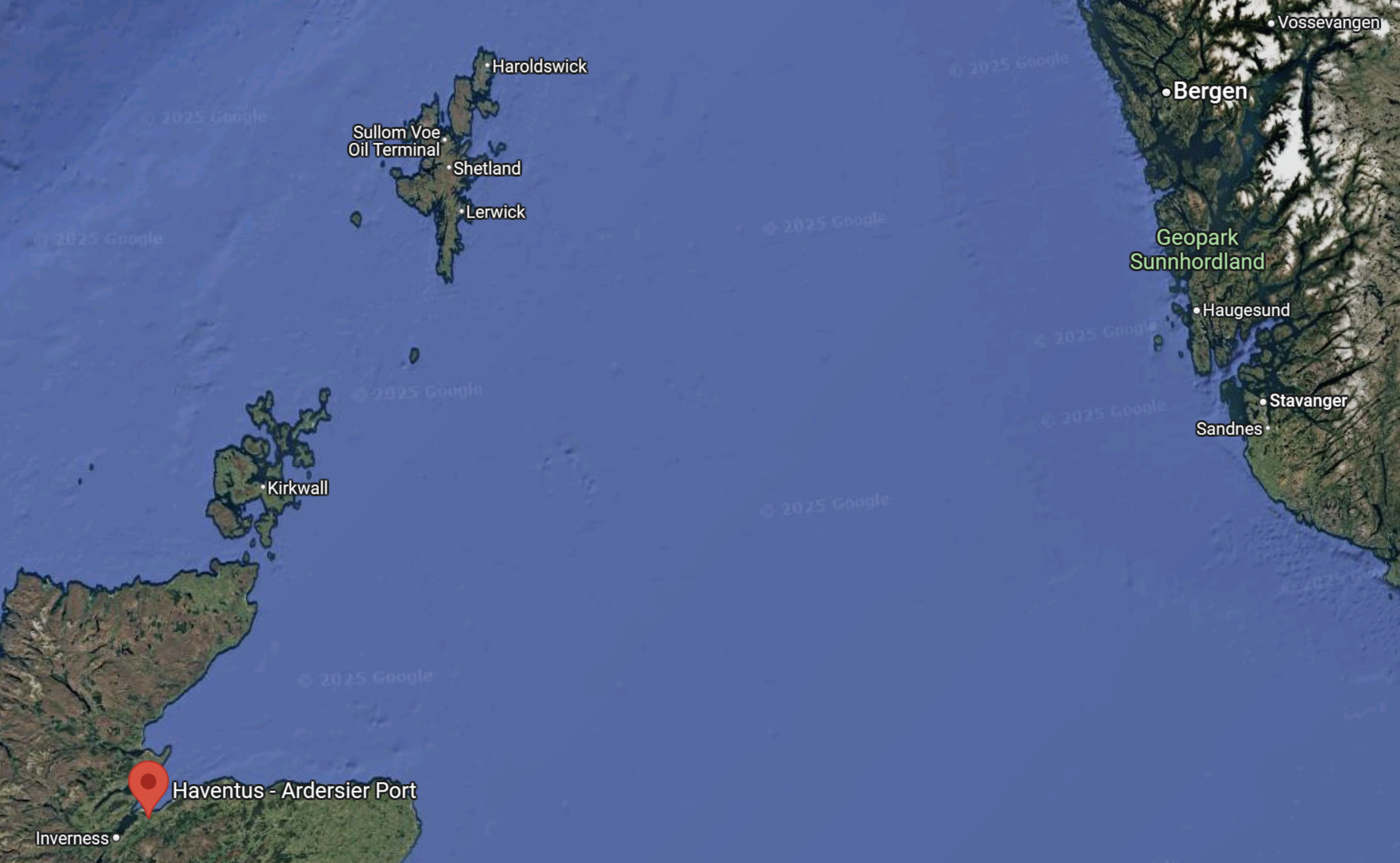
The Port of Ardesier would appear to be ideally placed to bring in business for the partnership.
Government Approval For Large Solar Farm
The title of this post, is the same as that of this article on the BBC.
This is the sub-heading.
A large solar farm in East Yorkshire has been given the go ahead by the government.
These two introductory paragraphs add more detail.
The 3,155 acre (1,277 hectares) site will be built on land around Gribthorpe, Spaldington and Wressle and Howden.
Its developers said it would produce 400 megawatts of electricity – enough to power 100,000 homes.
Note.
- This solar farm is five square miles or a 2.2 mile square.
- Due to the size of the scheme the planning application was handled by the Planning Inspectorate as it was classed as national infrastructure.
- Ed Miliband may have been involved in the final decision.
- The solar farm would connect to the National Grid at the Drax substation in North Yorkshire.
But the solar farm is not without opposition, as these last three paragraphs indicate.
George McManus, spokesman for East Riding Against Solar Expansion (ERASE), said the approval “brings us a step closer to enormous swathes of agricultural land being blanketed in a million, Chinese manufactured, solar panels.”
He added: “Other projects in the pipeline will see another 20,000 acres disappear under glass.
“The East Riding is being industrialised and people need to wake up to that.”
Nothing is said about where Reform UK’s Mayor for Hull and East Yorkshire sits.
Silvertown Tunnel: Has Sadiq Khan’s £2.2billion Scheme Ended Rush-Hour Jams?
This video from The Standard shows the Silvertown Tunnel in the Peak.
It also shows traffic in the Rotherhithe Tunnel.
Name Your Poison!
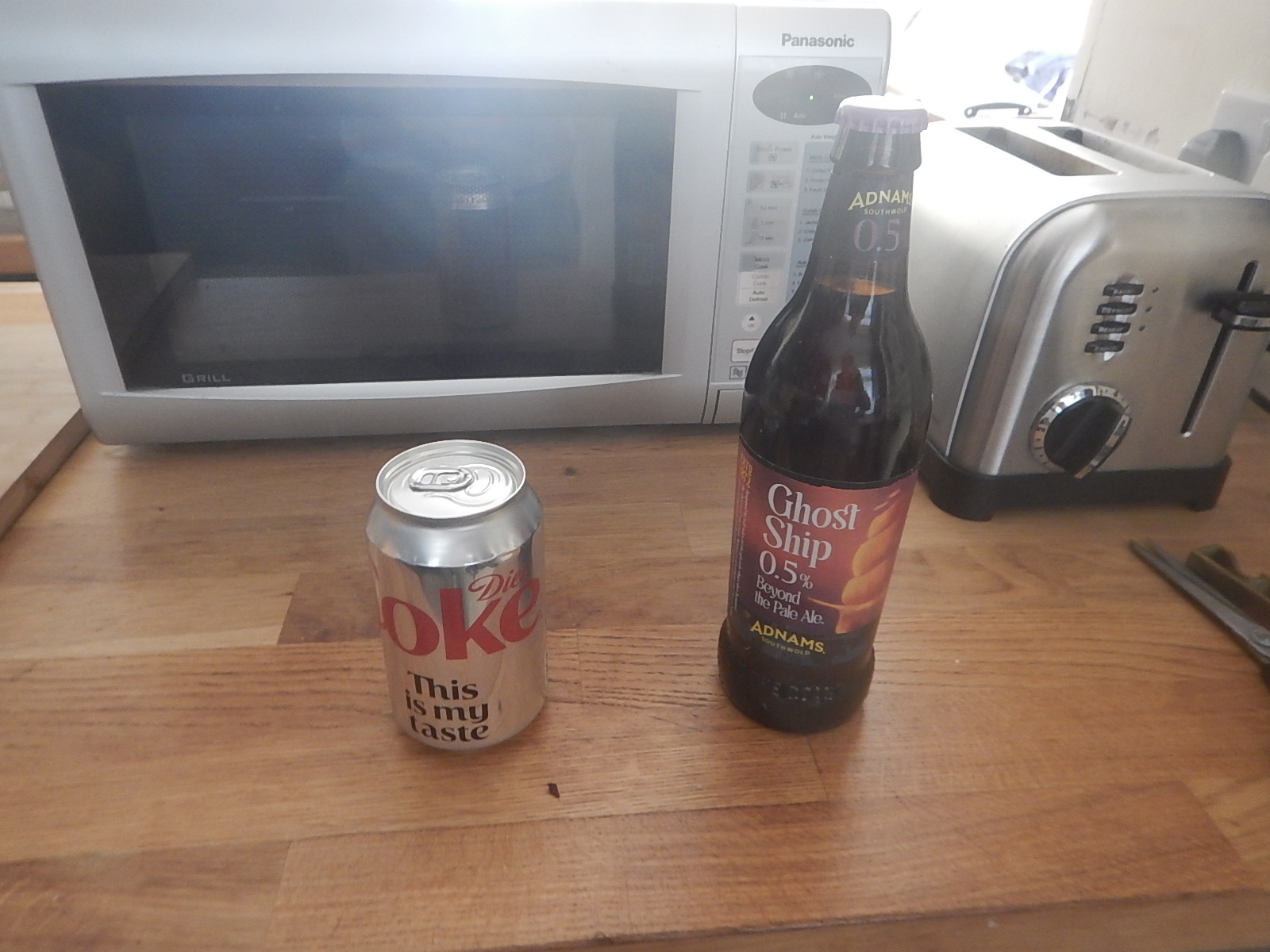
The weather is hot and my cardiologist, GP and physiotherapist are advising me to keep hydrated.
This picture shows what I’m drinking.
Note.
- The 500 ml. bottle of beer costs £1.25 or £0.0025 per ml.
- The 330 ml. can of Diet Coke costs £4.75 for 8 or £0.0018 per ml.
The prices are from Ocado.
Tapwater is not much cheaper.
Could High Speed Two Serve Blackpool North?
Consider.
- Blackpool North station is electrified and will have an electrified route to London Euston HS2 and Birmingham Curzon Street stations, when High Speed Two opens.
- Yesterday, both 11-car and 9-car Class 390 trains, which are longer than single High Speed Two classic-compatible trains, used Blackpool North station.
- Blackpool is noted for fresh air and fun.
- Blackpool needs leveling-up. Surely High Speed Two will help with this?
- Blackpool has a unique Modern and Ancient tramway to bring residents and visitors to High Speed Two.
I am fairly sure, that single High Speed Two class-compatible trains could use Blackpool North station.
But could another High Speed Two service have a path between London and Preston to serve Blackpool?
Because of the cancellation of Phase 2 of High Speed 2, there are spare paths on High Speed Two between London and the West Midlands.
If the core section of High Speed Two is extended Northwards to Crewe, as advocated by Dyan Perry of the High Speed Rail Group, that I wrote about in The Future Of HS2 Could Lie In Its Original Vision, this would create extra paths to Crewe.
It looks to me, that the tricky part of the route is between Crewe and Preston.
This diagram shows High Speed Two services, as they were originally envisaged before Phase 2 was discontinued.
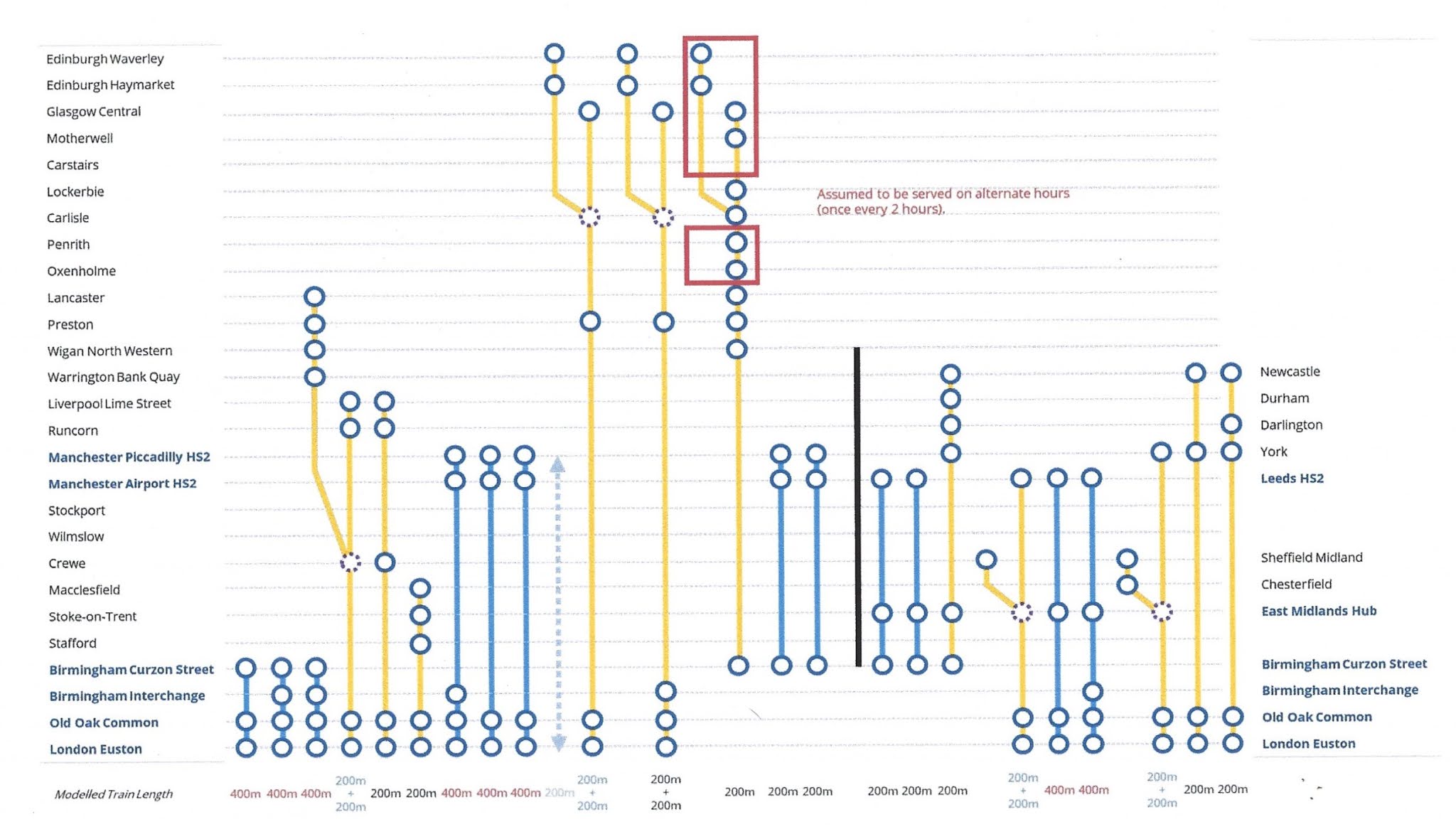
Note.
- Trains to the left of the vertical black line are Phase 1 and those to the right are Phase 2.
- Full-Size trains are shown in blue.
- Classic-Compatible trains are shown in yellow.
- Blue circles are shown, where trains stop.
- The dotted circles are where trains split and join.
- In the red boxes routes alternate every hour.
Click on the diagram to enlarge it.
Note that if Phase 1 were to be completed to Crewe, there would be five full-size and five classic-compatible trains using the West Midlands and Crewe section of the High Speed Two route, of which five trains would terminate at Manchester Piccadilly HS2 station and two classic-compatible trains would terminate at Liverpool Lime Street.
So just three Scottish trains and one to Lancaster would go North of Warrington Bank Quay station, which would be an average of one train every fifteen minutes.
High Speed Two will be fully digitally signalled and I’m sure that trains could run as flights of two or more trains, a couple of minutes apart.
This would mean that a London and Blackpool North service could run say two minutes behind one of the London and Scotland services to Preston
- Between London and the West Midlands, there would be twelve trains per hour (tph).
- Between the West Midlands and Crewe, there would be also be twelve tph.
- Between Crewe and Preston, there would be five tph.
I believe it would be possible for High Speed Two to run a London and Blackpool North service, provided that the London Euston to Crewe core of High Speed Two is completed soon after Phase 1 is completed.
It should also be noted, that I believe the second Scottish service from London could also have a flight with another service. So could Barrow or Blackburn have a High Speed Two service from London?
Surgeon Invents Plastic-Reducing Urine Collection Pot
The title of this post, is the same as that of this article on the BBC.
This is the sub-heading.
A hospital specialist has invented a new product that manages to reduce plastic and simplify the process of testing urine.
These three introductory paragraphs, add more detail.
Consultant urologist Dr Nick Burns-Cox has been working on his own innovation, the Pee-In-Pot (PiP) for 10 years.
Made from bamboo and sugar cane, it removes four items from the current urine collection process, three of them plastic.
Mr Burns-Cox, who works at Musgrove Park Hospital in Taunton, said he hoped it would cut down the use of single-use plastic in the NHS and reduce the chance of errors.
I like the design of this simple device.
But, personally, I hope it becomes universal, as I have trouble giving urine samples.
I had my stroke in Hong Kong and the Chinese nurses, were so aggressive, when it came to taking urine samples, they have given me an aversion to them.
In my view the device could help the patient psychologically, at what could be a difficult time.
Wigan Wallgate To Headbolt Lane – 10th May 2025
I was now running late and decided to go back to Liverpool via the Kirkby Branch Line, with a change of train at Headbolt Lane.
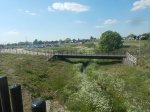
I took these pictures along the route.
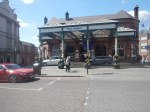
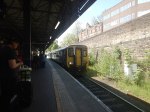
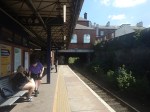

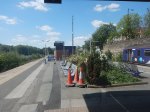

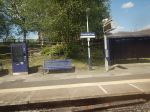
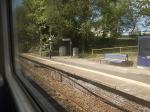
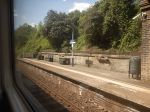



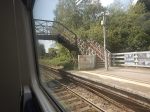
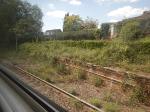
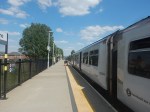
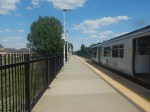

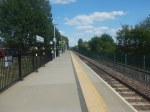
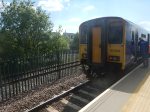
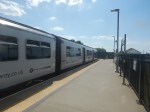
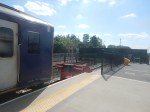
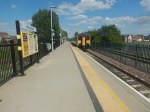
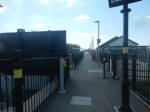
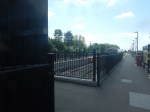
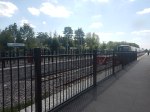
Note.
- Wigan Wallgate station could be refurbished into a quality station.
- Manchester to Wigan Wallgate is likely to be electrified, as I wrote in Bolton-Wigan £78m Rail Electrification Project Announced.
- Headbolt Lane station is a new station.
- The other stations on the line are fairly rudimentary affairs.
- Only Headbolt Lane station is step-free, as all platforms are on the same level.
The Kirkby Branch Line runs across the flat Lancashire countryside.
This Google Map shows the unusual layout of Headbolt Lane station.
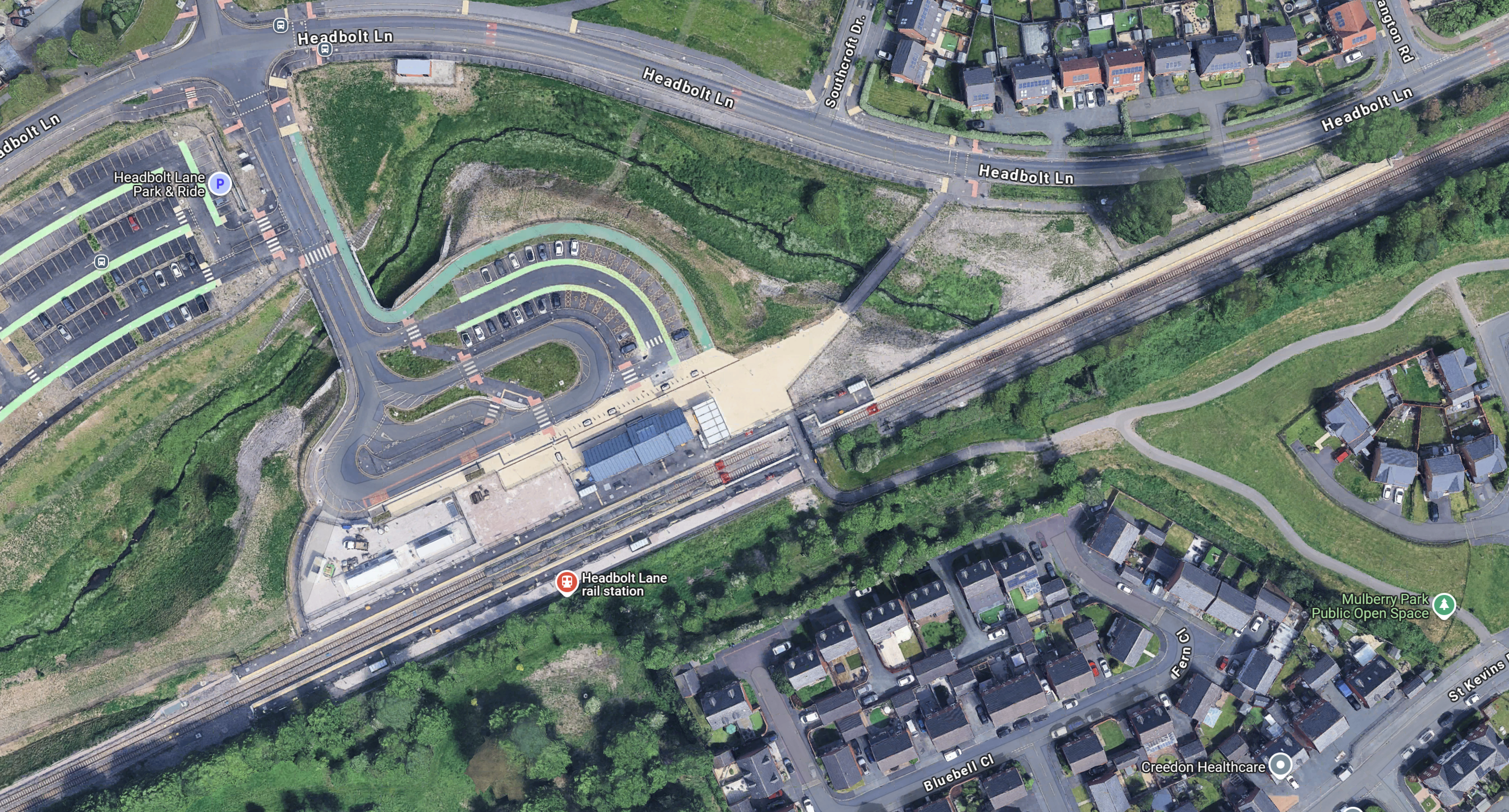
Note.
- Liverpool is to the South-West.
- Wigan and Manchester are to the North-East.
- The station buildings and the car parks are on the North side of the tracks.
- There are two platforms pointing towards Liverpool.
- There is a single platform pointing towards Wigan.
- There is a second track pointing towards Wigan, that has no platform.
- None of the tracks are electrified.
- Three red buffer stops can be picked out.
- Trains to Liverpool are run by battery-electric Class 777 multiple units.
- Trains to Wigan and Manchester are run by diesel multiple units.
All platforms are the same level and you can walk from one side of the station to the other between the buffer stops.
It is effectively a step-free three-platform station without lifts or escalators.
I have never seen another station like it!
Modernising The Route Between Wigan Wallgate And Headbolt Lane
Consider.
- With the exception of Headbolt Lane station, there is no step-free access on this line and that needs to be addressed.
- Wigan Wallgate station has an island platform, with steps to the street.
- With the exception of Headbolt Lane station, there is very little parking.
- The Class 150 diesel multiple units are forty years old.
The distance between Wigan Wallgate and Headbolt Lane stations is about 15 miles.
Equinor May Ditch Empire Wind 1 ‘In Coming Days’ Unless Stop-Work Order Lifted – Reports
The title of this post, is the same as that of this article on offshoreWIND.biz.
This is the sub-heading.
Equinor could abandon the Empire Wind 1 offshore wind project “in the coming days” if the stop-work order, issued by the US government soon after the project started offshore construction work, is not lifted, president of Equinor Renewables Americas, Molly Morris, recently shared in an interview.
These are the first three paragraphs.
Morris told Politico that the standstill was costing the company millions each day and USD 50 million (around EUR 45 million) per week but that a lawsuit would take too long as the work offshore needs to get off the ground again soon.
Last month, Anders Opedal, CEO and President of Equinor, called the US government’s order to stop construction activities on Empire Wind 1 “unlawful” and said the company was seeking to engage directly with the US administration to clarify the matter and was considering its legal options.
AP reports that Morris said the project was now at risk of missing the summer construction window as it began this month and would be set back a year if that happens. This is why the company is pushing for the order to be lifted by the government as that would allow for the work to be resumed while legal action could get the project tied up in courts, according to AP’s report.
When this project is late and inevitably loses money, it will be Trump’s fault.
I’ve seen it all before with housing and railway projects in the UK and other countries.
But Trump is bringing pointless political interference for a whole new stupid level.
How
The Future Of HS2 Could Lie In Its Original Vision
The title of this post, is the same as that of this article on Railway Gazette.
This is the sub-heading.
High Speed 2 should be rescoped to run from London Euston to Crewe, taking advantage of the lessons learned and supply chain foundations established during Phase 1, says Dyan Perry, Chair of the High Speed Rail Group.
The article has been written by Dyan Perry, who knows her railways and especially high speed ones well.
These two first paragraphs introduce her arguments.
High Speed 2 stands at a defining crossroads. Phase 1 from Old Oak Common to Birmingham has the green light, and under the new leadership of HS2 Ltd CEO Mark Wild the project is undergoing a positive and much needed ’reset’. With around 31 000 jobs currently supported, more than 75% of tunnelling completed and construction underway on two-thirds of HS2’s viaducts, momentum is building again.
This fresh injection of energy is welcome after years of shifting goalposts and cuts to the project’s scope. However, while Phase I pushes ahead, the handbrake has been pulled on the next critical phases of the project: the route from the West Midlands to Crewe and Old Oak Common to London Euston.
In the short term, this may appear fiscally sensible. However, as with all infrastructure investments, the project and potential returns must be viewed through a long-term lens. After all, a half-built railway moulded by short-term decision-making risks squandering investment to date and losing billions of pounds of taxpayers’ money.
The High Speed Rail Group (HSRG) has these recommendations.
- A “Euston to Crewe” Core.
- West Midlands to Crewe must be given the go-ahead before the powers to do so run out. This would provide much needed capacity on the West Coast Main Line.
- Use the lessons learned on Phase 1 to build West Midlands to Crewe more effectively.
- Build a streamlined, cost effective station at Euston.
- HSRG believes a concession let for a London to Birmingham and Crewe railway line, one that takes learning from the High Speed One financing model, could generate between £7·5bn and £10bn in concession value, a significant return for taxpayers.
High Speed Two needs a cohesive long term plan.
I very much agree with what Dyan and the HSRG are saying.
I also have some related thoughts.
High Speed East Coast
I am a Control Engineer by training and I’ve felt for some time, that the some of the bottlenecks on the East Coast Main Line to the South of Doncaster could be solved by intelligent digital signalling.
I believe that the major cities of the North-East of England and Eastern Scotland would be best served by direct high speed trains from London on the East Coast Main Line. I also think, that such an approach would deliver similar times to High Speed Two via Birmingham.
North of York
Just as stations on the West Coast to the North of Crewe will be served by High Speed Two and the West Coast Main Line, stations North of York will be served by trains going up the East Coast Main Line.
The Element Of Competition
I said earlier, that if a 30-year concession were to be sold for the West Coast Main Line, it could raise between £7.5bn and £10bn.
So why not sell a concession for the East Coast Main Line?
A further benefit, is that competition between the two concessions and the budget airlines, might bring down timings and prices, just as competition did in the Railway Races of 1888 and 1895.
High Speed North Wales
I have believed for some time, that there is a need for a zero-carbon (green) route between London and Dublin and ultimately between the Channel Tunnel and Dublin.
The last Conservative government promised to electrify Crewe and Holyhead along the North Wales Coast.
This route could deliver passengers to Holyhead for a zero-carbon high speed catamaran to Dublin.
The EU would be a beneficiary and might like to help fund the route.
 The Anonymous Widower