Roaming Around East Anglia – Could A Tram/Train Run Through Felixstowe?
This report on the East-West Rail web site is entitled Eastern Section Prospectus and gives full details of their proposals for the Eastern section of the East-West Rail Link.
This is said in the report.
Introduction of a tram-train service on the Felixstowe branch, with doubling between Derby Road and Felixstowe and street running through
Ipswich.
It is also said, that there will be a frequency of four trains per hour (tph) between Ipswich and Felixstowe.
On my trip round East Anglia, I deliberately walked from the sea-front to Felixstowe station, taking these pictures.

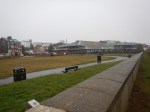
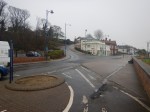
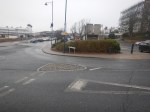
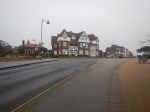
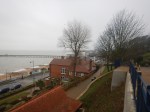
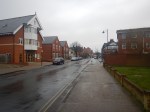
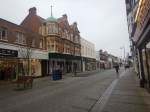
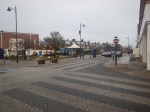
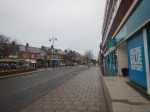
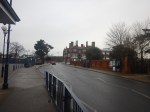
Would it be possible to run a tram-train through the town?
To my mind there are three places for the tram-train to Felixstowe to terminate.
The Current Platform In Felixstowe Station
This picture shows a Class 153 train in the current platform.
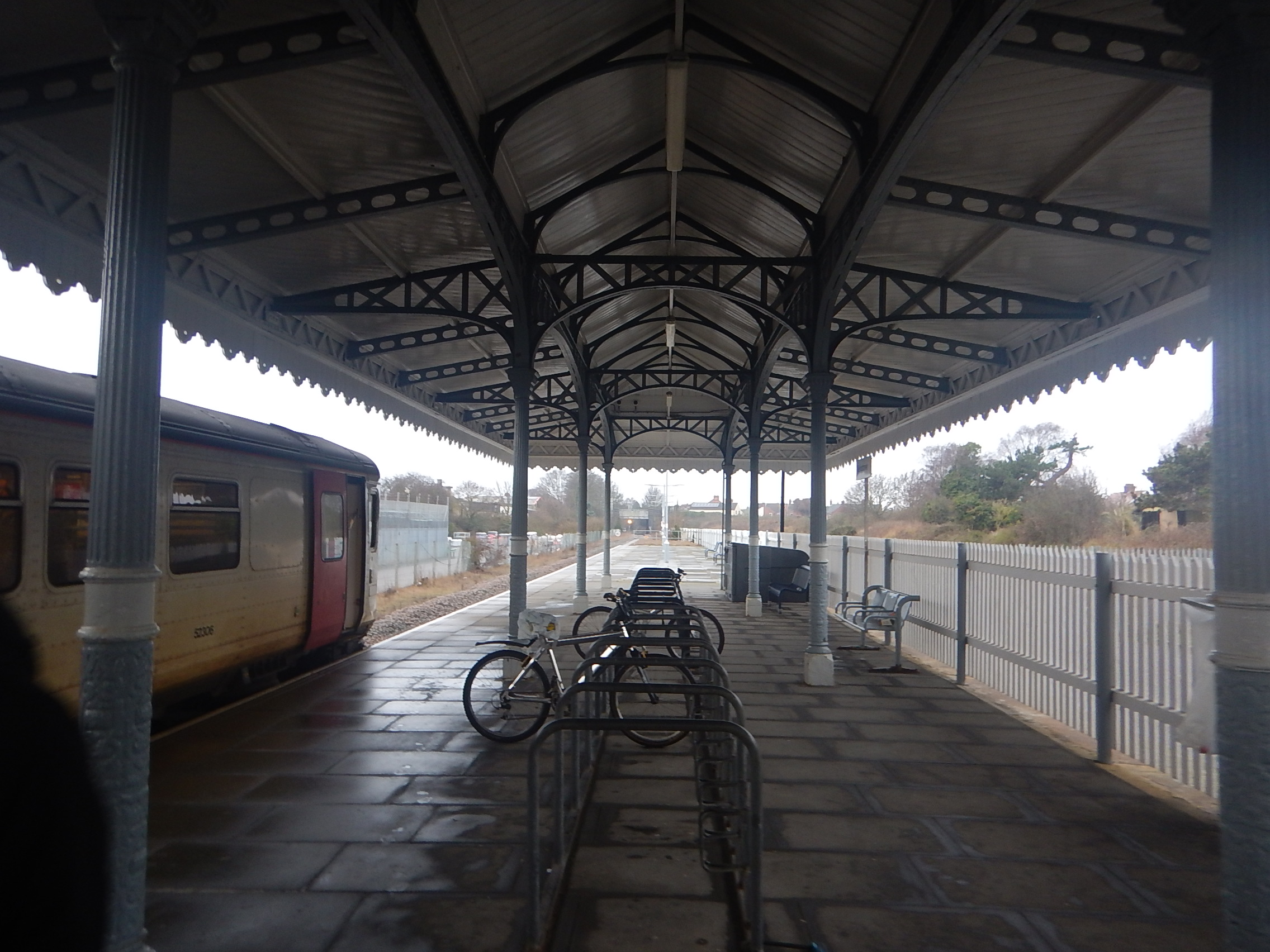
To say that it is safe and boring would be an understatement.
The Tram-Train Breakout
If the operator is running four tram-trains per hour to Felixstowe, then surely they should be taken to somewhere more interesting.
So would it be possible for the tram-trains to go through the station and perhaps use a single track railway to the Town Centre?
This Google Map shows the station and the old station buildings, which are now a Shopping Centre.
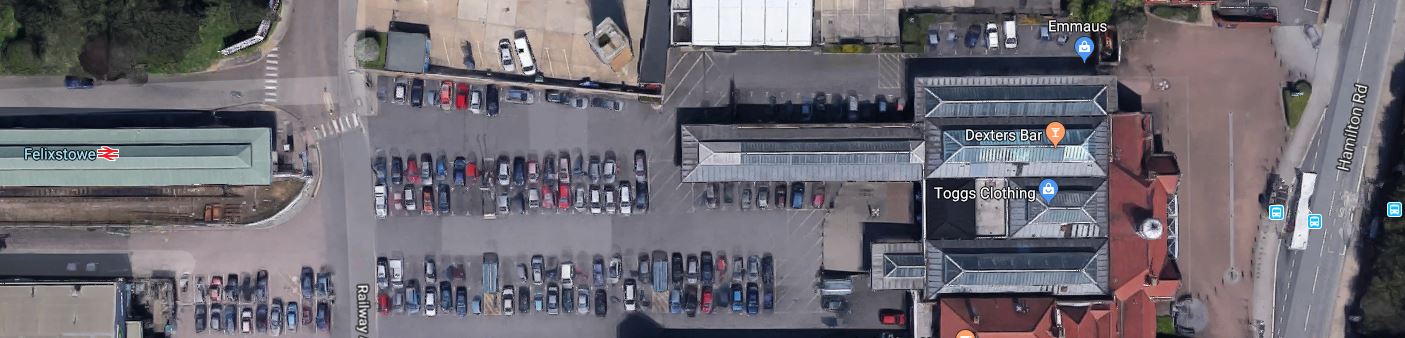
Would it be possible for a tram-train, running as a tram to run North of the Shopping Centre and turn onto the station forecourt, from where it would go walkabout?
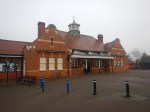
These pictures show where the tram would run.
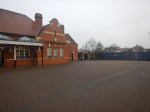
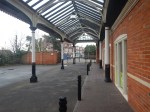
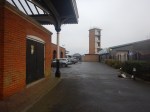
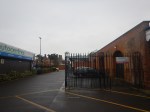
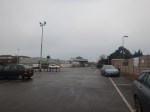
These pictures show the station buildings, which have been turned into a a Shopping Centre.
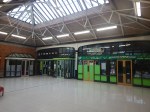
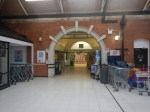


It looks very much like the shops would not need to be disturbed.
How Far Could The Tram-Train Go?
If a single-track extension were to be built through the station, the time-table could be arranged so that the outgoing and the incoming passed in the current island platform at Felixstowe station.
The simplest system would be for the tram-trains to go to the shops in the Town Centre and reverse outside by the shared space.
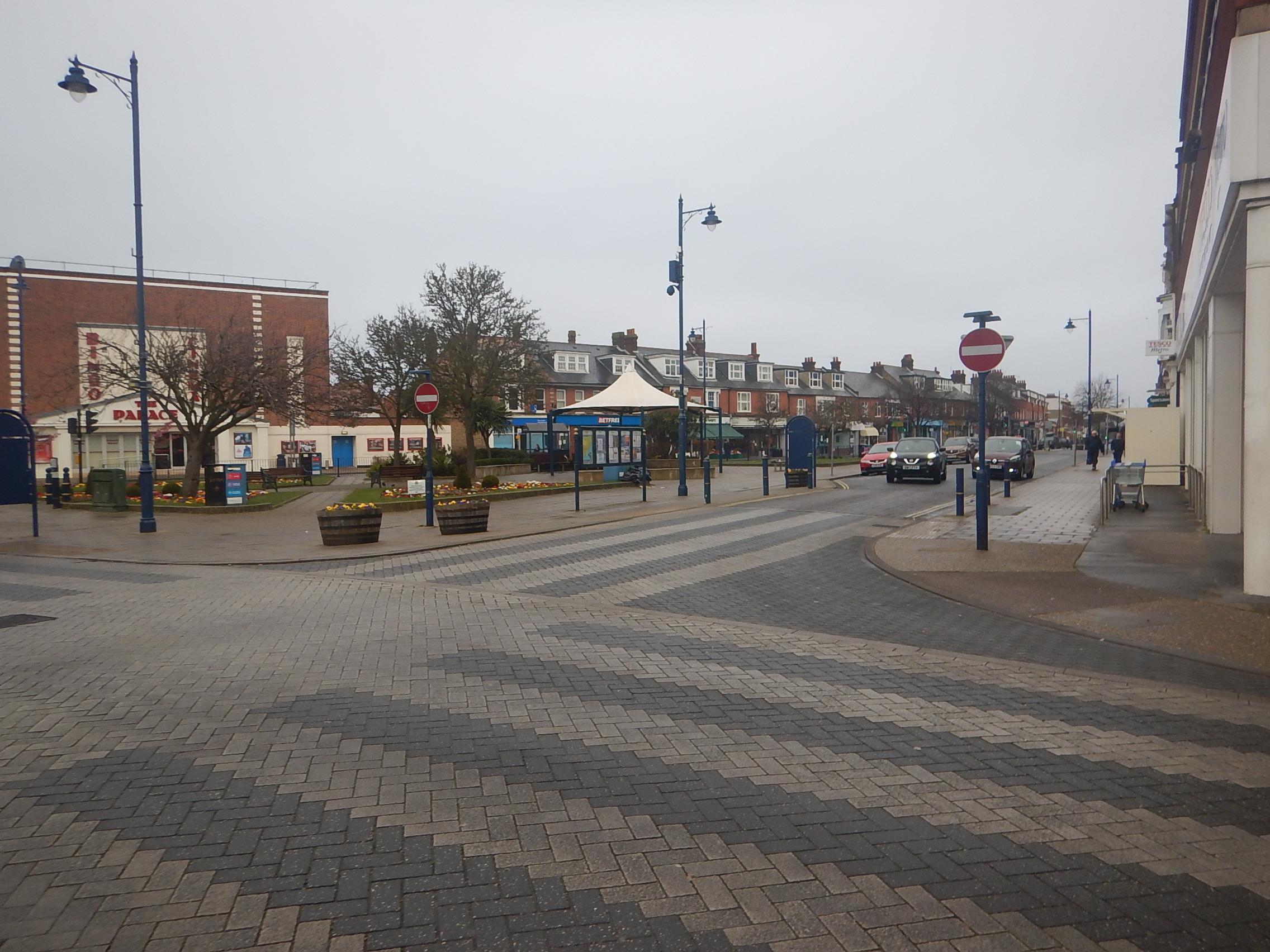
The picture shows the location. Trams would be timed to take fifteen minutes for the trip from Felixstowe station and the return.
- Only one tram-train would be on the single-track route at any time.
- Tram-trains would work on battery power.
It would be a very simple use of a tram-train to move a terminus of a branch line to a better place.
According to a tram driver in Sheffield, the Class 399 tram-trains as used in the City have bags of grunt and handle hills with ease.
So why not run a single tram line through the Town Centre and then take the route via Convalescent Hill to the sea-front, where a terminus could be by the Pier and the Leisure Centre?
The Pier stop would have the following.
- Two platforms, so that two tram-trains could pass.
- A charging facility.
So that the single-track through the Town Centre would work, tram-trains would need to go between Felixstowe station in perhaps ten minutes.
This would give ten minutes for a turnround with a charge at the Pier stop.
The Number of Tram-Trains Needed
Four tram-trains per hour between Ipswich and Felixstowe stations would need four vehicles.
Extending it to Felixstowe Pier would need another two tram-trains for a similar service.
Conclusion
A tram-train serving Felixstowe sea-front running on battery power through the Town Centre., looks to be feasible.
Lorry Bashes Into The Notorious Ely Railway Bridge – Again
The title of this post, is the same as that of this article on the Ely Standard.
This picture was clipped from the article.
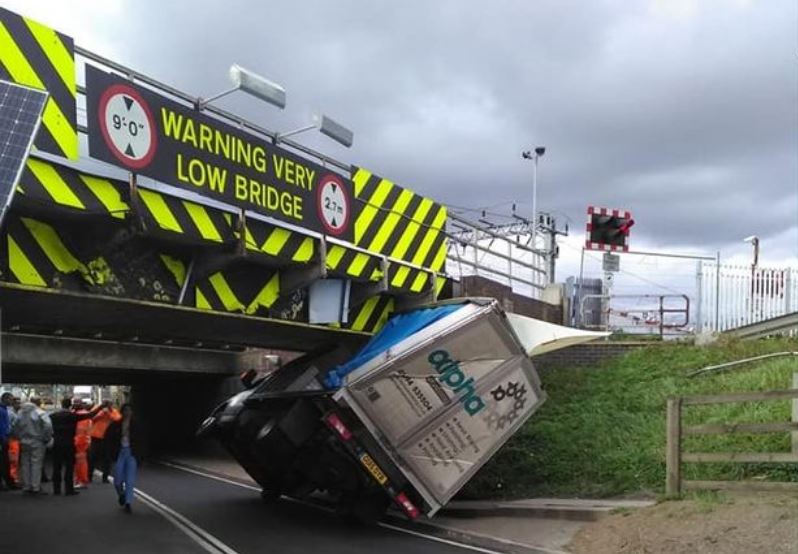
To describe the driver as an idiot, is an insult to all those with a low IQ.
The driver should be banned for a very long time and only allowed to drive again, after he has leaned to read.
To further illustrate his stupidity, I took these pictures at Ely last month, before they re-opened the bridge.
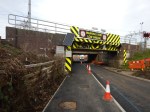
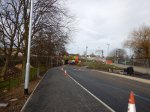
This must be one of the worst cases of stupid driving, I’ve ever seen.
Welcome For Extension Of Midland Electrification
The title of this post is the same as that of this article on Rail News.
This is the first paragraph.
Electrification of the Midland Main Line is set to be extended from Kettering North Junction to Market Harborough station.
The project was announced in the House of Commons and has already been called great news by the local MP.
In MML Wires Could Reach Market Harborough, I laid out my thoughts after an article in the June 2018 Edition of Modern Railways, with the same title.
This was my major conclusion.
I think that electrification between Glendon Junction and Market Harborough station will happen.
I actually feel that with the announcement of innovative new rolling stock and electrification methods in the last few months, that electrification of this section could now be easier and that electrification to Leicester might even happen.
Latest On The Class 717 Trains For The Great Northern
This is another tweet from the South East Rail Group.
Because of centre door of the cab some start signals can’t be sighted by the driver. Thus SDO will be used and trains stopped short. Once ERTMS is installed (the trains already have the in-cab signalling displays to go with it) then fixed signals and triphandles will be removed.
They also say that squiadron service is could be on March 11th.
Effect Of ERTMS
The tweet also confirms that ERTMS will be available on this line, after the first stage of installation of ERTMS on the East Coast Main Line.
Currently, the service to Moorgate station is twelve trains per hour (tph) in the Off Peak, with extra services in the Peak.
As Thameslink and Crossrail will be running twenty-four tph in a couple of years, so when ERTMS is working on the Southern part of the East Coast Main Line and on the Northern City Line into Moorgate station, how many trains per hour will be possible to Moorgate?
The current twelve tph means that turning the trains at Moorgate must be done in five minutes, which having watched the process is fairly relaxed.
Fifteen tph and a four minute turnround is certainly possible, as that is sometimes achieved in the Peak with the ancient Class 313 trains.
With a fleet of twenty-five trains, and a frequency of twenty-four tph possible under ERTMS, I suspect that twenty tph and a three minute turnround at Moorgate could be achieved all day.
Highbury & Islington Interchange With The Victoria Line
With Dear Old Vicky gamely plugging on at thirty-six tph, the typical maximum wait in a cross-platform interchange will be as follows.
- Victoria to Northern City – three minutes
- Northern City to Victoria – one minute and forty seconds.
How many passengers will use this route to the City rather than use the London Overground?
Interchange With Crossrail At Moorgate
The Northern City will be my link to Crossrail, as I can walk or get a bus to Essex Road station.
The interchange between Crossrail and the Northern City Lines will be high capacity, feature a lot of escalators and be fully step-free.
Conclusion
London’s forgotten underground line with its tragic history of the Moorgate Tube Crash, will become a new star in the broad firmament of London’s railways.
It just needs some improvements to some of the stations.
Roaming Around East Anglia – Felixstowe Beach Station And The Dolphin Hotel
Felixstowe Beach station closed in 1967 and I can remember seeing the station buildings in the 1960s.
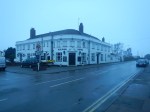
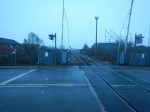
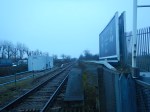
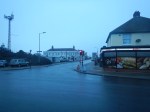
I can also remember sitting in the car outside the Dolphin Hotel, drinking an orange juice, whilst my father was inside having a quick beer.
These days, I suspect that in many pubs the children would have been allowed into the pub.
My reason for visiting the area of Felixstowe Beach station was to investigate the possibility of using the site as a terminus for the proposed tram-train to Felixstowe.
I doubt it is a feasible plan.
Roaming Around East Anglia – North Sea Floods Of 1953 Memorial Garden At Felixstowe
This picture shows the memorial garden to the forty-one who died in the North Sea Flood Of 1953 at Felixstowe.
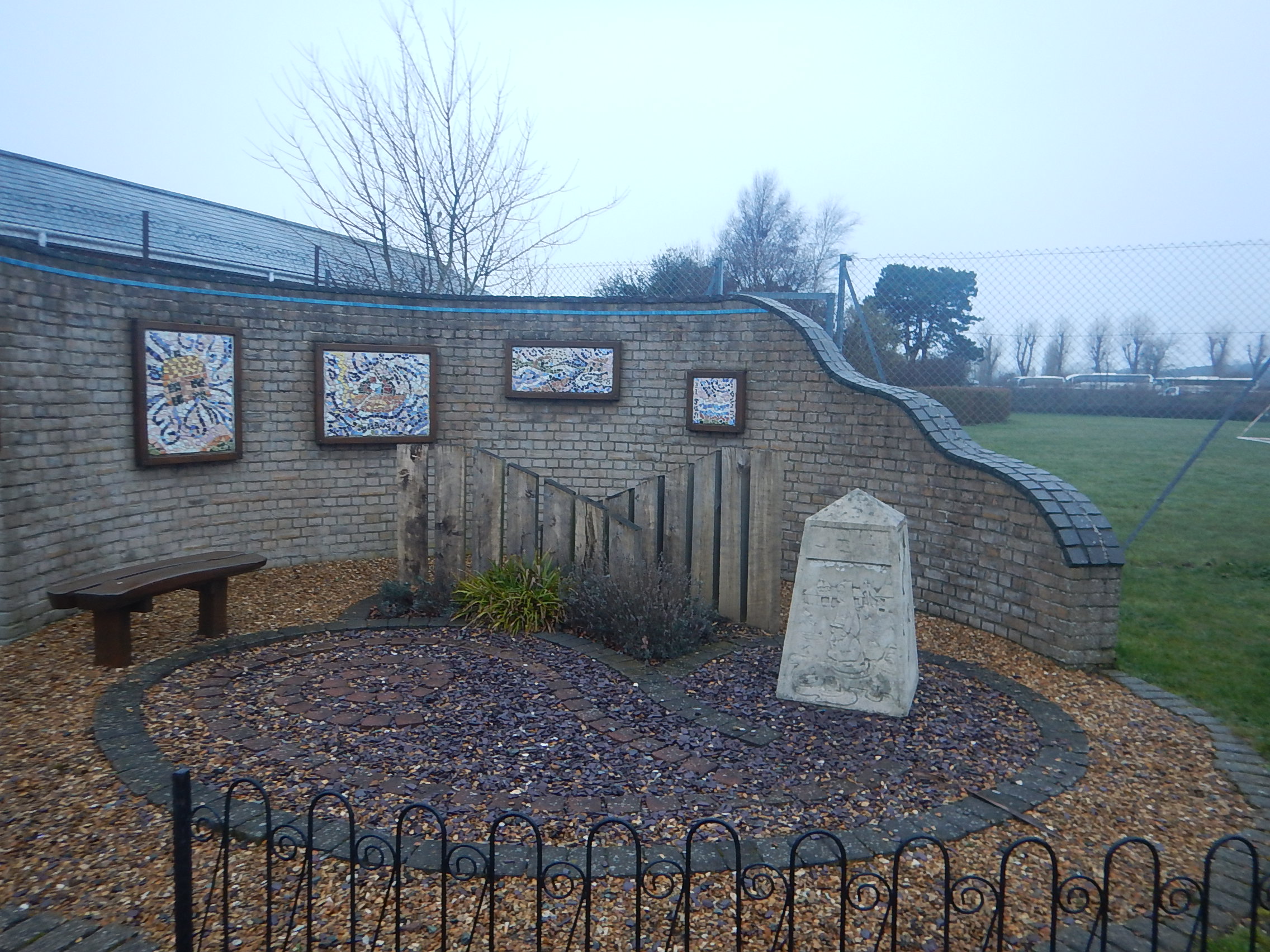
My memories of the floods are minimal, as I was only five. But I can remember my father pointing out to me, the story of Reis Leming at a later date.
Roaming Around East Anglia – The Ordnance Hotel, Felixstowe
The Ordnance Hotel in Felixstowe is long gone and has now been replaced by a Premier Inn.
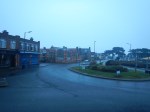
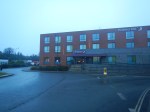

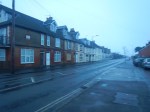
The Ordnance Hotel played a large part in my life, in that according to my father, I was conceived there.
It was rather strange to walk out of the front of the hotel and imagine in my mind, the view from perhaps in 1958, when we stayed as a family in the hotel.
In those days, you could still see the tide mark on the walls of the nearby houses, which was caused by the North Sea Flood of 1953.
Roaming Around East Anglia – Freight Trains Through Newmarket
The East West Rail Consortium plan to change the route of freight trains to and from Haven Ports; Felixstowe, Harwich and Ipswich to the West of Kennett station.
In this document on the East-West Rail Consortium web site, this is said.
Note that doubling of Warren Hill Tunnel at Newmarket and
redoubling between Coldham Lane Junction and Chippenham Junction is included
in the infrastructure requirements. It is assumed that most freight would operate
via Newmarket, with a new north chord at Coldham Lane Junction, rather than
pursuing further doubling of the route via Soham.
How would these changes affect Newmarket and the horse-racing industry in the town?
How Many Freight Trains Are We Talking About?
This table shows the number of freight trains going through Kennett station on the 1st of March 2019.
- 00 1 1
- 01 1 0
- 02 0 1
- 03 2 1
- 04 1 1
- 05 1 1
- 06 1 2
- 07 1 1
- 08 1 0
- 09 1 0
- 10 1 0
- 11 0 0
- 12 0 0
- 13 2 2
- 14 0 2
- 15 1 1
- 16 0 1
- 17 1 1
- 18 0 1
- 19 1 1
- 20 1 0
- 21 1 2
- 22 0 2
- 23 0 0
In the table the first figure is the hour, the second figure is the number of freight trains going West and the third figure is the number of freight trains going East.
This gives a daily total of eighteen trains going West and twenty-one trains going twenty-one trains going East.
But these figures will increase!
At present, Network Rail are adding a passing loop on the Felixstowe Branch Line. This article on Rail Magazine is entitled £60.4m Felixstowe Branch Upgrade Under Way and says this about the upgrade.
Installing the new line will create capacity for up to ten additional freight trains, each the equivalent of 76 lorries.
Not all will come via Kennett, as some will go via London.
The Port of Felixstowe will get larger and other improvements on the route across Suffolk will increase the number of freight trains passing through Kennett station.
I estimate that it is very likely that in a few years there will be two trains per hour (tph) in both directions for every hour of the day.
Rerouting The Trains Through Newmarket
Currently, these freight trains go via Ely, but the plan of the East West Rail Consortium would be to reroute all these freight trains through the Warren Hill tunnel and Newmarket station.
I suspect the reasons for the change of route could include the following.
Accessing The East West Rail Link From Newmarket Is Easy And Quick
If as expected the East West Rail Link joins the London-Cambridge Line just South of Cambridge South station, then the trains would run through Dullingham, Cambridge and Cambridge South stations, when running between the East West Rail Link and Newmarket station.
The East West Rail Link Will Be An Efficient Railway
Drive on a new motorway and the curves are smooth with relaxed gradients.
A new railway will be like that too and less energy will be used to power trains along its length.
Increasing the Capacity Through Ely Is Difficult
There is a very complicated track layout at Ely and increasing the number of trains might be difficult or very expensive.
Freight Trains Will Use The East West Rail Link To Avoid London
Take going between the Haven Ports and Bristol or South Wales.
Currently, these trains tend to go via London and in a couple of years will have to share tracks with London’s intensive Crossrail network between Acton Main Line and Reading stations.
Using the East West Rail Link, the trains would join the Great Western Main Line at Didcot, a few miles West of Reading.
How many services will use the East West Rail Link to by-pass London?
Freight Trains Will Use The East West Rail Link To Get To The West Coast Main Line
Currently, these trains either go via London or take the slow cross-country route via Peterborough to Nuneaton for the West Coast Main Line.
If they use the East-West Rail Link, they can join the West Coast Main Line at Bletchley.
The East-West Rail Link Will Be An Important Freight Link
I think that as the years pass and more freight terminals are created, we will see more freight trains using the East-West-Rail-Link and many of these trains will go through Newmarket.
What Problems Would The Rerouting Create In Newmarket?
I can see these problems.
Noise And Vibration
Four freight trains per hour will create a lot of noise and vibration as they pass through.
Frightening The Horses
This Google Map shows a corner of the gallops at Newmarket.
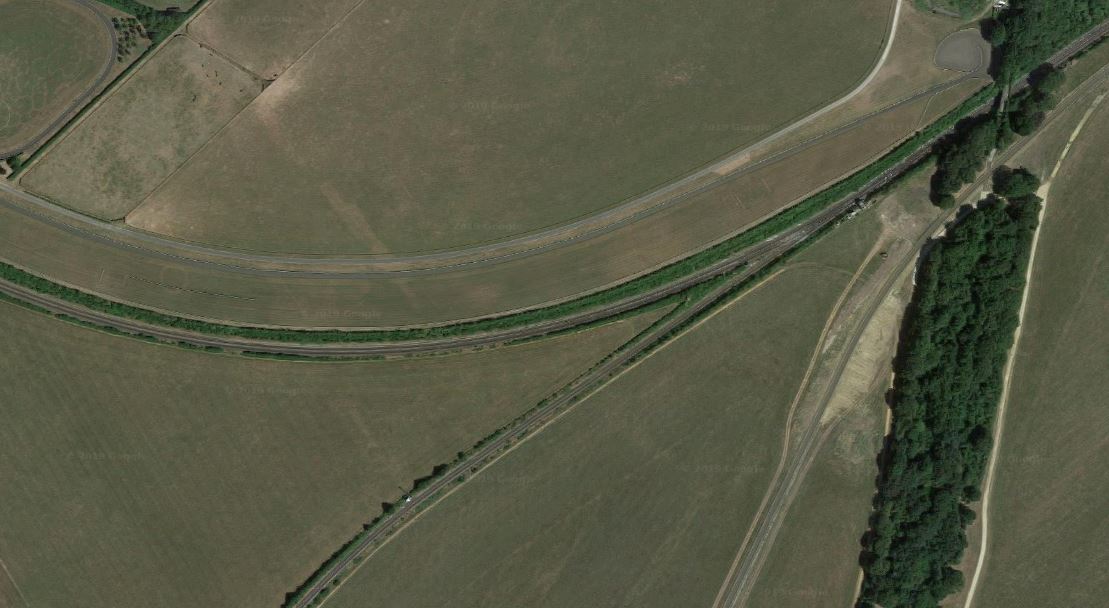
Note how the railway from the East splits into two, to the West of the band of trees running down the map.
- The top branch curves away to the North and goes through Soham to Ely.
- The bottom branch curves away to the South and goes through Warren Hill Tunnel to Newmarket station and then on to Cambridge.
Alongside, the Southern route is the Al Bahatri all-weather gallop, which is an important facility for training racehorses. It can just be picked out as a sand-coloured line.
Currently, nearly all the freight trains take the Northern route to Ely, keeping them away from the Al Bahatri.
But, if the main freight route was through the town, as planned by the East West Rail Consortium, then at least four freight trains per hour would run alongside the gallop. There could also be four passenger trains per hour.
Railway Electrification
It is unlikely, that the railway through Newmarket will be electrified, but under a different government, this could happen.
It might add another dimension to disturbance through the town, as you get pantograph noise and occasional sparks and flashes. I don’t know how horses will react, but from my own experience years ago, they do react to electrical fields.
The Rail Freight Industry
Look at most freight trains on the UK’s railways and the locomotive on the front, is a noisy, smelly and polluting Class 66 or Class 70 locomotive.
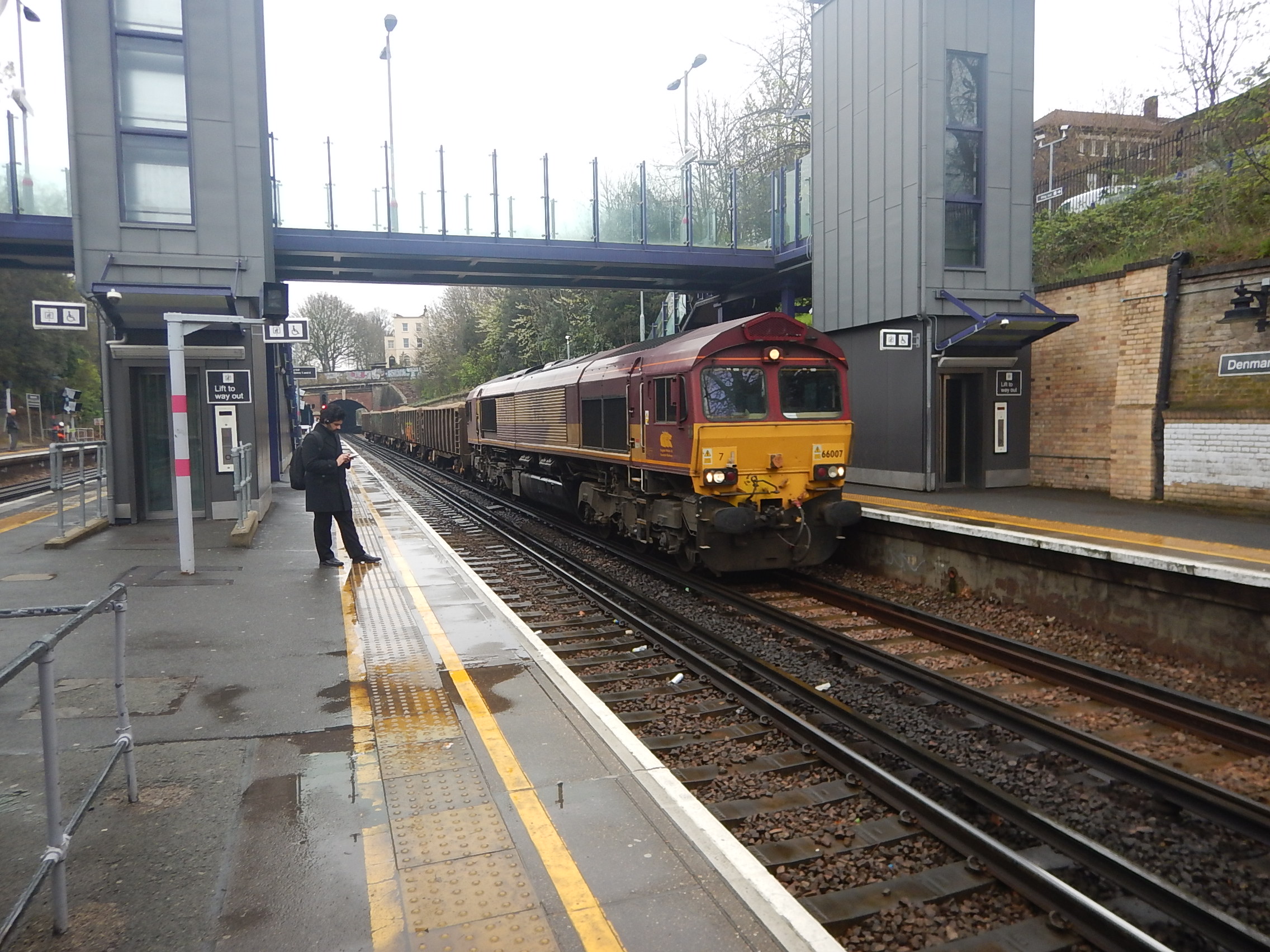
You’ll see these American imports, which don’t meet the latest emission regulations, hauling freight trains, even when there are overhead wires for electric haulage.
Why?
Because rail freight companies are so driven by accountants, that they can’t be bothered to obtain more modern diesel locomotives, that are quieter, more powerful and less polluting.
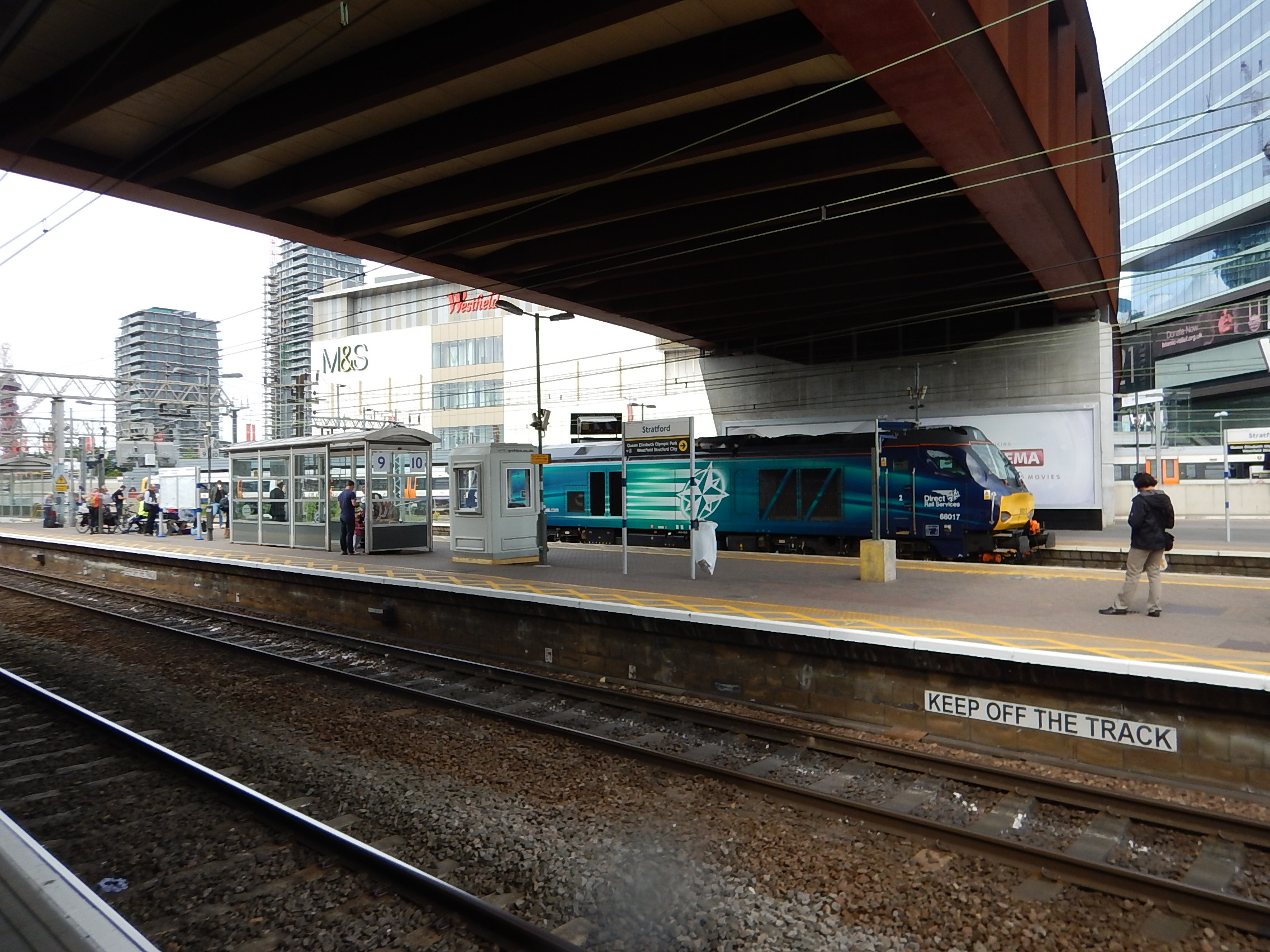
The picture shows a modern Class 68 locomotive at Stratford. These are quieter and meet most of the noise and emission regulations.
Mitigating The Problems
I’ll deal with various methods, that could be used, starting with the easiest.
A Level Railway Through The Town
It looks like the Victorian engineers, who built the railway through the town, built it as level as possible, so that steam locomotives didn’t have to work so hard in the Warren Hill Tunnel, which I don’t think has a chimney for smoke.
Modern engineers will ensure that the railway is as level as possible, with gentle gradients and curves all the way between Kennett and Dullingham stations.
Passenger Trains With Batteries
Greater Anglia’s new Class 755 trains are powered by both overhead electrification and onboard diesel engines. The latter sit in a power pack in the middle of the train.
Not having seen or heard one of these Swiss-built trains in the metal, I can make no comment as to the noise and vibration of these trains, but they should be quieter than the current three-car Class 170 trains.
It does appear that passenger trains built in the last years are much quieter, as they are much more aerodynamically correct and slippery, so they generate less noise.
The new trains have also been ordered for the South Wales Metro. But the Welsh trains will additionally be fitted with batteries to avoid some difficult electrification in the Valleys.
So if the passenger trains prove to be noisy through the town, which I doubt they will be, there will be the option of adding batteries to avoid the use of diesel power.
It is my belief, that technology will ensure that passenger trains will not be a problem.
More Environmentally-Friendly Freight Locomotives
As I said earlier, smelly, noisy and polluting freight locomotives are a big problem.
This is not just a problem for places like Newmarket with special circumstances, but on railways like the London Overground and those in Central Birmingham, Leeds and Manchester,, where suburban electric railways have to accommodate heavy rail freight.
The railway locomotive manufacturers have designed solutions for the problem in recent years.
Stadler, who are an innovative Swiss company have started to manufacture a Class 93 locomotive, which can run on diesel, electric and/or battery power. I’m fairly sure, that one of the design goals of this locomotive is to be able to haul a heavy freight train between Felixstowe and Peterborough, using electric power where it is available and a mix of diesel and battery at other times.
At Newmarket if the new double-track was well-designed and almost level, I suspect that a Class 93 locomotive could haul a train between Kennett and Dullingham stations on battery power.
Locomotives of this type should be compulsory on all freight routes through sensitive areas.
The government must legislate, as left to themselves the rail freight companies will sit on their hands and wallets.
One of the conditions of a double-track railway through Newmarket, should be that only locomotives that meet the latest noise, vibration and pollution standards, like the Class 93 locomotive should be allowed.
Quieter 100 mph Freight Trains
Karl Watts, who is a disruptive innovator and CEO of the Rail Operations Group, has bought the first ten Class 93 locomotives and intends to use them to haul 100 mph freight trains, where the routes allow.
On the electrified Great Eastern Main Line between Ipswich and London, the operating speed is 100 mph. But freight trains trundle up and down at 75 mph, thus slowing all of the passenger services.
Watts plans to use the Class 93 locomotives with new 100 mph container wagons to run freight trains at 100 mph on this and other routes, which would increase the freight and passenger capacity of the line.
New 100 mph freight wagons will be smoother, quieter and used through Newmarket at an appropriate speed would remove a large proportion of the noise and vibration.
Again, it would need investment from the freight companies.
However, modern freight trains hauled by modern hybrid locomotives like the Class 93 could significantly remove noise and vibration.
Lengthen Warren Hill Tunnel
A second bore will be dug to double-track the kilometre long Warren Hill Tunnel.
Some rail tunnels have been extended with covers and this technique might be possible at the Newmarket station end of the tunnel. The techniques exist, so that housing or other developments can be built on top of the railway.
Techniques like this not only suppress noise and vibration, but create much needed housing.
Acoustic Barriers
You see these a lot in Germany to reduce noise and vibration from railway lines in sensitive area, but rarely in the UK.
Conclusion
It will be difficult to put a double-track railway through Newmarket, but I believe that using modern rolling stock and some advanced construction, that a solution can be found.
Newmarket should dig in its heels and only accept the best to force rail freight companies to get their act together.
Government too, should enforce the current regulations on diesel locomotives, which most of the current locomotives do not meet.
 The Anonymous Widower