London’s First Underground Roller Coaster
This picture shows a cross-section of the massive Liverpool Street Crossrail station, which will connect Moorgate and Liverpool Street stations when it opens in December 2018.
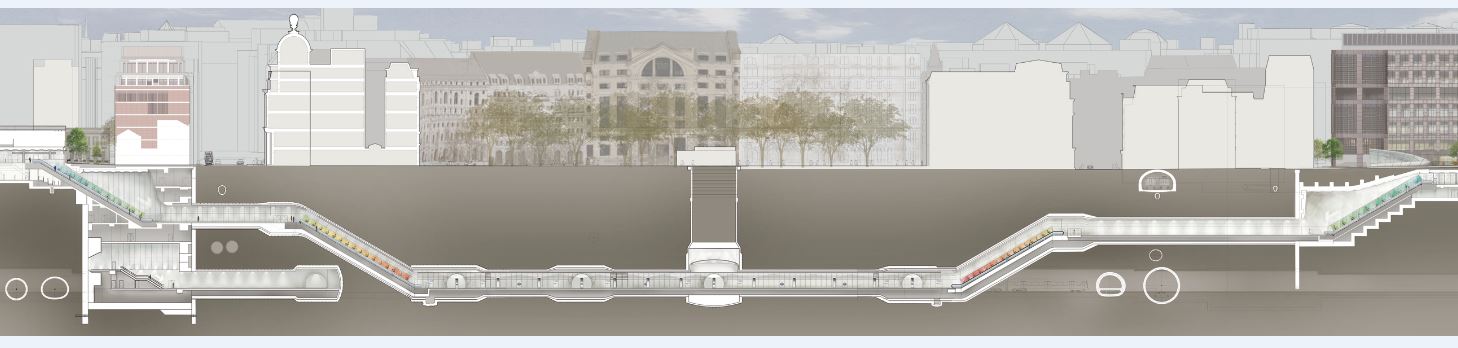
Note.
- Moorgate station is on the left.
- Liverpool Street station is on the right.
- In the middle looking like a giant juicer is the ventilation shaft in Finsbury Circus.
- The Crossrail tunnels, which consist of two running tunnels and a pedestrian walkway between them are at the deepest level.
- There are escalators and lifts all over the place.
Suppose you are walking from street level at Liverpool Street station to street level at Moorgate station in heavy rain and you don’t want to get wet.
You would take the following route.
- Enter Liverpool Street Underground station.
- Take the escalators down from street level to the intermediate level.
- Walk along the passage and take the escalators down to the Crossrail level.
- Walk along the central pedestrian walkway between the two Crossrail running tunnels.
- Take the escalators up to the Intermediate level.
- Take the escalators up to street level in Moorgate Underground station.
You would actually walk a shorter distance, than you do now, as the four escalators would carry you forward.
In Liverpool Street Crossrail Station Disentangled, I showed this schematic of the station complex.
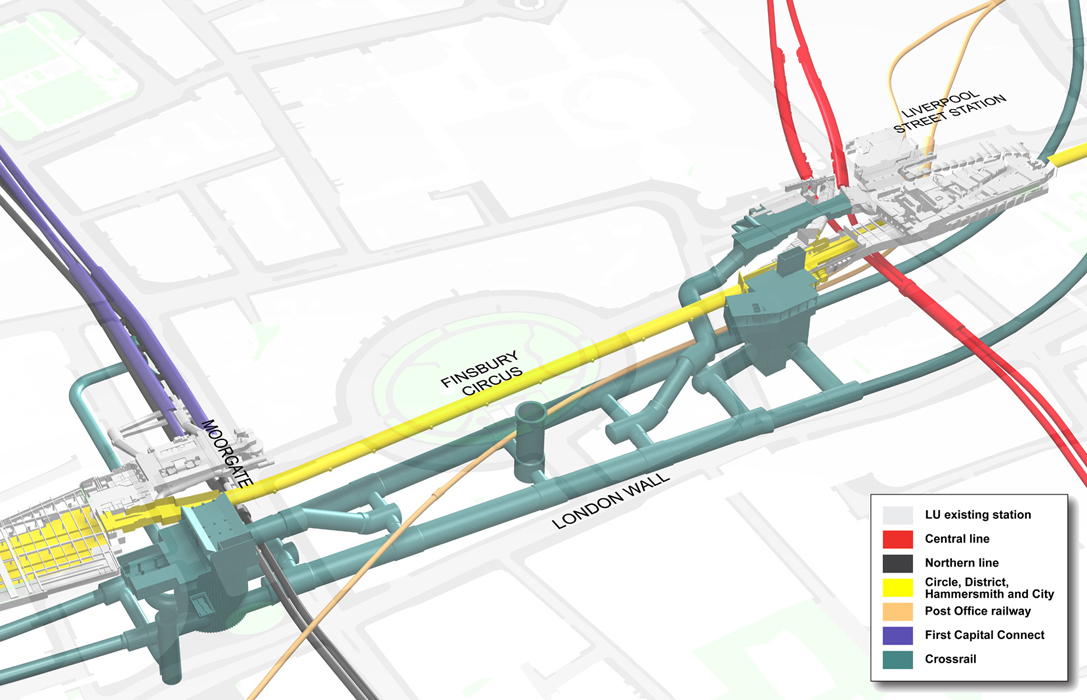
Note how the Northern Line passes through Moorgate station and the Central Line passes through Liverpool Street station, both at right-angles to Crossrail.
This image enlarged from the first shows a cross-section of Moorgate station.

Note the two circles under the escalator, which I suspect are the tunnels for the Northern Line.
There is probably some intricate spaghetti at this end of the station connecting the Bank branch of the Northern Line to Crossrail, in addition to the escalators.
But it means that if you want to go from Liverpool Street station to the Northern Line, you’ll descend to Crossrail and then ascend to the Northern Line.
This will be probably easier than the current long walk and the escalator descent at Moorgate station.
This image enlarged from the first shows a cross-section of Liverpool Street station end of the Crossrail station.
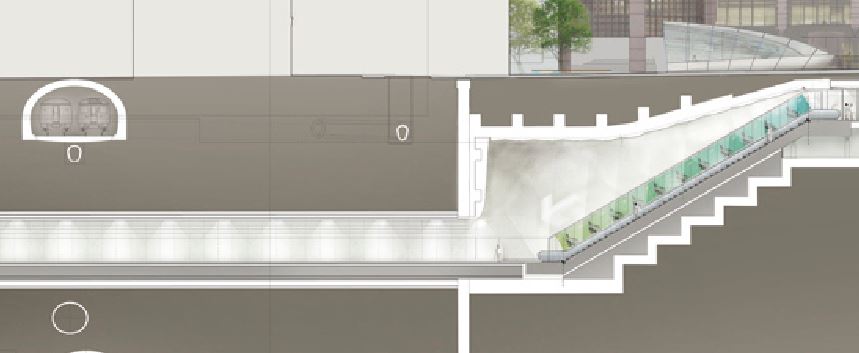
Note.
- The glazed entrance to the station.
- The Central Line tunnels.
Again, I suspect the spaghetti is intricate.
But from the schematic it would appear there’s a good link from the central tunnel to the Central Line.
Conclusion
I hope the signage and information will be good.
Everybody Who Thinks HS2 Is A Waste Of Money Should Read This!
This article on Global Rail News is entitled Economic benefits of HS1 revealed as high-speed line turns 10.
This is the first three paragraphs.
HS1 Ltd has assessed the economic impact of the UK’s first high-speed line as it approaches a milestone 10th year.
According to findings, HS1 has attracted a minimum of £3.8 billion in economic and social benefits since domestic services began, which was two years after its official opening in November 2007.
In addition, 5,766 tourism sector jobs have been created and supported by HS1 since the opening.
So I’d say that was a success.
Banksy At The Barbican
These pictures show Banksy’s new art at the Barbican.







As it’s in a tunnel, that is probably owned by the City of London Corporation, I doubt it will be removed or stolen.
Is Banksy going upmarket choosing underneath the Barbican?
Breakfast By Cromwell Tower
I had breakfast in the Cote Brasserie by Cromwell Tower in the Barbican, where I used to live with C in the 1970s.

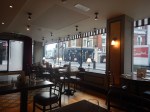


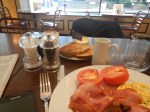



It was an excellent breakfast, well-served by a charming young lady.
The only problem was that they don’t have a gluten-free sausage.
Filming Trains At Samphire Hoe
We moved on to Samphire Hoe and Dover and I took these pictures as walked up and down the line.

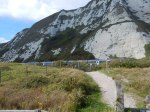


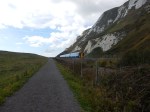
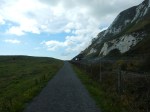


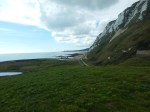
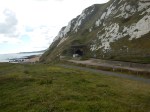
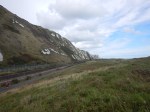


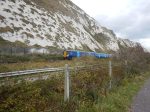

The others had gone off to shoot elsewhere and I spent a pleasant time walking along the line and drinking tea in the sun.
Filming Trains On Rochester Bridge
This weekend, I’ve been involved in helping a Japanese company take video of Class 395 trains for one of their corporate clients.


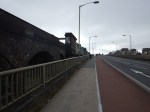
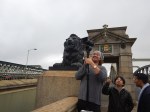

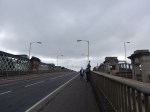
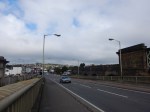
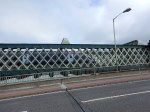
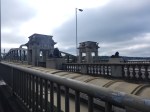
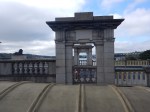
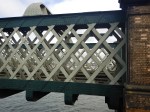
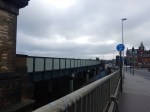
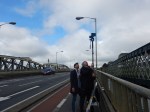
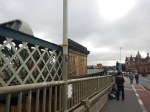
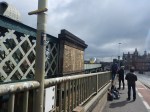
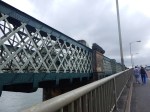
These pictures show the filming at Rochester on the magnificent Rochester Bridge over the River Medway.
London Businesses Endorse Calls For ‘Crossrail for the North’
The title of this post is the same as that of this article on Rail Technology Magazine.
This is said.
A statement from the London Chamber of Commerce and Industry (LCCI) admitted that travelling in the north was a “tortuous, time-consuming experience” and that improved travel in the region needed to be seen as a top future priority by the government.
But perhaps this is this most telling statement, from the LCCI’s Policy Director.
It is interesting to note that the distance between Leeds and Liverpool is roughly the same as the whole length of London Underground’s Central Line – yet that northern journey can sometimes nearly take double the time,
The London Chamber of Commerce and Industry have a very valid point.
Some typical journeys between Liverpool and Leeds.
- Liverpool to Newcastle train – One hour twenty-eight minutes
- Liverpool to Scarborough train – One hour forty-six minutes
And across London from Ealing Broadway to Stratford
- Central Line – 53 minutes – Actual
- Crossrail – 27 minutes – Predicted
I would read the following into these figures.
- Why does a Scarborough service take twenty minutes longer than a Newcastle one?
- Creating a new route can create substantial saving of time.
This suggests to me a two phase approach to creating a better service across the North.
In the first phase new trains, track and signalling improvements and more efficient operation, are used to cut the time as much as possible.
In The Pressure For More Rail Electrification, I speculated that the following times could be possible.
- Liverpool to Manchester Victoria – 30 minutes
- Manchester Victoria to Huddersfield – 28 minutes
- Huddersfield to Leeds – 22 minutes
When the following are done.
- Liverpool to Manchester Victoria could be speeded up by a couple of minutes, after the addition of the fourth track at Huyton.
- According to the time table, most dwell times are reasonable, but nine minutes is allowed at Manchester Victoria.
- Manchester Victoria to Stalybridge electrification is completed.
- All trains that can’t cruise at 100 mph are removed from the route.
One, three and four are already underway and if the track were to be improved across Chat Moss, which currently has a 75 mph speed limit, I reckon that a reliable time of 60-70 minutes would be possible with a Class 800 train.
This would use electrification between Liverpool and Stalybridge and diesel from there to Leeds.
But even with selective electrification between Stalybridge and Leeds, the sort of times the North needs will not be attained.
Some form of new route will be needed in phase two of speeding up trains between Liverpool and Leeds.
A Tale Of Two Stations
This article from City AM is entitled Opinion: How a mixture of new business, Crossrail and, finally, homes will transform Tottenham Court Road forever.
This is said.
In recent years, the area around Tottenham Court Road has gone through a marked transformation. Once considered the scruffy end of Oxford Street, with no real identity, the area has become a thriving crossroads between London’s creative and technology industries.
In the middle of all the development is Tottenham Court Road station, which is being developed for Crossrail.
This morning Is Open House and I went a few miles South on the East London Line to Peckham Rye station, where I took these pictures.
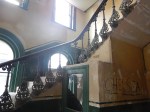


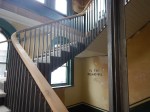
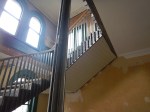
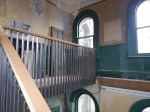
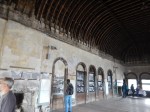
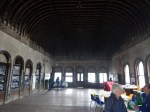

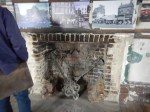
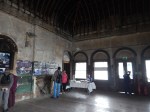
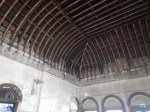
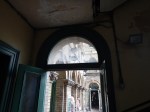


The old Victorian waiting room is being transformed into possibly a community space.
This is only one of a number of developments in the station and it is to be hoped that the transformation of the building designed by Charles Henry Driver, will start the upgrading of Peckham.
Look at the classic 1980s-era extension in brick, by British Rail in the last picture. Incarceration for life with very hard labour, is too soft a punishment for the idiots who designed and sanctioned that monstrosity.
The East London Line Platforms At Whitechapel Station Now Appear To Be Full Length
Because of Crossrail works, Whitechapel station had to wait to get full-length platforms for the five-car Class 378 trains on the East London Line.
It at last seems the platforms are now extended.
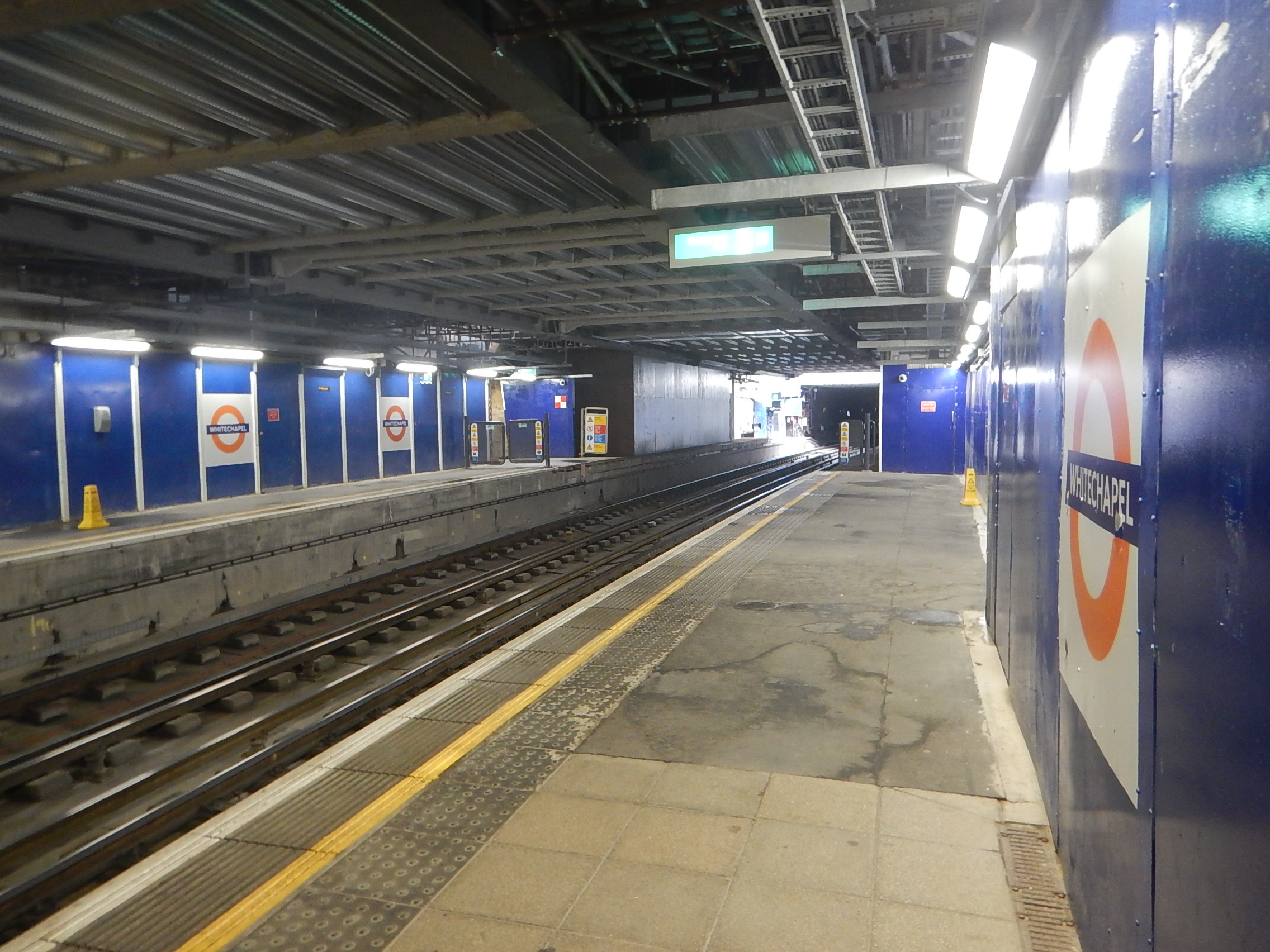
But then it is only just over a year until December 2018, when Whitechapel station opens for Crossrail services between Paddington and Abbey Wood stations.
A New Era For Abellio ScotRail
How many train operating companies in the world would open a new rail service using forty-year-old refurbished trains with the slogan of A New Era?
According to the picture in this article on Global Rail News, which is entitled Aberdeen Launch For Scotland’s First HST, Abellio ScotRail have just done that!
I hope ScotRail are not tempting fate!
The service will be phased in from next Summer and I’m sure enthusiasts will book the first trains solid, such is the affection for these iconic trains.
GWR are also using the trains in a similar concept for local services between Cardiff and Penzance.
After these refurbishments, there will still be quite a few units left.
I can’t believe that none of them will find innovative uses with other train operators.
How about?
Norwich to Liverpool
East Midlands Trains run a service between Norwich and Liverpool, which does seem to suffer from fluctuations of use. It can be very busy, if say Norwich are playing Nottingham Forest and quiet at other times.
In some ways it the forgotten East-West route in England.
Derby and Nottingham to Liverpool and Manchester are journeys, where it is easier to drive.
Running the route with a refurbished and shortened HST might be a chance worth taking.
The Heart Of Wales Line
The Heart of Wales Line is an interesting possibility, to open up the centre of Wales.
The line is maintained as a diversion route for both much large passenger and freight trains, than the trains that usually work the route.
Along The North Wales And Cumbrian Coasts
If the concept works in Scotland, it will surely work on these two lines. Especially, in the summer!
Conclusion
Terry Miller’s iconic High Speed Train will outlive us all!
 The Anonymous Widower