Channel 4 Sacks John McCririck
Channel 4 has sacked John McCririck, one of their horse racing team. He blames ageism in this report on the BBC.
I’m not bothered one way or another if he appears on Channel 4 Racing, as he can be almost as irritating as the adverts that appear on the channel.
I’ve spoken to him a couple of times and although his views can be outspoken, I’ve never found him anything but charming and courteous. In fact a friend was interviewed by him, for their screen test for television and found he put them totally at ease.
I have a feeling that McCririck will appear elsewhere on television and/or radio, as his knowledge of horse racing is undoubtedly at the highest level.
There’s A Lot Of Skyfall About
Skyfall seems to be everywhere and especially on the buses.







Usually, lots of bus adverts indicate that a film isn’t as good as it might be.
I shall go, as I once bought a house from Daniel Craig‘s stepfather.
Some Financial Ramblings About Wonga
I’ve never liked Wonga, ever since I saw a presentation of it at an Internet awards ceremony a few years ago.
There is an article in the Sunday Times today, which gives a few figures about the company. It apparently lent £375m last year and has made a debt provision of more than £66m. Or about 17.6 %.
That is a high figure and is totally out of line with good, well-run and profitable finance companies. I used to part-own one and our bad debt ratio was if I remember correctly about five percent. Which was well below the industry average at the time.
I also have my own figures from Zopa, where I invest money to lend to third parties. My bad debt to invested money ratio has never exceeded one percent. But I do have a fairly conservative lending policy.
I have done extensive financial modelling in the area of finance companies and like to think, I know why well-run ones make a lot of money.
The first rule is to only lend to those with good credit ratings. Here, Zopa and Wonga are two very different animals.
Zopa creams the top of the market, acts like a normal finance company to borrowers and cuts its investors in on the deal. In fact, I wonder how many Zopa borrowers think of Zopa as a cheap source of finance with excellent terms and conditions?
Wonga on the other hand is a bottom feeder, targeting those with problems and might well look like a loan shark to many possible customers.
Other lenders like say Nationwide, Lloyds and the other reputable banks and finance companies are closer to Zopa, but probably not as much as they’d like to be.
The second rule is making sure that borrowers keep their payments up. Wonga don’t seem to be doing this judging by the bad debt ratio of 17.6 %, whereas Zopa is probably much better than the average for a reputable bank or finance company,judging by my experience. My ex-partner in the finance company feels that the Zopa figures are better than any he’s seen.
Wonga’s model is different to any other finance company. Banks and in effect, Zopa, get their money back over a period of time, typically measured in months or years. Whereas Wonga, probably gets it back in days, so the money goes round and round in the course of a year. Or it should do!
You might consider that Wonga is a money rental company, rather than a lender. Even if it is one of last resort.
At present the Wonga model seems to be working, with a profit of about £26 on each transaction, of which the average size is £150. The Sunday Times doesn’t give the average length of each loan. Estimating what a typical reputable company might make on each deal, it looks like Wonga are really making quite a bit more money!
But there are two sides to every financial equation; money in and money out.
We ran our finance company on a very lean basis and if you are reputable and you get the business you need to grow the business as you want, then you don’t really need to spend too much money on things like advertising or promotion, as your customers do that for you. Even the banks don’t spend much on promoting their loan services! But they are uniquely placed to sell their loans with a big branch network.
Wonga are really spending it, judging by the adverts and the sponsorship you see. Recently, it has been announced that they are pursuing a sponsorship deal at Newcastle United. Remember that the world of personal finance is littered with companies that thought they had a better model, but in fact didn’t. I’m old enough to have seen quite a few!
Wonga’s financial model seems to rely on putting your name in front of as many mugs as you can to carry out its bottom feeding.
If you compare Wonga with any reputable finance company, it would be unlikely that the latter would fall into trouble over its borrowers, as it would probably treat them fairly and respectfully. Using Zopa as an example, it only lends to those with good credit ratings, makes no charges to those, who don’t get loans and generally charges a lower interest rate.
Wonga too, has already aroused the ire of some politicians like Stella Creasy over its policies and high interest rates. Politicians it should be said, need easy targets, like bankers with huge bonuses and payday lenders. Wonga in particular is a very easy target.
My financial modelling experience though does lead me to an important conclusion.
Wonga’s model will only generate profits, whilst there is a large pool of willing borrowers. At present there are obviously enough, but as more and more suffer because of defaulting to Wonga, will the general public get the message that has been preached by the papers, like the Sun here and learn to use alternative sources of credit, like credit unions. Or in fact will they, just manage their finances better?
I gave the example of the Sun, as it is more likely to be the paper of choice of a possible Wonga borrower. On the other hand, there are some nice pieces about Wonga in the Guardian, the Telegraph, the Mail and the Mirror It is also interesting to read some of the comments on a report of the Newcastle United sponsorship deal in the Newcastle Journal.
There is another big difference between the model Zopa and other reputable banks and finance companies use and that of Wonga. The former rely heavily on personal recommendations from satisfied customers to get business. Wonga would probably like to too, but with their high admitted default rate, the number of recommendations would be lower, especially if you’re being chased by them for the money.
So this all makes me think that at some time, Wonga will be unable to sustain the current growth. Especially, if legislation to limit their interest rates of over two thousand percent was passed by parliament.
I wonder whether they have already found the limit to growth, given the Newcastle United deal and the fact that the annoying bus adverts in London have reappeared in large numbers. After all what is a shirt sponsorship deal, but getting your company’s name in thousands of places on the street. If you are selling a quality product like say Emirates, Samsung, Standard Chartered or Waitrose, it doesn’t probably matter having thousands of football fans promoting your brand, but if you’re a payday lender, it might just be counter-productive It would be very informative to read a learned paper on the effectiveness of shirt sponsorship.
Corsets On The Underground
I saw this advert a couple of times on the London Underground today.

Corsets On The Underground
Incidentally, I’ve never read the original book or seen any of the various films. You have to ask how Eve Sinclair collaborated with Charlotte Bronte.
Lingerie Adverts On The Tube
It was always said in the 1960s and before, that lingerie adverts were put on the Underground escalators, as because people were passing them at speed, they couldn’t write anything on them.
Then a few years later, certain women, thought the adverts were degrading and started putting stickers on them.
And then, yesterday I was ascending in Bond Street station, where a large number of copies of the same woman on video screens, was showing off her Marks & Spencer’s bra.
I suppose because the video lasted only a few seconds before changing to something else, this stopped them being defaced.
Chasing Jessica
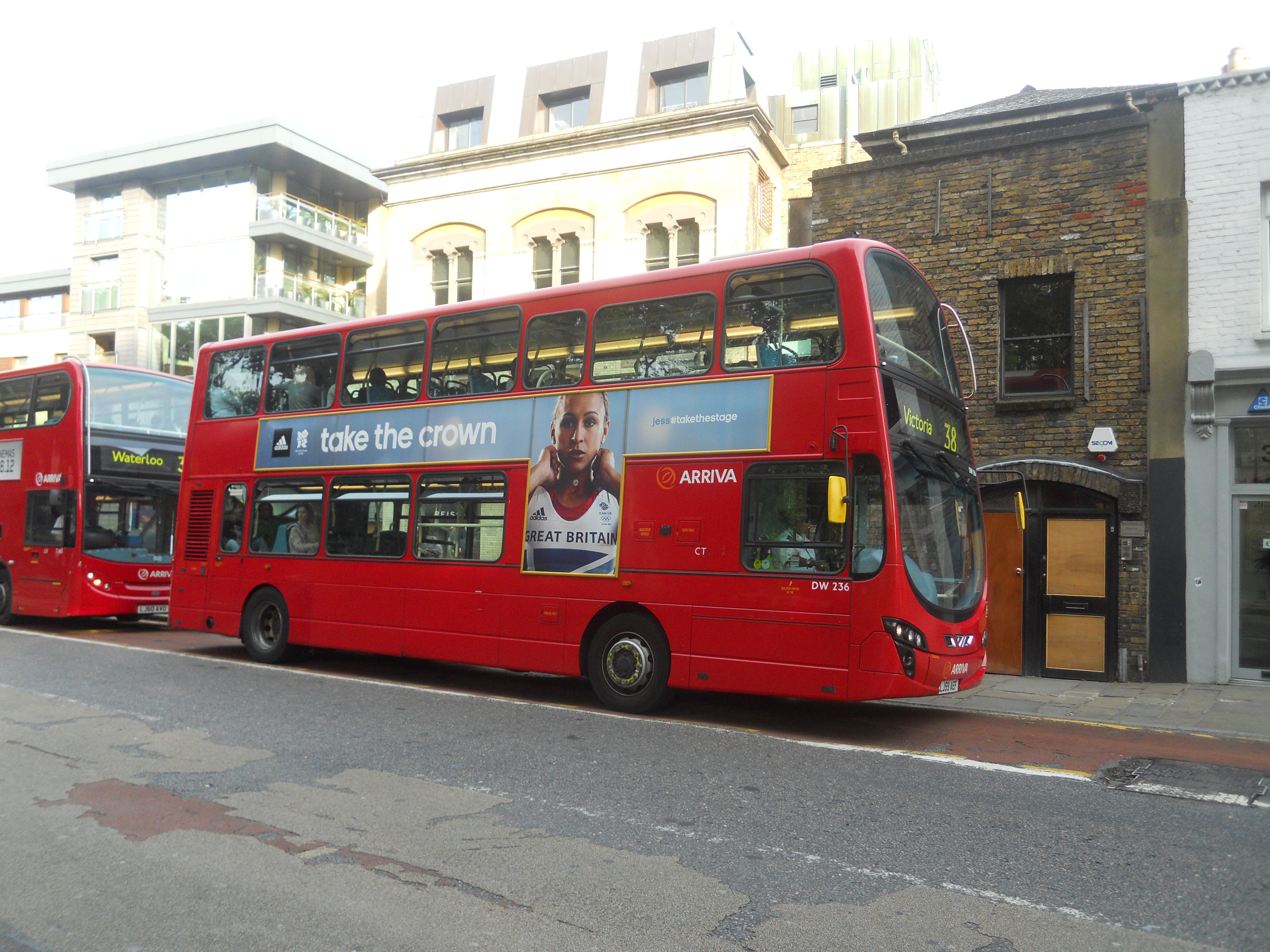
I’ve been trying to get this iconic advert using Jessica Ennis for a few days now, before it disappears.
Chasing Jessica
I finally caught it on a 38 bus at Islington tonight.
Judging By The Number of Adverts, Keith Is A Lemon
The film Keith Lemon is getting a lot of bus adverts.

Judging By The Number of Adverts, Keith Is A Lemon
This generally means only one thing; the film is terrible.
Advertising At The Olympics
The Olympics is not an advert-free zone.

Advertising At The Olympics
Surely these little cars, used to pick up the shots, discuses and hammers are nothing but blatant advertising for Minis.
Sochi 2014 Advertises On London Buses
I caught this advert for the Winter Olympics in 2014 at Sochi on a 56 bus.

Sochi 2014 Advertises On London Buses
No offence to the Russians and I did enjoy a day trip to Moscow once, but I won’t be going.
Skiing is just not my scene, except on the television.
Newham Pushes The Bike Out
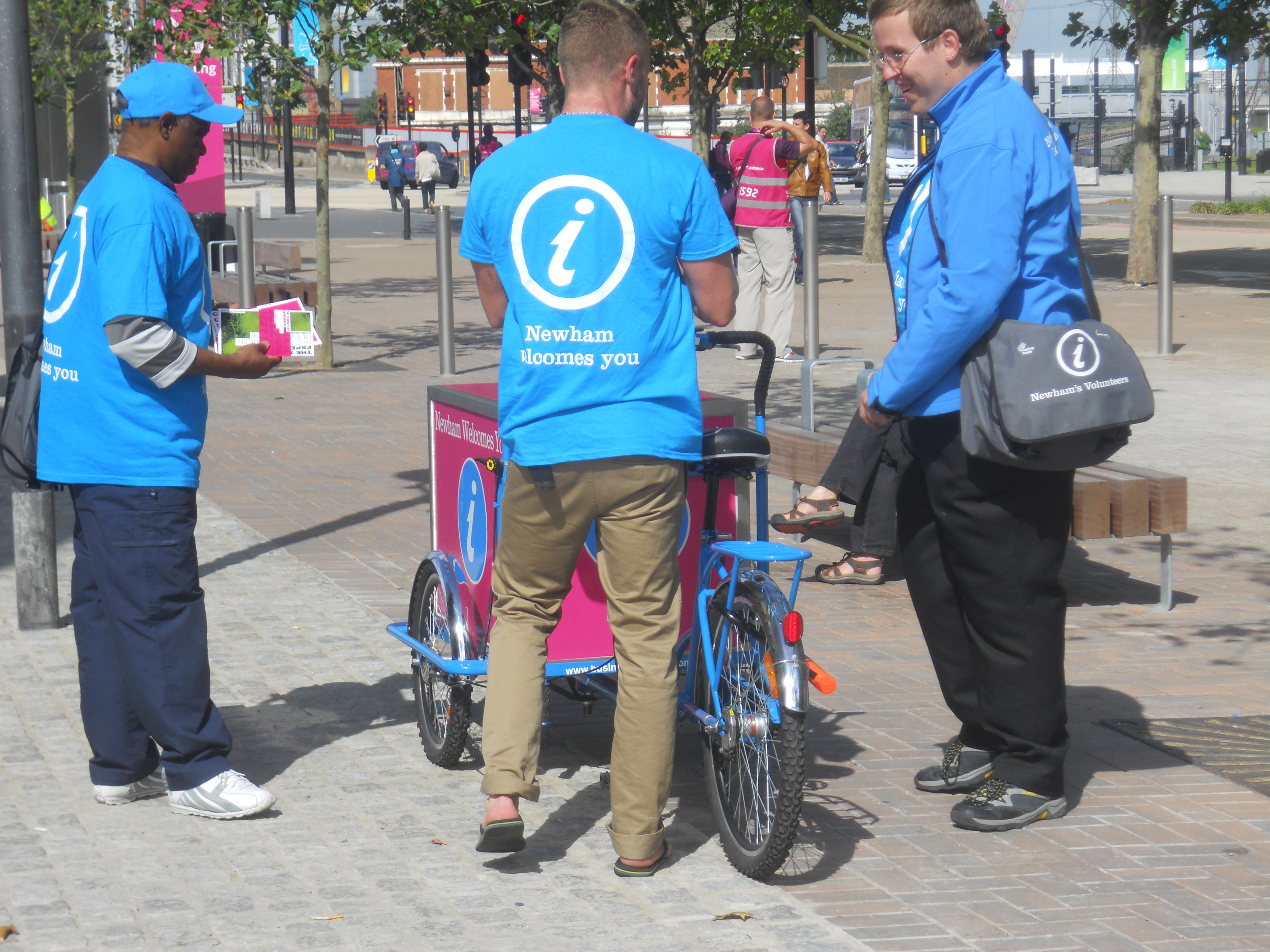
Newham was welcoming visitors and handing out information from a bicycle with a large box on the front, much like those used to dispense ice cream.
Newham Pushes The Bike Out
It’s a simple eco-friendly method and should be used more often. The picture incidentally was taken by the cable-car and it was quiet.
 The Anonymous Widower