Tregoss Passing Loop On The Atlantic Coast Line
To increase the frequency of trains on the Atlantic Coast Line between Par and Newquay stations, from two-hourly to hourly, Network Rail are proposing to add a passing loop at Tregoss Moor.
This OpenRailwayMap shows the railway as it runs across the moor.
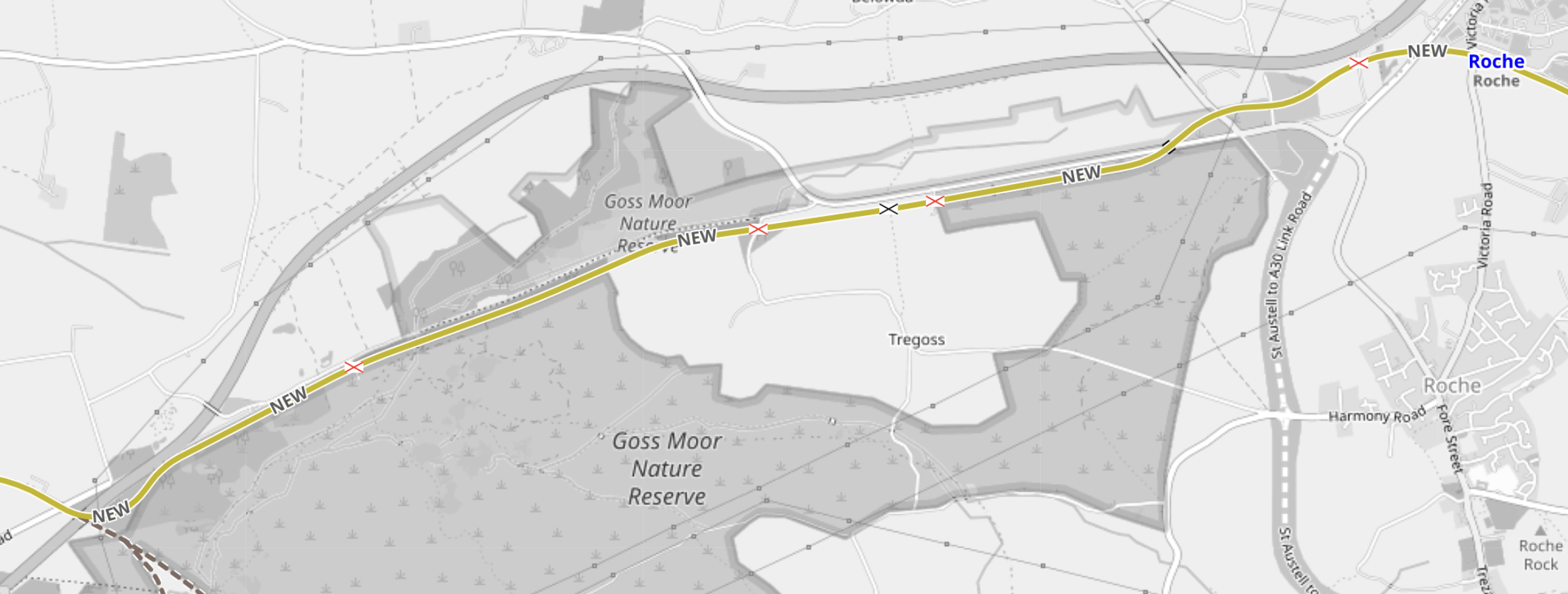
Note.
- Roche station in the North-East corner of the map.
- The red and blue crosses indicating level crossings on the route.
- The map seems to indicate a number of power cables.
I took these pictures from the train, as I came down to Par station.









Note.
- I was sitting on the right-hand-side of the train, looking West.
- In addition to the cables, there are about half a dozen wind turbines.
- Roche station is typical of the intermediate stations on the line – Small, functional and tidy, with a few car parking spaces.
On past form, I suspect that Network Rail could squeeze in a passing loop, that wouldn’t stir up too many antis.
I have one thought,
The St. Austell Link Road
This Google Map shows where the A30 to St. Austell Link Road is being built.
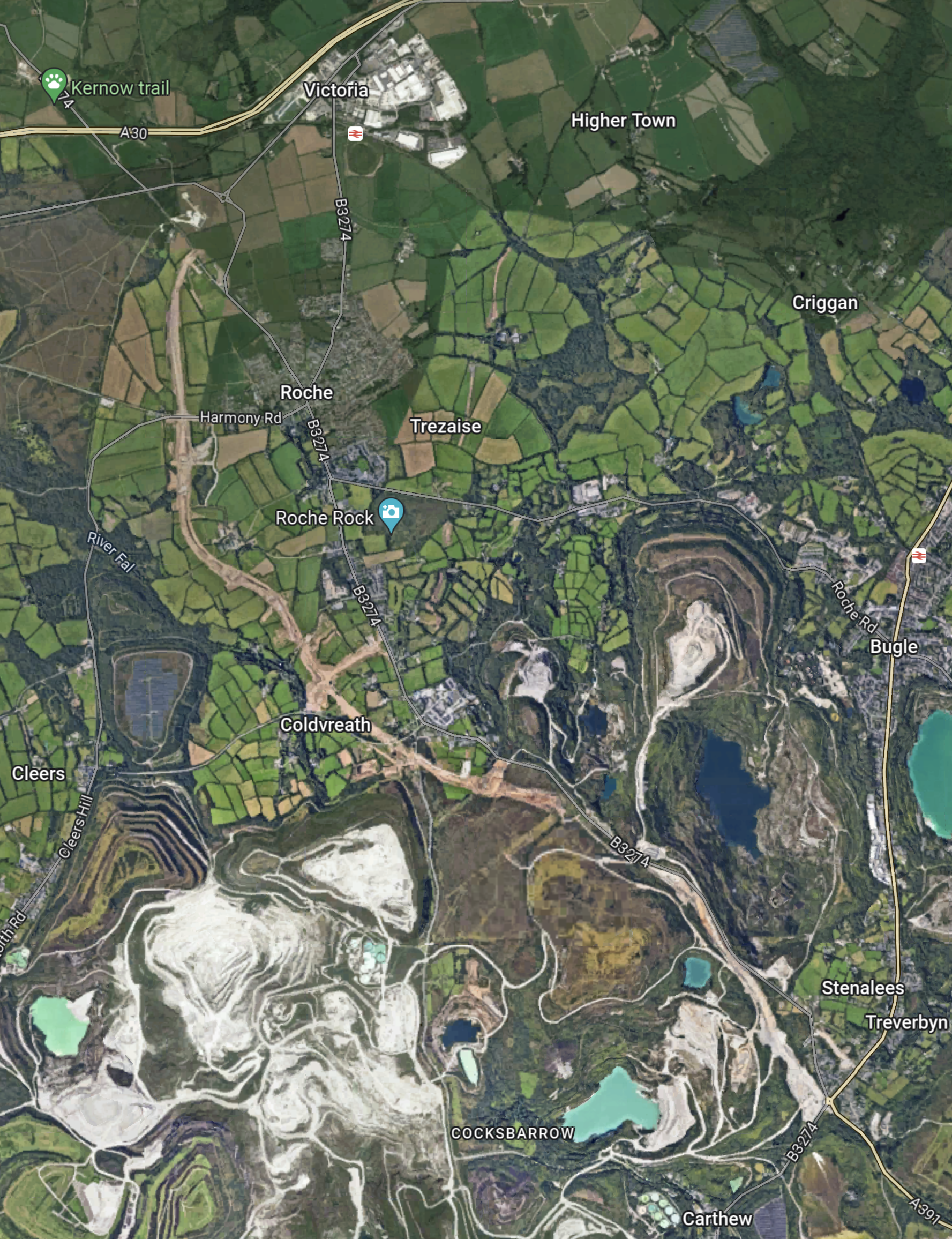
Note.
- The station at the top of the map by the area called Victoria and to the West of Higher Town is Roche station.
- The station at the right edge of the map about halfway down is Bugle station.
- The South of the map is covered by white china clay workings.
- Running diagonally across the map is the A30 to St. Austell Link Road.
This page on the Cornwall web site, says this about the road.
The St Austell to A30 link road will connect the old A30 near Victoria to the north and the A391 at Stenalees roundabout to the south. It will be a new 3.9 mile single carriageway road. It is a vital link to bring opportunities to the area.
This Google Map shows the area, where the Link Road will connect to the A30.
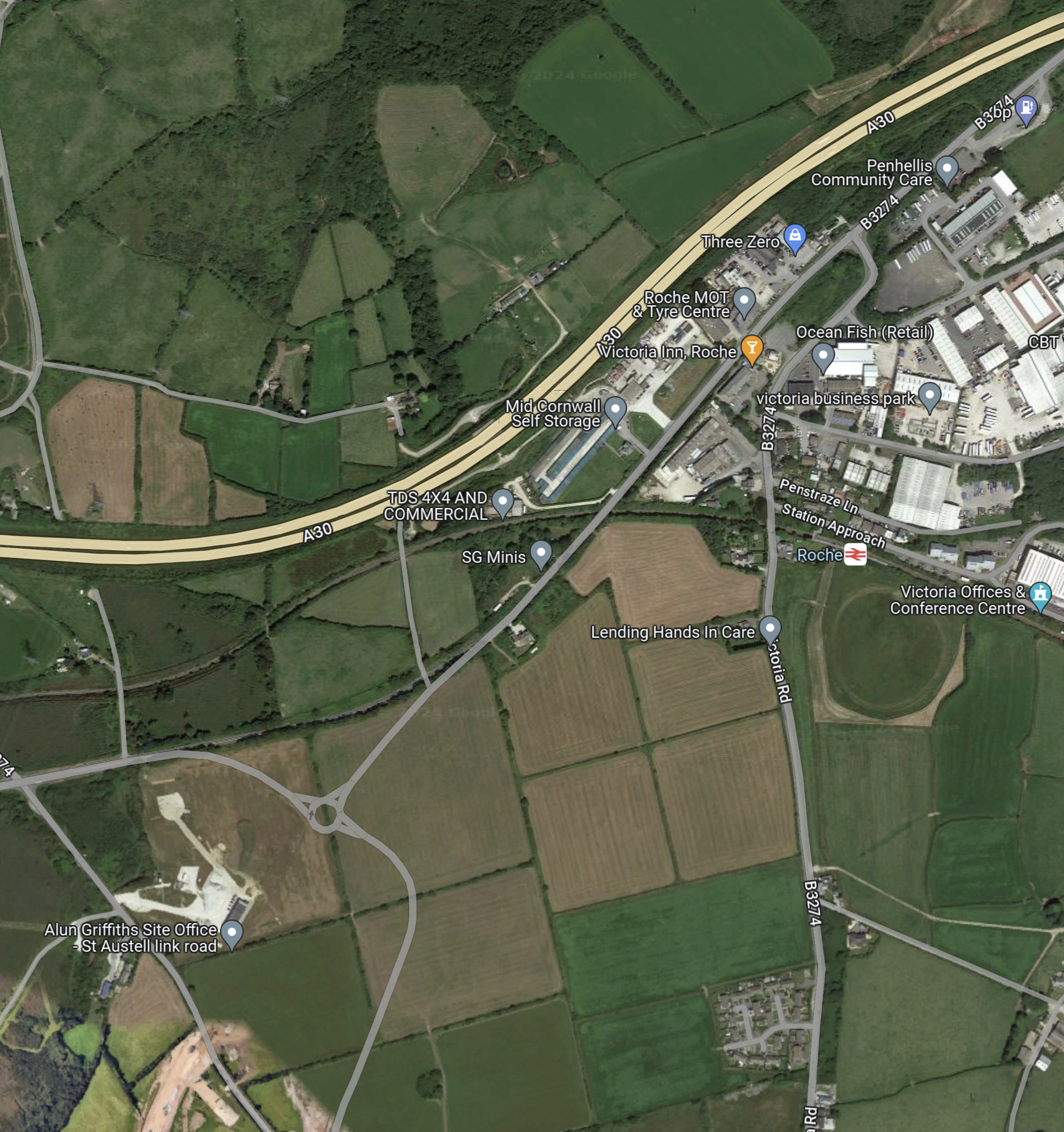
Note.
- The A30 running across the top of the map.
- The Victoria area and Roche station in the North-East corner of the map.
- In the South-West corner of the map their is the site office of the Link Road.
- The current end of the construction scar of the Link Road can be seen at the edge of the map.
- I would assume that the new road joins the roundabout to the North-East of the Construction Office.
- Traffic could be routes North-East from here along the B3274 to join the A30 at Cornwall Services.
- The railway sneaks between the A30 and the construction site.
I hope there’s been a bit of joined up thinking here and the road and the railway have been given the best joint design possible.
Par Station – 10th February 2024
Par station will see changes because of the Mid-Cornwall Metro.
I took these pictures as I passed through.


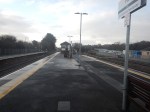
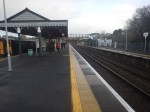
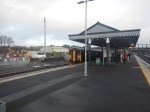
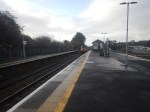
Note.
- The level crossing was busy with cars every time I crossed it.
- The semaphore signalling.
- The arriving GWR Castle in the last picture.
This Google Map shows Par station.
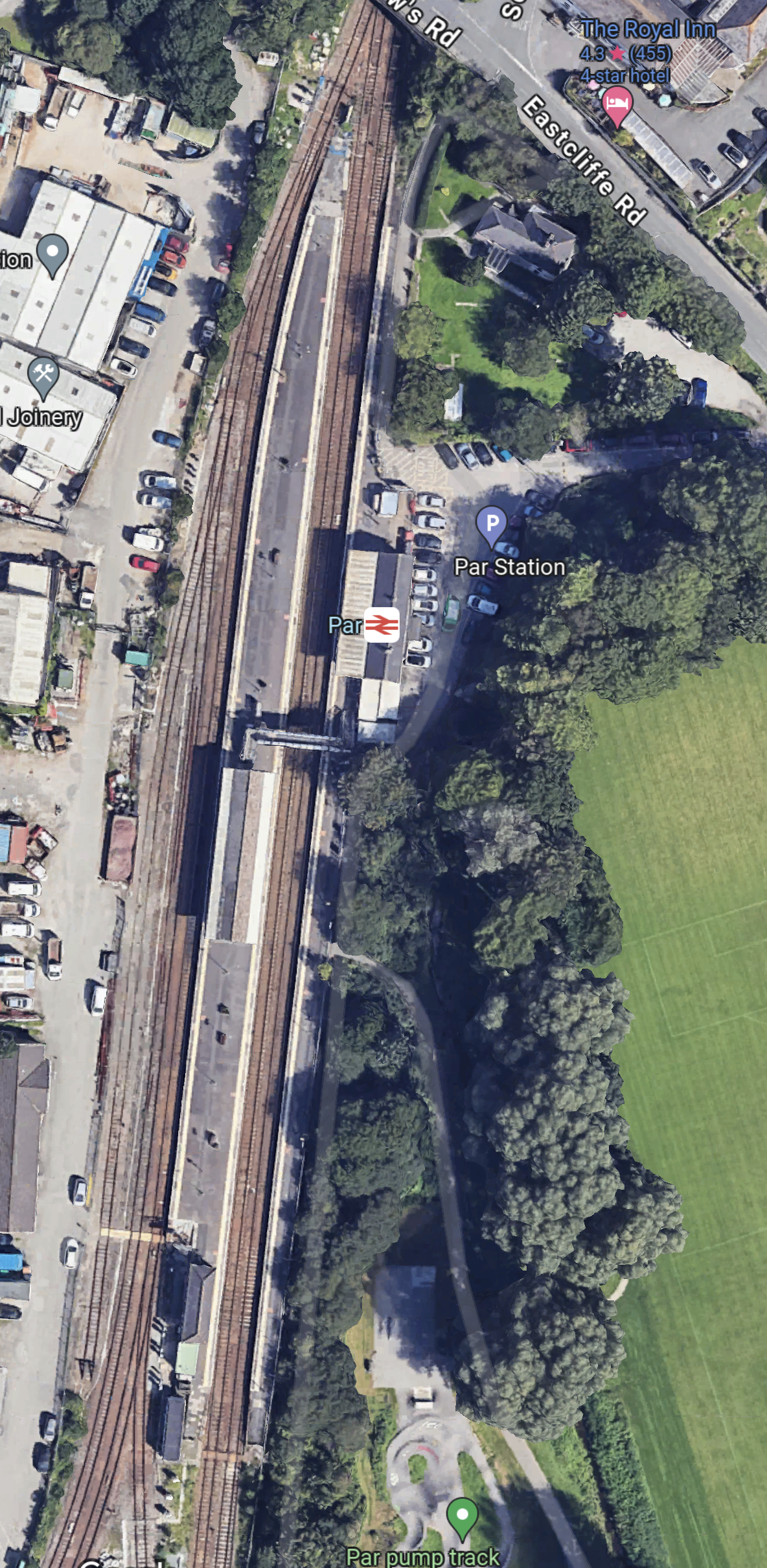
Note.
- There three platforms. Platform 1 is in the East, with Platforms 2 and 3 forming an island platform.
- There is a footbridge connect the platforms together.
- The Atlantic Coast Line leaves the map in the South West Corner.
As one of the modifications for the Mid-Cornwall Metro, the footbridge will be replaced with one that is step-free.
I have a few thoughts.
Will The Mid-Cornwall Metro Reverse At Par Station?
This OpenRailwayMap shows the track layout at Par station.
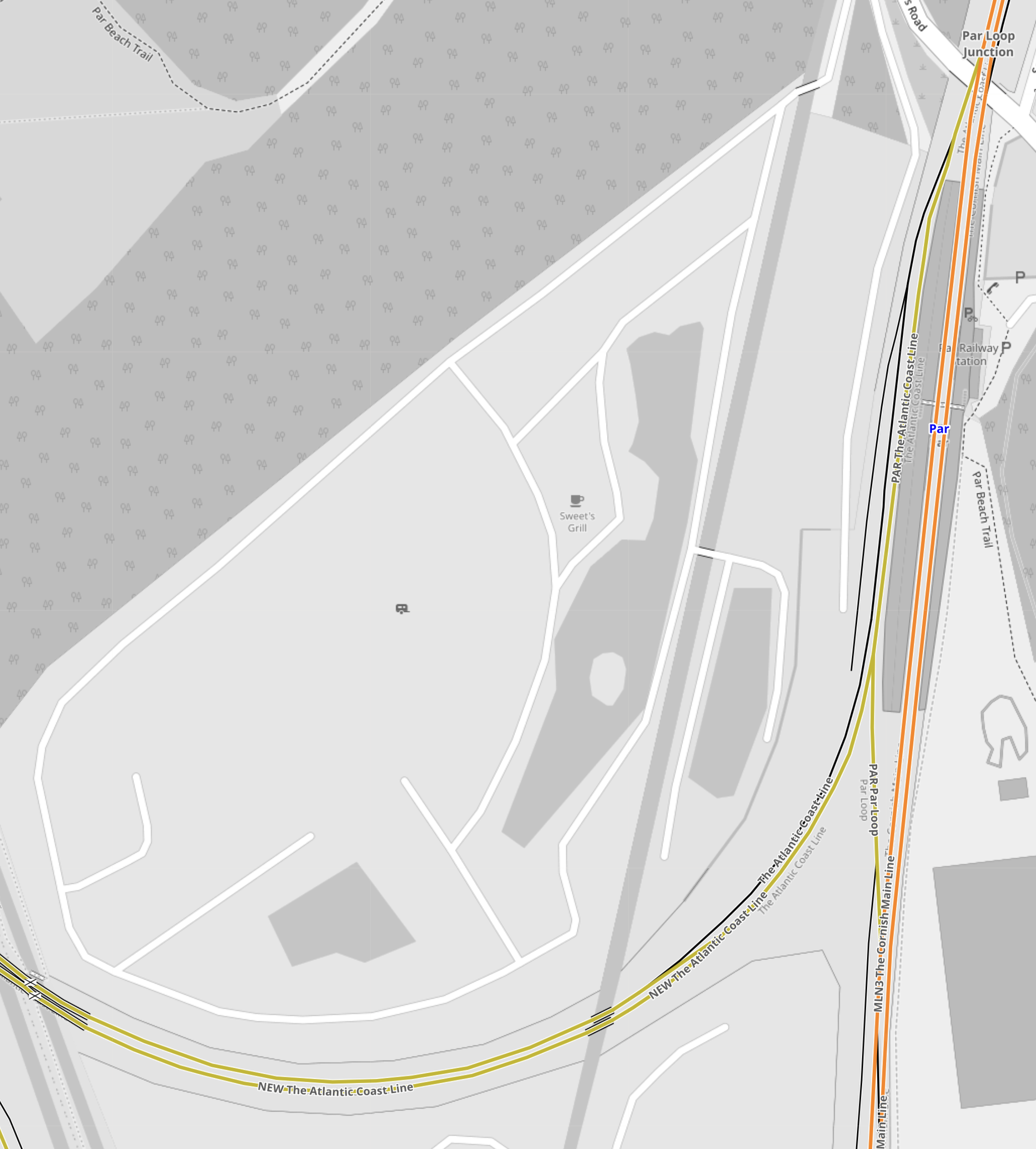
Note.
- The tracks shown in orange form the Cornish Main Line.
- The tracks shown in yellow that curve away to the West are the Atlantic Coast Line.
- The busy level crossing is shown in the South-West corner of the map.
- The Atlantic Coast Line connects to Platform 3 on the West side of the station.
- The track layout allows trains to access Platform 3 from both directions on the Cornish Main Line.
It does look like, Mid-Cornwall Metro trains will have to reverse every time, they call at Par station.
Could The Cornish Main Line Be Electrified At Par Station?
At some point in time, it will be desirable to run zero-carbon trains both on the Mid-Cornwall Metro and the Cornish Main Line.
- Plymouth and Par is a distance of 34.7 miles.
- Truro and Par is a distance of 19 miles.
- Newquay and Par is a distance of 20.8 miles.
- All of these distances would be in range of a typical battery-electric train.
- In The Data Sheet For Hitachi Battery Electric Trains, I said that a Hitachi express train with a battery range of 43.5 miles.
To my untrained eye, it looks like Par station wouldn’t be the most difficult place to electrify.
I believe there are possibilities to put an island of electrification at Par to give the trains a quick Splash-and-Dash before continuing.
How Many Direct Trains Should There Be Between London Paddington And Newquay?
The Mid-Cornwall Metro will see the following improvements on the Atlantic Coast Line between Newquay and Par stations.
- A second platform built at Newquay station.
- There will be a passing loop across Treegoss Moor.
- There will be a step-free bridge at Par station.
This will allow the current service on the line to be increased from two-hourly to hourly.
FirstGroup’s services in the UK, include several services, where a service is extended to a terminus away from the main line.
- Avanti West Coast – two trains per day (tpd) to Blackpool
- Great Western Railway – six tpd to Carmarthen
- Hull Trains – five tpd to Hull.
- Hull Trains – two tpd to Beverley.
- Hull Trains (proposed) – two tpd to Worksop and Sheffield.
Given that there will only be an hourly local service on the Atlantic Coast Line, I suspect that FirstGroup will be able to run up to six tpd to Newquay to satisfy the traffic needs of the London and Newquay service.
How Will Great Western Railway Run A Service To Newquay?
Last weekend, when I went to Ebbw Vale, I wrote My Train To Wales Today Divided At Swansea.
My train, that day was a ten-car train formed of a pair of Class 800 trains.
- The front train was signed as going to Swansea.
- The rear train was signed as going to Carmarthen.
- At Swansea the trains split into two.
- The front train finished its journey.
- The rear train reversed out and continued to Carmarthen.
Returning to London Paddington, trains join at Swansea.
Will Great Western Railway use a similar operation with Newquay services.
The train would be a ten-car train formed of a pair of Class 802 trains.
- One train would be going to Plymouth and the other train to Newquay.
- At Plymouth the trains split into two.
- One train finishes its journey at Plymouth.
- The other train continues to Newquay.
As Bodmin General station, has a second platform, that was recently built with financial help from Great Western Railway, could this be another destination served by splitting a train at Plymouth?
I discuss the implications of the second platform at Bodmin General station in Beeching Reversal – Increased Service Provision Bodmin General-Bodmin Parkway
How Long Would A Round Trip Take Between Plymouth And Newquay?
Current timings are as follows.
- Plymouth to Par – 34.7 miles – 50 minutes
- Par to Newquay – 20.8 miles – 51 minutes
- Turnround at Newquay – 5 minutes
- Newquay to Par – 20.8 miles – 51 minutes
- Par to Plymouth – 34.7 miles – 50 minutes
Note.
- Times are from Class 802 trains between Par to Plymouth.
- Times are for Class 150 trains between Par and Newquay.
Total time is 207 minutes or three hours and twenty-seven minutes.
Beeching Reversal – Mid-Cornwall Metro
This is one of the Beeching Reversal projects that the Government and Network Rail are proposing to reverse some of the Beeching cuts.
This is a strange project, as I can’t find a detailed description of what it entails.
All I can think, is that it is a general project to run all the local lines in Cornwall as a unified whole.
Great Western Railway runs these services in Cornwall.
- Cornish Main Line – London Paddington and Penzance – One train per two hours (tp2h) – Calling at Plymouth, Liskeard, Bodmin Parkway, Lostwithiel, Par, St Austell, Truro, Redruth, Camborne and St Erth
- Cornish Main Line – Exeter St. Davids and Penzance – One train per hour (tph) – Calling at Newton Abbot, Totnes, Ivybridge, Plymouth, Devonport, Dockyard, Keyham, St Budeaux Ferry Road, Saltash, St Germans, Menheniot, Liskeard, Bodmin Parkway, Lostwithiel, Par, St Austell, Truro, Redruth, Camborne, Hayle and St Erth
- Looe Valley Line – Liskeard and Looe – One tph – Calling at Coombe Junction Halt, St Keyne Wishing, Well Halt, Causeland and Sandplace.
- Atlantic Coast Line – Par and Newquay – One tp2h – Calling at Luxulyan, Bugle, Roche, St Columb Road and Quintrell Downs
- Maritime Line – Truro and Falmouth Docks – Two tph – Calling at Perranwell (1tph), Penryn, Penmere and Falmouth Town
- St. Ives Bay Line – St. Erth and St. Ives – Two tph – Calling at Lelant Saltings, Lelant and Carbis Bay
Could frequencies and connectivities be improved?
Other Beeching Reversal projects are also aiming to improve the railways in Cornwall.
Transforming the Newquay Line
Reinstatement of Bodmin-Wadebridge Railway and associated works
Increased service provision Bodmin General-Bodmin Parkway
I think the first might increase frequencies on the Newquay to one tph or even two tph and the Bodmin General station improvements should create a useful new platform.
Wikipedia mentions this project.
Reopening The Lostwithiel And Fowey Railway To Passengers
Are there any other lines, stations or platforms, that could be reopened, given a passenger service or or an increase in frequency?
Conclusion
Someone must have a plan somewhere! So can they please disclose it?
Beeching Reversal – Transforming The Newquay Line
This is one of the Beeching Reversal projects that the Government and Network Rail are proposing to reverse some of the Beeching cuts.
This map clipped from Wikipedia shows the Newquay or Atlantic Coast Line.
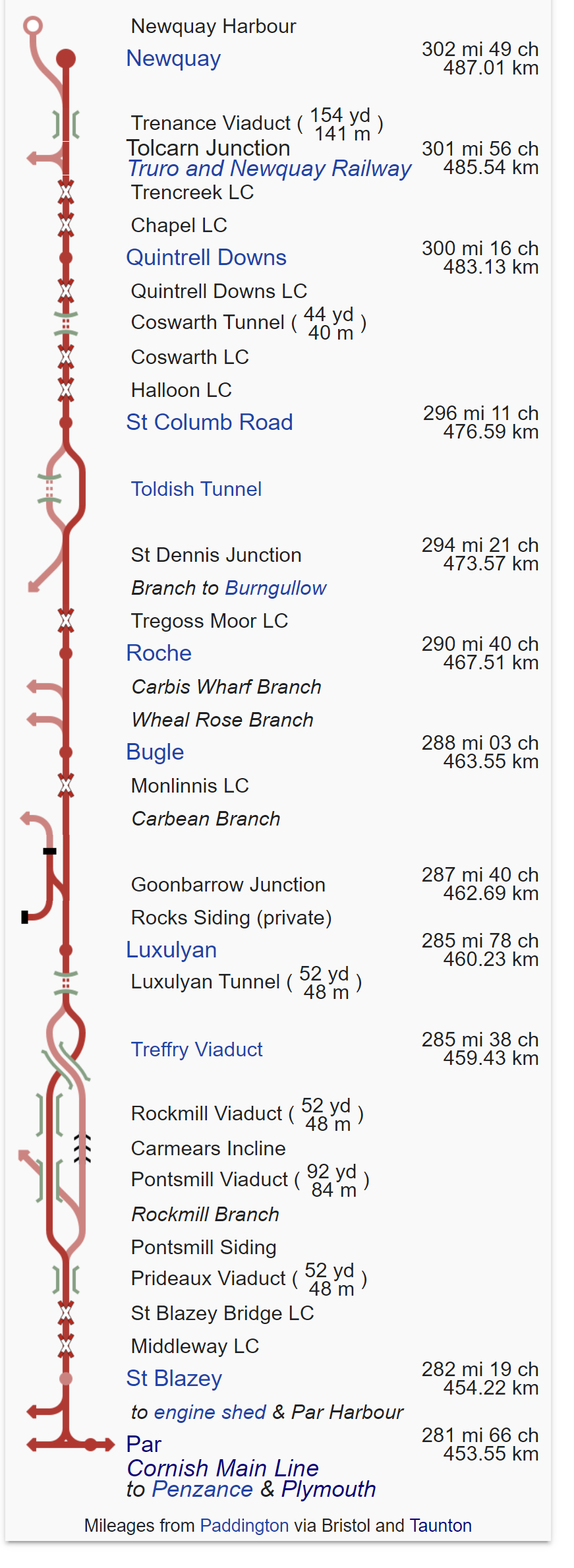
When I first saw this map, my initial thought, was that the various loops and other sections of disused track could and/or might be added to the route.
Searching the Internet, I can’t find much information except from this article on Cornwall Live, which is entitled Cornish Railway lines Axed In Beeching Cuts Could Be Restored, where this is said.
Other projects focused on Cornwall bidding for the funding to develop business cases include one to transform the Newquay to Par railway line as well as a “Mid-Cornwall Metro” proposal.
Nothing more about the Atlantic Coast Line, is said in the article.
This Google Map shows where the Atlantic Coast Line joins the Cornish Main Line at Par.
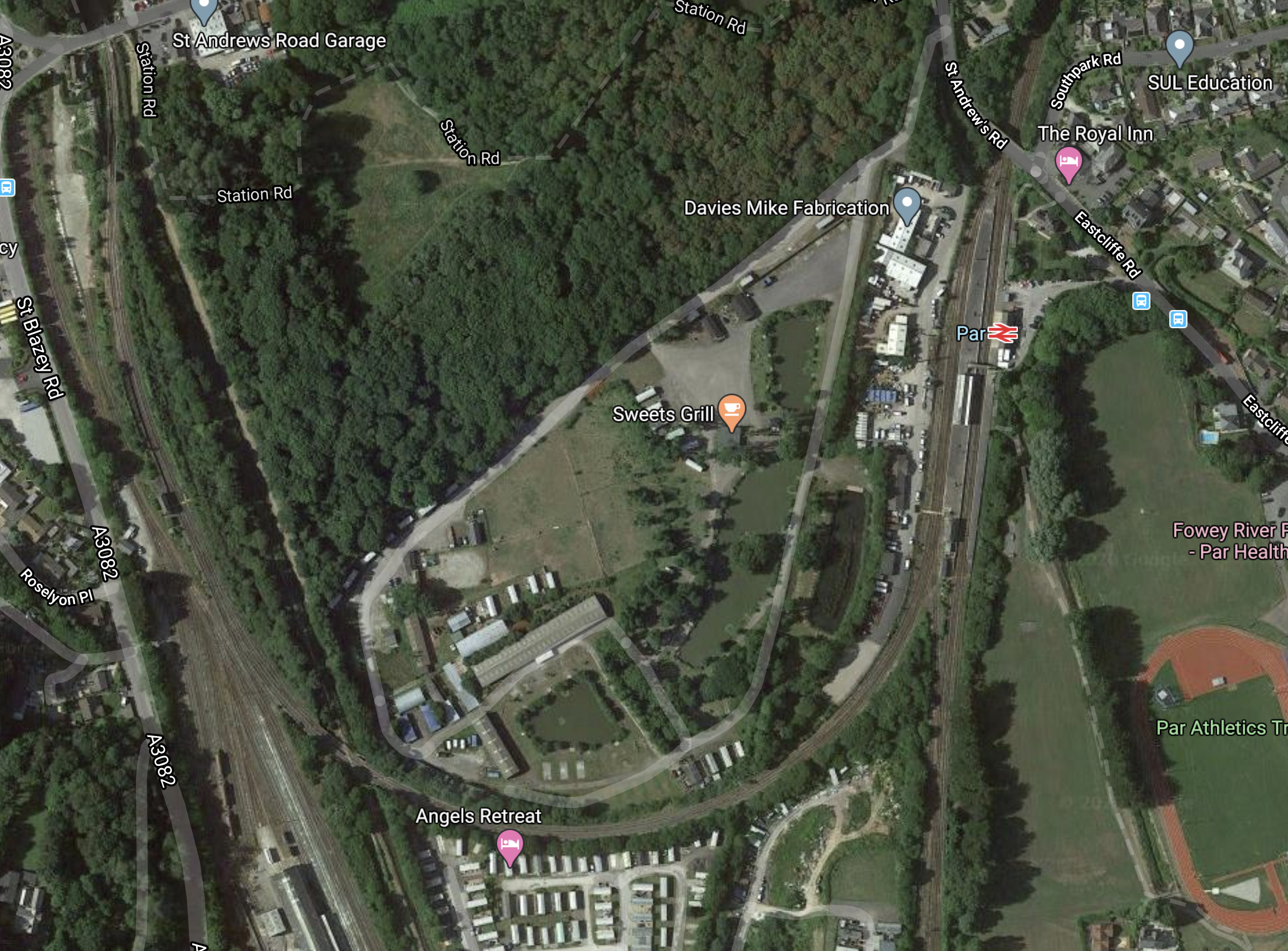
Note.
- The Atlantic Coast Line goes off to the North West.
- Par station is shown towards the North-Western corner on the Cornish Main Line.
- The junction is designed, so that china clay trains can access the branch.
In the summer, Newquay station is also served by long-distance trains from London and Scotland.
This Google Map shows Newquay station in the heart of the town.
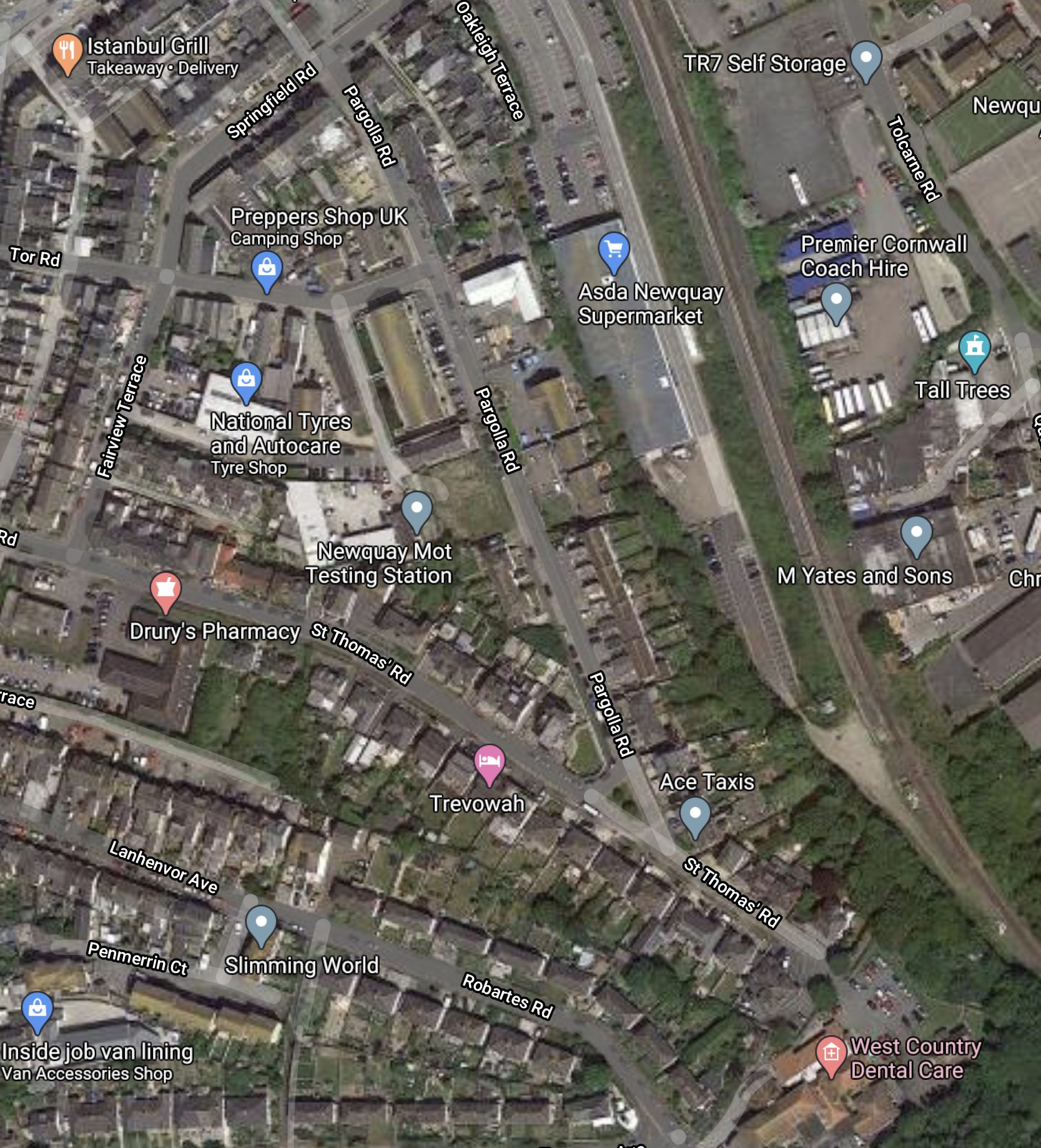
It could probably be called a Beach station, as the sea is just off the map.
Partly, because I lived in the town, from 1963 onwards, I can remember Felixstowe Beach station! Yarmouth Beach station has gone too, but how many others are left?
These are the only ones, I can think of with Beach in their name!
Perhaps, if Felixstowe ever gets the promised tram-train, that I wrote about in Could There Be A Tram-Train Between Ipswich And Felixstowe?, one of the or more of the stops on the way to the Port of Felixstowe will be Felixstowe Beach.
Frequency Improvement
The current frequency on the Atlantic Coast Line is one train every two hours, which is not a family-friendly frequency, as if any child starts playing silly games, you have a two-hour wait for the next train.
I would suspect that an hourly service would create a large increase in ridership on the line.
As the journey takes fifty-one minutes between Par and Newquay, is the frequency defined by the need for one train to work the line, by shuttling from end-to-end?
So is one of the needs, some better track layouts, so that trains can pass and be parked at Par, whilst the crew has a refreshment break?
I also suspect, that if one of Network Rail’s track wizards got the layout spot on, which they seem to do, that this would make things easier for any china clay trains still passing through the area.
Could Newquay Be Used As An Extra Terminal?
I wonder how many people drive to Newquay, if they live in East Cornwall or Devon?
I have just looked at train times today from Plymouth to Newquay.
To be fair to Great Western Railway (GWR), I would only have a few minutes to wait at Par station, but there is only one train every two hours, due to the limitations on the Atlantic Coast Line.
With an improved higher-capacity track, GWR could call up the heavy brigade.
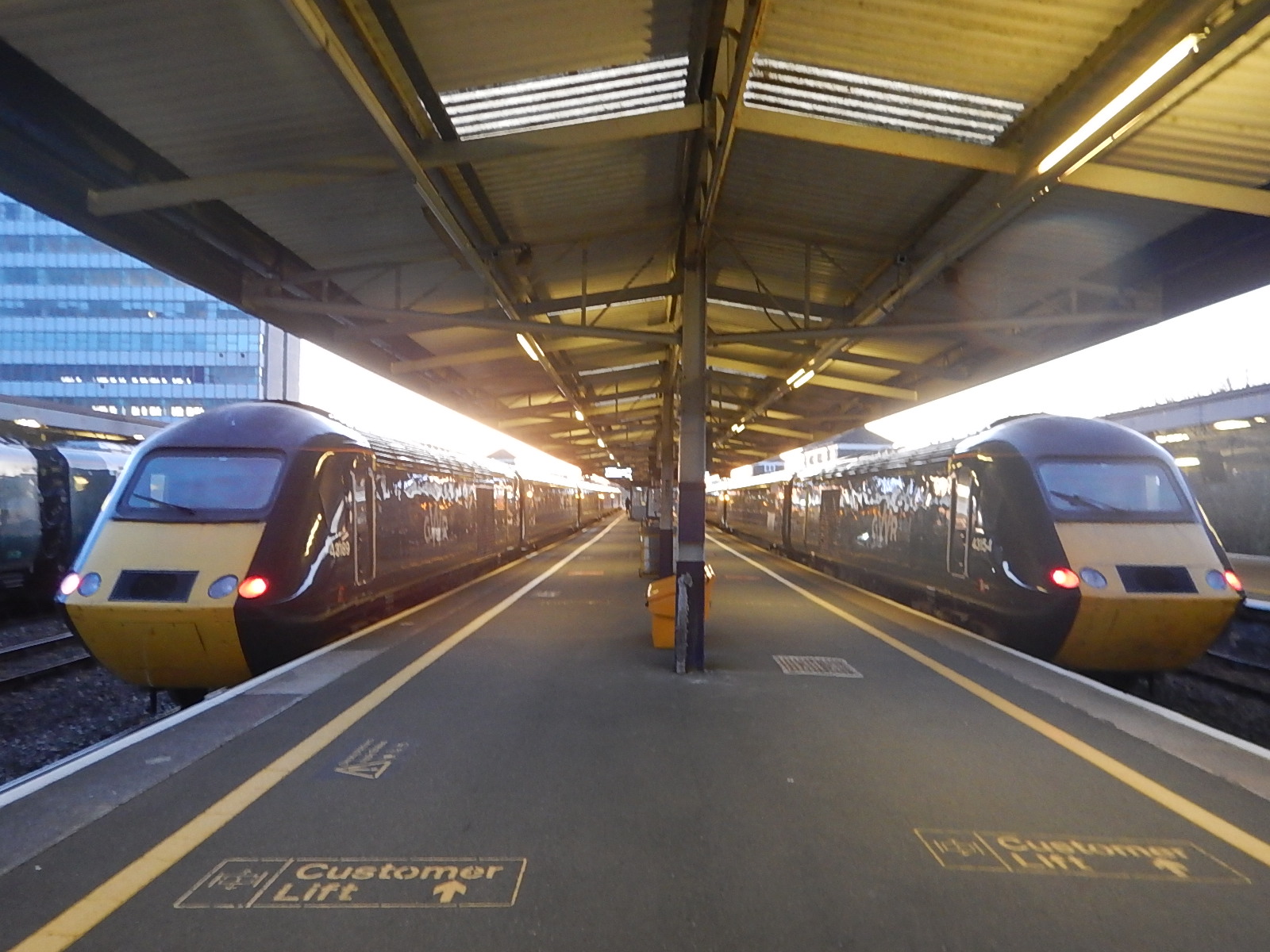
As full-length InterCity125s have served Newquay station for decades, four-car Castles like these, should manage the trip with ease.
Surely, once the Atlantic Coast Line can handle at least hourly trains, that would enable separate one train per two hour schedules.
- Newquay and Par
- Newquay and either Plymouth or Exeter.
This would improve service frequencies on both the Cornish Main Line and the Atlantic Coast Line and enable passengers to go between Exeter, Plymouth and Truro, and Newquay without changing trains.
Hopefully, the Cornish Main Line trains would serve appropriate refreshments at the correct times of the day.
Would Newquay Station Need A Second Platform?
Newquay station used to have more than one platform, but all the others were removed in British Rail’s ruthless quest to save money in the 1960s and 1970s.
I have never been to Newquay station, so I don’t know whether there is space to reinstate another platform.
However, I did find this video, which appears to be some very professional plans for Newquay station.
This video dates from 2008.
The video definitely says, that Newquay station needs an extra platform or two.
- Two platforms would allow two trains to share the station.
- A third platform would allow steam trains to visit.
The video also answers the age old question about why in many towns and cities, the railway station is often the best building, except for the church and the town or city hall.
Conclusion
It does appear to me, that giving the Atlantic Coast Line a modern track layout, will unlock a lot of possibilities that can be tried on the branch, to the benefit of all stakeholders.
 The Anonymous Widower