Is London Going To Get A Christmas Present From Michael Bloomberg?
I took this picture in June of the fire doors that connect to the new station entrance under the Bloomberg building from the travelator, the connecting tunnel and the Waterloo and City Line platforms.

I took this picture today.
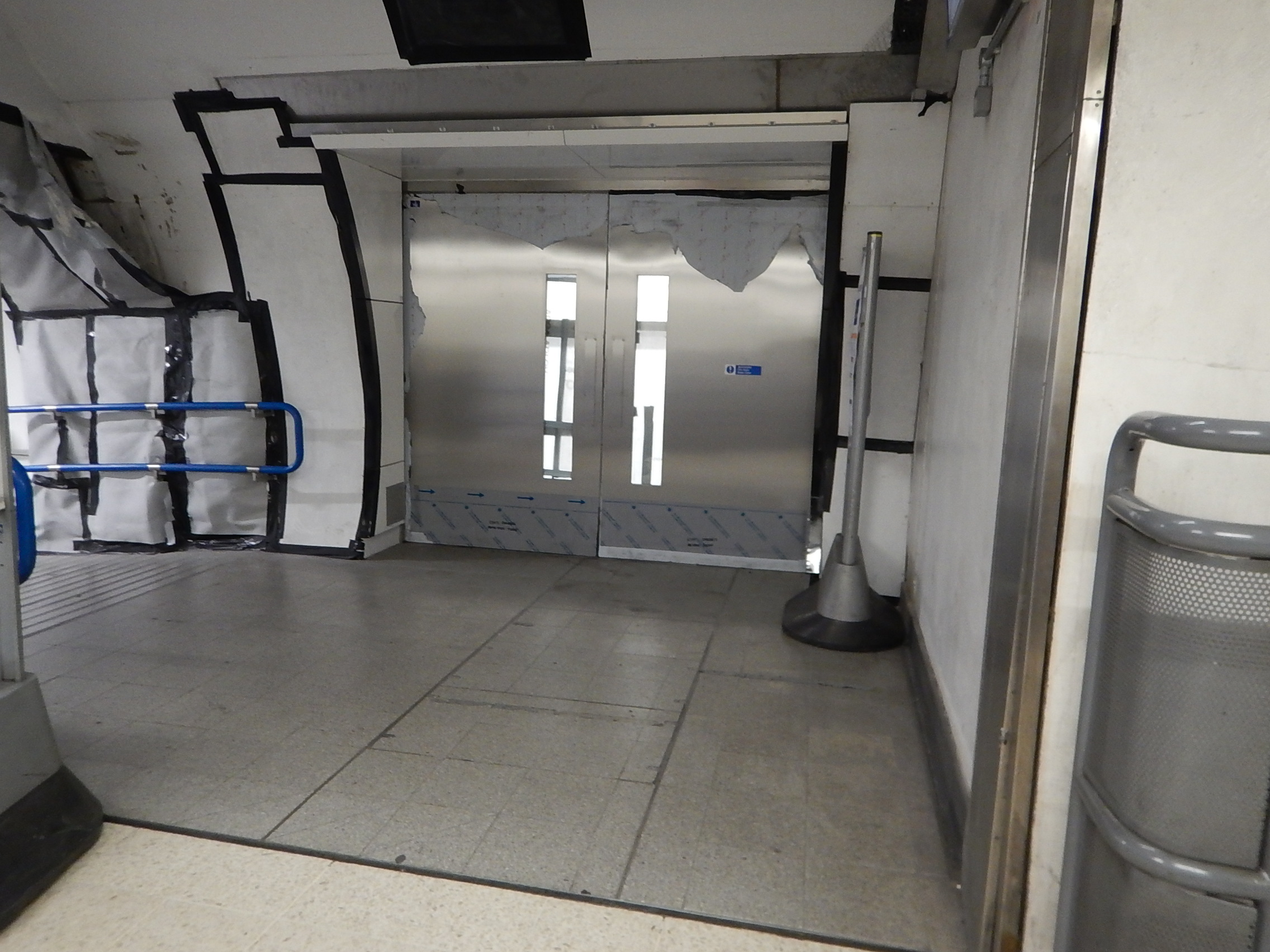
It looks like the entrance is nearer to completion.
I did ask a station-man and he thought it would open in a couple of weeks.
Pedestrian Tunnels In London’s Transport System
I take particular interest in pedestrian tunnels, as I believe properly designed tunnels can be a solution to improving access to stations.
This list will be extended as I photograph more.
Bank – Bank And Monument Escalator Connection
I still think of this tunnel, as an escalator connection, as that was how it was marked on the tube map in the 1950s.



It is two escalators down a walk between the Docklands Light Railway platforms and then two escalators up at the other end.
Verdict – The connection is being upgraded.
Bank- Central To Northern Interchange Tunnel
This is the shortest way from the Central Line to the Northern Line.


It does involve a descent of a circular staircase.
When the Bank station upgrade is complete this route will be replaced by an escalator connection between the two lines.
This visualisation shows the connecting escalators.
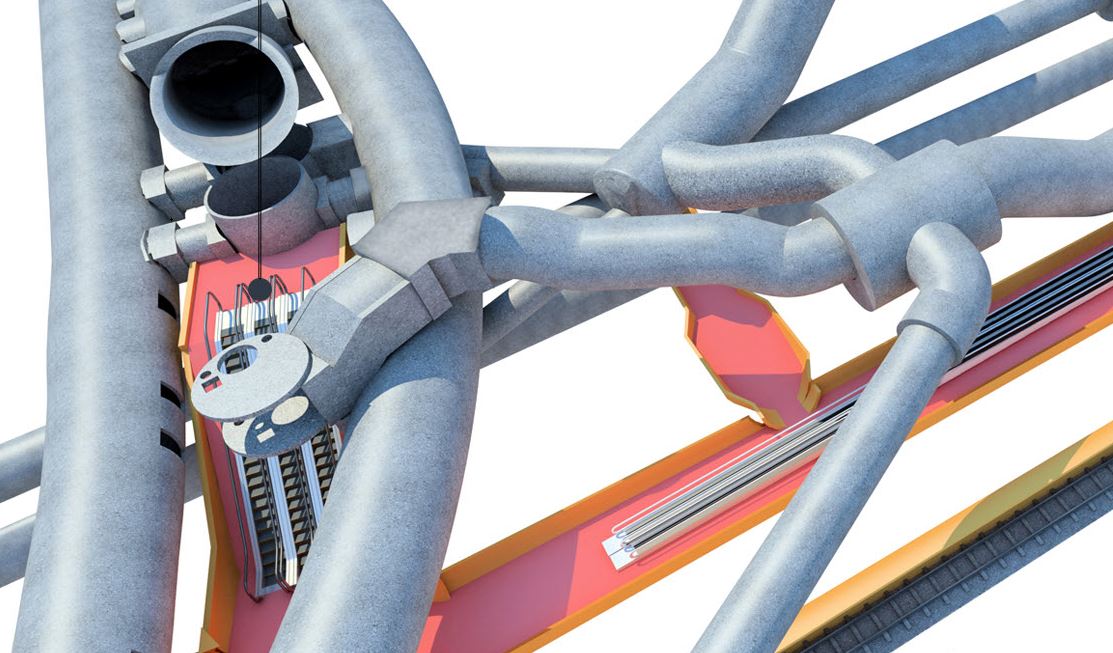
Note.
- The two wide highest level tunnels are the Central Line.
- The infamous curved Central Line platforms,create a large gap to mind.
- The two mid-level crossed tunnels are the existing Bank and Monument Escalator Connection and the Waterloo & City Tunnel.
- The four narrower lowest level tunnels are from bottom to top; the Southbound Northern Line, a new tunnel with a travelator; the old Southbound Northern Line tunnel and the Northbound Northern Line tunnel.
- The old Southbound Northern Line tunnel will become a passenger walkway.
Poking through all this spaghetti are the three escalators connecting the Central Line level with the Northern Line level.
Verdict – This connection will become much better.
Bank – Waterloo & City Inclined Travelator
The inclined travelators that link the Waterloo & City Line platforms and the main station entrances around Bank junction, are unique on the London Underground.
There are other travelators, but no others are inclined.


Verdict – I wonder why there are no others, as this pair seem to work very well.
Bank – Waterloo & City Tunnel
This tunnel connects the Waterloo & City Line platforms at Bank station to the central tunnel at Bank station.

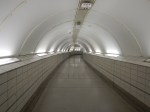

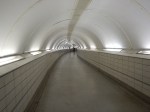
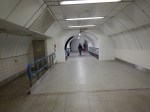
Verdict – It is a linear oasis in an otherwise dingy and cramped station.
Bond Street – Northern Entrance Tunnel
This new tunnel connects the new Northern entrance at Bond Street station to the platforms.


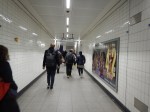
Incidentally, I’d arrived at Bond Street station through the main entrance and it was an awfully overcrowded scrum. The Northern entrance was quiet, as the pictures show.
The entrance is steps or a lift between the street and its own gate line and then a well-lit wide passage to the escalators.
In future, it will link to a wide tunnel to the Western end of the Crossrail platforms at the station.
It is much better way to enter Bond Street station.
Verdict – London and other cities with underground railways, need more new station entrances like this.
Green Park – Interchange Tunnel
This tunnel connects the Jubilee, Piccadilly and Victoria Lines at Green Park station.
The opening dates of the three lines, through the station were.
- Piccadilly Line – 1906 – Modernised in the 1930s with escalators.
- Victoria Line – 1969
- Jubilee Line – 1979
Since 1979 the station has been continually improved and is step-free.
This map from carto.metre.free.fr shows the lines at Green Park station.
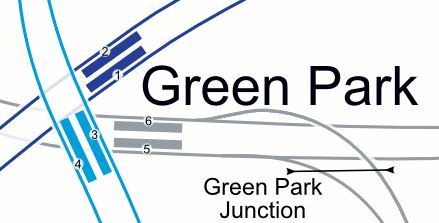
Note that the Jubilee Line is below the other lines and when the extension was built, it was a radical change to what was originally planned. The lines to the right lead to Charing Cross station and those going South to Westminster station.
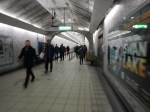
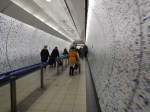

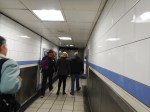

The interchange tunnel is long and usually very crowded. I had an incident recently, where I was walking slowly to the Victoria Line and a group of tourists all with four-wheeled cases, were nudging me to go faster. When we all got to the steps at the end, there was an enforced slow down.
Verdict – I avoid interchanging at Green Park like the plague.
Kings Cross – Eastern Tunnel
This tunnel runs which used to be part of the access to the old Kings Cross Thameslink station, runs from East of Kings Cross station and then has access to the main tunnel connecting the Northern, Piccadilly and Victoria Lines.

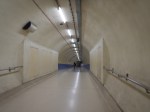

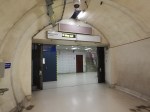

It has partial escalator access at the Eastern end, where the buses from Islington and the East stop outside the old station entrance. Although getting buses to the East mens crossing the busy Pentonville Road.
Verdict – Needs improvement
Kings Cross – Interchange Tunnel
This tunnel connects the Eastern Tunnel at Kings Cross to the escalators and lifts that lead to the Northern ticket hall Kings Cross St. Pancras tube station. On the way is connects to the Victoria, Piccadilly and Northern Lines.


It is a long walk, especially, if you have accessed it, as I often do, from the Eastern Tunnel which is convenient for buses from Islington and Dalston.
Verdict – Too long and boring
Kings Cross – St. Pancras Tunnel
This tunnel connects St. Pancras station to the Northern ticket hall at Kings Cross St. Pancras tube station.
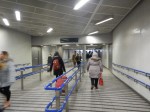


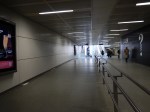
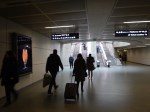
It is a wide, comfortable tunnel with a double handrail down the middle.
Note that the middle picture shows the connection to the next tunnel.
Verdict – Useful and a better walk than the surface alternative in cold or wet weather.
Kings Cross – Pancras Square Tunnel
This tunnel connects St. Pancras Square to the underground tunnel, that links St. Pancras station to the Northern ticket hall of Kings Cross St. Pancras tube station.


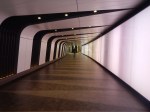

It is a good example of how to create a tunnel.
It has up and down escalators at the St. Pancras Square entrance.
Verdict – Good design and a pleasant walk.
Knightsbridge – Northern Exit Tunnel
This tunnel at Knightsbridge station was built in 2010 to connect the new entrance on the North side of Knightsbridge.


It looks to me that Transport for London had to make do with less space than they needed.
Verdict – Rather narrow and utilitarian.
Paddington – Bakerloo Line Link
This project to create a pedestrian link between the Bakerloo Line and Crossrail at Paddington is currently being built.
- It will be one hundred and thirty metres long.
- It will be twenty-five metres below the Paddington station concourse.
- The design uses a route to avoid existing station facilities.
- The tunnel is being built without major disruption to Bakerloo Line passengers.
- It will have lifts and escalators at both ends.
- The tunnel will handle five thousand passengers per hour in the Peak.
In August 2016, I wrote Paddington Is Operational Again, which describes the tunnel in detail.
Verdict – I have a feeling that this could be one of the most impressive parts of Crossrail.
I can’t wait for this tunnel to open.
South Kensington – Exhibition Road Pedestrian Tunnel
The Exhibition Road Pedestrian Tunnel at South Kensington station is unique in London, as it was built in 1885 and it is Grade II Listed.


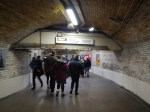
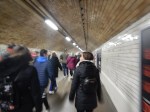
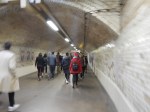
As the pictures show, it can get very busy.
Verdict – A Victorian idea, that hasn’t been copied much.
Tottenham Court Road – Interchange Tunnel
This tunnel connect the Central and Northern Lines at Tottenham Court Road station.
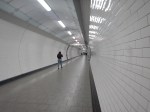


It is a bit lacking in colour to my liking. But at least there is some of Eduardo palotzi’s tiles at one end.
Verdict – Bland and too long.
Victoria – New Tunnels
Victoria station has had a new entrance at Cardinal Place and a lot of new tunnels to sort out the poor connectivity, added in the last couple of years.




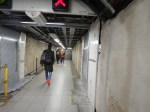
As the pictures show, not all the tunnels are finished.
Verdict – Victoria is no longer a station yo avoid
Waterloo – Interchange Travelator
This map from carto.metro.free.fr shows the Underground lines at Waterloo station.
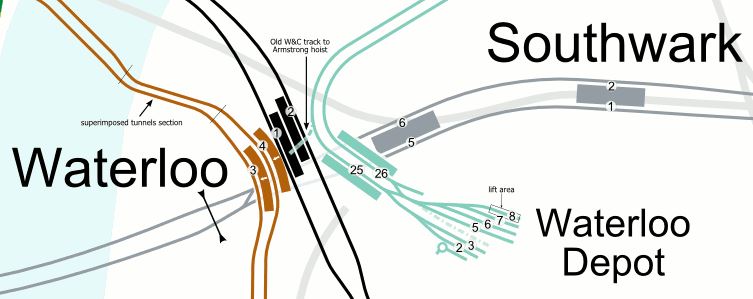
Note the large separation of the platforms of the Jubilee Line and those of the Bakerloo and Northern Lines.
The solution was to install a travelator, when the Jubilee Line Extension was built.


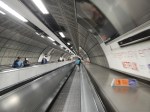
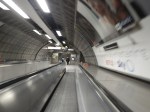
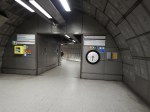


Although expense wasn’t spared on the project, I think we would give it a more decorative lining today.
Verdict – It works.
Whitechapel – Refurbished Overground Staircases
There are two staircases between the District/Hammersmith & City Lines and the East London Line, that are being refurbished for Crossrail.
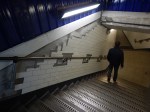
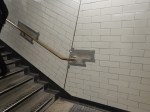
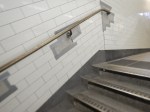
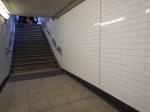
It looks like the work is of a high quality and that the old rails have not been replaced.
Verdict – These were scruffy tunnels a couple of years ago.
Summing Up
Some tunnels are obviously better than others, but what surprised me, was how well the Exhibition Rpad Tunnel to the museums coped with large numbers of passengers.
Perhaps, the Victorians got it right, as some of the best tunnels in my examples are the wider ones.
Comparing the Northern Exit Tunnel at Knightsbridge with the Northern Entrance Tunnel at Bond Street, shows how a wide tunnel and entrance, built with a lift, is a much better solution, than a narrow tunnel and entrance, without a lift.
The only narrow tunnel, that seems to work well is the tunnel connecting the Waterloo & City Line to the main Bank station complex.
But this tunnel is well-lit and I suspect tends to have passengers going the same way most of the time.
It also appears that recent tunnels like those at Bond Street and Victoria, are much better than those built about ten years ago, like the tunnel at Knightsbridge.
The Future
After Crossrail, London has a number of large station projects in the pipeline, some of which will require new connecting tunnels for passengers.
- The upgrading of Bank station is underway, where tunnels are being dug and escalators, travelators and lifts and being installed.
- The upgrading of Knightsbridge station is underway, but this will be simpler and I don’t think the upgrade includes more tunnels.
- The upgrading of Camden Town, Holborn and Walthamstow stations are in the planning stage. All will probably involve creating a new entrance connected to the existing platforms with lifts and escalators, but no long tunnels.
- Oxford Circus station is likely to be the subject of a major upgrade.
- Euston and Euston Square stations are being upgraded for the arrival of High Speed Two and there will be new tunnels to dig, between the two stations.
There are also possible new lines to consider, which may or may not be built.
- Bakerloo Line Extension
- Crossrail 2
- Docklands Light Railway to Thamesmead
- Docklands Light Railway to Euston, St. Pancras and Victoria.
All will be built with lots of entrances and exits, and interchanges with existing lines, so it is likely, there will be quite a few connecting tunnels.
Conclusion
I think that three tunnel projects will define a lot of the thinking about pedestrian access in the future.
- The Northern Entrance Tunnel at Bond Street, which surfaces in a commercial development.
- The Paddington Bakerloo Line Link, which appears to be setting new standards of design and construction.
- The narrow well-lit tunnel at Bank.
Could we see lessons learned with these newly-built tunnels applied to projects like Oxford Circus and Euston stations?
Where The City Of London Leads The Rest Will Follow!
The City of London is a unique Local Authotity, in that very few people live in its area.
C and I used to live in the Barbican with our three boys. It was a very different experience to living anywhere else I’ve lived.
It still functions today as housing and many have lived in the Estate for longer than forty years.
It was one of the first high-quality Local Authority housing schemes in London and it showed if you built quality it worked.
From what I’ve seen elsewhere, other Local Authorities and Housing Associations are building high quality homes for rent.
The City is now tacking another problem in a radical way.
This article on the BBC is entitled The Politics Of Pedestrianisation.
Read the article, of which this is an extract.
Next week, the local authority will take another step towards a bold, radical plan to change the streets in the Square Mile over the next 25 years.
Some streets could be closed to motor vehicles during rush hour and there could be zero emission zones.
There will also be a 15mph speed limit across the district.
The local authority wants to cut the number of vehicles by a quarter by 2030.
The City has consulted workers and residents.
The article says this about the survey.
It found 98% of people travel to the area by walking, cycling or public transport, while 84% think pavements are too crowded.
Four in five people think traffic levels in the City are too high, with 67% saying it contributes to poor air quality, while 59% said it creates an unpleasant street environment.
The authority said it listened to workers and businesses and has to deliver what they want to remain competitive – especially in a post-Brexit world.
It also said it must improve the area to appeal to business and wants to change the priority completely, giving more space to pedestrians and cyclists.
But black cab drivers don’t like it. Surprise! Surprise!
Steve McNamara of the Licensed Taxi Drivers’ Association (LTDA) says pedestrianisation is being dreamt up by middle-class blokes who don’t realise how the milk for their caramel lattes is delivered.
“They are strangling the best city in the planet and they don’t realise people need to have goods and services delivered,” he said.
He thinks the march to pedestrianisation will kill The City.
But I do like it! Look at these pictures I took in the City at about two in the afternoon.
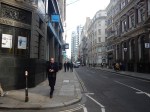

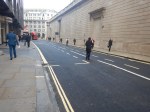
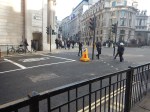
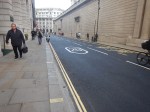
The banning of all vehicles except cyclists and buses has cleared the area around Bank, where it is now a pleasure to walk.
I was actually walking to and from Bank to Leadenhall Market, where I go sometimes for a pleasant lunch in Leon
A year ago, walking would have required a lot of traffic-dodging!
It looks to me, that in a few years time, the City of London will be a square mile of tower blocks and historic alleys and buildings.
- It will be criss-crossed by cycle and pedestrians routes.
- Two or three major routes, will survive for buses and taxis.
- Around the City will be the ring of stations; Aldgate, Bank, Barbican, Blackfriars, Cannon Street, City Thameslink, Fenchurch Street, Liverpool Street, Monument, Moorgate, St. Pauls and Tower Hill.
- The massive Bank and Moorgate/Liverpool Street stations in the heart of the action, will be two of the largest Metro stations in the World.
The City of London will become the Gold Standard for historic cities.
Other UK cities and parts of London like Oxford Street will surely follow.
I do find it strange that the other two big cities in the UK, where walking is pleasant in the centre are Glasgow and Liverpool. Like the City of London, they have underground railways and a river
New Bank Tube Station Entrance In Final Stages Ahead Of Opening
The title of this post, is the same as that of this article on IanVisits.
Ian suggests that the new entrance under the Bloomberg Building, which will give better access to the Waterloo and City Line, will open in August 2018.
This picture shows the covered Underground roundel on the side of the Bloomberg Building.
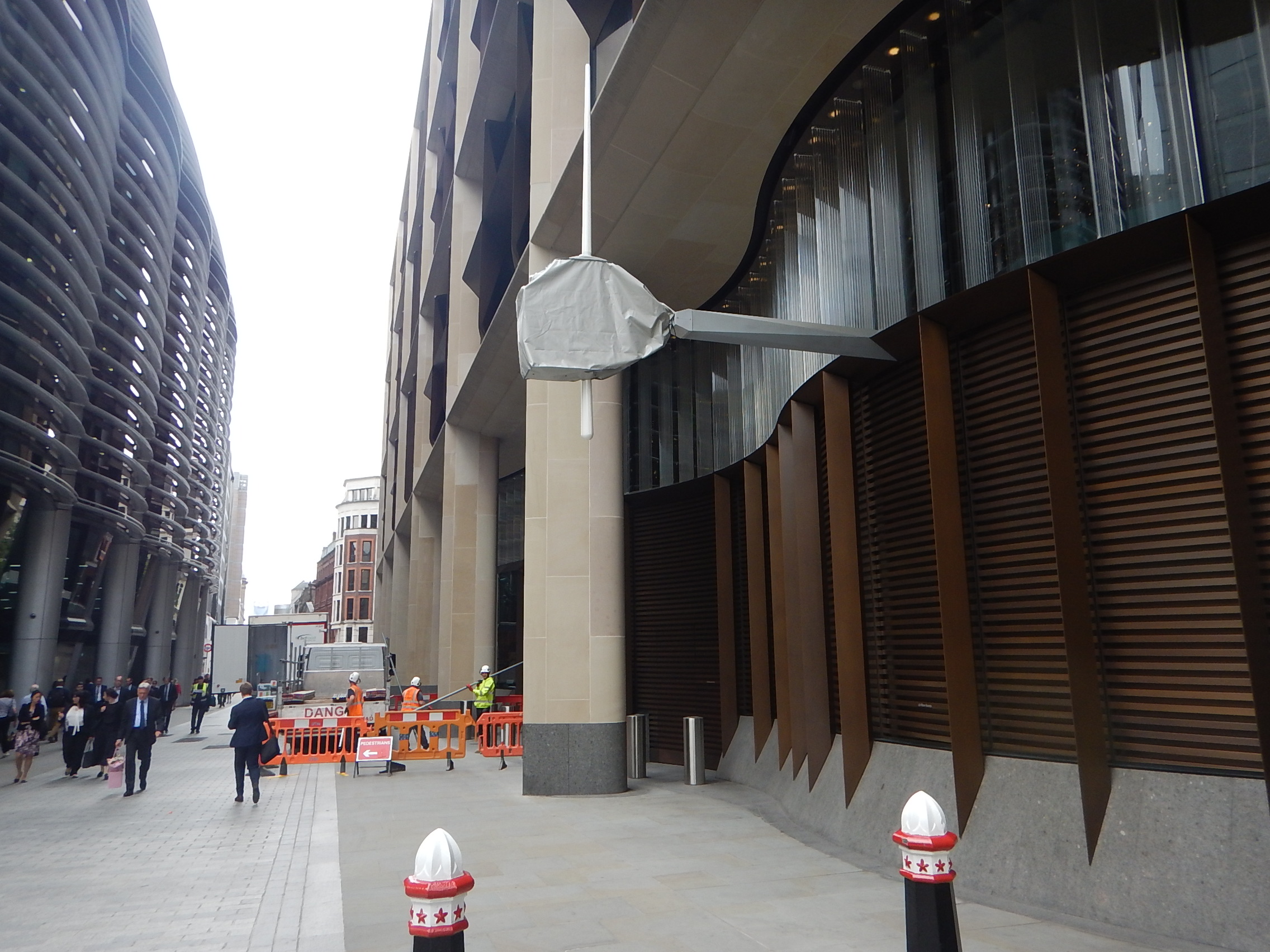
Note the workers putting scaffolding on the truck behind.
Underground, these fire doors, which lead to the new escalators and lifts, look ready to be opened for passengers in the area between the travelator, the connecting tunnel and the Waterloo and City Line platforms.
IWill the area be tiled or just painted?
described the tunnel to the left with the blue entrance rail in The New Tunnel Under Bank Station.
This picture was taken from the tunnel on the left, looking at this area.

The tunnel takes passengers right into the heart of the station.
Other Developments
The new entrance at Bank station is the first of several major transport developments, that will happen in the next few years.
New Trains On The Northern City Line In Autumn 2018
The Northern City Line is London’s forgotten train line, with a history coloured by the tragic accident at Moorgate in 1975.
The first development, a year or so ago, saw the Northern City Line introduce seven days a week working.
Now, the Class 313 trains, which are some of the oldest in the UK, are being replaced with new Class 717 trains, that will offer increased capacity, frequency and passenger comfort.
The Northern City Line terminus at Moorgate station will also be linked directly to Crossrail, when that line opens.
For many travellers in the Northern part of London and Hertfordshire, their route to the City will be much improved.
The final frequency has not been published, but it looks like there will be at least twelve tph on the Northern City Line to and from Moorgate station.
With a step-free cross-platform interchange at Highbury & Islington station, effectively Moorgate station will become a second Southern terminus of the Victoria Line.
Crossrail Between Paddington And Abbey Wood Stations In December 2018
This will be the first phase to be delivered and Crossrail will initially provide a twelve trains per hour (tph) service between Paddington and Abbey Wood stations from December 2018.
This will mean that the double-ended Jumbo Crossrail station, which will serve Moorgate station at its Western end and Liverpool Street station at its Eastern end, will open a short walking distance to the North of Bank station.
For those not wanting to walk, the link will also be one stop on the Central or Northern Lines.
Crossrail Between Paddington And Abbey Wood Stations In May 2019
This will be the second phase to be delivered and Crossrail will initially be provided a twelve tph service between Paddington and Shenfield stations from May 2019.
Crossrail To Heathrow And Reading In December 2019
The full Crossrail service will open in December 2019 and will provide the following services from Moorgate-Liverpool Street.
- Six tph to Heathrow
- Two tph to Reading
- Two tph to Maindenhead
- Twelve tph to Abbey Wood
- Twelve tph to Shenfield
In the Central section, there will be twenty-four tph between Padsdington and Whitechapel stations.
Bank Station Upgrade In 2022
Bank station is being upgraded and this is said in Wikipedia.
TfL is also retunnelling and widening the Northern line platforms, and adding lifts and new entrances on King William Street and Cannon Street. The work, agreed in 2015, will be carried out from 2016 to 2022 and will boost capacity by 40%, with 12 new escalators, 3 new lifts and a new travelator (or moving walkway) to connect the Northern Line and DLR to the Central Line.
It is a massive upgrade, as this visualisation shows.
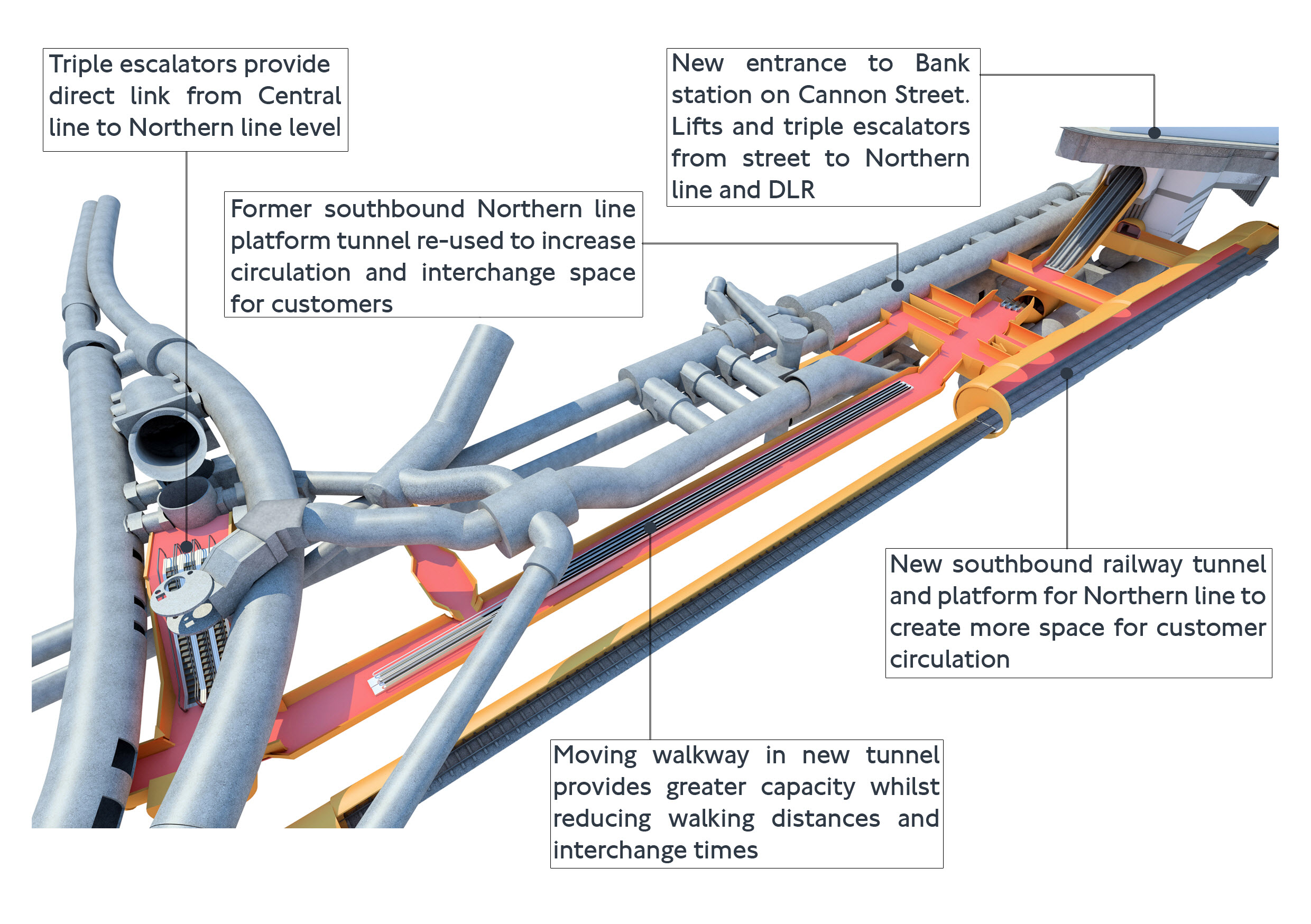
Note that the two larger diameter tunnels at the left of this visualisation are the tunnels and platforms for the Central Line. The third tunnel is the pedestrian tunnel that links the Waterloo and City Line to the main station.
The capacity upgrade at Bank station, will surely mean more people will be drawn to the area.
Bank Junction Improvements
The City of London has a project called All Change At Bank, which aims to improve the roads and pedestrian routes at Bank Junction.
Their web site gives these objectives.
- Reduce casualties by simplifying the junction
- Reduce pedestrian crowding levels
- Improve air quality
- Improve the perception of place, as a place to spend time in rather than pass through.
At present Bank Junction is restricted to buses and cyclists on Monday to Friday, between 0700 and 1900.
I wouldn’t be surprised to see this restriction increased, especially as more pedestrians are drawn to the City at weekends and in the evening.
The Future Of The City As A Leisure And Tourist Destination
When I lived in the City in the early seventies, nothing happened in the City in the evenings or at the weekends.
Over the years, the City has started to use these freer times for other activities.
- The Barbican Arts Centre and Tate Modern have opened.
- Quality shopping has greatly increased and improved.
- Pubs, bars and restaurants have often increased their hours.
- Better walking routs along and over the Thames have opened.
With its superb transport links, I can see the City of London becomes a much more important leisure and tourist destination.
Conclusion
The City of London is becoming a 24/7 area of London and the Waterloo and City Line must go with the flow.
It should run seven days a week, as do all other Underground lines.
Eventually, there will be a need for a Night Drain!
Photos From The Disused Tunnels Now Helping The Bank Tube Station Upgrade
The title of this post is the same as that of this informing article on Ian Visits.
The title probably, says it all and Ian describes how London always seem to have a spare tunnel, where it is needed.
Victorian Tunnelling Uncovered At Bank Station
I took these pictures on the Southbound platform of the Northern Line at Bank station.


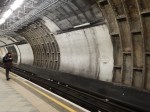

They show the old Victorian lining to the tunnel.
This visualisation, shows what the new Bank station will look like.
Note.
- The current two Northern Line tunnels are furthest away in the visualisation, with the Northbound one on the outside.
- The lines are aligned left sides together, which is opposite to normal British practice.
- The stairs that lead down from the passageways in the middle, where the tunnel size changes to accommodate the current platforms.
The plan looks to be as follows.
- A new Southbound tunnel will be dug to by-pass the current station. This tunnel is shown in the foreground.
- The current Southbound tunnel will be closed to trains.
- Southbound trains will be diverted to the new tunnel and possibly pass through Bank station without stopping for some time.
- The former Northern tunnel will be used to increase space for the Northbound platform.
Could the fitting out of all the tunnels in the middle be done last, with trains passing through on the outside?
A similar procedure was used at Angel, which explains the extra wide Southbound platform.
The Massive Bank Station Upgrade Is Running Behind Schedule And Over Budget
The title of this post, is the same as that of this article in City AM.
This is the first two paragraphs.
The hefty upgrade work on Bank station is set to be completed later than planned, and over budget, according to new papers from Transport for London (TfL).
TfL said in its recent investment programme report that final costs for the revamp at Bank are set to be £642m, £19m higher than the £623m originally forecast. That covers a capacity boost and systems integration upgrade at the station.
Other facts can be gleaned from the article.
- Overall works will now finish in 2022 instead of the original date of late 2021.
- £322m has been spent so far.
- Opening of the new entrance to the Waterloo and City Line has been put back from January to March next year because of problems of obtaining fire doors with the correct specifications.
- Problems have been found with digging the 00 metres of new tunnels.;
At least though, the contractors seem to be keeping all the lines open, as they carry out this most complex of projects in the heart of the City of London.
Once the station is completed, it will be interesting to see how many billions of pounds worth of office space are built on top of the new Underground complex.
Could London Introduce Lifts With Inbuilt Ticketing?
Use the Underground or the trains in London and you have to have to touch in and out with your contactless ticket, Oyster card, smart phone or Freedom Pass.
Suppose you want to put lifts into a station, where putting the lift inside the ticket barriers would be difficult, but perhaps putting it outside on the street would be easy.
This technique has been used at Bank station to provide step-free access to the Docklands Light Railway.


When I called the lift to enter the station, the lift was sent by an operator in the Control Room.
So why not combine an outside lift with the ticketing?
Perhaps to call the lift, you need to touch in or out?
Bank Junction Goes Buses And Cyclists Only
On Monday, the 22nd of June 2017, the City of London brought in an order making the busy Bank Junction buses and cyclists only between seven in the morning and seven in the evening from Monday to Friday.
I took these pictures soon after ten in the morning.



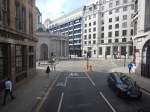

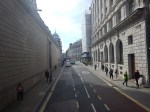


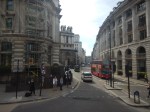
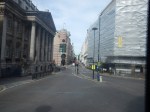
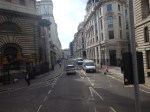


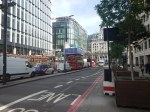

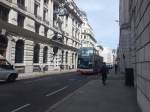
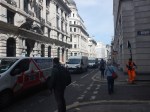
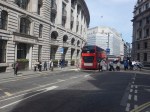



The first few pictures were taken from the top of a Routemaster bus on Route 21, as it travelled from where I live across the city to London Bridge station.
Note.
- Most drivers seemed to be avoiding the area.
- The City of London Police were telling drivers, but didn’t appear to be ticketing anybody.
- Much of the congestion seemed to be caused by half-empty polluting Tour Buses.
- One pedestrian was moaning that he couldn’t use his car to get around the City.
Overall, it appeared to be a calm start.
The Upgrade Of Bank Station
I have only shown the area on the surface, but under the ground around Bank Junction, a massive construction project is starting in the City of London’s twin goals of more and better office accomodation and transport links.
Bank station is getting a major upgrade, which will include.
- In The New Tunnel Under Bank Station, I wrote about an upgraded pedestrian tunnel that crosses the area.
- In Between Bank And Cannon Street Station, I wrote about how Bloomberg are helping develop a new step-free entrance to the Waterloo and City Line and Bank station, which will open by early 2018.
- A new Northern Line tunnel to create more space on the platforms and increase frequency on the line.
- The station weill receive a forty percent increase in capacity.
- Full step-free access with thirteen new escalators and three new lifts.
- A new entrance to Bank station opposite Cannon Street station.
- Two North-South moving walkways.
- Some of the £600million project cost will be funded by oversite office development.
- Hopefully, much of the work will be finished by 2021.
There’s more in this article in the Guardian, which is entitled Bank station upgrades point to London’s bigger, busier future.
Bank Station And Crossrail
You may wonder, why if Bank station is so important, that Crossrail doesn’t call and Crossrail 2 won’t either.
It may not, but the Central Line will have good connections to Crossrail at Stratford, Liverpool Street, Tottenham Court Road and Bond Street stations.
So passengers for Bethnal Green, Bank, St. Paul’s, Chancery Lane and Holborn will change from Crossrail to the Cwntral Line at a convenient station.
In addition, Crossrail will feed passengers into loops in the District, Hammersmith and City and Jubilee Lines.
Travellers will pay their money and take their choice.
Other Developments At Bank
I wouldn’t be surprised to see more pedestrian routes linking the City stations of Bank, Cannon Street, Fenchurch Street, Liverpool Street and Moorgate; both on the surface and possibly underground.
I would also make sure that all buses in the centre of London are low-emission vehicles. That certainly doesn’t apply to those polluting and jam-creating Tour Buses and tourist coaches.
The Rebuilt Tunnel Under Bank Station
I never took the connection tunnel between the Waterloo and City Line or Drain platforms at Bank station to the escalators that eventually get you out into the air by Lombard Street, where I used to visit clients at a major clearing bank.
I doubt, it was as good as it is now!
I was travelling home from Waterloo using the Drain and once back on the surface, I just crossed King William Street and got a 141 bus home.
It might be upwards of a hundred metres underground, but it’s light, airey and traffic-free.
We need more pedestrian tunnels like this under London.
Obviously, it wasn’t Rush Hour!
 The Anonymous Widower