Bank Junction
These pictures show Bank Junction, at around mid-day.


Would banning of all vehicles except buses and cycles work?
The taxi-drivers think not! Thyey’ve been protesting all wek!
Taxis And Bank Junction
The City pf London is proposing to make Bank Junction accessible to only buses and cyclists.
On a personal note, I’m in favour, as my normal route to and from the area of Bank station is to take a 21 or 141 bus. I also use the 141 bus to get to and from London Bridge station, as the terminal stop is on the staion forecourt. They are extremely convenient buses for me as the Northbound stop is perhaps fifty metres from my house over a zebra crossing. Going South, the walk is a little further, but it is no more than a hundred and fifty metres.
However, not everyone is in favour of restricting traffic at Bank Junction.
This article in the Standard is entitled Cycling campaign groups slam black cab protest over traffic ban at Bank station.
This is said.
Cycling campaign groups have slammed a taxi protest over plans to close Bank junction off to most traffic, saying drivers are supporting “the right to poison Londoners”.
Black Cab drivers brought traffic to a standstill on Monday evening as they protested plans to close off the notorious junction to all traffic apart from bikes and buses.
Union members have argued that the proposals to only allow cyclists and buses at the junction are an example of TfL dodging the problem of congestion.
So it would be cyclists on one side and black cabs on the other.
The RMT union blames Uber on their web site.
This is said in the article.
The union claims the congestion is caused by Uber cars which, in turn, leave people turning to cycling out of “desperation”.
RMT General Secretary, Mick Cash, said: “The decision to close Bank Junction to traffic is a comically inept one, made exceptionally bitter as the Mayor promised greater access to road space for black cabs.”
As I said earlier, all I want is this vital junction to run smoothly for buses.
I don’t use a taxi very often, except on say a busy, wet day to bring my shopping home, as the rank is outside Marks and Spencer, Waitrose and Sainsburys. How convenient is that?
The taxi drivers are not happy, but then London’s black cab drivers have rarely been happy in the years I’ve used them, since the 1960s.
- Getting to my house has caused a new moan, which is caused by the work that I wrote about in Why I’m In Favour Of Cycling Superhighways.
- Cyclists are always good for a moan.
- But their biggest ire is usually reserved for Uber and their lack of regulation.
Surprisingly, I’ve had no moans about moving to low-emission or electric vehicles.
So how do I think the situation will improve in the next few years?
Crossrail
Crossrail doesn’t serve Bank Junction directly, but I will be surprised if the massive double-ended Crossrail station at Liverpool Street and Moorgate, doesn’t attract a lot of passengers travelling to and from the City of London.
Bank Station Upgrade
Under Future Developments, Wikipedia says this.
- A new entrance on Walbrook, near Cannon Street station, will provide new escalators and lifts to the Waterloo and City line platforms.
- TfL is also consulting on retunnelling and widening the Northern line platforms.
- Adding lifts and new entrances on King William Street and Cannon Street.
- A new tunnel could be built to relocate the southbound Northern line platform.
The work could be completed by 2021 and will boost capacity by 40%, with 12 new escalators and 3 new lifts.
A well-designed Bank Underground station must relieve surface traffic of all types in the area.
Waterloo And City Line
When the new entry at Wallbrook to the Waterloo and City Line, opens hopefully in late 2017, it will dramatically improve the usefulness of the Waterloo and City Line.
But improvements are also needed at the Waterloo end of the line.
- Better connections to the new platforms 20-24 at Waterloo will be needed. Are they being provided in the current works.
- Better connection to Waterloo East station, so passengers can get access to Charing Cross services.
- Direct access to the street.
- Step-free access.
The line should at least run seven days a week, if not all the time under automatic control.
It could be a much more important line in London’s transport system.
It could even be renamed the City and South Bank Line.
The Northern City Line
The Northern City Line is London’s forgotten suburban line, as it terminates in a two-platform station under Moorgate station.
One of Crossrail’s collateral improvements will be to give the Northern City Line excellent connections to the following.
- Crossrail
- Liverpool Street station
- Central Line
The deep and dingy station will also have much better connection to the various walking routes in the area.
But connectivity would be nothing without trains and the Northern City Line is getting new Class 717 trains, which could run at up to twelve trains per hour all day.
The original plans for the Northern City Line envisaged the line running to Lothbury station, which would be just to the North of the Bank of England.
If this extension had been built, it would have surely proved to have been a valuable part of London’s railways. But it wasn’t and probably to build it now would be too expensive and impossible.
Walking Routes
The actual City of London is compact and this Google Map shows the Northern part of the City between Bank, Moorgate and Liverpool Street stations.
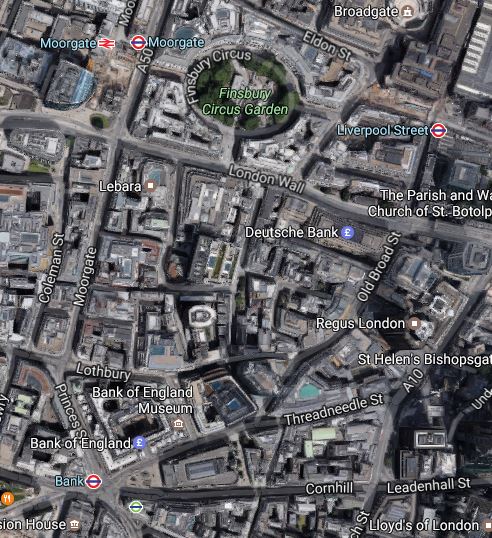
Note.
- How one of the three main stations is within reach of much of the area.
- I would reckon that the three stations are about eight hundred metres apart.
If you don’t fancy walking, there are bus routes between the stations and the Central and Northern Lines also provide connections.
Uber
Uber is the fox in the hen coup.
It is disruptive technology and I don’t like it for various reasons.
- I like to pick up my cab from a rank or by hailing it on the street.
- I feel that apps with credit card details in them will be the next big fraud opportunity.
- I like a properly trained and regulated driver, who understands the intricacies of London’s streets.
I took an Uber cab once from Walthamstow to home and the driver came from West London and managed to get lost twice. As I wasn’t paying, I didn’t bother.
I can’t help feeling that Uber is very inefficient for the driver and only works if they have a monopoly of taxis on the streets.
Conclusion
I have given alternatives to the use of taxis around Bank Junction.
Taxi drivers will protest, but that area is one, where for most people, public transport will increasingly be the best way to travel.
Improving Services To Cannon Street And Charing Cross Stations
Platform Changes At London Bridge Station
The Thameslink Programme will change the platform layout at London Bridge station considerably.
In 2012, the platform layout at London Bridge was as follows.
- Platform 1 – From Cannon Street
- Platform 2 – To/From Cannon Street
- Platform 3 – To Cannon Street
- Platform 4 – From Charing Cross
- Platform 5 – From Charing Cross and Bedford
- Platform 6 -To Charing Cross and Bedford
- There was also a through line to Charing Cross without a platform.
I can’t remember much about those days, except that the platforms were very crowded.
When London Bridge station and the Thameslink Programme is completed, the new platform layout will give opportunities to create new services through London Bridge to both; Cannon Street and Charing Cross stations.
The platform layout at London Bridge station will be as follows.
- Platform 1 – From Cannon Street
- Platform 2 – To/From Cannon Street
- Platform 3 – To Cannon Street
- Platform 4 – From Thameslink
- Platform 5 – To Thameslink
- Platform 6 – From Charing Cross
- Platform 7 – From Charing Cross
- Platform 8 – To Charing Cross
- Platform 9 – To Charing Cross
So, six through platforms and seven lines have been replaced by nine through platforms. This is a 50% increase in platforms and a 28% increase in tracks. The Borough Market Viaduct was the major engineering in creating the extra two tracks across the South Bank.
Other factors help capacity in the area include.
- The Bermondsey dive-under sorts out all the lines South of London Bridge station and will present trains to the right platforms at London Bridge. |Spaghetti Junction is so 1960s!
- Effectively, there are now three parallel and probably separate railway systems virtually from Bermondsey through London Bridge station, that split after the station; a pair of lines for Cannon Street, another pair for Thameslink and two pairs for Charing Cross.
- There has been a lot of work on track and signalling.
- The Tanners Hill Fly-Down has been built to improve capacity between London Bridge and Lewisham, which must help Cannon Street and Charing Cross services.
- The design of London Bridge station with its wide through platforms and more escalators than a science-fiction fantasy, could mean that passengers are there in time for their trains.
- The electrification changeover for Thameslink has been streamlined.
- The Class 700 trains must be better at changing voltages in the Thameslink tunnel.
All of these factoras must have positive affects on the capacity of the system.
I also think that one of the major benefits of the new layout, is what happens if something goes wrong.
If say a train breaks down on Thameslink at Blackfriars, because it is a separate railway, this doesn’t affect Cannon Street and Charing Cross services in the way it did before the new layout. There would still be the problems of fixing the train and what to do with those following behind, but the new design of London Bridge station means that passengers can be handled safely in all the space.
I’d love to see Network Rail’s thinking for handling all problems, but the design of London Bridge and its tracks could be one of those designs, that in a hundred years, engineers will look at and copy.
I can’t believe that the new layout won’t allow more trains to go to and from Cannon Street and Charing Cross, just as it allows more trains to go through the core Thameslink tunnels.
Thameslink is going from something like fifteen trains per hour (tph) to 24 tph or an increase of 60%. So what sort of increase will we see into Charing Cross and Cannon Street?
Services To Charing Cross
In 2012, Charing Cross to London Bridge was handled on three tracks between the two stations and three platforms at London Bridge. Two of the platforms were shared with Thameslink running 15 tph through them.
These three tracks and platforms have been replaced with four tracks, each with its own platform at London Bridge and possibly Waterloo East stations.
The tracks must have been fitted with a higher-capacity signalling system and an efficient track layout.
I am surprised that the four lines to and from Charing Cross share a platform at London Bridge with the other line going the same way.
Surely, it could be better if the Thameslink and Charing Cross services shared an island platform, when they were going in the same direction.
This would give a same-platform interchange between Thameslink and Charing Cross services, which the 2012 layout had.
I suspect that sharing is not possible, as it would mean that services would have to cross other lines to get there and the track doesn’t and can’t allow it.
But if the current service level of fourteen tph to and from Charing Cross station, can be achieved with just two platforms at London Bridge station as they are in the half-completed station, then there must be potential to increase the number of services to and from Waterloo East and Charing Cross, by a worthwhile margin.
Compared to some places in the UK, Charing Cross station already has an intense level of services to stations in South East London and beyond.
These are some example of trains out of Charing Cross between eleven and twelve in the morning.
- Abbey Wood – 2 trains
- Ashford International – 2 trains
- Dartford – 6 trains
- Gravesend – 4 trains
- Greenhithe – 4 trains
- Hayes – 4 trains
- Lewisham – 7 trains
- Orpington – 6 trains
- Rochester – 2 trains
- Sevenoaks – 8 trains
- Tonbridge – 6 trains
- Woolwich Arsenal – 2 trains
If this is increased, I can’t see any complaints from passengers, especially as most trains appear to have ten-cars or more.
I do think though that there will be a need to improve capacity, onward connections and walking routes at Waterloo East and Charing Cross stations.
I say more about these two stations in A Look At Charing Cross Station and Around Waterloo East Station.
It’s just that all these passengers will need somewhere to go.
Services To Cannon Street
Cannon Street station will be getting the same number of lines in 2018, as it did in 2012.
So I doubt, that the service will be any less intense, than it was in 2012.
Currently, in the Off Peak, there is a sixteen tph service, to and from Cannon Street station, which compares well with the current fourteen to and from Charing Cross station.
There is also going to be improvement at Cannon Street station with respect to onward connections and walking routes.
- Bank tube station is getting two new entrances, which are closer to Cannon Street.
- The connection between Cannon Street station and the Central Line will be improved with a travelator running North-South between the two Northern Line tracks at Bank station.
- The connection between Cannon Street station and the Northern Line will be improved with triple escalators directly down from Cannon Street, perhaps a hundred metres from Cannon Street station.
- The link to the District and Circle Lines is already excellent and those lines will be improved and get higher frequencies in the next few years.
- The City of London has ambitions to pedestrianise a lot of the area around Bank station.
Cannon Street station will certainly become one of London’s better-connected terminal stations.
There are more observations in Improvements At Bank Station.
Interchange At London Bridge Station
Effectively, London Bridge station has four sets of services.
- Those that terminate in the station.
- Through services on Thameslink
- Through service to and from Charing Cross station.
- Through service to and from Cannon Street station.
I’ll leave out the Underground, as the entrance to that hasn’t been fully opened yet!
All the current sets of services have their own set of platforms.
Interchange between the various services is a matter of taking an escalator down from the platform on which you arrive and then take another escalator up to your departure platform.
At present, they seem to be using the rebuilt through platforms flexibly as follows.
- Platform 7 – From Charing Cross
- Platform 8 – To/From Charing Cross
- Platform 9 – To Charing Cross
As trains out from Charing Cross seem to pass through London Bridge on either platform 7 and 8, there does seem to be a degree of flexibility in the track. But then there are no Thameslink services needing to be accommodated.
I do wonder if at some time in the future, they will arrange the lines at London Bridge, so that there is some cross platform interchanges. But I suspect that given the complex layout of the tracks, changes will only be limited.
So passengers will continue to go down and up the escalators. But they don’t seem to be complaining!
The Southeastern Metro
This map shows Southeastern Metro services, which are close to the London termini and fall within the Oystercard area.
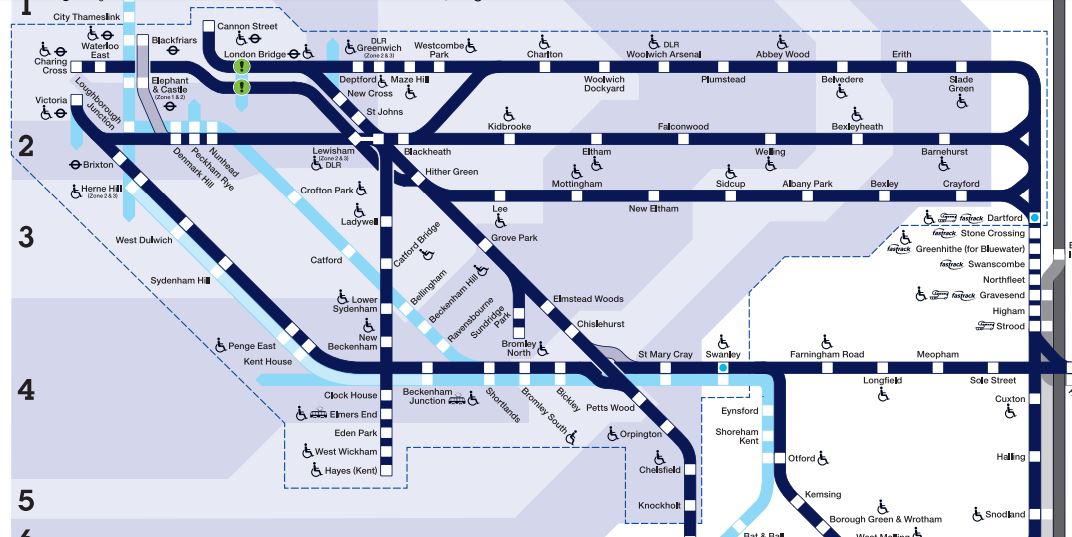
Southeastern Metro
If nothing else the map shows why Transport for London want to get control of Southeastern Metro services and paint them orange, as it is a ready made network that compliments the current Underground and Overground services.
The network has five Central London termini and stations; Cannon Street, Charing Cross, London Bridge, Victoria and Waterloo East.
It also connects to the following other lines.
- Several Underground Lines including the Bakerloo, both branches of the Northern Line, the District Line and and the Circle Line.
- The Overground at Denmark Hill, New Cross and Peckham Rye
- The Docklands Light Railway at Greenwich, Lewisham and Woolwich Arsenal.
- Tramlink at Elmers End.
- Crossrail at Abbey Wood.
- Thameslink at Dartford, Greenwich, London Bridge and Orpington.
In addition, many of the stations have step-free access..
These are the services from a selection of stations close to London.
- Dartford has six tph to Charing Cross and two tph to Cannon Street and Victoria.
- Greenwich has six tph to Cannon Street.
- Hayes has two tph to Charing Cross and Cannon Street.
- Lewisham has eight tph to Cannon Street, 4 tph to Charing Cross and 2 tph to \Victoria.
- Orpington has four tph to each of Cannon Street, Charing Cross and Victoria
- Woolwich Arsenal has six tph to Cannon Street and 2 tph to Charing Cross.
So in some ways it’s an all-places-to-all-terminals Metro.
Transport for London must look at the Southeastern Metro and have all sorts of ideas about how they could use the network to the benefit of London.
These are some Off Peak service levels.
- Sixteen tph between London Bridge and Cannon Street.
- Fourteen tph between London Bridge and Charing Cross.
- Ten tph between New Cross and Cannon Street.
- Eight tph between Orpington and London Bridge.
- Eight tph between Dartford and London Bridge
- Twelve tph between Lewisham and London Bridge.
Also consider.
- Would more services be possible after Thameslink is completed between London Bridge and Charing Cross.
- Could more use be made of an interchange at New Cross to get passengers to Canada Water for Canary Wharf and Witechapel for Crossrail?
- Could better use be made of Orpington station?
- Could Lewisham be improved?
- Will Brockley Lane station be rebuilt and a connection to the East London Line created?
- How would the area be affected by an extended Crossrail to Gravesend?
- How would New Cross cope with more than four tph on the East London Line?
I think that TfL could have lots of fun!
For instance, with a bit of reorganisation of services, it might be possible to create a ten tph or upwards set of lines across South London.
As an example Lewisham to Charing Cross via New Cross, London Bridge, Waterloo East could easily be ten tph.
No new trains, track or signalling would be needed, but the bottleneck of London Bridge must probably be removed before it is possible. And the Thameslink Programme is doing that!
Effects On The Jubilee Line
I don’t have any figures on passengers, but the section of Jubilee Line from London Bridge, will get a high-capacity by-pass on the surface.
But if we assume the current 14 tph on the rail line and 2019 frequency of 36 tph on the Jubilee Line, these are the numbers of carriages going between London Bridge and Charing Cross/Waterloo.
Heavy rail – 14 tph x 12 cars = 168
Jubilee Line – 36 tph x 7 cars = 252
Incidentally, the seats per hour figures are 10206 for Class 377 trains and 8424 for the S Stock on the Jubilee Line.
So will passengers choose to travel on the surface, thus freeing up capacity on the Jubilee Line?
Consider.
- Changing from say Thameslink after travelling up from Brighton to a Charing Cross service at London Bridge will be down and up two escalators and fully step-free.
- How many passengers will walk or take a bus to and from London Bridge to complete their journey?
- Some connections to the Underground at London Bridge require lots of walking.
- Going between London Bridge and Waterloo by a train rather than the Jubilee Line may well be a more pleasing experience.
- There are people like me, who prefer not to use a deep-level Underground Line, if there is an alternative.
Remember though that the the Charing Cross platforms at London Bridge are paired with 6/7 handling trains from Charing Cross and 8/9 trains the other way. Both pairs will share an island platform, escalators and a lift. So it may be quicker if you’re going to say Waterloo station, Trafalgar Square or Covent Garden to take a train.
Every so often, various plans are put forward as to what to do with the closed Jubilee Line platforms at Charing Cross. This is said about the platforms in Wikipedia.
As the Jubilee line platforms and track are still maintained by TfL for operation reasons, they can can also be used by film and television makers requiring a modern Underground station location. While still open they were used in the 1987 film The Fourth Protocol, and after closure in numerous productions, including different episodes of the television series Spooks.
I can envisage someone coming up with a plan, whereby these platforms are used as a second Southern terminus for the Jubilee Line. By 2019, it is intended that 36 tph will be running from North Greenwich to West Hampstead.
But there could be a problem, in that depending on what you read, there may not be enough trains for this increase in service.
But if, the uprated service between London Bridge and Charing Cross takes passengers from the Jubilee Line between London Bridge and Waterloo could the service be split into two?
- Most Jubilee Line trains would run as now and provide sufficient service between North Greenwich to West Hampstead.
- A small proportion of trains, perhaps 10 tph, would divert into the closed platforms at Charing Cross station.
It would give some advantages.
- There would be improved Underground connections at Charing Cross station.
- Trafalgar Square would gain another Underground Line.
- Charing Cross would have a two-stop link to Crossrail and the Central Line at Bond Street station.
Unlike most new station and interchange projects, the infrastructure is already there and maintained.
Consequences For Southern Crossrail
If everything works out with the Thameslink Programme and the rebuilding of London Bridge station, I can see no point to Southern Crossrail.
However, there idea of rebuilding Waterloo East station, is probably a good idea, to improve connectivity to the Underground and Waterloo station.
Waterloo East station could be handled a lot more passengers in the near future.
Conclusion
It looks to me, that Thameslink has been well-thought out and if the trains, track and signalling performs from London Bridge along the South Bank, as everybody hopes it should, we will see a world class Metro service across South-East London.
But I do feel that if the service along the South Bank is a quality one, then it will take passengers from the Jubilee Line and this line could be open for development.
Improvements At Bank Station
As I passed Bank station, there was a lot going on in the area and in the short walk to Cannon Street station.

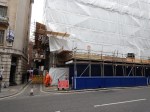
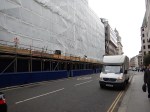


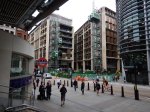
What is happening on the surface, is only small beer compasred to what is going on under the ground.
This visualisation, shows what the new Bank station will look like.
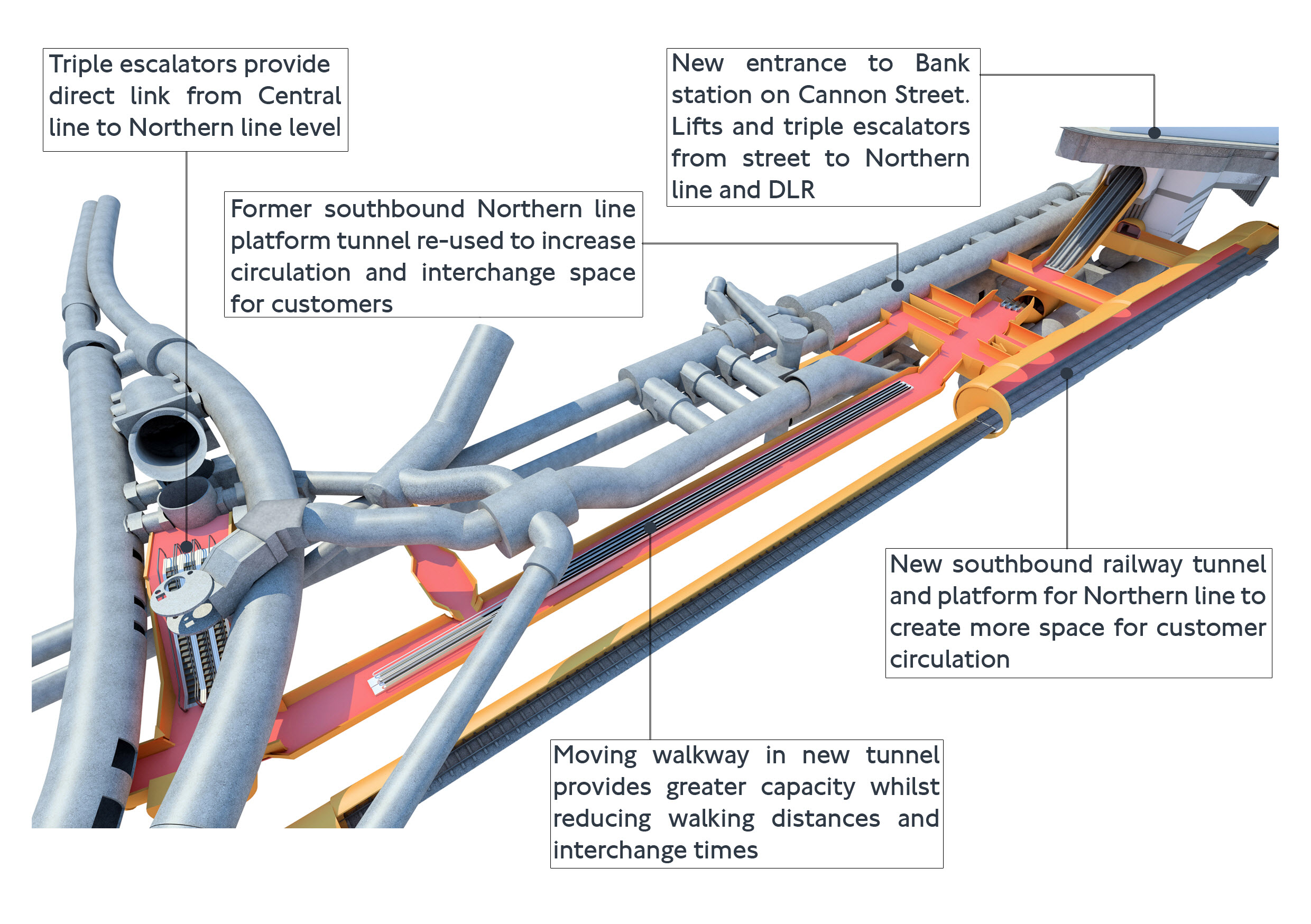
Completion dates look like 2017 for the Walbrook entrance and 2021 for the completed Bank station.
I think that this development will have one of the largest effects of any transport-related project in London.
Do We Need More Angels?
Before my reader, thinks I’ve gone all religious, I’m talking about the Angel tube station.
The station was substantially rebuilt in the early 1990s and this is said in Wikipedia in a section about the rebuilding.
For years since its opening, the station regularly suffered from overcrowding and had a very narrow island platform (barely 12 feet (3.7 m) in width), which constituted a major safety issue and caused justified fear among passengers. Consequently, the station was comprehensively rebuilt in the early 1990s. A new section of tunnel was excavated for a new northbound platform, and the southbound platform was rebuilt to completely occupy the original 30-foot tunnel, leaving it wider than most deep-level platforms on the system. The lifts and the ground-level building were closed and a new station entrance was opened on 10 August 1992 around the corner in Islington High Street together with the northbound platform while the southbound platform opened on 17 September 1992. Because of the distance between the new entrance and the platforms, and their depth, two flights of escalators were required, aligned approximately at a right angle.
So that explains why the station is unusual and safe. Rather than unusual and scary!
This map from carto.metro.free.fr shows the layout of the tunnels through Angel station.

Note.
- The dotted lines of the original tracks.
- The track to the North (top) was the original Northbound track.
- The Southbound track still has the same layout.
- The original twelve-foot island wide platform has now been widened to create the platform labelled 2.
- The platform labelled 1 and the track labelled 1992 is new work.
- The other dotted line was a siding.
I suppose the only complaint, is that the new station is not step-free, but then the work pre-dated the time from when disabled-access became commonplace.
London Bridge station went through a similar process in the late 1990s.
This map from carto.metro.free.fr shows the track layout of the Northern and Jubilee Lines at the station.
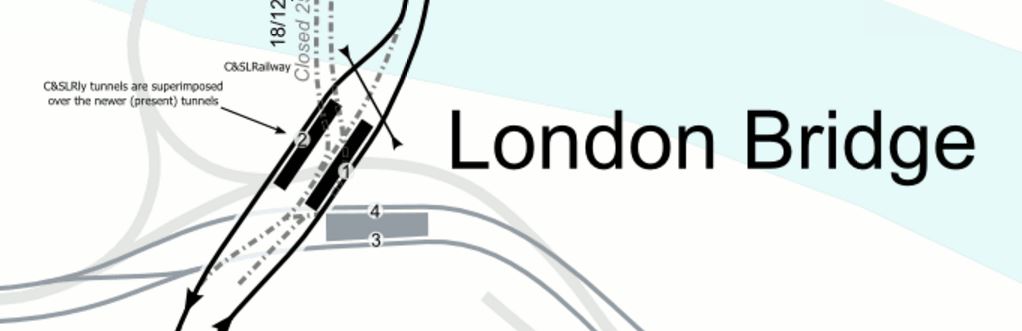
London Bridge Tube Station
The work that will be carried out at Bank station follows some of the things that were done over twenty years ago at Angel.
This map from carto.metro.free.fr shows the current layout at the station.
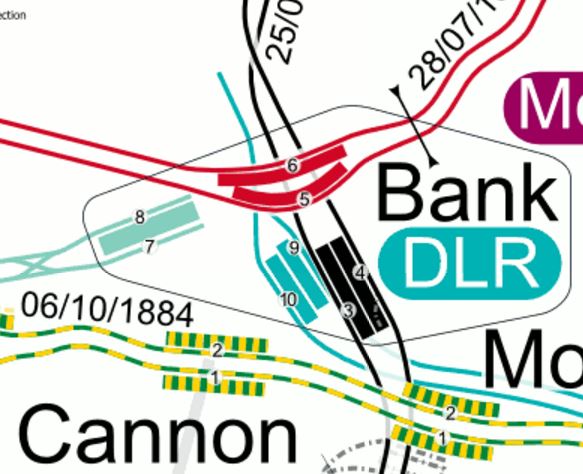
bank Tube Station
Note the following about the current layout and future developments.
- Platforms 3 and 4 are the current Southbound and Northbound platforms respectively, with non-traditional on the right running.
- A new single-track Southbound tunnel is being built to the West of the current one, to create a space between the lines.
- The current platform 3 will become part of the passenger space as it has at Angel.
- Platforms are being widened.
- Better step-free access is being created.
- There will be escalators direct to the Central Line.
- Oversite development is being added on the top of the new station entrance on Cannon Street.
- In some ways too at Bank station, the precedents set by the new Walbrook Square entrance are also being followed.
This visualisation, shows what the new Bank station will look like.
I think more stations can be rebuilt along using similar techniques.
Clapham North and Clapham Common stations are the last two Northern Line platforms with an island platform in the tunnel and must be towards the top of any list. This map from carto.metro.free.fr shows their locations.

Note their closeness to Clapham High Street station, I am sure, that eventually a better solution to these two stations will come about because of property development in the area.
- Euston station must be added, but this will probably be sorted with HS2 and the rebuilding above.
- Camden Town station is planned for a major upgrade with property development on top.
- Finsbury Park station is being improved, but given the station’s future importance, is what is planned enough?
And then there is always Highbury and Islington station, which is probably the worst station on the Victoria Line for platform access.
This map from carto.metro.free.fr shows the lines through the station.
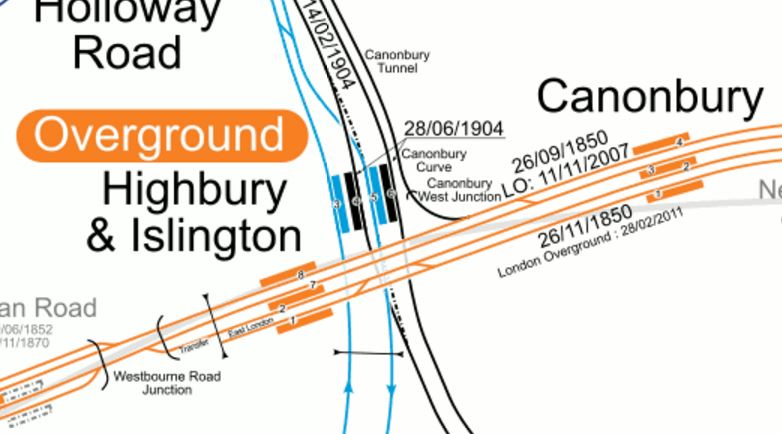
Note the following about Highbury and Islington station.
- The Overground has been sorted with step-free access.
- The bridge outside the station, which was decidedly dodgy will be fixed soon.
- Islington Council have ambitious plans for Highbury Corner.
- The Northern City Line is being upgraded to a high frequency with new Class 717 trains.
- The frequency on the North London Line is going to be increased a notch or so.
- There will be more trains to the South on the East London Line.
- The Victoria Line is going to get closer to forty trains per hour.
All of this adds up to a desperate need to rebuild the station with more escalators and lifts, probably on both sides of the Holloway Road.
There is a further unlikely possibility at Highbury and Islington station.
Note the Canonbury Curve in the map, which lies on a single-track electrified line that links the North London Line to Finsbury Park on the East Coast Main Line, Thameslink and the Northern City Line.
If, as I suspect, that in a few years the Northern City Line is upgraded to a higher frequency, once the new Class 717 trains, there will be an even bigger need to sort out this station.
The Walbrook Entrance To Bank Station
This press release from TfL is entitled BANK STATION: WORK STARTS ON A NEW ENTRANCE.
It describes how work has started to fit out the new Walbrook entrance, which will give step-free accress to the Waterloo and City Line.
So I went to have a look.

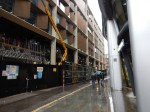





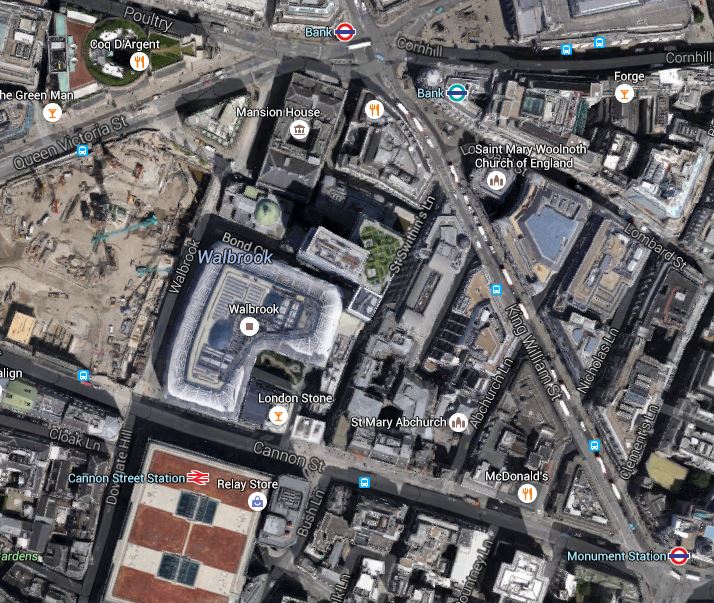
I didn’t see an obvious entrance, but is it actually on the north-west corner where Walbrook joins Cannon Street.
This Google Map shows the area.
The New Walbrook Square Entrance At Bank Station
Cannon Street station is the brown and white roofed building at the bottom, which is south-east of the junction of Walbrook and Cannon Street. The big bare site on the opposite quadrant of the junction, now contains Walbrook Square, with the station entrance to be built on or close to the junction on the Walbrook side of the building.
Note the three other main entrances to Bank station.
- The roundel at the top in the middle is main entrance under the major road junction called Bank.
- The roundel at the bottom-right indicates the Monument entrance.
- The McDonald’s on Cannon Street will be replaced by the new Cannon Street entrance.
The station certainly has the area covered, when you add in all the smaller entrances.
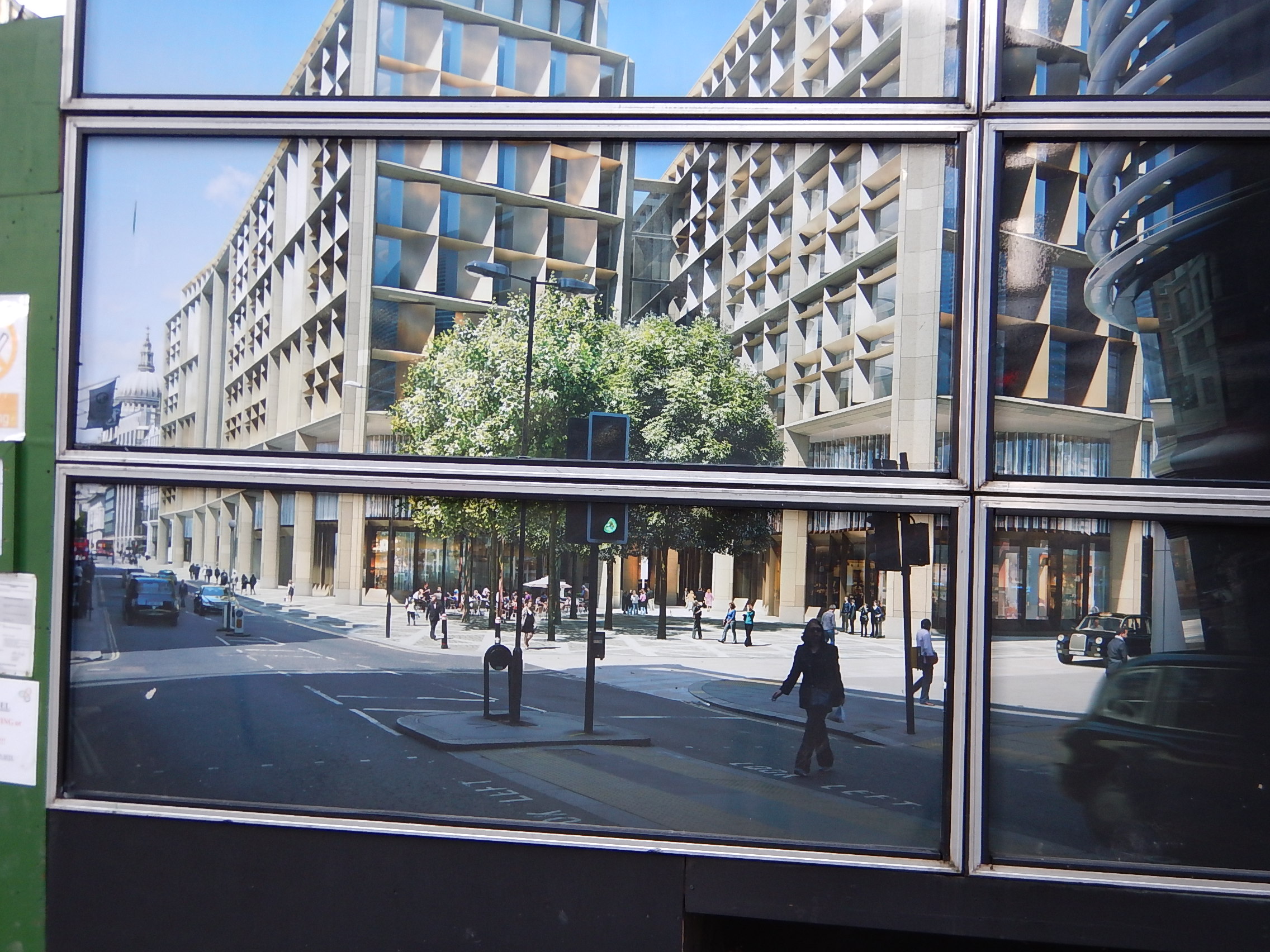
I returned a few days later on a Sunday in the sun. This picture from the hoardings outside the construction side, shows the corner of the building opposite Cannon Street station.
The Walbrook Entrance To Bank Station
That looks like a square with a cafe to me.
I assume the Walbrook entrance to Bank station is somewhere behind.
The Connection Between Northern And Circle/District Lines At Bank Station
I’ve done this interchange at Bank station a few times but not that I remember it. These pictures show my route as I walked from a southbound Northern Line train to the Circle/District Lines, where I went one stop to Cannon Street station.



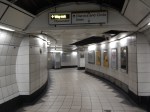
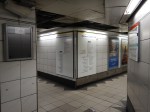
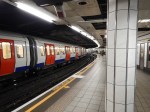
The Northern Line is unusual in Bank station, in that the southbound track is on the right hand side of the two lines, whereas normally in the UK, they follow the same rules as the roads.
I walked down the platform, took the exit at the far end and then used the escalators to get to the passageway leading to the Circle/District Line platforms.
When the station is upgraded with a new Cannon Street entrance, a new southbound tunnel will be bored several metres to the west and the space between the two tunnels will become a generous circulation space, with four cross tunnels linking the two Northern Line platforms, which hopefully will be wider than the current narrow ones.
Connections to and from the circulation space will be as follows.
- A set of three escalators will ascend to the new entrance. They are actually two sets vertically, with a landing to turn everthing the right way.
- Two travalators will connect to the Central Line platforms to the North.
- Another set of three escalators will descend to the DLR platforms some ten metres below.
- Two lifts will connect to the new entrance above and the DLR platforms below.
- The two escalators and their connection to the Circle/District Lines will be opened out and upgraded.
I’m not sure how this space connects to the Waterloo and City Line, but I’m sure that the architects have a solution.
But I do think, it’s rather a neat solution to convecting all the lines together, as the amount of walking that passengers will do compared to the current station will be greatly reduced.
I also think, it’s going to be a straightforward station to build, in that you can leave the current platforms to handle the trains until you’ve dug most of the station tunnel for the new southbound line, completing as much of the entrance as you want above the working Northern Line and DLR. Once the Northern Line is closed, the circulation space with all its lifts, escalators and travalators is put together.
I think a lot of the work will be done from the top in a big hole, lifting everything in, by the use of large cranes.
Will much of the mechanical infrastructure be put together in a nice, warm, dry factory?
The New Cannon Street Entrance To Bank Station
This entrance will help to solve Bank station’s chronic problems. It will go on the corner of Nicholas Lane and Cannon Street.
These pictures were taken on a walk from King William Street to Cannon Street station.
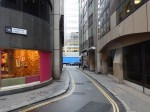
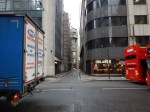


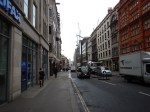
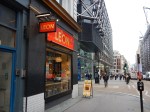
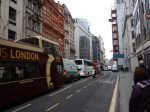

I would assume, it will replace the McDonald’s, with a new office block on top.
This Google Map shows King William Street, Nicholas Lane, Cannon Street and the various stations.
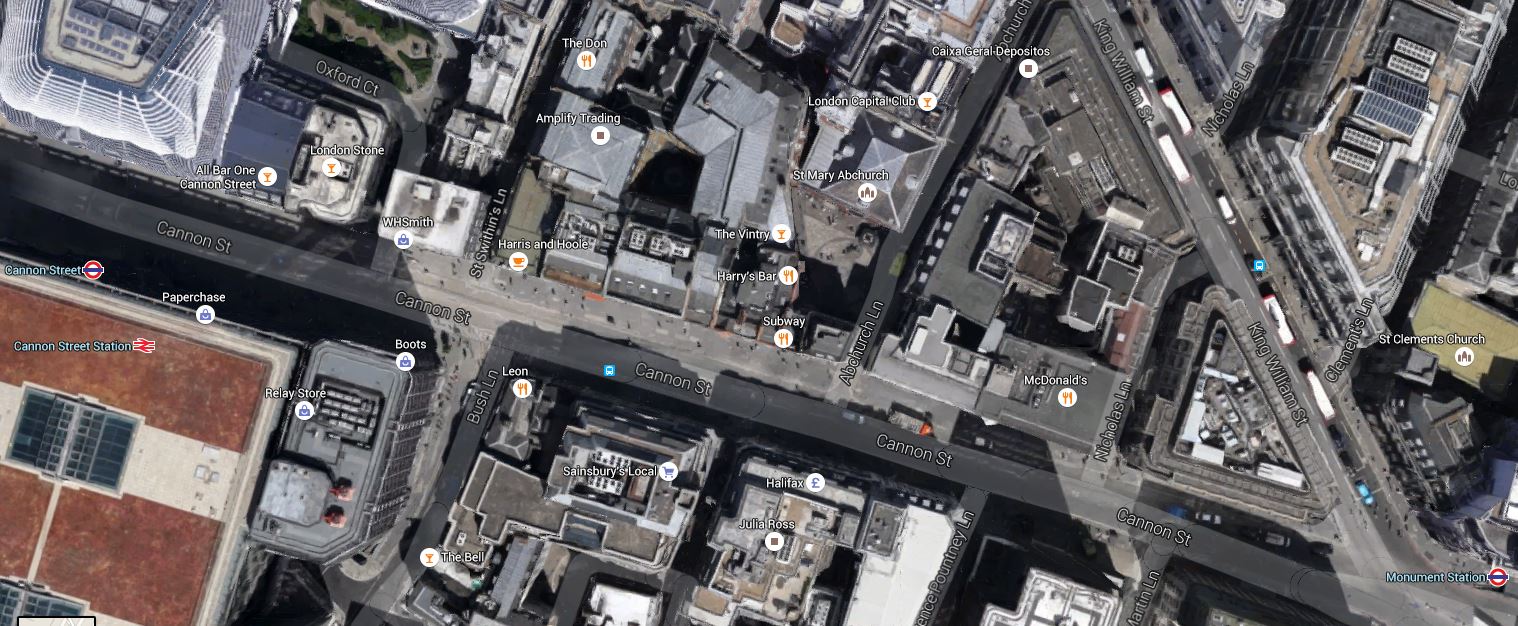
New Cannon Street Entrance At Bank Station
Note the McDonald’s. I had an excellent lunch in the Leon.
If you want to read more about the proposed station, you start by looking at this page on the TfL web site, which is entitled.
I found these two documents answered a lot of the questions, I had about the design of the station.
Design and Access Statement – Part 1 – Opens with a detailed drawing of the whole new entrance project.
Design and Access Statement – Part 2 – Opens with a detailed summary of the proposal.
They also have a lot of good images, visualisations and diagrams.
Summarising what I learned, I will make the following points.
- The new entrance will be a wide one where the current McDonald’s is situated.
- Passengers will go through the wide gate line and banks of escalators will take them down to the Northern Line.
- Passengers requiring step-free access will have a dedicated route to the lifts from two wide gates on the left of the entrance.
- The Northern Line is deep and because of the constricted nature of the site, the escalators will be vertically split into two banks with a landing, as some at London Bridge station are.
- At the bottom of the escalator will be a large circulation area, with cross passages accessing the rebuilt and wider Northern Line platforms.
- Moving walkways from the circulation area, will take you to the Central Line.
- The rise between the Northern and Central Line levels will be handled by escalators between the Central Line platforms.
- Access to the DLR platforms, which are several metres below and parallel to the Northern Line platforms, will be via escalators in the middle.
- The District and Circle Lines will be accessed from the Southern end of the circulation space by means of an improved passage to existing escalators.
- I suspect that the access to the Central Line and DLR platforms, can be built without any lengthy closures.
- Don’t forget that there is a new entrance at Walbrook Square being built to give lift and escalator access to the Waterloo and City Line, that will open in 2017.
- All existing links between lines and the existing entrances will be preserved and upgraded.
- Two seventeen passenger lifts will descend from the new entrance to both the Northern Line and the DLR.
- The station is to be completed by 2021.
I think it is true to say, that the new Cannon Street entrance is effectively a second station that is connected to all the existing lines.
In the latter part of the project, the Bank branch of the Northern Line will be closed, so that the new running tunnel can be dug. I don’t think it will be possible to turn trains at say Moorgate and London Bridge, so the branch will cease to be any use.
Could this blockade, be planned to happen after Crossrail opens, so that passengers can walk to Liverpool Street/Moorgate to access other North-South routes?
- Crossrail to Farringdon station for Thameslink
- Crossrail to Tottenham Court Road station for the Charing Cross Branch of the Northern Line.
- Crossrail to Whitechapel for the East London Line.
- The Northern City Line at Moorgate station.
The Central, District and Circle Lines had better behave too!
So how would the new station at Bank change my transport habits?
- Journeys between my house and Bank station are often done on a 21 or 141 bus, where the stops are within a hundred metres of my house. I would hope for better access between buses and the new complex at Bank.
- The new Wallbrook entrance and the improved access to the Waterloo and City Line, will greatly improve one of my routes to Waterloo,
- I often go south on the Northern Line, as it is easy to get a 38 or 56 bus around the corner from my house and dive straight into the Northern Line at Angel station. From Bank I will use the easy access to the DLR and the District and Circle Lines.
- I suspect that when I need the DLR, I will go to Bank, rather my route now via Shadwell on the East London Line.
- If I’m coming North on the Northern Line, I get out at either Bank, Moorgate or Old Street and take the 21 or 141 bus.
I shall certainly have a lot of interesting transport routes.
The expansion of the station, in addition to sorting the connection between the various lines at the station, will after the Wallbrook entrance is complete, create two new terminii for the two smaller lines at the station.
Waterloo And City Line
The new Wallbrook entrance will create a step-free entrance into an upgraded Waterloo and City Line.
This will generate a few questions.
- How long will it be before demand is such, that the Waterloo and City Line opens on a seven-day-a-week basis?
- Will the passageways still connect the Waterloo and City Line platforms to the to the DLR and the Northern Line?
- Will the connections to other lines at Bank station be good enough?
- As the Bank end of the line will be step-free, what will happen at the Waterloo end?
- Could access to the line be improved from Waterloo East station?
I think that the Waterloo and City Line will get a few more small upgrades. Especially, as during the blockade of the Northern Line to build the new spouthbound tunnel, it will be used to bring travellers to and from Bank station.
Docklands Light Railway
The two DLR platforms and their connections to the other lines will be transformed by the station expansion.
- Many of the walking routes to other lines and the exits will be step-free, and all will be an improvement on the present routes.
- The important connection to the Northern Line will be by escalator or lift.
- There will be a lot more space around the two DLR platforms.
I think this ease-of-use of the DLR part of the station, will increase passenger numbers dramatically.
It appears to me that the new design will future-proof the DLR terminus, as the new layout of the DLR platforms and their connections seems to have been designed, so that the DLR can be extended to the West.
According to Wikipedia, two possible westward extensions have been proposed.
I think that the former which would take the DLR to Charing Cross and possibly Victoria via City Thameslink and Aldwych would be the most promising.
This would give me a route to Charing Cross station, which is probably the most difficult station to get to from Dalston.
But will it ever happen?
Bank station will certainly ready for a DLR extension in 2021.
From Monument To Westminster Along The East-West Cycle Superhighway
I walked the East-West Cycle Superhighway in two sections, as I crossed the bridges to have lunch on the South Bank by the Tate Modern.








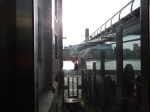

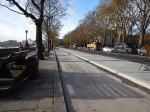


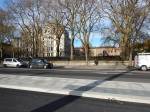


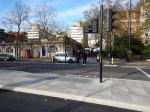


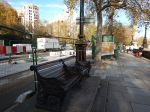


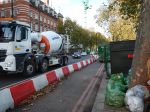
It certainly is getting a move on, with some sections almost ready to open.
A few notes follow.
The Arthur Street Site
A new block is being created on this site, but before that happens, the site is being used to access the underground parts of Bank station.
This map from a TfL document show the site.
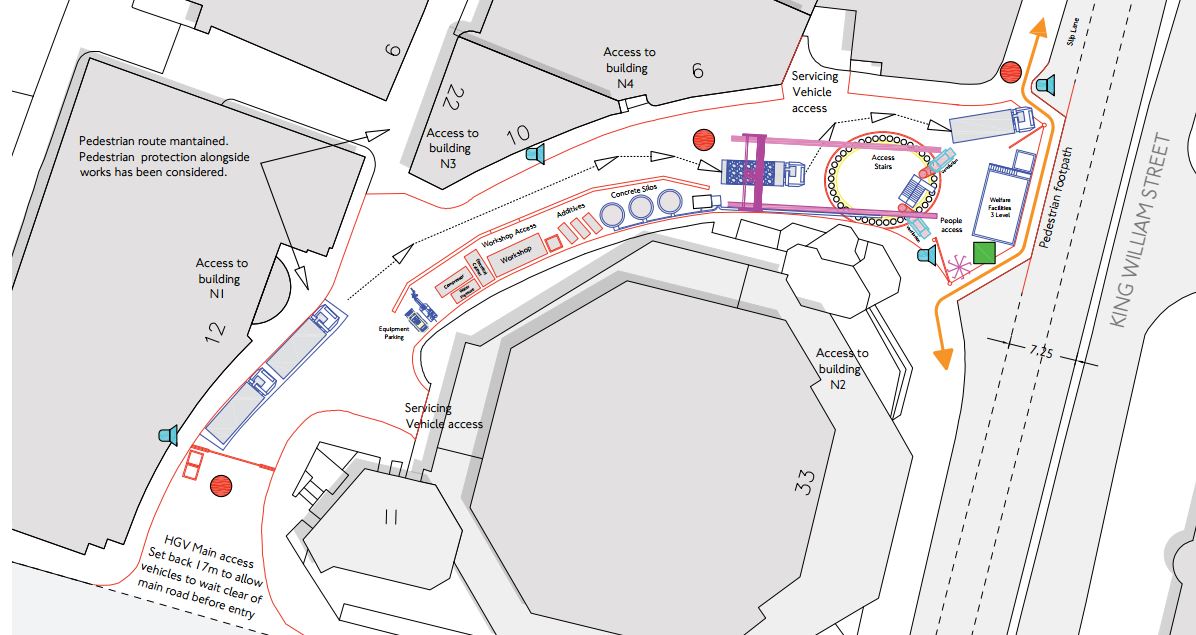
The Arthur Street Site
This fact sheet explains how the Arthur Street Site is to be used. This is said.
To deliver the proposed station improvements there is a need for a worksite in Arthur Street. This site is above the new tunnel alignment, and enables access via a shaft directly down to the new tunnel. This separates the underground tunnelling works from the extensive demolition and basement construction works on the Cannon Street site, facilitating an earlier completion of the tunnelling works and a reduction of the overall impact of the project on the City.
As with everything in the City of London, it all seems very crowded.
Along Upper Thames Street
As the pictures show the Cycle Superhighway is going on the North side of this road.
This road has always been jammed solid with cars, taxis and a lot of trucks.
The construction phase of the Cycle Superhighway isn’t exactly helping traffic flows.
The Millennium Inclinator
The Millennium Inclinator is by the Millennium Bridge and I used it to get up the steps to the bridge, before crossing to get some lunch on the South Bank.
Westward From Blackfriars
After lunch, I crossed back to the North over Blackfriars Bridge and followed the Cycle Superhighway to Westminster station.
Conclusions
As with Cycle Superhighway CS5 from Oval to Pimlico, from what I could see, it seems to be well-designed and built.
I’ll look forward to hiring a bike at one end and riding it to the other.
 The Anonymous Widower