Improving the High Street
I have two High Streets close to me, Upper Street at the Angel in Islington and the Kingsland Road in Dalston.
I would use them more, but the trouble with both of them, is that they are just too cluttered to navigate easily.
At the Angel the problem is chuggers, who always want to stop me. I just make sure, I don’t give to the charities they promote. On the Kingsland Road it’s the endless boards put up to block the pavements by the various money and pound shops.
I’m sure more people would go to the various High Streets in this country, if it was easier to walk between the places you want to go. Because of this, when I go to either the Angel or the Kingsland Road, I usually go to visit a specific place like Waitrose or the station and usually plan my walking route carefully, so I avoid the main road.
It is also interesting to compare the centre of Liverpool, with say Oxford Street. The former is pedestrianised and it is a joy to walk around with no traffic, whereas the second is a nightmare and no wonder it’s such a dump, with just a few good shops, like John Lewis, Selfridges and M & S, standing out from the dross.
I can’t remember the last time, I bought anything in Oxford Street, except at those stores!
Yesterday, Oxford Street had been blocked off and effectively pedestrianised and it was so much better.
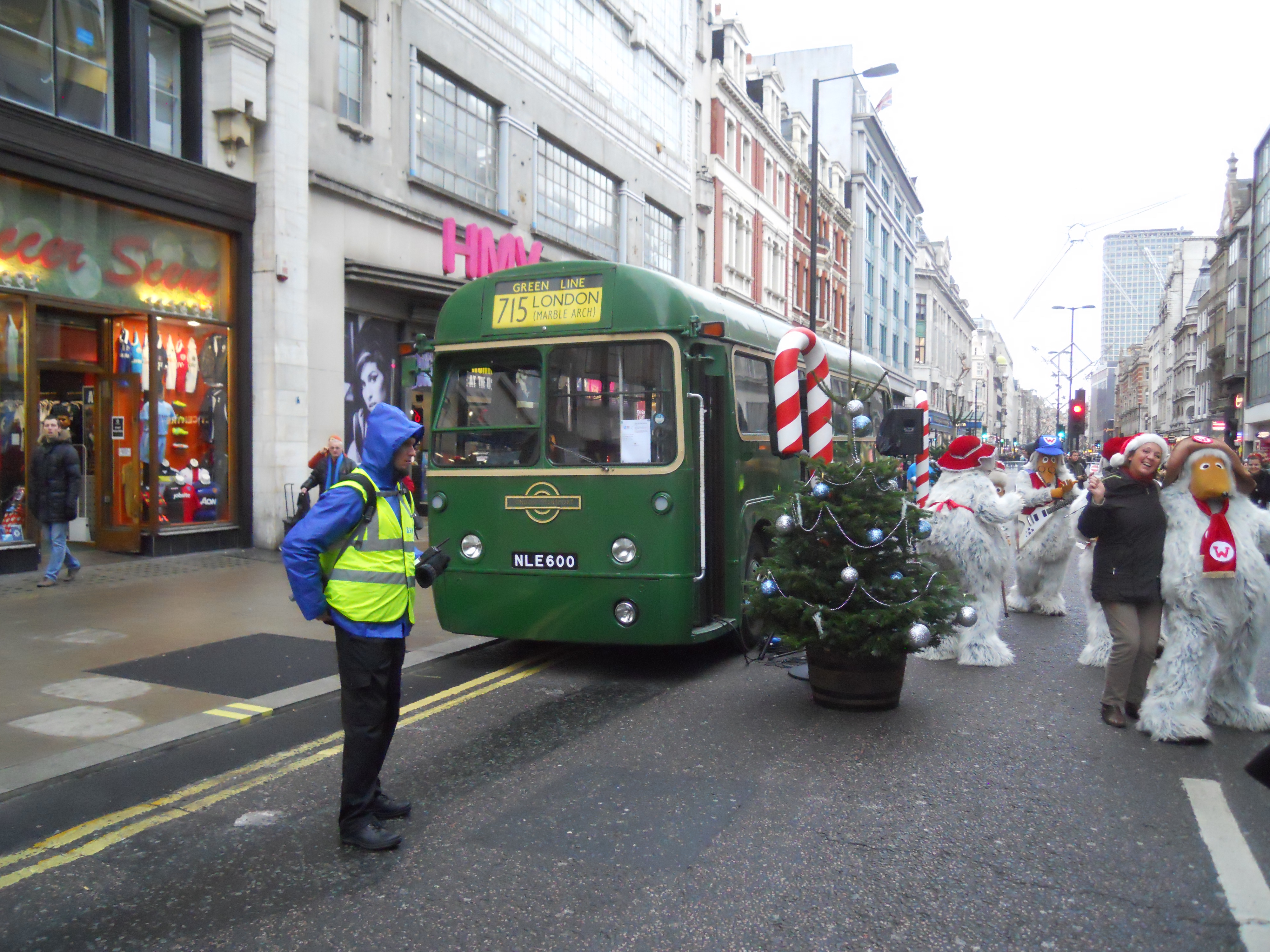
An RF Bus and the Wombles
The only obstruction was this RF or Regal Four bus and the Wombles.
I didn’t actually buy anything though.
On the subject of buses, which are very important in getting people to the shops, at The Angel, they have two big lay-bys on either side of the road, which accommodate the bus stops. So if I’m going to say Waitrose, it’s just get off the 38, 56 or 73 bus, walk across the road on a light-controlled crossing and then I’ve just a few metres from the shop. Going home, I don’t even have to cross the road and just walk down a few steps to the bus stop. The system works well and could probably be implemented in many places. But then they’ve lost a few car parking spaces. But then how many normal unselfish people drive in Islington?
They could certainly improve the bus access and walking routes on the Kingsland Road, which would probably improve the interchange between the two Dalston stations.
The problem in both these High Streets, is that they can be improved, but usually the motorist is the one to be inconvenienced. I should say, that in both places, there are car parks, close to the High Streets.
Jams In The West End
There has been a lot of controversy lately about the City of Westminster, bringing in parking charges in the evenings and on Sundays. Here ‘s a report from the Telegraph.
It seems to me that most of the opposition is led by celebrities such as Peter Stringfellow, who claim they are worried about jobs and of course where to park their own limos and excessive people carriers.
As I said the 38 bus was delayed getting to Shaftesbury Avenue and it took half an hour to travel the last bit from Bloomsbury. My progress after alighting from the bus, wasn’t helped by the fact that a coach was parked on the pavement, making both walking and driving difficult.
After the play it was worse and getting back up Shaftesbury Avenue was not easy, as drivers were blocking pavement and trying to go at speed into and out of the side roads. It wasn’t helped by the fact, that a large number of police cars and ambulances were trying to get through.
I finally got to the stop for the 38 bus and after checking by text, I found I had seven minutes to wait.
Whilst waiting you realised that what was holding up the traffic was the vast number of cycle rickshaws, which were illegally touting at the bus stops. A guy in the queue near me, who had the aura of a taxi-driver, said that mos of the rickshaws aren’t insured and he wouldn’t go near them. He was actually a van driver, who’d had a nght out with his family and was also waiting for a 38. There’s more on illegal rickshaws here.
It was also a night, when I wished I’d had my camera with me, as I would ave got a picture of a 19 bus, seemingly pushing a rickshaw slowly along the road.
Finally, I got my 38 back to the local stop.
So what would I do to improve matters?
It would appear that the 38 bus, might be one of the first routes to get the new Routemaster in 2012. Certainly, as they are quicker to board and exit, they should help a bit. Banning the rickshaws from bus lanes would also help.
I’ve always been in favour of pedestrianising Oxford Street or perhaps building a raised walkway above the middle of the street to speed people from Tottenham Court Road to Marble Arch and perhaps relieve the Central line. Although a bit to the north of theatreland, it would make it easier to get to Soho and then come south to Shaftesbury Avenue. My thoughts on the walkway are in this post.
I think I would make a large area of Soho a pedestrian only zone, as this would increase the capacity of the area dramatically. And the more visitors it gets, the more money gets spent. Perhaps, small electric buses could be used on the north-south routes to move people about.
But perhaps what will help most is already being built; CrossRail. Although it only goes to Tottenham Court Road and Bond Street stations, the high-capacity trains will probably run later than the Underground and they will at least get a lot of West End traffic away after the theatres and shows finish. I would run a shuttle service through from say Stratford to Heathrow to aid those, like essential workers, who had to travel in the middle of the night.
It has always puzzled me why there is no Underground station at Cambridge Circus. Perhaps the walking routes to Leicester Square and Tottenham Court Road stations need to be improved.
92 Clubs – Day 44 – AFC Wimbledon
This was a visit that showed just how good public transport, and buses in particular, can be.
I thought to get to AFC Wimbledon would have meant a trip by train to Norbiton station, which is just a reasonable walk from the ground according to the club’s website. However the web site also says that it is easy to get to the ground by bus.
You can take the 131 from Wimbledon Station or Kingston Town Centre, which stops right outside the ground.
So I used the 131 bus from Wimbledon.
I started by taking a 21 bus from near my house direct to Monument station, where I got the District line to Wimbledon station. Unluckily, I just missed a direct train, so I had to change at Earl’s Court. But it was only just a walk across the platform.
At Wimbledon I had a short walk to the stop on Worple Road for the 131 bus, which I’d looked up on the excellent spider map at the station.
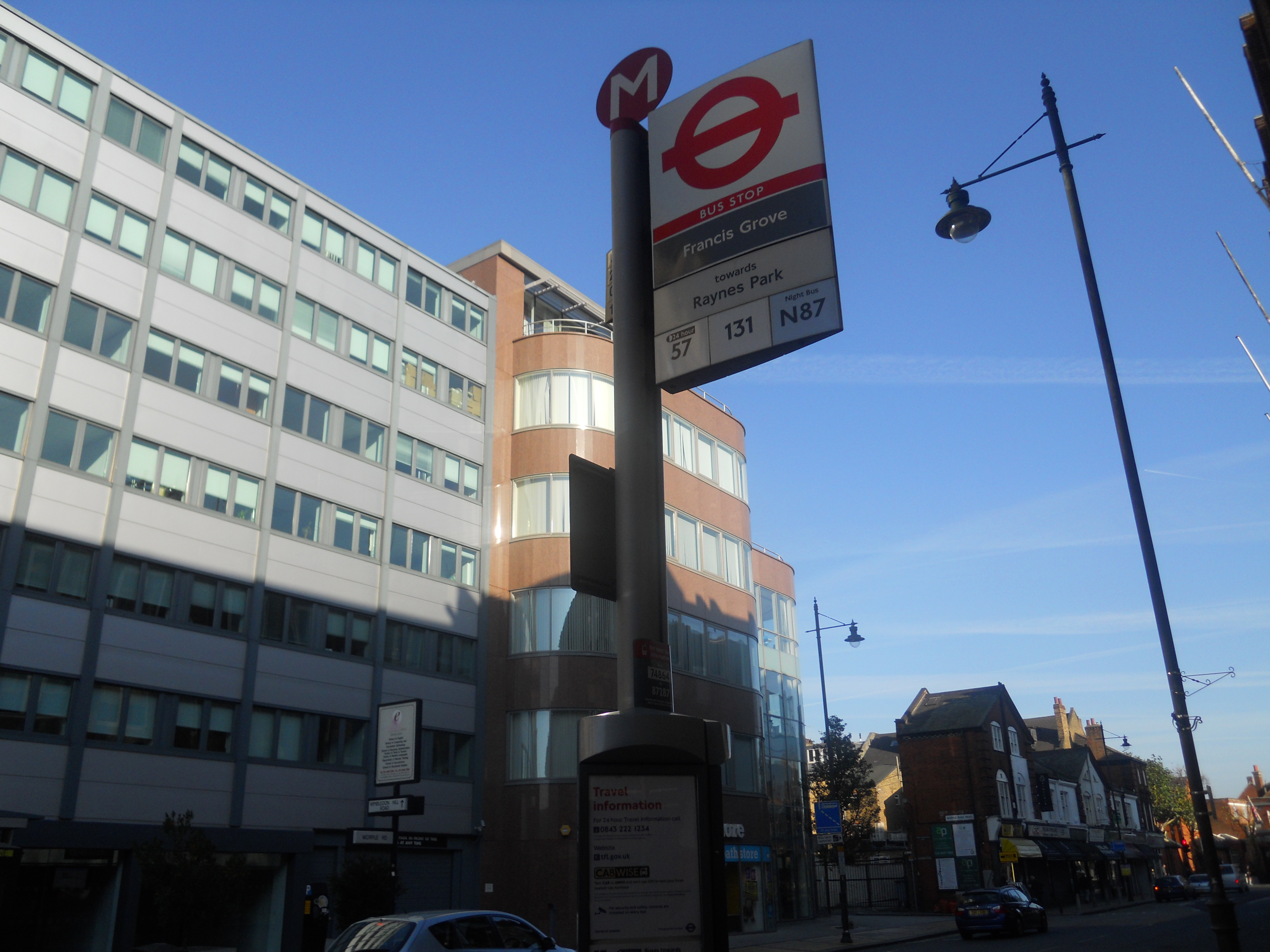
The Bus Stop at Wimbledon for the 131 Bus to AFC Wimbledon
The picture shows the stop complete with its text details for bus information. I used this and found that I’d have to wait six minutes for the 131. I think perhaps the information was a minute out. But I’ll forgive them that!
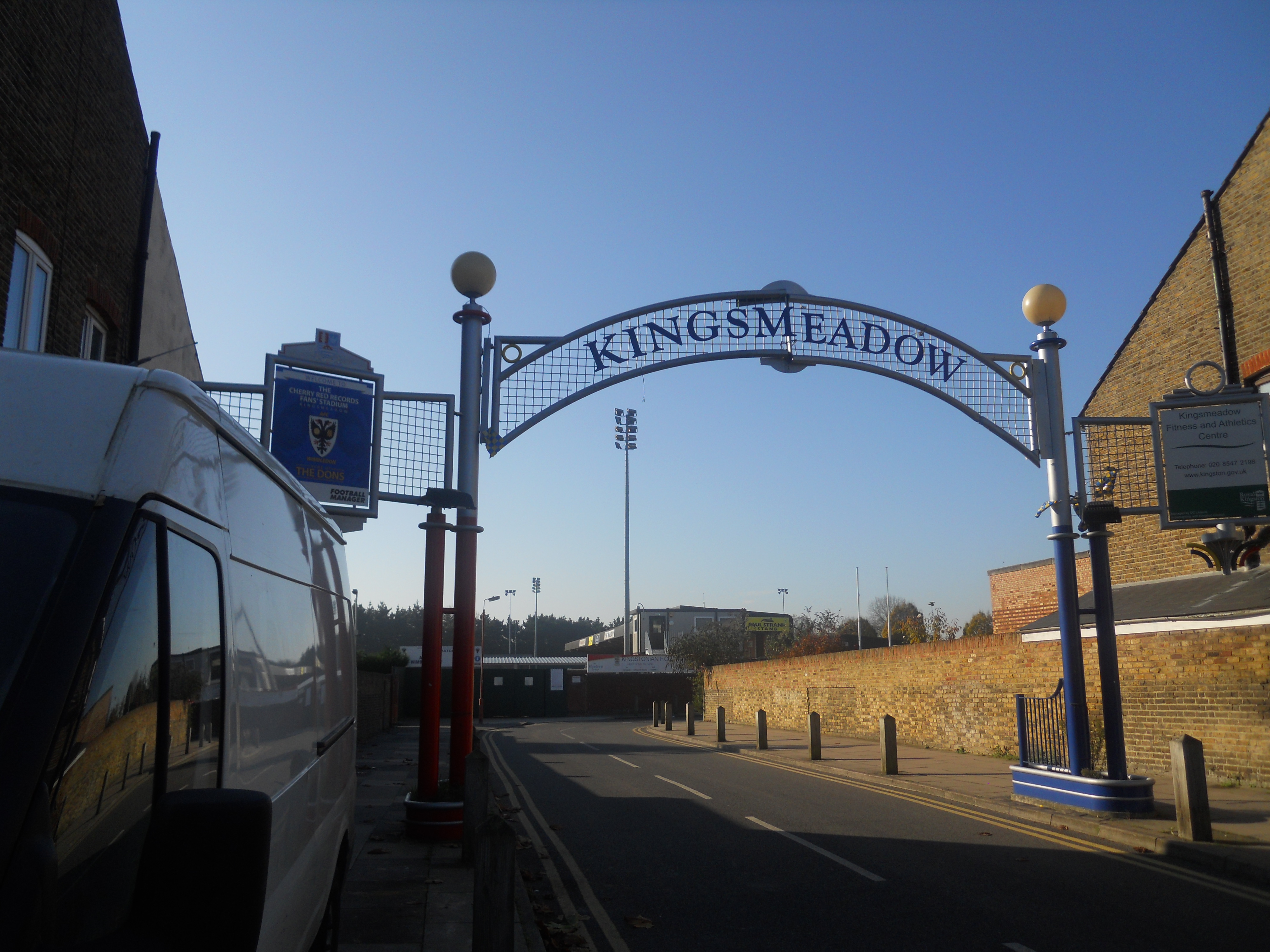
Kingsmeadow Stadium Where AFC Wimbledon Play
The Kingsmeadow stadium is shared with Kingstonian and rather tucked away, but less than a hundred metres from the bus stop called Kingsmeadow.
Twenty-five minutes later and I was back on the train at Wimbledon. I arrived home in time to watch the Abu Dhabi Grand Prix.
This trip goes to show how with good public transport and especially buses with proper information systems and maps, it is very easy to take a bus to any location in London. Other cities and towns in the UK, should follow the lead of Transport for London.
Some may say rightly, that watching football or any sport for that matter, is a minority interest. but imagine how say an 80-year-old would cope visiting their sibling in hospital at the other end of the country, by buses and trains. The trains aren’t the difficult bit, but outside London, buses are generally fairly dreadful and an information-free and map-free zone.
Although to use a football example here, I could dwell on the insanity of moving the original Wimbledon club to Milton Keynes, where the only way to get to the ground in a reasonable time, I had to use a taxi. No wonder the number of fans, who transferred their support can probably be counted on the fingers of one hand.
Does Sheffield’s Public Transport System Work For Visitors?
Of all the major cities I’ve visited; Leeds, Manchester, Newcastle and Sheffield, Sheffield seems to have the public transport system that is most understandable to visitors. I’ve left out Liverpool and Birmingham, where I didn’t have time to look at the systems. Although of course, Liverpool is different for me, as I know the city well.
In Sheffield, I was greeted by this walking map.
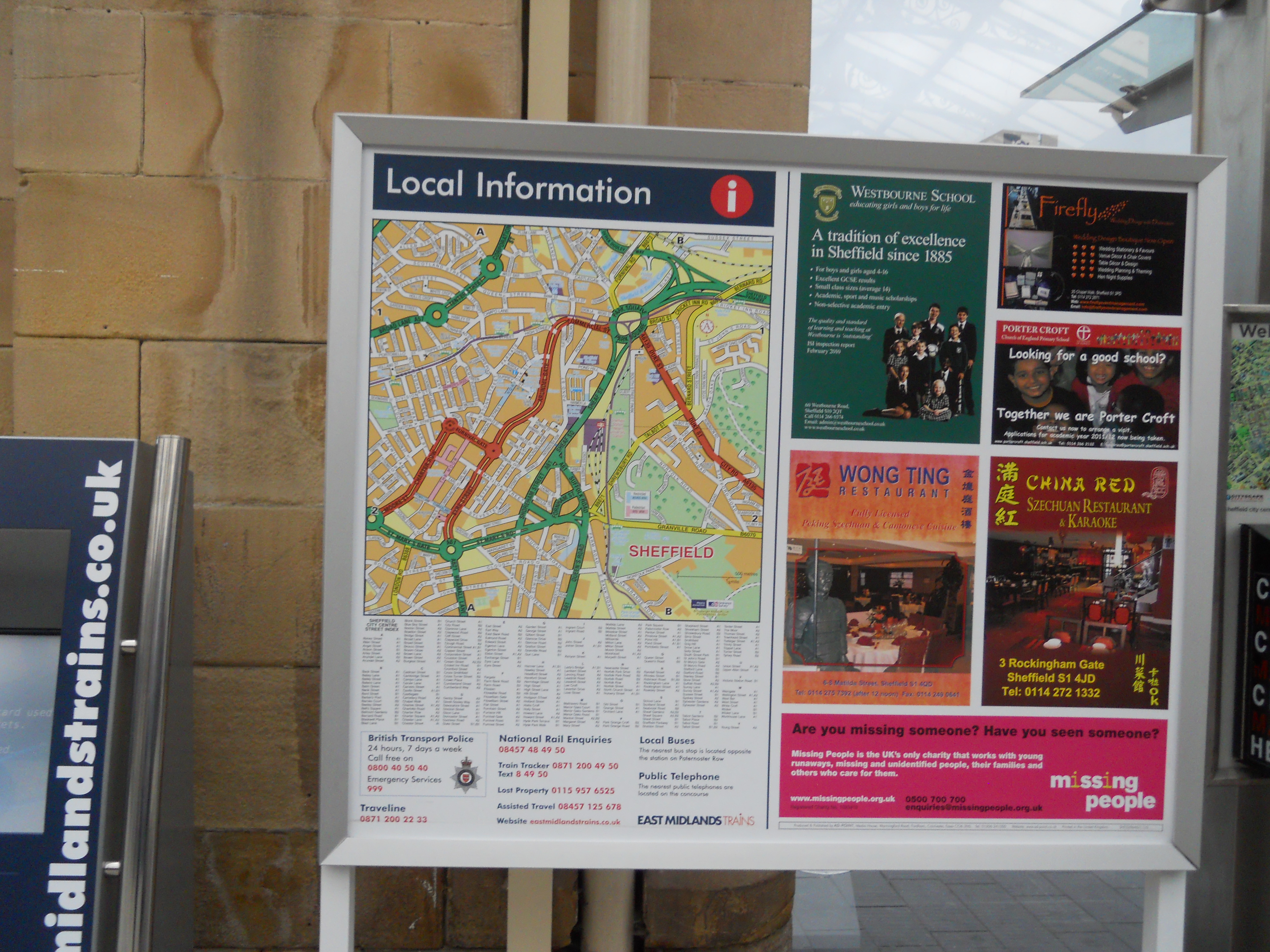
Walking Map at Sheffield Station
At the other side of the station, there was a proper information board explaining how the trams worked, with details on fares, routes and where all the places I needed to visit were located.
Sheffield station is also located closely to the major bus interchange.
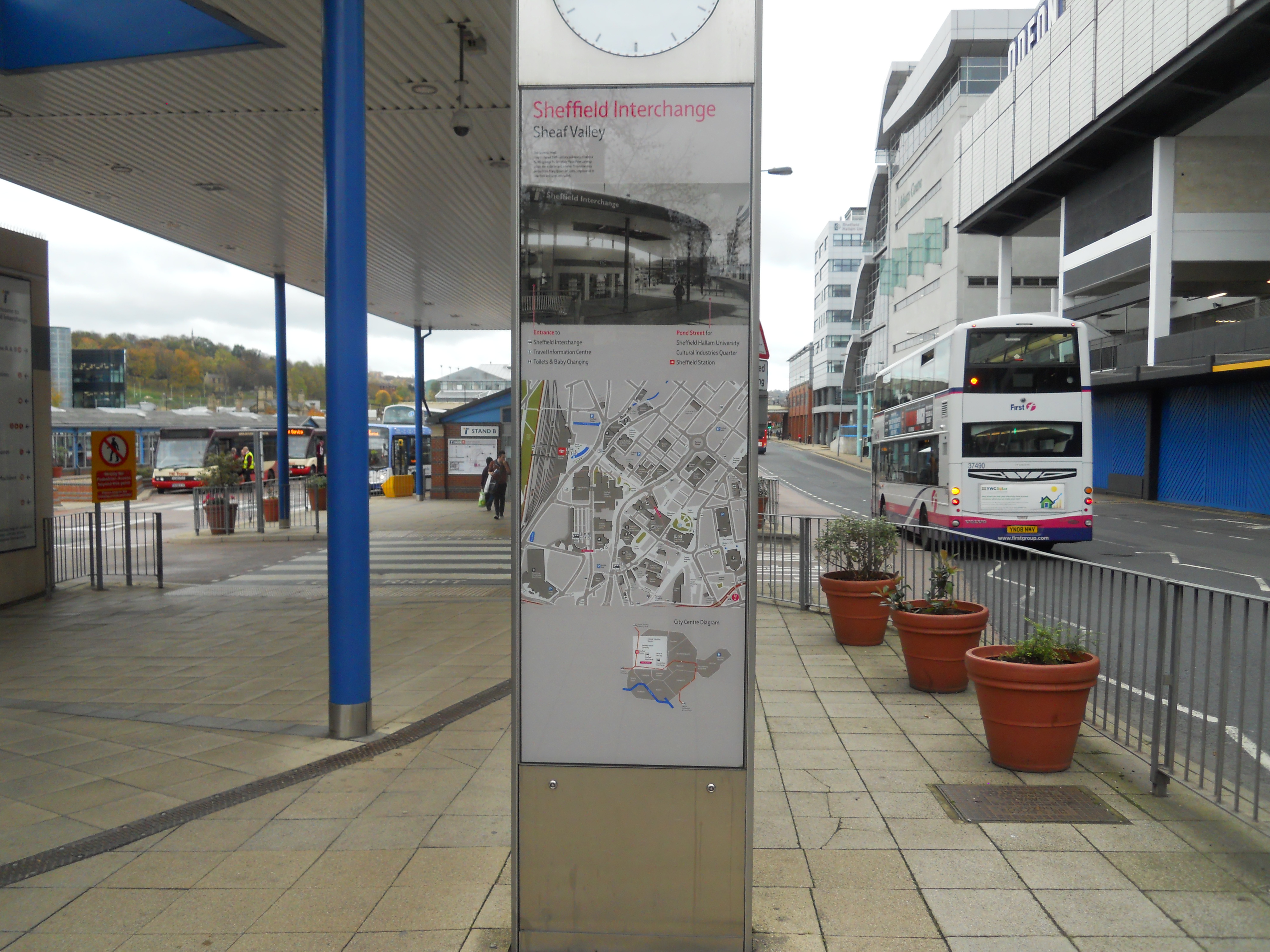
Sheffield Transport Interchange
This picture shows the interchange with the station behind the buses.
If you arrived in Sheffield with just an address, you should be able to find your way very easy. One small point, is that if you need to walk to the bus interchange or the trams, it is generally under cover and pedestrian friendly.
I used the trams extensively on Day 31 and didn’t get lost once. The only thing they need is indicators at the tram stops to tell you how long you will have to wait. But all the stops do have good maps, which is very rare in the UK, except in London.
I didn’t actually use the buses, but then I didn’t need to as the trams covered everywhere I wanted to go and they had the maps to guide me from the stops.
Sheffield is unique in that it has two major train stations linked together; the main station and the one at Meadowhall Interchange. On Day 31, I arrived at the main station from Manchester and then when I returned from Scunthorpe, I arrived at Meadowhall. I left for London from the main station, but say if I’d been going to the north east, I could have left from either.
92 Clubs – Day 37 – Swansea
This was one that I thought would be simple. Just a return on a Sunday to one of the furthest clubs from London; Swansea.
But I knew there would be problems because of engineering works on both the Underground and the trains to South Wales. So I decided to start early and just took a Super Off Peak Return to Swansea, having booked a seat on the 08:00 from Paddington. I had elected to take my chances about getting a seat on the return journey. But I thought I’d have a reasonable chance, as the train started its return journey in Swansea and I knew there was an unreserved coach.
So it should have worked out well and mostly it did.
Because there was no Underground trains to Paddington, I had to take a couple of buses. Which wasn’t too much of a hardship, but the journey wasn’t as easy as it would have been on say a Monday.
When I got to Paddington, Marks and Spencer wasn’t yet open, so I couldn’t buy any sandwiches for the trip. As they are the only place to buy any gluten-free food in stations and there is nothing on the trains, I would have to wait until Swansea.
The journey was uneventful except that it took just over four hours instead of just under three. This was because it had to go via Bristol Temple Meads and Bristol Parkway, rather than straight through, because of the engineering works.
On arriving in Swansea, I walked straight to the Liberty stadium in about half-an-hour. There were no signposts for either walkers or drivers until you could see the stadium.
Swansea share the ground with the rugby club; The Ospreys, as you can see from the picture.
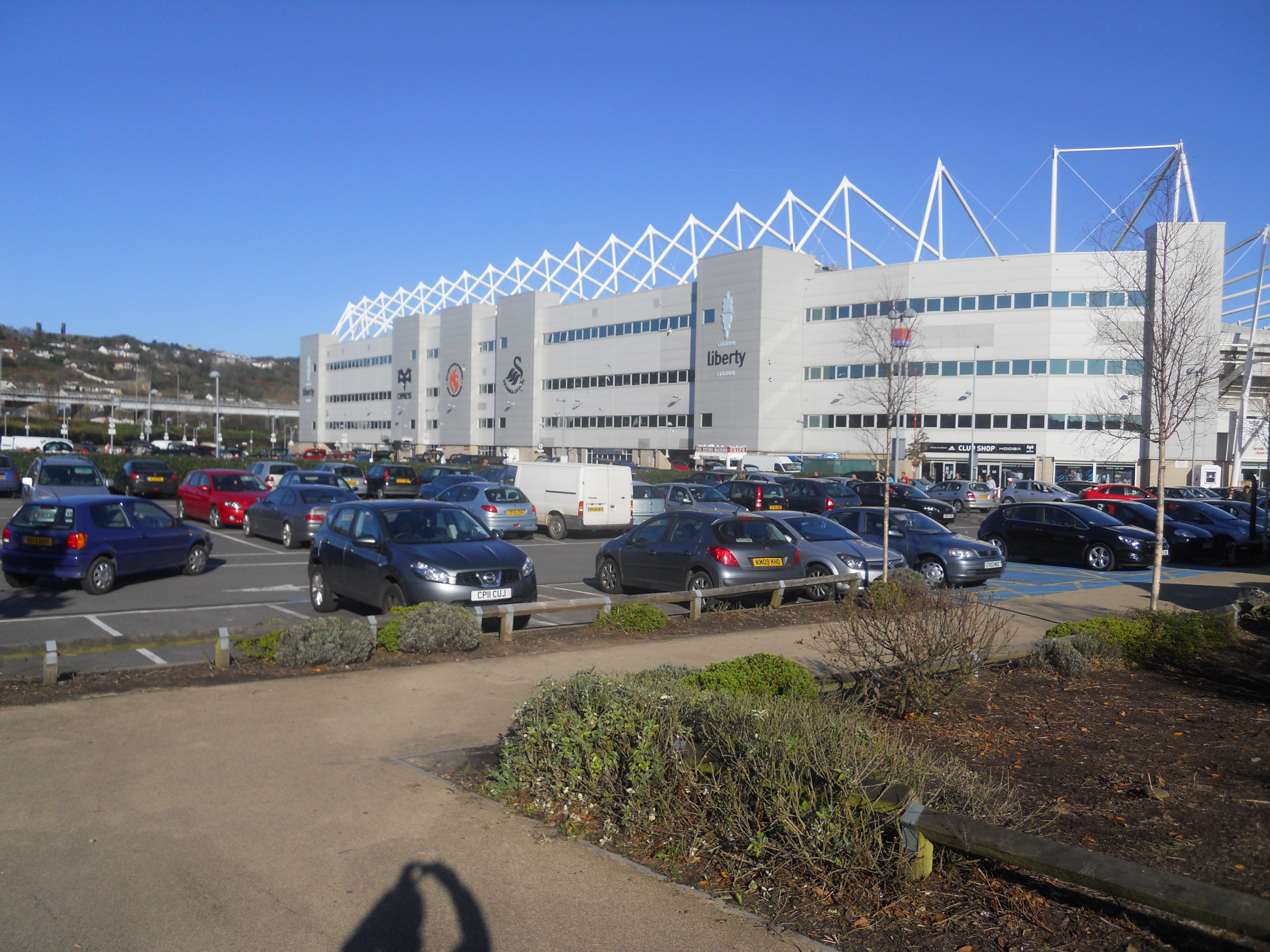
The Liberty Stadium, Swansea
I think I caught the remains of a car boot sale, so I thought I’d get back to the city centre and try and locate some food.
I did get a bus, but of course I had to pay for it, as English bus passes are not valid in Wales. Are we a United Kingdom or not? I don’t mind paying incidentally and feel that a UK wide scheme with perhaps a small charge outside your home are, would be the fairest way to do it.
But I couldn’t find any food. Marks & Spencer told me, that they had no gluten-free sandwiches, although they do stock them. but they are not the best of sellers! In the end I get some EatNakd bars from Holland and Barrett. They may be nice, but coffee and chocolate bars isn’t the best diet, even if it is gluten-free!
So I got back to the station and took the 14:00 train home. Paddington was in chaos because of the Underground engineering works, so it was buses to Oxford Street and then the Central line and another bus to Islington for supper in Carluccio’s.
All I say is roll on CrossRail, as this will make getting to Paddington so much easier; engineering works or not!
As an aside, I took this picture of the stadium from the train from London.
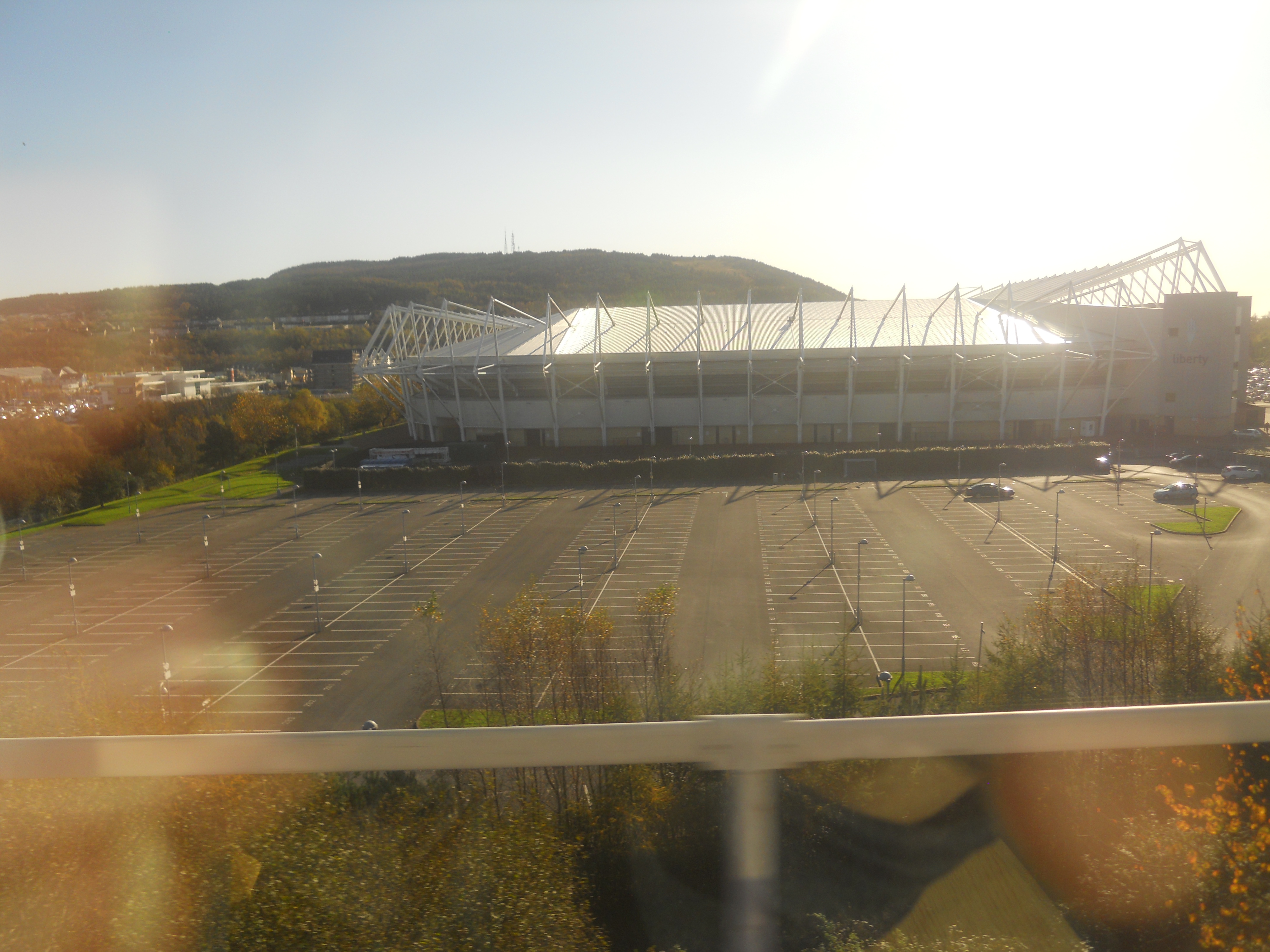
The Liberty Stadium from the London Train
It strikes me that this is a ground that could benefit from its own station.
It was a day though that showed me the problems of travelling as a coeliac unless you plan ahead and take your lunch with you!
A High-Tech Bus Stop in Burslem
I saw this bus stop in Burslem.
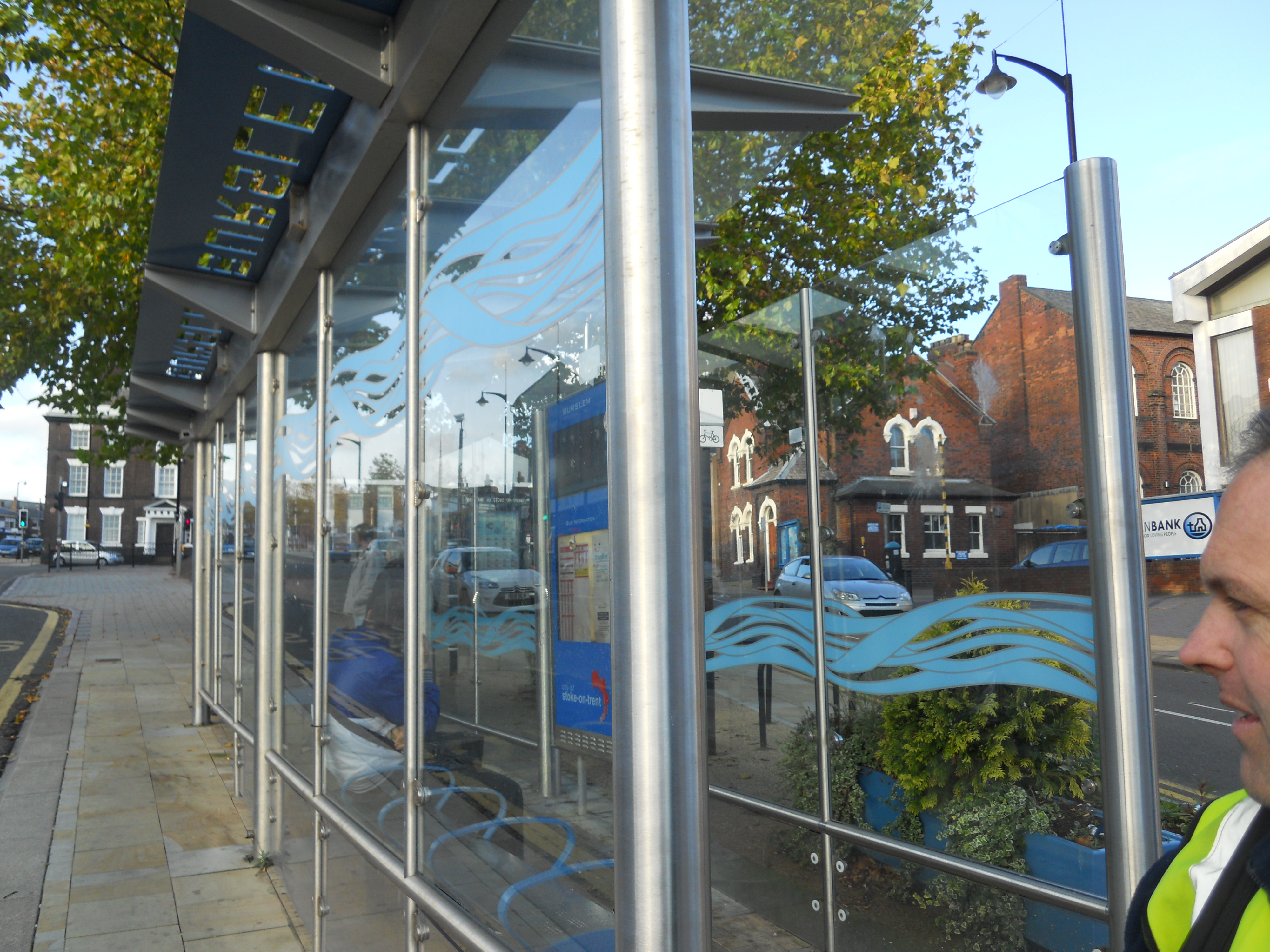
A High-Tech Bus Stop in Burslem
It looks good, but as regards giving information to visitors and locals alike, it was supremely useless. Even the texting system didn’t give any sensible information. It was even more annoying, when you consider I had to wait nearly half-an-hour to catch a bus to somewhere I didn’t really want to go.
You also can’t see it in this shot, but there was a youth using the stop, as a nice place to have his can of strong lager.
It would have been much better, if they’d spent the money on a good draughtsman to make a nice map and poster to enable everybody to use the buses efficiently.
From what I’ve seen outside London, Harry Beck, would now be spinning faster in his grave than any of the basic atomic particles. And of course good well-drawn maps are as rare as hen’s teeth or elusive as Higgs bosons.
92 Clubs – Week 4 – 11 Clubs – 18 Trains
Week 1 Week 2 Week 3 Week 4 Week 5 Week 6 Week 7
Day 22 Day 23 Day 24 Day 25 Day 26 Day 27 Day 28
This was a rather poor performance on my part, but it had got off to rather a bad start on Day 22 and I did take three days off.
Here are the awards.
Heroes of the Week
These have to be Peter, who at 84, guided me across Manchester to Oldham and the unknown driver of the 14:06 out of Paddington to Penzance, that I took to Plymouth.
Most Surprising Stadium of the Week
It has to be Port Vale, as it shows how a small club can create a stadium of whom any supporter can be proud.
Best Stadium of the Week
I’d give this to Port Vale as well, if it wasn’t so difficult to get to. I might give it to Norwich, but then I can’t, can I? Both the Nottingham clubs have good stadia, which are easy to get to, but the others with the exception of Peterborough, are public transport nightmares. So I think I’ll leave the award! in a few years time or on a match day, it will probably go to Port Vale.
Best Signposted Stadium of the Week
Portsmouth virtually has its own station at Fratton and even has separate signs to the ground for Home and Away Supporters, so it wins by a country mile.
Worst Signposted Stadium of the Week
Peterborough virtually lacks signposting and as it is fairly close to the station, some signs would help. But as I said on Day 27, the stadium is very much a work-in-progress, so perhaps it will be very much better in a few years time. I think I’ll give it to Northampton, as with a bit of thought, they could probably make a nice walking route to the ground.
Dump of the Week
After a couple of near misses Manchester finally gets the rewa4rd it deserves. It is a city with bad maps, no information and a completely indecipherable bus system. Perhaps some of the billions, they are spending on the new trams could be used to make sure the buses work or that the maps are correct.
Sign of the Week
It just has to be the one at Port Vale.
Best Train of the Week
The High Speed Train to Plymouth, where I sat on on the floor.
Worst Train of the Week
The two trains to Oxford, where there was no tables in the back of the seats in front. How can I do my Sudoku?
Worst Bus of the Week
The one I took from Boundary Park to Oldham Bus Station. If you were in a wheelchair or had a baby in a buggy, you ewouldn’t have been able to use it.
This was rather a dissappointing week, in that I could have done much more. I could make the excuse of my hay fever! So I will!
92 Clubs – Day 28 – Portsmouth, Port Vale, Preston
This was an easy day, in that I took a train to Fratton after 09:30 from Waterloo to Fratton to get to Portsmouth.
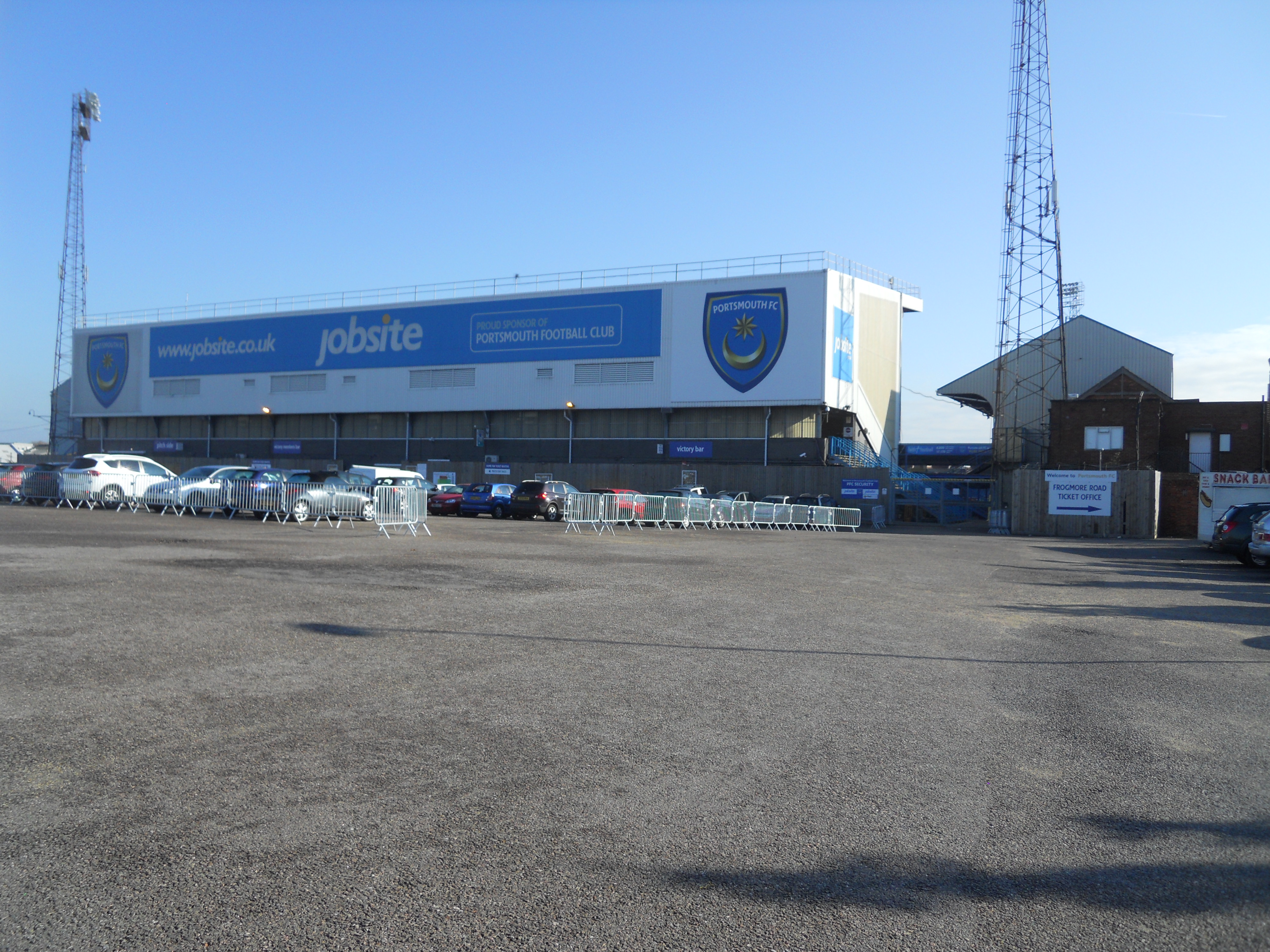
Portsmouth's Fratton Park Stadium
I was back into London ion the 11:28 and was able to catch the 13:20 out of Euston to Stoke-on-Trent for Port Vale.
Vale Park is not easy to get to from the station and although the 21 bus supposedly does most of the trip, this does mean a confusing change or stopover in Hanley. So I took a taxi to the ground from there.
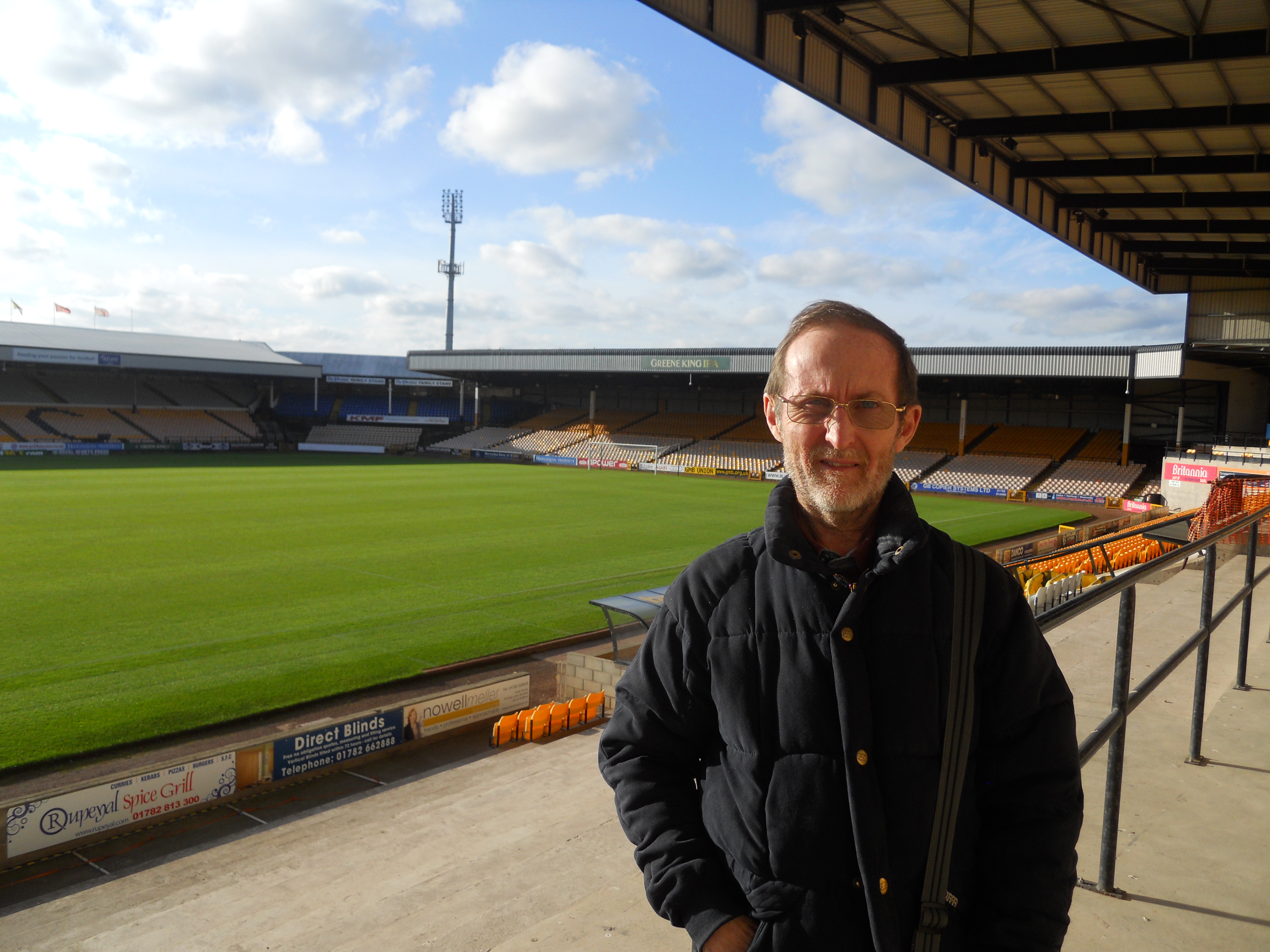
Inside Vale Park
The staff were very welcoming and one of them took the picture.
I tried to get the bus back to the station from Vale Park and asctually found the stop,but no bus of any sort appeared for some time. A local told me they were often like that and caused him great distress. In the end it was a 21 that appeared, but as I needed to get on I jumped ship at Hanley and got a taxi to the station, where I caught another Virgin Pendolino to Manchester Piccadilly. By now, I know the station like one of the rats, who I suspect live between the tracks, sao it was a run to catch the train to Preston. As it was a Trans Pennine Express, it was very crowded.
I’d been to Deepdale once before in the 1960s to see Spurs play, whilst I was at University and can remember walking a long way to the staidum then. So this time it was a taxi in the dark to Preston‘s ground.
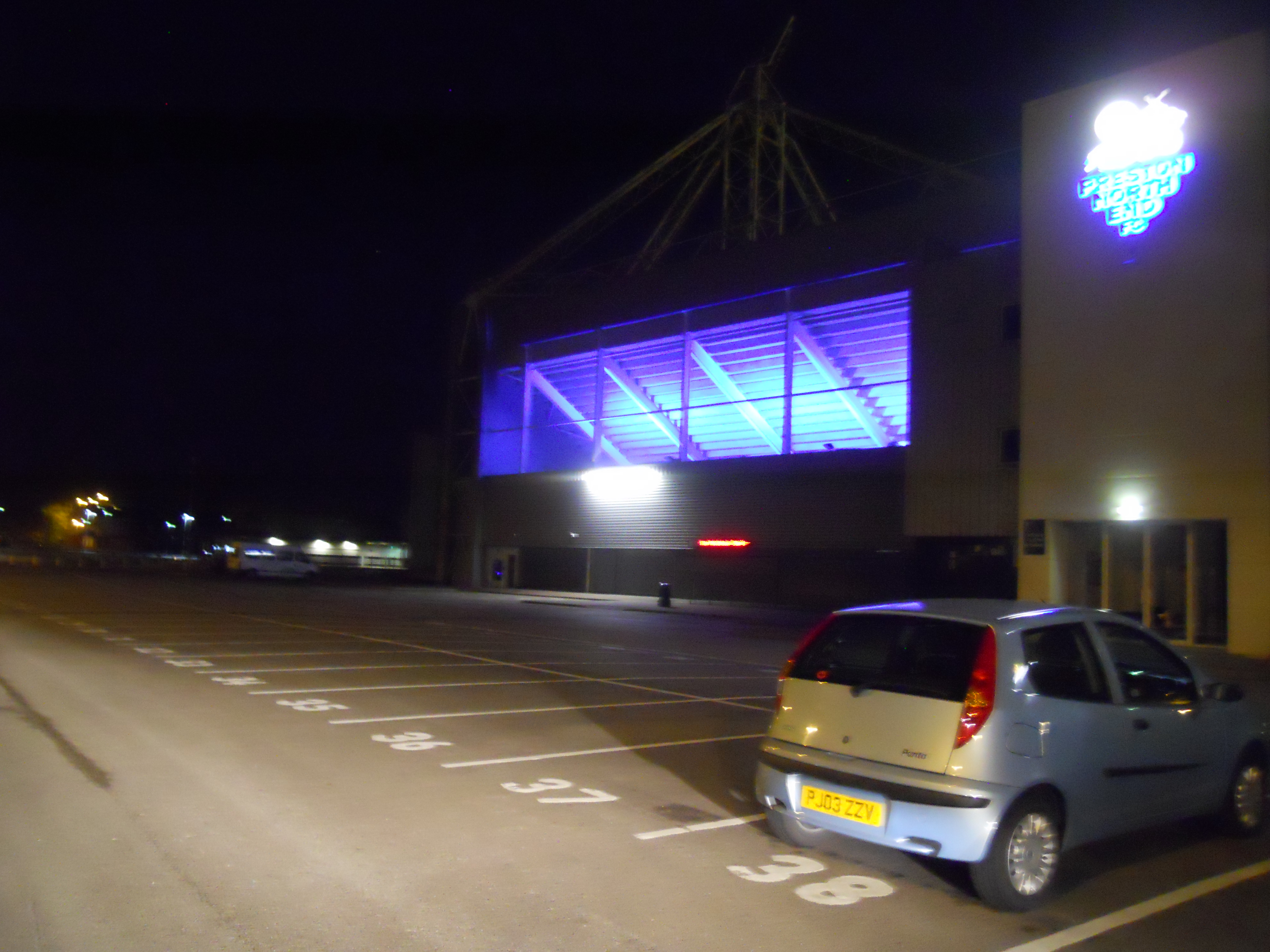
Deepdale in the Dark
I got back to the station about 18:00 and as I had an Off Peak Single to Euston, it was a situation, where I just took pot luck. I had a choice of taking the Glasgow train for Euston, which was rather full or waiting fifty minutes to get on an almost empty train starting from Preston. One of the Virgin train staff advised taking the latter, but I knew that the Glasgow train would have to unload a few passengers at Wigan and Warrington, so I took the chance. By Warrington, I had a backward facing corner seat with a window view all the way to Euston. They really are the most comfortable seats on a Pendolino, where I always prefer to travel with my back to the driver.
My Local Bus Stop
My local stop is just around the corner and has buses that go everywhere, as this picture shows.
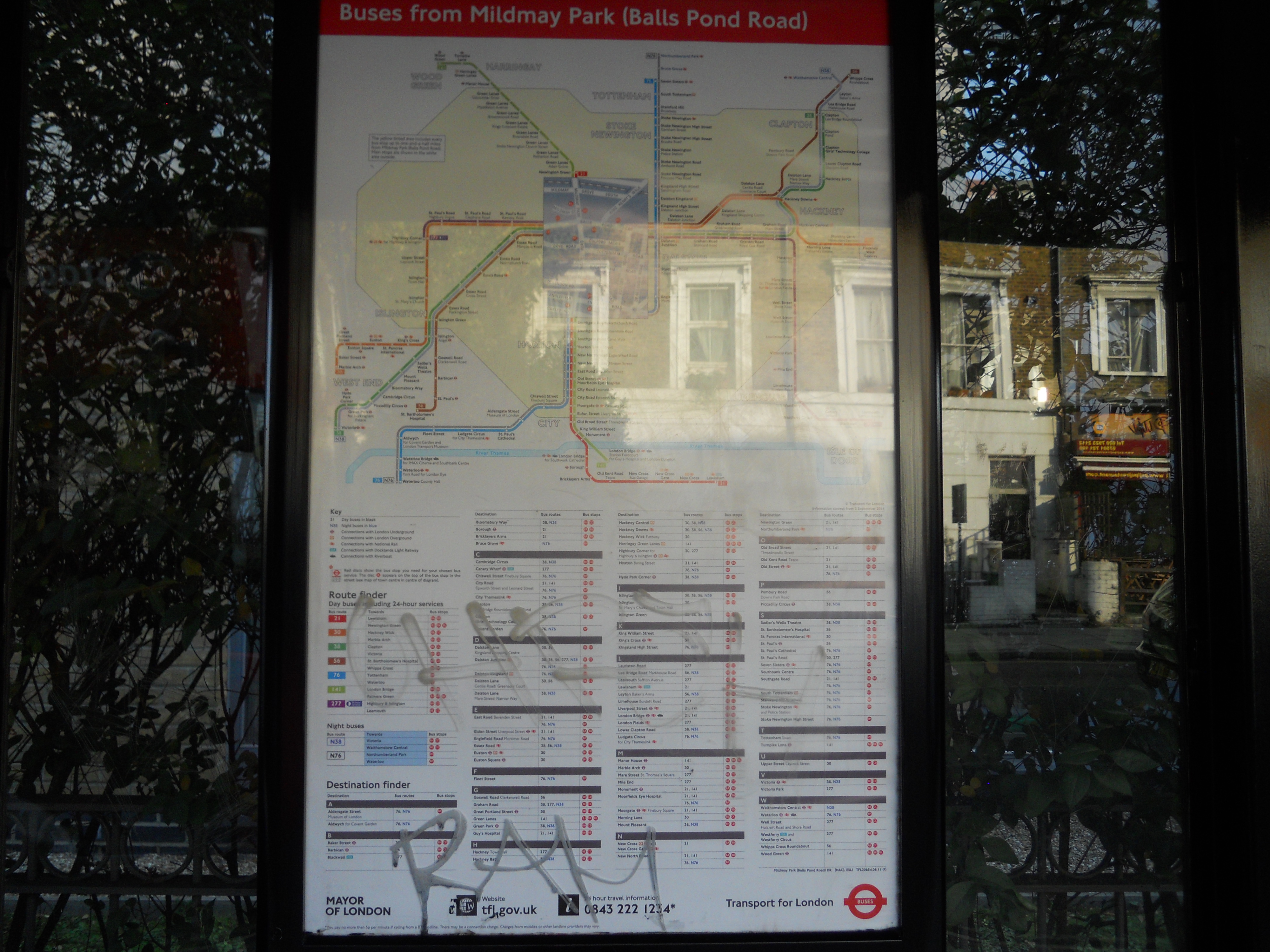
Mildmay Park (Balls Pond Road) Spider Map
Note that the actual spider maps, like this one have more information than their equivalent on the web.
The stop also has a Next Bus Information Number.
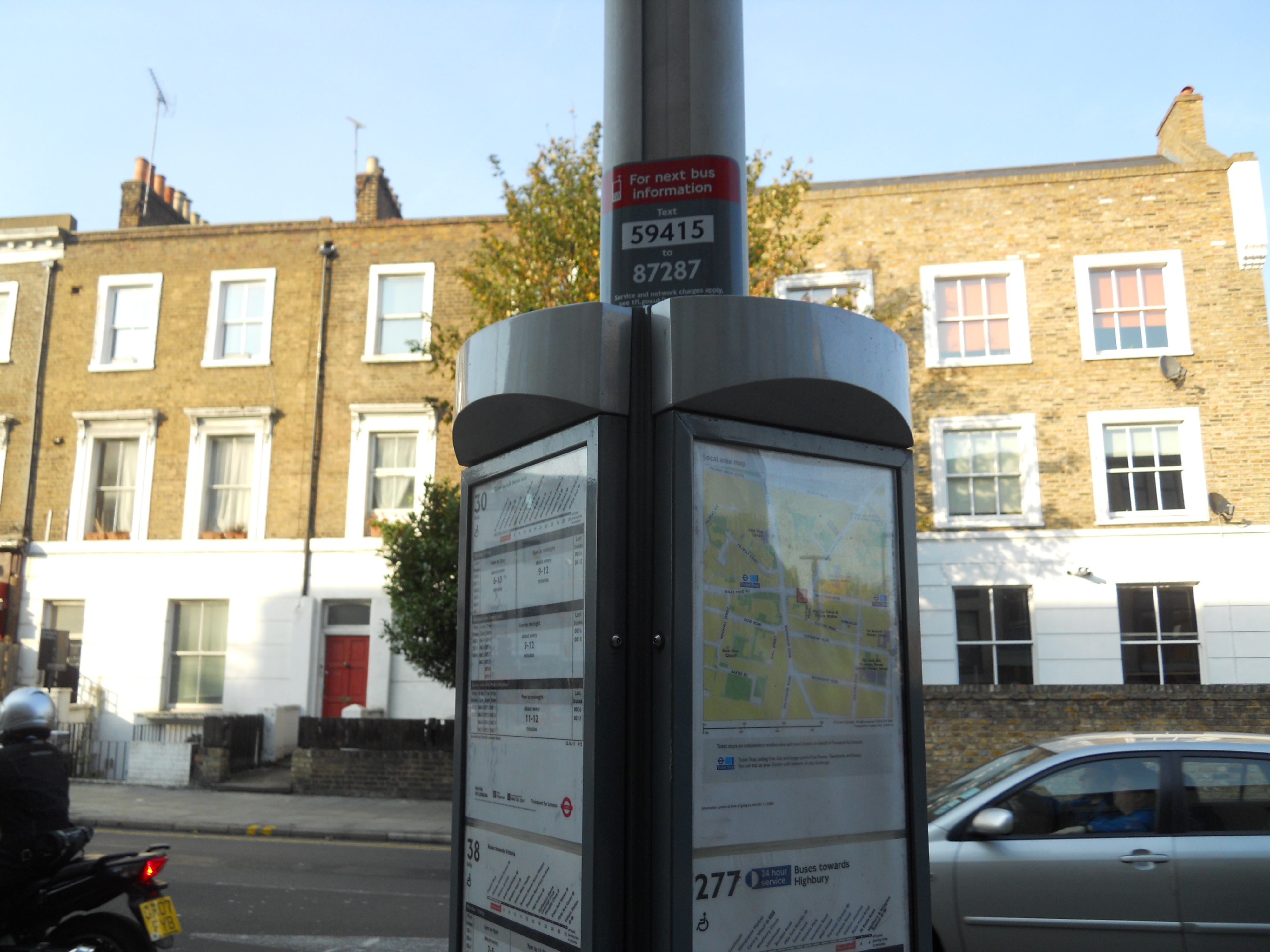
Next Bus Information Number
Note in the picture, the local street map.
The stop also has a Next Bus Display.
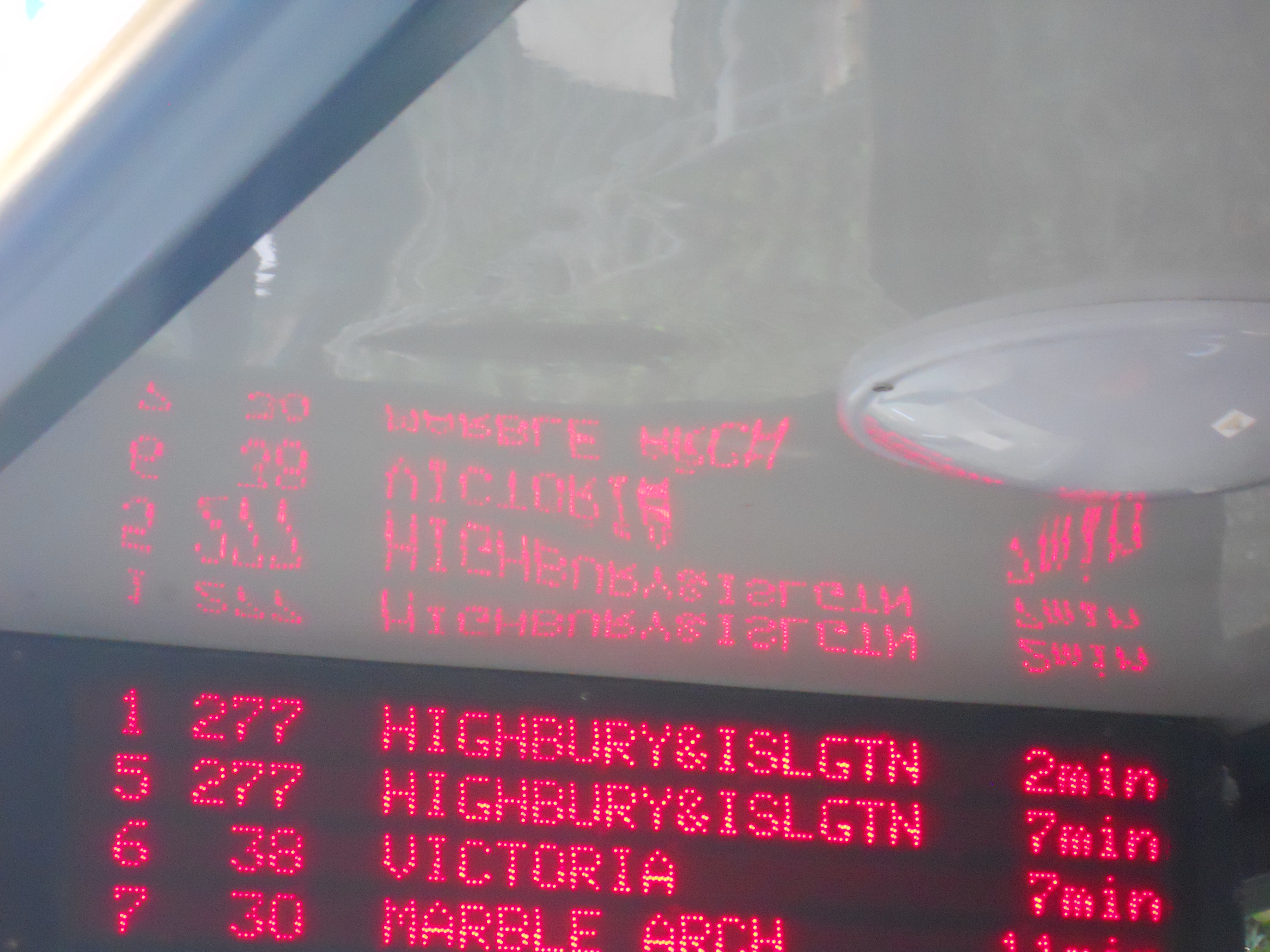
Next Bus Display
I wonder how long we’ll keep it though, as for many people the text message system will be better.
It is too much to expect all stops to be to this standard, but all important ones should have all the information, travellers might need.
I’m using the system in several ways now.
- I often check before I leave home when the next bus is due, to avoid waiting in the cold, say when I have an early train out of Kings Cross.
- If I’m expecting a visitor, I often ask them to text from say The Angel and then I can be at the appropriate stop to meet them.
- If a suitable bus doesn’t appear imminent, then I might change plan and say walk to Daldston Junction.
The only prediction is that these systems will get better and better. You might for instance text the number with say Euston attached to find the quickest way to get to that station. And I still haven’t brought up the subject of a smart phone. But then who needs one, for this purpose, if you have a smart text messaging system.
Suppose to find your way home in London, all you needed to do was text the stop code like 59415, followed by your post code to 87287. You would then be sent instructions on which bus to catch and where to change to get home.
As children, my friends and myself would wander all over London on Red Rovers. Children probably don’t do that now! But it was great fun. Being able to text to get you to your home, could make it safer.
Should We Londonise All Buses?
I know I’m a Londoner and live in the finest city in Europe, let alone the UK or England, but in my travels around the country, I have come to the conclusion, that most bus services outside the capital are very second-rate.
To start with, I should say that in most places it isn’t mainly the buses themselves, as towns and cities like Leeds, Manchester, Bristol and several others have buses that on a quick look to be on average to be the same condition and age, as those in London.
But there are three major differences.
- Most London buses are front entrance and centre exit, which effectively means that they pick up and set down passengers a lot quicker. It also means in London’s case, that a wheelchair passenger has an easier route to get on and off, as he or she uses the middle door. Because of the smaller dwell time at stops, two door buses actually travel faster and carry more people more efficiently. Whether this means the capital cost per passenger journey is lower, I don’t know. But it may well be so!
- London buses also announce the next stop both visually and audibly. Many visitors to my house are very surprised, when I say something like take the 141 to Balls Pond Road and get off there. The system also announces route changes and can be used by the driver to send a selection of common messages to the passengers.
- But the biggest difference is that all London buses are touch on, either with an Oyster card or a concession like my Freedom Pass. If you have a paper ticket, you show it to the driver and they tell you to get on. There is no timewasting mucking about with paper tickets, that London obviously deems to be just litter.
- From next summer, you will be able to touch in on your bus journey with any credit card, as Oyster is being augmented for the Olympics.
But it is the field of information that London buses are streets ahead of every other bus system in the UK.
- As a child, you were always told, that every tube station had a street map of the local area. So if you got lost, just go to the Underground station. So now, like many Londoners, when you are going somewhere foreign like Croydon for a North Londoner or Wembley for a South Londoner, you never carry a map and rely on the map at the destination station. It usually works. Now this street map system has been extended to the buses and most bus stops have a local street map. Only last night, whilst walking back from the pub, I used a map on a stop to show a tourist from Germany, how to walk to the pub where he was meeting a friend.
- These street maps are paired with spider maps, which show all the routes in the area, where they go and at which stop you catch the bus. Frank Pick and Harry Beck would be proud of this idea from their successors. Spider maps work well and if I’m lost after a walk, I just find the nearest bus and work out how to get home. Incidentally, Transport for London call them bus route diagrams, but you can’t argue with umpteen million Londoners, who call them spider maps and that term is now the one generally used by all.
- London has recently introduced text messaging at stops to find out how long you have to wait for the next bus. Other cities have this and it should be the norm everywhere.
- Important London bus stops have displays showing how long you’ll have to wait for the next bus. But as people are starting to use the text system more and more, I suspect, the number of these displays will decrease.
- You can also see when buses will arrive at a stop either through the web or from a phone app. I don’t have a smartphone, but my dumb Nokia 6310i is perfectly capable of telling me if a 30 bus, which is my preferred route home, is due ten minutes out of Kings Cross or Euston.
So how do some of the places I’ve visited compare to London in various areas?
Two Door Buses
You see the odd ones about, but not many.
On-Bus Information Systems
I’ve never seen one, but I’m told Colchester has them.
Maps at Bus Stops
Very few and most that I’ve seen have been very inferior and totally useless for visitors.
Text Information
This is a typical London next bus information notice.

London Sign For Bus Information By Text Message
And here’s one from Leeds.

Leeds Sign For Bus Information By Text Message
No prizes for guessing, which is the simpler system.
Not only is London, just a five digit number but the sign is easily read and is as low as they can put it, so that everybody from say eight to eighty can read it with ease. I can’t believe that there are over 45 million bus stops in Yorkshire! The london sign has the great advantage that it is small and just strapped to the post. So perhaps it could even be used on a temporary bus stop at road works.
I’ll let Frank Pick have the last word on this.
The test of the goodness of a thing is its fitness for use. If it fails on this first test, no amount of ornamentation or finish will make it any better; it will only make it more expensive, more foolish.
And he was born before the age of modern technology. He would have had a field day, if he was still alive and in charge of transport for the whole of the UK.
So to answer my original question, the answer must be an undoubted yes! London has proven that good, frequent and understandable bus services attract more riders, so the sooner we Londonise all buses the better.
People will go on about cost, but the first thing to do is get the maps at stops in place and get sensible text messaging systems working. And then we just have to make all new buses to the London standard! Remember too, that London retires quite a few buses each year. Many of these with a bit of refurbishment would be very suitable for lighter use in the provinces. Certainly, many of the older ones in London are much better, than the disabled-unfriendly old banger, I got back to the centre from Elland Road.
I think too, that we will underestimate the benefits of having the same bus information systems all over the country.
As an example, how much of my time and effort have I wasted trying to find out where to catch a bus on my challenge? And how much money have I wasted on unnecessary taxis?
So if it made travel easier and cheaper, would it make it easier for people to travel to work in the next town or perhaps have a day with Aunt Edna in Felixstowe?
We need any economic stimuli however small.
Remember too, that if we need new buses, that these are generally built in the UK, so much of the capital cost of new buses stays here. So if that is the case, why did Red Ken betray British workers, by buying a load of useless bendy buses? Few liked them, except perhaps fare dodgers.

