The BYD Buses On Route 141 Appear To Be Dehydrating Me
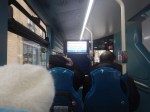
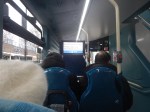
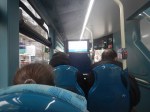
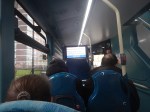
I took these pictures on one of the new BYD electric buses on route 141 these morning, as it ran between the Moorfields Hospital and the Balls Pond Road stops.

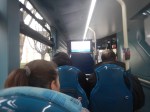
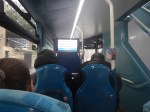
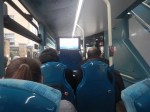
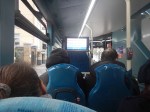

Note.
- There appears to be something wrong with the display, which says “Bus Terminates Here. Please Take Your Belongings With You”
- But it didn’t terminate.
- I’ve noticed these displays have got stuck like this before on BYD buses.
- The display didn’t move during the whole journey.
- Although, the clock seemed to keep almost accurate time.
- I just wonder if the bus is running out of electricity, so the driver or the computer has switched off things like the air-conditioning and the display.
And then after I’d been home for about ten-fifteen minutes, I started to get terrible pins and needles in my right arm.
It was so bad, that I called 111. Luckily it looked like it was nothing serious.
I do have a very leaky skin and I felt I might be dehydrated.
So I asked Google AI if “dehydration causes pins and needles” and received this answer.
Yes, dehydration can cause pins and needles (tingling sensations) because it disrupts the body’s electrolyte balance (like sodium, potassium, calcium), which are crucial for proper nerve and muscle function, leading to impaired nerve signals and tingling, often in hands and feet, especially after weating or intense activity.
As a precaution, I drunk three bottles of low-alcohol Ghost Ship beer and felt a lot better.
I am certain in future, I will only go in a Chinese electric bus, if I’m sure is been fully charged.
Back To The Future With BYD Double-Deck Buses
Arriva run the 141 bus route for transport for London and today they must have been short of buses, as this older Wrightbus on a heritage number plate had been pressed into service.
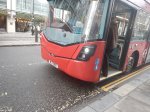
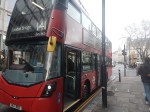
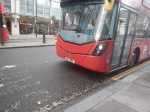
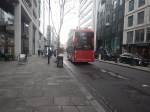
The four pictures of an older Wrightbus hybrid bus, were taken on Moorgate this morning, when it was substituting for a newly-delivered BYD battery-electric bus on route 141.
As I tapped in, I made a remark to the driver about reliability of the Chinese buses and he smiled a knowing smile.
As an engineer and designer, I would list the design faults on the BYD double-deck buses as follows.
- The batteries don’t give the buses a long enough range.
- The buses don’t handle cold weather very well.
- The step into and out of the bus is too high for elderly people and is not the same as other London buses.
- The seating is more comfortable in AlexanderDennis, Evo-Seti and Wrightbus buses.
- The seats are also too narrow.
- The seats at the back downstairs are pokey, because of the position of the batteries.
- There is no rear view downstairs, which makes using the Mayor’s promoted Hopper Fare, which lets you take unlimited bus and tram journeys for £1.75 within one hour of your first tap-in, more difficult.
- The stop displays are unreliable.
- The buses don’t have enough seats for the 141 route.
But perhaps most importantly, few passengers have a good word for the buses.
There’s A Hole In The Bus
If you’re musical, you can sing it to the tune of the famous Harry Belafonte song.
If you not, then give us a rest, or take singing lessons.
I took this picture of the seat in front of me on the new BYD battery-electric bus this morning.
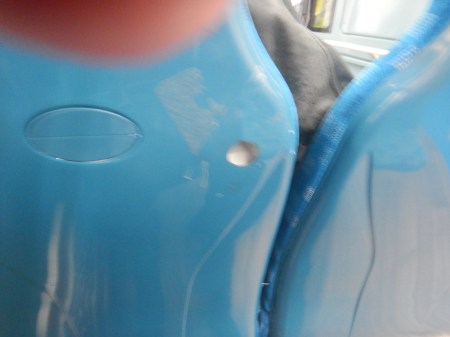
Has the stop button been nicked or has it just fallen out?
Or it could be the centuries old problem of finding good, reliable slaves?
A Nightmare Coming Home
I nearly always come home via Moorgate station, as it has good train and bus connections and I can get both the 141 and 76 buses to near my house.
- The 76 bus is my preference as it is a reliable New Routemaster.
- But the 141 bus takes me all the way home. Unfortunately, it is generally a Chinese BYD battery-electric bus.
Coming home, I arrived at the Northchurch Road in a 76 bus.
- The time was 11:29 and a text said that 141 buses were due in 1, 8, 19 and 20 minutes.
- A second text at 11:39 said that buses were due at 4 and 12 minutes.
Eventually, I got on a 141 bus at 11:44.
This is typical, as the buses don’t seem to synchronise with Transport for London’s bus reporting system.
But today in the cold weather, they have been particularly unreliable.
So I asked Google AI, if hydrogen buses are more reliable in the cold and received this answer.
Yes, studies show hydrogen fuel cell buses generally outperform battery-electric buses (BEBs) in cold weather, experiencing less range reduction because their fuel cells generate waste heat that helps warm the cabin, while BEBs must draw significant energy from the battery for heating, drastically cutting range. While BEB range can drop significantly (over 30%), hydrogen buses see a smaller dip (around 23%), making them more reliable for cold climates.
Sixty years ago, I was using nickel-cadmium batteries to make portable instruments in a chemical factory and I think that they hated the cold, but that lithium-ion solved the problem. Obviously, it doesn’t!
But I do have my suspicions about the design and build quality of these BYD buses!
 The Anonymous Widower