The Site Of Cambridge Sience Park Station
I passed this new station site on the way to Norwich.








Progress does not seem to have got past site clerance.
Oxford Takes A Leaf Out Of Cambridge’s Book
When I visited all of the 92 football clubs in England, Oxford was one of the most difficult to get to. I said this.
Oxford, must surely be one of the most difficult stadia to get to from the town centre, even if you have a car. And if you do, you have to actually drive along the by-pass where there are queues of traffic. Of all the taxis I have taken to get to and from grounds, Oxford was by far the most expensive.
But from 2020, it’ll all be different.
According to the BBC, Chiltern Trains are opening up the Cowley branch to passenger trains, which will stop at the Science and Business Parks. Some reports say this will also handle the football ground.
But it is good to see Oxford following Cambridge and having a station at the Spence Park.
Sheffield To Cambridge By Train
As I wanted to have lunch with an old friend in Cambridge I came home the slow way by taking a train from Sheffield and then changing at Ely.
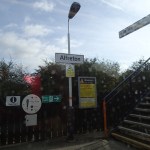
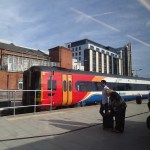

The journey took five minutes over three hours, which included a waits at both Nottingham and Ely of over ten minutes.
I doubt we’ll see any improvements in this service in the next few years, but it really was a slow journey in a two coach Class 158 trains. Perhaps as some of the InterCity 125 are released as the new Class 800 trains are delivered, we might see services like Liverpool to Norwich run by these trains. After all a lot of the route between Liverpool and Norwich in a few years time will allow trains at over a hundred miles per hour.
There has been talk of electrifying the cross-country routes from Ipswich to Peterborough via Ely, specifically for freight. I think it will happen, but until Liverpool to Sheffield and Nottingham to Grantham are also electrified, it could be many years before electric trains cross from one side of England to the other.
The Future Of Railways In East Anglia
There are several major drivers of growth in the usage of the railways in East Anglia, which for the purpose of this analysis is the four eastern counties of Cambridgeshire, Essex, Norfolk and Suffolk.
Freight
The Port of Felixstowe and to a certain extent those of Harwich, Great Yarmouth and London Gateway are going to add considerably to the number of trains trundling around the railways of East Anglia. The interim destinations of these trains for onward journeys to the rest of the country will be London and Peterborough, using either the Great Eastern Main Line, the Ipswich to Ely Line or the London, Tilbury and Southend Line.
The LTS is mentioned as it is being connected to the London Gateway Port by a rail link and not all traffic will be directed through London.
Tourism
East Anglia has always earned a lot of income from a wide variety of tourism, from birdwatching to food and real ale and sailing to horse racing.
Many of the tourism hot-spots for East Anglia like Norwich and Cambridge already have a good rail service, although much of it is London-centric. Other places like Newmarket, Bury St. Edmunds and Great Yarmouth have the rail links, but don’t have frequent trains, but there are tourism hot-spots that are difficult to get to by public transport.
High Technology
Driven by Cambridge, high technology will be a big driver of growth in the area, but how will it effect the railways?
It already has.in that a station is being built at Cambridge Science Park, although I didn’t see any sign of construction, as I passed through yesterday. But the station is scheduled to open in 2016.
Just as with tourism everywhere, the high-technology sector in Cambridge, will generate increased passenger traffic. Just as London uses every place it can find in the South East of England as a dormitory, Cambridge will draw in workers from all the nearby towns.
But the high-technology itself will spill out from Cambridge into the surrounding towns, further increasing demand for rail services in places like Norwich, Peterborough, Newmarket and Bury St. Edmunds and possibly even unfashionable towns like Haverhill and Ipswich.
Thameslink
When Thameslink opens to Cambridge in 2018, it will be a massive feeder of passengers into the western side of East Anglia. The provisional timetable shows four semi-fast 12-car Class 700 trains to Cambridge every hour, as opposed to the two 8-car Class 365 trains at present. This will go a long way to reversing the dominant commuter flow from into London to out of London.
Incidentally, no plans have been published about what happens to the Kings Cross-Cambridge-Kings Lynn service using Class 365 trains after Thameslink opens.
If it is assumed that the current trains still go into Kings Cross, then that would mean about a quadrupling of the number of seats between Kings Cross/St. Pancras and Cambridge in each hour. If they don’t it’ll be a tripling of seats.
I know the line is crowded, but this does seem a hell of a lot of seats.
Crossrail
You might say that an east-west cross-London link won’t have any effect on East Anglia! But it will! And in ways we just don’t expect!
A fellow Ipswich supporter drives up to every home match from near Tonbridge over the Dartford Crossing and up the A12. He has stated that after Crossrail, he’ll drive to Abbey Wood and get the train to Liverpool Street for a fast train to Ipswich. I suspect Crossrail with its direct access to Liverpool Street, Heathrow and Reading will alter the travel habits of many travellers, going to and from East Anglia.
Improved Electrification
To my untrained eye, the overhead electrification being erected in the Liverpool-Preston-Manchester triangle is going up a lot faster and more robustly, than we would have expected a few years ago.
We’re just getting much better at it!
Remember too, that one of the major costs f railway electrification is getting the power to the track. Where electrification is tacked on to an existing system, it is a lot easier and more affordable.
Improved Signalling
Over the next decade signalling will move into the cabs of trains. It is a massive hidden project being undertaken by Network Rail, as is described here. This first two paragraphs say it all.
This tried and tested system will replace traditional railway signals with a computer display inside every train cab, reducing the costs of maintaining the railway, improving performance and enhancing safety.
It will offer a host of benefits to the railway and the application of its cab signalling component, the European Train Control System, ETCS, will spell the end for traditional signalling.
Who’s to say what difference this will make.
If it does nothing else, improved signalling will help slot all those freight trains between the passenger trains.
No More New Diesel Trains
I think it is very unlikely any new diesel trains will be built, although refurbished ones might come available, as lines are electrified.
Are any actually on order at the moment for any line in the UK? There are some Class 66, Class 68 and Class 88 diesel locomotives, but I can’t think of any diesel multiple units in the pipeline.
On the other hand, Thameslink, Crossrail and the London Overground will release a lot of electric multiple units, that will be very good candidates for a full refurbishment.
So what do I think will happen to railways in East Anglia in the near future?
Service Expectations
There are five major stations in East Anglia; Cambridge, Ely, Ipswich, Norwich and Peterborough. The service frequency between Ipswich and Norwich is one train every half hour, so it is probably a reasonable expectation that this is the frequency between any pair of stations
Outlying stations such as Felixstowe, Great Yarmouth and Lowestoft generally get an approximately hourly service from the nearest main town, so this should be maintained.
If we insist on half hour service frequency between Cambridge, Ipswich and Norwich, then this means that important stations like Bury St. Edmunds, Diss, Newmarket, Stowmarket and Thetford would get a half hour service frequency too.
This would mean that journeys like I did once from Newmarket to Great Yarmouth changing at Stowmarket and Norwich would be a lot easier.
Norwich in Ninety?
I’ve talked about this before here, and so has the BBC.
With the completion of the Bacon Factory Curve, one of the first projects to achieve the Norwich in Ninety goal has been completed. It will be interesting to see if London to Norwich on-time statistics improve, just as I feel they have on the Felixstowe branch.
I’ve just found this Network Rail press release, about improving the track at Colchester, which is work that is going on now. Will be see a lot more of these smaller engineering-led projects over the next few years to achieve Norwich in Ninety?
I think the answer is yes!
Network Rail’s Great Eastern Main Line engineers have lived off table scraps for years. But now that there is a political will to get something done, the fag packets and used envelopes will be retrieved from the bin and over pints of real ale in country pubs, they will be turned into viable projects.
My only question on Norwich in Ninety is that it is a typical project title chosen to ring well in the press. I wonder what is the minimum time, that has been revealed by the envelopes.
It certainly won’t be ninety!
You do have to wonder if there is anything more to come from the nearly forty-year-old Class 90 locomotives that push and pull the trains to and from Norwich. The engineers have won awards for the most improved trains, so there can’t be much improvement left. Hopefully any chances in the deterioration of the engines has been minimised.
I certainly look forward to my first sub sixty minute run to Ipswich.
Electrification Of Ipswich To Ely
I would assume, as this line all the way to Peterborough and eventually to Nuneaton has been recently cleared to take the larger freight containers that the line also has sufficient clearance to allow overhead lines to be erected.
So as the number of freight trains on this route is large, this line must be a prime candidate for electrification all the way to Nuneaton. Especially, as it crosses numerous electrifed lines, which would mean getting the power to the line won’t be too difficult.
I also found this article on Railfuture. They say this about creating an East-West electric spine.
Similarly to the already planned Freight Spine from Southampton, one from East to West would also be strategically beneficial. This would involve electrification of the whole line from Felixstowe to Birmingham, already being upgraded to take more freight trains by, for example, the new chord at Nuneaton. Broken down, Felixstowe to Ipswich would also facilitate through electric haulage for freight trains to/through London. Ipswich to Peterborough would gain access to the East Coast Mainline. Peterborough to Leicester (Syston) would do the same in respect of the Midland Main Line. Leicester (Wigston) to Nuneaton for the West Coast Mainline, and Nuneaton to Birmingham for all its freight terminals. A most useful bi-product would be for the Cross Country passenger service from Birmingham to Stansted Airport to convert to electric trains.
That all seems very sensible. Note the bi-product of releasing some much needed diesel multiple units, which would probably be replaced by larger electric units.
Electrification Of The Felixstowe Branch
As Railfuture said in the extract I used above, if you electrify to Nuneaton, you might as well electrify the Felixstowe branch, as that would virtually make the line electric freight only.
Electrification Of Ipswich To Cambridge
If the main Ipswich to Ely line is electrified, it may seem logical to also electrify the single track Cambridge branch of the line. But this may not be that easy, as there is a tunnel under Warren Hill at Newmarket and the line loading guage of the line hasn’t been updated.
But obviously, if the whole Ipswich to Ely and Cambridge system, it would make it easier to increase passenger capacity due to the easier availability of electric multiple units.
Electrification Of Ely To Norwich
There are no freight reasons to electrify the Breckland Line, but it is effectively fill-in electrification between two electrified lines, which should make it easier.
It is not cleared to a big loading gauge except around Ely, but many of the bridges are new, so I would suspect there wouldn’t be that much expensive bridgework to make the line suitable for electrification.
Unfortunately, the long distance service from Norwich to Liverpool couldn’t be converted to an electric traction, as it will still use non-electrified lines in the Sheffield area, but Nottingham trains could go electric if Nottingham to Grantham was electrified.
Consequences Of Electrification Of Ely To Peterborough
If Ely to Peterborough is electrified and the passenger trains were to run say every thirty minutes, then there would be less need for the diesel trains from Birmingham, Liverpool and Nottingham, to travel to Ipswich or Norwich, as there would just be a simple change to or from an electric train at Peterborough.
Electric services such as Cambridge to Peterborough via Ely could also be as traffic dictated, rather than infrequent as they are now! Peterborough to Cambridge services are important, as many in Cambridge feel that Peterborough could be a high-technology satellite to Cambridge. There have been proposals to extend the Cambridge Guided Busway to Peterborough, but I suspect a rail link might be preferable to passengers. The current rail service takes fifty minutes and runs once an hour, which isn’t good enough for a lot of people.
Would a frequent service between Cambridge and Peterborough, also improve employment prospects in the area?
Electrification Of The Great Yarmouth Branch
When I first moved back to near Ipswich in the 1970s, the London to Norwich trains went on to Great Yarmouth. Even in the 1980s, I can remember taking a direct train to Great Yarmouth from London to see a horse run at the racecourse there. But now, there are no direct services, except in the summer.
If the line was electrified, it would surely make it easier to more services to the town and possibly direct services to London.
Perhaps if the Breckland Line was electrified and running at the oreferred half-hour service, then every other train could be extended to Great Yarmouth. Or perhaps all of them?
The possibilities are endless.
One benefit of an electrified railway is that it might breathe new life into the outer harbour, which seems to suffer from white elephant syndrome.
Further Electrification
I don’t think any of the other branches would be worth electrifying.
Last year the electried Braintree branch carried about 800,000 passengers, whereas the Sudbury branch carried about 328,000. Felixstowe incidentally carried about 210,000, but whether that branch gets electrified depends on the freight traffic.
New Stations
East Anglia is already getting one new station at Cambridge Science Park, with another proposed for Great Blakenham, if the SnOasis gets built.
A couple of new stations have been added in East Anglia in recent years and I suspect that in the next few years several could open, especially where new housing or other developments are concerned.
New And Reopened Lines
As I said in the post about the North Norfolk Railway, most schemes for new lines have connotations with pie and sky.
Although, there will be conversion of some lines from single to double track and there could be the odd curve to allow trains to go a better route.
The only line which has been mentioned seriously for reopening, is a freight line between Spalding and March. I can’t find much detail, but I suspect it would allow freight trains from Felixstowe to the North to bypass Peterborough and join up with the GNGE, which I talked about here.
Conclusion
After reading this again in the cold light of day, the key is to electrify the main lines and this gives frequent at least half-hourly services between the major towns and cities.
Isn’t this what Essex has got into Liverpool Street? So we’re only continuing what was started after the Second World War and applying to the rest of East Anglia. If we can have a half hour service between Norwich and Ipswich, surely everyone is entitled to at least that.
All Systems Go On The Cambridge Busway
I was sceptical about the Cambridge Busway before it opened and felt that it would probably be better to have reinstated the railway. A group called CASTIRON was formed to promote the railway, but the busway still was built and opened.
Now I read this article, which states that Stagecoach is going to increase srvices on the route. Here’s the first paragraph.
Operator Stagecoach yesterday said it would increase the frequency of departures to every five minutes during peak times, in the hope this will relieve overcrowding and stop passengers being left waiting by buses which are too full to stop.
As the busway is going to link up with the new station at Chesterton and new housing along the route at Northstowe, it doesn’t seem to appear it is going to be a white concrete elephant.
Speeding Between Silicon Roundabout And Cambridge Science Park
There is an article in the Sunday Times that says that Ministers want to improve the links between Silicon Roundabout and the Cambridge Science Park. Here’s the guts of the story.
The aim is to slash travelling time between them and accelerate growth in Britain’s hi-tech industries.
The trip between London and Cambridge has long been considered a stumbling block to greater collaboration between the two tech hubs.
A station is already being built at the Cambridge Science Park, which should open before 2014, although the report in the Sunday Times says this is only being considered.
The article also talks about a Shoreditch stop on a fast train from Liverpool Street station to Cambridge.
It strikes me though that if you look at the proposals for Crossrail 2, which are slated to possibly go via Dalston Junction and the Angel, then this could be eventually an integral part of the new rail route, especially if Crossrail 2 links to the West Anglia Main Line.
I say eventually, as Crossrail 2, will be unlikely to open in the next thirty years.
Alternatively, there is the option of running the fast Cambridge trains into Old Street and Moorgate stations on the Northern City line. They would then use the Great Northern route to Cambridge.The stations would need to be enlarged, but the tunnels could probably take the full-size, Class 365, trains currently used on Kings Cross to Cambridge services. Remember that Old Street station is actually under Silicon Roundabout.
There are a lot of possibilities.
Manchester’s Metroshuttle
Manchester has a free city centre bus called the Metroshuttle.

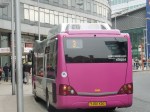
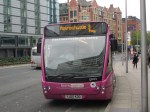
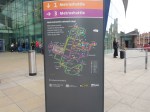
We need more of these in city centres. The Manchester Transport Authority, TfGM, also provides other systems locally in Bolton, Stockport and Oldham. But I have only seen one other recently and that was in Huddersfield. I can remember buses of this type in Liverpool in the 1960s and later in Ipswich and Cambridge. Liverpool’s City Circle was probably a victim of the infamous bus strike of the 1960s and then it’s route was replaced by the underground railway. But Ipswich and Cambridge you either have to walk or find a bus that might go where you are going. Cambridge is particularly bad for the inexperienced visitor.
Bondage In Trumpington
I like this story from the BBC, as it has all of the threads that make up an ideal story for the tabloids or a steamy novel.
Trumpington is a picturesque village with an interesting history. They even had a bed burial and Chaucer based the Reeve’s Tail there. Now srely a bed burial is rather kinky!
I even went to a reception there, after two members of C’s chambers had tied the knot.
Cambridge Tries Its Hardest To Discourage Visitors
I changed trains in Cambridge yesterday and as it was a convenient time for a meal, I took the opportunity to go into the centre to have a late lunch in Carluccio’s.
Every time I go to the city, these days, it would appear that the bus stop layout is different and further from the main entrance to the station. And there’s no simple information, which has a map of the various stops and go to bus stop X for the city centre.
The first stop you come to, tells you all about the Cambridge Busway, but I know that the bus-way at the station goes to Addenbrooke’s and not the city centre.
After waiting at the wrong stop for a couple of minutes, only to see a couple of buses I could have taken, go past. So I waited ten minutes, when if there had been proper information, I’d have waited one.
When a bus did arrive, it was the usual scrum at the single door used for all entrance and exit. Visitors from London, who use the capital’s buses must really fume at the slowness. It’s even worse for people like me with a Freedom Pass, as you must take it out of your London folder to put it flat on the reader on the bus. Surely, we could have a touch and enter system based on Oyster technology all over the country now, as it’s been working in London for several years.
I knew where I was going, but I didn’t know exactly where the stop I needed was. I guessed wrong, as Cambridge buses don’t display the stop names or announce them as all sensible buses do. It must be a nightmare if you’re blind!
Coming back it was a repeat of the process; guess the stop, ask the driver, fight your way through the scrum and then walk farther than you used, to get to the train station.
It really is rather Kafkaesque and how much does it cost the city in lost visitors?
I suppose the only beneficiaries are the taxi-drivers, as those probably get a lot more business.
Famous Cambridge Stunt Recreated
The BBC web site gives a few details here about how Cambridge students put an Austin Seven van on the roof of Senate House in 1958.
The story is actually on the web, but in their archives the BBC should have a recording of Tonight, where the whole stunt was explained to Cliff Michelmore. But then the BBC used to habitually reuse videotapes, so I suppose it’s gone.
 The Anonymous Widower