A Design Crime – Class 395 Train Platform Interface
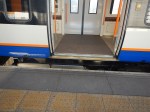
I took these pictures of the step you need to ascend to get into a Class 395 Train.
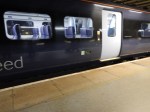
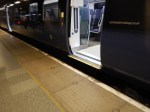
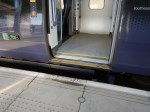
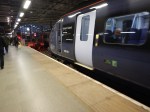
All of these pictures, were taken on platforms that were specifically built for the trains and no other train type calls at these station.
Perhaps my biggest gripe with these terrible doors, is that there is no wide door, which you would need for a large wheelchair.
These trains may have a high top speed, but they’re not designed for quick safe stops.
The Class 395 trains were built in Japan around 2009 and the Class 378 trains for the Overground were built around the same time.
Compare these pictures taken on the Overground with those above.
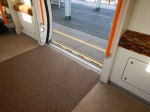
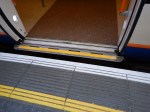
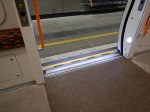
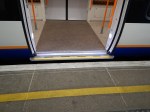
Note that the first two pictures were taken in a platform used by other train, so the access isn’t quite as good.
Perhaps Japanese railways don’t allow people in wheelchairs to use trains.
If they do, how come we get trains as wheelchair-unfriendly as the Class 395 train, which need a ramp to get the wheelchair on and off the train.
Is The Croxley Rail Link To Be Given Lower Priority?
Although, I have covered the Croxley Rail Link or Metropolitan Line Extension, on this blog, including in Looking For The Croxley Rail Link, which I wrote after walking the route in November 2014, it is not a project that will have a great deal of affect on my life.
In the last few days, after the publication of the London Mayor’s transport strategy, two newspaper reports have been published.
- This article in the Watford Observer entitled Have plans to extend the Metropolitan Line derailed?
- This article in Rail Technology Magazine entitled DfT refuses to provide extra funding for over-budget Croxley rail link
So is everybody getting more lukewarm about the project?
The Watford Observer article also contains these paragraphs.
Save Watford Met campaign group opposes the plans, which would see Watford underground close.
Speaking on their behalf, Lester Wagman said: “While it would be a shame if the [unconfirmed] inference that the Metropolitan Line Extension to Watford Junction may have been dropped as a business plan priority for TfL, we would not really be surprised if this is not such a priority for London and that its Mayor, Sadiq Khan, may have concluded this from reviewing the somewhat contrived and shaky business case.
So perhaps, there is a problem with finances and the people of Watford are not all in favour.
I think that it is time to take a short time of reflection to look at this project and see, if other developments in the future, can improve rail links to Watford sufficiently.
Maps Of The Croxley Rail Link
This map from carto.metro.free.fr shows the link.

The Croxley Rail Link
I don’t think that they are able to show anything more definitive.
This first Google Map shows the Western End of the Croxley Rail Link.

The Western End Of The Croxley Rail Link
Note.
- Croxley station in the bottom left corner and Watford station in the top right, with the Metropolitan Line between them.
- In the middle is the A412 with its two roundabouts.
- The scar of the old railway can be seen above the green space in the bottom right corner.
This second Google Map shows the Eastern End of the Croxley Rail Link.

The Eastern End Of The Croxley Rail Link
Note.
- Watford High Street station, where the Croxley Rail Link joins the Watford DC Line is in the top right corner of the map.
- The line goes in a wide curve South of Vicarage Road Stadium and the large Watford Hospital site.
This Google Map shows the area, where the Croxley Rail Link joins the Watford DC Line.

Croxley Rail Link And The Watford DC Line
Note.
- Watford High Street station is at the top right.
- It looks like the original junction was a full triangular one.
- The road being built is Thomas Sawyer Way, which is a link to open up the area. It opened on the 16th November 2016, as this article on the Watford Council web site announces.
This map shows the site of the proposed Watford Vicarage Road station.
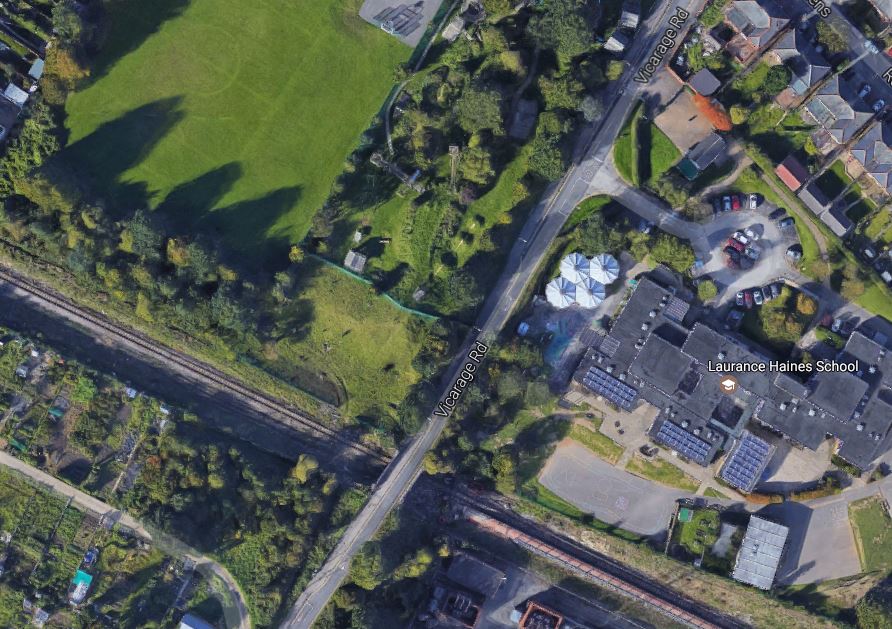
The Site Of Watford Vicarage Road Station
This description of the station is from Wikipedia.
Watford Vicarage Road is to be a newly constructed station on a re-opened section of the former LNWR Watford and Rickmansworth Railway line which was closed by British Rail in 1996. The station is to be located to the west of Vicarage Road, adjacent to Holywell allotments, with the platforms in the railway cutting below the road
The hospital and stadium are to the North on Vicarage Road.
This Google Map shows the site of the proposed Cassiobridge station.
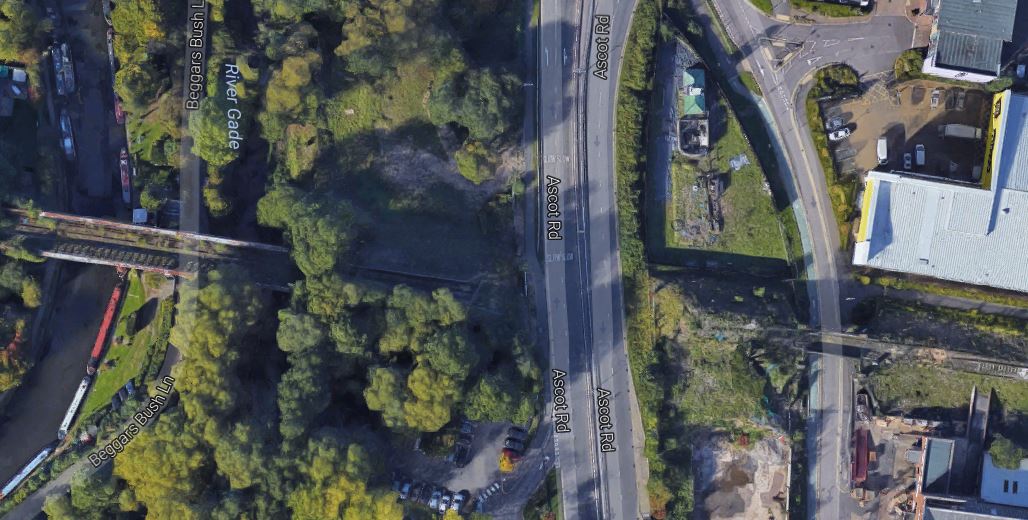
The Site Of Cassiobridge Station
Note.
- The Grand Union Canal running down the left hand side of the map, with the route of the old railway across it clearly visible.
- The station is on the single-carriageway branch of Ascot Road.
Wikipedia says it will be a fairly simple station.
Reasons For The Croxley Rail Link.
The Croxley Rail Link or the Metropolitan line Extension has a page on the Transport for London web site.
This is their summary.
The Metropolitan Line extension will re-route and extend the Metropolitan line to Watford Junction. The aim is for the project (formerly the Croxley Rail Link) to be completed in 2020.
The extension will divert Metropolitan line trains to serve the existing Watford Junction and Watford High Street stations.Two new stations will be created at Cassiobridge and Watford Vicarage Road. The existing Watford station will close after the new stations open.
TfL list the benefits as follows.
- Improve access to public transport for local residents
- Create new links to Watford General Hospital, Croxley Business Park and Cardiff Road Industrial Estate, increasing employment opportunities
- Provide access for Metropolitan line passengers to West Coast mainline National Rail links from Watford Junction station
The case for the line was obviously good enough to raise the finance for the line, but now it appears that the Department for Transport are having second thoughts.
Perhaps some of the other projects are influencing their decision.
The Bakerloo Line Extension
The Bakerloo Line Extension is mainly about South of the Thames, but if the line is running the proposed 27 trains per hour (tph) , these trains will have to terminate somewhere in the North.
There have been various proposals for the Bakerloo Line to take over the Watford DC Line and trains to terminate at Watford Junction station.
Some trains would probably terminate at Queen’s Park, Stonebridge Park and Harrow and Wealdstone stations, but perhaps eight to ten tph might go all the way, calling at both Watford High Street and Watford Junction stations.
The London Overground
Currently, the London Overground runs three tph to Watford Junction from Euston via the Watford DC Line.
The trains are currently five-car Class 378 trains and in a couple of years, they will be replaced by four-car Class 710 trains.
It is rare that the capacity of a route is ever decreased.
So do Transport for London have a cunning plan?
In Platform Height Issues On The Watford DC Line I suggested that the shorter Class 710 trains, might fit better with the 1972 Stock of the Bakerloo Line, thus allowing the current stations on the line to be converted to very customer-friendly step-free stations.
So working an extended Bakerloo Line to Watford Junction station with an appropriate number of Euston to Watford Junction services on the Watford DC Line could be an easier way of increasing capacity to Watford’s main station, without degrading the service of any other passengers.
Crossrail
It has been suggested that Crossrail with its herds of jumbo Class 345 trains should be extended to the West Coast Main Line. Wikipedia says this.
In August 2014, a statement by the transport secretary Patrick McLoughlin indicated that the government was actively evaluating the extension of Crossrail as far as Tring, with potential Crossrail stops at Wembley Central, Harrow & Wealdstone, Bushey, Watford Junction, Kings Langley, Apsley, Hemel Hempstead and Berkhamsted.
Plans change, but if Crossrail goes up the West Coast Main Line, it would surely stop at Watford Junction station.
If it stopped at the stations listed above, it would have good connections to the Bakerloo Line and London Overground, in addition to all the connections at Old Oak Common.
Southern
With all Southern‘s current troubles, I don’t think that their Milton Keynes to East Croydon service is a priority.
It is also a route that in a few years time will be a route, where there could be better alternatives.
Once Old Oak Common station is a reality, passengers from Milton Keynes to South London, would possibly use this type of route.
- London Midland to Old Oak Common
- Crossrail to Farringdon
- Thameslink to East Croydon, Gatwick Airport, Kent, Surrey, Sussex and Wimbledon.
As an alternative, they could also take the West London Line from Old Oak Common to Clapham Junction for all the connections there.
If Crossrail extends up the West Coast Main Line from a fully-developed Old Oak Common station, the reasons for Southern’s service will diminish.
It might be a good idea to replace this service with more London Overground services between Stratford and Clapham Junction via the North and West London Lines!
After all, London Overground will have several five-car Class 378 trains from the Watford DC Line.
London Midland
London Midland‘s franchise comes to an end soon and what goodies will companies propose to keep it?
I think the only new service we will see from London Midland or its successor, is trains calling at the new hub at Old Oak Common.
Metropolitan Line Upgrade
Transport for London are implementing, what they call the Four Lines Modernisation, on the Circle, District, Hammersmith and City and Metropolitan Lines.
TfL give these benefits.
- A new fleet of air-conditioned trains, with brighter more spacious interiors, low floors and dedicated spaces for wheelchair users, CCTV and other improved features
- Space for more customers
- Faster journeys and reduced waiting times
- Fewer delays as safe but obsolete equipment – dating back to the 1920s in some places – is replaced with modern, computerised signalling and control systems
- Better live customer information on platforms and to smart devices
It will all be finished by 2023, when 32 tph could be running in the Peak.
The Croxley Rail Link is not mentioned in connection with this modernisation.
This upgrade must benefit services to and from existing Metropolitan Line stations to the West of Watford, but it does nothing to meet the benefits stated for the Croxley Rail Link.
- Improve access to public transport for local residents
- Create new links to Watford General Hospital, Croxley Business Park and Cardiff Road Industrial Estate, increasing employment opportunities
- Provide access for Metropolitan line passengers to West Coast mainline National Rail links from Watford Junction station.
Two additional benefits could be added.
- Access to the upgraded Vicarage Road Stadium
- The possibility of services between Amersham and Watford Junction.
Others could also surface, if say a substantial housing or commercial development is proposed.
Chiltern Railways
Never underestimate Chiltern Railways!
The Croxley Rail Link would connect to their Aylesbury Line, which is going to be extended to Milton Keynes.
Once the link is a reality, I’m sure Chiltern will find a way to make use of the line.
Even a well-thought out two tph shuttle to Amersham could probably provide valuable connectivity.
Chiltern will also have an effect on thinking, in that they have opened a similar railway to the Croxley Rail Link, in their extension to Bicester and Oxford.
The Opening Of HS2
HS2 will have one major effect on Watford, in that it will free up paths on the West Coast Main Line.
These could be used to improve services between Watford Junction and Euston.
Could A Lower-Cost Link Be Built?
I ask this question, specifically because of the report that TfL had said no, because the project is over-budget.
Ideally, the link would be built as a double track line from Watford High Street station, to where it joins the double-track branch to the current Watford station.
I have flown my helicopter over the route and there would appear to be a fair bit of space for a double -track line.
But there might be a couple of problems.
This picture, which I took going South, shows the bridge, where the Croxley Rail Link will join the Watford DC Line.

The A4178 Goes Over The Croxley Rail Link
It looks fairly sound, but is it large enough for two tracks? I could see the next bridge and that was a modern structure with a lot more space.
Note too, the evidence of clearing up decades of tree growth.
But look at this Google Map of where the Croxley Rail Link will connect to the branch to Watford station.
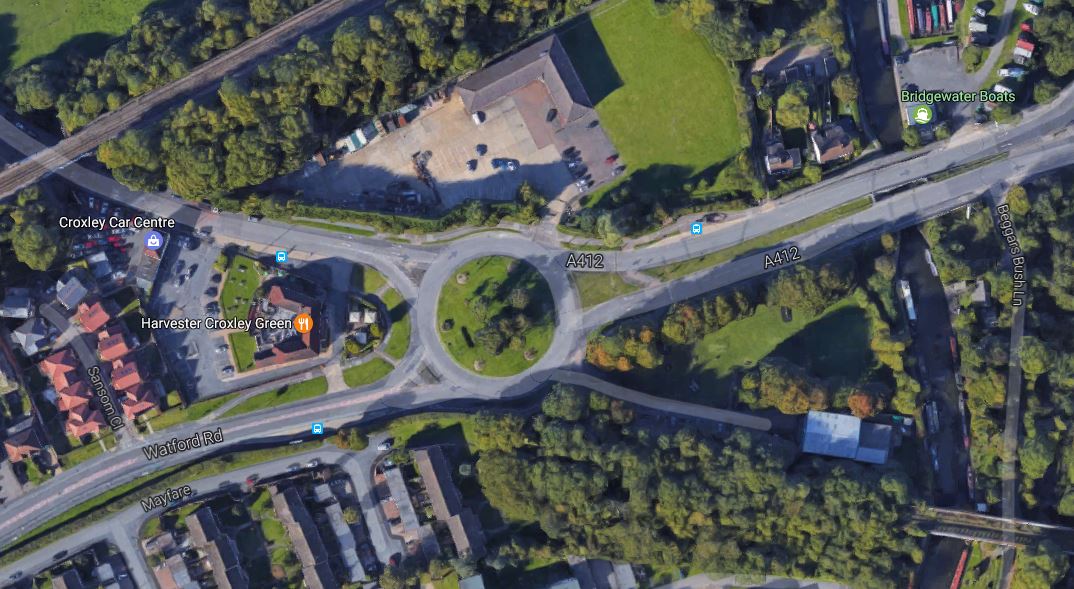
Over The A412 At Croxley Green
Note the branch to Watford station at the top left of the map and the remains of the old railway in the bottom-right, which can also be seen in the map of Cassiobridge station.
It could be difficult to thread a double-track viaduct through the area.
This visualisation from the Watford Observer shows current thinking.
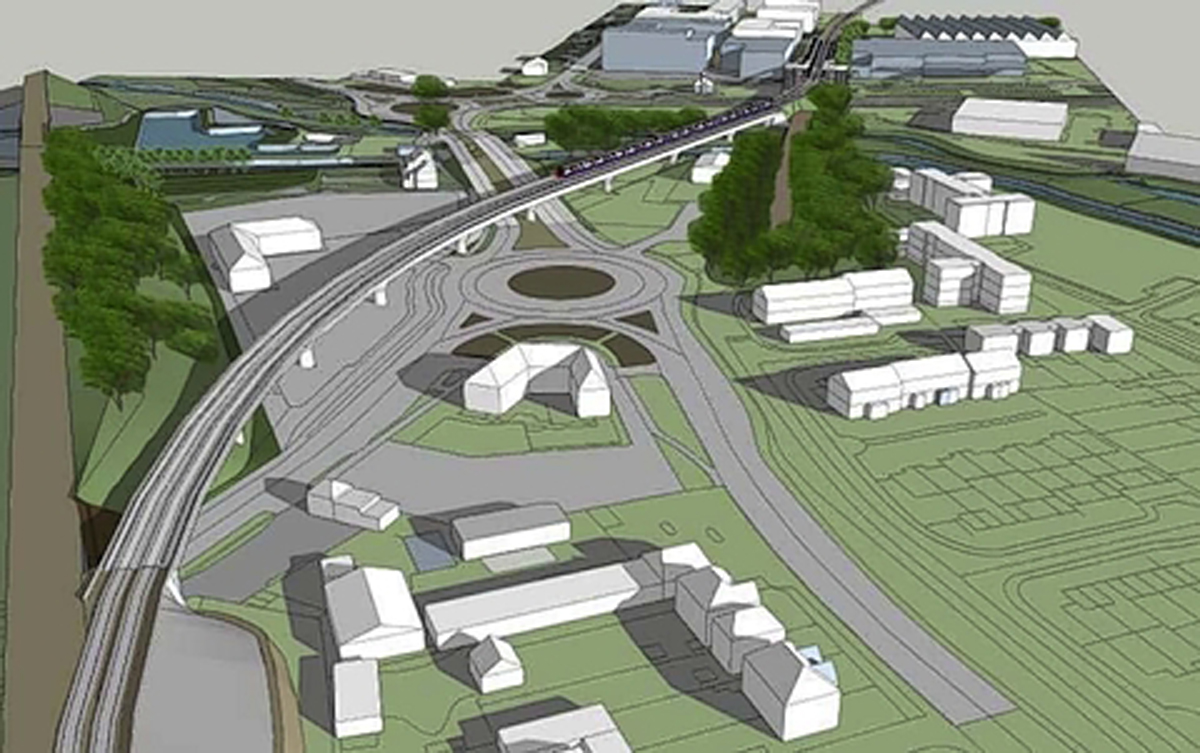
Croxley Link Viaduct
So would money be saved and perhaps a better design be possible?
- Could the viaduct be built with only a single-track between its junction with the branch to Watford station and the proposed Cassiobridge station? The route could revert to double track just to the East of Cassiobridge station.
- A single-track design of Cassiobridge station could also save money, but it would probably rule out too many future options.
As most of the route will be double-track, I doubt that a few hundred metres of single-track would have much impact on the operation of the link. It’s not as if, the Croxley Rail Link will be handling 24 tph.
I suspect that engineers and architects are working hard both to cut costs and make the link better.
A Watford Junction To Amersham Service
I think that if there is a good service between Watford Junction and Amersham, this might offer an alternative solution.
It would connect to London trains as follows.
- Watford Junction – Bakerloo, London Midland, Southewrn, Watford DC and possible West Coast Main Line services.
- Watford High Street – Cross-platform connection to Watford DC services.
- Croxley – Same platform connection to Metropolitan services to the existing Watford station.
- Rickmanswoth – Chiltern for both London and all stations to Milton Keynes.
I believe that a train like London Overground’s new Class 710 train, which will be running on the Watford DC Line might be able to run the service without any new electrification, it it were to use onboard energy storage between say Watford High Street and Croxley stations.
Conclusion
I believe that Watford will get a better train service, whether the Croxley Rail Link is built or not.
Politics will decide the priority of the Croxley Rail Link, with the left-leaning South Londoner Sadiq Khan on one side and right-leaning Bucks-raised Chris Grayling on the other. In some ways, Watford is a piggy-in-the-middle.
My feeling is that on a Londonwide basis, that the Bakerloo Line Extension to Watford, solves or enables the solution of a lot of wider problems and the Croxley Rail Link is much more a local solution.
I think it could turn out to be.
- A mainly double-track route from Watford Junction to Amersham, but with portions of single track.
- No new electrification.
- Stations at Watford High Street, Watford Vicarage Road, Cassiobridge, Croxley and then all stations to Amersham.
- Four Class 710 trains per hour (tph), running on existing electrification and batteries between Watford Junction and Amersham.
- A redeveloped Watford station keeps its four tph to London.
It might even be simpler.
Platform Height Issues On The Watford DC Line
At Queen’s Park station, the Bakerloo and Watford DC Lines join as they go towards Watford Junction station.
This map from carto.metro.free.fr shows the lines at Queen’s Park station.
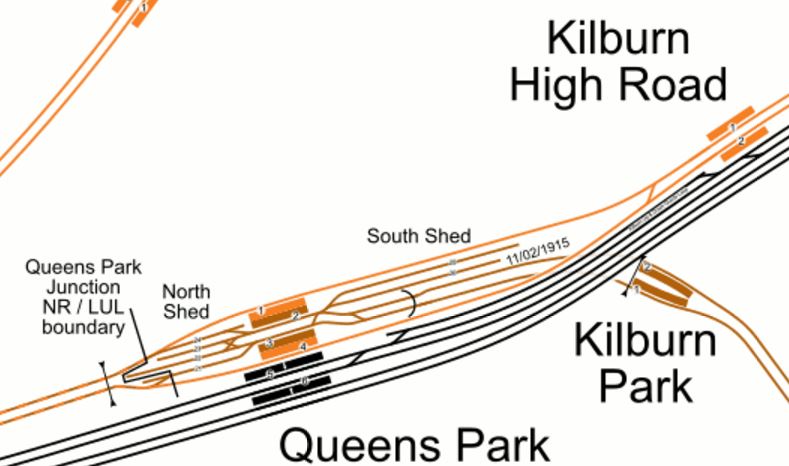
Lines Through Queen’s Park Station
Note how there is a cross-platform interchange between the two pairs of lines.
Northwards from Queen’s Park station, the platform height is a compromise, with a step down into an Underground 1972 Stock train and a step up into Class 378 train.
- It is not level access by any means and very difficult for wheel-chair users or those pushing buggies or heavy wheeled cases.
- I suspect that at some point it could even be illegal under disability regulations.
- With a more intense service, loading and unloading trains may become a seriouscause of delay.
It is not just a would-like, but a must-have.
Queens Park station though, is totally level.
The current five-car Class 378 trains are 100 metres long, which compares with the 113 metre length of the 1972 Stock train.
One way to solve the platform height issue, would be to have a dual height platform with one end of the platform level access for the 1972 Stock and the other for the Class 378 train.
This would probably need a platform of the order of 215 metres.
But London Overground have ordered a set of four-car Class 710 trains for the Watford DC Line. These trains will be perhaps 80 metres long, as the type will be shared with the shorter platforms of the Gospel Oak to Barking Line.
This shorter length train should make the design of a dual-height platform acceptable to all users a lot easier.
Currently Off Peak services through Willesden Junction are as follows.
- 3 trains per hour (tph) from Euston to Watford Junction – London Overground
- 9 tph on the Bakerloo Line.
Some sources mention that there are ambitions to run 27 tph on the Bakerloo Line. So even if all the trains went through to Watford Junction, that would only mean 30 tph stopping at stations on the line.
Currently, 2 tph on the Bakerloo Line turnback at Queen’s Park station, so it looks like with good deual-height platform design, the current schedule of three tph on the Overground, stopping at South Hampstead and Kilburn High Road can be continued and supplemented with perhaps 18-20 tph on the Bakerloo Line North of Queen’s Park station.
Platforms could be about 180-200 metres long, with a height to fit the Bakerloo Line trains. At one end they would have an 80 metre section of platform to suit the Class 710 trains.
The Class 710 trains would obviously be wheelchair friendly, like the current Class 378 trains, but they would be designed to fit a typical station on the Watford DC and Gospel Oak to Barking Lines.
If Class 378 trains were also providing services on the line, they would use their selective door opening to use the four-car raised section of the platform.
So, if the stations were to be given lifts to fit the new dual-height platforms, the service would have the following characteristics.
- Totally step-free and level access at all stations for all trains.
- South Hampstead and Kilburn High Road stations would keep their current service.
- Most stations would have an increased service.
- 27 tph through the central section of the Bakerloo Line would be enabled.
The biggest problem would be walking or pushing to the right end of the platform for your train, at stations served by both size of train.
The Future Of The Watford DC Line
Primrose Hill Station
I was looking at the tracks through Camden on carto.metro.free.fr, as I wanted to see how the former Primrose Hill station fitted into the knitting.

Lines Through Camden
Note the two orange tracks of the Watford DC Line from Euston curving to the West around the carriage sidings.
The line through Primrose Hill station from Camden Road is a connection that allows freight trains to go between the North London Line and the West Coast Main Line.
One of the plans for the area, is to reopen the station. This is said in the station’s Wikipedia entry under Plans.
It has been proposed to re-open Primrose Hill station by bringing the short stretch of line between South Hampstead and Camden Road stations back into the regular passenger service by incorporating it into the London Overground network.
South Hampstead station is just off the map to the West on the Watford DC Line.
No Infrastructure Required To Open Primrose Hill Station
Obviously, the station will have to be rebuilt, but look at this page from the Journey Planner for Sunday, the 2nd of October, when I enquired how you would get between Willesden Junction and Highbury and Islington stations.
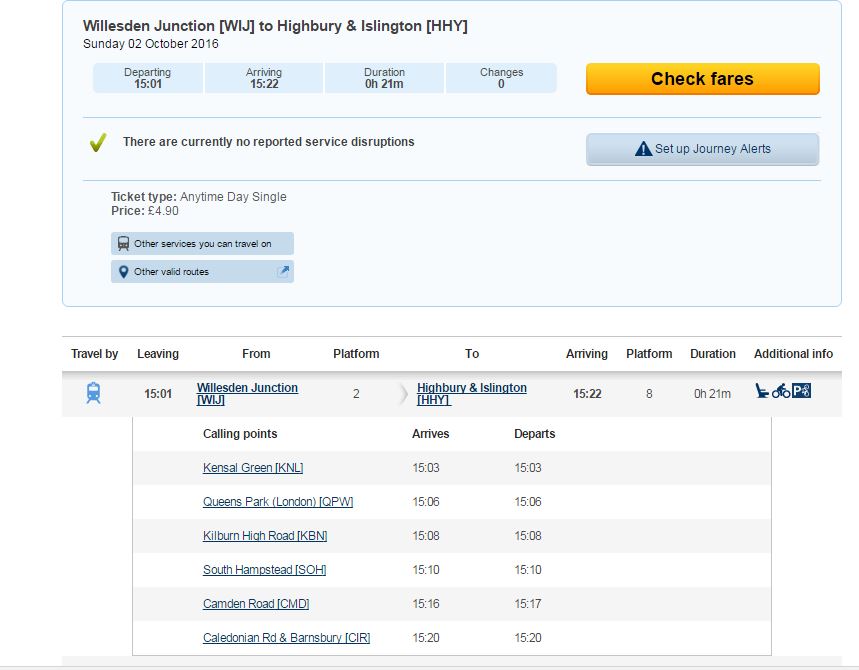
Willesden To Highbury and Islington
As the Class 378 trains can’t fly, the route via South Hampstead station must be open and available to the trains.
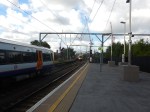
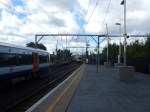
This sequence of pictures shows a train entering Camden Road station after coming through the site of the former Primrose Hill station.

Benefits And Disadvantages Of The Route
The current setup seems to be rather a waste of resources, with two tracks into Euston for the Watford DC Line and the need for platforms with third-rail electrification to handle the short four- and five-car trains.
Euston station is a very busy station and it would probably be glad to lose the Overground services.
So it might be a good idea to divert the three trains per hour (tph) between Watford Junction and Euston, through Primrose Hill and onto perhaps Highbury and Islington or even Stratford stations.
Others might not think so, as all those passengers along the Watford DC Line, would lose their direct connection to Euston.
But in a few years time, the following projects should have been completed or will be in progress.
- Crossrail will have opened.
- Plans for Old Oak Common station will be well advanced.
- El;ectrification of the Gospel Oak to Barking Line (GOBlin) will be complete.
- Rebuilding of Euston station for HS2 will have started.
- Capacity and station improvements at Highbury and Islington station will be known, which should give better access to the Victoria Line and the Great Northern Metro.
- The Metropolitan Line will have reached Watford Junction, by way of the Croxley Rail Link.
- The future of the Bakerloo Line will have been decided.
- West Hampstead Interchange might have been progressed.
These projects will mean that the Watford DC Line could and will have to be reorganised. If only to make sure there was enough capacity for commuters in the Peak and electric freight trains.
In my view the service on the Watford DC Line to London, should be as close to a high-capacity link running perhaps six to eight tph as is possible.
It is not as easy to achieve as many might think.
- London Midland services stop at stations on the Watford DC Line.
- The Bakerloo Line runs 6 tph on the line.
- The train size limit on the Watford DC Line is probably about six cars and might be possible to raise to say eight or ten.
- The train size limit along the North London Line is currently five-cars and all the Class 378 trains are this length.
- Six-car trains on the North London Line is probably an upper limit, although I wouldn’t be surprised to see longer platforms in my lifetime.
- There will be pressure to increase the number of freight trains on the North London Line.
- A Northern terminal for the Bakerloo Line must be provided.
- Third-rail electrification must be provided on all track shared with the Bakerloo Line.
- If possible, the route should avoid Euston, so that the HS2 rebuilding can proceed at a faster pace.
But I suspect an innovative solution will be found to provide a high capacity link between the stations on the Watford DC Line and Central London.
Crossrail
Crossrail will have a massive influence on how passengers use London’s rail network.
Plans have been talked about for extending Crossrail to the West Coast Main Line. Wikipedia says this.
Network Rail’s July 2011 London & South East Route Utilisation Strategy (RUS) recommended diverting West Coast Main Line (WCML) services from stations between London and Milton Keynes Central away from Euston, to Crossrail via Old Oak Common, to free up capacity at Euston for High Speed 2.
The previous Government rejected it as having a bad economic case
But Crossrail with its massive trains carrying fifteen hundred people a time, will strongly influence stations and routes it connects to Central London.
- At Abbey Wood, it is forcing an update to services on the North Kent Line, which could bring 6-10 tph through the Medway Towns.
- At Moorgate, it will bring passengers to an updated Great Northern Metro sending 8-10 tph to North London and South Hertfordshire.
- At Reading, it will bring passengers to updated Thames Valley and West Country services.
- At Shenfield, improvements are in progress to link Crossrail to Essex and East Anglia.
Where Crossrail will lead is an unanswerable question.
North-West from Old Oak Common, there are several stations that could be possible Crossrail termini.
- High Wycombe for Chiltern.
- Milton Keynes with its link to the East West Rail Link
- Tring, which was the original idea
- Watford Junction has been suggested before.
In the end, passenger numbers will decide where the trains go.
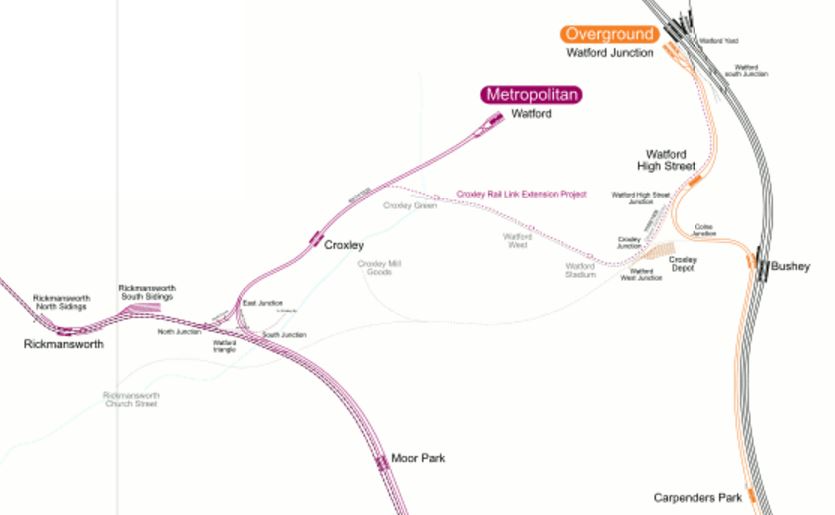
This map from carto.metro.free.fr shows the lines at Watford Junction station.
Rail Lines Around Watford
The North-South orange line is the Watford DC Line, which goes starts from Watford Junction station and goes through Watford High Street, Bushey and Carpenters Park stations.
Note the Croxley Rail Link going between Croxley and Watford Junction stations.
This short length of new line would also make possible direct services between Amersham and Watford Junction stations.
I’m not going to speculate on where trains on Crossrail and the Watford DC Line will go, but there are lots of possibilities.
I suspect that new housing developments will also be a driver of the routes of services.
The New Class 710 Trains
The Watford DC Line is going to see some some extra trains from the new fleet of Class 710 trains. If we see eight trains of the new dual-voltage fleet going to the GOBlin on a one-for-one replacement basis, that would mean a doubling of capacity on the line, that means that only six trains are left for the Watford DC Line.
But as the Watford DC line runs three tph currently in the Off Peak and the trip takes about fifty-five minutes, then perhaps those six four-car trains might be enough.
When I first read the specification for the Class 710 trains for the GOBlin, I was surprised to see that they were dual voltage. After all between Gospel Oak and Barking stations, there is precisely no third-rail lines.
But if you think about extending GOBlin services, the ability to run on third-rail lines would be needed on the following routes.
- Willesden Junction to Clapham Junction
- Willesden Junction to Richmond
- Willesden Junction to Watford Junction
- The Barking Riverside Extension to Abbey Wood.
Abbey Wood, Clapham Junction, Richmond and Watford Junction stations all have third-rail platforms.
I doubt all of these routes will be delivered, but at least by making the GOBlin trains with a dual-voltage capability, they are future-proofed for any possible services.
The Future Of The Bakerloo Line
The Bakerloo Line is a line, with spare capacity across Central London, according to many reports I’ve read.
Wikipedia has a section on the Future of the Bakerloo Line in its entry for the Watford DC Line.
This is said.
Various proposals have been made to alter services involving both extending or truncating Bakerloo Line services but there has been no basic change until 2015 other than to rolling stock and service patterns. As of 2015, plans and suggestions (from official bodies and others) connected to development of Crossrail and the Old Oak Common area have current potential consequences.
If the Bakerloo Line is extended into South London, this must have an effect.
Rumours are circulating as I write this, that this is being brought forward to 2029.
This article in New Civil Engineer is entitled £775M Paddington Cube gets green light. It says that the development by Paddington station, will be designed to enhance the area and will upgrade the Bakerloo Line station.
What Will Upgrades And Extensions To the Bakerloo Line Do To The Watford DC Line?
I suspect there’s both scope for rationalisation, increased capacity and faster services, along both lines, with the correct design.
There are other factors, that might create something special from an integrated Watford DC/Bakerloo Line.
- The Milton Keynes to East Croydon service might be increased in frequency and it might share the route.
- London Midland trains to Birmingham, Northampton and the Midlands could join the party.
- Train control and signalling is improving fast and might allow all these dissimilar services to share safely and give passengers better routes.
- Better train and station design could improve the terrible step-down and step-up access to Bakerloo Line trains at some stations.
The Watford DC/Bakerloo Line could end up as another important North South route.
- 27 tph on the Bakerloo Line.
- Same platform interchange with trains for Birmingham, Euston, Milton Keynes, Northampton and many other places.
- Quality step-free interchange to Crossrail and main line services at Paddington.
- Improved step-free access to main line services at Charing Cross, Marylebone and Waterloo stations.
- An improved interchange with the Victoria and Central Lines at Oxford Circus station.
- Interchange with Thameslink at Elephant and Castle station.
- Interchange with the East London Line at New Cross Gate station.
If all this happens by 2029, it won’t be soon enough!
The Bay Platform 2 At Willesden Junction Station
In posts like this one, entitled More Platform Action At Willesden Junction, I showed work to create a new bay platform 2 at Willesden Junction station.
On Sunday, the 2nd Of October 2016, I took these pictures of the station in use.
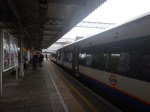


What are Transport for London’s plans for this platform, other than stock transfers and Rail Replacement Trains?
As they were doing on that Sunday, they could run a Willesden Junction to Stratford service via a rebuilt Primrose Hill station.
Platform Height Issues
At some stationS to get in to and out of the Bakerloo Line 1972 Stock trains, is quite a step and it would be difficult in a wheel-chair.
I have covered this in Platform Height Issues On The Watford DC Line and feel that dual-height platforms could be used.
Highbury And Islington Station
In some ways, Highbury and Islington station is the worst station in North London, as after war damage and then the addition of the Victoria, North London and East London Lines, it shows major evidence of Topsy at work.
With better connections between the deep-level Victoria Line and Great Northern Metro and the London Overground, it could be a very useful interchange. At the moment, there’s just too much walking in long underground passageways.
But as the Great Northern Metro will have new Class 717 trains giving a 10-12 tph link to Crossrail and the City at Moorgate, surely improvements at Highbury and Islington station would be worthwhile.
These services will be going through the station in a few years.
- 6 tph between Highbury and Islington and Crystal Palace – East London Line
- 4 tph between Highbury and Islington and West Croydon – East London Line
- 3+ tph between Stratford and Richmond – North London Line
- 3+ tph between Stratford and Clapham Junction – North London Line
- 10+ tph between Moorgate and Hertfordshire – Great Northern Metro
- 36 tph between Brixton and Walthamstow Central – Victoria Line
Admittedly, Crossrail will take some pressure off the station, by providing alternative routes via Moorgate and Stratford, but I can’t believe that Transport for London, aren’t looking to improve the interchange between the various lines. Especially, as with a few tweaks, Dear Old Vicky could possibly deliver forty tph or a train every ninety seconds, as opposed to the current hundred. These could include.
- A second entrance at Walthamstow Central station to provide step-free access and cope with the sheer numbers of passengers.
- A loop at Brixton, with a possible new station at Herne Hill to turn the trains at the Southern end.
- New trains with a higher performance.
- Improvements at certain busy stations like Oxford Circus, Euston and Kings Cross St. Pancras.
Other improvements like air-conditioned trains would attract passengers to the line and make greater capacity necessary.
This article on the authorative London Reconnections, which is entitled A Look At The World Class Capacity Upgrades, concludes its thoughts on the Victoria Line with this.
With the Victoria line pushing towards what must be the theoretical limit for a line with that amount of rolling stock and – more importantly – two-platform termini, there are no plans to further improve the service. Indeed the challenge of procuring more trains and finding the depot space for them would probably discourage any such plans on its own. This does not mean that the line will be forgotten, as both Oxford Circus and Walthamstow Central are on TfL’s top ten hit list of stations in need of a major capacity upgrade. Simply that the days of pushing more trains through the same stations more quickly have passed. In the case of Walthamstow Central it is highly likely that the next step will be making the station double-ended, with an entrance near or in the shopping centre.
I have a feeling that forty trains per hour will come sooner rather than later.
Oxford Circus Station
In two sections of my ramblings, Oxford Circus station has had a small mention.
An improved Oxford Circus station could benefit both the Bakerloo and Victoria Lines.
As the station is high on TfL’s list of stations for improvement, I would expect to see something planned to start here before the mid 2020s.
- Step-free access.
- Better interchange between Victoria and Bakerloo Lines in different directions.
- More space around the Central Line.
- An underground pedestrian link to Crossrail at Bond Street station.
- Extra entrance and exits to serve pedestrianised Oxford and Regent Streets.
I believe, that adding new passages, entrances, exits, lifts and escalators into the current complex can be organised in a similar way to how Bond Street station has been successfully upgraded over the last few years. Hopefully, Bank and Camden Town stations, will also be upgraded in the same way.
But Oxford Circus is the big one!
Conclusion
As I write this, the BBC is announcing that plans will be announced by Sadiq Khan today to bring the Bakerloo Line Upgrade forward to 2029.
I think that this will bring forward a lot of related work to improve the Watford DC Line and the related lines across North London.
The future is brown, with large splashes of orange!
Rail Replacement Trains
I was alerted by this blog post from Utterlee, that was entitled LONDON OVERGROUND GOES OFF THE RAILS.
It describes how because of engineering works, London Overground were routing North London Line services between Camden Road and Willesden Junction stations by way of South Hampstead, Kilburn High Road and Queen’s Park stations.
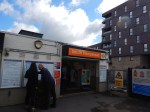
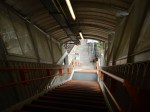
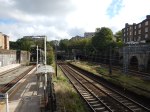
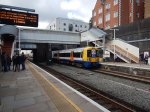
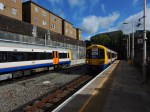
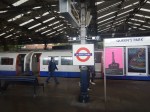
These pictures show my journey.
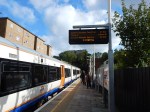
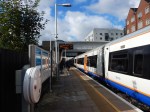
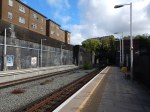
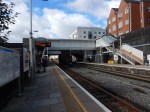


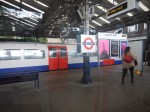



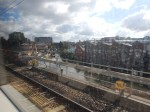

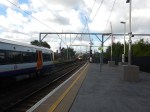
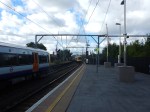
Well it makes a change from the dreaded rail replacement bus.
The Route
I took the train from Stratford to Willesden Junction, via the following stations.
- Hackney Wick
- Homerton
- Hackney Central
- Dalston Kingsland
- Canonbury
- Highbury and Islington
- Caledonian Road and Barnsbury
- Maiden Lane – Closed
- Camden Road
- Primrose Hill – Closed
- South Hampstead
- Kilburn High Road
- Queen’s Park
- Kensal Green
The route took eight minutes longer.
I think this was explained by having to wait to slot in with the Bakerloo Line trains at Queen’s Park and the wait of a minute or so, which the power was changed between voltages.
The Class 378 Trains
The Class 378 Trains obviously fit the route, as they run on all of it on a daily basis.
The station display and onboard announcements were correct and the five-car train I rode, fitted all the stations between Camden Road and Willesden Junctions.
The Bay Platform 2 At Willesden Junction
I wrote about this platform in Platform Action Has Finished At Willesden Junction.
Wikipedia says this about the platform.
Normally only the first and last NLL trains of the day, which start or terminate here, use the bay platform, though it is used for empty stock transfers between the depot and the North London and Gospel Oak to Barking lines.
This map from carto.metro.free.fr, shows the lines.
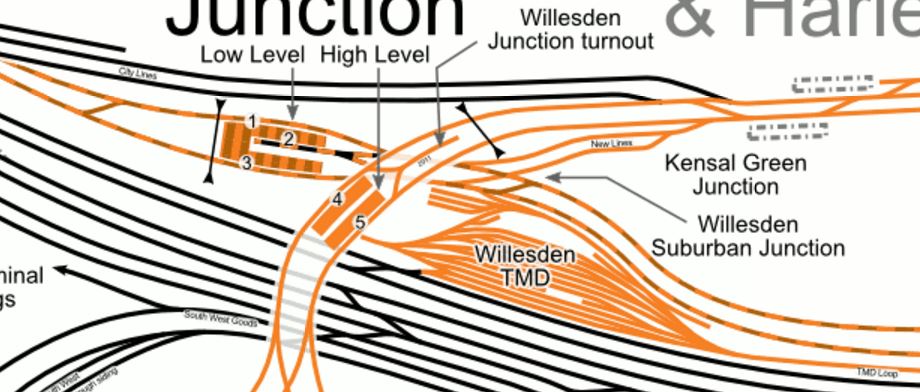
The Bay Platform At Willesden Junction
It looks like the platform can accept trains from the South and East.
It certainly reversed the train efficiently for its return journey.
As it gives a totally step-free access between both Northbound and Southbound services on the Bakerloo and Watford DC Lines, I’m certain that this platform wasn’t built solely to handle empty stock movements, early and late trains, and rail replacement trains.,
If you look at the map, the station can act as a terminus and reverse trains from the following directions.
- From the East on the North London Line in the Bay Platform 2
- From the South on the Watford DC Line in the Bay Platform 2
- From the West on the North London Line in the Willesden Junction Turnout
- From the South on the West London Line in the Willesden Junction Turnout
Because of the crossover to the North of the station, trains can even be reversed coming from the North on the Watford DC Lines.
I can’t believe that Transport for London haven’t got a cunning plan for the use of this convenient platform.
The Class 172 Trains
As the pictures show, all of the Class 172 trains for the Gospel Oak to Barking Line were parked at Willesden Depot.
I know, they’ll be used again from February 2017, but surely there is something more productive they could do in the meantime.
The Class 710 Trains
The Class 710 trains ordered for the Gospel Oak to Barking Line are actually Class 710/2, with a dual voltage capability. This is probably sensible, as it would mean they could go past Gospel Oak to Richmond or Clapham Junction, which has been suggested and the stations are firmly in third-rail territory.
London Overground have also ordered six Class 710/2 trains for the Watford DC Line. Wikipedia says this about the use of Class 710 trains on the Watford DC Line.
The intention is that the five-car Class 378 trains currently used on the Watford route will be cascaded back to the North London and East London Lines to allow for strengthened services.
I suspect that London Overground want a fleet with a consistent capability of dual voltage on all the cross-London Lines.
But will four-car trains on the Watford DC Line be sufficient capacity for the line, which currently has five-car services?
It is probably worth noting that South Hampstead and Kilburn High Road stations have lower passenger levels than say Hackney Central or Dalston Kingsland stations, so perhaps, a three tph four-car service will be sufficient.
Incidentally, as Euston to Watford Junction takes fifty minutes,it would need six trains to run a three tph service all day.
So it looks to me, that the base service through Kilburn High Road and South Hampstead stations will be three four-car trains per hour all day.
Could Stratford To Willesden Junction Via South Hampstead Be Made Permanent?
Last week, when I passed through Willesden Junction station, I noticed a Class 378 train was waiting in the Bay Platform 2.
Perhaps it was an empty stock movement or were London Underground doing a bit of route training for drivers in preparation for the weekend’s Rail Replacement Train.
There are various factors that will affect Transport for London’s thinking.
- The Watford DC Line means that paths and platforms at Euston station must be reserved for third-rail electric trains.
- Watford Junction station will be getting a direct connection to
- Euston station will be rebuilt for HS2.
- Crossrail and Thameslink will be fully open in 2019.
- Camden Town tube station will be rebuilt and extended, possibly with a better link to Camden Road station.
- Old Oak Common station will be built, as part a major infrastructure development and transport hub.
- A future Old Oak Common station could have connections to Central Line, Chiltern Line, Crossrail, HS2, North London Line, West Coast Main Line and West London Line.
- The low passenger numbers at Kilburn High Road and South Hampstead stations.
- Highbury and Islington station must be on an early list for updating to improve its terrible access to the low-level Victoria Line and Great Northern Metro.
- Camden Council would like to reopen Maiden Lane station.
- Primrose Hill station could be rebuilt with a decent walking route to Chalk Farm tube station.
- Four-tracking of the North London Line between Camden Road and Highbury and Islington stations could be possible.
- West Hampstead Interchange could be created to link the North London Line, Chiltern Line and Underground services.
- There is a need for more freight and passenger services across London.
- Electrification and an increase in capacity for the Gospel Oak to Barking Line will change travel patterns.
- Plans exist to run passenger services on the Dudding Hill Line.
I feel that we could be seeing a reorganisation of services across North London and probably there will be no better time
Stopping the Watford DC Line service to Euston might be a good idea for the operation and reconstruction of the crowded London terminus, but it would deprive passengers from Kilburn High Road and South Hampstead of their direct service to Euston.
But is a three trains per hour (tph) service to Euston worth keeping, if stopping it, eases the situation at Euston?
Perhaps if the following interchanges were built or improved, then passengers might accept the closure of the direct service to Euston.
- Primrose Hill station and Chalk Farm tube station.
- Camden Road station and Camden Town tube station.
- Maiden Lane station for everything at Kings Cross.
- Highbury and Islington station for Victoria Line and Great Northern Metro.
I think in an ideal world, the least amount of disruption and uncertainty will be caused by improving one or more of the stations named above and then seeing how the pattern of passenger journeys develop.
Consider.
- Transport for London had a lot of staff on the platforms and in the stations on Sunday, who were explaining what was happening to the trains.
- There could be arguments to reopen Primrose Hill station with a walking route to Chalk Farm tube station, as it would surely give an alternative route to avoid Camden Town station during that station’s rebuilding.
- There are probably freight capacity reasons for four-tracking between Highbury and Islington and Camden Road stations.
I think we could see a package of improvements such as.
- Step-free connection between the Overground and the Victoria Line and Great Northern Metro at Highbury and Islington station, using the closed entrance on the other side of Holloway Road.
- Reopening of Primrose Hill station
- Improved voltage changeover at Primrose Hill station.
- Reopening of Maiden Lane station.
- Enabling works for four-tracking between Highbury and Islington and Camden Road stations.
Organised professionally, I suspect that it could all be done with the minimum of disruption to existing services.
Could The North London Line Be Four-Tracked Between Camden Road And Highbury And Islington Stations?
I ask myself this question every time, I take a train across from between Camden Road Highbury and Islington stations.
This map from carto.metro.free.fr explains why.
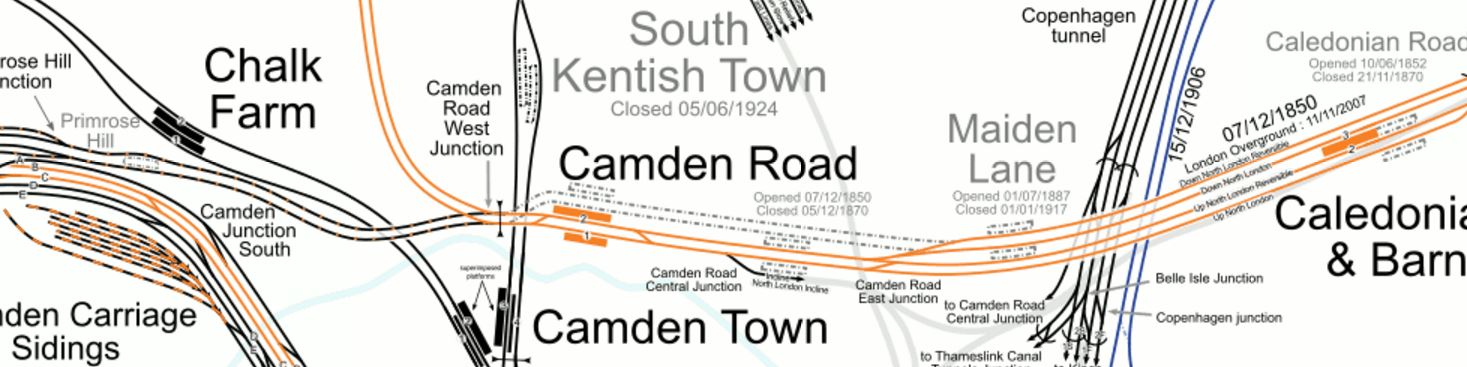
North London Line
Note the two extra tracks to the North of the North London Line, that have been closed. Some were closed in 1870, but the space looks from the train that there might be a possibility of reinstatement.
This Google Map shows the four-track section through the site of the former Maiden Lane station.

The Site Of Maiden Lane Station
Note.
- The four tracks of the North London Line at the top.
- The remains of the platforms at Maiden Lane station.
- The East Coast Main Line going down the right hand side pf the map.
- The Channel Tunnel Rail Link going across the bottom -right hand corner.
The single track in the space between the lines , which runs South-West to the North-East, is the North London Incline, which loops to the South of the North London Line and allows train to come down the East Coast Main Line and then go West along the North London Line.
I once took it in a sleeper between Edinburgh and Euston.
It was a journey that illustrates how all sorts of freight and passenger trains, get to use the North London Line.
Four tracks between Hackney and Willesden would certainly add to the capacity of the line and help get its unique mix of trains through this crowded part of London.
Consider.
- East of Camden Road station, there would need to be some reorganisation and new track.
- Highbury and Islington station would need reorganising.
- West of Camden Road station, as there is two routes to Willesden Junction, each of which has two tracks, there are four tracks already.
- New digital signalling will help.
Four tracks might not be created, but something will have to be done to create more capacity for freight trains from London Gateway and the Haven Ports to any part of the country West of London or the M1.
And of course, travellers will demand more passenger trains along the line.
Is Highbury and Islington Station The Key That Unlocks Everything?
Highbury and Islington station suffered a double whammy.
- On the 27th June 1944 it was hit by a V1 flying bomb.
- Much of the remains of the station was then demolished in the 1960s, to create an interchange for the Victoria Line.
Luckily the 1960s architects left the station building on the other side of Holloway Road more or less intact on the outside.
But things are happening at the station.
- The Northern City Line will become the Great Northern Metro with a minimum of twelve trains per hour (tph) between Moorgate and Alexandra Palace before splitting for Welwyn Garden City and the Hertford Loop Line.
- The Victoria Line will keep increasing the number of trains, it squeezes through the 1960s tunnels. One day, I wouldn’t be surprised to see 40 tph. Victoria is a generous lady!
- In Increased Frequencies On The East London Line, I wrote of up to 24 tph along the East London Line, with Automatic Train Control in the core section. This must surely bring more trains to Highbury and Islington.
- The North London Line will get extra trains cascaded from the Watford DC Line from 2018.
- The urban realm outside the station could be improved.
If all these trains and their passengers are going to be handled quickly and safely, then improvements must be made to the station.
This map from carto.metro.free.fr shows the lines at the station.
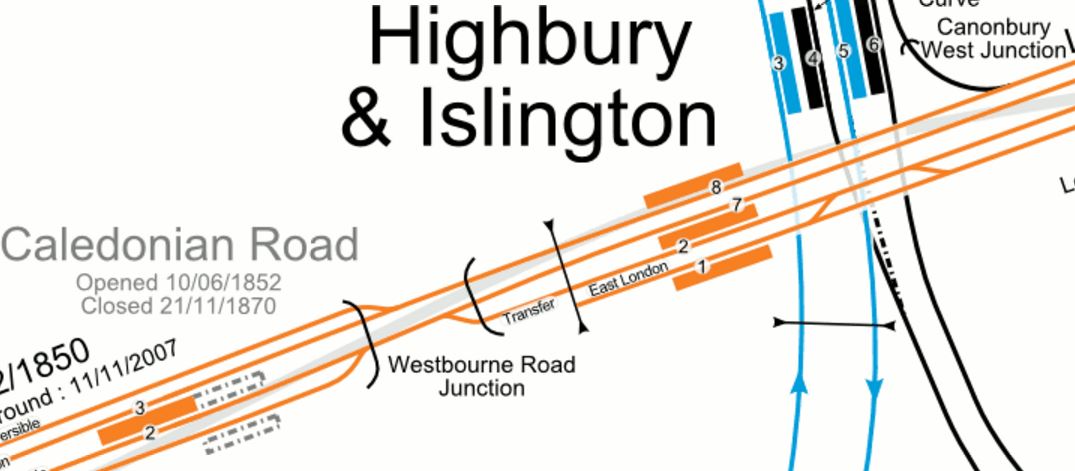
Highbury And Islington Station
The access to the Overground Lines at the station is easy, but with two just escalators and long passageways the access to the four deep-level platforms is terrible. It’s even worse if you’re disabled or have problems, as there is no lift.
I’ve not seen a 3-D image of the station, but a station-man told me, that he feels that lifts and possibly another bank of escalators could be installed in the second entrance on the other side of Holloway Road.
He might be wrong, but something drastic needs to be done to improve connectivity between the Overground and the deep-level lines.
The only thing that might get the station out of trouble in this matter, is the cross-platform interchange between the Victoria Line and the Great Northern Metro. This will ease passengers speedily to and from Moorgate and its hopefully comprehensive double-ended Crossrail station shared with Liverpool Street.
At present, two of the four lines through Highbury and Islington are bay platforms.
- Platform 1 would probably be left as it is, as going through would probably be difficult.
- However Platform 2 looks like it could accept through sevices, or serve as a terminus from services from either direction.
So will Highbury and Islington station be the key that unlocks everything?
It’ll certainly give passengers from stations like Camden Road, interesting travel options.
Possible New Routes
If you look at the combined North and East London Line system, that runs in a curve around North East London, it has termini; both in use and possible all along its length.
- At the Eastern and Southern ends you have Clapham Junction, Crystal Palace, New Cross, Stratford and West Croydon.
- Walthamstow and Chingford can be reached from Hackney Wick and Stratford.
- At the Northern end you have Watford Junction.
- At the Western ends you have Clapham Junction and Richmond.
- In the middle you have Highbury and Islington and Willesden Junction stations, that could probably turn trains from either direction.
It looks to me, that Transport for London have several options and all the statistics to create cross-London routes that passengers would use.
Could Passenger Services Be Run On The Canonbury Curve?
The Canonbury Curve is described like this in the Wikipedia entry for Canonbury station.
To the west of the station is the Canonbury curve, a freight-only connection through the Canonbury tunnel to the East Coast Main Line at Finsbury Park.
The curve is an electrified single-track.
This picture shows where the curve joins and leaves the North London Line.

The Canonbury Curve To The East Coast Main Line
I don’t know how much traffic uses the line, but I think it is only a few freight trains.
This map from carto.metro.free.fr shows the track layout of the Canonbury Curve.
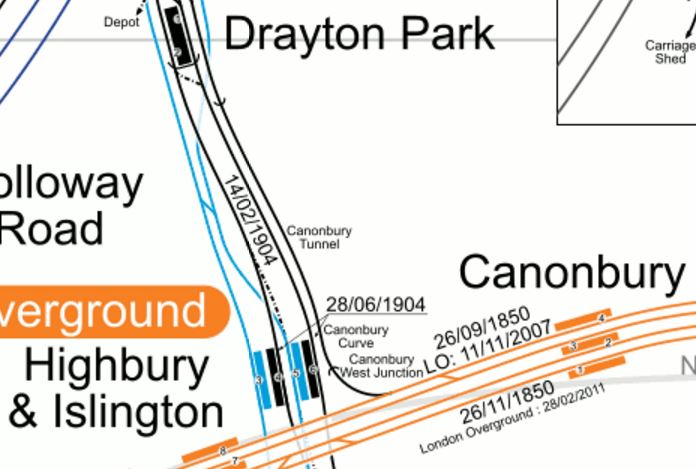
The Canonbury Curve
Note that it only has a connection to the North London Line, which is the more Northerly of the two pairs of lines. The East London Line is the other pair of lines and only carries third-rail electric services to Dalston Junction and on to the South.
In order for trains to go between Finsbury Park and the East London Line, there would need to some changes to Canonbury West Junction.
This Google Map shows Canonbury West Junction in detail.
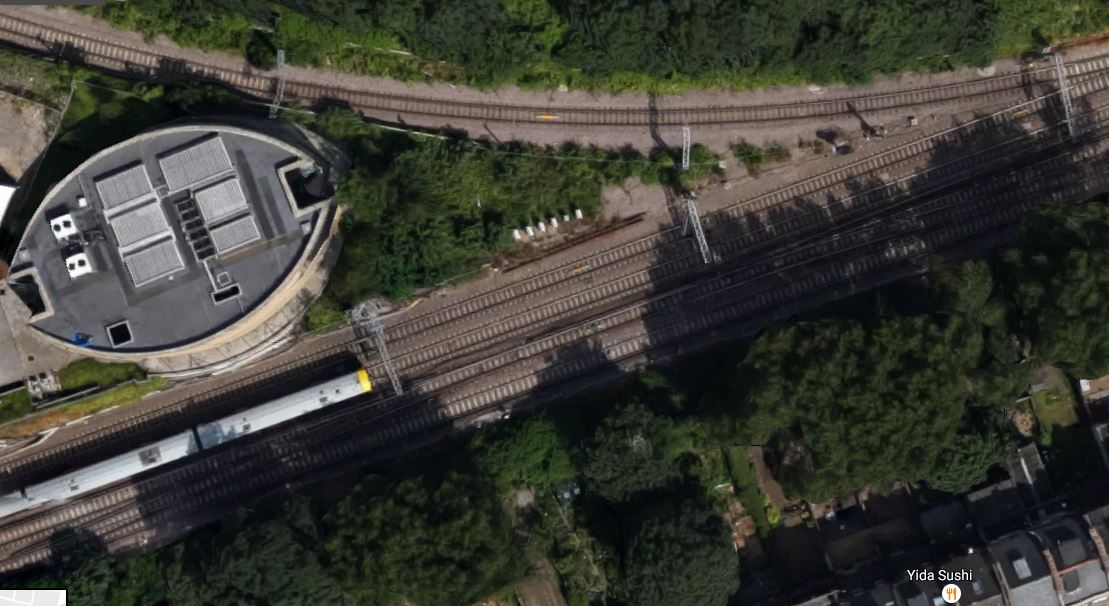
Canonbury West Junction
The elliptical-shaped tower is an evacuation and vent shaft for the Channel Tunnel Rail Link.
There does seem to be space between the lines and I suspect that it would be possible to modify Canonbury West Junction.
The line is also visible as it passes by Drayton Park station to the South of Arsenal’s Emirates Stadium.
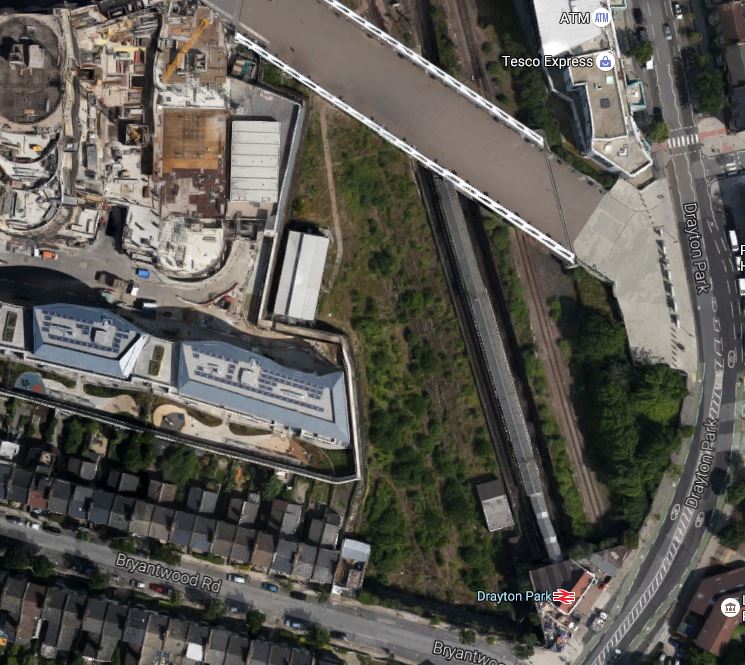
Drayton Park Station
The line is the single track line to the right of the platform roof of the station. This image doesn’t show a true picture, as the line is at a higher level than the Northern City Line.
I think it is true to say, that there is quite a bit of space around Drayton Park station.
When the line gets to Finsbury Park station, the track seems to be extremely complicated, but I’m sure that it is possible to run a passenger train between Canonbury and Finsbury Park stations, as freight trains already make the journey.
A Second Thameslink Route Between Finsbury Park And East Croydon
I feel that a train service could be run between Finsbury Park and East Croydon stations via the Canonbury Curve and the East London Line.
It would require the appropriate political and commercial wills. Some track modifications would be needed.
In the next few sections, I will describe the various issues that will effect, whether such a service is created.
Objectives Of The Route
As a passenger from the East, I see the major objective is to link all those, who travel to and from London’s Eastern boroughs, like Bromley, Croydon, Greenwich, Hackney, Haringey, Lewisham, Tower Hamlets and Waltham Forest, with a better North-South railway.
But Govia Thameslink Railway, London Overground and Sadiq Khan may see things differently.
The East London Line may terminate in a decent purpose-built terminal at Highbury and Islington station, with these connections.
- North London Line to the West.
- Northern City services to the North.
- Victoria Line services to the West End and four major stations.
- Victoria Line to Waltham Forest.
But the termini in the South mean there is often a second change to get where you actually want to go.
- Many passengers want to go to East Croydon station rather than West Croydon station.
- There is no direct link to Thameslink, with all the extra destinations that would bring.
- Getting to London Bridge, Gatwick Airport, Kent and the South Coast is not easy.
I’m not the only one who is unhappy, as there has been a petition to the London Assembley to get Thameslink to call at Norwood Junction.
I think a lot of the problems were caused by the following.
- The East London Line was designed after Thameslink.
- Thameslink designers thought the East London Line was a short route from Whitechapel to New Cross and New Cross Gate.
- Thameslink is a National Rail project, whereas the East London Line is promoted by Transport for London.
On the other hand, East London does particularly well with two branches of Crossrail, so the connection to the East London Line at Whitechapel, will truly be a Jewel In The East.
Extending the East London Line to Finsbury Park in the North would give the following improvements.
- Links to the Piccadilly and Victoria Lines
- Links to Great Northern services to Hertford North, Welwyn Garden City, Letchworth Garden City and Cambridge
- Links to Thameslink services to Peterborough and Cambridge.
Connecting to East Croydon in the South would also be valuable.
- Links to Outer London suburban services to places like Epsom, Caterham and Oxted.
- Links to Thameslink services going to Gatwick Airport, Brighton and the South Coast.
- Links to London Tramlink across South London.
This connectivity at the North and South termini will not only make it better for those living in East London, but visitors and commuters needing to go to the area will find their journey much improved.
Now is the time to properly link Thameslkink and the East London Line to the benefit of users of both systems!
It could be the third line in London’s Crossrail/Thameslink network.
Advantages For Myself
I wouldn’t be being totally honest, if I didn’t point out my personal advantages of a Finsbury Park to East Croydon service.
I live within walking distance of Dalston Junction station and I would get single-change access to places like Brighton, Cambridge, Gatwick Airport and Peterborough.
But then so would the hundreds of thousands of people, who or work live near stations between Canonbury and Norwood Junction on the East London Line.
Thameslink, The Northern City Line And The Canonbury Curve
Thameslink, the Northern City Line to Moorgate and the line through the Canonbury Curve all come together at Finsbury Park station.
There would be opportunities to create a cross- and same-platform interchange between all three services.
I do think that the Northern City Line will because of its important link to Crossrail at Moorgate grow into a high-capacity link between Crossrail, the City of London and Canary Wharf at its Southern end and Finsbury Park, North London and Hertfordshire at its Northern end.
Added together Thameslink and the Moorgate trains could create a 12 tph service up the East Coast Main Line, as far as Welwyn Garden City.
My thoughts on this line are laid out in A North London Metro.
How Many Trains Would Be Needed To Run A Service Between Finsbury Park And East Croydon?
As things stand the current Class 717 trains, that have been ordered for the Northern City Line, couldn’t work the route, as the route is only able to accept five-car trains, but it could probably be run by the following.
- Five-car versions of the Class 717 trains.
- London Overground’s Class 378 trains
- Appropriate versions of the new Class 710 trains.
Current timings on the various sections are.
- Finsbury Park to Highbury and Islington – 4 minutes – Great Northern
- Highbury and Islington to New Cross Gate – 26 minutes – London Overground
- New Cross Gate to East Croydon – 22 minutes – Southern
So this would give a timing of 52 minutes, which could probably be beaten by a direct modern train, that could change current collection on the fly and took the Canonbury Curve short cut.
Any time around fifty minutes, would mean that a train could do the round trip in two hours and that eight trains being needed to run a 4 tph service.
The Design Of An Ideal Terminus
The branches of the East London Line at Clapham Junction, Crystal Palace, Dalston Junction, Highbury and Islington and New Cross end in their own dedicated bay platforms. At West Croydon, a reversing siding is used, as I wrote about in The Bay Platform And The Reversing Siding At West Croydon.
As rarely do any operational problems surface, I feel that a single platform or reversing siding would be sufficient for a route, that is not much longer than Highbury and Islington to West Croydon.
Passengers would also require.
- Decent step-free interchange between services.
- Lots of useful connecting trains and buses.
- Shops, kiosks and cafes.
- An attraction like a market, museum, shopping centre or an entertainment venue.
Perhaps even a place to sit in the sun, like the park at Crystal Palace or Dalston Square at Dalston Junction.
Looking at this, what idiot thought about using the dreadfully dreary and totally useless West Croydon?
An interesting concept is that the last two or three stations are used as a joint terminus, to give passengers more choice of onward routes, either by foot or by train, tram or bus.
You have Cannon Street, which is the actual terminus, but all services will also stop at London Bridge, when Thameslink is complete.
Other pairs include.
- Liverpool Street and Stratford
- Charing Cross, Waterloo East and London Bridge
- Edinburgh Waverley and Edinburgh Haymarket
- Birmingham New Street and Birmingham International
- Manchester Piccadilly and Manchester Oxford Road.
- Highbury and Islington and Dalston Junction
Some have been purposely designed that way, whilst others have just happened.
In the case of choosing the two termini for the Finsbury Park to East Croydon route, they must be within a time that allows the train operator to to use a sensible operating policy to run trains.
It looks like, that if the trip time is fifty minutes or less, that is ideal, as the round trip can be two hours. But even if it’s a few minutes longer, you just add another train into the fleet and work on a two hours fifteen minutes cycle say.
The Northern Terminus
In this example, I have used Finsbury Park station as a Northern Terminus, but I think that as long as Finsbury Park is served by the route, a station to the North could be used instead.
A few thoughts.
- Using Drayton Park could mean an extra change for passengers.
- Crossrail 2 could be coming to New Southgate and/or Alexandra Palace in the future
- A terminus North of where the Hertford Loop Line joins the East Coast Main Line might be confusing and/or annoying for passengers.
- There needs to be space for an elegant solution to the step-free change of train.
I think there are two main possibilities; Finsbury Park and Alexandra Palace.
In some ways, Alexandra Palace would work better as there is more space.
In Could A Reversing Siding Be Built At Alexandra Palace?, I examined the possibility of building a reversing siding at Alexandra Palace station.
I came to the conclusion that it is feasible and also found out that one already exists at Bowes Park station.
So a train reversing at the Northern end of the new route would go through the following procedure.
- The train from the South, would arrive at a down interchange platform in Finsbury Park, where all down Thameslink and local services call, probably with Main Line services on one platform face and Hertford Loop Line services on the other.
- Reversing trains would probably use the Hertford Loop Line platform.
- After discharging passengers, it would proceed to the down Hertford Loop Line platform 4 at Alexandra Palace.
- Any passengers still left, would leave the station or catch another train.
- The train would then proceed to the reversing siding between the two lines of the Hertford Loop Line.
- The train would then start its return journey in the up Hertford Loop Line platform 1 or 2 at Alexandra Palace.
- The train would then return to Finsbury Park.
- It would call in the up interchange platform, before continuing on its way.
Effectively, the route would have a two station terminus with interchange to other trains at both Finsbury Park and Alexandra Palace, with train reversing at the latter.
Note.
- As a maximum of six tph will be using the Hertford Loop line, there is plenty of spare capacity to fit in another four trains.
- Reversing sidings are always useful when there are problems like failed trains or blockades.
- It could be used by Northern City services to Moorgate.
- If it could take an eight-car Class 700 train, it might have uses for Thameslink.
It is one of those small lengths of railway, that if it were properly designed could have a lot more uses than is obvious.
I am also actually surprised that as the space is there between the tracks of the Hertford Loop Line, that it hasn’t been used for something productive before.
The Southern Terminus
Just as the Northern end of the route must serve Finsbury Park, the Southern end must serve East Croydon, as so many services call at the station.
- Thameslink
- Gatwick Express
- Southern services all over the South.
- Tramlink
Another possibility would be to perhaps have a dedicated bay platform at South Croydon station, with services calling at East Croydon before reversing in a dedicated bay platform or a reversing siding at South Croydon.
South Croydon station also has form as a past Southern terminus for the West London Line route to Milton Keynes Central.
This Google Map shows the South Croydon station and the area immediately to the South.
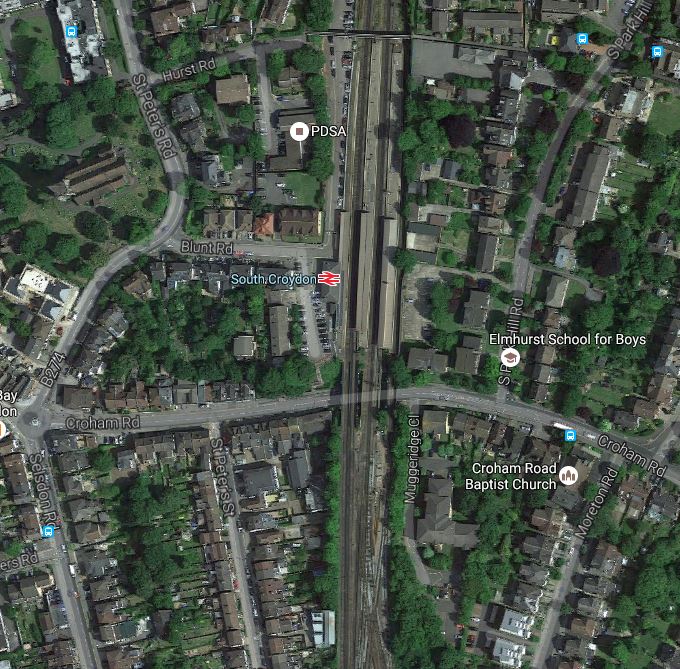
South Croydon Station
At a quick look, it would appear that fitting a bay platform into the Northern end of the station could be difficult.
But, there could be space in the tangle of lines South of the station to create a reversing siding.
There’s certainly more space than there is at East Croydon.
Perhaps, if the station was to be properly sorted as a Southern terminus for the East London Line, it could also become the terminus for an uprated service on the West London Line to the West Coast Main Line.
Drayton Park Station
This map from carto.metro.free.fr shows the lines through Drayton Park station.
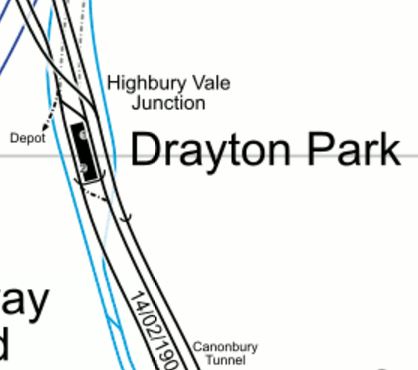
Drayton Park Station
The lines either side of the island platform are the two tracks of the Northern City Line to Moorgate.
The line on the right in the map, links Finsbury Park station to the Canonbury Curve through the Canonbury Tunnel. This line is at a higher level, as this picture taken looking South along the platform at Drayton Park station shows.

Drayton Park Station
The line is behind the retaining wall at the left. It’s position is betrayed by the overhead wires visible in the picture.
If a platform was to be put on this connecting line at Drayton Park, it would not be simple.
But help could be at hand!
In the map of the tracks at the station, there is a disused track labelled Depot. There is quite a large area of land around the station and any housing built on the site, should surely incorporate a new station underneath, with provision for a platform on the connecting line.
It would be a disaster, if housing was built all over the Drayton Park station site, without leaving provision for a station on the Canonbury to Finsbury Park Line.
The Canonbury Curve
As I pointed out earlier, the Canonbury Curve would need modification to enable trains to get between Finsbury Park and Canonbury stations.
This map from carto.metro.free.fr shows the Overground through Canonbury and the two Dalston stations.
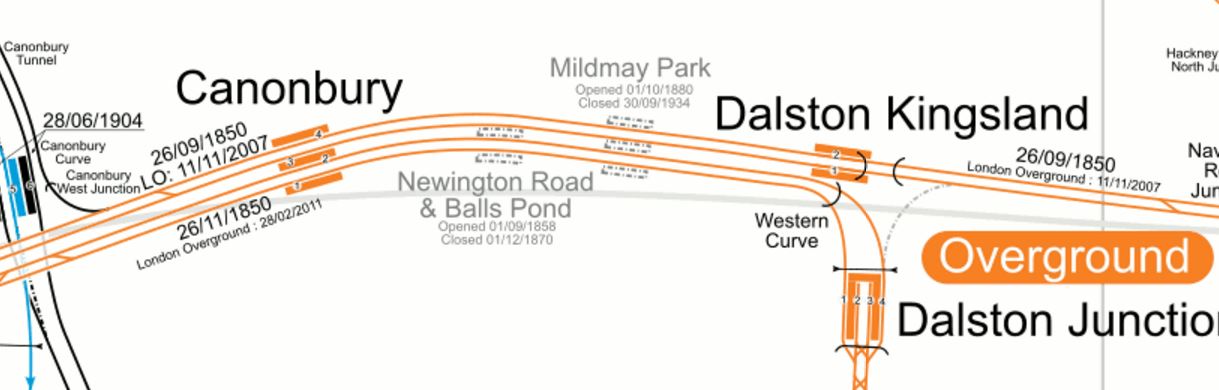
North And East London Lines Through Canonbury And Dalston
The various East-West tracks through the area from North to South are.
- The Eastbound North London Line to Stratford
- The Westbound North London Line to Highbury and Islington and Richmond.
- The Southbound East London Line to Dalston Junction and Croydon
- The Northbound East London Line to Highbury and Islington
A Finsbury Park to Dalston Junction service would do something like the following.
- Take the Canonbury Curve to the Eastbound North London Line.
- Stop in Plstform 4 at Canonbury station.
- Cross over to the Southbound East London Line using two new crossings.
- Continue South after stopping in Platform 4 at Dalston Junction station.
A service going the other way would do something like the following.
- Call in Platform 1 at Dalston Junction station.
- Cross over to the Westbound North London Line using two new crossings. (One would probably be used both ways.)
- Stop in Platform 3 at Canonbury station.
- After leaving Canonbury station take the existing crossover to the Eastbund North London Line.
- Take the Canonbury Curve to Finsbury Park station.
I don’t know whether my route would be possible, but I’m sure that an expert at Network Rail could come up with a workable and very safe solution.
At least there are factors that help.
- The line has been rebuilt in the last few years, so it must be well-documented.
- There are a lot of crossovers South of Dalston Junction station.
- The signalling is capable of handling bi-directional running.
But the most important factor is that to the East of the former Mildmay Park station, there is space for more track, as it would sappear there was an island platform between the pairs of lines. It is actually shown on the map of the lines through Canonbury and Dalston, earlier in this section.
These are some pictures of the lines between the Canonbury Curve and Mildmay Park.


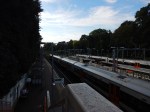


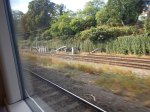
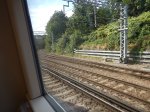
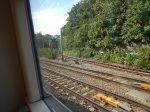
I was really surprised to see how much space there is between Dalston and Highbury and Islington and I don’t believe it would be an impossible task to create a route between Dalston Junction and Finsbury Park stations via the Canonbury Curve.
I think the biggest problem could be where to switch from the third-rail electrification of the East London Line to the overhead electrification of the North London Line and the Canonbury Curve.
One of the solutions would be to use trains with on-board energy storage and they would automatically deploy pantograph or pick-up shoe, once they were on the electrified sections.
Six-Car Trains On The East London Line
Over the years there have been mixed messages about whether six-car trains will ever run on the East London Line.
The problems of lengthening some of the platforms at stations like Shadwell, Wapping and Rotherhithe mean that the current five-car trains need to use selective door opening.
But as this is probably the only problem to running longer trains, I suspect that running six-car Class 378 trains through the Thames Tunnel, is still an option to increase capacity on the East London Line.
So if six-car Class 378 trains with selective door opening can run from Dalston Junction to Surrey Quays and several stations in the South, surely six-car Class 717 trains could do the same, if they had selective door opening fitted.
As both trains are walk-through trains, selective door opening is not a great inconvenience to passengers, as with comprehensive information on the train, the passengers move to doors that open.
I can’t see any reason, why with a few simple modifications, Great Northern’s Class 717 trains could not use the East London Line to connect North and South London.
Frequency Between Finsbury Park And East Croydon
London Overground’s services on the East London Line and some other lines is based on the rule of four.
If you provide at least four tph, then passengers will turn up and go.
So there must be at least four trains between Finsbury Park and Croydon in both directions in every hour.
The upper limit to the frequency would probably be determined by two main questions.
- How many trains could negotiate through the Canonbury Curve and Canonbury station in an hour?
- How many spare paths exist through the Thames Tunnel?
The question also has to be asked if four tph were going to East Croydon, do four tph still need to go to West Croydon?
I think all this will mean that the probable frequency will be four tph.
Alternative Routes
I have been parochial and have concentrated on the core service between Finsbury Park and East Croydon, which would be of the greatest benefits to those like me, who live on the current East London Line.
But if trains can work the route profitably, why does there have to be a limit of where they can go?
Possible termini in the North include all of the current ones used as termini by services into Moorgate.
- Alexandra Palace
- Gordon Hill
- Hertford North
- Letchworth Garden City
- Welwyn Garden City
I have added Alexandra Palace, as it could have a reversing siding and could be invaluable in maintaining the stability of the service. It is also the last station on the route, that serves both Northern branches.
In the South, the possible termini include the following.
- Caterham, which was a Thameslink possible and has now been discarded.
- Gatwick Airport, because it likes to have its fingers in everything.
- Purley, because Southern are using it as a station to split Caterham and Tattenham Corner services.
- South Croydon, because it has form and is in a convenient location.
- Tattenham Corner, which was a Thameslink possible and has now been discarded.
I calculated the core time between Finsbury Park and East Croydon using these current journeys.
- Finsbury Park to Highbury and Islington – 4 minutes – Great Northern
- Highbury and Islington to New Cross Gate – 26 minutes – London Overground
- New Cross Gate to East Croydon – 22 minutes – Southern
This gives a time of 52 minutes, between Finsbury Park and East Croydon which until proven otherwise is a good base time.
It is also the current scheduled time for London Overground’s Highbury and Islington to West Croydon service.
The following should be borne in mind.
- New trains could shave a twenty seconds or so from each of the nineteen stops.
- Cutting the corner using the Canonbury Curve should save time.
- Modern trains would be able to change voltage quicker.
I would think that a sub-fifty minute time between Finsbury Park and East Croydon is possible.
The times between Finsbury Park and my possible Northern termini are.
- Alexandra Palace – 7 minutes
- Gordon Hill – 21 minutes
- Hertford North – 37 minutes
- Letchworth Garden City – 62 minutes
- Welwyn Garden City – 20 minutes
And those between East Croydon and possible Southern termini are.
- Caterham – 25 minutes
- Gatwick Airport – 15 minutes
- Purley – 6-9 minutes
- South Croydon – 3 minutes
- Tattenham Corner – 33 minutes
When linked to passenger statistics and the capacity on the various routes, I suspect that some routes could be shown to be a lot better than others.
Conclusions
If the following projects can be successfully delivered.
- A suitable Northern terminal platform or other arrangement.
- A suitable Southern terminal platform or other arrangement.
- An updated Canonbury Curve to connect the East London Line to Finsbury Park station.
- The procurement of suitable dual-voltage trains.
I can see no reason why a train service from Finsbury Park to East Croydon couldn’t be successfully run via the Canonbury Curve.
It would give the following benefits.
- Extra connectivity for those going to and from stations between Finsbury Park and East Croydon.
- Better access to Canary Wharf, Dalston, Gatwick Airport and Shoreditch.
- It would take some of the pressure off Moorgate services, if Crossrail loads them up.
- Development of a quality Southern terminus, might enable a better service from East Croydon to Old Oak Common and the West Coast Main Line using the West London Line.
Perhaps though, the biggest benefit would be that more trains could be running on the East London Line, without needing extra platform capacity at the current termini.
O
Whitechapel’s Overground Platform Extensions Are Taking Shape
Whitechapel station has short Overground platforms and it was always said they’d be extended after Crossrail opens.

Judging by these pictures, it would appear that there isn’t much work to do.
Will London Overground Fit On-board Energy Storage To Class 378 Trains?
This may seem to be a ridiculous idea, as why would the Class 378 trains on the London Overground need the ability to use battery power?
But I have just read this article in Rail Technology Magazine entitled Bombardier enters key analysis phase of IPEMU and it is a detailed article on everything Bombardier are doing to convert the prototype IPEMU into a real train, that can be sold to demanding customers.
- Four different types of battery are being evaluated in Mannheim.
- A simulated five-year test is being performed.
- Bombardier are taking a serious look at the branch-line market.
- Bombardier are evaluating the retrofit market with particular reference to the Class 387 and Class 378 trains.
This is all very sound stuff and in some ways it makes a change to fully-develop the product before launch rather than expect train operators and passengers to find the problems.
One thing that is surprising, is that Class 378 trains are being looked at for the retrofit of on-board energy storage. Marc Phillips of Bombardier is quoted as saying this in the article.
All Electrostars to some degree can be retrofitted with batteries. We are talking the newer generation EMU as well as the older generation. So, the 387s and 378s are the ones where we have re-gen braking where we can top-up the batteries and use the braking energy to charge the batteries. That gives us the best cost-benefit over operational life.
So it would seem that the Class 378 trains of the London Overground are candidates for fitting with batteries. As the trains handle their routes with ease and there doesn’t appear to be any lines without electrification, where anybody has speculated they might run, the only reason to fit them with batteries would be to capture and reuse all that braking energy.
It is an interesting proposition where the decision to fit batteries will depend totally on the accountants.
Obviously, there will be a cost to fit batteries, but as they wouldn’t need to propel the train for large distances, where there is no electrification, the specification could be quite relaxed.
- The capacity would have to be sufficient to hold the maximum braking energy of a full train.
- The battery technology would have to be able to handle the demanding stop/start regime of London Overground services.
- The system must be easy to fit to the existing trains.
- The battery capacity should probably be sufficient to move a stalled train into the nearest station.
A worst case scenario for moving a stalled train, would be hauling a train out of the Thames Tunnel after a failure of the power to the third-rail.
I have a feeling that traditional battery storage is not the best way to handle this application, as it is one that could be met by a larger version of the KERS system used in Formula One. KERS has already been applied successfully to buses, and I wrote about that in Could IPEMU Trains Use KERS?
You can do a simple calculation, which gives the kinetic energy of a hundred and sixty tonnes Class 378 moving at twenty metres per second, which is about two thirds of maximum speed and probably a typical service speed. The kinetic energy of such a train is 3.2 Mega Joules or 0.89 kWh. As an aside, I pay 10.73p for each kWh.
If a train has regenerative braking as Class 378 trains do, this energy can be returned through the overhead wires or third rail and used by other trains on the rail network, if the lines are setup to receive the energy. But it relies on another train being able to pick up the electricity and there are inevitable loses in the complicated transfer of the electricity.
On the other hand, if the train has on-board energy storage, it can store the energy and use it when it starts again at the station. This is a more efficient process.
It should also be noted that over the last year, all fifty-seven four car Class 378 trains have been upgraded to five cars. Does the fifth car have the wiring to incorporate an energy storage device? I would be surprised if it didn’t and that the train software is now capable of being upgraded to incorporate on-board energy storage.
I have no idea how much electricity would be saved by regenerative braking on the London Overground, but various applications of regenerative braking technology talk of electricity savings of between ten and twenty percent.
I think it is only a matter of time before the technology is proven to be sufficiently reliable and the numbers add up correctly for the Class 378 trains to be fitted with on-board energy storage.
The Last Class 378 Train Has Been Lengthened
The last Class 378 train to be lengthened to five cars has a special board on the front.
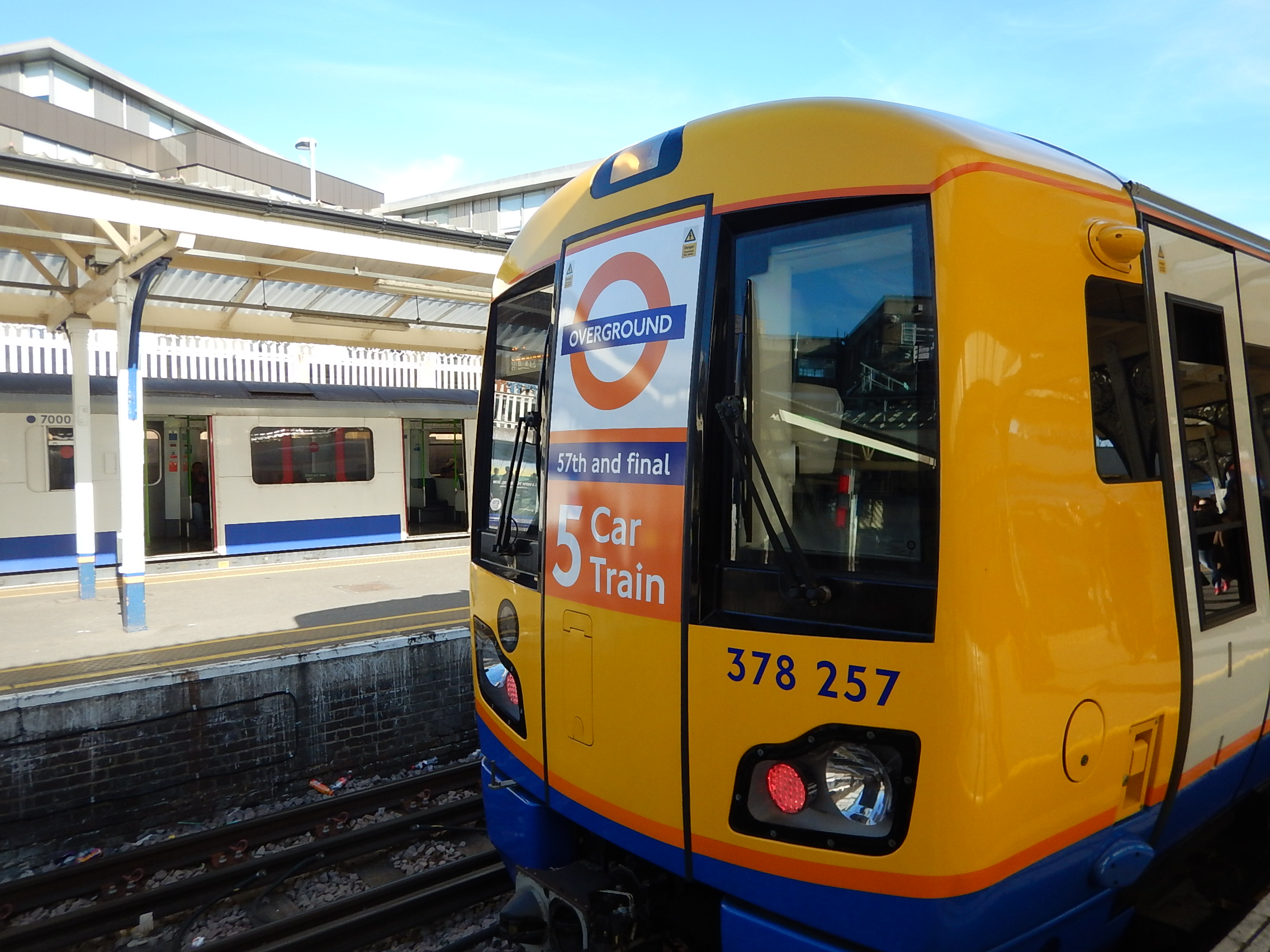
The Last Class 378 Train Has Been Lengthened
According to this article on RailStaff, the trains won’t be going to six cars. This is said.
Six car is not really an option on either the North London Line or particularly the East London Line because of the constraints of the tunnels.
If that is the case, then to get more capacity, they will need an increased frequency and probably more trains. The Wikipedia entry for the Class 710 trains that will be used on other Overground lines says this.
TfL invited expressions of interest for a total of 39 four-car EMUs in April 2014, with 30 required for the Cheshunt and Chingford routes, 8 for the Gospel Oak to Barking, and 1 for the Romford to Upminster. Since then the planned procurement has been increased to 45 four-car EMUs, with the additional 6 units intended for the Watford DC Line. The intention is that the five-car Class 378 trains used on the Watford route will be cascaded back to the North London and East London Lines to allow for strengthened services.
So it looks like the Watford DC Lines will be running different trains, although they will be the same as those on the Gospel Oak to Barking Line. So the GOBlin will be getting dual-voltage trains, so this means that in future an extension to invade South London via Acton and Hounslow is not compromised.
 The Anonymous Widower