Adonis Promises Milk And Honey In The Future, But The North Needs Unblocking Now!
I don’t have much time for Lord Adonis, as I always think that unelected politicians who change sides are a bit like the Vicar of Bray.
And lets face it, he was part of Tony Blair’s gang of idiots, who felt that licking Dubya’s arse and making war in Afghanistan and Iraq was more important than creating proper transport links across the north.
But they were only following the lead set by Harold Wilson, when he cancelled the Picc-Vic Tunnel. Wikipedia says this about how the need for the tunnel has been and is being fulfilled.
In 1992, the Metrolink system opened and linked both stations via tram, negating the requirement for a direct rail connection to an extent. In 2011, the Ordsall Chord was announced; it is an overground railway scheme designed to directly link Manchester Piccadilly and Manchester Victoria in a comparable fashion to Picc-Vic.
Wouldn’t it have been better to dig the tunnel in the first place?
I heard Lord Haskins and Chris Hyomes from Railfuture on Wake Up To Money this morning and they were aggressive in demanding that something happen sooner rather than later.
After my last trip to Huddersfield and writing Welcome To Huddersfield, I can say, that the Class 185 trains are a sick joke inflicted on the North by Tony Blair as Prime Minister and Gordon Brown as Chancellor. The trains are both too short and to few in number.
And then we have Lord Adonis saying on BBC Breakfast, that the line needs to be electrified as soon as possible.
So how long will the misery of the TransPennine routes continue before the line is electrified? 2022 is mentioned!
In my view there are four solutions for acceptable trains across the Pennines.
- Introduce the first bi-mode Class 800 trains on the route.
- Introduce the first bi-mode Class 800 trains on the East Coast to release InterCity 125s for the route.
- Introduce some locomotive-hauled stock.
- Create Class 387 trains with an IPEMU capability, so they could use energy storage to bridge the electrification gaps.
One of these must be implemented before the end of this year.
The first two options are impossible, as the Class 800 trains won’t be ready for passenger service until 2017.
I also think that Option 3 would be unacceptable to passengers, but is probably impossible, as there are no modern diesel locomotives available and probably very few coaches in good condition.
So we’re left with the Class 387 IPEMUs.
- They are modern four car electric trains, with everything passengers expect. Only wi-fi is missing.
- The IPEMU technology was successfully demonstrated in early 2015 using a Class 379 train.
- I rode the demonstrator and was impressed for what that is worth!
- Bombardier have won awards for the technology.
- There are well upwards of twenty four-car trains available or being built, that could be modified.
- There are rumours that IPEMUs could be used on the Great Western.
- They can work in eight or twelve car trains, where platforms allow.
- They can travel for over fifty miles on battery power, after charging on electrified track. So Leeds to Manchester is no problem!
- Liverpool to Newcastle and Edinburgh via Leeds could be served by 110 mph electric trains.
Would a Northern Powerhouse built on battery trains be acceptable to politicians?
In my view, it will have to be, as Derby-built Bombardier Class 387 trains with an IPEMU capability are all we’ve got.
I shall be listening to George Osborne tomorrow!
Electrification Delays On The Great Western Railway Must Be Serious
This article in Rail Magazine is entitled GWR and DfT discuss ‘revised plan’ after electrification delays and it talks about what is to be done to get a decent passenger service running on the Great Western Railway, despite all of the delays to the electrification program.
If you want to know more of the problem this article on the BBC web site from July 2015 is an excellent summary.
- The under-performance of the High Output Plant System, a factory train made up of 23 vehicles, has, according to rail observers, made a big contribution to Network Rail falling at least a year behind schedule.
- The whole electrification project for the Great Western line was really based on the High Output train because of the amount of work it could do so much more quickly,
- Engineering insiders told the BBC that a newly designed wiring system did not match the specification of the holes the Hops train was designed to dig and that a new design of pile-tubes hammered into the ground to house the thousands of electrification masts – went in too deep after ground surveys were missed.
- Even where the Hops train has managed to dig holes, it has damaged existing signalling cables.
- Network Rail is short on experienced engineers and experienced operators – people who know how to run a railway.
- It was decided by the Department for Transport that the new trains will be 26m long per vehicle and our railways are built for 23m long,
I don’t think I’ve ever seen such a badly-designed and executed project in my long years on the dark fringes of project management.
So now it is sucking engineers and resources out of every other electrification project in the UK!
For instance, on my local electrification of the Gospel Oak to Barking Line, nothing much seems to have happened for the last few weeks.
I had to have a quiet chuckle, when I read this last paragraph in the Rail Magazine article.
GWR has tested short-formation High Speed Trains, and these could potentially be used on longer-distance services currently operated by multiple units, such as Cardiff-Portsmouth and Exeter-Penzance. They could also be used on some of the longer branch lines in the South West, such as Par-Newquay and Exeter-Barnstaple, although neither GWR nor the DfT would confirm this. A potential additional order for bi-mode AT300 hybrid trains could also be under consideration.
Terry Miller’s wonderful stop-gap design of the 1970s; the High Speed Train, is coming to the rescue again.
But then very serious problems, need the most serious of solutions!
I’m not running Network Rail and I’m not the Transport Minister, but in my view, it is now time to think extremely radically.
- Electrify as far as possible from London and run Class 387 trains or dependable-but-ugly Class 319 trains where you can.
- Run services to Bedwyn, Newbury, Oxford and the various branches East of Didcot using IPEMU variants of Class 387 trains.
- Replace as many HSTs on the East Coast Main Line as possible with new Class 800/801 trains and deploy Miller’s Masterpieces to the Great Western.
- Build new Class 800 electro diesel trains, instead of Class 801 electric trains and use them on the routes of TransPennine and Hull Trains.
We have been lucky with our train purchases and development.
- Class 800 and Class 801 are identical except for the diesel engines.
- Class 700 trains are being delivered to release Thameslink’s Class 387 and Class 319 trains.
- There are fifty or so Class 387 trains, that could be converted into IPEMUs, which would have a sixty mile range on batteries.
- Bombardier could probably build a few more Class 387 trains, alongside the Aventras.
I think that many places will get different and probably better and bigger trains, but not everyone will get the expected new electric trains.
New Trains On Thameslink
I had breakfast at Kings Cross and then hopped across the city on Thameslink to Blackfriars to go for a walk through the Tate Modern. I came back to Farringdon, as because the East London Line is closed, a bus from Moorgate is the best way to get home.
These were pictures I took of new trains on Thameslink.
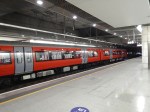
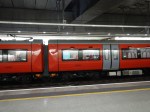
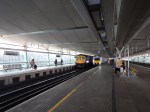
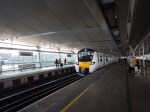
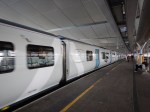
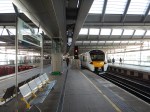
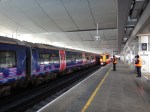
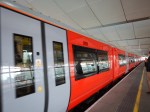

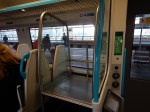
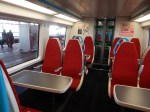
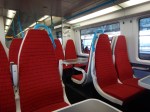
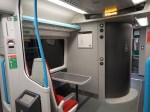
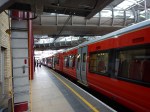
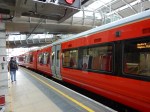

Note the following.
- The red trains with the grey doors are Class 387/2 trains destined for the Gatwick Express later this month.
- The interior shots were all taken in a Class 387/2 trains.
- The white train with the sloping front and the light blue doors, is a new Class 700 train, which will run on Thameslink.
The pictures were taken at St. Pancras International, Blackfriars and Farringdon.
The new Class 387/2 trains had a definite feel of the Class 387/1 trains about them, except they had sizeable luggage racks and possibly more tables.
There are better and more luxurious airport trains in the world, including probably the Class 332 trains of Heathrow Express. But as a train to speed you to the Airport in thirty minutes or so, with plenty of space for you and your luggage, they probably pass the first test by a good margin.
They would be very good on other Airport routes in the UK.
- Routes connecting Manchester Airport to Liverpool, Manchester, Crewe and Blackpool.
- A possible Gatwick Express route from Reading to Ashford International, which I think could happen, if an IPEMU variant were to be developed.
- To and from Airports like Cardiff, Stansted and Southend.
An IPEMU variant could be useful in developing spurs to airports like East Midlands, Luton and Glasgow, which would be built without wires from lines with full electrification. Bombardier has the technology, all they need is the orders.
Would this approach be an affordable way to create the much needed airport link at Glasgow Airport?
- A single-track spur leading from the Inverclyde Line to the Airport to a single platform station would probably have enough capacity for a two or three trains per hour service.
- No electrification would be needed, which would mean that there would be greater flexibility in the route of the line. It might even go in a single-track tunnel under taxiways.
- There would be some modification to the signalling.
- The trains would be bog standard Class 387/2 trains, except for the energy storage.
- Two trains would probably give a two trains per hour service to the airport, as Glasgow Central to Paisley \st. James takes around twenty minutes.
- The trains would just be more trains running between Glasgow and Paisley.
- It would be simpler than a tram-train and require no special rules or modified stations.
- I can’t think of any new regulatory issues, as it will be a train running on a railway.
- There would need to be some staff training.
The overall system would be no more complicated than running the demonstration Class 379 IPEMU on the Harwich branch, which seemed to work so well.
How much would it cost?
The creation of the new line to Ebbw Vale Town station and the single platform station is reported to have cost less than twelve million pounds.
According to this article in Railway Technology, Porterbrook have paid £100million for twenty Class 387 trains, so two trains would cost ten million.
I also think that provision of the track and trains in something like the Glasgow Airport Rail Link, is the sort of project that a company would provide and then lease to the train operator.
No wonder, that Bombardier have won an award for the technology and Porterbrook bought some Class 387 trains on spec.
A Trip To Seaford
This morning, I took a trip to Seaford station on the Seaford Branch in Sussex via Brighton, to see if I could learn more about the East Coastway Line at Brighton.
I took these pictures.
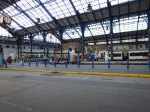
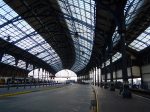

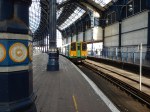
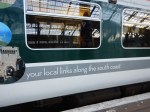
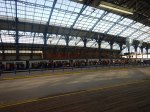


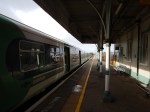

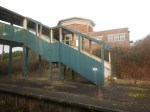

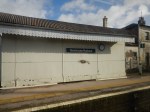



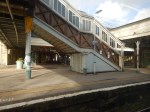

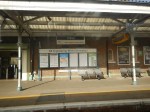
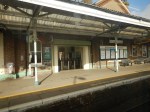

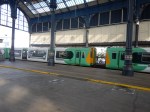
Note.
- The service from Brighton to Seaford is run by 3-car Class 313 trains.
- The Class 313 trains are elderly, but well-maintained and lacking features that passengers expect these days, like wi-fi, information displays, adequate space for bicycles and fully-accessible toilets.
- The train was fairly full on a cold but sunny, Sunday morning around Falmer station, where the University of Sussex and The Amex are located.
- I was surporised at how many people arrived at Brighton on a Thameslink service.
- Lewes station is being given a full upgrade.
- Most other stations are simple affairs, that need some refurbishment.
- It was sad to see the Port of Newhaven so quiet.
- I couldn’t identify the place, where the Wealden Line used to join the East Coastway.
Certainly the route has potential, which will probably be driven by traffic at Falmer station, which has already been upgraded to take 8-car trains.
The trains should be replaced by something like a four-car Class 377 or Class 387, that could run in pairs for busy days at the The Amex.
The question also has to be asked, if the new trains had an IPEMU capability, would it be more affordable to run the Seaford Branch, if the electrification were to be removed.
Will Southern Create A South Coast Express Using IPEMUs?
This post is pure speculation on my part,which I’ve written to illustrate the capabilities of an IPEMU.
What is an IPEMU?
Many rail passengers in the UK, have ridden in one of Bombardier’s fairly ubiquitous Electrostar trains. Here’s a short list of some of the types and the services they run.
- Class 357 trains run services out of Fenchurch Street for c2c.
- Class 375, Class 376 and Class 377 trains running commuter services to the South of London.
- Class 378 trains running on the London Overground.
- Class 379 trains running from Liverpool Street to Stansted Airport and Cambridge.
- Class 387 trains currently running on Thameslink, but perhaps soon on a line near you.
A Class 379 was used to create the IPEMU or Independently Powered Electric Multiple Unit and a year ago, I rode this train in public service between Manningtree and Harwich.
A battery pack had been added to the four-car train, which was charged up, when the train is running on an electrified line; third rail or overhead and the energy can then be used to propel the train on a line without electrification.
I was told by the engineer sitting opposite me,monitoring train performance on a laptop, that this Class 379 IPEMU had the following characteristics.
- A range of upwards of sixty miles on battery power.
- Similar performance on battery or direct power.
- Virtually identical driving experience.
I would also add that the passenger experience was virtually identical.
Network Rail and Bombardier have put a lot of time, effort and money into the IPEMU. They believe, that IPEMUs and their battery power will have the following applications.
- Providing affordable electric services on branch lines or other lines that are difficult to electrify.
- Moving trains around in depots and sidings that have not been electrified.
- Train recovery and diversion, when the power fails.
- Used in conjunction with regenerative braking, IPEMU technology saves electricity.
Obviously, Bombardier very much believe in the technology, as their new train; the Aventra has been designed to use energy storage.
IPEMU is an acronym, that will increasingly be used with trains.
The Class 387 Train
Southern, who operate a lot of services south of London are users of Class 387 trains.
- 29 x Class 387/1 trains running on Thameslink
- 27 x Class 387/2 trains ordered for Gatwick Express.
The Class 387/1 trains will be replaced by Class 700 trains, as they arrive from Germany.
Unfortunately, due to the well-documented problems of Network Rail’s electrification, it looks like a lot of these twenty-nine trains could be put into storage.
I believe that some of these trains will be given an IPEMU capability to be used to provide electric train services on certain lines.
As they are closely related to the Class 379 train used for the prototype, I feel that most of the technical problems have been solved.
Along The South Coast From Southampton to Ashford
The South Coast from Southampton to Ashford is covered by two separate rail routes.
- The East Coastway Line that runs between Brighton and Ashford International stations is only partially electrified and uses two-car diesel Class 171 trains.
- The West Coastway Line that runs between Brighton and Southampton Central stations is fully electrified and uses elderly three-car Class 313 trains, which have a top speed of 75 mph.
If you want to travel between say Hastings and Worthing, you will have to change trains at Brighton.
This usually means a wait of a few minutes and a change of platform.
Any sane person would believe that if a single train could run all the way from Southampton to Ashford, this would be better for many reasons.
- The train company would probably need less trains.
- Passengers wouldn’t have to change trains at Brighton.
- There could probably be a simpler interchange between Coastway and Brighton Main Line services at Brighton station, which might release platform space.
- Both Coastway routes are limited to speeds below 80 mph and are fairly straight, so perhaps with some improvements, faster services could be introduced.
Until recently, the only trains capable of going from Ashford to Southampton would have been diesel multiple units, but as the only part of the route that is not electrified is the Marshlink Line from Ore to Ashford, it would now be possible to run the service using an IPEMU variant of a Class 387 train. The train would charge its on-board batteries between Southampton and Ore and at Ashford and then use battery power to bridge the gap of about thirty miles on the Marshlink Line.
As IPEMUs have a range of sixty miles, then it would seem that there should be few problems in running the trains between Ashford and Ore.
This approach has benefits.
- The Class 387 train is an 110 mph electric train with regenerative braking, so services could be faster.
- GTR has quite a few of the standard Class 387 trains in service, so the company and their drivers probably know them well.
- GTR could say they have removed a number of diesel trains and they are a greener company.
- Network Rail would only have to update the track and signalling of the Marshlink Line for four-car trains and wouldn’t need to electrify any of the route.
Currently, to go from Ashford to Southampton takes three hours forty-five minutes and it is quicker to go via St. Pancras and Waterloo. But with a 110 mph train and no changes, timings must be possible in the region of three hours.
I suspect that with some selected track improvements, a limited-stop service could be a real South Coast Express.
There certainly is some scope and I’ll detail each improvements on the main East and West Coastways separately,
The Marshlink Line
The Marshlink Line is not fully double-tracked, has several level crossings and a low speed limit, which if improved, would probably be welcomed.
The Marshlink Line Action Group web site has an extensive report about improving the line, of which this is an extract, from a report which discusses extending the Class 395 train service from Ashford to Hastings.
The basics of the project are substantially as presented last year with line speeds generally expected to be 60-90 mph from Ashford to Doleham and 40-60 mph onwards to Hastings. But the ongoing big question for NR (and of concern to MLAG from an environmental point of view and compatibility with rolling stock in the surrounding lines) is whether the power source would be third rail (as MLAG would prefer) or overhead. NR acknowledges the difficulty of overhead power along the Marsh with gantries having to be built on (obviously) marsh land and with the strong winds. Whichever, some 30 miles of track would need to be laid but, apparently, only about half a mile of dualled track to the west of Rye.
Incidentally, there has been talk about running Class 395 trains from St. Pancras to Eastbourne via HS1 to Ashford and the Marshlink Line. It would undoubtedly be a fast service, but it has some inherent disadvatages.
- The Marshlink Line would need to be electrified, probably with 25KVAC overhead wires.
- Some people might object to the wires across the marshes?
- Would it need some extra Class 395 trains to be purchased?
- Would it mean that one franchise was encroaching on the territory of another?
On the other hand, using IPEMU trains would simplify the job and mean no electrification would be needed.
However, it would probably be a good idea to make sure that as much dualled track was created, to maintain an efficient service on the line in the future.
The Willingdon Chord And Eastbourne
There has been talk about reinstating the Willingdon Chord, which could shorten the line by making it possible for trains to by-pass Eastbourne, But the locals fear, that Eastbourne would lose services.
However, surely some fast long-distance services along the South Coast could by-pass the town.
A skilled compiler of timetables could probable devise one for Eastbourne, that gave the town, faster and better services to Brighton, Southampton and London.
Lewes And The Wealden Line
It is an aspiration of many to reinstate the Wealden Line, as a new route to London to take pressure off the Brighton Main Line.
In Musical Trains In Sussex, I gave my reasons for believing that the Uckfield Branch could be run using Class 387 IPEMUs.
I also believe that if the Wealden Line is reinsatated that it will use the same type of train.
Obviously, Network Rail and Southern, will make sure that the Wealden Line project doesn’t conflict with a desire to run fast trains along the South Coast.
Hove Station
Hove station is a busy one with up to eight services an hour passing through in both directions, to and from Victoria and Gatwick Airport as well as Brighton.
There were aspirations that in the future to add the London Bridge to Littlehampton via Hove service to Thameslink. The service would use the Cliftonville Curve to access the Brighton Main Line, as it does now.
This would give all stations on the West Coastway Line between Hove and Littlehampton, two trains per hour through to London Bridge and beyond
Except for the Future Developments section in the Wikipedia entry for Hove station, I can’t find any more about this proposal.
The Arundel Chord
One piece of infrastructural that gets mentioned is a chord at Arundel that would connect the West Coastway Line to the Arun Valley Line between Angmering and Ford stations.
If it were to be built, it would create another route between Brighton and Three Bridges using the eastern part of the West Coastway and the Arun Valley Line.
Westward From Littlehampton
My only experience of the western end of the West Coastway line, was missing a train and having to wait an hour on a freezing and deserted Bosham station for the next train.
The service could probably benefit from a rethink.
Brighton
Brighton is the major interchange between the two Coastway services and the Brighton Main Line with its Gatwick Express, Victoria and Thameslink services.
Brighton station certainly needs improvement to cope with the large increase in capacity to the city, that Thameslink and its new Class 700 trains will bring.
Each twelve-car Class 700 train, will have a capacity approaching 1,800 passengers and there will be four of these trains to and from Central London and beyond every hour.
Obviously, the trains won’t be full at Brightpon and not all passengers will be walking to and from the station, so there needs to be better connections to buses and the two Coastway Lines.
At present, it takes a few minutes and a platform change to pass through Brighton if you’re going between services at the station.
- Brighton Main Line, Gatwick Express and Thameslink services.
- East Coastway services
- West Coastway services.
- Great Western Railway services to the West.
The platform layout at Brighton doesn’t look as if it was designed to make train services for passengers and train companies efficient.
So surely, if Coastway services could be linked, so that they came into the station, set down and picked up passengers before going out in the other direction, this would be a more efficient way to organise trains at the station.
It would also make the interchange between Coastway and Brighton Main Line services easier and hopefully, just a walk across a platform.
A reorganised Brighton could probably contribute several minutes to the savings in journey times along the Coastway.
This Google Map shows Brighton station and the two Coastway Lines coming into the station.
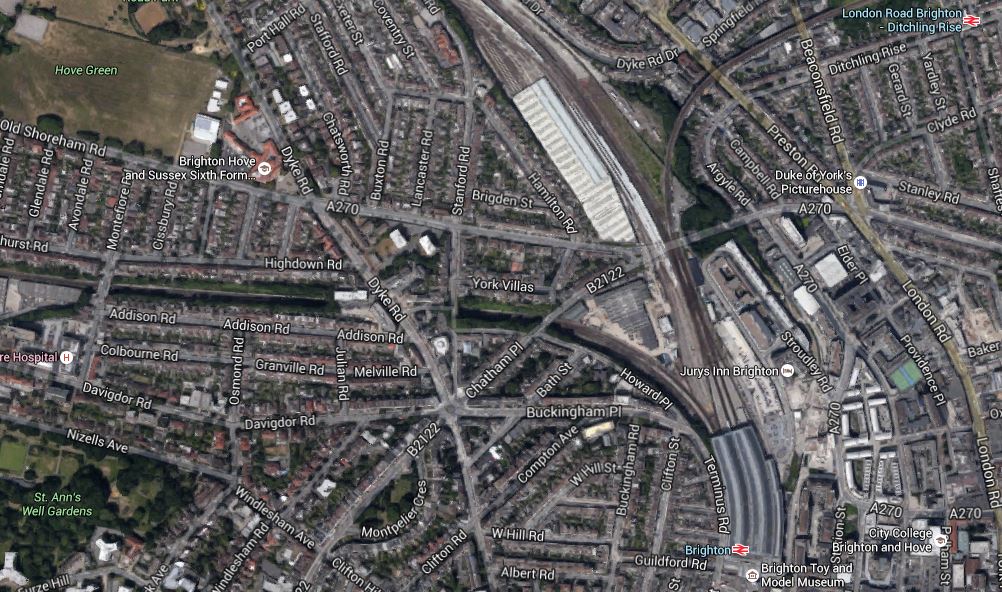
Brighton Station And The Coastways
I don’t think it would be an affordable or even a sensible solution, to combine the two Coastways together north of Brighton station.
The Wivelsfield Alternative
But Network Rail have come up with an alternative solution, so that the two Coastways can be connected together.
Just sixteen kilometres north of Brighton is Wivelsfield station. It is possible to access the East Coastway Line just south of the station at Keymer Junction, which unfortunately is not grade-separated and probably needs to be to improve Eastbourne services from Victoria.
Wikipedia has a section on the future of Wivelsfield station, which says this.
In Autumn 2015 Network Rail released the Sussex Area Route Study, where two options for the proposed grade separation of Keymer Junction are detailed, both of which would transform the station dramatically. Option 1 is the minimal option and creates a new platform 0 on the west side of the station served by a 3rd track from the new flyover line from Lewes. Option 2 is much more ambitious and builds on option 1 by adding an additional 4th platform on the east side of the station as well, served by a 4th track on the line to Lewes. Whilst this would enable each line to the south to have a dedicated platform the primary benefit would be that the existing platforms could be used to turn back trains in either direction as needed without blocking the main lines.
As services can access the West Coastway Line through the Cliftonville Tunnel to Hove, which is a couple of miles north of Brighton station, it would appear that the two Coastways could be connected, with a reverse at Wivelsfield.
The route would be.
- Lewes
- Cooksbridge
- Plumpton
- Wivelsfield
- Burgess Hill
- Preston Park
- Hove
This is not a complete solution, as there would have to be a way to get to Brighton station, by probably changing at Lewes, Wivelsfield or Hove.
A Brighton Metro
In a trip to Brighton, I travelled to Seaford using the East Coastway and the Seaford Branch. Even on a Sunday morning in February, the three-car Class 313 train was pretty full, especially around the University of Sussex at Falmer station.
So could the half-hourly Brighton-Seaford service be extended to the west of the City to perhaps Hove, Littlehampton or even Bognor Regis?
It would surely generate its own traffic across the city, which could help to reduce Brighton’s bad traffic jams. Stations could be.
- Hove
- Brighton
- London Road (Brighton)
- Moulsecoomb
- Falmer
- Lewes
- Southease
- Newhaven Town
- Newhaven Harbour
- Bishopstone
- Seaford
I think if you can sort out Brighton station or create the Wivelsfield alternative, you could run a four trains per hour stopping service across the city for as far as you want.
Perhaps the slower stopping trains would go via Brighton and the semi-fast services would go via Wivelsfield.
It’s a problem, that I suspect Network Rail have thought through fully!
Train Movements At Brighton
The only problem would be that the combined Coastway Line would need to cross the throat of the station, probably in a flat junction.
Say the Joint Coastway Line had the following services at Brighton.
- 2-4 trains per hour between Seaford and Littlehampton/Bognor, that would stop at all stations including Brighton.
- 2-4 trains per hour between Ashford International and Portsmouth Harbour and/or Southampton Central, that would stop at major stations only.
These would come into a platform or platforms on the Eastern side of the station, which would mean any train going to or coming from the West Coastway, would have to cross the Brighton Main Line to London.
The services to and from London after Thameslink is fully opened could be.
- 3 trains per hour to Victoria.
- 4 trains per hour on Thameslink
I’m no signalling expert, but I do feel that much more onerous train movements are coped with in stations like Manchester Piccadilly, Paddington and Waterloo.
Note the four trains per hour frequency on Thameslink (two from Cambridge and two from Bedford) Surely, if Coastway services are four trains per hour, then all services should have a pattern, so journeys like Seaford to Cambridge, involved just a walk across a platform at Brighton.
I’m sure some clever train scheduler can come up with an optimal pattern of changing trains at Brighton, especially if some trains used the alternative route via Wivelsfield.
But my feeling is that as Brighton is such an important station, that all Coastway services must either terminate or stop in the station.
At least there does not appear to be significant freight running on the Coastways.
Capacity At Brighton Station
The Thameslink Program and its Class 700 trains, will probably increase passengers through Brighton station.
Knowing the quality of Network Rail’s passenger transport modelling, I would not bet against Thameslink being so successful between London and Brighton, that additional services have to be added.
As the Thameslink trains will be new and they serve lots of destinations in London and beyond, I think it is a given, that passengers from places like Eastbourne and Worthing, might use Thameslink instead of their local direct route, changing at either Brighton or Gatwick Airport.
Conclusions
Improvement of the Coastways, is just one part of an evolving plan for rail and air services in Kent, Surrey and Sussex.
As there are important lines in the area that are not electrified, I’m certain that IPEMUs will play a part in this development.
After all, the technology works and we will soon have lots of Class 387 trains sitting in sidings.
A Class 700 Train On Test
I took this picture of a Class 700 train just North of Norwood Junction station.
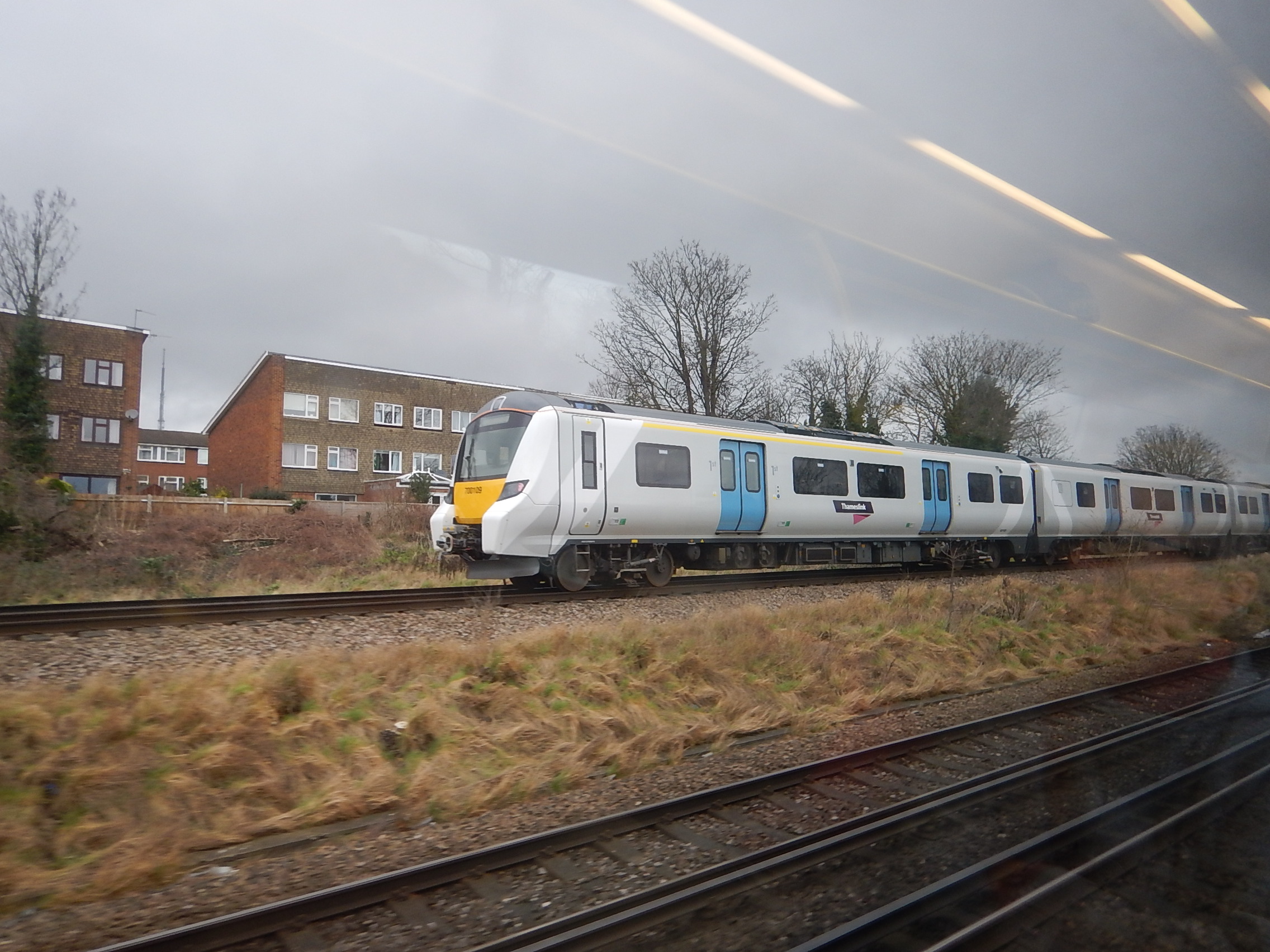
A Class 700 Train On Test
After halting for a minute or so, it turned off towards Crystal Palace.
During the day, I also saw a couple of bright-red Class 387/2 Gatwick Expresses running around. In one case, I felt that it wasn’t just an eight-car formation, but possibly a twelve-car. As I was in a waiting room at East Croydon station, I can’t be sure, but it certainly appeared to be a long train.
According to this page on the Thameslink web site, the Class 700 trains will start to be introduced on the 16th April 2016.
The Thameslink web page also says that the introduction of trains will be completed in June 2018. So give or take a month, that is twenty-five months to introduce sixty eight-car and fifty-five twelve-car trains. So that is a rate of somewhere between four and five trains per month.
At present the Thameslink service is run by three different types of trains.
- Twenty-nine Class 387/1 trains, which are supposed to be going to the Great Western Railway, but can’t as there are no overhead wires.
- Thirty-two Class 377 trains, which could go to Southeastern to improve their services. Clare Perry has promised new trains and these would fit.
- Upwards of fifty Class 319 trains, which I suspect will do what Mark 3 based stock does best and fill in where operators have a shortage of trains. Handsome is as handsome does!
It does appear that as time progresses there will be a number of Class 387 trains, available to provide a quality service.
It’s why I think, thast some will be converted into IPEMUs.
And as GTR, have lots of experience and drivers for Class 387s, it would appear logical that Class 387 IPEMUs would be used to replace the Class 171 trains on the services on the Oxted Line and the Marshlink Line.
Musical Trains In Sussex
This article from Rail Magazine is entitled Class 387/2s enter traffic with GTR.
It says that as Govia Thameslink Railway (GTR) already has Thameslink drivers qualified to drive the trains and the training for drivers on Gatwick Express hasn’t been completed yet, then two of the new Class 387/2 trains for Gatwick Express have started to be used on Thameslink services to replace the ugly Class 319 trains.
The Class 700 trains, start to be delivered this spring on Thameslink and will obviously replace the remaining 319s first. But as numbers increase, what is going to happen to the displaced new Class 387/1 trains, currently running the route with the 319s?
Surely to park them in sidings, until the much-delayed Great Western Electrification is completed will be a scandal.
It is also complicated by the fact that after Bombardier finish the Class 387/2s for Gatwick Express, they are going to build another twenty-eight four-car trains to add to the collection in the sidings.
Unless of course, someone decides that they will be better off earning revenue.
It’s all gone rather quiet on the IPEMU front, except for a presentation in Derby by Network Rail to the IMechE, but surely if the technology works, wouldn’t it be better to fit batteries to some of these trains and use them on services, where IPEMUs are an alternative to full electrification.
GTR could even use a few of the IPEMU variant of the Class 387 train on their Southern franchise to replace their diesel Class 171 trains on the Oxted Line and the Marshlink Line.
Surely, if there was ever a low-risk strategy to try out these innovative IPEMU trains in revenue earning service, it is on these two lines.
- GTR has a lot of experience with running and training drivers for Class 387 trains.
- Both the Oxted and Marshlink lines need an increase in capacity.
- I suspect, that modifications need to be done to allow four-car trains to run on the Oxted Line to Uckfield.
- Four-car trains already run on the Marshlink Line.
- GTR would end up with an all-electric passenger train fleet.
But surely the main reason, is that some modern diesel trains in good condition, would become available for cascade to places, where they are really needed.
I’ve just found this article on the Southern Railway web site, which is entitled Uckfield line platform extensions. It describes how all platforms on the line are being lengthened for twelve-car trains. This is said on timescales.
Permanent works started in September 2015 at some sites and they will start in the New Year for others. The stations will be completed on a staggered basis between February and July 2016.
The article also says that until February 19th, there will be a replacement bus service from Crowborough to Uckfield via Buxted. So it is reasonable to assume that from the end of this month, that at least the last three stations on the line will be able to take longer trains. This surely says that if selective door opening is used on a few stations, then by the May 2016 timetable change, longer trains can be used on the Uckfield branch.
Progress on the platform lengthening seems tro be going well, as I wrote in A Trip To Uckfield.
But where are they going to get serviceable four-car trains, let alone twelve-car ones to run on the Uckfield branch?
Perhaps they are going to use two Class 37 locomotives and a few clapped-out coaches.
My devious mind thinks that running the two Gatwick Express trains on Thameslink, frees up two four-car Class 387 trains, which could go to a convenient depot to be fitted with their batteries and IPEMU capability.
After all, when Bombardier created the Class 379 demonstrator for the technology, they didn’t take the train out of service for more than a few months.
There is also this paragraph in Network Rail’s Route Specification for the South East published in April 2015, in a sub-section called Electification Strategy under Route Specification Sussex. This said.
For routes for which it is unlikely that a case can be made for conventional electrification, there could be an opportunity for alternative solutions to be considered in place of diesel traction, for example battery train operation through an Independently Powered Electric Multiple Unit (IPEMU).
Could Network Rail have decided that now is the time to facilitate IPEMU introduction on the two lines in Sussex, that are not electrified?
Replacing two Class 387/1 trains with two Class 387/2 trains, releases the trains for modification.
At the end of the month, when the Class 387/2 trains are needed to start services on Gatwick Express, the modified Class 387/1 trains can be returned to service and run without using their IPEMU capability.
When the Class 700 trains are approved for Thameslink, the Class 387/1 with the IPEMU capability can go where they are needed.
As Network Rail are spending money on platform lengthening on the Uckfield Branch, I think we’ll be seeing some of the first IPEMUs serving it in the near future.
Politics says they’ll turn up before the First of May!
Class 387 Trains On Track
February 2016’s Modern Railways has some news on the building by Bombardier of Class 387 trains. Three orders are in the pipeline.
- 27 trains for Gatwick Express
- 8 trains for Great Western Railway
- 20 trains for Porterbrook
All are of four cars.
Modern Railways says this.
The 20×4-car units for Porterbrook (for an as-yet unnamed operator) will be built first, followed by the 8×4-car units for Great Western Railway.
I feel that we’ll be seeing Porterbrook’s twenty trains on the UK rail network before the end of 2016 or soon afterwards. You have to admire their business acumen in spotting the need.
The article also goes on to say that Bombardier has created a new facility dedicated to the Class 345 trains, that will be for Crossrail. So their production will not effect production of other trains.
Does this also mean that Bombardier could use the existing production facilities to create more Class 387 trains or build the Class 710 trains for the London Overground?
If it’s the first then there are several operators, who would like a new 110 mph electric multiple unit. If it were a 125 mph train, there would be more takers.
If it’s the second, then I’d be pleased to be riding new Aventras on the Gospel Oak to Barking Line and up and down the Lea Valley Lines.
I think that it is true to say, that judging by the mess, that is the Great Western Electrification, that Great Western Railway will have a few spare Class 387 trains, if any operator had an electrified railway.
I would also love to ask Porterbrook and/or Bombardier how many of the leasing company’s twenty trains will be delivered with an IPEMU capability.
As I’ve said many time before, a 125 mph four-car IPEMU would be some train and would transform rail services in East Anglia, Across the Pennines, on the Midland Main Line and perhaps many other places.
All is starting to be revealed!
Is A Rail War Starting To London’s Airports?
The following sections sum up the rail services to the various London airports.
London City Airport
London City Airport may only be small, but some people use it a lot. I never have, but that’s not for dint of trying. It’s just that if I include all the factors, by which I choose a flight, it hasn’t come out top yet!
London City Airport is only on the Docklands Light Railway, but when Crossrail is open and Bank station has been fully upgraded in 2021, it will be a relatively easy airport through which to travel.
Crossrail passes very close to the Airport and passive provision has been made for a Silvertown station that could be connected to the Airport. At present, the Docklands Light Railway provides enough capacity.
Eurostar
Eurostar is the cuckoo in the nest and should be included, as it will offer rail services to a couple of European Airports.
By the early 2020s, there will be new direct or single-change services to France, Germany, The Netherlands and Switzerland.
I also suspect that one of the first extensions of Crossrail will serve Ebbsfleet International station, so it will give a lot more passengers easy access to European services.
Gatwick Airport
This year the rail links to Gatwick Airport are getting a major upgrade.
- The current unsuitable Class 442 trains used on Gatwick Express, are being replaced with new Class 287/2 trains, designed for the route.
- The current mixture of Thameslink Class 319 and Class 387 trains are being replaced with new higher capacity walk-through Class 700 trains.
- Gatwick Airport station was redeveloped with new buildings and two extra platforms under two years ago.
- Gatwick Airport has now been brought into London’s Oyster and contactless ticketing area. This report in Rail Technology Magazine gives more details.
And increasingly, as the next few years roll on, various developments will or could happen.
- Thameslink and particularly London Bridge station will have greater capacity.
- Thameslink will add many direct trains to new destinations like Cambridge, Stevenage and Peterborough.
- Thameslink and other developments, will mean that nearly all stations East of the Midland Main Line, will have access to Gatwick Airport through with only a single change at a convenient interchange like Bedford, Cambridge, Farringdon, Finsbury Park, Luton, Peterborough or Stevenage.
- The dreadful links to the Thameslink platforms at St. Pancras, from some other lines at Kings Cross and St. Pancras will be improved.
- An IPEMU variant of the Class 387 Gatwick Express could easily reach Reading on an hourly-basis, to give single-change access between Gatwick Airport and Wales and the West.
- The East Coastway and West Coastway routes could be extended to Ashford and Bournemouth respectively, improved with more and faster trains and a better interchange to Gatwick services at Brighton.
But I believe that what would transform train services to Gatwick, is when the whole of the area from Weymouth and Reading in the west to Ramsgate in the East becomes part of London’s Oyster and contactless bank card ticketing area.
Heathrow Airport
Heathrow Airport will have to wait until December 2019 before it gets any more capacity to Central London, in the shape of Crossrail.
Until then, it will have to make do with the current services.
- The very crowded and slow Piccadilly Line.
- The infrequent Heathrow Connect.
- The overpriced and much unloved Heathrow Express.
But there are serious problems.
- The rail lines into the airport are designed to maximise revenue for Heathrow, rather than the convenience of passengers.
- Crossrail hasn’t been designed to serve Terminal 5 directly. How daft is that?
- Links to the West are atrocious and rely on going into London and out again. Gatwick has better links to Reading!
- As I wrote in Heathrow Express And Crossrail, Heathrow and TfL are still arguing about access for Crossrail into Heathrow.
- Boris has indicated that Freedom Passes will be allowed on Crossrail to Heathrow.
- Heathrow Express will be killed by Crossrail, if Heathrow allows it to serve the airport.
- Gatwick, Luton and Stansted Airports will become part of London’s Oyster and contactless bank card ticketing area. Will Heathrow?
- Improved rail links and services at Gatwick, Luton and Stansted Airports will make these airports more attractive for a lot of passengers than Heathrow.
On top of all this, Heathrow needs Crossrail to give the Airport connectivity to large parts of the South East, the West Coast Main Line and HS2.
I think all candidates for the next London Mayor, will be playing the anti-Heathrow card frequently and with immense relish.
In the end Heathrow will have to accept the following.
- The closure of Heathrow Express.
- Full access of Crossrail directly to all terminals, at an agreed price with TfL.
- Oyster and contactless bank card ticketing.
- A rail link from the West, under probably Network Rail, Great Western and TfL control.
If they don’t like it, then I’m sure Gatwick, Luton and Stansted Airports will take up the slack.
Luton Airport
Luton Airport is in some ways the joker in the pack, but also it has plans to expand, as is reported in this article in the Daily Mail, entitled Luton Airport reveals plans for direct rail line that would cut train journey from central London to just 20 minutes.
In Will Bombardier Develop The Ultimate Airport Train, I discussed Luton Airport in detail and came to the conclusion that if Bombardier Class 387/2 trains as used on the Gatwick Express were fitted with an IPEMU capability, they could easily use terminal platforms without electrification in a tunnel under the Airport.
Whether they will or not, I don’t know, but there is scope for very affordable solutions to providing a fast rail link into Central London.
Luton Airport is closer than Gatwick is to Central London, so I would expect that Oyster and contactless bank card ticketing, would not be a problem.
Southend Airport
Southend Airport is the newest of London’s airports. I know it well from my days as a pilot and occasionally use it on trips to the Netherlands on easyJet.
Operationally for airlines, Southend Airport’s location, close to the Essex Coast is ideal, as it is away from other airports and pilots can get planes in to and out of the airport without too much delay. Also, flights coming in from the East have an uncluttered approach, over the sea and marshland. I once came in to the airport on a flight from Schipol and was on the train from Southend Airport station to Central London, within an hour of boarding the flight in The Netherlands.
I can understand why the Roskill Commission recommended that London’s new airport should be built on Maplin Sands.
This airline-friendly location could drive growth at the airport, especially if the airport keeps its reputation for fast passenger handling.
The Airport talks about handling two million passengers by 2020 and I can’t feel that this is unreasonable.
What could help passenger growth is that there is plenty of scope for making rail trips to Southend Airport easier, especially for Southend’s typical traveller with just hand-baggage and perhaps a wheeled case.
At present Southend Airport and Southend Victoria have three services to and from Liverpool Street per hour, which stop at all stations between Shenfield and Southend Victoria and then just Stratford and Liverpool Street. This is a recent upgrade, as Wikipedia says one train stops at all stations.
Journey times are as follows.
- Liverpool Street – 64 minutes – Just four minutes longer than Stansted.
- Stratford – 57 minutes
- Shenfield – 27 minutes
Capacity isn’t a problem as all stations can take eight-car trains.
The airport station is very close to the terminal and is fully step-free. Incoming passengers from the London direction, don’t even have to cross the railway to get to the terminal.
Crossrail and the new East Anglia franchise will certainly have effects, some of which have already happened.
- Between Shenfield and London there will be at least eight high-capacity Crossrail trains per hour.
- Will Crossrail run on a twenty-four hour basis?
- Shenfield will have Oyster and contactless card ticketing. Will this go all the way to Southend Victoria?
- Shenfield will be Freedom Pass territory.
- Will Norwich-in-Ninety improvements mean that times between Shenfield and London are reduced?
- Will more of the longer distance services to East Anglia, stop at Shenfield for interchange with Crossrail?
I suspect that the answer to the two last questions, will be yes. This improved connectivity and reduced journey time, would mean that a lot of places in East London, Essex and East Suffolk, would be just one change at Shenfield away from Southend Airport.
I wouldn’t be surprised to see some upmarket trains between Southend Victoria and Liverpool Street, with a four trains per hour frequency. Partly, this will be driven by the airport, but also by the competition for passengers between the two companies running services to Southend.
Stansted Airport
Stansted Airport is currently served by the adequate but slow Stansted Express.
Stansted Airport is owned and operated by the ambitious Manchester Airports Group and I can’t see them sitting idly by, whilst Gatwick and Luton expand into their market. After all, they have resources that other airports in the South East lack; space and spare capacity on the current runway.
The rail links need improvement and these will or could happen in the next few years.
- The West Anglia Main Line will be developed and given four tracks between at least Broxbourne and Lea Bridge stations, with higher speed limits.
- There will be a higher frequency for Stansted Express trains into Liverpool Street.
- Stansted Express will serve Stratford several times an hour.
- Stansted Airport station will gain a second tunnel and platform.
- There will be an improved service between Stansted and Cambridge.
- Stansted Airport will become part of London’s Oyster and contactless bank card ticketing area.
The service between Cambridge and Stansted is a truly inadequate, single train per hour to and from Birmingham via Peterborough and Leicester.
I believe that when the new East Anglian franchise is awarded, the route north from Stansted will see the greatest improvement. Note that Thameslink will have four trains per hour to Cambridge going through London of which two will go all the way to Gatwick Airport and Brighton.
I wouldn’t be surprised to see two half-hourly services added to the airport.
- Stansted Airport to Peterborough via Cambridge, Cambridge North and Ely.
- Stansted Airport to Norwich via Cambridge, Cambridge North and Ely.
Even if the current Birmingham service was cut back, this would still give four trains per hour between Stansted Airport and one of its most important catchment areas.
Note how Cambridge North station, which serves the North of the City and the Cambridge Science Park, will be given good rail links.
In Better East-West Train Services Across Suffolk, I wrote about a radical idea of Network Rail to create a much improved service between Peterborough and Ipswich, based on a rebuilt Newmarket station.
But who knows, what will actually happen? I don’t!
But whatever happens to the North of Stansted Airport, the rail links to the airport will be much improved by 2020 or so.
Road Improvements
Road improvements will not be numerous, but one new road will effect the use of airports.
If a new Lower Thames Crossing is built, it could make driving to Gatwick, Stansted and Southend Airports easier and some travellers will shun Heathrow.
On the other hand, if it wasn’t built, it might favour other airports.
Conclusion
All of London’s six airports, except probably London City will be seeing large investments in rail infrastructure, stations and trains in the near future.
Heathrow won’t like it, but I think the political consequences for the major parties of a new runway at Heathrow will make it unlikely that Heathrow gets another runway.
But given the rail infrastructure, I suspect that the other airports will take up the increased traffic for several years.
Gatwick, Luton and Stanstead will get very much improved services and I think Southend could become a Luton in the East.
As passengers will get increasingly savvy as to the routes they use, it will be very difficult to predict how the transport pattern to London’s Airports, will look say in 2025.
I’ll finish by listing some ideas I’ve read over the years.
- The Windsor Link Railway to connect Heathrow to the Great Western Main Line via Windsor.
- A Heathrow Hub station at Iver linked to Heathrow.
- Reopening the line from Bishops Stortford to Braintree via Stansted Airport and Dunmow.
- Extending the Chingford Branch past Chingford to Stansted Airport.
- Creating a Southend Metro to connect the two main Southend stations to Southend Airport.
- Extending some Crossrail trains to Southend Victoria.
There’ll be others and some might even be built.
 The Anonymous Widower