Whitehaven Deep Coal Mine Plan Moves Step Closer
The title of this post is the same as that of this article on the BBC.
This is the first three paragraphs.
The first new deep coal mine in the UK for decades has moved a step closer after councillors unanimously backed the plans.
The West Cumbria Mining Company wants to mine next to the site of the former colliery in Whitehaven that shut three decades ago.
The Woodhouse Colliery could create 500 jobs, but objectors have said mining will contribute to global warming.
I am not normally a friend or supporter of coal, but there might be a different agenda behind this mine.
The coal that will be mined at Woodchurch Mine, will not be burnt in a power station or steam engine, as it is being mined for a different purpose. It is high-quality metallurgical coal, Wikipedia says this about metallurgical coal.
Metallurgical coal is a grade of low-ash, low-sulfur and low-phosphorus coal that can be used to produce high grade coke. Coke is an essential fuel and reactant in the blast furnace process for primary steelmaking. The demand for metallurgical coal is highly coupled to the demand for steel. Primary steelmaking companies will often have a division that produces coal for coking, to ensure stable and low-cost supply
Currently, there is a shortage of this product and Europe import several million tonnes a year.
It also appears that the Cumbrian metallurgical coal is of a high quality and low in impurities.
In Wikipedia, there is an entry for the HIsarna ironmaking process.
This process is being developed by the Ultra-Low Carbon Dioxide Steelmaking (ULCOS) consortium, which includes Tata Steel and the Rio Tinto Group. Reduction in carbon-dioxide produced by the process compared to traditional steel-making are claimed to be as high as fifty percent.
This figure does not include carbon-capture to reduce the carbon-dioxide still further.
However, looking at descriptions of the process, I feel that applying carbon-capture to the HIsarna steelmaking process might be a lot easier, than with traditional steelmaking.
If you are producing high quality steel by a process like HIsarna, you want to make sure that you don’t add any impurities from the coal, so you have a premium product.
So is Cumbrian metallurgical coal important to the HIsarna process?
I obviously don’t know and it is not even certain that HIsarna will eventually become a mainstream way of producing high-quality steel.
But you can be assured that there are other companies trying to find the Holy Grail of producing high quality steel with low impurities and without creating masses of carbon-dioxide.
The company or organisation, who cracks this one will make a fortune ethically, as we’ll always need lots of high quality steel.
Conclusion
Mining coal in Cumbria may seem a retrograde step, but it could be central to cutting carbon-dioxide emissions in high-quality steel-making.
I’ll be watching this development with interest.
Cumbrian Coast’s Coal Comeback?
The title of this post is the same as that of an article in Issue 874 of Rail Magazine.
When I saw this article, I thought it was rather surprising, as coal is rather the arch-demon to environmentalists.
But this is not about coal for producing electricity, but metallurgical coal, that will be used in steelmaking.
West Cumbria Mining are proposing the mine and ofn their web site, the following is said.
West Cumbria Mining is investing in developing plans for the creation of a metallurgical coal mine off the coast near Whitehaven in West Cumbria to supply the UK and European steel-making coal market, which currently imports around 45 million tonnes per annum.
I would assume the 45 million tonnes refers to the total of the UK and European markets. S there is certainly a large market to supply, if the price is right.
Woodhouse Colliery
This extract describes how the mine will be created.
Woodhouse Colliery would be created using the access tunnels to old anhydrite workings at the former Sandwith Drift Mine, on the edge of Whitehaven. Until 2004, the site was occupied by the Marchon chemical works.
Studies have determined that sufficient coal reserves could be accessed to sustain mining operations for at least 50 years.
This picture was taken from their web site.
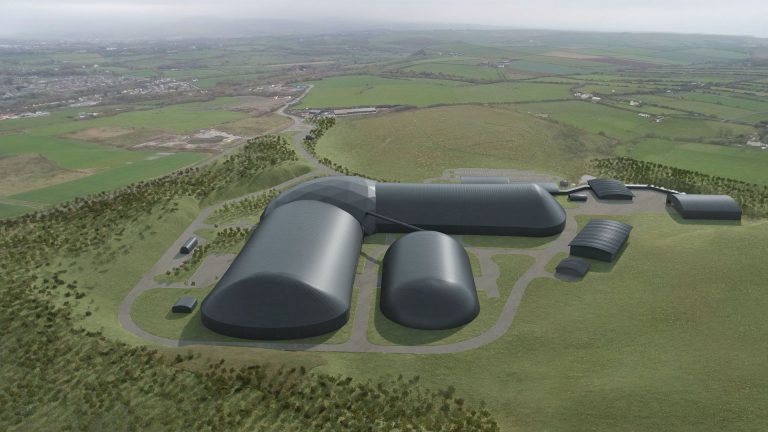
It doesn’t look to be a stereotypical coal mine.
Much of the coal would appear to be mined offshore.
Use Of The Railway
This extract talks about the use of the Cumbrian Coast Line, that passes through Whitehaven.
One of the things that actually makes the project realistic and viable is that we have access to existing infrastructure. There are lots of projects where actually the biggest capital cost is the infrastructure required. We have to remove everything by rail – one: because of the volume of material; but two: we wouldn’t be able to get planning if it was a road solution.
An agreement has been reached with Freightliner to transport the coal to Redcar. With the mine in full production, six trains per day would operate Monday-Friday.
More details about the rail transport are also given.
- There would be a single-track siding for loading.
- The siding would be connected to the mine by a 1.4 mile coal conveyor.
- Everything is covered, so there no dust and gas.
- The loading will be in an acoustically-closed building.
- Trains will have 23 wagons.
- Class 66 or Class 70 locomotives will be used.
It does appear that they are designing most things to a high standard.
These days, if planning permission with conditions is given, the conditions are usually adhered to, as sanctions are now easier to apply through the Courts.
I do have a few thoughts.
Route Between Whitehaven And Redcar
Trains would probably go via Carlisle, Newcastle and Middlesbrough
There would not be much electrification on the route, except for on the East Coast Main Line.
I would estimate that trains would take around three hours between the Woodhouse Colliery and Redcar
Rolling Stock
The article states that the wagons would be a dedicated fleet for the operation.
Surely, they could be designed for fast and quiet operation.
Locomotives
I feel that locomotives that meet the latest European regulations should be used. Class 66 locomotives do not, Class 68 locomotives do!
I also feel that in the next five years or so, more environmentally-friend;y and quieter locomotives will become available.
Improving The Cumbrian Coast Line
The article describes how the Cumbrian Coast Line will be improved if the mine gets Planning Permission.
Conclusion
If we are going to continue to make and use steel in the UK and Europe, it looks like this mine could create wealth in a part of the UK that needs it, without causing too many negatives.
It’s an interesting project.
Germany Agrees To End Reliance On Coal Stations By 2038
The title of this post, is the same as this article on the Guardian.
This is the first two paragraphs.
Germany has agreed to end its reliance on polluting coal power stations by 2038, in a long-awaited decision that will have major ramifications for Europe’s attempts to meet its Paris climate change targets.
The country is the last major bastion of coal-burning in north-western Europe and the dirtiest of fossil fuels still provides nearly 40% of Germany’s power, compared with 5% in the UK, which plans to phase the fuel out entirely by 2025.
Travel across Germany on a train and you see the high chimneys of coal-fired power stations everywhere.
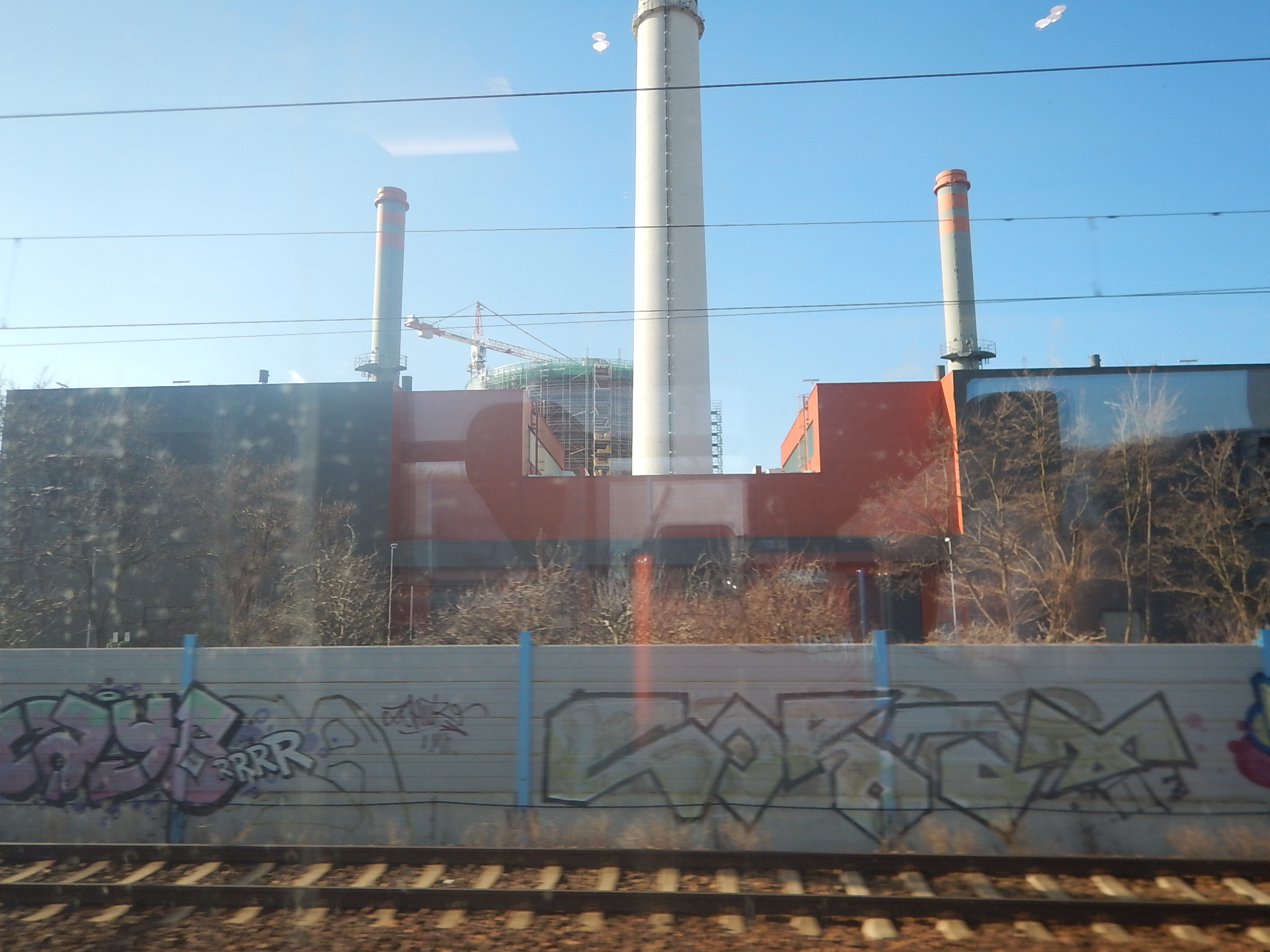
When we can get rid of coal by 2025 and France by 2022, you do wonder why Germany is taking so long.
The Guardian article provides a partial answer in that both the power company; RWE and the trade unions are very much for the continued use of coal.
The Germans are phasing out nuclear power, in response to the Green Party. Surely, unregulated coal-burning is far worse than well-regulated nuclear power?
But then the prevailing winds mean that most of the carbon-dioxide and pollution goes to Poland, who are big coal-burners themselves.
I wonder what would have happened to coal-fired power stations in the UK, if Margaret Thatcher hadn’t taken on the miners and started the run down of the use of coal!
The can would probably have been kicked down the road and we’d probably have coal power stations at German levels.
China-Backed Coal Projects Prompt Climate Change Fears
The title of this post, is the same as that of this article on the BBC.
These are the first three paragraphs.
As levels of greenhouse gases reach a new record, concerns are growing about the role of China in global warming.
For years, the increase in the number of Chinese coal-fired power stations has been criticised.
Now environmental groups say China is also backing dozens of coal projects far beyond its borders.
I have been against coal as a fuel for at least fifty years.
Initially, it was for three reasons.
- Growing up in the 1950s and 1960s, there regularly seemed to be a serious coal-mining disasters like Aberfan and Katowice.
- My health had been seriously affected by London’s domestic coal fires.
- I also believed that nuclear power could supply us with affordable energy.
Also at Liverpool University, I met so many students, who were from mining areas, with horror stories of the health of miners.
Over the last couple of decades, I’ve gone very much against the building of large nuclear power stations, although I do feel that small modular nuclear reactors may have a place.
But the growth of wind and solar power has convinced me that with the addition of energy storage, we can manage without coal.
Obviously, the Chinese and Donald Trump think differently.
It should be noted that we are an island and if sea levels rise we will suffer, whereas China and the United States are large land masses with plenty of places to develop.
Trump and Xi Jinping need to be reeducated.
Britain Powers On Without Coal For Three Days
The title of this post, as the same as that on this article on the BBC.
This is the first paragraph.
Britain has not generated electricity from coal for more than three days – the longest streak since the 1880s.
Let’s hope we keep out our commitment to phase out coal completely by 2025!
An Appropriate Story For Today
On Page 58, The Times has an article entitled Frictionless Flywheels Hold Balance Of Power.
This is the first two paragraphs.
Flywheels will be used to balance supply and demand on Britain’s electricity grid in a £3.5million project that could help the country to cope with more wind and solar power.
Sophisticated flywheels that can store electricity for long periods of time are to be installed next to the University of Sheffield’s battery storage facility at Willenhall near Wolverhampton, in the first project of its kind in the UK.
By using batteries and flywheels together, this makes a responsive battery that can fill in demand and overcome the degradation problems of lithium-ion batteries.
It looks a promising way of creating an affordable and reliable energy storage system.
Who needs coal? Trummkopf obviously does to buy votes!
In the United States, with its massive mountain ranges, it would be better to create construction jobs by creating hydro-based energy storage systems, as we did in the 1970s at Dinorwig and the Americans, themselves did at Bath County Pumped Storage Station a few years later.
To gauge the size of these plants, Bath County has about the same generating capacity as the UK’s largest power station at Drax, with Dinorwig being about 55% of the size.
Bath County and Dinorwig are big bastards, but their main feature, is the ability to pump water to store the energy.
Energy is like money, the best thing to do with excess is to put it in a secure storage facility.
Should We Boycott America Over Trump And Cimate Change?
This article called Paris climate deal: Trump announces US will withdraw, has just appeared on the BBC web site.
I feel strongly that we should all cut our burning of fossil fuels, or at least the high carbon ones like coal.
So what can we do?
I typed “Boycott America Trump climate change” into Google and got a large number of articles posted in the last couple of days.
So I’m certainly not the only one who feels strongly!
So will I be boycotting American goods and services?
I always do to a certain extent, because when it comes to gluten-free foods, a lot of American manufacturers use high strength glucose made from wheat instead of sugar. And I react to it.
So for example, I now no longer eat any Cadbury products!
I also haven’t used a Starbucks for some time, but that’s in protest at their tax affairs.
It’ll be interesting how this one plays out!
After all, there’s quite a few Americans who didn’t vote for Trummkopf and some States appear to be going down the Paris route.
What Should We Do With Old Coal-Fired Power Station Sites?
As I indicated in The Beginning Of A New Era, the way we generate electricity is changing.
Wikipedia has a list of all the active coal-fired power stations in the UK. The section starts like this.
There are currently 9 active coal fired power stations operating in the United Kingdom which have a total generating capacity of 14.4GW. In 2016 three power stations closed at Rugeley, Ferrybridge and Longannet. In November 2015 it was announced by the UK Government that all coal fired power stations would be closed by 2025.
So what should we do with the sites?
This picture shows the power station site at Eugeley
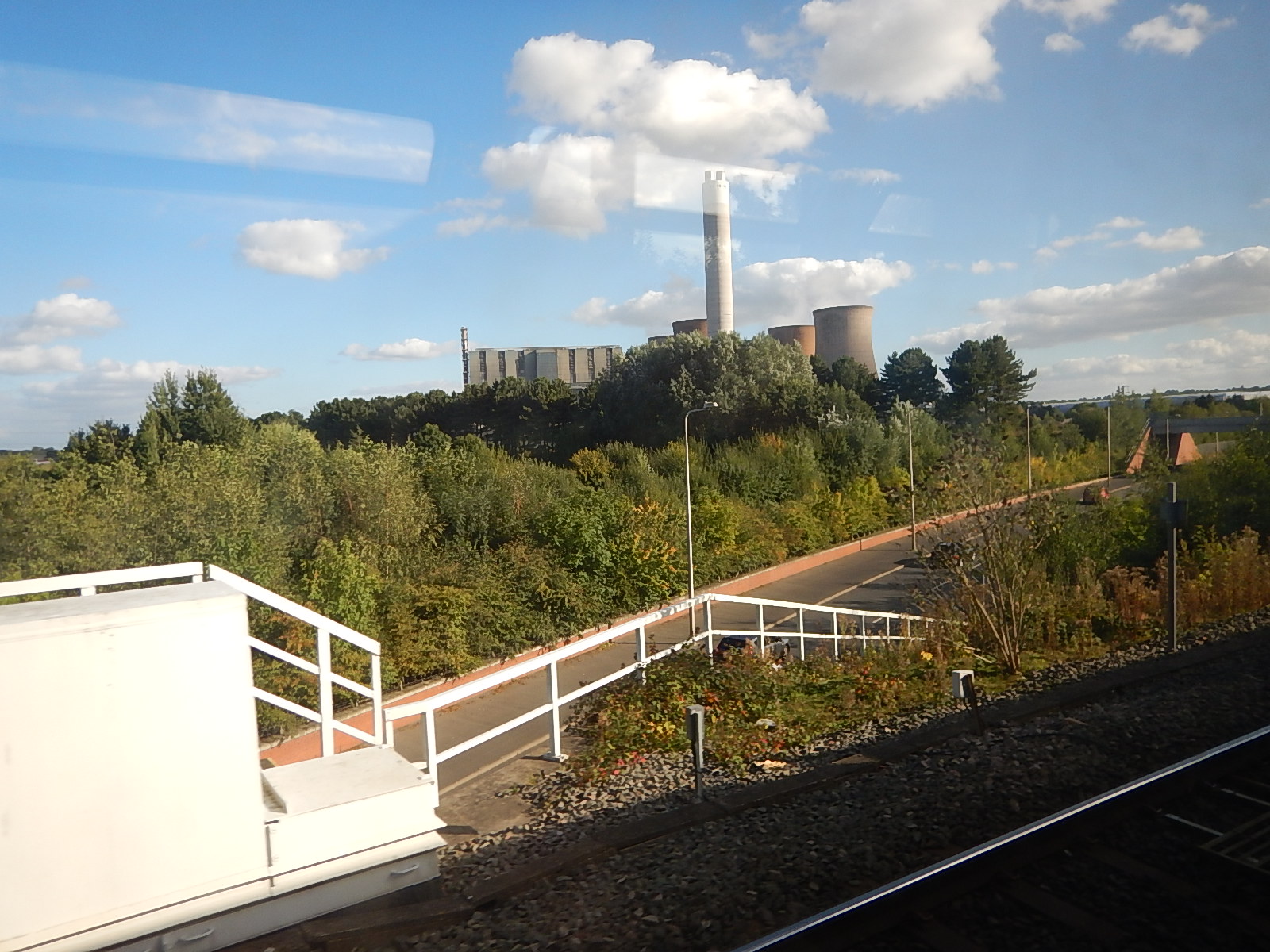
This is a Google Map of the area.
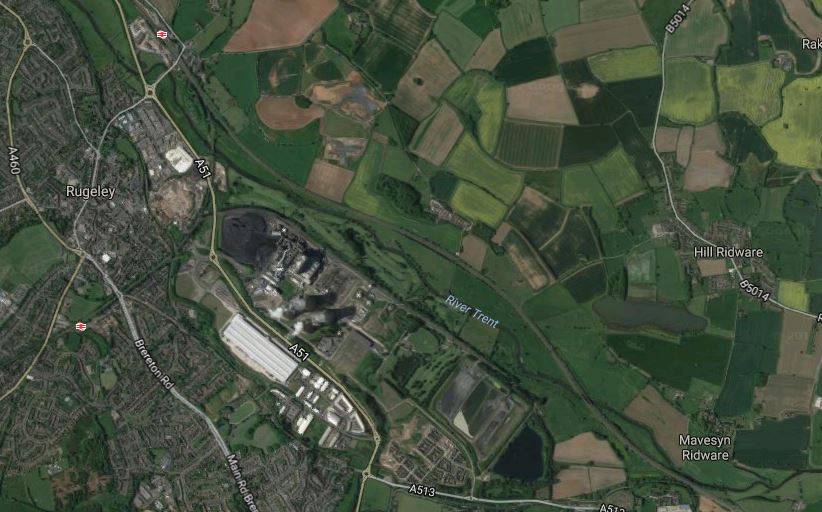
The two stations shown on the map are Rugeley Trent Valley, which is on the the Trent Valley section of the West Coast Main Line and Rugeley Town, which is on the Chase Line.
Many of these large coal-fired power station sites sites are rail connected, so that the coal could be brought in efficiently.
In the June 2017 Edition of Modern Railways there is an article entitled Freight, Not All Doom And Gloom, which makes this plea.
Old coal-fired power stations and Ministry of Fefence sites with ready-made rail links, could make ideal distribution parks, if they are in the right part of the country.
The author is so right, when they say elsewhere in the article, that these rail links must be kept.
Even, if a site was given over to housing, developers will say, that a good rail link to a development, improves their profits.
The article is an interesting read about moving goods by rail and contains a few surprises.
- Moving coal and steel is well down, but to a certain extend, these bulk loads have been replaced by the moving of aggregates.
- The article states forty percent of the materials used in London buildings, are now brought in by rail.
- The supermarket groups and in particular Asda and Tesco are increasingly using rail for long-distance transport.
- Short term Treasury policy sometimes works against long term aims of moving freight from the roads and cutting carbon emissions.
- Quality 1980s passenger stock with wide doors might make excellent parcels carriers.
The last one is an interesting point, as HSTs have only got narrow doors, whereas pallets could be fork-lifted through the wide doors of something like a Class 319 or Class 321 train.
I discuss the small parcel train in detail in The Go-Anywhere Express Parcels And Pallet Carrier.
The Beginning Of The End For Coal In The UK
This article on the BBC is entitled First coal-free day in Britain since Industrial Revolution.
This is opening two paragraphs.
Britain went a full day without using coal to generate electricity for the first time since the Industrial Revolution, the National Grid says.
The energy provider said Friday’s lack of coal usage was a “watershed” moment.
Let’s hope it’s not a long goodbye.
Sadly, whilst there are people like Trummkopf about, it will be a long time before coal burning across the world descreases to a low level.

