Budweiser To Convert Second UK Brewery To Hydrogen
The title of this post, is the same as that of this article on The Engineer.
This is the sub-heading.
Samlesbury Brewery in Lancashire is set to be powered by green hydrogen from 2025, according to new plans announced by owner Budweiser Brewing Group.
This paragraph outlines what will be done at Salmesbury.
The Samlesbury Net Zero project will see the brewery paired with a new hydrogen production facility (HPF), delivered by UK hydrogen services company Protium. Situated adjacent to the brewery, the HPF will provide green hydrogen to meet the thermal demand of the brewing processes, as well as the building’s other heating requirements.
Note.
- A refuelling station for hydrogen-ready HGVs will also be developed as part of the project.
- Heat from the HPF will be recovered and used in Budweiser’s bottling process.
- This is the second project involving Budweiser and Protium, after one at Magor in South Wales.
- Beers produced at the facility include Budweiser, Stella Artois and Corona.
I may have had the odd bottle of Corona in the States, but I’ve generally drunk real ale only since, I started having halves of Adnams with my father at the age of thirteen.
Now, because I’m on Warfarin, I more or less exclusively drink zero-alcohol beers, most of which is Adnams, straight from the brewery.
I’ve yet to find any beer which is less than 0.5 % alcohol, has contained enough gluten to have an effect on my gut.
I have discussed this with experienced brewers and they are not surprised, as the brewing process for zero-alcohol beers doesn’t use much barley.
Conclusion
We need more integrated projects like this, that both decarbonise industrial processes and provide filling stations for hydrogen-powered vehicles.
The Luck Of The Genes
There’s an article in The Times, which is entitled When It Comes To Success, Luck Can Trump Intelligence.
It got me thinking about my life.
I have been pretty successful in life, and I put it down to winning the gene lottery, with a part-Jewish father and a part-Huguenot mother, who taught me hard work and everything they knew. So were my genes forged by religious persecution in the harsh conditions of the ghettoes of Europe?
But luck has always played a great part in my success. On the way, three or four successful men have chosen me for projects and I’ve repaid them by succeeding. I’ve been at the heart of the creation of two world-changing companies.
But the luck turned bad, a dozen years ago. My wife and our youngest son died from cancer and I had a serious stroke.
But the genetic lottery of being coeliac and therefore having B12 injections, has meant, I’ve made a good recovery from the stroke. The B12 injections is a stroke recovery method from the States, but is considered quackery over here. I believe it saved my life.
And then during the pandemic, those coeliac genes and the gluten-free diet I need for health, seem to have protected me from a severe dose of the covids. I’ve yet to find a fellow coeliac, who has had one either. Scientific research from Italy and Sweden, is also backing up my observations.
Lady luck has smiled on me. Or does the devil, look after her own?
Nightmare On The Buses
The title of this post, is not the title of a horror remake of the popular 1970s-sitcom’ On The Buses, but a description of my journeys on a 141 bus today.
Until, last Friday, I had two buses; the 21 and 141 to take between my house and Moorgate, which is an important destination for me.
- There is a large Marks and Spencer food store there, where I regularly buy the gluten-free food, I must have as a coeliac.
- There is a LEON there, where I regularly have my gluten-free breakfast.
- Moorgate station is a good transport interchange from which I regularly start journeys over London.
But now there is only one bus; the 141.
In November 2021, I wrote The Great Bus Robbery, where I said this.
What is TfL’s latest crime?
The 21 and 271 buses are going to be combined into a new route between Lewisham and Highgate, which will go nowhere near the Balls Pond Road.
So we’ll just have the one bus route to the City of London.
On past form, if TfL say they will increase the frequency, I wouldn’t believe them.
This was my conclusion.
We will need the 21 bus to provide us with a route to Crossrail, as the 141 buses will be full.
The 21 bus is needed where it is and mustn’t be stolen.
Note that Crossrail is now called the Elizabeth Line.
Today, I made three journeys between my house and Moorgate station and this is what happened.
Journey 1 – Southbound
I arrived at the bus stop and after five minutes a 141 bus arrived.
But it was full and didn’t open the door to let any of the waiting six passengers board.
After another three minutes, another 141 bus arrived and we squeezed on.
But there wasn’t any seats left and I stood all the way to Moorgate.
Journey 2 – Northbound
I only had my breakfast and as I had things to do at home, I returned fairly quickly after finishing my breakfast.
Partly, this was also because a 141 bus turned up with some seats available.
But it was a lot closer to capacity, than Northbound buses at about the same time last week.
Journey 3 – Northbound
My third journey started at about four in the afternoon, after I’d been out to take some pictures and buy a few food items in Marks and Spencer.
I had to wait seven minutes for a 141 bus and as there was a 76 bus a couple of minutes in front of it, I took that, with the intention of changing halfway.
I was able to get a seat.
In the end, the 76 bus got stuck in traffic and I walked to my intended change stop and waited there for the 141 bus, which was without a seat, so I stood for three stops to home.
It was one of the slowest journeys, I’d had between my house and Moorgate station.
Day 2 – February 7th – 2023
I arrived at the bus stop and found a lady, who had been waiting for an hour-and-a-quarter.
I had no problem coming home, as I went to Liverpool during the day and got a taxi back from Euston.
Day 3 – February 8th – 2023
Perhaps, they’d heard our pleas, but a bus turned up after a couple of minutes with plenty of spare space.
I even got a seat.
Going home, at about 10, there wasn’t a spare seat.
Revenue per bus, is certainly rising.
Conclusion
On the evidence of the first three day, it appears that there is not enough capacity without the 21 bus.
Coeliacs And Migraines
Yesterday, I watched BBC Morning Live about migraines.
I used to suffer from migraine-like symptoms, especially, if I was in a room with small tungsten downlights. One real tennis court at Cambridge caused them and the other didn’t, as the lights were different.
In 1997, I was diagnosed as a coeliac and went gluten-free.
I’ve not had the symptoms since!
I also stopped nail-biting, which I’d done since I was about five. Incidentally, I’ve had others tell me, they stopped nail-biting after being diagnosed as a coeliac and going gluten-free.
On the program, the doctor has just said that women have a 1-in-5 chance of having a migraine, whereas with men it’s 1-in-15.
The NHS web site says this about who’s affected by coeliac disease.
Coeliac disease is a condition that affects at least 1 in every 100 people in the UK.
But some experts think this may be underestimated because milder cases may go undiagnosed or be misdiagnosed as other digestive conditions, such as irritable bowel syndrome (IBS).
Reported cases of coeliac disease are around 3 times higher in women than men.
Now there’s a thing!
Should Those With Long Covid Be Checked For Coeliac Disease?
One of my Google Alerts picked up this interesting page on the British Medical Journal.
In response to this paper on the journal, which was entitled Long Covid—An Update For Primary Care, a retired GP named Andrew Brown had said this.
The update reminds us that alternative diagnoses should be considered in patients presenting with long covid symptoms. I suggest that screening for coeliac disease should be added to the list of conditions to look for. Coeliac disease occurs in more than 1% of the population, with many more cases undiagnosed. Typical symptoms of fatigue and GI problems are the similar to those of long covid.
As a non-medical person, I would agree, as after the Asian flu of 1057-58, I was off school for a long time with long covid-like symptoms and my excellent GP; Dr. Egerton White was very worried.
But at the time, it is now known, I was an undiagnosed coeliac.
So was my coeliac disease meaning that I couldn’t fight the flu?
I cover the link between coeliac disease and long covid in more detail in Covid Leaves Wave Of Wearied Souls In Pandemic’s Wake.
High Risk Of Coeliac Disease In Punjabis. Epidemiological Study In The South Asian And European Populations Of Leicestershire
The title of this post, is the same as that of this peer-reviewed paper on PubMed.gov.
This is the abstract of the paper.
The purpose of this study was to measure the incidence of coeliac disease in different ethnic communities and investigate the hypothesis that the incidence is decreasing in most European countries and the role incomplete retrieval of data may play. In a retrospective study of histologically confirmed cases of coeliac disease between 1975 and 1989 in the City of Leicester, 106 patients with coeliac disease were identified. Of these 86 were European and 20 Asian. The overall incidence of coeliac disease in Europeans was 2.5/10(5)/year (95% CI 2-3.2), in Gujaratis 0.9/10(5)/year (95% CI 0.4-1.8), and in Punjabis 6.9 (95% CI 3.2-12.3). These differences were independent of religious belief. The relative risk to Punjabis compared with Europeans is 2.9 (95% CI 1.5-5.3; chi 2 = 12.5, p < 0.01) and to Gujaratis 8.1 (95% CI 3-22.4; chi 2 = 25; p < 0.001). Gujaratis were at 0.4 risk of Europeans (90% CI 0.2-0.8; chi 2 = 6.7; p < 0.01). The incidence in the urban populations of Leicester was 6/10(5)/year (95% CI 1.3-1.9) which was significantly lower than the 3.2/10(5)/year (95% CI 2.7-3.8; chi 2 = 5.6; p < 0.001) in surrounding rural areas. This study shows that the incidence of coeliac disease in Punjabis (Sikhs, Hindus and Muslims) is 8 times higher than in Gujaratis (Hindus and Muslims) and 4 times higher than in Europeans in Leicester.
I find the last sentence in particular very significant.
I’m no medic, but I think it is reasonable to assume, that in a particular community for every diagnosed coeliac, there will be several undiagnosed coeliacs out there.
In this overview of coeliac disease on the NHS web site, this is said about the incidence of coeliac disease.
Coeliac disease is a condition that affects at least 1 in every 100 people in the UK.
But some experts think this may be underestimated because milder cases may go undiagnosed or be misdiagnosed as other digestive conditions, such as irritable bowel syndrome (IBS).
Reported cases of coeliac disease are around 3 times higher in women than men.
The one-in-100 figure is often used in web pages in European countries or Australia, Canada and the United States, so I’ll go along with that.
So does that mean that Punjabis living in Leicester, have a one-in-twenty-five likelihood of being coeliac?
Whether you have been diagnosed though, is a matter of pure luck.
I had been having gut problems for years and then one Autumn, I didn’t see my GP, but a very elderly locum, who as I had recently had my fiftieth birthday, gave me a present of my first blood test.
It turned out my B12 levels were very low and after several months of B12 injections, which made little difference to my B12, my GP decided to send me to a consultant at Addenbrooke’s Hospital in Cambridge.
My appointment was on a Monday morning and consultant took about ten minutes to ask a few questions, after which he said they would take a few bloods.
On the Wednesday morning, I received a letter that said, that I was probably suffering from coeliac disease and this would be confirmed by endoscopy.
Was I diagnosed solely by analysis of my blood? This was in 1997, which is after the date of the Leicester study.
Two endoscopies without sedative or anaesthetic were performed and I was confirmed as coeliac.
The first was performed by Dr. Richard Hardwick and the second by Dr. Rebecca Fitzgerald.
Both doctors feature in this story on the Cambridge University Hospitals web site, which is entitled Familial Gastric Cancer – Case Study.
My problems have been minor compared to the two sisters in the story.
My luck had been good and I recommend that everyone who feels they could be coeliac should get themselves tested.
Cases Of Covid-19 In Leicestershire
This article on the Leicester Mercury is entitled 11 Areas Of Leicestershire Have Among Worst Infection Rates in the UK.
In Coeliac Disease: Can We Avert The Impending Epidemic In India?, I started like this.
The title of this post, is the same as that of this article on the Indian Journal Of Research Medicine.
With the high levels of COVID-19 in Leicester and an Indian population who make up 28.3 % of the population of the city, I was searching the internet to see if there was any connection between those of Indian heritage and coeliac disease.
I know you should not try to prove a theory. But as a coeliac, I’m very interested to see how the millions of diagnosed coeliacs on a gluten-free diet like me, are faring in this pandemic.
I then talk about some extracts from the Indian research.
In a section entitled, which is entitled All Wheats Are Not Equal, I say this.
The other dimension to this problem is that not all wheat is alike when it comes to inducing celiac disease. The ancient or diploid wheats (e.g. Triticum monococcum) are poorly antigenic, while the modern hexaploid wheats e.g. Triticum aestivum) have highly antigenic glutens, more capable of inducing celiac disease in India, for centuries, grew diploid and later tetraploid wheat which is less antigenic, while hexaploid wheat used in making bread is recently introduced. Thus a change back to older varieties of wheat may have public health consequences.
So did all these factors come together to create the high levels of Covid-19 in Leicestershire?
Conclusion
I am getting bored with saying this. More research needs to be done!
Why A Lucky Few May Help The Rest Of Us Beat Disease
The title of this post, is the same as that of this article in The Times.
This is the sub-title.
A British biotech firm believes patients who defy odds could hold the key in their blood.
These three paragraphs introduce the article.
Patient 82 should be dead. At the age of 63 he was diagnosed with pancreatic cancer. In most cases, he would not have lasted a year. But seven years on, patient 82 is alive. Not merely alive — thriving.
He enjoys gardening. He likes seeing his grandchildren. He enjoys life.
How? The answer, a British biotech company believes, could lie in his blood. Now, with the help of dozens of other anonymous patients, all of whom have defied their cancer prognoses, they hope to find it.
Note, that the company is Alchemab Therapeutics.
The article got me thinking about myself.
I belong to a group of people, who are twenty-five percent less likely to suffer from cancer according to peer-reviewed research at Nottingham University.
I am coeliac and adhere to a strict gluten-free diet.
There may be other benefits too!
I have not had a serious dose of the covids, although I may have had a very mild case at the beginning of 2020 after I shared a train with a large number of exuberant Chinese students, who had recently arrived at Manchester Airport and were going to their new University across the Pennines.
I have also since found at least another seventy coeliacs, who have avoided serious doses of the covids.
Research From The University Of Padua
This paper on the US National Library of Medicine, which is from the University of Padua in Italy.
The University followed a group of 138 patients with coeliac disease, who had been on a gluten-free diet for at least six years, through the first wave of the Covid-19 pandemic in Padua.
This sentence, sums up the study.
In this analysis we report a real life “snapshot” of a cohort of CeD patients during the SARS-CoV-2 outbreak in Italy, all followed in one tertiary centre in a red area of Northern Italy. Our data show, in accordance with Emmi et al., the absolute absence of COVID-19 diagnosis in our population, although 18 subjects experienced flu-like symptoms with only one having undergone naso-pharyngeal swab.
It says that no test subject caught Covid-19, in an admittedly smallish number of patients.
But it reinforces my call for more research into whether if you are a diagnosed coeliac on a long-term gluten-free diet, you have an immune system, that gives you a degree of protection from the Covids.
The Times article mentions the immune system.
I believe my immune system to be strong after the reaction I had to the Astra Zeneca vaccine. I didn’t feel well to say the least after my Astra Zeneca vaccine and my GP and other doctors felt that it could be due to my immune system, thinking that the chimpanzee virus-based vaccine was a danger and attacking it.
Significantly, I had no reaction to the second dose. So had my immune system recognised the vaccine as a friend not a foe?
My son, who my late wife was sure was an undiagnosed coeliac, died of pancreatic cancer at just 37.
How did my late wife know? Don’t question her intuition and also she felt that my son and myself felt the same to her touch.
It should be noted that my son’s daughter was born with a Congenital hernia of the Diaphragm. Congenital defects can happen to people, who have a coeliac father.
At the age of 20, my granddaughter is fine now, after heroic surgery at the Royal London Hospital, at just a few days old.
Why Don’t I Feel The Cold?
It’s been cold today in London, but I didn’t really feel it.
100,000 Newborn Babies Set To Have Their DNA Fully Decoded
The title of this post, is the same as that of this article on the FT.
This sub-heading gives a few more details.
Genomics England programme aims to extend the number of treatable conditions detected to about 200.
I am coeliac and I do wish, I had been diagnosed at birth.
But more importantly, my youngest son, who would have been fifty this year, might still be here.
He was probably coeliac and worked as a sound engineer in the music business.
He lived the rock-and-roll lifestyle on a diet of ciggies, Subways and high strength cannabis.
He probably had an immune system, with all the strength of a plastic colander.
Consequently, he died at 37 of pancreatic cancer.
My First Christmas Snack Supper Of 2022
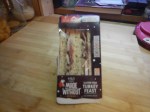
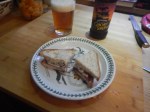
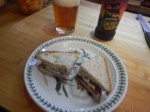
I saw the first of Marks & Spencer’s gluten-free Turkey Feast Christmas sandwiches in their Finsbury Pavement store today.

Note.
- The only allergens in the sandwich are egg and mustard.
- The cranberry sauce is real, but there appear ti be not enough cranberries to affect my Warfarin-controlled INR.
- Although the Adnams Ghost Ship 0.5 % is labelled as containing gluten, it seems to have no adverse effect on my body.
- I have discussed this with the brewer and they have told me, that there is so little barley in each bottle, that some might find the beer appears to be gluten-free.
I do think it the best humble sandwich, I’ve ever tasted.
 The Anonymous Widower