Medical Misdiagnosis
According to Professor Graham Neale at Imperial College, about 15% of conditions are misdiagnosed by the NHS. 15% is not one in six as the Times states. It’s actually nearer one in seven!
I heard him on Radio 5 last night and he was saying that this is one of the biggest problems facing health systems around the world.
Too right it is!
Let’s assume that we can cut this level by ten percent. On a straight economic case, it should cut the health care bill by at least one percent. So getting to grips with this is a major challenge that will bring enormous benefits.
The Times talks of one possible IT-based solution.
The NHS in Scotland has launched a pilot project where computer software with a diagnosis checklist is installed in GP surgeries to prevent errors. The programme, involving 25 GP surgeries, uses a commercial company called Bluebay, that gives doctors access to written information on how best to treat certain conditions.
I must admit, that I do have a special interest and knowledge of misdiagnosis. As I am a coeliac, and moderate a group on the Internet about it, I’ve come across quite a few who have been misdiagnosed for years.
But then you can see the problem, if like me you have bad skin, joint pains, severe dandruff, gallstones, mild depression and migraines, would you have thought that the problem was a gluten-intolerance?
The other problem is that there is no record of diagnosis. To me as someone who analyses data for a living, it is a goldmine, that could give a rich vein of results. Doctors always state reasons why this should not happen. But then pilots have had an anonymous reporting system for years. No-one ever complains about that!
We do not need major changes to get a decent increase in efficiency. We just need doctors and other health professionals to make the best use of the information that could be readily available.
And judging what I said earlier on saying sorry, they could learn from that too!
Norman Borlaug
I’d never heard of Norman Baulaug until yesterday. But as his obituary in the Times today stated.
Norman Borlaug has, in the opinion of many experts, saved more human lives than any other individual in history. He was the grandfather of the “Green Revolution” in which, between 1961 and 1980, wheat crop yields doubled, tripled and sometimes quadrupled around the world. His experiments with hybrid wheat strains and nitrogenous fertiliser created strains of the staple food impervious to pests, bad weather and poor soil, enabling the world to support a far greater human population than many thought possible after the Second World War. Yet his methods and message fell out of favour, to the detriment of millions — especially in Africa.
Read the full obituary and you get a flavour of someone who was not only a great scientist, but someone who was a deep thinker. He warned against population growth and felt that his advanced crops would only give a breathing space.
But it still did not prevent others from rubbishing his achievements.
Therein lies the rub. Some of his methods of using lots of fertiliser may well be challenged, but we all should agree with his policy of growing crops on the productive land. Surely, this should leave more land for other more idealistic uses. He even signed an agreement with one of founders of Greenpeace on this.
But one paragraph in the obituary is this.
Others followed his example, and India’s wheat crop increased from 12 million tonnes in 1965 to 17 million in 1967. That year Pakistan, a country dependent on wheat imports, imported 42,000 tonnes of seeds. It was self-sufficient in seed stocks 12 months later.
It just shows how if you are more efficient, things can a lot better.
If I have a gripe with him personally, it is that the greater part of his work was with wheat! I can’t eat it or wheat products because I’m a coeliac.
But as I repeat many times. It will not be politicians who get us out of the mess that they have created, but the scientists and engineers. We need a lot more like Norman Borlaug.
Cornflour
My mother was a traditional English cook, so when she made a sauce, she didn’t use flour. She used cornflour. Often it was Brown and Polson. As it was gluten-free, this was actually good for me and probably helps to prove the theory I have that good proper cooking is actually better for you. Flour is a cheap way of putting bulk into ready made and processed food.
There has been a discussion on the UK-Coeliac group about cornflour and corn in general.
This illustrates the differences between English all over the world.
Farmers in the UK and probably a lot of other places, use corn as a general term for any cereal, including wheat and barley. They call maize, maize. Whereas in the US, maize is corn.
All confusing. Truly we’re all dvided by a common language.
To make matters worse, according Wikipedia, cornflour in Australia is made from wheat. The article also talks about cornstarch, the name used for cornflour in the US.
It all makes me, want to do more cooking from scratch.
Thunder Thighs Are Good
That is the message being posted on the news this morning, but it is not quite that if you read the news report.
I heard it that if your thighs were less than 60 cm. then this was bad for your heart. It’s actually, if your thighs are less than 55 cm., then this is true. Here’s what the report says.
The study looked at more than 2800 men and women with an average age of around 50.
It found that the risk of heart disease more than doubled for both men and women who had a thigh circumference of less than 55 centimetres.
Those participants with thighs between 55 and 60 centimetres received a protective effect against heart disease, the study reports.
But that protective effect reduced for people with thighs above 60 centimetres in circumference.
So because my thighs are only 48 cm. (19 in.) does that put me at risk? Possibly not, as my waist is only 75 cm. (30 in.)?
Probably not, if I read the next bit.
Associate Professor David Cameron-Smith, of Deakin University in Melbourne, says this is very powerful research.
He says a growing body of research is showing the increased risk of heart disease associated with living a sedentary lifestyle.
According to Cameron-Smith, thigh circumference is a broad indicator of physical activity and muscle mass is related to how much exercise you do.
I don’t live that sort of lifestyle all the time. In fact when my fitness was last checked a few months ago, it was probably that of a man ten years younger than me. It wasn’t always so and has improved over the last few years since I was diagnosed as a coeliac and have gone on a gluten free diet.
I also get a lot of exercise trying to find good clothes that fit properly.
Hospital Food Worse Than Prison Food
A report today from Professor John Edwards at Bournemouth University has said that hospital food is worse than prison food.
Here’s the e-mail I sent to the BBC.
Luckily, I’ve not been into hospital overnight, but the Professor’s research bears out the experiences of my relatives and friends.
I also moderate a list on the Internet for coeliacs, who need a gluten-free diet. Some of the experiences are not good at all, with it seems kitchens unable to provide the correct diet.
The last bit worries me.
Coggeshall
Essex has a bad reputation as a place inhabited by loose women in pelmets and white stilettos and men with large beer-fed guts in shell suits. This may be the image, which is also fuelled by lots of Essex girl jokes. But are the people of Essex feeding this image to keep us foreigners out and save the best bits for themselves?
Last night I went for dinner at Baumanns Brasserie in Coggeshall. Note that it doesn’t have an apostrophe!
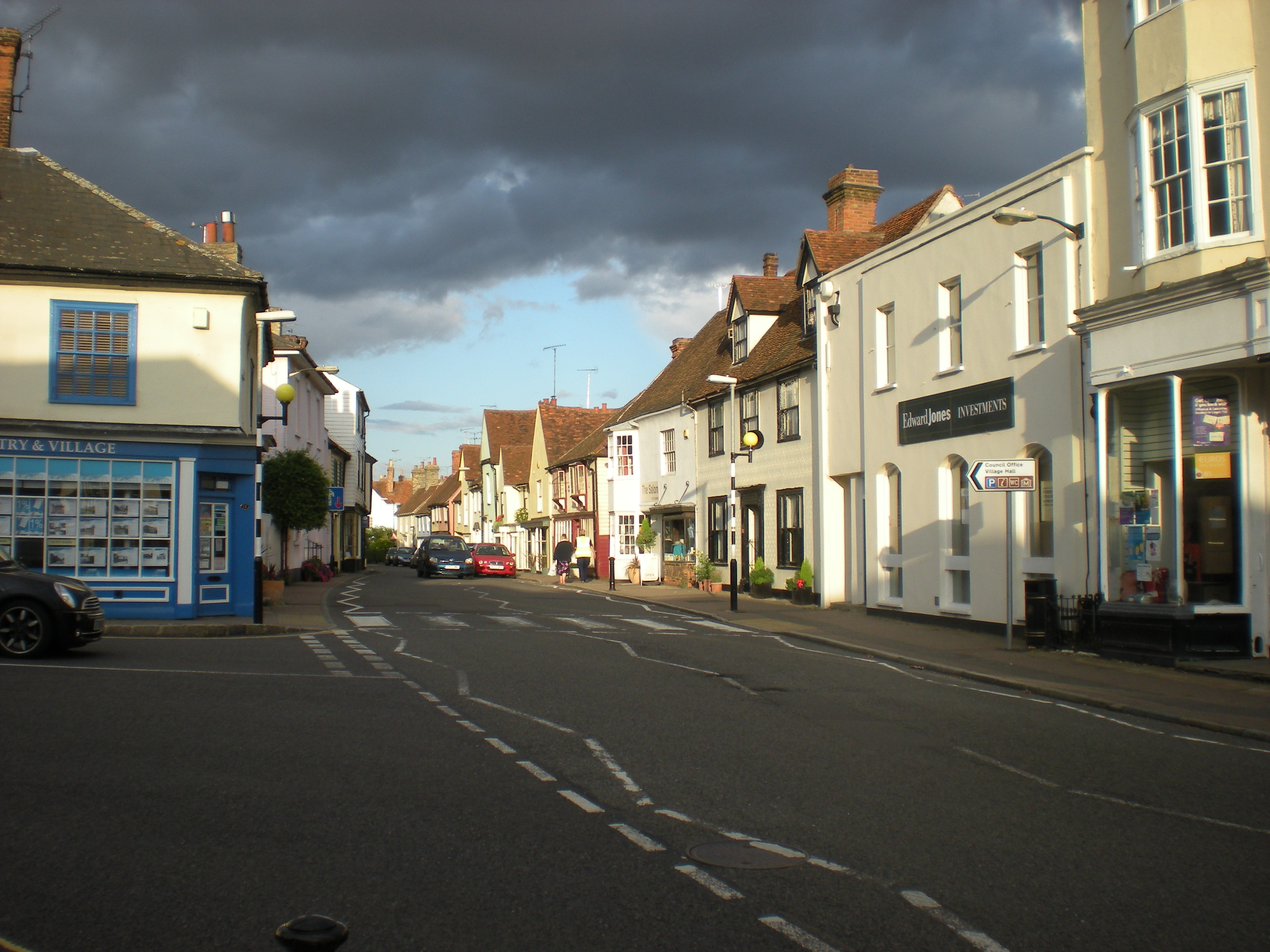
Coggeshall
This view shows one of the streets that used to be the main road from Braintree to Colchester until it was by-passed in the 1980s. How the town managed before that I dread to think?
Opposite the restaurant is a sweet shop. Not your normal one, but one with real jars in the window.

Normans Sweet Shop, Coggeshall
What surprised me was that the jars in the window were for Fox’s Glacier Mints, Murray Mints and other common sweets. They looked to be new jars too, so they must be still available.
Now to return to Baumanns.
My late wife and I used to go a couple of times a year, when we lived over the other side of Suffolk at Debach. It was just too far to go and come back after a meal. But last night, I had other reasons, so it was very convenient to visit an old favourite place. In fact, I think it was the first time, I’d been there since I was diagnosed with coeliac disease.
I was not disappointed.
And the place had hardly changed in all those years.
Is that good or bad? It depends if what was there all those years ago was worth keeping. In Baumanns case it certainly was.
I had sardines followed by ostrich. These were two dishes I’d probably never cook for myself. They were both delicious.
I shall visit Baumanns next time, that I’m in the area.
Happy Memories
I’m just watching the Grand Prix in Valencia on the television.
It brings back happy memories of a weekend in Valencia, that my late wife and I spent just a few months before she died. It was our last holiday together.
It rained and rained and rained. But we did have some fabulous food and all of it was gluten-free.
We actually stayed in the Las Arenas Hotel close by where the Grand Prix is taking place. It was good and excellent value.
Cooked Meats and Cancer
The World Cancer Research Fund are now saying that cooked meats, such as ham and salami and bacon, can cause cancer and should be banned from lunch boxes.
They have form in this area and have been warning for some time. Do I eat much cooked meats? Not really, as I possibly eat them once or twice a month. I did eat a bit more at the weekend, but it was my party.
They also provoked this blast from the Daily Mail. I’ve read that and that perhaps says one important thing and that is moderation in all things.
But what is missing from all of this research and rants is any degree of statistical sense.
We could take a silly example, which states that if you spend all your time on a computer, playing computer games as a child that this is bad for your health. Other research could also say that playing on railway tracks is also bad. They both probably are, but the second is many times more dangerous than the first and people these days tend to lump everything as equally bad.
Now my worry about this “ham sandwich is bad for you” scare is that I’ve never seen any relative risk information compared to say cigarettes, obesity, excessive drinking or spending eight hours a day on a sunbed. So you get the obese smoker giving up cooked meats as his bit towards better health.
So what are the relative risks?
The best book on the subject is The Skeptical Environmentalist by Bjorn Lomborg. He analyses the risks and prints them in detail. Everyone should read his book. You may not agree with everything he says, but it will certainly make you think.
But bear in mind one thing; if you want to live a long time, you can increase your chances by not smoking, eating a good diet, exercising and maintaining a healthy weight. I do all four. But then so did my late wife and she died at fifty-nine!
One point about diet is that diagnosed coeliacs on a gluten-free diet have a twenty-five percent less chance of cancer. That more than mitigates the bad affects of a ham sandwich in gluten-free bread.
Frittatas from Waitrose
Just found two frittatas in Waitrose. One is asparagus and parmesan and the other is chorizo. They are both gluten-free.
Testing one for lunch, but those at my party will have them too.
When I bought them in Cambridge today, if you bought four you got a free cool bag!
Queues in Sainsburys
I went to Sainsburys last night to get a few things, so that I could experiment for my party on Sunday. Now, this is nothing against Sainsburys in particular and I know they have the system in some of their stores, but it is so much easier shopping with the QwikCheck system, that I use in Waitrose.
The queues at the check-out were to be avoided. The girl at the check-out I had could have been a clone for “Computer Says No!”
I was also worried that their gluten-free offerings were worse and fewer in number than the last time I went.
But is this because there has been so much publicity lately about how to cook without gluten and now that a lot of food is so much better labelled?
 The Anonymous Widower