A First Ride In A Nine-Car Class 345 Train
This morning, I had a first ride in a nine-car or full length Class 345 train.
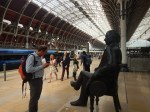
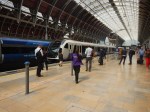
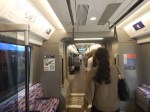
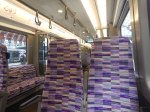
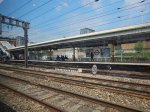

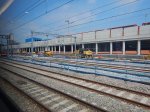
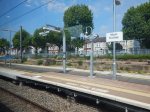

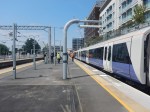
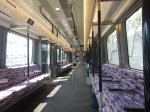
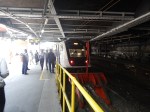
I just took it between Paddington and Hayes & Harlington stations and back again.
The overall impression, is how much longer they seem, than the seven-car version currently working between Liverpool Street and Shenfield.
London To Rainham And Back On Thameslink
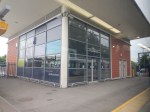
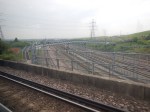
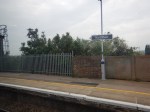
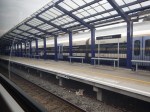
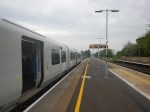
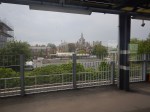
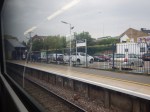
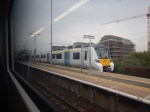
Today was the first Monday of a new timetable and I took a trip to Rainham (Kent) station from London Bridge on the new Thameslink service,, before returning to Abbey Wood station.



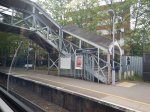
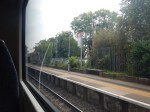

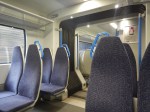
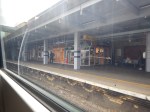


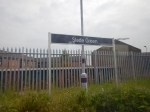

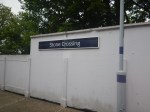

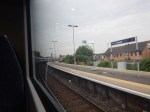

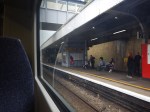

Note.
- I took a picture at each station as we went out to Rainham.
- There is a lot of housing and commercial development going on by Dartford and Rochester stations.
- Thameslink are scheduled to run trains between Luton and Rainham (Kent) stations every thirty minutes.
- There were two Class 345 trains at Abbey Wood station.
- I went in a Class 700 train with eight-cars.
There was the odd cancelled train on the route, but what surprised me on the return journey, was that my train passed four Class 700 trains going in the other direction.
I must assume, that Thameslink were training more drivers for the route.
The Service I Took
The Thameslink service between Luton and Rainham, that I took from London Bridge to Rainham is a replacement for the Southeastern service between Charing Cross and Gillingham.
- Both services use the same route between London Bridge and Gillingham.
- Both services stop everywhere between London Bridge and Gillingham.
- Both services are well-connected to other services at Abbey Wood (Crossrail), Woolwich Arsenal (DLR), Greenwich (DLR) and London Bridge (Northern and Jubilee).
- The previous Southeastern service took 66 minutes between London Bridge and Gillingham,
- The current Thameslink service is timetabled to take 82 minutes.
- The Thameslink service takes over forty minutes to turn round at Rainham.
Given that the Thameslink Class 700 trains are 100 mph trains and the previous Class 465 trains are only 75 mph trains, I find it extraordinary that faster and more modern trains are delivering a slower service.
Complaints
There have been complaints about the new timetable, so I asked a couple of station staff, what they felt about the new Thameslink service from Luton to Rainham.
They seemed in favour and added, these points about the service.
- It would help with getting the service out of trouble, when there were delays East of Rainham.
- It gives a direct connection to Dartford.
- The extra capacity will help.
The service to Rainham will surely act as a collector service for those changing to Crossrail at Abbey Wood.
Rainham to Bond Street with a change at Abbey Wood, should be under an hour and a half.
Abbey Wood Station – 21st May 2018
Abbey Wood station has been progressing and I took these pictures.

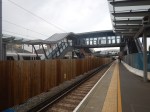
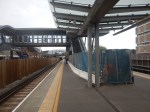
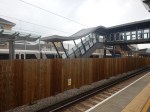



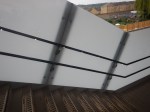
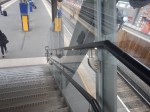

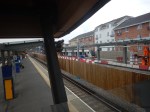
The layout of the connecting bridges between the Crossrail and North Kent Line platforms is now clear.
- At the London End, there is a simple footbridge, with steps to each pair of platforms.
- At the Main Entrance End, there are wide steps and a lift between the station ticket hall and each pair of platforms.
- The third bridge in the middle is the unusual one with wide steps and a single escalator to each pair of platforms.
I would assume, that the direction of the escalators is as follows.
- In the Morning Peak, the North Kent Line escalator is set to Up and the Crossrail escalator is set to Down, to speed passengers from the North Kent Line to Crossrail.
- In the Evening Peak, the Crossrail escalator is set to Up and the North Kent Line escalator is set to Down, to speed passengers from Crossrail to the the North Kent Line.
- At other times with less traffic, both escalators would be set to Up.
I have seen a lot of station layouts all over the UK and Europe and never one like this.
I doubt, I’ve even seen a pair of platforms connected by three separate bridges too!
Could it be a design of genius to allow thousands of passengers to change between the two pairs of platforms in a short space of time?
Other station layouts that enable this rate of passenger transfer, like the interchange between Crossrail and the Central Line at Stratford station, arrange for a cross-platform interchange, with lines going in the same direction sharing a common platform.
But that arrangement would have been difficult at Abbey Wood, unless perhaps the Crossrail tunnel emerged closer to the station or a flyover or dive-under were to be built.
Both options would have required more space and would have been a lot more expensive.
The design of Abbey Wood station with its three footbridges and wide platforms, would appear to be a more affordable alternative.
Train Length
In some of the pictures, a Class 345 train is shown in one of the Crossrail platforms.
This is a full-length train, which is 205 metres long.
The pictures show just how long these trains are.
LED Lights On The Stairs
Three of the pictures in the bottom row, show the stair handrails with their light underneath.
I Like them.
Transport for London’s New Rail Line
Today, Transport for London have taken over Heathrow Connect, in preparation for the full Crossrail.
The service is now run by TfL Rail, just like the Liverpool Street to Shenfield service in the East of London.
It’s even shown on some of the new Underground maps.
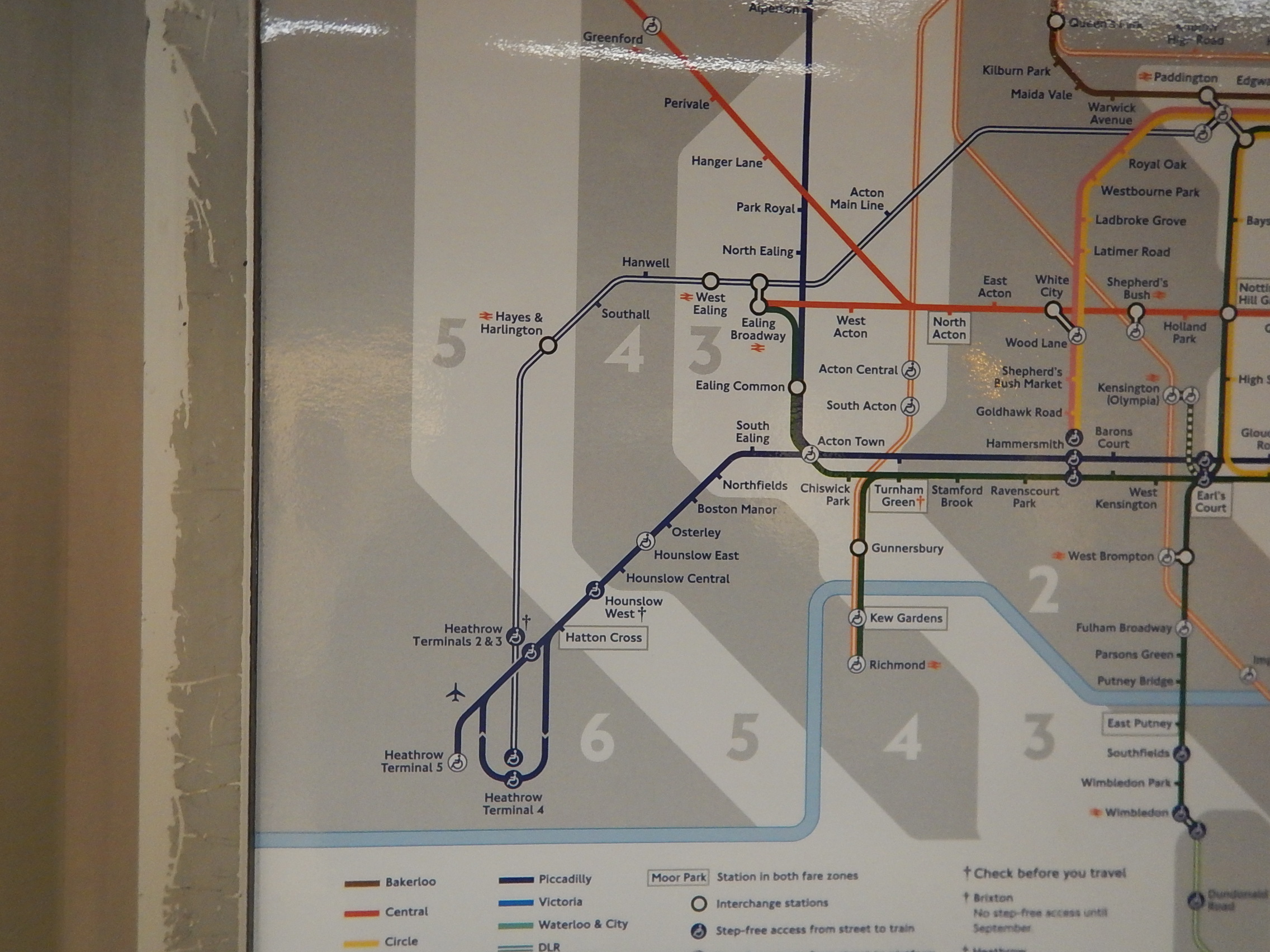
I photographed this map at Kings Cross St. Pancras.
Note the double blue line, which indicates the new route of the former Heathrow Connect, running from Paddington in the top-right corner of the map to Heathrow Terminal 4 towards the bottom-left.
The intermediate stations shown are.
- Acton Main Line
- Ealing Broadway – Change for Central and District Lines.
- West Ealing
- Hanwell
- Southall
- Hayes and Harlington
- Heathrow Terminal 2 & 3 (Heathrow Central) – Change for Piccadilly Line.
Note that TfL use Heathrow Terminal 2 & 3 for the main railway station at Heathrow and Wikipedia uses Heathrow Central.
A Trip To Heathrow From Paddington
This morning, I checked into the new TfL Rail service at Paddington, using my Freedom Pass and took the 09:11 service to Heathrow Airport.
I got out at Heathrow Terminal 2 & 3 station before returning later on another TfL Rail service to Paddington.
I took these pictures on the route.
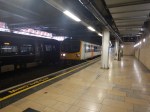

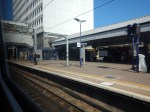

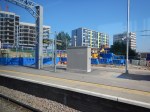
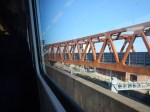
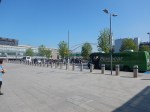
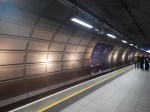
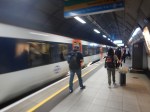

Note that the Class 360 trains are still running on the route, as there are operational issues with Crossrail’s new Class 345 trains in the tunnel to Heathrow.
Contactless Card/Oyster To Heathrow
TfL Rail also accepts contactless card or Oyster on this route.
According to TfL’s Single Fare Finder, the single fare is £10.20 in the Peak and £10.10 in the Off-Peak.
But,I’m not sure about railcards, the affect of capping or the price if you buy the ticket on line.
Freedom Passes To Heathrow
As I’d used my Freedom Pass, the two journeys cost me a big fat nothing!
It won’t be long before the many Freedom Pass holders, will realise, that Heathrow will be in their free travel area by a comfortable train and they will possibly use it more often, than the Piccadilly Line.
TfL Rail Service Frequency
Currently, the frequency between Paddington and Heathrow is two trains per hour (tph).
Provisional service details are shown under Services in the Wikipedia entry for Crossrail, when the line opens fully in December 2019.
- Four tph between Abbey Wood and Heathrow Terminal 4 stations
- Two tph between Abbey Wood and Heathrow Terminal 5 stations
All services will call at the following stations.
- All stations between Abbey Wood and Paddington stations.
- Ealing Broadway station
- Heathrow Terminal 2 & 3 station.
Plans for stopping at Acton Main Line, West Ealing, Hanwell, Southall and Hayes & Harlington stations are yet to be decided.
I suspect that TfL would like all Heathrow trains to stop at all intermediate stations, just as services do between Liverpool Street and Shenfield, in the East of London.
But Great Western Railway may have other ideas!
Speaking for myself, I’d like to see four tph on the TfL Rail route between Paddington and Heathrow, as soon as possible.
The Future Of The Class 360 Trains
When Crossrail sort out the Class 345 trains, the five sets of five-car Class 360 trains will be surplus to requirements.
They will also be joined in the sidings in a couple of years, by twenty-one similar four car trains, that are being replaced with new Class 720 trains, by Greater Anglia.
As they are modern 100 mph trains, they should find a home somewhere!
They could even be exported to Thailand, where a similar fleet operates.
Financial Trouble At TfL: Can It Stay Afloat?
The title of this post, is the same as that of this article on Railway Technology.
This is the first paragraph.
London’s public transport provider, TfL, is under increasing pressure. Not only has its government operating grant been slashed but a funding freeze is also expected to cost £640m across the course of the current mayoralty. Can TfL create the commercial income needed to keep it afloat or are there serious causes for concern?
The government is cutting subsidy to TfL, but Sadiq Khan knew that when he stood for Mayor.
So what did he do? He offered a fare freeze until 2020.
It looks like more fantasy Socialist accounting to me, to ensure victory in an election.
The article also says this about the future.
Nevertheless, TfL’s hopes for the future are pinned on the completion of its upcoming Elizabeth Line project, scheduled for the end of the year. The £14.8bn project, which will create a brand new line running underground across London, is expected to be a big revenue raiser. TfL predicts that ridership will increase from the current 46 million passengers on TfL Rail, to nearly 270 million by 2022-2023.
If these predictions are wrong, TfL will be in trouble.
For myself, I suspect that Crossrail will suffer with its own version of London Overground Syndrome, with passenger numbers much higher than predicted. In The Scottish Borders Have Caught London Overground Syndrome, I talked about an outbreak in the Scottish Borders, after the opening of the Borders Railway, and said this.
This disease, which is probably a modern version of the Victorian railway mania, was first identified in East London in 2011, when it was found that the newly-refurbished East London Line and North London Line were inadequate due to high passenger satisfaction and much increased usage. It has now spread across other parts of the capital, despite various eradication programs.
But for the Mayor to rely on that, is clutching at straws.
First ‘717’ In UK In June
The title of this post is the same as that of a short article in the May 2018 Edition of Modern Railways.
This is the first paragraph.
The first Class 717 EMU, built by Siemens for Govia Thameslink Railway’s Great Northern suburban services into Moorgate, is due to arrive in the UK in June.
The article also makes these statements, about the new Class 717 trains.
- The first unit is planned to enter service in September.
- The full fleet of 25 x 6-car units will be deployed in Winter 2018.
- The current Class 313 trains will be replaced.
- The new trains will have no toilets or First Class.
- The new trains will have power points and wi-fi.
By virtue of the cross-platform connection between the Northern City Line and Victoria Line, these trains will improve a valuable link between North East London and the City of London.
When Crossrail opens in December 2018 at Moorgate station, the Northern City Line will have a step-free below-ground connection to Liverpool Street station and all the Underground lines serving the two stations.
Ducking and diving will move to a whole new level.
What Will The New Trains Do For Me?
For my own part, if the frequency on the Northern City Line is increased, I shall use the line from Essex Road station to get to Moorgate for Crossrail and the Central Line.
I suspect my house will go up in value!
How Will The New Trains Affect The Service?
The New Trains Are Faster
The current Class 313 trains are 75 mph trains, whereas the new Class 717 trains are 100 mph trains.
This increased operating speed will have two effects, when running on the East Coast Main Line and to Letchworth Garden City.
- Time might be saved.
- As their operating speed is the same as Thameslink’s closely-related Class 700 trains, they might make keeping to time easier.
Time savings on the Hertford Loop Line, will be more difficult, as the line only has a 75 mph operating speed.
However, speed improvements on the Hertford Loop Line would surely result in faster trains to Hertford, Letchworth Garden City and Stevenage.
The New Trains Could Change Voltage Faster
Trains on the Northern City Line need to change voltage at Drayton Park station. I have observed Class 700 trains, do this on Thameslink and they do it without fuss and very reliably.
The Class 717 trains will probably use the same pantograph, so we could be seeing a smoother and faster changeover.
The New Trains Will Probably Be Ready For ERTMS
The Class 700 trains are fitted for ERTMS, so they can work the Thameslink tunnel under Automatic Train Operation.
As this method of signalling and control will be fitted to the East Coast Main Line to improve caacity, the new Class 717 trains will probably be ERTMS-ready.
It should be noted that the Hertford Loop Line has been used as an ERTMS test track and I suspect engineers know the performance improvement ERTMS would bring to the line.
I suspect in a few years, the Northern City Line and services out of Moorgate will be run automatically, with the driver monitoring the system.
The New Trains Will Stop In A Shorter Time At Stations
The new Class 717 trains will have the these advantages of modern trains over the current ones.
- They will be able to accelerate to line speed in a shorter time.
- They will be able to brake faster.
- Wider doors and larger lobbies will enable shorter loading and unloading times.
- The trains will have better systems to help the driver.
These will all result in time savings at each stops.
Currently, the four destinations have the number of stops to Moorgate.
- Hertford North – 49-53 minutes – 12 stops
- Letchworth Garden City – 75 minutes – 19 stops
- Stevenage – 68-72 minutes – 14 stops
- Welwyn Garden City – 47-48 minutes – 16 stops
Because of the high number of stops, saving a minute at each stop would speed up the train service.
Less Trains Could Be Needed For The Current Service
As an example, take the Moorgate to Letchworth service.
The current service is one train per hour (tph), which takes 75 minutes. In its simplest form, allowing for turnround at both ends, trains take up to three hours for the round trip, so three trains are needed for the service.
But if the faster Class 717 trains can save a minute at each stop and run faster on the East Coast Main Line, it might be possible to reduce the round trip to several minutes under two hours. If that is possible, then only two trains would be needed for the route.
Improve The Hertford Loop Line
With its low operating speed of 75 mph, the new Class 717 trains can’t take full sadvantage of their increased speed.
There are already plans for new bay platforms at Gordon Hill and Stevenage stations, so what other plans are being progressed to improve the Hertford Loop Line?
The New Trains Could Have Less Seats And More Capacity
I can only give a rough estimate for this as I can’t find the capacity of a Class 717 train.
These are cars, car length and capacity for various trains.
- Class 707 trains -five x 20 m. – 275 seats + 533 standing
- Class 717 trains – six x 20.2 m. – No figures.
- Class 313 trains – three x 20.2 m. – 232 seats
- 2 x Class 313 trains – six x 20.2 m. 464 seats
A rough calculation for the Class 717 train using the figures for a similar Class 707 train and adjusting for another ytailer carriage gives the following.
339 seats + 657 standing = 996 total
Incidemtally, I’ve stood on a crowded Class 707 train, and it was not an unpleasant experience, as there were plenty of handholds.
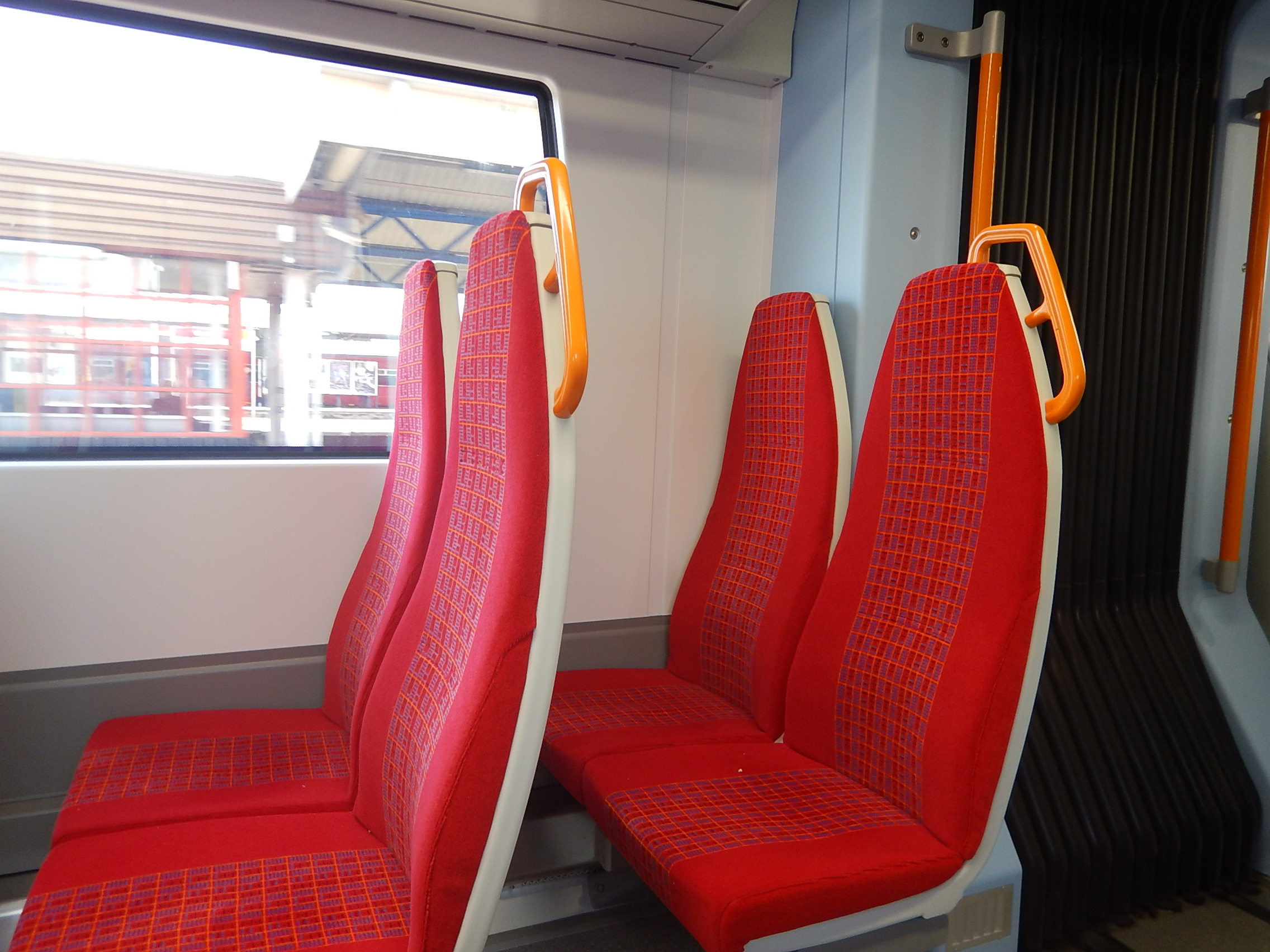
This picture shows handholds on the seats and between carriages.
I hope the Class 717 trains have 2 + 2 seating, like the Class 707 trains.
Improved Services To And From Moorgate
Current services to and from Moorgate station are as follows.
- Three tph to Welwyn Garden City
- Three tph to Hertford North, with one tph extended to Letchworth Gsrden City.
This means that there are six tph between Alexandra Palace and Moorgate stations.
From the May 2018 timetable change, the service levels will become.
- Four tph to Welwyn Garden City
- Five tph to Hertford North, with two tph extended to Stevenage or Watton-at-Stone.
- No direct services will run to Letchworth Garden City. Change seems to be a cross-platform interchange at Finsbury Park.
The service termination at Watton-at-Stone station is only temporary until Network Rail build a new bay platform at Stevenage station.
These changes mean that there will be nine tph between Alexandra Palace and Moorgate stations.
This frequency is already achieved in the Peak, from Monday to Friday. But it now appears, it will be running all day from the May 2018 timetable change.
I found this document on the Rail Delivery Group web site, which is entitled 6,400 Extra Trains A Week To Run To More Places, More Often.
It says these services will be added in 2019.
- An increase of 2 Hertford Loop trains per hour, Moorgate-Hertford
- An increase of 1 Hertford Loop train per hour, Moorgate-Stevenage
- An increase of 1 train per hour, Moorgate-Welwyn Garden City
In the May 2018 edition of Modern Railways, this is said.
New Class 717 EMUs will eplace the current Class 313s on these services from the autumn, with a further frequency boost planned in May 2019.
Adding this all together gives the following.
- Five tph to Welwyn Garden City
- Seven tph to Hertford North, with three tph extended to Stevenage.
This means that there will be twelve tph between Alexandra Palace and Moorgate stations. Or a train every five minutes.
It would appear that the overall effect of what Govia Thameslink Railway is doing is as follows.
- Restricting the running of Moorgate services on the East Coast Main Line.
- Provide a five tph Turn-Up-And-Go service from Welwyn Garden City.
- Provide a seven tph Turn-Up-And-Go service from Hertford North.
- Provide a six tph Turn-Up-And-Go Thameslink service from Stevenage.
- Provide a three tph service to Moorgate from Stevenage and Watton-at-Stone. Could it be expanded to a Turn-Up-And-Go four tph.
- Stations North of Stevenage will be served by Thameslink services to Cambridge and Peterborough.
- Thameslink services will stop at Stevenage and Finsbury Park for interchange with Moorgate services.
Will all of of this, downgrade Welwyn North station, by offering better services at Knebworth, Stevenage, Watton-at-Stone and Welwyn Garden City stations?
Consider.
- Welwyn North station handles about 600.000 passengers a year.
- Welwyn North station only has a service of two tph.
- Welwyn North station lies on the double-track section of the East Coast Main Line over the Digswell Viaduct.
- Knebworth station handles 600,000 passengers a year, but is on a four-track section of the line.
- Watton-at-Stone station, which is perhaps four kilometres to the East handles 100,000 passengers a year, but appears to be short of car parking.
I’m pretty certain, that if Welwyn North station could be closed, then the notorious bottleneck of the Digswell Viaduct could be eased.
So are Network Rail and Govia Thameslink Railway working towards a situation, where this will be able to happen.
They could do the following.
- Provide more car parking at Knebworth, Stevenage, Watton-at-Stone and Welwyn Garden City stations.
- Build a new Park-And-Ride station in South Stevenage on the Hertford Loop Line.
- Improve timings between Stevenage and Moorgate.
- Extend more Hertford North services to Stevenage. Six tph would probably be the limit for a single bay platform at Stevenage.
Shutting Welwyn North station would be controversial and heavily resisted.
How Many Trains Will Be Needed?
In May 2019, I think the service will be as follows.
- Five tph to Moorgate to Welwyn Garden City
- Four tph to Moorgate to Hertford North,
- Three tph Moorgate to Stevenage.
I’ll now look at each separately.
Moorgate To Welwyn Garden City
Trains take just under around 47-48 minutes and there are sixteen intermediate stops.
Currently, I suspect a train takes two hours to do a round trip, which would allow up to 12-13 minutes to turn round at each end.
- Three tph would need six trains.
- Four tph would need eight trains.
- Five tph would need ten trains.
But supposing the Class 717 trains, with faster running on the East Coast Main Line and faster stops could reduce this to under thirty minutes with a round trip of an hour.
- Four tph would need four trains.
- Five tph would need five trains.
Note.
- Currently, all trains are turned in Platform 4.
- Will Platform 4 be able to handle four tph after the May 2018 timetable change?
- Will Platform 4 be able to handle five tph after the May 2019 timetable change?
- There are sidings easily accessible to the North of Platform 4.
- Trains leaving Welwyn Garden City for Moorgate use a flyover to cross to the Up Slow line.
If five tph with just five trains is possible, it’s well worth achieving. But it could be a hard ask!
Moorgate To Hertford North
Trains take around 49-53 minutes and there are twelve intermediate stops.
This service would be another two hour round trip.
- Three tph would need six trains.
- Four tph would need eight trains.
- Five tph would need ten trains.
The new Class 717 trains couldn’t probably do the trip in thirty minutes, but a ninety minute round-trip would surely be possible.
- The proposed four tph would need six trains.
Note.
- Four tph is the frequency that will be running from May 2019.
- Four tph could also be easily handled in the bay platform at Hertford North station.
Any track improvement would help.
Moorgate To Stevenage
Trains take around 68-72 minutes and there are fourteen intermediate stops.
The new Class 717 trains with their faster running and faster stops, should be able to do this trip under the hour, with a possible two-hour round trip.
If this could be achieved the service would need the following trains.
- The proposed three tph would need six trains.
- Four tph would need eight trains.
Improving the Hertford Loop Line, so that the Class 717 trains could fully use their 100 mph operating speed could be key.
Summarising The Trains Needed
Summarising gives.
- Three tph between Moorgate and Stevenage would need six trains.
- Four tph between Moorgate and Hertford North would need eight trains with a two hour round trip.
- Cut that to a ninety-minute round trip and six trains could be needed.
- Five tph between Moorgate and Welwyn Garden City could possibly be run with five trains or need as many as ten.
A pessimistic answer for the number of trains could be as high as 24, which fits well with a fleet of twenty five trains.
But an optimistic solution might need.
- Six trains for Stevenage
- Six trains for Hertford North
- Five trains for Welwyn Garden City
This would leave several trains for increasing frequency.
Increasing The Service After May 2019
Improving The Hertford Loop Line
If the Class 717 trains could use their speed, this would enable faster journeys and could allow extra paths for more trains.
ERTMS On The Moorgate Lines
It is already used by Thameslink and is scheduled to be used on the East Coast Main Line.
Will it be added to the Hertford Loop Line and on the Northern City Line?
ERTMS and a degree of Automatic Train Control, could be a game changer.
Fitting the necessary equipment to the Class 717 trains, shouldn’t be the most difficult of jobs, as the system is already fitted to Thameslink’s Class 700 trains.
Increased Frequency Into Moorgate
Consider.
- Currently, in the Peak, the Class 313 trains running under control of conventional signalling manage 11 tph at times.
- From May 2019, Gover Thameslink Railway will be running 12 tph into Moorgate all day.
- Thameslink and Crossrail should be handling 24 tph, by the end of 2019.
- Brixton station on the Victoria Line handles upwards of thirty tph with two platforms.
- Transport for London and Londoners have a lot of experience about loading and unloading trains.
Look at this schematic of the vast Crossrail complex linking Liverpool Street and Moorgate stations.
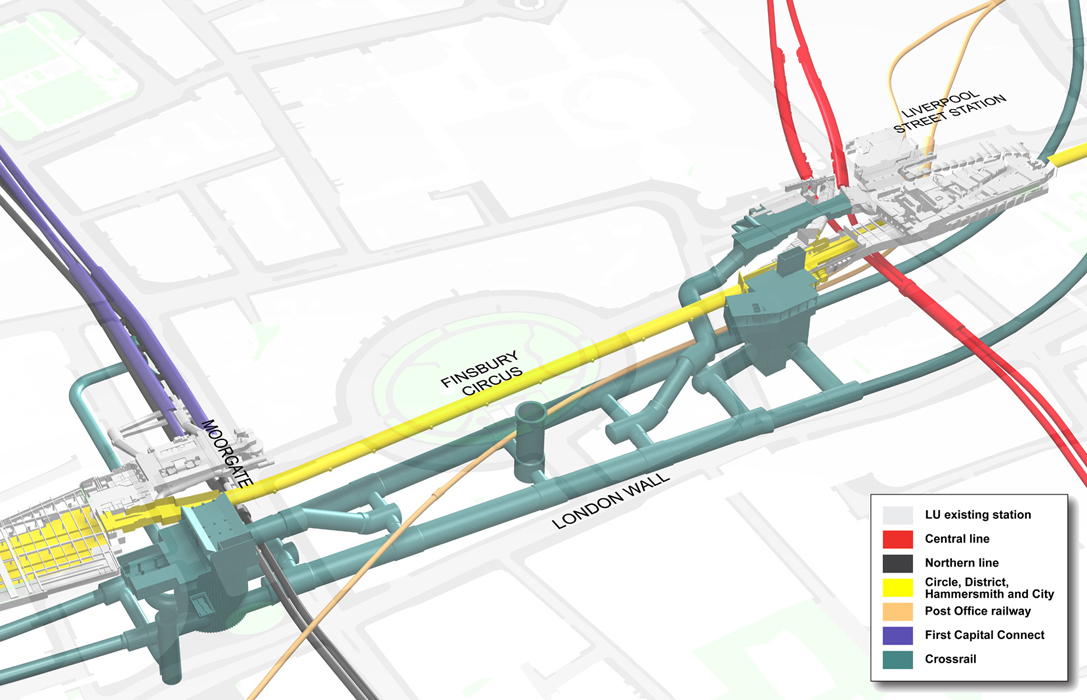
Note the Northern City Line in dark blue at the left, with a new pedestrian tunnel linking to Crossrail. This will help handle the passenger flows between Crossrail and the Northern City Line.
With ERTMS and Automatic Train Control, I wonder what, is the maximum number of trains that can be handled at Moorgate?
Twelve is obviously possible with the current infrastructure, as it is only one more than what is currently achieved in the Peak.
My experience says that with good electronic and organisational systems, that fifteen tph should be possible in both directions between Moorgate and Finsbury Park stations.
An Extra Train To Stevenage
Current plans envisage three tph between Moorgate and Stevenage.
The new bay platform at Stevenage would easily handle four tph and if the sufficient trains are available, I could see this extra service implemented.
The following frequencies would be achieved.
- Four tph – Stevenage and Watton-at-Stone.
- Eight tph – Hertford North.
The Northern City Line would obviously need to be able to handle the extra train.
Gordon Hill Station As An Extra Terminus
Gordon Hill station is sometimes used as an extra terminus to turn trains from Moorgate in the Peak.
I can see this continuing, as surely it increases the capacity at the Moorgate end of the line.
Conclusion
It will be interesting to swee how this line develops in the future.
Twyford Station – 26th April 2018
I went to Twyford station to get the train to Henley-on-Thames.
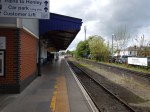
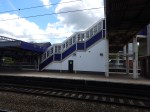
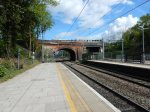
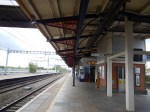
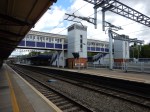

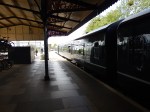
The station seems more of less ready for Crossrail.
What isn’t ready is the rail service to Henley-on-Thames station.
There are two trains per hour (tph) on the branch line and the trains take twelve minutes with two single-platform intermediate stations.
This is one of those branch lines, that need four tph to prise people out of their cars it is this one.
The two terminal platforms at each end can each handle four tph, it’s just that there is no passing loop on the line in between.
These are some pictures I took on the branch line.
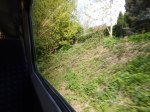
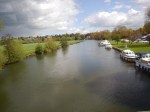

Note.
- It is a tidy branch line.
- There is only one level crossing.
- Henley-on-Thames station has a reasonably long platform.
- There appears to be more space for a second track, South of the Thames, rather than at the North.
With their purchase of Class 769 trains, GWR could be using some to provide direct services to London from this branch.
Windsor And Eton Central Station – 26th April 2018
These pictures show Windsor And Eton Central station.
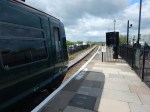

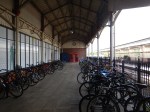


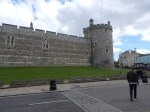
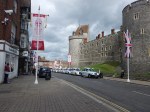

In some ways it is more of a Shopping Centre than a railway station.
The current service to Slough station, is one two-car Class 165 train every twenty minutes.
Consider.
- When Crossrail opens to Slough in December 2019, there will be at least six Crossrail trains per hour (tph), between Slough and Central London.
- There will also be at least four GWR tph between Slough and Paddington.
- The upcoming wedding of Prince Harry and Meghan Markel, will give Windsor masses of world-wide publicity.
- Passengers to Windsor increase significantly on a day with good weather.
I also reckon, that getting to Windsor via Crossrail and Slough could be up to twenty minutes faster, than using Waterloo and Windsor and Eton Riverside stations. So which way, would all the tourists use?
Increasingly, the current train service from Slough will become inadequate.
GWR have ordered nineteen Class 769 bi-mode trains, one of which could be used on the line to increase capacity.
- They would offer a doubling of capacity, from two-cars to four.
- Their slightly faster speed, might enable them to run at a frequency of four tph.
- The trains would probably fit Windsor and Eton Central station with selective door opening or a small platform extension.
Windsor and Eton Central station is going to get very busy.
Those tourists, who just want a selfie with the castle, should be able to take one, between successive trains.
Windsor could become a Tourist Hell!
West Drayton Station – 26th April 2018
I took these pictures at West Drayton station.
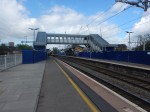
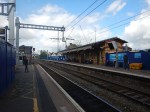

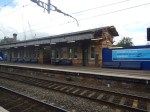
The station appeared to be staffed by TfL and they certainly had installed TfL’s new ticket machines.
 The Anonymous Widower