The New Kings Cross Opens A Day Early
I hadn’t intended to go into the new part of Kings Cross station until it opened on the 19th. But I found it was open on Sunday the 18th.

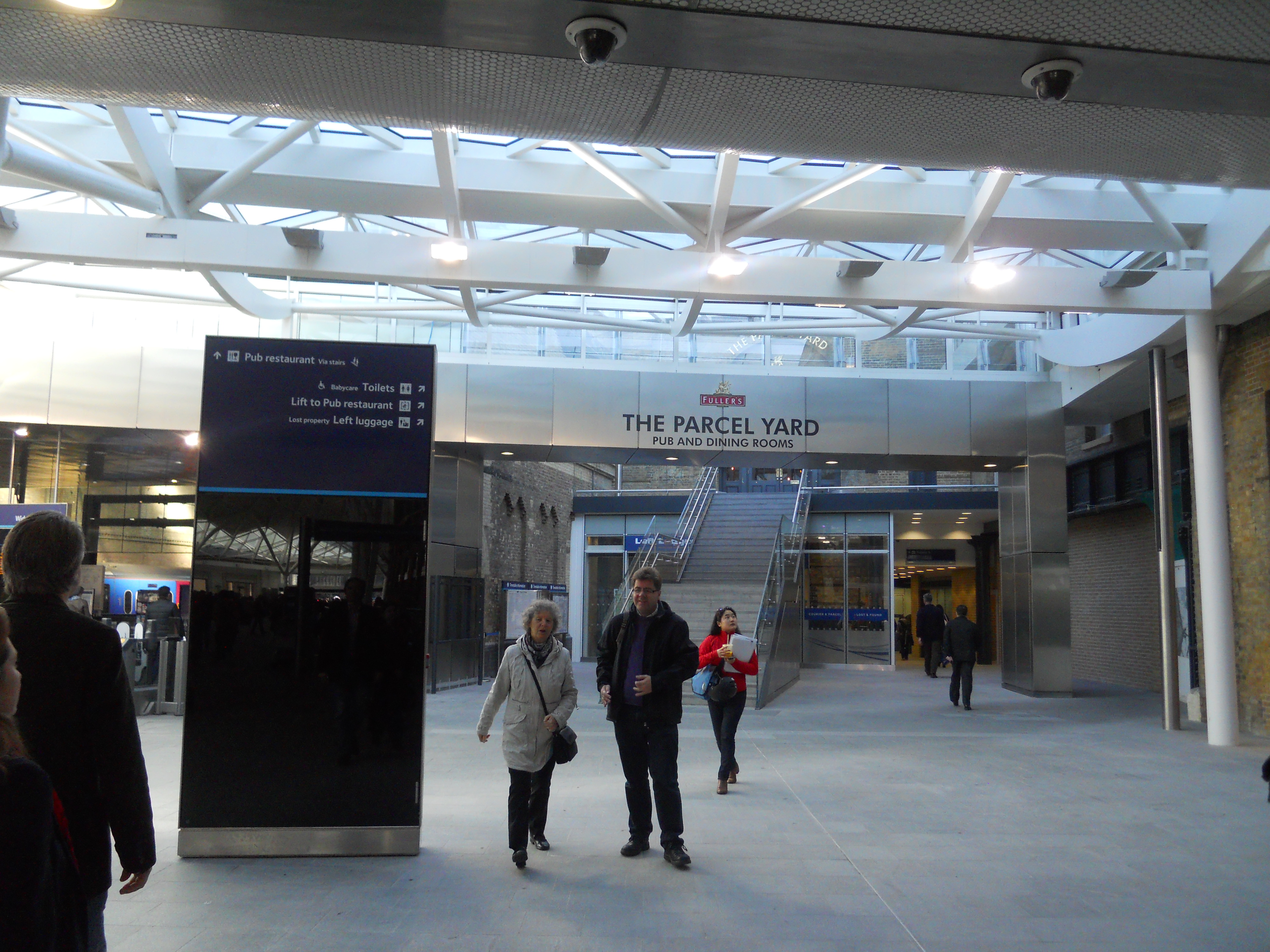
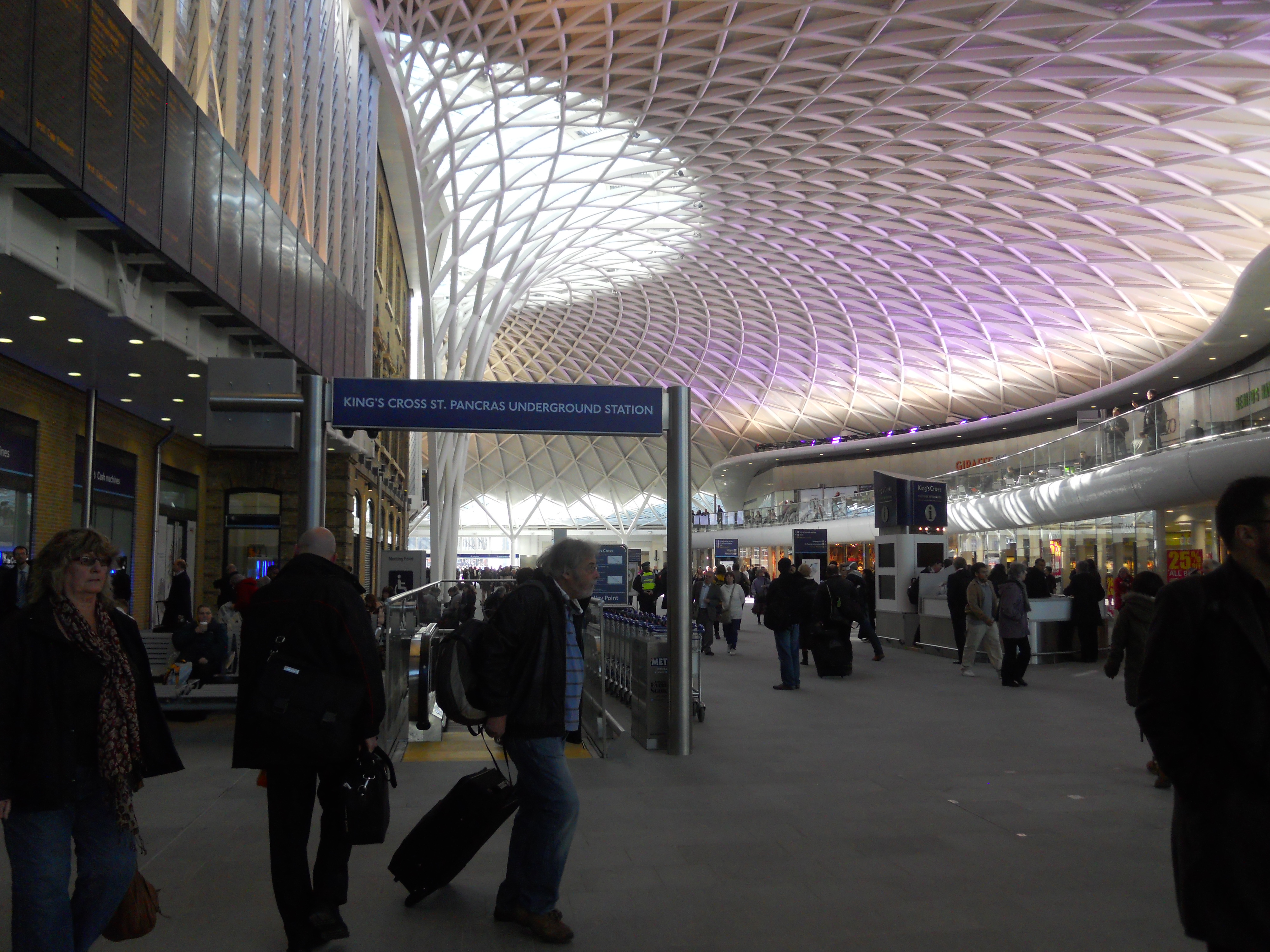
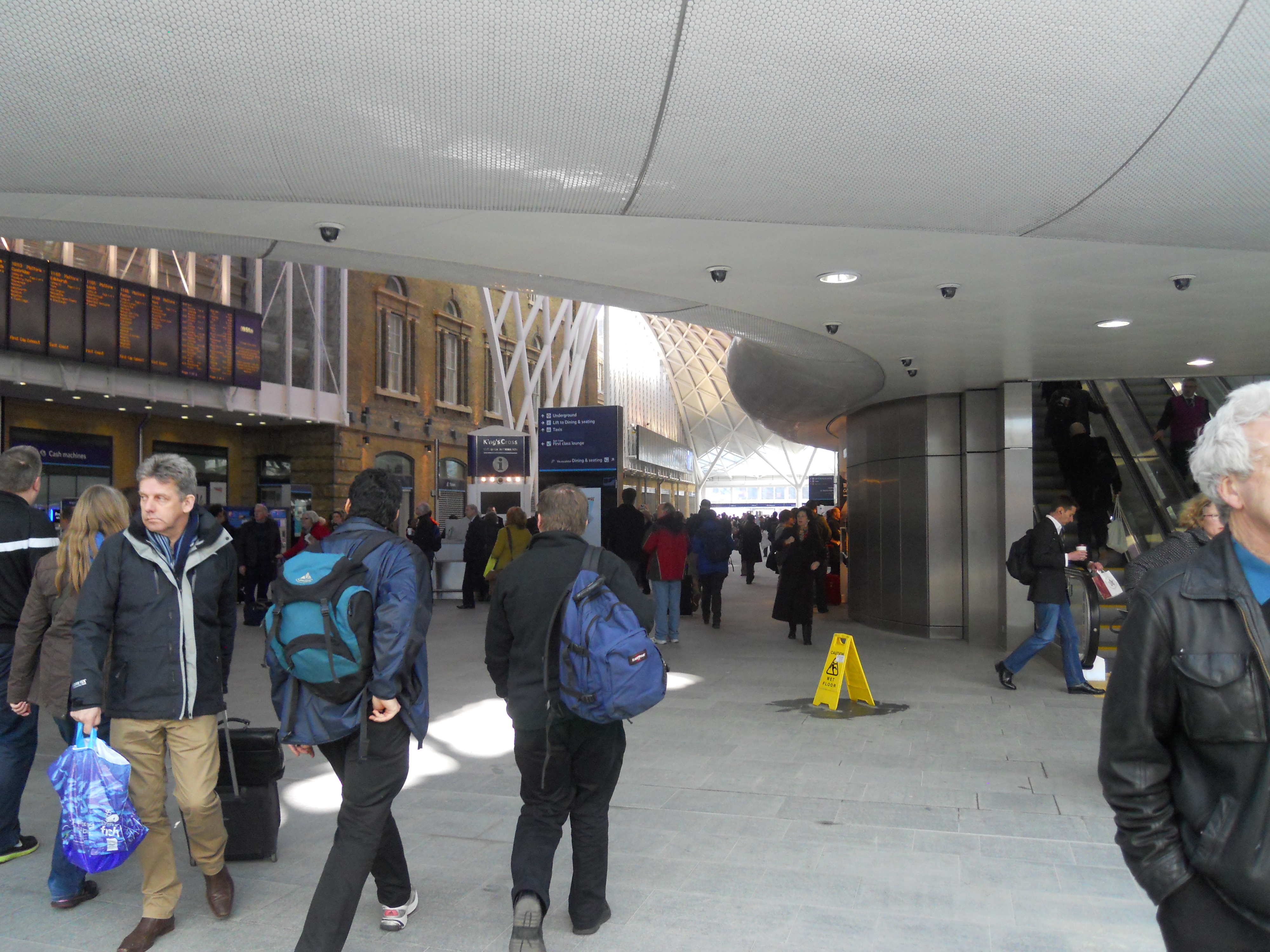
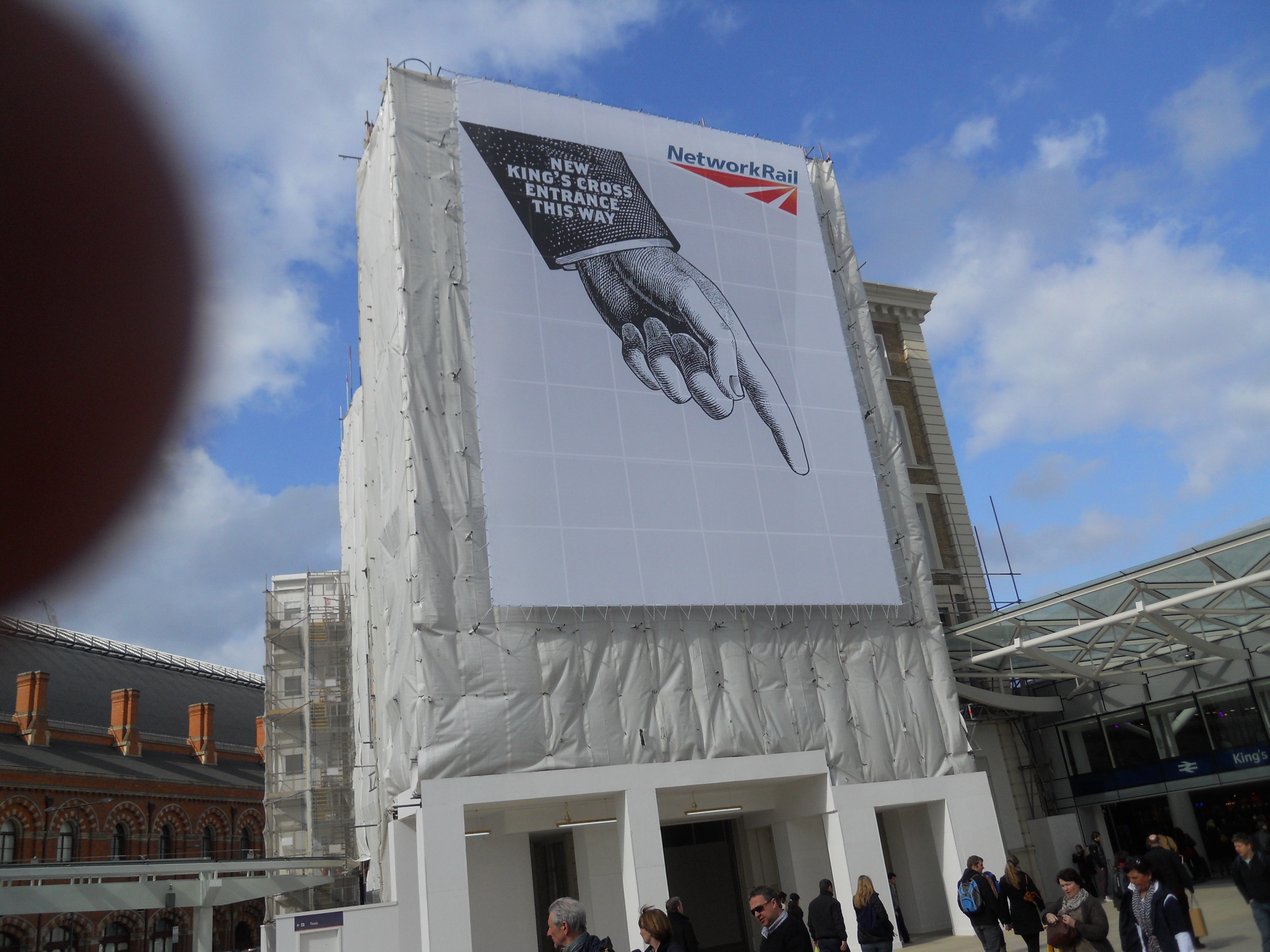
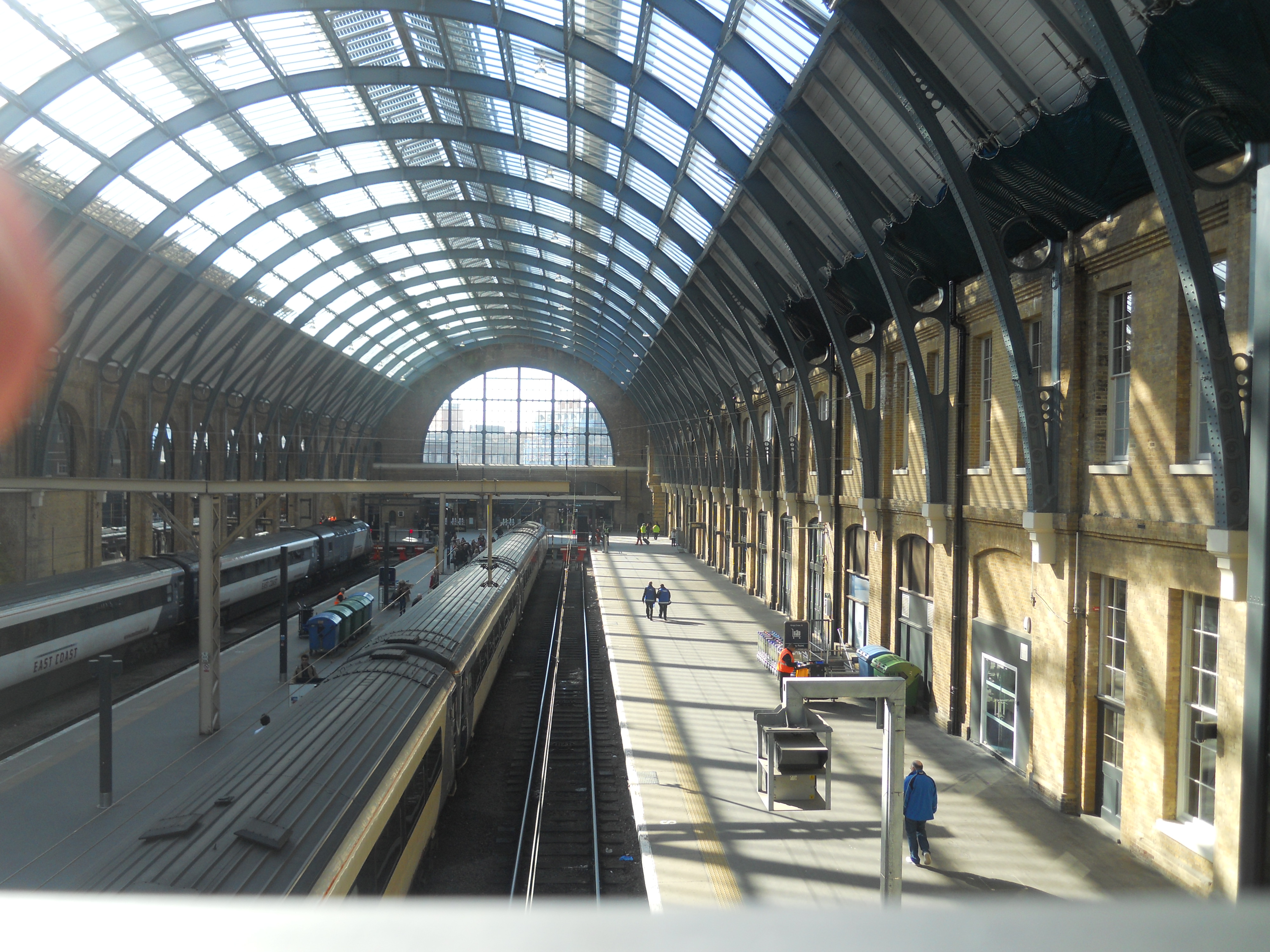
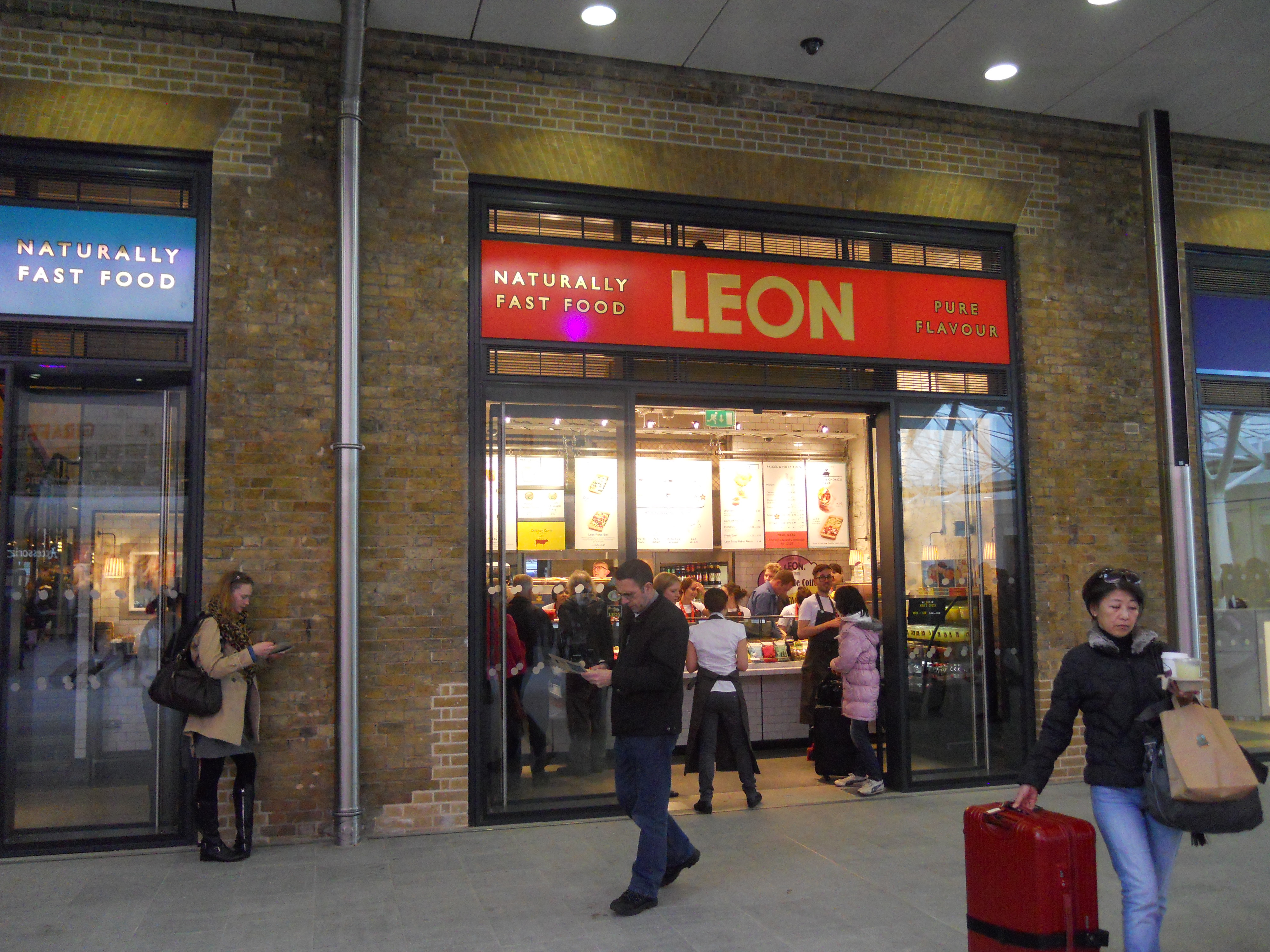

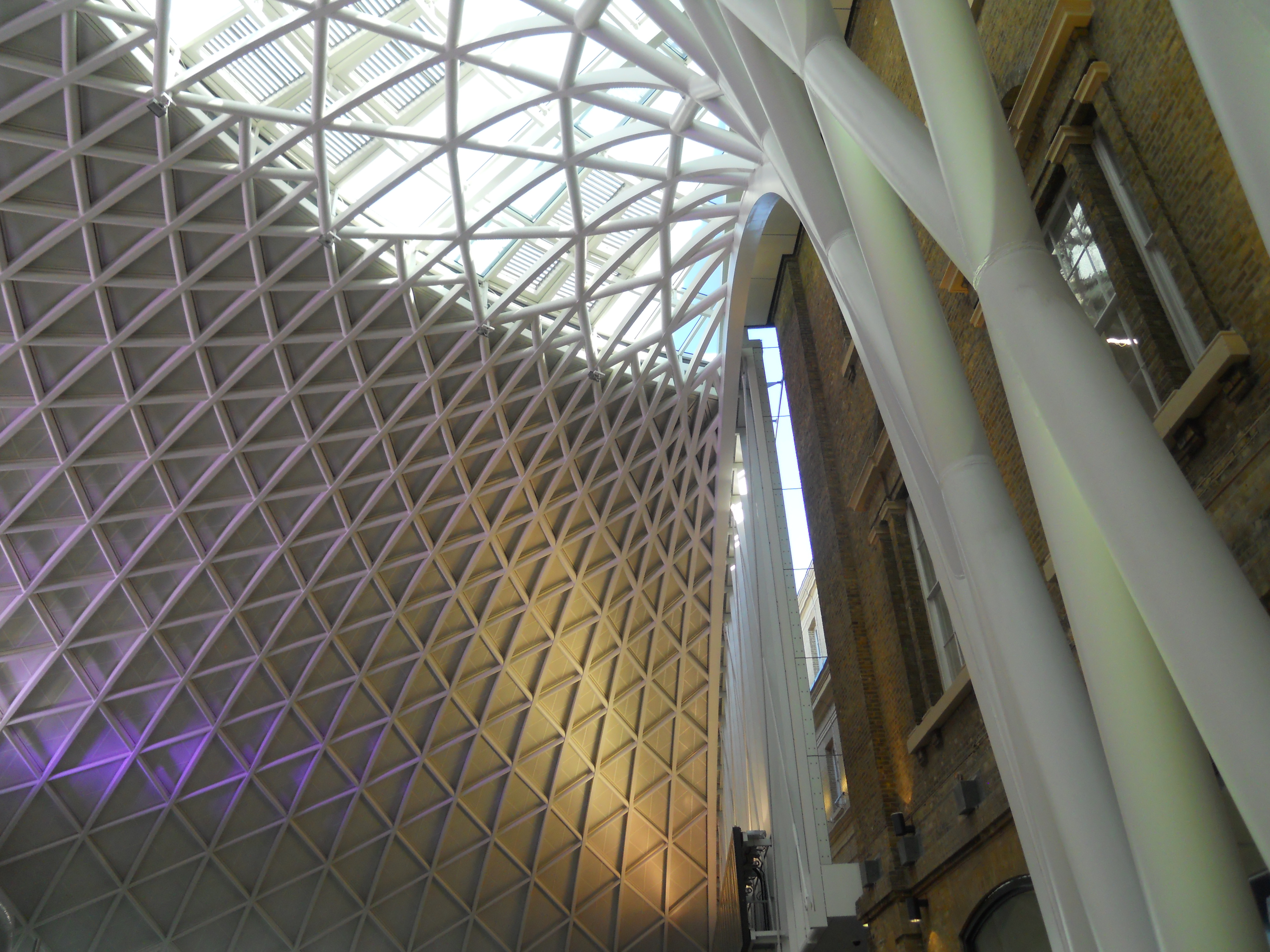
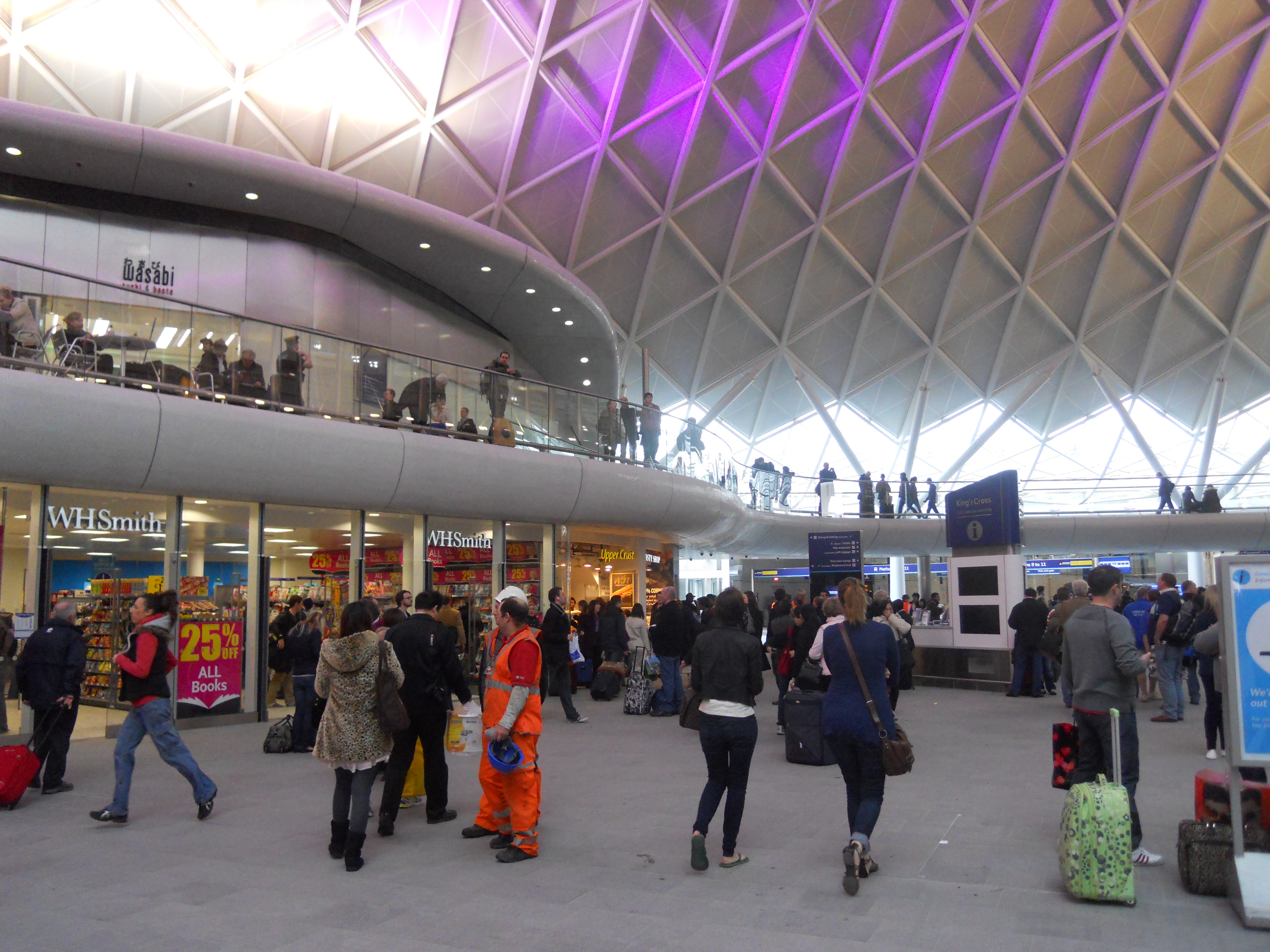
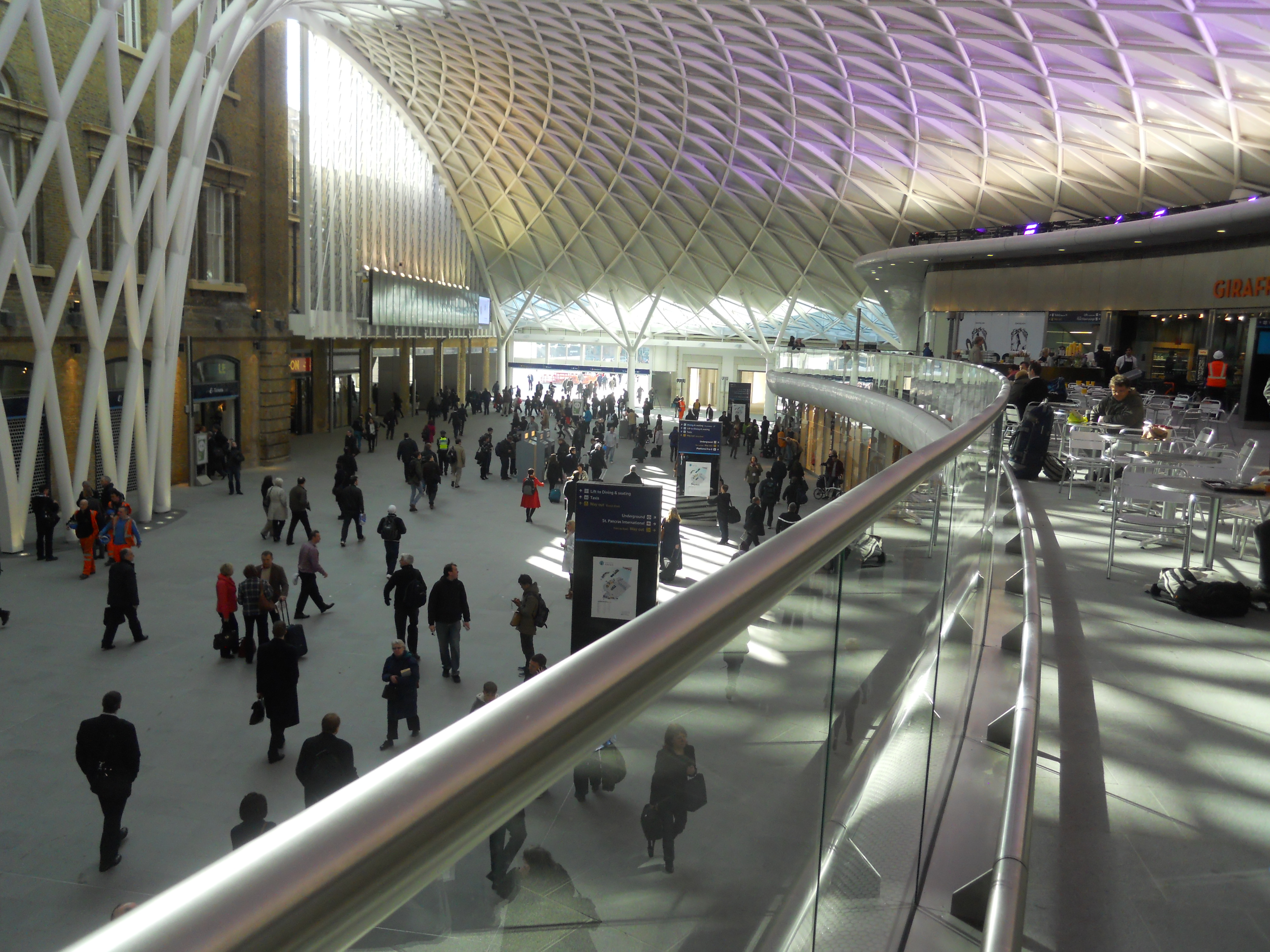
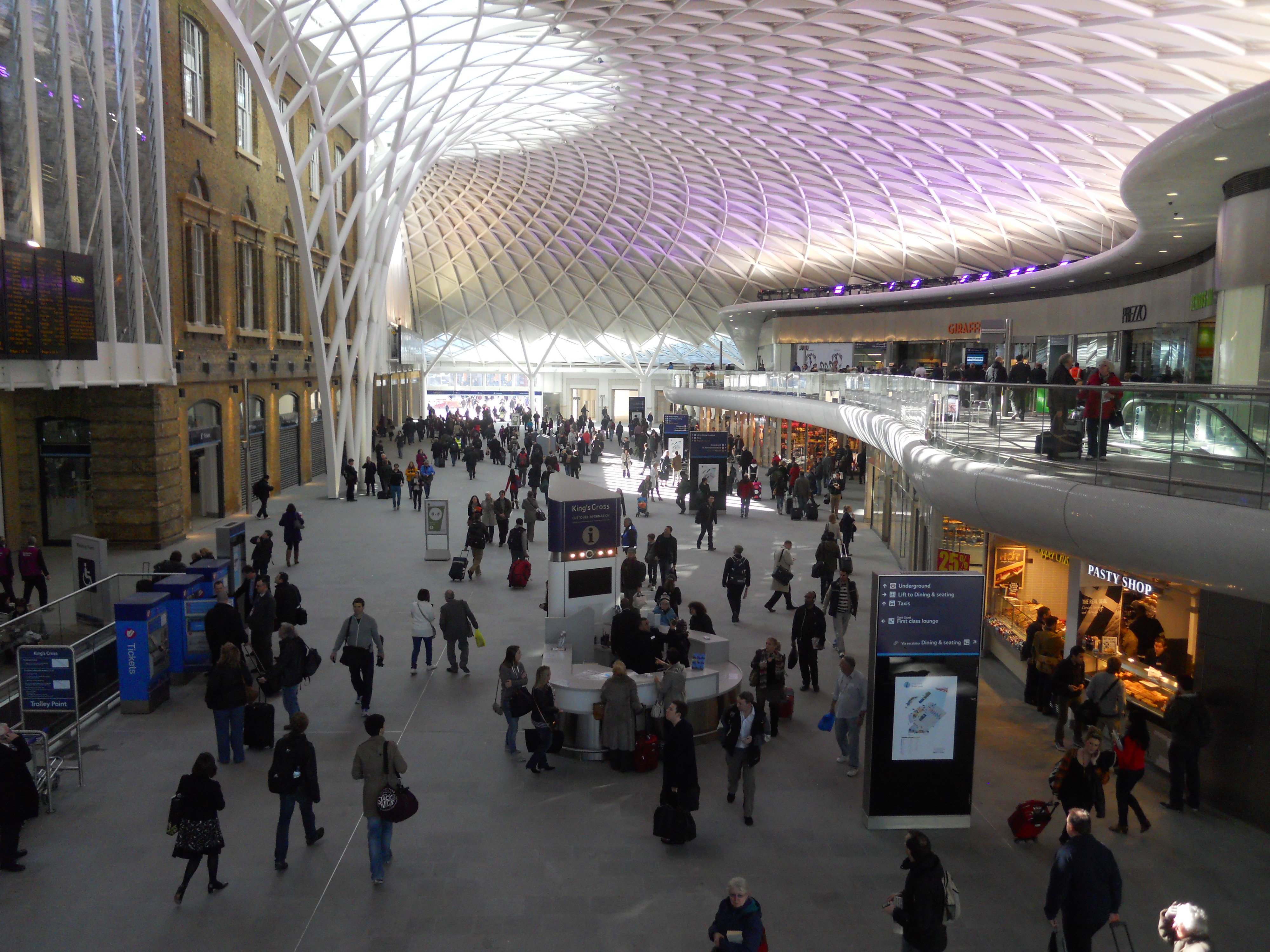
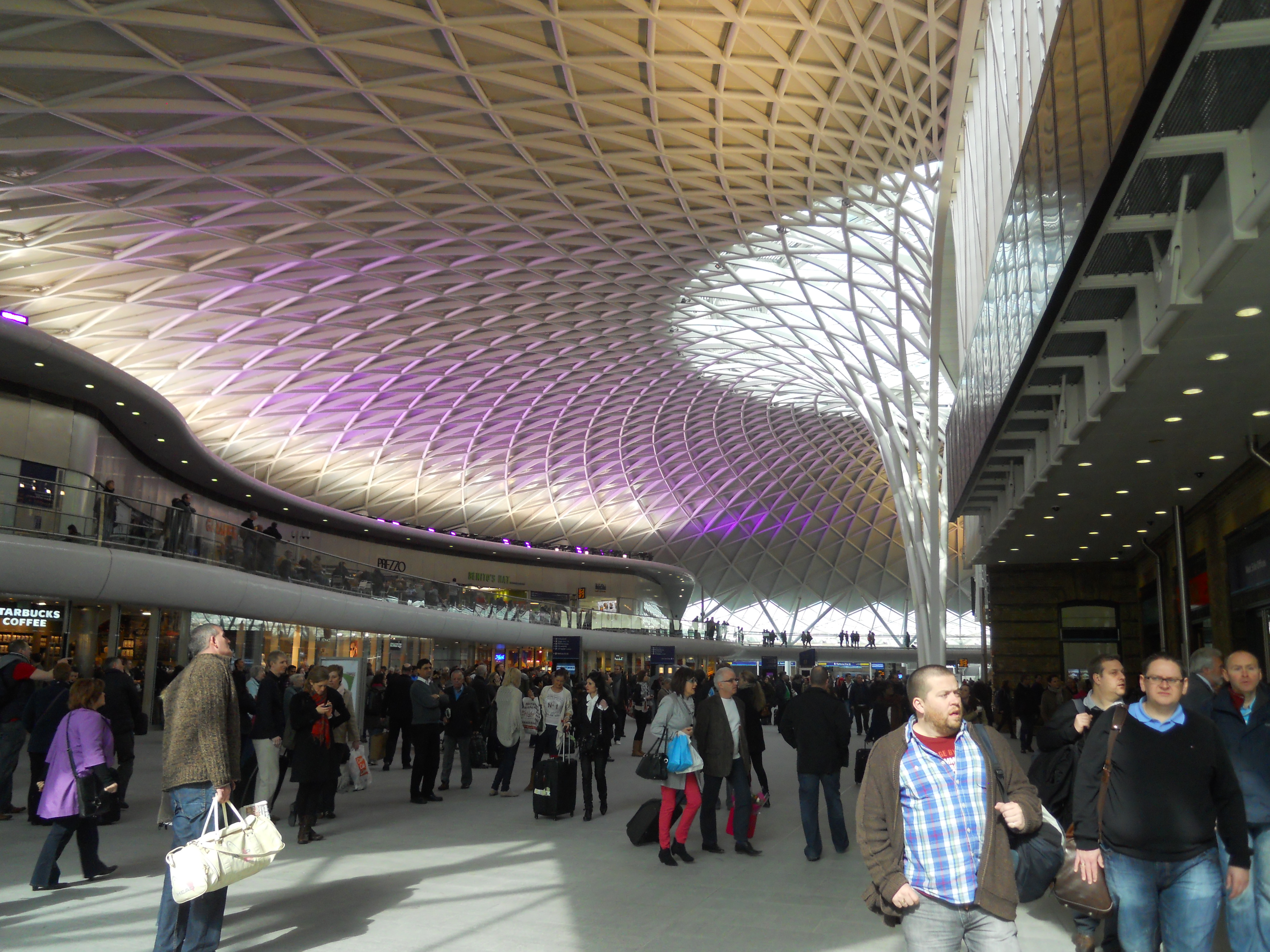
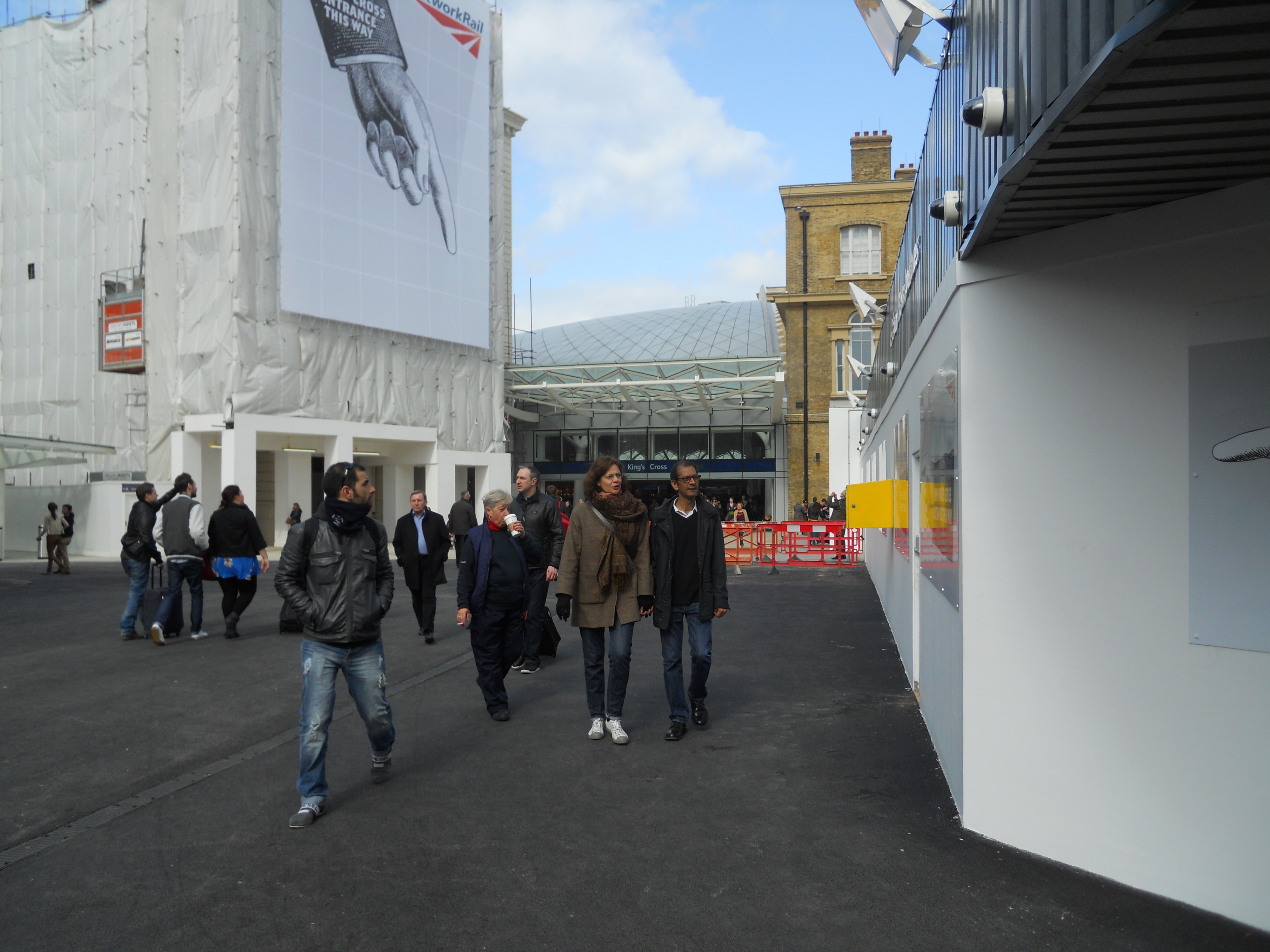
It is impressive and even has a restaurant that does gluten-free fast-food; Leon
I have added some more pictures taken on the Monday. I’ll probably add a few more as time goes on.
There is a very good article on the design here in the Evening Standard.
Riding the New Bus for London
I finally caught up with the New Bus for London this afternoon. As I got to my stop to go to Islington, it was going the other way towards Hackney, so I got on the next 38 and asked the driver to ‘Follow that bus!’ Which of course he did, as all 38s go the same way. If there had been a bit of congestion and he’d manage to overtake my intended ride, I’d have just hopped-off one bus and hopped-on the other.
But we were held up and so a couple of stops before the turn around at Hackney Central, I disembarked and crossed the road to the Victoria-bound stop. Twenty minutes later and LT2 arrived.
I immediately went upstairs and the first thing you notice is how light and airy the inside is.
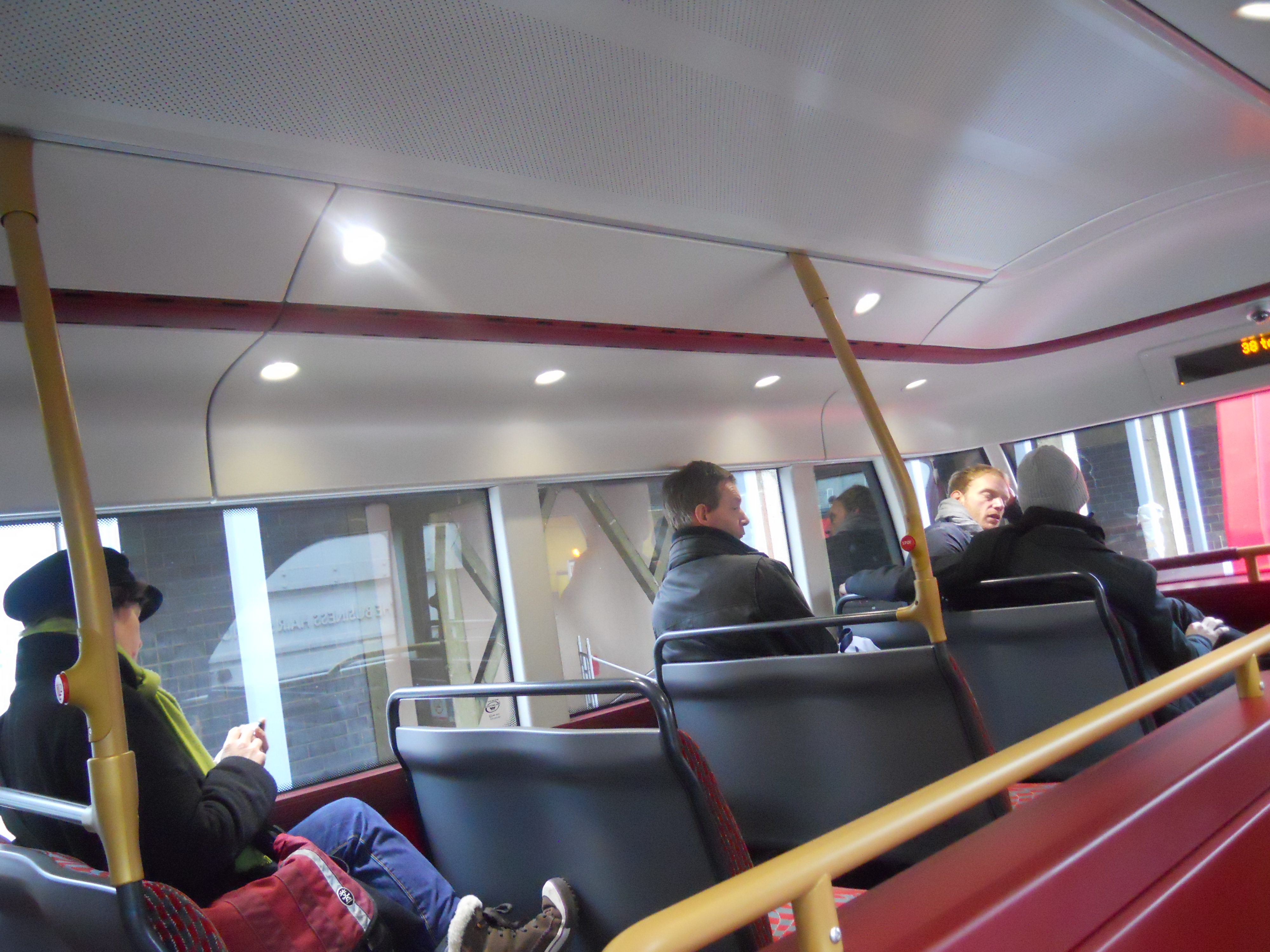
Upstairs on a New Bus for London
Colours are best described as classy and more subtle than most other buses, but light is good with LED downlighters everywhere. The windows are wide and aligned with the seats, as this view shows.
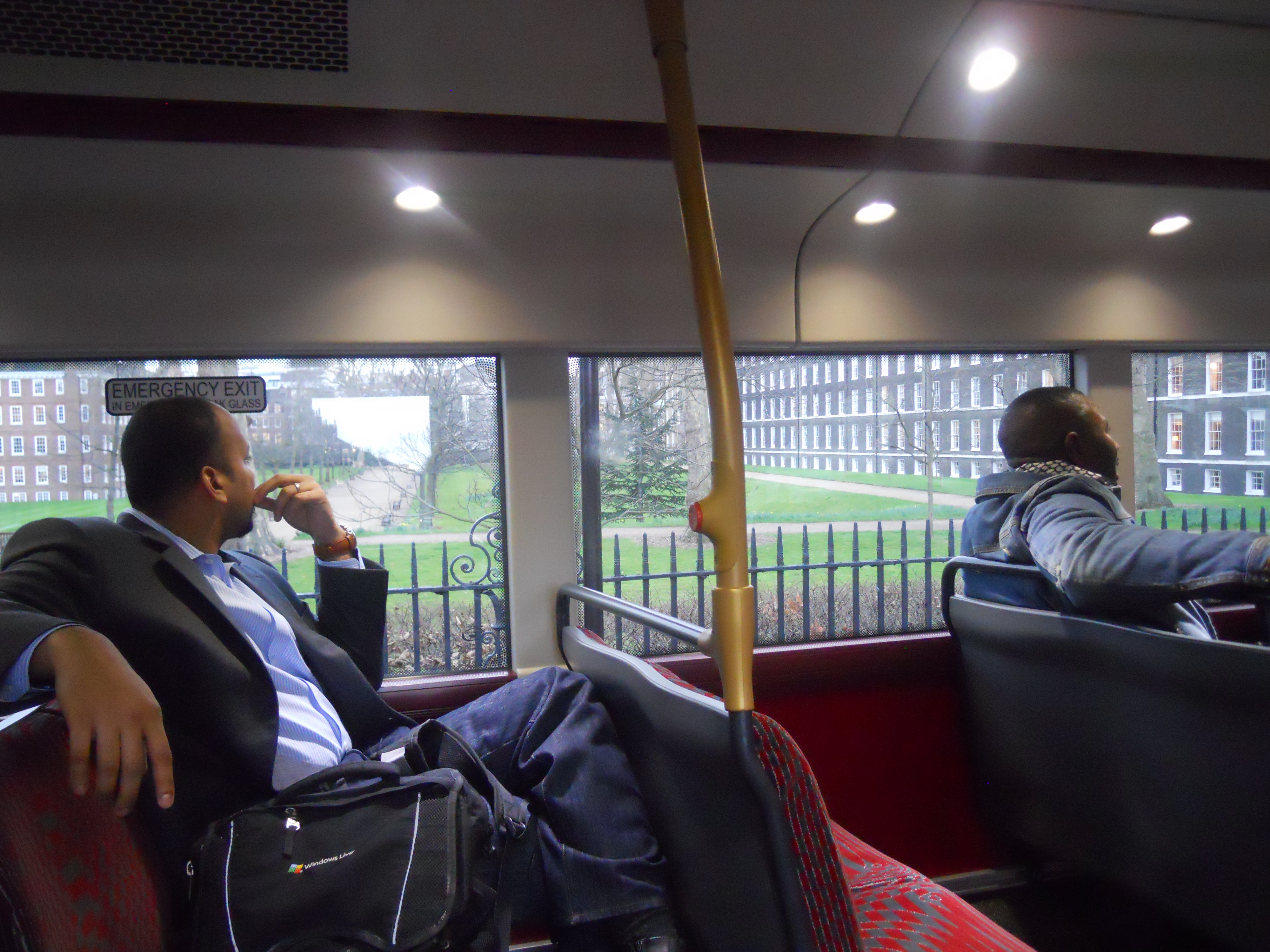
Wide Windows on the New Bus for London
Lincolns Inn Fields can be seen through the windows. Note too, the generous leg-room, compared to some other buses.
As we progressed towards Victoria I took a lot of pictures from the right hand side, with my elbow resting on the window frame, just like the gent in the previous picture is doing.
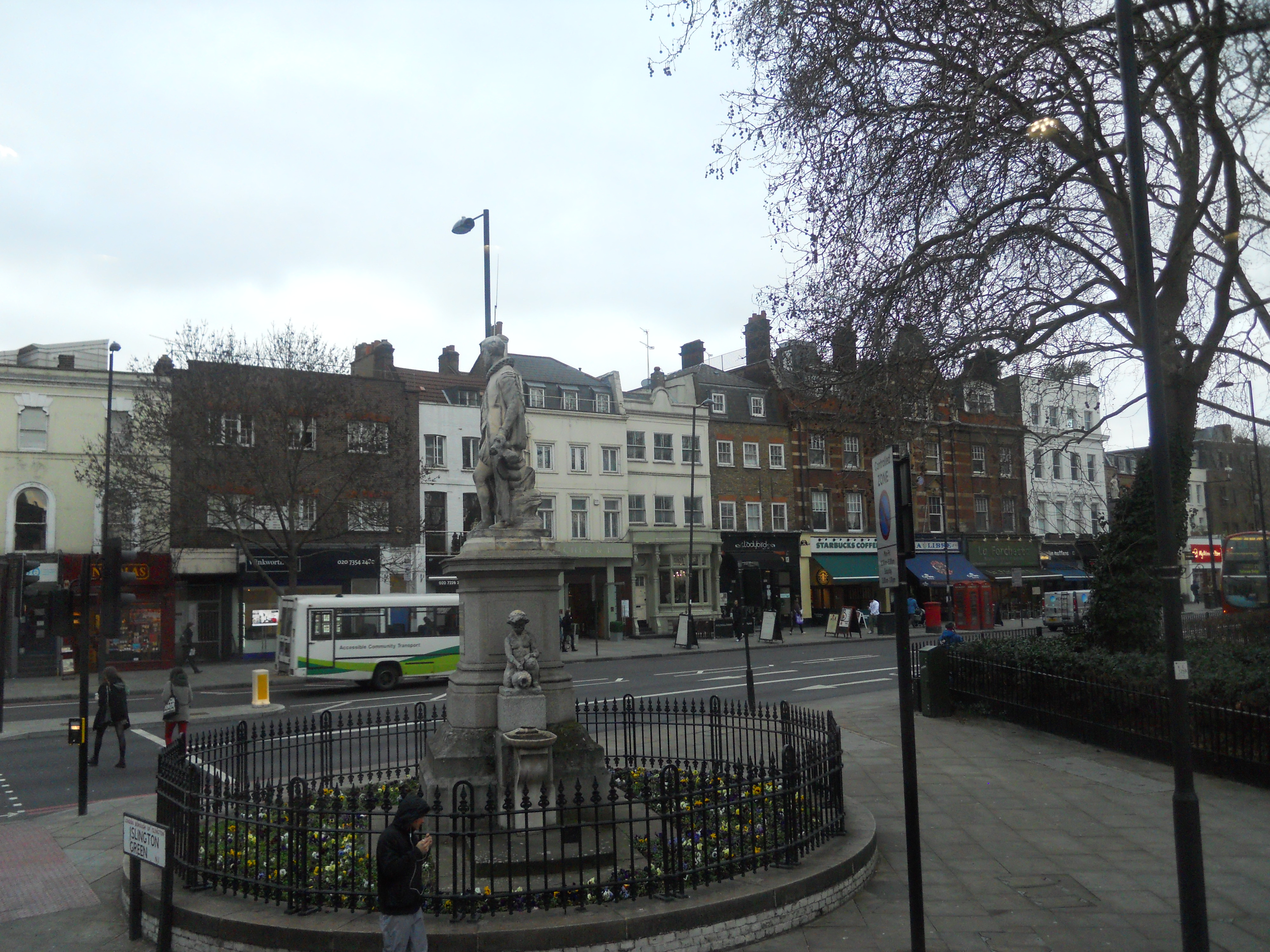
Hugh Myddelton Looks On
I wonder what Sir Hugh would have thought of it all.
Whatever the bus may be it is a superb place to film central London. I don’t think that the tours will be pleased as routes like the 38, will offer a similar experience for the price of a normal bus fare. How long before someone starts offering a smart phone app, that provides a running commentary, based on GPS. Or could the app tap into a signal from the bus to keep everything in sync?
At on point, the bus was fairly clear and I was able to look at the seats.
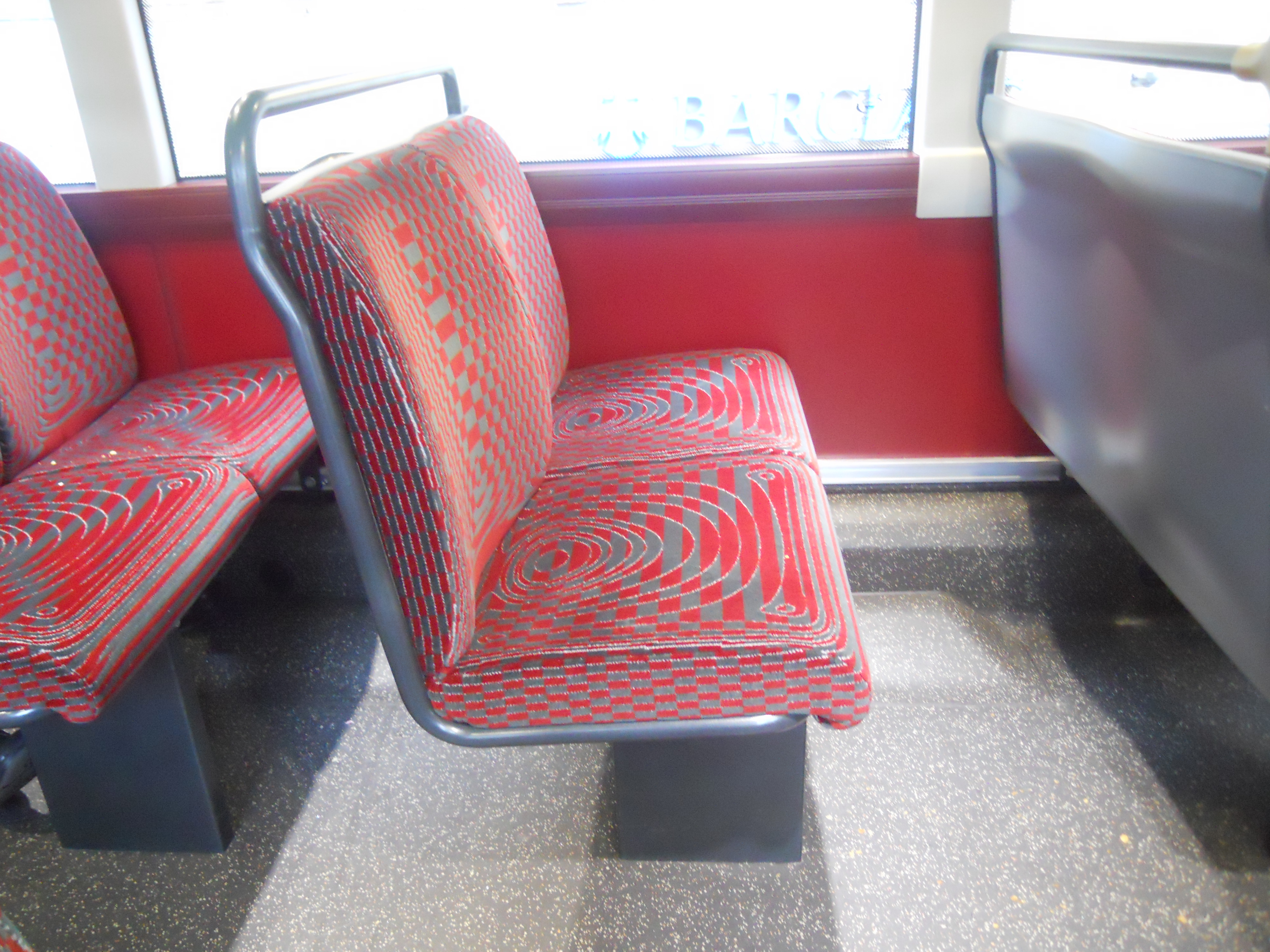
Upstairs Seats on a New Bus for London
They are comfortable and shaped to give good lumbar support. As I have said the legroom is good and you don’t feel crushed in because of the large windows and the ability to rest your arm on the window sill. You could also put a small bag underneath a lot of the seats. Compare this seat with that on the standard Wright product, that is very common in London.
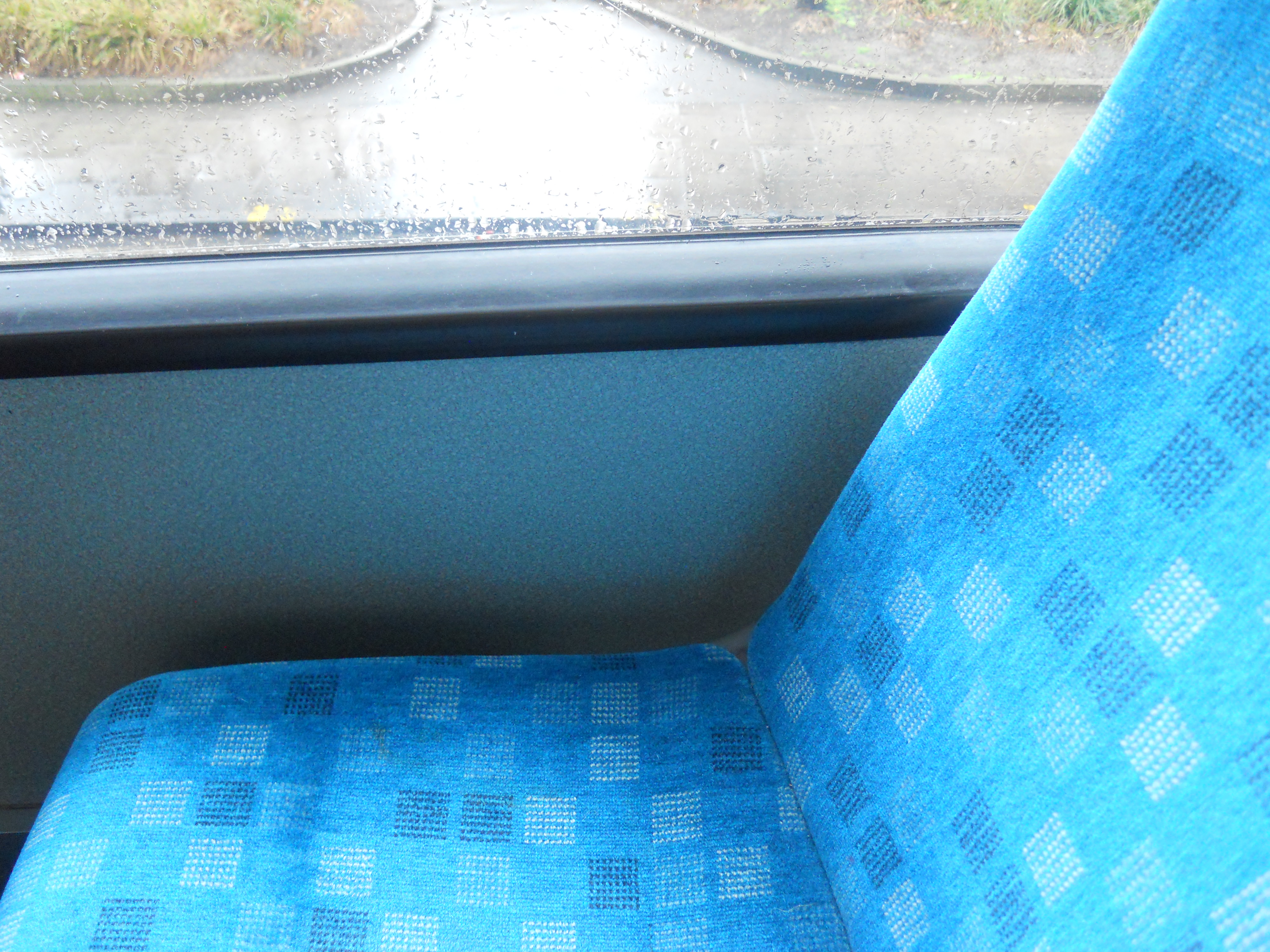
The Seat on a Standard Wright Bus
The New Bus for London certainly has a better seat, with better support and if you’re on the window side, you have somewhere to rest one arm.
After a time I was able to move up-front.
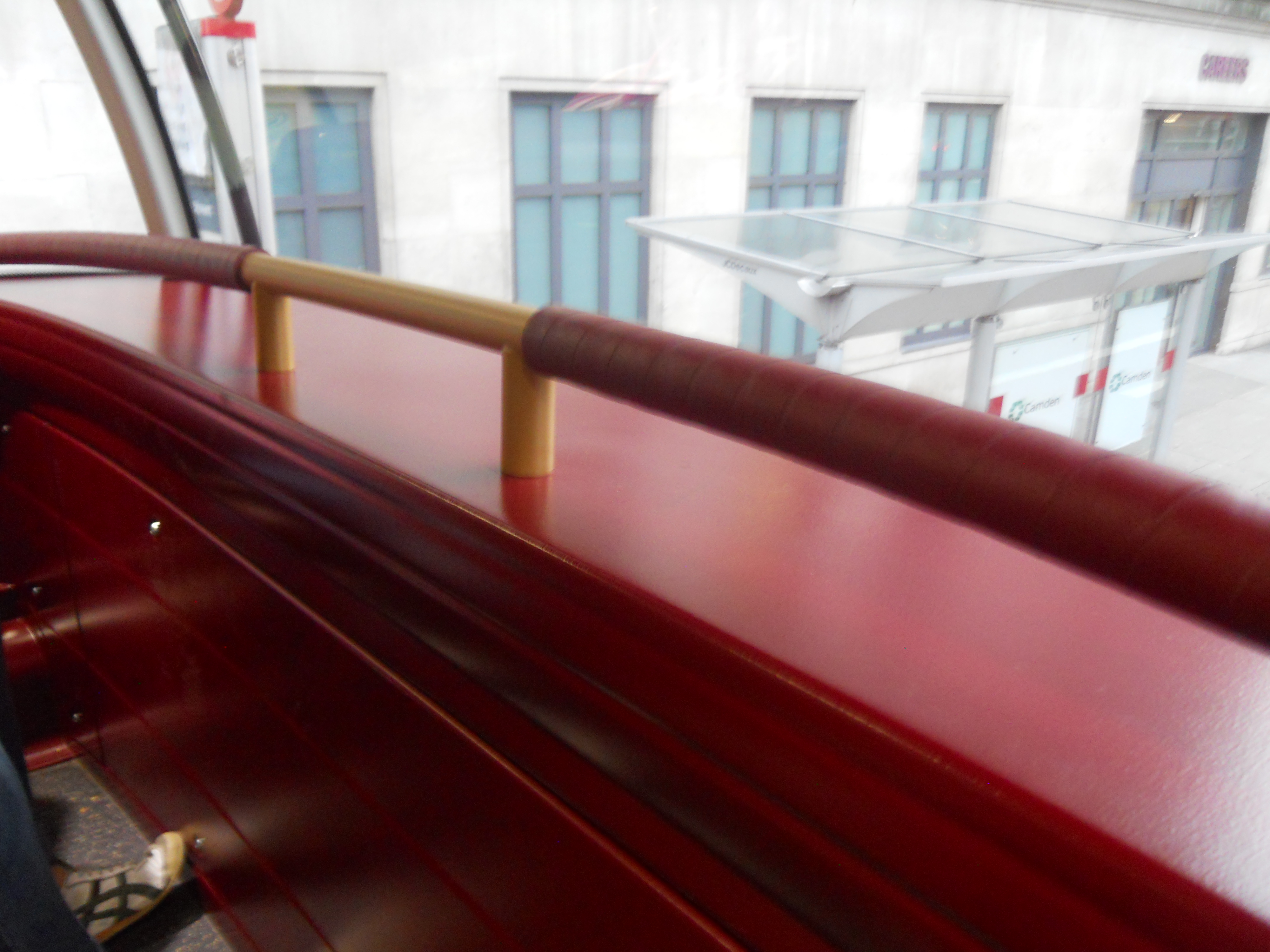
Up Front on a New Bus for London
The view is again good and there is the usual grab rail beloved of kids of all ages. Strangely, I suspect that you might get better pictures from the side of the bus, due to the wide and deep windows.
As we progressed through London, the most astounding thing, was that everybody was looking at the bus.

Eros From a New Bus for London
Quite a few of the crowds on Eros were photographing the bus. As I think was this lady.
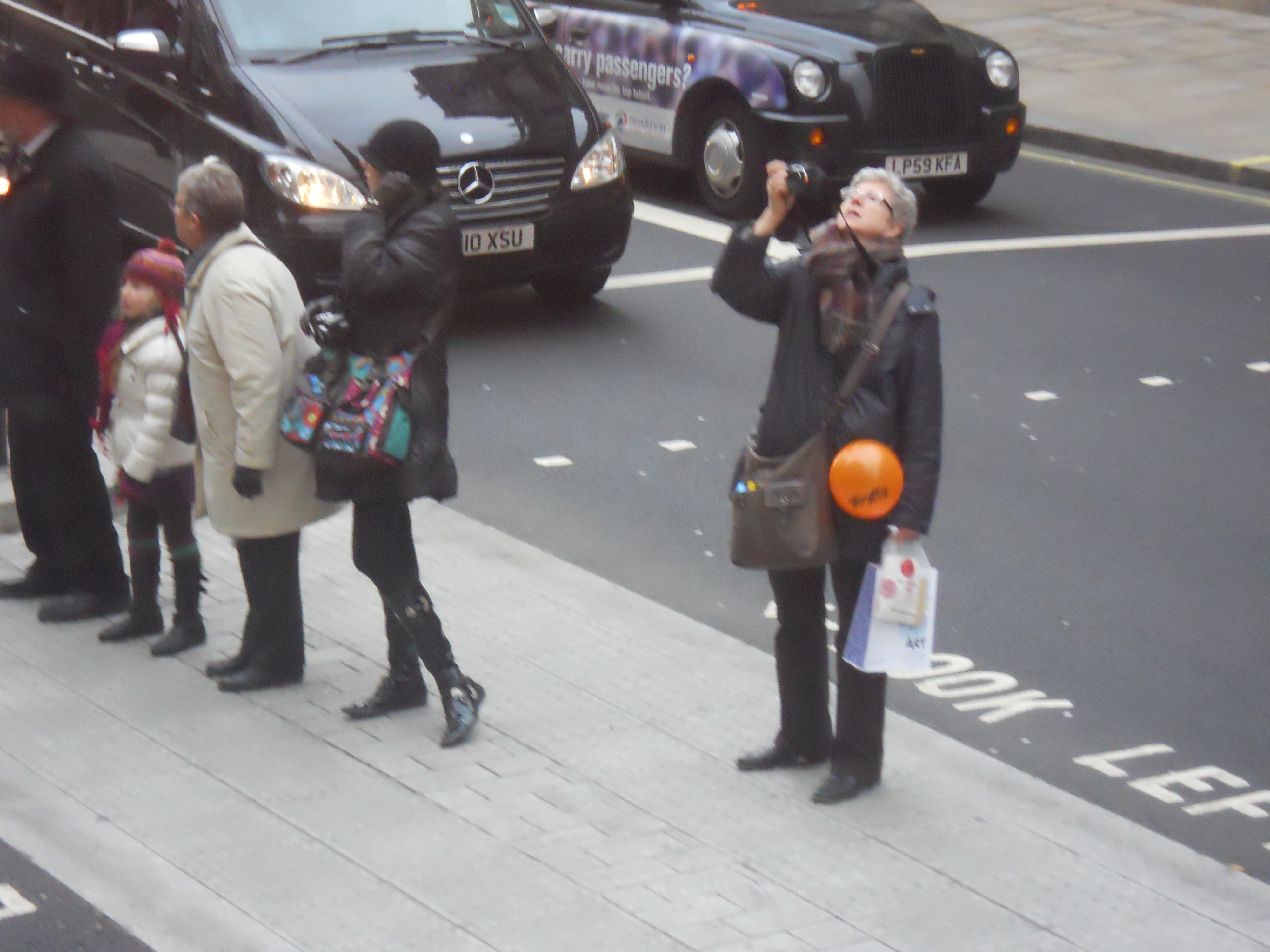
Caught in the Act
But we were outside Fortnums, so she might have been photographing the shop. At Victoria the cameras were out again.
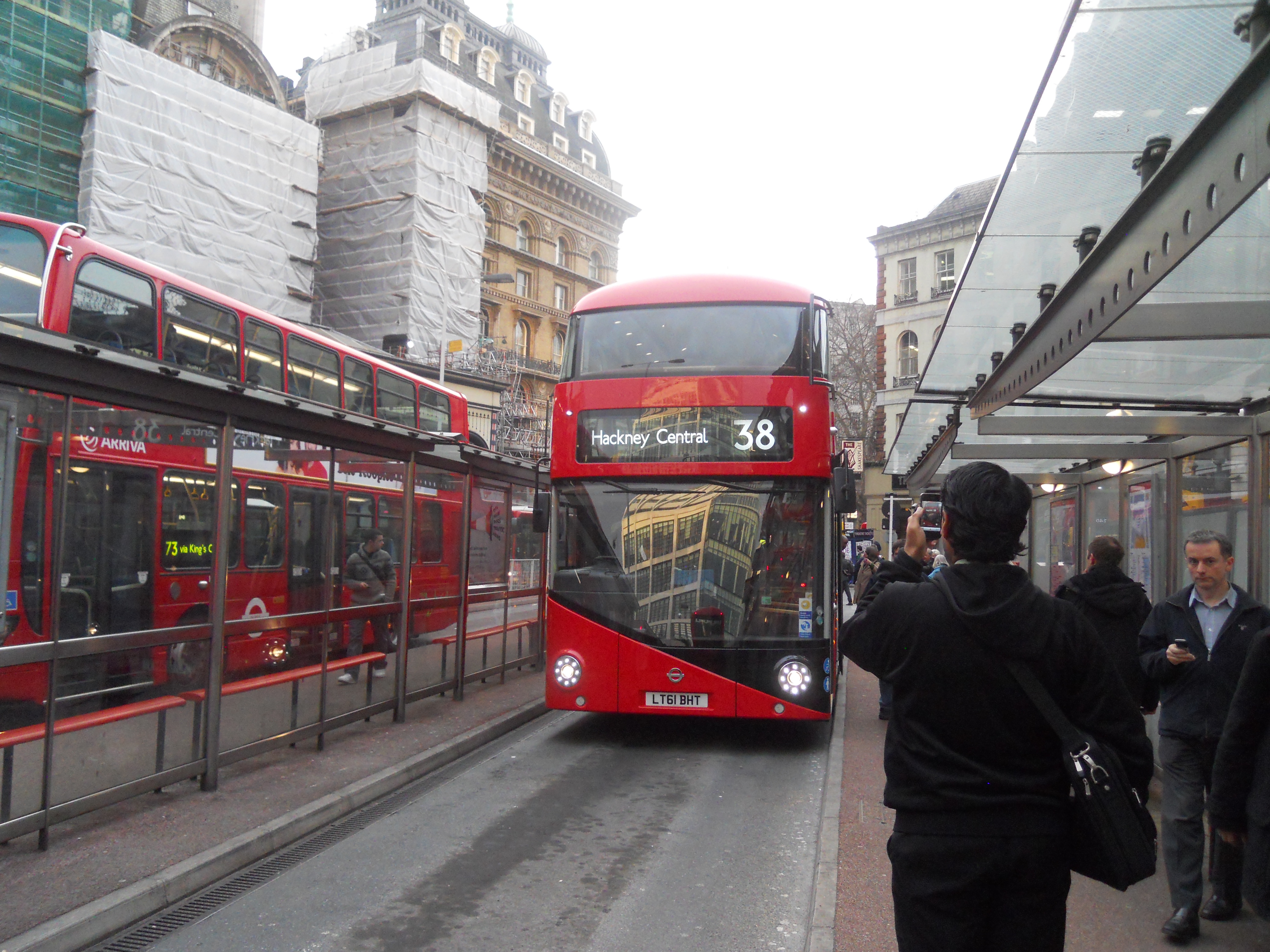
The New Bus for London at Victoria
It’s when you see it here, you realise that the bus is only marginally bigger than the standard buses. Although, on the roads, the curves make it look bigger.
Soon we were off again and i took this picture of a visiting Pole in the back seat of the top deck.
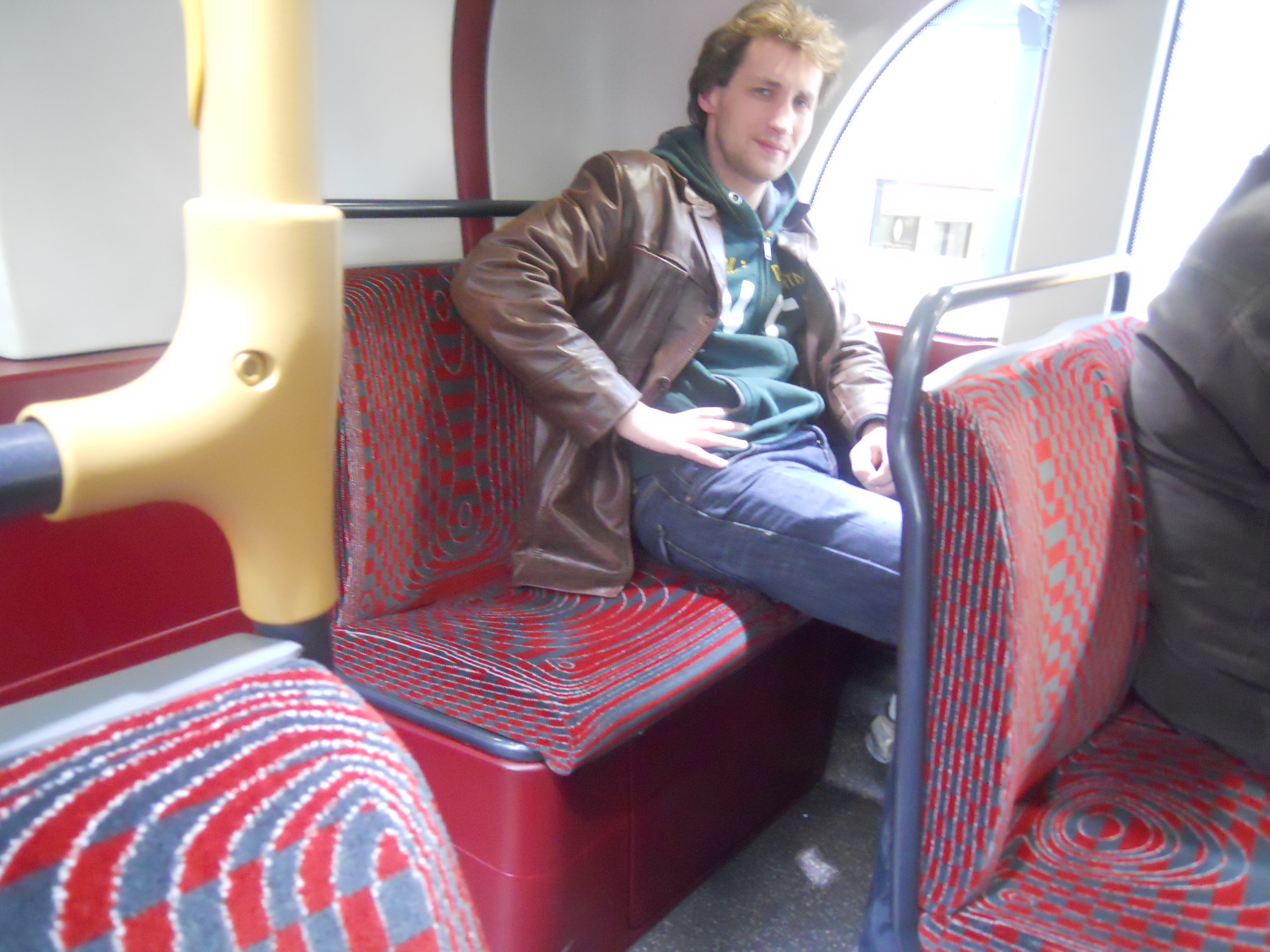
On the Back Seat of the New Bus for London
On the old Routemasters and the RT’s before them, this seat was always popular for a cuddle. I suspect that it will get used for the same purpose on this bus.
I should say, that as someone, who is a bit weak down the left hand side, I didn’t find the stairs too difficult. In fact because there are two staircases, you use the one most convenient to where you are sitting. So I suspect on a crowded bus, you’d probably get off quicker and a lot easier. They are certainly no more difficult to use than those on the standard London buses. The picture shows the front staircase.
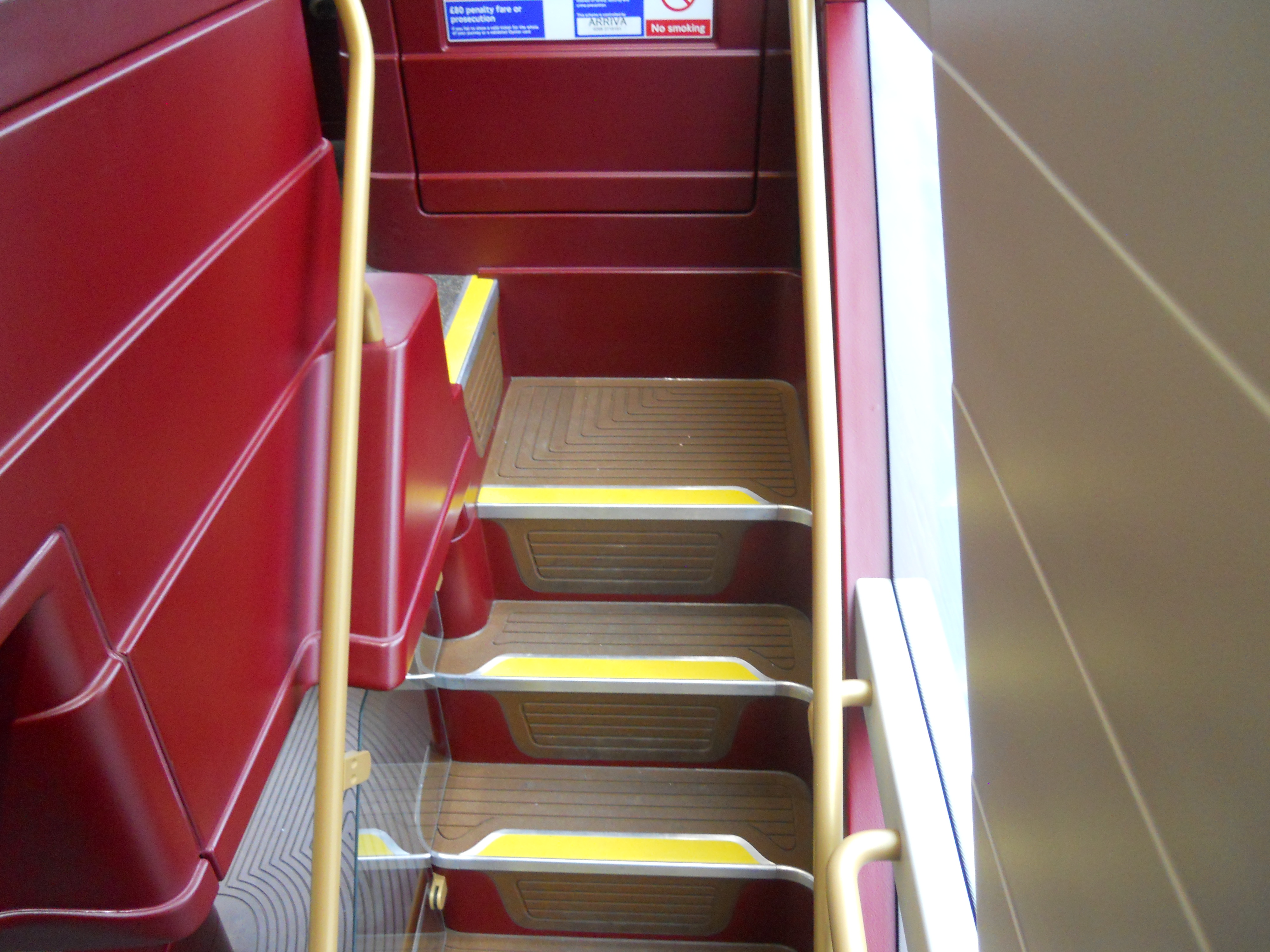
The Front Staircase on the New Bus for London
I think they might be a bit wider too. This picture was taken from the window seat just behind the staircase, which I think could be one of the best seats to take pictures from the bus.
So how do people like the bus?
I did talk to a few people and they were generally enthusiastic. Many too, were taking pictures on their phones or like me, had cameras with them.
Finally, I got off the bus and walked the short distance home.
But this couple were in a hurry and hopped on the bus, whilst it was stuck at the traffic lights.
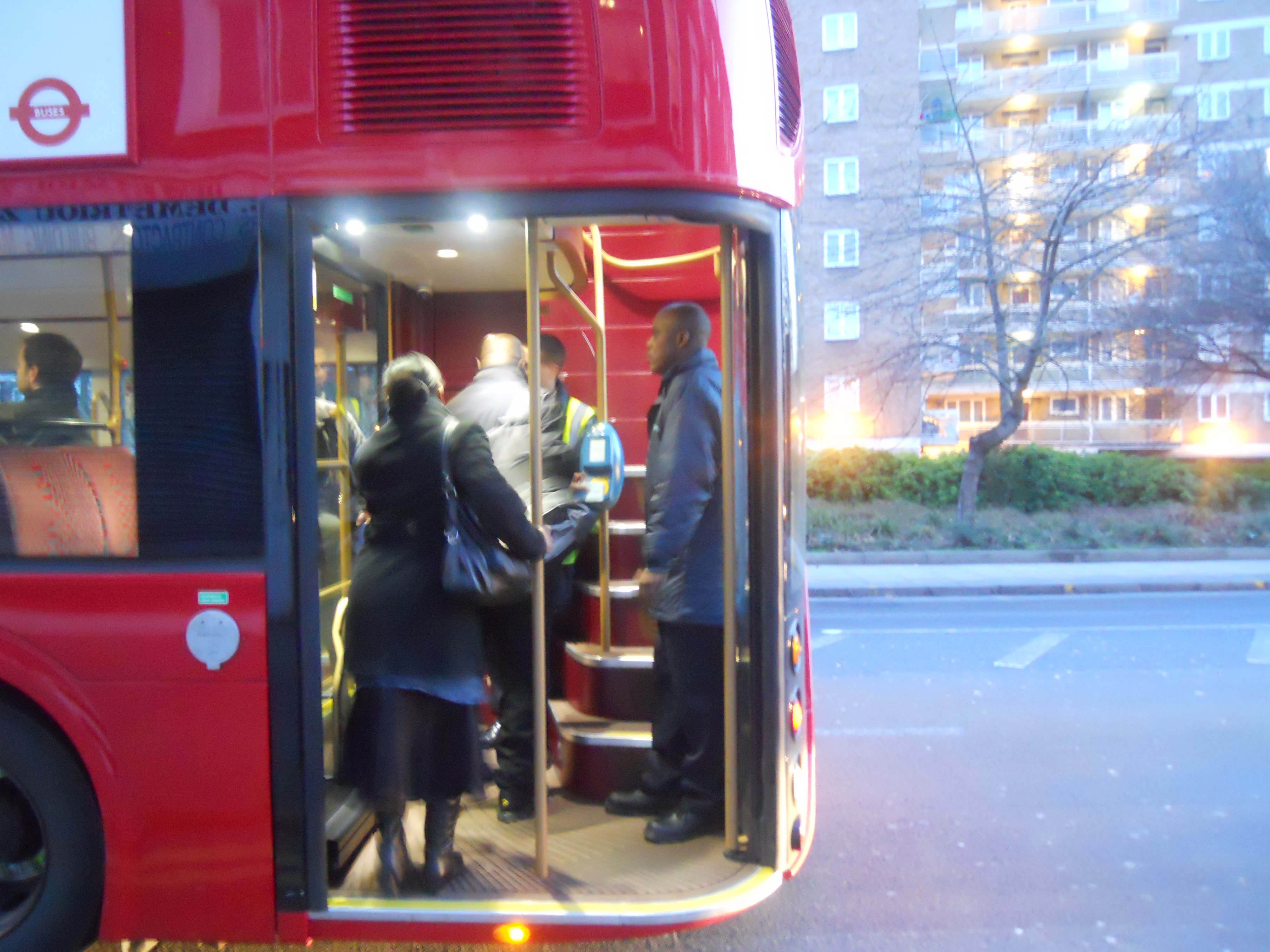
Hopping On a New Bus for London
So will the hop-on/hop-off facility work? It seems to be what Londoners want. It will help me, as often when I walk round the corner to get a 38 to Islington, one is stuck at the traffic lights, so it might save me a couple of minutes waiting for the next one.
To summarise, I think that the designers have generally got it right. The bus is light and airey, the windows give good visibility out, the staircases are easy, the open platform appears to be working and the driver I spoke to liked the bus, which is surely important.
Quite a few men, seemed to be interested in the technical details like the hybrid power system, which gives the bus very good fuel consumption. When did you last discuss how your bus or train worked with someone?
Only one lady thought there might not be enough spaces for buggies, but she did like the seats and the big windows!
Another passenger didn’t like the new smell, as I didn’t on the journey to Victoria, but that will go away in a couple of weeks.
I think my biggest conclusion about the bus is summed up in a quote by David Hockney.
Art has to move you and design does not, unless it’s a good design for a bus.
There would even be space on the top deck for a dachshund under the seat.
I Finally Catch A New Bus for London in the Balls Pond Road
I only managed to catch it with a camera, as I had my shopping with me and was just going home.
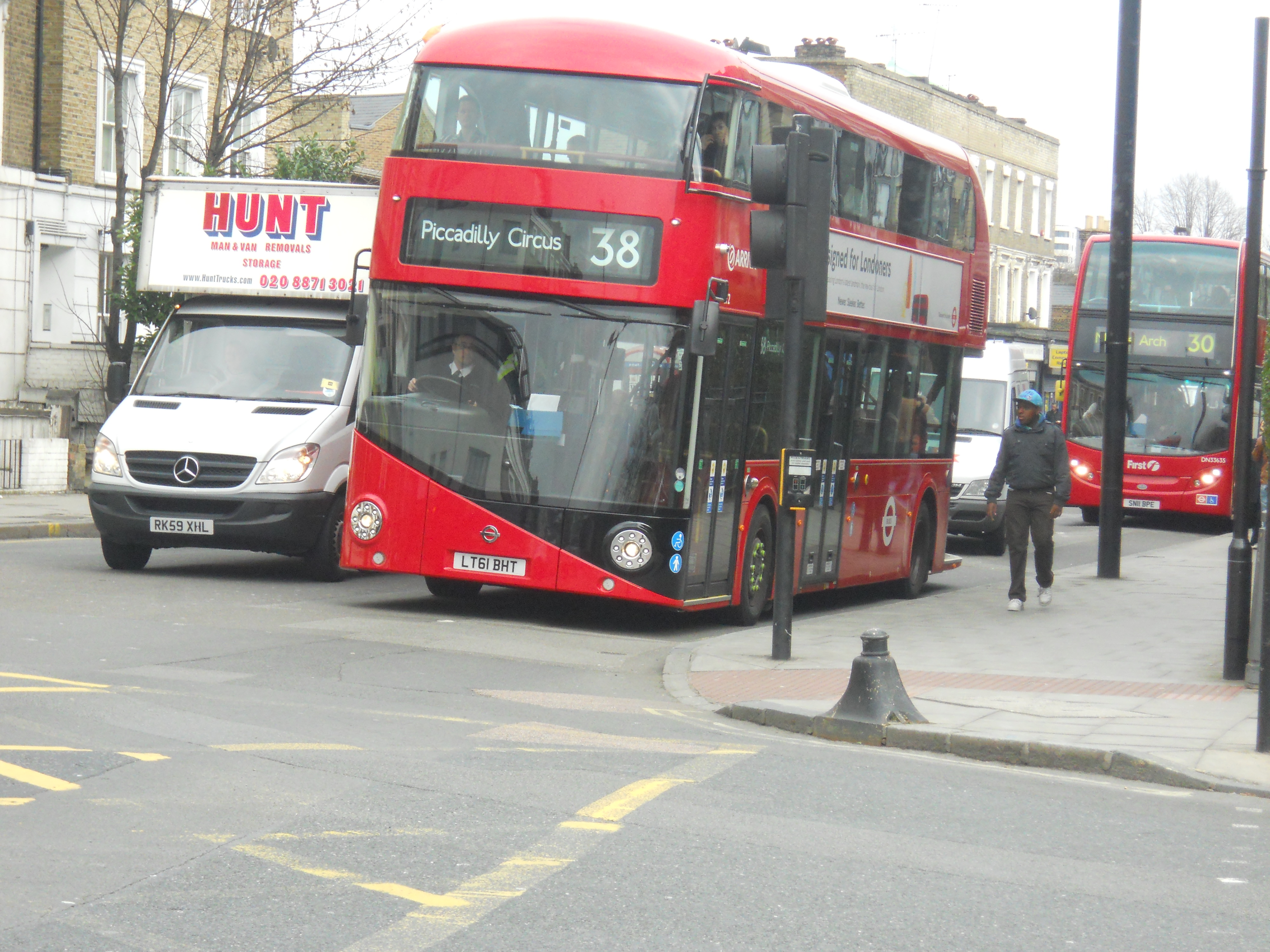
A New Bus for London on Route 38
At least though they are not a figment of London’s imagination.
My last memory of it as it crossed towards Islington, was of the conductor balanced at the bottom of the back stairs, just like he would have been on an old Routemaster.
I should say, as I was taking the picture, I was approached by a well-dressed black guy about half my age, who’d just got off the bus. He was truly enthusiastic about the bus.
So does good design appeal to everyone?
The Bus Design Wars
There has been criticism from the usual suspects of the New Bus for London, saying it is just a vanity project and too expensive. It is the latter, if you don’t take into account the design and certification costs. But then when could politicians do arithmetic? Especially hard-left or hard-right ones!
In some ways though the New Bus for London, is just another skirmish in the battle for control of who designs and builds the UK’s buses. And the only winners of that will be the passengers, the bus operators and probably employment in either Northern Ireland or Yorkshire!
So what do the passengers want of a bus want other than it be reliable, easy to get on and off and comfortable?
Some would like wi-fi and I’ve seen this on buses in Reading and Cambridge.
Others might like groups of seats of four with a table and I’ve seen that in Reading.
Leather seats also feature on some buses in Cambridge. And comfortable they were too.
If you are disabled, in a wheel-chair or with a baby in a buggy, you want easy access. London’s dual-door buses make this much easier than some places, where single-door is the norm. Manchester for example, still has 40% of buses without wheel-chair access, whereas London has a figure of virtually 100% wheel-chair access. In my view single-door buses are not acceptable for wheel-chair access.
Londoners also want the hop-on/hop-off ability of the old beloved Routemaster.
So the specification of buses is going upmarket just like that of your average luxury car is.
Let’s look at the specification of the standard red London bus. It may seem very similar to other buses you see around the country, but with extra features.
All London buses have at least two doors, to ease boarding. How bad a single door is was illustrated to me on a new Wright bus in Manchester, where everybody clustered by the driver, distracting him and making the process of loading and unloading difficult. Anybody with a buggy or in a wheelchair probably couldn’t have got on or off. I was sitting next to an off duty bus-driver and he said it was only to save money that the bus company didn’t buy double-entry/exit buses. But he had to put up with all the aggro around the single door!
Note that wheel-chairs always enter or exit through the door at the middle of the bus.
London buses also talk you through the route and display where you are.
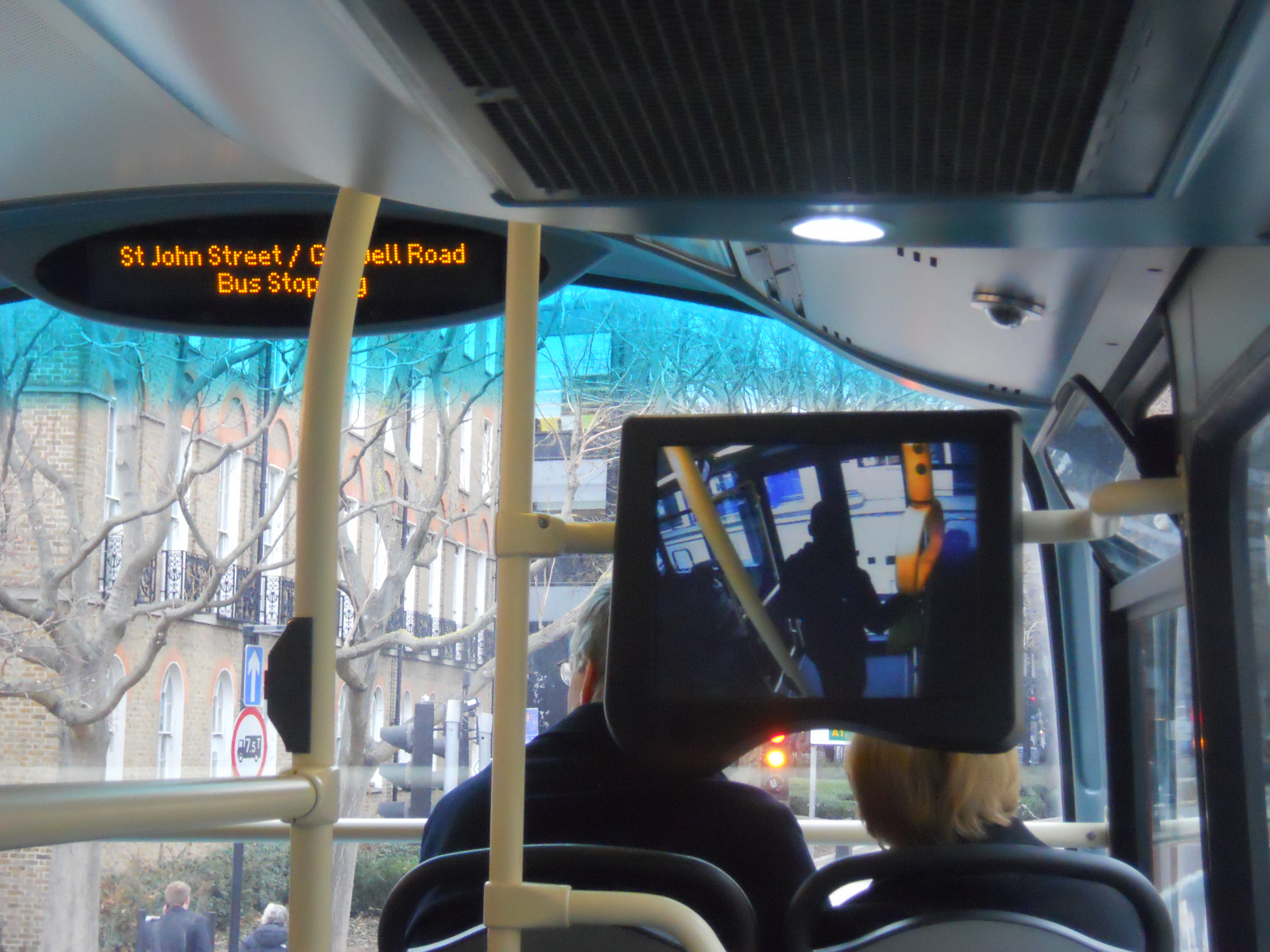
Displays on a London Bus
The picture also shows one of the security video screens on the bus. Would you commit a crime with upwards of sixty people watching?
London buses have been to this specification for some years now and even the older ones still running have two doors and route displays.
Currently, there are three main types of double deck bus, that have been delivered in the last three years or so, each delivered by a different manufacturer.
Scania OmniCity
The Scania OmniCity is built in Poland and route 56, which runs near me uses them.
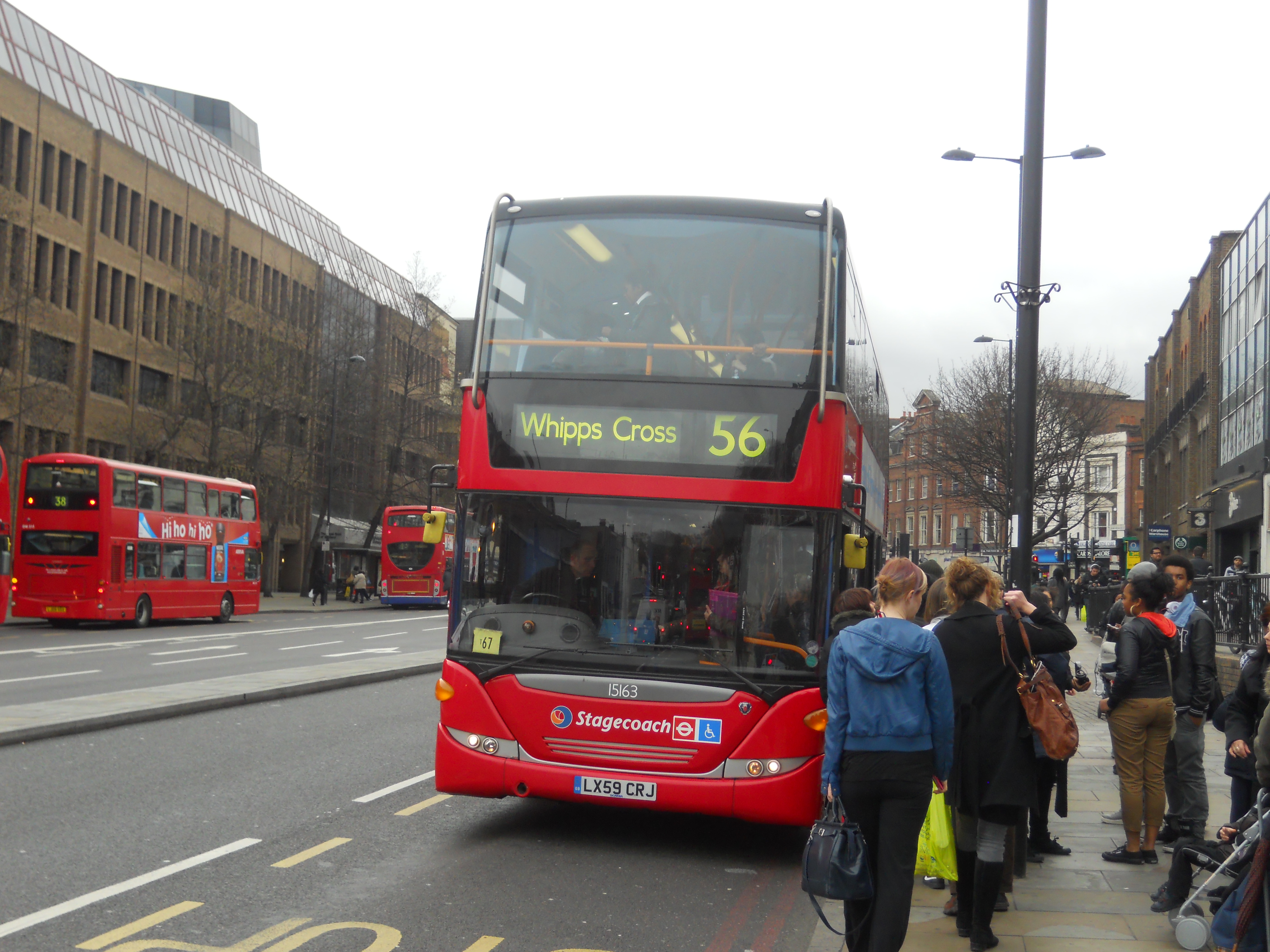
Scania OmniCity
This is one loading and unloading at the Angel today.
Wright Gemini 2
The Wright Gemini 2 is built in Northern Ireland generally using Volvo chassis components.
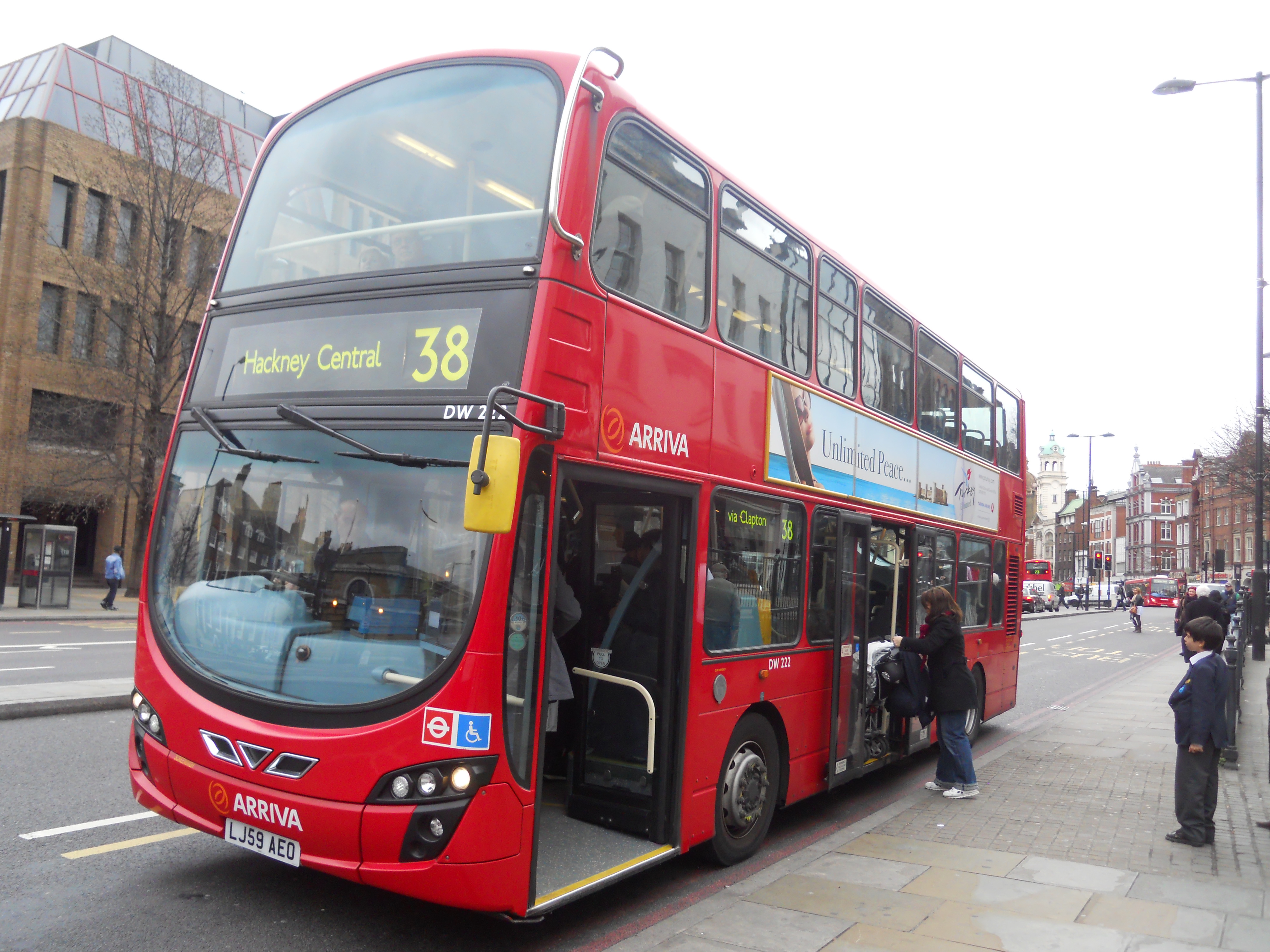
Wright Gemini 2
There are two types; a conventional diesel bus and a hybrid version.
Alexander Dennis Enviro 400
The Alexander Dennis Enviro 400 is another British-built bus from Yorkshire.
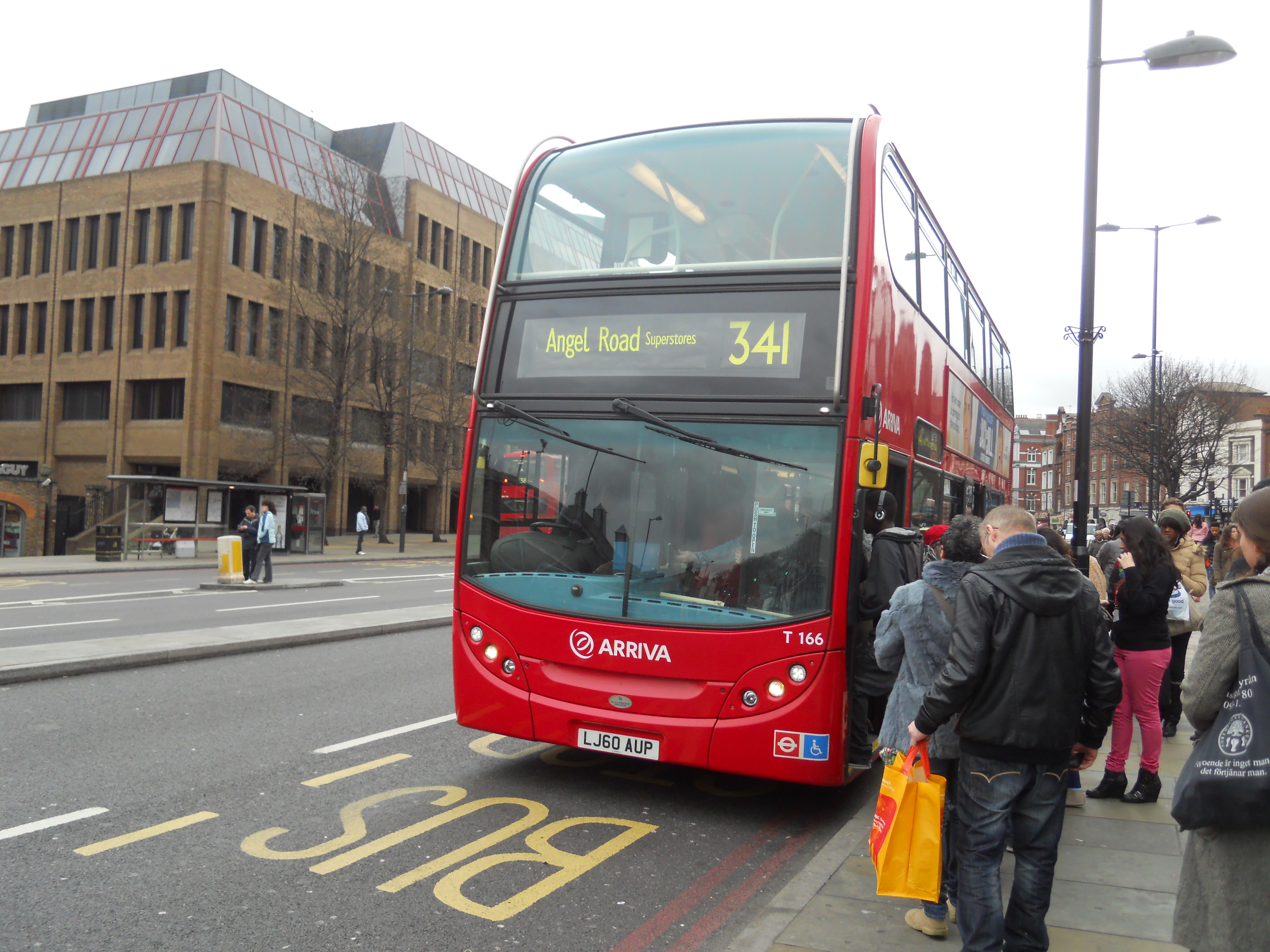
Alexander Dennis Enviro 400
As with the Gemini, it is available in both conventional and hybrid versions.
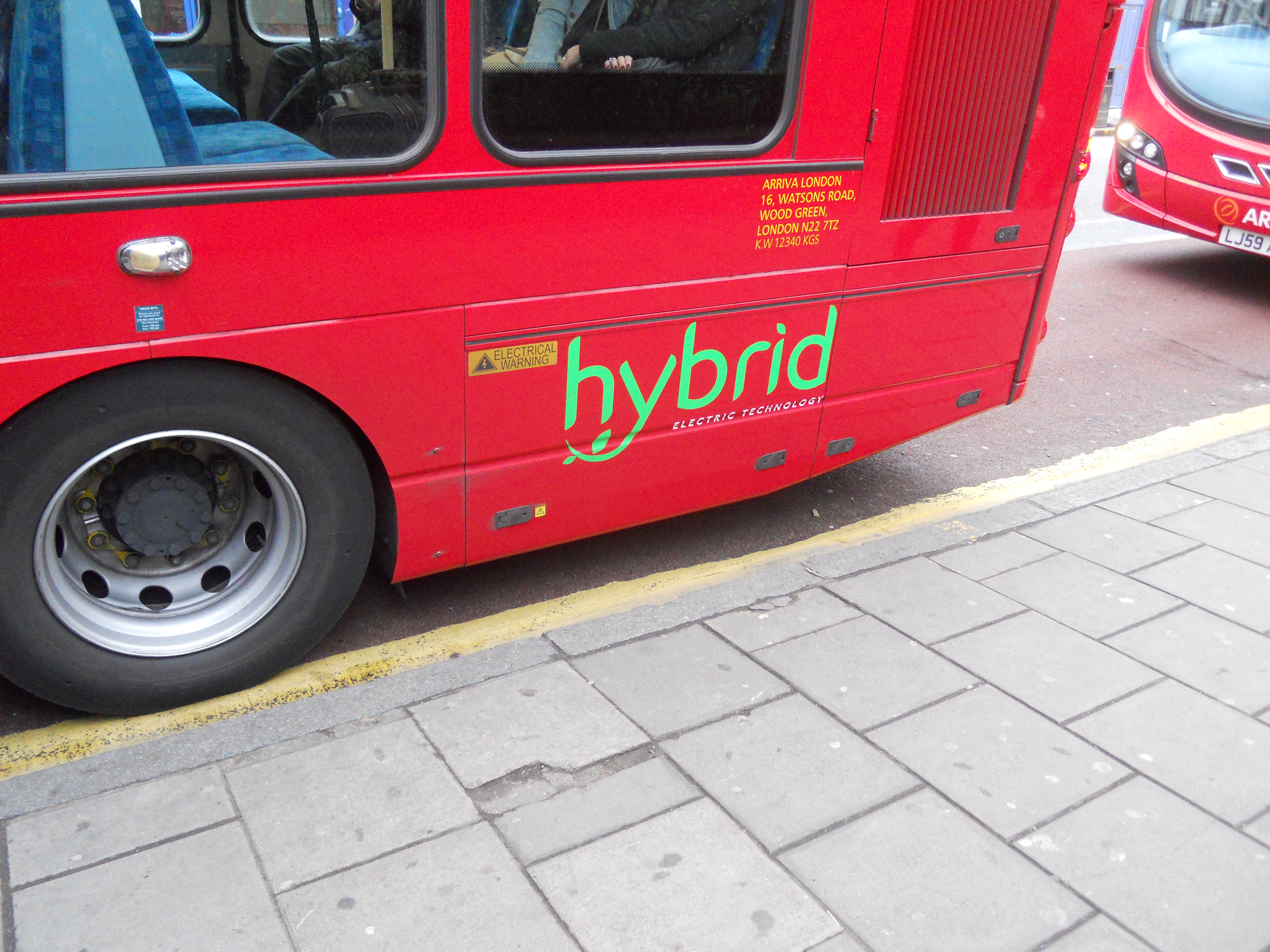
Hybrid Bus Logo
Increasingly, this logo will be seen on the side of buses, as Transport for London have said that from 2013 all new buses must be low-or zero-emission.
I tried to get on the single New Bus for London, but couldn’t find it today, as it seemed to be very popular with bus enthusiasts.
The New Bus for London will stand or fall on how it meets the objectives I outlined earlier in this post.
The current design has three doors and two staircases, which may seem excessive, but they should speed up loading and unloading. I hope tests have been done on a mock-up with real people to prove the theory. Boeing and Airbus do this with their airliners, so why shouldn’t bus designers?
But one of the advantages of two staircases is that it gives more places to hide the some parts of the hybrid drive system, like the diesel engine, the generator and the batteries. The actual electric motors are hidden in the rear wheels and do regenerative brakimg too.
In fact, the propulsion system of the New Bus for London and all future hybrid buses, will probably change drammatically over the next couple of years.
As batteries are expensive and have to be replaced every couple of years or so, so they are one of the major running costs of a hybrid bus. But Torotrak have come up with a flywheel-based solution to store energy. Someone will make it work, even if they don’t. Their prototype looks to be smaller and cheaper than a current set of batteries.
There is also a big beast that has entered hybrid drive systems for buses and larger vehicles; BAe Systems with HibriDrive. There are a lot of new buses needed both in the UK and worldwide in the next few years and BAe Systems will eat their fill from it. They will only pour petrol on the Bus Design Wars. And we know who’s going to win that; the passengers, the bus operators and hopefully UK-based builders.
A Colour-Coordinated Commuter
The picture shows the London Overground’s distinctive orange colour that gets everywhere. Perhaps, the colour design team was led by a Blackpool supporter or someone from The Netherlands.
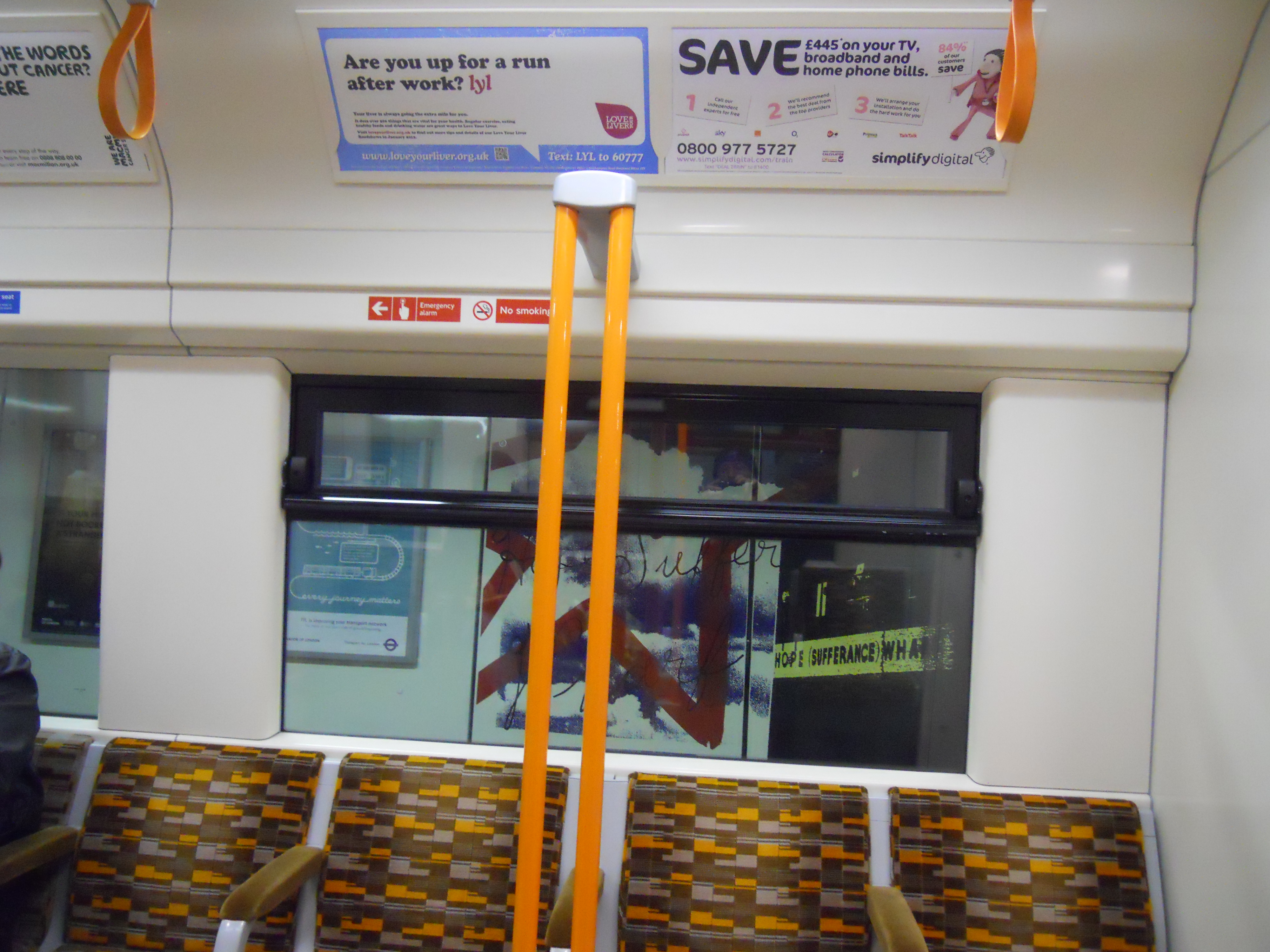
The London Overground Orange
Opposite me on my trip to the deep South, was a very normal looking commuter, who had an orange-framed Brompton bicycle and a phone and an MP3 player in orange cases.
I felt to take the photograph would have been too much orange.
By the way, one of the Overground lines reaches from the Olympic site at Stratford to convenient buses to Alexandra Palace, where the Dutch House is to be setup . So is this orange by design or coincidence?
The Dutch should feel happy at Ally Pally, as it has an ice rink. They could get vertigo though, as it is one of the highest points of London and the views are spectacular.
The New Island Platform at Cambridge
This view of the new platform, shows the problem we have at many stations in the UK.
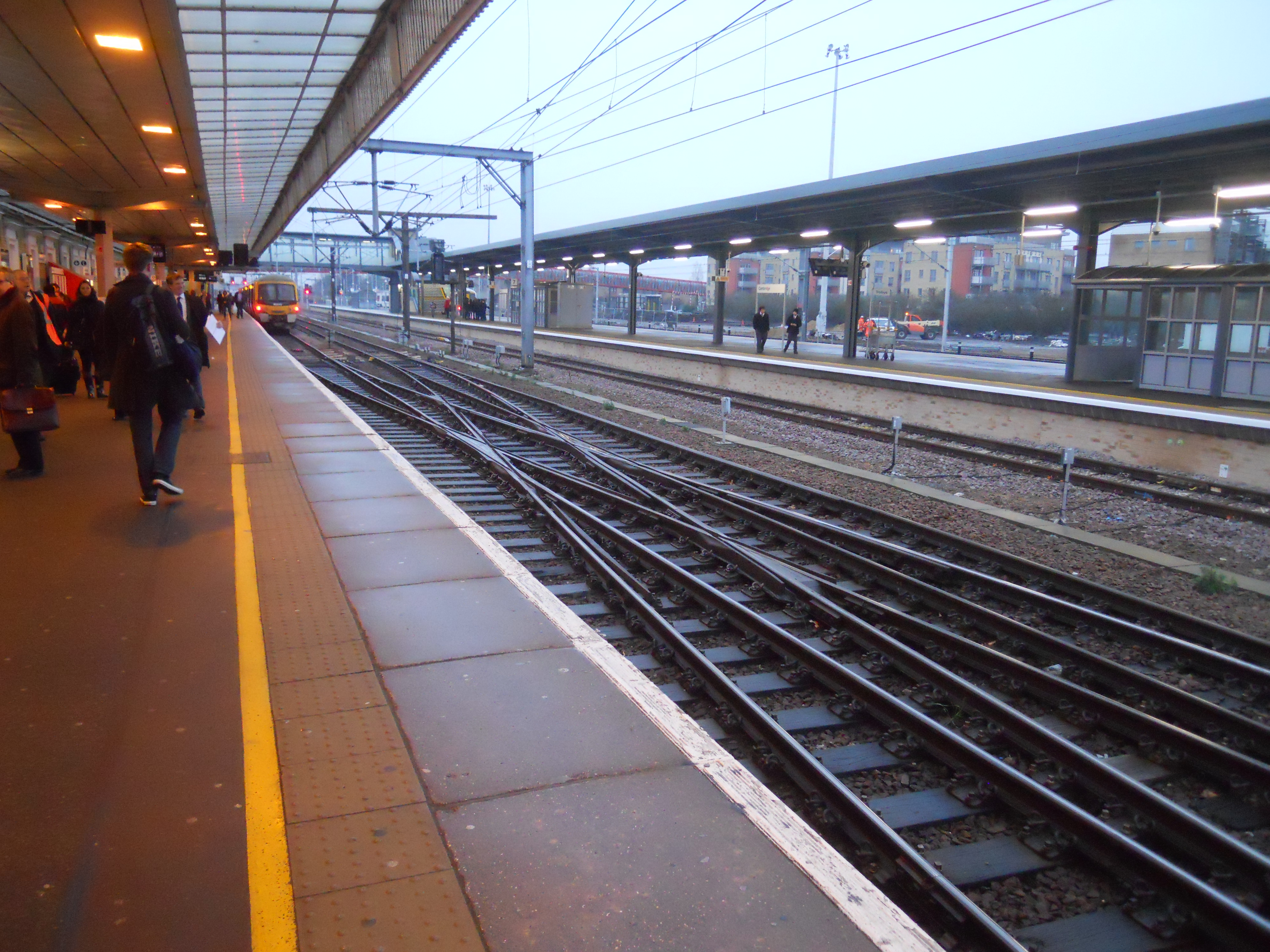
The New Island Platform at Cambridge
The only way to and from the far platforms and the one where the picture was taken is by the bridge at the end, which either means a climb and a descent of stairs or two lift rides. One of the problems of overhead lines is that the bridge needs to be high with a lot of steps. In fact at Cambridge a subway as at Stratford would be better, but that would have increased the cost substantially.
But surely, in this day and age something better can be designed, that was quick and easy to install and could be installed at many stations.
The Last of the Many
I went to Greenford station today to see the last of something that was very common on the Underground; a wooden escalator.
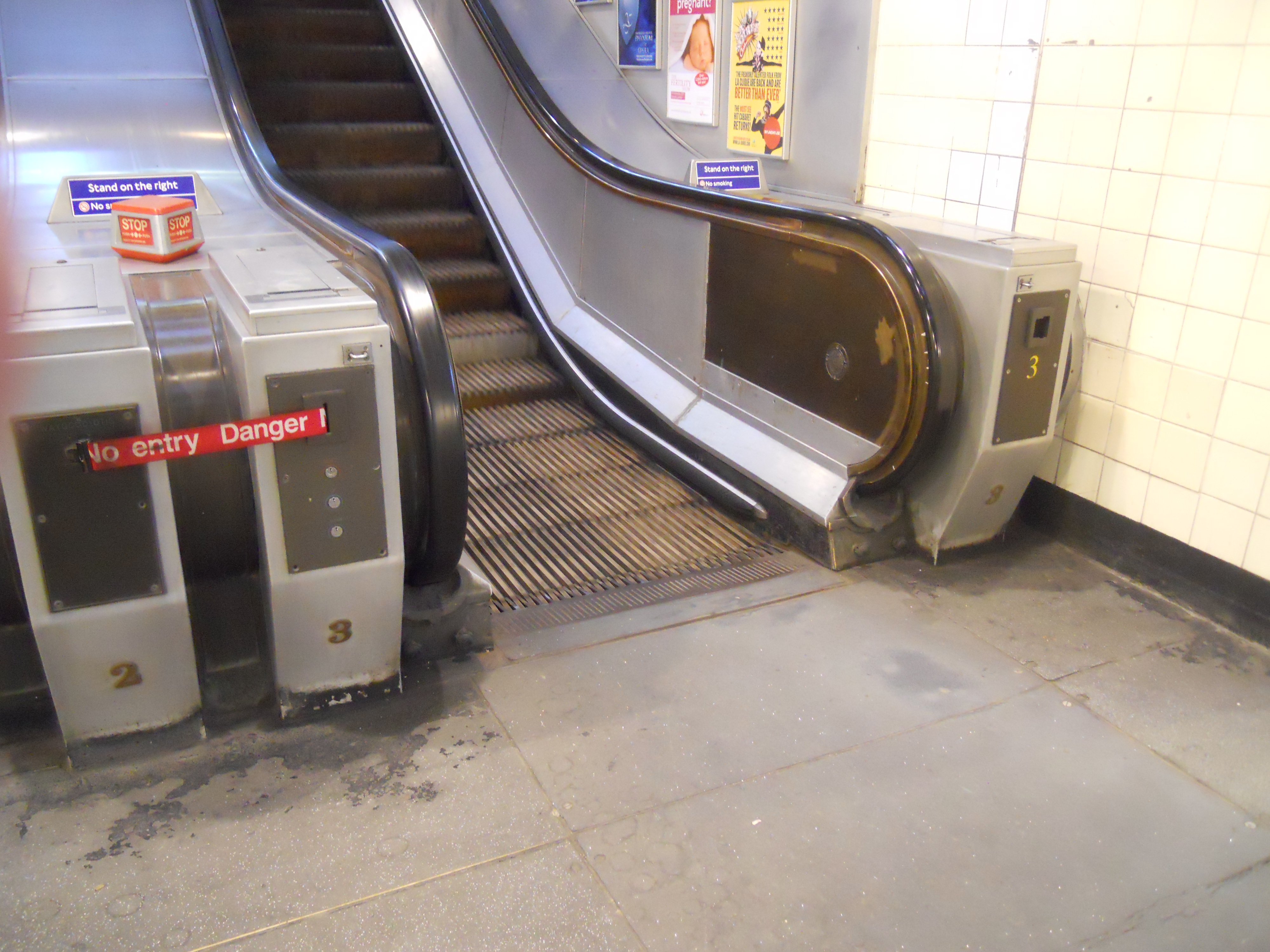
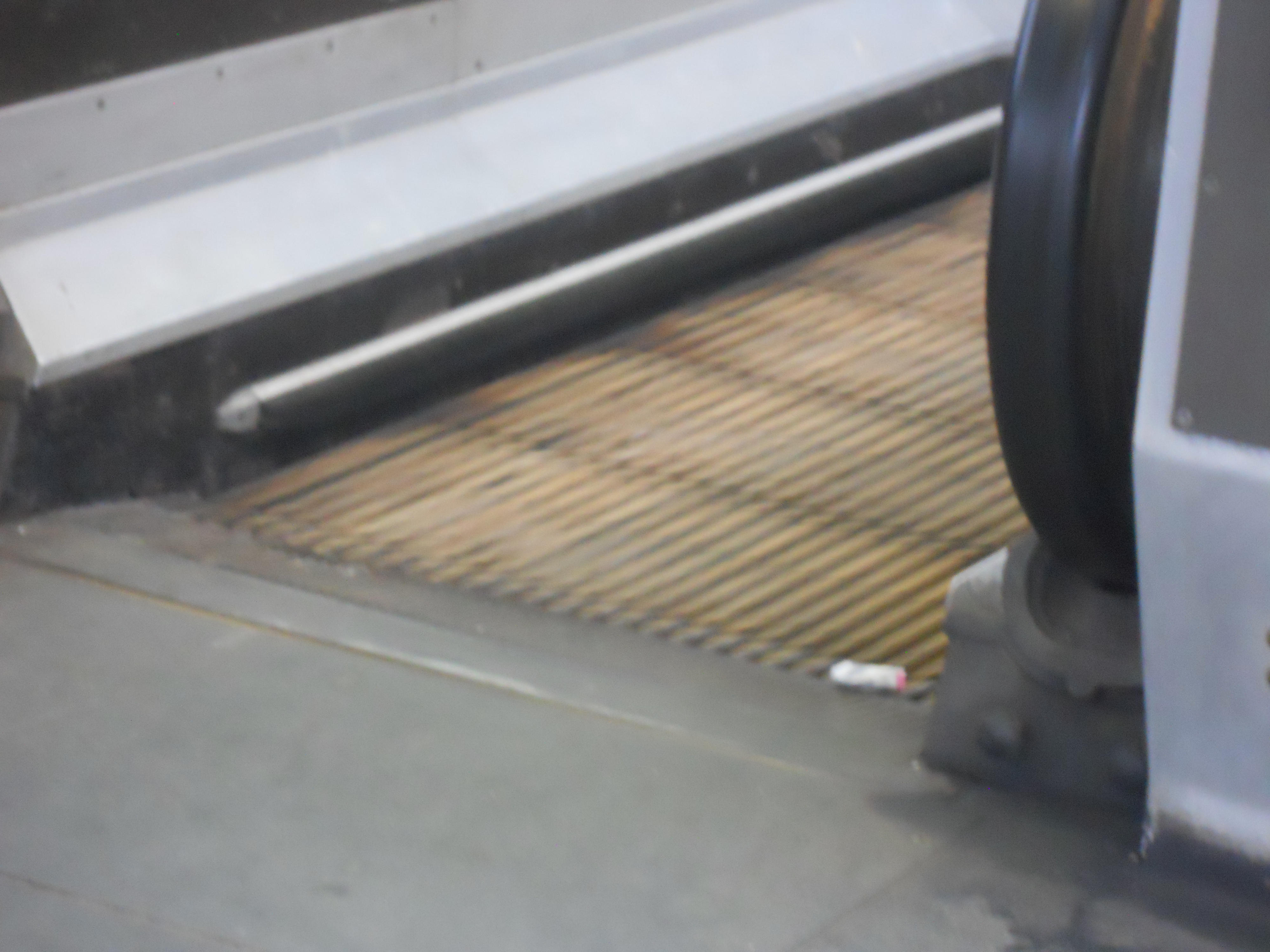
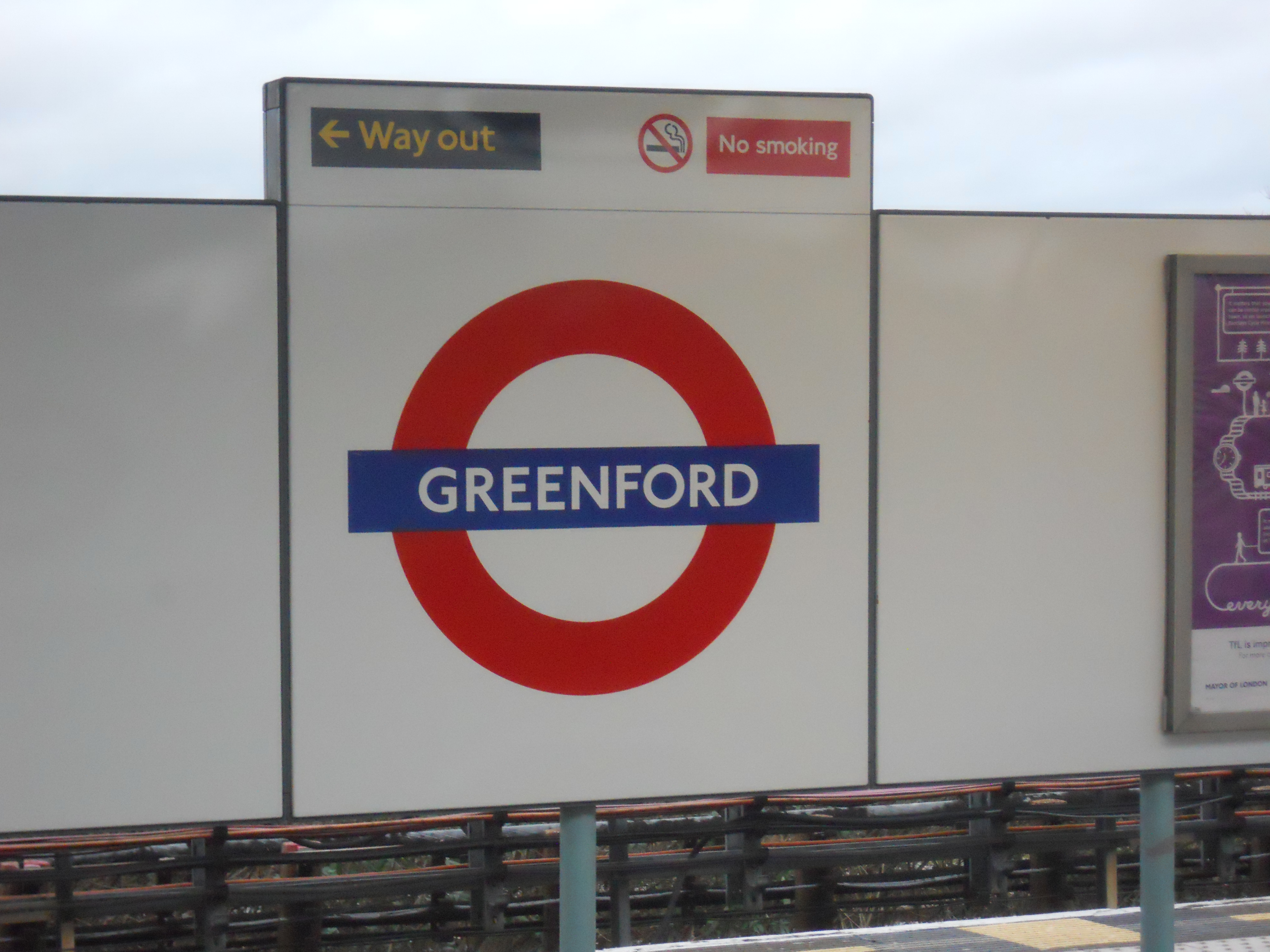
As you can see from the pictures, the escalator isn’t pristine, but being as it’s owned by London Underground, I suspect it’s mechanically perfect. And of course as they scrapped hundreds, they’ve probably got several shedfulls of spare parts.
I did also make a video, which shows it still works.
I wonder how many others are still running in the UK. When I went to Moscow in 2000, they were still going on the Moscow Metro. But the Greenford one is just a baby to the giants in Moscow.
Wooden escalators may have advantages for those who are not too good on their pins. When I ascended, I just slid off as I used to do as a child. And of course now that guide dogs are allowed on escalators, they’re probably more dog-friendly.
But these are not reasons to go back to wooden treads. I do think though, that In the next few years a better step design will evolve.
I think it is needed as we now have people with large cases, buggies and all types of dogs wanting to use them more and more. And then of course there’s fashion items like stiletto heels and long skirts, which sometimes get caught. I am also not forgetting those on crutches or in a wheel-chair, who find escalators difficult.
It’s a challenge and he or she who solves it will make a lot of money.
Farewell Ronald Searle
Ronald Searle was one of the greatest cartoonists this country has ever produced.
He is remembered most for St. Trinians. But I saw his wartime drawings from the Burma Railway in the sixties and they left a deep impression about the horrors of war and man’s inhumanity to man. All are part of a legacy of a great artist, who is mainly remembered for just one small part of his work.
He deserves to have a proper retrospective exhibition at a major gallery in the UK.
I noticed that Ronald Searle had the initials, RDI, after his name. The initials stand for Royal Designers for Industry. It is is a distinction established by the Royal Society of Arts in 1936, to encourage a high standard of industrial design and enhance the status of designers.
Is There A Link Between Violence in Hospital A & E Departments and Smoking?
The only Hospital A & E Department, I’ve been to in the last six or seven years or so, is Addenbrooke’s in Cambridge. Mostly, I was there because of stroke-related problem, but once because of C and once because I had a fishbone stuck in my throat.
The A & E Department at Addenbrooke’s has a great advantage over many others in the UK, in that it is some distance from the city centre, so it probably doesn’t get too many of the walk-in drunks, that litter up many other hospitals.
In all my visits, I’ve never seen any problems between patients and staff, but this would not seem to be the norm throughout the rest of the UK.
Smoking is banned in all hospitals, so could it be that the stress of an ill patient, is worsened, by not being able to light up. So they go outside for a quick fix and then when they get back in they’ve missed their place in the queue.
More research needs to be done.
The efforts of the Design Council to redesign A & E Departments may help and is to be welcomed.
Should We Londonise All Buses?
I know I’m a Londoner and live in the finest city in Europe, let alone the UK or England, but in my travels around the country, I have come to the conclusion, that most bus services outside the capital are very second-rate.
To start with, I should say that in most places it isn’t mainly the buses themselves, as towns and cities like Leeds, Manchester, Bristol and several others have buses that on a quick look to be on average to be the same condition and age, as those in London.
But there are three major differences.
- Most London buses are front entrance and centre exit, which effectively means that they pick up and set down passengers a lot quicker. It also means in London’s case, that a wheelchair passenger has an easier route to get on and off, as he or she uses the middle door. Because of the smaller dwell time at stops, two door buses actually travel faster and carry more people more efficiently. Whether this means the capital cost per passenger journey is lower, I don’t know. But it may well be so!
- London buses also announce the next stop both visually and audibly. Many visitors to my house are very surprised, when I say something like take the 141 to Balls Pond Road and get off there. The system also announces route changes and can be used by the driver to send a selection of common messages to the passengers.
- But the biggest difference is that all London buses are touch on, either with an Oyster card or a concession like my Freedom Pass. If you have a paper ticket, you show it to the driver and they tell you to get on. There is no timewasting mucking about with paper tickets, that London obviously deems to be just litter.
- From next summer, you will be able to touch in on your bus journey with any credit card, as Oyster is being augmented for the Olympics.
But it is the field of information that London buses are streets ahead of every other bus system in the UK.
- As a child, you were always told, that every tube station had a street map of the local area. So if you got lost, just go to the Underground station. So now, like many Londoners, when you are going somewhere foreign like Croydon for a North Londoner or Wembley for a South Londoner, you never carry a map and rely on the map at the destination station. It usually works. Now this street map system has been extended to the buses and most bus stops have a local street map. Only last night, whilst walking back from the pub, I used a map on a stop to show a tourist from Germany, how to walk to the pub where he was meeting a friend.
- These street maps are paired with spider maps, which show all the routes in the area, where they go and at which stop you catch the bus. Frank Pick and Harry Beck would be proud of this idea from their successors. Spider maps work well and if I’m lost after a walk, I just find the nearest bus and work out how to get home. Incidentally, Transport for London call them bus route diagrams, but you can’t argue with umpteen million Londoners, who call them spider maps and that term is now the one generally used by all.
- London has recently introduced text messaging at stops to find out how long you have to wait for the next bus. Other cities have this and it should be the norm everywhere.
- Important London bus stops have displays showing how long you’ll have to wait for the next bus. But as people are starting to use the text system more and more, I suspect, the number of these displays will decrease.
- You can also see when buses will arrive at a stop either through the web or from a phone app. I don’t have a smartphone, but my dumb Nokia 6310i is perfectly capable of telling me if a 30 bus, which is my preferred route home, is due ten minutes out of Kings Cross or Euston.
So how do some of the places I’ve visited compare to London in various areas?
Two Door Buses
You see the odd ones about, but not many.
On-Bus Information Systems
I’ve never seen one, but I’m told Colchester has them.
Maps at Bus Stops
Very few and most that I’ve seen have been very inferior and totally useless for visitors.
Text Information
This is a typical London next bus information notice.

London Sign For Bus Information By Text Message
And here’s one from Leeds.

Leeds Sign For Bus Information By Text Message
No prizes for guessing, which is the simpler system.
Not only is London, just a five digit number but the sign is easily read and is as low as they can put it, so that everybody from say eight to eighty can read it with ease. I can’t believe that there are over 45 million bus stops in Yorkshire! The london sign has the great advantage that it is small and just strapped to the post. So perhaps it could even be used on a temporary bus stop at road works.
I’ll let Frank Pick have the last word on this.
The test of the goodness of a thing is its fitness for use. If it fails on this first test, no amount of ornamentation or finish will make it any better; it will only make it more expensive, more foolish.
And he was born before the age of modern technology. He would have had a field day, if he was still alive and in charge of transport for the whole of the UK.
So to answer my original question, the answer must be an undoubted yes! London has proven that good, frequent and understandable bus services attract more riders, so the sooner we Londonise all buses the better.
People will go on about cost, but the first thing to do is get the maps at stops in place and get sensible text messaging systems working. And then we just have to make all new buses to the London standard! Remember too, that London retires quite a few buses each year. Many of these with a bit of refurbishment would be very suitable for lighter use in the provinces. Certainly, many of the older ones in London are much better, than the disabled-unfriendly old banger, I got back to the centre from Elland Road.
I think too, that we will underestimate the benefits of having the same bus information systems all over the country.
As an example, how much of my time and effort have I wasted trying to find out where to catch a bus on my challenge? And how much money have I wasted on unnecessary taxis?
So if it made travel easier and cheaper, would it make it easier for people to travel to work in the next town or perhaps have a day with Aunt Edna in Felixstowe?
We need any economic stimuli however small.
Remember too, that if we need new buses, that these are generally built in the UK, so much of the capital cost of new buses stays here. So if that is the case, why did Red Ken betray British workers, by buying a load of useless bendy buses? Few liked them, except perhaps fare dodgers.
 The Anonymous Widower