Two Platform Stations With 125 mph Trains
Increasingly, we are seeing stations in the UK, where there is only two platforms and trains pass through the station without stopping at 125 mph.
If HS4Air is built, there will be several stations between Gatwick Airport and Ashford, where this will happen.
I must admit, that I don’t like being on a platform, where trains past through, so perhaps it is a personal thing.
With me it’s not just 125 mph trains, but freight trains as well.
But for reasons of safety, I think we could come up with a better design of station.
I shall use Penshurst station on the Redhill to Tonbridge Line as an example.
This Google Map shows the station.

Note that it is very simple with a platform on each line.
Currently, it gets a single train per hour (tph) in both directions.
HS4Air would probably mean that at least another four tph, passed through the station at 125 mph.
Platform-edge doors would be a difficult and expensive solution, but why not make access to the platform only possible, when a train is stopping?
Looking at Penshurst station, this station also needs some more facilities, like a fully accessible footbridge.
The footbridge would be outside the secure area.
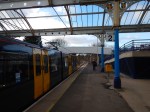
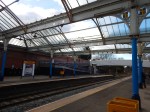
For slower passing trains and heavy freight trains, the use of wide platforms and rear access will suffice as these pictures from Hackney Wick station show.


If more stations were built to the rules used at Hackney Wick, the UK’s railways would probably be safer.
Liverpool Lime Street Station Has Been Remodelled
I went to Liverpool Lime Street station today and it has been extensively remodelled, as these pictures show.
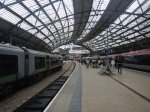
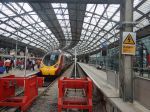
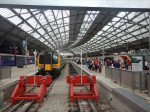
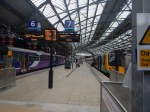
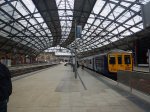
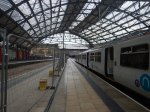
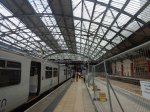
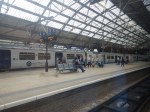
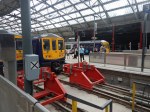
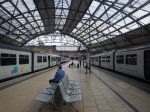
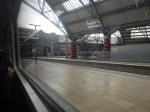
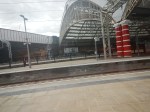
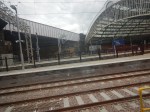
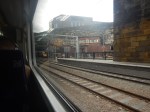
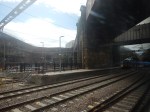
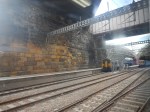
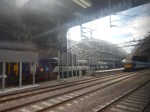
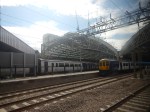
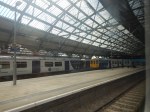
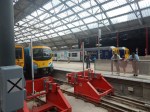
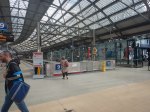
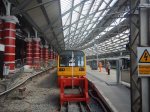
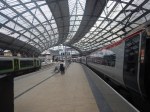
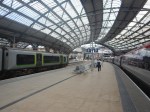
There are several changes.
Virgins Were Using Platform 9
The most obvious difference on arrival was that the Virgin services from London were using Platform 9, which is on the Southern side of the station, close to the taxi rank.
Taxi Access
So elderly Aunt Esmeralda coming from London to see her Liverpudlian family doesn’t have to go far for a cab.
I also noticed that Norwich services were using Platform 10 and there was a Birmingham New Street service in Platform 7.
So it would appear that longer distance services use the higher numbered platforms.
Not that it matters, as there’s a cab rank on the other side of the station.
Two Stations In One
I have read somewhere, that Liverpool Lime Street station with its pair of Victorian roofs, has been arranged so that the two sides can work independently.
The main reason, is that if engineering work is needed on one side, the other can remain open.
Each half-station utilises.
- A Victorian roof.
- A set of approach tracks.
- Five platforms
- A large clock
- A taxi rank.
They also have easy access to the shops and the Underground platform of Merseyrail’s Wirral Line.
Long Platforms
Virgin’s Pendelinos or Class 390 trains come in two lengths; nine and eleven cars.
It looks like some platforms can accommodate, the eleven-car trains, which are over two hundred and sixty metres long.
Note in the pictures how long platforms have been threaded through the bridge at the station throat.
Wide Platforms
The platforms would appear to be wider to allow better circulation of passengers.
Platform 1
The pictures show a wide space to the North of the new Platform 2.
It looks like Platform 2 will share an island with a still to be completed Platform 1.
Platform 0
Is there a space on the far side of Platform 1 for a new Platform 0?
Extra Capacity
Although there is at least one extra platform, the better track layout and signalling will allow more trains to use the station.
Already planned extra services include.
- TransPennine Express services to Scotland.
- Transport for Wales services to Cardiff, Chester, Llandudno and Shrewsbury.
- London Northwestern Railway services to Crewe and London Euston
In addition High Speed Two will add services and some reports say CrossCountry will add more.
Typically, one of Virgin’s Class 390 trains takes about thirty minutes to turn back, whereas East Midlands Trains turn a smaller train in ten minutes less.
Both these trains would need to take on supplies of food and drink, but others probably don’t.
I would expect each platform could handle two long-distance trains per hour (tph).
So could we be looking at ten tph in the five long distance platforms?
I suspect in a few years time, this will be possible, as everybody works out how to use the new station layout.
Long distance trains in a few years time could be.
- 1 tph – East Midlands Trains to Nottingham/Norwich via Liverpool South Parkway, Warrington and Manchester Piccadilly.
- 1 tph -London NorthWestern Railway to London via Runcorn and Crewe
- 2 tph -London NorthWestern Railway to Birmingham via Liverpool South Parkway, Runcorn and Crewe
- 1 tph – TransPennine Express to Newcastle and Edinburgh via Newton-le-Willows and Manchester Victoria
- 1 tph – TransPennine Express to Scarborough via Newton-le-Willows and Manchester Victoria
- 1 tph – TransPennine Express to Scotland via Wigan and Preston.
- 1 tph – Transport for Wales to Chester and Llandudno via Liverpool South Parkway andRuncorn
- 1 tph – Transport for Wales to Chester and Shrewsbury via Liverpool South Parkway and Runcorn, which could be extended to Cardiff
- 1 tph – West Coast (currently Virgin) to London via Runcorn
Note.
- This totals up to seven tph via Runcorn or Liverpool South Parkway, which will probably have to terminate in platforms 6-10.
- East Midlands Trains, London NorthWestern Railway and Virgin appear to use Platforms 6-10.
- TransPennine Express appears to be using Platform 3 or 4 at the present time.
- At present, Northern services via Liverpool South Parkway and Warrington, seem to be using Platform 6.
It would appear that there could be enough space for High Speed Two services in a dedicated platform in the Platform 6-10 section.
Signalling Issues
The only problem seemed to be a few small signalling issues as platform allocation and information seemed to be suffering a few bugs.
There’s Still Work To Do
Obviously, there is still more work to do to finish off the station.
- Platform 1 hasn’t been finished.
- Retail units need to be updated.
- Bessie Braddock needs to be positioned close to Ken Dodd.
I also think that the station needs a quality hotel and restaurant complex.
Liverpool Lime Street Station Is High Speed Two-Ready
Wikipedia has a section on High Speed Two Rolling Stock, where this is said.
Trains would have a maximum speed of at least 350 km/h (220 mph) and length of 200 metres (660 ft). Two units could be joined together for a 400-metre (1,300 ft) train.
Trains will be of two types.
- Standard European-sized trains, that will run between new High Speed Two stations like Euston, Old Oak Common and Birmingham Curzon Street.
- Classic-Compatible trains, built to a British loading gauge, that can use existing tracks and platforms.
It should be noted that an individual High Speed Two train will be shorter than the eleven-car Class 390 trains.
This means that Liverpool Lime Street and Birmingham New Street, Carlisle, Crewe, Glasgow Central, Manchester Piccadilly, Preston and others will be able to accommodate the new Classic-Compatible trains.
According to the section called Proposed Service Pattern in the Wikipedia entry for High Speed Two, Liverpool Lime Street station will get two tph, when Phase One of High Speed Two opens
- I would expect that High Speed Two will have the luxury of a dedicated platform.
- On the other hand, Manchester Piccadilly station is getting four high speed platforms and three tph
- When Phase Two opens most services will probably call at Birmingham Interchange.
So is Liverpool getting a worse deal compared to its arch-rival?
- For a start a single platform could probably handle three tph, which is one train every twenty minutes.
- An eleven-car Class 390 train has 589 seats.
- Wikipedia says that a full-length High Speed Two train has 1,100 seats, so each Classic-Compatible train will have 550 seats.
- Manchester Piccadilly has space to expand the station, whereas Liverpool Lime Street is hemmed in.
- Liverpool Lime Street is solely a terminal station, whereas Manchester Piccadilly has both through and terminal platforms.
- A large number of Liverpool’s local services are handled on a platform, that is deep below the station.
I would say that Liverpool Lime Street station’s handling of High Speed Two, will be a classic case of Liverpool doing what the City does best – making the most of limited resources.
After all Liverpool’s national dish is scouse, which is a stew often made from leftovers.
To summarise platform use after High Speed Two arrives in Liverpool, it could be something like this.
Platforms 1 to 5 – Northern with one or two platforms for TransPennine Express.
Platforms 6 to 10 – One each for High Speed Two and West Coast, with the others shared by the other operators.
Liverpool is lucky in that it has three routes out of the City to the East and now Lime Street station has been remodelled, they can be used efficiently.
More Use Of Merseyrail
Merseyrail could be key to getting even more capacity out of Lime Street station.
Some Northern services via Warrington have to leave from Platform 6 at present to go via Liverpool South Parkway.
But Merseyrail have ambitions to use their new Class 777 trains to extend from Hunts Cross station to Warrington Central station.
The one problem with accessing Merseyrail at Liverpool Lime Street, is that there is no direct connection to the Northern Line, which goes between Hunts Cross and Liverpool South Parkway in the South and Kirkby, Omskirk and Southport in the North. I usually walk two hundred metres to Liverpool Central, but a better connection needs to be provided. Perhaps a subway with a travelator is needed.
Alternatively, as all High Speed Two and West Coast services will stop at Runcorn, would it be sensible to add another stop at Liverpool South Parkway to change for the Northern Line and Warrington?
Conclusion
I have come to some conclusions.
Architecture And Design
This is said in the Wikipedia entry for Liverpool Lime Street station.
Opened in August 1836, it is the oldest grand terminus mainline station still in use in the world.
Manchester Piccadilly opened in 1842 and Euston opened in 1837, but both have been extensively rebuilt, whereas the architect of Lime Street would probably recognise his creation.
The design of Liverpool Lime Street station seems to have enabled this sympathetic remodelling, that will allow more services to the City.
Didn’t the Victorian architect do well!
Liverpool Connectivity
Liverpool is getting a station with increased capacity, that will enable new routes to the city from Wales and the Welsh Borders, Scotland and more places in England.
The only minor problem is the poor connection between Liverpool Lime Street station and Merseyrail’s Northern Line, which I think could be improved by stopping more trains at Liverpool South Parkway station.
Liverpool And Manchester To Scotland
In the 1960s, these services were organised in the following way.
- Separate trains ran from Liverpool and Manchester to Preston.
- At Preston, the two trains joined and ran to Carstairs.
- At Carstairs, the trains split and one went to Edinburgh and the other to Glasgow.
It wasw an efficient way to provide the service.
With modern trains, that can couple and uncouple automatically and where passengers can walk through the train, there may be scope for doing similar in the future.
Liverpool As A Major Tourist Hub
The new services will improve Liverpool’s profile as a major tourist hub.
The new services will put Liverpool in the middle of an area with lots of attractions, that can be reached by train.
- North Wales
- The Lakes
- The Pennines
- The Golf Coast, with three Open Championship courses.
- Blackpool
And then there’s Liverpool itself!
I was talking to a station guy in Liverpool yesterday and we both felt with connections to Scotland, more tourists would use Liverpool for a stopover on the trip between London and Scotland.
The new services will certainly increase the number of visitors to Liverpool
Merseyside’s Prosperity
I believe that the improved services will increase the prosperity of the whole region and in a few years time, the pain of this summer’s closure of the station will be well and truly forgotten.
Tailpiece
Ever since, I first came to Liverpool in 1965, the train services and Lime Street station in particular has needed improvement.
The creation of the Wirral Line loop and the Northern Line were a good start, but only now after my visit, is it apparent that there was more improvement to come.
Why wasn’t the track and platform layout at Liverpool Lime Street station sorted out decades ago?
Additional Double Track In South Wales
In the July 2018 Edition of Modern Railways, there is an article entitled KeolisAmey Wins Welsh Franchise.
This is said about the additional double track on the South Wales Metro.
Additional double track will be needed in 15 locations to support increased Core Valley Lines (CVL) frequencies.
So where are these locations?
I shall start by listing all the single platform stations.
I have ignored the following.
- Terminal stations.
- Stations on the Coryton Line.
I have grouped them by branch.
Aberdare Branch
Merthyr Branch
Rhondda Line
Rhymney Line
These total up to fourteen stations.
As the Butetown Branch will be extended through Cardiff Bay station and this station will need a second platform, does this add up to the fifteen new sections of double-track?
How Difficult Will It Be To Add A Second Track At Stations?
Of the fifteen stations, those on the Aberdate, Merthyr and Rhondda will only see the Stadler Citylink Metro vehicles, which will be running to the same rules as trams.
So could it be that these stations will be arranged like this stop on the London Tramlink, which is typical of many tram stops throughout the UK, Europe and the world?
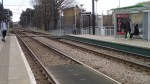

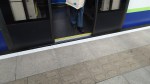

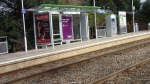

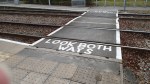
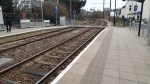
Note.
- There is no bridge.
- There is full step-free access.
- The overhead wires are kept well out of thew way.
As most tram networks have done in the UK, they could design a modern suite of shelters, ticket machines, information displays, seats help points and other items.
I suspect that the platform height would be designed to fit both the tri-mode Stadler Flirts and the Stadler Citylink Metro Vehicles.
The only stations that are served exclusively by the tri-mode Stadler Flirts and might be given an extra track are Pontlottyn and Brithdir stations at the Northern end of the Rhymney Line.
These stations only get four tph in both directions.
Do Many Stations Have Passing Freight Trains?
I never like to be on a platform, when a freight train goes through and it happens regularly at stations near me like Canonbury and Dalston Kingsland.
I looked on Real Time Trains and there don’t appear to be many such trains on the CVL
I suspect too, that they could use temporal separation, with any freight trains ruining, when the Metro is closed.
Conclusion
I do find it strange that the total number of one platform stations is the same as the number of locations, where the track will be doubled.
But surely, if all stations were on a double-track, this would give the maximum flexibility to run services.
If too, the stations could be built without footbridges to the standards of trams, then construction costs could be saved!
West Hampstead Station – 12th May 2018
West Hampstead station is being rebuilt with a new entrance and a step-free footbridge.

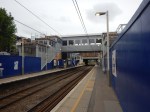
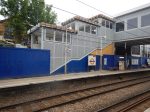
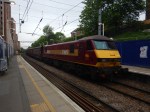




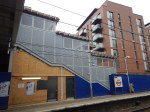
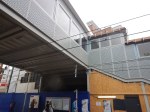

The new station would appear to be able to handle more passengers.
This image on the BPR Architect’s web site, shows how it will look, when it opens.
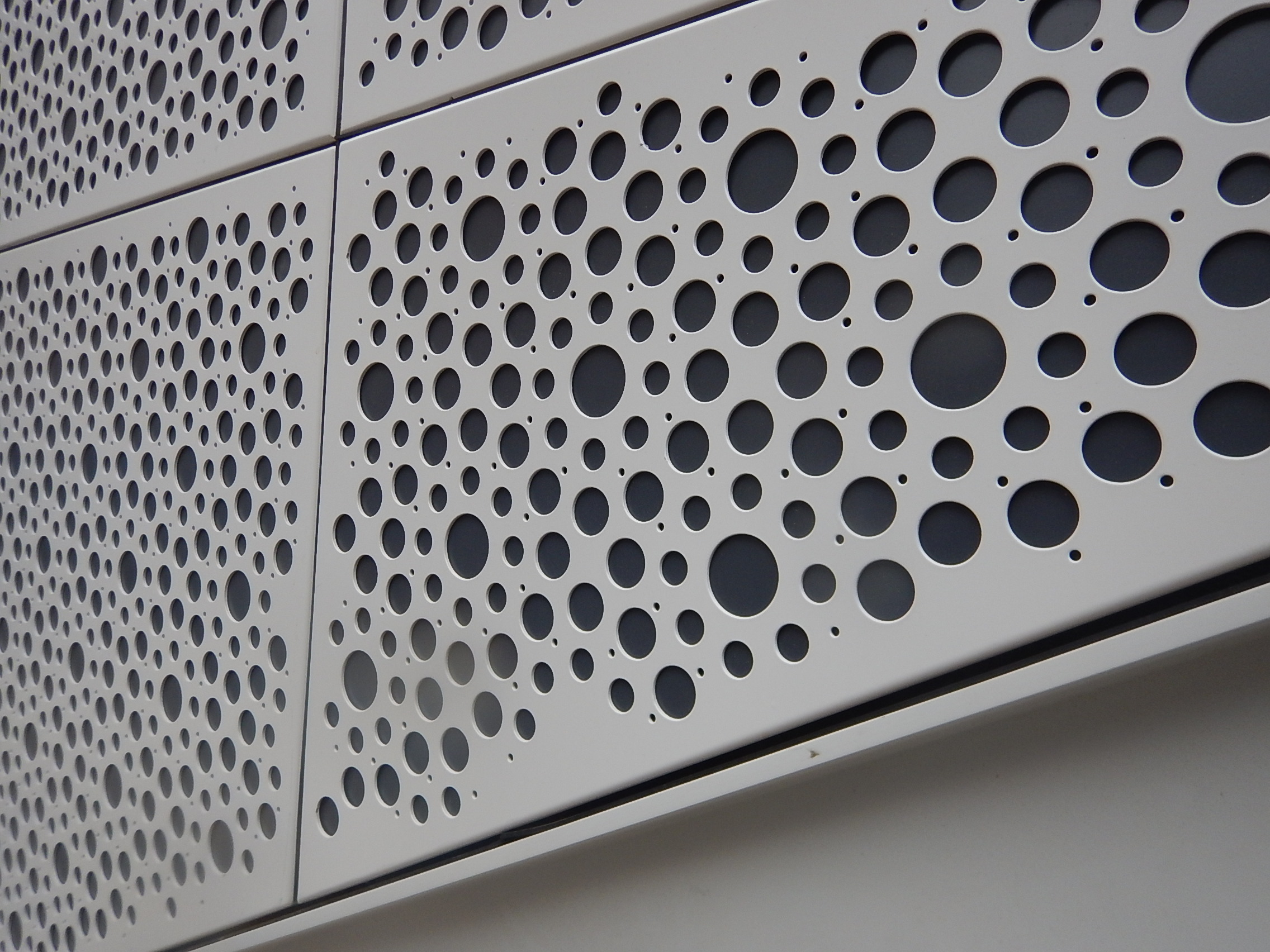
The new station would appear to be able to handle more passengers.
It’s strikes me, that the design is almost a modern application of the rules, that created London Underground’s distinctive stations of the 1930s.
One of the routes I took to and from Minchenden School, involved two of the Piccadilly Line‘s iconic stations; Oakwood and Southgate. Both were designed by Charles Holden and are Grade II* listed buildings.
Those stations were and still are all about space, brickwork, glass, imaginative use of metal and clean lines, often with integrated retail units.
West Hampstead station appears similar, but the retail is more surrounding, than integrated.
Modern fabrication techniques with metal and plastics, also give the architects and designers more freedom.
I like the pierced steel cladding on the footbridge at West Hampstead station and it is probably a lot more affordable, than all the bronze used in Southgate station.
If my mother, who died a few years ago, came back and arrived at the new West Hampstead station on the London Overground, she’d only confuse it with a London Underground station.
Passenger Crowding On Platform 14 At Manchester Piccadilly Station
After changing trains at Salford Crescent station, I arrived on Platform 13 at Manchester Piccadilly station.
Everybody says the two island platforms need more capacity and another two platforms.
This picture shows a train in Platform 14.
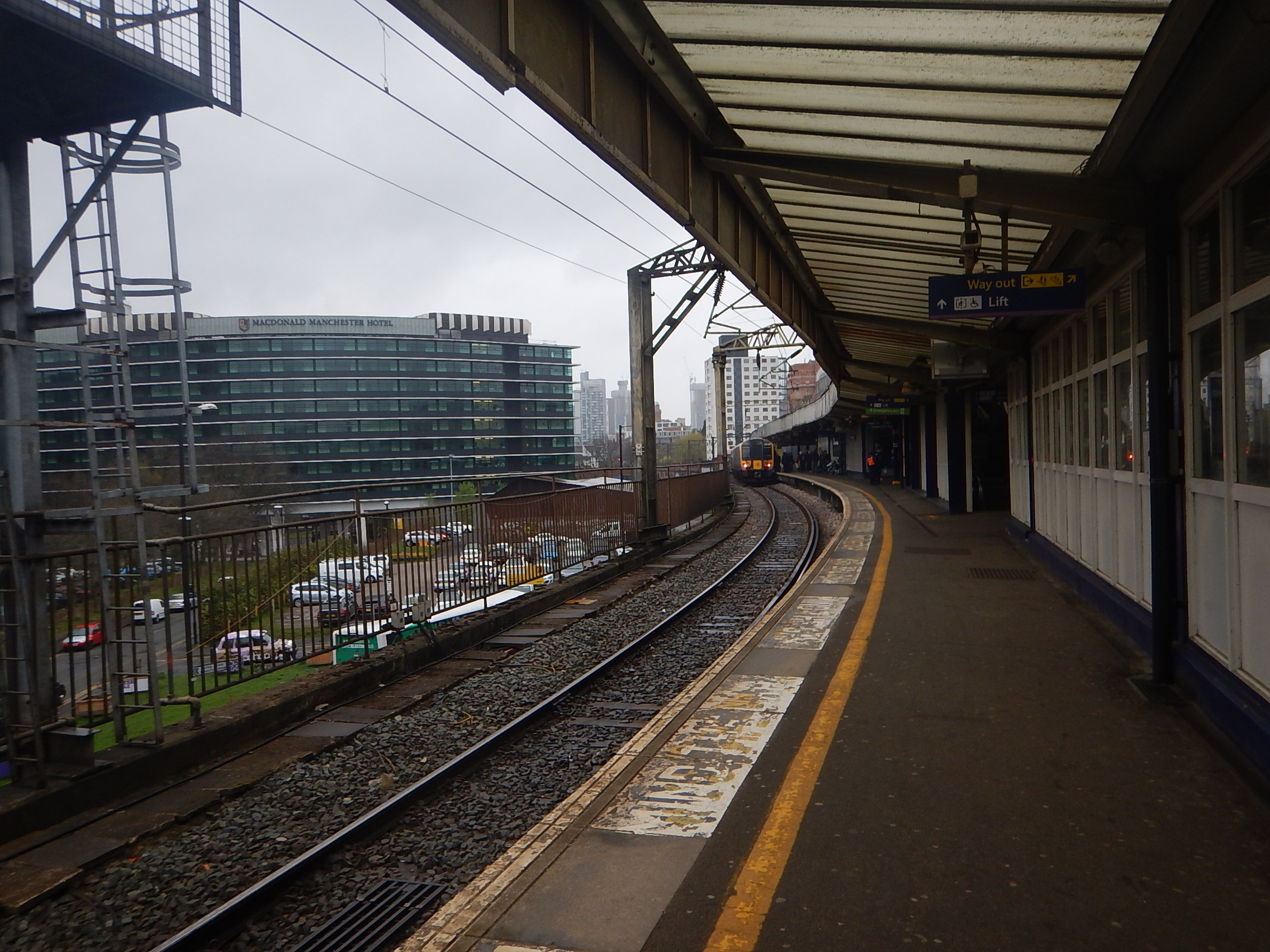
Note all the passengers alongside the train at the bottom of the stairs. Many of whom are waiting for later trains.
There are also few passengers waiting on the platform.
Consider.
I am writing this at eight in the morning and there are seventeen trains in total calling at Platforms 13 and 14, in the next hour.
- As one train starts from Platform 13, that is just nine trains per hour (tph) on each platform.
- The two platform station at Canada Water on the London Overground handles sixteen tph and in 2016-17, around 25 million passengers used the station.
- By comparison Manchester Piccadilly station handles around twenty-seven million passengers on fourteen platforms.
Because of the numbers of trains and passengers involved, I believe strongly that a rebuild of Platforms 13 and 14 could raise the numbers to those currentl achieved at Canada Water.
So what are the differences between Platform 13 and 14 ar Manchester Piccadilly and Canada Water?
- Both were originally built in the Victorian era.
- Both have been improved since 2000.
- The Manchester Platforms have a lift, two staircases and an up escalator, whereas each platform at Canada Water has a lift, and at least one of both a staircase and an escalator.
- Access at the Manchester Platform is all at one end, whereas access at Canada Water is to the centre of the platforms, where there is a wide lobby set back from the platform.
- The Manchester Platforms are narrower, than those at Canada Water.
- Canada Water has the advantages that it is only served by Class 378 trains and there is level access between platform and all trains.
- Canada Water is a well-designed light and airy below ground station, whereas the Manchester Platforms have all the dtyle and charm of a Victorian toilet block.
So what would I do to Platform 13 and 14 at Manchester Piccadilly?
- If all trains were at least four carriages, this might encourage people to spread out, instead of hanging about at the bottom of the main stairs.
- If platforms could be released in the main section of Manchester Piccadilly station, by virtue of the Ordsall , this might help.
- Increase the width of the platforms.
- Add more escalators.
- Put an enlarged waiting room on top of the current platforms, with quality information, so passengers can wait in the warm, with perhaps a cup of coffee.
In addition, the ultimate solution would be to built a long footbridge to connect the Southern end of all platforms.
It would be wide
Each pair of platforms would have lift and escalator access to the footbridge.
- It could have a lift to street level at both ends.
- I believe that this could be built, without disrupting the current traffic through the station.
Hopefully, this will all be sorted, when the HS2 station is built.
If something like it is not built, it will be a very long walk, between the HS2 platforms and Platforms 13 and 14.
King’s Lynn Station
These pictures show King’s Lynn Station, which is Grade II Listed.
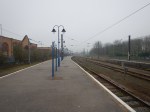
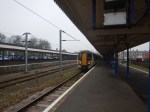
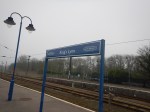
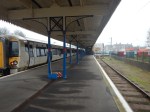
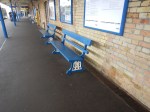
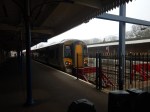

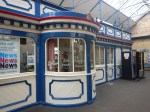
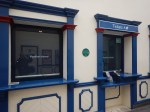
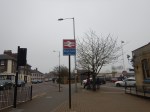
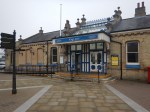
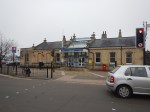
Note.
- It is not the normal design for a station in the UK.
- The station has two platforms, but could have add another.
- The facilities are at a high level for a station of this size, with a booking office, toilets and a cafe.
- The station was reopened by Michael Portillo. Who else?
Perhaps we should see more station designs, not in a standard corporate mould. Others include Birmingham Moor Street, Hanwell and Hebden Bridge.
The only problems with the station are that there aren’t enough trains and the information and signage for visitors could be better.
In an ideal world this would be the train service
- At least two trains per hour in both directions.
- Running between King’s Lynn and Cambridge, stopping at Watlington, Downham Market, Littleport, Ely, Waterbeach and Cambridge North.
- Good interchange with services to Bury St. Edmunds, Ipswich, Peterborough and Stansted Airport at either Ely or Cambridge.
King’s Lynn station certainly has the capacity for more frequent trains.
Exploring The Tyne And Wear Metro
The Tyne and Wear Metro is unique in the UK, in that it is a regional electric railway system, that is powered by 1500 VDC overhead electrification.
But what is not unique about the system is the affection shown by regular users. You get similar feelings on other local systems like these.
- Cardiff Valley Lines
- Docklands Light Railway
- Glasgow’s electric railways.
- Merseyrail‘s Northern and Wirral Lines
As they mature, other systems including the Manchester Metrolink, Midland Metro and the London Overground will be felt of by their passengers in a similar way.
My four examples and the Tyne and Wear Metro, have a lot more in common than just affection from their users.
- All were created in their own unique ways in an era not noted for railway innovation.
- Merseyrail has an unrivalled tunnel layout for a railway under a city.
- The Docklands Light Railway is automated with a Train Captain on each train.
- Glasgow’s Blue Trains were very-un-British at the time.
- Local interests were very much involved in creating the systems.
- The Tyne and Wear Metro was created for Driver Only Operation.
All of these lines are seeking to add more branches and replace, update and augment the rolling stock, much of which is forty years old.
Does the age of te trains show Central Government contempt for important local railway systems, which are the lifeblood of communities?
Manchester’s Missing Tunnel
The tunnels under Liverpool and Newcastle, were part of a three pronged plan by to improve local transport in the North.
- I remember from the 1960s, when I was at the University, the electric railway under the Mersey to Birkenhead and the Wirral. Modern it was not, but the innovative Loop and Link Project made it a lot better. Although, that project was never completed.
- Newcastle had had Tyneside Electrics from the 1900s. In the 1970s the old system became the core of the Metro, with the addition of a central tunnel.
The third plan was to bore the Picc-Vic tunnel under Manchester to link Manchester Piccadilly and Victoria stations.
According to Wikipedia, it would have had the following characteristics.
- Full-size twin-bore tunnels.
- 25 KVAC overhead electrification.
- Low-level stations at Piccadilly and Victoria.
- Three intermediate stations at Market Street, Albert Square and Princess Street
- Trains would have been similar to the Class 315 trains, which are still common in London.
It would have joined the suburban rail services together across the city.
How would Manchester have developed if this important tunnel had been built?
We will probably be able to partially answer this question, when the Ordsall Chord is fully operational, which will handle cross-Manchester long-distance and local trains.
It is my view that cancelling this tunnel was one of the great infrastructure mistakes of the period along with the cancellation of the Channel Tunnel and London’s Third Airport at Maplin. But then Harold Wilson believed everybody would have their own car and that railways were of the past and preferred to spend what little money the Government had on political projects, many of which were total failures.
We must protect ourselves from politicians, who have a political view that owes too much to the extreme left or right and be left to get on with our personal lives.
To my mind, it is no surprise that the cities in the UK with the best urban rail systems; London, Cardiff, Liverpool and Newcastle, have more local control. Now that Birmingham, Glasgow, Leeds and Manchester have greater local control, will we see improvement?
Exploring The Metro
There are several main assets and factors that make up a railway system.
- Tracks
- Tunnels and Bridges
- Electrification
- Stations
- Accessibility
- Trains
- Signalling
- Operating Method
- Ticketing
I shall now give my thoughts on these in detail.
Tracks
The branches of the Metro were all built for heavy rail trains and the Sunderland Branch even shares the tracks with Class 142, Class 180 and heavy freight trains.
This principle of building tracks for full-size trains, has been used on Merseyrail’s Northern and WirralLines, London’s Trameslink, Crossrail and East London Line and innumerable railways across the world.
Build a system for small-size trains and you paint yourself into a dead end. I doubt for instance, London will ever build another new Tube-size line across London.
As I explored the Matro, the tracks also seemed to be in generally good condition.
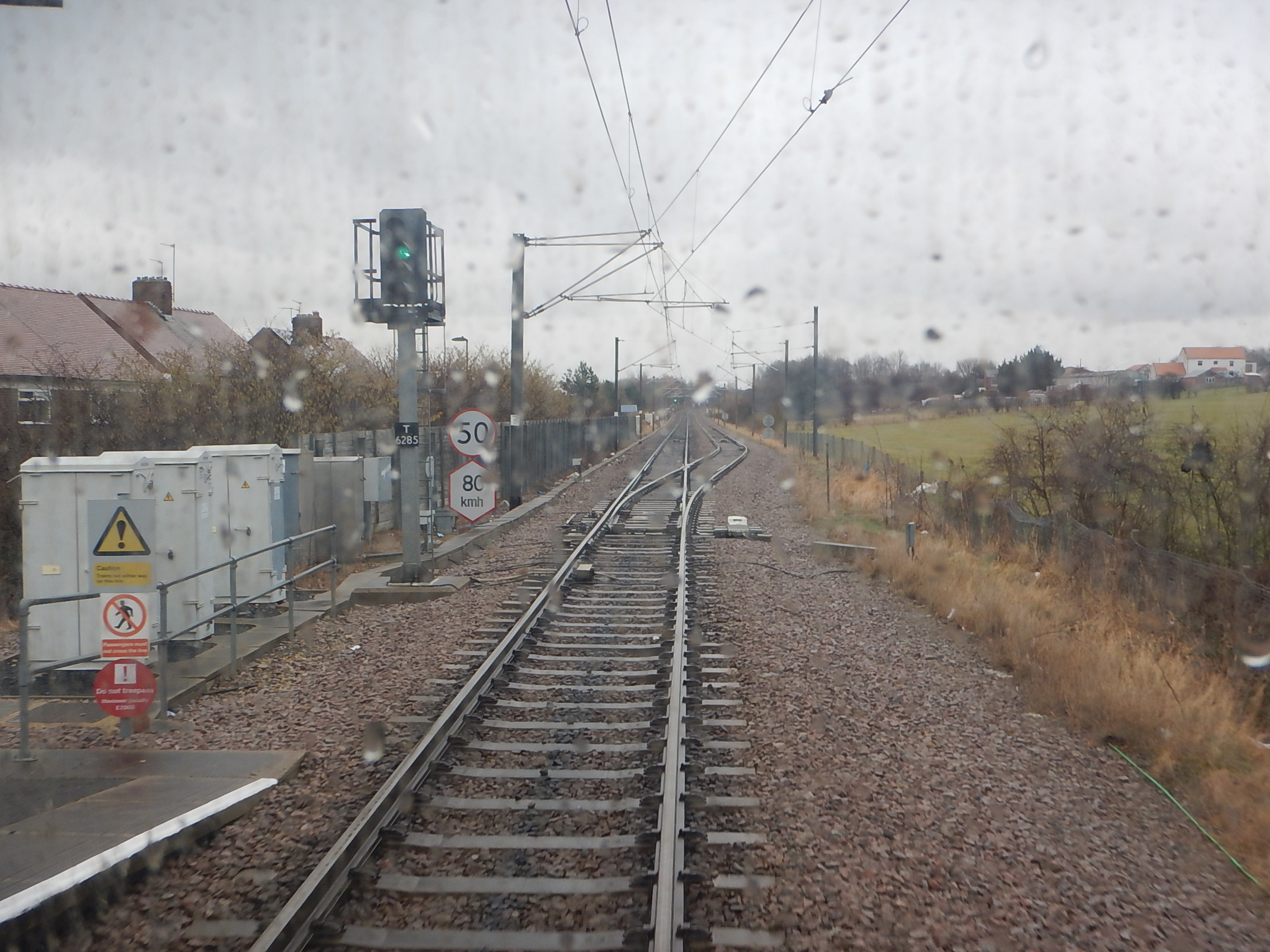
This picture taken at South Hylton station shows typical track in apparently good condition.
Tunnels And Bridges
Wikipedia has a section on the tunnels of the Metro. This is said.
The tunnels were constructed in the late 1970s, using mining techniques, and were constructed as single-track tubes with a diameter of 4.75 metres. The tunnels under Newcastle were mechanically bored through boulder clay and lined with cast iron or concrete segments. The tunnel under Gateshead, was bored through sandstone and excavated coal seams. Old coal mine workings, some of which dated from the Middle Ages had to be filled in before the tunnelling began.
This description of the Crossrail tunnels is on this page of their web site.
A network of new rail tunnels have been built by eight giant tunnel boring machines, to carry Crossrail’s trains eastbound and westbound. Each tunnel is 21 kilometres/13 miles long, 6.2 metres in diameter and up to 40 metres below ground.
The Crossrail tunnels have a walkway on either side, but they are only 1.25 metres larger in diameter than those of the Metro. So it would appear that there is not much difference in size of the important section in the middle, where the trains run.
It is worthwhile looking at the widths of various trains.
- Class 345 train (Crossrail) – 2.78 metres – See Weight And Dimensions Of A Class 345 Train
- Class 319 train (Thameslink) – 2.82 metres
- Class 700 train (Thameslink) – 2.80 metres
- Tyne and Wear Metro – 2.65 metres
The last three figures are from Wikipedia.
Look at these pictures of some of the tunnels and bridges on the Metro.

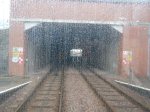
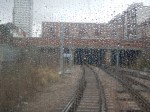
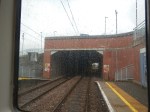
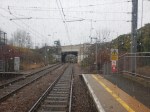
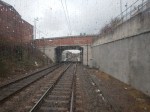
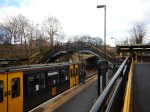
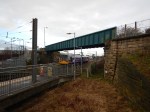
The weather could have been betterfor photography.
I rode on all the branches of the Metro and, I get the impression that all the bridges and tunnels seem to have been built with a generous clearance in both width and height.
I very much feel that when the Metro was built that unlike some other lines, it was well-built to a heavy rail standard.
I wouldn’t be surprised to be told, that a battery-powered train based on say an Electrostar like the Class 379 BEMU demonstrator, could pass through all of the Metro.
Electrification
The electrification is a unique 1500 VDC overhead system, which is the same as was used on the Woodhead Line, which closed to passenger trains in 1970 and to goods in 1981.
Could it be that the Metro got this voltage, rather than the 25 KVAC used on similar systems in London and Glasgow suburban routes, as British Rail and their contractors had 1500 VDC expertise available in the North and all their 25 KVAC expertise was employed elsewhere?
The bridges and tunnels seem to have been built with the ability to handle the higher and more common voltage.
1500 VDC may have also saved on the cost of the installation, as they had a lot of gantries and brackets from the Woodhead Line.
These pictures show the simplistic nature of some of the electrification.
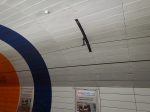
However, on the South Hylton Branch, which was built in the 2000s, it appears that better methods were used, as these pictures show.
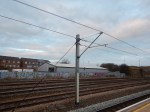

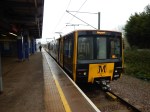
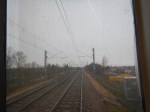
The gantries and supports are certainly better than many you see on the Lea Valley Lines.
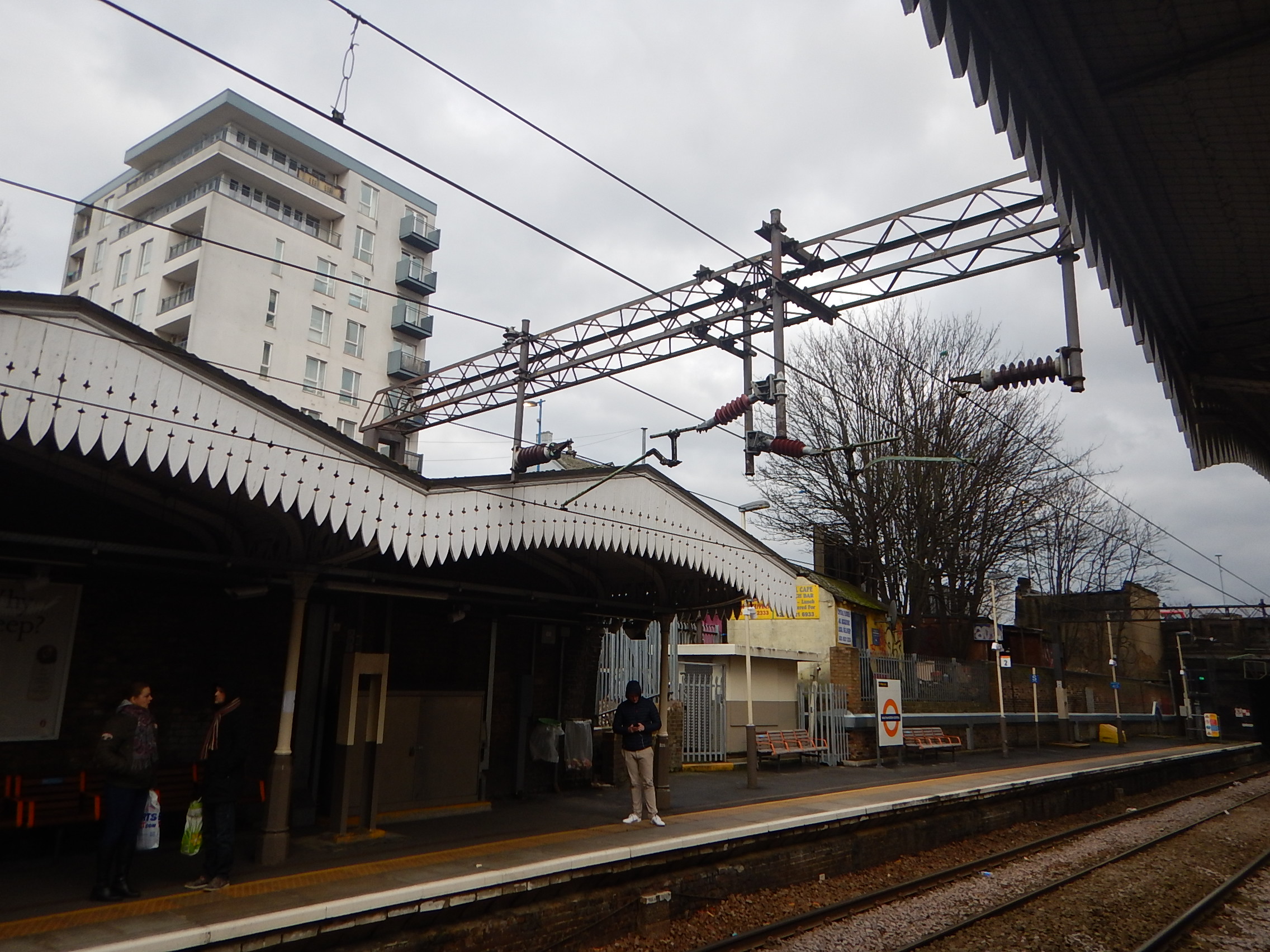
This picture shows 25 KVAC electrification at Walthamstow Central station.
Note the extra insulators to deal with the higher voltage.
Would it be possible and worthwhile to convert all of the Metro lines to 25 KVAC?
In theory this must be possible, but I think it is probably more important to first beef up the electrification gantries to the higher standard of the South Hylton Branch.
Consider.
- A driver told me, that electrification failures are not unknown.
- Trains running on 25 KVAC are more energy-efficient.
- Trains could be built that would be able to run on both 1500 VDC and 25 KVAC, that use the same pantograph for current collection and automatically adjust to the voltage received.
- Trains with batteries can be used on sections without electrification.
- Mixed voltage systems are possible, that would have 25 KVAC electrification on some sections of track and 1500 VDC on others.
- The passenger Health and Safety case would need to be established for the higher voltage.
The electrification could be designed holistically with any future trains to maximise reliability, electrical efficiency and operational flexibility, and minimise costs.
Obviously, during the changeover to new trains, all lines would need to be at 1500 VDC, so that the current rolling stock could be used as required.
Stations
These pictures show a selection of Metro stations.
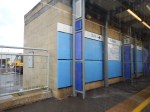
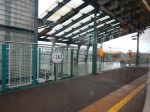
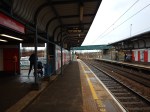
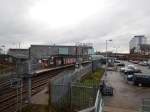
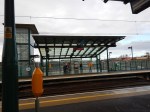
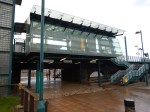
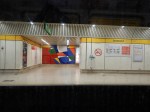
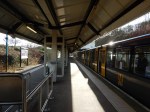
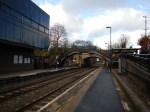
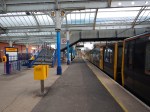
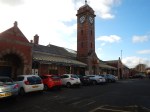
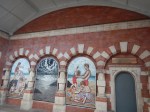
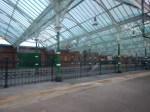

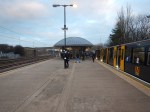
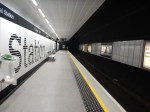
The stations appear to be in generally good condition and vary from the the basic to well-preserved Victorian stations like Tynemouth and Whitley Bay.
The platforms are generally of an adequate length, which except for some stations in tunnels seem to have been built to accept three of the current trains working together, which would be a formation 83.4 metres long.
This would be long enough to accept one of any number of four-car trains running on the UK rail network, which are usually eighty metres long. London Overground’s, new Class 710 trains will be this length.
Sunderland Station
Sunderland station, is an important station on the Metro.
I describe the station and its operation in The Rather Ordinary Sunderland Station.
Accessibility
Stations are step-free, but this is often by the use of ramps and a few more lifts woulds be welcome.
Access from platform to train is generally good, as these pictures show.
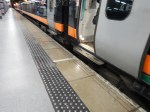

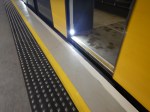
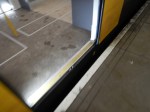
Note the picture of the access to a Grand Central Class 180 train.
I suspect that when Northern replace their Class 142 trains, with brand new Class 195 trains on the services between Middlesbrough and Newcastle, that the step-free access will be good.
I think a lot of credit is due to the original designers of the Metro, who thought about what they were doing and seem to have created a system that fitted heavy rail trains, Metro trains and users requiring step-free access.
Trains
There are several sets of electric trains in the country, that continue to defy their age and are a tribute to their builders, refurbishers and operating companies, by providing a quality service to passengers and other stakeholders
- Merseyrail’s Class 507 and Class 508 trains.
- The Class 315 trains of TfL Rail and the London Overground.
- The Piccadilly Line’s 1973 Stock trains.
- South Western Railway’s Class 455 trains.
- The trains of the Tyne and Wear Metro.
|These pictures show the trains for the Metro.
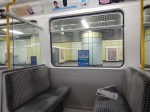
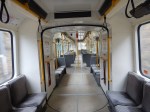
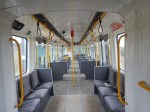
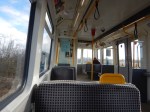
Note.
- The quality is not bad for nearly forty years of service.
- The lady in the last picture, sitting in the front of the train, watching the world go by.
- Standing is not difficult in the rush hour for this seventy-year-old stroke survivor.
- Information could be better.
- The Metro needs a new train wash.
Wikipedia says this about the Proposed New Fleet.
The proposed new fleet would consist of 84 trains to replace the existing 90 train fleet, as Nexus believe that the improved reliability of the newer trains would allow them to operate the same service levels with fewer trains. These are proposed to have longitudinal seating instead of the 2+2 bench seating arrangement of the present fleet, and a full width drivers cab instead of the small driving booth of the existing trains. The proposed new fleet is planned to have dual voltage capability, able to operate on the Metro’s existing 1.5 kV DC electrification system and also the 25 kV AC used on the national rail network, to allow greater flexibility. Battery technology is also being considered.
I’ll put my ideas at the end of this note.
Signalling
The Metro is unique in the UK, in that it uses the Karlsruhe model to mix Metro trains with heavy rail trains on the Southern branch to Sunderland and South Hylton.
If in the future modern signalling and trains are used on the Metro, an increasingly intricate set of routes could be designed.
Add in dual-voltage trains able to run on both the Metro’s 1500 VDC and the National network’s 25 KVAC and the possibilities will be even greater.
Operating Method
The trains are run in the same way as London Underground, with only a driver on the train, who does the driving and controls the doors.
Ticketing
As I always find outside London, ticketing is still in the Victorian era.
Will the Tyne and Wear Metro embrace a contactless card based on bank and credit cards?
Possible Future Expansion
Wikipedia gives a list of possible extensions under Proposed Extensions And Suggested Improvements.
These include.
Tyne Dock To East Boldon
Wikipedia says this.
Tyne Dock to East Boldon along a dismantled railway alignment through Whiteleas could easily be added, because two Metro lines are separated by only a short distance (1.61 miles). This would provide a service from South Shields to Sunderland via the Whiteleas area of South Shields.
If ever there was a route for a battery-powered train, this must be it.
Consider.
- The route is less than two miles.
- The route connects two electrified lines.
- You can see the disused track-bed on a Google Map.
- No electrification would be required.
- The battery would be charged between South Shields and Tyne Dock and East Boldon and Sunderland.
- Modern signalling would allow the route to be built as a single track if required, handling up to ten tph in both directions.
- Single platform stations could be built as required.
I can certainly understand, why Wikipedia mentioned battery trains.
Washington
Wikipedia says this.
Washington either via the disused Leamside line or a new route. Present planning may lead to the Leamside line being opened at least as far as Washington as a conventional rail line for passengers as well as freight, although this could be shared with Metro trains in the same way as the line from Pelaw Junction to Sunderland.
Washington station would only be a short run of less than ten miles along a reopened Leamside Line.
- If somebody else paid for 25 KVAC electrification of the Leamside Line, then dual-voltage trains could run the service.
- If not, they could use battery-power.
Either way, Washington would get a Metro service.
If as I believe, the new trains on the Metro will be main line trains, then what is the point of running heavy rail services to the town, as the Metro would be able to serve more places and with a change at Newcastle station, you could get a train virtually anywhere.
The possibility must also exist if the Leamside Line is developed as a diversion of the East Coast Main Line, then the Metro could go as far South as Durham.
Blyth And Ashington
Wikipedia says this about trains to Blyth and Ashington, on what is now regularly referred to as the Northumberland Line.
Blyth and Ashington, running on existing little-used freight lines. Northumberland Park station has been built to provide a link to a potential new rail service to these communities; if opened, it will not be a part of the Metro system.
Ashington is around fourteen miles from Northumberland Park station, which means that an return journey might be possible on battery-power.
In an article in the October 2017 Edition of Modern Railways, which is entitled Celling England By The Pound, Ian Walmsley says this in relation to trains running on the Uckfield Branch, which probably has a terrain not much different to the lines to Blyth and Ashington.
A modern EMU needs between 3 and 5 kWh per vehicle mile for this sort of service.
If the Metro trains could have a high energy efficiency, I think it would be reasonable to assume that 4 kWh per vehicle mile is attainable.
So a three car train, would need a battery of 14 x 2 x 3 x 4 = 336 kWh. That is not an unattainable figure for battery size.
Killingworth And Cramlington
Wikipedia says this.
A northward extension to Killingworth and Cramlington has been planned since the Metro was on the drawing board, but would require widening of the busy East Coast Main Line to four tracks, which would be expensive, and a new alignment involving street running.
Suppose the new Metro trains were modern trains, such as the latest offerings from Bombardier, CAF, Hitachi, Siemens, Stadler and others, that were able to do the following in addition to running on the Metro.
- Use 25 KVAC electrification.
- Operate at around or even over 100 mph.
- Execute fast stops at a station.
Would they be able to perhaps run a four tph Metro service along the East Coast Main Line to Cramlington station?
I suspect with modern signalling and a couple of passing loops on the East Coast Main Line, the answer is yes!
This may eliminate the need for street-running.
West End Of Newcastle
Wikipedia says this.
Extending the Metro to the West End of Newcastle would require new track, involving tunnelling and bridging in rough terrain; this would be very costly and is perhaps least likely to receive funding, though would probably have the highest potential ridership.
In this article in the Newcastle Chronicle, which is entitled What Could Happen To The Metro, this is said.
A rail extension out of Central Station along the original Newcastle to Carlisle line could head along Scotswood Road to serve Newcastle’s west, while a bridge could then connect the city to the Metrocentre. This would be integrated with the Metro system. Building developments in Gallowgate have greatly reduced any chance of extending the Metro west from St James’ Park.
The railway alignment still seems to be there in places.
It would be another extension that would use battery-powered trains on sections, that don’t have electrification.
Ryhope And Seaham
Wikipedia says this.
Ryhope and Seaham, a proposal drawn up by Tyne and Wear Passenger Authority to use the existing Durham coast line south of Sunderland.
Sunderland to Seaham is about six miles, so is definitely in range of battery trains.
But that is being timid!
Sunderland to Middlesbrough is probably about thirty miles and I believe it will be possible to do those sort of distances on battery power alone, in a few years. Provided that the train could be recharged at Middlesbrough.
What would a four or six tph service between Middlesbrough and Newcastle Airport via Hartlepool, Seaham, Sunderland, Gateshead and Newcastle, do for the area?
Conclusion About Possible Future Expansion
In this section on expanding the Metro network, it has surprised me how many of the extensions could be done with dual-voltage or battery-powered trains.
- Tyne Dock To East Boldon – Battery
- Washington – Battery
- Blyth And Ashington – Battery
- Killingworth And Cramlington – Dual-Voltage
- West End Of Newcastle – Battery
- Ryhope And Seaham – Battery
- Middlesbrough – Battery and Dual-Voltage
I think it shows how we must be careful not to underestimate tyhe power of battery trains. But then I’m one of the few people in the UK, outside of the residents of Harwich, who’s ridden a battery-powered four-car heavy rail train in normal service! Mickey Mouse, they are not!
New Trains
I’ll repeat what Wikipedia says this about the Proposed New Fleet.
The proposed new fleet would consist of 84 trains to replace the existing 90 train fleet, as Nexus believe that the improved reliability of the newer trains would allow them to operate the same service levels with fewer trains. These are proposed to have longitudinal seating instead of the 2+2 bench seating arrangement of the present fleet, and a full width drivers cab instead of the small driving booth of the existing trains. The proposed new fleet is planned to have dual voltage capability, able to operate on the Metro’s existing 1.5 kV DC electrification system and also the 25 kV AC used on the national rail network, to allow greater flexibility. Battery technology is also being considered.
I’ll now give my views on various topics.
Heavy Rail Train Or Lightweight Metro?
Will the trains be lightweight metro trains or variants of heavy rail trains like Aventras, Desiro Cities or A-trains to name just three of several?
The advantages of the heavy rail train are.
- It could run at 90 or even 100 mph on an electrified main line.
- It will meet crashworthiness standards for a main line.
- It would likely be a design with a lot in common with other UK train fleets.
- It could run into most railway stations.
- If it was shorter than about sixty metres it could use all current Metro stations without station rebuilding.
On the other hand the lightweight metro train would be lighter in weight and possibly more energy-efficient.
Walk-Through Design
Wikipedia says this about the seating layout.
These are proposed to have longitudinal seating instead of the 2+2 bench seating arrangement of the present fleet.
Longitudinal seating has been successfully used on London Overground’s Class 378 trains.
- This layout increases capacity at busy times.
- It allows passengers to distribute themselves along the train and get to the right position for a quick exit.
But the biggest advantage, is that when linked to selective door opening, it enables a longer train to be used successfully in stations with short platforms.
London Overground use this facility on their Class 378 trains to overcome platform length problems at a few stations on the East London Line.
But train design is evolving.
Bombardier have shown with the Class 345 train, that you can have both in the same train. So in a three-car train, you might have two identical driver cars with longitudinal seating and a middle car with 2+2 bench seating.
Bombardier are able to get away with this, as they are maximising the space inside the train. I wrote about it in Big On The Inside And The Same Size On The Outside.
These pictures show the inside of one of Crossrail’s Class 345 trains.
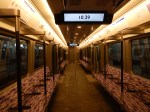
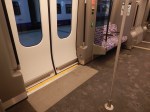
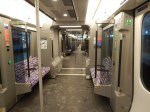
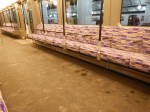
Whoever builds the new Metro trains, they’ll probably have similar interiors.
Train Length
A trend seems to be emerging, where new fleets of trains are the same length as the ones they replace, although they may have more carriages.
This has happened on Greater Anglia, Merseyrail and West Midlands Trains.
It probably makes sense, as it avoids expensive and disrupting platform lengthening.
Currently, the Metro trains work in pairs, which means a train length of 55.6 metres. As the standard UK train carriage size for suburban multiple units is often twenty metres, then if the platforms can accept them, three-car trains would be possible for the new trains.
Longer trains would be possible in most stations, except for some in the central tunnel, which appear to have platforms around sixty to seventy metres long.
So perhaps four-car trains would be possible for the new trains, that would use selective door opening at the short platforms of the stations in the central tunnels.
Because the trains are walk-through, passengers can position themselves accordingly, for the station, where they will leave the train.
London Overground have also shown that selective door opening and walk-through trains can be used to advantage, when trains are lengthened to increase capacity.
Dual-Voltage
Obviously, the trains will have the capability of running on both 1500 VDC and 25 KVAC overhead wires, as the extension to Killingworth And Cramlington would need the latter, for a start.
The interchange between the two different voltages can be very simple, due to some technology developed for the
German cousins of the Class 399 tram-train. A ceramic rod separates the two voltages and the pantograph just rides over. The train or tram-train, then determines the voltage and configures the electrical systems accordingly.
Batteries
These would appear to be key to several of the proposed extensions.
Batteries also enable other features.
- Movement in depots and sidings without electrification.
- Emergency power, when the main power fails.
- Handling regenerative braking.
- Remote train warm-up.
In a few years time, all trains with electric drive will have batteries, that are probably around 75-100 kWh.
Operating Speed
To work efficiently on the East Coast Main Line, 90 mph or even a 100 mph operating speed will be needed.
Note that Crossrail’s Class 345 trains, which will generally work routes very similar to the Metro, have a 90 mph operating speed.
These faster trains will result in an increased service.
Currently, trains between Newcastle Airport and South Hylton take 65 minutes with sixteen stops.
Modern trains have the following features.
- Minimised dwell times at stations.
- Smooth regenerative braking and fast acceleration.
- Driver Advisory Systems to improve train efficiency.
- Higher safe speeds in selected sections.
- Trains are designed for quick turnrounds at each end of the route.
In addition, train operators are organising station staff to minimise train delays.
Put it all together and I’m pretty certain, that this route could be done comfortably in under an hour.
So the same number of trains are able to do more trips in every hour.
Handling Tight Curves
Under Electrics, Wikipedia says this about the ability of the trains to handle tight curves.
Metro has a maximum speed of 80 km/h (50 mph), which it attains on rural stretches of line. The vehicles have a minimum curve radius of 50 m (55 yd), although there are no curves this tight except for the non-passenger chord between Manors and West Jesmond.
Could this chord be avoided by different operating procedures?
Serving Newcastle Station
Northern’s services from Newcastle station are.
- 1 tph – Northbound on the East Coast Main Line to Cramlington and Morpeth with services extended to Chathill at peak hours.
- 1 tph – Southbound along the Durham Coast Line to Middlesbrough calling at Heworth, Sunderland, Seaham, Hartlepool, Seaton Carew, Billingham, Stockton andThornaby, with an extension to James Cook University Hospital and Nunthorpe.
- 1 tph – Westbound on the Tyne Valley Line to Carlisle calling at MetroCentre, Prudhoe, Hexham, Haydon Bridge, Haltwhistle, Brampton and others at alternate hours.
- Westbound slow service on the Tyne Valley Line to Hexham calling at Dunston, MetroCentre, Blaydon, Wylam, Prudhoe, Stocksfield, Riding Mill, Corbridge and terminating at Hexham, with an extension to Carlisle at peak hours.
- 1 tph – Newcastle to Metro Centre calling at Dunston only during the day.
Pathetic is probably a suitable word.
When Greater Anglia have their new trains, services between Ipswich, Norwich, Colchester, Bury St. Edmunds, Lowestoft and Yarmouth, will be at least two tph and sometimes three and four on most routes.
Newcastle To Sunderland Via Sunderland
Newcastle, Sunderland and Middlesbrough surely need a four tph rail connection along the Durham Coast Line.
I believe that dual-voltage Metro trains with a battery capability could run between Middlesbrough and Newcastle at a frequency of four tph.
If they can’t, I’m certain that a suitable train could be procured.
If the new Metro trains are correctly-configured heavy-rail trains, then surely a go-anywhere express version can be built.
- Identical train bodies, cabs and traction systems to new Metro trains
- An interior geared to the needs of passengers.
- Four or five cars with selective door opening.
- Ability to run on Metro tracks using 1500 VDC overhead wires.
- Ability to run on 25 KVAC overhead wires.
- Batteries for regenerative braking, emergency power and distances up to two miles.
- Diesel or preferably hydrogen power pack.
- Sufficient range to keep going all day.
- 90-100 mph capability.
As the trains would have an identical cross-section to the new Metro trains, they could do any of the following at Newcastle.
- Terminate at Newcastle station.
- Go through Newcastle station to Metrocentre, Hexham, Carlisle, Morpeth or some other destination.
- Go through the tunnel of the Metro to Newcsastle Airport.
- Go through the tunnel of the Northumberland Park station to link to the North-East.
I believe that such a train could run as an express to link the whole conurbation from Middlesbrough to Morpeth together.
Newcastle To Carlisle Via Metrocentre and Hexham
The train that i just proposed would be ideal for this route.
I also believe that Metrocentre needs at least six tph connecting it to the centre of Newcastle and the Metro.
The proposed West End of Newcastle branch of the Metro looks to be a necessity, to provide some of this frequency.
What Is The Point Of Northern?
With the right trains, all of the local services in the Tyne-Wear-Tees area can be satisfied by a Metro running modern trains making the maximum use of modern technology.
This model already works in Merseyside, so why not in the North-East? And Manchester, Leeds and South Yorkshire!
A Tees Valley Metro
I have always been keen on the creation of a Tees Valley Metro. I wrote about it in The Creation Of The Tees Valley Metro.
Get the design of the trains on the Tyne and Wear Metro right and they could work any proposed Tees Valley Metro.
Conclusion
I think that Nexus will get some very interesting proposals for their new trains, which will open up a lot of possibilities to extend the network.
Stadler Publish More Details On Greater Anglia’s Flirts
These pictures are on several web sites and show more details on how Stadler is creating Greater Anglia’s Class 745 trains.
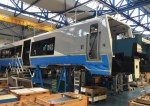


If you compare the first and third pictures, it would appear that the cab is a separate construction, probably made out of a variety of materials like steel, aluminium and glass reinforced plastic.
The body could be similar to that of a Bombardier Electrostar or Aventra and made of three aluminium sections welded together.
The cross-section seems simpler than that of an Aventra, which as this picture shows is double-skinned with ribs.
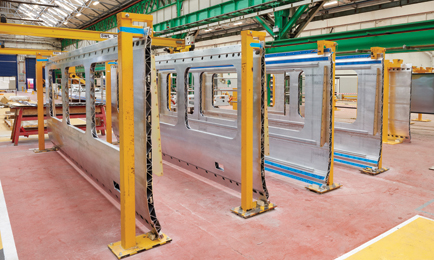
Are the sides and roof of Stadler Flirts extruded or fabricated?
But then Bombardier designed the Aventra bodies to be made in large numbers, close to the production line, whereas Stadler build the bodies in Hungary.
New Trains For The Docklands Light Railway And The Tyne And Wear Metro
Transport for London and Nexus (The Tyne And Wear Passenger Transport Executive) are both asking for bids for new trains on the Docklands Light Railway and the Tyne and Wear Metro respectively.
Both systems are standard gauge light railways, but how do they compare to each other and to other trains running or soon to run in the UK?
Width and Height Of Cars
This table shows the width and height of various trains, that are currently in use on the UK network.
- Class 994 train (Tyne and Wear Metro) – 2.65 x 3.45 metres
- Docklands Light Railway – 2.65 x 3.51 metres
- Class 399 tram-train – 2.65 x 3.60 metres
- Class 319 train (1980s electric train) – 2.82 x 3.58 metres
- Class 508 train (Merseyrail) – 2.82 x 3.58 metres
- S Stock (London Underground) – 2.82 metres width
- Electrostar – 2.80 x 3.78 metres
- Class 345 train (Crossrail) – 2.78 metres width
Note.
- What surprised me was how similar the width and height of these vehicles are.
- The Class 345 train uses clever design to make the train as wide as possible inside.
Wikipedia says this about how Bombardier Electrostars were designed and built.
The Clubman/Turbostar/Electrostar platform is a modular design, which share the same basic design, bodyshell and core structure, and is optimised for speedy manufacture and easy maintenance. It consists of an underframe, which is created by seam-welding a number of aluminium alloy extrusions, upon which bodyside panels are mounted followed by a single piece roof, again made from extruded sections. The car ends (cabs) are made from glass-reinforced plastic and steel, and are huck-bolted onto the main car bodies. Underframe components are collected in ‘rafts’, which are bolted into slots on the underframe extrusion. The mostly aluminium alloy body gives light weight to help acceleration and energy efficiency.
From what I’ve seen in the media about the manufacture of Bombardier’s new Aventra, the manufacturing methods are similar but improved.
I would suspect that most modern trains are made in a similar way, with extensive use of lightweight aluminium extrusions for sides and roof.
Bombardier’s method of making the cabs of glass-reinforced plastic and steel, must also give the flexibility required to create an appropriate cab for different classes of trains. Currently, there are Aventras on other, that feature cabs without and with a gangway.
I suspect that Bombardier’s design team for the Aventra made sure that the design of the body could be adapted to produce a replacement train for the Tyne and Wear Metro or the Docklands Light Railway. After all, they built most of the current cars for the DLR!
This all leads me to the conclusion, that production of the bodies for the new vehicles for both routes will not be a problem. And not just for Bombardier! Stadler seem to have downsized a Flirt for Merseyrail.
Using an existing design, must also mean that equipment like seats, air-conditioning, doors and other fitments, just have to resized if needed.
Design Of The Cars
Bombardier have shown with the Aventra, that they can make cars in different lengths for different versions of the train. The Class 710 trains for the London Overground are being built as twenty metre long trains, whereas other variants have longer cars.
All Aventras ordered so far, appear to be walk-through between articulated cars.
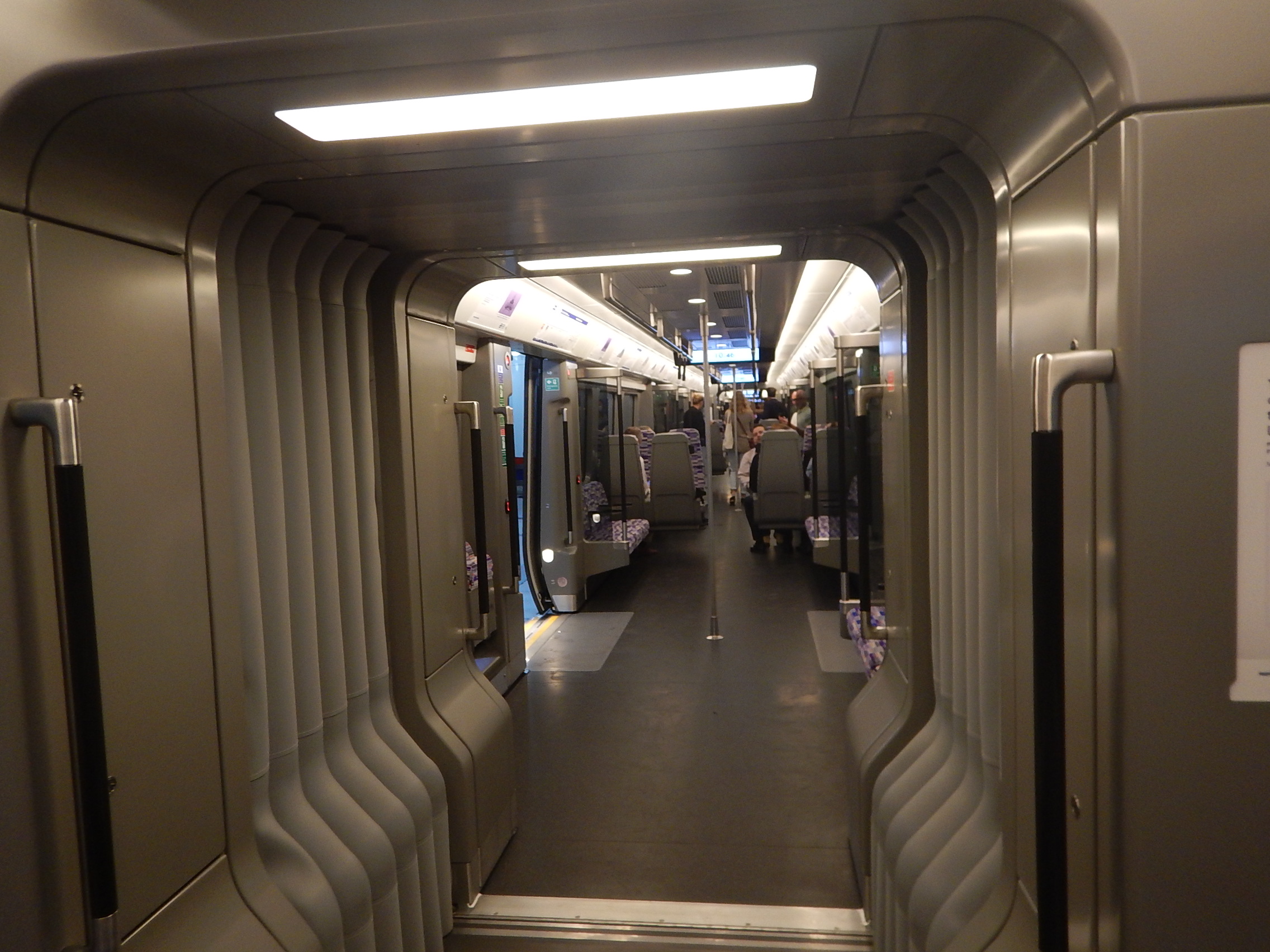
The picture shows the inside of one of Crossrail’s Class 345 trains.
So what can we ascertain about the design the new fleets for the Docklands Light Railway and the Tyne and Wear Metro?
Docklands Light Railway
Under Future Stock in the Wikipedia entry for the Docklands Light Railway Rolling Stock, this is said.
TfL is seeking to order 43, 87-metre-long (285 ft) trains, 33 of which will replace the 70 B90/92 trains currently in use, which are the oldest on the DLR. The remaining 10 would support capacity increases in the Royal Docks area. DLR services presently operate with two or three trains coupled together, but the new fleet will be fixed formation units with walk-through carriages equivalent to the length of three current trains. The aim is to issue an invitation to tender for the new fleet later this year, with contract award planned for summer 2018.
Note.
- The trains will be walk-through.
- The new train length quoted of 87 metres, doesn’t fit the length of three current trains, but it is close to the length of three current cars, so I suspect that is what is meant.
- In the early 2010s, the whole Docklands Light Railway was upgraded for three-car trains.
- The trains need the ability to handle tight curves.
It does appear that Bombardier and the other manufacturers could design a train for the Docklands Light Railway by adapting their current design.
Consider.
- To handle the tight curves, it would probably be a walk-through train with several articulated sections.
- The current trains running as a three-car unit are 84 metres long.
- Each of the current cars is 28 metres long.
- Each of the current cars is articulated in the middle. Thus a three-car train has six sections.
- The current cars have four double doors on either side. Thus a three-car train has twelve doors.
- The new trains will be 87 metres long.
It should be noted that Edinburgh has a similar problem of tight curves and gradients like the Docklands Light Railway. The city’s Urbos 3 trams are just forty metres long, but have seven articulated sections, with six doors on either side.
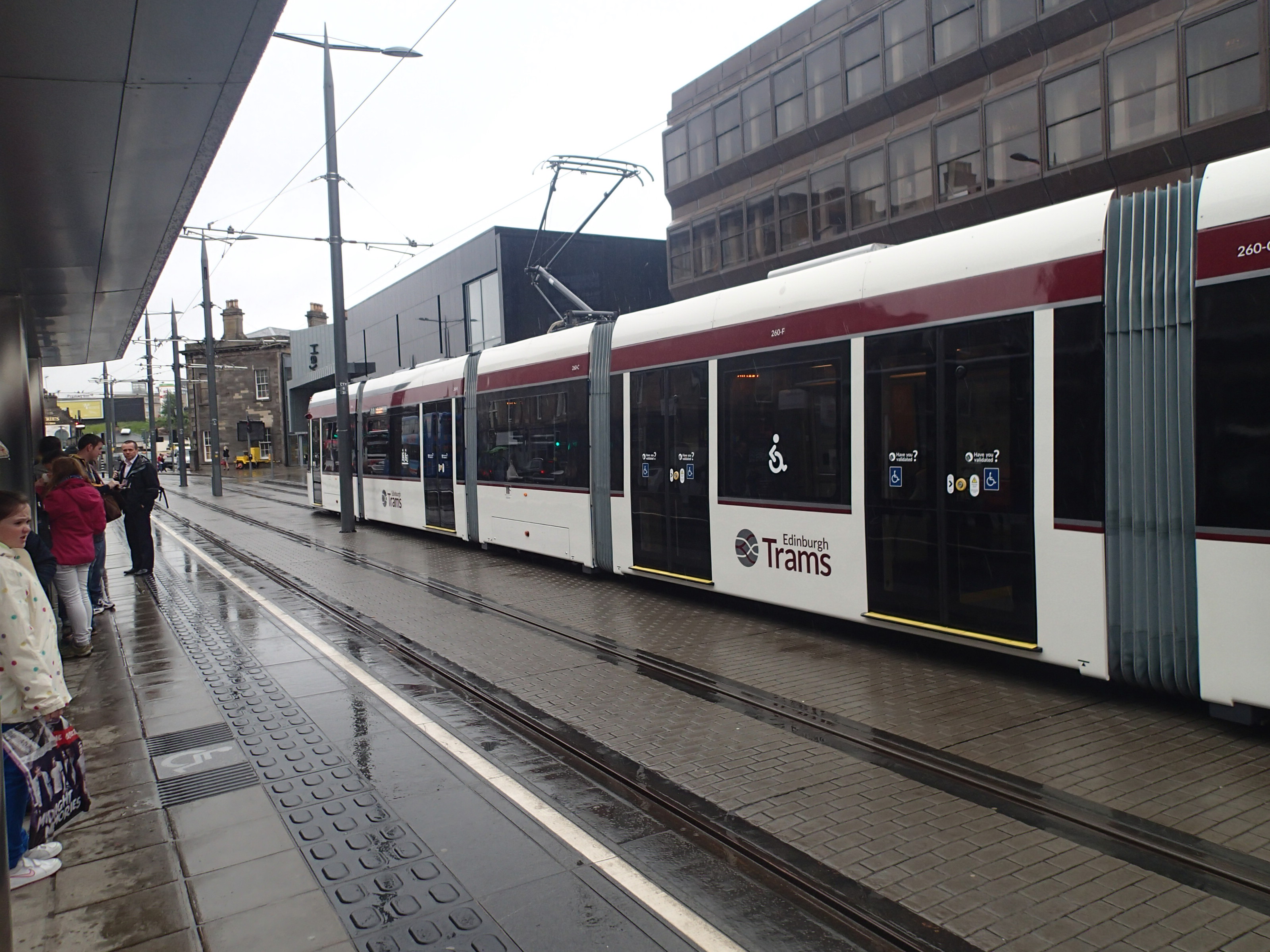
Note the short sections, which show what is possible in an articulated rail vehicle.
I suspect the following.
- As the current trains have six sections, this would be a starting point for a new design.
- Four or five sections would be a more affordable design.
- There will be an optimum number of sections to handle the curves and gradients.
- Does an articulated walk-through design need quite as many doors as current trains?
It looks like a good cost-effective design is possible.
Tyne And Wear Metro
Under Proposed New Fleet in the Wikipedia entry for Tyne and Wear Metro Rolling Stock this is said.
In November 2017, the Chancellor Philip Hammond announced that the government would provide £337 million towards the new fleet. The proposed new fleet would consist of 84 trains to replace the existing 90 train fleet, as Nexus believe that the improved reliability of the newer trains would allow them to operate the same service levels with fewer trains. These are proposed to have longitudinal seating instead of the 2+2 bench seating arrangement of the present fleet, and a full width drivers cab instead of the small driving booth of the existing trains. The proposed new fleet is planned to have dual voltage capability, able to operate on the Metro’s existing 1.5 kV DC electrification system and also the 25 kV AC used on the national rail network, to allow greater flexibility. Battery technology is also being considered.
Note.
- A dual-voltage capability will be required.
- Battery capability would be ideal for short movements and regenerative braking.
- In my view longitudinal seating needs a walk-though capability.
- Currently, trains are two-car units and generally work in pairs.
- Trains can work in formations of three and four units, but the ability is not used.
If trains generally work in pairs would it be more affordable to have four-car trains?
- Could they be adapted from proven lightweight main line rolling stock, by perhaps giving the trains a smaller cross-section?
- They would only have two instead of four cabs.
- They could be articulated, walk-through trains.
- Class 399 tram-trains have shown dual voltage through one pantograph is possible.
Using a certified main line train, that had been made smaller would surely mean that certification would be easier.
I believe, that a section of the Tyne and Wear Metro works using tram-train principles under the Karlsruhe model, which allows the current trains to share tracks with other rail services.
So the new trains would make it possible for the Metro to be expanded onto main line railways. If they were electrified using 25 KVAC. Freight lines, which might see a reopened passenger service, could be electrified using the current Metro 1,500 VDC system.
It strikes me thyat by getting the design of the rolling stock right, a lot of possibilities could open up for the Tyne and Wear Metro.
London Bridge Station Gets The Last Five New Platforms
The last five platforms, numbered 1 to 5, at London Bridge station, opened this morning.


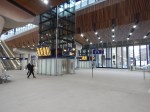
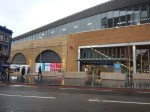
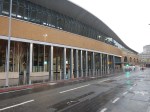
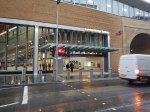
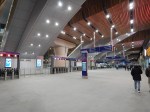
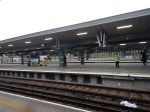

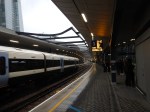
It is now possible to judge the station as a whole.
The Spacious Concourse
In my experience, the layout of the spacious concourse is unique in all the stations I have visited. And I’ve visited quite a few! And not just in the UK, but all over Europe.
Effectively, it is like a city square, with separate stations on viaducts above.
- The one-platform station (Platform 1) for trains from Cannon Street to SE London and Kent.
- The two-platform island station (Platforms 2 and 3) for trains from SE London and Kent to Cannon Street.
- The two platform island station (Platform 4 and 5) for trains for Thameslink services going North and South,
- The two-platform island station (Platform 6 and 7) for trains from Charing Cross and Waterloo East to SE London, Kent and Sussex
- The two-platform island station (Platform 8 and 9) for trains from Waterloo East to SE London, Kent and Sussex to Charing-Cross and Waterloo.
- The six-platform terminal station (Platforms 10-15) for trains to SE London, Surrey And Sussex.
All platforms have two or more escalators, stairs and a lift to and from the spacious concourse.
- The circulation space is uncluttered with just one fast food outlet discretely to one side. Others will be slotted in.
- The lighting is excellent, with lots of natural light. Many stations are dingy, despite having been built or rebuilt in the last few years.
Ticketing and security is ensured by several lines of ticket gates, leading to a surrounding unticketed concourse.
The Double-Concourse Design
|Effectively, London Bridge station has two concourses.
The ticketed concourse, that connects to all the platforms and the trains.
There is also a second concourse surrounding the ticketed concourse.
- This second concourse extends through the station from Tooley Street to St. Thomas Street.
- The streets outside the station are effectively parts of the second concourse.
- Level walking routes to the Underground, the River, Guys Hospital and London Bridge are provided.
- A separate escalator connection links to the bus station, from the second concourse.
- There are more shops and a ticket office.
Where else could this concept be employed?
The obvious example is surely Manchester Piccadilly station, where there will effectively be three stations.
- The HS2 station.
- A terminal station for trains going to and from the South.
- A two-platform through station capable of handling sixteen trains per hour, replacing the dreaded Platforms 13 and 14.
All would be linked by a huge London Bridge-sized area under the tracks, with both a ticketed and unticketed area.
- The tram station would be at the same level as the concourse, accessible from the unticketed area.
- Shops would be mainly in the unticketed area, with a minimum in the ticketed area.
- A clutter-free design is needed.
The aim would be to ensure that quick and easy interchange between various transport modes was created.
The concept would also work at a rebuilt Euston and should probably have been used instead of the very passenger and staff-unfriendly design at St. Pancras, where interchange between separate services is not for those that are not 100% fit.
I also think that a similar concept of a split concourse, with ticketed and unticketed areas could be applied at a traditional terminal station like Brighton, Liverpool Street, Liverpool Lime Street or Waterloo, where significant numbers of passengers interchange between services at the station.
- A second ticketed concourse could be created between the gate line and the actual platforms.
- The concourse outside the ticket gates should be extended into the surrounding streets, as it effectively has been at Kings Cross.
- A lot of decluttering should go on.
Hopefully, as each new station is designed, the concept will be improved.
Wide Island Platforms
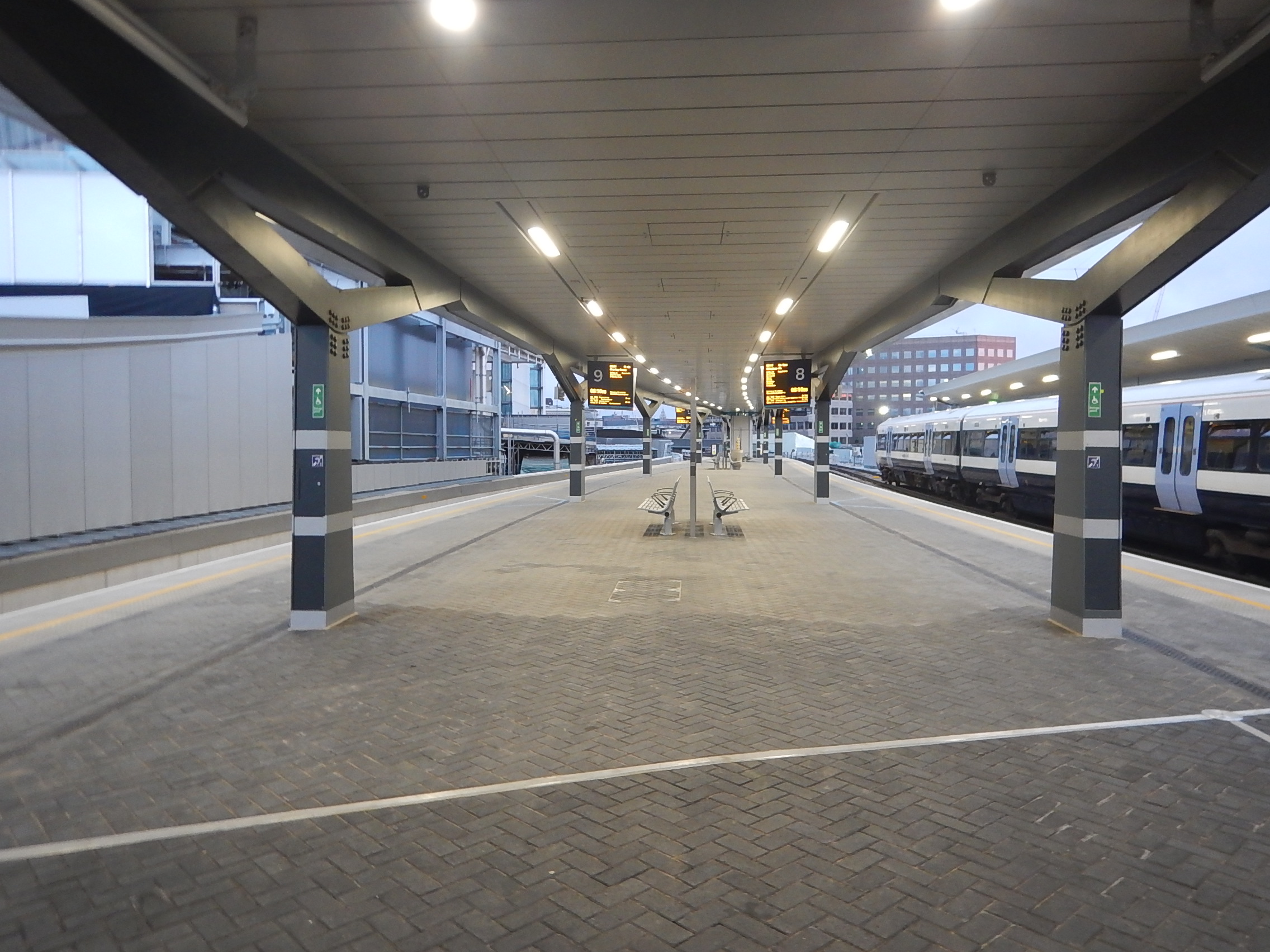
Can platforms be too wide? Probably only accountants can answer that question.
But we certainly need more island platforms!
They make it so easy for passengers to reverse direction, without going up onto a bridge or down into a subway.
If say you were going between Bedford and Cambridge on Thameslink, perhaps with a heavy case or in a wheel-chair, it might be easier to go as far South as London Bridge station, where you could just cross the platform for the second train.
Unfortunately, no-one thought to build the important Thameslink station at St. Pancras with an island platform.
Lights Above The Ticket Gates
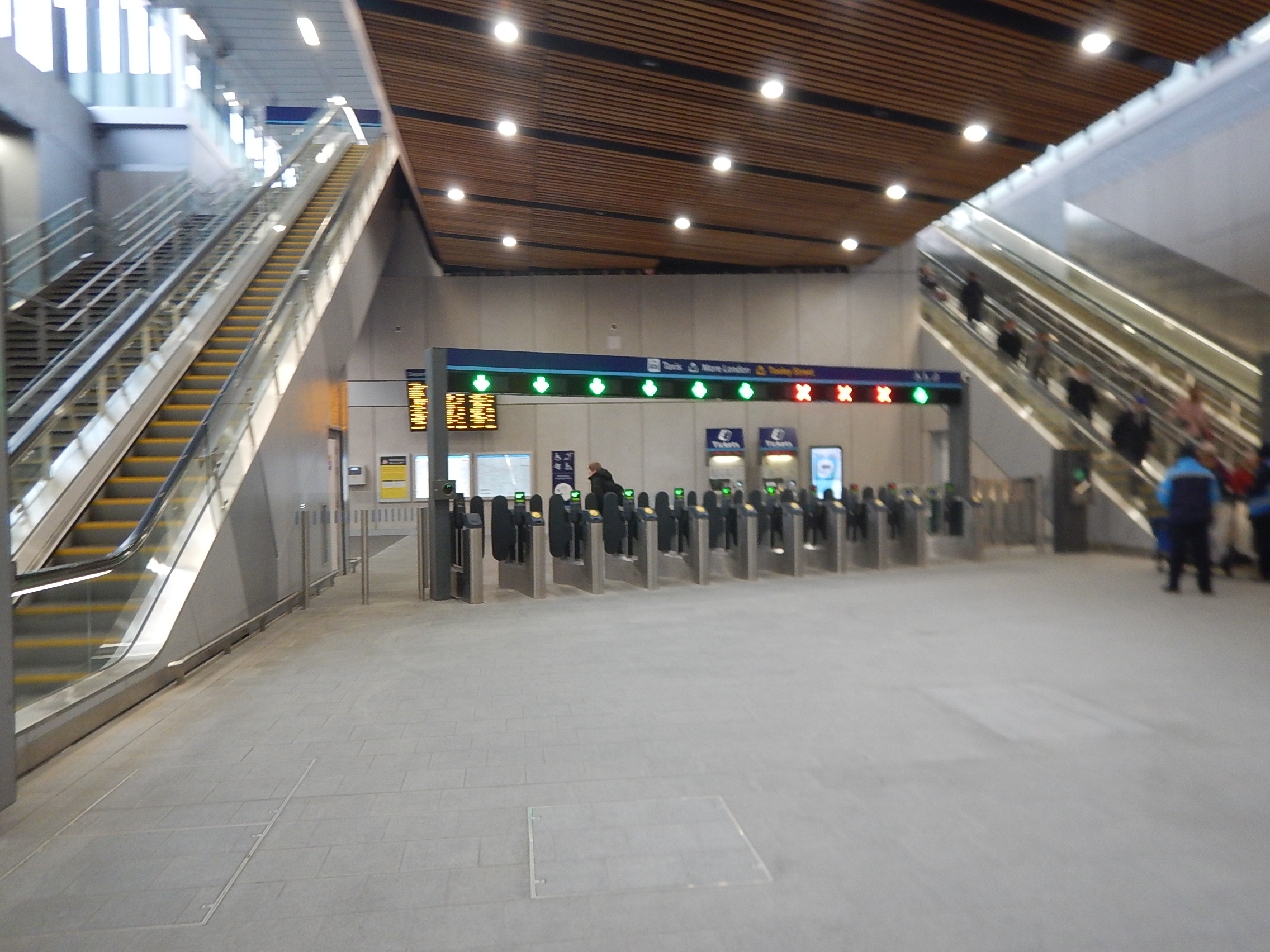
The lights on some of London’s ticket gates are difficult to see, as you approach, but these are so much better.
Surely, as people will line up a few metres away and walk straight towards the gate, this might increase passenger throughput.
Can we have more of this please?
Information Above The Escalators And Stairs
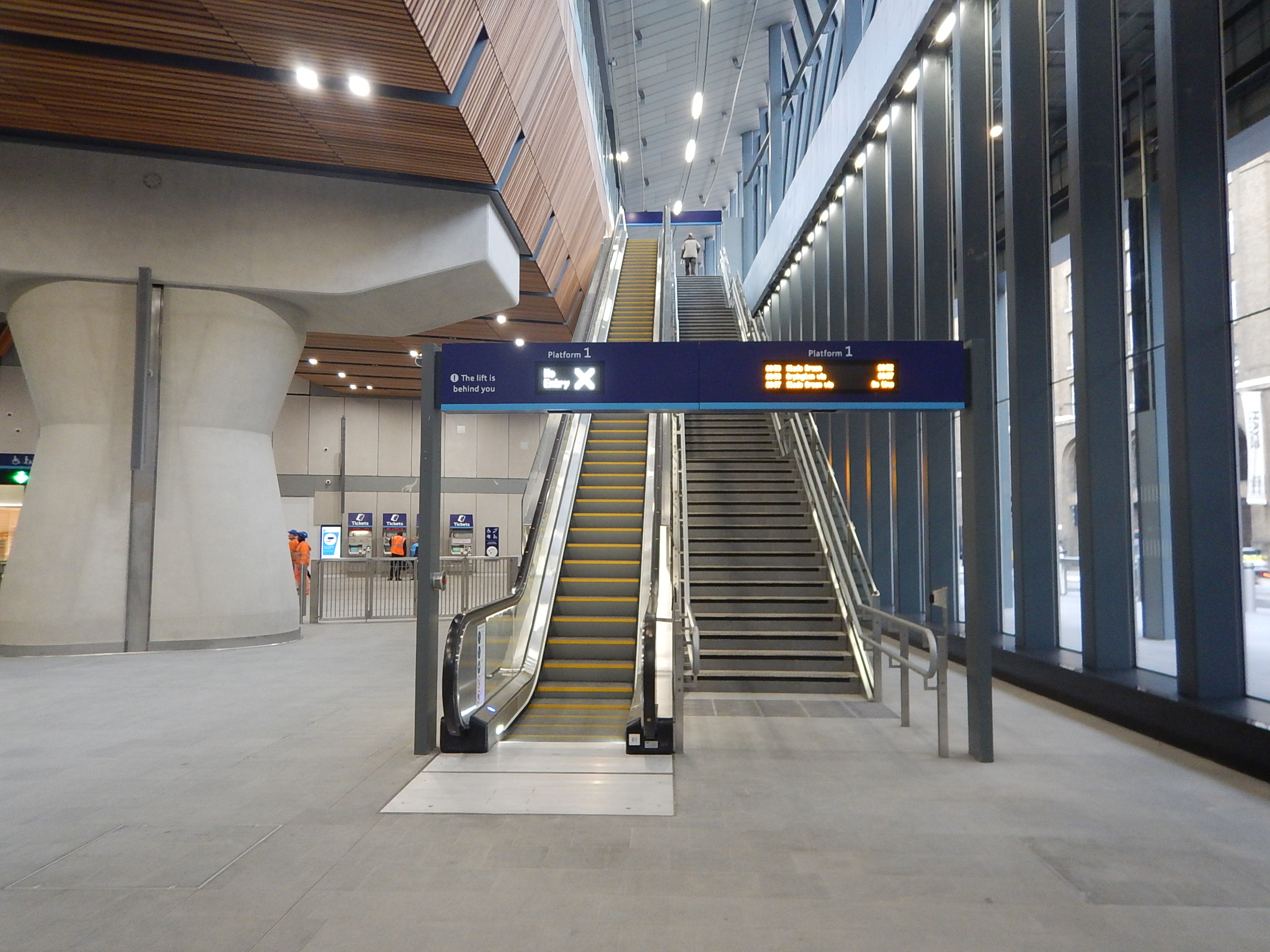
This is good, but it could be better.
Imagine a one-line display on top of the main display, which could be used for title, important or emergency information.
Examples could be.
- Trains To Waterloo East And Charing Cross
- Way Out!
- Do Not Enter!!
- RMT Call Off Strike Tomorrow!
The standard display for the various platforms at London Bridge could be.
Platform 1 – Cannon Street To SE London And Kent
Platform 2 and 3 – To Cannon Street
Platforms 4 and 5 – Thameslink – 4 To South – 5 To North
Platform 6 and 7 – Charing Cross To SE London, Kent And Sussex
Platforms 8 and 9 – To Waterloo East And Charing Cross
Platforms 10 to 15 – To SE London, Surrey And Sussex
Ticket Machines
There are no ticket machines in the ticketed area.
In Germany, there is often a ticket machine after you have passed the gate.
I find it very useful, as they can be used to buy tickets for a later journey or look up future connections.
I only know of one ticket machine inside the ticketed area in the UK and that is on Platform 8 at Stratford station.

We need more of these!
The need will get more urgent after Crossrail and Thameslink are fully open.
Suppose you are doing a journey from somewhere in the Oyster/contactless card area like Ealing Broadway or Ilford to perhaps Hastings, Ipswich or Oxford, which are not.
- You might not be starting your journey at a station with a ticket office.
- Because you never go outside the Oyster/contactless card area, you haven’t bought a ticket in some time.
- You might like me be a Freedom Pass holder.
So you might arrive at London Bridge or Stratford, without a valid ticket for the rest of your journey.
Currently, at London Bridge station, you have to go outside the ticketed area to get your onward ticket.
A ticket machine or machines inside the ticketed area would be better.
It could also.
- Provide information.
- Print intineraries
- Display advertising.
Perhaps, like cash machines, ticket machines might be provided by third-party operators?
Seats
Are there enough seats?
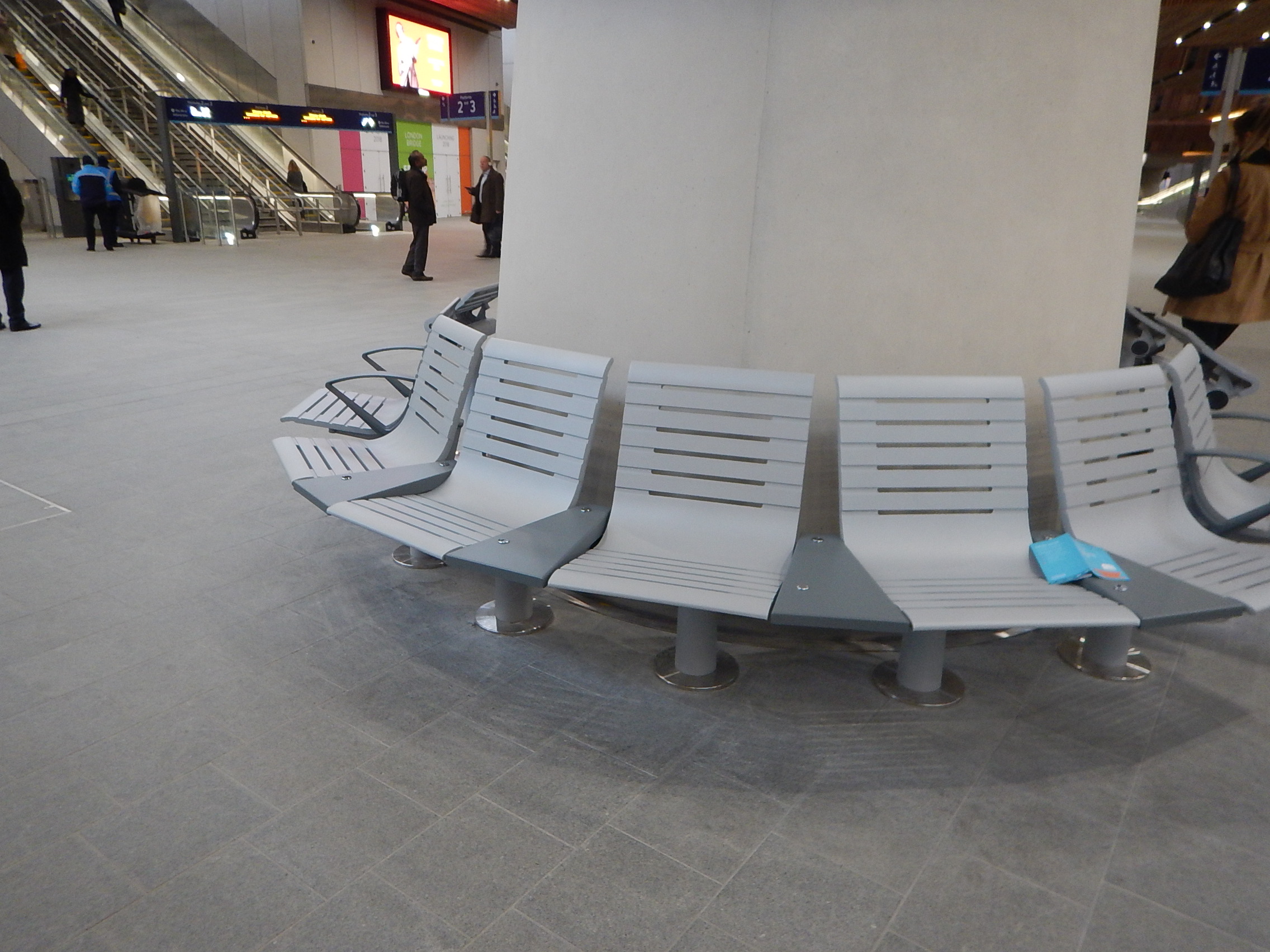
Time will tell! But I think more will be added!
 The Anonymous Widower