Could Battery-Electric Hitachi Trains Work Chiltern Railways’s Services?
Before I answer this question, I will lay out a few specifications and the current status.
Hitachi’s Proposed Battery Electric Train
Based on information in an article in Issue 898 of Rail Magazine, which is entitled Sparking A Revolution, the specification of Hitachi’s proposed battery-electric train is given as follows.
- Based on Class 800-802/804 trains or Class 385 trains.
- Range of 55-65 miles.
- Operating speed of 90-100 mph
- Recharge in ten minutes when static.
- A battery life of 8-10 years.
- Battery-only power for stations and urban areas.
For this post, I will assume that the train is four or five cars long.
Chiltern Railways’ Main Line Services
These are Chiltern Railways services that run on the Chiltern Main Line.
London Marylebone And Gerrards Cross
- The service runs at a frequency of one train per hour (tph)
- Intermediate stations are Wembley Stadium, Sudbury & Harrow Road, Sudbury Hill Harrow, Northolt Park, West Ruislip, Denham and Denham Golf Club
The service is nineteen miles long and takes thirty minutes.
It should be possible to run this service with trains charged at one end of the route.
London Marylebone And High Wycombe
- The service runs at a frequency of one tph
- Intermediate stations are Wembley Stadium, South Ruislip, Gerrards Cross and Beaconsfield
- Some services terminate in a bay platform 1 at High Wycombe station.
The service is twenty-eight miles long and takes forty-two minutes.
It should be possible to run this service with trains charged at one end of the route.
London Marylebone And Aylesbury Via High Wycombe
- The service runs at a frequency of one tph
- Intermediate stations are Gerrards Cross, Seer Green and Jordans, Beaconsfield, High Wycombe, Saunderton, Princes Risborough, Monks Risborough and Little Kimble
- This service usually terminates in Platform 1 at Aylesbury station.
The service is 43.5 miles long and takes sixty-six minutes.
It should be possible to run this service with trains charged at both ends of the route.
London Marylebone And Banbury (And Stratford-upon-Avon)
- The service runs at a frequency of one tph
- Intermediate stations for the Banbury service are Denham Golf Club, Gerrards Cross, Beaconsfield, High Wycombe, Princes Risborough, Haddenham & Thame Parkway, Bicester North and Kings Sutton.
- Intermediate stations for the Stratford-upon-Avon service are Denham Golf Club, Gerrards Cross, Beaconsfield, High Wycombe, Princes Risborough, Haddenham & Thame Parkway, Bicester North and Kings Sutton, Banbury, Leamington Spa, Warwick, Hatton, Claverdon, Bearley, Wilmcote and Stratford-upon-Avon Parkway.
The Banbury service is 69 miles long and takes one hour and forty-five minutes.
The Stratford-upon-Avon service is 104 miles long and takes two hours and twenty-two minutes.
Running these two services will need a bit of ingenuity.
Leamington Spa And Birmingham Moor Street
- The service runs at a frequency of one train per two hours (tp2h)
- Intermediate stations for the service are Warwick, Hatton, Lapworth, Dorridge and Solihull.
The service is 23 miles long and takes forty-one minutes.
It should be possible to run this service with trains charged at one end of the route.
London Marylebone And Birmingham Moor Street
- The service runs at a frequency of one tph
- Intermediate stations for the service are High Wycombe, Banbury, Leamington Spa, Warwick Parkway and Solihull.
The service is 112 miles long and takes one hour and forty-four minutes.
It should be possible to run this service with trains charged at both ends of the route and also fully charged somewhere in the middle.
Distances from London Marylebone of the various stations are.
- High Wycombe – 28 miles
- Bicester North – 55 miles
- Banbury – 69 miles
- Leamington Spa – 89 miles
- Warwick – 91 miles
- Warwick Parkway – 92 miles
- Solihull – 105 miles
Consider.
- It looks like a fully-charged train from London Marylebone could reach Bicester North, but not Banbury, with a 55-65 mile battery range.
- Travelling South, Bicester North could be reached with a fully-charged train from Birmingham Moor Street.
But it would appear to be too marginal to run a reliable service.
London Marylebone And Birmingham Snow Hill
- The service runs at a frequency of one tph
- Intermediate stations for the service are Bicester North, Banbury, Leamington Spa, Warwick, Warwick Parkway, Dorridge, Solihull and Birmingham Moor Street
The service is 112 miles long and takes two hours and a minute.
It should be possible to run this service with trains charged at both ends of the route and also fully charged somewhere in the middle.
London Marylebone And Kidderminster
Some services between London Marylebone and Birmingham Snow Hill are extended to Kidderminster.
The distance between Kidderminster and Birmingham Snow Hill is twenty miles and the service takes forty-two minutes.
London Marylebone And Oxford
- The service runs at a frequency of two tph
- Intermediate stations for the service are High Wycombe, Haddenham & Thame Parkway, Bicester Village, Islip and, Oxford Parkway.
- The service runs into dedicated platforms at Oxford station.
The service is 67 miles long and takes one hour and nine minutes.
It should be possible to run this service with trains charged at both ends of the route and some supplementary charging somewhere in the middle.
Chiltern’s Aylesbury Line Services
These are Chiltern Railway‘s services that run on the London And Aylesbury Line (Amersham Line).
London Marylebone And Aylesbury (And Aylesbury Vale Parkway) via Amersham
- The service runs at a frequency of two tph
- Intermediate stations are Harrow-on-the-Hill, Rickmansworth, Chorleywood, Chalfont & Latimer, Amersham, Great Missenden, Wendover and Stoke Mandeville.
- It appears that there is sufficient time at Aylesbury Vale Parkway in the turnround to charge the train using a Fast Charge system.
The Aylesbury service is 39 miles long and takes one hour.
The Aylesbury Vale Parkway service is 41 miles long and takes one hour and twelve minutes.
It should be possible to run both services with trains charged at both ends of the route.
Chiltern Railways’ Future Train Needs
Chiltern Railways will need to add to or replace some or all of their fleet in the near future for various reasons.
Decarbonisation
Chiltern are probably the passenger train operating company, with the lowest proportion of zero-carbon trains. It scores zero for zero-carbon!
Government policy of an extinction date of 2040 was first mentioned by Jo Johnson, when he was Rail Minister in February 2018.
As new trains generally last between thirty and forty years and take about five years to design and deliver, trains ordered tomorrow, will probably still be running in 2055, which is fifteen years after Jo Johnson’s diesel extinction date.
I feel that, all trains we order now, should be one of the following.
- All-electric
- Battery-electric
- Hydrogen-electric
- Diesel electric trains, that can be converted to zero-carbon, by the replacement of the diesel power, with an appropriate zero-carbon source.
Hitachi seem to be designing an AT-300 diesel-electric train for Avanti West Coast, where the diesel engines can be replaced with batteries, according to an article in the January 2020 Edition of Modern Railways.
Pollution And Noise In And Around Marylebone Station
This Google Map shows the area around Marylebone station.
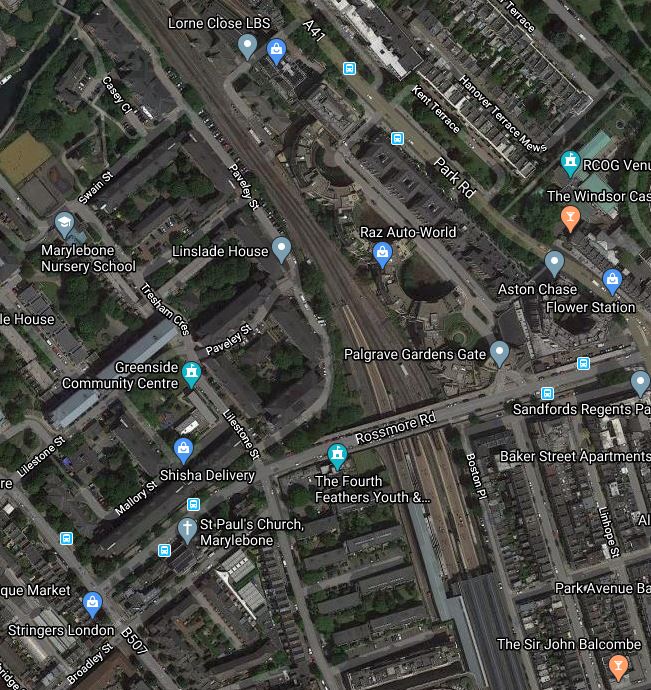
Cinsider.
- Marylebone station is in the South-East corner of the map.
- The station is surrounded by some of the most expensive real estate in London.
- A lot of Chiltern’s trains do not meet the latest regulations for diesel trains.
- Blackfriars, Cannon Street, Charing Cross, Euston, Fenchurch Street, Kings Cross, Liverpool Street, London Bridge, Paddington, St. Pancras, Victoria and Waterloo stations are diesel-free or have plans to do so.
Will the residents, the Greater London Council and the Government do something about improving Chiltern’s pollution and noise?
New trains would be a necessary part of the solution.
New And Extended Services
Consider.
- Chiltern plan to extend the Aylesbury Parkway service to Milton Keynes in connection with East West Rail. This service would appear to be planned to run via High Wycombe and Princes Risborough.
- There has also been proposals for a new Chiltern terminus at Old Oak Common in West London to connect to Crossrail, High Speed Two and the London Overground.
- Chiltern could run a service between Oxford and Birmingham Moor Street.
- With the demise of the Croxley Rail Link around Watford, Chiltern could be part of a revived solution.
- In Issue 899 of Rail Magazine in an article entitled Calls For Major Enhancement To Oxford And Didcot Route, it states that there will be three tph between Oxford and Marylebone, two of which will start from a new station at Cowley.
Chiltern certainly have been an expansionist railway in the past.
I wouldn’t be surprised to see Chiltern ordering new trains.
As I said earlier, I suspect they wouldn’t want to order some new short-life diesel trains.
125 mph Running
Consider.
- The West Coast Main Line has an operating speed of 125 mph.
- East West Rail is being built for an operating speed of 125 mph.
- Some parts of the Chiltern Main Line could be electrified and upgraded to 125 mph operation.
For these reasons, some of Chiltern’s new fleet must be capable of modification, so it can run at 125 mph, where it is possible.
100 mph Trains
Around half of Chiltern’s fleet are 100 mph trains, but the other half, made up of Class 165 trains only have a 75 mph operating speed.
Running a fleet, where all trains have a similar performance, must give operational and capacity improvements.
Increasing Capacity
Chiltern’s Main Line service to Birmingham is run using six Mark 3 carriages between a Class 68 locomotive and a driving van trailer.
These trains are 177.3 metres long and hold 444 passengers.
These trains are equivalent in length to a seven-car Hitachi Class AT-300 train, which I estimate would hold just over 500 passengers.
Changing some trains for a more modern design, could increase the passenger capacity, but without increasing the train length.
Aventi West Coast And High Speed Two
Chiltern’s services to Birmingham will come under increasing pressure from Avanti West Coast‘s revamped all-electric fleet, which within ten years should be augmented by High Speed Two.
It will be difficult selling the joys of comfortable diesel trains against the environmental benefits of all-electric zero-carbon faster trains.
Great Western Railway And Possible Electrification To Oxford
Chiltern’s services to Oxford will also come under increasing pressure from Great Western Railway’s services to Oxford.
- When Crossrail opens, Paddington will be a much better terminal than Marylebone.
- Crossrail will offer lots of new connections from Reading.
- Great Western Railway could run their own battery-electric trains to Oxford.
- Great Western Railway will be faster between London and Oxford at 38 minutes to Chiltern’s 65 minutes.
Will new trains be needed on the route to retain passengers?
Will Chiltern Have Two Separate Fleets?
Currently, Chiltern Railways have what is effectively two separate fleets.
- A Chiltern Main Line fleet comprised of five sets of six Mark 3 coaches, a Class 68 locomotive and a driving van trailer.
- A secondary fleet of thirty-four assorted diesel multiple units of various ages and lengths, which do everything else.
But would this be their fleet, if they went for a full renewal to fully-decarbonise?
Would they acquire more Main Line sets to work the services to Birmingham, Kidderminster and perhaps some other Midlands destinations?
Do the Oxford services require more capacity for both Oxford and Bicester Village and would more Main Line sets be a solution?
What destinations will be served and what trains will be needed to work services from new destinations like Milton Keynes and Old Oak Common?
I can see Chiltern acquiring two fleets of battery-electric trains.
- Chiltern Main Line trains based on Hitachi AT-300 trains with between five and seven cars.
- Suburban trains for shorter journeys, based on Hitachi Class 385 trains with perhaps four cars.
Both would be fairly similar under the skin.
Conclusion On Chiltern Railways’ Future Trains
I am very much drawn to the conclusion, that Chiltern will have to introduce a new fleet of zero-carbon trains.
Electrification would be a possibility, but have we got enough resources to carry out the work, at the same time as High Speed Two is being built?
Hydrogen might be a possibility, but it would probably lead to a loss of capacity on the trains.
Battery-electric trains might not be a solution, but I suspect they could be the best way to increase Chiltern’s fleet and decarbonise at the same time.
- Hitachi’s basic train design is used by several train operating companies and appears to be well received, by Train operating companies, staff and passengers.
- Hitachi appear to be well-advanced with a battery-electric version.
- Hitachi seem to have sold the concept of battery-electric AT-300 trains to Avanti West Coast to replace their diesel-electric Class 221 trains.
The sale of trains to Avanti West Coast appears to be very significant, in that Hitachi will be delivering a diesel-electric fleet, that will then be converted to battery-electric.
I like this approach.
- Routes can be converted gradually and the trains fully tested as diesel-electric.
- Electrification and/or charging stations can be added, to the rail network.
- As routes are ready, the trains can be converted to battery-electric.
It would appear to be a low-risk approach, that could ensure conversion of the fleet does not involve too much disruption to passengers.
Possible Electrification That Might Help Chiltern Railways
These lines are or could be electrified in the near future.
Amersham Line Between Harrow-on-the-Hill and Amersham Stations
The only electrified line on the Chiltern Railways network is the section of the Amersham Line between Harrow-on-the-Hill and Amersham stations.
- It is electrified using London Underground’s system.
- It is fourteen miles long and trains take twenty-two minutes.
- London Marylebone and Harrow-on-the-Hill is a distance of only nine miles
- Aylesbury and Amersham is a distance of only fifteen miles.
Could this be of use in powering Children Railways’ trains?
The maths certainly look promising, as if nothing else it means the maximum range of one of Hitachi’s proposed battery-electric trains is fourteen miles further, which may enable Chiltern’s proposed service between London Marylebone and Milton Keynes to reach the 25 KVAC electrification at Bletchley.
But if the new trains were to use the London Underground electrification, they would have to be dual-voltage units.
As Hitachi have already built dual-voltage Class 395 trains for the UK, I don’t think, that this will be a problem.
Dorridge/Whitlock’s End And Worcestershire via Birmingham Snow Hill
In the February 2020 Edition of Modern Railways, there is a feature, which is entitled West Midlands Builds For The Future.
This is said about electrification on the Snow Hill Lines.
Remodelling Leamington is just one of the aspirations WMRE has for upgrading the Great Western’s Southern approach to Birmingham, which serves a number of affluent suburbs, with growing passenger numbers. “Electrification of the Snow Hill Lines commuter network is something which we are keen to explore.’ says Mr. Rackliff.
As well as reducing global carbon emissions, yhis would also help reduce air pollution in central Birmingham and local population centres. ‘From a local perspective, we’d initially want to see electrification of the core network between Dorridge/Whitlock’s End and Worcestershire via Birmingham Snow Hill as a minimum, but from a national perspective it would make sense to electrify the Chiltern Main Line all the way to Marylebone.’
Note the following distances from Dorridge.
- Leamington Spa – 13 miles
- Banbury – 33 miles
- Bicester North – 47 miles
- High Wycombe – 74 miles
It looks as if, electrification of the Snow Hill Lines would allow trains to travel from Bicester or Banbury to Birmingham Moor Street, Birmingham Snow Hill or Kidderminster.
Reading And Nuneaton via Didcot, Oxford, Banbury, Leamington Spa And Coventry
This route, which is used by CrossCountry services and freight trains, has been mentioned in the past, as a route that may be electrified.
Note the following distances from Didcot.
- Oxford – 10 miles
- Ayhno Junction – 27 miles
- Banbury 32 miles
- Leamington Spa – 52 miles
- Coventry – 62 miles
- Nuneaton – 72 miles
Electrifying this route would link together the following lines.
- Trent Valley Line through Nuneaton
- West Coast Main Line through Coventry
- Chiltern Main Line through Banbury and Leamington Spa.
- Great Western Main Line through Didcot.
Note that Aynho Junction is only 36 miles from High Wycombe and 64 miles from London Marylebone.
Fast Charging At Terminal Stations
Chiltern Railways use the following terminal stations.
- Aylesbury station, where a bay platform is used.
- Aylesbury Parkway station
- Banbury station, where a bay platform is used.
- Birmingham Moor Street station, where all bay platforms are used.
- Birmingham Show Hill station
- High Wycombe station, where a bay platform is used.
- Kidderminster station
- London Marylebone station, where all platforms are used.
- Oxford station, where two North-facing bay platforms are used.
- Stratford-upon-Avon station
I suspect that something like Viviarail’s Fast-Charge system, based on well-proven third-rail technology could be used.
- This system uses a bank of batteries to transfer power to the train’s batteries.
- The transfer is performed using modified high-quality third-rail electrification technology.
- Battery-to-battery transfer is fast, due to the low-impedance of batteries.
- The system will be able to connect automatically, without driver action.
- The third-rail is only switched on, when a train is present.
- The battery bank will be trickle-charged from any convenient power source.
Could the battery bank be installed under the track in the platform to save space?
If Network Rail and Chiltern Railways would prefer a solution based on 25 KVAC technology, I’m sure that Furrer + Frey or another electrification company have a solution.
Installing charging in a platform at a station, would obviously close the platform for a couple of months, but even converting all six platforms at Marylebone station wouldn’t be an impossible task.
Possible Electrification Between London Marylebone And Harrow-on-the-Hill
Consider.
- All trains to Aylesbury have to travel between London Marylebone and Harrow-on-the-Hill stations, which is nine miles of track without electrification. It takes about twelve minutes.
- Trains via High Wycombe use this section of track as far as Neasden South Junction, which is give miles and typically takes seven minutes.
- Leaving Marylebone, these trains are accelerating, so will need more power.
This map from carto.metro.free.fr shows the lines around Neasden.
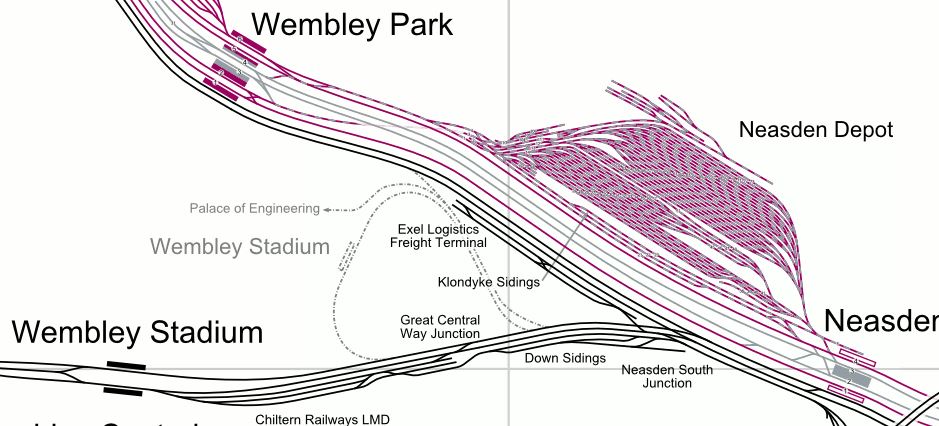
Note.
- The Chiltern Railways tracks are shown in black.
- Two tracks continue to the North-West to Harrow-on-the-Hill and Aylesbury.
- Two tracks continue to the West to Wembley Stdium station and High Wycombe.
- Two tracks continue South-East into Marylebone station, running non-stop.
- The Jubilee Line tracks in the middle are shown in silver,
- The Metropolitan Line tracks are shown in mauve.
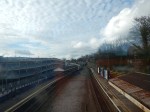
These pictures were taken of the two Chiltern tracks from a Jubilee Line train running between West Hampstead and Wembley Park stations.

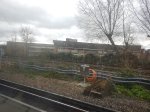
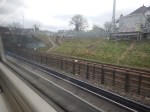

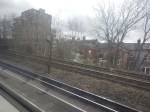
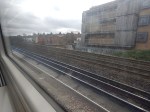
Note, that the tracks have no electrification and there is plenty of space.
I feel that to accelerate the trains out of Marylebone and make sure that the batteries are fully charged, that these tracks should be electrified.
There is space on this section for 25 KVAC overhead, but would it be better to use an electrified rail system?
- As you approach Marylebone there are several tunnels, which might make installation of overhead wires difficult and disruptive.
- There are London Underground tracks and their third and fourth rail electrification everywhere.
- Between Harrow-on-the Hill and Amersham stations, Chiltern and Metropolitan Line trains share the same track, which is electrified to London Underground standards and used for traction power by the Metropolitan Line trains.
- Trains connect and disconnect to third-rail electrification, without any complication and have been doing it for over a hundred years.
On the other hand, there are arguments against third-rail systems like safety and electrical inefficiency.
Running Chiltern’s Routes Using A Battery-Electric Train
I will now take each route in order and look at how battery-electric trains could run the route.
London Marylebone And Oxford
Consider.
- This route is 67 miles.
- An out and back trip is 134 miles.
- The route is probably too long for the proposed Hitachi battery-electric train, without some intermediate charging.
- Trains currently wait in the bay platforms at Oxford for up to thirty minutes, which is more than enough time to fully-charge the train for return to Marylebone.
When I outlined this route, I said this.
It should be possible to run this service with trains charged at both ends of the route and some supplementary charging somewhere in the middle.
I’m discussing this route first, as it has the complication of needing some form of intermediate charging.
The obvious place for some intermediate charging would be High Wycombe station.
- It is 28 miles from Marylebone
- It is 38 miles from Oxford
- Trains seem to stop for a couple of minutes at High Wycombe.
As trains would only need to pick up a half-charge at the station, would it be possible for a train passing through High Wycombe to be able to use a Fast-Charge system, to give the battery a boost?
As a Control and Electrical Engineer by training, I think that this is more than possible.
It leads me to believe that with Fast Charging systems at Marylebone, Oxford and High Wycombe, Hitachi’s proposed battery-electric trains can run a reliable service between Marylebone and Oxford.
London Marylebone And Gerrards Cross
Consider.
- This route is just nineteen miles.
- An out and back trip is thirty-eight miles.
- Trains appear to use a reversing siding to change tracks to return to London. They wait in the siding for up to thirty minutes, which is more than enough time to fully-charge the train for return to Marylebone.
I am fairly sure, that this route could be run by trains charged at Marylebone station only.
However, if charging is needed at Gerrards Cross, there is plenty of time, for this to be performed in the reversing siding.
It might even be reversed with all charging taking place at Gerrards Cross, so that fast turnrounds can be performed in Marylebone station.
London Marylebone And High Wycombe
Consider.
- This route is just twenty-eight miles.
- An out and back trip is fifty-six miles.
- Trains wait in the bay platform for up to thirty minutes, which is more than enough time to fully-charge the train for return to Marylebone.
Everything said for the Gerrards Cross service would apply to the High Wycombe service.
London Marylebone And Banbury
Consider.
- This route is 69 miles.
- An out and back trip is 138 miles.
- The route is probably too long for the proposed Hitachi battery-electric train, without some intermediate charging.
- Trains wait in platform 4 at Banbury for around thirty minutes, which is more than enough time to fully-charge the train for return to Marylebone.
- Trains call at High Wycombe station.
As with the Marylebone and Oxford route, this route will need some intermediate charging and as with the Oxford service, High Wycombe is the obvious choice,
High Wycombe is only 41 miles from Banbury, which is well within range of Hitachi’s proposed battery-electric train.
London Marylebone And Stratford-upon-Avon
Consider.
- This route is 104 miles.
- An out and back trip is 208 miles.
- The distance between Stratford-upon-Avon and Banbury is 35 miles.
- The route is probably too long for the proposed Hitachi battery-electric train, without some intermediate charging.
- Trains wait in Platform 1 at Stratford-upon-Avon for over thirty minutes, which is more than enough time to fully-charge the train for return to Marylebone.
- Trains call at Banbury station, where they wait for several minutes.
- Trains call at High Wycombe station.
As with the Marylebone and Oxford and Marylebone and Banbury routes, this route will need some intermediate charging and as with the Oxford and Banbury services, High Wycombe is the obvious choice,
But this route could also use the Fast Charging system at Banbury.
London Marylebone And Birmingham Moor Street
Consider.
- This route is 112 miles.
- An out and back trip is 224 miles.
- The distance between Birmingham Moor Street and Banbury is 43 miles.
- The route is probably too long for the proposed Hitachi battery-electric train, without some intermediate charging.
- Trains wait in the bay platform at Birmingham Moor Street for thirteen minutes, which is more than enough time to fully-charge the train for return to Marylebone.
- Trains call at Banbury and High Wycombe stations.
As with the Marylebone and Stratford-upon-Avon route, this route will need some intermediate charging and as with the Stratford-upon-Avon service, High Wycombe and Banbury are the obvious choice,
London Marylebone And Birmingham Snow Hill
Consider.
- This route is 112 miles.
- An out and back trip is 224 miles.
- The distance between Birmingham Snow Hill and Banbury is 43 miles.
- The route is probably too long for the proposed Hitachi battery-electric train, without some intermediate charging.
- Trains wait in the bay platform at Birmingham Snow Hill for ten minutes, which is more than enough time to fully-charge the train for return to Marylebone.
- Trains call at Banbury and High Wycombe stations.
As with the Marylebone and Stratford-upon-Avon route, this route will need some intermediate charging and as with the Stratford-upon-Avon service, High Wycombe and Banbury are the obvious choice,
London Marylebone And Kidderminster
Consider.
- This route is 132 miles.
- An out and back trip is 264 miles.
- The distance between Kidderminster and Banbury is 63 miles.
- The route is probably too long for the proposed Hitachi battery-electric train, without some intermediate charging.
- Trains call at Banbury and High Wycombe stations.
As with the Marylebone and Stratford-upon-Avon and Birmingham routes, this route will need some intermediate charging and as with the Stratford-upon-Avon and Birmingham services, High Wycombe and Banbury are the obvious choice,
London Marylebone And Aylesbury Via High Wycombe
Consider.
- The route is 43.5 miles
- An out and back trip is 87 miles.
- The route is probably short enough for the proposed Hitachi battery-electric train, to run the route without intermediate charging.
- This service usually terminates in Platform 1 at Aylesbury station, where trains wait for up to thirteen minutes, which is more than enough time to fully-charge the train for return to Marylebone.
- The train will also be fully-charged at Marylebone.
It looks that this route could be easily handled with charging at both ends of the route, but if there has been a charging error, the train can obviously make a pit-stop at High Wycombe to give the battery a top-up.
London Marylebone And Aylesbury Via Amersham
Consider.
- The route is 39 miles
- An out and back trip is 78 miles.
- The route is probably short enough for the proposed Hitachi battery-electric train, to run the route without intermediate charging.
- This service usually terminates in Platform 3 at Aylesbury station, where trains wait for up to twenty minutes, which is more than enough time to fully-charge the train for return to Marylebone.
- The train will also be fully-charged at Marylebone.
It looks that this route could be easily handled with charging at both ends of the route, but if there has been a charging error, the train can obviously make a pit-stop at High Wycombe to give the battery a top-up.
London Marylebone And Aylesbury Vale Parkway Via Amersham
Consider.
- The route is 41 miles
- An out and back trip is 82 miles.
- The route is probably short enough for the proposed Hitachi battery-electric train, to run the route without intermediate charging.
- This service usually terminates in Platform 1 at Aylesbury Vale Parkway station, where trains wait for up to nine minutes, which is more than enough time to fully-charge the train for return to Marylebone.
- The train will also be fully-charged at Marylebone.
It looks that this route could be easily handled with charging at both ends of the route, but if there has been a charging error, the train can obviously make a pit-stop at Aylesbury to give the battery a top-up.
Leamington Spa And Birmingham Moor Street
Consider.
- The route is 23 miles
- An out and back trip is 46 miles.
- This service usually terminates in a bay platform at Birmingham Moor Street station, where trains wait for up to twenty minutes, which is more than enough time to fully-charge the train for return to Leamington Spa.
I am fairly sure, that this route could be run by trains charged at Bitmingham Moor Street station only.
New And Extended Services
These services are planned or have been mentioned as possibilities.
London Marylebone And Milton Keynes Via High Wycombe, Princes Risborough, Aylesbury And Aylesbury Vale Parkway
This is the new service that Chiltern will start running in the next few years.
Consider.
- I estimate the distance between Aylesbury Vale Parkway and Bletchley, where 25 KVAC overhead electrification starts is 18 miles, with Milton Keynes a further three miles.
- The distance between Marylebone and Bletchley via High Wycombe would be 63.5 miles.
- The route is probably short enough for the proposed Hitachi battery-electric train, to run the route without intermediate charging.
- Charging would normally be in Milton Keynes and Marylebone, with a certain amount of charging from the 25 KVAC between Bletchley and Milton Keynes.
It looks that this route could be handled with charging at both ends of the route, but if there has been a charging error, the train can obviously make a pit-stop at High Wycombe or Aylesbury to give the battery a top-up.
Birmingham Moor Street And Oxford
Consider.
- Birmingham Moor Street station could have more South-facing bay platforms.
- Birmingham Moor Street station is only a short walk from the new High Speed Two station at Birmingham Curzon Street.
- Oxford station has two North-facing bay platforms.
- Oxford station and Aynho Junction is only twenty miles and well within battery range, if High Wycombe and Banbury is electrified.
- Banbury and Oxford currently takes 23 minutes.
- Banbury and Birmingham Moor Street currently takes 44 minutes
It looks like a Birmingham Moor Street and Oxford service would take one hour and seven minutes.
London Marylebone And The Cowley Branch
This proposed service is probably about four to five miles further on from Oxford station.
There may be problems with how the track is laid out, but with a charging station at the end of the branch, I doubt that distance would be a problem.
Croxley Rail Link Proposal
I said this earlier.
With the demise of the Croxley Rail Link around Watford, Chiltern could be part of a revived solution.
The original plan died a long time ago, but could there be a simpler Chiltern-based solution?
- Rebuild the railway between Croxley and Watford High Street stations.
- Build new stations at Watford Vicarage Road and Cassiobridge.
- A single track link would be more affordable could certainly handle two tph and possibly four.
- Chiltern would run a two tph service between Watford Junction and Aylesbury stations.
- The service would call at Watford High Street, Watford Vicarage Road, Cassiobridge, Croxley, Rickmansworth, Chorleywood, Chalfont & Latimer, Amersham, Great Missenden, Wendover and Stoke Mandeville.
I’m sure a more comprehensive scheme than the original one can be devised.
Important Stations
These are some of the more important stations and a few notes.
Aylesbury
As Chiltern develops the network in the next few years, these services could run to and/or through Aylesbury station.
- One tph – London Marylebone and Aylesbury via High Wycombe
- One tph – London Marylebone and Aylesbury via Amersham
- One tph – London Marylebone and Aylesbury Vale Parkway via Amersham
- One tph – London Marylebone and Milton Keynes via High Wycombe and Aylesbury Vale Parkway (new service)
I could also see a two tph service between Watford Junction and Aylesbury via Amersham.
Summing all this up means that two tph go via High Wycombe and four tph go via Amersham.
This Google Map shows Aylesbury station.
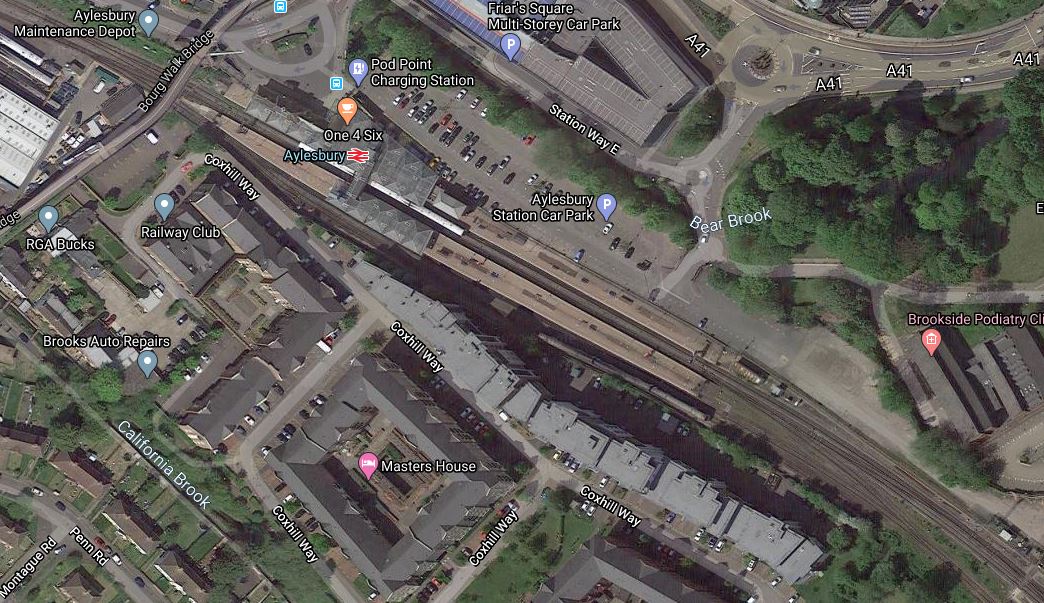
Note.
- Platforms are numbered 1 to 3 from South to North.
- Trains going South via High Wycombe call in Platforms 1 or 2.
- Trains going South via Amersham call in Platforms 2 and 3
- Trains going North call in Platforms 2 and 3.
These pictures show the station.

It is a spacious station, with step-free access and I feel that it could handle more services.
Banbury
I am sure that Banbury station, will be an important charging point for Chiltern’s battery-electric trains going North of Banbury.
This Google Map shows the layout of the recently-refurbished Banbury station.
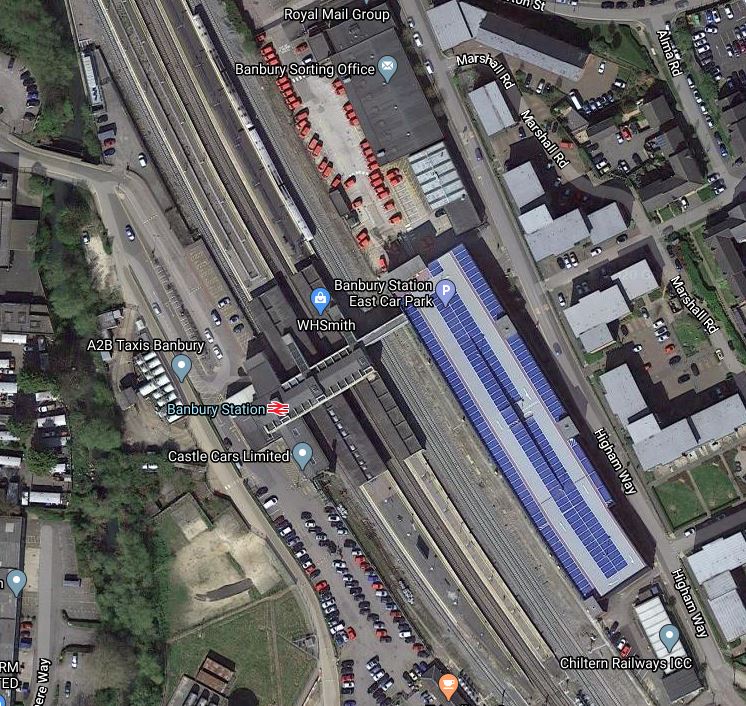
Note.
- Platforms are numbered 1 to 4 from West to East.
- Trains going North call in Platforms 1 or 2.
- Trains going South call in Platforms 3 or 4.
- The Marylebone and London service usually turns back in Platform 4 after waiting there for over half-an-hour.
- Northbound Stratford-upon-Avon services generally use Platform 1, but most others generally use Playform 2.
- Southbound Stratford-upon-Avon services generally use Platform 4, but most others generally use Playform 3.
It looks to me, that Banbury station could handle the charging of trains as they pass through, as all of Chiltern’s services that serve destinations to the North of Banbury, stop at the station.
Hitachi are saying, that one of their proposed battery-electric trains needs ten minutes to be fully-charged.
So there may need to be some adjustment to the time-table to lengthen the stops at Banbury, to give ten minutes of charging time.
Alternatively, a few miles of electrification could be centred on Banbury, perhaps between Aynho Junction and Leamington Spa, which is a distance of twenty-six miles, which takes one of Chiltern’s trains around twenty-three minutes.
This would surely give enough time to fully-charge the batteries, but would also benefit CrossCountry, if they should go the battery-electric route.
I have followed the route between Aynho Junction and Leamington Spa in my helicopter and it would appear to be a fairly straight and uncomplicated route. I would say, it is about as difficult to electrify, as the Midland Main Line between Bedford and Kettering/Corby, which appears to have been one of Hetwork Rail’s better electrification projects, which should be delivered on time and has been installed without too much disruption to trains and passengers.
High Wycombe
It looks to me, that High Wycombe station will be an important charging point for Chiltern’s battery-electric trains going North to Oxford and Banbury.
Unlike Banbury, High Wycombe has not seen many changes over the years.
This Google Map shows High Wycombe station.
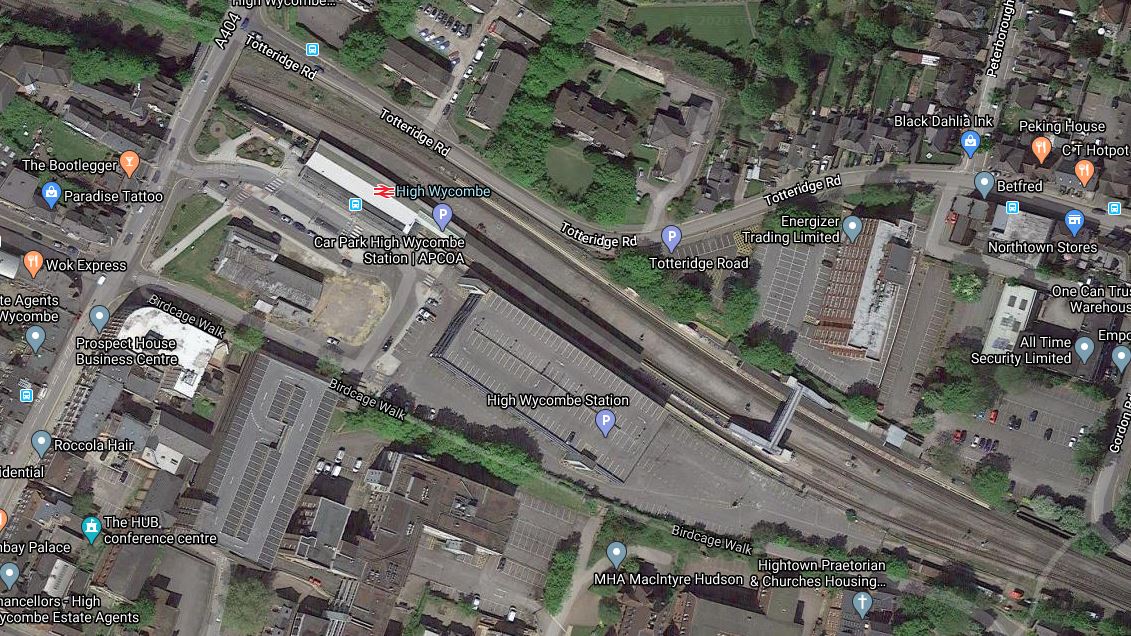
Note.
- Platforms are numbered 1 to 3 from South to North.
- Platform 1 is a bay platform that faces London.
- Platform 2 is the Westbound platform.
- Platform 3 is the Eastbound platform.
- High Wycombe has five tph in both directions, with an upgrade to six tph possible, after two tph run to the Cowley Branch.
The frequency of the trains through High Wycombe station could probably be handled by a Fast Charging system, but it would be tight to fit all current five services into an hour. It would appear to preclude any extra services going through High Wycombe, as there just isn’t enough time in an hour.
For this reason, I think that High Wycombe station needs full electrification, so that all passing trains can top up their batteries.
This gives the interesting possibility, that a train leaving High Wycombe for London with a full battery, would probably have enough charge in the battery to travel the 28 miles to London Marylebone and return. The train could always have a top-up at Marylebone.
So how far would the electrfication, through High Wycombe run?
Given that for operational reasons, it is probably best that pantographs are raised and lowered in stations, it is probably best if the various routes were electrified to the next station.
- The Chiltern Main Line route would be electrified as far as Banbury station, where all trains stop. The distance would be 41 miles.
- The Oxford route would be electrified as far as Bicester Village station, where all trains stop. The distance would be less than two miles from the Chiltern Main Line
- The Aylesbury route would be electrified as far as Princes Risborough station, where all trains stop. This would be included in the Chiltern Main Line electrification.
It looks to me, that just 43 miles of double-track electrification would enable Hitachi’s proposed battery-electric trains to reach all parts of the Chiltern network.
Distances of the various destinations from the electrification are as follows.
- Birmingham Moor Street – 43 miles
- Birmingham Snow Hill – 43 miles
- Kidderminster – 63 miles
- Marylebone – 28 miles
- Milton Keynes – 27 miles
- Oxford – 38 miles
- Oxford – Cowley – 43 miles
- Stratford-upon-Avon 35 miles
Only Kidderminster could be tricky, but not if the Snow Hill Lines are electrified through Birmingham.
Electrification of the Chiltern Main Line between High Wycombe and Banbury with a number of Fast Charging systems in selected stations, would be my preferred option of enabling Hitachi’s proposed battery-electric trains to work the Chiltern network.
These pictures show High Wycombe station.

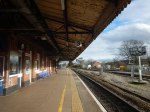
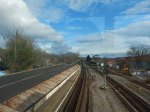
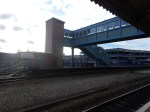
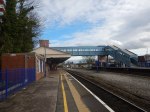
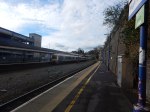
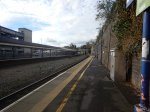
It does appear that the bridge at the Western end of the station my need to be modified, so that overhead wires can be threaded underneath.
Conclusion
Quite unexpectedly, I am pleasantly surprised.
Chiltern Railways’ current network can be run by Hitachi’s proposed battery-electric AT-300 trains.
- Fast charging systems will be needed at Aylesbury, Aylesbury Vale Parkway, Banbury, Birmingham Moor Street, Birmingham Snow Hill, Gerrards Cross, High Wycombe, Kidderminster, Marylebone, Milton Keynes and Oxford.
- Banbury and High Wycombe will need to be able to top-up trains as they pass through.
- No large scale electrification will be needed. Although any new electrification will be greatly accepted!
As I indicated earlier, I would electrify the core part of the Chiltern Main Line route between High Wycombe and Banbury.
It would probably be a good idea to electrify a few miles at the Southern end of the line, where it runs into Marylebone station.
- Marylebone and Harrow-on-the-Hill.
- Marylebone and West Ruislip
- Old Oak Common and West Ruislip.
I would use third-rail electrification to be compatible with London Underground and because of the automatic connection and disconnection.
But most surprisingly, there are already generous turnround times at most terminal stations, which give enough time to charge the trains.
It’s almost, as if Chiltern are preparing for battery-electric trains.
Oxford’s Nimbys Are Getting Angry!
I keep finding articles on the web, like this article on the Oxford Times, which is entitled First Person: The Campaign To Keep Oxfordshire As It Is Now.
The title says it all.
It is all about opposition to the Oxford to Cambridge Expressway, which everybody wants in someone else’s back-yard.
My feelings are as follows.
- A fully-electrified freight route should be built between Southampton and the West Coast Main Line, preferably with 25 KVAC overhead wiring.
- The East West Railway should provide at least two fast trains per hour between Heathrow and Cambridge, via Reading, Oxford, Milton Keynes and Bedford.
- I would accelerate the construction of the East West Railway.
Only as a last project, would I build the Oxford to Cambridge Expressway.
Charting An Electric Freight Future
The title of this post, is the same as the title of an informative article in the April 2018 Edition of Modern Railways, which was written by Julian Worth, who has many years experience of the rail freight industry.
This is a very comprehensive article looking at the future of motive power for freight trains.
These are points from the article, with some added comments of my own.
2040 And A Diesel-Free Rail System
Government ministers have said that by 2040, the UK will have a diesel-free railway, which will reduce emissions and especially particulates.
This page on the Government web site is entitled Let’s Raise Our Ambitions For A Cleaner, Greener Railway, which gives the text of a speech by the Rail Minister; Jo Johnson.
This is part of what he said.
And that’s why I am today announcing a new ambition.
I would like to see us take all diesel-only trains off the track by 2040.
If that seems like an ambitious goal – it should be and I make no apology for that.
After all, we’re committed to ending sales of petrol and diesel cars by 2040.
If we can achieve that, then why can’t the railway aspire to a similar objective?
Rail may be less carbon intensive than road transport.
That’s why modal shift’s so important.
As an engineer. I feel it is a challenge that is acceptable.
The Diesel Locomotives Are Getting Old!
The ubiquitous Class 66 locomotives, don’t meet the latest emission standards, but in addition, by the late 2020s, they will be getting to thirty years old.
Other locomotives like Class 59 locomotives will be even older.
Replacement locomotives will be needed, as maintenance costs will be getting too high.
The Last-Mile Electric Locomotive
Electric locomotives with a last-mile capability away from electrification like the Class 88 locomotive could be favoured.
- They could be used for terminal work and short-distance movements.
- They would have a 25 KVAC capability.
- They could possibly have a 750 VDC capability, to work on the third-rail network.
- They would meet all the emission standards, when running on diesel.
Julian Worth suggests that the last-mile capability could be provided by a battery.
Although, this would be environmentally-friendly and better in urban areas, I think that any onboard power, should be able to take a train into and out of the Port of Felixstowe, London Gateway and the other major ports.
I met a manager of the Port of Felixstowe a few years ago and they don’t like 25 KVAC wires in a dock, as containers do occasionally get dropped.
Most lines into ports and inland terminals, don’t appear to be too challenging and I’m sure that an uprated Class 88 locomotive could be built, that would handle entry and exit to all the ports and terminals in the UK.
Do We Need A Freight Electrification Strategy?
Julian Worth suggests we need one for the next couple of decades.
He makes some good points.
- Electric traction current is cheaper than diesel fuel.
- Availability of modern electric locomotives should be better than a diesel.
- Diesels may be restricted in urban areas. It could be a vote winner in Mayoral elections in the large Metropolitan areas.
He finishes this with this statement.
Crucially, switching to electric locos from around 2030 would not entail premature replacement of the current fleet and would represent necessary asset renewal in modern equivalent form.
Just imagine the outcry from the Green Movement, if these ageing diesels were to be replaced with modern diesel locomotives..
Undoubtedly, we need a well-thought out freight strategy.
GB Railfreight
This article in Rail Magazine is entitled GB Railfreight In ‘Locomotive Acquisition’ Talks.
So at least one freight company is looking for new motive power. GB Railfreight has a fleet of seventy-eight Class 66 locomotives with other locomotives in the ageing category. Some of their work like hauling the Caledonian Sleeper needs well-presented reliable locomotives, so perhaps they need to update their image.
It will be interesting to see what type and class of locomotive they buy.
Rail Freight Has Changed
Coal to power stations used to be the dominant freight on UK railways.
But n0t any more! Thank goodness!
The major freight on UK railways is intermodal or trains of containers from port to inland terminal and vice versa.
There is also a large growth in construction materials, miuch of it going from quarries in the West Country and the Peak District to the South East of England. To send this any other way than by train, would surely be madness.
There also seems to be an increasing number of trains carrying new vehicles to and from the Continent. More will surely start to use the Channel Tunnel.
Julian Worth says this, after summarising the freight flows.
This suggests modest extensions of electrification might permit much of the construction and intermodal businesses, together with most automotive traffic, to be electrically hauled throughout.
He then goes on to say that the big gap is Felixstowe to Peterborough, Nuneaton and Birmingham.
The Port of Felixstowe
I partly grew up in the town and never thought the port would grow to the size, it is today.
I also remember in the 1980s, when only the odd intermodal train was to be seen on the Felixstowe Branch Line.
- Now, a dozen trains in each direction on every day take the route between Felixstowe and the Midlands.
- The Felixstowe Branch Line is being upgraded to raise the number of trains from the port from 33 to 48.
- The Great Eastern Main Line and the routes through North London are close to capacity.
- The direct route via Peterborough is a lot shorter than the London route.
Julian Worth states, that the number of trains between Felixstowe and the Midlands could rise to as high as fifty every day.
Routes That Should Be Electrified For Freight
Julian Worth suggests that the following routes should be electrified.
Route 1 – London Gateway to Thames Haven Junction
If you electrify Felixstowe to the Midlands, this will remove some diesel freight trains from London.
It would be stupid to replace them with diesel freight trains from London Gateway. So it would be fairly logical to electrify the connecting route to London Gateway.
This Google Map shows London Gateway and the rail connection to the electrified London, Tilbury and Southend Railway.
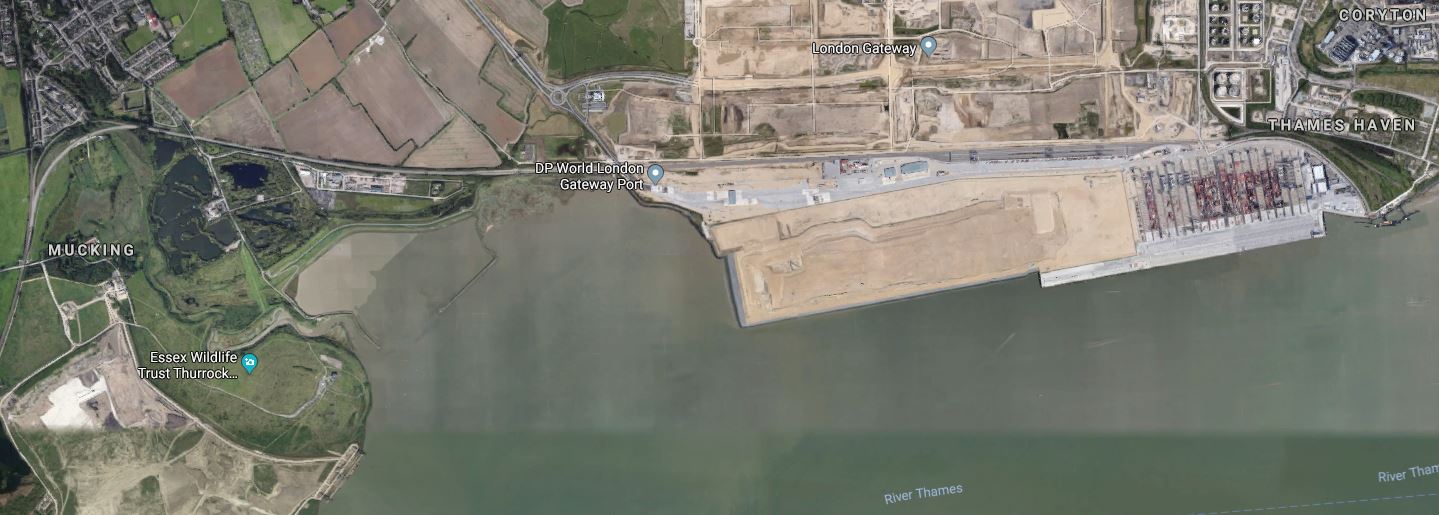
Note.
- The electrified London, Tilbury and Southend Railway, runs North-South at the extreme left of the map.
- The connecting spur curves East on what appears to be a new chord before accessing sidings on the North side of London Gateway.
- There would appear to be a lot of space to expand the port.
- The rail spur to the port is double track.
- It looks like their are sat least five sidings for handling freight trains.
- The sidings are double-ended, so last-mile capable electric locomotives could run round trains, without the need for electrification.
It would have appeared to have been designed for electrification.
Full details on London Gateway’s plans for rail access are given here in the Wikipedia entry for London Gateway, under Rail Terminal.
This is a quick summary.
- Freight trains will use the newly-electrified Gospel Oak to Barking Line to access the West Coast Main Line.
- Freight trains have a route to the Channel Tunnel.
- London Gateway has planning permission for a second rail terminal.
In other places Wikipedia says the port is highly-automated.
I am led to the conclusion, that the Gospel Oak to Barking Line will see a high number of electric freight trains in the future.
I’m not surprised that Julian Worth says the spur currently handles sixteen trains per day and is set to grow significantly.
I certainly wouldn’t buy a house on the Gospel Oak to Barking Line.
Route 2 – Nuneaton To Birmingham Lawley Street
If Felixstowe to Nuneaton is electrified, then this extends the electrification to the massive Lawley Street Freightliner Terminal, which is in central Birmingham.
This diagram from Wikipedia shows the route.
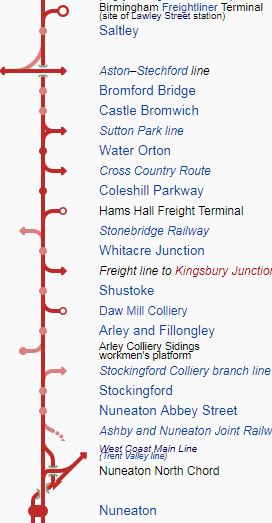
Note.
- Lawley Street Freightliner Terminal, is on the short spur at the top of the diagram.
- iThis electrification would also complete a fully-electrified route between Birmingham New Street station and Sansted Airport, so CrossCountry could use electric trains on that route, instead of the current Class 170 train, which is often overcrowded.
- Would the electrification open up opportunities for more electrified local services in Birmingham?
Julian Worth says that this twenty miles carries thirty-two trains per day.
Would electrifying this route also have environmental benefits in terms of pollution?
Route 3 – Basingstoke To Southcote Junction and Oxford to Denbigh Hall Junction
This route, which connects the Port of Southampton with the West Coast Main Line, would require forty-two miles of electrification.
Consider.
- It would create a fully-electrified route from Southampton to the West Coast Main Line.
- Julian Worth says it carries forty-eight trains per day.
- I also think, he is assuming that the Great Western Electrification extends to Oxford, which surely it will do in the next few years.
- Dual voltage locomotives would be needed.
- It would require electrification of part of the East West Railway.
The East West Railway is to be built as a privatised railway and I’m sure if the sums were right, they would electrify the route from Oxford to Denbigh Hall Junction.
If the Western end of the East West Railway were to be electrified, this must increase the options and operating speed for passenger trains on the route.
Route 4 – Merehead/Whatley to Newbury
Consider.
- Merehead and Whatley are both Quarries of the Mendip Hills.
- The line is double-track and seventy-two miles long.
- Julian Worth says that this route carries twenty-eight stone trains per day.
- Many trains are double-size.
- In a four hour period, using Real Time Trains I found,three stone trains that weighed 4,800 tonnes and had a maximum speed of 45 mph and four stone trains that weighed 2,000 tonnes and had a maximum speed of 60 mph, using the route from the Mendips to London.
With all that heavy traffic, it strikes me that their are only two ways to power these trains on the route.
- Very powerful diesel locomotives, possibly working in pairs.
- Very powerful 25 KVAC electric locomotives, which would need electrification, able to supply lots of amps.
Mendip Rail currently run these services using Class 59 locomotives, which have the following characteristics.
- Built in North America between 1985 and 1995.
- They were the first privately-owned locomotives on the UK main line.
- They have the ability to creep to shift heavy loads on gradients.
- They have a maximim speed of 60-75 mph.
- They are towered by a 2.5 MW diesel engine.
This extract from Wikipedia illustrates their power.
On 26 May 1991 Kenneth J Painter (59005) (with assistance from Yeoman Endeavour) set the European haulage record, with a stone train weighing 11,982 tonnes and 5,415 feet (1,650 m) long. However the so-called ‘mega train’ experiment was not very successful, as a coupling in the centre of the train broke.
It would appear, there was nothing wrong with the locomotives.
By the late 2020s, these locomotives will be over forty years old and although they could probably soldier on for another ten or even twenty years, the cost of maintenance will increase and reliability could decrease. You don’t want a 4,800 tonne stone train blocking the Reading to Taumton Line.
I suspect too, that it is unlikely that this important stone traffic will decrease. This is said in the Wikipedia entry for Mendip Rail.
Mendip Rail’s class 59s work services between various destinations which have changed over time according to demand and specific contracts. They have worked regularly over southern railway tracks, for example to the former Foster Yeoman terminals at Eastleigh and Botley, as well as delivery aggregates for construction work on the Thames Barrier, Second Severn Crossing, Channel Tunnel and most recently Heathrow Terminal 5, which required 3 million tonnes of stone.
Mendip Rail hauls about 4.5 million tonnes of stone from Torr Works each year, and about 2.5 million tonnes from Whatley Quarry.
I suspect that these stone flows will continue and there will come a time in the not-to-distant future, where new locomotives will be required.
- The Class 59 locomotives were built for these stone trains and have a maximum tractive effort of 507 kN at just 7 mph.
- A large electric Class 92 locomotive has a maximum tractive effort of only 400 kN.
But I suspect that engineers can design an electric locomotive, that can handle these trains either by themselves or working in a pair.
So there will be a choice between a very powerful diesel locomotive or a very powerful electric one.
- Will those that live by the railway and environmentalists accept new diesel locomotives?
- Electric locomotives would require the line to be electrified.
- Electrification would allow Great Western Railway to run their Class 800 trains more efficiently using the wires.
- Would those who live by the railway, accept the electrification of the line?
It’s a difficult choice.
Route 5 – Felixstowe to Ipswich. Haughley Junction to Peterborough and Helpston to Nuneaton
Consider
- This would be a big project, as it would require 146 miles of new electrification.
- But the return could be worthwhile, as currently the route handles twenty trains per day and once the Felixstowe Branch Line has more double track, this figure could rise to fifty-six trains per day.
- At Ipswich, Peterborough and Nuneaton, the route connects to fully-electrified lines.
My project management knowledge tends to electrifying this line from East to West as almost three separate projects.
- Felixstowe to Ipswich
- Haughley Junction to Peterborough
- Helpston to Nuneaton
It could even be five, if Helpston to Nuneaton was split into two at either Leicester or the Midland Main Line.
I have three general questions.
- When the gauge clearance was undertaken a few years ago, were bridges raised to accommodate wires as well?
- Will the natives object to fifty trains per day?
- Will the line be resignalled to handle the greater number of trains?
Once the full route is electrified, the number of trains to and from Felixstowe , that used the Great Eastern Main Line and the routes through London would drop. Obviously, some trains like those between Felixstowe and Wales and the West Country would still need to use the London routes.
But overall, this would allow a mixture of the following.
- Higher passenger train frequencies on the North London Line
- Higher passenger train frequencies on the Gospel Oak To Barking Line
- More freight trains to and from London Gateway could use the cross-London routes.
The last point would mean, that electric locomotives would need to have access to London Gateway.
I will detail my thoughts on Felixstowe to the Midlands electrification in the next three sub-sections.
Route 5A – Felixstowe to Ipswich
Electrifying between Felixstowe and Ipswich shouldn’t be the most challenging of projects.
- The route is fairly flat.
- The route is double track, except for part of the Felixstowe Branch Line.
- The line was cleared for the largest containers a few years ago.
- Doubling of the Felixstowe Branch Line around Trimley and the removal of some level crossings should start this year.
- There should be an adequate 25 KVAC power supply at Ipswich.
I have two extra questions.
- Will the partial doubling of the Felixstowe Branch, prepare the line for electrification?
- Has a scheme been designed to take electrification to the port?
But there will be benefits.
- Some freight trains that use the Great Eastern Main Line and the electrified routes through London, could be hauled all the way. by electric locomotives.
- If Felixstowe station was to be electrified, Greater Anglia could run five-car Class 720 electric trains instead of Class 755 bi-mode trains on the branch, if required.
- Class 755 bi-mode trains on the Ipswich to Lowestoft service, would be able to use the electrification between Westerfield and Ipswich stations.
- Noise and vibration could be reduced.
It is just over a dozen miles of elwctrification, so isn’t the largest of projects.
Route 5B – Haughley Junction to Peterborough
Like the first section between Felixstowe and Ipswich, this section is also not very challenging.
- The route is fairly flat.
- The route is double track.
- The line was cleared for the largest containers a few years ago.
- Ely is being remodelled to remove a bottleneck.
- Ely to Soham improvements seem to have been dropped, but will surely happen.
- Haughley Junction needs to be remodelled.
- Network Rail are already removing level crossings.
- There should be an adequate 25 KVAC power supply at Haughley and Peterborough.
I have an extra question.
- Will the route between Cambridge and Chippenham Junction be electrified?
But there will be benefits.
- Electric freight between Felixstowe And The East Coast Main Line as far as Scotland.
- Greater Anglia could run their service between Colchester and Peterborough with a Class 720 electric train.
- Greater Anglia’s service between Ipswich and Cambridge would do more running under wires.
The electrification might even enable some useful electrified diversion routes.
Route 5C -Helpston to Nuneaton
I don’t know this section of the route, as well as I know the two other sections.
- The route is double track.
- There is a busy level crossing in the middle of Oakham.
- There should be an adequate 25 KVAC power supply at both ends of the route.
It would appear that the route goes through Leicester station on the Midland Main Line.
As the electrification of the Midland Main Line has been postponed, how will this section of the route be handled?
But there will be benefits.
- Electric freight between Felixstowe And The Midlands
- Fewer freight trains would need to go via London
- Some passenger services, like Birmingham-Stansted Airport, could be run using electric trains.
Completing all three sections will open up new possibilities for both freight and passenger services.
Route 6 – Hare Park Junction to Leeds Stourton
This is a freight route , which can be followed this way.
- It leaves the electrified Wakefield Line at Hare Park Junction, which is South of Sandal and Agbrigg station.
- It passes Wakefield Kirkgate and Normanton stations and there appears to be a connection to Wakefield Europort.
- It then joins the Hallam Line and goes to the Stourton Freightliner Terminal.
Electrification of this eighteen mile route, would allow freight trains with electric traction to reach the Stourton terminal.
The electrification could also be extended to Leeds station, so that passenger services on the Hallam Line, run by bi-mode trains would have an electrified route into Leeds.
Route 7 – Mountsorrel to Syston Junction and Manton Junction to Corby
Mountsorrel Quarry is one of the biggest granite quarries in Europe. It is not on the railway anymore, but is connected to the Midland Main Line at
Barton upon Soar, by a mineral conveyor.
These two short lengths of electrification connect Mountsorrel to the electrified portion of the Midland Main Line to London and by using the Felixstowe to Nuneaton route, there is access to the East and West Coast Main Lines.
Julian Worth says that thirty trains per day use the route.
Looking on Real Time Trains, they are not the mega-trains of the Mendips, but they seem to go all over England.
Route 8 – Whitacre Junction to Birch Coppice
Birch Coppice is a freight terminal and it is connected to the Birmingham Lawley Street to Nuneaton Line at Whitacre Junction, by a six mile rail link.
As in Julian Worth’s plan, the Birmingham Lawley Street to Nuneaton Line will have been electrified, it will be an logical section of wires to install.
Summarising The Routes
Summarising the routes, you get the following, once all the proposals are added to the UK’s electrified network.
- There is a major East-West route from Felixstowe to Birmingham, that connects to the two major North-South routes; East and West Coast Main Lines and East Anglia’s Great Eastern Main Line.
- The Reading to Taunton Line now provides an route to the South-West for electric trains.
- The massive quarries in the Mendips and at Mountsorrel are connected to the main electrified network.
- The ports of Felixstowe, London Gateway and Southampton are connected to the main electrified network.
- The inland depots of Birch Coppice, Birmingham Lawley Street and Leeds Stourton are connected to the main electrified network.
Others may well be added.
For instance, an electrified connection to Liverpool2 along the Canada Dock Branch, which runs in places through densely-packing housing and has been looked at for a passenger service by Merseyrail.
Installing The Electrification
Traditionally, electrification schemes have been done using money directly from the Treasury.
To say, performance in recent years has been mixed would be an understatement!
With my experience of project management, I have my theories about the poor performance, but as I have no serious data to back them up, I will not put most of them in this post.
I will say however, that my observations of the electrification of the Gospel Oak to Barking Line have led me to the conclusion, that there are not enough competent engineers, surveyors and technicians to install the current low-level of new electrification.
However, recent statements and documents from Chris Grayling about how the Southern rail access to Heathrow is to be financed, might suggest a model for electrification.
This Press Release on the Department of Transport web site, starts with these two paragraphs.
Private companies have been asked to come forward with ideas to deliver a new southern rail link to Heathrow Airport.
The link will be one of the first projects under government plans to invite third parties – such as local authorities and private sector companies – to invest in the rail network, over and above the £47 billion the government is already planning for the next 5 years.
The idea is that a private consortium would do the following.
- Design, build and finance a new line, station or other piece of railway infrastructure.
- Maintain it for a number of years.
- Charge train operators a charge for using the infrastructure, in much the same way as Network Rail charge every train for track access.
If the sums add up, I suspect it is model that will work for electrification.
I will take the Felixstowe Branch Line, that I know well as an example.
The benefits of electrification on this line could be as follows.
- Freight trains from the Port of Felixstowe using electrified lines from Ipswich, could be able to use electric haulage, which might be more affordable.
- Greater Anglia could run Ipswich to Felixstowe services using trains running solely on electricity.
- There would be less pollution and possibly less noise and vibration.
- Electrification might allow faster operating speeds on the branch, which in turn would allow more freight and passenger trains.
- The hourly passenger service between Ipswich and Felixstowe might be able to be doubled in frequency.
Currently, after the dualling at Trimley has been finished, the branch is planned to handle an hourly passenger train and around fifty freight trains per day.
It strikes me that if the contracts and charges have the right balance, that a deal could be struck with a competent consortium.
It would have the following parts.
- The consortium would design, finance and install the electrification.
- Installing the electrification would be done, without disturbing the passenger and freight traffic.
- The consortium would maintain the electrification for an agreed number of years.
- Electrification access charges would be modelled on track access charges and agreed with a regulator, such as the Office of Road and Rail.
- Failure to provide a working electrified railway, would incur penalty charges to operators.
I feel the model could work.
- The consortium would use best practice from around the world.
- The consortium might encourage innovative design and working.
- The consortium would make sure it had the best engineers, technicians and equipment to keep the electrification in tip-top condition, as that is the best way to maximise return on capital, against a fixed income.
- The Office of Road and Rail would ensure safety, quality and reliability.
I also feel, that one of the ways to get the electrification installed in a professional manner and then operational at an agreed date, is to get the project management right.
Too much of what I’ve seen on electrification in the UK, reminds me of the phrase – It’ll be alright on the night!
A consortium, which has to raise and justify the money it needs, can’t rely on this mantra and must be sure that if a scheme is going to cost £100 million, then.
- The initial budget must be correct.
- The electrification can be installed for that sum.
- Sufficient contingency is included.
Get the first project, seriously wrong and they won’t get another of the many electrification projects in the pipeline.
Will We See More Slab Track On UK Railways?
I ask this question, as I’ve just read this article on Rail Engineer, which is entitled Slab Track Austria: Now A Serious Contender?
Slab track or ballastless track has a Wikipedia entry.
This is said under Characteristics.
In ballastless tracks, the rails are rigidly fastened to a special type of concrete ties/sleepers that are themselves set in concrete. Ballastless tracks therefore offer a high consistency in track geometry, the adjusting of which is not possible after the concreting of the superstructure. Therefore, ballastless tracks must be concreted within a tolerance of 0.5 millimetres. The elasticity of the ballast in the traditional railway superstructure is replaced by flexibility between either the rails and the concrete ties/sleepers or the ties/sleepers and the concrete or asphalt slab as well inherent elasticity within the conglomerate of the tie/sleeper, whereas the concrete or asphalt slab is usually inelastic.
Applications in the UK recently include.
- Tunnels on Merseyrail, Crossrail and other routes.
- Gospel Oak to Barking Line.
- Borders Railway.
- Edinburgh to Glasgow Line at Glasgow Queen Street station and the Winchburgh Tunnel.
This picture shows some of the slab track on the Gospel Oak to Barking Line.

I suspect, that slab track was used here mainly because of limited clearance. But low maintenance and long life, must have improved the financial case.
Returning to the Rail Engineer article, it would appear that the engineers behind the slab track, have rethought a lot of the process of building a railway.
Slab Track Austria, which used to be called PORR-STA, seems to offer the following.
- Factory-build or one-site fabrication.
- Ease of installation.
- Accurate alignment
- Switches and crossing can be fabricated.
- Transition solutions to ballasted track.
- Low noise and vibration.
- Ease of maintenance
- Sixty year life.
Slab Track Austria would also appear to have worked extensively with Austrian Railways, to get everything as right as possible.
It just shows how much improvement can be squeezed out of some traditional industrial and construction processes.
HS2
TheSlab Track Austria track has also been used extensively on the new Berlin to Munich high speed line, that I wrote about in From Berlin To Munich In Four Hours By Train. This is said about the use of the track on that line, in the Rail Engineer article.
PORR was contracted to design and build three major sections of the railway route. Its patented slab track, STA, was installed over a total length of 320km, in tunnels, on bridges and in open sections. Operations started successfully in December 2015 on the VDE 8.2 section, from Erfurt to Leipzig and Halle. Since December 2017, the sections VDE 8.1.2, from Coburg to Illmenau, and VDE 8.1.3, from Bad Staffelstein to Coburg, have been in operation. Trains have been running on the STA slab track layout at speeds of 300km/h. Prior to commissioning, this slab track was tested at 330 km/h.
So it would appear to be suitable for the 400 kph, that is quoted for HS2, with perhaps a bit of tweaking.
The article also says this about using the track on HS2.
Cost analysis research suggests that the savings made from the reduced maintenance required for STA track will equate to a payback of within 15 to 20 years when compared to ballasted track systems. The opportunity for significant savings, as well as increased network availability due to the reduced maintenance requirement, has to mean that this system is a serious contender for any new railway route, one of which, of course, is HS2.
A dedicated factory producing the slabs would surely increase quality.
But whatever happens, with its numerous, bridges, tunnels and viaducts, I suspect that HS2 will be built using slab track.
In the last quote, a payback time of fifteen to twenty years is suggested, if the track is used on a new railway.
So where else could slab track be used to advantage?
East-West Rail Link
I feel that the East West Rail Link, could be a possibility.
Consider.
- It will not be initially electrified.
- It is through terrain that is not very challenging
- It is fairly close to HS2 and a possible slab track factory.
Building the line with slab track, could help make the East West Rail Link a low-energy and low-noise line for battery or hydrogen trains.
West Anglia Main Line Four-Tracking
Adding two extra tracks to the West Anglia Main Line between Coppermill Junction, which is just South of Tottenham Hale station, and Broxbourne station will be a difficult project.
The line is hemmed in on both sides by housing and slab track might give advantages.
- Ease to squeeze the tracks in the limited space available.
- Reduced noise.
- Speedier construction.
If Crossrail 2 is built, this four-tracking will have to be done.
Calder Valley Line
The Calder Valley Line should be updated to create a quality roue across the Pennines from Preston to Leeds.
Parts of the line would be challenging to improve to say the least, with lots of heritage features around the track.
Using slab track in places, has has been done on the Gospel Oak to Barking Line, might help with the following.
- The construction works needed.
- Increasing line speed.
- Lowering noise.
- Reduced maintenance.
The Wikipedia entry for the Calder Valley Line has a section called Holme Tunnel Engineering Work. This is said.
Holme Tunnel, which lies between Hebden Bridge and Burnley Manchester Road, was closed for 20 weeks from November 2013 until March 2014. This was to allow for major engineering work to fix the distorted shape of the tunnel, caused by movement of the ground through which it passes. The project was budgeted to cost £16.3million. During the works, buses replaced train services. Trains can now pass through at 45 mph.
I don’t think slab track was used in the work in this tunnel, but do we need 45 mph speed limits on Trans Pennine routes? After reading this article on Rail Engineer, it would appear that 75 mph will be possible in the future.
But this project does show some of the major problems on Trans Pennine routes!
It will be interesting to see what happens on this line.
Other Trans Pennine Routes
The other two Trans Pennine routes, the Huddersfield Line and the Hope Valley Line both have similar characteristics.
- Twisting routes.
- Several tunnels.
- Lots of bridges.
They are also busy with passenger and freight traffic.
When the plans for the updating of these lines is published, I suspect that slab track will feature, especially in some of the tunnels.
Across Chat Moss
George Stephenson had difficulty building the Liverpool to Manchester Railway across Chat Moss in 1829. Wikipedia says this about his solution.
Chat Moss threatened the completion of the Liverpool and Manchester Railway, until George Stephenson, with advice from East Anglian marshland specialist Robert Stannard, succeeded in constructing a railway line through it in 1829; his solution was to “float” the line on a bed of bound heather and branches topped with tar and covered with rubble stone. The M62 motorway, completed in 1976, also crosses the bog, to the north of Irlam.
I have talked to drivers, who drive Class 319 trains along the now-electrified line across Chat Moss. They told me, that the soft suspension gives an interesting ride.
Under Timings And Line Speeds in the Wikipedia entry for the Liverpool-Manchester Lines, this is said.
The fastest recorded run was from Manchester Exchange to Liverpool Lime St in 30 minutes 46 seconds by a 1936 built Jubilee 5707 with 7 coaches. An 1882-built compound steam locomotive was timed on the same route in 38 minutes 18 seconds. Until 1968 trains from Liverpool to Manchester by all 3 routes were scheduled to take 40 minutes and often took less. The southern route via Warrington is now restricted to 85 mph and the northern route via Earlestown to 90 mph, with 75 mph over Chat Moss.
It would appear that something needs to be done to get timings between Liverpool and Manchester, back to those of the 1930s.
Would slab track across Chat Moss be part of the solution?
Tunnels
Various tunnel upgrades have shown how using slab track in tunnels is a very helpful technique.
Many tunnels will need to be updated to increase clearance for freight trains and overhead wires and also to solve structural problems caused by anno domini.
I believe we’ll see a lot more slab track in tunnels on the UK rail network.
Noise Reduction
The Rail Engineer article, says this about Slab Track Austria’s slab track.
The elastomeric layer also helps to reduce vibration and structure-borne noise, thus offering protection to supporting structures and reducing the noise created by passing trains – an important feature in built-up areas and tunnels.
So will we see increasing use of slab track in areas, where noise asnd vibration is a problem?
Other Lines
I see the Gospel Oak to Barking Line, as an example use of slab track that will be very much copied.
Slab track has been used successfully in sections, where clearance is limited and noise is a problem.
The use of slab track, might have meant that several bridges didn’t need to be rebuilt.
How many places in the UK have similar needs.
Conclusion
The rethinking of how we build railways by Slab Track Austria, will benefit our rail network and all those who use it.
We’ll be seeing a lot more slab track!
East West Rail To Be A ‘Diesel Commuter Railway’
The title of this post is the same as that of this article in Rail News. The article talks about the design of the East West Railway.
The East West Railway is important for three reasons.
- It creates a passenger rail link between the high-tech cities of Reading, Oxford, Milton Keynes and Cambridge.
- There are various sites on the route, where much-needed development of houses is proposed and these would benefit from the railway.
- Likewise the developments would provide passengers for the railway.
Rob Brighouse is chairman of the company setup to build the rail link and he indicates more details of the proposal to reopen the railway.
Purpose Of The Railway
Rob Brighouse says this about the purpose of the railway.
The route has changed from being an electrified corridor for freight – part of the ‘electric spine’ envisaged in 2012 – to become a diesel operated commuter railway, at least for the foreseeable future.
So it looks like the railway will be built without provision for long and heavy freight trains.
But I wouldn’t rule out fast parcels and light freight traffic using diesel or bi-mode multiple units, capable of 100 mph. Would these trains be something like a modern version of a Class 325 train?
In practice, this probably means that no provision is made for long freight loops and some of the connections to other lines can be simpler.
Single Or Double Track
Nothing is said about whether the design is for a single or double track railway.
I doubt there is much money to be saved by adding sections of single-track.
The Wikipedia entry for the East West Railway indicates that the Oxford to Bletchley section is proposed to have a 100 mph operating speed.
For these and other reasons, I feel that the engineers designing the line, will ensure that it is a double track 100 mph line.
The section along the Marston Vale Line would need to be upgraded if 100 mph double-track is the standard.
I also think that almost uniquely for a railway in the UK, that the line could be built virtually level with very gentle turns, so that little energy is wasted fighting the terrain.
Level Crossings
West of Bletchley, there are few if any level crossings, but those between Bletchley and Bedford would need to be removed, if the railway was to be built as a fast and smooth line.
Electrification
Rob Brighouse said this about electrification of the route.
I am not planning on making specific provision for electrification. If there are locations where it can be accommodated at a sensible price and it’s much more effective today than tomorrow then we will certainly look at that, yes.
I will review the work that has already been done to adjust structures on the Bicester-Bletchley section. If it creates many abortive costs by cancelling that work then obviously that will inform the decision, but if the work can be done later then that’s what I’ll be looking at. At the moment we are looking at a non-electrified route.
That is a pragmatic approach.
As I said previously, I believe that a well-designed almost-level 100 mph double track could mean that the amount of carbon dioxide produced by an energy- efficient diesel or bi-mode train would not be excessive.
The approach would also have these advantages.
- The route would be available to diesel or bi-mode trains immediately after it is built and certified.
- Electrification of the new railway at a later date with 25 KVAC overhead electrification would be relatively easy, if the building of the initial line is properly documented.
- Overbridges, station platforms and other structures could be built or rebuilt with the required clearance for electrification at a convenient time.
- In the next few years, more efficient battery, hydrogen-powered or whatever trains might be built, which could take advantage of the line.
Electrifying the line, only when needed would delay the time, when a lot of money is spent!
Proposed Services Along The Route
This document on the East West Railway web site, shows the following services.
Bedford to Oxford and Reading
- Due to open in 2022.
- Calling at Ridgmont, Woburn Sands, Bletchley, Winslow, Bicester Village, and Oxford Parkway
- 1 train per hour in each direction
- Approximate journey time: Bedford to Oxford 61 minutes
The current Bletchley to Bedford service will continue.
Milton Keynes to Oxford and Reading
- Due to open in 2022
- Calling at Bletchley, Winslow, Bicester Village and Oxford Parkway
- 1 train per hour in each direction
- Approximate journey time: Milton Keynes to Oxford 41 minutes
Combined with the Bedford service, Bletchley, Winslow, Bicester Village and Oxford Parkway will get two trains per hour (tph) to and from Oxford and Reading.
Milton Keynes to Aylesbury and London Marylebone
- Due to open in 2024
- Bletchley, Winslow, Aylesbury Vale Parkway, Aylesbury, Princes Risborough and High Wycombe
- 1 train per hour in each direction
- Approximate journey time: Milton Keynes to Aylesbury 33 minutes
Winslow will be getting three tph in both directions.
Nothing has been said about services to the East of Bedford.
There must be endless possibilities, as Ipswich and Norwich are mentioned in East West Railway articles.
Train Length
As to train length, I suspect that this is much on the lines of how long is a piece of string.
So will they just start with a four- or five-car train and see how it goes?
This approach was tried on the London Overground and the Borders Railway and in both cases, train capacity had to be increased.
At least most modern trains like Aventras from Bombardier and those from Hitachi are cut-and-shut trains, that can be easily extended, by adding cars in the middle.
The platforms are a bigger problem, if they need to be lengthened.
So I would build them long enough to handle two five-car trains working as a pair.
The pair of trains could also join and split en-route if required.
- Two trains start from Ipswich and Norwich.
- They join at Cambridge and proceed along the East West Railway.
- They split at Oxford, with one section going to Reading and the other going to Swindon or Bristol.
The trains would need end gangways, so passengers could get into the right part of the train.
Hitachi already have automatic joining and splitting with Class 385 trains, so that isn’t a problem.
Train Frequency
The line will be built with the following characteristics.
- Double track
- 100 mph operating speed.
- Level with gentle curves.
- No level crossings.
- No slow freight trains.
- 100 mph trains.
- Modern signalling as on Crossrail and Thameslink
I don’t think that a headway as low as six or even four minutes between trains will be unreasonable.
Headway could also be variable along the route.
Bi-Mode Trains
Going from East to West along the route, the following stations are or will be on electrified lines.
- Cambridge – Electrified
- Cambridge South – New station at Addenbrooke’s Hospital – Electrified
- Sandy – Crossing the electrified East Coast Main Line.
- Bedford – Crossing the electrified Midland Main Line.
- Bletchley – Crossing the electrified West Coast Main Line.
- Didcot – Electrified
- Reading – Electrified
So it would surely be prudent to run bi-mode trains on the line, so they may be able to take advantage of the electrification at the ends of the line.
Bi-mode trains will improve in the next few years with the following features.
- The ability to change between electric and diesel at line speed.
- Batteries could handle regenerative braking in both electric and diesel mode and help to asccelerate the train, when running on diesel.
- The ability to raise and lower the pantograph quickly and without driver intervention.
- Overhead or third-rail electrification could be used to fully charge the battery, if required.
I feel it would be very feasible to use bi-mode trains on the route and they would create less carbon-dioxide than a pure diesel.
I would also opt for bi-mode trains with a top speed of 125 mph on electrified lines, so extensions on the four connecting lines with this capability, would be possible and efficient.
Strategic short lengths of electrification would make the trains more energy-efficient.
Didcot
Didcot Parkway station sits on the junction where the East West Railway will join the Great Western Main Line.
This Google Map shows the junction.
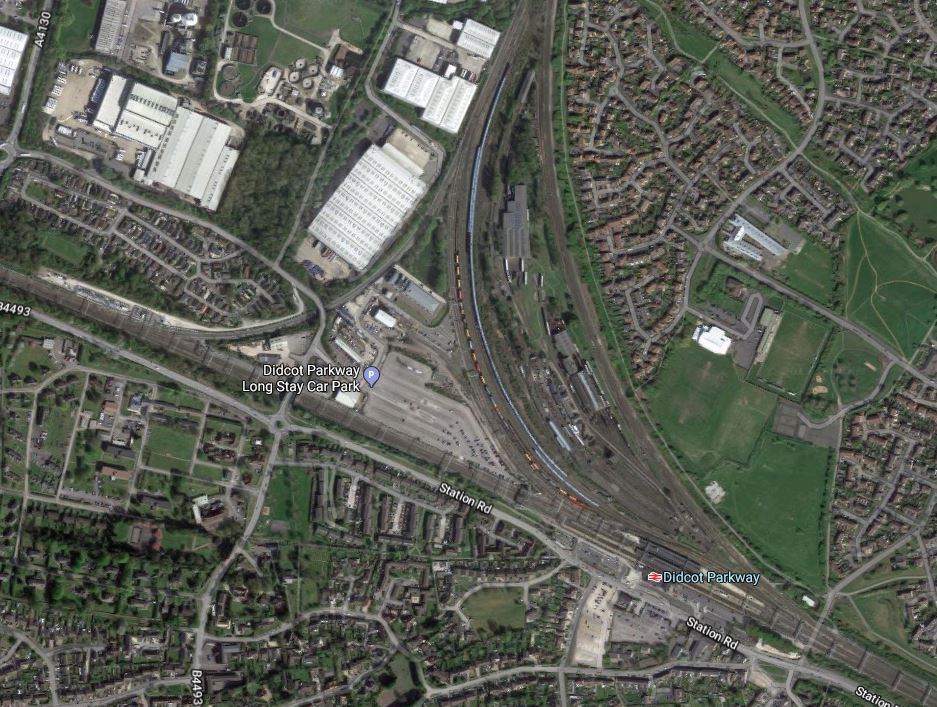
Note the Great Western Main Line going across the map.
- Reading is to the East.
- Swindon is to the West.
- Lines give connection to the East West Railway in both directions.
At some point in the future, services on the East West Railway could go to and from the West to perhaps serve Wales and the West.
If East West Railway adopt the same policy as they have with the Marston Vale Line, I will assume that other services between Reading and Oxford will remain unchanged.
Oxford
Oxford station will be a key interchange on the East West Railway.
I very much suspect though that services will be arranged at Oxford, so that change between local and East West Railway services is just a hop-off one train and hop-on another, or perhaps a walk across the platform.
Bletchley
A flyover at Bletchley station takes the East West Railway over the West Coast Main Line, which I discussed the in The Bletchley Flyover.
Connectivity
At present trains can also use the flyover to go in both directions between the Northbound West Coast Main Line and the Westbound East West Railway.
I also think trains can connect on the flat between the Southbound West Coast Main Line and the Eastbound East West Railway.
Will the building of the East West Railway increase connectivity at Bletchley?
The Bletchley Flyover And The New Platforms
This picture shows the Bletchley flyover.

Note.
- It is a massive concrete structure.
- It is almost a mile long.
- It is not electrified.
- West Coast Main Line is electrified using 25 KVAC overhead wires.
- Two new platforms for the East West Railway will be built on the flyover to enable interchange with the West Coast Main Line.
- Services will use the flyover to access Milton Keynes Central station.
This is a visualisation of how the proposed Bletchley station with the extra platforms could look.
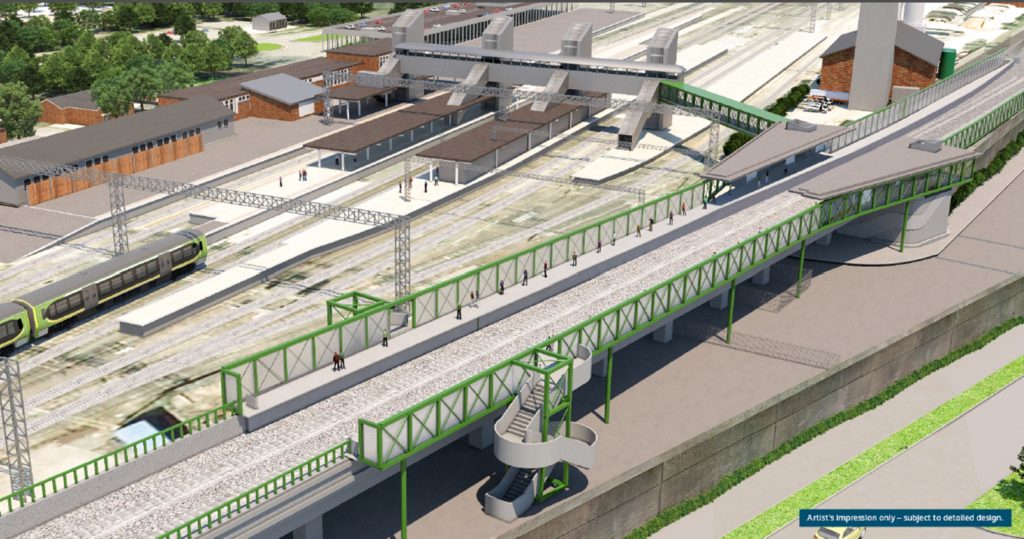
I think the architects and engineers have created a good design.
- A new entrance to the station on the other side of the West Coast Main Line has been created.
- Interchange between the West Coast Main Line and the East West Railway will be step-free.
- No electrification of the East West Railway is shown.
I also think it could be built for an affordable cost.
Electrification At Bletchley
As substantial work will have to be done on the viaduct, would it be prudent to at least prepare the viaduct for electrification, when the new platforms for the East West Railway are created?
If a short section of electrification was added here will be beneficial for train operation.
- Bi-mode trains could use it to reduce their diesel consumption and carbon footprint.
- In future, battery trains could use it to charge their batteries.
Electrification of the flyover is a decision for the accountants.
But as the company building the line, will also operate some of the trains, they can offset construction against running costs.
Bedford
In the next phase of the building of the East West Railway, which is projected to be completed in 2022, Bedford station will be the Eastern terminus.
The service would probably use the existing platform 1A.
Under Future Developments in the Wikipedia entry for Bedford station, this is said.
Plans were being promoted by Network Rail and Bedford Borough Council for the redevelopment of the station quarter.
Platform 1A will be extended through the existing building to accommodate 12-car trains; presently it is only long enough to handle four-car trains and is a terminating bay.
Such a platform would be able to terminate trains arriving from.
- Midland Main Line and Thameslink from the South.
- Midland Main Line from the North.
- The East West Railway.
The longer platform will need to be electrified to be able to handle Thameslink trains.
But it would enable services from the East West Railway to connect to the North at Bedford along the Midland Main Line.
Until more detail is published, I can’t say any more about Bedford.
Sandy
Sandy will be where the East West Railway crosses over the electrified East Coast Main Line.
I suspect that the design of this station will build on experience of Bletchley and hopefully it will be a convenient step-free interchange between services on both lines.
As with the new platforms at Bletchley, it could be relatively easy to provide a short length of electrification at the station.
Cambridge, Ipswich And Norwich
Only Cambridge on the West Anglia Main Line is electrified on the route of the East West Railway.
Wires reach to Ely in the North and Stansted Airport and London in the South.
Consider.
- Greater Anglia are going to use Stadler Class 755 bi-mode trains on lines without electrification from Cambridge to Ipswich and Norwich.
- The Breckland Line to Norwich could be turned into an almost-level 100 mph-plus line with very little infrastructure to slow trains.
- The Breckland Line is lightly used, with a passenger service of two tph and very few freight trains.
- Cambridge to Ipswich is partially electrified.
- Cambridge and/or Peterborough to Ipswich has a passenger service of two tph and large numbers of heavy freight trains.
Bi-mode trains would probably be the preferred choice of train to the East of Cambridge.
Battery Trains
If you look at the lengths of the various sections of the East West Railway, they are as follows.
- Cambridge South – Sandy – 22 miles
- Sandy – Bedford – 9 miles
- Bedford – Bletchley – 24 miles
- Bletchley – Bicester – 20 miles
- Bicester – Oxford – 14 miles
- Oxford – Didcot – 14 miles
Consider.
- No section is very long and all would be within the capability of battery trains in a few years.
- Charging would be at both ends of the line in Cambridge and between Didcot and Reading.
- But this might not be enough, especially if the trains used battery power at the Cambridge end to reach Ipswich and Norwich.
- The solution would probably be to add enough electrification at Bletchley, Bedford and Sandy.
If battery trains do finally arrive, the East West Railway would be a very appropriate line to embrace the technology.
New Technology
If ever there was a railway, where new technology would be understood and welcomed by passengers, it must surely be the East West Railway between Cambridge in the East and Oxford and Reading in the West.
One big advantage this route has over others in the UK, is that I believe it could be built almost-level with perhaps the biggest gradient being climbing over the Bletchley flyover. The energy needs of a modern train could be low.
Hydrogen-Powered Trains
Hydrogen-powered trains are effectively bi-mode trains with batteries, that use a hydrogen-powered power-pack instead of a diesel one to generate electricity when needed.
In this Press Release, Alsthom give a lot of details of their hydrogen-powered Coradia iLint.
- Completely emission-free
- 1000 km range on a tank-full of hydrogen.
- 140 kph operating speed.
Alsthom have received their first order for fourteen trains from Germany.
I believe, that once they are fully developed, they could be ideal for the East West Railway.
Solar-Powered Trains
This may seem bizarre, but read Solar Power Could Make Up “Significant Share” Of Railway’s Energy Demand.
I believe that small solar-farms with batteries could be used to advantage on this line.
- The line could be designed almost level and could have very low traction power consumption.
- Much of the route goes through open countryside, where people don’t seem to object to solar farms.
- Third-rail electrification could be installed at stations and for perhaps a kilometre on either side, to charge batteries on trains.
- The electrification could also accelerate the trains on their way.
- Power to the track would only be switched on when a train is present, thus reducing consumption and increasing safety.
- The electricity generated could power the stations.
Why not?
Additional Services
The East West Railway will have created extra capacity in a loop round London, that Rob Brighouse will be free of slow, heavy freight.
I believe that train operating companies will make use of the new route.
- It will be a 100 mph double-track railway with plenty of capacity.
- If built as an almost level track, it could offer substantial energy savings.
- It will have connections to four electrified main lines radiating from London.
- It will be free of slow, heavy freight trains.
However, it would need suitable diesel, bi-mode or hydrogen trains capable of 100 mph running.
But it could be a very efficient and lower-cost route across England!
Parcels And Light Freight
As I said earlier, I feel the route will also be used by fast parcels and light freight trains based on diesel or bi-mode multiple units.
As an example, plans exist to create a major freight airport at Doncaster-Sheffield Airport, which I wrote about in A Station At Doncaster Sheffield Airport. Part of the plan involves, diverting the East Coast Main Line to serve the Airport directly.
Amazon already flies parcels into the Airport and these could be loaded onto bi-mode express parcel trains, which could go down the electrified East Coast Main Line before taking the East West Railway to travel to Wales and the West of England.
Birmingham To Stansted Airport
Thjis one tph service is run by CrossCountry and goes via Cambridge, Ely, Peterborough, Leicester and Nuneaton. If CrossCountry were to switch to 125 mph bi-mode trains, might it be an alternative to use the East West Railway and perhaps the West Coast Main Line, where paths will be released once, HS2 is opened.
It would certainly be a faster and more economical journey
New Or Rerouted CrossCountry Services
Many of CrossCountry’s services take forever and visit some unsuspected stations. But obviously, it’s what their customers want.
I suspect though with 125 mph bi-mode trains, CrossCountry would look seriously about the possibility of using the East West Railway with its connections to four electrified main lines.
Marston Vale Services
This document on the East West Railway web site, says that current hourly services between Bletchley and Bedford along the Marston Vale Line will continue.
- On that section, the long distance trains are planned to stop at just Ridgmont and Woburn Sands stations.
- Low-performance Class 230 trains planned for the line could slow fast traffic.
- Especially if they stick to the current journey time of forty-three minutes.
- Would an express want to get stuck behind a a slow local train?
I wonder how fast a 100 mph diesel multiple unit like a Class 172 train could go between Bedford and Bletchley?
I think it won’t be fast enough to avoid delaying East West Railway services.
So, something radical will need to be done.
It might be the solution would be to build that section of the route with three tracks; two for the East West Railway and a bi-directional one for the Marston Vale services.
- This would separate the fast and local services.
- There’s certainly plenty of space alongside the current tracks.
At least there don’t seem to have been many protests about building the East West Railway.
Conclusion
I think we could see the East West Rasilway built in a totally-different way.
- Track designed for low energy use and fast, frequent trains.
- Innovative trains.
- Reduced carbon emissions, by the application of new technologies.
It could truly be a railway for the twenty-first century!
Cambridge Should Have A Metro System Like Barcelona
This was the title on this article in the Cambridge News.
This map shows the proposition.

It is probably a reasonable aspiration for the city, but the plan proposed would be very expensive, as the proposer suggests a tunnel under Cambridge.
In Making Sense Of The New East Anglia Franchise, I had a section entitled A Cambridge Metro. Some of this post is an update of the previous one.
So what do we know is actually happening?
Cambridge’s £750Million City Deal
This article in the Cambridge News is entitled Three new train stations and £750m City Deal projects to fuel Cambridge public transport revolution.
These rail improvements are mentioned in the article.
- New stations at Addenbrooke’s, Cherry Hinton and Fulbourn.
- Cambridge to Kings Lynn service increase from one to two trains per hour (tph)
- Two tph to Stansted.
- March to Wisbech rail reinstatement.
- Cambridge to Ipswich service increase to two tph
- East Coast Main Line rail capacity improvements between Huntingdon and Peterborough
- A new station at Alconbury on the East Coast Main Line.
- Reinstate the ‘Newmarket west curve’ to allow direct services to run between Ely and the new station at Soham to Newmarket and Cambridge.
- Double tracking of railway line between Ely and Soham.
Cambridge is bursting and needs more local transport systems and the City Deal and other funding recognises that!
Services Through Cambridge
Within a few years, all of these services will arrive at one or all of Cambridge, Cambridge North and the proposed Cambridge South stations.
- Greater Anglia from Ipswich
- Greater Anglia from Liverpool Street
- Greater Anglia from Norwich
- EastMidlands Trains and CrossCountry from Peterborough
- Greater Anglia and CrossCountry from Stansted Airport
- East West Rail Link from Bedford, Milton Keynes and Oxford
- Great Northern from Kings Cross
- Great Northern from King’s Lynn
- Thameslink from Brighton
- Thameslink from Maidstone East
- Thameslink from St. Pancras
Cambridge is taking over the world. Or at least making it a much better place!
Cambridge Crossrail?
These services could be organised, so they ran more efficiently.
Consider.
- Perhaps they could call at Cambridge South, Cambridge, Cambridge North and Ely stations in an appropriate order as they pass through the City in a North-South direction.
- It might be better if services from the South were run back-to-back with services from the North.
- Greater Anglia are already proposing a Norwich-Stansted Airport service.
- Great Northern already run a King’s Lynn-Kings Cross service.
- Cambridge has four bay platforms for terminating trains.
- Cambridge North station will have a South-facing bay platform.
- Ely station has had a South-facing bay platform
I think it very likely that after a meeting in one of Cambridge’s excellent real ale hostelries, a very adequate core service can be developed through Cambridge.
Could this core service do for Cambridge, what other Cross-City services have done for Berlin, Birmingham, Leipzig, Liverpool, Newcastle and Paris?
On published plans the following will be running in a year or so, between Ely and the site of Cambridge South station.
- 1 train per hour (tph) between Norwich and Stansted Airport
- 1 tph between Birmingham and Stansted Airport
- 1 tph between Kings Cross and Kings Lynn.
In addition Thameslink will have 2 tph between Cambridge North and Brighton via St. Pancras and London Bridge, so the three Cambridge stations could have a 5 tph connection.
The Bombardier Aventra
Greater Anglia have ordered 89 five-car and 22 ten-car Aventras and they obviously have plans to use them all efficiently.
The Aventra has a slightly unusual and innovative electrical layout.
This article in Global Rail News from 2011, which is entitled Bombardier’s AVENTRA – A new era in train performance, gives some details of the Aventra’s electrical systems. This is said.
AVENTRA can run on both 25kV AC and 750V DC power – the high-efficiency transformers being another area where a heavier component was chosen because, in the long term, it’s cheaper to run. Pairs of cars will run off a common power bus with a converter on one car powering both. The other car can be fitted with power storage devices such as super-capacitors or Lithium-Iron batteries if required.
This was published six years ago, so I suspect Bombardier have improved the concept.
It looks like the length and capacity of a ten-car Aventra is equivalent to that of a twelve-car formation of Class 317, Class 321 or Class 360 trains.
So on a rough estimate the Aventras are equivalent to about 200 four-car units.
Currently Greater Anglia have 170 four-car electric trains, ignoring the Class 379 trains, which will be replaced by Stadler Flirts.
Greater Anglia appear to have increased the fleet by the equivalent of thirty four-car trains or another twenty five-car Aventras than they would need to replicate current services.
When you consider that for some of their routes, the faster and quicker-stopping Aventras, should provide current service with fewer trains, you wonder what Greater Anglia are going to do with these spare trains?
Bombardier’s concept of a pair of cars sharing the electrical components, that I indicated earlier, is a good one from an engineering point of view.
It shares the weight of heavy components and would allow a weighty high-capacity energy storage device to be easily installed, to give sufficient range to go between say Ely and Peterborough stations, which is a distance of just twenty-five miles.
In addition, suppose though the train was packaged in a passenger-friendly skin, that made it look more as much like a tram than a train!
You would have a train, that would be equally at home using the electrification on the 100 mph Great Eastern Main Line or running silently through the countryside at a leisurely 40-50 mph using onboard energy storage.
In the following sections, I’ll investigate how Aventras could expand the basic core service around Cambridge.
Turn-Up-And-Go Services
Where I live in Dalston in East London, the London Overground run services at what they call a Turn-Up-And-Go service of four trains per hour (tph).
Merseyrail use this frequency on some of their lines, as do Birmingham and Leeds.
This should be the aim for services to and from Cambridge.
Commuting Into Cambridge
Many travel into Cambridge every day for work.
- The trains are crowded.
- Many travel with bicycles.
- The Cambridge Park-and-Ride is very busy.
- It is not unknown for commuters to unfold their Brompton in a Park-and-Ride and cycle to work.
- The City Centre seems grid-locked with traffic and walkers most of the day.
The conclusion is that extra capacity is needed.
Cambridge North Station
Cambridge North station will provide extra capacity in the North of the City and better access to the Science Park.
But extra thought will need to be put into services at the station.
Consider.
There are no plans for a direct service between Cambridge North and Bury St. Edmunds and Ipswich.
- There is only one tph to Norwich.
- There is only one tph to Peterborough.
- Will CrossCountry’s Birmingham to Stansted service stop at both Cambridge and Cambridge North stations?
A chord at Ely Dock Junction would create a route between Suffolk and Cambridge North station.
Rail Lines Into Cambridge
In a few years, these rail lines will bring passengers to Cambridge.
- The electrified West Anglia Main Line from London Liverpool Street.
- The electrified Cambridge Line from London Kings Cross via the East Coast Main Line.
- The electrified Fen Line from Kings Lynn.
- The Breckland Line from Norwich.
- The Ipswich to Ely Line.
- The Ely-Peterborough Line.
From the late 2020s, the lines will be joined by the East-West Rail Link..
The Guided Busway
Cambridge has spent a lot of money developing the Guided Busway.
One of the main reasons for developing the Southern section of the Guided Busway was to serve Addenbrooke’s Hospital and the surrounding cluster of health-related companies and research establishments.
Now that Addenbrooke’s is getting a new Cambridge South station, will the Guided Busway be less important?
Possibly, but the station will probably rule out any extension of the Busway at its Southern end.
The Guided Busway will also call at both Cambridge and Cambridge North stations. Surely, passengers who are using the busway to go North of Cambridge will change transport mode at Cambridge North station.
It looks to me, that when Cambridge North and Cambridge South stations are fully operational, that the busway’s main purpose will be to bring passengers to and from the two new stations.
Services Via The West Anglia Main Line
Services to London Liverpool Street and Stansted Airport on the fully-electrified West Anglian Main Line, consist of the current services.
- 1 tph fast to Liverpool Street
- 1 tph semi-fast to Liverpool Street
- 1 tph to Stansted Airport.
When Greater Anglia receive their Stadler Flirts, the operator will add a one tph Norwich to Stansted Airport service.
All except one of these services are fast services with limited stops and two will only go as far as Stansted Airport.
As the Aventras will be able to cruise at a fast speed and thus keep out of the way of the express Flirts, could we see some extra local services on the line, that will improve local journeys and connections to Bishops Stortford, Cambridge and Stansted Airport?
Commuting, shopping and leisure activities in Cambridge would certainly be easier if your local station had four tph.
Services Via The Cambridge And East Coast Main Lines
Services to London Kings Cross via the fully-electrified Cambridge Line will consist of the current services.
- 1 tph fast to London Kings Cross
- 1 tph semi-fast to London Kings Cross
Thameslink will add the following services.
- 2 tph to Brighton – Semi-fast stopping at Royston, Baldock (peak only) Letchworth Garden City, Hitchin, Stevenage
- 2 tph to Maidstone East – Stopping at all stations.
These might replace the current semi-fast service to Kings Cross.
Stations like Letchworth Garden City, Baldock and Royston currently get two tph to Cambridge and will get four tph when Thameslink opens.
But surely a Turn-Up-And-Go service of four tph at a lot more stations, would pull more passengers out of the woodwork.
So why not run Aventras from Cambridge to a suitable station to improve the service?
There may be a problem with Greater Anglia running this service, as the Cambridge Line is Great Northern territory, but if that is the case, Great Northern should join the party around Cambridge.
Services To Bedford, Milton Keynes And Oxford
The East West Rail Link and Cambridge South station could be delivered in the late 2020s.
I will deal with local services on this line later.
Services To Norwich
The one tph from Norwich to Cambridge will be replaced by a one tph Norwich to Stansted Airport service, so in practice those living in Cambridge will only notice a destination change and a new larger train.
North of Ely, the service will actually be two tph, as there is a one tph Norwich-Nottingham service.
This service pattern will be sufficient for a few years, but I can see a time, when there is a need for two tph on the Cambridge-Norwich route, with possibly one extended to Yarmouth.
This service frequency is not sufficient for a commuter route into Cambridge.
As an example, Thetford station has just two tph in each direction between Norwich and Ely, with only one tph going to Cambridge. Miss a train and wait an hour doesn’t attract customers!
The line is not electrified between Ely and Thetford, but the distance is only a small amount over twenty miles, which could be in out-and-back range for an Aventra running on onboard energy storage.
So an Aventra running using onboard power could probably run a four tph Turn-Up-And-Go service from Cambridge as far as Thetford with the following stops to the North of Ely.
- Prickwillow – Reopened station
- Shippea Hill
- Lakenheath
- Brandon
What would four tph in addition to the current two tph do to this area?
Services To Peterborough
Cambridge to Peterborough currently has only one tph, with three tph between Ely and Peterborough.
This means that Peterborough with all its connections to the North of England and Scotland, is not a particularly difficult journey, but a rather infrequent journey from Cambridge.
But it needs a Turn-Up-And-Go service of four tph from the two Cambridge stations.
The Ely-Peterborough Line is a major freight artery, but it is not electrified.
However, the section without electrification is just over twenty miles, so an Aventra with onboard storage could manage it with ease and charge the energy storage at both ends.
There are also just two stations on the line at March and Whittlesea.
So why not open a few more stations on the line and give them a decent four tph service between Cambridge and Peterborough?
This Google Map shows the location of the former Peterborough East station.
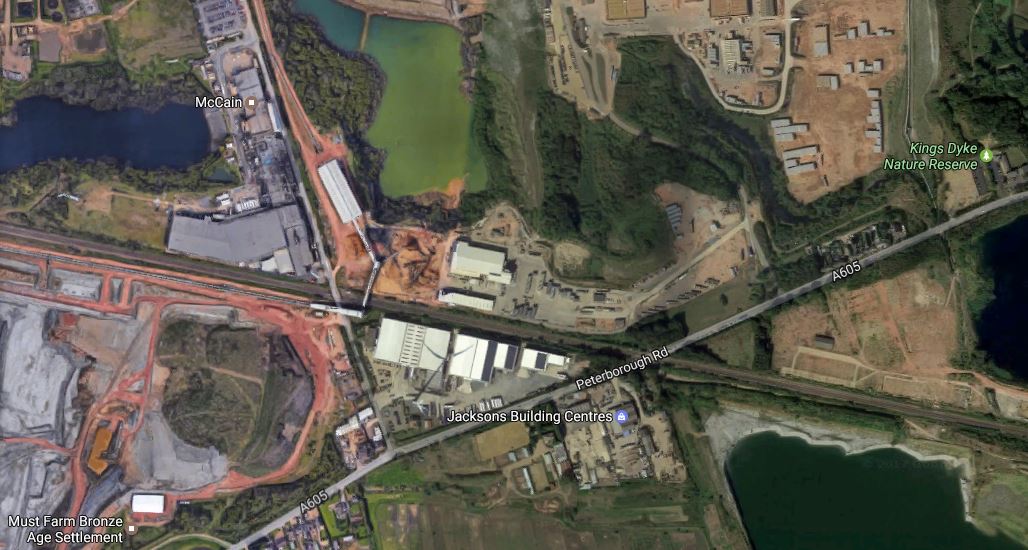
Surely, with everything going on in the area and need to develop more housing, a station is needed here.
Extension To Wisbech
The track already exists and if ever there was a town that needed a two tph rail link to Cambridge , it is Wisbech, which is less than ten miles from the main Ely-Peterborough Line. Even if the main line isn’t electrified, Wisbech is probably within range of 2020 battery technology from Ely.
The Service To Nottingham
East Midlands Train run a one tph service between Nottingham and Norwich.
Perhaps, as services from Cambridge develop, it might be better for this Nottingham service to terminate at Cambridge.
This would give Cambridge direct access to Nottingham and Leicester, but it would also give the service to Peterborough an increased frequency
If this were to be done, a second Cambridge-Norwich service should probably be added, to restore two tph to Norwich.
Services To Bury St. Edmunds And Ipswich
Network Rail have thought long and hard about what to do with services from Ipswich to Cambridge and Peterborough over the years.
Greater Anglia’s solution is to run the following services using bi-mode Flirts.
- 1 tph from Ipswich to Cambridge
- 1 tph from Colchester to Peterborough.
This will give the following.
- Services quicker by a few minutes.
- Two tph between Kennett, Bury St. Edmunds, Stowmarket and Ipswich.
- More capacity.
But the service to Cambridge and Newmarket and Bury St. Edmunds is as now!
- There is only one tph from Ipswich, Bury St. Edmunds and all the other stations East of Kennett.
- The service only goes to Cambridge and not Cambridge North or the proposed Cambridge South stations.
- There is an alternative route with a change at Ely.
Bury St. Edmunds and Newmarket need two tph to both Cambridge stations! And they need that service now!
Currently trains from Ipswich, Bury St. Edmunds and Newmarket take 79, 42 and 22 minutes respectively to get to Cambridge.
Cambridgeshire County Council also has plans to reopen Fulbourn and Cherry Hinton stations, which with the current trains would probably add five minutes to the current timings.
Could a new bi-mode Flirt go from Ipswich to Cambridge in an hour as opposed to the current one hour nineteen minutes?
- Is the current timing based on a single-car 75 mph Class 153 train or a 100 mph Class 170 train, that works the route today?
- The bi-mode Flirts could run on electricity from Ipswich to Haughley unction.
- There are eight stops on the route, where a minute or two could be saved.
- Step-free train access from the platform could be provided
- Haughley Junction could be improved.
- Wikipedia quotes the line-speed as 40-75 mph, which surely could be raised.
- Fast turnbacks with a driver change could be performed at Cambridge and Ipswich.
It might just be possible to do Ipswich to Cambridge in an hour.
I can’t believe that this is not an aspiration of Greater Anglia.
It would give.
- A headline-grabbing one hour trip between Ipswich and Cambridge.
- ,Currently, Greater Anglia probably use two Class 170 trains on the route, so two trains could give a 2 tph service.
- Ipswich to Bury St. Edmunds would get a three tph service.
But there would still be a need to change at Cambridge to get to Cambridge North and Cambridge South stations.
A Cambridge Eastern Metro
In the plans for the Cambridge region in the Cambridge News, these two points are made.
- Reinstate the ‘Newmarket west curve’ to allow direct services to run between Ely and the new station at Soham to Newmarket and Cambridge.
- Double tracking of railway line between Ely and Soham.
Obviously, these assume that there is a new station at Soham.
This Google Map shows the triangular junction on Newmarket Heath, where the Newmarket West Curve has been lifted.

The railway from Bury St. Edmunds splits into two, with one branch curving round the British Racing School and going North to Ely and the other curving South to go in a short tunnel under Newmarket to get to Newmarket station.
The reinstatement of the West Curve would enable a service to run between Ely and Cambridge stopping at the following stations.
- Soham – New station
- Fordham – New station
- Newmarket
- Dullingham
- Fulbourn – New station
- Cherry Hinton – New station
I have added another station at Fordham.
I estimate Ely to Newmarket will take 13 minutes making the journey time 35 minutes between Ely and Cambridge, as opposed to 16 minutes by the direct route.
This route could open up various route possibilities in addition to being a longer route between Ely and ambridge.
- It certainly gives Newmarket a better service to Cambridge.
- Services could terminate the other side of Ely at Kings Lynn, Peterborough, Thetford or Wisbech.
- With reverses at Cambridge and Ely, a loop service would connect Newmarket and the East of Cambridge to Cambridge North station.
- The loop service could be extended to Cambridge South station.
I’m sure Greater Anglia have better ideas based on how passengers travel.
A Rebuilt Newmarket Station
Network Rail had a plan to rebuild Newmarket station with an island platform to give interchange between Ely and Peterborough services via the Newmarket West Curve and those going East to Bury St. Edmunds and Ipswich.
Could a train going from Peterborough and Ely to Cambridge via Soham be timed to be in Newmarket station at the same time as one going from Cambridge to Ipswich?
Consider.
- With two tph on both services in both directions, it would be an efficient way to improve services without buying lots of trains.
- Perhaps one Ely service would go to Peterborough and the other to Thetford.
- Ely and Ipswich would have a two extra services in each hour, with just a step across the platform at Newmarket.
- Newmarket, Fulbourn and Cherry Hinton would have four tph to Cambridge.
- Newmarket would have two tph to Ely.
There are a lot of possibilities.
Extension To Haverhill
There was a very good railway from the South of Cambridge to Haverhill and onto Sudbury, Marks Tey and |Colchester. But the last train ran on the Stour Valley Railway in 1967.
Greater Anglia have plans for the Eastern end of this route and it will be extended to Colchester Town station with probably two tph to Sudbury.
I suspect that Greater Anglia regret that British Rail closed this line fifty years ago, as two tph running between Colchester Town and Cambridge North stations via Colchester, Marks Tey, Sudbury, Haverhill, Cambridge South and Cambridge stations, wouldn’t be just a nice little earner, but quite a valuable gold-mine.
I believe that Greater Anglia will be running Colchester Town to Sudbury using Aventras with onboard energy storage, away from the overhead wires.
I also believe that by the time the line was extended from Sudbury to Cambridge South, that battery technology will have advanced enough to power a train from Marks Tey to Cambridge South.
Cambridge would gain a new route into the City, using the best that modern British technology can do!
An Aventra Between Marks Tey And Cambridge
After taking on a full load of electricity on the Great Eastern Main Line, a train would just trundle from Marks Tey to Sudbury, Haverhill and on to Cambridge.
- The route would be nearly all single track.
- There would be no need for any electrification.
- Signalling would be conventional.
- There would be no level crossings.
- All stations would be single platform, with appropriate facilities.
- A passing loop might be provided at perhaps Sudbury.
- Trains might even run on the street in Haverhill, with perhaps three stops in the town.
- When running on the street, the trains would obey the rules that street-running trams, do in places like Birmingham, Edinburgh and Nottingham.
It wouldn’t look like a conventional railway, but to the operator and the authorities that’s what it would be.
To anybody living or walking in the countryside, it would just be a silent electric vehicle passing at an appropriate speed.
As it’s going to work out of Cambridge, the interior would be geared to the needs of the bicycle-friendly city.
With a range of fifty miles on onboard energy storage, it would have no difficulty with these services.
- The Cambridge Eastern Metro
- Marks Tey To Cambridge Via Sudbury And Haverhill.
- Ely To Thetford
- Ely to Peterborough
- Extension To Wisbech
Where else could these trains take the rail network in Cambridge?
Along The East West Rail Link
All the plans for the East West Rail Link are about long distance services services between Oxford, Milton Keynes, Bedford and Cambridge.
But why if you have a 100 mph electrified railway between two important cities, should it not have a two or even four-train per hour stopping service between the cities.
Modern trains are able to execute a station stop so quickly compared to trains of twenty years ago, that having a stopping train on a main line, isn’t the liability, that it was even a few years ago.
So on the East West Rail Link between Cambridge and Bedford will we be seeing four tph, that stop at all stations in addition to the fast expresses?
In the map that introduced this post, a service to Cambourne is shown.
This Google Map shows the location of Cambourne to the West of Cambridge.
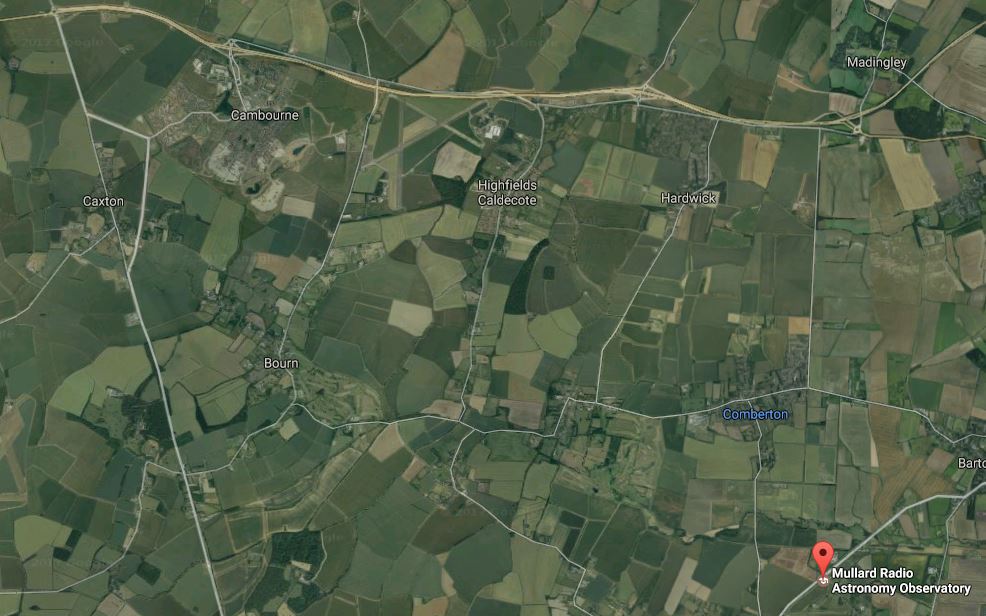
Cambourne is at the top of the map, just South of the A428 road.
The red arrow at the bottom right, indicates the Mullard Radio Astronomy Observatory,
The East West Rail Link passes to the North of the observatory, which used to use the old track bed, as a track for radio telescopes and then goes to the South of Cambourne.
Perhaps a single track branch line could be built.
Conclusion
A Metro in Cambridge will develop because of these factors
- Cambridge needs to reach out to the hinterland, as it is growing fast.
- A high-frequency cross-city line with three important stations in a row will happen.
- Greater Anglia have bought a lot of five-car Aventras.
- Aventras will be able to run using onboard energy storage.
- A lot of the lines radiating from Cambridge have capacity for extra services and are electrified.
But the biggest factor will be that towns and cities around Cambridge will want part of the prosperity.
 The Anonymous Widower