Running Battery Electric Trains Between London Marylebone And Aylesbury
This post was suggested by Fenline Scouser in a comment to Vivarail Targets Overseas Markets, where they said.
I have long thought that one UK application that would make sense is the Marylebone – Aylesbury via Harrow on the Hill service, the intermediate electrified section lending itself to full recharge on each trip. ? stabling facility at Aylesbury with overnight charging.
It does look to be an idea worth pursuing.
Current And Future Services
Currently, the services between London Marylebone and Aylesbury are as follows.
- London Marylebone and Aylesbury via High Wycombe
- London Marylebone and Aylesbury via Amersham
- London Marylebone and Aylesbury Vale Parkway via Amersham
All services are one train per hour (tph)
In the future, it is planned to extend the Aylesbury Vale Parkway service to Milton Keynes, according to information I found on the East West Rail web site.
- It looks like the service will go via High Wycombe, Saunderton, Princes Risborough, Monks Risborough, Little Kimble, Aylesbury, Aylesbury Vale Parkway, Winslow and Bletchley.
- The service will have a frequency of 1 tph.
- Time between Milton Keynes and Aylesbury is quoted as 33 minutes.
- Time between High Wycombe and Milton Keynes is quoted as 63 minutes.
Will this leave the Marylebone and Aylesbury are as follows?
- 1 tph – London Marylebone and Aylesbury via High Wycombe.
- 2 tph – London Marylebone and Aylesbury via Amersham
Passengers between London Marylebone and Aylesbury would have the same service.
Distances
These are a few distances, of which some have been estimated.
- London Marylebone and Harrow-on-the-Hill – 9.18 miles.chains
- Amersham and Harrow-on-the-Hill – 14.27 miles.chains – Electrified
- Aylesbury and Amersham – 15.23 miles.chains
- London Marylebone and High Wycombe – 28.11 miles.chains
- Aylesbury and High Wycombe – 15.28 miles.chains
- Aylesbury and Aylesbury Vale Parkway – 2.25 miles.chains
- Aylesbury Vale Parkway and Calvert – 8.19 miles.chains
- Aylesbury and Milton Keynes – 16.40 miles.chains – Estimated
Note that there are eighty chains to the mile.
Hitachi’s Regional Battery Train
Hitachi’s Regional Battery Train, is the only battery electric train intended for the UK network for which a detailed specification has been released.
This infographic from Hitachi gives the specification.

Note that ninety kilometres is fifty-six miles.
I would suspect that battery trains from other manufacturers, like Bombardier, CAF and Stadler, will have a similar specification.
Battery Electric Trains Between London Marylebone And Aylesbury
I’ll take each possible route in turn.
London Marylebone And Aylesbury Via Amersham
The three sections of the route are as follows.
- London Marylebone and Harrow-on-the-Hill – 9.23 miles – Not Electrified
- Harrow-on-the-Hill and Amersham – 14.34 – Electrified
- Amersham and Aylesbury – 15.29 miles – Not Electrified
Note.
- The total distance is 38.85 miles
- A typical service takes just under twenty minutes to travel between Harrow-on-the-Hill and Amersham. This should be enough to fully charge the batteries.
- A train going South from Harrow-on-the-Hill could reach London Marylebone and return.
- A train going North from Amersham could reach Aylesbury and return.
I am fairly confident, that a battery electric train, with the range of a Hitachi Regional Battery Train could work this route.
London Marylebone And Aylesbury Vale Parkway Via Amersham
The four sections of the route are as follows.
- London Marylebone and Harrow-on-the-Hill – 9.23 miles – Not Electrified
- Harrow-on-the-Hill and Amersham – 14.34 – Electrified
- Amersham and Aylesbury – 15.29 miles – Not Electrified
- Aylesbury and Aylesbury Vale Parkway – 2.31 miles – Not Electrified
Note.
- The total distance is 41.16 miles
- A typical service takes just under twenty minutes to travel between Harrow-on-the-Hill and Amersham. This should be enough to fully charge the batteries.
- A train going South from Harrow-on-the-Hill could reach London Marylebone and return.
- A train going North from Amersham could reach Aylesbury Vale Parkway and return.
I am fairly confident, that a battery electric train, with the range of a Hitachi Regional Battery Train could work this route.
London Marylebone And Aylesbury Via High Wycombe
The two sections of the route are as follows.
- London Marylebone and High Wycombe- 28.14 miles – Not Electrified
- High Wycombe and Aylesbury – 15.35 miles – Not Electrified
Note.
- The total distance is 43.50 miles
- There is no electrification to charge the trains.
A battery electric train, with the range of a Hitachi Regional Battery Train will need charging to work this route.
However, with charging at both ends, this would be a route for a battery electric train.
At the London Marylebone end, there are two possible solutions.
- Electrify the station traditionally, together with perhaps the tracks as far as Neasden, where the routes split. Either 750 VDC third-rail or 25 KVAC overhead electrification could be used.
- Fit fast charging systems into all the platforms at the station.
Note.
- Turnround times in Marylebone station are typically nine minutes or more, so using a charging system should be possible.
- Power for the electrification should not be a problem, as the station is close to one of London’s central electricity hubs at Lisson Grove by the Regent’s Canal.
The final decision at Marylebone, would be one for the engineers and accountants.
At the Aylesbury end, it should be noted that much of the under twenty miles of track between Princes Risborough and Aylesbury and on to Aylesbury Vale Parkway and Calvert us single-track.
So why not electrify from Princes Risborough and Calvert, where the route joins the East West Railway?
The electrification in Aylesbury station could also be used to top-up trains going to London via Amersham.
I would use 25 KVAC overhead electrification, using lightweight gantries like these, which use laminated wood for the overhead structure.
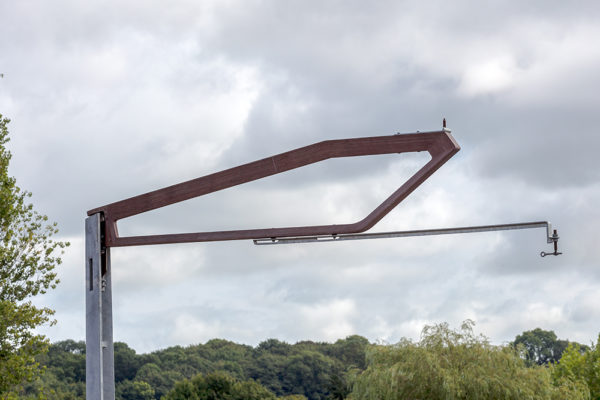
There is also a video.
Electrification doesn’t have to be ugly and out-of-character with the surroundings.
London Marylebone And Milton Keynes Via High Wycombe, Aylesbury and Aylesbury Vale Parkway
The three sections of the route are as follows.
- London Marylebone and High Wycombe- 28.14 miles – Not Electrified
- High Wycombe and Aylesbury – 15.35 miles – Not Electrified
- Aylesbury and Milton Keynes – 16.50 miles – Partially Electrified
Note.
- The total distance is sixty miles
- There is some electrification to charge the trains between Bletchley and Milton Keynes.
A battery electric train, with the range of a Hitachi Regional Battery Train should be able to work this route, if they can work London Marylebone and Aylesbury, with charging at Aylesbury.
Milton Keynes Central is a fully-electrified station.
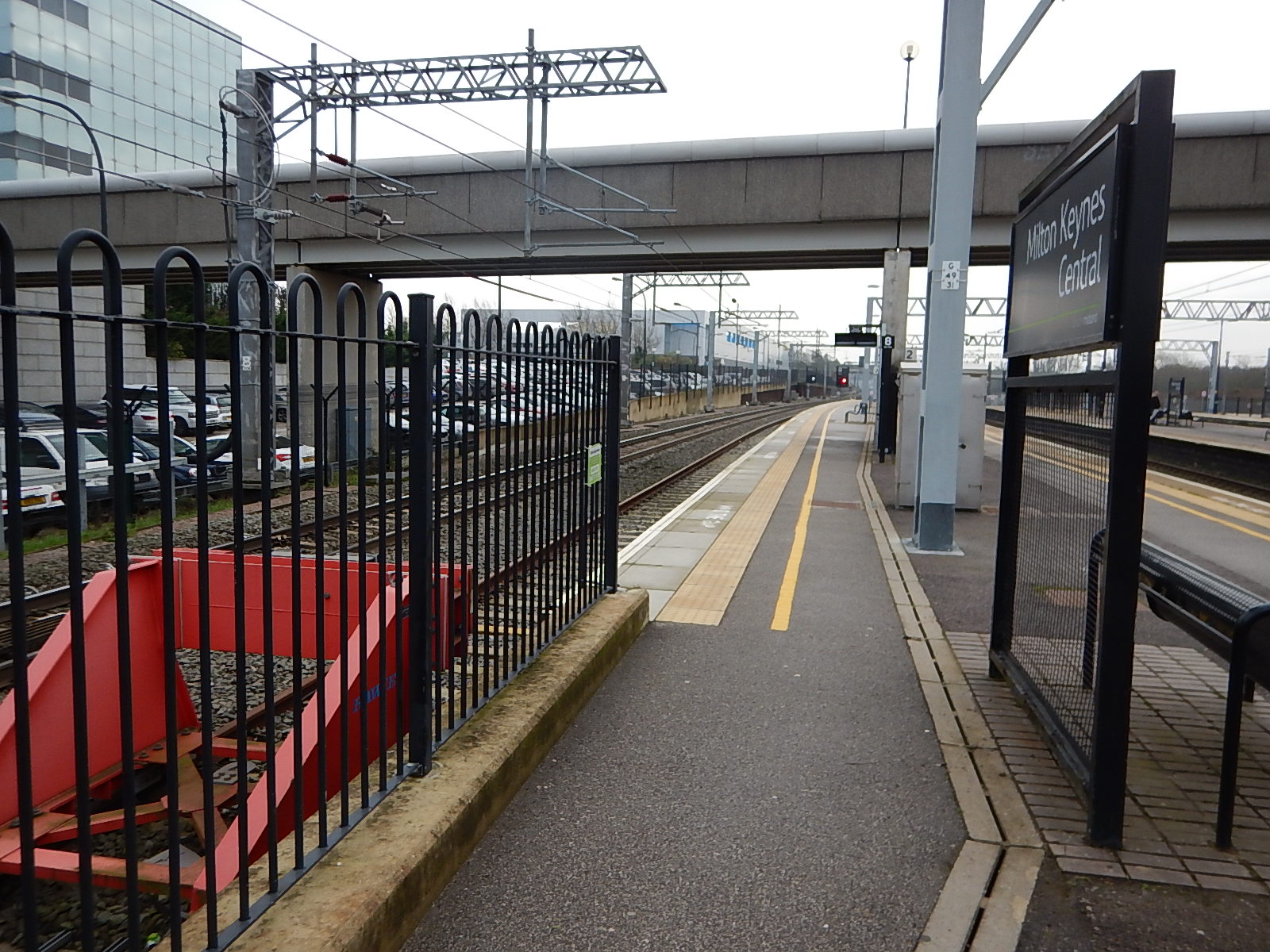
The picture shows Platform 2A, which is South-facing electrified, five-car platform, which could be used by the Chiltern service.
Train Specification
Consider.
- Chiltern Railway’s workhorse is a Class 168 train, which is a diesel multiple unit of up to four cars, with a 100 mph operating speed.
- The longest leg without electrification could be London Marylebone and Aylesbury via High Wycombe, which is 43.5 miles.
- Hitachi’s Regional Battery Train has a range of fifty-six miles.
- As there is a need to work with London Underground electrification, a dual-voltage train will be needed.
So a battery electric train with this specification would probably be ideal.
- Four cars
- Ability to work with both 750 VDC third-rail and 25 KVAC overhead electrification.
- 100 mph operating speed.
- Battery range of perhaps 55 miles.
Could the specification fit a battery-equipped Class 385 train, which will probably be built for Scotland?
Conclusion
I am convinced that battery electric trains can run between London Marylebone and Aylesbury, Aylesbury Vale Parkway and Milton Keynes stations.
The following would be needed.
- A battery electric range of perhaps fifty-five miles.
- Some form of charging at Marylebone and Aylesbury stations.
I would electrify, the single-track route between Princes Risborough and Aylesbury Vale Parkway.
Bletchley Viaduct – 1st September 2020
Interestingly-shaped stumps are starting to appear.
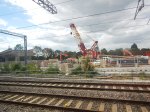
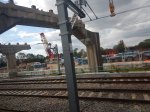
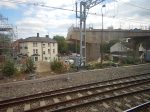
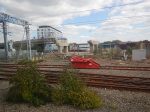
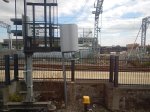
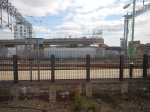
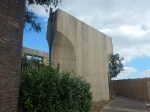
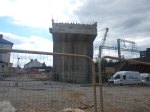
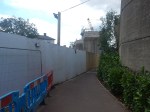
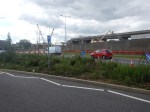
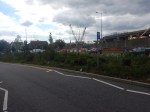
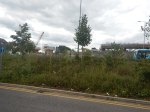
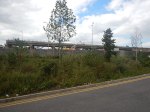
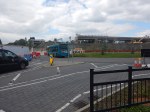
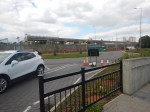
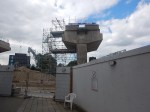
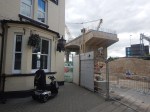
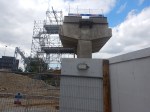

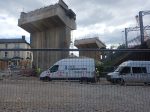
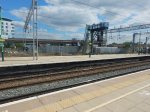
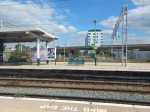
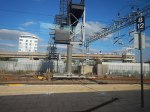

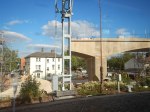
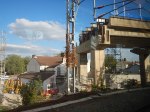

I think this will be my last visit, until they start to erect the new viaduct.
Bletchley Viaduct – 24th August 2020
The Bletchley Viaduct is falling down, as these pictures show.
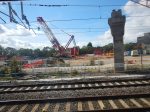
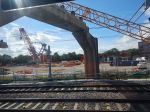
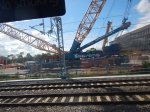
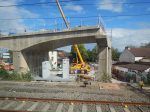
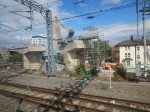
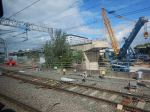
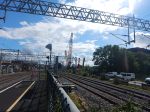
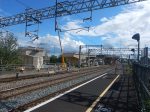
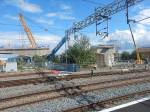
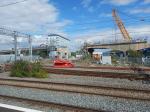
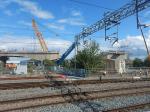
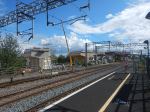
Considering, that Lord Beeching said that the Varsity Line between Oxford and Cambridge shouldn’t be closed, I wonder how much money has been wasted over the years, by questionable engineering and Government decisions on this viaduct.
East West Rail Takes New Steps Further East
The title of this post is the same as that of this article on Rail News.
This is the introductory paragraph.
A business case for improving train services between Cambridge, Ipswich and Norwich is to be developed by consultants on behalf of the East West Rail Consortium, as an addition to the plans for reopening the former Varsity Line between Oxford, Bedford and Cambridge.
I have covered this before in East West Rail Makes ‘Powerful Case’ For Direct Services From Ipswich And Norwich To Oxford, where I reference this report on the East-West Rail web site, which is entitled Eastern Section Prospectus and gives full details of their proposals.
I particularly like these smaller projects.
- An A14 Parkway station.
- A frequent tram-train between Ipswich and Felixstowe.
- Some extra electrification
- Increase of speed limits to 100 mph
- Haughley Junction improvements.
I suspect the consultants will come up with a few more useful projects.
Option Enables SWR To Expand Class 701 Fleet
The title of this post, is the same as that as this article on Rail Business UK.
Currently. South Western Railway (SWR) has the following Class 701 trains on order from Bombardier.
- 60 x ten-car trains
- 30 x five-car trains
They also had an option for two more ten-car trains.
This has been increased to five trains.
At least one train company, thinks it’s worth investing in more trains despite COVID-19!
Bucks Council Supports New Internet Lines
The title of this post, is the same as that of this article on Mix96.
Buckinghamshire County Council are proposing to use the construction of the new East West Railway, as a route for extra Internet connectivity.
How sensible!
Are East West Railway and Buckinghamshire County Council talking to Hive Composites, about their next generation composite poles for a 5G-enabled railway, that won funding in the latest round of first-of-a-kind funding from Innovate UK?
Will other councils and companies be using other rail construction to advantage?
Potential Site For New Cambridge South Station Named
The title of this post, is the same as that of this article on Rail News.
The article says this about the site of the proposed Cambridge South station.
There had been three options for the station site and the preferred choice, which is the furthest north and nearest the guided busway, will offer improved connections with other railway routes as well as the busway. Although the detailed plans for East West Rail between Bedford and Cambridge have not yet been confirmed, it is possible that EWR trains will call at Cambridge South.
This Google Map shows the area.
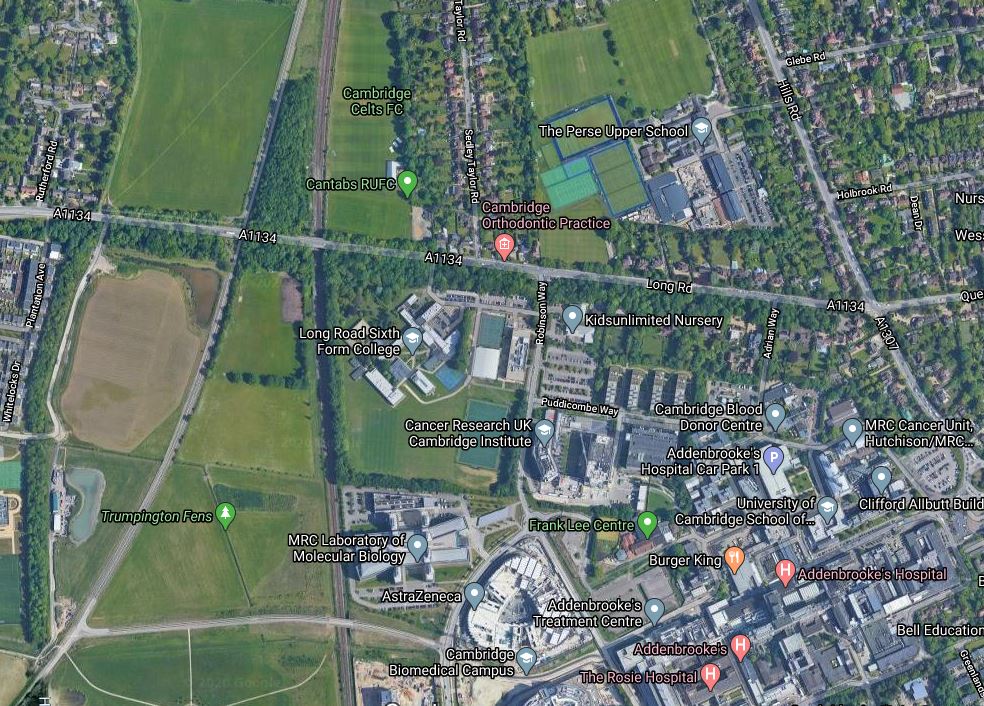
Note.
- Addenbrooke’s and Papworth Hospitals and the Cambridge Biomedical Campus in the South-East corner of the map.
- Long Road going East-West across the map.
- The West Anglia Main Line going North-South, at the Western edge of the Cambridge Biomedical Campus. Cambridge station is to the North and Shelford station is to the South.
- Running diagonally away from the railway towards the South-West corner of the map, is the Cambridge Busway. which connects the Trumpington Park and Ride to Cambridge station and the City Centre.
It would appear there would be plenty of space to put a station with enough capacity for this important medical complex.
Train Services
Trains passing through that area include in trains per hour (tph)
- CrossCountry – 1 tph – Birmingham New Street and Stansted Airport via Cambridge
- Freater Anglia – 2 tph – London Liverpool Street and Cambridge North via Cambridge
- Greater Anglia – 1 tph – Norwich and Stansted Airport via Cambridge and Cambridge North
- Great Northern – 1 tph – London King’s Cross and Ely via Cambridge and Cambridge North
- Great Northern – 1 tph – London King’s Cross and Kings Lynn via Cambridge and Cambridge North
- Thameslink – 2 tph – Brighton and Cambridge
- Thameslink – 2 tph – London King’s Cross and Cambridge
That all adds up to 10 tph to Cambridge and 5 to Cambridge North.
When you add in future services on East West Rail, and do a bit of reorganisation, there could be twelve tph through the three Cambridge stations.
A Walk Around Bletchley Viaduct – 16th June 2020
Today, I donned my mask and took a train to Bletchley station, where I took a walk around the Bletchley Viaduct.


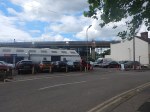


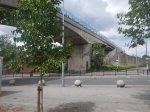


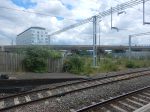


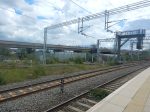
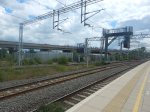
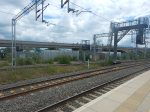
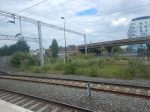


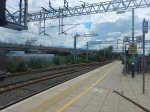
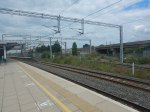

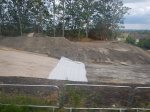

Note.
- How the section of the viaduct over the West Coast Main Line has been removed.
- The viaduct seems to be mainly flat sections, with three arches, where it crossed the road.
Judging by the noise of concrete being attacked by pneumatic drills, it would appear to be a tough piece of concrete to partially demolish. This could be a good thing, as a station guy told me. that the latest plan was to build the new viaduct and the two platforms on the foundations of the old viaduct.
This Google Map shows the station.
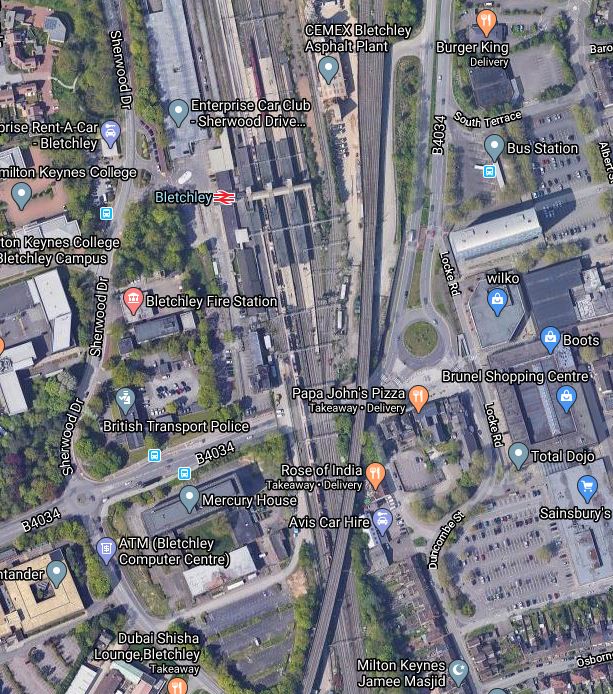
Note.
- Bletchley station with its six platforms.
- The viaduct running diagonally across the West Coast Main Line and then past the East side of the station.
This visualisation from East West Rail shows an idea for the new station.
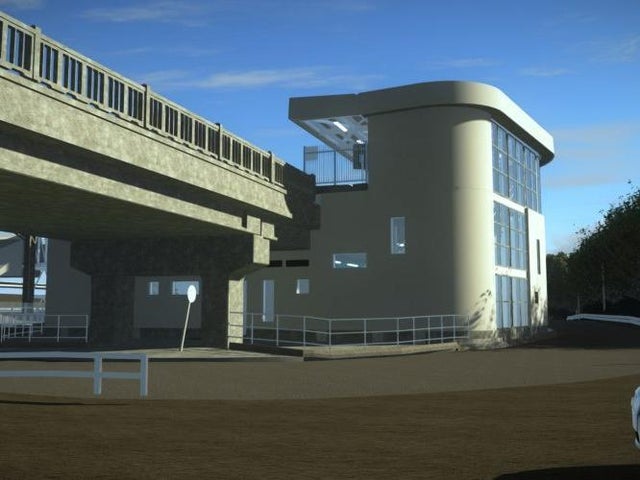
It would appear the visualisation was taken from somewhere near the roundabout on the East side of the viaduct.
I took this picture from the zebra crossing outside the pub, by the roundabout.
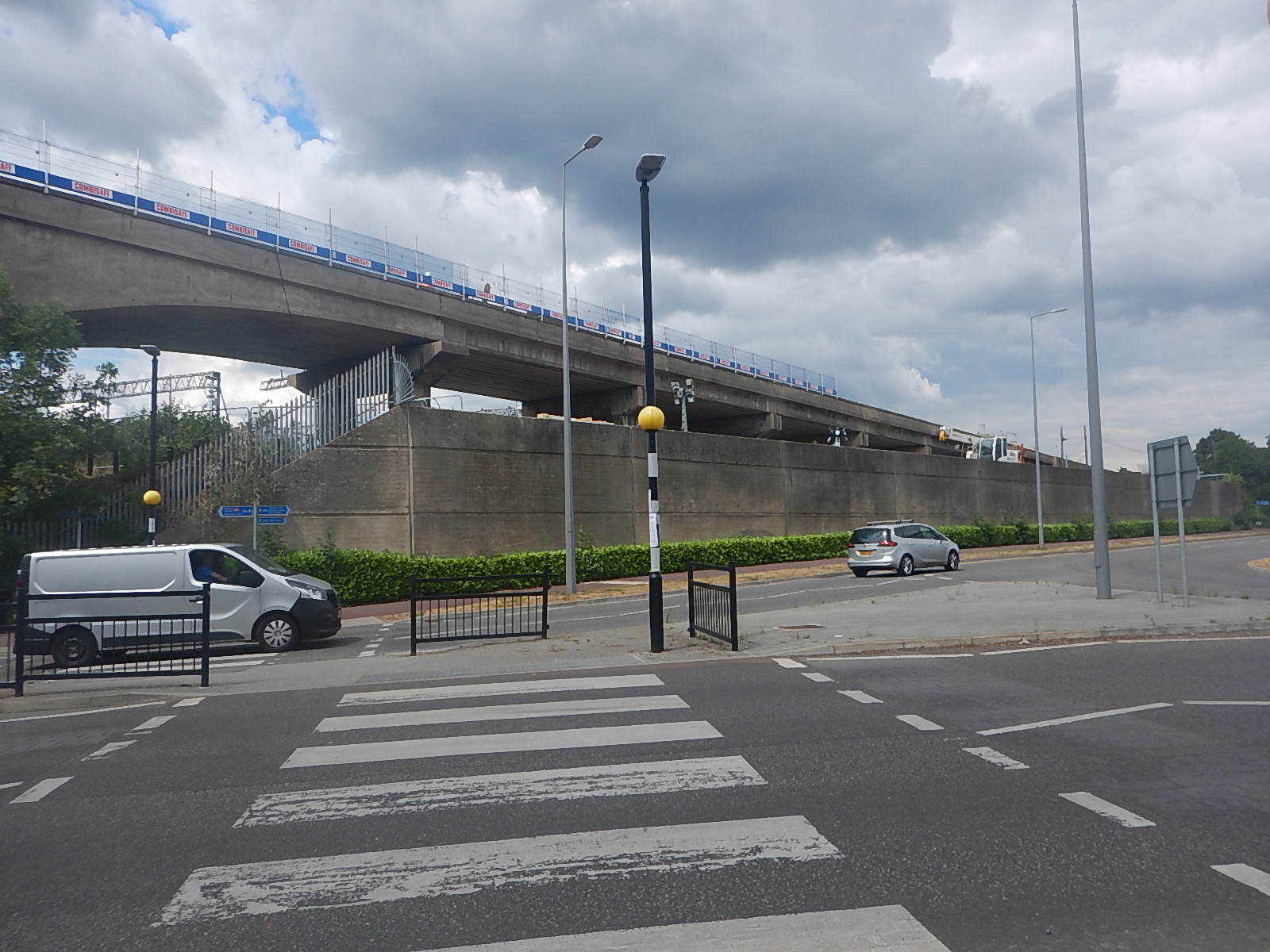
It looks to me, that the retaining wall on the other side of the crossing will be removed and the station entrance will go somewhere along the straight part of the viaduct.
- It could be about the place where a heavy digger or crane is working.
- An entrance here, would give access to the bus station and the Brunel Shopping Centre on the other side of the roundabout.
- If you look at the wider maps of the area, it can be seen that the stadium, where Milton Keynes Dons play their home matches is not that far away. So the new entrance, will ease getting to one of the least accessible football grounds in the country.
This Google Map shows an enlargement of the roundabout and the surrounding area.
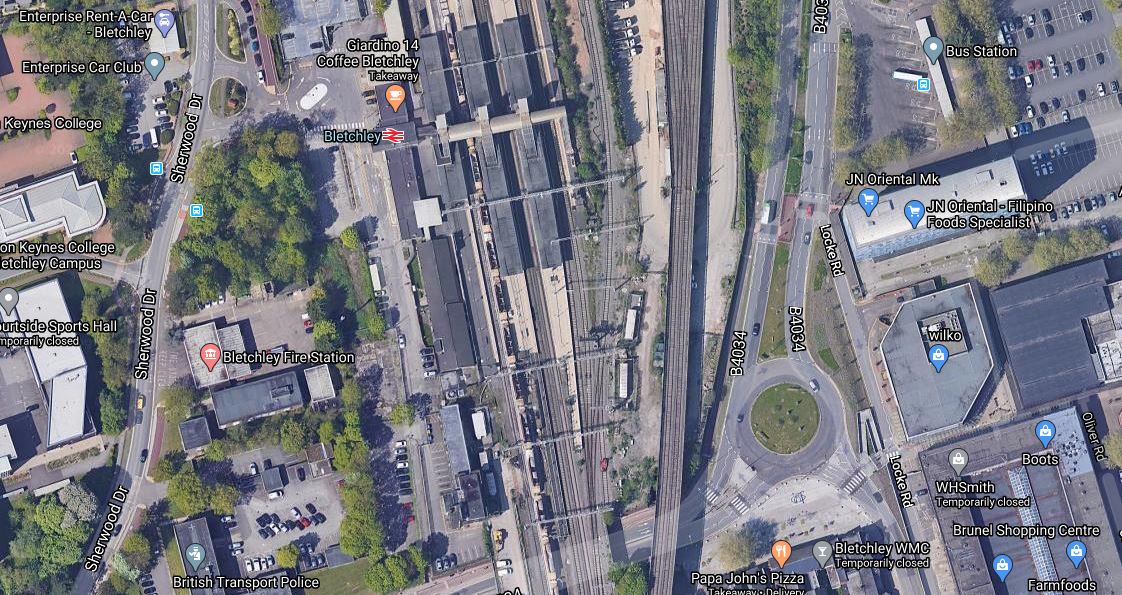
Note.
- The Bus Station in the North-East corner of the map.
- The Brunel Shopping Centre in the South East corner of the map.
- The roundabout, where I took the picture on the zebra crossing, of the retaining wall.
- The step-free footbridge in Bletchley station can be clearly seen
It would appear, that there is space behind the retaining wall to build the station entrance alongside the viaduct and link it to the existing footbridge to give access to the rest of the station.
It appears that Network Rail are using the reinstatement of the East West Railway, as an opportunity to sort out important transport needs in Bletchley.
Classic-Compatible High Speed Two Trains At East Midlands Hub Station
This article on Rail News, is entitled £2.7bn East Midlands Plan Unveiled For HS2 Links.
This is the first two paragraphs.
A bold plan costed at £2.7 billion for the area around the HS2 hub in the East Midlands has been published by a group of councils, transport bodies and East Midlands Airport.
The core of the scheme is the future East Midlands Hub at Toton, and the plan proposes direct access to the Hub from more than 20 cities, towns and villages in the East Midlands.
If you want to read the original report by Midlands Connect, there’s a download link on this page of their web site.
The original report has a section entitled Midlands Engine Rail, where this is said.
This project is fully integrated with Midlands Engine Rail, a rail improvement plan developed by Midlands Connect to revolutionise connectivity, mobility and productivity across the region. Midlands Engine Rail includes plans for two new HS2 classic-compatible services on an electrified Midland Main Line that will run direct from:
- Bedford and Leeds via Leicester and East Midlands Hub
- Nottingham and Birmingham Curzon Street via East Midlands Hub
These services can run on both electrified and high speed tracks, and would join the HS2 network at Toton, the HS2 East Midlands Hub, meaning that Nottingham and Leicester city centres are directly linked to HS2 without the need to change trains.
These improved connections will more than halve current journey times, with Leicester to Leeds dropping from 120 minutes to 46 minutes and Nottingham to Birmingham falling from 72 minutes to 33 minutes.
Note.
- Between Bedford and East Midland Hub stations, the Midland Main Line is or soon will be an almost a complete 125 mph rail line.
- It is likely, that with digital in-cab signalling, that faster running up to 140 mph may be permitted in places.
- Between Birmingham Curzon Street and East Midlands Hub stations, trains will use High Speed Two at up to 205 mph.
- Between Leeds and East Midlands Hub stations, trains will use High Speed Two at up to 205 mph.
- Leeds and Birmingham Curzon Street station will be new stations for High Speed Two.
The Classic-Compatible Trains
These are described in this section in Wikipedia, by this sentence.
The classic-compatible trains, capable of high speed but built to a British loading gauge, permitting them to leave the high speed track to join conventional routes such as the West Coast Main Line, Midland Main Line and East Coast Main Line. Such trains would allow running of HS2 services to the north of England and Scotland, although these non-tilting trains would run slower than existing tilting trains on conventional track. HS2 Ltd has stated that, because these trains must be specifically designed for the British network and cannot be bought “off-the-shelf”, these conventional trains were expected to be around 50% more expensive, costing around £40 million per train rather than £27 million for the captive stock.
The trains will have the same characteristics as the full-size trains.
- Maximum speed of 225 mph.
- Cruising speed of 205 mph on High Speed Two.
- Length of 200 metres.
- Ability to work in pairs.
- A passenger capacity around 500-600 passengers.
It should be noted that one of these trains will be shorter than a pair of East Midlands Railway’s five-car Class 810 trains, which should avoid any serious platform lengthening on existing lines.
Bedford and Leeds via Leicester and East Midlands Hub
A few facts and thoughts.
- The service is shown as stopping at Wellingborough, Kettering, Market Harborough, Leicester, Loughborough and East Midlands Hub.
- The service frequency could be hourly, but two trains per hour (tph) would be better.
- This service could be more important, than it appears, as by the time High Speed Two opens to Leeds, the East West Railway will be open through Bedford.
- Would a terminal platform need to be added at Bedford station? As the station could be rebuilt for the East West Railway, this shouldn’t be a problem.
- Leeds will have a new High Speed Two station or at least new platforms in the existing station.
- The Bedford and Leeds service would join High Speed Two at East Midlands Hub and go North.
- The Leeds and Bedford service would leave High Speed Two at East Midlands Hub and go South.
Leeds and Leicester will take 46 minutes, with High Speed Two’s journey time calculator, indicating twenty-seven minutes between East Midlands Hub and Leeds stations.
According to an article in the June 2020 Edition of Modern Railways High Speed Two is planning to run the following services on the Eastern leg of High Speed Two between East Midlands Hub and Leeds.
- Two tph – Birmingham Curzon Street and Leeds
- Three tph – London Euston and Leeds
There will be a Turn-Up-And-Go six tph service between East Midlands Hub and Leeds stations.
If the Bedford and Leeds service was an hourly service, when added to the current East Midlands Railway Inter-City services, it would give the following calling frequencies.
- Wellingborough – 2 tph
- Kettering – 2 tph
- Market Harborough – 3 tph
- Leicester – 5 tph
- Loughborough – 3 tph
- East Midlands Parkway – 2 tph
The calling pattern can be adjusted to the number of passengers.
Nottingham and Birmingham Curzon Street via East Midlands Hub
A few facts and thoughts.
- The service is shown as only stopping at East Midlands Hub.
- The service frequency could be hourly.
- The service would go between East Midlands Hub and Nottingham using the Trowell Curve route, which I discussed in Access To Toton – Scheme 6 – Trowell Curve.
- Nottingham station has long terminal platforms that take a full-length Inter-City 125.
- Birmingham Curzon Street will be a new High Speed Two station.
- The Nottingham and Birmingham Curzon Street service would join High Speed Two at East Midlands Hub and go South.
- The Birmingham Curzon Street and Nottingham service would leave High Speed Two at East Midlands Hub and go North.
Nottingham and Birmingham Curzon Street will take 33 minutes, with High Speed Two’s journey time calculator, indicating twenty minutes, between Birmingham Curzon Street and East Midlands Hub stations.
According to an article in the June 2020 Edition of Modern Railways High Speed Two is planning to run the following services on the Eastern leg of High Speed Two from Birmingham Curzon Street.
- Two tph – East Midlands Hub and Leeds
- One tph – East Midlands Hub, York, Darlington, Durham and Newcastle.
There will be a Turn-Up-And-Go four tph service between East Midlands Hub and Birmingham Curzon Street stations.
Midland Main Line Electrification
Midlands Connect is calling for full electrification of the Midland Main Line.
The problem is electrification through Leicester station, where there is a low bridge over the track.
In Discontinuous Electrification Through Leicester Station, I showed how the problem might be solved by discontinuous electrification and battery-equipped trains.
The Shared High Speed Two Path
If you look at the two previous sections you’ll see the following.
- The Birmingham Curzon Street and Nottingham service would leave High Speed Two at East Midlands Hub and go North.
- The Bedford and Leeds service would join High Speed Two at East Midlands Hub and go North.
- The Leeds and Bedford service would leave High Speed Two at East Midlands Hub and go South.
- The Nottingham and Birmingham Curzon Street service would join High Speed Two at East Midlands Hub and go South.
The two services are using the same path on High Speed Two.
I would design the East Midlands Hub, so that High Speed Two and classic services going in the same direction shared an island platform.
Southbound services would behave like this.
- The Nottingham to Birmingham Curzon Street train would arrive in the High Speed Two face of the platform.
- The Leeds to Bedford train would arrive in the classic face of the platform.
- Passengers who needed to change would walk across the platform.
- When ready both trains would go on their way.
Northbound services would do something similar.
It would be an efficient way to organise interchange between services.
- Train design would have to ensure, that all trains using the island platform had similar and preferably step-free access.
- If Greater Anglia and Merseyrail, can do step-free access, then no train designer has an excuse not to.
- Surely every High Speed Two train that arrives at East Midlands Hub, should be paired with a Midland Main Line service, if the timetable allows it.
The money being spent on High Speed Two means that the British public, won’t accept anything less than perfect.
Are There Any Other Possible Destinations For Classic-Compatible High Speed Two Trains From East Midlands Hub Station?
I will put these in alphabetical order.
Bedford
Consider.
- Bedford is already planned to have one classic-compatible service to and from Leeds.
- One of East Midlands Railway’s St. Pancras services calls at Bedford.
- Bedford has a four tph Thameslink service to a large proportion of Central London and the South East of England.
- Bedford has direct services to Gatwick Airport.
- Bedford station will be expanded to accommodate the East West Railway.
- In a few years, Bedford will be connected to Milton Keynes, Oxford and Reading by the East West Railway.
- When the East Midlands Hub station opens, Bedford will be connected to Cambridge, Ipswich and Norwich by the East West Railway.
I feel there is a need for a Turn-Up-And-Go four tph service between Bedford and East Midlands Hub stations.
I estimate that between Bedford and East Midlands Parkway stations will have a journey time of around 60 minutes.
Cambridge
I believe that the East West Railway should be built to the same standard as the East Coast, Great Western, Midland and West Coast Main Lines.
- Digitally signalled
- 125 mph-capable
- Electrified
This would enable classic-compatible services to be extended from Bedford to the UK’s Technology Powerhouse; Cambridge.
As Bedford and East Midlands Parkway could be 60 minutes, timings depend on the times of the East West Railway, between Bedford and Cambridge.
Edinburgh
Consider.
- Edinburgh is an important city; financially and politically.
- Edinburgh is planned to have a classic-compatible service from London via the West Coast Main Line.
- Newcastle is planned to have a classic-compatible service from East Midlands Hub
The city must be a possibility for a classic compatible service from East Midlands Hub.
I estimate that Edinburgh and East Midlands Parkway will have a journey time of a few minutes over two hours
Hull
This clip of a map from the Transport for the North report shows a schematic of the rail links in Yorkshire.
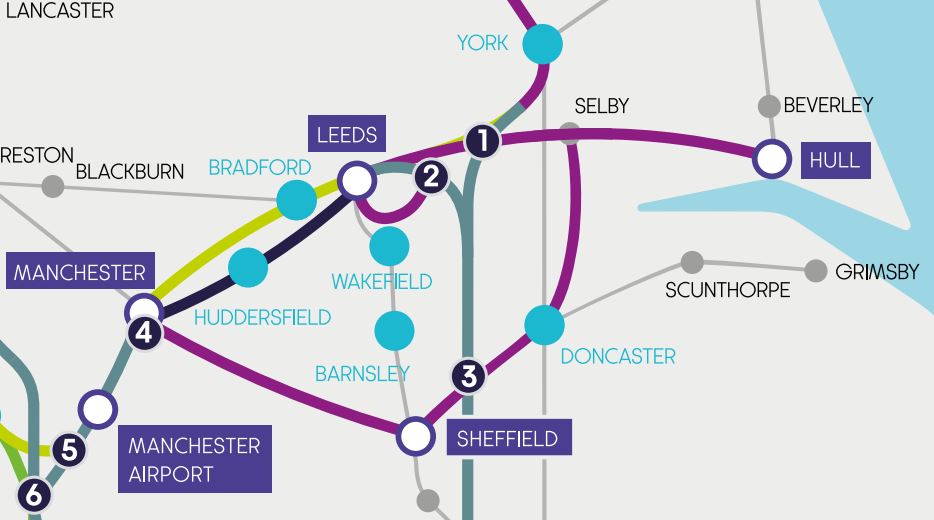
Hull is important for various reasons.
- It is large city.
- It is the Eastern terminus of an increasing number of routes.
- It is becoming a manufacturing centre for North Sea wind.
- The city will be the terminus of Northern Powerhouse Rail across the Pennines from Liverpool, Manchester and Leeds.
- Some reports have shown the city as a terminus of the Western leg of High Speed Two.
For these reasons, I will add Hull to the list.
I estimate that Hull and East Midlands Parkway will have a journey time of under an hour.
Lincoln
Looking forward to 2040, I wouldn’t bet against Lincoln being a very important city in the UK.
- It has history.
- It is becoming an important higher education centre.
- It has lots of space.
- Train operating companies like LNER and East Midlands Railway are improving services to the city.
But most importantly, as Aberdeen became Scotland’s centre for North Sea Oil and Gas, I believe that Lincoln could become England’s centre for North Sea renewable electricity and hydrogen.
I estimate that Lincoln and East Midlands Parkway will have a journey time of around an hour.
Milton Keynes
As I said for Cambridge, I believe that the East West Railway should be built to the same standard as the East Coast, Great Western, Midland and West Coast Main Lines.
This would enable classic-compatible services to be extended from Bedford to Milton Keynes.
As Bedford and East Midlands Parkway could be 60 minutes, timings depend on the times of the East West Railway, between Bedford and Milton Keynes.
Newcastle
As Newcastle already has a direct High Speed Two classic-compatible connection to and from East Midlands Hub station, this must be a possibility.
According to High Speed Two’s journey time calculator<, trains between Newcastle and East Midland Hub stations will take 96 minutes.
Northern Powerhouse Rail
The map I showed with Hull could indicate that a train could take High Speed Two to Leeds and then power its way across the Pennines calling at Leeds, Huddersfield, Manchester Piccadilly, Manchester Airport and Liverpool.
East Midlands Railway would have found a replacement for the Western part of their Liverpool and Norwich service, which is one of the worst railway services in the UK.
Oxford And Reading
As I said for Cambridge, I believe that the East West Railway should be built to the same standard as the East Coast, Great Western, Midland and West Coast Main Lines.
This would enable classic-compatible services to be extended from Bedford to Oxford and Reading.
As Bedford and East Midlands Parkway could be 60 minutes, timings depend on the times of the East West Railway, between Bedford and Oxford and Reading.
Peterborough
I think Peterborough could be an interesting possibility.
- It is the gateway to the East of England.
- It is a fully-electrified station.
- It has seven platforms with space for more.
- Most platforms could take a two hundred metre long train.
East Midlands Railway’s Liverpool and Norwich service, links Peterborough with Nottingham.
- That section of the route is 52 miles long.
- 29 miles of the route on the East Coast Main Line are electrified.
- The 100 mph Class 158 trains take 67 minutes and 30 minutes to travel between the two stops at Grantham and Peterborough.
- Some of LNER’s 125 mph electric Class 800 trains are timetabled to travel between the two stops at Grantham and Peterborough as fast as 18 minutes.
What time will be achievable on this short length of electrified track, when digital signalling is fully-deployed and 140 mph running is possible?
I can certainly see a bi-mode Class 801 train going between Peterborough and Nottingham in under an hour.
I also think that they could equal East Midlands Railway’s times to Nottingham going from Kings Cross via Grantham.
In Access To Toton – Scheme 6 – Trowell Curve, I advocated the following electrification, to allow battery-electric trains to work the Nottingham and Skegness service.
- The Allington Chord between Bottesford and Ancaster stations.
- The line linking the chord to Grantham station.
As Nottingham station will surely be electrified to allow classic-compatible High Speed Two trains to run between the station and Birmingham using High Speed Two, there will only be sixteen miles of double-track between Bottesford and Nottingham station without electrification.
I have just flown my helicopter along the route and there are one or two bridges and Netherfield station, that will need a rebuild, but it wouldn’t be the most challenging of electrifications.
Especially, as there is High Speed Two and the East Coast Main Line to provide power at both ends of the route.
But as it is only sixteen miles would they use battery-electric high-speed trains.
Surely, that is a crazy idea?
In Will High Speed Two’s Classic-Compatible Trains Have Battery Operation?, I explain why you would use such a concept to create an efficient train.
- The batteries drive the train and they are charged from the electrification and regenerative braking.
- Batteries would give a train recovery capability in case of overhead catenary failure.
- Batteries would be used for depot movements.
In Will The Trains On High Speed Two Have Batteries For Regenerative Braking?, I do a calculation for the battery size needed for a 250 mph Spanish high speed train and the batteries are surprisingly small, at 100 kWh per carriage.
I firmly believe, that the mathematics say it is possible for a high speed train to use on-board battery power to perhaps do thirty miles at say 90 mph on a line without electrification.
Sheffield
As Sheffield station will have a direct High Speed Two connection to and from East Midlands Hub station, this must be a possibility.
According to High Speed Two’s journey time calculator, trains between Sheffield and East Midland Hub stations will take 27 minutes.
Note.
- An article in the June 2020 Edition of Modern Railways shows that the Eastern leg of High Speed Two is planned to have nine tph, against a theoretical limit of 18 tph.
- The Leeds-Bedford and Nottingham-Birmingham Curzon Street will use another path.
- Not all services would need to be hourly.
- Could some CrossCountry services be replaced with classic-compatible services?
I feel there is plenty of scope to develop more classic-compatible services along the Eastern leg of High Speed Two.
The Concept Of Electrification Islands
Consider how Imperial Airways and BOAC used to fly long routes to places like Sydney, Hong Kong and Cape Town before the days of long distance jet airliners. They used to fly from airport to airport, picking up fuel and supplies on the way.
If you want to know more about the details, read what is my favourite travel book, Beyond The Blue Horizon by Alexander Frater.
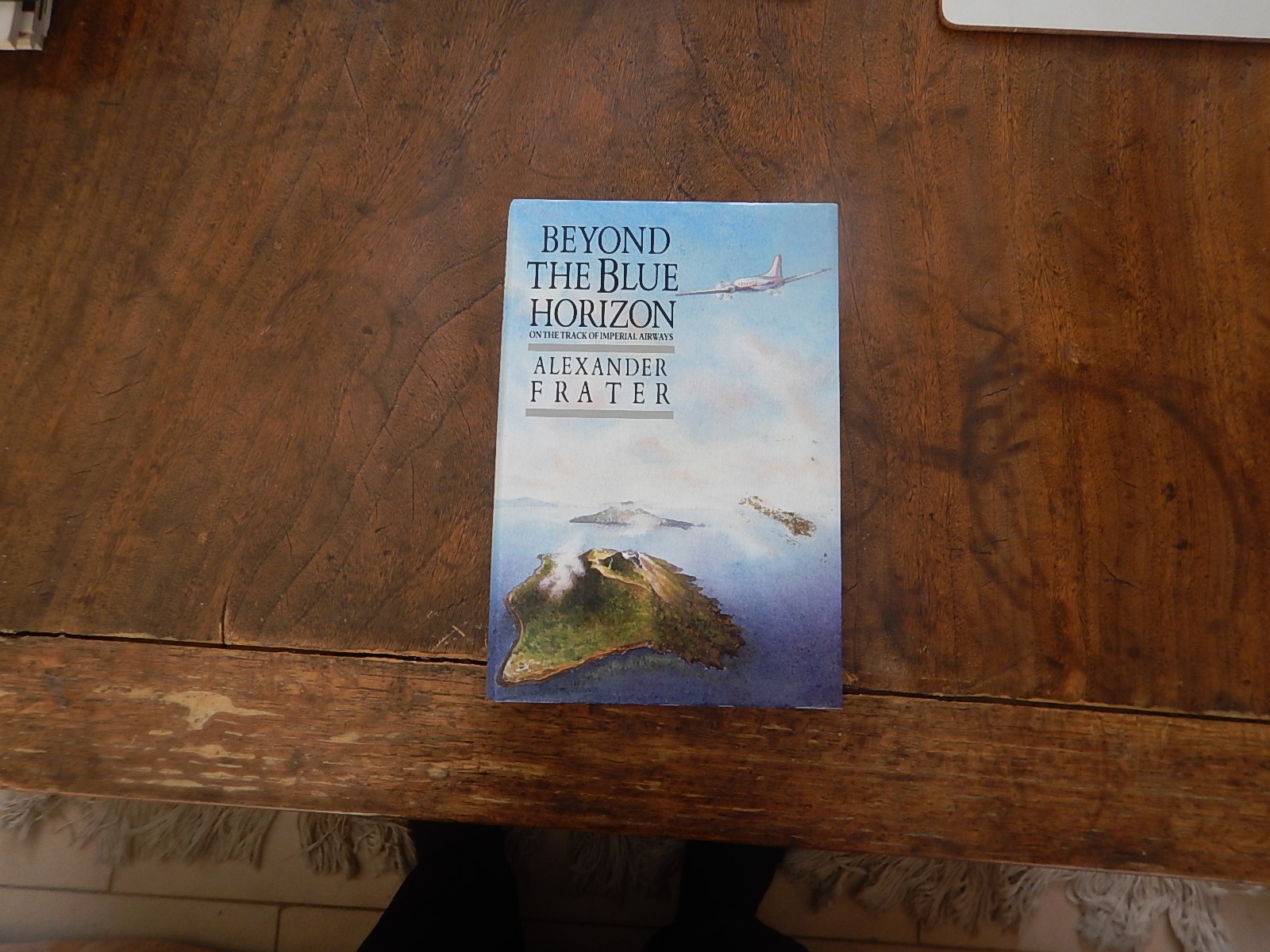
He followed the Imperial Airways route to Sydney, on what was reputed to be the most complicated ticket, that British Airways ever issued.
But can the concept of flying a short range airliner over a long distance refuelling as necessary, be applied to running a battery electric train by charging the batteries on a series of electrification islands?
In Ipswich And Peterborough In A Battery Train, I described how an Ipswich and Peterborough service could be run by a battery-equipped Class 755 train.
The Ipswich and Peterborough route is 82.5 miles long and it can be split as follows.
- Ipswich and Haughley Junction – 13.8 miles – Electrified
- Haughley Junction and Ely – 38.2 miles – Not Electrified
- Ely and Peterborough – 30.5 miles – Not Electrified
Legs two and three, should be within the capability of a battery-equipped Class 755 train. No definite figure has been given, but in the July 2018 Edition of Modern Railways, this was said about the similar Class 756 trains, ordered for the South Wales Metro.
The units will be able to run for 40 miles between charging, thanks to their three large batteries.
Perhaps, what is needed is to create an electrification island at Ely, that can be used to charge the batteries.
An Electrification Island At Ely
This map from Wikipedia shows the complicated railways at Ely,
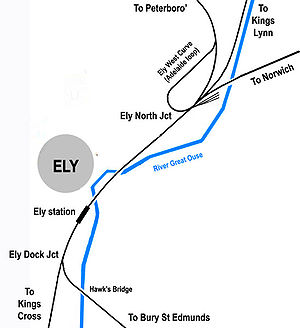
Note.
- Ely station is fully electrified.
- The line to Cambridge,Kings Cross, Liverpool Street and Stansted Airport is fully electrified. Greater Anglia’s Class 755 trains between Norwich and Stansted Airport, change between diesel and electrification at Ely.
- The line to Kings Lynn is fully electrified.
- The lines to Bury St. Edmunds, Norwich and Peterborough are not electrified.
- Ely is a city of 20,000 inhabitants, so I suspect it must have a robust electricity supply.
- Freight trains take about five minutes to pass between Ely West and Ely Dock Junctions.
- Ely West and Ely Dock Junctions are 2.5 miles apart.
- There appears to be an avoiding line South-East of Ely station, where I’ve seen trains from Felixstowe to Peterborough sometimes wait for a few minutes before proceeding.
- There is also a lot of space at March station, where a passing loop with a charging station could be built.
I believe it would be possibly to do the following at Ely.
- Electrify the West Curve and the South-East avoiding line.
- Electrify the Bury St. Edmunds, Norwich and Peterborough lines for perhaps five miles.
- If required, put a high capacity charging station on the avoiding line.
There would be plenty of electrification to charge the trains.
An alternative plan might be to electrify between March station and the new Soham station, which has been planned to open in 2021.
- This would be around eighteen miles of electrification.
- This would certainly be enough electrification to fully-charge passing freight and passenger trains.
- Soham to Ely could be doubled.
- The extra electrification would mean the two unelectrified sections of the Ipswich and Peterborough route; Haughley Junction-Soham and March-Peterborough would be well within range of a battery-electric train.
- The proposed service between Cambridge and Wisbech would only have the twelve miles of the Bramley Line between March and Wisbech to run on battery power.
It might also be possible to put in an extra curve to make Ely Dock Junction, a full triangular junction. This would allow the new Soham station to have direct services to both Cambridge and Cambridge North stations, without a reverse at Ely station.
Other Possible Electrification Islands
I’ll break these down by regions and train operators.
East Anglia (Greater Anglia)
Greater Anglia only runs trains on diesel to the North of Cambridge and Ipswich, which are both fully electrified, as is Norwich.
I would consider Cambridge, Ely, Ipswich and Norwich to be electrification islands.
- All have a good connection to the electrification power supply, as they handle main line electric trains.
- All or most platforms at the stations are electrified to charge trains.
- There are electrified sidings at Cambridge and Norwich and possibly at Ipswich.
Lowestoft and Yarmouth might be fitted with charging systems to make sure a fault doesn’t strand a train.
In Battery Power Lined Up For ‘755s’, I talked about a report in Rail Magazine, which said that the Class 755 trains will get a battery fitted at the first overhaul.
I wouldn’t be surprised, that in a couple of years, Greater Anglia announces the end of diesel power on some or all of their services.
East Coast Main Line (LNER and Others)
Hitachi AT-300 Trains On The East Coast Main Line
The East Coast Main Line (ECML), is increasingly becoming a railway where the vast majority of services are run by versions of Hitachi AT-300 trains.
- Hull Trains are running Class 802 trains.
- LNER are running Class 800 and Class 801 trains.
- TransPennine Express are running Class 802 trains.
- East Coast Trains will be running Class 803 trains.
Classes 800, 802 and 803 are bi-modes and can probably have some or all of their diesel engines replaced by batteries.
In Sparking A Revolution, I gave this specification for a Hitachi battery-electric train.
- Range – 55-65 miles
- Performance – 90-100 mph
- Recharge – 10 minutes when static
- Routes – Suburban near electrified lines
- Battery Life – 8-10 years
I will use these figures from Hitachi in this post.
Electrification Islands On The East Coast Main Line
There are several large and smaller stations along the ECML, that can act as electrification islands to support either local services or long-distance services from London.
Cleethorpes
Consider
- Cleethorpes station would need a decent electricity supply. Offshore wind?
- Doncaster is 52 miles away.
- Lincoln is 37 miles away.
- Newark is 63 miles away.
- Scunthorpe is 29 miles away.
If you can get battery-electric trains to Cleethorpes, you also serve Grimsby Town station, which is three miles closer to the ECML.
With electrification islands at Lincoln and Scunthorpe and Hitachi AT-300 trains with a battery range of at least sixty miles, electric trains could be run to Cleethorpes and Grimsby.
Would that improve the economy of the area?
Darlington
Darlington station is on the electrified ECML, so it must have a top class electricity supply.
- Bishop Auckland is 12 miles away.
- Middlesbrough is 15 miles away.
- Nunthorpe is 20 miles away.
- Saltburn is 27 miles away.
- Whitby is 47 miles away.
Darlington could support battery-electric operation of the Tees Valley Line, if the route doesn’t go for hydrogen. Note that hydrogen would probably also handle services from Middlesbrough to Newcastle, Nunthorpe and Whitby with ease.
Note my views on the definitive hydrogen train, which will be a battery-electric-hydrogen hybrid train, able to use power from a variety of sources.
Doncaster
Doncaster station is on the electrified ECML, so it must have a top class electricity supply.
- Cleethorpes is 52 miles away.
- Hull is 40 miles away.
- Scunthorpe is 25 miles away.
- Sheffield is 19 miles away.
Doncaster could certainly support some battery-electric services.
Grantham
Grantham station is on the electrified ECML, so it must have a top class electricity supply.
- Nottingham is 22 miles away.
- Sleaford is 18 miles away.
- Nottingham and Skegness services seem to take about four minutes to reverse in the station.
The Nottingham and Skegness service could take advantage of the driver changing ends to top up the battery.
Hull
Consider.
- Hull is a city of nearly 300,000 people, so it must have a decent electricity supply.
- Hull station is under forty miles from the electrification of the ECML.
- Doncaster is 40 miles away.
- Scarborough is 54 miles away.
- York is 52 miles away, with about 20 miles electrified.
I would certainly suspect that with an electrification island at Hull, the Hitachi AT-300 trains of Hull Trains and LNER could certainly run fully electric services to the city, if they were fitted with batteries.
With an electrification island at Scarborough, could Hull Trains and LNER services be extended to Scarborough?
Leeds
Leeds station is already an electrification island, as it is fully electrified.
- It also has electrified services to Bradford, Ilkley and Skipton.
- Leeds and Huddersfield will be electrified in the next few years.
Harrogate is 18 miles away, so a return journey is within range of a Hitachi AT-300 train with a battery, that is charged on the ECML.
Lincoln
Consider.
- Lincoln station would need a decent electricity supply.
- Cleethorpes is 37 miles away.
- Doncaster is 40 miles away.
- Newark is 16 miles away, so a return journey is within range of a Hitachi AT-300 train with a battery, that is charged on the ECML.
- Nottingham is 34 miles away and Leicester is 61 miles away.
- Peterborough is 57 miles away.
- Sleaford is 21 miles away.
With an electrification island at Lincoln, the following should be possible.
- Electric services between Cleethorpes and Lincoln using battery-electric trains.
- Electric services between Doncaster and Lincoln using battery-electric trains.
- Electric services between Nottingham/Leicester and Lincoln using battery-electric trains. Electrify the Midland Main Line (MML) and this is easy.
- Electric services between Peterborough and Lincoln using battery-electric trains. It may need an electrification island at Sleaford.
- Electric services between London Kings Cross and Grimsby/Cleethorpes using Hitachi AT-300 trains with a battery, that is charged on the ECML and at Lincoln.
The London Kings Cross and Lincoln services could top up their batteries if required if they were run using Hitachi AT-300 trains with a battery
Surely, if Class 755 trains are good enough for Norfolk and Suffolk and both franchises are run by Abellio, then battery versions of these trains would be ideal for running services from Lincoln to Cleethorpes/Grimsby, Doncaster, Newark, Nottingham, Peterborough and Skegness.
Middlesbrough
If required an electrification island could be placed at Middlesbrough station.
- Darlington is 15 miles away.
- Newcastle is 47 miles away.
- Saltburn is 13 miles away.
- Whitby is 35 miles away.
This area might opt for hydrogen, but I believe battery-electric trains could also work the routes through Middlesbrough and Darlington. Note my views on the definitive hydrogen train, which will be a battery-electric-hydrogen hybrid train, able to use power from a variety of sources.
Newark
Consider.
- Newark North Gate station is on the electrified ECML, so it must have a top class electricity supply.
- Cleethorpes is 63 miles away.
- Grimsby is 60 miles away.
- Lincoln is 16 miles away.
- Nottingham is 17 miles away.
With an electrification island at Cleethorpes/Grimsby, battery-electric services could be extended to either town. They would need to use the electrification island at Lincoln station to top-up the battery.
Newcastle
Newcastle station is on the electrified ECML, so it must have a top class electricity supply.
- Carlisle is 61 miles away.
- Middlesbrough is 47 miles away.
- Nunthorpe is 52 miles away.
Newcastle could surely support local services using battery-electric trains. They could be dual-voltage, so they can use Tyne and Wear Metro electrification.
Peterborough
Peterborough station is on the electrified ECML, so it must have a top class electricity supply.
- Ely is 31 miles away.
- Leicester is 52 miles away, with Birmingham another 40 miles further.
- Lincoln is 57 miles away.
- Sleaford is 35 miles away.
It might even be possible for Hitachi AT-300 trains with a battery to be able to run between Stansted Airport and Birmingham for CrossCountry.
- Stansted and Ely – 38 miles – Electrified
- Ely and Peterborough – 30.5 miles – Not Electrified
- Through Peterborough – 6 miles – Electrified (ECML)
- Peterborough and Leicester – 52 miles – Not Electrified
- Leicester and Nuneaton – 19 miles – Not Electrified
- Through Nuneaton – 3 miles – Electrified (WCML)
- Nuneaton and Birmingham – 21 miles – Not Electrified
Note.
- Trains would charge when running under electrification and also during station stops in Cambridge, Ely, Peterborough Leicester and Nuneaton.
- Trains would automatically raise and lower their pantographs as required.
- There may be scope to add sections of extra electrification.
- For example, electrification of the MML could add as much as eight miles of electrification, through Leicester.
As much as forty percent of the route between Birmingham and Stansted could be electrified.
Sandy/St. Neots
It is planned that the East West Railway (EWR) and the ECML will cross at an interchange station somewhere in this area.
Consider.
Both stations are on the electrified ECML, so must have a top class electricity supply.
- Bedford is 10 miles away.
- The electrification South of Cambridge is about 20 miles away.
It would surely be possible to create an electrification island, where the two major routes cross at Sandy/St. Neots.
Scarborough
Consider.
- Scarborough station would need a decent electricity supply.
- Hull is 54 miles away.
- York is 42 miles away.
With charging facilities at Scarborough battery-electric trains could be run to the seaside resort.
- I also think it would be possible to run a direct service between London Kings Cross and Scarborough using Hitachi AT-300 trains with batteries, either via York or Hull.
- TransPennine’s Hitachi trains could also read Scarborough from York, if fitted with batteries.
Would battery-electric trains between Hull, Scarborough and York attract more users of the services?
Sleaford
If required an electrified island could be placed at Sleaford station.
- Sleaford would need a decent electricity supply.
- The station is where the Nottingham and Skegness and Peterborough and Lincoln routes cross.
- Grantham on the ECML is 18 miles away.
- Lincoln is 21 miles away.
- Nottingham is 40 miles away.
- Peterborough is 35 miles away.
- Skegness is 40 miles away.
Services through Sleaford would be run as follows.
As Lincoln and Peterborough are likely to both have the ability to charge trains, the Peterborough and Lincoln route can probably be run using a battery-electric train, that also charges during the stop at Sleaford.
To run the Nottingham and Skegness route, there will need to be a charging facility or an electrification island at Skegness, as forty miles is to far from an out and back from Sleaford on battery power. The section between Sleaford and Nottingham is easier, as there is a reverse at the fully-electrified Grantham station, where the trains could top-up their batteries.
York
York station is already an electrification island, as it is fully electrified.
- Harrogate is 20 miles away, with Leeds another 18 miles further.
- Hull is 52 miles away, with about 20 miles electrified.
- Scarborough is 42 miles away.
It would appear that battery-electric trains could work the routes between Doncaster, Harrogate, Hull, Leeds, Scarborough and York.
Midland Main Line (East Midlands Railway)
Hitachi AT-300 Trains On The Midland Main Line
The Midland Main Line (MML) is a mixture of electrified and non-electrified sections. East Midlands Railway have chosen Hitachi Class 810 trains to cope with the mixed infrastructure.
- There will be thirty-three five car trains.
- They will have four diesel engines instead of three in the Class 800 trains.
- They will have a redesigned nose.
Are East Midlands Railway ordering a dual-purpose design?
In the January 2020 Edition of Modern Railways, this is said about the bi-mode Hitachi Class AT-300 trains for Avanti West Coast.
Hitachi told Modern Railways it was unable to confirm the rating of the diesel engines on the bi-modes, but said these would be replaceable by batteries in future if specified.
Consider.
- Both fleets of trains are for delivery in 2022.
- Ease of manufacture would surely mean, that Hitachi would want the two fleets to be substantially the same.
- A train with four engines could be needed to cruise at 125 mph on diesel.
- Four engine slots would mean that, if you were replacing some engines with batteries, you’d have more flexibility.
Hitachi seem to be playing an inscrutable game.
This section entitled Powertrain in the Wikipedia entry for the Class 800 train, says this about the powertrain for Class 800/801/802 trains.
Despite being underfloor, the generator units (GU) have diesel engines of V12 formation. The Class 801 has one GU for a five to nine-car set. These provide emergency power for limited traction and auxiliaries if the power supply from the overhead line fails. The Class 800 and Class 802 bi-mode has three GU per five-car set and five GU per nine-car set. A five-car set has a GU situated under vehicles 2/3/4 and a nine-car set has a GU situated under vehicles 2/3/5/7/8.
Hitachi must have found a way to arrange four GUs under a Class 810 train.
- They could be using slightly smaller engines. Smaller engines could be fitted to curb overheating.
- The engines might be in pairs under vehicles 2 and 4, possibly sharing utilities like fuel tanks and cooling systems.
But as the vehicles are two metres shorter, it wouldn’t be a shoe-in.
When the trains are to be upgraded to battery electric trains, an appropriate number of GUs would be replaced by batteries.
I wouldn’t be surprised to find out that both Avanti West Coast and East Midlands Railway will have trains that can be converted from five-car bi-mode trains into battery-electric trains, with a range of between 55 and 65 miles.
- As a control engineer, I believe that a battery could be made to be plug compatible with a GU.
- An extra battery could be placed under vehicle 3, in the spare engine position.
I reckon that Hitachi’s quote of a sixty-five mile range would at 3 kWh per vehicle-mile need about one MWh of batteries.
That is 200 kWh per vehicle, so I feel it should be possible.
Electrification Of The Midland Main Line
Current plans for electrified sections of the MML are as follows.
- London St. Pancras and Corby – 79.5 miles – Opening December 2020
- London St. Pancras and Market Harborough – 83 miles – Opening December 2020
- Clay Cross North Junction and Sheffield – 15.5 miles – To be built in conjunction with High Speed Two
The gap between Market Harborough and Clay Cross North Junction is about 66 miles.
Electrification Islands On The Midland Main Line
As with the ECML, there are several large and smaller stations along the MML, that can act as electrification islands to support either local services or long-distance services from London.
I will deal with the electrification islands, starting in London.
Bedford
In Looking At The East West Railway Between Bedford And Cambridge, I came to the conclusion, that the East West Railway (EWR) and the MML, would share electrified tracks through Bedford station.
- There are also rumours of electrification of the East West Railway, which I wrote about in EWR Targets Short-Term Fleet Ahead Of Possible Electrification, after an article in Rail Magazine with the same title.
- But even so Bedford and Cambridge are only thirty miles apart, which is well within the capability of a battery-electric train.
- Continuing to the West on the EWR, it is under twenty miles to the electrification at Bletchley on the West Coast Main Line (WCML).
It looks to be that battery-electric trains running on the EWR would be able to charge their batteries as they pass through Bedford.
- It does appear to me, that the EWR chose a route through Bedford that would make this feasible.
- It would also be relatively easy to electrify the EWR to the East and/or West of Bedford to increase the time using electrification, to fully charge the trains.
- As Cambridge and Bletchley are around fifty miles apart, this journey between two fully-electrified stations, would be possible for a battery-electric train, especially, if it were able to take a sip of electricity in the possible stops at Bedford and Sandy or St. Neots.
If in the end, it is decided to electrify the EWR, Bedford would surely be a location, with enough power to feed the electrification.
Leicester
Leicester station is an important station on the MML.
But it would be a difficult station to electrify because of a bridge with limited clearance.
In Discontinuous Electrification Through Leicester Station, I discussed how the following.
- Discontinuous electrification through Leicester station.
- Electrification between Leicester and Derby stations.
- Electrifying the High Speed Two route between Clay Cross Junction and Sheffield.
Would allow Hitachi Class 810 trains, equipped with batteries to run between London and Sheffield on electric power alone.
East Midlands Parkway
East Midlands Parkway station is nineteen miles North of Leicester station.
This Google Map shows its unique position.
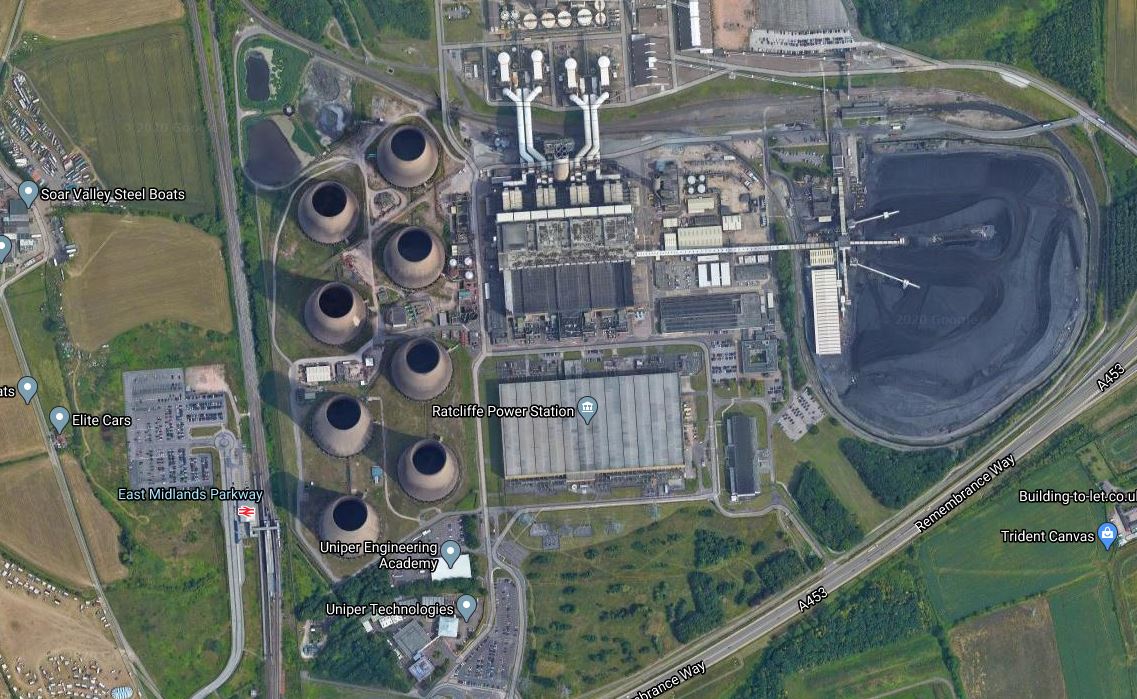
Ratcliffe-on-Soar power station is the eighteenth highest emitter of CO2 in Europe and will surely be closed soon.
But then, a power station, will have a good connection to the National Grid, ensuring there could be plenty of power for electrification, even after the current power station is long gone, as it will surely be replaced by another power station or energy storage.
East Midlands Parkway station is also well-connected.
- Clay Cross North Junction is 31 miles away.
- Derby is 10 miles away.
- Leicester is 18 miles away.
- Nottingham is 8 miles away.
- Sheffield is 47 miles away.
It should be possible to reach all these places on battery-power from East Midlands Parkway.
Electrification Between Leicester And East Midlands Parkway
The more I look at this stretch of the MML, the more I feel that this eighteen mile stretch should be electrified to create what could become a linear electrification island.
Consider.
- It is a 125 mph multi-track railway across fairly flat countryside.
- Connecting electrification to the grid is often a problem, but Ratcliffe-on-Soar power station is adjacent to East Midlands Parkway station.
- The section is only eighteen miles long, but this is surely long enough to fully-charge a battery train speeding to and from the capital.
- There are only four intermediate stations; Syston, Sileby, Barrow-on-Soar and Loughborough.
- The engineering for gauge clearance and electrification, looks to be no more difficult, than it will be between Kettering and Market Harborough.
- Between Leicester and Market Harborough stations is only sixteen miles.
- Between East Midlands Parkway and Nottingham is only eight miles, so it would be possible for Nottingham services to run without a charge at Nottingham station.
- Between East Midlands Parkway and Derby is only ten miles, so it would be possible for Derby services to run without a charge at Derby station.
- Between East Midlands Parkway and the shared electrified section with High Speed Two at Clay Cross North Junction is thirty-one miles, so it would be possible for Sheffield services to be run without using diesel, once the shared electrification is complete between Clay Cross North Junction and Sheffield.
- Battery-electric trains between East Midlands Parkway and Clay Cross North Junction could also use the Erewash Valley Line through Ikeston, Langley Mill and Alfreton.
- There would be no need to electrify through the World Heritage Site of the Derwent Valley Mills that lies between Derby and Clay Cross North Junction, as trains will be speeding through on battery power. Electrifying through this section, might be too much for some people.
- If the trains can’t switch between battery and overhead electrification power, the changeover can be in Leicester and East Midlands Parkway stations. However, I believe that Hitachi’s AT-300 trains can do the changeover at line speed.
The electrification could also be used by other services.
- Between Corby and Syston North Junction is only thirty-six miles, so it would be possible to run electric services between London St. Pancras and Derby, Nottingham and Sheffield via Corby, if the main route were to be blocked by engineering work.
- Between Peterborough and Syston East Junction is forty-seven miles, so it should be possible to run CrossCountry’s Stansted Airport and Birmingham service using battery-electric trains. If the train could leave Leicester with a full battery, both Birmingham New Street and Peterborough should be within range.
- East Midlands Railway’s Lincoln and Leicester service run for a distance of sixty-one miles via East Midlands Parkway, Nottingham and Newark stations. Electrification between Leicester and East Midlands Parkway, would mean there was just forty-two miles to do on battery power. An electrification island at Lincoln would charge the train for return.
Battery-electric trains with a range of between 55 and 65 miles would really open up the East Midlands to electric services if between Leicester and East Midlands Parkway were to be electrified.
London And Sheffield In A Battery-Electric Class 810 Train
This is speculation on my part, but I think this could be how trains run London to Sheffield before 2030.
- London to Market Harborough – 83 miles – Using electrification
- Switch to battery power at line speed.
- Market Harborough to Leicester – 16 miles – Using battery power
- Switch to electrification in Leicester station
- Leicester to East Midlands Parkway – 19 miles – Using electrification
- Switch to battery power at line speed.
- East Midlands Parkway to Clay Cross North Junction – 31 miles – Using battery power
- Switch to electrification at line speed.
- Clay Cross North Junction to Sheffield – 15.5 miles – Using electrification
Note.
- 118 miles would be run using electrification and 47 miles using battery power.
- Battery power has been used to avoid the tricky electrification at Leicester station and along the Derwent Valley.
I don’t believe any of the engineering will be any more difficult, than what has been achieved on the MML in the last year or so.
Nottingham
Consider
- Nottingham station would probably have access to a reliable electricity supply, as Nottingham is a large city of over 300,000 people.
- Nottingham station has a comprehensive network of local services.
- Nottingham station has an excellent connection to Nottingham Express Transit.
- Birmingham New Street is 57 miles away, via Derby and Burton.
- Burton-on-Trent is 27 miles away.
- Derby is 16 miles away.
- Grantham is 23 miles away.
- Lincoln is 34 miles away.
- Matlock is 33 miles away.
- Newark is 17 miles away.
- Sheffield is 40 miles away.
- Worksop is 32 miles away.
- Most of these local services are run by East Midlands Railway, with some services run by Northern and CrossCountry.
- Some services run back-to-back through Nottingham.
I feel very strongly that if charging is provided in Nottingham, when trains turnback or pass through the station, that many of the local services can be run by battery-electric trains.
Previously, I have shown, that if between Leicester and East Midlands Parkway is electrified, then services between London and Nottingham, can be run by battery-electric trains.
There is also a fall-back position at Nottingham, as the local services could be run by hydrogen-powered trains.
Sheffield
Sheffield station would at first glance appear to be very similar to Nottingham.
- Sheffield station would probably have access to a reliable electricity supply, as Sheffield is a large urban area of 700,000 people.
- Sheffield station has a comprehensive network of local services.
- Sheffield station has an excellent connection to the Sheffield Supertram.
But it looks like Sheffield station will see the benefits of electrification the Northern section of the MML from Clay Cross North Junction.
- The 15.5 miles of electrification will be shared with the Sheffield spur of High Speed Two.
- Currently, trains take sixteen minutes between Sheffield and Clay Cross North Junction.
- Electrification and an improved high-speed track will allow faster running, better acceleration and a small saving of time.
- A Sheffield train will be charged going to and from Sheffield, so will leave Clay Cross North Junction for Derby and the South with full batteries.
- There must also be opportunities for local trains running between Sheffield and Class Cross Junction North to use the electrification and be run by battery-electric trains.
Current destinations include.
- Derby is 36 miles away.
- Doncaster is 19 miles away.
- Huddersfield is 36 miles away.
- Leeds is 45 miles away.
- Lincoln is 49 miles away.
- Manchester Piccadilly is 42 miles away.
- Nottingham is 40.5 miles away.
Note.
- Doncaster, Leeds and Manchester Piccadilly stations are fully electrified.
- Work on electrifying Huddersfield and Leeds will start in a year or so, so Huddersfield will be electrified.
- I am firly sure that Lincoln and Nottingham will have enough electrification to recharge and turn trains.
- Some routes are partially electrified.
As with Nottingham, I am fairly sure, that local services at Sheffield could be run by battery-electric trains. And the same fall-back of hydrogen-powered trains, would also apply.
Sheffield And Manchester Piccadilly In A Battery-Electric Train
Consider.
- Once Sheffield and Clay Cross North Junction is electrified in conjunction with High Speed Two, at least five miles of the Hope Valley Line at the Sheffield end will be electrified.
- It may be prudent to electrify through Totley Tunnel to increase the electrification at Sheffield to ten miles.
- The route via Stockport is 43 miles long of which nine miles at the Manchester End is electrified.
- The route via Marple is 42 miles long of which two miles at the Manchester End is electrified.
There would appear to be no problems with running the TransPennine Express service between Manchester Airport and Cleethorpes using battery-electric trains, as from Hazel Grove to Manchester Airport is fully electrified and in the East, they can charge the batteries at Sheffield, Doncaster and a future electrification island at Cleethorpes.
The Northern service between Manchester Piccadilly and Sheffield could be run using battery-electric trains with some more electrification at the Manchester End or an extended turnback in Manchester Piccadilly.
Transport for Manchester has plans to run improve services at their end of the Hope Valley Line, with tram-trains possible to Glossop and Hadfield.
It would probably be worthwhile to look at the Hope Valley Line to make sure, it has enough future capacity. I would suspect the following could be likely.
- More electrification.
- More stations.
- Battery-electric trains or tram-trains from Manchester to Glossop, Hadfield, New Mills Central, Rose Hill Marple and Sheffield.
I would suspect one solution would be to use more of Merseyrail’s new dual-voltage Class 777 trains, which have a battery capability.
Sheffield And Nottingham In A Battery-Electric Train
Consider.
- Once Sheffield and Clay Cross North Junction is electrified in conjunction with High Speed Two, 15.5 miles of the route will be electrified.
- The total length of the route is 40.5 miles.
- There are intermediate stops at Dronfield, Chesterfield, Alfreton, Langley Mill and Ilkeston.
- Currently, journeys seem to take around 53 minutes.
I think it would be likely that the battery would need to be topped up at Nottingham, but I think a passenger-friendly timetable can be developed.
West Coast Main Line (Avanti West Coast)
Hitachi AT-300 Trains On The West Coast Main Line
The West Coast Main Line (WCML) is a mainly electrified and with some non-electrified extended routes. Avanti West Coast have chosen Hitachi AT-300 trains to cope with infrastructure.
- There will be ten seven-car electric trains.
- There will be thirteen five-car bi-mode trains.
As these trains will be delivered after East Midlands Railway’s Class 810 trains and East Coast Trains’ Class 803 trains, the following questions must be asked.
- Will the trains have the redesigned nose of the Class 810 trains?
- Will the bi-mode trains have four diesel engines (Class 810 trains) or three ( Class 800 trains)?
- Will the electric trains ordered by First Group companies; Avanti West Coast and East Coast Trains be similar, except for the length?
I would expect Hitachi will want the trains to be as similar as possible for ease of manufacture.
Electrification Islands On The West Coast Main Line
As with the ECML and the MML, there are a couple of large and smaller stations along the WCML, that can act as electrification islands to support either local services or long-distance services from London.
I will deal with the electrification islands, starting in London.
Watford Junction
Watford Junction station is already an electrification island, as it is fully electrified.
- St. Albans Abbey is 6.5 miles away.
- It would be possible to develop a battery-electric service to Aylesbury via Rickmansworth and Amersham, with is a distance of under 25 miles, if this was desired. I wrote about this service in Hertfordshire County Council’s Aspiration For A Watford Junction And Aylesbury Service.
Services around Watford Junction have possibilities to be expanded and improved using battery-electric trains.
Milton Keynes
Milton Keynes Central station is already an electrification island, as it is fully electrified.
- East West Railway services will call at Bletchley and not Milton Keynes.
- There may be a connection between East West Rail and High Speed Two at Calvert station, which is 15 miles away.
- Milton Keynes will get a service from Aylesbury, which is 22 miles away.
There may be possibilities to link Watford Junction and Milton Keynes via Aylesbury using battery-electric trains to give both places a connection to High Speed Two at a new Calvert station.

