A First Ride In A Class 385 Train
Yesterday, I finally got a ride in a Class 385 train between Linlithgow and Glasgow Queen Street stations.
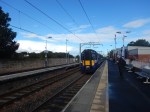
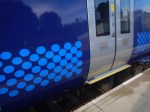
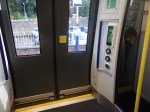
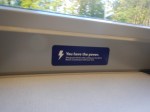

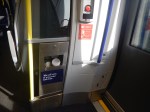
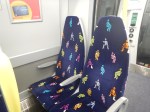
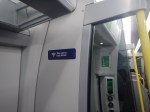
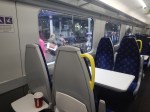
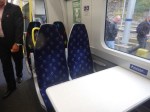
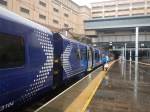
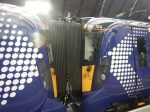
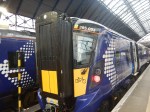
These are my observations.
Ride, Seats And Tables
I have written in many commuter trains all over Europe and these trains are very much towards the top in these important three areas.
Ride seemed to my innocent and not-so-well-padded posterior to be fine and very similar to the closely-related Class 800 trains.
It certainly didn’t pose any problems to this well-balanced stroke survivor, when I walked around.
Seats were certainly better than some other trains.
It was also pleasing to see lots of tables, which is very much a British tradition, that seems to have really kicked-off in the InterCity 125s.
In some ways sitting there, it reminded me of Great Western Railway’s Class 387 trains.
Both are certainly a very good standard for a commuter train with a journey up to perhaps ninety minutes.
Large Windows
The trains seem to follow Bombardier’s Aventras, Stadler’s Flirts and some other new trains in having large windows.
It would be very difficult to prove, but I wonder, when trains have big windows aligned with the seats, it increases ridership amongst occasional travellers. Anything that improves the experience must increase the change of repeat journeys.
Quirky But Good Interior Design
Some of the design details are quite quirky.
- The priority seat covers are different and make a bold statement.
- There are labels everywhere, advertising the features.
And there are good features too.
- Plenty of bins for the rubbish, that commuters discard.
- Sensible sized luggage racks.
- Wide lobbies and doors.
- There might be space between and under the seats for medium-sized cases.
The design is not bland and boring like a Class 700 train.
Spacious Trains
Someone described the trains, as having more space. I think that’s down to generous lobbies and large windows.
I also don’t think, the trains have not been designed for a maximum number of people, but for a maximum return on investment.
These are different things.
I suspect that a maximum return on investment is obtained, with a comfortably-full train, operating like that all day.
Overcrowded trains do the following.
- Encourage passenger to use other modes of transport.
- Lengthen station dwell times, which make trains late.
- Make it difficult for less able passengers to use the trains.
But getting the balance right between train capacity and route is a complex problem.
Step-Free Access
Hitachi don’t seem to do good step-free access, where wheel-chairs, buggies and wheeled-cases can just roll in and out.
These trains are no exception Although, it could be that ScotRail has so many different types of trains, that the standard platform height hasn’t been defined yet!
Stadler have said, that all their trains used by Greater Anglia and Merseyrail will have this property, so I would have thought that other manufacturers would follow.
Passengers will demand it!
Train Formations
There is a document on the Hitachi web site, which is entitled Development of Class 385 Semi-customised/Standard Commuter Rolling Stock for Global Markets, which gives insights into Hitachi’s thinking.
This is the introduction.
The Class 385 is based on the AT-200, which was developed for global markets with the aim of providing flexibility of configuration while making maximum use of standardisation. It is a semi-customised model of a type common in global markets, with fewer components and greater standardisation of components achieved by adopting the “mother design” developed for the AT-300 (a typical example of which is the Class 800) and competitive lead times achieved by shortening the specification-setting process.
Note the close relationship between the Class 385 and Class 800 trains.
The document gives a detailed graphic and states that the four-car units have the following formation.
- DMCLw – Driver Motor Composite Lavatory with 20 First Class seats, 15 Standard Class seats, a Universal Access Toilet and Wheelchair Space
- TPS – Trailer Pantograoh Standard with 80 Standard Class seats
- TS – Trailer Standard with 80 Standard Class seats
- DMSL – Driver Motor Standard Lavatory with 62 Standard Class seats and a space-saving toilet.
Note.
- The coach designations on the delivered trains has been taken from this page on scot-rail.co.uk.
- This gives a total of 257 seats as against 273 seats in Wikipedia.
- The difference of 16 seats is twice the number of doors, so it could be that Hitachi have squeezed in a few more seats, between the provisional and final design.
The three-car trains would appear to have the following formation.
- DMSLw – Driver Motor Standard Lavatory with about 50 Standard Class seats, a Universal Access Toilet and Wheelchair Space
- TPS – Trailer Pantograoh Standard with 80 Standard Class seats
- DMSL – Driver Motor Standard Lavatory with 62 Standard Class seats and a space-saving toilet.
Note.
- This article in Rail Magazine, says that all trains have Universal Access Toilets and two wheelchair spaces.
- This gives a total of 192 seats as against 206 seats in Wikipedia.
- Add in two seats for each of the six doors and the difference is two seats.
I should have read the numbers from the side of the train on my visit to Scotland.
If you type “Class 800 regenerative braking” into Google, you will find this document on the Hitachi Rail web site, which is entitled Development of Class 800/801 High-speed Rolling Stock for UK Intercity Express Programme.
This is a paragraph.
Trains have a unit configuration of up to 12 cars,
including the ability to add or remove standardized
intermediate cars and the generator units (GUs)
(generators with diesel engines) needed to operate
commercial services on non-electrified lines. Along
with the A-train concept, developed in Japan, the
new rolling stock is also based on technology from the
Class 395 rolling stock developed by Hitachi for the
UK High Speed 1 that entered commercial operation
in 2009, providing compatibility with UK railway
systems together with high reliability.
This is also said about the Automatic Train Identification Function.
To simplify the rearrangement and management
of train configurations, functions are provided for
identifying the train (Class 800/801), for automatically
determining the cars in the trainset and its total length,
and for coupling and uncoupling up to 12 cars in
normal and 24 cars in rescue or emergency mode.
It’s all very Plug-and-Play.
Although, these two extracts come from a document describing the Class 800 trains, both these trains and the Class 385 trains are members of the Hitachi A-Train family.
If you look at the train formations of Class 800 trains, Wikipedia gives them as.
5-car: DPTS-MS-MS-MC-DPTF
9-car: DPTS-MS-MS-TS-MS-TS-MC-MF-DPTF
Note.
- DPTS and DPTF are Driver Pantograph Trailer cars, with Standard and First Class seats respectively
- MS, MF and MC are Motored cars with Standard, First and Composite(mixed Standard and First Class), seats respectively.
- TS is a Trailer car with Standard Class seats.
Trains use two standard Driver cars and then add a number number of Motored and Trailer cars in between, to get the required train length and capacity.
I would be very surprised, if the formations of the Class 385 train were to be very different.
There appear to be the following Driver cars.
- DMCLw – Driver Motor Composite Lavatory with 20 First Class seats, 15 Standard Class seats, a Universal Access Toilet and Wheelchair Space – Used in four-car trains
- DMSLw – Driver Motor Standard Lavatory with about 50 Standard Class seats, a Universal Access Toilet and Wheelchair Space – Used in three-car trains
- DMSL – Driver Motor Standard Lavatory with 62 Standard Class seats and a space-saving toilet – Used in both three- and four-car trains.
As with the Class 800 trains, I suspect you can create a train of the required length and capacity by adding the appropriate number of trailer cars between the two driver cars.
According to this page on the Hitachi web site, the AT200 trains have an operating speed of up to 125 mph. So perhaps for the greaster power, that might be needed for higher speeds, motored cars can be added as well.
I am puzzled about the length of the current trains.
At the present time, the Glasgow Queen Street to Edinburgh Waverley route can accept seven-car trains, which are formed from a three-car and a four-car working together.
But when platform extensions are complete at Glasgow, eight-car trains will be possible, which will be formed of two-four-car trains.
So why didn’t Abellio ScotRail use a Crossrail-like solution, where seven-car trains were ordered and these were then lengthened by an extra car, after the extension of the platforms?
- The current train formations waste space with two unused drivers cabs in every train.
- Do trains running on the half-hour journey across Scotland need two Universal Access and two space-saving toilets?
By comparison Abellio Greater Anglia‘s ten-car Class 720 trains have one Universal Access and two space-saving toilets for 1,145 seats. The seats/toilet for the three trains are as follows.
- 10-car Class 720 train – 382
- 3-car Class 385 train – 103
- 4-car Class 385 train – 137
ScotRail obviously need both three- and four-car Class 385 trains to replace some of the older trains on other routes.
I do find it strange, that two divisions of Abellio have gone for such different solutions.
Gangways
The pictures show that the train has end gangways.
I intended to walk through between the two trains, but the train was full and I couldn’t get near the door.
If the trains were the correct length for the route, then you have to wonder, if the complication of gangways between trains is worth the extra weight, expense and driver’s visibility problems.
But the gangway does aid staff access between different trains.
But I do wonder, if the ability to add and remove cars that seems to be a feature of Class 385 trains, means that gangways between trains may be an unnecessary feature.
Consider these other train orders.
- Most Aventra orders do not have gangways.
- All Siemens Desiro City orders do not have fixed gangways, although the Class 717 train has a rather ingenious emergency end gangway.
- CAF Civity Class 397 trains and Class 331 trains do not have end gangways.
Gangways seem to be going out of fashion, unless they are needed fpr emergency use.
If some of ScotRail’s services need trains with gangways, these could always be run by the current Class 380 trains.
Conclusions
The Class 385 trains appear to be a well-designed train, that should do an excellent job.
But I do question the need for the gangways between trains.
It should also be born in mind, that Scotland is planning more electrification, which will need more trains.
By perhaps converting pairs of four-car sets into eight-car trains, by replacing two Driver cars with appropriate Trailer or Motored cars, two more complicated Driver cars would be liberated, which could form the basis of the extra trains.
There are probably endless combinations, one of which will give ScotRail, the optimal fleet, that will deliver the required services for the best price.
Scotland’s New Railway Race
There have been five railway races involving Scotland over the years.
- London To Edinburgh in 1888
- London To Aberdeen in 1895
- London To Edinburgh in 1901
- LNER and LMS
- British Rail
This article in Rail Engineer is entitled Full Glasgow To Edinburgh Electric Service In July.
The article suggests this could be another railway race with Scotland involved.
In the red corner are the devious English, who are entering a series of redundant Class 365 trains, that nobody else wants.
- They are thirty-year-old trains
- They were built by British Rail.
- To improve their relationship with drivers, WAGN fitted them with cab air-conditioning. Marketing then named them Happy-Train, as the air-conditioning inlet, had given them a smile.
- It has also been rumoured that their class number was chosen to give the air of year-round reliability.
To gain an advantage, the first train was actually sneaked into Glasgow by road, as no-one was sure that they could fit the routes to Scotland.
To get the trains ready for Scotland, work is being done by the German company; Knorr-Bremse Rail Services at Springburn in Glasgow.
The Scottish entry in the blue corner, is the Hitachi Class 385 train, which is manufactured mainly in Japan and screwed together at Newton-Aycliffe.
Unfortunately, the train was designed for drivers with Asian eyesight and the curved windows in the cabs, give unreliable images at night, with the average Scottish driver, even if they’ve been training hard on Irn-Bru!
It is hoped that new windscreens will be approved for use soon!
So the race is on to see who can get their train into service first.
As to the verdict on which train is better, I think we could be seeing a split decision.
Glasgow will prefer one train and Edinburgh will prefer the other!
The Scotsman Gives A Warm Welcome To The Class 365 Trains
This article on the Scotsman is entitled New ScotRail Trains To Ease Crush On Edinburgh-Glasgow Line.
The article also has a rather interesting picture of a lorry-mounted train negotiating heavy traffic in Glasgow.
It broadly welcomes the Class 365 trains, and this is a comment from a rail group.
Andrew Stephen, of rail lobby group RailQwest and the Cumbernauld Commuters Association, said: “The Class 365s are perfectly serviceable and comfortable trains – and it is fortunate more than a few four-car sets are available.”
The article also confirms that ten trains will be going North.
As there are a total of forty of the Class 365 trains, that will be replaced by Class 387 trains and new Class 700 trains, I wonder where the others will be deployed.
NR Set To Reach Major Shotts Electrification Milestone Over Easter
The title of this post is the same as that of this article in Rail Technology Magazine.
I’m not totally sure, but it looks like they will complete the overhead wires between Edinburgh and Glasgow along the Shotts Line.
They certainly seem to be moving on apace with electrification in Scotland, unlike around the North West of England.
Could Hitachi Produce A Bi-Mode Class 385 Train?
Before I start, I’ll ask a simple question.
Is It Advantageous To A Train Operating Company (TOC) To Have Electric And Bi-Mode Versions Of The Same Train?
Their are two pairs of electric and bi-mode train types in the IK.
- The bi-mode Class 800 trains and the electric Class 801 trains.
- The bi-mode Class 769 trains and the electric Class 319 trains.
As the latter was specified jointly by a TOC and a ROSCO, I’m sure that it is advantageous for two closely-related versions to exist.
Hitachi’s New Trains
Hitachi will soon have four of their new train types in service in the UK.
Class 800 Trains – Electro-Diesel
Class 800 trains will soon be in service with Great Western Railway. The July 2017 Edition of Modern Railways says this.
The RMT union’s National Executive Committee has accepted Great Western Railway’s latest offer detailing the operational procedures proposed for the new Inter-City Express (IEP) due to start entering service in October.
So if that it is an affirmative, trains could be running by the end of the year!
Class 801 Trains – Electric Only
Class 801 trains will soon be in service with Virgin Trains East Coast. Wikipedia says service entry is planned to be 2017, but there is nothing definite on the Internet.
Although the new trains did make the cover of the July 2017 Edition of Modern Railways.
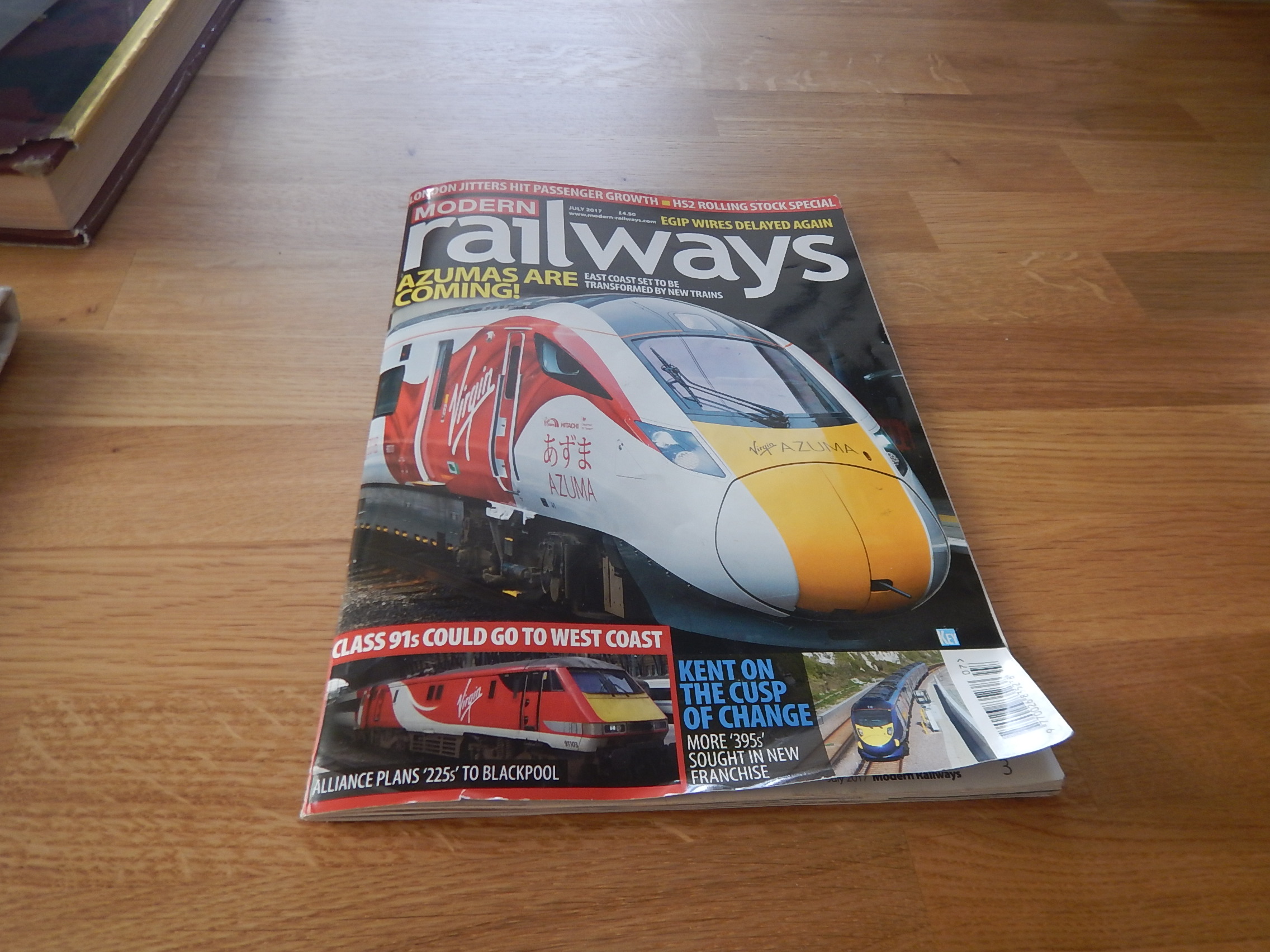
Note the headline of Azuma’s Are Coming!
I suspect though, that Sir Richard Branson will hate to be seen to have his trains in service after Great Western Railway.
Class 802 Trains – Electro-Diesel
Class 802 trains are just a version of the Class 800 trains, built not in Newton Aycliffe, but in Pistoia in Italy.
The July 2017 Edition of Modern Railways reports that two pre-production trains built in Japan arrived in the UK in June for testing, so the in-service date of December 2018 quoted in Wikipedia, should be achieved.
Modern Railways says this about the trains.
A key element in enabling fast delivery and subsequent entry into service is that the Class 802 trains are technically very similar to the IEP (Class 800/801) trains on order for both Great Western and East Coast services, featuring the same design of seats, kitchens and most components. Hitachi expects this to reduce significantly the time required for approvals prior to operational service. Key technical differences to the earlier lass 800 trains are different engine management software, enabling higher power output (700kW) from the MTU diesel power packs fitted with larger 120-litre urea (emission control) tanks.
Other features include larger fuel tanks, more powerful brakes and special features to cope with sea water spray at Dawlish.
Class 385 Trains – Electric Only
Class 385 trains are the babies of the four trains, being intended for Scottish routes between and around Edinburgh and Glasgow. Wikipedia gives an in-service date of December 2017.
Hitachi Have A Lot To Digest
Hitachi have the following trains on order for delivery by the end of 2019.
- 46 x 3-car Class 385 trains
- 24 x 4 -car Class 385 trains
- 46 x 5-car Class 800 trains
- 34 x 9-car Class 800 trains
- 12 x 5-car Class 801 trains
- 30 x 9-car Class 801 trains
- 46 x 5-car Class 802 trains
- 14 x 9-car Class 802 trains
That is a total of 252 trains involving a total of 1,456 carriages, which will have been built in three difference factories.
But at least they are all based on the same Hitachi A-train concept!
The Design Of The Class 80x Train
In Do Class 800/801/802 Trains Use Batteries For Regenerative Braking?, I did more than discuss the posed question.
I looked at the overall concept of the trains, as discussed in this document on the Hitachi Rail web site, which dates from 2014 and is entitled Development of Class 800/801 High-speed Rolling Stock for UK Intercity Express Programme.
The document provides this schematic of the traction system.

Note BC which is described as battery charger.
Reading the document in detail, I discovered the following facts.
- The 80x trains are effectively Plug-and-Play and automatically detect the configuration of a train, be it a single unit or two coupled together.
- Train length can be adjusted between five and twelve cars, by just adding or removing trailer or motor cars.
- In certain situations like train recovery, train length can be up to 24-cars.
- Coupling and uncoupling of two trains takes less than two minutes.
- Passengers are counted automatically. By a tiny Japanese robot walking up and down?
- Trains can be locomotive-hauled.
- The all-electric Class 801 train has at least one diesel power-pack per train for hotel power and emergency recovery in case of complete power failure.
The big omission is any talk of how regenerative braking is handled.
I have come to the conclusion, that the energy returned from the traction motors on braking goes through the APS (auxiliary power supply) to be used as hotel power, with any spare energy being stored using the battery charger in an appropriately-sized battery.
As a life-expired Control Engineer, I still know enough to realise that there is scope for a really intelligent control system, which takes note of myriad inputs to run the train in the most energy-efficient manner.
Inputs could include.
- Train position from GPS.
- Train route and terrain.
- Outside weather conditions
- Passenger load and expected journey patterns.
- Signalling and other train issues.
- Is electrification available?
- How much fuel is on board?
The train could be driven against the following.
- Minimum use of the diesel engines.
- Maintaining an appropriate level of power in the batteries.
- Optimal station stopping and restarting profiles.
- Driving to the terrain.
But probably most importantly, the trains will make sure they stick to the timetable.
Driving trains will be going through the revolution that flying planes went through some decades ago, where the pilots’ roles became much more of a supervisory one. But , of course they were there for emergencies or unexpected situations.
So How Do The Class 385 Trains Compare?
There is a document on the Hitachi web site, which is entitled Development of Class 385 Semi-customised/Standard Commuter Rolling Stock for Global Markets, which gives insights into Hitachi’s thinking.
This is the introduction.
The Class 385 is based on the AT-200, which was developed for global markets with the aim of providing flexibility of configuration while making maximum use of standardisation. It is a semi-customised model of a type common in global markets, with fewer components and greater standardisation of components achieved by adopting the “mother design” developed for the AT-300 (a typical example of which is the Class 800) and competitive lead times achieved by shortening the specification-setting process.
Note the close relationship between the Class 385 and Class 800 trains.
The Hitachi document gives a schematic of the Class 385 traction system.
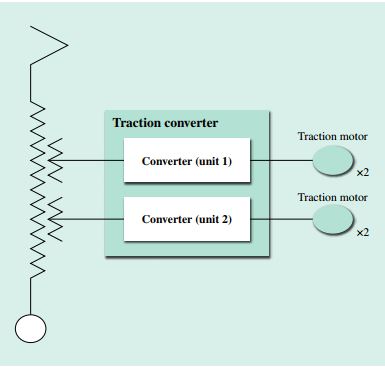
Compared with that given for the Class 80x train, it is a lot simpler, with each bogie having its own converter unit. This is to allow both the three-car and four-car trains to have similar electrical layouts, that is easily modified for the shorter train, which has a smaller number of traction motors to save one and a half tonnes.
The document also says this.
The Class 385 uses the same main electrical components as the AT-300. However, the following electrical systems were adopted for use in the Class 385.
It then describes how the traction, brake and door systems have been modified.
In this Hitachi promotional video, power sockets and wi-fi are promised.
So where is the auxiliary power supply to power all these features and how is regenerative braking handled.
In the data sheet for the AT-200 train on the Hitachi web site, the following details are given.
- Three to twelve cars.
- 100 to 125 mph operating speed.
- Dual Voltage (25KVAC / 750 VDC / Battery)
As the Class 385 train is a member of the AT-200 family, could it be that like the Class 80x, it has similar electrical layout to the larger train?
So I have come to the conclusion that the regenerative braking energy goes to a battery, that is used to provide hotel power.
How Big Would A Battery For A Class 385 Train Need To Be?
In How Big Would Batteries Need To Be On A Train For Regenerative Braking?, I work through the calculation of the kinetic energy in a four-car Class 710 train, which would be Bombardier’s equivalent to a Class 385 train.
I said this.
To calculate the kinetic energy in the train, which will have to be transferred to the battery, we need the mass of the train and its velocity.
I’ll start with the velocity of the train.
As it approached a station, it will be at whatever is the appropriate line speed, which to make things easy I’ll assume is 100 kph or just under 28 metres per second.
In most cases after stopping and discharging and loading a few passengers, it will probably return to a similar line-speed to go to the following station.
The mass of each car of an Aventra, is found at several places on the Internet, including this entry in Wikipedia iwhich gives it as 30-35 tonnes. So the four-car Class 710 train could have a mass of 130 tonnes. Add 100 passengers at an average of 80 kg. each and this would make the mass 138 tonnes
Applying the standard formula gives a kinetic energy of 53240741 joules or in common-or-garden units 14.8 kilowatt hours. So the energy of an Aventra going at 100 kph could power a one bar electric fire for fifteen hours.
If you take the battery in one of London’s Routemaster buses, that has a capacity of 75 kWH.
As the specification for an Hitachi At-200 includes a battery option, fitting has probably been engineered.
Could A Diesel Powerpack Be Fitted Underneath A Class 385 Train?
I can only suppose that just as the Class 801 train has an diesel generator under one car, that the Hitachi design for the AT-200 train has provision for this feature in case an operator requires it.
If as I believe the Class 385 train has a similar electrical layout to the Class 80x trains, then incorporating a small diesel generator would not be a major redesign of the train.
But having a Bi-Mode Class 385 train might clinch a few sales.
Would A Bi-Mode Class 385 Train Have Uses?
There is no use building a train, that doesn’t have any uses.
The Class 385 train has been built with very careful considerable for weight. The design document says this.
Railway businesses in the UK include ROSCOs, TOCs, and track maintenance and management companies.
The TOCs pay fees, called track access charges, which are based on the weight of rolling stock and the distance travelled, and are obliged to pay the track maintenance and management company for the electrical power consumed in train operation. Because lighter trains put less load on the track, they incur lower track access charges. As lighter trains also consume less electrical power, there was strong demand from the TOC to make the rolling stock lighter, right from the pre-contract stage.
So if the bi-mode version of the Class 385 is a bit heavier because of the diesel powerpack, the train will be more expensive to run, which is probably acceptable to the TOC.
Looking at Scottish rail routes, there are several services in the area between Edinburgh and Glasgow, which will be run on partially-electrified lines.
Conclusion
Due to the modular nature of these Hitachi trains, I wouldn’t be surprised if it is possible to fit a small diesel power pack under a Class 385 train.
Faster Trains For Slower In Scotland
In my analysis of the Kentish routes in Kent On The Cusp Of Change, I wrote a post called Elimination Of Slow Trains.
In the post, I said that the 75 mph Class 465 trains, were slowing services and reducing capacity, based on an article called Kent on the Cusp of Change in the July 2017 Edition of Modern Railways.
I proposed a minimum specification for trains on Kentish routes.
- 100 mph capability
- Designed for a fast station stop with minimum dwell-time
- Regenerative braking
- Efficient traction motors
- Wi-fi in all classes
- The capability to fit boosters for 4G signals.
Southeastern’s Class 465 trains fail on all points.
In Scotland, there is a new batch of Class 385 trains on order to work the new electrified services between Edinburgh and Glasgow.
Under Operation in the Wikipedia entry for the trains, this is said.
The new trains will also operate on the newly electrified Croy, Dunblane and Shotts lines as well as replacing existing stock on the currently electrified Carstairs, North Berwick and Cathcart Circle Lines. This will allow for the replacement of ScotRail’s Class 314 fleet, and allow for the cascading of a number of Class 156, Class 158 and Class 170 units.
The Class 314 trains are even older and less capable than Southeastern’s Class 465 trains.
So what will be effect on services in Scotland, where the Class 385 trains replace the Class 314 trains?
If you look at the North Berwick Line trains between Edinburgh and North Berwick stations take around 33-34 minutes, when run by 100 mph Class 380 trains. Under Rolling Stock in the Wikipedia entry for the North Berwick Line, this is said.
From December 2017, ScotRail services on the North Berwick Line will begin to use new Class 385 units. Services will be formed of six coaches (two 3-car units) following growing passenger numbers (the platform at North Berwick was extended in early 2016 to accommodate these new longer trains). In the short term Class 380/1s (four car) will be removed from the line and two Class 380/0s (three car) used instead until the Summer and back again to four car units until December. Once the new units arrive, The Class 380 units will be cascaded to increase capacity on the Ayrshire and Inverclyde Lines to and from Glasgow making all services on these routes operated by Class 380s.
So could it be that although both Class 380 and 385 trains are 100 mph units, the newer trains have a better station stop performance, which enables the timings on the line to be reduced and possibly allow the doubling of frequency of trains to two trains per hour?
Conclusion
Modern 100 mph trains with the ability to execute fast stops at stations are good for operators and passengers alike.
Network Rail Announces Electrification Of The Schotts Line
This article in Rail Technology Magazine is entitled Network Rail awards Carillion £49m Shotts electrification contract.
This is the first two paragraphs.
Network Rail has agreed a contract with Carillion Powerlines Ltd to deliver the electrification of the Shotts Line between Holytown Junction and Midcalder Junction.
The £49m contract will see the delivery of 74km of electrified railway as part of the Scottish government’s wider £169m investment in the line between Edinburgh and Glasgow.
Electrification of The Schotts Line will provide a fourth electrified line between Edinburgh and Glasgow.
From hundreds of miles to the South, it looks a good choice.
- The route is effectively in three sections, with only the central section between Holytown Junction and Midcalder Junction, needing to be wired.
- The bridges that need to be raised are already being worked on.
- The route goes to Glasgow Central rather than Glasgow Queen Street.
- The Class 385 trains needed are already being built in Newtown Aycliffe.
It certainly seems that the planning of electrification in the Scottish Lowlands is being better managed that that on the Great Western Railway.
What Next For Class 385 Trains?
Scotrail have ordered a fleet of Class 385 trains, which will be built by Hitachi at Newton Aycliffe in the North-East of England.
If you look at Scotrail’s network, there are a lot of lines, where new trains will be needed in the next decade.
Most of these lines are not electrified, so will the Class 385 train, be available in a version say, that would handle lines like the Borders Railway?
Electrifying all lines will be costly and the Heritage Taliban, may object to overhead gantries marching all over Scotland.
Class 800 And Class 801 Trains
The Class 800 trains are electro-diesel trains with a range depending on the size of the fuel tanks, whereas the Class 801 trains are the pure electric version.
Like the Class 385 trains, they are members of Hitachi’s A-Train family, so I suspect that if asked to supply a bi-mode Class 385 train, that Hitachi know the route to create such a train.
Trains With Batteries
I have written two posts about the Japanese using batteries in electric trains.
- Japanese Trains With Batteries describes how some Tokyo Metro trains have batteries to get them to the next station, in an emergency situation.
- Battery Trains In Japan describes how battery trains are to be used on the OGA Line.
The Japanese technology, doesn’t seem as comprehensive as that I wrote about in Bombardier’s Plug-and-Play Train, but I’m sure that Hitachi must be thinking about trains with batteries,
Conclusion
I am inevitably drawn to the conclusion, that Hitachi will come up with a train, that can run say between Edinburgh and Aberdeen, substantially under its own power, aided by overhead electrification where it exists.
ScotRail In Trouble
This article on Rail News is entitled Major improvement plan for struggling ScotRail. This is the first paragraph.
The ScotRail Alliance has unveiled a plan to improve performance, after managing director Phil Verster had described the task of upgrading the network while running trains day-to-day as like ‘performing open heart surgery while doing a marathon’.
After my troubles at the weekend on n Northern Rail with overcrowded trains around Blackburn, I wonder if a pattern is emerging.
Consider.
There is a lot of work going on in Scotland to electrify Glasgow to Edinburgh under the EGIP scheme.
There are delays to the electrification.
ScotRail will soon be receiving a a new fleet of Hitachi Class 385 trains.
There has been a union dispute.
Similar patterns are seen across the network, including in the following places.
- Manchester Area
- Northern England
- Southwards from London
- Thames Valley
- Valley Lines In Wales
I do wonder if the announcement of jam, milk and honey in a few years, prompts people to anticipate the new services and the passenger numbers grow, prior to the new services.
All this probably says, is that we should have a long term plan for the railways, which doesn’t get cut back, the next time government has a budget crisis.
 The Anonymous Widower