Electric Cars are Coming
Well at least in the car park halfway between my house and Dalston Junction station, there is a charging station.
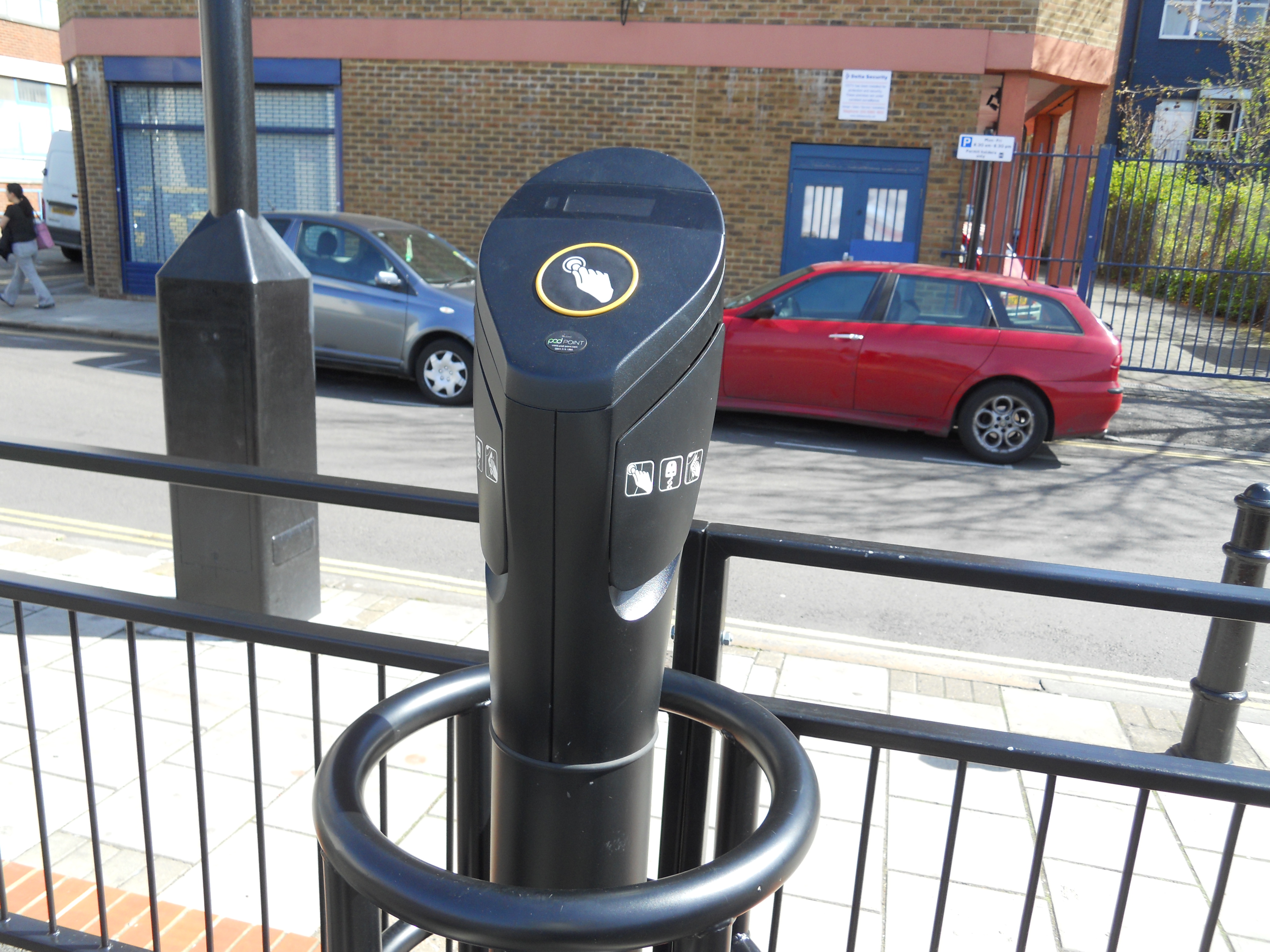
Pod Point in Bentley Road Car Park, Dalston
It’s called a Pod Point and it looks from the web site that the company has some interesting ideas.
Free Phone Charging
As I walk along the towpath of the Regent’s Canal above the 400kV cables that power the City of London, I just wonder if I could use the magnetic fields from the cables to create enough power to charge my mobile phone.
Walking to Victoria Park
Yesterday, I started to walk to Victoria Park to see the site where my son’s ashes were scattered on the anniversary of his death last week.
It is a pleasant walk along the Regent’s Canal. A first surprise was this cafe.

Cafe on the Regent's Canal
Yesterday, the canal was busy with walkers and cyclists of all ages and type. So the cafe shouldn’t be too short of punters.
Good luck to them! I think they’ll be the first of many hostelries on the canal. After all, the canal will be one of the main walking and cycling routes to the Olympics at Stratford.
I also passed the new bridge that takes the East London Line over the canal, just south of Hoxton station.

The East London Line Crossing the Regents Canal
I use the line probably once a week these days and when they finish off Dalston Junction station, I will use it even more. If the line has a problem, it is that it is too successful and has started to get a bit crowded even in the middle of the day. But any good transport project, whether it is a railway, road or a bus route, should attract new customers and it would appear that the East London line has done this.
The Regent’s Canal forms part of the Jubilee Greenway as this sign shows.
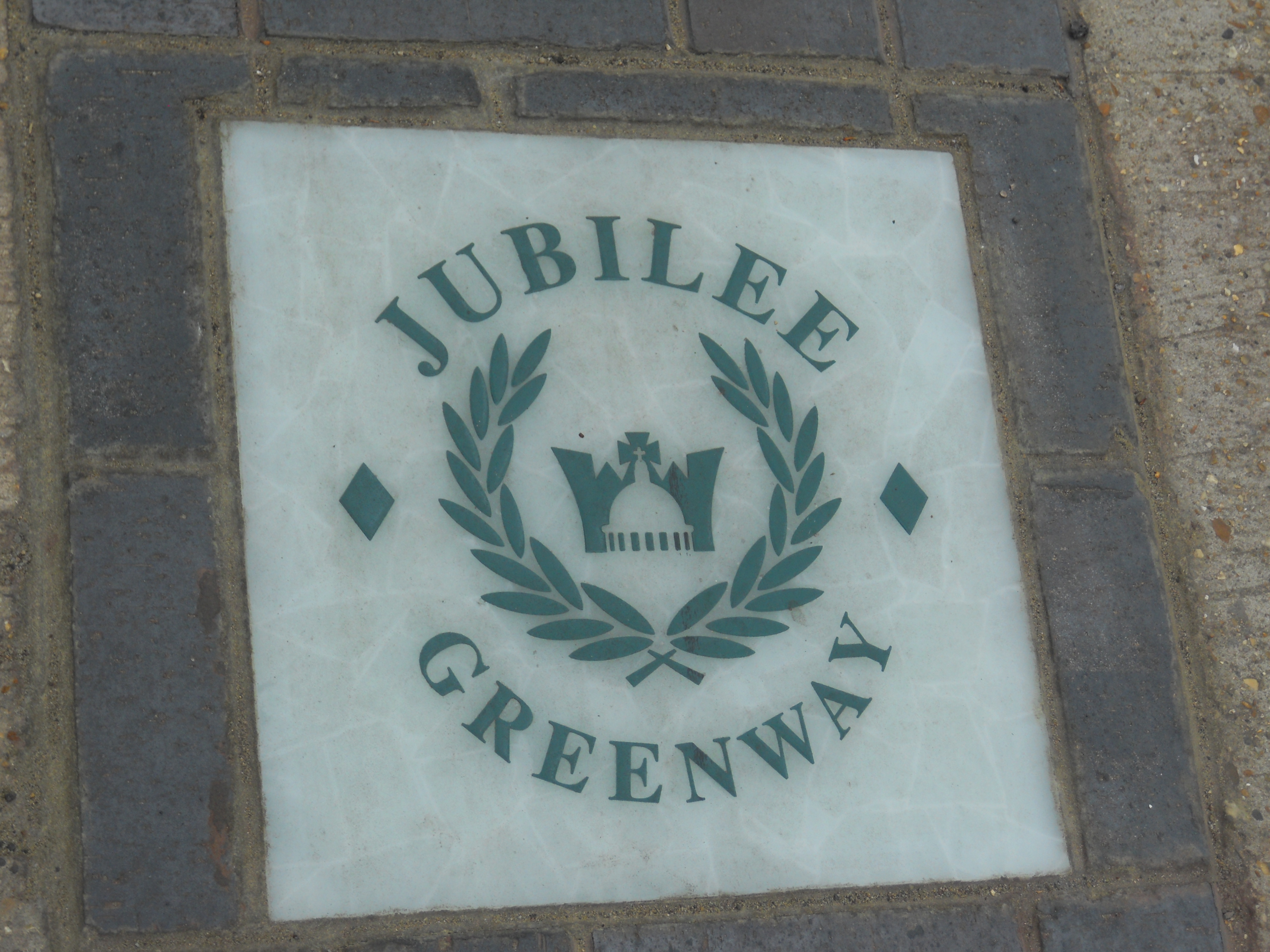
Jubilee Greenway Sign on the Regent's Canal
The Greenway runs all the way from Buckingham Palace to the Olympics and then in a circle around London. With due respect to the Queen’s fitness, I can’t see her walking all the way at her age. But it would make a wonderful celebration of her Jubilee to traverse the canal part of the route in a proper Royal Canal Boat.
The canal was busy with traffic, despite the fact that all boats need to transfer through the various locks. I took this picture as I walked through industrial Bethnall Green.
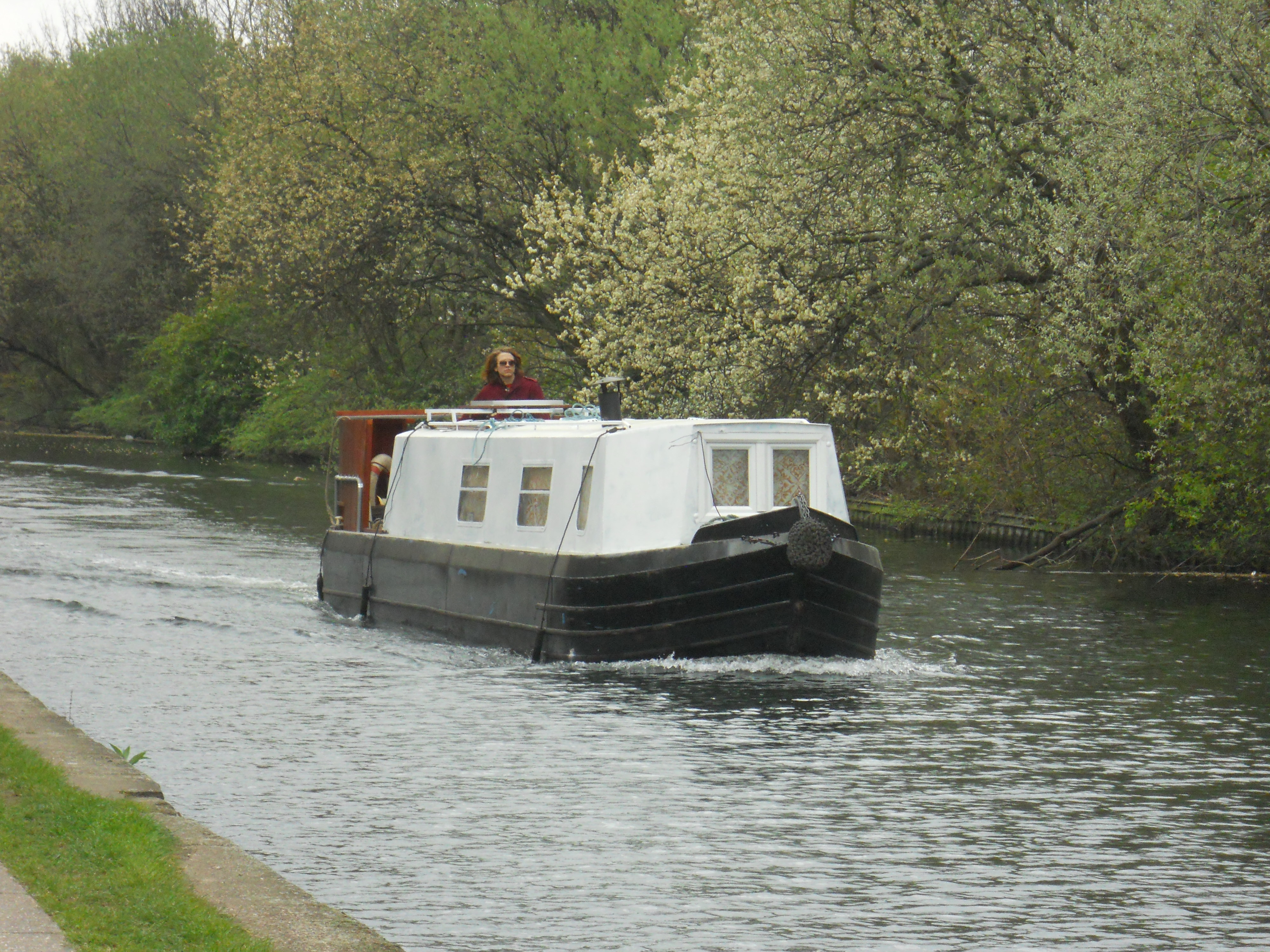
Sailing Through Industrial Bethnall Green
The picture wasn’t chosen deliberately, but it does show how the canal is a long green oasis cutting a bold path across London. Is that spring blossom on the trees?
But it wasn’t just expensive boats. I took this picture just after Acton’s Lock.

Kids on the Regent's Canal
The inflatable boat contained a group of kids and an instructor and they were having a great time, especially as they worked the locks. What better way is there to learn the history of East London, than to experience it from the canal?
There are various works going on to make Jubilee Greenway, one of the ways to get to the Olympics. I particularly liked this well designed entrance ramp and steps to the towpath.
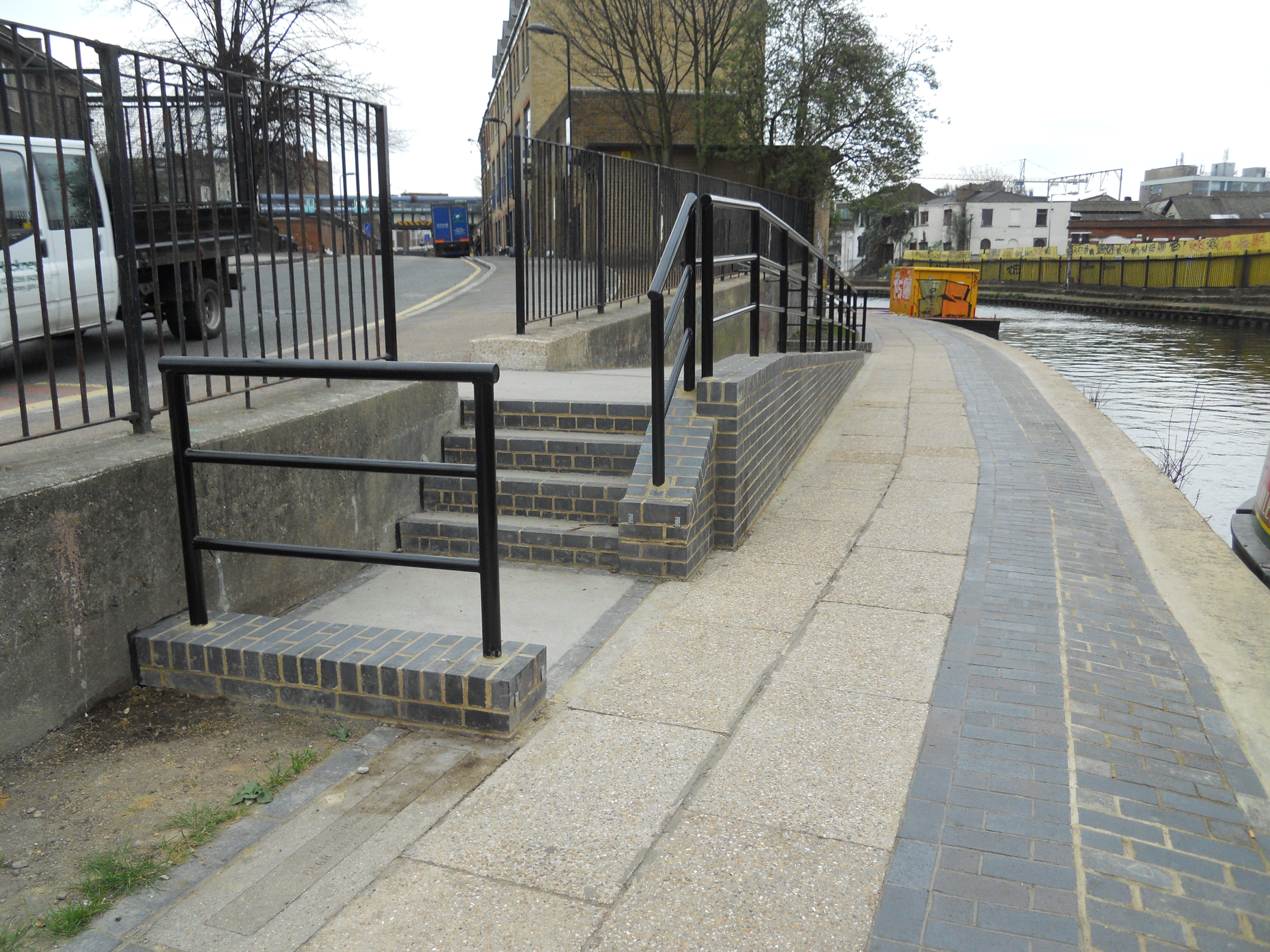
A Well-Designed Ramp and Steps
There is never an excuse for not using the best designs for even the most mundane things.
Note in this picture, you can see the slabs and bricks that cover the high-voltage electricity main, that takes the power to the City from East London. The boat moored at the end of the ramp is a workboat being used by the engineers upgrading this vital power line.
The Regent’s Canal follows Victoria Park for some distance and the park too, is being upgraded. This picture shows the bridge connecting the Park to Bethnall Green.
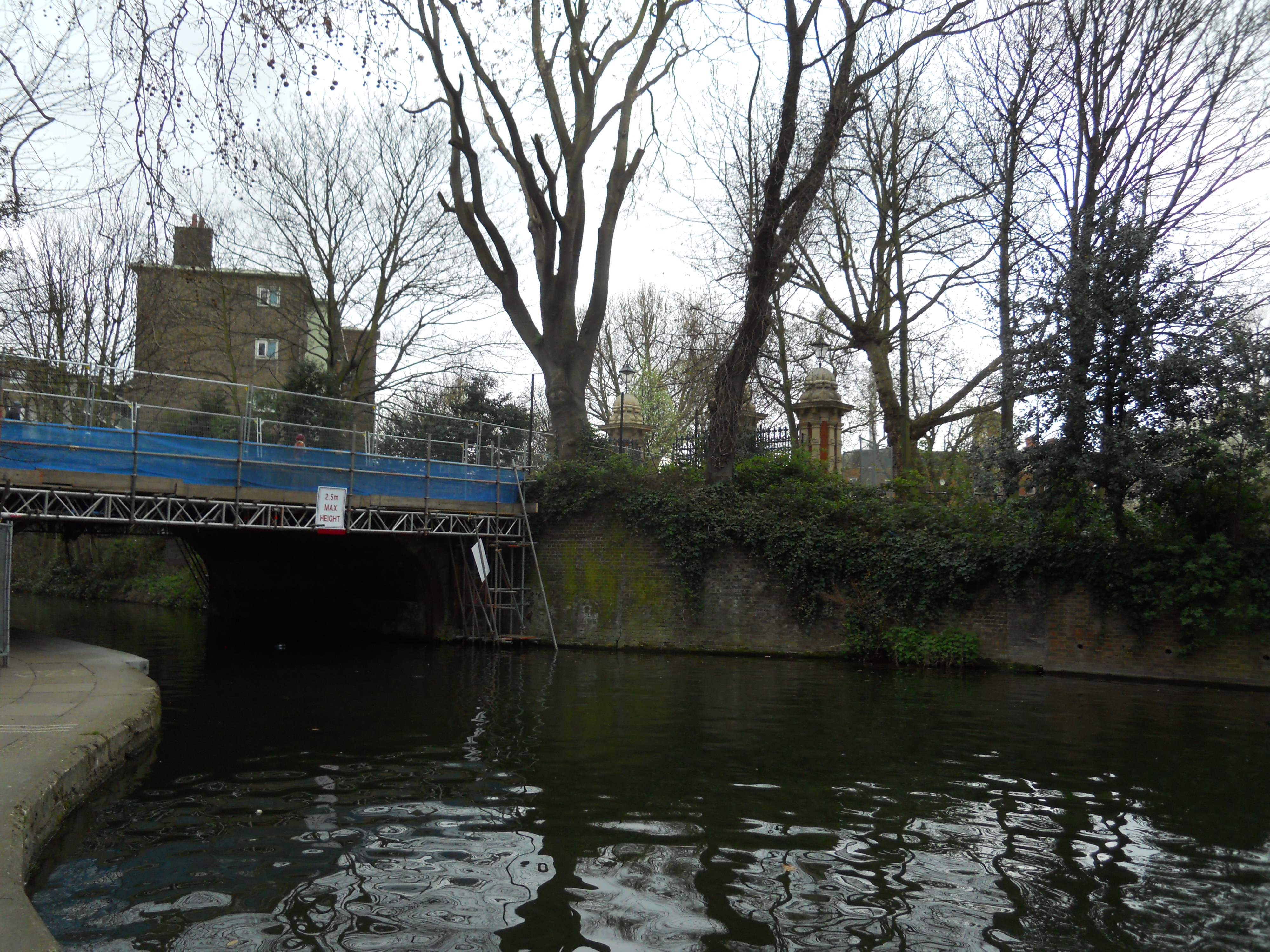
Entrance to Victoria Park
My kids used to go to the Gatehouse School nearby and used to walk over this bridge into the Park. At the moment due to the works the park isn’t totally accessible.
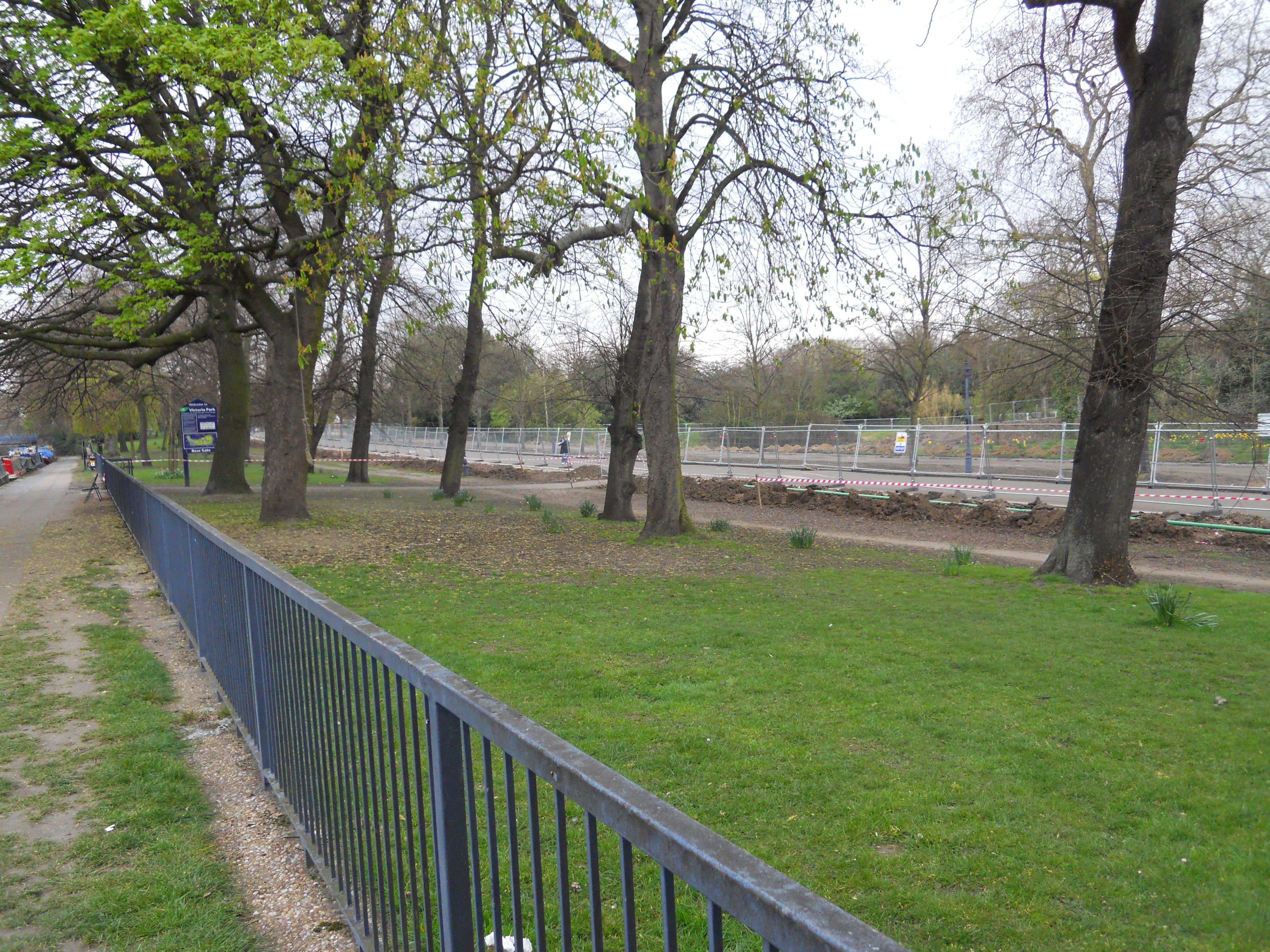
Works in Victoria Park
It will all be done for next year, when the park will be used as an Olympic viewing venue with big screens, a new cafe and lots of grass to sit on. Perhaps one of the best ways to go to the Olympics, will be to take a picnic to Victoria Park and then walk to the Olympics Park.
In some ways it is one of my favourite parks, and I can remember wheeling our granddaughter through the park with C many times in her pram. As it was also one of late son’s favourite spots it was entirely fitting that his ashes were scattered there.
I shall certainly use it as a venue to watch the Olympics, especially, as it is only about a hundred minutes walk from my house. Or if I feel lazy, it’s just one bus ride away from my local stop.
This sign gives the history of the park.
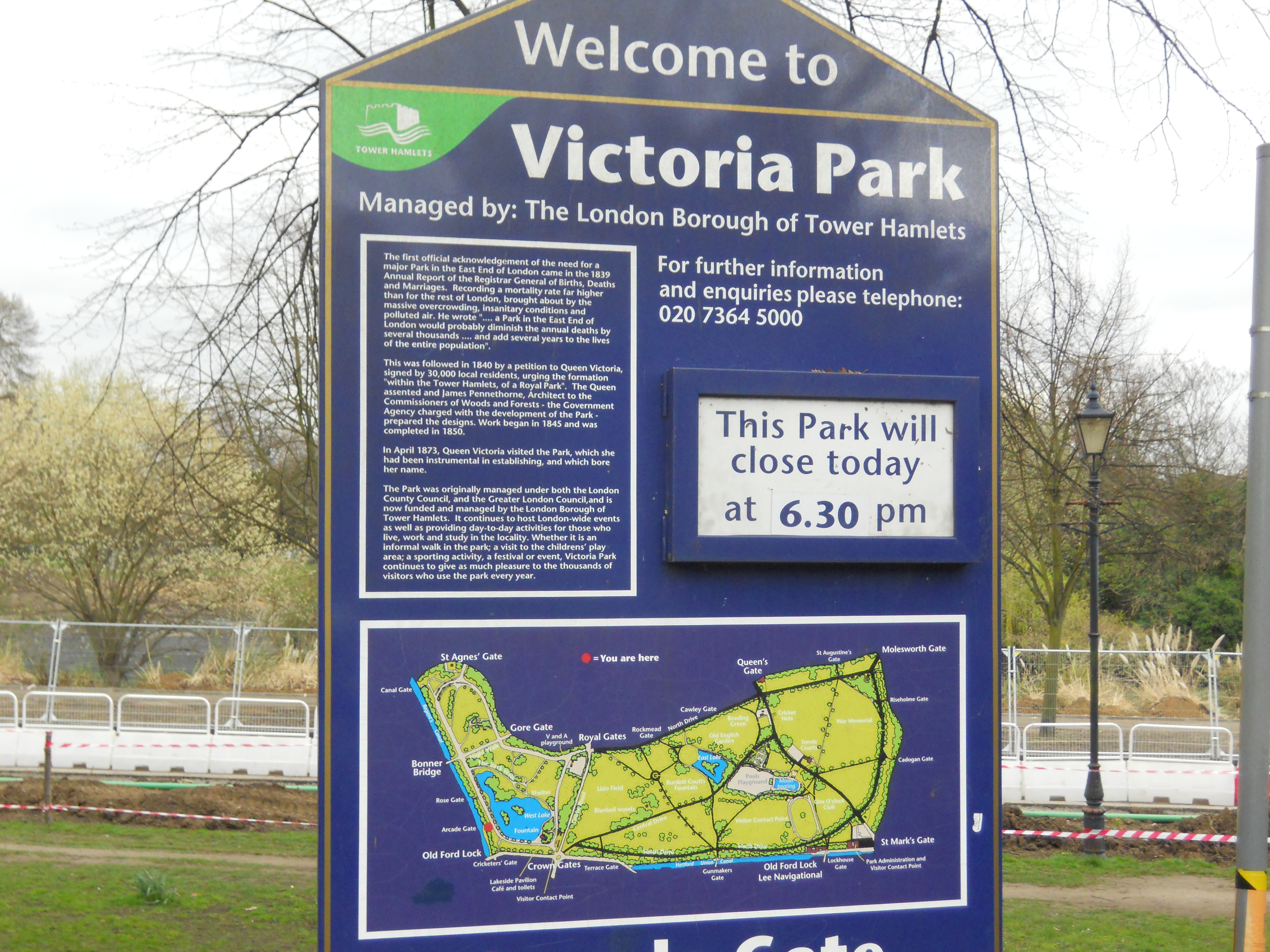
Victoria Park Sign
I’m certain that Queen Victoria would be very happy about the state of the park she supported and allowed to be named in her honour.
How The City of London Gets Its Electricity
I did mention briefly in an earlier post about this, but today as I walked from home along the busy towpath of the Regent’s Canal I saw this notice.
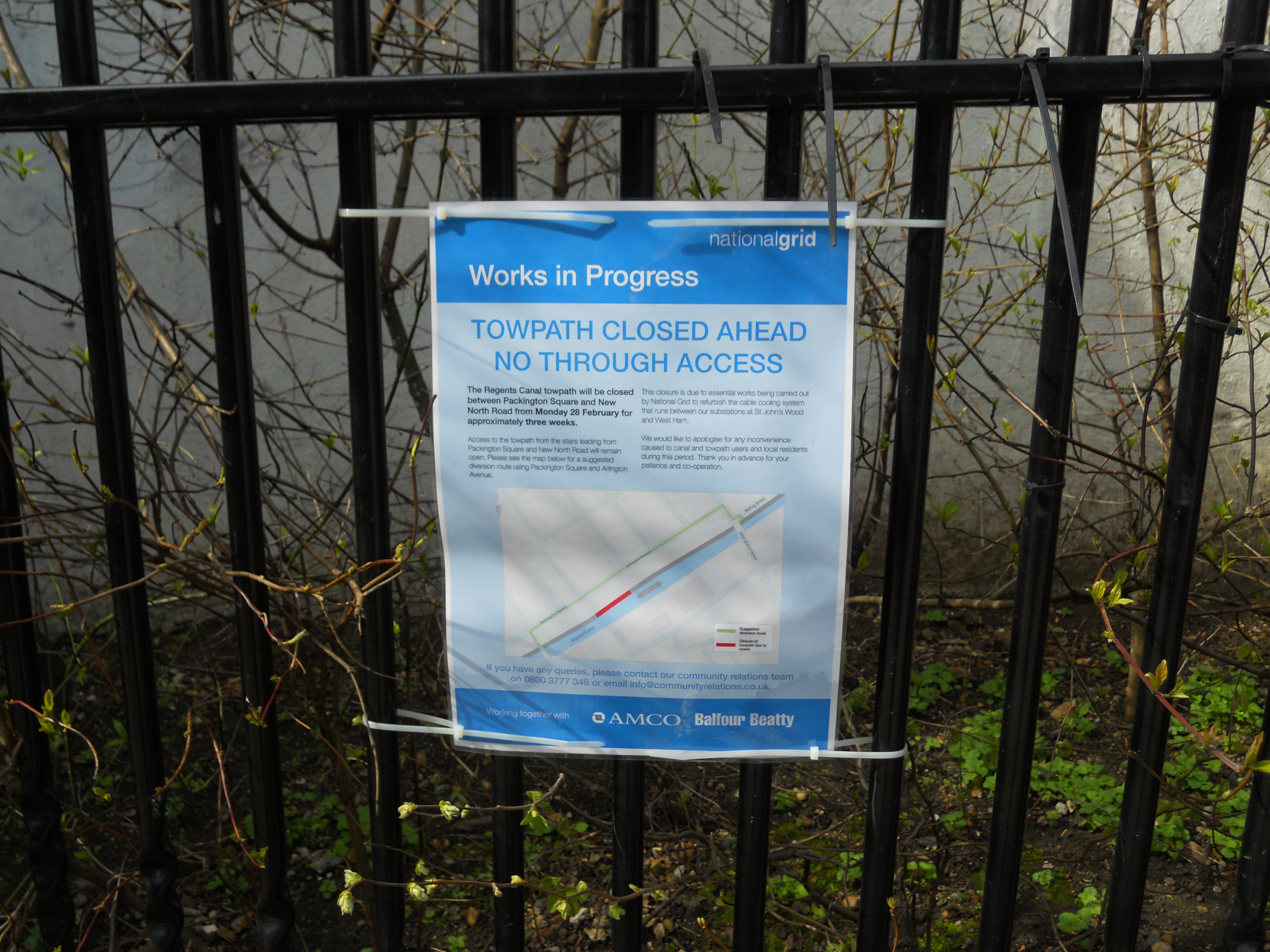
Notice on The Regent's Canal
Note that it says that it links St. John’s Wood and West Ham.
This closure is due to essential works being carried out by National Grid to refurbish the cable cooling system between our substations at St. John’s Wood and West Ham.
It also links up to the City Road Basin, where there is a major sub-station that actually supplies the City. For more details of the work, there is a press release here. It’s all good engineering combining the best of modern technology with some superb historic infrastructure.
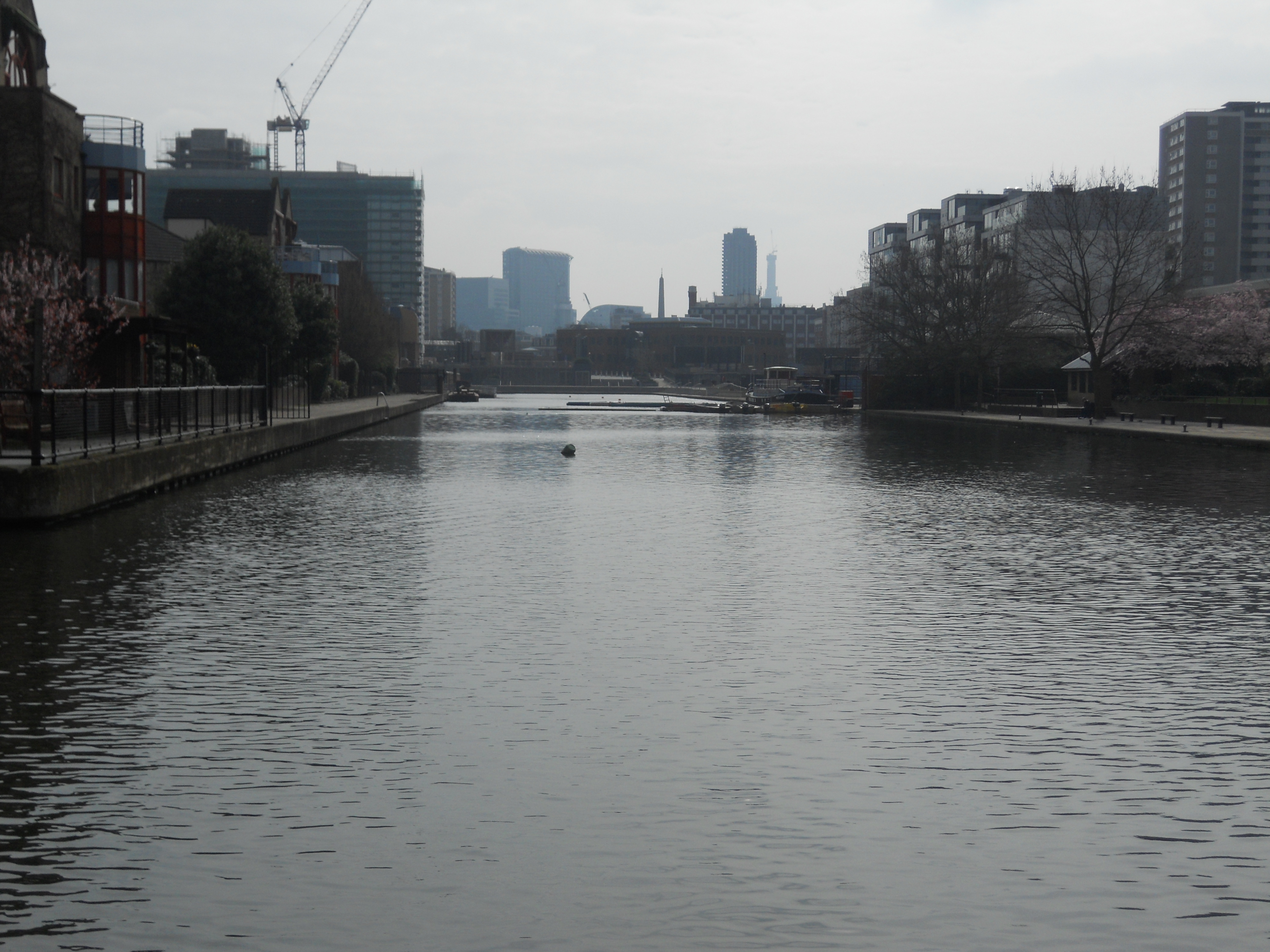
City Road Basin, Regent's Canal
The sub-station is to the left of the Basin in the picture.
Where the cable is is quite obvious, as this picture shows.
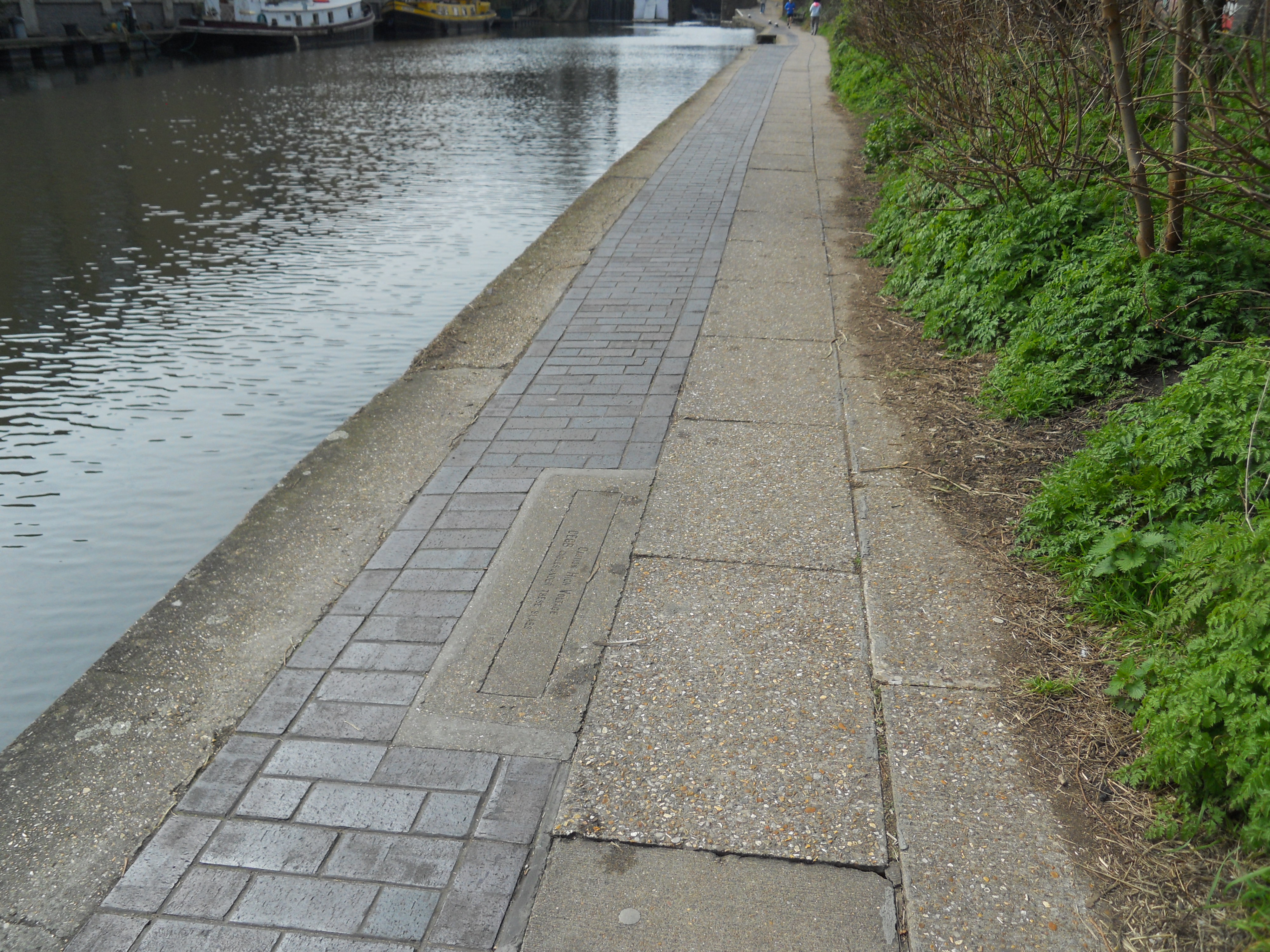
Cable Duct in the Regent's Canal Towpath
But it is well-marked.

High Voltage Warning
It could almost make a story for a James Bond film.
Imagine an evil megalomanic, who wanted to do some sort of share coup. What better way to disable dealing in the City of London, than to cut the power supply, by attacking it along the Canal. But of course the film would end with an amazing chase through the East End of London, all the way to the Olympic Park.
On the other hand working on high-voltage cables without the proper precautions is not to be recommended, unless you want to end up as little more than a collection of atoms.
The Golden Age of Tunneling
London is one of the most dug under cities in the world and has been for many years.
The first large tunnels under London were Sir Joseph Bazalgette‘s Victorian sewers, built in response to the Great Stink. In some ways it was a large and very expensive scheme, but it started the clean-up of the Thames and effectively removed cholera from the City. It was in some ways the first great project, as it did what it said in the spec, vast numbers of people weren’t killed builling it and lots of it still works today. It is all documented in an excellent book; The Great Stink of London: Sir Joseph Bazalgette and the Cleansing of the Victorian Metropolis
Then came the Underground described so well in the Christian Wolmar’s book; The Subterranean Railway: How the London Underground Was Built and How it Changed the City Forever
Since the Second World War, we have seen a few tunneling projects and the reuse of some of the old ones.
The Victoria Line, the world’s first totally automated passenger railway was built in the 1960s. We missed a trick here, as we never realised what we had built. So the automation was vacuum tube, but for well over thirty years it showed how a well-designed underground railway could perform. It is now being upgraded with new signalling and new trains and the old reliability is rumoured to be suffering. Everybody is blaming the convenient scapegoat of the old 1967 trains running in partnership with the new ones, until all the new are delivered. I don’t! I blame bad project design and management. In the 1960s they got the automation absolutely correct and created a good system. They should have replaced all the old stuff with something that was modern and compatible and then built new trains, that were compatible with the old signalling.
They should also have used the principles of the line; no junctions, totally underground, hump-backed stations to save energy, full automation to create new lines where they were needed. But they didn’t, as the Victoria Line wasn’t sexy and didn’t appeal to the vanity of politicians. But it was and still is a superb design.
The Jubilee Line was then created by splitting the Bakerloo. The extension to Stratford was built on a grand scale and has some of the most amazing stations in the world. Was it the first example of bad co-operation between bankers and politicians, designed to appeal to both their vanities? It was also designed to serve that other monument to the vanity of politicians; the Dome.
In some ways a lot of the design of the extension of the Jubilee line, with large stations and platform edge doors were an attempt to future proof the line and in some ways, this has been vindicated by the decision to stage the 2012 Olympics at Stratford and the decision to build other lines which interchange with it. Only time will tell if the original cost was worth it.
In some ways the design of the Jubilee shows just how good the design of the Victoria was and the trick we missed was not building the Jubilee to the principles of the earlier line. Even now, despite being still a relatively new line, it is still being constantly upgraded.
There was also the building of High Speed One, which tunneled into St. Pancras from East London. Did they get this right? Substantially yes and it seems to work, although the Eurostar trains have suffered reliability problems. But that’s not down to the tunnels.
Other unqualified successes are the Docklands Light Railway extensions to Lewisham and Woolwich in tunnels under the Thames. The original DLR was built down to a cost, but in some ways this has proven to be a virtue, as like Topsy it keeps growing and has earned a big place in the hearts of those who use it. It will also play a big part in getting people to the Olympics.
But two of London’s most successful tunneling projects are reuse of old tunnels; Thameslink and the East London Line.
Thameslink was originally built by connecting the suburban lines running out of St. Pancras to those running south of London to Gatwick and Brighton using the old Snow Hill Tunnel. The economic argument says that as you do away with expensive terminal platforms in London, you can spend the money to buy more trains and electrify the lines. Thameslink was a victim of it’s own success and the necessary upgrades with a new station over the river at Blackfriars and twelve-coach trains are running many years late and billions of pounds over budget. Perhaps we needed a less elaborate Julibee Line, that interfaced properly with Thameslink?
The new East London Line uses the Thames Tunnel under the Thames. In some ways, it is a modest scheme, but I believe that like the DLR, it’ll prove to be an unqualified success. It surely must be the only new railway in the world running through a tunnel built in the first half of the nineteenth century. The tunnel surely is the supreme monument to its creator, Sir Marc Brunel and his more famous son, Isambard Kingdom Brunel, who was engineer in charge for much of the building.
Now, two major tunneling projects are in progress; CrossRail, which is actually being built and High Speed Two, which is just being planned. I am dubious about the latter, as I think that the money could be better spent upgrading existing lines and trains.
But in some ways to London, the most important scheme is the creation of electrical cable tunnels under the city to carry the high voltage mains here, there and everywhere. This PDF explains the project and shows how good thinking and engineering can benefit everyone.
So perhaps the golden age of tunneling will arrive in the next few years.
Along the Regent’s Canal to the Angel
I’m about a five or ten minute walk to the Regent’s Canal and today, I walked along the canal to the Angel as it was starting to get dark.
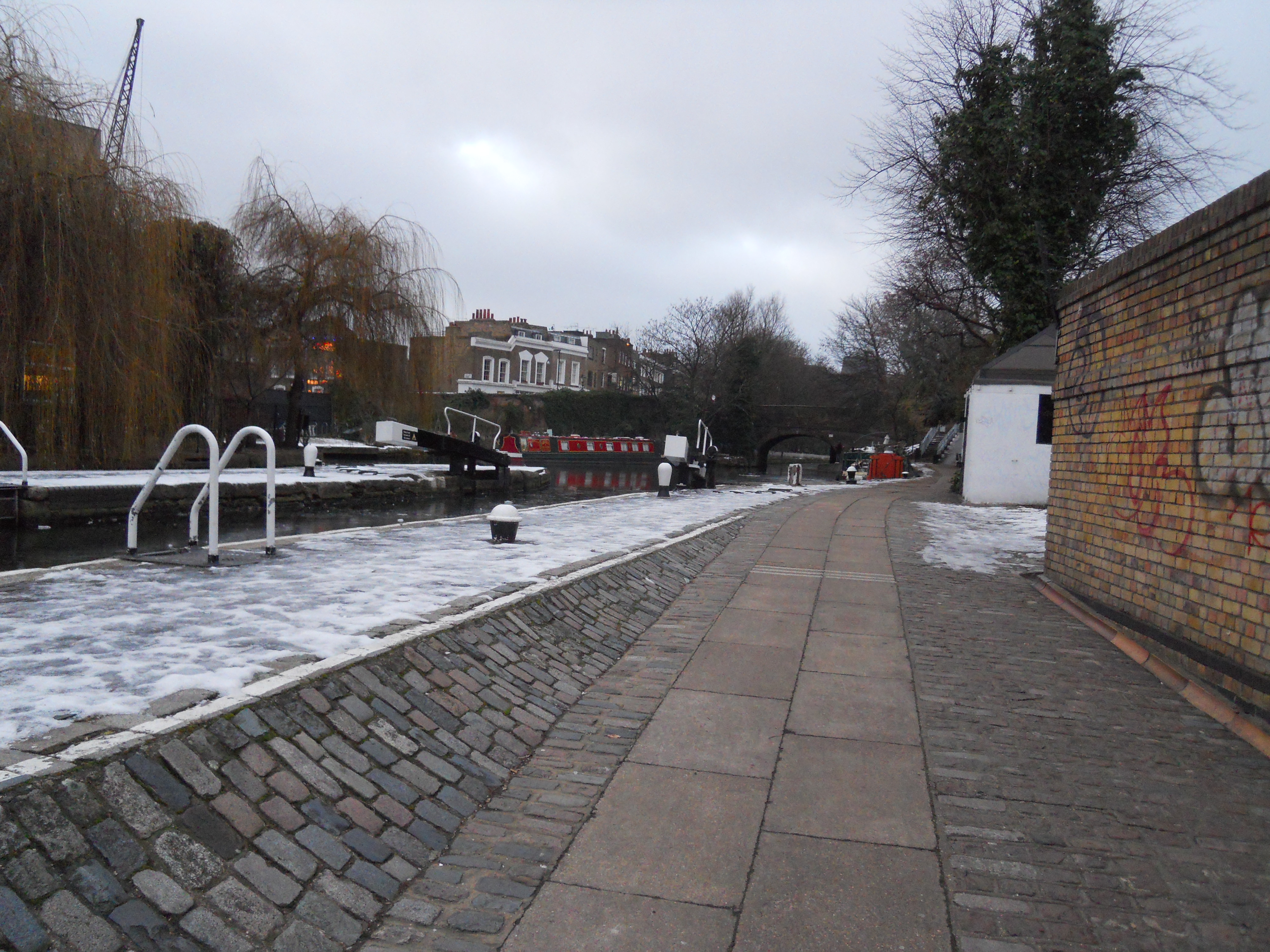
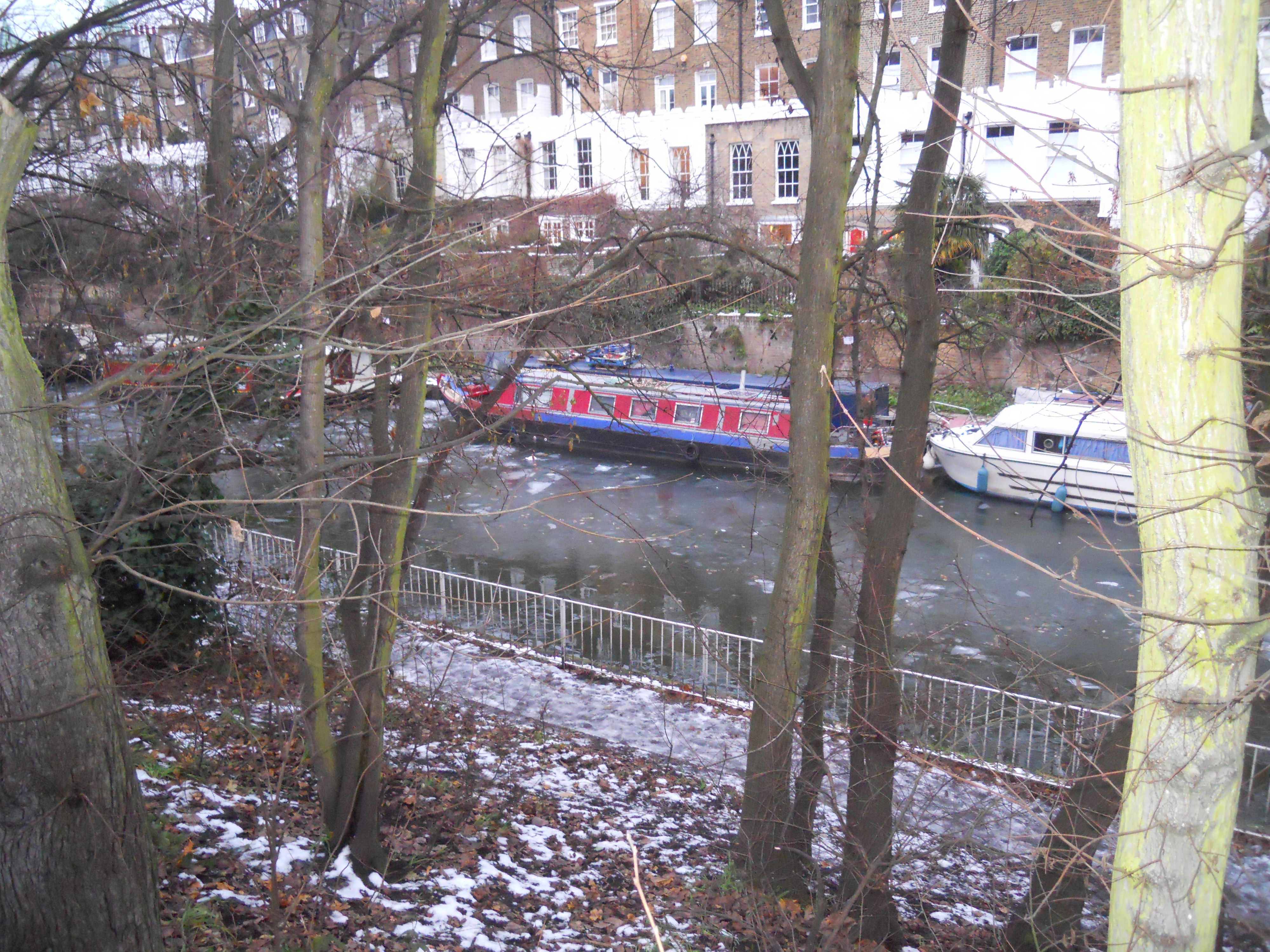
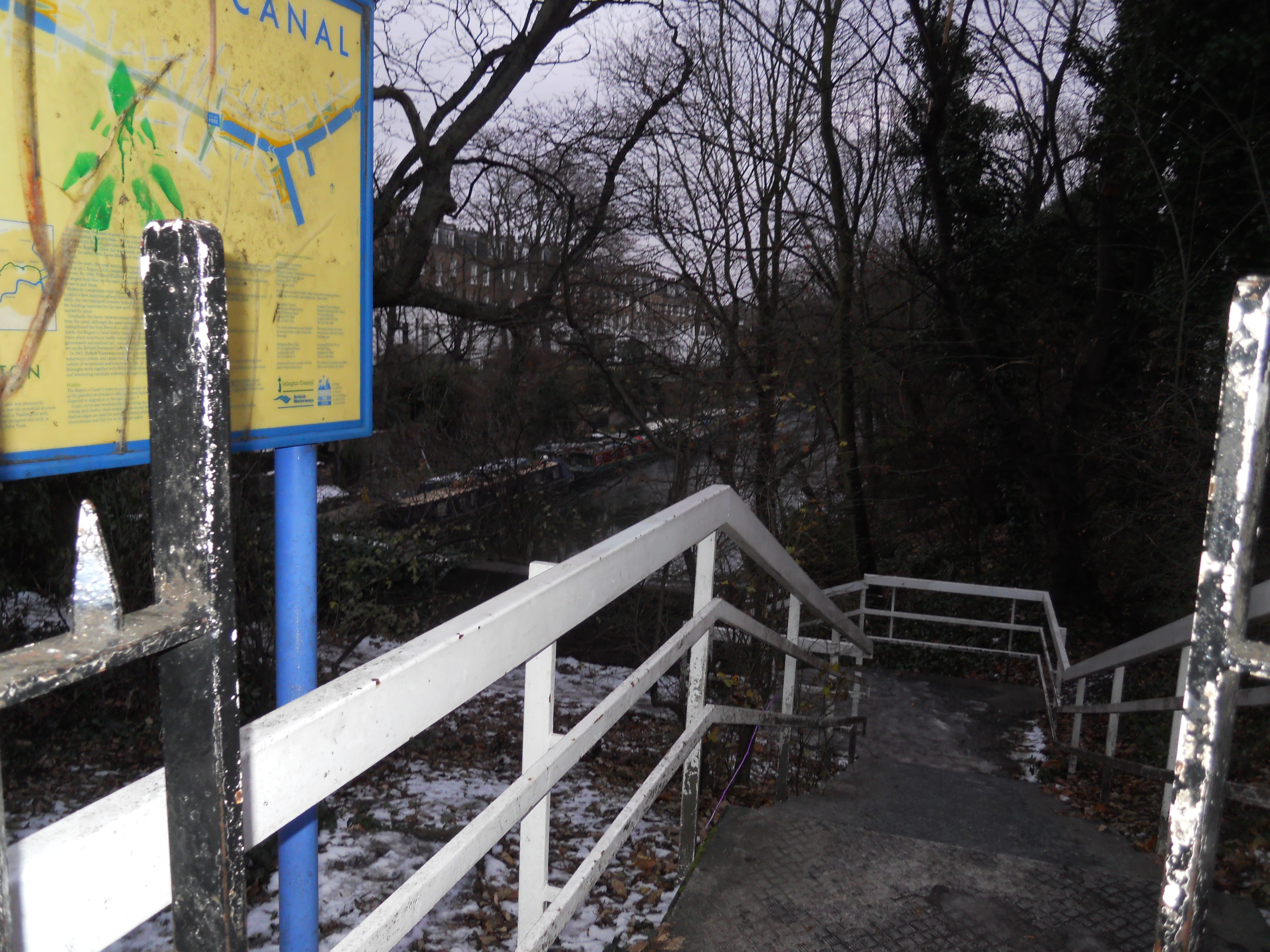
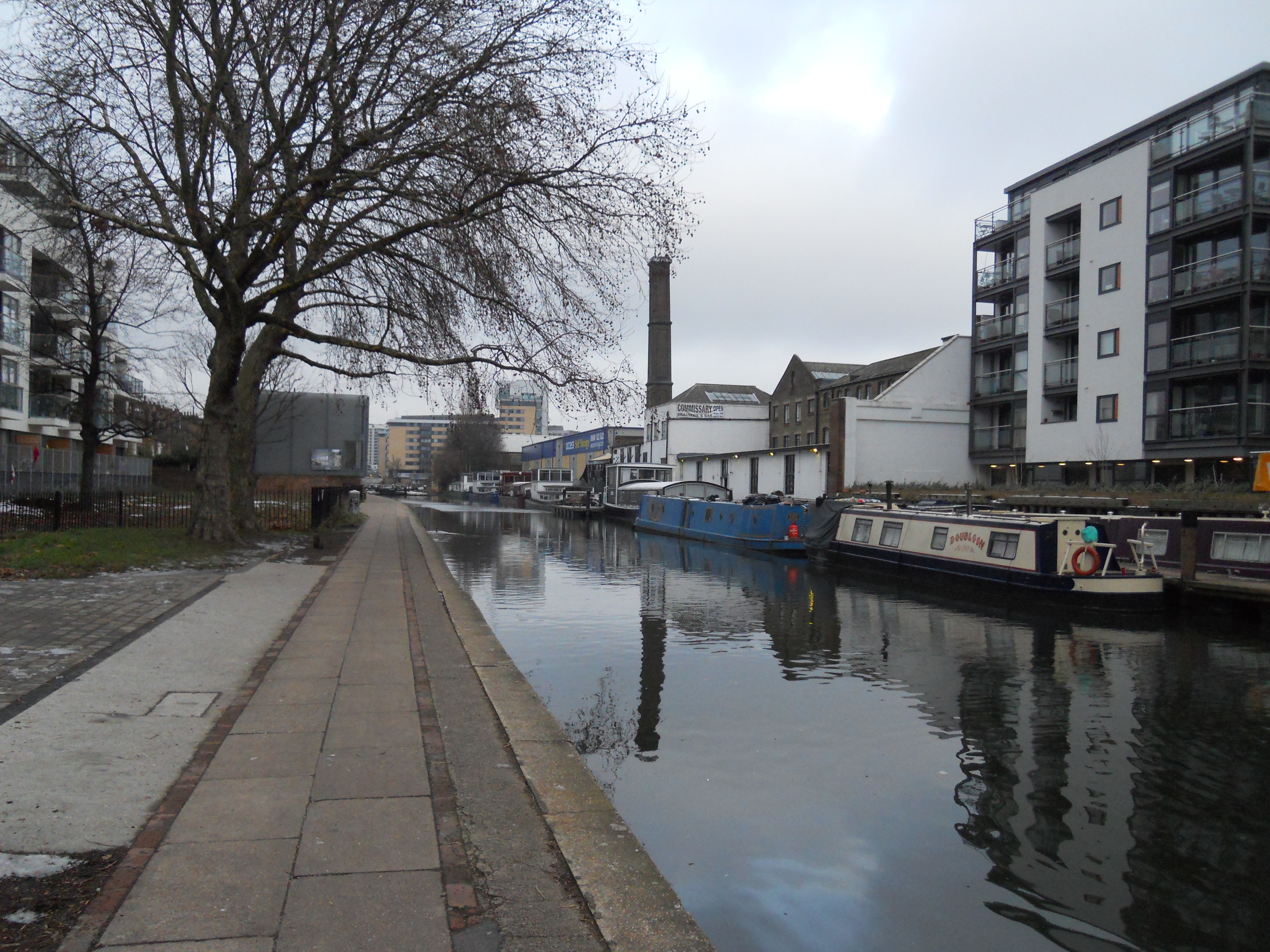
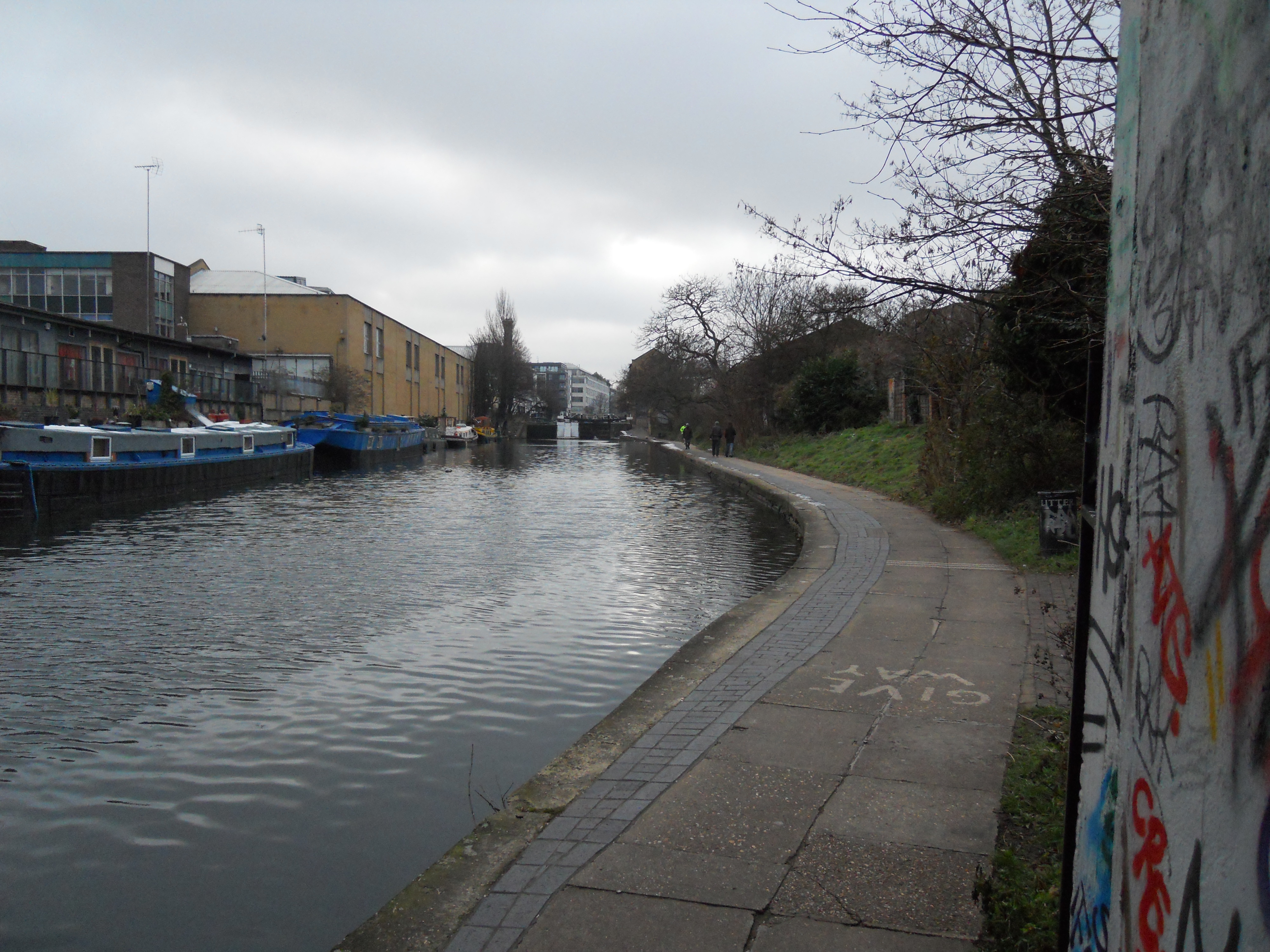
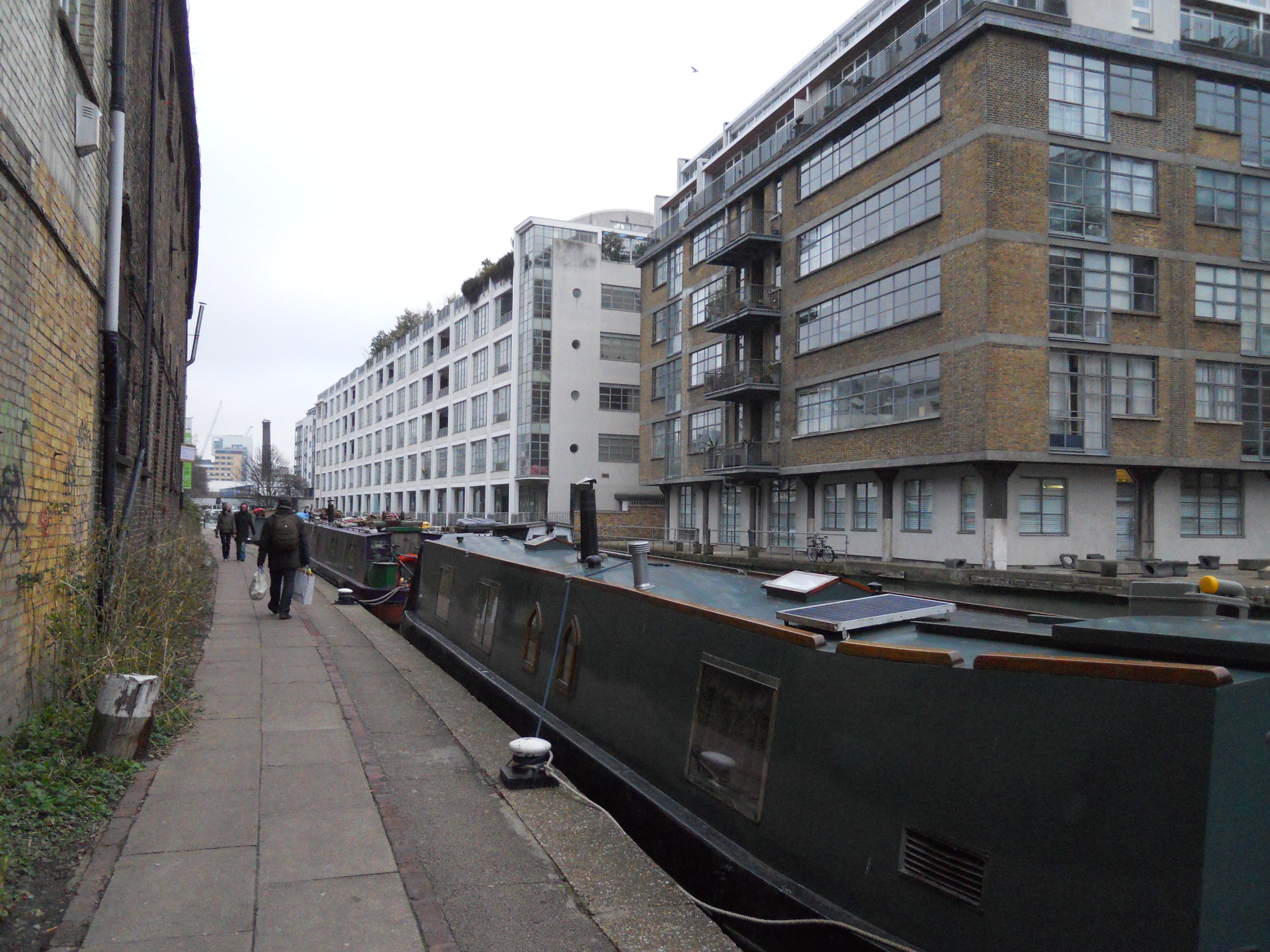
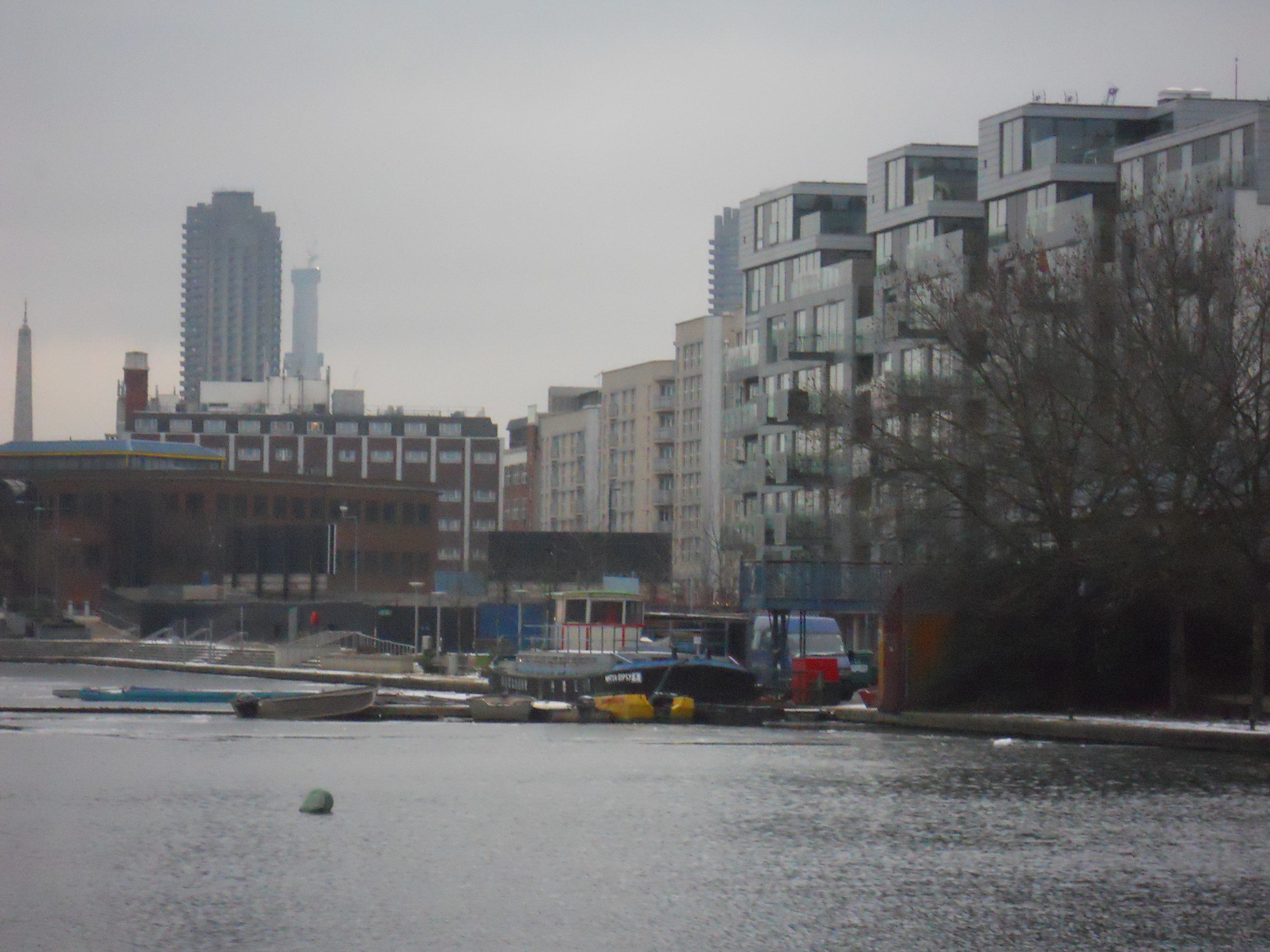
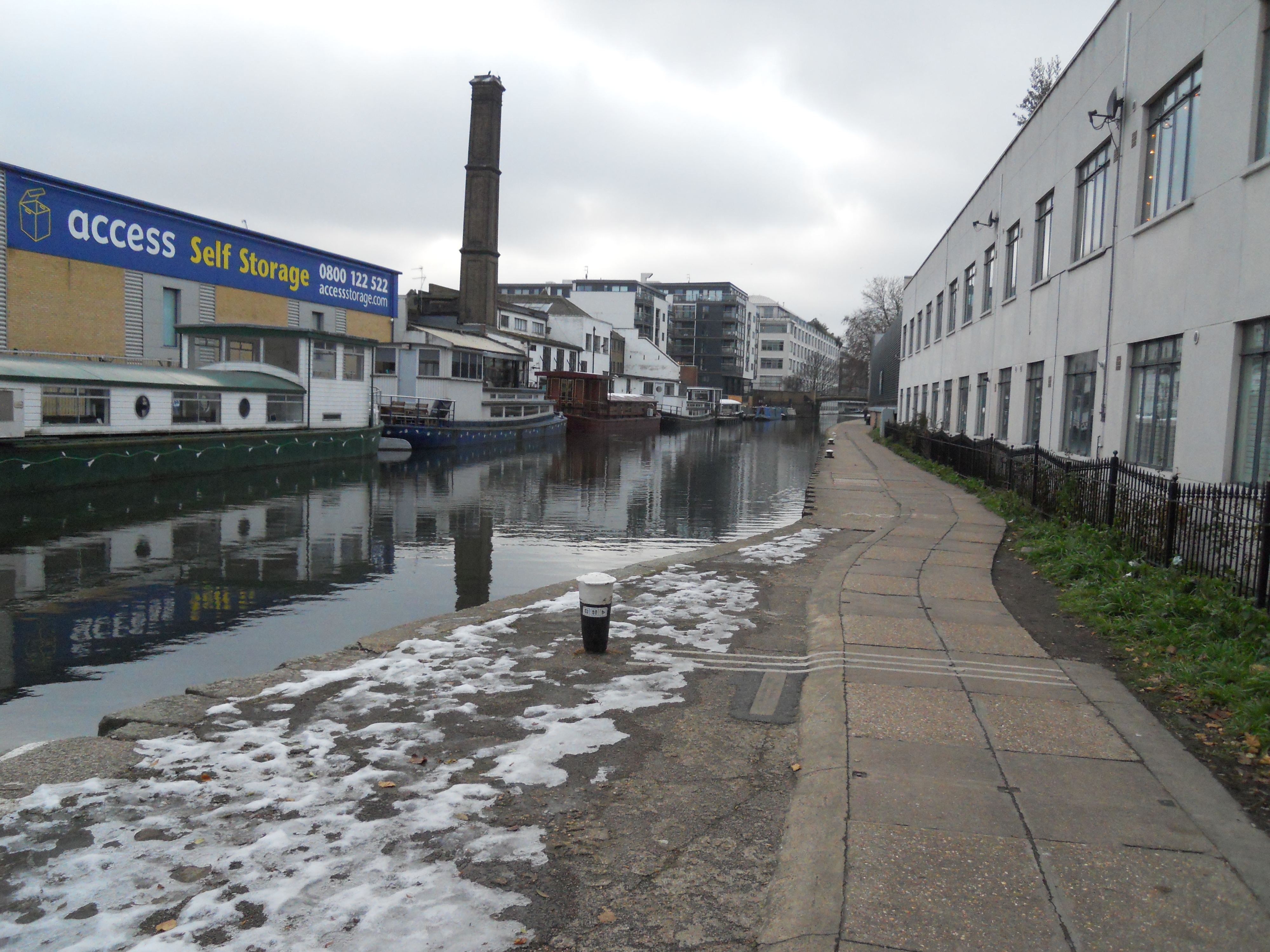
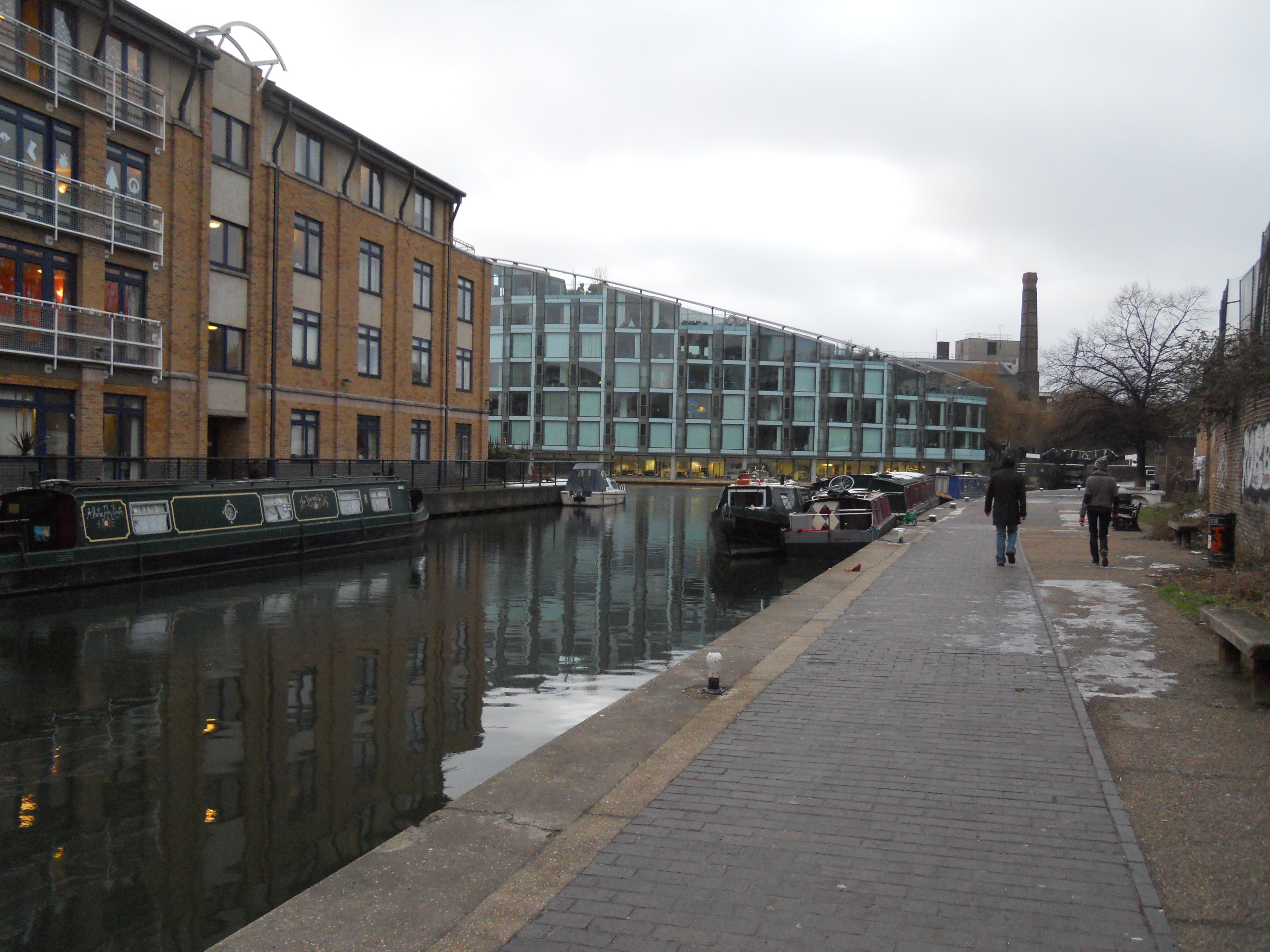
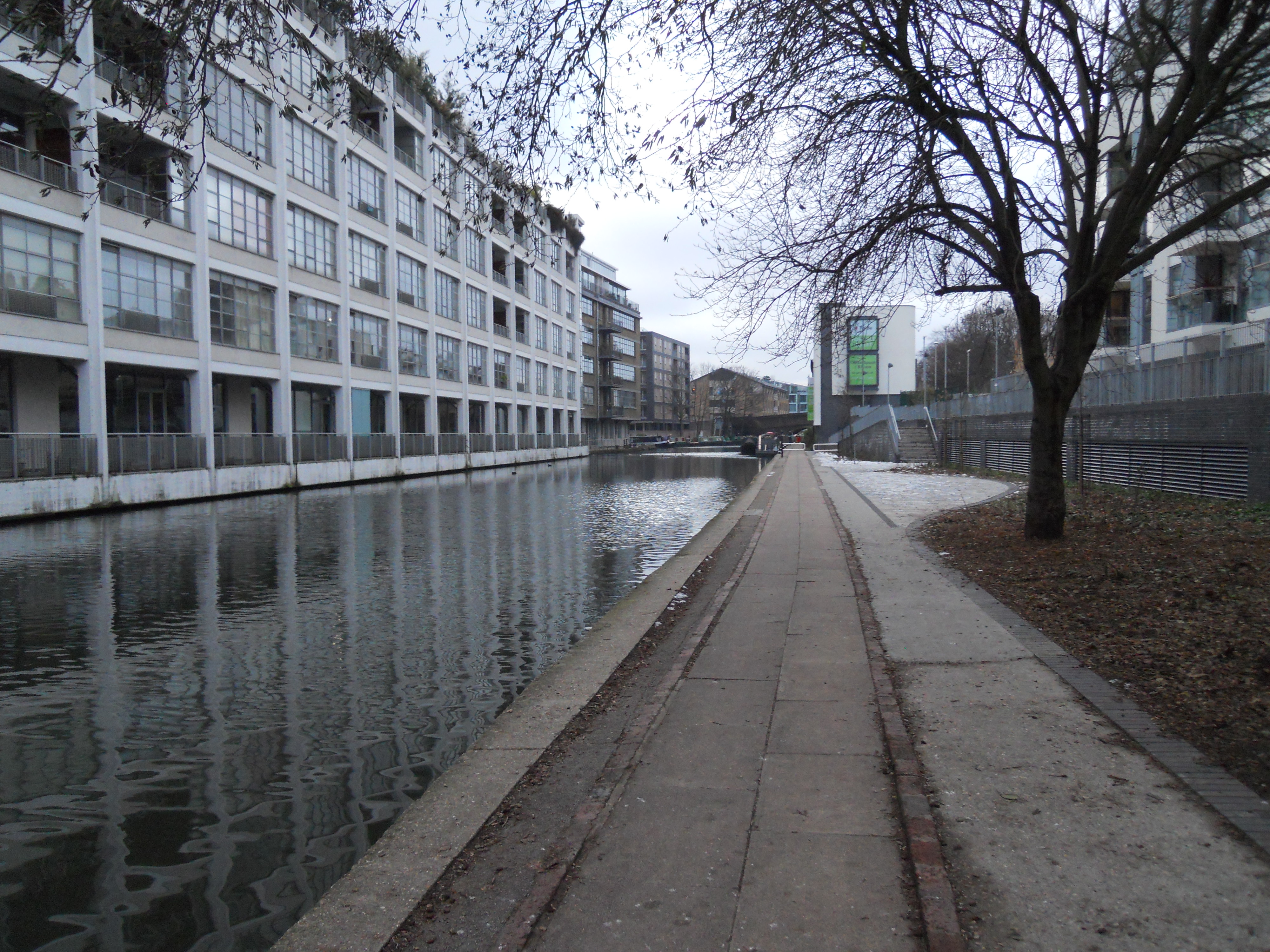
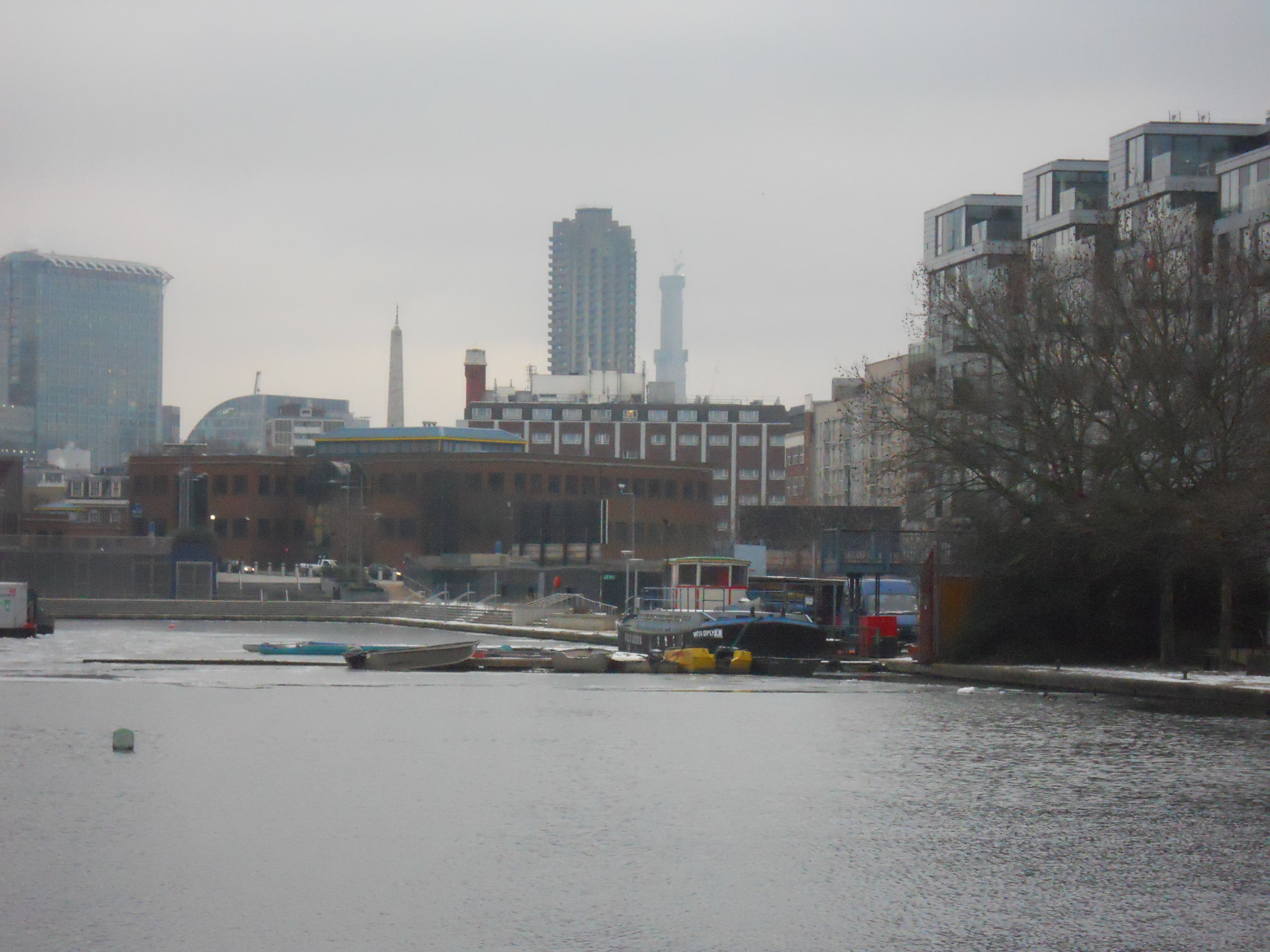
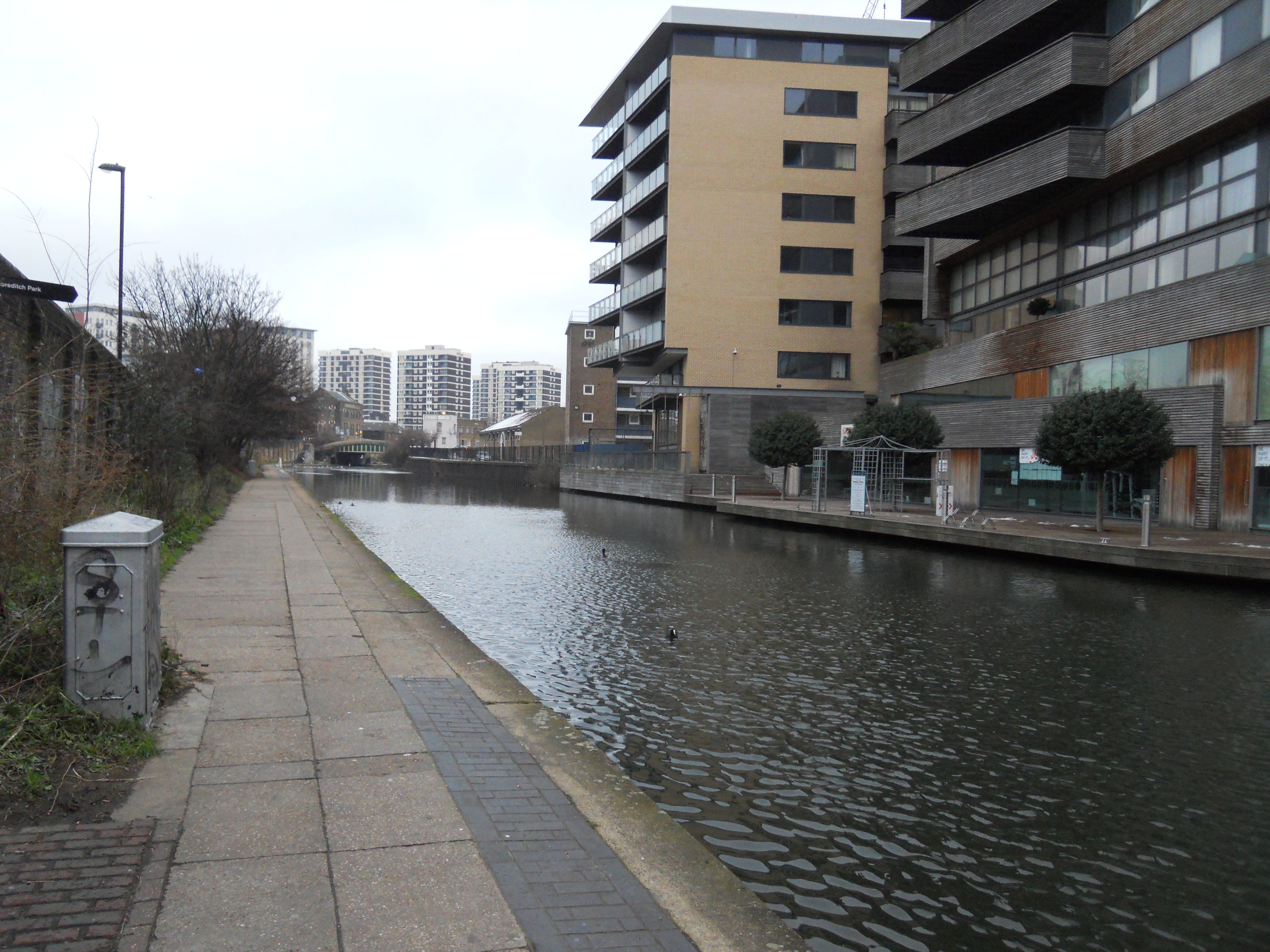
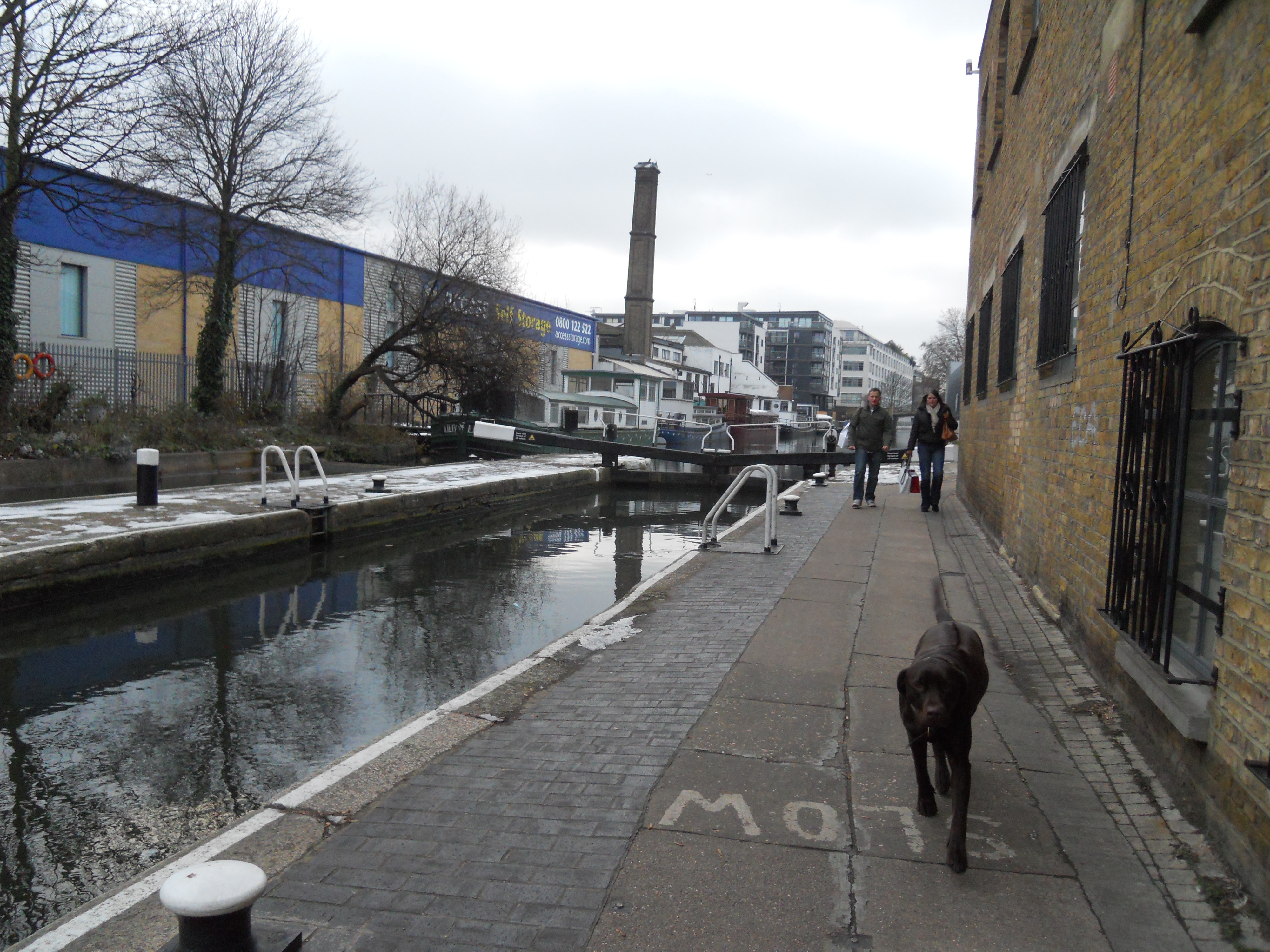
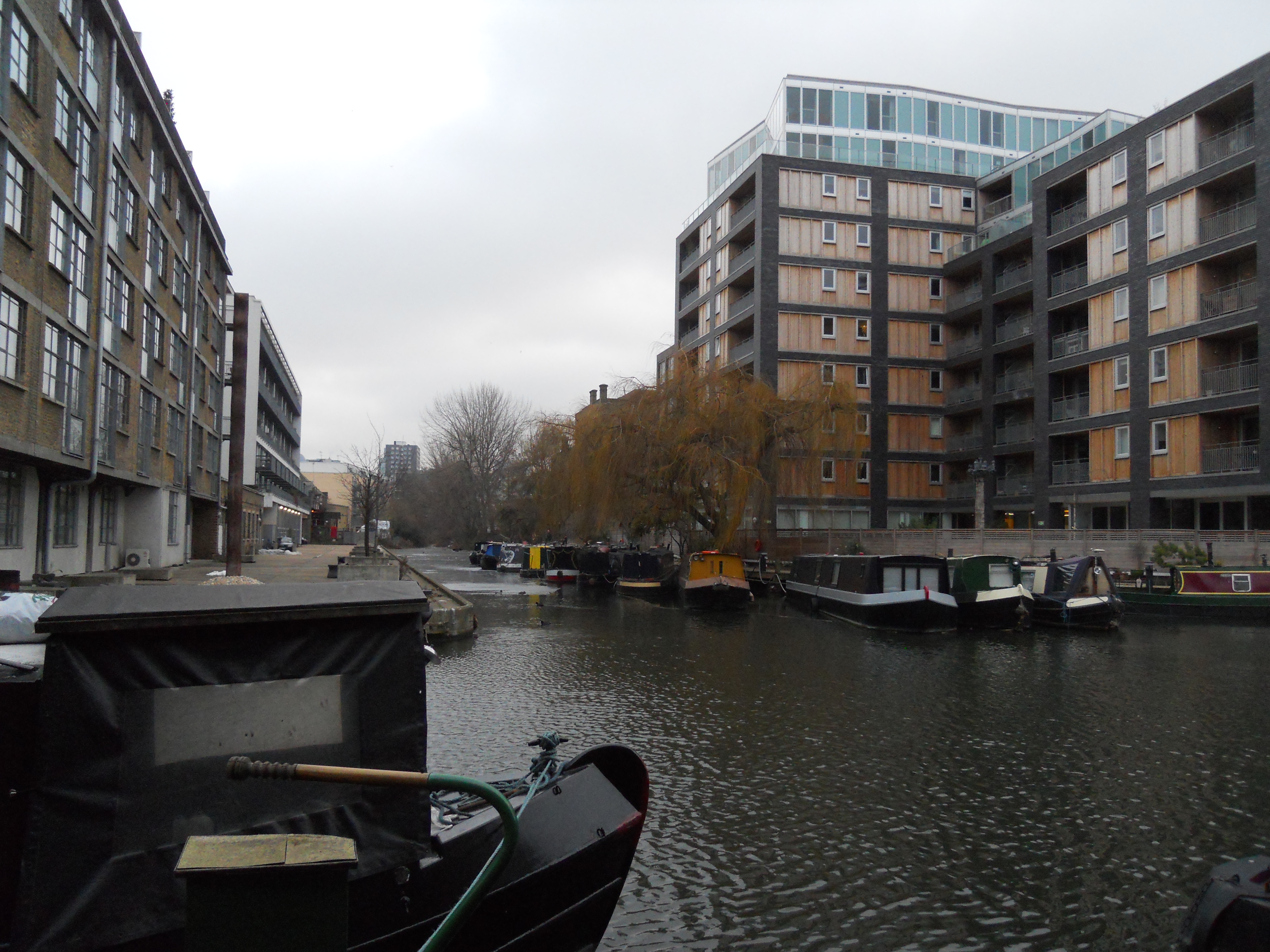
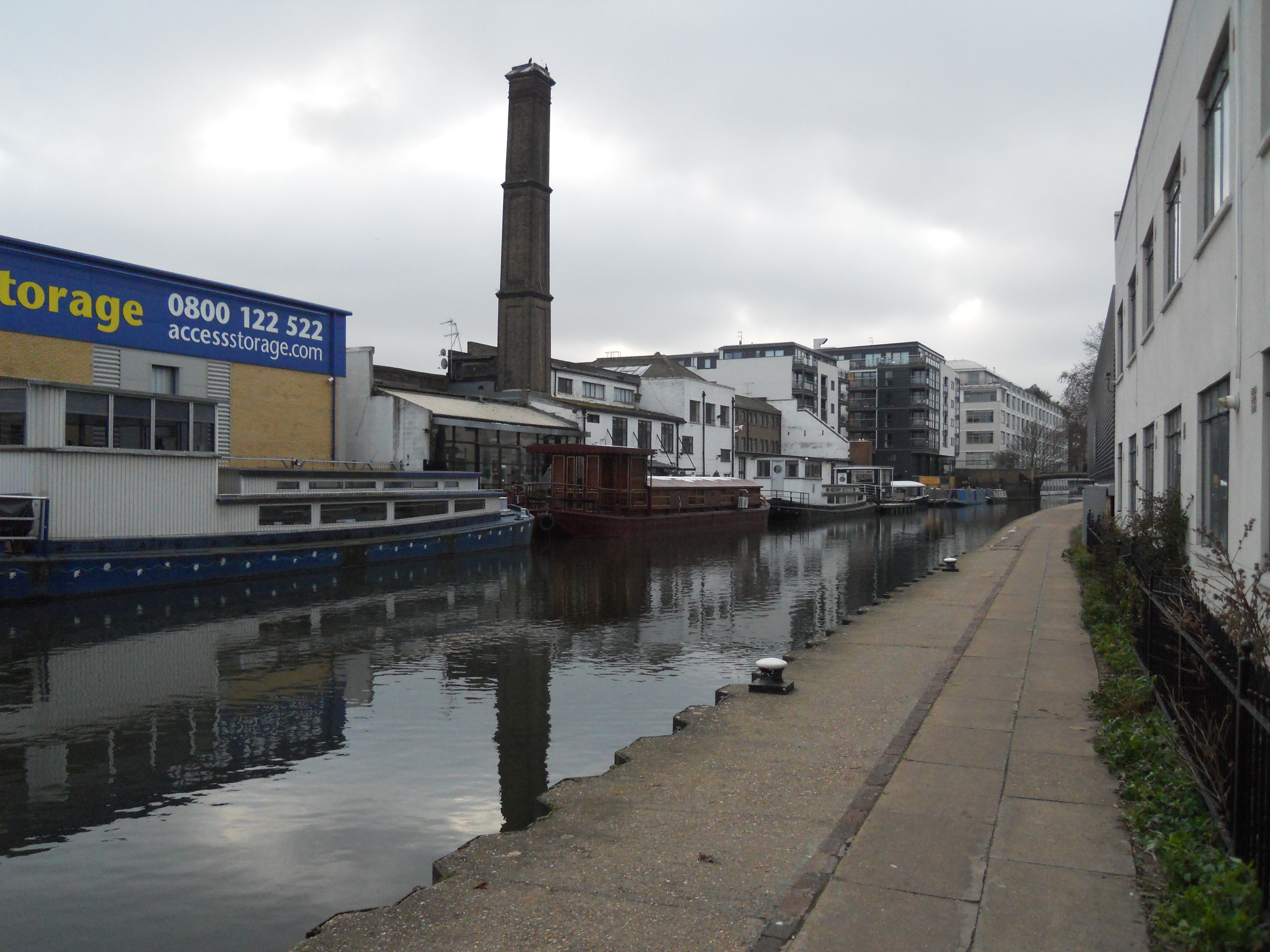
I can remember some of this area in the 1970s and to say it has improved is one of the biggest understatements, anybody can make. I even saw a Norwich City supporter enthusiastically spinning for pike.
This is the third time, I’ve lived near this canal.
In the 1970s C, myself and our young family lived in St. John’s Wood, just north of the canal and we would cross it by the London Zoo to get into Regent’s Park. You used to see the occasional narrow-boat or pleasure craft, but I don’t think there was any easy access to the tow-path. It would probably have been deemed to dangerous anyway to take three small children alongside the water. So when we decry Health and Safety for ruining our pleasure, there must be many more examples like the Regent’s Canal towpath, where different interests coexist together in complete safety.
And then, a few years later when we lived in the Barbican we would often walk up to the Angel to shop walking right past the City Road Basin on the canal. But sadly we never explored.
It is often assumed that canals like this ceased to be commercial arteries, when the railways appeared, but the Regent’s Canal was still busy with freight until the Second World War. It also has another purpose in London’s infrastructure in that under the tow-path for quite a way is one of the city’s main electricity distribution mains. Believe it or not, but the cables at kept cool, by using water from the canal.
A Worst Nightmare Avoided
My house isn’t totally electric, but everything from the central heating to the cooker relies on electricity.
So my heart sank, when the power went off this afternoon at about two-thirty. I was left with no heating, internet, landline telephones and lights. My trusty mobile wasn’t working as it looked like the ariel on the cell might be down, as I wasn’t getting a signal. I diodn’t have a battery radio, but I did have a wind up torch. I suppose too, there was enough heat in the AGA to keep me in hot food.
I was just trying to work out what I would be doing for the rest of the day, when it came back on.
So the nightmare was avoided.
The funniest power cut we had was when the power went off at eleven at night and we had to go to bed by candlelight. In the morning we found a massive Scania truck in the front field. It turned out, that the mains had blown near the prison and as we were on the end of the line, Eastern Electricity had installed the generator on the transformer for our house.
To be fair, in the perhaps week it was there, the generator was no trouble and it eventually sneaked away in the manner it had arrived. It even had an en-suite flat for the operator. He didn’t even ask for as much as a kettle of water.
In my new house, I’ll be very much prepared, as I can’t be doing power cuts in my paranoid state!
The Scilly Isles
I like islands and the Scillies, along with the Aeolian Islands are one of my favourite places in the world. When we went to the Scillies, we flew direct from Ipswich in my own plane. What a landing and takeoff, as the runway is short and with a hump like a camel!
But that was a long time ago!
Today, islands like the Scillies are in the forefront of the fight against global warming, as they will be the first to go under the waves. So I was interested to see that they were taking part in an energy saving experiment yesterday called E-day. As there is just a single cable from the mainland, you can easily see how much electricity the Scillonians are using.
So did they save much electricity? Not really, as the weather was against them.
But look into the web site and it is a mine of information.
Just look at the National page and see how many tons of CO2 we emit for a start!
A Blot on the Landscape
Ironbridge is a World Heritage Site and rightly so. Go a few kilometres upstream and the gorge opens out and you can see how the Severn meanders across the countryside. Note that meander comes from the River Meander in Turkey.
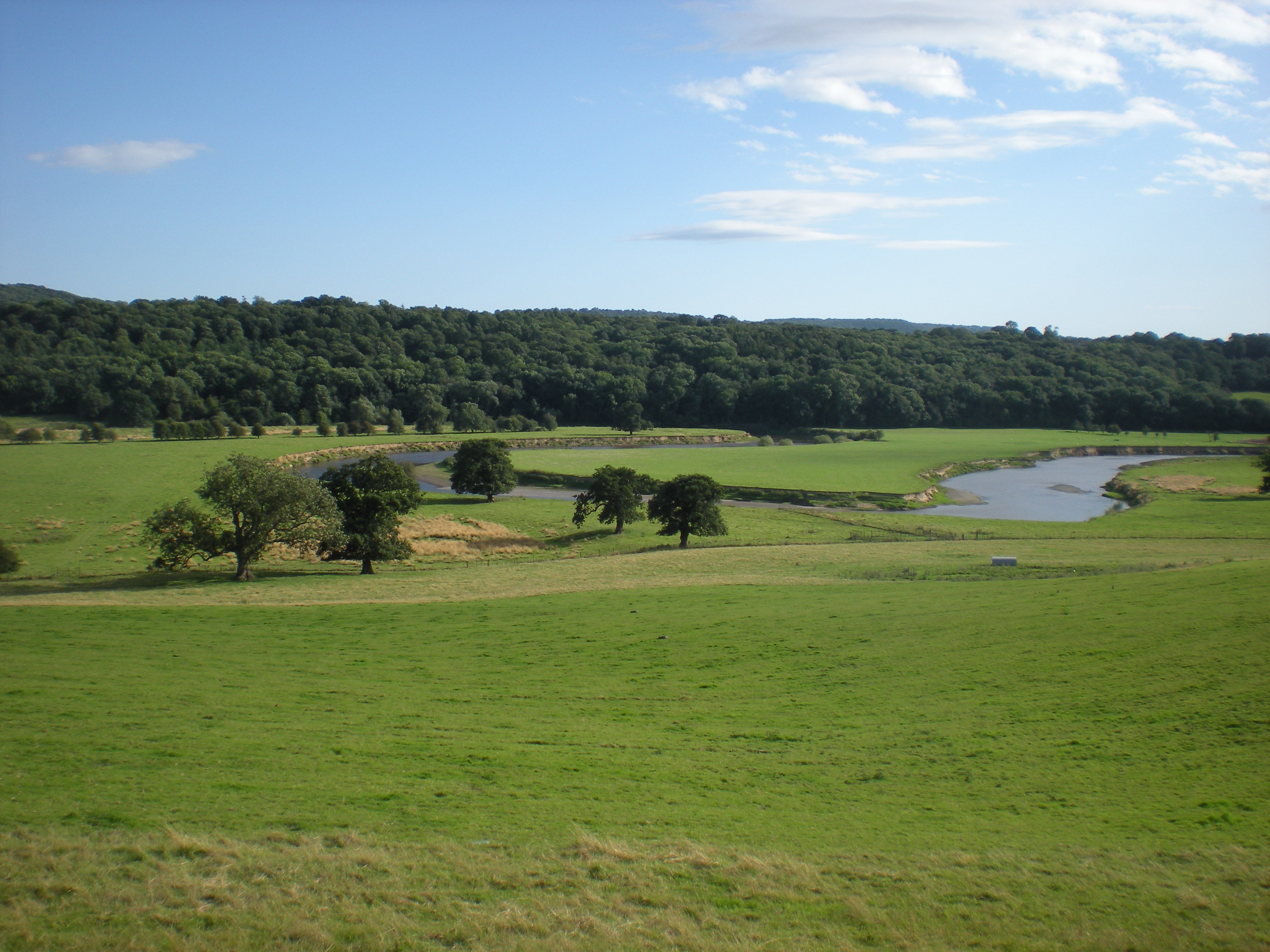
River Severn above Ironbridge
But turn to the left and between where I took this picture and the Iron Bridge you will see this.
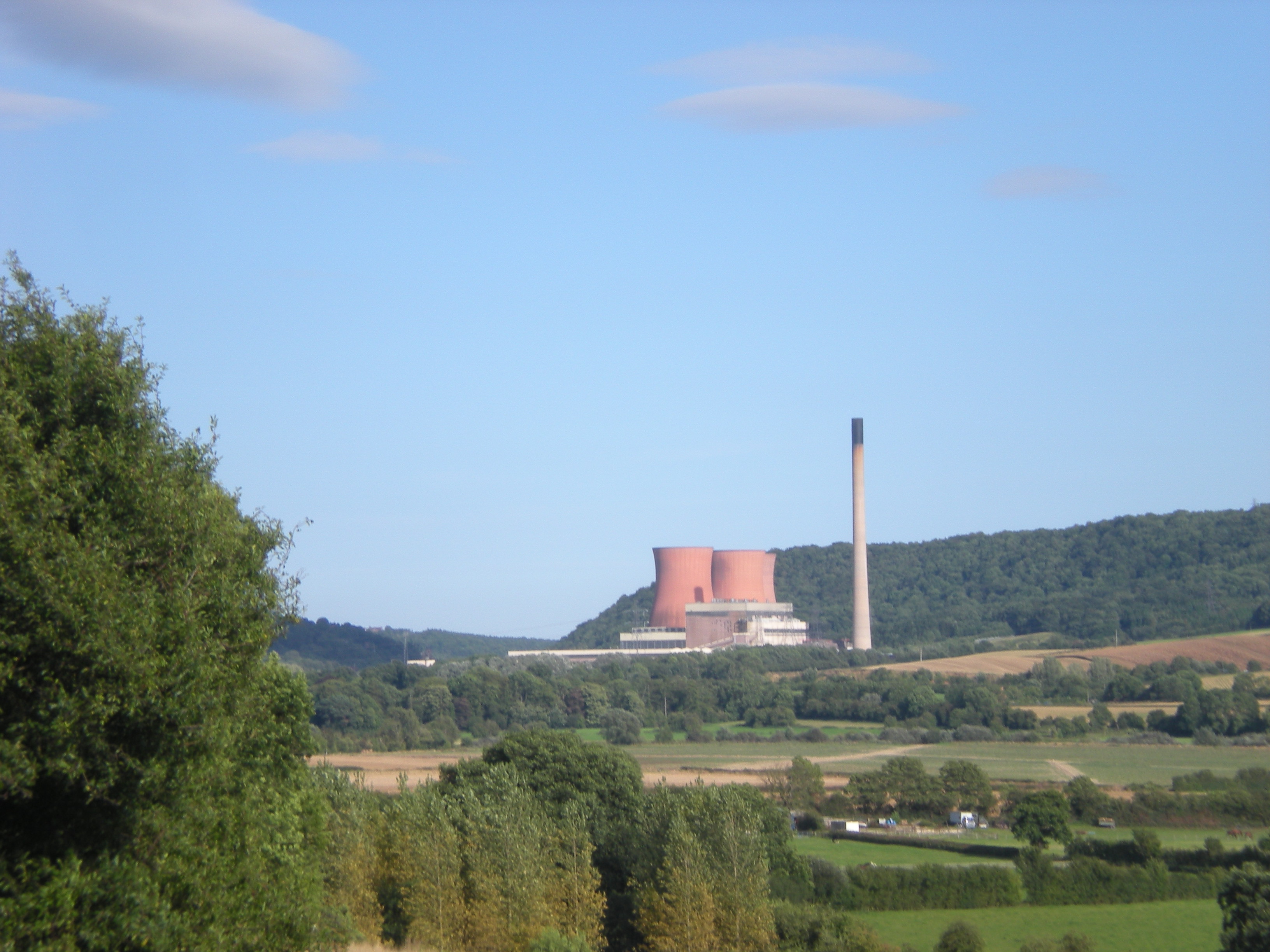
Ironbridge Power Station
This is the coal-fired Ironbridge Power Station. It was built in 1981 and according to Friends of the Earth is the second worst polluter in the UK per megawatt generated.
It just shows how attitudes have changed over time.
Would anybody in their right mind build a power station there now?
As an aside here, remember that I have a degree in Electrical Engineering from Liverpool University and have spent quite a bit of my working life looking at how large projects, structures and machines are built and managed.
When you burn coal to produce electricity, you turn a tonne of coal into 2.93 tonnes of carbon dioxide. If you were to use natural gas to get the same amount of electricity, the figure is lower. This quote from Wikipedia gives all the figures.
This can be used to calculate an emission factor for CO2 from the use of coal power. Since the useful energy output of coal is about 30% of the 6.67 kWh/kg(coal), the burning of 1 kg of coal produces about 2 kWh of electrical energy. Since 1 kg coal emits 2.93 kg CO2, the direct CO2 emissions from coal power are 1.47 kg/kWh, or about 0.407 kg/MJ.
The U.S. Energy Information Agency’s 1999 report on CO2 emissions for energy generation, quotes a lower emission factor of 0.963 kg CO2/kWh for coal power. The same source gives factor for oil power in the U.S. of 0.881 kg CO2/kWh, while natural gas has 0.569 kg CO2/kWh. Estimates for specific emission from nuclear power, hydro, and wind energy vary, but are about 100 times lower.
What I find interesting about these figures is the discrepancy between the first figures for CO2 from coal and the US ones!
But whichever set you accept, the message is simple; Don’t Burn Coal!
 The Anonymous Widower