Why People Don’t Change To Cheaper And Smaller Energy Suppliers
This news item on the Money Saving Expert web site is entitled Energy users don’t switch because they haven’t heard of cheapest firms, MSE poll finds.
If you’re thinking of changing read it and you might learn something to guide you to a more affordable supplier.
I swapped to OVO Energy a couple of years ago, and I’ve had no serious issues and they now have allowed me to connect my solar panels to the electrocity network.
The only problem, I had with swapping was getting nPower to pay me the money they owed.
Major District Heating Scheme to Connect £6bn Meridian Water Development
The title of this post is the same as a press release from Vital Energi.
This is the first three paragraphs.
London’s latest £85m district heating infrastructure is taking shape in Enfield and will be delivered by Vital Energi on behalf of energetik, the energy company owned by Enfield Council.
The new district heating network will accommodate up to 30,000 homes and businesses, including the £6bn Meridian Water development. energetik want to revolutionise the local energy market and improve the reputation of district heating, in a currently unregulated market, to ensure customers receive a quality service.
Vital Energi will design, build, operate and maintain the main energy centre for Meridian Water and install the district heating network over the next 12 years, under a contract worth £15m. This heat network is part of an integrated energy and regeneration strategy in Enfield that will interconnect with energetik’s other networks at Arnos Grove and Ponders End.
The Meridian Water development is certainly going about things in an impressive way.
Conn By Name, Con Artist By Nature
I have just seen the Chief Executive of Centrica; Ian Conn, giving the most unfeasible explanation, why despite the fact that electricity prices are going down, British Gas will be putting them up by 12.5% from September 11th.
This article on the BBC gives more details.
Now is the time to give British Gas a good kicking by moving to an alternative smaller supplier.
I moved to OVO over two years ago and have had no trouble except.
- Changing from my old Bog Six supplier was a pain, due to the original company’s incompetence. Was that real or deliberate?
- OVO have still not fitted me with a smart meter. But I’m not sure I need one!
OVO have also handled my solar panels without trouble.
Let’s Get Fracking
In Fracked Or Fiction, I talked about my attitude to fracking. These two paragraphs, were my conclusion.
My overwhelming conclusion after the lecture was that before we can embrace fracking in earnest, we must collect a lot more information. For example, we don’t know the background levels ofearthquakes and natural gas seepage in this country. So if say it is thought, that fracking had caused a small earthquake, can we be sure that that isn’t one that we habitually get in this country.
A secondary conclusion, is that my engineering knowledge indicated that there are several very fruitful areas for the development of new technological solutions to mitigate some of the possible problems of fracking.
But things have changed a bit in the over three years, since I attended the lecture at the London Geological Society.
We still get gas from the North Sea and a few smaller fields, but we have to buy in gas from places like Algeria, Russia and Qatar.
I suspect too, that we can always ship liquefied natural gas from the United States.
The Green Party would say that we shouldn’t burn natural gas, but what do we do about?
- People do with gas boilers who keep themselves warm in winter?
- Businesses that use gas as part of their industrial processes.
- In 2015, thirty percent of our electricity was produced from gas.
Renewables such as solar and wind are increasing, but for the forseeable future, we wil still need gas.
But how would you feel, if the Government said, that you must change your boiler for an electric one, as you can’t have any more gas?
We can continue to get our gas from those shining democracies of Algeria, Russia and Qatar or buy it from Trumpland, which would probably not be acceptable to everybody.
There is also the problem, that countries like Belgium, France, Germany, Ireland and The Netherlands are also short of gas and are relying increasingly on the Russians.
Surely, the best solution to avoid the cold and loss of employment in industries reliant on gas, is to extract the gas from our own fields, using fracking in a professional and engineeringly-sound manner.
We have form in the extraction of hydrocarbons in this way from land in the UK. The is the first paragraph, from the Wikipedia entry for Wytch Farm.
Wytch Farm is an oil field and processing facility in the Purbeck district of Dorset, England. It is the largest onshore oil field in western Europe. The facility, recently taken over by Perenco was previously operated by BP. It is hidden in a coniferous forest on Wytch Heath on the southern shore of Poole Harbour, two miles (3.2 km) north of Corfe Castle. Oil and natural gas (methane) are both exported by pipeline; liquefied petroleum gas is exported by road tanker.
Is there is an onshore oil-field in a more sensitive environment? Wikipedia says this under Environment.
Most of the field is protected by various conservation laws, including the Jurassic Coast world heritage site, Purbeck Heritage Coast and a number of sites of special scientific interest, areas of outstanding natural beauty and nature reserves (including Studland and Brownsea Island), so the gathering centre and most of the well sites are small and well screened by trees. Directional drilling has also contributed to reducing the impact on the local environment, with extended reach drilling from the Goathorn Peninsula attaining distances in excess of 10 km.
Note the reference to directional drilling, which according to a friend, who was associated with the development of the project, was very much pioneered at Wytch Farm.
Directional drilling is often very much part of the fracking process, prior to the actual hydraulic fracturing. I’m very much of the opinion, that to be a successful fracker, you need to have very good directional drilling capabilities.
I’ve heard it on good authority, that fracking is used in the Highlands of Scotland to extract drinking water. But the F-word is so sensitive, there is nothing about it on the Internet. I did find this web page from a company called Clearwater Drilling Company in Tennessee, which is entitled Hydrofracturing -A procedure designed to increase the amount of water in existing dry and low yield water wells.
Would you prefer to give money to dodgy regimes or build on the Wytch Farm experience and develop the World’s best fracking industry to keep us warm in winter and preserve jobs?
It may seem a stark choice to some, but I believe in the competence of engineers, as demonstrated at Wytch Farm!
Let’s get fracking!
An Appropriate Story For Today
On Page 58, The Times has an article entitled Frictionless Flywheels Hold Balance Of Power.
This is the first two paragraphs.
Flywheels will be used to balance supply and demand on Britain’s electricity grid in a £3.5million project that could help the country to cope with more wind and solar power.
Sophisticated flywheels that can store electricity for long periods of time are to be installed next to the University of Sheffield’s battery storage facility at Willenhall near Wolverhampton, in the first project of its kind in the UK.
By using batteries and flywheels together, this makes a responsive battery that can fill in demand and overcome the degradation problems of lithium-ion batteries.
It looks a promising way of creating an affordable and reliable energy storage system.
Who needs coal? Trummkopf obviously does to buy votes!
In the United States, with its massive mountain ranges, it would be better to create construction jobs by creating hydro-based energy storage systems, as we did in the 1970s at Dinorwig and the Americans, themselves did at Bath County Pumped Storage Station a few years later.
To gauge the size of these plants, Bath County has about the same generating capacity as the UK’s largest power station at Drax, with Dinorwig being about 55% of the size.
Bath County and Dinorwig are big bastards, but their main feature, is the ability to pump water to store the energy.
Energy is like money, the best thing to do with excess is to put it in a secure storage facility.
Should We Boycott America Over Trump And Cimate Change?
This article called Paris climate deal: Trump announces US will withdraw, has just appeared on the BBC web site.
I feel strongly that we should all cut our burning of fossil fuels, or at least the high carbon ones like coal.
So what can we do?
I typed “Boycott America Trump climate change” into Google and got a large number of articles posted in the last couple of days.
So I’m certainly not the only one who feels strongly!
So will I be boycotting American goods and services?
I always do to a certain extent, because when it comes to gluten-free foods, a lot of American manufacturers use high strength glucose made from wheat instead of sugar. And I react to it.
So for example, I now no longer eat any Cadbury products!
I also haven’t used a Starbucks for some time, but that’s in protest at their tax affairs.
It’ll be interesting how this one plays out!
After all, there’s quite a few Americans who didn’t vote for Trummkopf and some States appear to be going down the Paris route.
What Should We Do With Old Coal-Fired Power Station Sites?
As I indicated in The Beginning Of A New Era, the way we generate electricity is changing.
Wikipedia has a list of all the active coal-fired power stations in the UK. The section starts like this.
There are currently 9 active coal fired power stations operating in the United Kingdom which have a total generating capacity of 14.4GW. In 2016 three power stations closed at Rugeley, Ferrybridge and Longannet. In November 2015 it was announced by the UK Government that all coal fired power stations would be closed by 2025.
So what should we do with the sites?
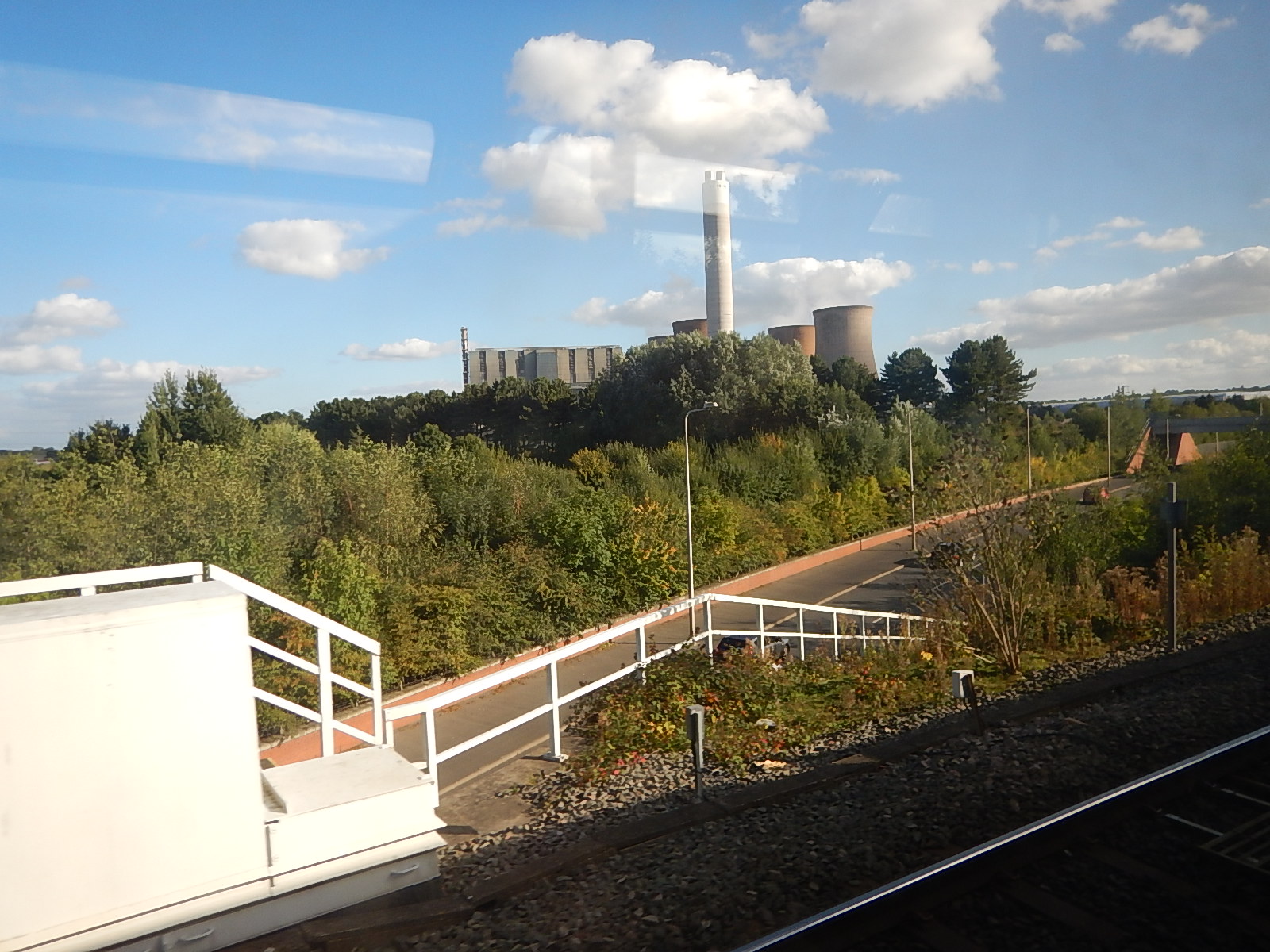
This picture shows the power station site at Eugeley
This is a Google Map of the area.
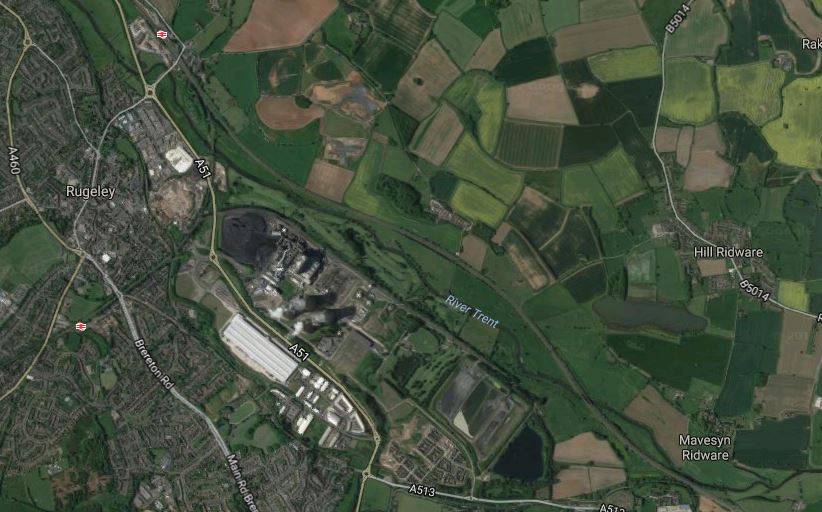
The two stations shown on the map are Rugeley Trent Valley, which is on the the Trent Valley section of the West Coast Main Line and Rugeley Town, which is on the Chase Line.
Many of these large coal-fired power station sites sites are rail connected, so that the coal could be brought in efficiently.
In the June 2017 Edition of Modern Railways there is an article entitled Freight, Not All Doom And Gloom, which makes this plea.
Old coal-fired power stations and Ministry of Fefence sites with ready-made rail links, could make ideal distribution parks, if they are in the right part of the country.
The author is so right, when they say elsewhere in the article, that these rail links must be kept.
Even, if a site was given over to housing, developers will say, that a good rail link to a development, improves their profits.
The article is an interesting read about moving goods by rail and contains a few surprises.
- Moving coal and steel is well down, but to a certain extend, these bulk loads have been replaced by the moving of aggregates.
- The article states forty percent of the materials used in London buildings, are now brought in by rail.
- The supermarket groups and in particular Asda and Tesco are increasingly using rail for long-distance transport.
- Short term Treasury policy sometimes works against long term aims of moving freight from the roads and cutting carbon emissions.
- Quality 1980s passenger stock with wide doors might make excellent parcels carriers.
The last one is an interesting point, as HSTs have only got narrow doors, whereas pallets could be fork-lifted through the wide doors of something like a Class 319 or Class 321 train.
I discuss the small parcel train in detail in The Go-Anywhere Express Parcels And Pallet Carrier.
Stephen Fitzpatrick Of OVO On Energy Policy
Stephen Fitzpatrick, the founder of OVO Energy was on BBC Breakfast this morning.
Some of what he said was very enlightening.
Nationalisation Of Distribution Networks
He indicated that this was almost irrelevant, as the technology of energy distribution is changing.
I agree.
Near to where I live, is the Bunhill Energy Centre, which has been built by Islington Council to provide heat and electricity to a local area.
Systems like this are common in some European countries and increasingly, we will see small scale units like this in cities.
In the countryside, solar and wind power linked to energy storage will become more common.
Large industrial users of energy will increasingly generate their own power.
So the distribution networks will become less and less important.
Energy Efficiency
This will become increasingly important, as innovators make devices and appliances that use energy more efficient.
It is interesting, that no Political Party has so far said, that they will promote devices and items that use less energy, by perhaps sponsoring ideas.
OVO’s Customers Spend Forty Percent Less On Gas Than When The Company Started
This was surprising, but it probably indicates that our houses and businesses are getting more energy efficient.
Energy Price Caps
He was in favour, because he believes it opens up the market for energy.
I think it also favours innovative, ethical and highly-regarded energy companies.
Say an energy company predicts that because of the price cap, it will become less profitable.
It can do one of the following.
- Increase the number of customers.
- Sell customers new and innovative goods and services.
- Go out of business.
OVO are taking over a respected boiler servicing company.
I think one of the good things about an energy price cap will be, that bad suppliers, big or small, will be forced out of business.
Conclusion
It was an impressive performance and the BBC should sign him up for Question Time.
Ovo Energy Snaps At Heels Of Big Six With Corgi HomePlan Takeover
Ovo Energy seem to be making a play for the big time according to an article in City AM, with the same title as this post.
If it comes about, I think I’ll sign up for my boiler, as I’m with Ovo.
 The Anonymous Widower