Is The Sun The Future Of Energy?
I get up early and usually watch the BBC Breakfast programme.
On Sunday, this usually includes the short version of the BBC News on-line program Click.
Sometimes, it is rather wacky, but today they reported on something that will effect us all; solar power.
If you’d like to watch the short version of Click, it’s here on the BBC web site.
They have two segments that show the improvements coming in solar energy.
- In the first, the program shows how Oxford University are using better materials to improve the efficiency of panels.
- In the second, the program talked to a Swiss company called Insolight, who have developed a replacement panel that moves to focus the sun’s energy on highly-efficient tiny solar cells, which gives an efficiency of 36%.
Never underestimate the ingenuity of scientists and engineers to create a more efficient world.
Hitachi To Power Up Before Hinckley
This is the title of a small article in the Sunday Times, which talks about Hitachi’s plans to build a new nuclear power plant at Wylfa on Anglesey.
Hitachi would build a proven commercial reactor, that could be built by 2025.
Why are we bothering to still even think about the gold-plated Franco-Chinese dead elephant at Hinckley Point?
Hitachi is a private company and have to live from good designs, technology and engineering, whereas those behind Hinckley Point are governments or their agencies.
When you consider that the last big project of Hitachi in the UK, was to build a factory at Newton Aycliffe to construct trains and it would appear that that has gone to the plans, I suspect that going for Wylfa and putting Hinckley Point out of its misery, would be a pair of decisions, that have the much lesser risk.
Could Hamilton’s 55-Place Penalty Be Good For The World?
If you want a good explanation of how Lewis Hamilton ended up with a 55-place penalty in a 22-car race, then this article on the BBC, which is entitled Belgian Grand Prix: Lewis Hamilton’s grid penalties explained.
It does what it says in the title.
This extract, which describes the new technology in Formula One, is significant.
Governing body the FIA realised that the turbo-hybrid engines were highly complex pieces of kit, as well as introducing revolutionary new technology.
How revolutionary? A road-car petrol engine has a thermal efficiency – its ability to convert fuel-energy into usable power – of about 29%, a figure they have been stuck at for decades. A road-going turbo-diesel can be as efficient as about 35-40%.
Modern F1 engines, the best of which produce more than 950bhp, are approaching 50% thermal efficiency – and exceed it when the hybrid system is on full energy deployment.
It is a truly amazing step forward in technology in such a short amount of time, and these advances will soon filter down to road cars, which was the whole point of introducing them into F1.
So that means that if your vehicle does say 29 mpg, then in perhaps a decade, its equivalent will be doing over 50 mpg, as increased thermal efficiency translates into less fuel usage.
There is a lot of innovative technology generally getting itself involved with the humble internal combustion engine and where they are used.
- Engines, whether petrol or diesel will get more efficient, in terms of energy efficiency.
- Engines will get lighter and smaller.
- Transmission and braking will increasingly be electric, with onboard energy storage.
- Energy storage for larger applications like buses, trucks and trains, will use alternatives to batteries.
- Engines will become more complex and will be controlled by sophisticated control systems.
It is definitely a case of |Formula One leading the way.
But I suppose Formula One is one of the few places where there is an incentive to be more efficient.
With passenger cars, more efficient vehicles have generally sold better. But an incentive is probably needed to get people to scrap worthless and inefficient vehicles.
Perhaps a properly thought out carbon tax, would accelerate more efficient buses, trucks and trains.
It is interesting to note, that hybrid buses are commonplace, but when did you see a hybrid truck?
Could it be, that local politicians have more control over the bus fleets in their area and many of the worst trucks are run by cowboys, who don’t care so long as they earn their money?
It is also easier to complain about your buses, than say trucks moving builders rubbish around, if they are noisy, smelly or emitting black smoke.
But I do think the key to more efficient buses, trucks and large off-road construction equipment, is probably a mixture of better engines and some better method of energy storage, that means say an eight-wheel thirty-tonne truck, could sit silently at traffic lights and then move quietly away, when the lights go green. A lot of buses can do that! Why not trucks?
I also think that the next generation of trains will use onboard energy storage.
- It enables regenerative braking everywhere, saving as much as a quarter of the electricity.
- Depots, sensitive heritage areas and downright difficult lines can be without electrification.
- It enables a get to the next station ability , if the power should fail.
As modern trains from many manufacturers, are increasingly becoming two end units with driving cabs, where you plug appropriate units in between to create a train with the correct mix for the route, energy storage and hybrid power cars will start to appear.
Intriguingly, Bombardier have said that all their new Aventra trains will be wired for onboard energy storage.
So a four-car electric multiple unit, might be changed into a five-car one with on-board energy storage to run a service on a short branch line or over a viaduct in an historic city centre.
Choose Your Energy Company With Care
This tale from the Observer is entitled Co-operative Energy didn’t bill us, but claims we owe it nearly £1,500.
It probably shows how various get-rich-quick and incompetent groups are entering the energy market.
I wouldn’t have chosen the Co-op, as on their record over the past few years, they seem incapable of organising a piss-up in a brewery.
This is said in reply to the request for help.
Frankly, Co-operative Energy hasn’t had the systems in place to issue coherent bills for nearly a year after botching the launch of a new computer system last summer.
Surely, there is a case for withdrawing the licence of Co-operative Energy.
I wouldn’t touch them with Nigel Farage’s barge-pole, let alone mine!
Especially, as I’m very happy with Ovo Energy and have no possible reason to change.
They now even pay me for the energy I generate with my solar panels.
Russia ‘secretly working with environmentalists to oppose fracking’
The title of this post is not taken from some right-wing scandal sheet, but from this article in The Guardian.
I have an open mind on fracking, but keep these facts in mind.
- A lot of the bad stories about fracking originate in the United States, where quite frankly a lot of get-rich-quick cowboys got involved in the process, in a manner that would be illegal in the EU and the UK.
- The largest on-shore oil-field in Western Europe is Wytch Farm, which is close to Corfe Castle. I can’t find a report of any environmental damage around this oil-field, since production started in 1979. This proves to me, that we can extract oil and gas safely on-shore over a long period, which in Wytch Farm’s case is without fracking.
- We have some of the best engineering Universities in the world and we should use them to develop better ways of extracting, transporting and processing oil and gas. A big project involving several European universities called SHEER, is looking at fracking on a Polish site.
- Remember that if we need to import gas from outside Europe, we deal with countries with impeccable human rights like Qatar, Russia or the United States.
- Fracking techniques are used in the Highlands of Scotland to extract water out of rock.
- We need a lot of gas to keep us warm in winter.
I may have an open mind, but no-one could deny, that if Western Europe obtained the gas it needs from fracking or perhaps by finding a massive conventional gas field onshore in the UK, that the biggest loser would be Russia and President Putin.
I
Small Modular Nuclear Reactors
My objections to nuclear power plants like Hinckley Point C, is very much like my objections to giant aircraft carriers like HMS Queen Elizabeth,enormous 4×4 Chelsea tractors and massive houses, where one billionaire lives with just his trophy wife.
It’s just that they satisfy the ego of a class of men (and it’s usually men!), who like to show off, that they have more money or power than others.
There are generally much more efficient and affordable ways of achieving the same aims.
As a small example, I remember having a chat with a General in the British Army, who had very low opinions of heavy tanks and felt that there were better ways of spending the money to achieve the same objectives.
I also remember some of the arguments about the aluminium frigates after the Falklands War. A lot of these were amplified, by a friend, who’d gone to the islands as an officer on a British Rail ferry.
This is said about Hinckley Point C in Wikipedia.
Hinkley Point C nuclear power station is a much-delayed proposal to construct a 3,200 MWe nuclear power station with two EPR reactors in Somerset, England. The proposed site is one of eight announced by the British government in 2010,[5] and on 26 November 2012 a nuclear site licence was granted. In October 2014, the European Commission adjusted the “gain-share mechanism” so that the project does not break state-aid rules.[7] Financing for the project will be provided “by the mainly [French] state-owned EDF [and Chinese] state-owned CGN will pay £6bn for one third of it”.[8] EDF may sell up to 15% of their stake. Financing of the project is still to be finalised.
I have a feeling that any sane woman, who’s lived with a man with bad shopping habits, would cancel it tomorrow.
After all, it’s supposed to cost £18billion and there is still no date yet for when it will produce a watt of electricity.
As a reaction to these enormous costs, the Small Modular Nuclear Reactor is being proposed. Wikipedia says this.
Small modular reactors (SMRs) are a type of nuclear fission reactor which are smaller than conventional reactors, and manufactured at a plant and brought to a site to be fully constructed.
Small reactors are defined by the International Atomic Energy Agency as those with an electricity output of less than 300 MWe, although general opinion is that anything with an output of less than 500 MWe counts as a small reactor.
Modular reactors allow for less on-site construction, increased containment efficiency, and heightened nuclear materials security.
I recommend reading the full Wikipedia article.
I feel that SMRs have a lot of advantages.
- Much more of the building can be in a factory, not on a bleak remote site.
- They are particularly suited to remote locations, where there is a shortage of construction workers.
- An SMR may be a much less risky project cost-wise than a conventional large plant.
- Containment is more efficient.
- Proliferation concerns are lessened.
- Say you are building a plant that needs a lot of electricity, like say an aluminium smelter. The SMR could be built alongside, so there would be no need for massive transmission lines, between the smelter and its power source.
- They could be built underground, lessening the visual impact.
- High energy use industries like steel-making could be paired with an SMR.
- Large office complexes like Canary Wharf could be linked to an SMR deep underneath for their massive energy use.
- Build time is much less.
I like the concept and think that this type of reactor, perhaps arranged in groups around a country or region, will kill off the traditional large nuclear reactor.
This section on safety features illustrates the innovative thinking behind the reactors.
Since there are several different ideas for SMRs, there are many different safety features that can be involved. Coolant systems can use natural circulation – convection – so there are no pumps, no moving parts that could break down, and they keep removing decay heat after the reactor shuts down, so that the core doesn’t overheat and melt. Negative temperature coefficients in the moderators and the fuels keep the fission reactions under control, causing the fission reactions to slow down as temperature increases.
I suspect we can now design a reliable reactor, that say it received a direct hit from a tsunami or three simultaneous crashes from Jumbo jets, would fail-safe.
There are certainly a lot of groups and companies trying to design the ultimate SMR.
There is even a concept being developed at the Universities of Manchester and Delft in the Netherlands called a u-Battery. That concept may not work, but something like it will produce electricity for a lot of people and industry around the world.
The dinosaurs like Hinckley Point C are hopefully a mistake of the past.
My Solar Panels Are On The Roof
My solar panels are now on my large flat roof.
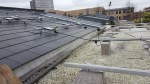

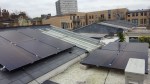
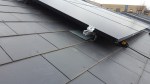
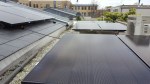
The installation was surprisingly painless, with the only work inside the house, the fitting of the control box near to my main consumer unit.
I have been monitoring all weekend on my laptop.
Sense About Steel
This article in the South Wales Evening Post is entitled Swansea Bay Tidal Lagoon one solution to Tata Steel crisis, insists council chief Steve Phillips.
He is right and I said so in The Death Of Traditional Steel-Making.
I also said that in addition to the tidal lagoon, a comprehensive metro should be developed all over South Wales.
Power From Renewables Surges To High As Emissions Fall
This was the headline on a story in the Business section of The Times today.
Apparently nearly a quarter of the UK’s electricity was generated from renewables last year.
In 2014 it was 19.1%, but last year it was 24.7%.
It all goes to show, that we should think long and hard about building any massive power stations; nuclear, coal or whatever.
I have decided that now is the time to put solar panels on my roof.
Coal Is On The Way Out!
In my view, the only sensible use for coal, is using it to create products for uses like medicines.
The Army also found a use for coal, when they got National Service recruits to [paint it white to give them a job to do.
But two stories tell the world that the Western World has decided that coal is like the lady and not for burning.
This story in the Guardian is entitled Peabody Energy, world’s largest private coalminer, may file for bankruptcy. This is said.
The world’s largest private coal mining company is teetering on the edge of bankruptcy, driven to the brink of collapse by plummeting energy prices around the world, cheaper and less polluting rivals such as natural gas, and widespread economic uncertainty.
When you consider that to get the same energy out of natural gas compared to coal, you generate a lot less carbon dioxide and a lot less of other pollutants, is it surprising? Especially, as the whole process is probably cheaper!
This story in Rail Magazine is entitled FLHH axes 145 jobs as coal cuts bite. This is said.
Freightliner Heavy Haul (FLHH) is to cut 145 ground staff, shunting and driving jobs as the closure of coal-fired power stations accelerates.
Economic forces are seeing that King Coal is killed.
I won’t be shedding any tears.
 The Anonymous Widower