The Rubbish Talked About HS2
I listened to some of the phone-in about HS2 on Radio 5 this morning, but gave up after most of those in the discussion, weren’t letting facts get in the way of a good selfish argument.
So here’s a few facts and my observations.
The West Coast Main Line is rather a nightmare. It is overloaded now and longer and bigger trains would probably only mop-up a small amount of the increase in passengers that will happen in the next few years. In my travels any Virgin train to or from Glasgow was severely overloaded and this section needs action now.
It was intended that the speed limit on the line would be increased, but because the line isn’t very straight, the cost would be high both in monetary terms and also in blockades whilst it was upgraded. Wikipedia says this about the reasons for the bad design of the line.
Because of opposition by landowners along the route, in places some railway lines were built so that they avoided large estates and rural towns, and to reduce construction costs the railways followed natural contours, resulting in many curves and bends. The WCML also passes through some hilly areas, such as the Chilterns (Tring cutting), the Watford Gap and Northampton uplands followed by the Trent Valley, the mountains of Cumbria with a summit at Shap, and Beattock Summit in southern Lanarkshire. This legacy of gradients and curves, and the fact that it was not originally conceived as a single trunk route, means the WCML was never ideal as a long-distance main line.
The East Coast Main Line is better, but it doesn’t solve the problem on the western side of the country.
So those who talk about increasing the capacity on the West Coast Main Line had better look at the engineering problems involved.
Christian Wolmar, a respected commentator on rail, said on television this morning, that the money for HS2 would be better spent on improving local tranport in cities and large towns, by providing trams and better bus services. He has a point, but there is one fault in his argument.
If we take Manchester as an example, where the tram system is being substantially developed, this will make it easier for long distance travellers to get to Manchester Piccadilly and the West Coast Main Line. If trams are frequent and have substantial car parking outside of the city, it may well persuade many more to take the train rather than driving.
So in fact, his plan will in the long term increase the long distance train traffic increasing the need for long distance services from Manchester and in a decade or so for HS2.
More passengers will also be brought to the line, by improvements to cross country and branch lines. Some of these like Manchester to Leeds are scheduled to be electrified and this can only attract more passengers to the fast London lines, where their local station has no connection.
One point on this is that Network Rail is investing in a special overhead line installation train, that can install a mile of overhead wiring every night with only minimal line closure. This will mean that some lines where only a marginal case exists now, will be electrified. An example is possibly from Felixstowe to Nuneaton via Peterborough, which would allow freight trains to be electric hauled all the way to the North of England and Scotland.
Another big problem is freight, which most would feel is better carried by rail to and from the ports to where it is needed. A few years ago, Felixstowe had just three freight trains a day out of the port. Now it’s a lot higher. Much of the freight will come and go through Felixstowe, Southampton and in the future the new London Gateway development and it will need to be either collected from and delivered all over the country. This would add greatly to the number of freight trains going everywhere. Many of course, will have to go up to Birmingham, the North West and Scotland.
So whatever we do we’ll have to find some way to take the freight north or alternatively free up the West Coast Main Line, by building HS2. Or do we put more trucks on the motorways and clog them up?
Those that propose upgrading the West Coast Main Line with longer and bigger trains, forget one problem, that under the current plans also applies to HS2. And that is what to do with the totally inadequate station at Euston. Of London’s main stations it is one of the worst, as I said here. It will have to be rebuilt whether we build HS2 or not. It really doesn’t have the good ongoing transport links that Kings Cross, Liverpool Street, London Bridge and Paddington have or in some cases will have after Crossrail.
In fact it could be argued that if HS2 has a station at Old Oak Common, this might be a better London terminus for that line, as it links to Crossrail, the Great Western Main Line and possibly Heathrow.
There are also a lot of technology that will make HS2 better from an engineering, environmental and passenger point of view.
For a start tunnelling technology has improved substantially in the last decade or so. If you look at the speed of building the Crossrail tunnels, I think that this shows a big increase to the similar tunnels bored for HS1. Having listened to Justine Greening’s statement in the House of Commons, this improvement is being used to put more of the line underground. We may actually be getting to the point, where tunnels are cheaper to build that lines on viaducts.
We also know a lot more about how to minimise problems when we build large projects. Crossrail for example seems to be causing a lot less problems with construction than HS1 did. Admittedly, it has caused a bit of a problem at some Central London station sites, but no more than say the average large building site or an office block.
Project management has also got a lot better over the last few decades and it is much more likely these days that a large contract is built on time and on budget. Provided the politicians and the civil servants don’t stick their oar in too much and change the specification, it will be all right in the end.
As the Sunday Times pointed out at the weekend design is getting better and the trains on HS2 could be a lot better than Eurostar. We might also see other technologies like anti-noise cutting the noise signature of the trains.
It has also been said that passengers won’t use HS2 because it will be too expensive and too much hassle. But here is where technology will help, in such things as buying tickets, where hopefully we’ll see a touch-in touch-out system like Oyster.
So the doom-mongers will continue to knock HS2, but it has a lot going for it.
The trouble with rail projects, is that if we had a referendum about spending £32 billion on rail or the same amount on roads, the public would vote for the roads. But within a few years they’d be just as gridlocked.
Hampstead Heath Station
I went to Hampstead Heath station on the North London line yesterday.

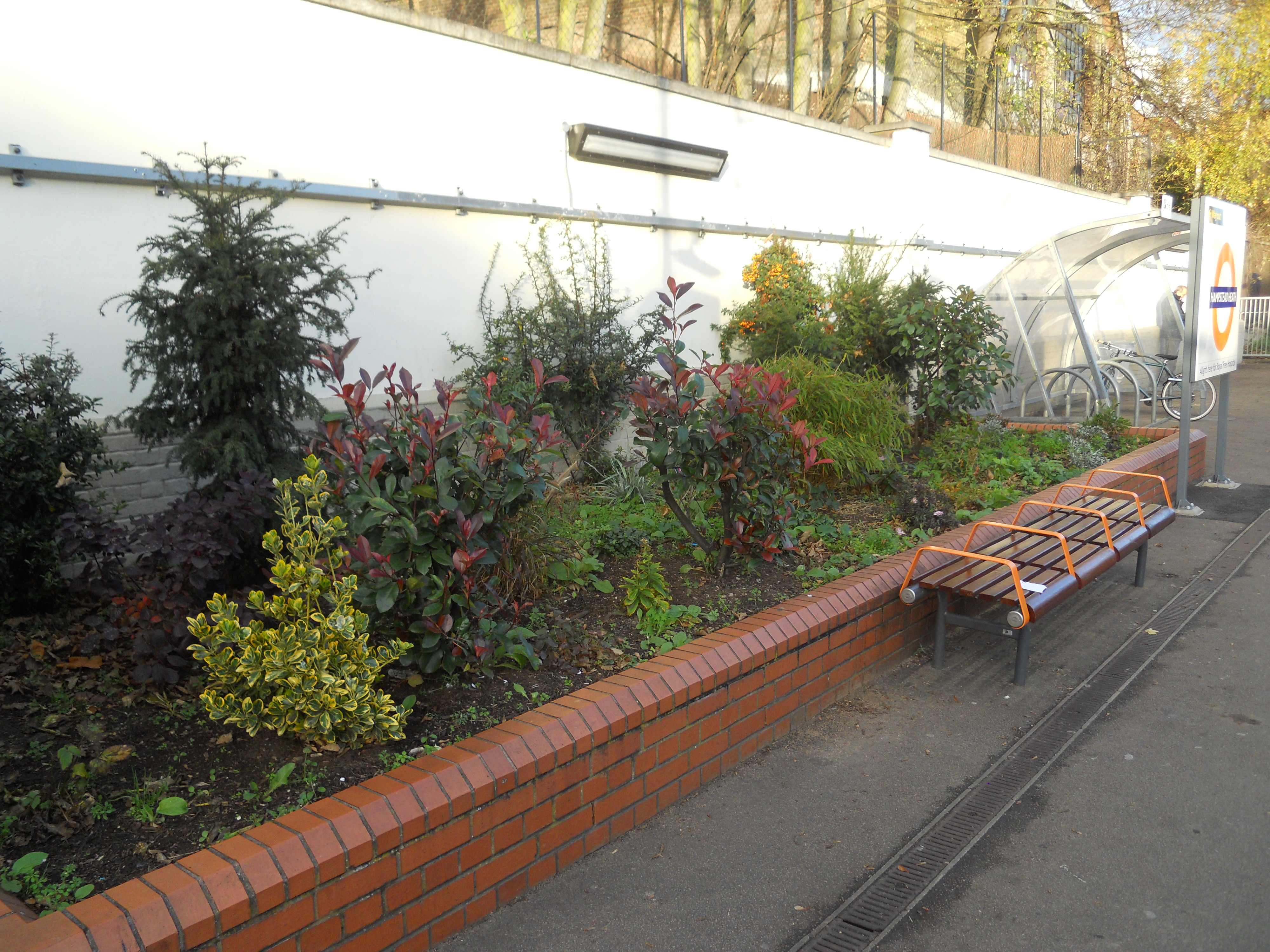
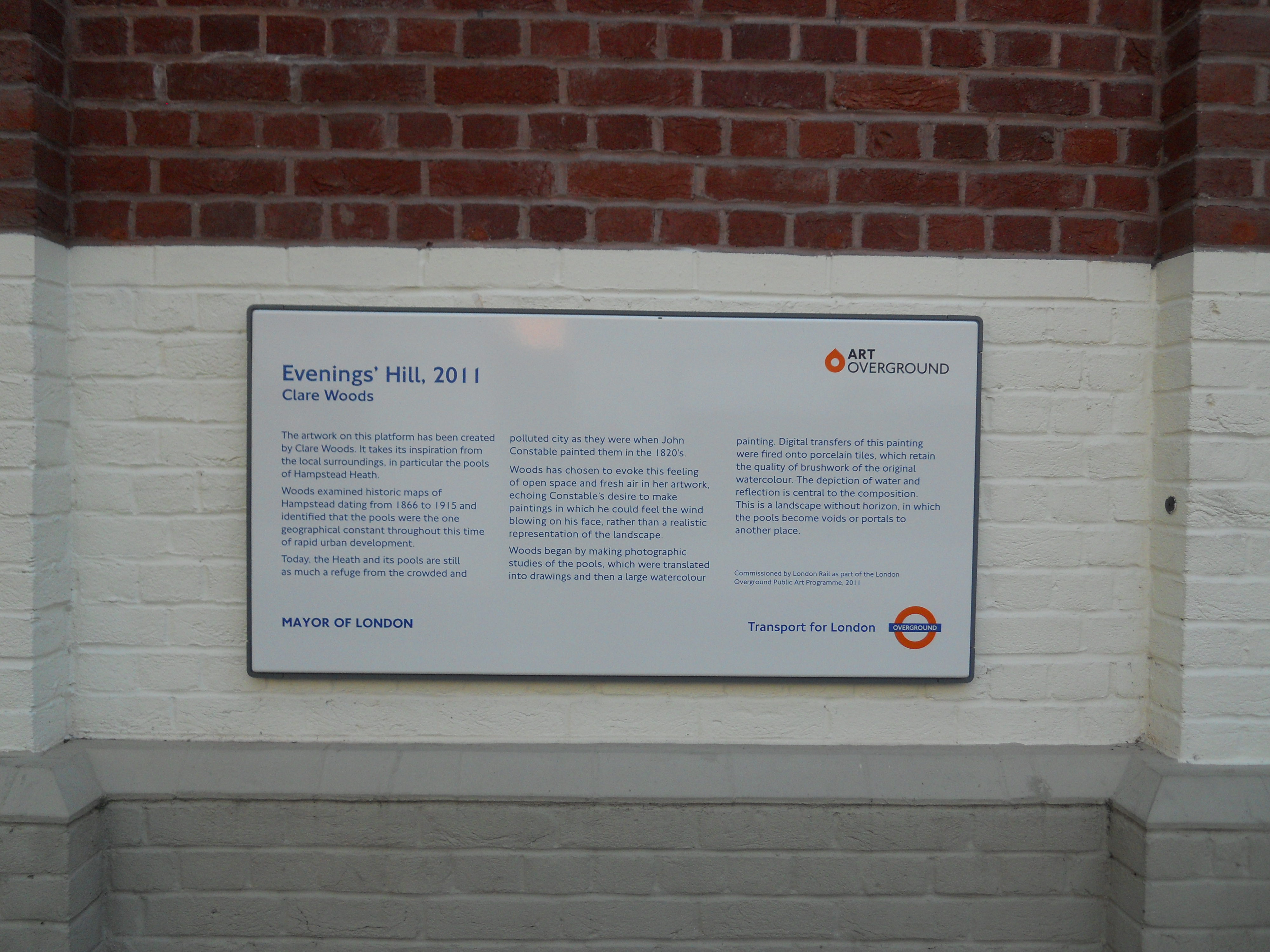
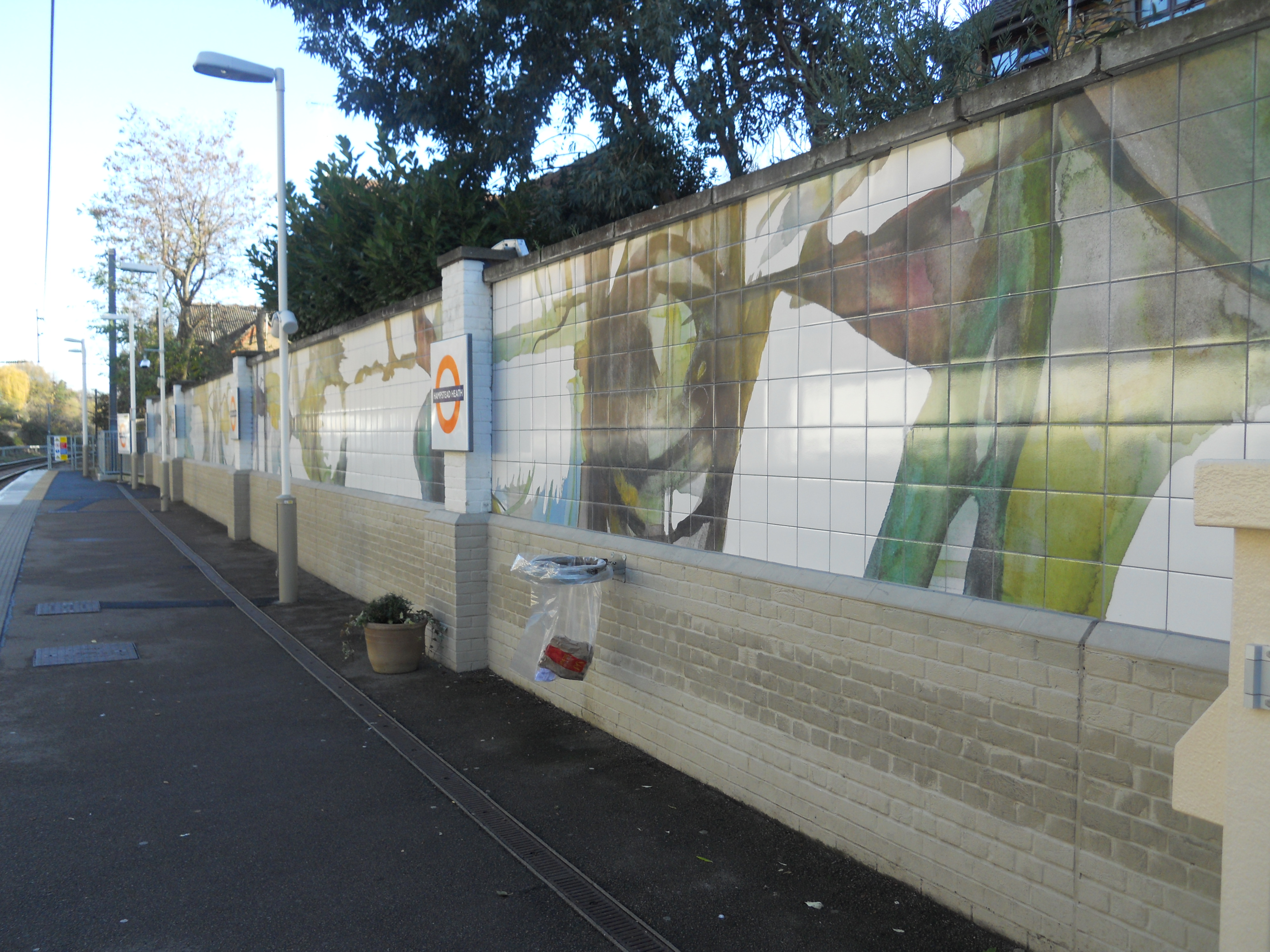

It has been updated with some original artwork. The work is entitled Evenings’ Hill and it is by Clare Woods.
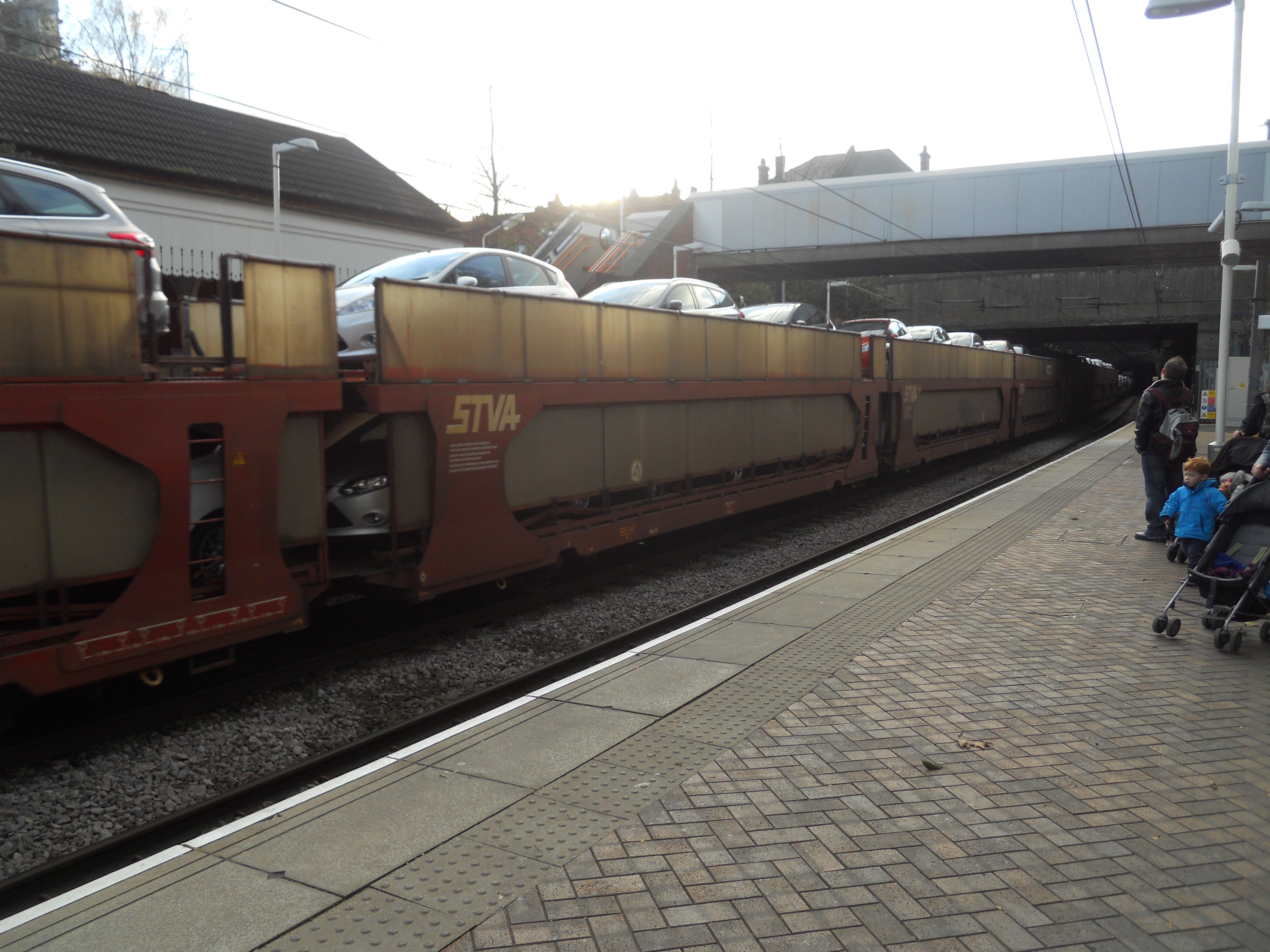
Whilst I was waiting, two freight trains passed through in opposite directions. Not unusually on the North London line, but it did seem a bit strange. One was full of new Ford vehicles.
All the station needs now is a pair of lifts. But it’s a big improvement on the station I first used about ten years ago.
Where Are All The Containers Going?
I found this table in the December 2011 edition of Modern Railways. It shows the total number of freight trains per day at a number of points on the rail network for the three years 2011, 2020 and 2030.
Colchester – 39 21 32
March – 34 85 98
Huntingdon – 10 38 63
Kettering – 18 19 19
Tring – 65 87 132
Pangbourne – 53 93 125
Action Grange – 60 130 171
As many of these trains will be 30 to 40 boxes long, I’m sure that there will be a lot of complaints from the Nimbys, who thought they’d bought a quiet cottage in the countryside and now find they’ve got one heavy freight train every half hour. Some will even run in the depths of the night.
But at least the increase will get the trucks off the road.
Tesco Freight on the Rails
Returning from Ipswich on Saturday, I took this picture.
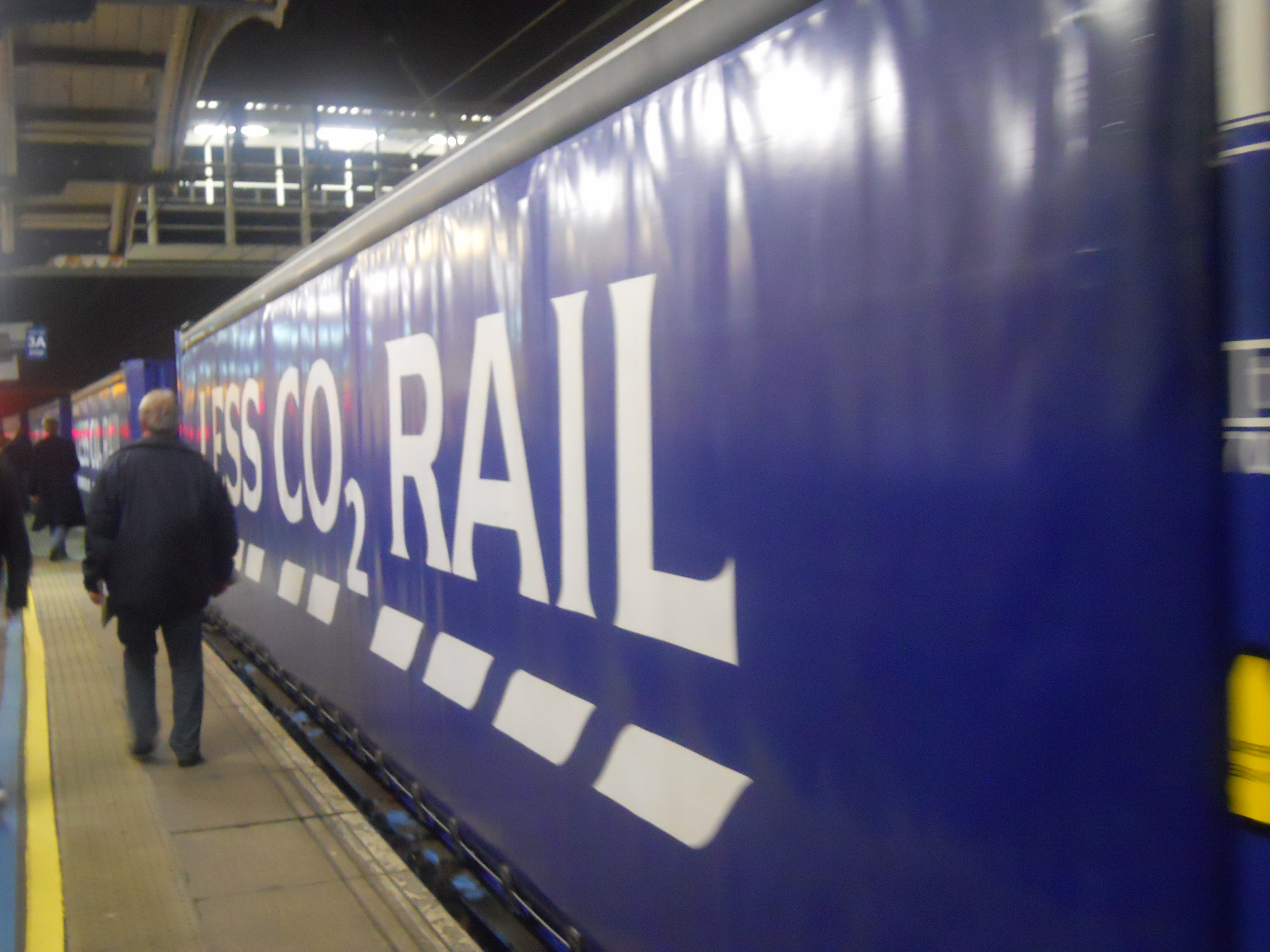
A Tesco-Branded Train
It shows a one container of a trainload branded by Tesco.
Virgin Trains Glasgow Services
Inevitably in the last couple of weeks, I’ve ended up on some of Virgin Trains services that have started at or are going to Glasgow. If I take Day 21, where I went from London to Milton Keynes and then from Crewe to Lancaster for Morecambe, before going from Lancaster to Carlisle, all on trains going to Glasgow. The early train had plenty of space, although, a lot of people use it to commute to Milton Keynes, but the other two were very overcrowded. I didn’t have a seat reservation on either leg and although I got a seat from Crewe to Preston, it was stand up for the rest of the way.
It almost seems that there is a division, where trains are bearable south of Warrington, Wigan or Preston, but often unbearable to the north. More capacity is urgently needed, both on the Pendolino and Super Voyager services. I think the problem is compounded, by the fact, that the trains get used by locals, travelling just one or two stops. I met one guy commuting from Lancaster to Carlisle.
There are a few TransPennine services from Manchester Airport to Glasgow that use the route, but they are short 100 mph trains, which at best add a few seats to the route and at worst make it more congested. I experienced one going south and detailed it in this post. Perhaps, there is a case for a couple of High Speed Diesel Trains to replace the small Class 185‘s on this route until the line is fully-electrified and electric multiple units arrive.
It has been announced that extra Pendolino trains will be available soon, but some seem to have been put into store, rather than service. Surely, if the sums added up four years ago, and we’ve had an increase in passengers since then, that they are better earning revenue rather than getting rusty.
Remember that my particular expertise is resource scheduling. I just think, that someone’s objective function is not comprehensive enough or there are some dark politics involved. If nothing, adding extra seats to the Glasgow services might encourage people to use them rather than flying, which would reduce our carbon footprint.
Given the overcrowding, something should be done as soon as possible.
At present all I can advise, is make sure you have a seat reservation when you travel anywhere between Warrington and Glasgow.
But the real problems of the West Coast Main Line are historic, as Wikipedia states.
Because of opposition by landowners along the route, in places some railway lines were built so that they avoided large estates and rural towns, and to reduce construction costs the railways followed natural contours, resulting in many curves and bends. The WCML also passes through some hilly areas, such as the Chilterns (Tring cutting), the Watford Gap and Northampton uplands followed by the Trent Valley, the mountains of Cumbria with a summit at Shap, and Beattock Summit in southern Lanarkshire. This legacy of gradients and curves, and the fact that it was not originally conceived as a single trunk route, means the WCML was never ideal as a long-distance main line, with lower maximum speeds than the East Coast Main Line (ECML) route, the other major main line from London to Scotland.
And this still means that for long distances north of Crewe, that only a double track is possible. So this limits the number of paths available, which means that running say a slower connecting service from Warrington to Carlisle, is just not on, even though it would remove the one or two station travellers.
And then you have the freight trains!
So perhaps the problem is not actually about trains, but is more about tracks and paths. The only way then, to get more through, would be to increase the size of the trains from nine to eleven coaches, for which many of the carriages have been built and are in store.
But at some point, the West Coast Main Line will have to have extra tracks, especially if more and more freight trains need to run to and from Scotland from the south. As I believe has been shown around Ipswich, the more freight trains you can run, the less trucks use the roads and you get greater capacity for cars and coaches.
I add the latter, as there is now a London to Glasgow coach service with sleeping berths.
Raising Motorway Speed Limits
There is a lot of talk and argument about raising the motorway speed limits to 80 mph. Read about it here in the Independent, where they say that the limit will rise, but with lots more 20 mph zones in towns.
No-one is raising the fact, that more and more container traffic is being taken off the roads and put on the rails. This will decrease the congestion and increase the speed of the traffic. But they do need to selectively spend some money on rail junctions and road/rail terminals.
The Solution’s Behind You
The BBC were interviewing Ed Balls today at the Labour Party conference in Liverpool. He was pontificating on the solutions, that he would do to could Britain out of the financial mess, that largely his party got us in.
Who is right or wrong on the solution is a matter for the future.
Butb I think, that the solution to our problems was behind Ed Balls in his BBC interview. But then politicians never look behind themselves, except to see where the knife is coming from.
Over the last twenty years or so, Liverpool has been transformed, from a basket case, to one of the most vibrant cities in the world, by developing the city in a professional and quality manner. Liverpudlians will point to the European City of Culture in 2008, as a catalyst for a lot of the change, but in some cases it just gave developers a reason and possibly an excuse to invest.
London too, is changing and has been greatly improved over the last few decades. The development of Docklands started it and now the Olympics is pushing the city to new heights.
You could also argue, that Manchester got a kick start from the 2002 Commonwealth Games, but just as with Liverpool and London, the process was going to happen anyway and perhaps these events were just advertising for the place on a wider scale. Wikipedia says a lot about how the Games got Manchester moving after the 1996 IRA bombing. One might even say now that Manchester’s driving force is football.
Liverpool is getting a lot of publicity over the next couple of days, and how many will think about going there for a weekend break? When I was there last, I met a plumber who had come to the city for the day to ride his bicycle along the Mersey. Liverpool is almost becoming a seaside resort!
These three cities have benefited from a process that could best be described as Infrastructure for All.
I could also add how Newcastle has benefited from the waterfront developments along the Tyne. Other cities, like Leeds and Birminghamhave also been improved to everybody’s benefit.
I should also ask, if Glasgow is seeing the benefit for the 2014 commonwealth Games yet.
We must do this more in our run-down cities and districts.
Even on a local basis, Dalston has improved a bit in the year I’ve been here, mainly because of the opening of two new railways, that got built early because of the Olympics. But even if the Olympics hadn’t happened, they would have still gone ahead.
So we should look at all the infrastructure projects on the stocks and do those that are most valuable as soon as finances allow.
Priorities should obviusly go to those that give the greatest benefit. I would start with.
Housing, which would provide homes for our ever increasing population. It should be energy efficient and hopefully built, so that people who live there, don’t need to own one car per person, as we must wean ourselves off our own personal travelling spaces, they cost everyone else dear.
Selective rail projects, to remove bottlenecks and level crossings, improve stations and add a few new ones. In Suffolk, they are adding a new loop at Beccles so that more trains can run from Ipswich to Lowestoft. How many more Beccles-like problems are there out there, that need urgent removal. Many of these projects would have positive knock-on effects in other areas. Some level crossings, like the one in the centre of Lincoln, would have enormous benefits to road traffic, if they were removed.
Rail freight projects, which remove trucks from the roads. This would mean a few more interchanges such as Radlett, but the benefit to roads like the A14 and M1 would be high.
Personally, I would add a better bus network, with much better ticketing and disabled-friendly, information rich two-door buses, like you have in London. I have a free pass for buses, so why do I have to be issued with a ticket when I use a bus in Cambridge. It should be just touch in on all buses.
And of course, it’s important that we create interesting places for people to go. Some sports clubs have been trying to build new grounds for years and this process should be speeded up. And we don’t want any more stadia, like Coventry, Scunthorpe and the Rose Bowl designed solely to be driven to. They should be built near the transport hubs., which in itself would probably make them more financially viable.
You will notice, I’ve missed out new roads.
In many ways they are not infrastructure for all.
Some may need to be built or widened, but our priority should be to get unnecessary traffic off the roads.
I believe that we are seeing a drop in the number of trucks from the roads, as more and more container traffic is diverted to the trains. But this process needs some selective action at rail junctions, and it also needs more rail-based distribution centres near large conurbations. But the Nimbys don’t like these. Some also object to freight trains passing through at night.
There has been talk for years about taxing foreign lorries in this country, just as the Swiss do. The last time I drove the southern part of the M25, it was full of trucks registered aboard. We have the Channel Tunnel and goods to and from Europe should go through it on container trains, just like most of the freight goes in and out of the ports at Southampton, Felixstowe and Liverpool.
Every truck removed, is an increase in road capacity.
We also need better interface between the roads and rail. How many cities build large car parks in the centre, when perhaps building them on the outskirts and providing a tram or rail link to the centre? Cambridge was very much derided by doing this with a guided busway, by many including myself, but they now seem to be making a success of it.
The Return of the Deltic
I have posted about this before, but on BBC News this morning, they had a film about how the 50-year-old Deltic locomotive, Royal Scots Greys is hauling freight again in the North East. There are some good pictures here.
What A Way To Run a Railway
GBRf is a rail freight company in the UK and it has a shortage of motive power.
Could this be in part to what I saw last Thursday, whilst sitting outside a pub outside Thurston station in Suffolk, where in a brief period of perhaps forty minutes, three long freight trains trundled along between Felixstowe and Peterborough? I’ve done this many times before and never seen one. So as I’ve reported before a lot of heavy freight is now going by train.
So I was surprised to see that they are hiring in a 50-year-old Deltic locomotive, Royal Scots Grey, to move freight in the North East. It must make commercial sense to both companies involved. It is rather a tribute to the Deltic, but surely with better planning a few years ago, instead of scrapping these wonderful locootives, they should have been properly stored. After all one my most memorable train trips was behind a Deltic.
We sometimes decry the quality of engineering in this country. But the list of things we should be proud of keeps getting longer and the Deltic has just got itself added.
Along the Regent’s Canal to the Angel
I’m about a five or ten minute walk to the Regent’s Canal and today, I walked along the canal to the Angel as it was starting to get dark.
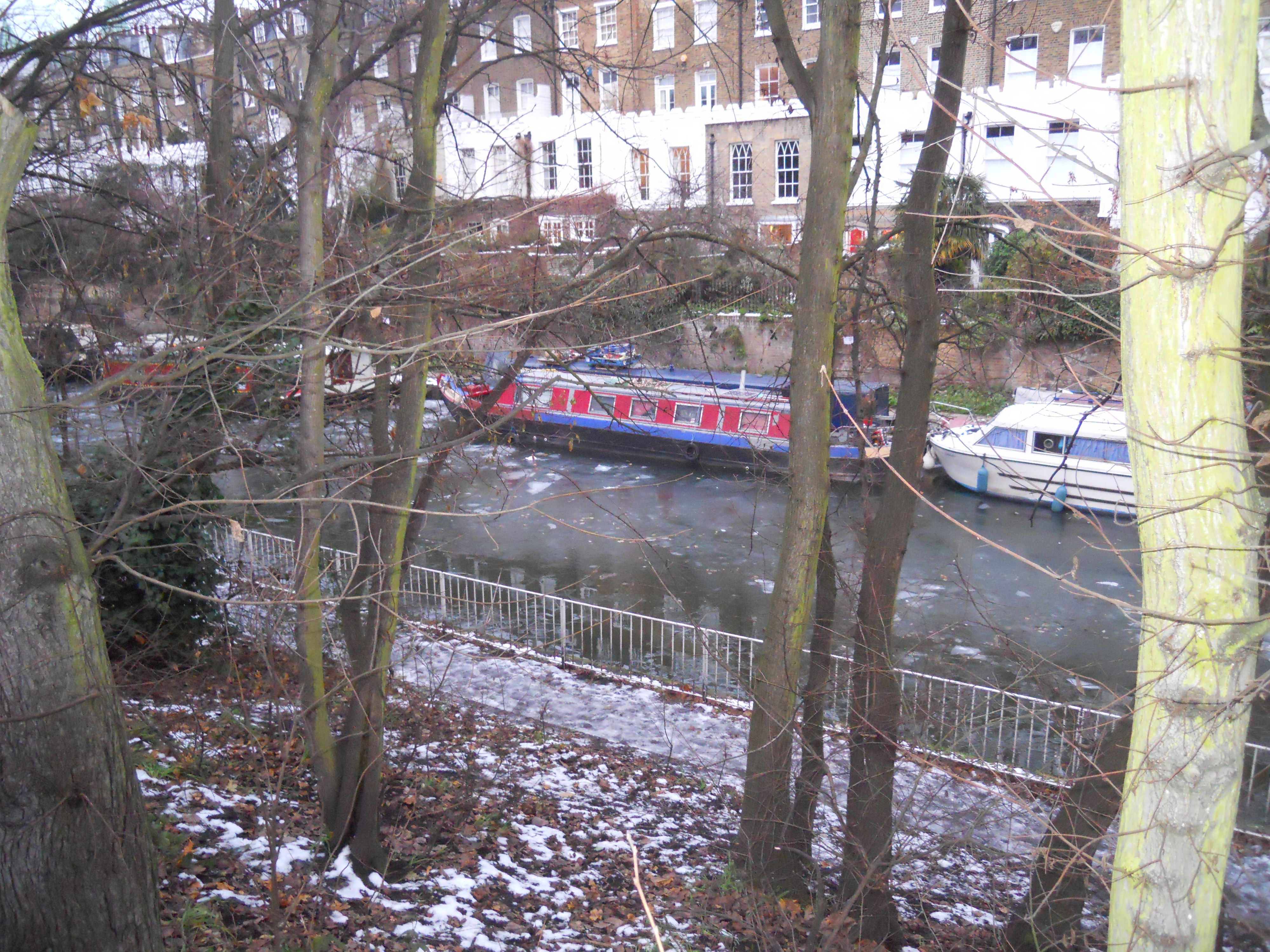
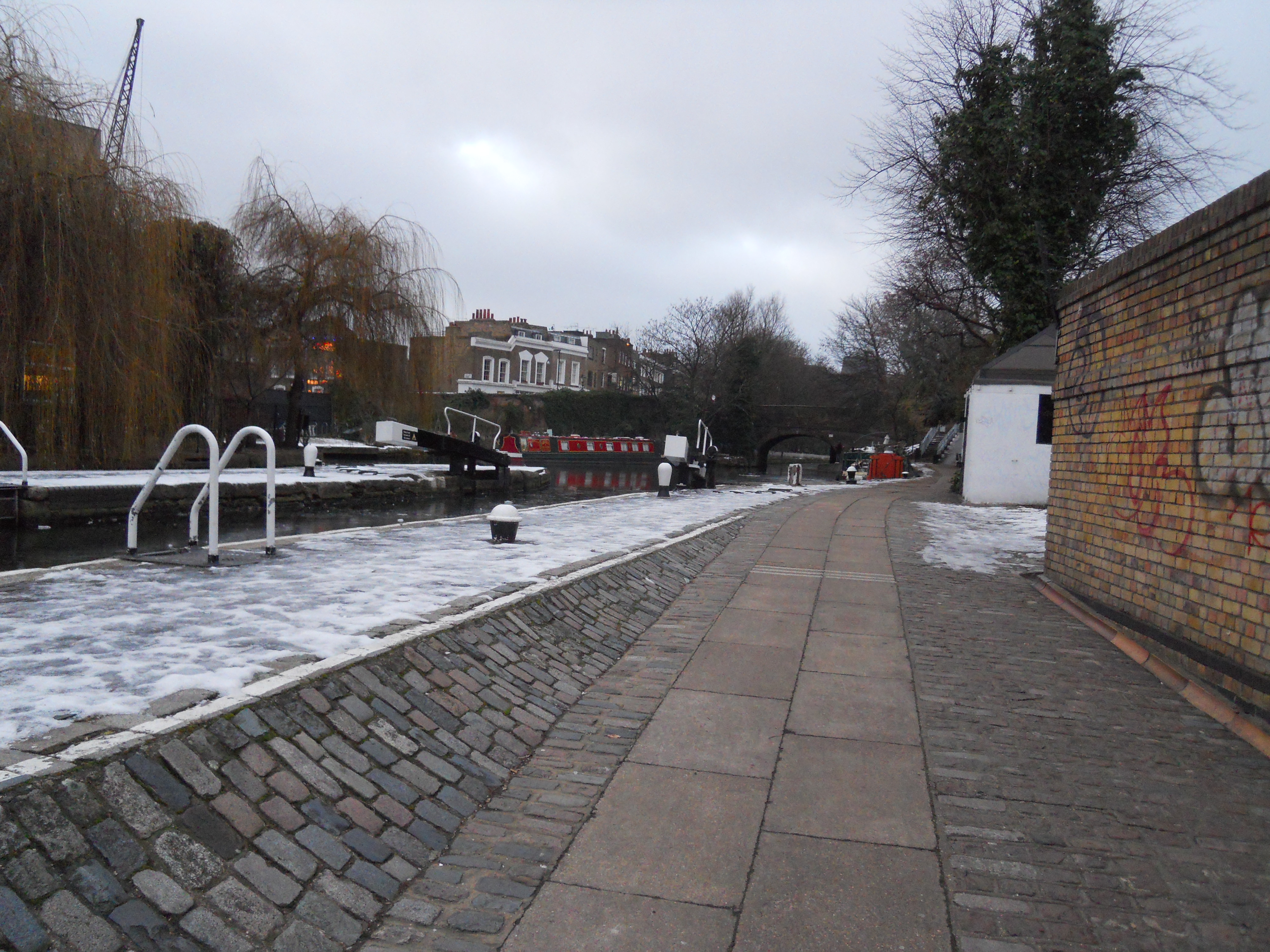
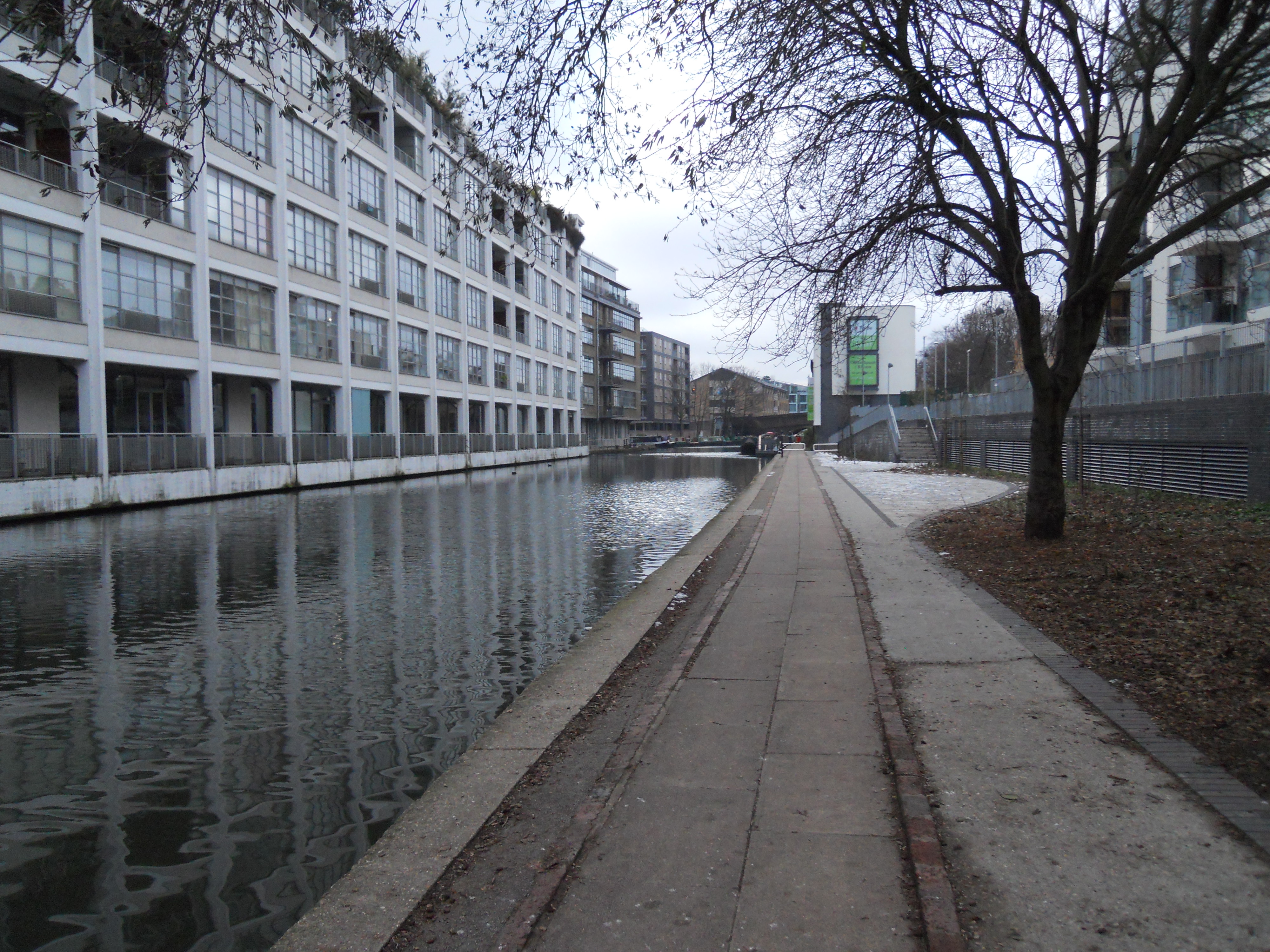
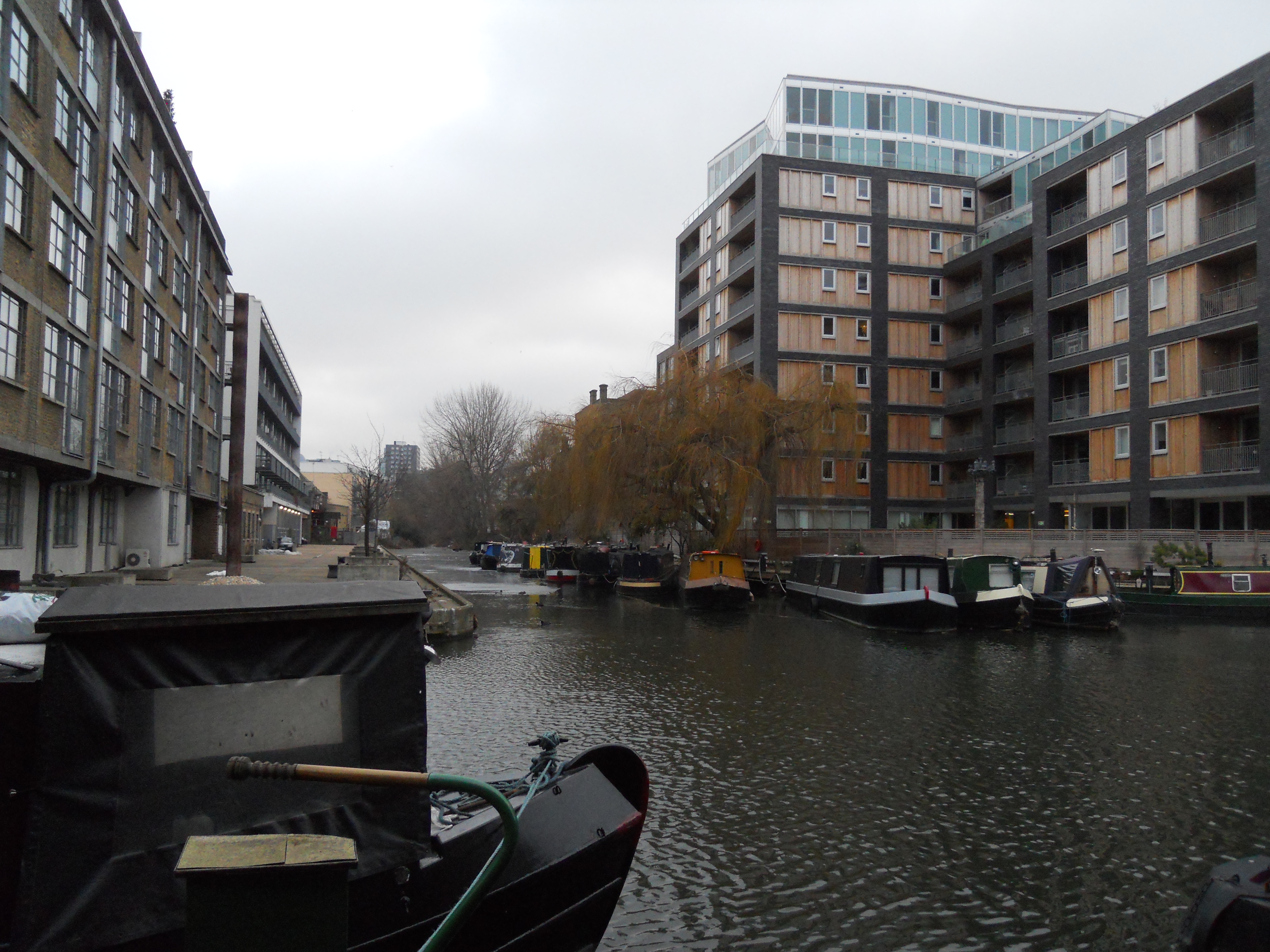
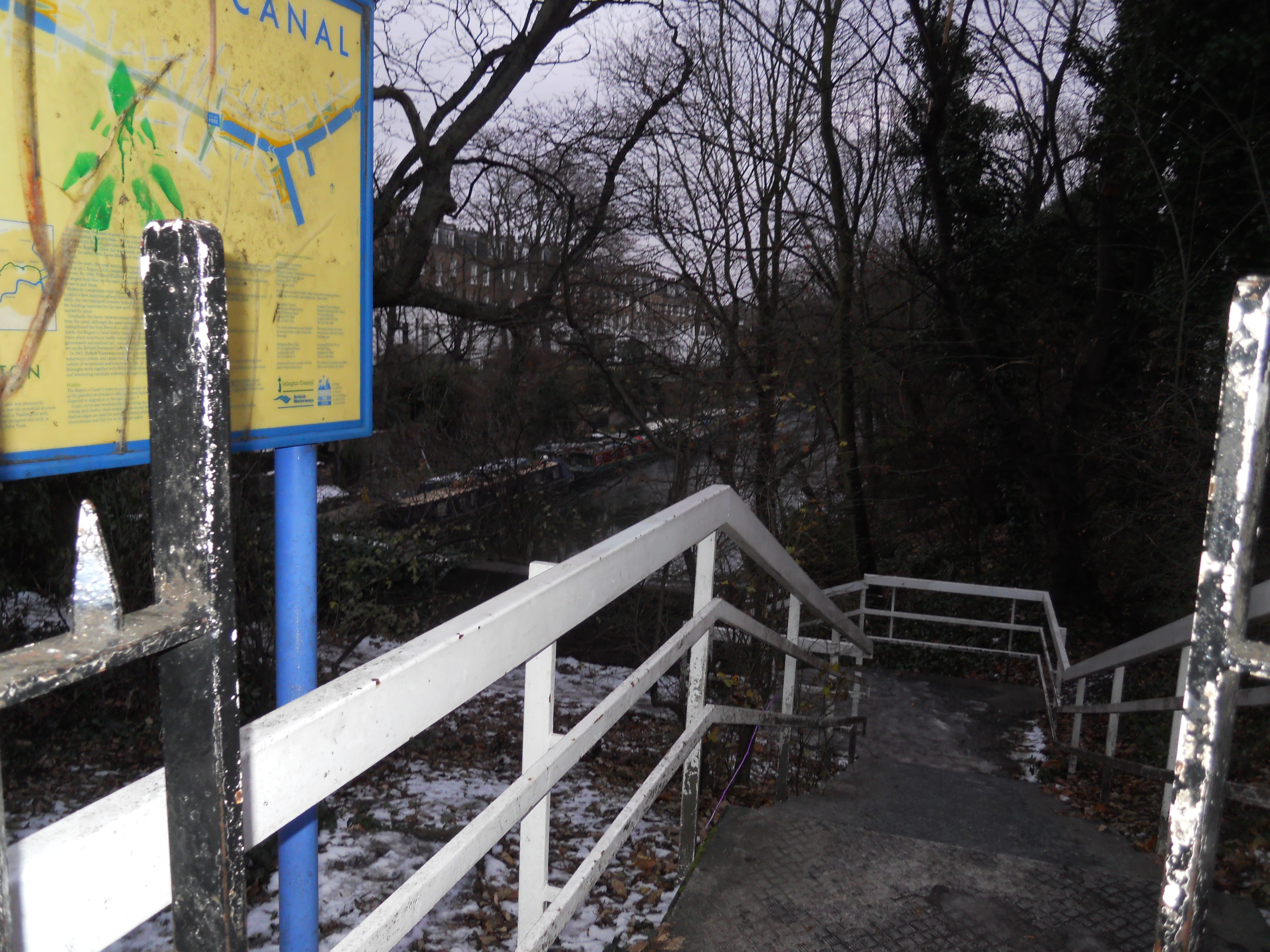
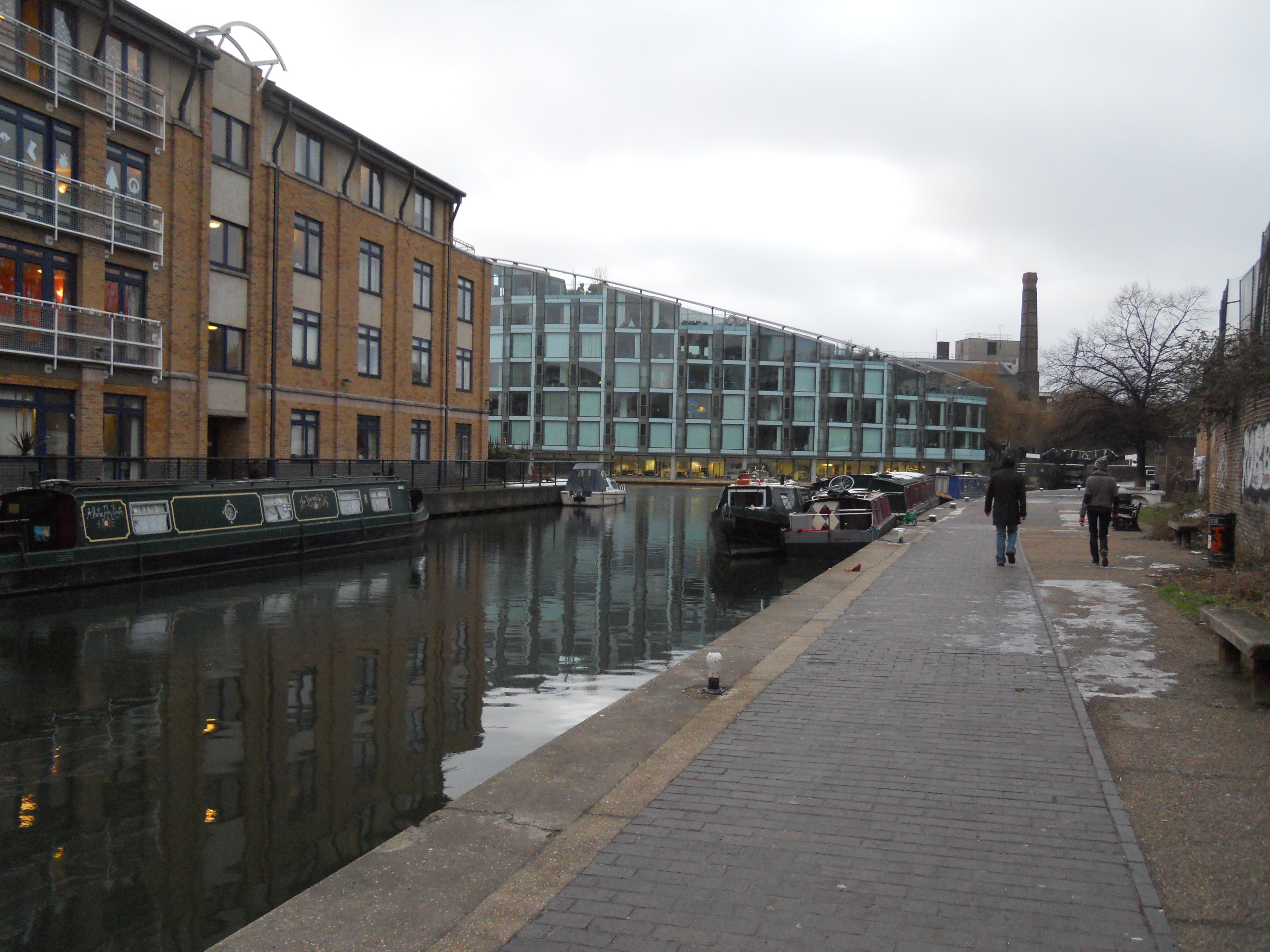
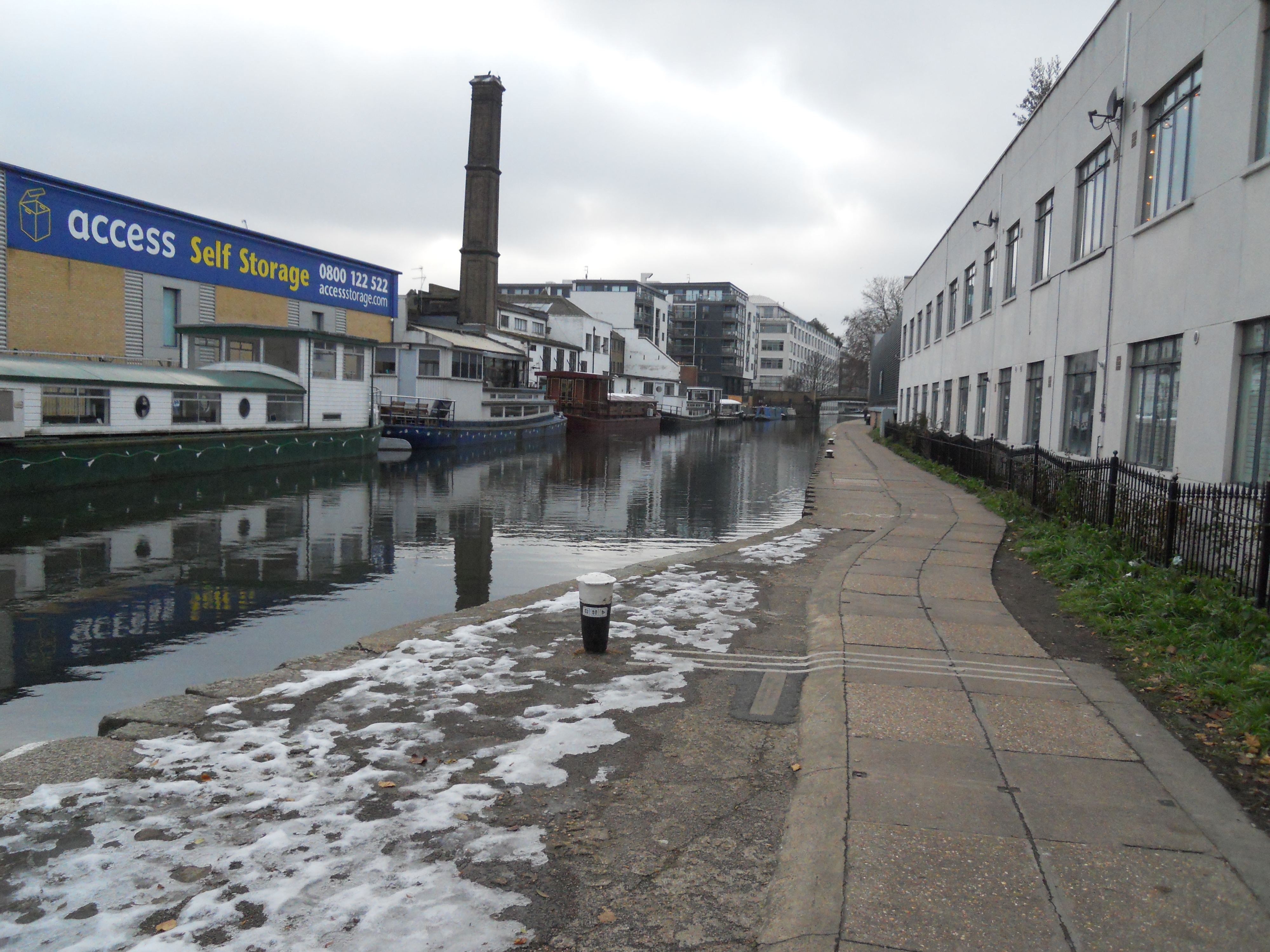
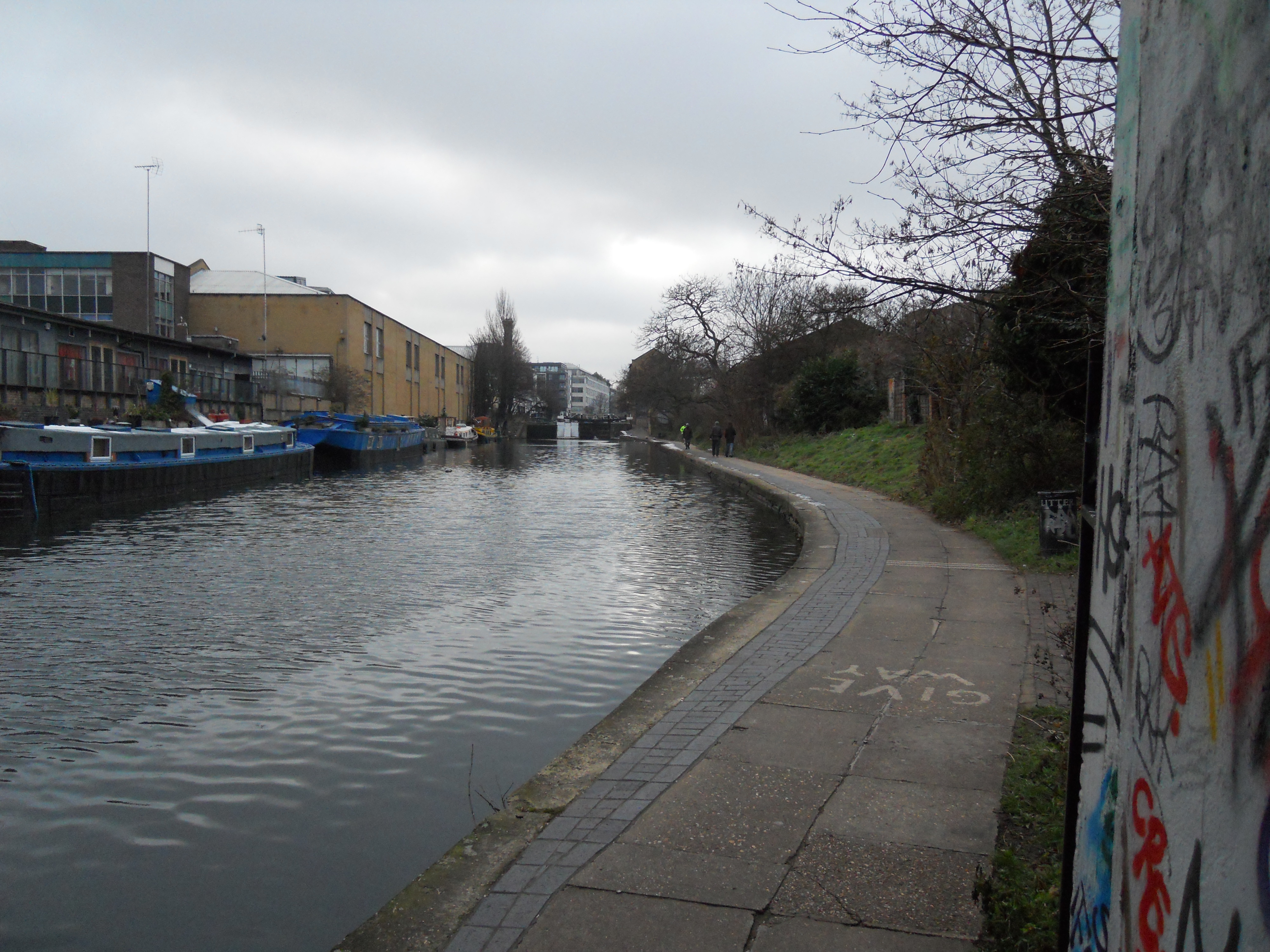
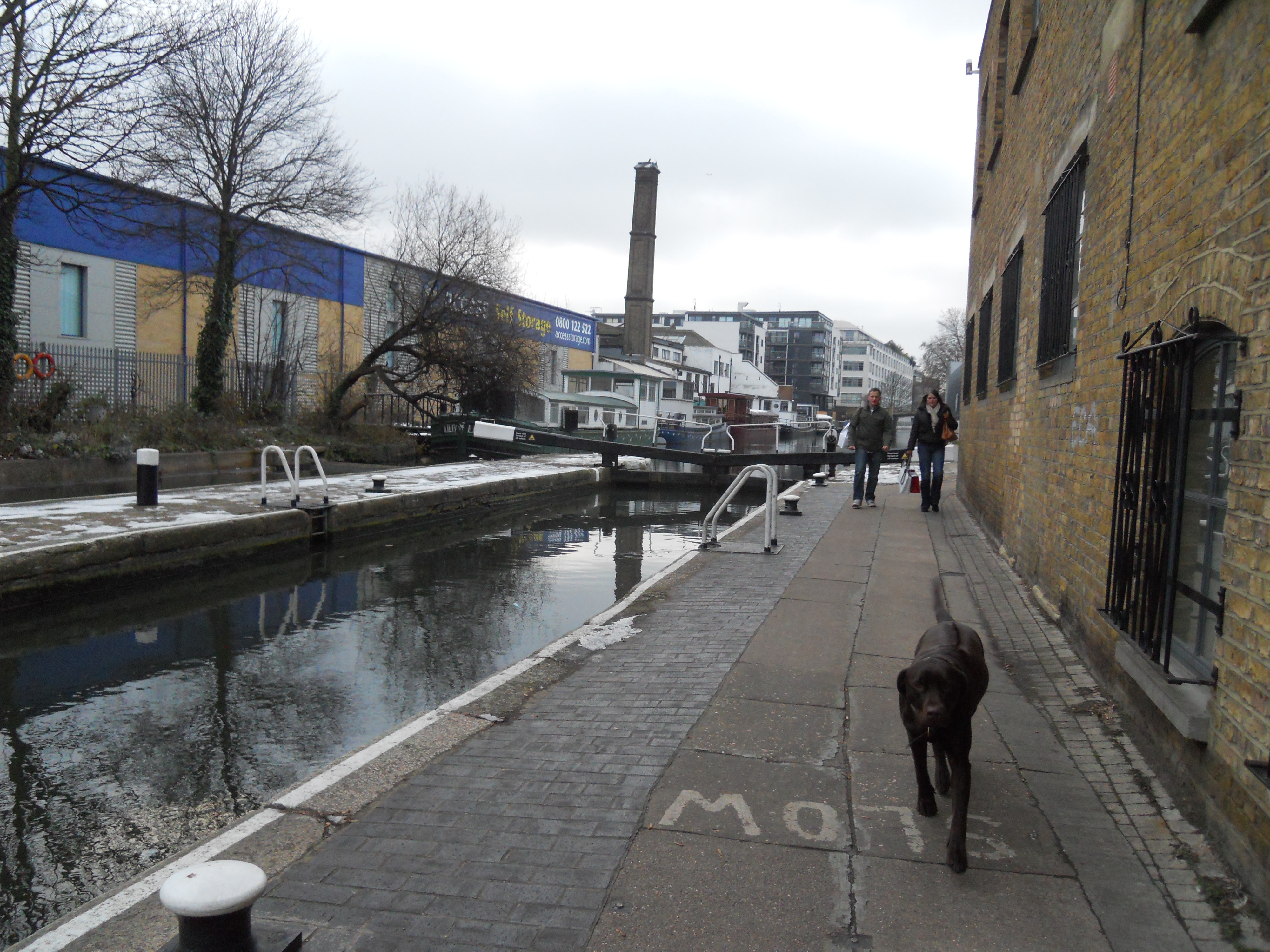
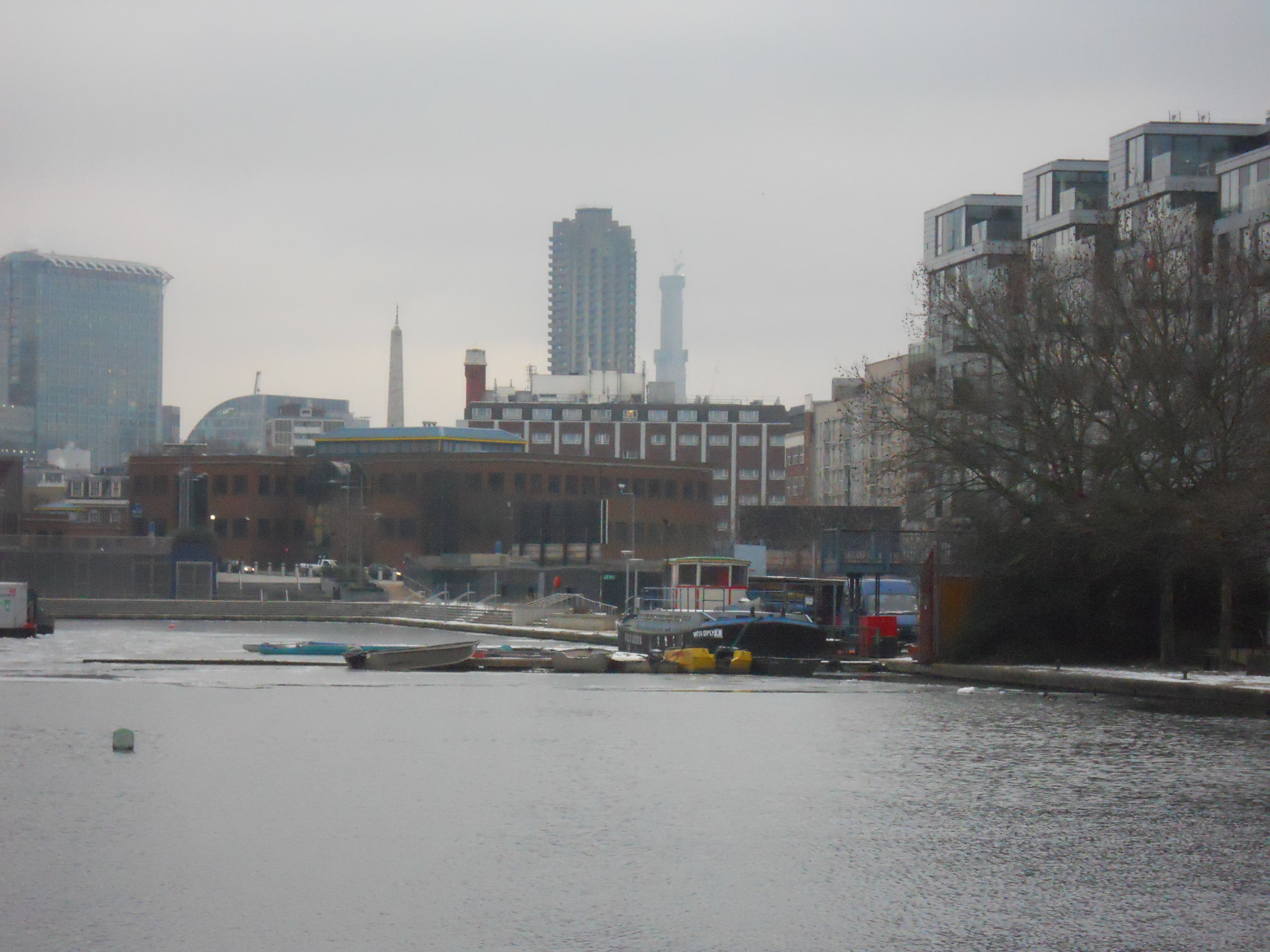
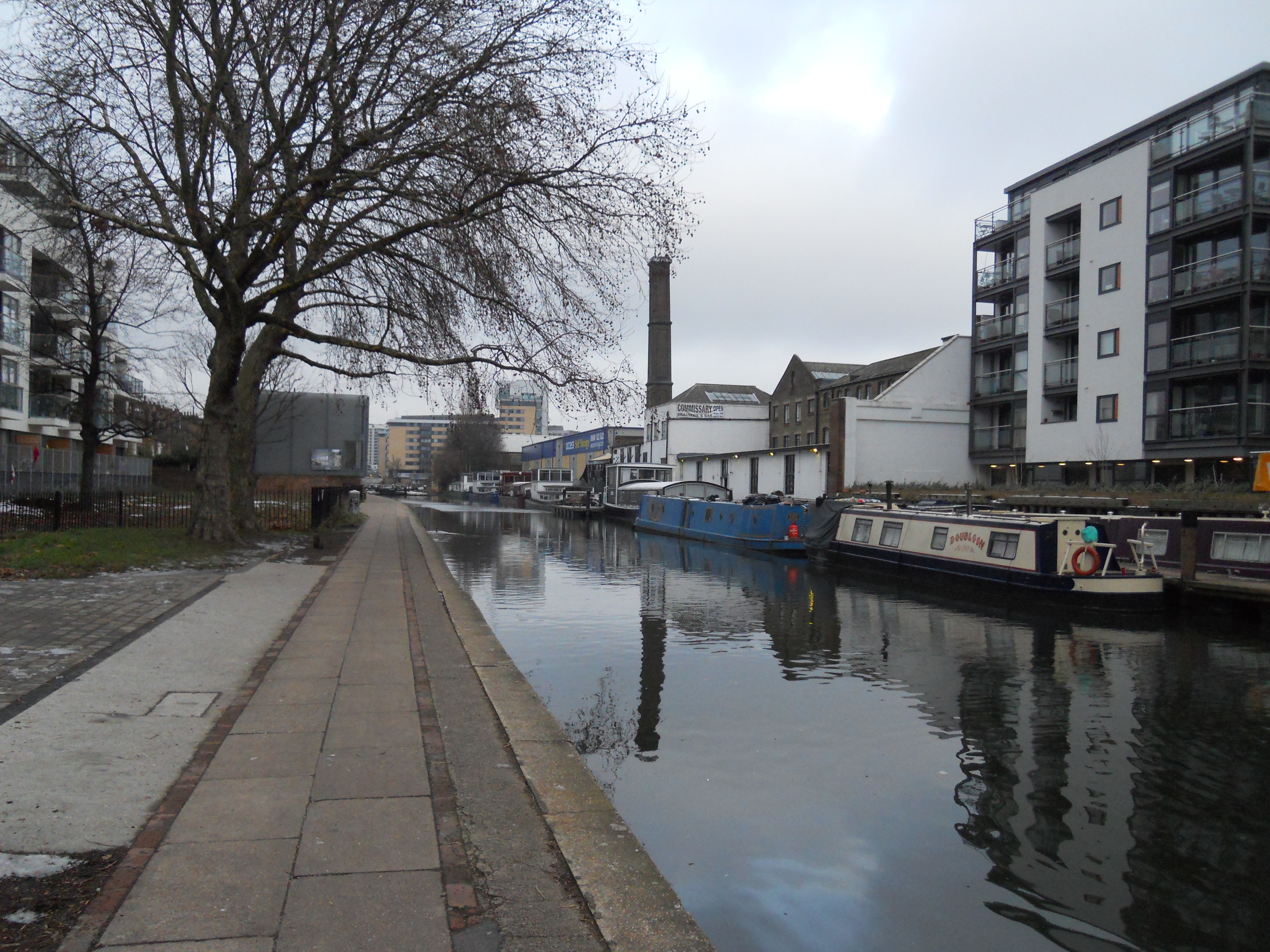
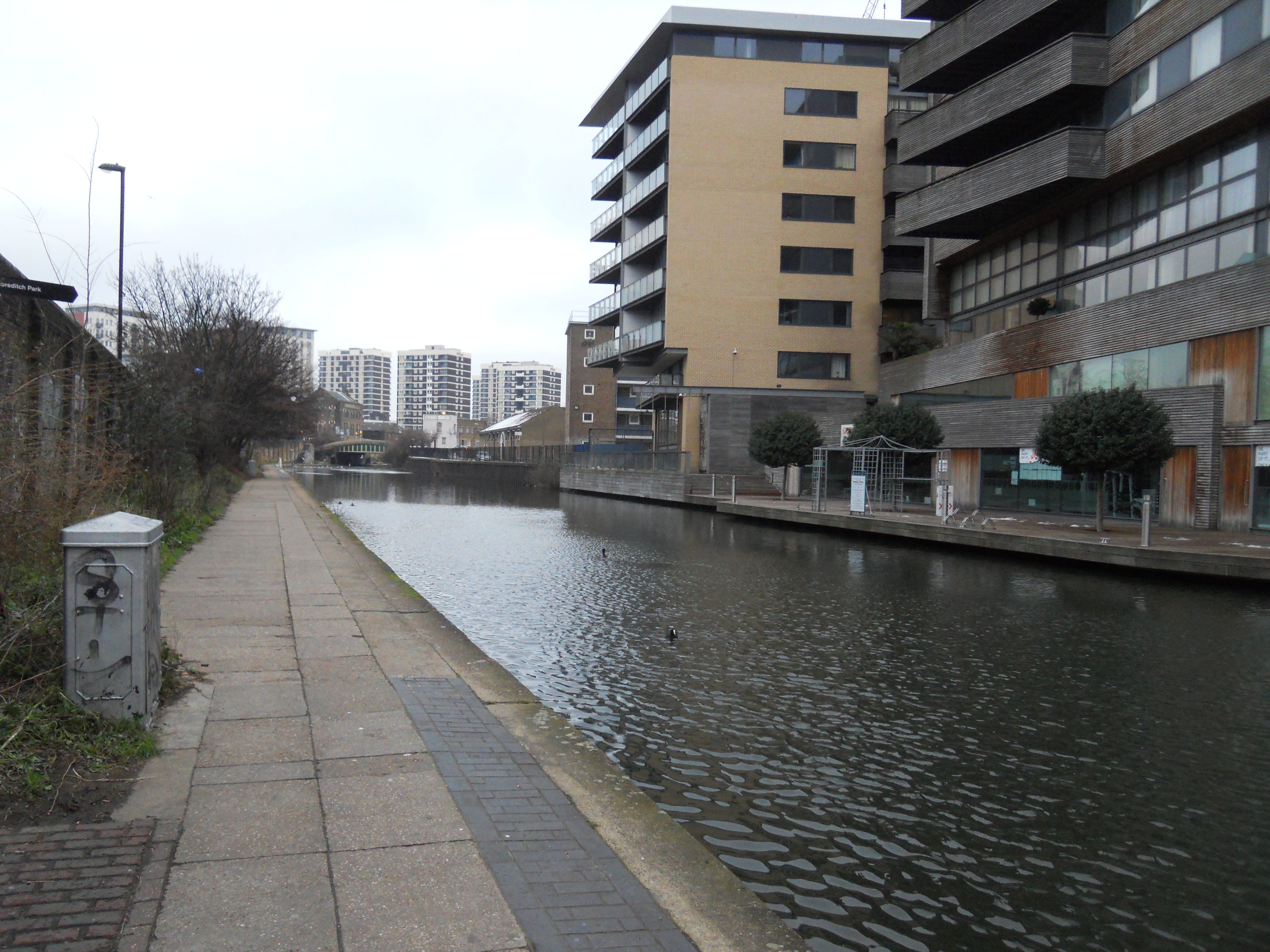
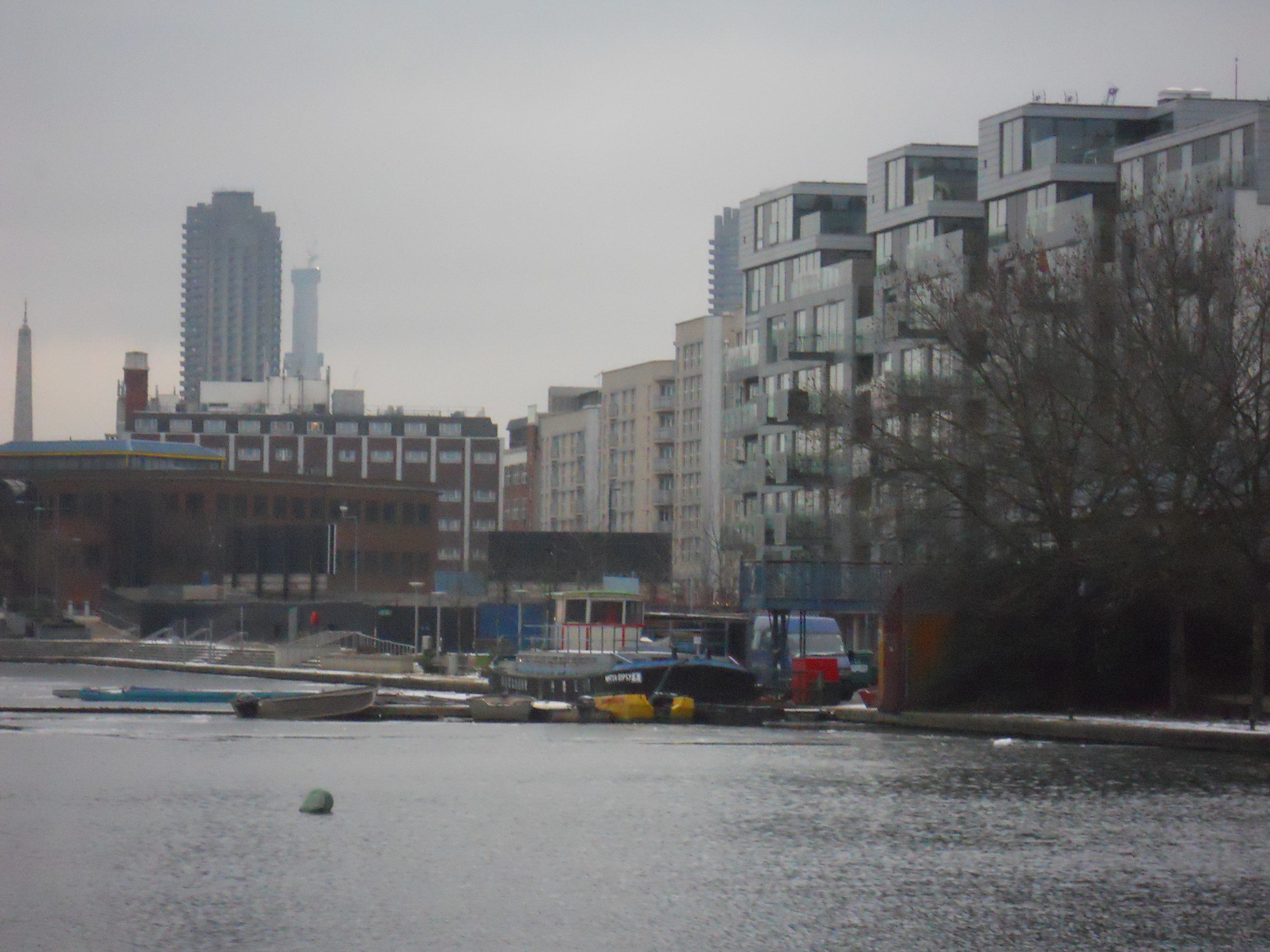
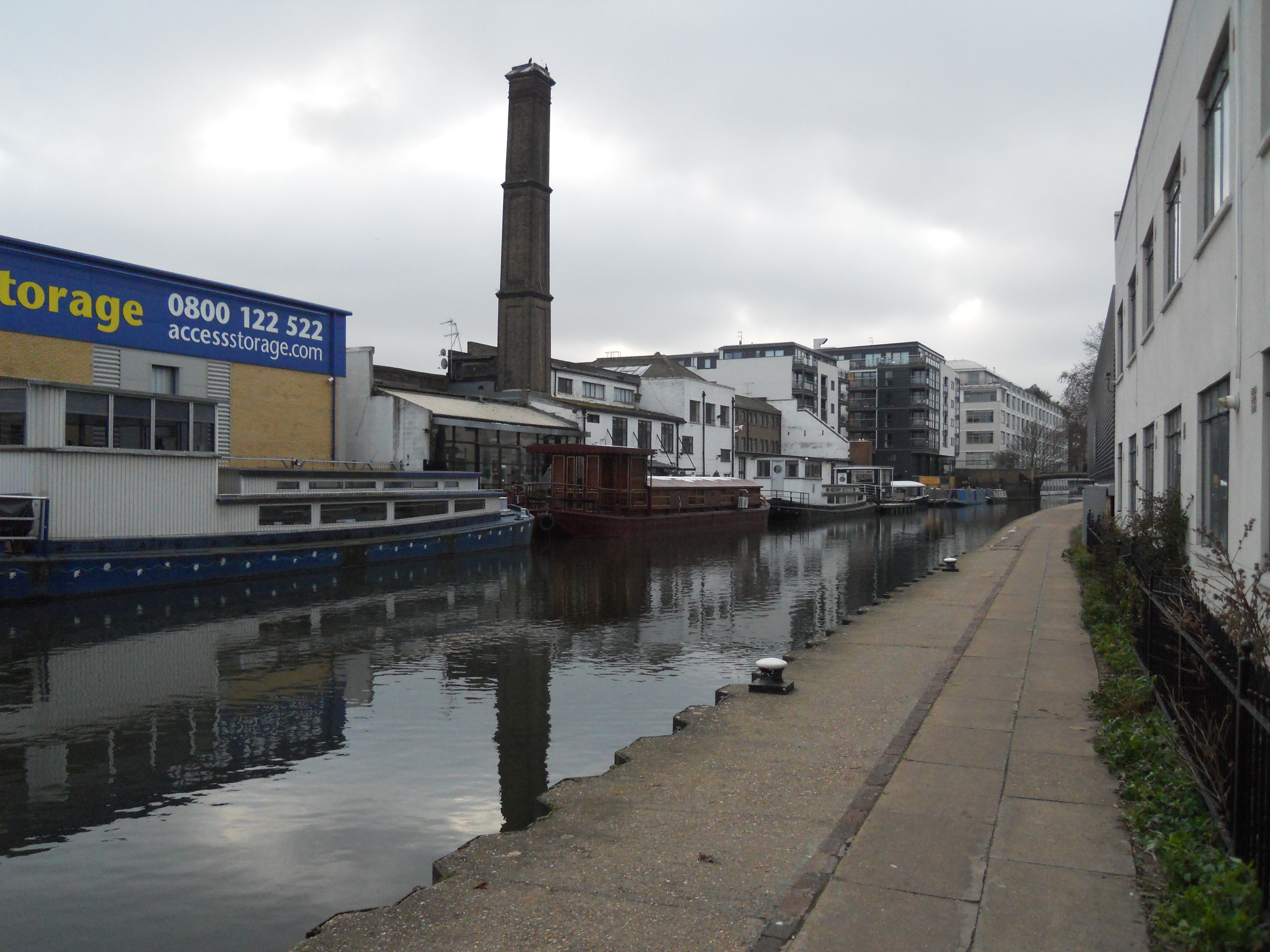
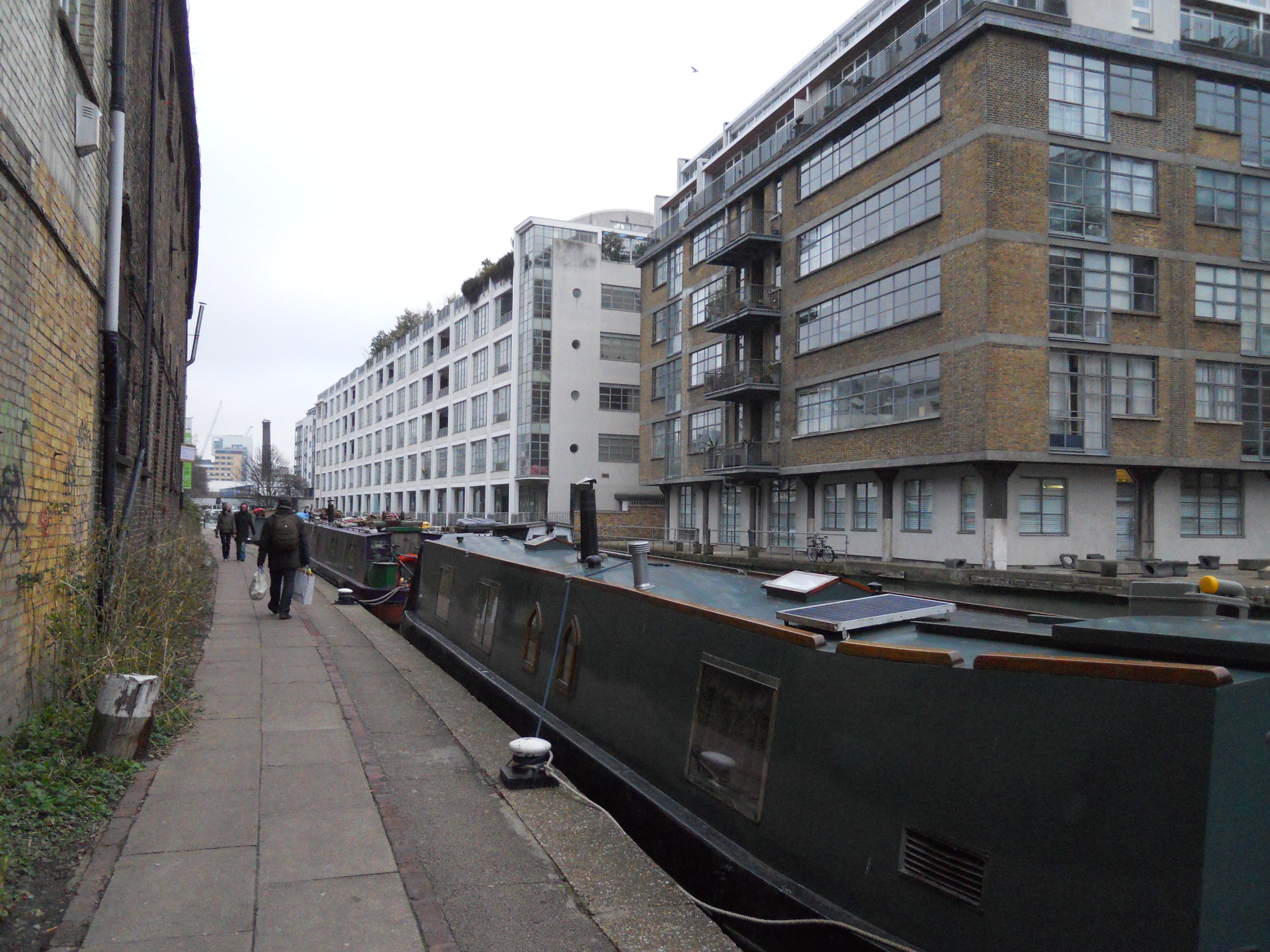
I can remember some of this area in the 1970s and to say it has improved is one of the biggest understatements, anybody can make. I even saw a Norwich City supporter enthusiastically spinning for pike.
This is the third time, I’ve lived near this canal.
In the 1970s C, myself and our young family lived in St. John’s Wood, just north of the canal and we would cross it by the London Zoo to get into Regent’s Park. You used to see the occasional narrow-boat or pleasure craft, but I don’t think there was any easy access to the tow-path. It would probably have been deemed to dangerous anyway to take three small children alongside the water. So when we decry Health and Safety for ruining our pleasure, there must be many more examples like the Regent’s Canal towpath, where different interests coexist together in complete safety.
And then, a few years later when we lived in the Barbican we would often walk up to the Angel to shop walking right past the City Road Basin on the canal. But sadly we never explored.
It is often assumed that canals like this ceased to be commercial arteries, when the railways appeared, but the Regent’s Canal was still busy with freight until the Second World War. It also has another purpose in London’s infrastructure in that under the tow-path for quite a way is one of the city’s main electricity distribution mains. Believe it or not, but the cables at kept cool, by using water from the canal.

