Something Concrete About Cycle Safety
I was waiting for a bus, when I heard a voice repeating.
This lorry is turning left.
It turned out it was a recorded message on this cement lorry.

Something Concrete About Cycle Safety
I think it could be a good idea. Except for deaf cyclists.
Another Ipswich First
Ipswich is now believed to have the first Development Consent Order to come into force. This will allow the construction of the Ipswich Chord to take freight trains directly from the Felixstowe Branch towards Peterborough.
It doesn’t seem that the good burghers of Ipswich are bothered and that no badger-toed newts have been found on the site. But then they know a good thing when they see it. I suppose the only objectors could be truck drivers, as the scheme will cut a lot of road journeys.
The Rail Bridge At Primrose Hill
These pictures show the rail bridge at Primrose Hill.
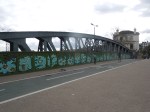
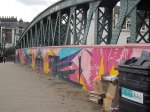
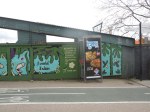
It is now pedestrianised, but it wasn’t in 1970, when I used to walk across it twice to get to and from work.
There may well be development here, as some plans would mean adding the former Primrose Hill station, which used to be under this bridge, to a rerouted North London line. Wikipedia says this.
It has been proposed to re-open Primrose Hill station by bringing the short stretch of line between South Hampstead and Camden Road stations back into the regular passenger service by incorporating it into the London Overground network.
From this passenger’s point-of-view, it would be a good thing, but it is only part of a bigger plan, that might be needed to get the freight through London.
Why Are These Containers On the London Overground?
The North London Line of the London Overground is not only a passenger route, but a main freight artery.
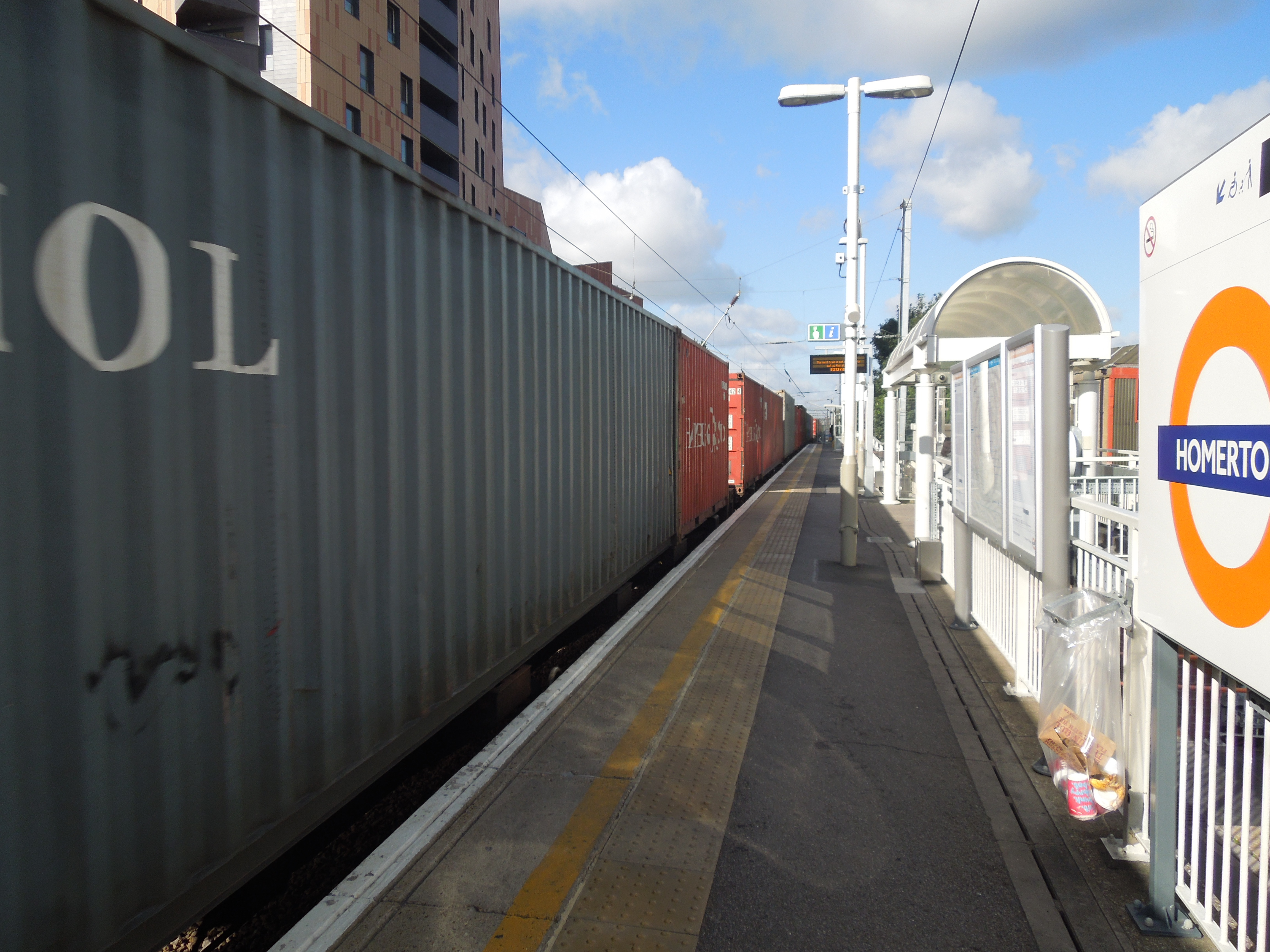
Why Are These Containers On the London Overground?
As I waited at Homerton station today, this long train of boxes passed through.
Many of these trains are going to and from the Port of Felixstowe and the West Coast Main line. As the North London line, is the only electrified route between the Great Eastern Main line and the West Coast Main line, there is virtually nowhere else the trains can go.
The main new route will be a more direct line from Felixstowe to Nuneaton. But this route is not complete yet and there are no plans to electrify it, so it may need an engine change or two. It also requires reversing at Ipswich, due to the nature of the track layout, where the Felixstowe branch joins the main line.
There is also an alternative route via the Gospel Oak and Barking line of the London Overground. This takes four freight trains an hour and by-passes eight stations on the North London line. But unlike the North London line, it is not electrified.
This problem is going to get worse when London Gateway, a new port on the Thames east of London starts operating in late 2013. Trains to and from London Gateway will probably feed in directly to the Gospel Oak and Barking line, via the London, Tilbury and Southend Railway.
As to the size and number of trains, read this press release from DB Schenker, who will be handling the rail traffic. Here’s an extract.
The agreement will see DB Schenker Rail introduce at least four rail freight services a day (four in, four out), subject to volumes, and will serve a range of inland terminals including potential new UK locations. Additional rail freight services will be introduced in the future.
DB Schenker Rail will also pursue the development of rail freight services from London Gateway to mainland Europe using the Channel Tunnel.
Something most certainly needs to be done! In the meantime, I certainly wouldn’t buy a house that backed on to either the North London or Gospel Oak to Barking Lines.
Effect Of Freight on Rail
A few years ago there were only three freight trains a day out of Felixstowe. Now because of new infrastructure in the docks, there are over thirty.
One side effect of this, has been a very large reduction of trucks on the A14.
Before we build large numbers of new roads, we should make sure that the rail freight network is as efficient as possible.
One trouble with rail freight is that it needs terminals for local distribution near major conurbations and these developments tend to bring out the nimbys in large numbers.
But you can’t have truck-free main roads, without interfaces between long-distance freight trains and local deliveries.
Improving Ipswich Station
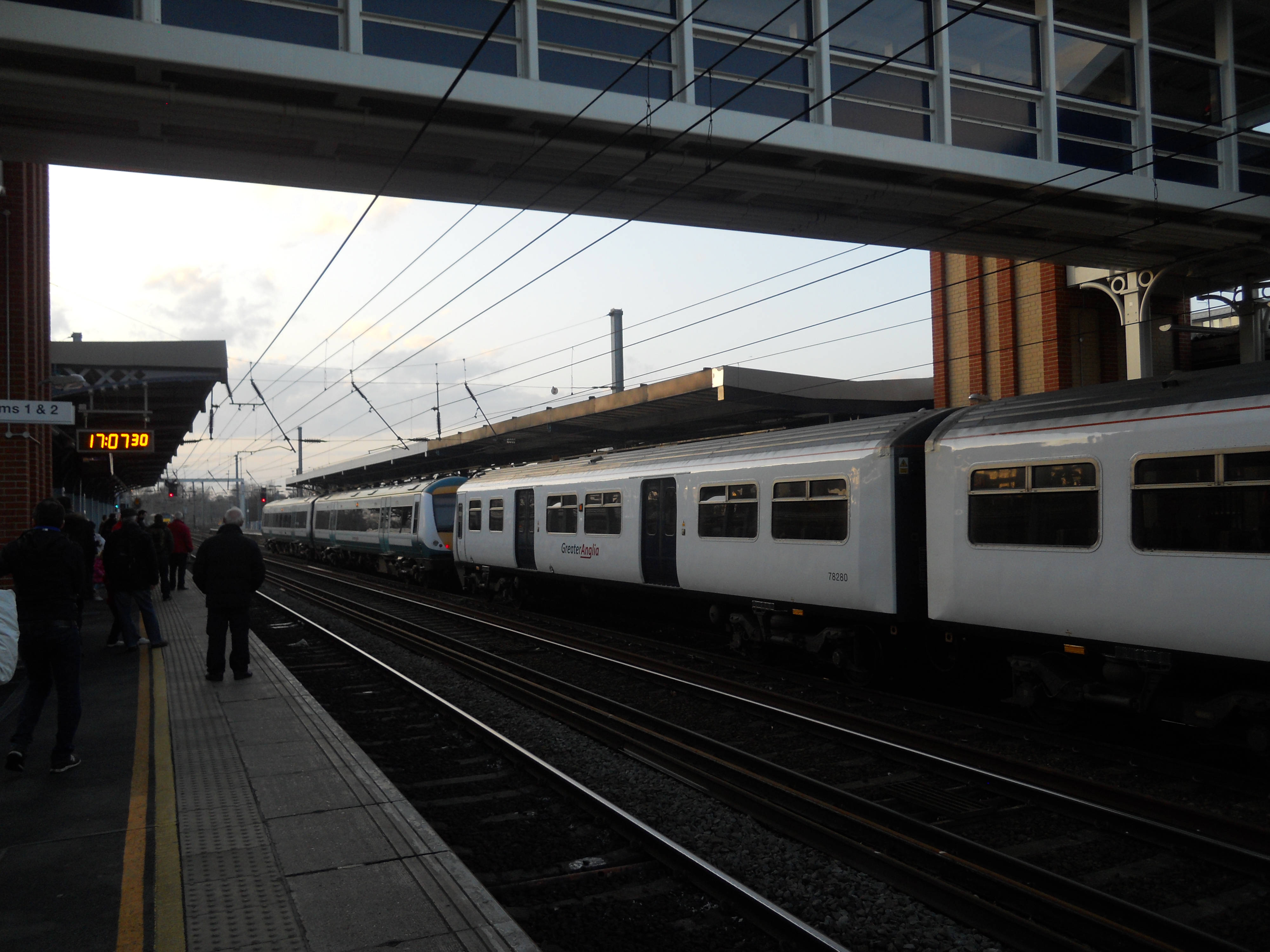
This photo shows the two major changes at Ipswich station.
Improving Ipswich Station
The bridge with lifts means that it is now easy for those with difficulties, buggies or heavy cases can now get across to the other platforms.
It also shows how they have changed the track layout, so that they can split the main platform to get two trains there at the same time.
The biggest change will come, when the new track layout, where the Felixstowe branch joins the main line, will mean that freight trains from and to Felixstowe will not have to reverse in the station.
Where Are All The Containers Going?
On the North London line of the Overground, every so often a freight train comes through taking full boxes from the East Coast ports to the West Coast Main Line or empty boxes back again. Some may also be flows between Southampton and the East.
A few years ago rail freight was almost dead, but it has bounced back with a vengeance, despite the recession. It was always felt that rail freight traffic was strongly linked to GDP, but it appears the link is now broken and the figures show it. In the last five years, total freight has dropped by 10% and truck hauled traffic has dropped by 13%. So how many truck drivers have been made redundant? But in the same period rail-freight has risen by 2%. The number of containers handled at the ports in 2010 was the same as in 2005, but those that were handled by rail has risen by 29%. In the future, rail freight-traffic is expected to double between 2010 and 2030.
The reason for the growth is obviously cost and even a long train of 30 containers or so is more cost effective than 30 trucks.
But also various improvements to the rail network have been added to speed the traffic on its way. I reported on one here. There are more improvements in the pipeline too.
Some trains too, are now running through the Channel Tunnel, as far as Wroclaw in Poland.
So we’ll be seeing lots more freight trains on the rail network in the UK.
And this will mean less CO2 emissions, especially where the trains are hauled by electric locomotives.
It will also remove a lot of trucks from the major roads in the UK. Every time I travel on the A14, I seem to think that there are less trucks.
I also come to the conclusion, that we may be seeing a few green shoots of recovery.
More Idiot Train Reporting
Ben Ando on the BBC this morning, made the mistake in thinking that the A14 carries a lot of trucks with containers from Felixstowe to the North and back. Nowadays a high proportion of containers go by train via Peterborough and Nuneaton. In fact, I reported here, that they seemed to have decreased in number significantly.
But of course there might be more on the roads this weekend, as that idiot went too fast over the points at Bletchley.
I Thought Germans Obeyed Orders
This German trucker, obviously didn’t, as the signs said he shouldn’t cross the Forth Road road bridge.

