Ealing Broadway Station – 19th April 2019
These pictures show Ealing Broadway station.




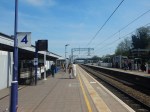
There’s still a lot of work to be done, to make the station, look like Crossrail’s image on the hoarding.
These are the proposed train frequencies at the station in the Off Peak, when Crossrail opens.
- Four trains per hour – Great Western Railway.
- Ten trains per hour – Crossrail.
- Six trains per hour – District Line
- Nine trains per hour – Central Line
There will be extra services in the Peak.
Crossrail To Reading In December 2019
As current rumours are that Crossrail will open in December to Reading, it looks like the station will be usable, if the architects have got the design right.
It is planned that Ealing Broadway station will have a Crossrail train every six minutes.
Newquay Link With Heathrow Takes Off Courtesy Of Taxpayer
The title of this post is the same as that of an article in today’s copy of The Times.
This is the first paragraph.
From next weekend air travellers will be given the equivalent of a £5 bung, courtesy of the taxpayer, to use Newquay airport in Cornwall for four flights a day both ways to Heathrow.
The article describes how the service is run under a Public Aervice Obligation or PSO.
Other air services in the UK run on this basis include.
- Stansted to Derry
- Stansted to Dundee
Similar subsidies are used in the EU and the United States.
This Google Map shows Newquay (indicated by a red marker,and the airport.
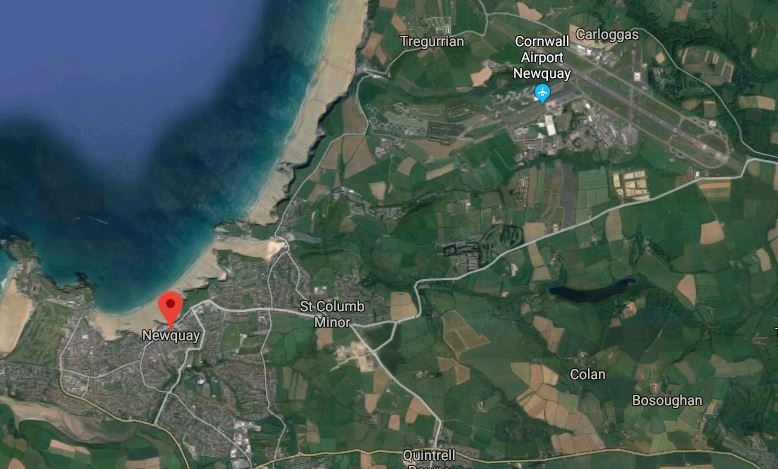
The town and the airport are about 4.3 miles apart.
This Google Map shows the centre of Newquay.
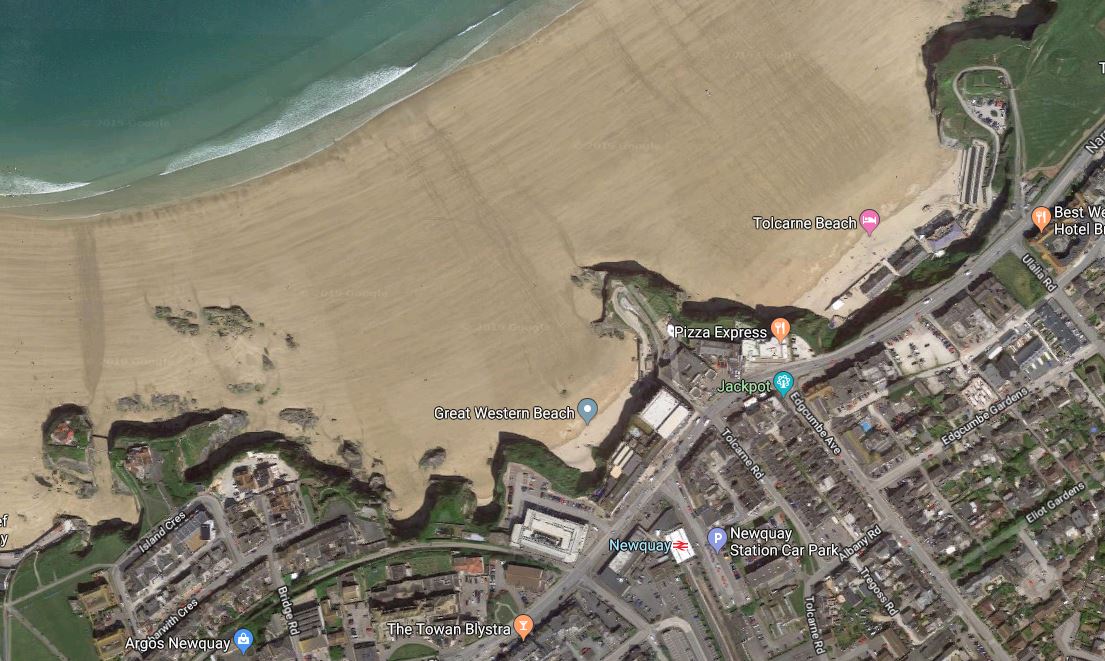
Note Newquay station in the middle of the town close to the beach.
- How rare to see a coastal town with a well-placed station.
- It does seem that in the Summer, there are more than just a rudimentary local service to the town.
- In the Summer, there are also long distance services, to London, Manchester and Scotland.
I also think, that GWR might run one of their shortened HSTs to the town from perhaps Exeter with upmarket service on board.
So I have to ask, the question, if the a subsidy for the air service is really necessary?
Integration Of High-Speed And Commuter Services Out Of Paddington Station
The following appears to be happening to the Great Western Main Line (GWML)
- All srvices to Oxford and Bedwyn, which have been run by slow diesels for years, will soon be run by 125 mph Class 800 trains, so they can join the herds of high-speed services on the dash using the fast lines between Reading and Paddington stations.
- All slower passenger trains between Paddington and Reading, will use the slow lines. Most will be Crossrail services and freight trains.
- ,Heathrow Express services, which will be four tph and run by upgraded 110 mph Class 387 trains, will use the fast lines between Paddington and Stockley Junction.
Some Class 800 trains achieve the thirty-six miles between Paddinghton and Reading in twenty-five minutes. This is a start-stop average speed of nearly ninety mph.
Frequency Between Reading And Paddington
I wonder what frequency of Class 800 trains can be achieved between Paddington and Reading.,
- Most will run non-stop.
- Up to 125 mph running could be possible between Stockley Junction (for Heathrow) and Reading, as all trains will be 125 mph Class 800 trains.
- Up to 110 mph running xould be possible between Paddington and Stockley Junction, as some trains will be 100 mph Class 387 trains.
- Digital signalling and possible automatic train control, could run the all trains to a precise timetable.
- Class 800 trains that stop at Slough, could do this in a very fast time.
I wouldn’t be surprised to see at least sixteen tph. Currently, the frequency is under ten tph.
If this frequency is achievable or even bettered, then this would be an impressive high-capacity service.
Class 387 Trains
Currently,, Great Western Railway has forty-five Class 387 trains.
Twelve are being modified, so they can run the Heathrow Express services.
But what happens to the other thirty-three trains?
Currently, some run a stopping service between Paddington and Didcot Parkway station, which stops West of Reading at Tilehurst, Pangbourne, Goring & Streatley and Cholsey stations, to give these stations a two tph service to Paddington.
The service between Reading and Paddington may be replaced by Crossrail in the near future offering four tph in the Peak and two tph in the Off Peak.
It strikes me that the following ways could be
Appleford, Culham and Radley.
Conclusion
It looks like the dropping of electrification to Oxford and Bedwyn, which resulted in Great Western Railway ordering more Class 802 trains to replace the slower Class 387 trains has resulted in a simpler and faster operating philosophy for the trains between Reading and Paddington.
- All GWR services will be Class 800/801/802 trains, using the fast lines.
- All Crossrail services will be Class 345 trains, using the slow lines.
- All freight services will use the slow lines.
- Heathrow Express services will use the fast lines, which they will leave ande join at Stockley Junction.
- All fast line services will be non-stop.
- All passenger trains will be using the electrification on the route.
It appears to be an efficient system, that keeps high-speed and stopping commuter services separate, whilst allowing 125 mph commuter services to be handled as high-speed services.
If I’m right, that there may be extra capacity for more high-speed services into Paddington, it will allow GWR to run extra services.
I like what’s happening.
The Paddington Fiasco
Everybody is looking for a scapegoat for the problems at Paddington station, that is reported in this article on the BBC, which is entitled Paddington Station: Passengers Face Major Disruption.
Tony Miles of Modern Railways was on BBC Breakfast this morning and he explained what happened.
The Class 802 train was accumulating the 2,000 miles it needs before it can be accepted by Great Western Railway.
The trains are designed to be able to change from diesel to electric power and vice-versa at line speed.
This train was raising the pantograph to access the pverhead wires on a section of British Rail-era overhead wires at Ealing.
The pantograph is thought to have bounced and the overhead wires have broken and become entangled in the pantograph.
Modern electrification with its heavyweight gantries has each line wired separately, but according to Tony Miles, the British Rail lightweight system, means if one comes down, they all fail.
I should add, that several times in the last ten years on the East Coast Main and Great Eastern Main Lines, I have been on trains that have been stranded by failed overhead wires.
In addition, over the last few years, it has been a nightmare travelling to Ipswich, as Network Rail have been renewing the overhead wires to a modern standard.
There are still many miles of this sub-standard British Rail-era overhead wiring all over the country.
It should all be replaced with new modern systems.
There is a problem though with the new modern electrification systems. They are ugly and many believe they are totally out-of-place in the countryside.
There is also the problem caused by the disruption, when the old systems are removed.
Conclusion
This sub-standard overhead electrification should have been removed years ago.
The Future Of Great Western Railway’s Class 165 Trains
My excursion to Greenford was to get a detailed look at the Class 165 train that works the Greenford Branch.
I took these pictures.
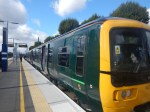
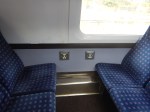
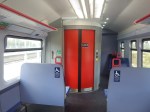
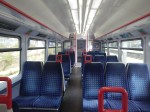
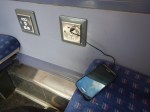
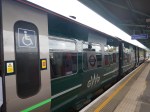
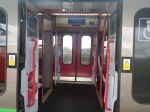
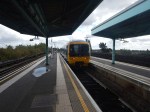
Note.
- The trains are internally in reasonable condition.
- They have a Universal Access Toilet.
- This particular train had a large number of well-placed point points and USB sockets.
The interior would not need much work to bring it up to a very good standard.
Moving To Bristol
The majority of the trains are moving to the Bristol area to provide local services including some longer distance ones to Cardiff, Exeter and Gloucester.
Conversion To Class 165 HyDrive Trains
If the initial conversion of a Chiltern Class 165 train to a hybrid train, that I wrote about in Class 165 Trains To Go Hybrid, is a successful conversion, I think there could be several reasons to look at converting Great Western Railways trains.
- Improved performance.
- Less noise and pollution.
- Lower operating costs.
- The marketing value of a hybrid train
The financial details will decide whether the conversion is worthwhile.
Thoughts On The Introduction Of Class 800 Trains On The Great Western Railway
I have travelled about six times on Class 800 trains on the Great Western Railway.
I have not had any train-related problems and on every journey, the trains have arrived close to schedule.
That even included an out-and-back trip to Swansea from Paddington on a Saturday.
There doesn’t seem to be too many complaints or news stories on the Internet. Although, I do feel some passengers are missing the InterCity 125s and others talk of hard seats.
I would also not complain about the view from a window seat and I have found the trains to be a good camera platform.
Rail Magazine’s Verdict
This article in Rail Magazine is entitled Does Great Western Railway’s Class 800 IET pass the test?.
This is their main conclusion.
The Great Western Railway Class 800 is a good train. It is quiet and comfortable, with better legroom for those travelling in Standard Class. Its acceleration on electric is borderline spectacular, while its diesel performance appears better than predicted.
They also say, that First Class is not worth the extra, whereas they felt it was was in the InterCity 125s.
Conclusion
There’s nothing much wrong operationally or passenger-wise with the Class 800 trains, that will not be put right by minor adjustments in the next couple of years.
The Stone Arch Railway Bridges Of Scotland
There are a lot of stone arch railway bridges in the UK, but they do seem to more numerous in Scotland, than in England.
These pictures show a selection of bridges on the Borders Railway.







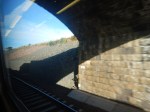
I counted to about fifteen between Edinburgh Waverley and Galashiels stations.
There were probably about an equal number of bridges where a stone arch bridge had been replaced by a modern concrete structure, like this one.
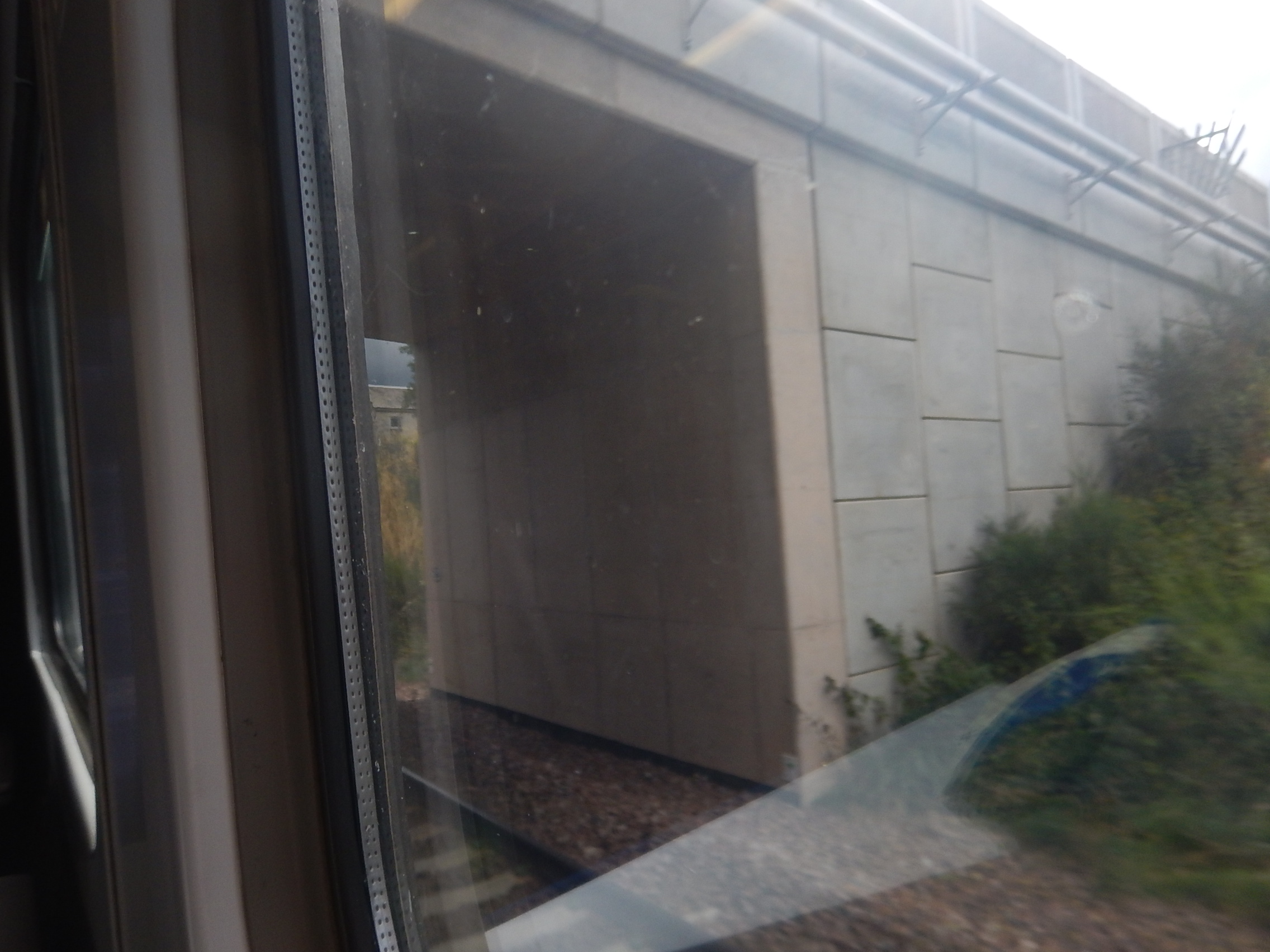
They’ll probably last a thousand years, but they lack the charm of the stone arch bridges.
These pictures show a selection of bridges on the Busby Railway between Glasgow Central and East Kilbride stations.




These pictures show a selection of the many bridges between Aberdeen and Montrose stations on the Edinburgh – Aberdeen Line.







I took pictures of at least twenty.
Freight Trains
Freight trains, especially those with the larger containers need a loading gauge, that is big enough to accept them.
The loading gauge in the UK, is summed up by these two sentences from Wikipedia.
Great Britain has (in general) the most restrictive loading gauge (relative to track gauge) in the world. This is a legacy of the British railway network being the world’s oldest, and having been built by a plethora of different private companies, each with different standards for the width and height of trains.
These are the commonest gauges.
- W6a: Available over the majority of the British rail network.
W8: Allows standard 2.6 m (8 ft 6 in) high shipping containers to be carried on standard wagons.
W10: Allows 2.9 m (9 ft 6 in) high Hi-Cube shipping containers to be carried on standard wagons and also allows 2.5 m (8 ft 2 in) wide Euro shipping containers.
W12: Slightly wider than W10 at 2.6 m (8 ft 6 in) to accommodate refrigerated containers.
W12 is recommended clearance for new structures, such as bridges and tunnels
The Borders Railway appears to have been built to at least W8, so it could handle standard freight containers.
But the line doesn’t carry freight!
On the other hand, I suspect the following were considered, when designing the Borders Railway.
- Network Rail and rail maintenance companies, may need to bring some large rail-mounted equipment along the line for regular or emergency maintenance.
- If the line is extended to Carlisle, the route could be used as a diversion for freight trains, if the West Coast Main Line is closed, due to weather or engineering works.
- There may be a need to use the Borders Railway to extract timber from the forests of the Borders.
The need for freight on the Borders Railway, explains why there are so many new overbridges.
Electrification
Electrification with overhead wires needs extra clearance.
It looks to me, that the Borders Railway has been given enough clearance for future electrification.
Problems With EGIP
Electrification under the Edinburgh to Glasgow Improvement Program (EGIP), proved to be difficult.
It wasn’t helped by the standards changing half-way through the project and the numerous bridges and tunnels that had to be rebuilt.
An important route like Edinburgh to Glasgow probably needs to be fully-electrified, but the difficulties encountered and those in Lancashire have encouraged Network Rail and the engineering consultants to look at other methods of electrifying lines in the UK.
Electrification Between Edinburgh And Aberdeen
I doubt this will ever happen in a conventional manner.
- Would electrification of the Forth Bridge and Tay Rail Bridge be allowed?
- The disruption of rebuilding the stone bridges would be enormous.
- The line only has a maximum speed of 100 mph.
Diesel and alternative power sources like hydrogen will be able to maintain the fastest speeds, that are possible on the line.
Money would probably give better value, if it were to be used to increase line speed.
Opposition To Rebuilding Bridges
This article on Rail Technology Magazine is entitled Network Rail Electrification Plans Stalled After Council Rejects Bridge Removal Bid.
This is first paragraph.
Campaigners are celebrating after plans from Network Rail to demolish a bridge as part of its electrification scheme were rejected by a local council.
The bridge in question is a Grade II listed overbridge at Steventon in Oxfordshire.
It is not unlike those in Scotland, that are shown in my pictures.
In the 1960s, British Rail would have just blown it up and replaced it with a concrete monstrosity.
I am not advocating a return to this policy, but Network Rail has a problem at Steventon, that they need to fully electrify the line, if electric trains are to use the route on electric power, rather than using environmentally-unfriendly diesel power.
Since the new Class 800 trains for the route were designed and ordered, the technology has moved on.
In South Wales, discontinuous electrification and trains with a battery capability will be used.
Conclusion
Scotland and other parts of the UK, like the Pennines and in the valleys of South Wales, have a serious problem with the way the Victorians built our railways.
\development of the UK rail network with electrification and an enhanced freight capability needs to be thought out carefully and with great ingenuity.
HS4Air’s Connections To HS2, The Great Western Main Line And Heathrow
This map clipped from the Expedition Engineering web site, shows the route of HS4Air to the West of London.
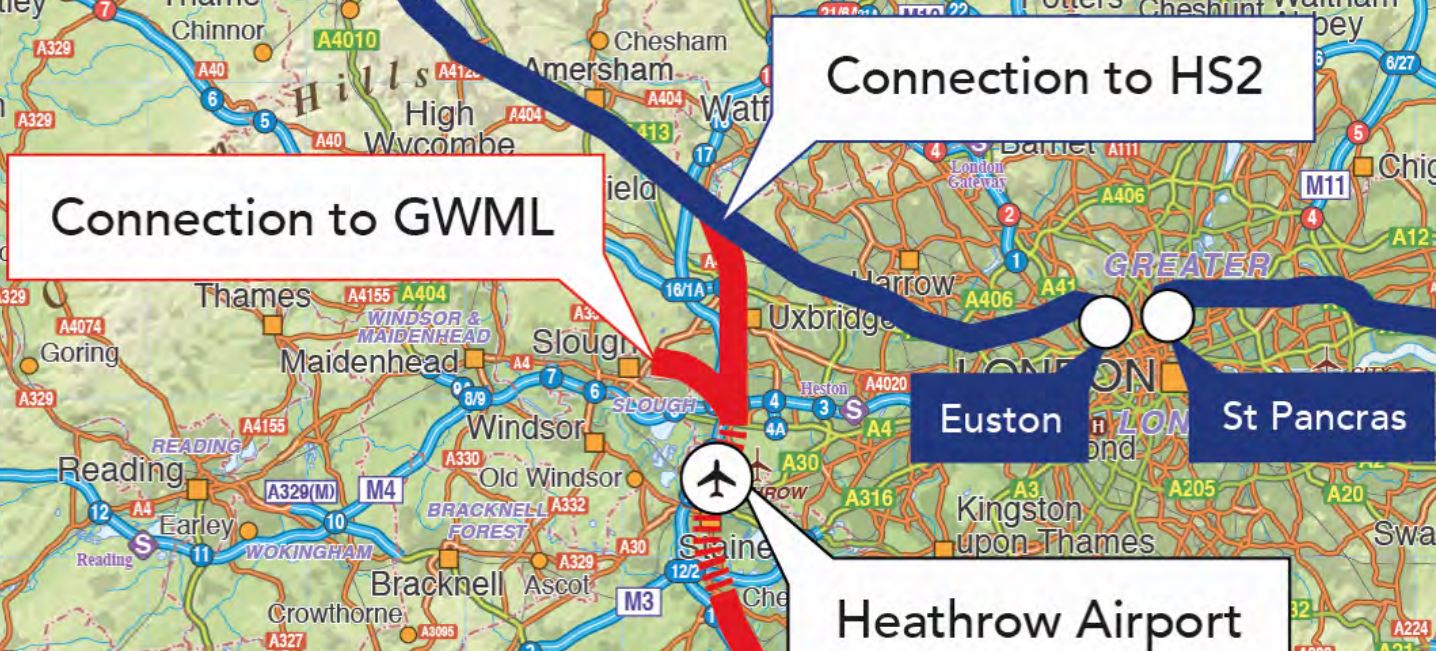
Note the M25 running North-South through the area.
The HS4Air And HS2 Junction
This Google Map shows the area, where HS4Air will join HS2.

Note.
- The M25 running North-South.
- The Chiltern Main Line running East-West.
- The two stations shown are Denham Golf Club and Denham.
- At the top of the map, just to the East of the M25 is a large quarry, which shows up in a beige colour.
The route of HS2 as it passes through the area from North-West to South-East is as follows.
- HS2 crosses the M25 in a tunnel, at the point where the lane crosses just below the M25 label, at the top of the map.
- HS2 then goes South East towards Denham on a mixture of cuttings, embankments and viaducts.
- HS2 then follows the Chiltern Main Line in a cutting towards London.
- HS2 goes into a tunnel just to the West of West Ruislip station.
It looks to me, that HS4Air will branch off HS2, just to the East of the M25, in the area of the quarry, which is shown in this Google Map.
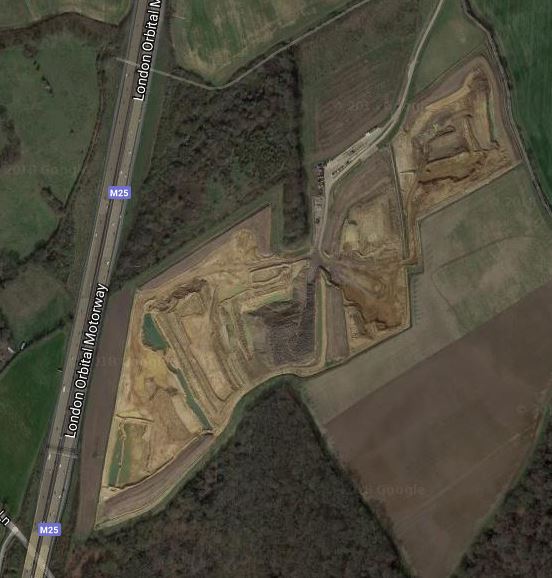
HS4Air would continue along the M25 motorway towards the South, whilst HS2 will continue in to the South East.
The HS4Air And Great Western Main Line Junction
This Google Map shows the area, where HS4Air crosses the Great Western Main Line.

Note.
- The M25 running North-South
- The M4 running East-West
- The Great Western Main Line running East-West.
- The two stations are Langley and Iver.
- Iver North Water Treatment Works sitting to the North East of where the M25 and the Great Western Railway cross.
This Google Map shows the area, where the M25 and the Great Western Main Line cross in more detail.

Consider.
- HS4Air would be following the M25 North-South.
- Two links to allow trains to go both ways from the Great Western to the Southbound HS4Air, would be needed.
- These links could loop over the Water Treatment Works.
- As the M25 will probably need widening, combining both projects would probably benefit both.
I think we could see a spectacular junction.
HS4Air North Of Heathrow
|As the first map shows HS4Air goes underneath Heathrow Airport in a tunnel, where there will be a station in the tunnel.
This map shows the M25 to the North of the Airport.
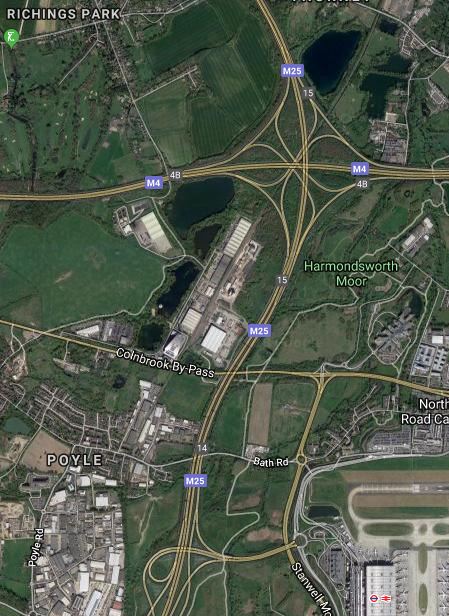
Terminal 5 at Heathrow is picked out with a station symbol.
I suspect that HS4Air will cross the massive M25/M4 junction on a viaduct and then descend into a tunnel for the Airport.
Or if the third runway at Heathrow is built, the railway could go into tunnel to the North of the motorway junction.
I suspect, the rail tunnels will be very deep under the airport, which will mean the following.
- They won’t disturb the existing airport.
- All the existing Crossrail design and construction expertise will be useful.
- The station could be as large as needed, with through and terminal platforms.
With its connections to Crossrail, it would also be West London’s high speed railway station.
HS4Air South Of Heathrow
South of Heathrow, the first map, shows that the Heathrow tunnel will emerge close to the M25, South of the major junction between the M25 and the M3.
This Google Map shows the area.
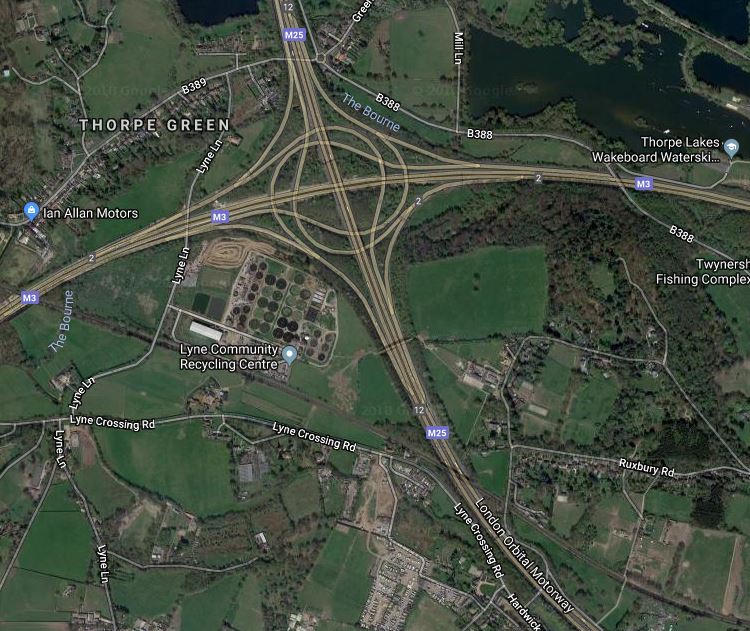
I will investigate where the Heathrow Tunnel emerges in HS4Air Between Heathrow And Gatwick Airports.
Conclusion
This section of HS4Air looks to be a railway that can be slotted through alongside the M25 with very little disturbance to existing traffic routes.
I doubt that few houses or other buildings will need to be demolished.
The two major junctions with HS2 and the Great Western Railway will cause little disruption during construction, as the former will be over a quarry and the second is by a sewage works, which could be moved if necessary.
This first section is so obvious, I am surprised it hasn’t been included with the building of HS2.
An Unusual Service Pattern Between Paddington And Hayes & Harlington Stations
I’ve just been looking at the service pattern from Monday between Paddington and Hayes & Harlington stations.
There appears to be four (tph) provided by both TfL Rail and Great Western Railway (GWR) at most times, which means an eight tph service between the two stations.
So it would appear logical that intermediate stations get the same service.
- Acton Main Line gets two tph
- Ealing Brodway gets eight tph.
- West Ealing gets four tph
- Hanwell gets two tph
- Southall gets five tph.
I wouldn’t be surprised to see complaints.
 The Anonymous Widower