Shuffling The Class 165 Trains
The May 2020 Edition of Modern Railways has an article, which is entitled West Of England Improvements In GWR Deal.
The sub-title is the following.
EMU Trailers Could Be Inserted Into Turbo DMUs
GWR‘s Turbo DMUs are.
- Class 165 trains of which there are fifteen three-car trains and twenty two-car trains.
- Class 166 trains of which there are twenty-one three-car trains.
The article says, they will be internally-refreshed with interiors better suited for long-distance services.
It also looks that they might get hybrid transmissions, if a trial with a Chiltern Class 165 train is successful. In Class 165 Trains To Go Hybrid, I wrote about this trial.
The article says this about the retractioned units.
The additional power available from the new hybrid units would allow the sets to be lengthened with trailers released from withdrawn Class 365 or 465 EMUs, lengtheing two-car Turbos by one vehicle and the three-car sets to five carriages. The EMU vehicles are 20 metres long, rather than the 23 metres of the DMU design, but it is thought integration into the diesel sets would be relatively simple.
This sounds like a cunning plan, from BREL’s book of Cut-And-Paste With Trains.
At the time of writing there are nineteen Class 365 trains in storage, which could release 38 trailer cars. However, Varamis Rail may need some of these trains for their proposed parcel business, that I wrote about in Varamis Plans Electric Freight To Carry Light Goods.
If all the fifty-six trains were to be lengthened, this would need ninety-two trailer cars. So I suspect, that GWR will be awaiting the retirement of some of the 147 Class 465 trains, which are currently in service with Southeastern.
A sister company to GWR, South Western Railway is transferring thirty Class 707 trains to Southeastern. I wrote about the transfer in Southeastern Signs Deal To Lease Unwanted Class 707s. As each pair of Class 707 trains, could release two Class 465 trains containing four trailer cars, this could be the source of sufficient trailer cars to lengthen the Turbos.
This would mean that the following suitable trailer cars would be available.
- Thirty-eight from stored Class 365 trains.
- Sixty from Class 465 trains displaced by Class 707 trains at Southeastern.
It’s a close-run thing.
But there may be trouble ahead, as Chiltern have twenty-eight two-car and eleven three-car Class 165 trains, which would need another fifty trailer cars, if Chiltern decided to lengthen their trains in the same way as GWR.
- There appear to be twenty-one trains or forty-two trailer cars in service with Great Northern.
- Six trailer cars should be available from the previous swaps.
So it looks like they are one train or two trailer cars short, if they want to do a full conversion.
Unless the thirty Class 707 trains going to Southeastern, with their faster operating speed can scoot route the network faster and do the work of more than thirty Class 465 trains.
Are Hitachi Designing the Ultimate Battery Train?
In Sparking A Revolution, a post based on an article of the same name in Issue 898 of Rail Magazine, I repeated this about the specification of Hitachi UK Battery Train Specification.
- Range – 55-65 miles
- Performance – 90-100 mph
- Recharge – 10 minutes when static
- Routes – Suburban near electrified lines
- Battery Life – 8-10 years
Does this mean that the train can do 55-65 miles cruising at 90-100 mph?
How Much Energy Is Needed To Accelerate A Five-Car Class 800 Train To Operating Speed?
I will do my standard calculation.
- Empty train weight – 243 tonnes (Wikipedia for Class 800 train!)
- Passenger weight – 302 x 90 Kg (Includes baggage, bikes and buggies!)
- Train weight – 270.18 tonnes
Using Omni’s Kinetic Energy Calculator, the kinetic energy at various speeds are.
- 60 mph – 27 kWh
- 80 mph – 48 kWh
- 90 mph – 61 kWh
- 100 mph – 75 kWh
- 125 mph – 117 kWh – Normal cruise on electrified lines.
- 140 mph – 147 kWh – Maximum cruise on electrified lines.
Because the kinetic energy of a train is only proportional to the weight of the train, but proportional to the square of the speed, note how the energy of the train increases markedly after 100 mph.
Are these kinetic energy figures a reason, why Hitachi have stated their battery train will have an operating speed of between 90 and 100 mph?
A 100 mph cruise would also be very convenient for a lot of main lines, that don’t have electrification in the UK.
What Battery Size Would Be Needed?
In How Much Power Is Needed To Run A Train At 125 mph?, I calculated that a five-car Class 801 electric train, needed 3.42 kWh per vehicle-mile to maintain 125 mph.
For comparison, an InterCity 125 train, had a figure of 2.83 kWh per vehicle-mile.
Hitachi are redesigning the nose of the train for the new Class 810 train and I suspect that these trains can achieve somewhere between 1.5 and 3 kWh per vehicle-mile, if they are cruising at 100 mph.
Doing the calculation for various consumption levels gives the following battery capacity for a five-car train to cruise 65 miles at 100 mph
- 1.5 kWh per vehicle-mile – 487 kWh
- 2 kWh per vehicle-mile – 650 kWh
- 2.5 kWh per vehicle-mile – 812.5 kWh
- 3 kWh per vehicle-mile – 975 kWh
These figures don’t include any energy for acceleration to line speed from the previous stop or station, but they would cope with a deceleration and subsequent acceleration, after say a delay caused by a slow train or other operational delay, by using regenerative braking to the battery.
The energy needed to accelerate to operating speed, will be as I calculated earlier.
- 90 mph – 61 kWh
- 100 mph – 75 kWh
As the battery must have space to store the regenerative braking energy and it would probably be prudent to have a ten percent range reserve, I can see a battery size for a train with an energy consumption of 2 kWh per vehicle-mile, that needed to cruise at 100 mph being calculated as follows.
- Energy for the cruise – 650 kWh
- 10% reserve for cruise – 65 kWh
- Braking energy from 100 mph – 75 kWh
This gives a total battery size of 790 kWh, which could mean that 800 kWh would be convenient.
Note that each of the three MTU 12V 1600 diesel engines, fitted to a Class 800 train, each weigh around two tonnes.
In Innolith Claims It’s On Path To 1,000 Wh/kg Battery Energy Density, I came to these conclusions.
- Tesla already has an energy density of 250 Wh/Kg.
- Tesla will increase this figure.
- By 2025, the energy density of lithium-ion batteries will be much closer to 1 KWh/Kg.
- Innolith might achieve this figure. But they are only one of several companies aiming to meet this magic figure.
Suppose two of the MTU 12V 1600 diesel engines were each to be replaced by a two tonne battery, using Tesla’s current energy density, this would mean the following.
- Each battery would have a capacity of 500 kWh.
- The train would have one MWh of installed battery power.
- This is more than my rough estimate of power required for a 65 mile trip.
- The train would have little or no weight increase.
- I also wouldn’t be surprised to find that the exchange of a diesel engine for a battery was Plug-and-Play.
Hitachi would have an electric/battery/diesel tri-mode train capable of the following.
- Range – 55-65 miles
- Out and Back Range – about 20-30 miles
- Performance – 90-100 mph
- Recharge – 10 minutes when static
- Emergency diesel engine.
I feel it would be a very useful train.
Trains That Could Be Fitted With Batteries
The original article in Rail Magazine says this.
For the battery project, positive discussions are taking place with a number of interested parties for a trial, with both Class 385s and Class 800s being candidates for conversion.
So this means that the following operators will be able to use Hitachi’s battery technology o their trains.
- Avanti West Coast – Class 80x trains
- First East Coast Trains – Class 80x trains
- East Midlands Railway – Class 80x trains
- GWR – Class 80x trains
- Hull Trains – Class 80x trains
- LNER – Class 80x trains
- ScotRail – Class 385 trains
- TransPennine Express – Class 80x trains
Although, I based my calculations on Class 80x trains, I suspect that the methods can be applied to the smaller Class 385 trains.
Possible Out-And-Back Journeys
These are possible Out-And-Back journeys, that I believe Hitachi’s proposed battery-electric trains could handle.
- Edinburgh and Tweedbank – 30 miles from Newcraighall
- London Paddington and Bedwyn – 30 miles from Reading
- London Euston and Blackburn – 12 miles from Preston
- London Kings Cross and Bradford – < 27 miles from Leeds
- London Euston and Chester – 21 miles from Crewe
- London Kings Cross and Harrogate – <18 miles from Leeds
- London Kings Cross and Huddersfield – 17 miles from Leeds
- London St. Pancras and Leicester – 16 miles from Market Harborough
- London Kings Cross and Lincoln – 17 miles from Newark
- London St. Pancras and Melton Mowbray – 26 miles from Corby
- London Kings Cross and Middlesbrough – 20 miles from Northallerton
- London Kings Cross and Nottingham – 20 miles from Newark
- London Paddington and Oxford – 10 miles from Didcot
- London Kings Cross and Redcar – 29 miles from Northallerton
- London Kings Cross and Rotherham- 14 miles from Doncaster
- London Kings Cross and Sheffield – 20 miles from Doncaster
- London and Weston-super-Mare – 19 miles from Bristol
Note.
- Provided that the Out-And-Back journey is less than about sixty miles, I would hope that these stations are comfortably in range.
- Leicester is the interesting destination, which would be reachable in an Out-And-Back journey. But trains from the North stopping at Leicester would probably need to charge at Leicester.
- I have included Blackburn as it could be a destination for Avanti West Coast.
- I have included Melton Mowbray as it could be a destination for East Midlands Railway.
- I have included Nottingham, Rotherham and Sheffield as they could be destinations for LNER. These services could prove useful if the Midland Main Line needed to be closed for construction works.
- I’m also fairly certain, that no new electrification would be needed, although every extra mile would help.
- No charging stations would be needed.
I suspect, I’ve missed a few possible routes.
Possible Journeys Between Two Electrified Lines
These are possible journeys between two electrified lines, that I believe Hitachi’s proposed battery-electric trains could handle.
- London St. Pancras and Eastbourne via Hastings – 25 miles between Ashford and Ore.
- Leeds and York via Garforth – 20 miles between Neville Hall and Colton Junction
- London Kings Cross and Norwich via Cambridge – 54 miles between Ely and Norwich.
- Manchester Victoria and Leeds via Huddersfield – 43 miles between Manchester Victoria and Leeds.
- Preston and Leeds via Hebden Bridge – 62 miles between Preston and Leeds.
- Newcastle and Edinburgh – Would battery-electric trains get round the well-publicised power supply problems on this route?
Note.
- I am assuming that a range of 65 miles is possible.
- If the trains have a diesel-generator set, then this could be used to partially-charge the battery in places on the journey.
- Leeds and York via Garforth has been scheduled for electrification for years.
- Preston and Leeds via Hebden Bridge would probably need some diesel assistance.
- London Kings Cross and Norwich via Cambridge is a cheeky one, that Greater Anglia wouldn’t like, unless they ran it.
- As before no new electrification or a charging station would be needed.
I suspect, I’ve missed a few possible routes.
Possible Out-And-Back Journeys With A Charge At The Destination
These are possible Out-And-Back journeys, that I believe Hitachi’s proposed battery-electric trains could handle, if the batteries were fully charged at the destination.
- Doncaster and Cleethorpes – 52 miles from Doncaster.
- London Paddington and Cheltenham – 42 miles from Swindon
- London Kings Cross and Cleethorpes via Lincoln – 64 miles from Newark
- London Euston and Gobowen – 46 miles from Crewe
- London Euston and Wrexham – 33 miles from Crewe
- London Kings Cross and Hull – 45 miles from Selby
- London Kings Cross and Shrewsbury – 30 miles from Wolverhampton
- London Kings Cross and Sunderland 41 miles from Northallerton
- London Paddington and Swansea – 46 miles from Cardiff
- London Paddington and Worcester – 67 miles from Didcot Parkway
- London St. Pancras and Derby – 46 miles from Market Harborough
- London St. Pancras and Nottingham – 43 miles from Market Harborough
Note.
- I am assuming that a range of 65 miles is possible.
- If the trains have a diesel-generator set, then this could be used to partially-charge the battery in places on the journey.
- I am assuming some form of charging is provided at the destination station.
- As before no new electrification would be needed.
I suspect, I’ve missed a few possible routes.
Midland Main Line
The Midland Main Line could possibly be run between London St. Pancras and Derby, Nottingham and Sheffield without the use of diesel.
Consider.
- The route will be electrified between London St. Pancras and Market Harborough.
- In connection with High Speed Two, the Midland Main Line and High Seed Two will share an electrified route between Sheffield and Clay Cross North Junction.
- London St. Pancras and Derby can be run with a charging station at Derby, as Market Harborough and Derby is only 46 miles.
- London St. Pancras and Nottingham can be run with a charging station at Nottingham, as Market Harborough and Nottingham is only 43 miles.
- The distance between Clay Cross North Junction and Market Harborough is 67 miles.
- The distance between Sheffield and Leeds is 38 miles.
It looks to me that the range of East Midlands Railway’s new Class 810 trains, will be a few miles short to bridge the gap on batteries, between Clay Cross North Junction and Market Harborough station, but Leeds and Sheffield appears possible, once Sheffield has been electrified.
There are several possible solutions to the Clay Cross North and Market Harborough electrification gap.
- Fit higher capacity batteries to the trains.
- Extend the electrification for a few miles North of Market Harborough station.
- Extend the electrification for a few miles South of Clay Cross North Junction.
- Stop at Derby for a few minutes to charge the batteries.
The route between Market Harborough and Leicester appears to have been gauge-cleared for electrification, but will be difficult to electrify close to Leicester station. However, it looks like a few miles can be taken off the electrification gap.
Between Chesterfield and Alfriston, the route appears difficult to electrify with tunnels and passig through a World Heritage Site.
So perhaps options 1 and 2 together will give the trains sufficient range to bridge the electrification gap.
Conclusion On The Midland Main Line
I think that Hitachi, who know their trains well, must have a solution for diesel-free operation of all Midland Main Line services.
It also looks like little extra electrification is needed, other than that currently planned for the Midland Main Line and High Speed Two.
North Wales Coast Line
If you look at distance along the North Wales Coast Line, from the electrification at Crewe, you get these values.
- Chester – 21 miles
- Rhyl – 51 miles
- Colwyn Bay – 61 miles
- Llandudno Junction – 65 miles
- Bangor – 80 miles
- Holyhead – 106 miles
It would appear that Avanti West Coast’s new AT-300 trains, if fitted with batteries could reach Llandudno Junction station, without using diesel.
Electrification Between Crewe And Chester
It seems to me that the sensible thing to do for a start is to electrify the twenty-one miles between Crewe and Chester, which has been given a high priority for this work.
With this electrification, distances from Chester are as follows.
- Rhyl – 30 miles
- Colwyn Bay – 40 miles
- Llandudno Junction – 44 miles
- Bangor – 59 miles
- Holyhead – 85 miles
Electrification between Crewe and Chester may also open up possibilities for more electric and battery-electric train services.
But some way will be needed to charge the trains to the West of Chester.
Chagring The Batteries At Llandudno Junction Station
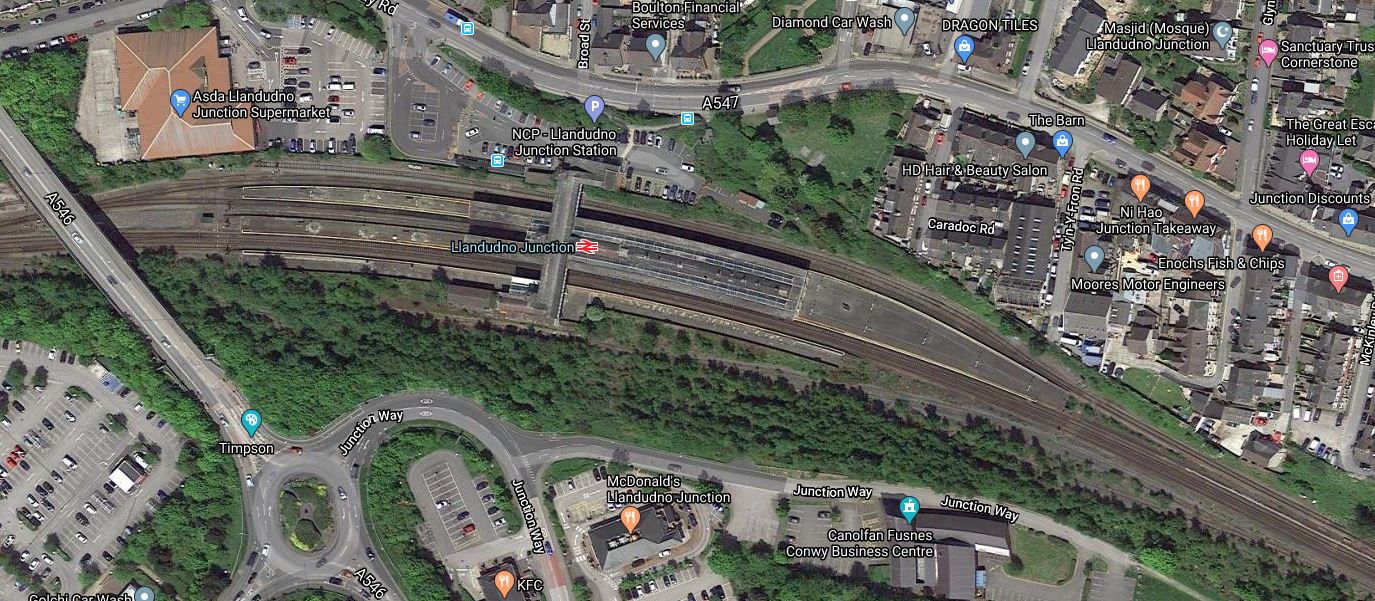
This Google Map shows Llandudno Junction station.
Note.
- It is a large station site.
- The Conwy Valley Line, which will be run by battery Class 230 trains in the future connects at this station.
- The Class 230 train will probably use some of Vivarail’s Fast Charging systems, which use third-rail technology, either at the ends of the branch or in Llandudno Junction station.
The simplest way to charge the London Euston and Holyhead train, would be to build a charging station at Llandudno Junction, which could be based on Vivarail’s Fast Charging technology or a short length of 25 KVAC overhead wire.
But this would add ten minutes to the timetable.
Could 25 KVAC overhead electrification be erected for a certain distance through the station, so that the train has ten minutes in contact with the wires?
Looking at the timetable of a train between London Euston and Holyhead, it arrives at Colwyn Bay station at 1152 and leaves Llandudno Junction station at 1200.
So would it be possible to electrify between the two stations and perhaps a bit further?
This Google Map shows Colwyn Bay Station,
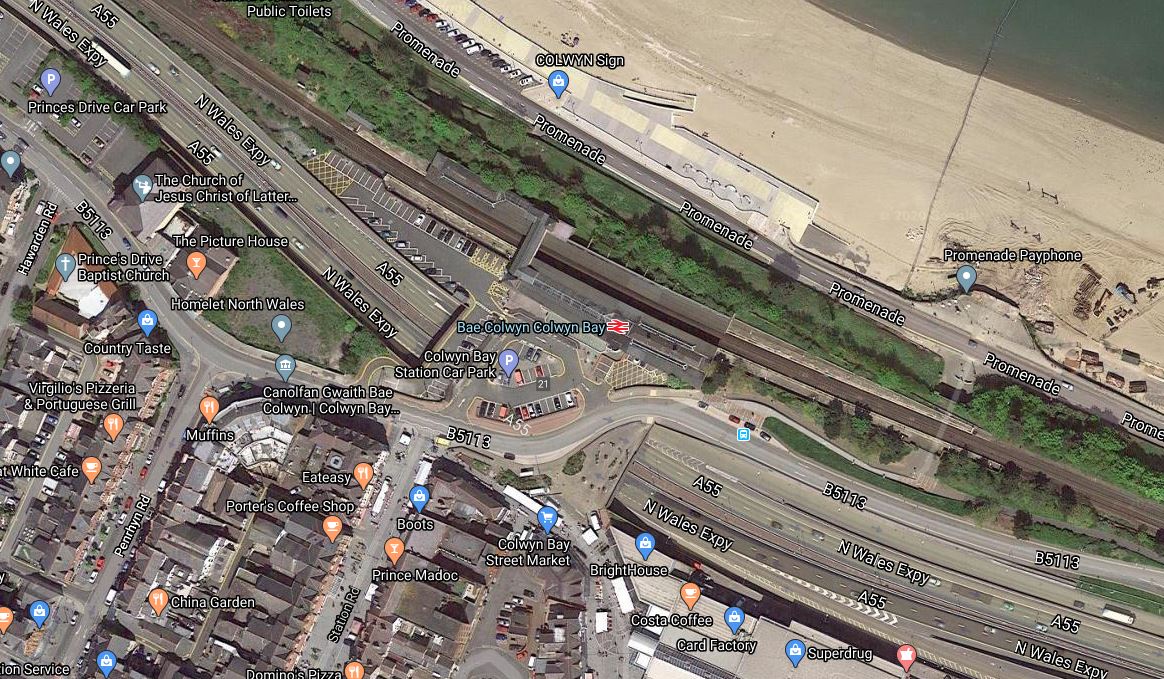
Note how the double-track railway is squeezed between the dual-carriageway of the A55 North Wales Expressway and the sea.
The two routes follow each other close to the sea, as far as Abegele & Pensarn station, where the Expressway moves further from the sea.
Further on, after passing through more caravans than I’ve ever seen, there is Rhyl station.
- The time between arriving at Rhyl station and leaving Llandudno Junction station is nineteen minutes.
- The distance between the two stations is fourteen miles.
- Rhyl and Crewe is fifty-one miles.
- Llandudno Junction and Holyhead is forty-one miles.
It would appear that if the North Wales Coast Line between Rhyl and Llandudno Junction is electrified, that Hitachi’s proposed battery trains can reach Holyhead.
The trains could even changeover between electrification and battery power in Rhyl and Llandudno Junction stations.
I am sure that electrifying this section would not be the most difficult in the world, although the severe weather sometimes encountered, may need some very resilient or innovative engineering.
It may be heretical to say so, but would it be better if this section were to be electrified using proven third-rail technology.
West of Llandudno Junction station, the electrification would be very difficult, as this Google Map of the crossing of the River Conwy shows.
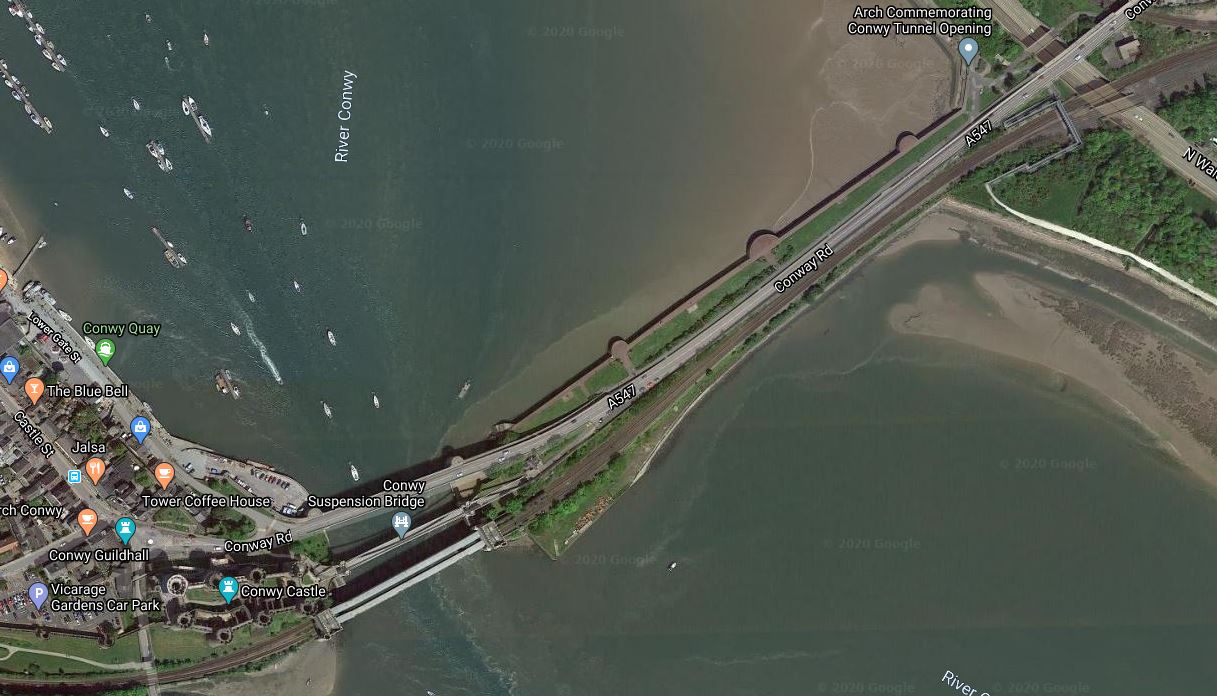
I don’t think anybody would want to see electrification around the famous castle.
Electrification Across Anglesey
Llanfairpwll station marks the divide between the single-track section of the North Wales Coast Line over the Britannia Bridge and the double-track section across Anglesey.
From my virtual helicopter, the route looks as if, it could be fairly easy to electrify, but would it be necessary?
- Llandudno Junction and Holyhead is forty-one miles, which is well within battery range.
- There is surely space at Holyhead station to install some form of fast-charging system.
One problem is that trains seem to turn round in only a few minutes, which may not be enough to charge the trains.
So perhaps some of the twenty-one miles between Llanfairpwll and Holyhead should be electrified.
London Euston And Holyhead Journey Times
Currently, trains take three hours and forty-three minutes to go between London Euston and Holyhead, with these sectional timings.
- London Euston and Crewe – One hour and thirty-nine minutes.
- Crewe and Holyhead – Two hours and four minutes.
The big change would come, if the London Euston and Crewe leg, were to be run on High Speed Two, which will take just fifty-five m,inutes.
This should reduce the London Euston and Holyhead time to just under three hours.
Freight On The North Wales Coast Line
Will more freight be seen on the North Wales Coast Line in the future?
The new tri-mode freight locomotives like the Class 93 locomotive, will be able to take advantage of any electrification to charge their batteries, but they would probably be on diesel for much of the route.
Conclusion On The North Wales Coast Line
Short lengths of electrification, will enable Avanti West Coast’s AT-300 trains, after retrofitting with batteries, to run between Crewe and Holyhead, without using any diesel.
I would electrify.
- Crewe and Chester – 21 miles
- Rhyl and Llandudno Junction – 14 miles
- Llanfairpwll and Holyhead – 21 miles
But to run battery-electric trains between London Euston and Holyhead, only Rhyl and Llandudno Junction needs to be electrified.
All gaps in the electrification will be handled on battery power.
A Selection Of Possible Battery-Electric Services
In this section, I’ll look at routes, where battery-electric services would be very appropriate and could easily be run by Hitachi’s proposed battery-electric trains.
London Paddington And Swansea
Many were disappointed when Chris Grayling cancelled the electrification between Cardiff and Swansea.
I went along with what was done, as by the time of the cancellation, I’d already ridden in a battery train and believed in their potential.
The distance between Cardiff and Swansea is 46 miles without electrification.
Swansea has these services to the West.
- Carmarthen – 32 miles
- Fishguard – 73 miles
- Milford Haven 71 miles
- Pembroke Dock – 73 miles
It looks like, three services could be too long for perhaps a three car battery-electric version of a Hitachi Class 385 train, assuming it has a maximum range of 65 miles.
But these three services all reverse in Carmarthen station.
So perhaps, whilst the driver walks between the cabs, the train can connect automatically to a fast charging system and give the batteries perhaps a four minute top-up.
Vivarail’s Fast Charging system based on third-rail technology would be ideal, as it connects automatically and it can charge a train in only a few minutes.
I would also electrify the branch between Swansea and the South Wales Main Line.
This would form part of a fast-charging system for battery-trains at Swansea, where turnround times can be quite short.
I can see a network of battery-electric services developing around Swansea, that would boost tourism to the area.
Edinburgh And Tweedbank
The Borders Railway is electrified as far as Newcraighall station and the section between there and Tweedbank is thirty miles long.
I think that a four-car battery-electric Class 385 train could work this route.
It may or may not need a top up at Tweedbank.
The Fife Circle
The Fife Circle service from Edinburgh will always be difficult to electrify, as it goes over the Forth Rail Bridge.
- The Fife Circle is about sixty miles long.
- Plans exist for a short branch to Leven.
- The line between Edinburgh and the Forth Rail Bridge is partly electrified.
I believe that battery-electric Class 385 train could work this route.
London Kings Cross and Grimsby/Cleethorpes via Lincoln
The Cleethorpes/Grimsby area is becoming something of a renewable energy powerhouse and I feel that battery trains to the area, might be a significant and ultimately profitable statement.
LNER recently opened a six trains per day service to Lincoln.
Distances from Newark are as follows.
- Lincoln – 17 miles
- Grimsby – 61 miles
- Cleethorpes – 64 miles
A round trip to Lincoln can probably be achieved on battery alone with a degree of ease, but Cleethorpes and Grimsby would need a recharge at the coast.
Note that to get to the Cleethorpes/Grimsby area, travellers usually need to change at Doncaster.
But LNER are ambitious and I wouldn’t be surprised to see them dip a toe in the Cleethorpes/Grimsby market.
The LNER service would also be complimented by a TransPennine Express service from Manchester Airport via Sheffield and Doncaster, which could in the future be another service run by a Hitachi battery train.
There is also a local service to Barton-on-Humber, which could be up for improvement.
London Waterloo And Exeter
This service needs to go electric, if South Western Railway is going to fully decarbonise.
But third-rail electrification is only installed between Waterloo and Basingstoke.
Could battery-electric trains be used on this nearly two hundred mile route to avoid the need for electrification.
A possible strategy could be.
- Use existing electrification, as far as Basingstoke – 48 miles
- Use battery power to Salisbury – 83 miles
- Trains can take several minutes at Salisbury as they often split and join and change train crew, so the train could be fast-charged.
- Use battery power to the Tisbury/Gillingham/Yeovil/Crewkerne area, where trains would be charged – 130 miles
- Use battery power to Exeter- 172 miles
Note.
- The miles are the distance from London.
- The charging at Salisbury could be based on Vivarail’s Fast-Charging technology.
- The charging around Yrovil could be based on perhaps twenty miles of third-rail electrification, that would only be switched on, when a train is present.
I estimate that there could be time savings of up to fifteen minutes on the route.
To Be Continued…
Exploring Devon And Cornwall In Castles
Castle is the name given by Great Western Railway to their four- and five-car InterCity 125 trains, with which they run services in the West Country.
These pictures show the trains, as I meandered up and down the Cornish Main Line.


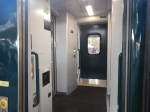
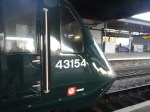

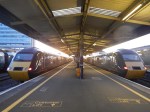












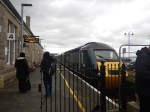
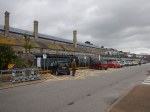
These are my observations.
The Doors
These trains now have electrically-controlled sliding doors and it seems to be a conversion, that has been carried out to a high standard.
Certainly, all the doors appeared to be working, as they should.
The Seats And Tables
The seats were comfortable, but not as comfortable as some seats I’ve used in Mark 3 coaches.
Could there be a few more tables?
The Ride
My pocket dynamometer was showing a speed of about 65 mph and the ride was as you’d expect from a well-maintained Mark 3 coach.
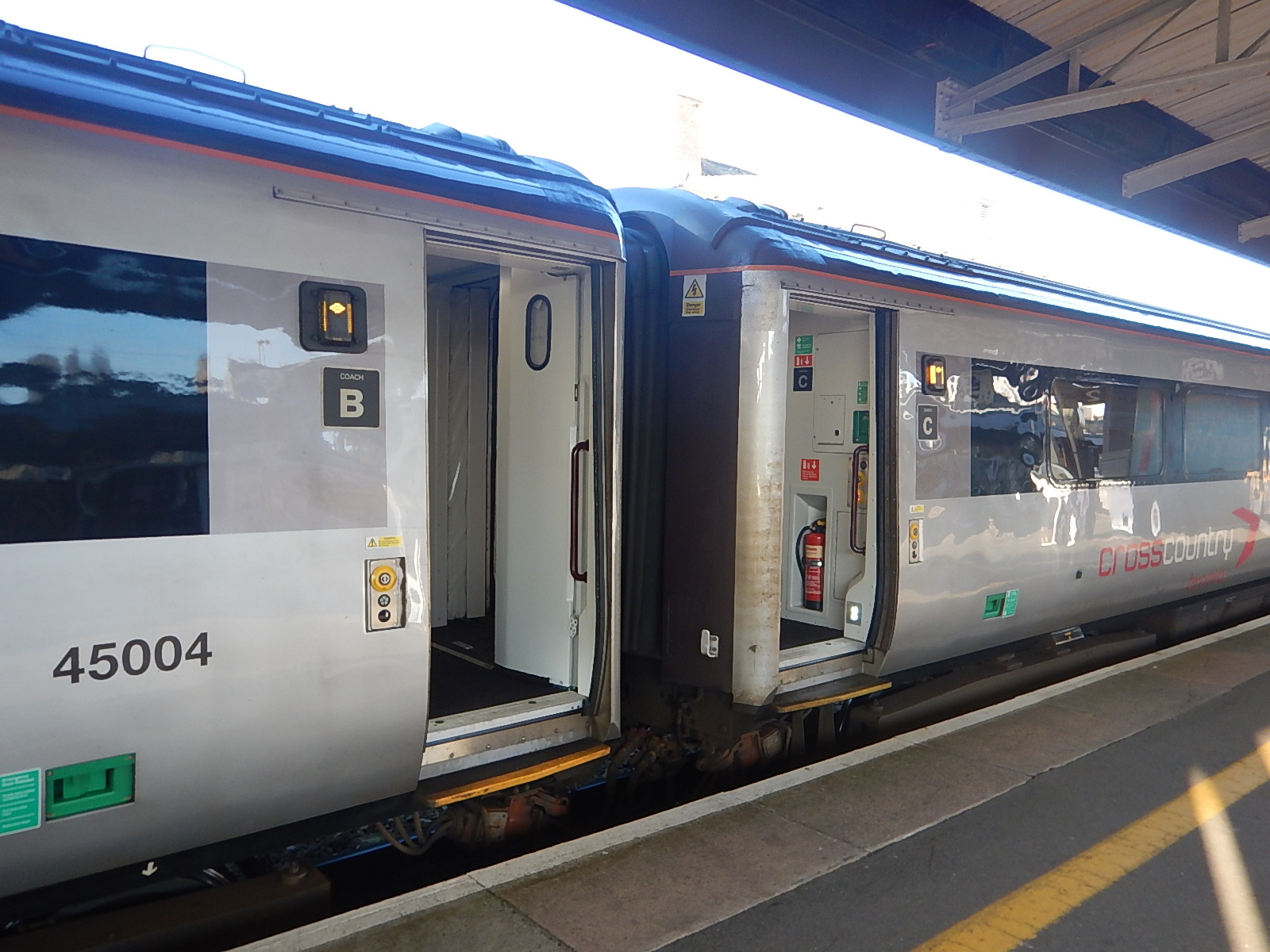
Access Between Platform And Train
This is not good as the pictures show.
This is the step on a Castle.
And this is the step on a new Class 755 train
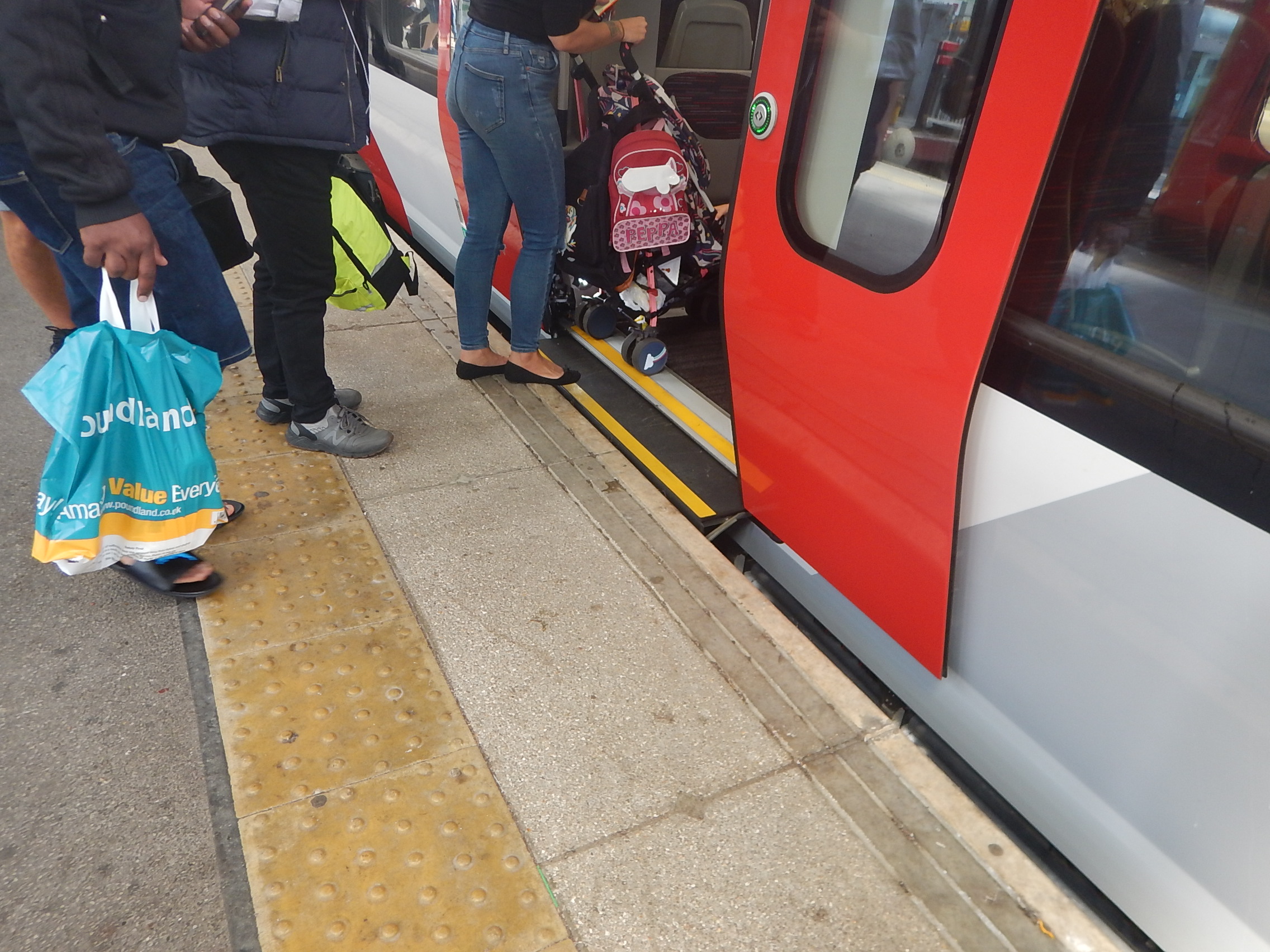
Think buggies, heavy cases and wheelchairs.
The Class 755 train, really is the Gold Standard of step-free access between platform and train.
Conclusion
These iconic trains will do a good job for Great Western Railway.
You could certainly find a good hotel in Devon or Cornwall and have a few enjoyable days riding between Penzance and Exeter, to explore the area
I do hope that they eventually put a catering trolley on the train.
What Would Be The Range Of A Tri-Mode Class 802 Train?
In Could Cirencester Be Reconnected To The Rail Network?, I speculated about the routes of a battery-electric version of a Class 800 train.
I said this.
As Hitachi have stated they will be using battery power to extend ranges of their trains, I wouldn’t be surprised to see some of the current trains modified to have batteries instead of some of their current diesel engines.
Such a train would would be ideal for the following routes.
- Paddington and Bedwyn – 13 miles
- Paddington and Cheltenham – 43 miles
- Paddington and Oxford – 10 miles
- Paddington and Weston-Super-Mare – 19 miles
The distance is the length that is not electrified.
I don’t think it improbable, that London Paddington and Swansea will be achieved by a battery-electric train based on the current Hitachi train designs.
So was it a serious idea or mad speculation?
Under Powertrain in the Wikipedia entry for theClass 800 train, this is said.
Despite being underfloor, the generator units (GU) have diesel engines of V12 formation. The Class 801 has one GU for a 5-9 car set. These provide emergency power for limited traction and auxiliaries if the power supply from the overhead line fails. The class 800/802 electro-diesel or Bi-Mode has 3 GU per five car set and 5 GU per nine car set. A 5 car set has a GU situated under vehicles 2/3/4 respectively and a 9 car set has a GU situated under vehicles 2/3/5/7/8 respectively.
This means that a five-car Class 800 or Class 802 train has three engines and an all -electric Class 801 train has a single engine.
If you were building a tri-mode Class 802 train, could two of the diesel engines be replaced by batteries.
- Hitachi have stated that trains can be changed from one class to another by adding or removing engines.
- Trains would always have at least one diesel engine for emergencies, just as the Class 801 trains do.
- Each MTU 1600 R80L diesel engine weighs just under seven tonnes.
Fourteen tonnes of batteries would probably store about 840 kWh of energy, if the most efficient batteries are used. That would not be a problem if Hitachi came calling.
In How Much Power Is Needed To Run A Train At 125 mph?, I calculated that a five-car Class 801 train needs 3.42 kWh per vehicle mile to cruise on electricity at 125 mph.
Dividing 840 by 5 cars and 3.42 kWh per vehicle file gives a range of forty-nine miles.
- The trains would need regenerative braking to the batteries.
- Battery energy density is increasing.
- Train aerodynamics could be improved, to reduce the power needed.
- Secondary routes like the Golden Valley Line are unlikely to have an operating speed higher than 110 mph, which would reduce the power needed.
I am coming round to the opinion, that Hitachi could design a battery-electric train based on the current Class 80X trains, that could reach Swansea from Paddington, without touching a drop of diesel.
- The batteries would need to be recharged before returning to London.
- I am assuming that the electrification is up and working between Paddington and Cardiff.
- Could the overhead rails in the Severn Tunnel be removed or replaced with engineering plastic or ceramic, as they corrode so much?
- Two five-car trains with batteries could work together as they do now.
Hitachi would need to get the software absolutely right.
Could The Diesel Engine Be Used To Increase Battery Range?
Lets assume that a tri-mode Class 802 train is running on a 125 mph main line.
It enters a section without electrification.
- It is cruising at 125 mph
- The batteries have a capacity of 840 kWh and have been charged on previous electrification.
- The train needs 3.42 kWh per vehicle mile to maintain speed.
- It’s a five-car train so it will need 17.1 kWh per mile.
- The train will take approximately thirty seconds to cover a mile and in that time the diesel engine will produce 5.83 kWh.
- So the net energy use of the train will be 11.27 kWh per mile.
This would give the train a range of 74.5 miles at 125 mph.
Obviously, a good driver, aided by a powerful Driver Assistance System could optimise the use of power to make sure the train arrived on time and possibly minimised carbon emissions.
What Would Be The Ultimate Range?
I think it would be possible to reduce the electricity consumption by means of the following.
- Slower operating speed.
- Better aerodynamics.
- More efficient train systems.
- Improved Driver Assistance Systems.
I think an energy consumption of 2.5 kWh per vehicle-mile could be possible, at perhaps a cruise of 100 mph
I can do the calculation without diesel assistance.
- It’s a five-car train so it will need 12.5 kWh per mile.
This would give the train a range of 67.2 miles at 100 mph on batteries alone.
I can also do the calculation again with diesel assistance.
- It’s a five-car train so it will need 12.5 kWh per mile.
- The train will take thirty-six seconds to cover a mile and in that time the diesel engine will produce 7 kWh.
- So the net energy use of the train will be 5.5 kWh per mile.
This would give the train a range of 153 miles at 100 mph on batteries with diesel assistance.
How Many Places Could Be Reached With A Fifty-Mile Range?
Setting a limit of fitly miles would allow running these routes on partial battery power, split down by companies who run the Hitachi trains.
Great Western Railway
These routes could certainly be run using a tri-mode Class 802 train.
- Paddington and Bedwyn – 13 miles
- Paddington and Cheltenham – 43 miles
- Paddington and Oxford – 10 miles
- Paddington and Swansea – 46 miles
- Paddington and Weston-Super-Mare – 19 miles
- Swindon and Bristol via Bath – 39 miles
Note.
- The distance gives the length of the longest section of the route without electrification.
- Certain routes like Bedwyn, Oxford and Weston-super-Mare probably wouldn’t need a charging station at the final destination.
- GWR could probably run a few other routes, without adding substantial new infrastructure.
- Tri-mode Class 802 trains, might be able to avoid electrification through Bath.
But surely the the biggest gain is that they would reduce GWR’s carbon footprint.
Hull Trains
I very much feel that with a charging station at Hull station, a tri-mode Class 802 train could bridge the forty-four mile gap between Beverley and the electrified East Coast Main Line at Temple Hirst Junction.
- The train could top up the battery every time it stops in Hull station.
- The 700 kW diesel engine could add 700 kWh in the hour long trip with no wires.
If a tri-mode Class 802 train could bridge this gap, then Hull Trains could go zero carbon.
LNER
These routes could certainly be run using a tri-mode Class 802 train.
- Kings Cross and Bradford – 14 miles
- Kings Cross and Harrogate – 18 miles
- Kings Cross and Huddersfield – 17 miles
- Kings Cross and Hull – 36 miles
- Kings Cross and Lincoln – 16 miles
- Kings Cross and Middlesbrough – 21 miles
Note.
- The distance gives the length of the longest section of the route without electrification.
- Certain routes like Bradford, Harrogate, Huddersfield, Lincoln and Middlesbrough probably wouldn’t need a charging station at the final destination.
- LNER could probably run a few other routes, without adding substantial new infrastructure.
- Using both battery and diesel power, the train would be able to make Cleethorpes and Grimsby after Lincoln.
But surely the the biggest gain is that they would reduce LNER’s carbon footprint.
TransPennine Express
These routes could certainly be run using a tri-mode Class 802 train.
- Leeds and Huddersfield – 17 miles
- Liverpool and Edinburgh – 34 miles
- Liverpool and Hull – 34 miles
- Liverpool and Scarborough – 34 miles
- Manchester Airport and Middlesbrough – 34 miles
- Manchester Airport and Newcastle- 34 miles
Note.
- The distance gives the length of the longest section of the route without electrification.
- TransPennine Express services all suffer because of the long gap across the Pennines.
- Network Rail are planning to partly electrify Dewsbury and Huddersfield, which would reduce the major gap to just eighteen miles.
As with GWR, Hull Trains and LNER, the carbon footprint would be reduced.
Conclusion
A tri-mode Class 802 train would be a good idea.
It should be noted that GWR, Hull Trains and TransPennine Express are all First Group companies.
Pacers To Continue Into 2020, Operators Confirm
The title of this post is the same as that of this article on Railway Gazette.
This is the introductory paragraph.
Operators have confirmed that their Pacer diesel multiple-units will remain in service into early 2020, in spite of previous announcements that the unpopular four-wheeled vehicles dating from the 1980s would be withdrawn before enhanced PRM accessibility requirements come into force on January 1 2020.
The article then summarises the situation in the three operators running Pacers.
Northern
Some Pacers used by Northern will continue in service into 2020, because of late delivery of new Class 195 diesel trains and Class 331 electric trains.
They are also still awaiting delivery of eight Class 769 trains, which are very late into service.
Great Western
Great Western has said, that some Pacers will continue in service around Exeter.
No reason is given, but it does appear that because of non-delivery of electrification to Oxford and the late arrival of Crossrail, Great Western they still need Class 165 and Class 166 trains to work services for London commuters.
They are also still awaiting delivery of nineteen Class 769 trains.
Transport For Wales
Transport for Wales are in the same position as Great Western, in that the Class 769 trains, they ordered have still not been delivered.
The Operator Will Get The Blame!
Obviously, the operator will get the blame, but I would argue that all three have at least tried hard to avoid this crisis, as they knew the Pacers would have to be on their way to the scrapyard at the end of 2019.
- If CAF had delivered their trains for Northern on time, things would be much better in the North.
- If Porterbrook and their engineers had delivered the Class 769 trains on time, all three operators would be in a better position.
Hopefully, in a few months, the new trains will have been delivered and the Class 769 trains will have been created and in service.
What Will Happen To Great Western Railway’s Class 387 Trains?
I have been looking at the services that Great Western Railway run using Class 387 trains.
Current services run by these trains are.
London Paddington And Didcot Parkway
This service has the following characteristics.
- The frequency is two trains per hour (tph)
- Services are run by two trains working as a pair.
- Intermediate stops are Ealing Broadway, Southall, Hayes and Harlington, West Drayton, Iver, Langley, Slough, Maidenhead, Twyford, Reading, Tilehurst, Pangbourne, Goring and Streatley and Cholsey.
- Journey time is one hour twenty-three minutes, giving a three hour round trip.
I estimate that twelve trains are needed to run this service.
From the 15th December 2019, this service appears to run to a similar timetable.
London Paddington And Reading
This service has the following characteristics.
- The frequency is two tph.
- Services are run by two trains working as a pair.
- Intermediate stops are Ealing Broadway, Southall, Hayes and Harlington, West Drayton, Slough, Burnham, Maidenhead and Twyford
- Journey time is fifty-seven minutes, giving a two and a half hour round trip.
I estimate that ten trains are needed to run this service.
From the 15th December 2019, this service will be run by TfL Rail using Class 345 trains.
Reading And Newbury
This service has the following characteristics.
- The frequency is one tph.
- Services are run by two trains working as a pair.
- Intermediate stops are Reading West, Theale, Aldermaston, Midgham, Thatcham and Newbury Racecourse.
- Journey time is twenty-nine minutes, giving an hour round trip.
I estimate that two trains are needed to run this service.
From the 15th December 2019, this service appears to run to a similar timetable.
Current Trains Needed
Summarising the trains needed gives the following.
- London Paddington and Didcot Parkway – twelve trains
- London Paddington and Reading – ten trains
- Reading and Newbury – two trains.
This gives a total of twenty-four trains.
Trains Needed After 15th December 2019
Summarising the trains needed gives the following.
- London Paddington and Didcot Parkway – twelve trains
- London Paddington and Reading – no trains
- Reading and Newbury – two trains.
This gives a total of fourteen trains.
Heathrow Express
Heathrow Express will use twelve Class 387 trains in the near future.
Great Western Railway’s Future Need For Class 387 Trains
Summarising the trains needed gives the following.
- London Paddington and Didcot Parkway – twelve trains
- Reading and Newbury – two trains.
- Heathrow Express – twelve trains.
This gives a total of twenty-six trains.
Great Western Railway have a total of forty-five Class 387 trains. Wikipedia is a bit confusing on this point, but I’m fairly certain this is a correct figure.
This means that Great Western Railway have nineteen trains available for expansion of services.
Great Western Railway’s Class 769 Trains
Great Western Railway have also ordered nineteen dual-voltage bi-mode Class 769 trains.
These are for the following routes.
- Reading – Redhill or Gatwick Airport
- London Paddington – Reading and Oxford
As the spare number of Class 387 trains is the same as that of the bi-mode trains, was it originally intended, that these routes could be run by the Class 387 trains, after Network Rail had joined the electrification together.
But the extra electrification never happened.
So Great Western Railway ordered the bi-modes trains.
Great Western Railway’s Dilemma
The Class 769 trains appear to be running late, so Great Western Railway are running the Gatwick and Oxford services with diesel multiple units, that they’d like to send to the West Country.
Bombardier appear to have moved on with their battery technology, that was successfully trialled using a similar Class 379 train in 2015. I wrote about the possibility of battery Electrostars on the Uckfield Branch last month in Battery Electrostars And The Uckfield Branch.
I believe that both routes would be within range of a battery-electric Class 387 train.
Reading – Redhill or Gatwick Airport
The various sections of the route are as follows.
Reading and Wokingham – Electrified with 750 VDC third-rail.
Wokingham and Aldershot South Junction – Not electrified – 12 miles
Aldershot South Junction and Shalford Junction – Electrified with 750 VDC third-rail.
Shalford Junction and Reigate – Not electrified – 17 miles
Reigate and Redhill/Gatwick – Electrified with 750 VDC third-rail.
To my mind, this is a classic route for a battery-electric train, as it is mainly electrified and both gaps are less than twenty miles long.
Some or all of the Class 387 trains are dual-voltage.
London Paddington – Reading and Oxford
The distance between Didcot Parkway and Oxford is under twelve miles, so a return trip should be well within range of a battery-electric Class 387 train.
There are also plans at Oxford station to put a new bay platform on the London-bould side of the station. This could be fitted with a charging station to avoid any range anxiety.
A Gatwick And Oxford Service
Could the Oxford and Gatwick services be joined together to make a direct Oxford and Gatwick service via Reading?
- I estimate that the service would take around two hours.
- Assuming a fifteen minute turnround at both ends, a round trip would be four and a half hours.
Running a half-hourly service would need just nine trains.
Or eighteen, if they were to run as eight-car trains!
Could this explain the order for nineteen trains, as it’s always a good idea to have a spare?
Conclusion
Great Western Railway can dig themselves elegantly out of a hole of Network Rail’s making by converting the spare Class 387 trains to battery-electric trains.
I’m sure Bombardier have the design available and would be happy to oblige after they have finished conversion of the Heathrow Express units.
There might also be an argument for fitting all Class 387 trains with batteries.
- A more unified fleet.
- Train recovery in the event of electrification failure.
- Better safety in depots.
- Direct services between Paddington and Henley and Bourne End.
- Would it allow Class 387 trains to run between Paddington and Bedwyn?
- Reduced electricity consumption.
It’ll be a decision for the accountants.
One collateral benefit of a successful conversion program for the Great Western Railway, is that it would enable Great Northern’s twenty-eight trains and c2c’s six trains to be easily converted to battery-electric versions.
- Great Northern’s coulde be used by sister company; Southern on the Uckfield Branch and the Marshlink Line.
- c2c trains are soon to be replaced by new trains.
I’m sure that quality four-car battery-electric trains won’t wait long for an operator.
Worcestershire Parkway Station Is Now On The Map
This article on the BBC is entitled Worcester’s New Railway Station’s Set To Open In December.
This Google Map showsWorcestershire Parkway station, at the place, where the Cotswold and Cross Country lines cross.
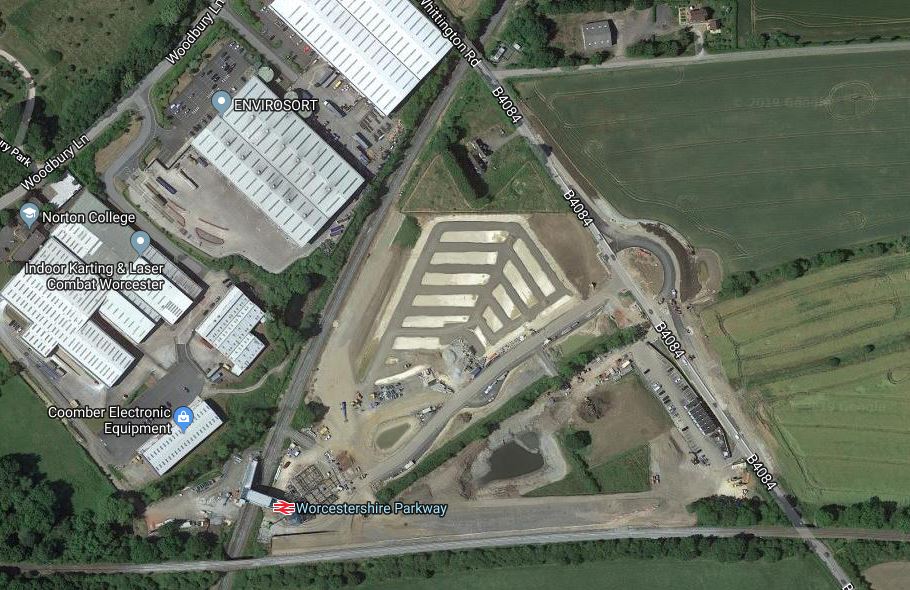
Services will probably start to call at the timetable change of December 15th, 2019
Judging by the bands of car parking shown in this map, they are expecting a sizeable number of passengers.
I just tried to book a ticket to the station and it is not in the on-line ticketing system yet as a destination, although it does show up as a stop on these journeys.
- CrossCountry – Nottingham and Cardiff – Hourly
- GWR – Paddington and Worcestor, Great Malvern and Hereford.- Hourly
Two other hourly CrossCountry services also pass through.
TfL Confirms Details Of Reading Services
The title of this post is the same as that of this article on Railway Gazette.
This is first paragraph.
Details of the transfer of London Paddington – Reading stopping services from Great Western Railway to TfL Rail from the December 15 timetable change have been confirmed by Transport for London.
Some significant points to note from the article.
- The service will be run by Class 345 trains.
- Fast services from Reading and some stations to the East will continue to be run by Great Western Railway.
- There will be four trains per hour (tph) in the Peak and two tph in the Off Peak.
- After the New Year Bank Holiday, contactless payments will be available between Paddington and Reading.
- Children under 11 who are accompanied by an adult, as well as people who are eligible for the Freedom Pass, will be able to travel for free to Reading on the TfL service.
- Oyster will not be available to the West of West Drayton.
- Great Western Railway , but not South Western Railway, are expected to bring in contactless ticketing in the New Year.
A few of my thoughts.
What Will Be The Service Pattern?
When the possibility of TfL Rail taking over the services to Reading, I wrote Will Crossrail Open To Reading in 2019?.
The service pattern to Maidenhead to Reading appears to be.
Reading To Paddington – Limited Stop
This service will be run at two trains per hour (tph) in the Peak with no trains in the Off-Peak.
Stops are Twyford, Maidenhead, Slough, West Drayton and Ealing Broadway.
Reading To Paddington – All Stations
This service will be run at two tph all day.
The service will call at all stations except Hanwell and Acton Main Line.
Maidenhead To Paddington
This service will be run at two tph all day.
The service will call at all stations except Hanwell and Acton Main Line.
A Summary Of Peak/Off Peak Calls
Adding these services up, gives the following numbers for Peak and Off Peak calls in trains per hour (tph)
- Reading – 4,2
- Twyford – 4,2
- Maidenhead – 6,4
- Taplow – 4.4
- Burnham 4,4
- Slough – 6,4
- Langley – 4,4
- Iver – 4,4
- West Drayton – 6,4
- Hayes & Harlington – 4.4
- Southall – 4,4
- Hanwell – None to Reading/Maidenhead
- West Ealing – 4.4
- Ealing Broadway – 6,4
- Acton Main Line – None to Reading/Maidenhead
- Paddington – 6,4
Note.
- 4,2 means 4 tph in the Peak and 2 tph in the Off Peak.
- It would appear that all stations except Reading and Twyford have at least four tph all day.
- Stations between Hayes & Harlington and Ealing Broadway will get another six tph all day going to Heathrow.
- Acton Main Line station will get another four tph all day going to Heathrow.
The frequency of trains would appear to satisfy Transport for London’s Turn-Up-And-Go frequency for Metro services.
No one should wait more than fifteen minutes on a Metro for a train!
Freedom Pass Holders Will Be Winners
Being able to use a Freedom Pass between Paddington and Reading will be very useful for many travellers.
It would appear that the cheapest way to use the trains West of Reading for a Freedom Pass Holder, will be to use the pass to get to Reading on TfL Rail and then buy a ticket from Reading to your ultimate destination.
Note that on the Overground, you can buy a ticket between any two UK stations. So if I was going to Bristol, I’d buy a Return at my local Dalston Junction station and use it from Reading, after going there on TfL Rail.
Very covenient and with the best price!
The High Speed Local Train
If Great Western Railway (GWR) are going to run a train service between Paddington and Bedwyn, they need an electric train which can power itself on the last thirteen miles between Newbury and Bedwyn, which is not electrified and is unlikely to be so in the next couple of decades.
The train must also be capable of cruising at 125 mph on the fast lines of the Great Western Main Line between Reading and Paddington.
GWR have no choice, but to run the service with a five-car Class 802 train.
When Hitachi were designing these 125 mph trains in Japan, I don’t suspect that running a service over a distance of 66.5 miles between London and a small village in Berkshire, was in the specification.
This morning, I took the 10:05 service from Paddington to Bedwyn, with the intention of returning on the 11:41 from Bedwyn to Paddington.
These are a few of the pictures that I took.
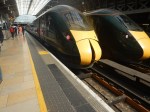
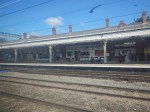
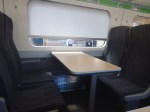
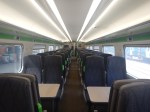

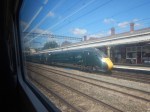

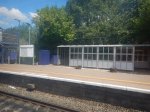
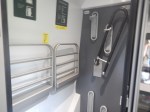
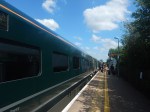


But things didn’t turn out as planned.
- Nothing serious and some animals got on the tracks between Reading and Swindon, meaning that we were some minutes late into Bedwyn, due to platform congestion at Reading.
- The return journey was consequently delayed.
These are a few observations.
Operating Speed
These were speeds on various parts of the journey.
- I timed the train at 115 mph through Southall and at 123 mph through Hayes & Harlington as the train accelerated out of Paddington.
- The train was doing just short of 125 mph for the major part of the route between London and Reading, until it had to stop because of the congestion.
- The train was doing around 100 mph on the electrified line between Reading and Newbury.
- Between Newbury and Bedwyn, speeds were between 80 and 90 mph.
Similar speeds were attained on the return journey.
Passenger Numbers
As the pictures show, there weren’t that many passengers who were travelling to Bedwyn, although there were more heading back to London.
Many more joined and left the service at the three larger stations of Reading, Newbury and Hungerford.
Now that the service is hourly between Reading and Bedwyn and half-hourly between Reading and Newbury in modern, comfortable trains, I can see passenger numbers growing.
Current Service
There are eleven trains per day, between Paddington and Bedwyn, at an hourly frequency, which take around three hours for a round trip.
So it would appear that three trains are needed for the service.
The service is also supplemented by an hourly stopping shuttle train between Reading and Newbury.
Two years ago, the service was just one three-car diesel train per hour between Paddington and Bedwyn with a few additional stops from long-distance trains.
Bedwyn Station Improvements
I got the impression, that Bedwyn station is probably at its limit for car parking with the current twenty-five spaces and cars all over the place.
This article on the Wiltshire Gazette and Herald, is entitled It’s A Rail Problem At Great Bedwyn and indicates that commuters and residents don’t see eye-to-eye with the car parking.
If the car parking were to be increased and usage at the station increased then I feel that a step-free bridge could be needed.
In Winner Announced In The Network Rail Footbridge Design Ideas Competition, I wrote how the competition was won by this bridge.
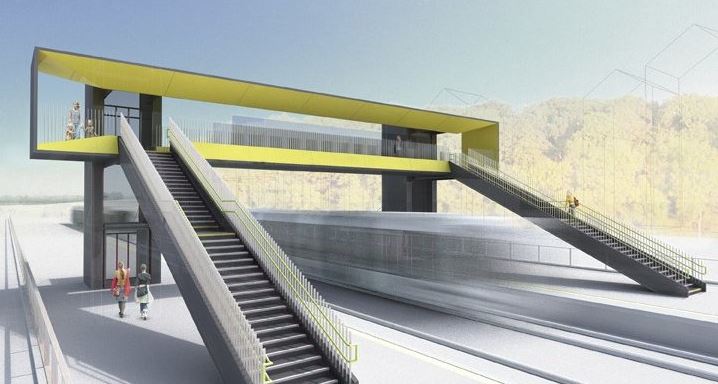
So could a factory-built bridge like this be installed at Bedwyn station?
The installation wouldn’t be difficult, but the politics could be.
Other Station Improvements
A quick look at other stations suggest these improvements.
- Hungerford station, which has a large car park, needs a step-free bridge.
- Kinbury station doesn’t have a bridge.
- Midgham station doesn’t have a bridge
- Theale station has improvements planned.
There are level crossings at Hungerford, Kintbury, Thatcham and Midgham.
Future Trains To Bedwyn
In Hitachi Plans To Run ScotRail Class 385 EMUs Beyond The Wires, I discussed how Hitachi were proposing to add battery power to Class 385 trains, which are in the same family as GWR’s Class 802 trains.
So surely, what is a power source for the goose is also a power source for the gander.
As it would only be a journey of thirteen miles both ways between Newbury and Bedwyn, this would surely be an ideal route for the use of battery power.
The other route, where battery power could be used would be between Didcot and Oxford, which is just over ten miles.
A Future Service To Marlborough
I covered this proposal in A Station For Marlborough.
Marlborough would be served by a single-track branch line on an old railway alignment, probably terminating near the large Tesco superstore in a single platform station.
The advantages of doing this would be.
- Marlborough, which is an important market town of 8,500 people would be connected to the rail network.
- Adequate car parking could be provided.
- Creating a station at Marlborough could be an alternative to expanding Bedwyn station, which could be problematical.
- It would improve the economics of the Paddington and Bedwyn service.
This is the sort of service, that should be developed.
Other Possible Services
The big advantage of this high speed local service for Great Western Railway, is that when it is on the Great Western Main Line, it becomes just another 125 mph service or once digital signalling is installed a possible 140 mph service.
These routes could have this type of high speed local services.
Great Western Main Line
Great Western Railway has several routes, where Class 800 and Class 802 trains break away from the Great Western Main Line to operate local services.
- Paddington and Bedwyn
- Paddington and Oxford
It could be argued that services to Cheltenham and Hereford are also high speed local services.
East Coast Main Line
In April 2018, I wrote Call For ETCS On King’s Lynn Route.
This post was based on an article in Rail Magazine, which talked about running 125 mph trains on the Kings Cross and Kings Lynn route.
This would make operation of the East Coast Main Line easier with herds of 125 mph trains steaming into and out of London.
I think, improvement would also extend to the Cambridge Line, in addition to the Fen Line.
- Operating speed up from 90 mph to 110 mph plus.
- Full digital signalling.
- Automatic Train Control.
Journey times and frequency to and from London Kings Cross would be improved significantly.
Siemens would probably need to uprate the Class 700 trains for faster running, as 100 mph trains are just too slow!
If you look at the East Coast Main Line between Doncaster and Edinburgh, large sections of the line are only double track.
It is the ambition of train operating companies to run more high speed expresses between London and the North of England and Scotland.
I can see a time, when all trains using the East Coast Main Line will have to confirm with a high minimum speed, otherwise the future plans cannot be fulfiled.
Midland Main Line
By the end of 2020, the Midland Main Line South of Market Harborough, will be a 125 mph electrified railway with a high speed branch to Corby, which will be served by a half-hourly twelve-car electric service.
From 2022, 125 mph bi-mode trains will be running services on the Midland Main Line.
I can see services between St. Pancras and Corby becoming another high speed local service.
- Half-hourly service.
- 125 mph running.
- Limited stop between Corby and London, with stops at Kettering, Luton And Luton Airport Parkway.
- The journey time could even be under an hour.
Selected trains could even use battery power to extend the service to Melton Mowbray.
West Coast Main Line
The West Coast Main Line will become increasingly crowded with fast 140 mph trains, especially after the opening of Phase 2a of High Speed Two to Crewe in 2027.
I believe that this will mean that all passenger services using the West Coast Main Line will need to be run using trains capable of at least 110 mph and possibly 125 mph.
The new operation of suburban services on the West Coast Main Line; West Midlands Trains are replacing their fleet with new Class 730 trains. Like the previous trains, they are 110 mph units, but are they capable of upgrading to 125 mph?
If they are upgradeable, they would ease timetabling problems between London and the West Midlands, as they could mix it with Virgin’s Class 390 trains.
Further North, Northern run services like these.
- Barrow and Manchester Airport.
- Blackpool and Manchester Airport
- Windermere and Manchester Airport
Currently, the operator is introducing new Class 195 and Class 331 trains, alongside the Class 319 trains.All of these trains are 100 mph capable, which is probably not fast enough, if they have to use the West Coast Main Line between Crewe and Lancaster, some of which is only double-track.
In Northern Considering Options For More New Trains, I wrote about Northern’s future rolling stock plans.
I suspect some 125 mph trains are in their plans for both the East and West Coast Main Lines.
Implications For Freight
There must surely be pressure for freight trains to go faster.
The 110 mph Class 93 locomotive is on its way, but with rail freight increasing we need to radically think how we run freight trains on a busy passenger line.
Conclusion
We will increasingly see upgrading of suburban services that use 125 mph line and not just around London.
New GWR IETs Under Fire Over Lack Of Buffets
The title of this post, is the same as that of this article on Rail News.
This is the first paragraph.
The RMT has been holding demonstrations today at London, Swansea and Plymouth about the lack of buffets on GWR’s new Intercity Express Trains. Surfers have also been protesting about the simultaneous withdrawal of space to carry their boards.
As I don’t even swim, the latter doesn’t bother me and I can’t remember going to the buffet on a GWR train since, I regularly used to go to Reading to see Foster Wheeler in the 1980s. I must admit, that I’ve availed myself of the trolley service.
I have flagged up for some time, that the Class 800, 801 and 802 trains are a bit lacking in the bulky luggage department.
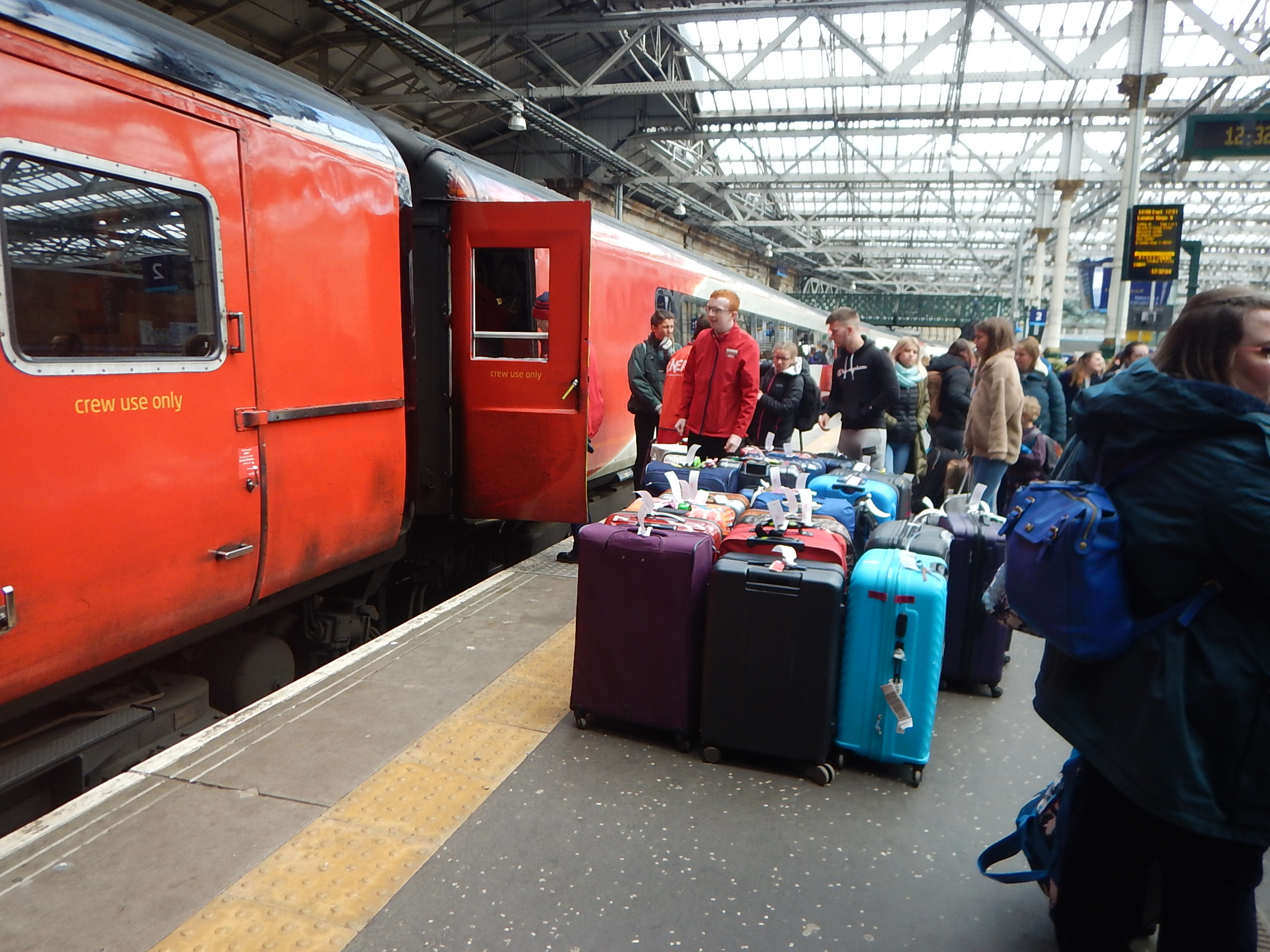
The picture shows an InterCity 125 about to make luggage disappear.
Also in Bicycles And Class 800 Trains, I said this.
I also noticed from the information displays, that all bicycles needed to be booked. That is a bit different from the days of the InterCity 125s, which had lots of space in the back of the locomotive.
On one trip to Plymouth, I saw several surfboards swallowed by the locomotive.
I got in a conversation with a station guy about bicycles and surfboards and from the knowing look on his face, I suspect it is a bit of a pain.
With the growing popularity of cycling, surely a turn up and go regime is needed.
Given that cyclists and surfers may look at the weather and decide, it’s a good time to go cycling or surfing, I suspect that GWR need to come up with a solution to this problem.
In the 1960s, I remember working with a manic surfer; John Baxendale, at ICI in Runcorn. Regularly, at the weekend in the winter, he’d strap his surfboard to the roof of his trusty Morris Minor and drive to the very North of Scotland to go surfing.
Rather him than me!
But if all surfers are like John in the 1960s, they are devoted to their sport and grab all opportunities.
The simplest solution is probably to provide a hire service in Cornwall for bicycles and surfboards.
But the design of the Class 800 trains allows up to twelve cars in a single train.
Could this lead to GWR and/or other operators, adding a tenth car to the trains to handle large luggage and perhaps bring specialist cargo like flowers and seafood up to London? GWR have done this in the past.
 The Anonymous Widower