Changing At West Ealing Station
This morning I changed at West Ealing station onto the Greenford Branch Line, after taking one of the new Class 387 trains from Paddington, which now run at a frequency of two trains per hour (tph).
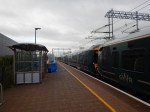
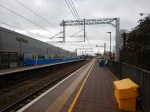
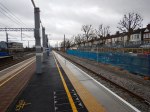
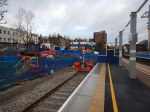
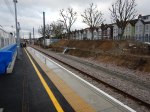
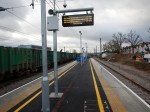
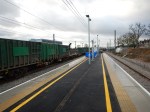
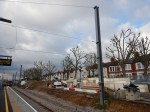
It was not the best of experiences.
My train arrived and I assumed that they would be a few minutes to allow me to get across from Platform 3 to Platform 5.
But by the time I got there, the train had long since left, so I had a twenty-seven minute wait on a draughty and cold platform.
GWR could do one of three things.
- Arrange the schedules, so that transferring passengers have time to catch the shuttle train.
- Put up a temporary shelter, until the new station is built.
- Run four tph on the Greenford Branch.
I wasn’t the only passenger, who was a bit fed up.
Crowded Roads In West London
Today, I tried to get to West Drayton station to have a lunchtime drink with an old mate from Cambridge, who had called me up yesterday, as he might have needed a second person to help him with one of his robotic machines.
But it all went pear-shaped at Paddington, where trains to West Drayton were very much delayed and I was advised to take the Underground to Greenford station and then use a bus.
But at Greenford, there wasn’t a bus map or anybody to ask, so in the end I took a bus to Ealing Hospital, where I thought I knew I could get a bus to West Drayton. But there wasn’t! So I thought about giving up and instead, I got a bus to Ealing Broadway station, to get back to Paddington. But I arrived at Ealing Broadway station, just before a train to West Drayton arrived. I caught that, had a drink with my friend and then caught a train back to Paddington. He didn’t need me to help, as all he needed was a pair of eyes to tell him what was happening at the sharp end of his machine and the client had turned up with his glasses.
So I achieved my objective and also had a wander round the Boroughs of Ealing and Hillingdon on buses and trains.
I trundle round North and East London most of the time and sometimes I even cross the River and go to the Deep South.
But I do find West London the most crowded, with buses slowed by all the traffic on the roads and infrequent very busy trains.
The West of London needs improvement in public transport.
I sometimes think, the traffic has got worse over the forty-six years, I had a driving licence.
Rail And Underground Lines
There are several lines going West from Central London, which include.
- The Chiltern Line from Marylebone to West Ruislip
- The Central Line to West Ruislip
- The Metroplitan Line to Uxbridge
- The Piccadilly Line to Uxbridge
- The Great Western Main Line tfrom Paddington to Reading and Heathrow
- The Piccadilly Line to Heathrow
Going further round, there are several lines from Waterloo going to the South West.
Only one line; the West London Line goes North South, although there used to be others.
The network is probably more sparse than some other directions from London.
Reliance on Cars And Buses
I think this rather thin coverage, puts a heavy radiance on cars and buses, which might explain the crowded roads.
Crossrail
Crossrail will bring improvement with the following Off Peak services in trains per hour (tph), along the slow lines of the Great Western Main Line.
- 4 tph to Heathrow Terminal 4
- 2 tph to Reading
- 2 tph to Maidenhead
Note.
- The central core tunnel probably has a limit of 24 tph.
- The service has a good balance between the various destinations.
- There will also be Great Western Railway services.
- Looking at the Crossrail schedule, there is scope to adjust the schedule on each branch.
I think that as Crossrail develops and the line and its passengers learn more about each other, the service pattern of Crossrail will change.
If I have a worry about Crossrail, it is that few of the stations towards Central London have many parking spaces, so will walking, cycling and the buses be adequate for Crossrail to tap its full potential?
The West London Tram
The West London Tram was proposed by Ken Livingstone in 2002.
These paragraphs from Wikipedia describes the tram and its route.
The West London Tram was a proposed on-street light rail line that was to run along the Uxbridge Road (A4020) corridor in West London, England. The scheme is promoted by Transport for London (TfL) but opposed by the councils of all three London Boroughs through which it would run. It was postponed indefinitely on 2 August 2007
The tram route was planned to run between Uxbridge and Shepherd’s Bush, serving Hillingdon, Southall, Hanwell, West Ealing, Ealing and Acton en route and would have completely replaced a number of equivalent London Bus routes.
If it had been built it would have had good connectivity to Crossrail and the Central Line. But the view of those against the project prevailed.
In my trip today, you could see why probably every car driver in the area, would be against a scheme like the tram. Only at places on the route, where there was a wide island of grass dividing the carriageways, would the tram not have increased congestion.
It looks like the thirty million pounds spent was wasted.
Crossrail And/Or West London Tram?
This Google Map shows the area around the three stations of Hanwell, West Ealing And Ealing Broadway.
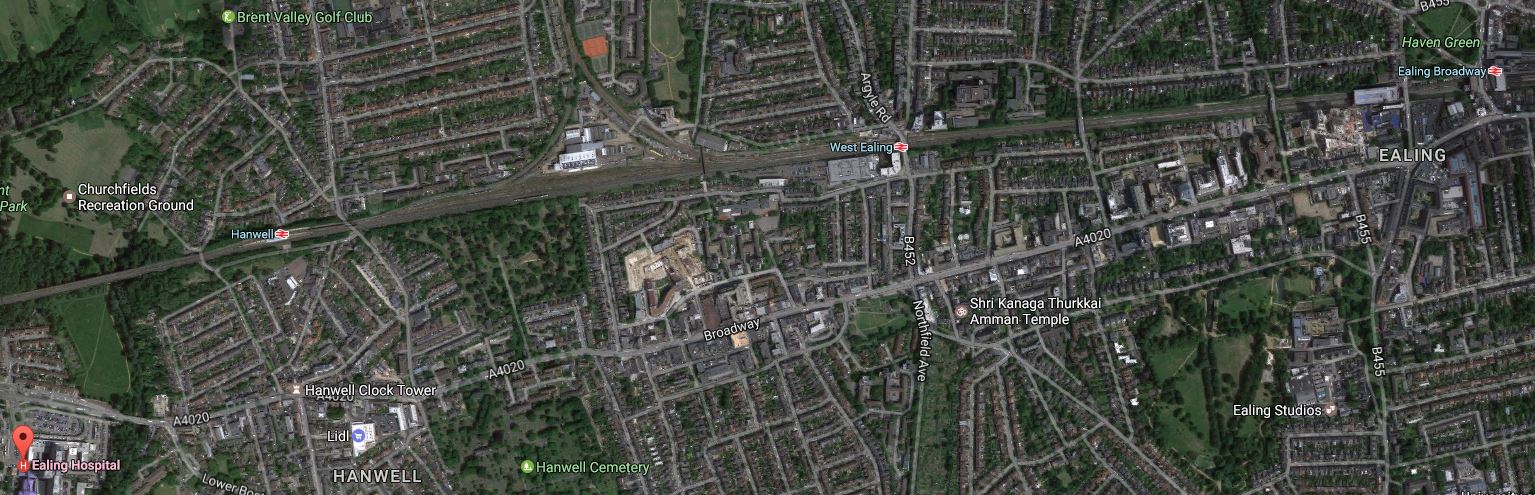
Great Western Main Line And The A4020 Through Ealing
Note.
- The Great Western Main Line across the middle.
- The A 4020 runs South of and parallel to the railway.
- Ealing Hospital is marked by the red arrow in the bottom left of the map.
I asked in the Header to this section if it should be And/Or between the projects.
Undoubtedly, it should be Or! Taxpayers can’t afford both!
In comparing the two, I believe the following points are valid.
- Trams stop about three or four more times than trains.
- The train is faster.
- The tram doesn’t serve Old Oak Common station or Heathrow.
- Trams annoy drivers in the same way that bendy buses do.
- Crossrail has a rich connection pattern compared to the tram.
- Pedestrians probably prefer trams, whilst drivers prefer trains.
The politicians decided and chose the trains.
Making More Of The Railways
If the streets are crowded can we use the existing railways to inject greater capacity into the existing railways in West London?
The key to this, as it sits in the middle of so many lines is the creation of a new station at Old Oak Common.
I will now summarise the possible rail projects that can be developed in West London
Chiltern Railways To Old Oak Common
Chiltern Railways have a capacity problem at Marylebone and one way to alleviate it would be for Chiltern to create a second terminal at Old Oak Common station, which could be accessed using an improved New North Main Line.
There is a real possibility of this project going forward and it could have many worthwhile features.
It would add another East-West route across West London, but with the comprehensive connectivity of Old Oak Common.
Chiltern Metro Creation
Wikipedia says this about a Chiltern Metro.
New Chiltern Metro Service that would operate 4+tph for Wembley Stadium, Sudbury & Harrow Road, Sudbury Hill Harrow, Northolt Park, South Ruislip and West Ruislip. This would require a reversing facility at West Ruislip, passing loops at Sudbury Hill Harrow, and a passing loop at Wembley Stadium (part of the old down fast line is in use as a central reversing siding, for stock movements and additionally for 8-car football shuttles to convey passengers to the stadium for events).[73] This ‘Chiltern Metro’ service was not programmed into the last round of franchising agreements.
When I wrote Could A Chiltern Metro Be Created? and came to the conclusion, that it might be possible, I got several positive responses.
Greenford Branch Improvements
The Greenford Branch Line connects the Great Western Main Line and the New North Line.
This map from carto.metro.free.fr shows the Northern end of the branch, where it joins the New North Line.
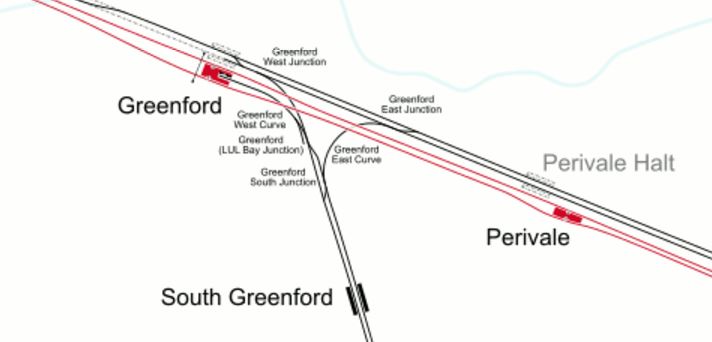
Northern End Of The Greenford Branch
Whilst this map from carto.metro.free.fr shows the Southern end of the branch, where it joins the Great Western Main Line.
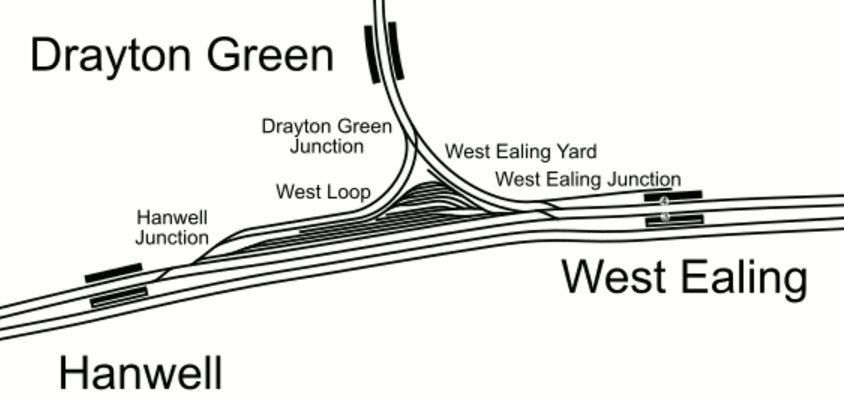
Southern End Of The Greenford Branch
What service the line will get after Crossrail opens has still to be decided,
- 4 tph between West Ealing and Greenford stations is certainly possible.
- There are those, including Ealing Council, who don’t like Greenford losing its direct connection to Paddington.
- A rebuilt Greenford station could incorporate Chiltern services.
As the connections at both ends of the branch allow trains to go in either an East or West direction, could this be useful in creating services between the two main lines?
Brentford Branch Reopening
I wrote about this in Could The Golden Mile In Houslow Get A Station?
The Brentford Branch could be a useful branch, worked by a shuttle train!
Hounslow Loop Line Improvements
The Hounslow Loop Line, which has a strong presence on both sides of the river and takes passengers to and from Waterloo, is being improved to increase capacity.
Could we see the Overground opening new services along the North London Line to perhaps Brentford, Hounslow and Feltham stations?
The route is used by freight trains, and Transport have suggested using the route to create an orbital Overground route.
Conclusions
The railways will take the strain in West London, after the abandonment of the West London Tram.
The Definitive Branch Line For An Electric Train With On Board Energy Storage
In Curious Rail Construction At Ipswich Station, I described how the current five-car Platform 1 has been electrified and given an electrified route of a few hundred metres to the Felixstowe Branch Line.
I then outlined how an ow an electric train with on-board energy storage, could work the Ipswich-Felixstowe service.
- I’ll assume that a fully-charged train starts from the new depot at Manningtree or some other suitable overnight stabling.
- The train positions early in the morning for the first service from Felixstowe, using overhead power to Ipswich and on-board power on the branch.
- Passengers load at Felixstowe and the train proceeds to Ipswich under on-board power to the current Platform 1 at Ipswich.
- The train would sneak into the platform on the North side of Ipswich Freight Yard, well out of the way of the Great Eastern Main Line and any freight movements.
- If the platform was busy and the train had to wait at a signal, it could even up pantograph to start the recharging of the on-board energy storage.
- Once in Platform 1, the train would either start or continue the charging process.
- The pantograph would be lowered, when the charging was complete or at any time before the train left for Felixstowe.
The process would continue all day.
But things don’t always go to plan, so what happens at Ipswich, if Platform 1 is blocked by a failed train?
As the train will be approaching Ipswich on a dedicated line, it would stop at a signal and wait. As the overhead wire to the station will be continuous, it would immediately up pantograph to start the charging process, to make certain, it wasn’t stuck with a flat battery.
There has been a lot of thought, in how trains with on board storage should be operated.
Similar layouts seem to be being installed at other places.
Maidenhead and the Marlow Branch Line
Maidenhead station is where the Marlow Branch Line connects to the Great Western Main Line.
Platform assignments after Crossrail will probably be.
- Down Fast
- Up Fast
- Down Slow – Crossrail
- Up Show – Crossrail
- Marlow Branch
Note that Platform 5 has recently been extended to the full Crossrail length of 200 metres, so could this platform be shared between the Marlow Branch trains and the Class 387 trains that will start to shuttle between Maidenhead and Paddington in mid-2017.
These are pictures taken at Maidenhead station.
Note the platform 5 for the Marlow Branch and the first couple of hundred metres of the branch are being electrified.
Trains with on-board energy storage between Maidenhead and Bourne End stations could certainly use the same procedure as the one I outlined for trains between Ipswich and Felixstowe. They would probably come into Platform 5 at Maidenhead, as the Marlow Branch trains currently do.
But they also have the advantage at Maidenhead of a very long two hundred metre Platform 5.
Note that four-car Class 387 trains couldn’t go past Bourne End station, so the remainder of the branch to Marlow would probably be served by a diesel shuttle.
On November 25th, 2016, I took this picture from a passing train.
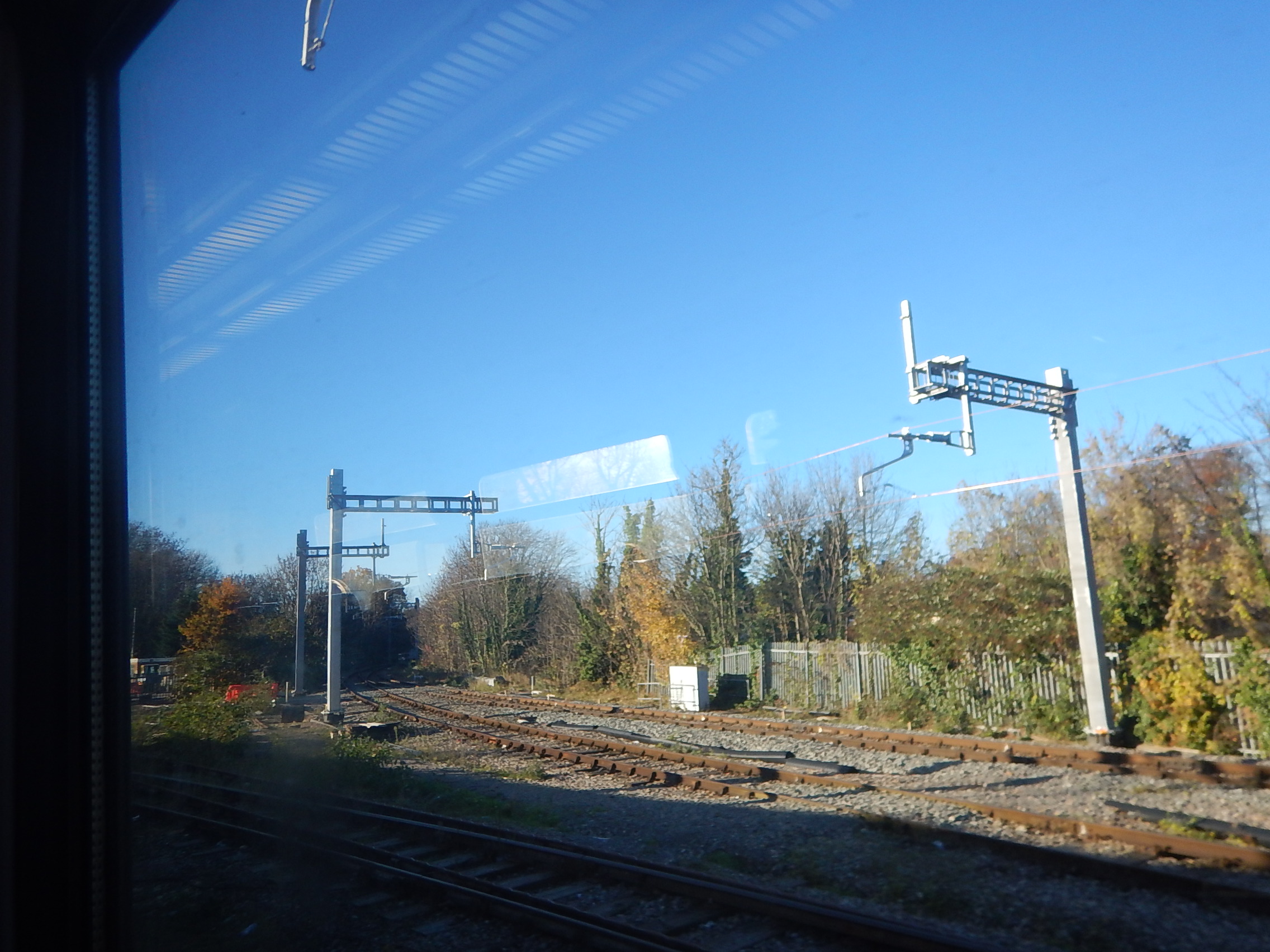
Note.
- I was looking directly down the Marlow Branch.
- The two lines join around the position of the last gantry and the nearest one goes into Platform 4, with the farthest one going into Platform 5.
- You can’t really see it too well in the picture, but the overhead wire appears to be only above the line into Platform 5.
This Google Map shows a close-up of the Western \end of Platforms 4 and 5 and the start of the Marlow Branch.
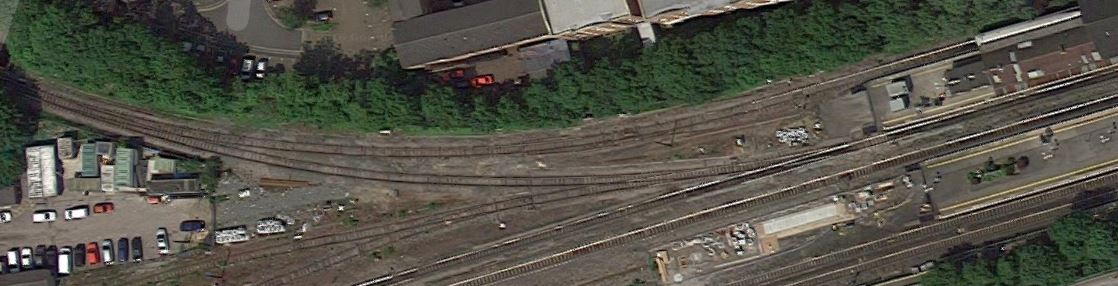
Hopefully, it will be clearer than mud now!
Note the two-car train in Platform 5.
So why is there no connecting electrification between Platform 4 and the Marlow Branch Line?
It could be that it hasn’t been erected yet, but on the other hand, it could be that it isn’t needed.
- All trains arriving at Maidenhead from Bourne End would use Platform 5.
- These trains would only use the wiring to the West of Platform 5, if say the platform was blocked, by say a failed train.
- Trains between Bourne End and Paddington, after arriving at Platform 5 would up pantograph and after leaving the platform, they would use an existing crossover to access the Up Slow line for Paddington.
- Trains between Paddington and Bourne End would probably use the existing crossovers to stop in Platform 5 after arriving on the Up Slow. Once in Platform 5, they would down pantograph and continue to Bourne End under on-board power.
So a second electrified line not being needed, could be the explanation of only one being created.
Note that when Crossrail starts, Crossrail trains will use Platforms 3 and 4 and will reverse using a reversing siding to the West of the station..
So the Marlow Branch and Crossrail will effectively be two separate systems with their own tracks, trains and arrangements.
Slough And The Slough to Windsor & Eton Line
Slough station is where the Slough to Windsor & Eton Line connects to the Great Western Main Line.
As I passed through Slough station, I noticed that the gantries are such, that just as at Maidenhead, the bay Platform 1 could have a short length of overhead wiring installed, so that the shuttle to Windsor and Eton Central station could be run using an electric train with on-board energy storage.
This small add-on to the electrification, would create a branch line independent of the main line.
- It would be worked as a single train shuttle.
- The train would be electric with on-board energy storage.
- The train would charge at Slough station.
- It would have dedicated platforms in the two terminal stations; Slough and Windsor and Eton Central.
- The train could be worked using the principle of only one train on the line at a time or One Train Working.
- Trains would enter and leave the dedicated branch tracks for servicing and other tasks, as they do now, through a connection to the Fast lines at Slough station.
Unlike the Marlow Branch, it would not need protection for failed trains, as there is only one train.
I would suspect that capacity at the Windsor end of the branch would limit any expansion unless a scheme like the Windsor Link Railway was brought forward and that a four-car electric shuttle train would be sufficient to work the line for many years.
Twyford And The Henley Branch Line
Twyford station is where the Henley Branch Line connects to the Great Western Main Line.
I wrote about using trains with on-board energy storage on the Henley Branch in Twyford Station And The Henley Branch and came to the conclusion, that electric trains of this type could serve this short branch of just four miles in length, with very little change to the infrastructure
Installing a short length of electrification in the bay platform 5 at Twyford station and for a short distance on the branch could be used to charge the trains.
As on the Marlow Branch and the Slough to Windsor and Eton Line, this would create a branch line independent of the main line.
I doubt that this line will ever be fully-electrified.
Certainly, as I passed the line today, there was no sign of any electrification.
West Ealing And Greenford Branch Line
West Ealing station is where the Greenford Branch Line connects to the Great Western Main Line.
But seeing as the last direct train from Greenford to Paddington seems to be on the 23rd of December 2016, the Greenford Branch Line will become an independent branch line with its own bay Platform 5 at West Ealing station, where passengers will have to change to and from Paddington.
In West Ealing Station – 12th October 2016, I showed the progress a couple of months ago and as at Slough gantries are in place, that could be used to electrify the new bay platform.
Once the wires were in place at the platform, all it would need to provide a quality service to Greenford, would be suitable electric train with on-board energy storage.
- The journey would take around ten minutes.
- Trains would charge their storage at West Ealing.
- Two trains per hour would be possible with one train.
- Four trains per hour would be possible with two trains, as the branch has a lot of double-track to allow passing.
The only infrastructure needed, other than the electrification might be some platform lengthening for the new trains.
As I passed the line today, there was some evidence of wires going up, but they probably can’t be completed until the new station is finished at West Ealing station.
Surely, if the branch was going to be run in perpetuity by diesel trains, there would be no evidence of electrification in the bay platform 5 and at the start of the Greenford Branch.
The Emerging Design
If you look at all these examples, most of which are ongoing projects, they have a series of common features.
- The branch line is fairly simple, often just a shuttle between two dedicated terminal platforms.
- The branch line is within the range of an electric train with on-board energy storage, to go out and return.
- Some branches are worked using the principle of only one train on the line at a time or One Train Working.
- At least one terminal platform will be electrified, so that the on board energy storage can be charged.
- The branch line is within the range of an electric train with on-board energy storage.
The only feature not common to all the detailed examples, is where the electrified platform could be shared as at Ipswich and Maidenhead,
In these cases, provision must be made for another train failing in the station.
If Network Rail can get this philosophy right, it has the following advantages.
- New or refurbished environmentally-friendly electric trains can replace elderly diesel trains on suitable routes.
- As the electric trains will typically be four-cars or more, there will be large capacity increases.
- There will be very little infrastructure work, except for platform lengthening and possibly electrifying an extra platform in a station on an already electrified line.
- Network Rail will gain a bit of credibility.
As an example, Ipswich Felixstowe could go from an hourly single -car Class 153 train to an hourly five-car modern Aventra with Wi-fi and lots of space.
Bourne End Station And Improving The Marlow Branch Line
Bourne End station is an intermediate station on the Marlow Branch Line, where trains reverse on their way between Maidenhead and Marlow stations.
It also is a terminus of trains to and from Paddington station in the Peak.
This Google Map shows the station and its location.
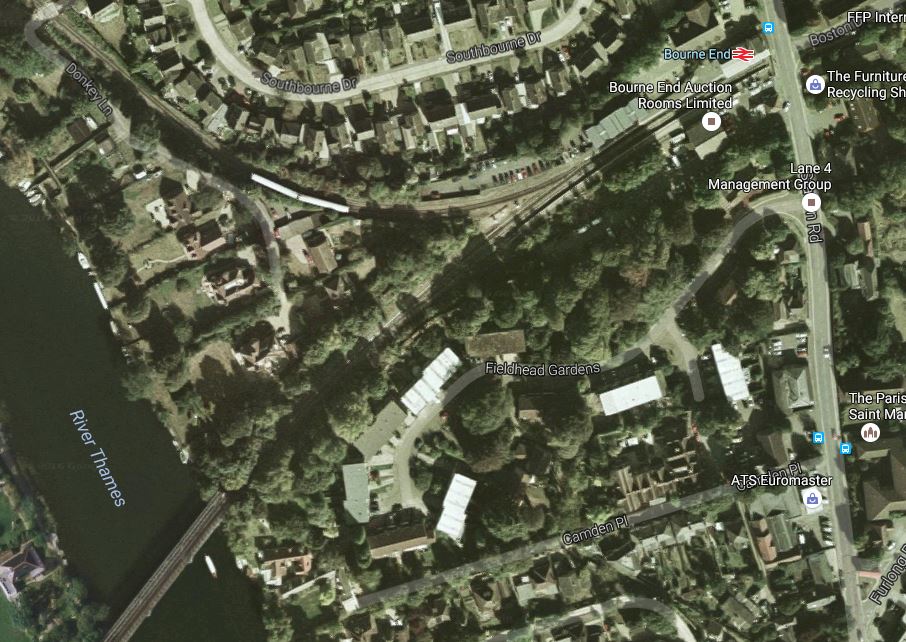
Note.
- The Bourne End Railway Bridge takes the railway over the Thames to and from Maidenhead.
- The two-car Class 165 train on its way to or from Marlow.
- The station has a short Northern platform, where trains reverse and a longer Southern one, that can only be used by trains going to Maidenhead.
- There is a step-free interchange between platforms
- All lines are single-track.
These pictures show the station and the surrounding area.




These are some thoughts on various ideas and issues on Bourne End station and the Marlow Branch Line.
Longer Trains To Marlow
Currently, because of the layout of the junction, where trains take the left-hand fork to Maidenhead and the right hand route to Marlow., all trains to Marlow must be only two cars.
I don’t know if modern trains can take sharper curves than the 1990s-built Class 165 trains on the route, but if it was the case, it might be possible to configure the junction to allow the Northern platform to be lengthened to take a longer train.
There are also other features of modern trains like a Class 387 train, that might help.
- Selective door opening.
- Walk-through design.
- 20 metre as opposed to a near-23 metre car-length of the older diesel train.
It would be a tight fit, but I suspect that fitting a three or even four-car train in Bourne End station might be possible, if the passenger traffic needed that capacity.
Passing Loops On The Line
There used to be a passing loop at Cookham station, but this was removed in the 1960s.
This Google Map shows Cookham station.
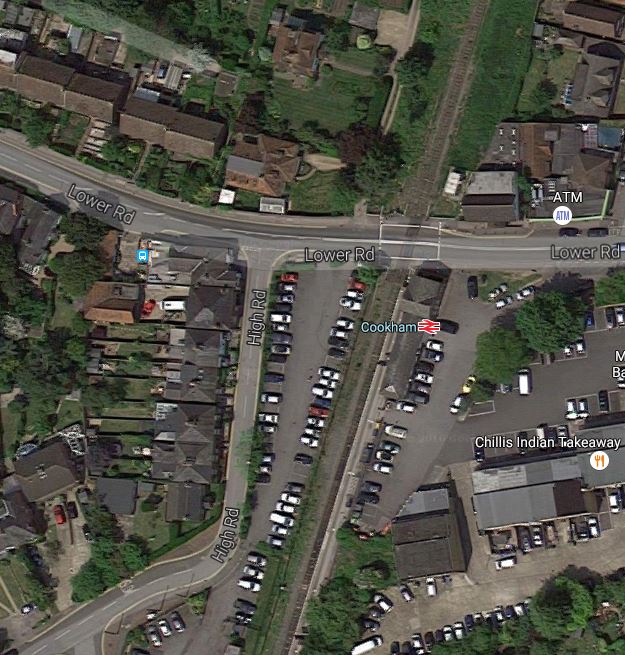
Cookham Station
It is probably one of those things that is possible, but would actually be a difficult project to implement.
- The users of the line wouldn’t accept a long closure.
- The level crossing would add a large degree of complication and opposition.
I suspect that unless there were really pressing reasons, that a passing loop will never be rebuilt at Cookham.
Increased Frequency
In the Peak, the service between Marlow and Maidenhead is effectively two trains per hour (tph). The method is described in Train Services under the Wikipedia entry for the Marlow Branch Line. This is said.
The off-peak service is one train per hour in each direction between Maidenhead and Marlow. During morning and evening peak times a two trains per hour service is achieved by using two trains: one shuttling between Marlow and Bourne End, and another between Bourne End and Maidenhead/London Paddington. This is possible because Bourne End station has two platforms that may be used simultaneously.
I suspect, that some devious train scheduler has a method for improving on this in the Peak and perhaps providing 2 tph in the Off Peak all day.
Certain facts might help.
- It only takes seven minutes to travel between Bourne End and Marlow stations.
- It only takes eleven minutes to travel between Bourne End and Maidenhead stations.
- Track improvements and modern faster trains might improve these times.
- Modern trains probably mean that the driver can change ends in a shorter time.
- Modern trains have various driver assistance systems to help timekeeping.
- . Running two tph as a shuttle shouldn’t be a problem, as it is currently in the Peak.
- Currently, four tph run to both Paddington and Reading from Maidenhead, with extra trains in the Peak.
- Crossrail will add four tph to Paddington and two tph to Reading.
- If all trains are modern, with floor heights compatible with Crossrail’s Class 345 trains and GWR’s Class 387 trains, then all train entry and exit, will just be a step or wheel across.
It probably all adds up to having at least two tph on the branch all day.
One problem that will limit frequency to two tph, is the lack of a passing loop on the line.
Two tph is only attainable, by using Bourne End station as a virtual passing loop, where the trains don’t actually pass. but the passengers do.
I suspect that train arrivals and departures at Bourne End station, are timed, to minimise conflicting passenger movements between platforms.
This is the current times of some movements at Bourne End station in the morning Peak.
- 7:21 – Train arrives from Maidenhead
- 7:24 – Train arrives from Marlow
- 7:27 – Train leaves to Maidenhead
- 7:28 – Train leaves to Marlow
These times give seven minutes for Maidenhead to Marlow passengers to change trains and three minutes for passengers going the other way.
They obviously give plenty of time for the driver to change ends of the train.
If we take the current timings of Maidenhead to Bourne End and Bourne End to Marlow, we get timings for a complete shuttle of two journeys.
- Maidenhead and Bourne End – 6+2*11 +4 = 32 minutes
- Marlow and Bourne End – 4 + 2*7 + 4 = 22 minutes
The extra four minutes has been added as that is how long it takes to reverse the train at Marlow.
So if a minute or two could be shaved on the Maidenhead shuttle, two tph is possible.
Three tph are probably possible between Bourne End and Marlow, but using one train to run three tph between Maidenhead and Bourne End is certainly not possible unless, one or more of the following are done.
- A passing loop is built between Maidenhead and Bourne End.
- A better sequence of trains is used at Bourne End.
- Trains run faster and call in minimum times at intermediate stations.
- Some trains don’t terminate at Maidenhead, but go on to Paddington or another station.
I am left with the conclusion, that with modern trains two tph is possible all day, but with minor adjustments three tph may be possible, especially in the Peaks.
Restoring The Line To High Wycombe
From the images in this post, I think it would be unlikely that the line to High Wycombe would ever be restored.
It would probably need a level crossing and I doubt Network Rail or the locals would like that idea.
I think that the increased frequency of trains between Bourne End and Maidenhead would need a passing loop.
Electrification
It has been planned to electrify Bourne End station and the Marlow Branch Line.
As I said in Is It Bi-Modes And Battery Trains To The Rescue?, nothing has been said by the Rail Minister about any plans for the electrification of the Marlow Branch.
But I did take these pictures at Maidenhead station today.
Why would the platform for the Marlow Branch and the first couple of hundred metres of the branch be electrified?
Especially, as there appeared to be no sign of work on the rest of the line between Maindenhead and Bourne End!
Given what I saw and wrote about increased frequencies, I think there are four possibilities.
- The Marlow Branch continues to be run as now..
- It receives traditional electrification later.
- The line is electrified just enough to charge trains with an IPEMU-capability or batteries.
- It has something to do with reversing Crossrail trains.
Option 1 and 2 are possibilities, but Crossrail are reversing trains to the West of the station.
It would also appear that sufficient work is being done for option 3.
Consider.
- There appears to be no work going on to lower the track in the numerous bridges.
- The clearances, are enough for a battery-powered train or IPEMU, which would be those needed for a Class 165 train.
- The line is only just over seven miles long, which would be within battery range.
- The line has at least two level crossings, which can be difficult to electrify.
- Putting overhead wiring on Bourne End Railway Bridge could rightly meet with objections.
Perhaps the best way to run the branch would be to run it almost as two separate services, as it is currently done in the Peak.
- A newer two-car diesel, like say a Class 172 train, runs the shuttle between Marlow and Bourne End.
- A four-car electric multiple unit with an IPEMU-capability, runs the Bourne End to Maidenhead service, under battery power charging at Maidenhead station, using the 200 metres or so of overhead wires.
- The trains are timed to meet at Bourne End, where passengers change between the trains.
- Certain Bourne End to Maidenhead trains could be extended to Paddington, as they are now in the Peak. I think they would take two hours for the round trip.
- In some ways the biggest advantage is that the only new infrastructure, would be the electrification at Maidenhead station, that is currently in progress.
I feel it is all feasible.
Conclusions
On current timings, two tph is very feasible and three tph may be a possibility and a certainty in the Peak.
What benefits would passengers get from this level of service?
- They get a turn-up-and-go service of at least two tph.
- They get newer trains with more capacity.
- Some of the trains would be electric-powered.
And the train operator?
- They get newer trains with more capacity.
- They would only need to allocate a small number of trains to provide the service.
- They get an easy-to-deliver service.
Hopefully, the quality service would attract more passengers and generate profits.
Surely though, Network Rail are the biggest winner, as they would only need to get the infrastructure into tip-top condition, add a small amount of electrification and give it a thorough testing.
Will it happen?
I have no idea, but it certainly looks like something innovative is being assembled.
If whatever Network Rail and GWR are planning, should involve the use of IPEMUs or battery-powered trains and it proved to be a success, then it would open up the possibility of several branch and other lines receiving the same electrification by stealth.
- Barking Riverside Extension
- Didcot Parkway to Oxford
- Felixstowe Branch
- Greenford Branch
- Henley Branch
- Marshlink Line
- Sudbury to Marks Tey and Colchester
- Uckfield Branch
- Windsor Branch
It is certainly easier to electrify a line using modified electric trains with batteries, built in a new clean and warm factory in Derby, rather than by traditional methods, which seem to be Network Rail’s money pit.
Is It Bi-Modes And Battery Trains To The Rescue?
This article in Rail Technology Magazine is entitled Further delays to GWML electrification as schemes deferred indefinitely.
The delayed schemes include.
- Bristol Parkway to Bristol Temple Meads
- Bath Spa to Bristol Temple Meads
- Oxford to Didcot Parkway
- Henley Branch
- Windsor Branch
There is no mention of the Marlow Branch or the Greenford Branch.
The article also quotes the Rail Minister; Paul Maynard, as saying.
Introducing newer trains with more capacity in these areas could be done without costly and disruptive electrification,
Is this a meaningless platitude or is there substance behind it?
A mix of Class 801 electric trains and Class 800 bi-mode electro-diesel trains were originally ordered for GWR.
But this is said in the Wikipedia entry for the Class 800 train.
In July 2016, it was announced that GWR’s intended fleet of Class 801s were to be converted from pure EMUs to bi-mode units. Subsequently these were reclassified as Class 800s.
So will we see bi-mode trains working the Bristol Temple Meads routes, which are numbered 1 and 2 above?
That would certainly allow the Minister to bathe in the glory of a run to Bristol via Bath and back via Bristol Parkway.
Five-car Class 800 trains could also work route 3, thus giving Oxford trains, that would increase capacity and run on electric power between Didcot and Paddington.
But what about the four branch lines; Greenford, Henley, Marlow and Windsor?
Note.
- The Minister used the word newer not new.
- He also said capacity would be greater.
- When I passed the Marlow branch a few weeks ago, it appeared electrification had started.
- All branches are short, with the Marlow Branch the longest at 7.25 miles.
- The Henley Branch has a 50 mph speed limit.
It should also be noted that the Mayflower Line, where the battery train trial was conducted in 2015 is just over eleven miles long.
So would it be possible to fit batteries to the Class 387 trains to fulfil the Minister’s statement?
- The Class 387 trains are very similar to the Class 379 trains used in the trial on the Mayflower Line.
- They are newer with greater capacity, than the current trains on the branch lines.
The answer could be yes! I reported on Rumours Of Battery-Powered Trains in August 2015. At that time Network Rail were calling the trains Independently Powered Electric Multiple Units or IPEMUs.
The possibility also exists that Class 387 trains with batteries could also work the lines between Didcot Parkway and Oxford, Reading and Basingstoke and Reading and Bedwyn.
Network Rail needs to convert a serious loss of face into at least a score-draw!
If the Great Western does use this approach, they’ll only be taking a similar route to the Germans, as I wrote about in German Trains With Batteries.
Slow Line Traffic Into Paddington
I was thinking today, as I came back from my trip from Paddington, that I described in A Low Key Launch Of New Electric Trains, that when all of the new trains are running on Crossrail and the GWR, the slow lines will be very busy.
According to Wikipedia, Crossrail will be running.
- 4tph Abbey Wood – Heathrow Terminal 4
- 2tph Abbey Wood – West Drayton – Peak Hours Only
- 2tph Shenfield – Reading
- 2tph Shenfield – Maidenhead
In addition there will be non Crossrail services on the line.
- 4 tph Heathrow Express
- 2 tph Paddington Main Line – Bedwyn
- 2 tph Paddington Main Line – Oxford
- 2 tph Paddington Main Line – Hayes and Harlington
So that gives eighteen services an hour, with probably all except the Heathrow Express on the slow lines.
As the Shenfield Branch of Crossrail is going to handle 16 tph, 14 tph would seem to be within the capacity of the slow lines to Reading, even leaving some space for freight.
I do wonder that as GWR has ordered forty-five Class 387 trains, which in view of today will probably be run mainly as eight-car trains, for where they are going to add services to the network.
So how many trains will they need for current services?
- 2 tph to Hayes and Harlington – Under half an hour, so 2 trains, or 4 if running as a pair.
- 2 tph to Oxford (stopping) – Two hours, so 8 trains or 16 if running as a pair.
- 2 tph to Bedwyn – 90 minutes, so 6 trains or 12 if running as a pair.
Oxford and Bedwyn will also be served by fast Class 800 long distance trains.
This gives a total of 32 Class 387 trains.
So what happens to the other thirteen trains?
There has been talk of giving some of the trains an IPEMU-capability, which I reported in Rumours Of Battery Powered Trains to run the branch lines to Henley, Marlow and Windsor and the Reading to Gatwick service.
I just wonder, if the Electrostar might have made a good demonstrator for the IPEMU technology, but that an IPEMU based on an Aventra is so much better, that there is little point in creating an Electrostar IPEMU.
Or are Bombardier wanting to get the Aventra fully designed in all its variants before they tackle creating an Electrostar IPEMU?
So how many trains with an IPEMU-capability would be needed for the branch lines and Reading to Gatwick?
- Gatwick to Reading takes 90 minutes, so 6 trains could provide 2 tph.
- 4 tph on the Greenford Branch, would need 2 trains charging at West Ealing.
- 2 tph on the Henley Branch, would need 1 train charging at Twyford.
- 2 tph on the Marlow Branch would need 2 trains charging at Maidenhead. – By a bit of fiddling, the trains might pass at Bourne End or there could be a passing loop.
- 2 tph on the Windsor Branch, would need 1 train charging at Slough.
This adds up to the missing thirteen trains, if you add in a spare. In Modern Railways for June 2016, one paragraph in a larger article gives some news about the progress of Bombardier’s IPEMU technology. This is said.
Industry sources confirm that options for some of the GWR order to be produced as independently powered EMU (IPEMU) variants fitted with batteries for operation away from electrified routes are still being explored. This would enable GWR services to Gatwick Airport and on some of the Thames Valley branches to be worked by ‘387s’ prior to electrification. Any decision to look seriously at this proposal will depend on final electrification timescales being confirmed by Network Rail.
Ordering the number of trains they have means that GWR can offer a workable solution on all routes in the Thames Valley, depending on what Network Rail deign to deliver and if Bombardier come up with an affordable IPEMU solution.
- No electrification, no IPEMU – Use refurbished diesel multiple units.
- Electrification – Use Class 387 trains as electric multiple units.
- No electrification, IPEMU – Use Classs 387 trains in IPEMU mode.
Obviously, if Network Rail decide to electrify any part of the network later, the trains can be driven and controlled accordingly.
I’m also sure, there will be routes in the Bristol area, where a Class 387 train with an IPEMU-capability could be very useful.
A Low Key Launch Of New Electric Trains
This morning at 07:15, I was on the first Class 387 train out of Paddington for Hayes and Hsrlington.
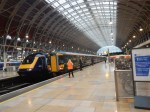

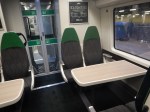





It was a new train of eight coaches, complete with that smell that all new vehicles have for a few weeks.
At the moment GWR only have four Class 387 trains in service, which should be enough for a two trains per hour (tph) shuttle with eight coaches in each service.
But because the new bay platform for the Greenford Branch has not been completed yet at West Ealing station, there are only a few services a day.
This page on the GWR web site gives more details and says this about services in 2017.
From January, all Greenford trains will terminate at West Ealing; as we increase our electric service between Hayes & Harlington and London Paddington to every 30 minutes.
From May, these trains will start running to and from Maidenhead, as we replace our existing diesel fleet.
Does this mean that from January 2017, the Greenford branch will be served by a four tph shuttle? Or will that be later?
The Longest Underwater Electrification In The UK Since The Channel Tunnel
It may only be a tunnel seven kilometres long and a lot shorter than the Channel Tunnel, but the Severn Tunnel has two tracks, which both have to be electrified, so that the Great Western Railway can run electric trains to and from South Wales.
But the Severn Tunnel was built between 1873 and 1886 and it posed various problems during its construction with water ingress and since with operation because of its length, profile and the pumping of constant water. There is a section in Wikipedia, which is called General, which gives more details.
The Severn Tunnel is probably one of those places, sane engineers wouldn’t want to electrify a railway.
So I was interested to read this article in Rail Engineer, which is entitled Preparing For Severn Tunnel Electrification. The article gives this overview of the project.
The electrification project now moves on to probably one of its biggest challenges: the electrification of the 7.012km long Severn Tunnel. The tunnel will be closed to trains between 12 September and 21 October for the work. It is referred to as the “Severn Tunnel Autumn Disruption” or STAD for short and, just to make it a bit more interesting, included in the STAD are the Patchway Tunnels –1.139km Old (Down); 0.057Km Short (Down); 1.609Km New (Up).
Some facts about the tunnel and the work already done.
- More than 76.4 million bricks were used in the construction.
- Between 10 and 20 million gallons of water have had to be extracted every day to prevent flooding.
- There is also a ventilation shaft through which 80,000 cubic feet of fresh air can be forced into the tunnel each minute by means of an eight- metre diameter fan at the top.
- The contractors first had to scarify 2,500 square metres of tunnel lining to remove more than 35 tonnes of soot.
It is not a small job. But at least the tunnel was in better condition than expected.
The article gives a deep insight into how the Severn Tunnel electrification is a collaboration between several major contractors, who are installing a Swiss system from Furrer + Frey called Rigid Overhead Conductor Rail System in the roof of the tunnel. The ROCS system uses a rigid aluminium rail supported on appropriately designed fittings fixed to the roof of the tunnel. There is more on the ROCS system in this article in Rail Technology Magazine.
To makes things more difficult, the engineers have only got thirty-nine days to do the work.
And if it all goes wrong, there are two sets of politicians who will get very angry!
Is The New Bay Platform At West Ealing Opening On August 1st?
I heard a rumour that the new bay platform at West Ealing station was going to open on the first of August, but I have just found a change in the timetable, that could mean that it is true.
If you look at the on-line timetables, you will find the following.
At present the first two trains after 07:00 from Greenford to West Ealing, are the 07:16 and the 07:46, which go on to Paddington in twenty-six minutes.
From the first of August, they are the 07:13 and 07:43 which are shown as only going as far as West Ealing, where you change for Paddington and do the journey in twenty-eight minutes.
The strange thing is that these two trains are the only ones before nine, that require a change for Paddington.
The times of trains from Hayes and Harlington to Paddington appear to change on the first too!
There is also an additional electric service leaving for Hayes and Harlington at 07:18.
Could it be that electric services are starting on the first of August too?
Sorting Out The Late Great Western Electrification
I could have added something like And Other Issues to the title of this post.
An article in the June 2016 Edition of Modern Railways entitled GWR To Order More ‘387s’ starts with the statement.
Govia Thameslink Railway’s fleet of 29 Class 387/1 EMUs is to be retained by the operator and will not be transferred to Great Western Railway, according to industry sources.
It seems that not only do GTR have trouble with their staff and the new Class 700 trains, but also with other train operators too.
So GWR have snapped up the other fourteen ordered by Porterbrook and supplemented this with an order for fifteen new build units.
This means they have got their required 29 trains to go with the eight they ordered some time ago.
Unfortunately, building more Class 387 trains, which would probably help the rolling stock shortage caused by the non-working Class 700 trains, especially as it appears Bombardier has spare capacity, is not on, as changes to crashworthiness regulations mean that these trains can’t be produced after September 2016.
So it’s probably very lucky, that the Great Western doesn’t have much working electrification.
One paragraph in the article gives some news about the progress of Bombardier’s IPEMU technology. Thios is said.
Industry sources confirm that options for some of the GWR order to be produced as independently powered EMU (IPEMU) variants fitted with batteries for operation away from electrified routes are still being explored. This would enable GWR services to Gatwick Airport and on some of the Thames Valley branches to be worked by ‘387s’ prior to electrification. Any decision to look seriously at this proposal will depend on final electrification timescales being confirmed by Network Rail.
Using IPEMUs on the routes mentioned would be a sensible move.
It would also appear from the article that GWR is going to order more Class 800 bi-mode trains from Hitachi.
There is also this article in Rail Technology Magazine entitled Perry Confirms New GWR Class 801 Will Be Bi-Mode.
As the Class 801 electric train and the Class 800 bi-mode train are more of less identical except for the diesel engines, conversion between the two types is possible.

