Class 800 Trains On The Wharncliffe Viaduct
These pictures show two Class 800 trains working as a pair crossing the Wharncliffe Viaduct.
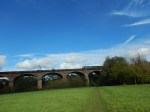
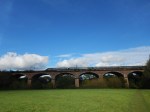
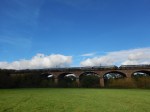


Note Paddington is to the right.
HSTs For 2020
The title of this post is the same as that of an article in the September 2017 Edition of Modern Railways.
It describes how Wabtec in Doncaster will be updating the InterCity 125 train, so that meet the latest Persons with Reduced Mobility (PRM) regulations, which come into force in 2020.
The fitting of power doors and retention toilets will see the following trains in service for a number of years after 2020.
- CrossCountry – 5 x 2+8 sets.
- GWR 11 x 2+4 sets.
- Scotrail – 17 x 2+5 sets
- Scotrail – 9 x 2 +4 sets
This totals up to eighty-four Class 43 power cars and two hundred and five Mark 3 coaches.
Work On The Power Cars
With the exception of some interlocks, there appears to be little work being done on the power cars, which is probably because of the good care, that the trains have had over the years.
Although, they’ll obviously be serviced and painted.
Work On The Coaches
This is summed up as follows.
- Sliding power doors for passengers will be fitted.
- A test rig will simulate fifteen years of use.
- Controlled emission toilets are being fitted.
- If a coach has two toilets , only one can be retained due to space limitations, caused by the pockets for the sliding doors.
- Most of the coaches are receiving new universal access toilets.
- From a picture caption in the article, it appears that less work on the interiors will be done on the CrossCountry coaches.
Production details are also given.
- The first GWR and CrossCountry sets will be released in early November.
- Two production lines will be setup.
- The CrossCountry sets are targeted for completion by May 2018.
- The Scotrail sets are targeted for completion by May 2019.
- The final ten GWR sets will be rebuilt last.
Initially coaches will be modified to a 40-day turnround, which should be halved for the Scotrail sets.
Conclusions
Wabtec seem to be doing a comprehensive and quality job in updating the Msrk 3 coaches.
Consider.
- Wabtec are setting up two production lines for the modifications.
- At twenty days to modify a train, that means in a year, they can refurbish 36 coaches or probably four trains.
- Greater Anglia have fifteen rakes of recently-refurbished Mark 3 coaches, one of which has been sold to be used with 60163 Tornado.
- East Midlands Trains have twelve InterCity 125 sets.
- Virgin Trains East Coast have sixteen InterCity 125 sets,
I wonder if any of these extra sets will be converted at Wabtec?
Where would they be used?
Chiltern Railways
Chiltern will probably need some more coaches for their services to Birmingham, Oxford and in the future; Milton Keynes.
If partial electrification should happen on their routes, Chiltern could replace the current Class 68 locomotives for a bi-mode like a Class 88 locomotive.
The New East Midlands Franchise
The new East Midlands franchise could go for a fleet of InterCity 125s for Derby, Leicester, Nottingham and Sheffield services given than electrification won’t happen.in the near future.
It should be noted that HS2 will reach the new East Midlands Hub station around 2032/2033, so this will become a date, when London to East Midlands services will change forever.
CrossCountry
CrossCountry has a capacity problem and might find more InterCity 125s a very well-proven solution, that is liked by passengers.
Long Distance Services
Some long-distance routes like Norwich to Liverpool and Cardff to Manchester might be ideal for shortened InterCity 125s.
New Services
It is well-known that passengers very much like travelling on InterCity 125s and after my trip from Edinburgh to Inverness in the cab, I am convinced that drivers and probably other staff too, have a lot of affection for these superb trains from a very different era.
It is these thoughts and feelings, that led Scotrail to go down the route of introducing shortened InterCity 125s on their major inter-city routes North of Edinburgh and Glasgow.
So could we see Scotrail’s example used in other places in the UK?
Chris Stokes in the September 2017 Edition of Modern Railways, finishes his column, after talking about scenic railways in the rest of the world, with this paragraph.
There are limited examples in Britain, such as the ‘Jacobite’ steam service between Fort William and Mallaig and the expensive and exclusive ‘Royal Scotsman’ service. But elsewhere on the Kyle line, the Cambrian Coast or Settle-Carlisle, all you get is a Class 158, with, if you’re lucky seats aligned with the windows. We could do so much better.
A shortened InterCity 125, perhaps with a regional buffet car would certainly be a lot better.
Scotrail could perhaps start the process by running a Glasgow to Leeds service via the Glasgow South Western Line and the the Settle to Carlisle Line.
The Transformation Starts Here
This article in Rail Magazine is entitled First GWR High Speed Train Off-Lease This Month.
It describes how the first InterCity 125 for ScotRail is leaving Great Western Railway for refurbishment to meet the new regulations coming in on the 1st of January 2020.
What other train in the world, after forty years front-line service, could be given a full upgrade to be made ready for more years of service?
Crossrail To Heathrow, Reading And Southend
Crossrail To Heathrow
In the Wikipedia entry for Crossrail, there is a section called Extensions.
This is said under a sub-section called Heathrow Express.
The RUS also proposes integrating Heathrow Express services from Heathrow Terminal 5 into Crossrail to relieve the GWML and reduce the need for passengers to change at Paddington.
Note RUS refers to Network Rail’s Route Utilisation Study of 2011 and GWML is the Great Western Main Line.
Currently, Heathrow Express takes fifteen minutes to go between Paddington and Heathrow Central stations, with Heathrow Connect taking thirty-two minutes with five stops.
The journey time calculator on the Crossrail site, says the trains will take twenty-three minutes with six stops. But as I said in Are Crossrail And Bombardier Having Us On?, Crossrail’s journey time estimates aren’t very good to say the least.
I think until the Crossrail trains reach Heathrow next May 2018, any speculation I make of the time they take between Paddington and Heathrow Central will be very wide of the mark.
However, this can be said of Heathrow Express and Crossrail to Heathrow.
- As the RUS says Heathrow Express services use four paths per hour on the GWML in both directions and these paths would be released for other services if Heathrow Express used the dedicated Crossrail tracks.
- Most Heathrow Express passengers will not be going to Paddington or the surrounding area of the station.
- When fully developed Crossrail will connect Canary Wharf, the City of London, the West End and the Queen Elizabeth Olympic Park, to name just four important destinations, directly to Heathrow Airport.
- If Crossrail works as it says on the box, every travel guide and expert, will recommend you use your contactless bank card to travel on this wonderful new airport train.
- I would suspect, that given Heathrow’s expansion plans, that the Heathrow branch of Crossrail has a capacity in excess of ten trains per hour (tph).
- The accommodation and comfort level in Crossrail’s Class 345 trains is high and well suited for an airport service.
I think that Heathrow Express will be increasingly deserted by passengers, in favour of the cheaper and more convenient Crossrail.
So could the two services be integrated together?
In theory, Heathrow Express could use the Crossrail tracks to Paddington, but there would be problems.
- Heathrow Express trains would have to leave the Crossrail tracks to get into Paddington.
- Would Crossrail want non-stop trains speeding through suburban stations like Southall, with their high suicide rates?
So then why not create a Heathrow Express, that used the Crossrail tracks and stopped at say Old Oak Common (for HS2), Paddington, Bond Street, Farringdon (for Thameslink), Liverpool Street and Canary Wharf?
- Heathrow Express would have to buy new trains compatible with the platform-edge doors in Crossrail’s tunnels.
- Where would the trains be turned back? Perhaps a turnback facility could be built at Liverpool Street at a cost of several hundred million pounds!
- It would still speed through suburban stations.
- Trains moving at different speeds would reduce the capacity of Crossrail.
- As Crossrail and Heathrow Express will use the same platforms at stations, how do you stop people without expensive special tickets using Heathrow Express?
Heathrow will continue to argue to keep Heathrow Express, but in practice in the future, it will be as outdated a concept as trains pulled by steam engines.
So one of two things will happen.
- Heathrow Express will continue as now, using two valuable platforms at Paddington and the four equally valuable paths per hour on the GWML.
- It will be discontinued.
I believe that in some date in the future, only three rail services will serve Heathrow.
- London Underground’s Piccadilly Line.
- A Crossrail service to London and the East.
- A Crossrail service to Reading and the West, which would rejoin the slow tracks of the GWML to the East of Langley station.
The two Crossrail services would probably be run back-to-back, so that fewer trains were turned back at Heathrow.
The two Crossrail branches to Heathrow and Reading would merge easily to the West of Hayes and Harlington station and there would be no complications caused by Heathrow Express trains crossing to and from the fast lines.
Crossrail To Reading
Just over a month ago, Transport for London (TfL) ordered four extra Crossrail trains and announced extra services to Heathrow and Reading. I discussed this in Crossrail Expands Before It Opens
I said this.
Four new Class 345 trains are being ordered, which will mean that in the Off Peak the following will happen.
- Trains between Whitechapel and Paddington will increase from 16 tph to 20.
- Trains between Paddington and Shenfield will increase by two tph
- Trains between Paddington and Abbey Wood will increase by two tph
- Trains between Paddington and Reading will double from two tph to four.
- Trains between Paddington and Maidenhead will increase from four tph to six
- From December 2019, six tph will call at Heathrow Terminal 5.
I also found this quote in the article on Global Rail News, that was the source for the increased services.
The increased service frequency will be achieved, in part, by replacing five Great Western Railway services with Elizabeth line trains.
So could we be seeing a degree of co-operation between TfL, Crossrail and Great Western Railway, whereby the following services are provided?
- Slow stopping services are run by Crossrail on the two slow lines.
- Fast and semi-fast services are run by Great Western Railway on the two fast lines.
This would be operationally simple and might even create extra paths into London for more long-distance services.
The problem are the local stopping trains to Oxford (2 tph) and Bedwyn (1 tph). Will they run on the slow or fast lines between Paddington and Reading?
Consider the service to Bedwyn.
- A five-car Class 800 train could run the service.
- Small modifications at Bedwyn would probably be needed to allow the Class 800 train to use the turnback.
- The train would run using electricity until the wires ran out near Newbury and then diesel.
- The service could run semi-fast or non-stop between Paddington and Reading.
- Nine-car Crossrail Class 345 trains would probably need a lot of platform lengthening, in addition to the electrification to be used to Bedwyn.
And the stopping service to Oxford.
- A five-car Class 800 train could run the service.
- A planned new bay platform at Oxford station would handle the service.
- The train would run using electricity until the wires ran out near Didcot and then diesel.
- The service could run semi-fast or non-stop between Paddington and Reading.
- Niine-car Crossrail Class 345 trains would probably need some platform lengthening, in addition to the electrification, to be used to Oxford.
If the two services are considered together, they could join and split at Reading to save paths on the fast lines.
I think that on balance to use a pair of Class 800 trains would be better than to extend Crossrail past Reading.
Consider.
- A second service to Bedwyn could be easily added.
- A large number of long-distance trains call at Reading station.
- Reading has been designed for easy interchange between fast and slow services.
- Crossrail will be providing at least four tph between Paddington and Reading that stop at all stations.
- Reading has services into Waterloo.
I’m certain that the train companies can find a very efficient solution.
I can see a situation, where Great Western Railway aren’t going to need many Class 387 trains in the Thames Valley.
Crossrail To Oxford
This may seem a bit over the top, but analysis might show, that the best way to create more capacity between Reading and Oxford, might be to extend two Reading Crossrail services each hour to Oxford, when the electrification to Oxford is complete.
Crossrail To Southend
Just as it appears there is co-operation between Crossrail, Great Western Railway and TfL, could similar co-operation between Crossrail, Greater Anglia and TfL, result in improved services on the Shenfield to Southend Line? I wrote about this in Crossrail Tests Its Trains In Southend.
The Long Distance Class 345 Train
Adding Oxford and/or Southend to Crossrail services, may need a sub-class of Class 345 train to be created, due to the length of the journey. Toilets would be the obvious addition.
The Automatic Splitting And Joining Of Trains
Hitachi And Automatic Splitting And Joining Of Trains
The Hitachi Class 395 train was the first train in the UK to be able to automatically split and join in service.
In The Impressive Coupling And Uncoupling Of Class 395 Trains, I linked to this video.
Impressive isn’t it?
In Do Class 800/801/802 Trains Use Batteries For Regenerative Braking?, I quoted this comment from a public on-line Hitachi document.
Because the coupling or uncoupling of cars in a trainset occurs during commercial service at an intermediate station, the automatic coupling device is able to perform this operation in less than 2 minutes.
This is definitely in line with Class 395 train performance.
This document from the Hitachi web site talks about the design of Hitachi’s Class 385 trains for Scotland. This is said.
The lead and rear railcars have an automatic coupler at the front and walk-through gangway hoods. When train sets are coupled together, the hoods fit together as part of the automatic coupling operation to provide access between train sets, meaning that passengers and staff are able to move freely from one train set to another.
Obviously, Hitachi have got automatic splitting and joining of trains spot on!
Current Split/Join Services
There are several places in the UK network, where splitting and joining of trains is used.
- Southeastern Highspeed do it at Ashford.
- Great Northern Kings Lynn do it at Cambridge.
- Southern do it at Haywards Heath.
- Virgin Trains do it at Crewe.
- South West Trains do it at Southampton.
But currently only the Class 395 trains can do it automatically.
The in-service entry of the Class 800 trains will change everything, as it will make a lot more new routes possible.
Virgin Trains East Coast
Currently, Virgin Trains East Coast (VTEC) run two trains per hour (tph) between Kings Cross and Leeds. In the Peak, some services are extended to Bradford Forster Square, Skipton and Harrogate, where the last route is not electrified.
Will some services to Leeds be run by two five-car Class 800/801 trains working together as a ten-car train?
- Class 800 trains are electro-diesel which could work to Harrogate under diesel power.
- Class 801 trains are all-electric, which could work all electrified routes from Leeds.
At Leeds the two trains could separate, with each train going to a different destination. Reading Hitachi’s published documents, the split would take under two minutes at Leeds and I don’t think there would be a restriction of a Class 800 and a Class 801 working together between Kings Cross and Leeds using the overhead electrification.
VTEC gets advantages by using this split and join approach.
- Frequencies and train length to the eventual destinations can be adjusted to what the market will sustain.
- Extra expensive train paths between the split/join station and London are not needed.
- Between the split/join station and London, the train can usually run using electrification.
- Costs are probably saved, if only a half-train is run to some destinations, as track access charges are based on weight.
- A five-car electro-diesel could probably access more routes than a nine-car train.
This is the fleet that VTEC have ordered.
- Class 800 – 10 x five-car
- Class 800 – 13 x nine-car
- Class 801 – 12 x five-car
- Class 801 – 30 x nine-car
These Class 800 and Class 801 trains give VTEC all sorts of of possibilities.
The backbone of the service which is a half-hourly service to Edinburgh probably needs about 35 nine-car trains, some of which would be electro-diesels to work North of the electrification to Aberdeen and Inverness.
But that still leaves quite a few five-car trains available for other services.
Great Western Railway
Great Western Railway (GWR) will probably use their Class 800/801802 trains in a similar manner.
This is the fleet that GWR have ordered.
- Class 800 – 36 x five-car
- Class 800 – 21 x nine-car
- Class 802 – 22 x five-car
- Class 802 – 14 x nine-car
Note that the electro-diesel Class 802 train is similar to the Class 800, but with the engines tuned for more power and larger fuel tanks, so it can handle Devon and Cornwall routes easier.
I think that given the number of five-car trains on order and the lack of promised electrification, I think that GWR will be using splitting and joining in some surprising places, to make sure that as many routes as possible get the new trains.
The Stadler Flirt
This article on Railway Technology describes the Stadler Flirts built for Swiss Federal Railways. This is said.
The train consists of articulated train sets, which contains light rail cars attached semi-permanently sharing a common bogie. The trains are available in two to six car combinations with two to six motorised axles. The automatic couplers, installed at both the ends of the trains, permit connection and disconnection of up to four train cars easily and quickly.
Does this mean that two trains can split and join like the Hitachi trains?
The Bombardier Aventra
The Aventra is a train that has been designed to have everything that customers might need. This is the description of the train in Wikipedia.
The train has been designed to be lighter and more efficient, with increased reliability. It will have lightweight all-welded bodies, wide gangways and doors to shorten boarding times in stations, and ERTMS. The design incorporates FlexxEco bogies which have been used in service on Voyagers and newer Turbostars. The gangway is designed to allow maximum use of the interior space and ease of movement throughout the train.
As Hitachi have published a lot of their thinking on Class 800/801 trains on the Internet, I would find it astounding that Bombardier and the other train building companies haven’t read it.
There have been four orders for the Aventras so far, which total over two thousand carriages.
Two of these orders are for mixed fleets of five-car and ten-car trains.
Are these trains and half-trains just like with the Hitachi trains?
If the answer is in the affirmative, I think it is very likely that Aventras will have the capability of splitting and joining automatically.
Greater Anglia
Greater Anglia has a complex route structure that fans out from a very busy electrified core into Liverpool Street on both their main lines.
They have ordered 89 x five-car and 22 x ten-car of Class 720 trains.
Many of their outer-suburban routes currently run twelve-car services and as their two main lines are only double-track, I can see a lot of five car trains working in pairs.
In Harlow Council Leader Jon Clempner Hopes Crossrail 2 Will Extend To Town, I suggested that Greater Anglia might use splitting and joining on the West Anglia Main Line to get four tph on the Hertford East Branch.
It may not be practical in that case, but Greater Anglia have several electrified branches.
South Western Railway
South Western Railway have a similar route structure to Greater Anglia, with a very busy electrified core into Waterloo.
They have ordered 30 x five-car and 60 x ten-car of Aventra trains.
In Waterloo Upgrade August 2017 – Virginia Water Station, I talked about used splitting and joining to provide a better service on the Waterloo to Reading Line and the Chertsey Branch.
However, I think that most services will be run by ten-car trains given the make-up of the fleet.
The five-cars could generally run on routes where the capacity only needs five-car trains or the infrastructure wouldn’t allow anything longer.
They could then split and join to maximise the capacity and use only one path from the split/join station to Waterloo.
Exploring The Tamar Valley Line
The Tamar Valley Line runs up the Tamar Valley between Plymouth to Gunnislake stations, the latter of which is over the border in Cornwall.
These pictures show the journey.

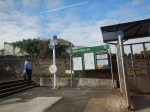
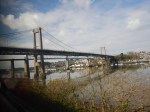


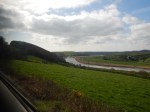

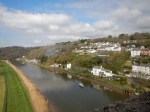
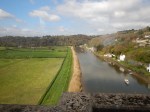

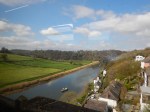



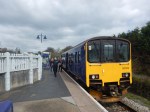


The following sections are my thoughts on the journey.
The Scenery
Rarely, have I travelled on a railway with such spectacular views.
Calstock
This Google Map shows Calstock.
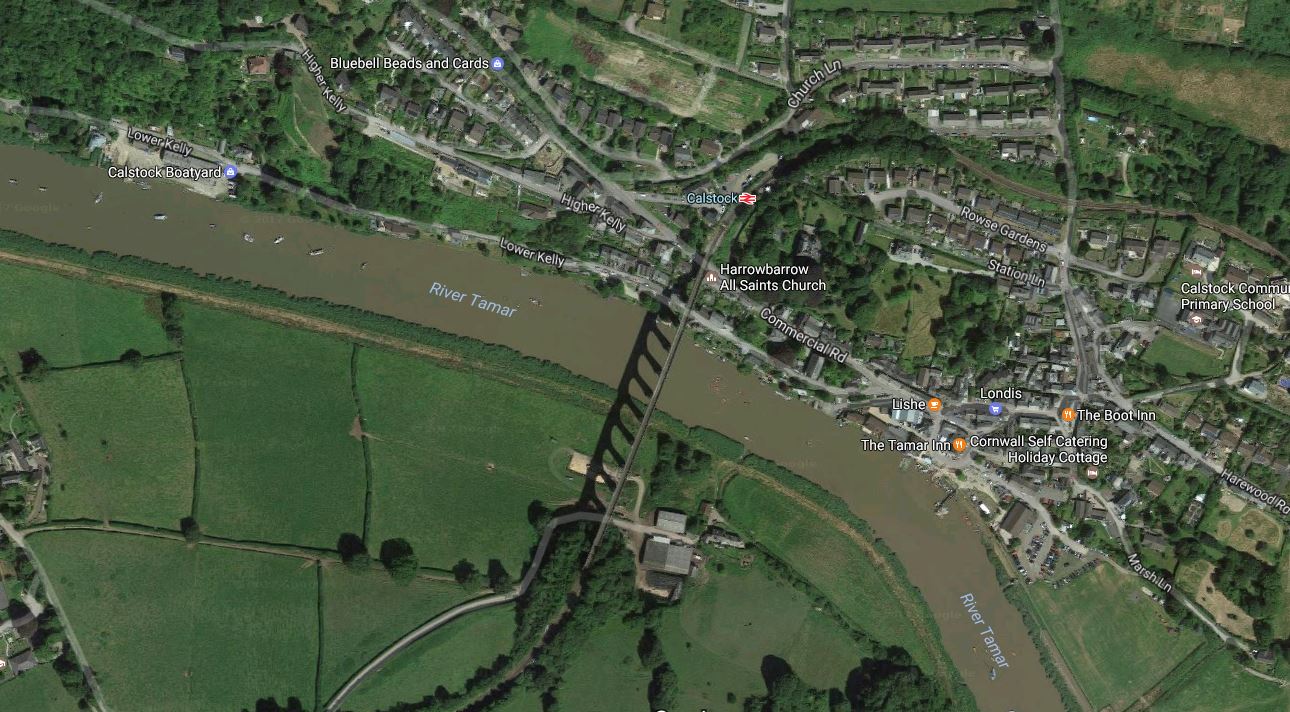
Note the Grade II* Listed Calstock Viaduct as the railway crosses the Tamar and the station on the Northern side of the river.
I suspect that if the railway ceased to run to Calstock and over the viaduct, there would be a revolution.
But having lived at the end of the then-erratic Felixstowe Branch line in the 1960s, I can see how if the service would be improved to hourly with a decent train, customers mysteriously appear. I suspect too, that road connections between Felixstowe and Ipswich are a lot better than between Calstock and Plymouth.
Bere Alston
This Google Map shows Bere Alston station.
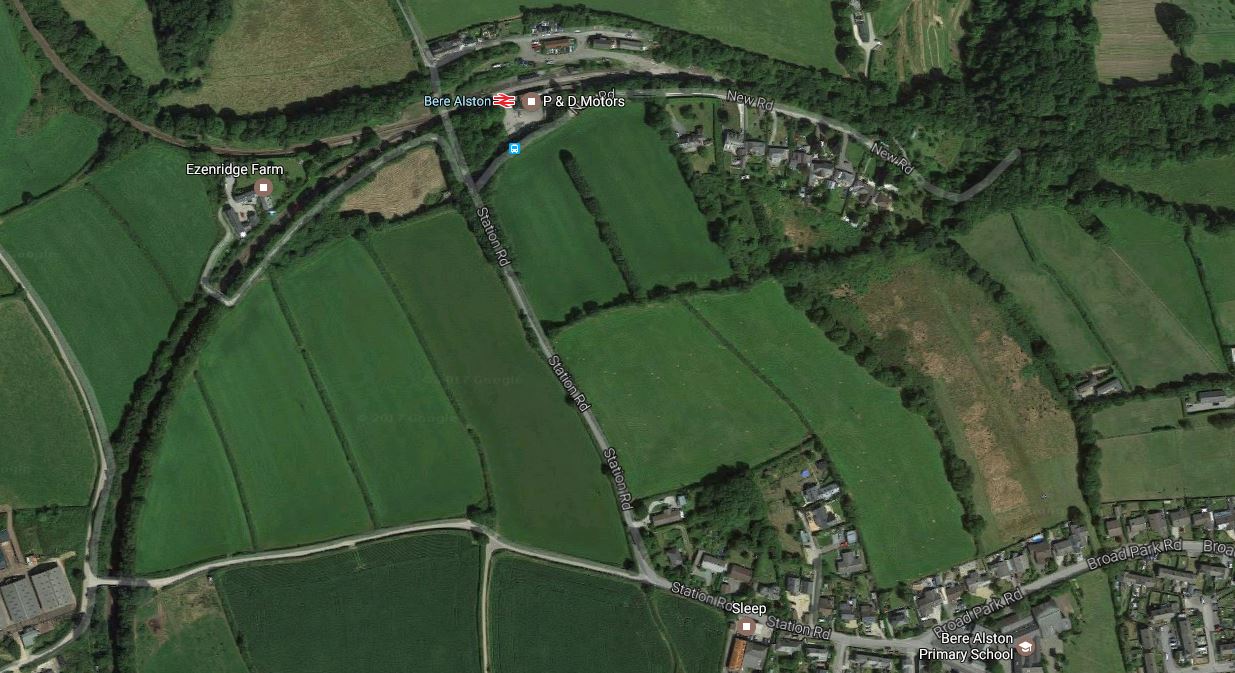
Note the two lines leading from the station, with one going South to Plymouth and the other going North to Gunnislake.
The line that used to go to Tavistock can also be seen going East.
I have followed this in my helicopter and you can see much of track bed.
The Train Service
I just went up and came back on the same train, as a fellow passenger said there was nothing at Gunnislake. He was actually walking down from Bere Alston station.
So as I had other things to do rather than wait two hours on a Cornish hill for the next train, I may have taken the right decision. Or not as the case may be!
If you look at the way the train service is organised, currently one Class 150 train is dedicated to the route.
As it takes 45 minutes to go up from Plymouth to Gunnislake and then after a wait of typically six minutes, it comes down in a further 45 minutes, the train service is not the easiest to run efficiently.
Looking at the timings of the individual sections of the line we get the following going up.
- Plymouth to St. Budeaux Victoria Road – 10 minutes
- St. Budeaux Victoria Road to Bere Alston – 14 minutes
- Bere Alston to Gunnislake – 20 minutes
Coming down we get the following times.
- Gunnislake to Bere Alston – 18 minutes
- Bere Alston to St. Budeaux Victoria Road – 13 minutes
- St. Budeaux Victoria Road to Plymouth – 11 minutes
The following also complicate the train scheduler’s problem.
- The line is single-track with no passing loops.
- The driver has to change ends for the reverse at Bere Alston station.
On the other hand, a more powerful train could probably save time on the climb and if it had good brakes, it could save time of the descent.
At least St. Budeaux Victoria Road station is where the driver organises the signalling. Wikipedia says this.
Trains heading towards Bere Alston must collect the branch train staff from a secure cabinet on the platform before proceeding, as the line is operated on the One Train Working system with only a single unit allowed on the branch at a time. Conversely the staff has to be returned to the cabinet by the driver on the return journey before the unit can leave the branch and return to Plymouth.
If trains could climb up from St. Budeaux Victoria Road to Gunnislake and return within the hour and they could pass somewhere South of Bere Ferrers station, then an hourly service would be possible, with modern signalling!
But it would need two trains! And trains are something, that GWR doesn’t have in abundance.
The Two Stations At St. Budeaux
This Google Map shows the two stations at St. Budeaux.
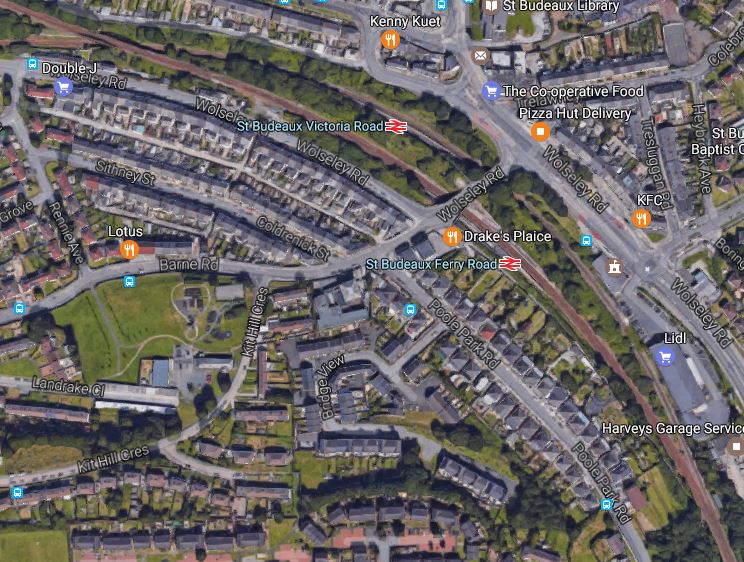
According to this except from Wikipedia, the two stations; St. Budeaux Victoria Road and St. Budeaux Ferry Road were once connected.
A connection to the Great Western Railway was installed east of the station on 21 March 1941 to offer the two companies alternative routes between Plymouth and St Budeaux should either line be closed due to bombing during World War II. On 7 September 1964 the original line into Devonport was closed, and all trains use the former Great Western route and the wartime connection to reach St Budeaux, renamed St Budeaux Victoria Road to differentiate it from St Budeaux Ferry Road, opened by the Great Western Railway on 1 June 1904.
The line from St Budeaux to Bere Alston was singled on 7 September 1970, services having ceased beyond there (towards Tavistock North and Okehampton) in May 1968.
I would suspect that as there appears to be a fair amount of space in the area and with some innovative trackwork Network Rail could design something, that allowed an hourly service to Gunnislake from Plymouth and/or St. Budeaux Victoria Road.
Sort the two stations at St. Budeaux and it would surely allow extra stopping services from Plymouth along the Cornish Main Line. An hourly stopping train would give stations between Plymouth and Bt. Budeaux, a much friendlier two trains per hour (tph).
Onward To Tavistock And Okehampton
There is a Future Options section in the Wikipedia entry for Okehampton station. This is said.
Both Railfuture and the former MP for Totnes, Anthony Steen, have in the past proposed the reinstatement of the line between Okehampton and Bere Alston, thereby reconnecting the station with Plymouth. The reopening of the link would restore the continuous circuit of railway linking the towns around Dartmoor. On 18 March 2008 Devon County Council backed a separate proposal by developers Kilbride Community Rail to construct 750 houses in Tavistock that includes reopening part of this route from Bere Alston to a new railway station in Tavistock.
Whether this happens at any time in the future, will depend on various factors.
- The need for housing developments in the area.
- Tourism.
- Quarrying and the transport of stone.
- Commuting from Okehampton and Tavistock.
With the link to the Tarka Line, it would deliver an alternative route from Plymouth to Exeter and London, if the weather attacks Dawlish again.
A Dawlish Diversion
It sounds all well and good for a diversion for between London and Cornwall, should Dawlish be closed by the weather or for engineering work.
But after looking at what has been created at Dawlish and writing about it in Walking Between Dawlish And Dawlish Warren Stations, I teel that something has been created, that should be able to stand up to what happened in 2014.
But even if the line is never broken, as it was in 2014, there will always be a need to have a diversion for important engineering works, that might mean the line is closed for a couple of days.
So I think that Network Rail’s plan, which was reported about in the June 2016 Edition of Modern Railways, that I wrote about in Common Sense Between Exeter And Plymouth, could happen.
In the post I said this.
The Modern Railways article also says.
- The line’s function would be to provide a modest service serving local stations and to offer diversionary capability.
- Eight new stations would be provided.
- The line would be unlikely to be electrified.
- To help funding new housing would be built along the line.
A double-track railway with diesel trains would do the following.
- Improve the economy of Devon around the fringes of Dartmoor.
- Help in the development of much-needed housing in the area.
- Provide a much-needed freight route to and from the peninsular.
- Provide sufficient capacity in the event of problems at Dawlish.
But knowing Murphy’s Law, if the line were to reinstated, the sea at Dawlish would behave itself.
Could the line even be built as a single track, but big enough, so that it would allow five-car or perhaps even longer Class 800 trains to run between Plymouth and Exeter in an emergency or when the main line is closed for other reasons?
The timings for Class 150 trains on the line are as follows.
- Plymouth to Bere Alston – 24 minutes
- Okehampton to Exeter St. Davids – 44 minutes
I would estimate that Bere Alston to Okehampton could take about forty minutes, via Tavistock.
I think we can safely say that a modern train like a Class 172 train could do Exeter to Plymouth in under two hours.
As Exeter to Plymouth takes around an hour, I think it should be possible for something like a 100 mph Class 165 train to go round the complete circle in under three hours.
This would mean that to run a Devon Circular service with one tph in both directions would need.
- A rail link between Bere Alston and Okehampton via a new Tavistock station.
- Three trains in both directions or six trains in total.
- 100 mph diesel trains.
- One or more passing loops or lengths of double-track
- A solution that allows two different services at Bere Alston.
Additional services would also be provided in both directions..
- Between Exeter and Yeoford, there would be two tph instead of one tph.
- Between Plymouth and Bere Alston, there would be two tph instead of one tph.
- One extra tph between Exeter and Plymouth.
A lot of stakeholders should like it.
Conclusion
I’ve just posted what I have seen and what I have read from trusted sources.
It would appear there is a lot of potential to improve the railways in Devon.
It also strikes me that a lot of what Network Rail are proposing doing is only undoing what was done by British Rail engineers in the 1960s.
At least, BR engineers didn’t follow Beeching’s recommendation of closing the Tamar Valley Line.
What Train Is This?
I took these pictures of a train coming from Barnstaple to Exeter.
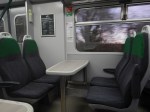
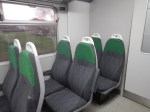
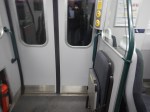
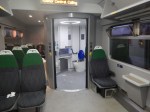
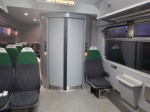
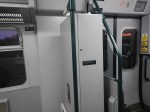
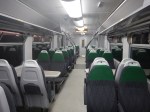
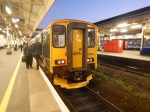
But what type if train is it?
The last picture shows it is Class 150 train built in the 1980s by British Rail.
It is certainly a high quality refurbishment of 150263.
I’d much rather travel in this train, than a new Class 700 train.
Consider.
- The seats were comfortable.
- There were several tables in each car.
- The toilet was one of the best I’ve seen.
- The information system, tip-up seats and grab handles were all excellent.
The train even had it’s own wheelchair ramp stowed away in a secure metal cupboard.
I can’t find anything on the web about who did the refurbishment of this train.
My only thought, is that it was an in-house job and came from Laira with love!
The Truth About The Refurbishment
The August 2017 Edition of Modern Railways has a long article entitled Great Western Improvement Imminent, where on page 75, this is said.
The Class 150/2s are going through a refurbishment and repaint at Wabtec’s Doncaster plant
If all the 137 trainsets end up like this no-one will complain.
The Tarka Line
The Tarka Line is a branch line in Devon that runs up from Exeter St. Davids station to Barnstable station.
I went to Barnstaple in the rush hour in a packed three car train, consisting of a Class 150 and a Class 153 train working together, asw a three-car unit.
The lady next to me, said she lived in Bideford, so she had a drive from Barnstaple.
Coming back down, the train was almost empty, so I took a pit stop at Yeoford station in a local pub called the Mare and Foal, before catching the next train back to Exeter. That train was a refurbished Class 150 train, that I wrote about in What Train Is This?
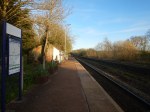
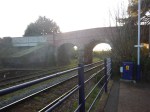
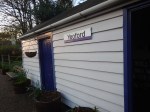
These pictures show Yeoford station to give a flavour of the line.


The Link To The Dartmoor Railway
This Google Map shows the section of the Tarka Line North from Yeoford station, which is in the South East corner.

At the village of Penstone, the Dartmoor Railway breaks off to the West to go to Okehampton station.
Under Future in the Wikipedia entry for Yeoford station, this is said.
The Dartmoor Railway plan to reopen the disused platform at the station in order to create an interchange with the Tarka Line (and thus the national network). Through running from Yeoford to Okehampton was intended to commence in 2009 but this was delayed pending the finalising of transfer arrangements with Network Rail. Accordingly, the “Sunday Rover” service run by Great Western Railway again operated on Sundays throughout the summer of 2009, although not calling here. Though the GWR summer trains have continued to operate since (running again each summer from 2013-16), agreement over the use of Yeoford as an interchange has still not been reached and it is unclear as to when (or if) this will be possible.
If this does happen, it could be the first step in opening up a second East-West route across Devon.
This page on the Dartmoor Railway web site is entitled GWR Sunday service to Okehampton and gives details of the GWR Summer Sunday service.
Reopening the old LSWR route across Devon will be driven by the following.
- New housing developments in the area.
- Tourism
- Creating employment.
- Bringing quarried materials to construction distribution depots and sites by rail.
- Creating a second route to Cornwall in case of disruption at Dawlish.
Murphy’s Law will of course apply and once the route is open, there will be no more disruption at Dawlish.
If the route is built, it will allow local trains to do a circular route from Exeter calling at the following stations in large towns.
- Crediton
- Okehampton
- Tavistock
- Plymouth
- Newton Abbott
The route would give connections to branches to Axminster, Barnstaple, Exmouth, Gunnislake, Paignton and Tiverton.
Onward To Bideford
The Wikipedia entry for Bideford station says this.
Recently, the station was included on the ATOC Connecting Communities report, that recommends closed lines and stations that should have a railway station. The report suggests the reopening of the Barnstaple – Bideford railway line.
This Google Map shows the centre of the town of Bideford.
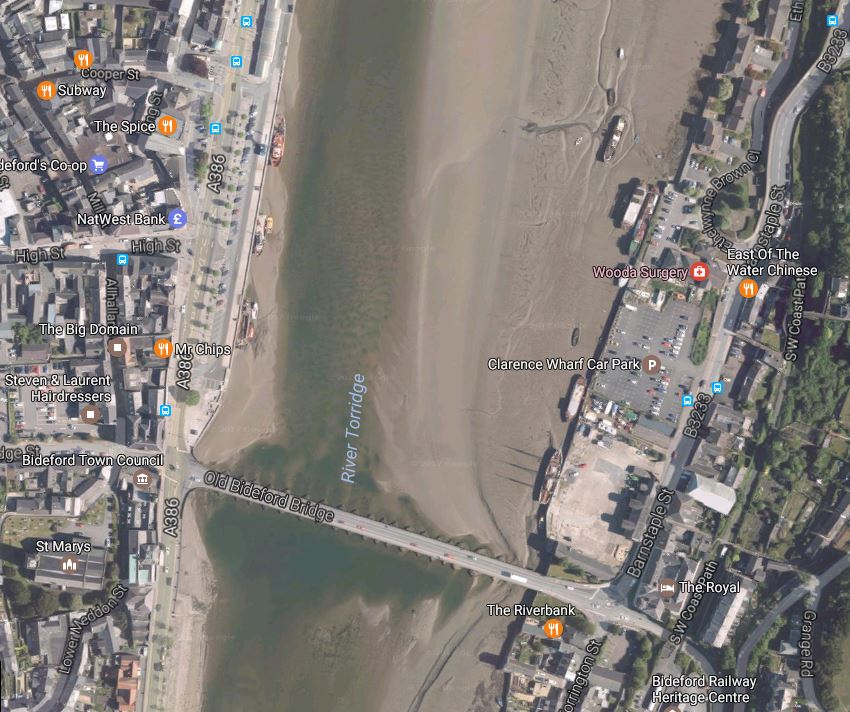
The old station was located at the site of the Bideford Railway Heritage Centre at the Eastern end of the Old Bideford Bridge.
So could the railway line between Barnstaple and Bideford be reopened?
This Google Map shows the other end of the line at Barnstaple.
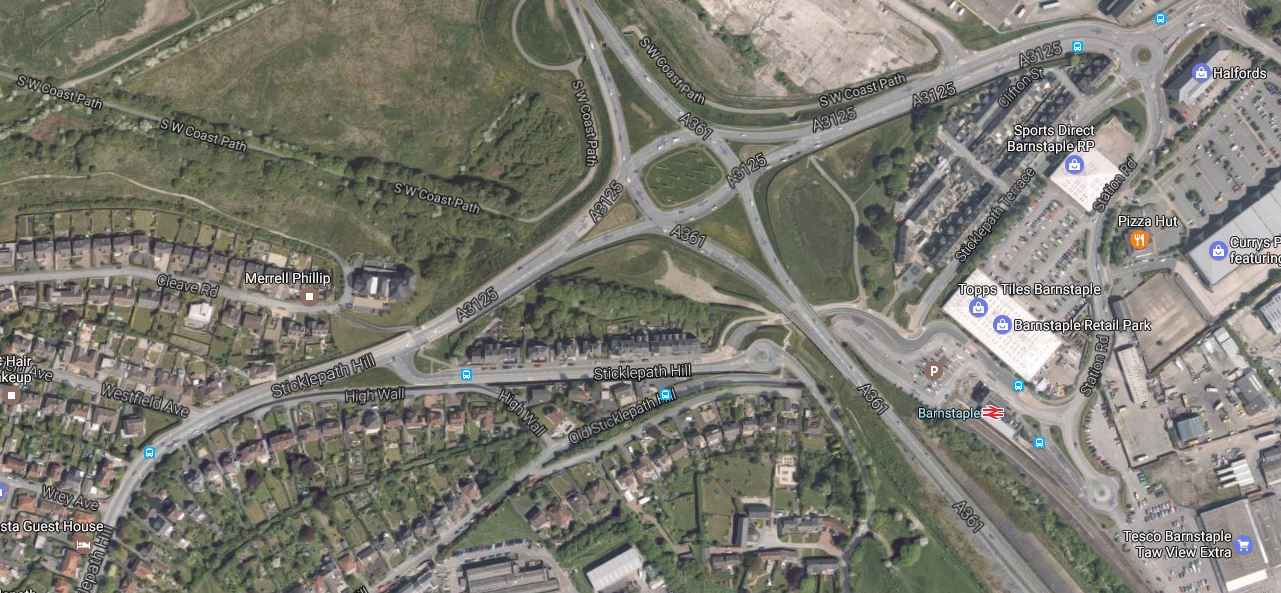
The old railway line is now used as the South West Coastal Path.
I think with traditional technology, it will be unlikely that the railway is rebuilt, as walkers and others will rightly object to noisy diesel trains or electrification of any kind, disturbing the countryside.
But as I wrote in No-Frills Mini Trains Offer Route To Reopening Lines That Beeching Shut, engineers won’t give up in providing solutions for difficult to serve places.
I believe that within ten years, a silent battery-powered train, will be ghosting its way along a single track railway between Barstaple and Bideford, that is shared with walkers and cyclists.
Remember engineering is the science of the possible, whereas politics is all impossible dreams.
Bedwyn Station
I had to go to a meeting in Marlborough, so I took a train to Bedyn station for the first time in my life.
I took these pictures.
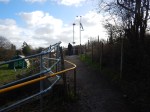
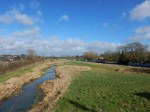

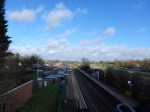
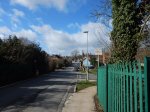
This Google Map shows the layout of the station.
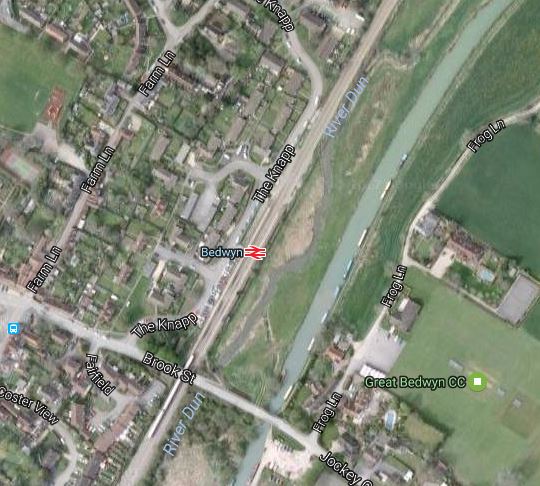
I have commuted from a couple of stations like this in Suffolk over the years and Bedwyn doesn’t impress me.
It is not a question of what the station has, but what it hasn’t.
- No local catchment area as Great Bedwyn only has a population of 1353 according to the 2011 Census.
- No car parking.
- No good road access.
- No step-free access.
- No welcoming facilities.
- No pub within walking distance.
- No mobile phone signal.
- No possibility of electrifying past Bedwyn, because of the need to demolish the bridge at the station.
I am surprised that GWR have kept it going so long!
Near where I lived in Suffolk was a station called Dullingham, which is just as welcoming as Bedwyn, but at least it had enough car parking for someone, who wanted to pop up to London and not drive.
There are only a few reasons, why GWR keep this station going.
- Historically, as they’ve always done it this way.
- Bedwyn is the best station to turn trains and has a convenient reversing siding.
- The guy, who decides the route lives in Bedwyn.
But I think they use Bedwyn to turn trains for one of the best reasons; to cut costs.
If you look at train timings from London, they are as follows.
Newbury – 52 minutes
Hungerford – 63 minutes
Bedwyn – 73 minutes
As they want to run an hourly service, turning the train at Bedwyn might mean that they can use a train less than doing it at say Pewsey, as timings work out well.
I think that as they need time to turn a train and give the driver a rest, that a journey time of 73 minutes means that a round trip to Bedwyn takes three hours with an allowance for a small delay.
After all it can’t be unprofitable as this article in the Marlborough News is entitled Back on track: Bedwyn to keep direct London trains after 2018.
This is said.
Great Western Railway announced today (February 24) that investment has been agreed with the Department for Transport that will, from 2018, bring brand new hybrid trains capable of switching between diesel and electric power to replace the diesel turbo fleet now serving Bedwyn travellers.
I think that the only reason they wouldn’t turn the trains at Bedwyn, is that there was a better alternative down the line., like perhaps at Westbury.
Incidentally, as the new trains could be faster, it might be that the turnback point could be further out
But both these scenarios would mean that Bedwyn will still get at least the same service it does now.
A Station For Marlborough
I wrote a post called A Station For Marlborough, a couple of weeks ago and this might be a possibility for a new terminus.
- It is a town of nearly 10,000 people.
- A lot of people in the town commute to Reading or London.
- The town has identified a place for a new station, which is on the old railway alignment from Bedwyn.
- If the train terminated at Marlborough, the timetable from Bedwyn could be the same.
- The train would need to be self-powered, as is Great Wstern Railway’s bi-mode trains.
It might even be better value-for-money to create the rail link to Marlborough, than rebuild Bedwyn station for electrification and with a car park and step-free access.
Through The Acton Dive-Under
As I left Ealing Broadway station to return to Paddington, it rather caught me by surprise and I only just got the camera out in time.



Hence the quality of the pictures.

