Greater Anglia’s New Manningtree Depot – 26th August 2017
Work has started on clearing the site for Greater Anglia’s new Manningtree Depot.
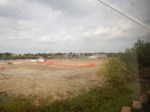
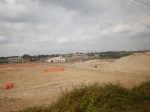
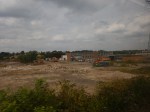


There’s still a fair part of the old industrial buildings left, so it is unclear how much of the whole site the deport will occupy.
This visualisation is from Greater Anglia’s web site.

And this Google Map shows the site.

Note the access road and the conveniently placed Norwich to London express train on both images.
There are other visual clues that suggest to me that although taking a substantial part of the derelict, there will be space around the depot for substantial development.
The train is about 220 metres long, with the building in the new depot being described as 300 metres long.
Risky Business: Train Fleets In A State Of Flux
The title of this post is the same as this article in Rail Magazine.
The article is certainly in the must-read category and it illustrates the perils of not getting your investments right.
You could argue that rolling stock leasing companies (ROSCOs) are sucking money out of the UKs railways.
I would argue differently.
The cause of the troubles for the ROSCOs is threefold.
- Train operating companies would prefer to have lots of similar trains, as this makes, maintenance, training and timetabling easier and more affordable. Some successful companies like c2c, London Overground, Virgin Trains and Merseyrail are one- or two-class companies and others like TransPennine Express and Great Western Railway are moving that way.
- New leasing companies have seen the returns, that the three original ROSCOs have made and have entered the market. As they are leasing new trains, they make it more difficult to find homes for existing rolling stock, many of of which have perhaps twenty years of life left and are priced accordingly.
- The ROSCOs have also badly misjudged the technology. Bombardier, CAF and Stadler have come up with innovative solutions to the problems of our unique Victorian-designed railway and the train operating companies have liked what they have seen and ordered them.
It is interesting to note, that few of the large orders for rolling stock have not been financed by the three original ROSCOs; Angel Trains, Eversholt and Porterbrook.
Greater Anglia
As I know Greater Anglia well, I’ll look at their current fleet, which is being replaced train-for-train by new rolling stock.
- Class 90 locomotives – These are thirty years old and will probably end up pulling freight or be cannibalised for spares.
- Mark 3 coaches – These do not meet the latest regulations for passengers of reduced mobility and most will probably be scrapped, although one rake has been sold to be used by 60163 Tornado.
- Driving Van Trailers – I doubt these will find a use and will join the many others in store or they will be scrapped.
- Class 153 trains – At twenty-five years old, I doubt these single-carriage trains will see serious passenger use again.
- Class 156 trains – At nearly thirty years old, these two-car DMUs may have use on rural lines, but they will need refurbishment.
- Class 170 trains – These two- and three-car 100 mph DMUs will certainly find another operator.
- Class 317 trains – At thirty-five years old, but in good condition, these 100 mph EMUs will be difficult to place, as newly-electrified lines will inevitably deserve new trains.
- Class 321 trains – These 100 mph EMUs will be difficult to place, despite some having been recently upgraded.
- Class 360 trains – These 100 mph EMUs are only fifteen years old and will probably find a new operator.
- Class 379 trains – These modern 100 mph EMUs are only a few years old and will will certainly find a new operator.
Quite frankly most of this rolling stock is not worth much!
The Class 360 and Class 379 trains will be the easiest to release.
The sheer numbers of Class 317 and 321 trains, with little new electrification planned, mean that something innovative will, have to be done to find them a home. I speculated aboutwhat will happen to all these Mark 3-based multiple units in What Will Happen To The Class 319, Class 455, Class 321 And Cl;ass 317 Trains? I certainly suspect that some will find uses, with the upgraded Class 321 trains probably the first in the queue.
As I said in the article, I feel that some Class 321 trains could become small parcel and pallet carriers.
The Class 707 Trains
The Rail Magazine article talks about the problem of the Class 707 trains, that were ordered by South West Trains and will be returned by South Western Railway.
It suggests they could be converted to run on 25 KVAC overhead working, but that will be expensive and in my view a new Desiro City is far inferior to a new Aventra.
So would a quality Class 317 or 321 be a good alternative for an operator, that needed some new trains to perhaps open a new electrified route?
It looks even more of a bad decision of Angel Trains to fund the Class 707 trains.
Is It Innovate Or Die?
Porterbrook saw problems coming with the Class 319 trains, they were leasing to Thameslink.
But they got together with Northern and designed an affordable bi-mode, which is now the Class 769 train.
Thirteen have been ordered!
In anotherf project, InterCity 125 trains are being shortened and updated to last another decade.
Will we be seeing more developments like this, where redundant trains are turned into useful ones for a different purpose?
We could even be seeing some innovative export deals!
Conclusion
It’s a tough world out there!
But those that innovate will survive and make money!
Why Are Greater Anglia Replacing Class 379 Trains With New Stadler Class 745 Trains?
On the West Anglia Main Line, Greater Anglia are replacing ten twelve-car Class 379 trains on Cambridge and Stansted Airport services with ten twelve-car Class 745 trains.
In some ways this is a bit puzzling as the Class 379 trains were only built in 2010-2011 and with the same number of trains, they will probably only be able to run the same level of services between Liverpool Street, Cambridge and Stansted Airport.
Effectively, Greater Anglia have reorganised their fleet which currently is rather diverse into just two train types.
- Stadler Flirts – Electric Class 745 and bi-mode Class 755 trains.
- Aventras – five and ten-car Class 720 trains.
This probably gives tremendous advantages to Greater Anglia in terms of train operation and maintenance and staff utilisation and training.
It also means that as the trains have been specified at the same time, the passenger experience will be similar.
The interiors of the two Stadler Flirts will probably be identical and this must be something the operator will exploit.
Liverpool Street To Ipswich and Norwich
Greater Anglia are saying that they will run three Class 745 services between Liverpool Street and Norwich every hour in ninety minutes. These Great Easstern Main Line services will also do the shorter Liverpool Street to Ipswich journey in sixty minutes.
Greater Anglia have also said they will run a fourth service in each hour to Ipswich. They have also said that some of these extra Ipswich services would be extended to Lowestoft. As the East Suffolk Line is not electrified, the services would require a bi-mode Class 755 train.
When running between Ipswich and Liverpool Street, the Class 755 train would be identical in performance and experience to its electric big sister.
One advantage of the electric and bi-mode trains being the same, is that on electrified routes in the event of a Class 745 train being unavailable, two or even three lass 755 rains could deputise.
Perhaps the only difference would be the lack of a buffet.
Greater Anglia could also use the Class 755 trains to provide a direct Liverpool Street to Bury St. Edmunds service, if they felt the need was there.
Liverpool Street To Cambridge And Stansted Airport
Just as I believe they will be mixing the Class 745 and Class 755 trains on the Great Eastern Main Line, Greater Anglia have said they’ll be mixing the two types on the West Anglia Main Line.
An hourly Norwich to Stansted Airport service will be introduced using a Class 755 train.
Additional Class 755 Services
Greater Anglia have ordered fourteen three-car and twenty-four four-car Class 755 trains, which is a lot more trains than they use at present for the routes.
So in addition to increasing frequencies on routes like Cambridge to Bury St. Edmunds, Ipswich, Norwich and Peterborough are they thinking of expanding services?
In the past the following services have been run.
- Liverpool Street to Norwich via Cambridge.
- Liverpool Street to Peterborough via Ipswich
- Liverpool Street to Great Yarmouth via Norwich.
In addition, there are two services that Greater Anglia might take over from other operators.
- CrossCountry runs an hourly service from Stansted Airport to Birmingham New Street using three-car Class 170 trains.
- East Midlands Trains runs an hourly service from Liverpool to Norwich via Nottingham using two-car Class 158 trains.
Note.
- Both services seem to get overcrowded at times.
- Very little of either route is electrified.
- Liverpool to Norwich currently takes five and a half hours.
- After Norwich-in-Ninety is achieved, it will be possible in four and a half hours via London.
- Birmingham to Stansted Airport currently takes nearly three and a half hours. Time can be saved by going via London.
With the opening of Crossrail and other faster services, I can see that these two routes will increasingly be important local routes, rather than ones used by masses of long distance travellers.
In the public consultation document for the new East Midlands Franchise, this is said about these services.
At the eastern end of the route, options might exist to provide direct services between Nottingham and a wider range of stations in East Anglia, such as Cambridge and Stansted Airport. Some options could also result in changes to the destinations served by the existing Birmingham to Stansted Airport service currently operated by the Cross Country franchise.
It looks to me that there will be a lot of serious discussions going on.
Conclusion
Where does this all fit with Greater Anglia and their fleet of Class 755 trains?
I just think that on some routes, they are ideal to provide new services or boost existing ones and they will give passengers the same experience as they get on the flagship London to Norwich services.
The Class 379 trains don’t give the flexibility and the homogeneous passenger experience.
The Design Of The New Greater Anglia Class 745 Train
I am writing this article about the new Class 745 trains for Greater Anglia, as I think they fit the evolving pattern of train design.
The Article In The July 2017 Edition Of Modern Railways
In the July 2017 Edition of Modern Railways, there is an article entitled GA Shows Off Stadler Mock-Up, where this is said.
GA’s fleet will all offer air-conditioning, wi-fi, plug and USB points, electronic seat reservations and will have a low floor design to offer improved accessibility.
I would expect no less!
This is also said.
The 12-car EMUs are formed of two six-car sets permanently married together. Each six-car set has one power bogie at each end, with a total of four on a 12-car train.
As the train has a First Class section and the bistro buffet between First and Second Classes, I suspect there could be two different types of six-car set.
- One with the First Class seats, the bistro buffet and perhaps a couple of Second Class cars.
- One with Second Class seats.
Normally, trains will be formed of one of each set.
I would assume, if say two six-car sets were out of service for some reason, the two working sets could be married to create some temporary capacity.
But yet again we see a train and a half-train philosophy.
Bicycle Spaces
As the Norwich trains will have six bicycle spaces, perhaps three will be placed in each set.
The article also says that Stansted Expresses will have eighteen spaces. Perhaps, Class 745 trains have a movable bulkhead at the end opposite to the cab, so that bicycle capacity can be tailored to the expected passengers.
Surely, being able to book your bicycle on the train going to East Anglia for the weekend will not be a feature that is not used.
Capacity To Norwich
Currently, there is two trains per hour (tph) between London and Norwich via Colchester and Ipswich, which are eight-cars long.
The new trains will enable 3 tph, each of twelve-cars, which is more than doubling the number of cars in an hour.
Train Power
The current Class 90 locomotives have a power output of 930 kW to pull the eight coaches.
It could be that each of the four powered bogies are rated at 1000 kW, so if that is right, these new trains are much more powerful than the current ones.
This is an extract from the article.
GA is currently investigating the potential to change from diesel to electric power on the move, and says it will seek to utilise the environmental benefits of electric power wherever possible, even on short stretches out of Norwich and Ipswich stations.
All units are designed for 100 mph operation, but with the potential for upgrading to 110 mph in future.
Does the speed upgrade apply to both the electric and bi-mode units?
Knowing the lines well, I suspect that the extra speed could be useful on the following lines.
- Stowmarket to Norwich
- Cambridge to Norwich
I suspect that if there is more improved double-track introduced, there couple be other places.
Conclusion
So expect Norwich-in-Ninety and Ipswich-in-Sixty!
Gibb Report – Options For Change
This paragraph is from the Gibb Report, and is labelled Options for Change.
I have quickly reviewed the current operation with both a short term and long-term perspective.
There is a widely held view that GTR is too large, with over 6,000 employees and a diverse group of routes and brands
The 2018 Thameslink project is the priority, and focus on that is necessary as the project remains high risk on many levels.
Much change and dependency between Southern and Thameslink people and activities will be necessary during this period.
Meanwhile GTR is under significant pressure in respect of industrial action and the poorly performing
Southern services.
It says a lot, with which I agree.
- GTR is too large and diverse.
- Thameslink is the priority
- GTR is under significant pressure in respect of industrial action and poor Southern performance.
I do wonder how much points one and three are related.
I live in East London and when I moved here in 2010, rail services on the Lea Valley Lines were run by Abellio Greater Anglia, from a Head Office in Norwich.
- Trains and stations were in poor condition and could have done with a very deep clean.
- Staff appeared demotivated and were probably worried about their prospects.
- Stations were an information-free zone.
- Booking offices were not offering a first class service.
Was it out-of-sight-and-out-of-mind management?
Since May 2015, the Lea Valley Lines have been run by London Overground.
- Staffing levels have improved.
- Trains have been refreshed and are more reliable.
- Stations are much cleaner.
- Booking offices have improved.
- Information at stations is now comprehensive.
- New ticket machines have been added.
- Staff appear to be more motivated.
If you look at the passenger figures for Hackney Downs station, which I use regularly, they are increasing faster than they were.
It will be interesting to see how things improve with the delivery of new Class 710 trains.
So judging on my experience with the Lea Valley Lines being taken from Abellio and given to London Overground, I very much agree with some of Chris Gibbs recommendations to prune some routes and services from GTR. These posts deal with his pruning.
- Ashford – Hastings Route Should Be Transferred To The New Southeastern Franchise
- East Croydon – Milton Keynes Route Should Be Transferred To London Overground
- Gatwick Airport Station Should Be Transferred To Gatwick Airport
- Moorgate Services Could Be Transferred To The London Overground
I suspect more could be done.
Greater Anglia’s New Manningtree Depot Site
It’s a bit of a mess, but contractors have started cleaning the site at Manningtree for Greater Anglia’s New Depot.


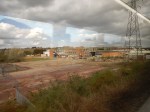
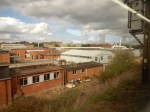
The site is on the left hand side of a train going towards Ipswich.
Cambridge Should Have A Metro System Like Barcelona
This was the title on this article in the Cambridge News.
This map shows the proposition.

It is probably a reasonable aspiration for the city, but the plan proposed would be very expensive, as the proposer suggests a tunnel under Cambridge.
In Making Sense Of The New East Anglia Franchise, I had a section entitled A Cambridge Metro. Some of this post is an update of the previous one.
So what do we know is actually happening?
Cambridge’s £750Million City Deal
This article in the Cambridge News is entitled Three new train stations and £750m City Deal projects to fuel Cambridge public transport revolution.
These rail improvements are mentioned in the article.
- New stations at Addenbrooke’s, Cherry Hinton and Fulbourn.
- Cambridge to Kings Lynn service increase from one to two trains per hour (tph)
- Two tph to Stansted.
- March to Wisbech rail reinstatement.
- Cambridge to Ipswich service increase to two tph
- East Coast Main Line rail capacity improvements between Huntingdon and Peterborough
- A new station at Alconbury on the East Coast Main Line.
- Reinstate the ‘Newmarket west curve’ to allow direct services to run between Ely and the new station at Soham to Newmarket and Cambridge.
- Double tracking of railway line between Ely and Soham.
Cambridge is bursting and needs more local transport systems and the City Deal and other funding recognises that!
Services Through Cambridge
Within a few years, all of these services will arrive at one or all of Cambridge, Cambridge North and the proposed Cambridge South stations.
- Greater Anglia from Ipswich
- Greater Anglia from Liverpool Street
- Greater Anglia from Norwich
- EastMidlands Trains and CrossCountry from Peterborough
- Greater Anglia and CrossCountry from Stansted Airport
- East West Rail Link from Bedford, Milton Keynes and Oxford
- Great Northern from Kings Cross
- Great Northern from King’s Lynn
- Thameslink from Brighton
- Thameslink from Maidstone East
- Thameslink from St. Pancras
Cambridge is taking over the world. Or at least making it a much better place!
Cambridge Crossrail?
These services could be organised, so they ran more efficiently.
Consider.
- Perhaps they could call at Cambridge South, Cambridge, Cambridge North and Ely stations in an appropriate order as they pass through the City in a North-South direction.
- It might be better if services from the South were run back-to-back with services from the North.
- Greater Anglia are already proposing a Norwich-Stansted Airport service.
- Great Northern already run a King’s Lynn-Kings Cross service.
- Cambridge has four bay platforms for terminating trains.
- Cambridge North station will have a South-facing bay platform.
- Ely station has had a South-facing bay platform
I think it very likely that after a meeting in one of Cambridge’s excellent real ale hostelries, a very adequate core service can be developed through Cambridge.
Could this core service do for Cambridge, what other Cross-City services have done for Berlin, Birmingham, Leipzig, Liverpool, Newcastle and Paris?
On published plans the following will be running in a year or so, between Ely and the site of Cambridge South station.
- 1 train per hour (tph) between Norwich and Stansted Airport
- 1 tph between Birmingham and Stansted Airport
- 1 tph between Kings Cross and Kings Lynn.
In addition Thameslink will have 2 tph between Cambridge North and Brighton via St. Pancras and London Bridge, so the three Cambridge stations could have a 5 tph connection.
The Bombardier Aventra
Greater Anglia have ordered 89 five-car and 22 ten-car Aventras and they obviously have plans to use them all efficiently.
The Aventra has a slightly unusual and innovative electrical layout.
This article in Global Rail News from 2011, which is entitled Bombardier’s AVENTRA – A new era in train performance, gives some details of the Aventra’s electrical systems. This is said.
AVENTRA can run on both 25kV AC and 750V DC power – the high-efficiency transformers being another area where a heavier component was chosen because, in the long term, it’s cheaper to run. Pairs of cars will run off a common power bus with a converter on one car powering both. The other car can be fitted with power storage devices such as super-capacitors or Lithium-Iron batteries if required.
This was published six years ago, so I suspect Bombardier have improved the concept.
It looks like the length and capacity of a ten-car Aventra is equivalent to that of a twelve-car formation of Class 317, Class 321 or Class 360 trains.
So on a rough estimate the Aventras are equivalent to about 200 four-car units.
Currently Greater Anglia have 170 four-car electric trains, ignoring the Class 379 trains, which will be replaced by Stadler Flirts.
Greater Anglia appear to have increased the fleet by the equivalent of thirty four-car trains or another twenty five-car Aventras than they would need to replicate current services.
When you consider that for some of their routes, the faster and quicker-stopping Aventras, should provide current service with fewer trains, you wonder what Greater Anglia are going to do with these spare trains?
Bombardier’s concept of a pair of cars sharing the electrical components, that I indicated earlier, is a good one from an engineering point of view.
It shares the weight of heavy components and would allow a weighty high-capacity energy storage device to be easily installed, to give sufficient range to go between say Ely and Peterborough stations, which is a distance of just twenty-five miles.
In addition, suppose though the train was packaged in a passenger-friendly skin, that made it look more as much like a tram than a train!
You would have a train, that would be equally at home using the electrification on the 100 mph Great Eastern Main Line or running silently through the countryside at a leisurely 40-50 mph using onboard energy storage.
In the following sections, I’ll investigate how Aventras could expand the basic core service around Cambridge.
Turn-Up-And-Go Services
Where I live in Dalston in East London, the London Overground run services at what they call a Turn-Up-And-Go service of four trains per hour (tph).
Merseyrail use this frequency on some of their lines, as do Birmingham and Leeds.
This should be the aim for services to and from Cambridge.
Commuting Into Cambridge
Many travel into Cambridge every day for work.
- The trains are crowded.
- Many travel with bicycles.
- The Cambridge Park-and-Ride is very busy.
- It is not unknown for commuters to unfold their Brompton in a Park-and-Ride and cycle to work.
- The City Centre seems grid-locked with traffic and walkers most of the day.
The conclusion is that extra capacity is needed.
Cambridge North Station
Cambridge North station will provide extra capacity in the North of the City and better access to the Science Park.
But extra thought will need to be put into services at the station.
Consider.
There are no plans for a direct service between Cambridge North and Bury St. Edmunds and Ipswich.
- There is only one tph to Norwich.
- There is only one tph to Peterborough.
- Will CrossCountry’s Birmingham to Stansted service stop at both Cambridge and Cambridge North stations?
A chord at Ely Dock Junction would create a route between Suffolk and Cambridge North station.
Rail Lines Into Cambridge
In a few years, these rail lines will bring passengers to Cambridge.
- The electrified West Anglia Main Line from London Liverpool Street.
- The electrified Cambridge Line from London Kings Cross via the East Coast Main Line.
- The electrified Fen Line from Kings Lynn.
- The Breckland Line from Norwich.
- The Ipswich to Ely Line.
- The Ely-Peterborough Line.
From the late 2020s, the lines will be joined by the East-West Rail Link..
The Guided Busway
Cambridge has spent a lot of money developing the Guided Busway.
One of the main reasons for developing the Southern section of the Guided Busway was to serve Addenbrooke’s Hospital and the surrounding cluster of health-related companies and research establishments.
Now that Addenbrooke’s is getting a new Cambridge South station, will the Guided Busway be less important?
Possibly, but the station will probably rule out any extension of the Busway at its Southern end.
The Guided Busway will also call at both Cambridge and Cambridge North stations. Surely, passengers who are using the busway to go North of Cambridge will change transport mode at Cambridge North station.
It looks to me, that when Cambridge North and Cambridge South stations are fully operational, that the busway’s main purpose will be to bring passengers to and from the two new stations.
Services Via The West Anglia Main Line
Services to London Liverpool Street and Stansted Airport on the fully-electrified West Anglian Main Line, consist of the current services.
- 1 tph fast to Liverpool Street
- 1 tph semi-fast to Liverpool Street
- 1 tph to Stansted Airport.
When Greater Anglia receive their Stadler Flirts, the operator will add a one tph Norwich to Stansted Airport service.
All except one of these services are fast services with limited stops and two will only go as far as Stansted Airport.
As the Aventras will be able to cruise at a fast speed and thus keep out of the way of the express Flirts, could we see some extra local services on the line, that will improve local journeys and connections to Bishops Stortford, Cambridge and Stansted Airport?
Commuting, shopping and leisure activities in Cambridge would certainly be easier if your local station had four tph.
Services Via The Cambridge And East Coast Main Lines
Services to London Kings Cross via the fully-electrified Cambridge Line will consist of the current services.
- 1 tph fast to London Kings Cross
- 1 tph semi-fast to London Kings Cross
Thameslink will add the following services.
- 2 tph to Brighton – Semi-fast stopping at Royston, Baldock (peak only) Letchworth Garden City, Hitchin, Stevenage
- 2 tph to Maidstone East – Stopping at all stations.
These might replace the current semi-fast service to Kings Cross.
Stations like Letchworth Garden City, Baldock and Royston currently get two tph to Cambridge and will get four tph when Thameslink opens.
But surely a Turn-Up-And-Go service of four tph at a lot more stations, would pull more passengers out of the woodwork.
So why not run Aventras from Cambridge to a suitable station to improve the service?
There may be a problem with Greater Anglia running this service, as the Cambridge Line is Great Northern territory, but if that is the case, Great Northern should join the party around Cambridge.
Services To Bedford, Milton Keynes And Oxford
The East West Rail Link and Cambridge South station could be delivered in the late 2020s.
I will deal with local services on this line later.
Services To Norwich
The one tph from Norwich to Cambridge will be replaced by a one tph Norwich to Stansted Airport service, so in practice those living in Cambridge will only notice a destination change and a new larger train.
North of Ely, the service will actually be two tph, as there is a one tph Norwich-Nottingham service.
This service pattern will be sufficient for a few years, but I can see a time, when there is a need for two tph on the Cambridge-Norwich route, with possibly one extended to Yarmouth.
This service frequency is not sufficient for a commuter route into Cambridge.
As an example, Thetford station has just two tph in each direction between Norwich and Ely, with only one tph going to Cambridge. Miss a train and wait an hour doesn’t attract customers!
The line is not electrified between Ely and Thetford, but the distance is only a small amount over twenty miles, which could be in out-and-back range for an Aventra running on onboard energy storage.
So an Aventra running using onboard power could probably run a four tph Turn-Up-And-Go service from Cambridge as far as Thetford with the following stops to the North of Ely.
- Prickwillow – Reopened station
- Shippea Hill
- Lakenheath
- Brandon
What would four tph in addition to the current two tph do to this area?
Services To Peterborough
Cambridge to Peterborough currently has only one tph, with three tph between Ely and Peterborough.
This means that Peterborough with all its connections to the North of England and Scotland, is not a particularly difficult journey, but a rather infrequent journey from Cambridge.
But it needs a Turn-Up-And-Go service of four tph from the two Cambridge stations.
The Ely-Peterborough Line is a major freight artery, but it is not electrified.
However, the section without electrification is just over twenty miles, so an Aventra with onboard storage could manage it with ease and charge the energy storage at both ends.
There are also just two stations on the line at March and Whittlesea.
So why not open a few more stations on the line and give them a decent four tph service between Cambridge and Peterborough?
This Google Map shows the location of the former Peterborough East station.
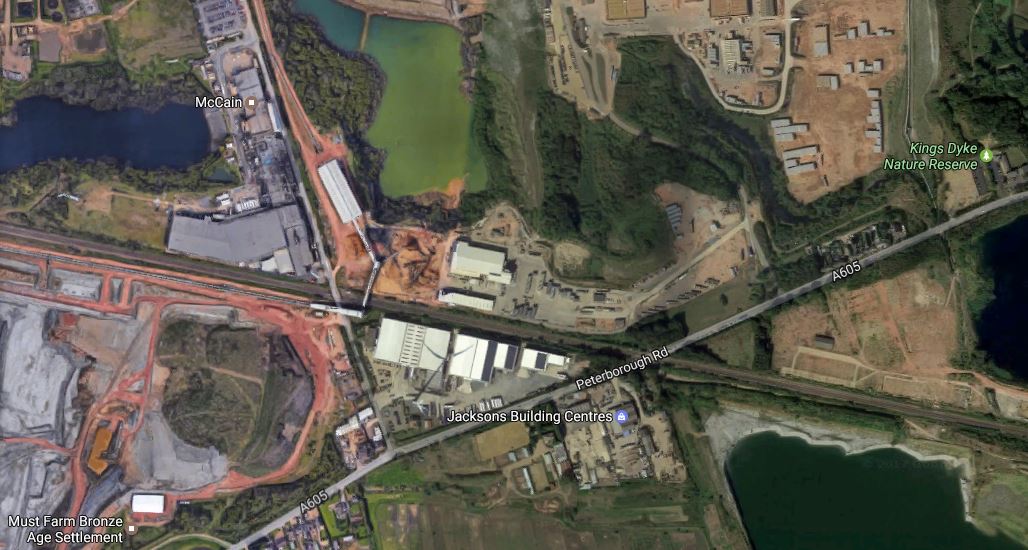
Surely, with everything going on in the area and need to develop more housing, a station is needed here.
Extension To Wisbech
The track already exists and if ever there was a town that needed a two tph rail link to Cambridge , it is Wisbech, which is less than ten miles from the main Ely-Peterborough Line. Even if the main line isn’t electrified, Wisbech is probably within range of 2020 battery technology from Ely.
The Service To Nottingham
East Midlands Train run a one tph service between Nottingham and Norwich.
Perhaps, as services from Cambridge develop, it might be better for this Nottingham service to terminate at Cambridge.
This would give Cambridge direct access to Nottingham and Leicester, but it would also give the service to Peterborough an increased frequency
If this were to be done, a second Cambridge-Norwich service should probably be added, to restore two tph to Norwich.
Services To Bury St. Edmunds And Ipswich
Network Rail have thought long and hard about what to do with services from Ipswich to Cambridge and Peterborough over the years.
Greater Anglia’s solution is to run the following services using bi-mode Flirts.
- 1 tph from Ipswich to Cambridge
- 1 tph from Colchester to Peterborough.
This will give the following.
- Services quicker by a few minutes.
- Two tph between Kennett, Bury St. Edmunds, Stowmarket and Ipswich.
- More capacity.
But the service to Cambridge and Newmarket and Bury St. Edmunds is as now!
- There is only one tph from Ipswich, Bury St. Edmunds and all the other stations East of Kennett.
- The service only goes to Cambridge and not Cambridge North or the proposed Cambridge South stations.
- There is an alternative route with a change at Ely.
Bury St. Edmunds and Newmarket need two tph to both Cambridge stations! And they need that service now!
Currently trains from Ipswich, Bury St. Edmunds and Newmarket take 79, 42 and 22 minutes respectively to get to Cambridge.
Cambridgeshire County Council also has plans to reopen Fulbourn and Cherry Hinton stations, which with the current trains would probably add five minutes to the current timings.
Could a new bi-mode Flirt go from Ipswich to Cambridge in an hour as opposed to the current one hour nineteen minutes?
- Is the current timing based on a single-car 75 mph Class 153 train or a 100 mph Class 170 train, that works the route today?
- The bi-mode Flirts could run on electricity from Ipswich to Haughley unction.
- There are eight stops on the route, where a minute or two could be saved.
- Step-free train access from the platform could be provided
- Haughley Junction could be improved.
- Wikipedia quotes the line-speed as 40-75 mph, which surely could be raised.
- Fast turnbacks with a driver change could be performed at Cambridge and Ipswich.
It might just be possible to do Ipswich to Cambridge in an hour.
I can’t believe that this is not an aspiration of Greater Anglia.
It would give.
- A headline-grabbing one hour trip between Ipswich and Cambridge.
- ,Currently, Greater Anglia probably use two Class 170 trains on the route, so two trains could give a 2 tph service.
- Ipswich to Bury St. Edmunds would get a three tph service.
But there would still be a need to change at Cambridge to get to Cambridge North and Cambridge South stations.
A Cambridge Eastern Metro
In the plans for the Cambridge region in the Cambridge News, these two points are made.
- Reinstate the ‘Newmarket west curve’ to allow direct services to run between Ely and the new station at Soham to Newmarket and Cambridge.
- Double tracking of railway line between Ely and Soham.
Obviously, these assume that there is a new station at Soham.
This Google Map shows the triangular junction on Newmarket Heath, where the Newmarket West Curve has been lifted.

The railway from Bury St. Edmunds splits into two, with one branch curving round the British Racing School and going North to Ely and the other curving South to go in a short tunnel under Newmarket to get to Newmarket station.
The reinstatement of the West Curve would enable a service to run between Ely and Cambridge stopping at the following stations.
- Soham – New station
- Fordham – New station
- Newmarket
- Dullingham
- Fulbourn – New station
- Cherry Hinton – New station
I have added another station at Fordham.
I estimate Ely to Newmarket will take 13 minutes making the journey time 35 minutes between Ely and Cambridge, as opposed to 16 minutes by the direct route.
This route could open up various route possibilities in addition to being a longer route between Ely and ambridge.
- It certainly gives Newmarket a better service to Cambridge.
- Services could terminate the other side of Ely at Kings Lynn, Peterborough, Thetford or Wisbech.
- With reverses at Cambridge and Ely, a loop service would connect Newmarket and the East of Cambridge to Cambridge North station.
- The loop service could be extended to Cambridge South station.
I’m sure Greater Anglia have better ideas based on how passengers travel.
A Rebuilt Newmarket Station
Network Rail had a plan to rebuild Newmarket station with an island platform to give interchange between Ely and Peterborough services via the Newmarket West Curve and those going East to Bury St. Edmunds and Ipswich.
Could a train going from Peterborough and Ely to Cambridge via Soham be timed to be in Newmarket station at the same time as one going from Cambridge to Ipswich?
Consider.
- With two tph on both services in both directions, it would be an efficient way to improve services without buying lots of trains.
- Perhaps one Ely service would go to Peterborough and the other to Thetford.
- Ely and Ipswich would have a two extra services in each hour, with just a step across the platform at Newmarket.
- Newmarket, Fulbourn and Cherry Hinton would have four tph to Cambridge.
- Newmarket would have two tph to Ely.
There are a lot of possibilities.
Extension To Haverhill
There was a very good railway from the South of Cambridge to Haverhill and onto Sudbury, Marks Tey and |Colchester. But the last train ran on the Stour Valley Railway in 1967.
Greater Anglia have plans for the Eastern end of this route and it will be extended to Colchester Town station with probably two tph to Sudbury.
I suspect that Greater Anglia regret that British Rail closed this line fifty years ago, as two tph running between Colchester Town and Cambridge North stations via Colchester, Marks Tey, Sudbury, Haverhill, Cambridge South and Cambridge stations, wouldn’t be just a nice little earner, but quite a valuable gold-mine.
I believe that Greater Anglia will be running Colchester Town to Sudbury using Aventras with onboard energy storage, away from the overhead wires.
I also believe that by the time the line was extended from Sudbury to Cambridge South, that battery technology will have advanced enough to power a train from Marks Tey to Cambridge South.
Cambridge would gain a new route into the City, using the best that modern British technology can do!
An Aventra Between Marks Tey And Cambridge
After taking on a full load of electricity on the Great Eastern Main Line, a train would just trundle from Marks Tey to Sudbury, Haverhill and on to Cambridge.
- The route would be nearly all single track.
- There would be no need for any electrification.
- Signalling would be conventional.
- There would be no level crossings.
- All stations would be single platform, with appropriate facilities.
- A passing loop might be provided at perhaps Sudbury.
- Trains might even run on the street in Haverhill, with perhaps three stops in the town.
- When running on the street, the trains would obey the rules that street-running trams, do in places like Birmingham, Edinburgh and Nottingham.
It wouldn’t look like a conventional railway, but to the operator and the authorities that’s what it would be.
To anybody living or walking in the countryside, it would just be a silent electric vehicle passing at an appropriate speed.
As it’s going to work out of Cambridge, the interior would be geared to the needs of the bicycle-friendly city.
With a range of fifty miles on onboard energy storage, it would have no difficulty with these services.
- The Cambridge Eastern Metro
- Marks Tey To Cambridge Via Sudbury And Haverhill.
- Ely To Thetford
- Ely to Peterborough
- Extension To Wisbech
Where else could these trains take the rail network in Cambridge?
Along The East West Rail Link
All the plans for the East West Rail Link are about long distance services services between Oxford, Milton Keynes, Bedford and Cambridge.
But why if you have a 100 mph electrified railway between two important cities, should it not have a two or even four-train per hour stopping service between the cities.
Modern trains are able to execute a station stop so quickly compared to trains of twenty years ago, that having a stopping train on a main line, isn’t the liability, that it was even a few years ago.
So on the East West Rail Link between Cambridge and Bedford will we be seeing four tph, that stop at all stations in addition to the fast expresses?
In the map that introduced this post, a service to Cambourne is shown.
This Google Map shows the location of Cambourne to the West of Cambridge.
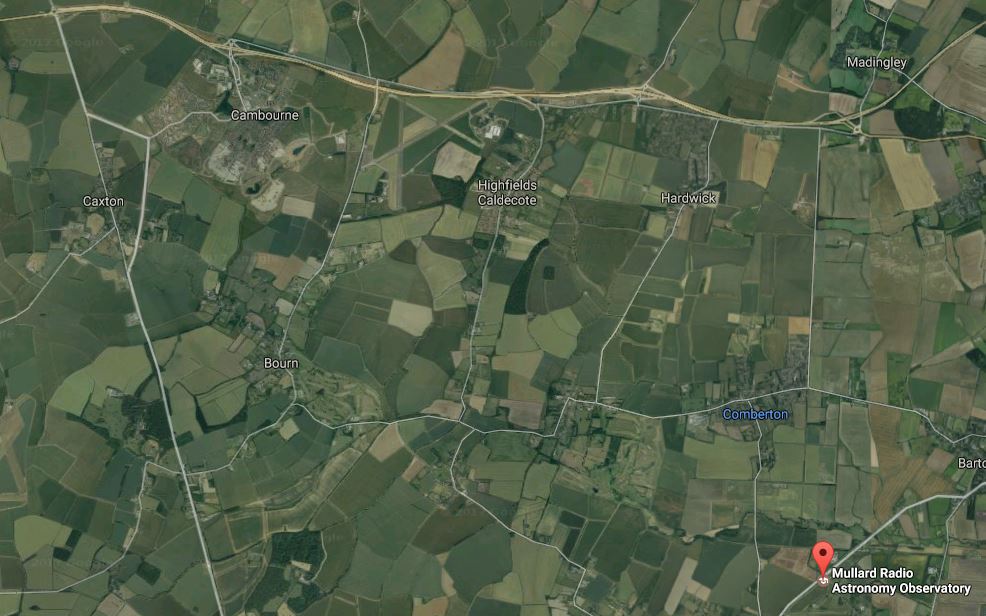
Cambourne is at the top of the map, just South of the A428 road.
The red arrow at the bottom right, indicates the Mullard Radio Astronomy Observatory,
The East West Rail Link passes to the North of the observatory, which used to use the old track bed, as a track for radio telescopes and then goes to the South of Cambourne.
Perhaps a single track branch line could be built.
Conclusion
A Metro in Cambridge will develop because of these factors
- Cambridge needs to reach out to the hinterland, as it is growing fast.
- A high-frequency cross-city line with three important stations in a row will happen.
- Greater Anglia have bought a lot of five-car Aventras.
- Aventras will be able to run using onboard energy storage.
- A lot of the lines radiating from Cambridge have capacity for extra services and are electrified.
But the biggest factor will be that towns and cities around Cambridge will want part of the prosperity.
So Where Will Greater Anglia’s Old Trains Go?
The title of this post is the title of this article in the East Anglian Daily Times.
It is a good question to ask, as when all Greater Anglia‘s new trains have arrived in 2020 or so, there will be a lot of trains needing good homes.
The article comes to these conclusions.
- Class 90 Locomotives – Freight operators.
- Mark 3 Coaches – Some heritage operators, but mainly scrap.
- Class 153 trains – Might survive a few years with another operator, before being scrapped.
- Class 156 trains – Might survive a few years with another operator, before being scrapped.
- Class 170 trains – These should have a long term future with other operators.
- Class 317 trains – Least likely to find a new use.
- Class 321 trains – Likely to go to other operators.
- Class 360 trains – Likely to go to other operators.
I don’t disagree greatly, but I do feel that because of the continued fast growth of the UK rail network, that other outcomes could happen.
Mark 3 Coaches
Passengers like the Mark 3 coach and Chiltern Railways have shown that the coaches can be refurbished to a very high standard, that meets all current and future regulations.
I feel that at least some coaches will get the Chiltern treatment, as there are routes, where they could work economically, between a locomotive and a driving van trailer (DVT). The key to this could be that Greater Anglia will release sixteen DVTs in good condition.
Class 321 Trains
Greater Anglia has over a hundred of these four-car trains and thirty of these will have been upgraded under the Renatus project.
If the Class 319 Flex train is a success, could we see some of these trains given the same treatment as I talked about in Could There Be A Class 321 Flex Train?
If the Class 321 Flex train were to possess the same hill-climbing ability that is proposed for the Class 319 Flex train, then there could be a whole fleet of trains suitable to work the Valley Lines from Cardiff, without any further electrification.
It will come down to a political decision, as to whether to electrify the Valley Lines and use new rolling stock or appropriately refurbished cascaded Class 321 trains.
West Anglia Route Improvement – Broxbourne Station – 22nd February 2017
I took these pictures at Broxbourne station.
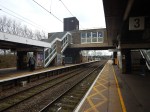
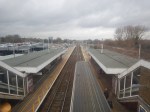



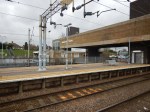

This Google Map shows the layout of the station.
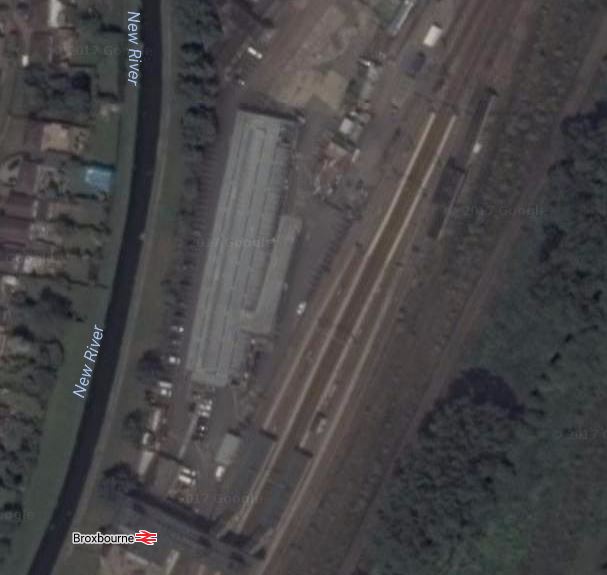
broxbourne Station
It is almost as if when the station was moved to its current site in 1959, that it was designed to be the Northern terminal of a line like Crossrail 2.
- The site is generous with lots of space for stabling sidings and parking for cars.
- The fast trains stop in the middle two platforms giving cross-platform access with the local services on the two outside lines.
- The station has full step-free access with a waiting area, a cafe and toilets on the massive bridge over the lines.
- Platforms appear to be ready for 12-car trains.
- It is a Grade 2 Listed building with a prominent water feature, built in the early-1600s.
Greater Anglia And Broxbourne Station
I don’t think the potential has been lost on Greater Anglia.
- They have been very vocal about about getting Broxbourne to Yottenham Hale four-tracked as soon as is practically possible. And it appears to be starting.
- With the splitting of fast and slow services onto separate lines, it must be possible to run say 10 tph on the slow lines.
- Fast trains to and from Cambridge, Ely and Stansted could probably interchange better with local services.
- The station is virtually mid-way between the scientific powerhouse of Cambridge and the financial powerhouse of London.
- Could the station have new a North-facing platform to accept new services from Cambridge, Norwich, Peterborough and perhaps even Lincoln?
Broxbourne must be one of the best mid-line interchanges anywhere in the UK.
It would not need a massive amount of money to be spent at Broxbourne to make the station a superb Northern terminus for Crossrail 2. It makes Shenfield and Abbey Wood look decidedly second-class now.
Greater Anglia’s Plans For Fast Broxbourne Services
But Crossrail 2 is some years away, so how will Greater Anglia maximise the use of this priceless asset?
Greater Anglia have ordered a fleet of 12-car Stadler electric multiple units for Cambridge and Stansted services. After the four-tracking of Broxbourne to Tottenham Hale, you can imagine these trains stopping in the middle two platforms, before or after a fast uninterrupted run to either Liverpool Street or Stratford.
As there are ten of these expresses, I suspect that will see five Stadler trains per hour (tph) to and from London. But we’ll also be seeing some Aventras with a similar performance taking the fast lines.
Greater Anglia’s Plans For Slow Broxbourne Services
I feel that to maximise traffic at all the intermediate stations, there will be a regular service of something like 4 tph all the way between Broxbourne and Tottenham Hale.
The slower trains take about 20 minutes with typically five stops. But the trains are thirty-year-old Class 317 trains. and will be replaced by faster Aventras, which are optimised to minimise dwell times at stations.
A similar change is happening on Crossrail, which means that Romford to Liverpool Street stopping at eight stations will go from 31 to 17 minutes.
So I think we’ll see slow Broxbourne to Tottenham Hale services serveral minutes faster than they are now, despite stopping everywhere.
But 4 tph will increase ridership substantially.
Competition For Greater Anglia
It is between Cambridge and London, that Greater Anglia will face the greatest competition as they do now.
But the new trains may be able to almost match the fastest Cambridge to Kings Cross times.
Greater Anglia will also offer other sdvantages.
- Access to the City of London through Liverpool Street.
- Access to Crossrail at Liverpool Street and Stratford.
- Easy access to Canary Wharf, the West End and Heathrow.
The effects of the new Stadler trains shouldn’t be underestimated.
Stansted is a monopoly, so that will do well!
Changing at Broxbourne between fast and slow services may mean that they generate traffic for Stansted, as currently for many it’s easier to drive.
There is also competition from London Overground’s route from Cheshunt to Liverpool Street, especially as with new trains, this will be route with new Aventra trains.
I do wonder if Greater Anglia will invite London Overground to extend their Cheshunt service by one station to a dedicated platform at Broxbourne station, as this would mean that they would have less need to stop fast Cambridge trains at Cheshunt.
Also before Crossrail 2 is up and running, it would create an eight tph service to London on two separate routes from Broxbourne.
Greater Anglia’s Ten Point Wish List
This article in Rail Technology Magazine is entitled Greater Anglia to lobby government for investment in 10-point upgrade plea.
So what do they want?
- Haughley Junction upgrade.
- Ely area upgrade.
- Ely to Soham track doubling
- Trowse swing bridge replacement with a double track fixed link.
- Long loops at Colchester and Witham to allow fast trains to pass slow ones.
- Digital re-signalling between Colchester and London.
- Capacity upgrade to allow four trains between Angel Road and Stratford.
- Four-tracking between Coppermill Junction and Broxbourne.
- Wider level-crossing upgrade program.
- Platform and concourse upgrade at Liverspool Street station.
Should we call it ambitious, greedy or sensible?
1. Haughley Junction Upgrade
This has been requested for years, so I suspect it has been thought about for a long time.
But the new East Anglia Franchise has plans that will affect the traffic through Haughley Junction.
- Three express trains per hour (tph) between Ipswich and Norwich – Up from 2 tph.
- Two tph between Ipswich and Bury St. Edmunds – Up from three trains per two hours.
To make matters worse, an increasing number of freight trains between Felixstowe and Peterborough will be going through the junction.
This Google Map shows the junction.
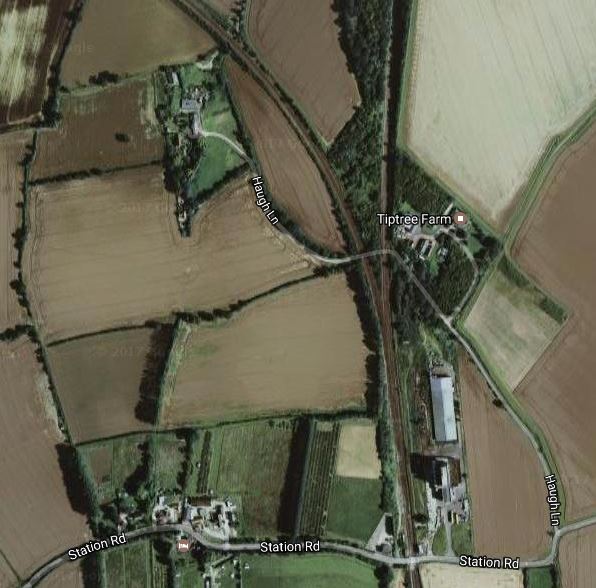
Note.
- Stowmarket, Felixstowe and Ipswich are to the South.
- There is a handy level crossing where station road crosses the tracks.
- Diss and Norwich is to the North.
- Bury St. Edmunds, Cambridge and Peterborough are to the North West.
You could naively think, that around the junction is nothing but farmland and a few trees, but the owners of |Tiptree Fram probably have lived three for decades.
You are the driver of one of Greater Anglia’s new crack Stadler express electric multiple units scheduled to reach Norwich in ninety minutes from London
Going North, you have just stopped at Stowmarket station. But you can’t leave as Haughley Junction is blocked by one of the many long freight trains crossing the flat junction from the line to Peterborough to go South to Felixstowe.
So bang goes your schedule!
Going South, you have a similar problem, in that freight trains could delay progress, whilst they cross from the Peterborough Line.
Freight trains and passenger trains joining the Peterborough line from the South, would appear to not cause such a large problem, as they just turn left without crossing any lines.
In an ideal world, there probably needs to be a single-track flyover, so that trains from Peterborough to Stowmarket can cross the Norwich lines without delaying trains. A similar flyover at Hitchin cost £47million.
So it wouldn’t be cheap and would the locals fight the construction of such a structure in the midst of Suffolk countryside to benefit commuters from Norfolk?
A complete scheme would also add a loop line just to the West of Haugthley Junction, so that long freight trains could wait without getting in the way, until there was a suitable time to cross.
I suspect, that to keep costs down and avoid annoying the natives, all that will happen at Haughley Junction is a limited scheme so that trains can wait before crossing.
Over the last few years, Network Rail have developed some innovative junctions and crossings, so let’s hope that they come up with a scheme that’s efficient, affordable and can be built without closing either of the important routes through the area.
But whatever is done here will certainlt help Greater Anglia achieve their objective of three tph between London and Norwich in ninety minutes.
Knowing the area well, I suspect that there will also be an enormous fight over if Network Rail decided to close the level crossing shown on the map.
2. Ely Area Upgrade
I looked at this in Are The Trains In Ely Finally To Be Sorted?
Whatever is proposed here will not be just a few millions and probably very disruptive to implement, but it is essential to acommodate the planned extra services through the area.
3. Ely To Soham Track Doubling
Upgrading this six miles of single track might appear to be easy across the flat lands of Cambridgeshire, but the line does include a couple of level crossings and a couple of bridges.
This Google Map shows the ely end of the route at Ely Dock Junction.
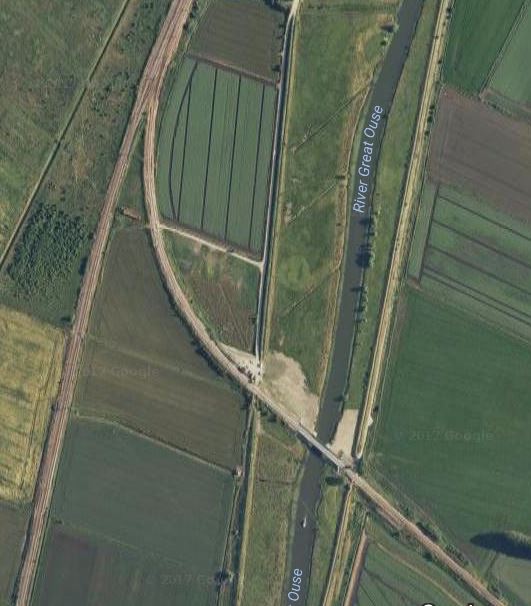
Ely Dock Junction And Hawk Bridge
Note the single-track Hawk Bridge over the Great Ouse.
Luckily, a freight train derailed on the original single-track bridge and virtually demolished it. The new bridge may be only single-track, but provision was made for a second track.
A few times, I’ve passed Ely Dock Junction on a train or stood on the platform at Ely and seen a freight train waiting at the Dock Junction to pass through the spaghetti at Ely.
Double-tracking would mean waiting freight trains wouldn’t delay Eastbound services on the Ipswich to Ely Line.
But will a chord be built so services can go directly between Cambridge North station and the Ipswich line?
This could enable Colchester Peterborough services to take a route of Bury St. Edmunds-Cambridge North
The Google Map shows the site of the original Soham station.

The Site Of The Former Soham Station
Note that the line reverts back to double-track, just South of the former station site.
So will doubling of line include provision for building a new station at Soham, as Cambridgeshire Council have proposed?
You can certainly see, why Greater Anglia want this section of line to be doubled.
4. Trowse Swing Bridge Replacement
The Trowse Swing Bridge is a major bottleneck on the Great vEastern Main Line, as not only does it restrict operations into Norwich station, but it makes access to Crown Point Depot difficult.
It’s definitely the railway equivalent of having a single-lane section for both directions on a motorway.
In Is This The Worst Bottleneck On The UK Rail Network?, I proposed the following under An Affordable Alternative.
It has to be said, that perhaps the most affordable solution would be to build a stylish fixed link, probably with a double-track railway and foot and cycle bridges.
As to the boat users, all boats that need to go under the bridge regularly would be modified so their masts could be lowered at no cost to their owners.
Other bribes could be given to occasional users.
There will be many bridges to cross, before Trowse bridge is replaced with a modern structure, more suited to a modern railway.
Unless of course, the rusting and decrepit bridge decides to do the honourable thing and falls down of its own volition.
It’s probably too much to hope, that a freight train derails on the bridge, as one fortunately did on the Hawk Bridge at Ely.
5. Long Loops At Colchester And Witham
Colchester station is not a station that would win awards for efficiency.
This description of the platforms is from Wikipedia.
The “up” (London-bound) side comprises two platforms, numbers 3 and 4, which have an unusual layout: 3 is on the up main line and is served by intercity trains from Norwich, while 4 is on the up branch line which merges with the up main line where the two platforms join end-to-end. The junction is protected by a trap leading to friction buffer stops. There are also bay platforms at both ends of the up main platform. The London-end bay (platform 6) is used for peak trains to and from London. Previously this platform was used for frequent services for the Sudbury Branch Line. However, most of these services were truncated to terminate at Marks Tey from the mid-1990s. The other bay platform (platform 5) is used for services to Colchester Town and Walton-on-the-Naze. The “down” side platform is an island platform with two faces, one on the down main, and one on the down branch line. Platform 1 is mainly used for Clacton-on-Sea trains and occasionally for Norwich trains.
The new franchise has plans, that should make the station more efficient, but much busier.
- Norwich to London trains will have a frequency of three tph.
- A new one tph service will link Colchester and Peterborough, which would mean that Colchester to Stowmarket via Manningree and Ipswich would have a frequency of four tph.
But the interesting idea is to extend the service between Sudbury and Marks Tey stations to Colchester Town station via Colchester.
The service between Sudbury and Colchester Town could be two tph, as the trains could pass each other between Colchester and Marks Tey, if the track allowed.
This Press Release from Network Rail is entitled More Reliable Railway For Essex As £100M+ Upgrade Is Completed.
This is said.
The last piece of the jigsaw included the commissioning of new ‘bi-directional’ signalling on the Great Eastern main line between Colchester and Marks Tey – meaning trains can now travel in both directions on both lines. This allows them to bypass problems should they occur and will improve flexibility and help reduce delays.
I have just flown my helicopter over the junction at Marks Tey and it looks like there is a short loop line of about a kilometre on the South side of the main line, which is connected by a series of crossovers to the \Gainsborough Line. On the other side of the main line, there would also appear to be a connection between the two lines.
So a train from Colchester Town could do the following.
- Travel to Colchester station on the Sunshine Coast Line.
- Stop in Platform 4 at Colchester station.
- Travel on the main line towards Marks Tey.
- Switch to the loop North of Marks Tey.
- Cross over the main lines and enter the Gainsborough Line to stop in Marks Tey station.
- Travel to Sudbury and back.
- After stopping at Marks Tey station return via the main line to Colchester and then on to Colchester Town.
Currently, a train is scheduled to go from Colchester Town to Marks Tey in 13 minutes, with the round trip from Marks Tey to Sudbury taking about 45 minutes.
If the service between Colchester Town and Sudbury was to be two tph, the Marks Tey to Sudbury round trip must be under thirty minutes, so that only one train is on the branch line at a time.
The service is currently run using various trains like a Class 153 train, which have a top speed of 75 mph and acceleration to match, whereas the mosdern Class 170 train has a 100 mph capability. The Gainsborough Line also has a speed limit of just 50 mph.
So I suspect, that with some judicious engineering on the branch and modern trains, that a thirty minute round trip is possible, thus making two tph on the Gainsborough Line a distinct possibility.
All these service changes could simplify the pattern of trains through Colchester station.
- Most trains stop in the station and continue on their journey.
- Peterborough trains could use the bay platform 5 or a reversing siding to turn back.
- The bay platform 6 could be used as a terminus for trains from London as now.
So will the tracks be arranged so that there is an avoiding line between the platforms just as there is at Ipswich station and used to be at Chelmsford station?
The certainly would appear to be enough space.
This picture illustrates the problems at Witham station.
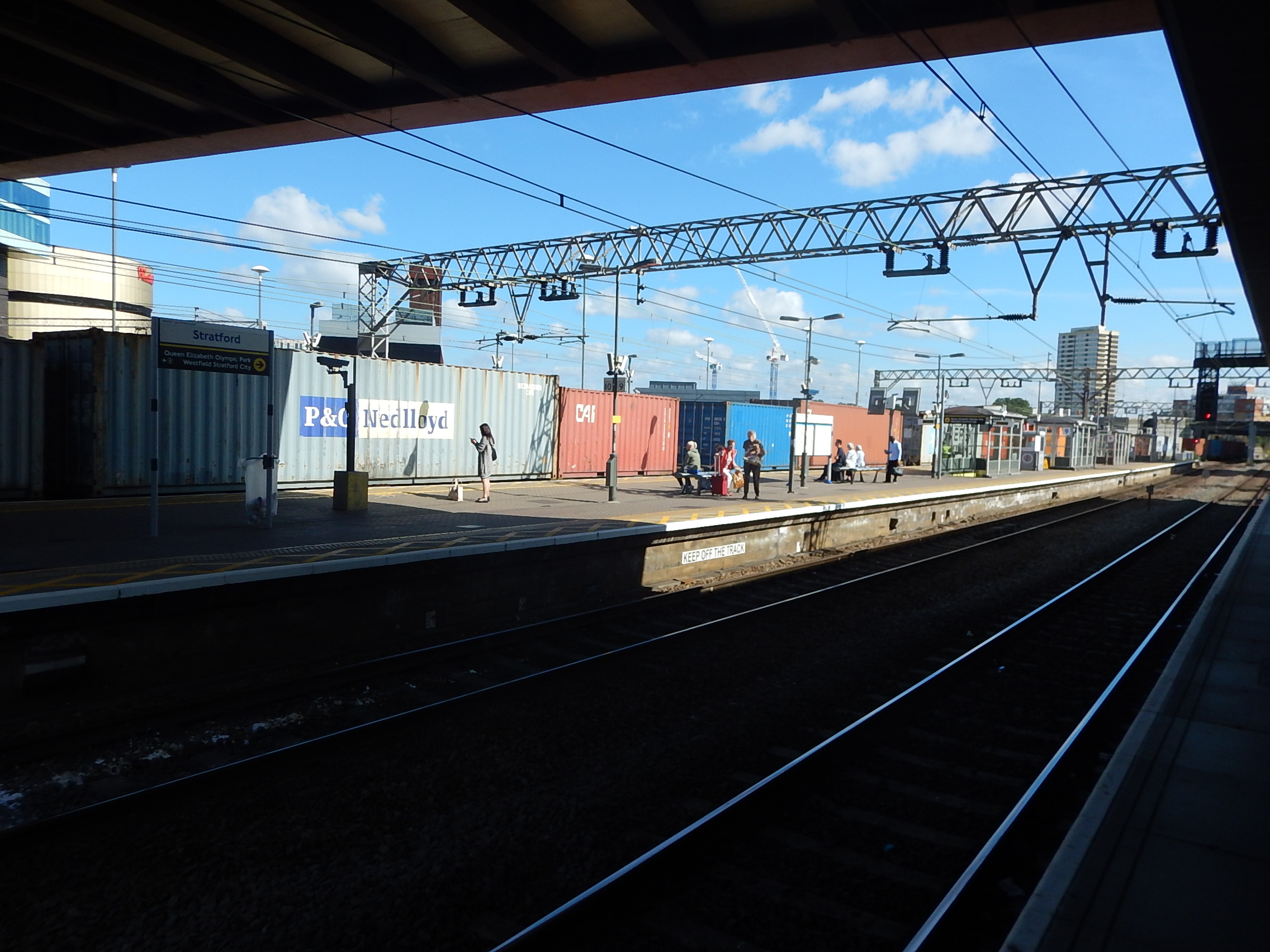
Note.
- The freight train was going towards London and was slowly going through the station.
- The two lines in the middle are the two main lines, where trains generally stop.
- When the new Stadler and Aventra trains enter service in a couple of years, there will be more trains going through the station.
- At times, trains could be separated by just a few minutes.
- As these trains are designed expedite stops, I wouldn’t be surprised to see more trains doing a Touch-and-Go.
This article on the EssexLive web site is entitled Witham loop could happen by 2024 with added faster trains to Liverpool Street.
It says that the loop will be built North of Witham station and would allow faster trains to pass slower ones by 2024, but that Simon Burns MP will be pushing to have it built sooner.
This Google Map shows Witham station and the line to the North.

Note the Braintree Branch Line going off to the North-West.
It does appear that there would be space for the necessary extra tracks to create passing loops North of Witham station.
These would mean that passing wouldn’t have to be dome with the slower train blocking a slow platform.
It certainly looks as if that both loops will be beneficial to all train operators and passengers.
6. Digital re-signalling between Colchester and London
Given the following on the Great Eastern Main Line South of Colchester.
- Increased numbers of trains.
- Speeds of 100 mph and possibly more.
- The need to do very fast stops and maintain headway of a few minutes.
- The trains will be new.
I suspect that digital signalling will be a necessity to maintain the required service frequency.
7. Capacity upgrade to allow four trains between Angel Road and Stratford
There is certainly pressure for this service from the local Councils in the area.
Would it include the preliminary works from the upgrade of Angel Road station?
8. Four-tracking between Coppermill Junction and Broxbourne
This is important both for Greater Anglia services to Stansted Airport and Cambridge and Crossrail 2.
I wrote about this in Crossrail 2 ‘Cannot Go Ahead’ Without Four-Tracking Of West Anglia Line.
But it will be a large and very disruptive project.
9. Wider level-crossing upgrade program
I have been held up so many times by level crossing incidents, this can’t happen to soon.
10. Platform and concourse upgrade at Liverpool Street station
I thought that this was going to happen, as soon as the Crossrail trains go into the tunnels.
Conclusion
Greater Anglia are not asking for the stars and it is a generally sensible wish list.
Possibly the most expensive projects are the following.
- Ely area upgrade.
- Trowse swing bridge replacement with a double track fixed link.
- Digital re-signalling between Colchester and London.
- Four-tracking between Coppermill Junction and Broxbourne.
But some like the four-tracking of the West Anglia Main Line are not urgent, until Crossrail 2 gets an opening date.
 The Anonymous Widower