Appeasement 2.0
The low point of Russia’s war in Ukraine is that Trummkopf, has repeated Chamberlain’s mistake at Munich and presented Putin with Appeasement 2.0.
I wasn’t around in the days of Munich and Chamberlain, but my father was well-informed, as he was in Geneva doing something possibly at the League of Nations and heard a lot of the truth about what was going on in Czechoslovakia and Ukraine at first hand. He believed there was little to choose between Hitler and Stalin on the scale of evil.
In the 1970s, I worked with an Jewish Austrian engineer, who was called Samuels, at the GLC, who had escaped from Austria just before WW2 and then spent the war in the Royal Engineers in bomb disposal. After the war, he was an observer at Nuremberg.
He was one of the most amazing people, I’ve ever met and he taught me a lot about project management.
Aggregation In Artemis
One of the features of Artemis was aggregation, which enabled the project manager to total up the resources they’d need for a project.
I might have programmed the original aggregation for Mr. Samuels, but I can certainly remember discussing it with him. He needed it to check that particular sub-contractors weren’t overstreching themselves.
I lost contact with Mr. Samuels, when his wife died and he moved to CERN in Geneva. But he’s one of several people, who helped frame the design of Artemis.
Soviet War Crimes
This Wikipedia entry is entitled Soviet War Crimes.
This is the first paragraph.
From 1917 to 1991, a multitude of war crimes and crimes against humanity were carried out by the Soviet Union or any of its Soviet republics, including the Russian Soviet Federative Socialist Republic and its armed forces. They include acts which were committed by the Red Army (later called the Soviet Army) as well as acts which were committed by the country’s secret police, NKVD, including its Internal Troops. In many cases, these acts were committed upon the direct orders of Soviet leaders Vladimir Lenin and Joseph Stalin in pursuance of the early Soviet policy of Red Terror as a means to justify executions and political repression. In other instances they were committed without orders by Soviet troops against prisoners of war or civilians of countries that had been in armed conflict with the USSR, or they were committed during partisan warfare.
As a teenager, my father used to tell me stories of atrocities by the Soviet Union and told me, he believed Stalin was on a level with Hitler.
One of the worst atrocities was the Katyn massacre in 1940, which is described in this Wikipedia entry and starts with this paragraph.
The Katyn massacre was a series of mass executions of nearly 22,000 Polish military and police officers, border guards, and intelligentsia prisoners of war carried out by the Soviet Union, specifically the NKVD (the Soviet secret police), at Joseph Stalin’s order in April and May 1940. Though the killings also occurred in the Kalinin and Kharkiv NKVD prisons and elsewhere, the massacre is named after the Katyn forest, where some of the mass graves were first discovered by Nazi German forces in 1943.
I haven’t found out, what my father was doing in 1940, but I am fairly sure he knew of the Katyn and other massacres, as he occasionally commented.
Note.
- The involvement of the NKVD.
- The Katyn massacre is a sub-plot in the film Enigma, which has this Wikipedia entry.
I took this picture of a memorial to Katyn in the centre of Birmingham.
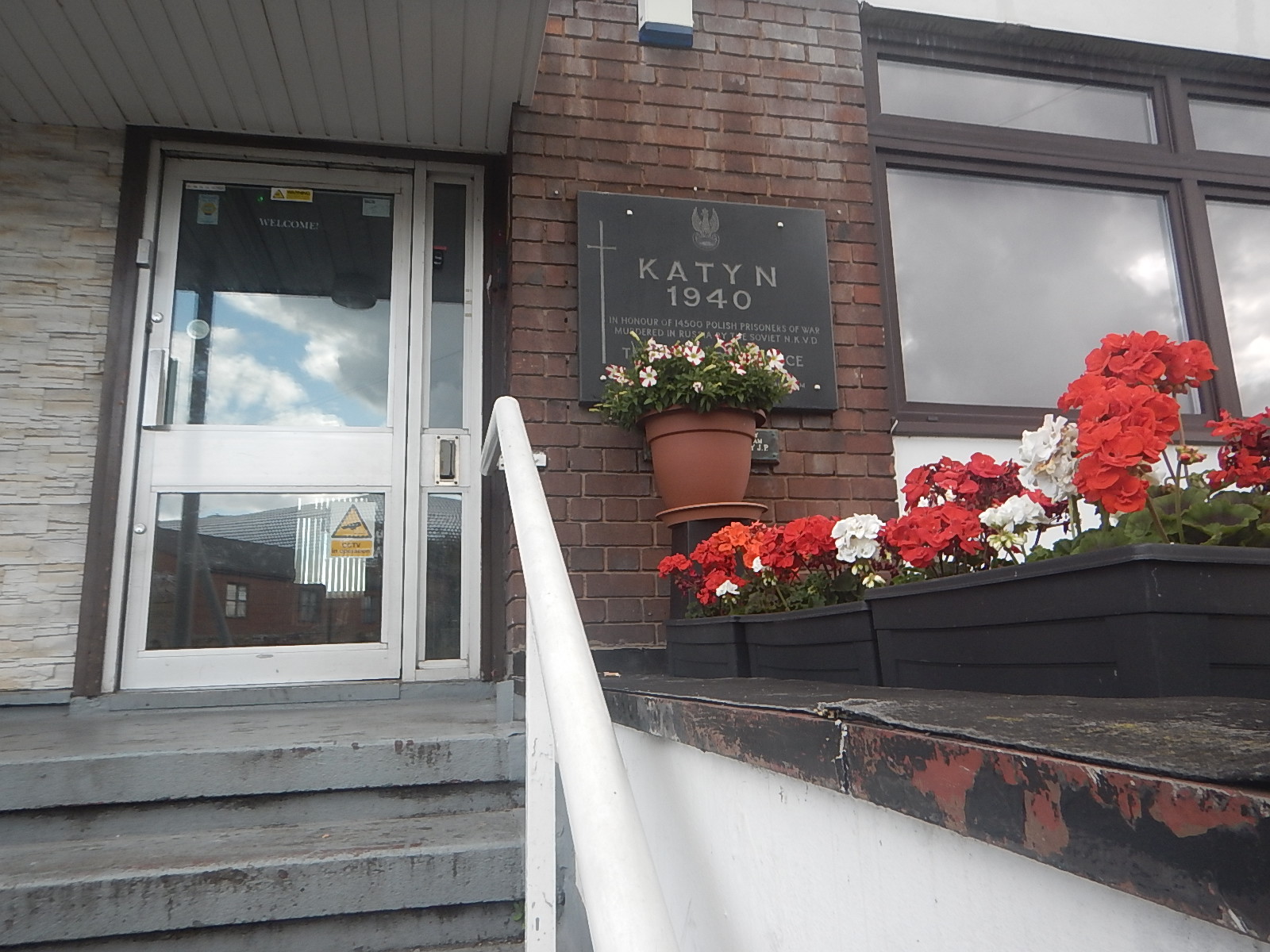
I believe that we ignore the lessons of Soviet behaviour at Katyn, at our peril.
In Vladimir Putin’s Wikipedia entry, there is this paragraph about his parents.
Putin’s mother was a factory worker, and his father was a conscript in the Soviet Navy, serving in the submarine fleet in the early 1930s. During the early stage of the Nazi invasion of the Soviet Union, his father served in the destruction battalion of the NKVD. Later, he was transferred to the regular army and was severely wounded in 1942. Putin’s maternal grandmother was killed by the German occupiers of Tver region in 1941, and his maternal uncles disappeared on the Eastern Front during World War II.
It appears that Putin Senior left the NKVD destruction battalion before 1942. Does that mean he could have been at Katyn?
I do suspect, that Putin Senior told some interesting stories to his son, about the correct ways to deal with your opponents and wage a war.
Conclusion
We are treading a very similar path over eighty years later.
Building Council Flats In London
I was told this tale by the Head of the Construction Branch of the Greater London Council, who was a big user of the first Project Management System;PERT7, that I wrote in the 1970s.
The GLC were building some council flats alongside the railway.
There were four parallel blocks with five floors and I’ll number them 1 to 4, with 4 alongside the railway and 1 furthest away.
The plan to build them involved the following.
- Deliveries were planned, so that the many residents around the site and British Rail were not inconvenienced.
- Site access was arranged with British Rail along the railway on a track to and from a major road a few hundred yards away.
- The site would be cleared with all the rubble going out in the reverse direction.
- The plan then was to build the blocks 1, 2, 3 and 4 towards the railway.
- This was logical, as when each block was completed it could be occupied and the new tenants wouldn’t be living in a building site, as what needed to be done was towards the railway.
But he was overruled by a vociferous local lobby and some local politicians, who had convinced themselves that building away from the railway in a 4, 3, 2, 1 order would be better.
In the end they were built in the 4, 3, 2, 1 order with budget and time overruns and endless complaints from residents.
If there is a lesson from this fairly insignificant project, it is that in a construction project, there is often one way to build it, that minimises construction time and disturbance to neighbours and maximises the cash flow from the development.
The Edmonton Incinerator
Although it is officially known these days as the Edmonton EcoPark, as a North Londoner, I will always know it as the Edmonton Incinerator.
I took these pictures with my drone.







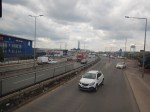
These are a few facts from Wikipedia about the waste-to-energy plant.
- It was commissioned by the Greater London Council in 1971.
- It burns waste from the seven North-East London boroughs.
- It generates 55 MW of electricity.
It certainly dominates the landscape alongside the North Circular Road.
But.
It is probably not amongst the greenest of incinerators.
It is probably very much a design of the 1960s.
It is approaching fifty years old.
But it appears that things could be improving.
- There is a large composting and recycling facility being built on the site on the site.
- Plans exist to bring in the rubbish by barge.
This Google Map shows the site.
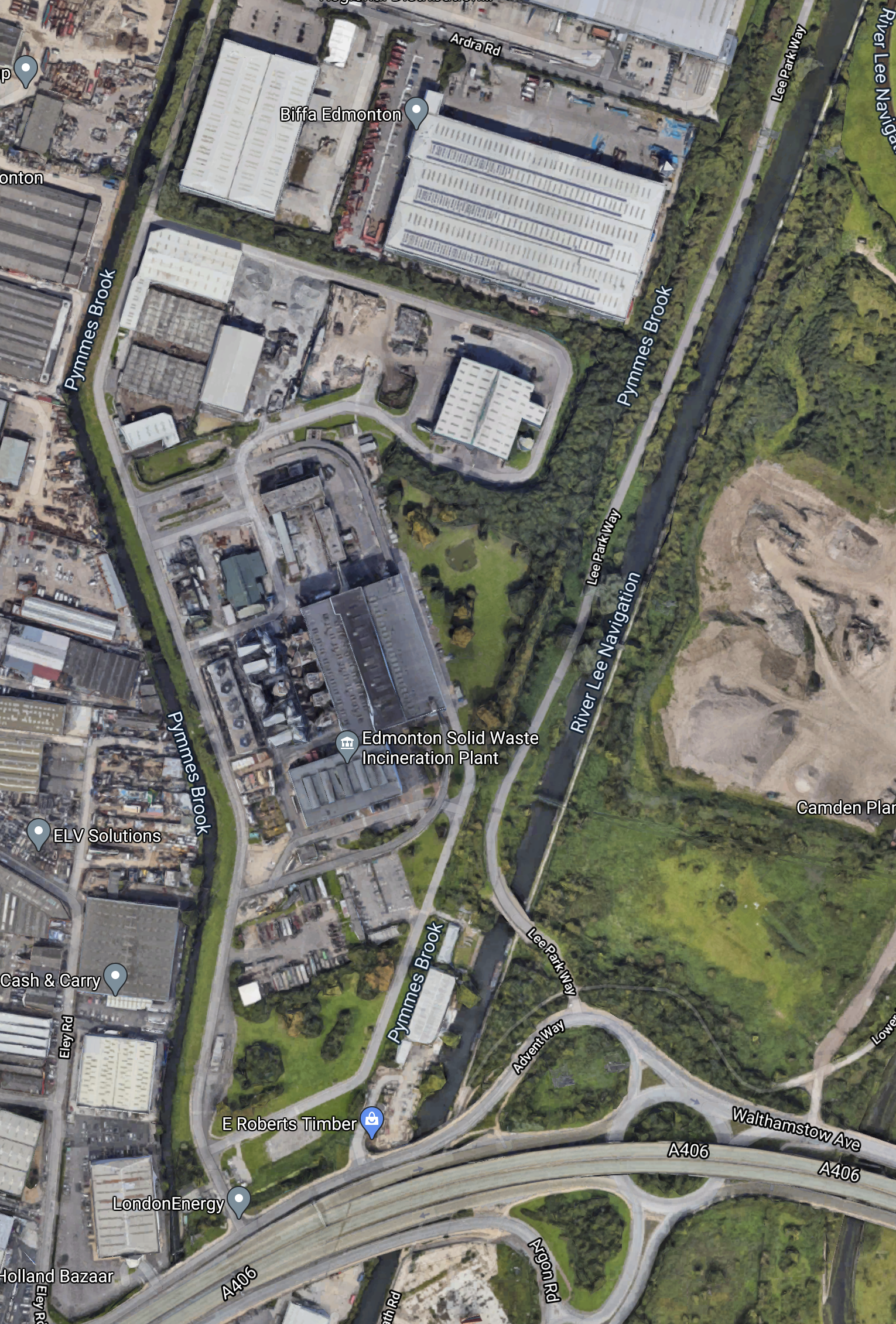
Note.
- The North Circular Road runs across the bottom of the map.
- All of the roads obliterated the famous Cooks Ferry Inn, where I saw the Animals play in the 1960s.
- The River Lee Navigation runs past the incinerator.
- Pymme’s Brook runs on the other side.
It looks from the map, that another reservoir is being built to the East of the canal.
The Guy Who Built The Edmonton Incinerator
I used to work with the guy, who was one of those in charge of the building of the incinerator, who when I met him, was head of the Greater London Council’s Construction Branch, who were using my project management software.
I can’t remember Mr. Samuels first name, even if I ever knew it.
- He was an Austrian Jew, who had trained as an engineer, who arrived in the UK sometime in the 1930s.
- He taught himself English in six weeks and got a job at Lucas.
- At the start of World War II, he volunteered and joined the Royal Engineers.
- He spent the whole war in bomb disposal.
- After the war he became an observer at the Nuremberg Trials.
After all he’d been through, he told me, the worst time of his life, was those years in the early seventies when I knew him, as his wife was dying of cancer.
But he taught me a lot about project management and the real horror of war.
He never told me, how many of his relatives survived the Nazis.
What Will Happen To The Edmonton Incinerator?
This year it will be fifty years since the Edmonton Incinerator was commissioned. It must be coming to the end of its life.
I can’t find any plans, but endless groups, who want it closed rather than rebuilt.
This article in the Hackney Gazette, which is entitled Campaigners Urge North London Incinerator Bidders To Pull Out, is typical.
I am very pro recycling, but then others aren’t as these pictures show.




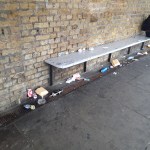


So if some won’t recycle properly, it will all have to go to landfill.
An Odd Tale About Recycling
I applied to be a member of the Independent Monitoring Board of a prison near, where I used to live.
I had a very interesting tour of the prison, where I met several of the inmates.
One thing surprised me.
The prison had a very comprehensive internal recycling system, whereby everything was fully sorted.
One course of training, that was offered to prisoners was how to sort and process all of the rubbish. According to the guy running the course, it was one of the most popular in the prison.
Possibly, because I was told, it prepared prisoners for a job, where there were lots of vacancies.
I wonder if the new £100million recycling centre at Edmonton will use labour trained in the Prison Service?
 The Anonymous Widower