Olympia Partners With TfL To Boost Peak-Time Mildmay Line Services
The title of this post, is the same as that as this press release from Transport for London.
These two bullet points act as sub-headings.
- Olympia, London’s newest entertainment destination, is funding 16 extra peak‑time services per weekday, providing increased capacity to support rising demand on this part of the Mildmay line as well as reducing customer journey times
- The additional shuttle services will depart from Clapham Junction Platform 17, with three services in the morning peak and five in the evening peak
These two paragraphs add more details.
Customers will benefit from easier access to the transformed Olympia, set to become London’s newest destination for entertainment, culture and hospitality, as well as Westfield London and improved links to other TfL services
Customers will benefit from more frequent services between Clapham Junction and Shepherd’s Bush from Monday 18 May, as Transport for London (TfL) introduces additional peak weekday shuttle services on the Mildmay line.
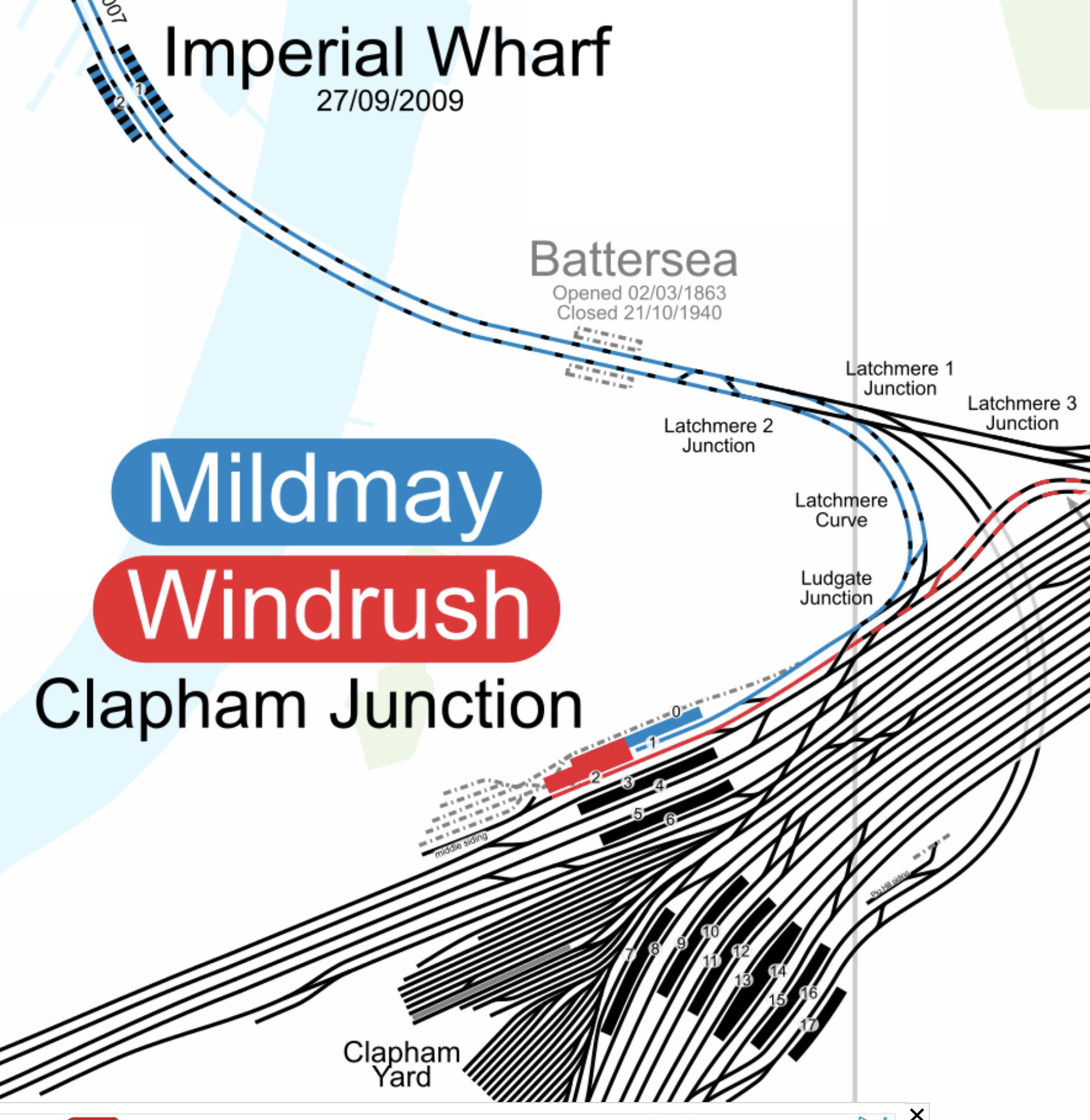
This map from CartoMetro shows how trains will get to Platform 17 at Clapham Junction.
Note.
- Mildmay services from Stratford on the North and West London Lines are shown in blue and terminate in Platform 1.
- Windrush services from Dalston Junction on the South London Line are shown in red and terminate in Platform 2.
- Platform 17 is the Southernmost of the platforms at Clapham Junction.
The new services will take the same route as Southern’s Watford Junction and East Croydon service through Clapham Junction.
- Trains will go through Imperial Wharf station and Latchmere 2 Junction.
- They will then take Latchmere 1 Junction and pass under the lines to get to Platform 17.
- There is a crossover between the two tracks, so that trains can get on the left-hand track.
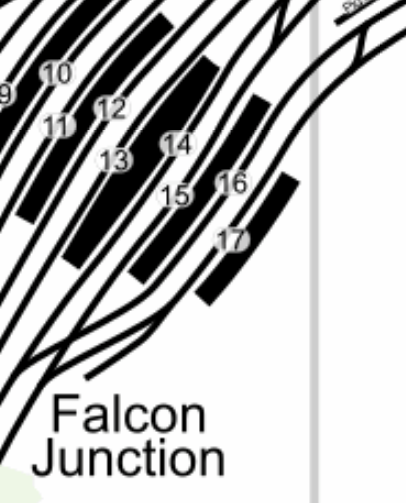
This second CartoMetro map shows Platforms 16 and 17 to a larger scale.
Note.
- Platform 17 doesn’t look very long, but it is 172 metres.
- Five-car Class 378 trains are 101.35 metres, so should fit.
- The crossover, that will be used by returning shuttle trains is clearly visible in the top-right corner.
It does appear though that there will need to be no major trackwork needed for the new service.
I do have one thought.
Will Clapham Junction Station Get A Platform 0?
This was proposed in Will Clapham Junction Station Get A Platform 0?, but there is no mention of it in the press release, although Michael Volkert, who is CEO of Olympia estates does say this.
The new train services will depart from platform 17 at Clapham Junction. Existing services to Stratford will continue to operate from Platform 1. For the latest travel information customer should check TfL Go, Journey Planner on the TfL website or station departure screens.
Commuters will have to hone their ducking and diving skills.
Moving The West London Line AC/DC Switchover To Kensington Olympia
London has a rail capacity problem, for both freight and passenger trains.
This report from Network Rail is entitled The London Rail Freight Strategy (LRFS).
One of the secondary recommendations of the report is to move the switchover between AC and DC power on the West London Line to Kensington Olympia station. It says this about the switchover.
Although moving the changeover to Shepherd’s Bush would eliminate the need for passenger trains to slow down or stop at North Pole Junction, electrically hauled freight trains will still need to switch power supply modes whilst moving, wherever the AC/DC interface is located.
Due to the substantial incline facing trains running northward on the WLL, which increases in severity towards the Willesden end of the route, it would be preferable for the changeover to be made as far south as possible. This would enable freight trains to slow down to switch traction before reaching the worst of the gradient, giving them a much better chance of regaining line speed once drawing power from the OLE.
Although Kensington Olympia is less than a mile to the south of Shepherd’s Bush, the intervening route section is almost entirely level, with the incline commencing just before Shepherd’s Bush station and continuing to rise sharply along the rest of the WLL. The capacity and performance benefits of relocating the changeover are therefore likely to be greater if the overhead wires are extended to Kensington Olympia, removing the risk to traffic flow that would remain if freight trains were forced to switch whilst running uphill.
This would prepare the West London Line for the transition to electric freight that will be necessary as part of the decarbonisation of the railway over the next thirty years.
Resolving the current traction changeover issues for freight as well as passenger trains would support this transition by encouraging freight operators to invest in electric locomotives to run on the orbital routes, in the confidence that this constraint has been addressed.
I covered this recommendation in Moving The West London Line AC/DC Switchover To Shepherd’s Bush, as so many arguments are the same about the two stations.
This was my conclusion in the related post.
I believe, as probably do Network Rail, that Kensington Olympia station should be the station, where the switchover occurs.
I did add a caveat, that it is probably all down to money.
Related Posts
These are related posts about the London Rail Freight Strategy (LRFS).
Decarbonisation Of London’s Freight Routes
East Coast Main Line South Bi-Directional Capability
Gauge Improvements Across London
Headway Reductions On The Gospel Oak To Barking, North London and West London Lines
Heavy Axle Weight Restrictions
Kensal Green Junction Improvement
Longhedge Junction Speed Increases
Moving The West London Line AC/DC Switchover To Shepherd’s Bush
Stratford Regulating Point Extension
Moving The West London Line AC/DC Switchover To Shepherd’s Bush
London has a rail capacity problem, for both freight and passenger trains.
This report from Network Rail is entitled The London Rail Freight Strategy (LRFS).
One of the recommendations of the report is to move the switchover between AC and DC power on the West London Line to Shepherd’s Bush station. It says this about the switchover.
Extension of the overhead wires further along the WLL, to provide AC electrification as far south as Shepherd’s Bush station.
Two passenger train services run along the West London Line.
- Four tph – London Overground – Clapham Junction and Stratford
- One tph – Southern – Clapham Junction and Milton Keynes
Note.
- tph is trains per hour.
- London Overground would like to increase their service to six tph.
- All trains stop at Shepherd’s Bush station.
The West London Line (WLL) runs between Willesden Junction station in the North and Clapham Junction station in the South.
These are the stations and their electrification status.
- Willesden Junction – 25 KVAC Overhead Electrification
- Shepherd’s Bush – 750 VDC Third-Rail Electrification
- Kensington Olympia – 750 VDC Third-Rail Electrification
- West Brompton – 750 VDC Third-Rail Electrification
- Imperial Wharf – 750 VDC Third-Rail Electrification
The switchover is performed North of Shepherd’s Bush station with the train moving.
These pictures show the electrification to the North of Shepherd’s Bush station.
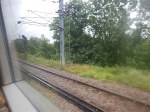
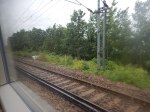
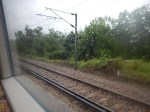
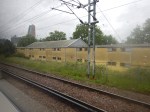
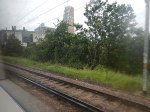
This double-electrification allows switchover, whilst the trains are moving.
This is said in the Network Rail document about moving the West London Line AC/DC switchover to Shepherd’s Bush station.
Extending the Overhead Line Equipment south to Shepherd’s Bush would enable passenger trains to change traction source whilst making their scheduled station stop.
A slight extension to dwell times at Shepherd’s Bush may be required, but the elimination of the need to slow down or, especially, to stop, as is the case for GTR trains, at North Pole Junction would release a significant amount of capacity.
Recent work carried out on behalf of Transport for London calculated that the relocation of the changeover to the Shepherd’s Bush could provide an indicative net saving of 7 minutes per hour, which is equivalent to an additional path and some additional time for timetable flexibility.
The LRFS capacity analysis concluded that this intervention could potentially release up to two additional timetable paths an hour in each direction.
Moreover, the analysis advised that eliminating the need for GTR services to stop to change traction at North Pole Junction would be of significant performance benefit even today.
This sounds to me like this us a good solution, that will give winners all round.
- I went North yesterday on a GTR (Southern) service and can confirm, the stop to switch voltage at North Pole junction.
- Extra paths are always good news.
- I have a feeling that the overhead electrification on the route isn’t the best, so Network Rail may even have to replace it anyway.
What I like about the proposal, is that if the switchover point is moved to Shepherd’s Bush station and in the very rare occurence of a switchover failure, the passengers can be easily evacuated from the train as it will most likely be in Shepherd’s Bush station, rather than in the industrial wastelands of West London.
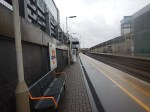
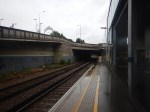
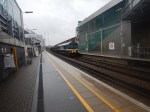
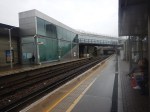
These pictures show Shepherd’s Bush station.
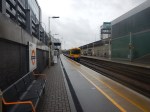
Note.
- It looks like the bridges have been built high enough for overhead electrification.
- The platforms appear to be able to handle long trains.
- Putting up overhead gantries doesn’t look to be the most challenging of tasks.
I don’t think, that the engineering needed will be difficult and because of the gains outlined in the report, this project should be performed as soon as possible.
Should The AC/DC Switchover Be At Kensington Olympia Station?
The Network Rail document also muses about performing the AC/DC switchover at Kensington Olympia station.
This is said.
Although moving the changeover to Shepherd’s Bush would eliminate the need for passenger trains to slow down or stop at North Pole Junction, electrically hauled freight trains will still need to switch power supply modes whilst moving, wherever the AC/DC interface is located.
Due to the substantial incline facing trains running northward on the WLL, which increases in severity towards the Willesden end of the route, it would be preferable for the changeover to be made as far south as possible. This would enable freight trains to slow down to switch traction before reaching the worst of the gradient, giving them a much better chance of regaining line speed once drawing power from the OLE.
Although Kensington Olympia is less than a mile to the south of Shepherd’s Bush, the intervening route section is almost entirely level, with the incline commencing just before Shepherd’s Bush station and continuing to rise sharply along the rest of the WLL. The capacity and performance benefits of relocating the changeover are therefore likely to be greater if the overhead wires are extended to Kensington Olympia, removing the risk to traffic flow that would remain if freight trains were forced to switch whilst running uphill.
This would prepare the West London Line for the transition to electric freight that will be necessary as part of the decarbonisation of the railway over the next thirty years.
Resolving the current traction changeover issues for freight as well as passenger trains would support this transition by encouraging freight operators to invest in electric locomotives to run on the orbital routes, in the confidence that this constraint has been addressed.
Network Rail seem to have made a very strong case for switching between AC and DC power at Kensington Olympia station.
These Google Map shows Kensington Olympia station.
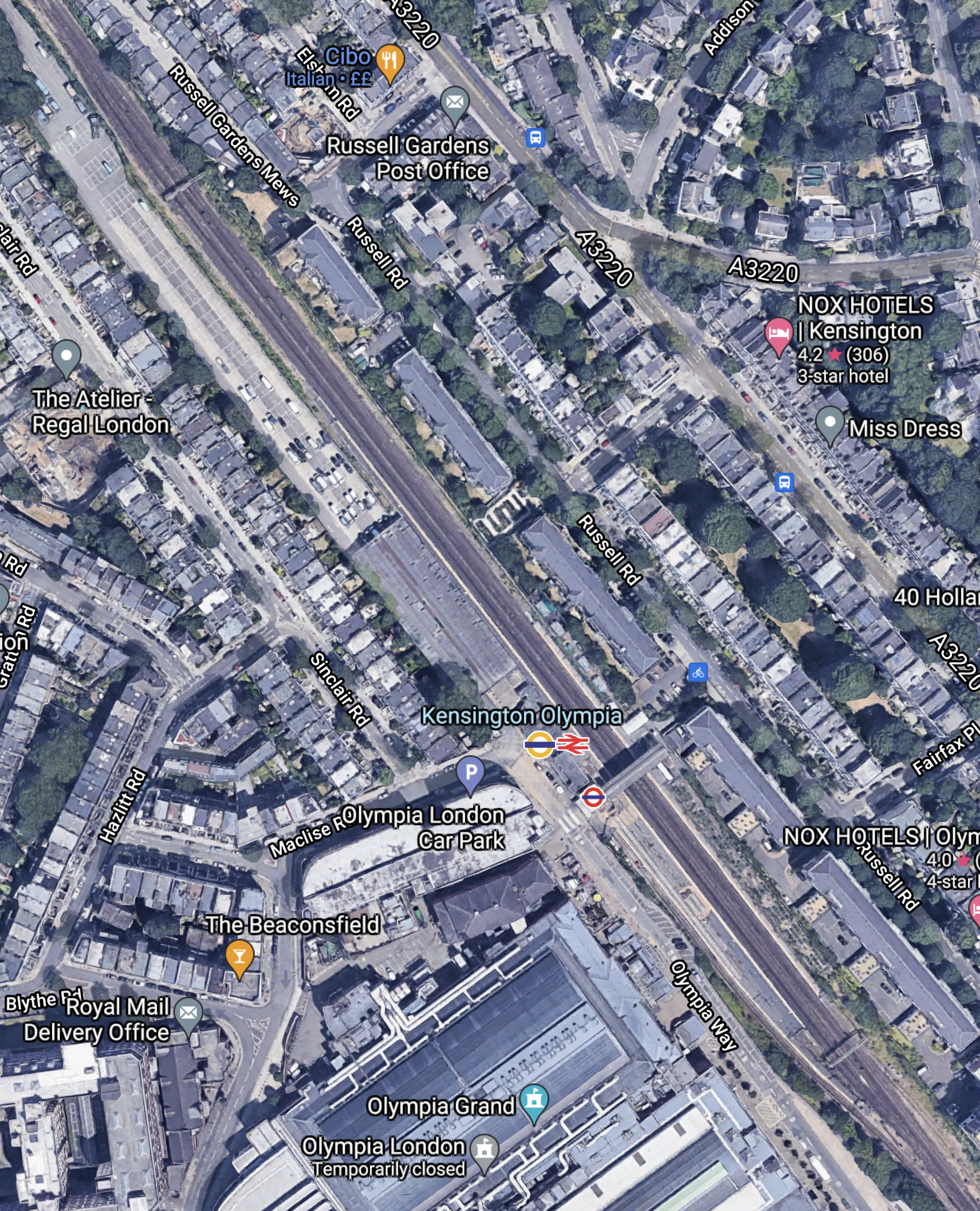
And these pictures show the station on a very wet day.
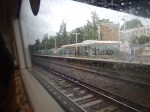
It doesn’t appear that there would be too many problems in electrifying Kensington Olympia station.
The only problem, may be the bridge at Addison Gardens to the North of Kensington Olympia station.
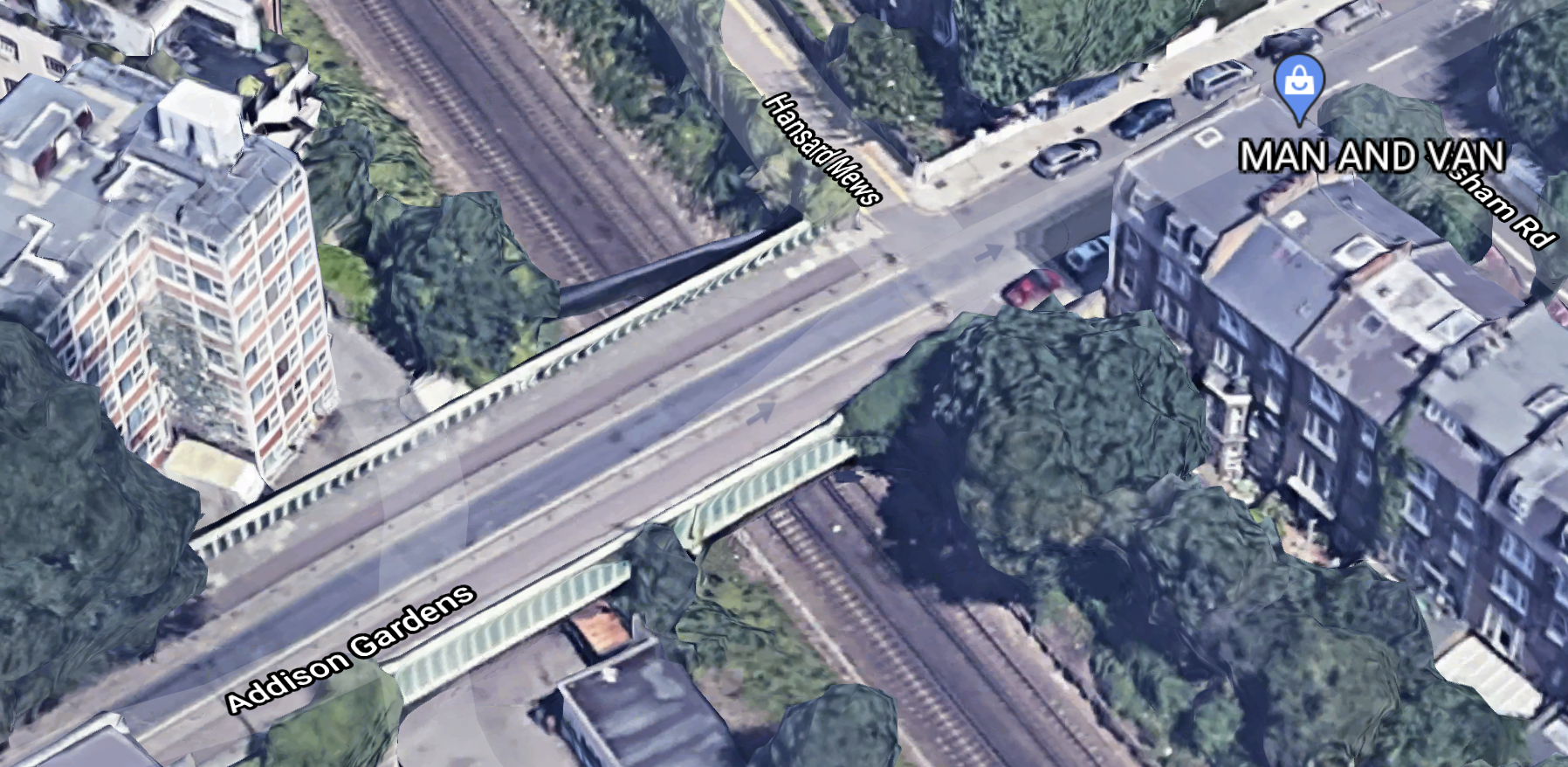
Although, Network Rail have an extensive range of tricks to get the wires through.
Conclusion
I believe, as probably do Network Rail, that Kensington Olympia station should be the station, where the switchover occurs.
But it’s all down to money.
It does seem to me, that the London Rail Freight Strategy is the first serious attempt to work out, the possible freight and passenger uses of the West London Line, which is one of those rail lines that has been designed by Topsy and accidents of history.
How many other rail routes in the UK, would be improved by a similar analysis?
Related Posts
These are related posts about the London Rail Freight Strategy (LRFS).
Decarbonisation Of London’s Freight Routes
East Coast Main Line South Bi-Directional Capability
Gauge Improvements Across London
Headway Reductions On The Gospel Oak To Barking, North London and West London Lines
Heavy Axle Weight Restrictions
Kensal Green Junction Improvement
Longhedge Junction Speed Increases
Moving The West London Line AC/DC Switchover To Kensington Olympia
Stratford Regulating Point Extension
Will Camden Road Station Get A Third Platform?
Will Clapham Junction Station Get A Platform 0?
Kensington (Olympia) Station Full Tube Service Restoration Petition Signed By More Than 10,000
The title of this post is the same as the title of this article on getwestLondon.
The article states that advantages of restoring a full Tube service include.
- Better Tube service for local residents and business.
- Ease congestion.
- Improve air quality.
- Provide a step-free station for everybody.
But this paragraph is surely the most relevant.
Footfall at Olympia London has risen from 700,000 to 1.6m since 2011 (when the full Tube service was removed), and is likely to increase over the coming years. Only by having a full Tube service can local transport options meet this increasing demand.
The more the footfall increases, the greater the need for a full Tube service.
Service on the District Line
The Wikipedia entry for Kensington(Olympia) station, has a section detailing the District Line Service.
This is said.
The District line shuttle to Earl’s Court and High Street Kensington runs at weekends and a very limited service also operates during the early morning and evening each weekday. There is no service New Year’s Eve or New Year’s Day when these days fall on or partly on a weekend.
Prior to 2011, it was much more frequent.
Service On The West London Line
The Wikipedia entry for Kensington (Olympia) station, has a section detailing the West London Line Service.
This is said.
The London Overground services in trains per hour are:
- 4 northbound to Willesden Junction, of which 2 continue to Stratford during the off-peak and all 4 during the peak.
- 4 southbound to Clapham Junction.
Southern operate between Milton Keynes Central and East Croydon, typically once an hour.
London Overground have plans to increase their service by two trains per hour, starting in 2018.
Kensington ( Olympia ) Station Is Not Fully Step-Free
This Google Map shows the track and platform layout at Kensington (Olympia) station.
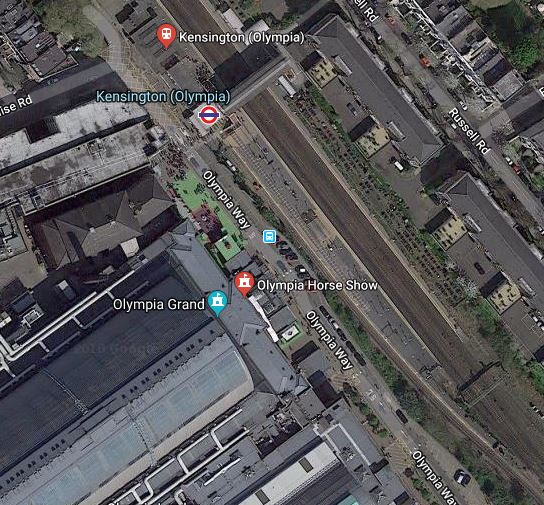
Platforms are as follows from West to East.
- 1 – Terminus for District Line
- 2 – Northbound West London Line
- 3 – Southbound West London Line
Note the footbridge linking the island platform 1 and 2, with the other platform 3.
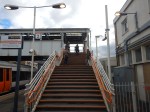
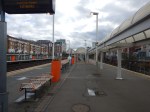
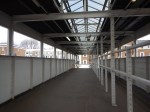
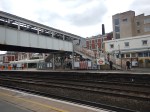

It is not step-free, which means that platforms 1 and 2 have step-free access to Olympia, but platform 3 does not.
Surely, whatever happens to the train service, this bridge must be replaced with one that is step-free.
Getting To And From Kensington (Olympia) Station
It’s easy for me to get to Kensington (Olympia) station, as I just walk to Dalston Kingsland station and get a direct train.
But what fastest routes do you use from these major Underground stations?
- Bank – Change at Shepherd’s Bush
- Canary Wharf – Change at Bond Street and Shepherd’s Bush
- Euston – Change at Willesden Junction
- Finsbury Park – Change at Oxford Circus and Shepherd’s Bush
- Kings Cross St. Pancras – Change at Oxford Circus and Shepherd’s Bush
- Liverpool Street – Change at Shepherd’s Bush
- Paddington – Change at High Street Kensington to a bus.
- Waterloo – Change at Clapham Junction
These routes all used Transport for London’s journey planner.
For some less important stations, you can get some complicated routes.
Marylebone is a classic, which involves two walks, two buses and the Circle Line.
For those, who went to Olympia before 2011, when there was a shuttle from Earl’s Court, will find they will need to change at West Brompton to get from Earl’s Court to Kensington (Olympia).
Wikipedia describes the pre-2011 service like this.
For a period before December 2011 the District line had an irregular short shuttle service of two or three trains per hour to High Street Kensington via Earl’s Court. One late evening train ran daily to Upminster.
To be charitable, you would say it is not a passenger-friendly system for most going to Olympia.
Conclusion
The petitioners would appear to have a very valid point.
 The Anonymous Widower