Norwich-In-Ninety Is A Lot More Than Passengers Think!
But, I very much expect that Greater Anglia know what they are doing.
This post describes a trip to Norwich that used two Norwich-In-Ninety services, using Class 90 locomotives and Mark 3 coaches.
I came up to Norwich on the 1100 train, which was timed to get in at 1230. According to the driver, there were signalling problems at Manningtree, which meant we arrived in Norwich twenty-one minutes late.
I was going on to Cromer or Lowestoft. So by the time I’d had a cider and bought a ticket, I didn’t leave Norwich until 1345 for Cromer. But I did have time by the sea to take a few pictures and have a coffee and a gluten-free scone, before getting the return train to Norwich.
Back at Norwich, I had a choice of two trains.
- The 1700 stopping at just Ipswich and Norwich
- The 1703 stopping at Diss, Stowmarket, Ipswich and a few other places.
I was booked on the 1700, from where I’m writing this note on my phone.
These are some of my observations.
Operating Speed
I have just travelled between Norwich and Ipswich in thirty minutes, with Speedview on my phone reading within a couple of mph of 100 mph all the way from where we got to operating speed South of Norwich to where we slowed for Ipswich station.
Diss, Stowmarket and Needham Market stations were passed at almost 100 mph
Ipswich to Colchester was at a slower 90 mph, but then from Marks Tey to just before Chelmsford, the train was back to around 100 mph.
Speeds between 70 and 90 mph were held from Chelmsford to Liverpool Street, which was reached at 1830 as scheduled.
Acceleration
I got the impression, that the acceleration of the train wasn’t up to the operating speed. Certainly, it didn’t seem to accelerate as fast as an InterCity 125,
But then we’re talking about a powerful Class 90 locomotive with 3730 kW pulling eight Mark 3 coaches. Perhaps it was having an off day?
In an InterCity 125, there is nearly 2,640 kW to accelerate the same number of similar coaches to 125 mph.
But these are similar numbers compared to a four-car Class 755 train running on electrical power, which according to Stadler’s data sheet is 2,600 kW, which is 86% more power than an InterCity 125.
As there are two power-bogies each must be good for 1,300 kW.
Typical four-car electric Flirts seem to have around 2-3,000 kW, according to various Stadler data sheets.
Flirts seem to be seriously powerful trains and I can understand why some Norwegian Flirts are capable of 125 mph running. This is said in Wikipedia about the Norwegian Flirts.
All trains have five cars. However, in contrast to previous five-car FLIRTs they will have a third powered bogie giving them a maximum power output of 4,500 kW (6,000 hp) and a top speed of 200 km/h (120 mph).
If that extract is saying that each bogie can provide up to 1,500 kW, then Class 745 trains with four bogies have 6,000 kW.
If they were Class 755 train-sized bogies, then Class 745 trains, then the trains have 5,200 kW.
For comparison, an eleven-car Class 390/1 train has 5,950 kW.
With these figures, I feel it is reasonable to assume, that Class 745 trains, will accelerate to operating speed faster than the current forty-year-old BR stock.
- They appear to have a lot more power, than the current trains.
- Their aluminium bodies probably mean they weigh less, than the steel-bodies of the current trains.
- Their aerodynamics are probably more advanced.
- They probably have sophisticated technology that stops wheel slip, controls the train in a smooth manner and assists the driver.
- The rolling dynamics will be no worse than that of the current trains.
Some conclusions can be drawn about the current trains and their operation.
- A Class 90 locomotive with only 930 kW has sufficient power to keep an eight-car train running at 100 mph. It looks like the figure is around 1.2 kWh per car per mile.
- They must be in top condition.
- The drivers probably know the route like the back of their hand and can coax the required performance from their ageing charges.
BR’s forty-year-old design must still be seriously good and the trains get the TLC they need.
Passing Stations At 100 mph
Diss, Stowmarket, Needham Market, Marks Tey, Kelvedon, Hatfield Peverel and Ingatestone stations were all passed within a few mph of 100 mph, with Maningtree and Colchester stations passed at around 85-90 mph.
Obviously, this must be allowed and not having to slow means that the speed is not degraded.
The only station where there was a substantial slowing was Chelmsford, where the train slowed to about 60 mph.
The Current Norwich-in-Ninety Services
These are the current ninety minutes services between Liverpool Street and Norwich.
- 0900 – Norwich to Liverpool Street
- 1100 – Liverpool Street to Norwich
- 1700 – Norwich to Liverpool Street
- 1900 – Liverpool Street to Norwich
Only one train is needed that starts and finishes in Norwich, where it is stabled overnight.
Serving The Intermediate Stations
Both the 1100 train to Norwich and the 1700 to Liverpool Street only stop at Ipswich.
But leaving a couple of minutes behind was another Class 90 locomotive/Mark 3 coach set stopping at more stations.
- Going North, the train takes nineteen minutes longer, with stops at Colchester, Manningtree, Ipswich and Diss.
- Going South, this train takes ten minutes longer, with stops at Diss, Stowmarket, Ipswich, Colchester and Stratford.
I suspect that when the Bombardier Class 720 trains have been delivered, these might be used for the stopping trains.
How Many Trains Will Be Needed?
It appears that the slower trains are currently timetabled to take between 111 and 115 minutes.
If a round trip can be done in four hours, then two trains per hour (tph), will require eight Class 745 trains.
As there are ten trains on order, this means the following.
- Eight trains will be used to run the two tph stopping service.
- One train will be needed for the Norwich-in-Ninety service.
This leaves one train as a spare or in maintenance.
Cromer And Back In A Day
In the four-and-a-half hours, I was in Norwich, I was able to take a train to Cromer, take a few pictures, have a quick lunch and then return to Norwich.
This is possible using the slower trains, but the fast trains can give you another hour in Norwich.
Obviously, this hour will be available for many journeys and must surely open up many possibilities for frequent travellers on the route.
How Reliable Is The Norwich-in-Ninety Service?
There have been twenty services in the first week of the service..
- Fourteen have been on-time or a couple of minutes early.
- Five have been under ten minutes late.
- One was late by more than ten minutes.
That last train was twenty-two minutes late and I was on it, on the first Wednesday of the service.
I shall update this table, until I get bored with it!
Can The Timetable Be Changed?
The way the timetable is set out is an interesting solution to trying to be all things to all passengers.
- There is a basic two tph service, which stops between London and Norwich according to a simple pattern.
- Four services per day, with two in each direction, are delayed by two or three minutes.
- The original departure times are taken by a fast train, that only stops at Ipswich.
- These four departure times, are arranged, so that the services can be handled by a single fast train shuttling between Liverpool Street and Norwich
- The fast train starts in Norwich at 0900 in the morning and returns to Norwich and its depot at 2030. The train can then have a good service after a hard day’s work!
Obviously, Greater Anglia have all the passenger data, so they have probably laid out a fast timetable, that will reflect current passenger numbers.
But as time goes on, this timetable can be augmented.
At present, they are using their express trains for both the two tph and the fast services.
These will be changed to Class 745 trains during the remainder of this year.
The venerable Class 90 locomotives and their Mark 3 coaches have blazed the trail and made everybody’s dream of Norwich-in-Ninety a reality, but now it is up to Greater Anglia’s new trains to fully develop the timetable.
- If they are successful in attracting passengers more services will do Norwich in ninety and Ipswich in sixty.
- The back-up stopping service running behind the fast train could be run by a new Class 720 train, which have a similar 100 mph operating speed.
- Several services per day, using Class 755 trains, will be running between Lowestoft and London and augmenting the fast service between London and Ipswich.
Interestingly, as I left Norwich for Cromer, there was a Class 321 Renatus at Norwich station in Platform 2 Checking with Real Time Trains, this other relic from British Rail, but refurbished to a modern standard for passengers and performance, formed the 1400 express to London and arrived on time after seven stops.
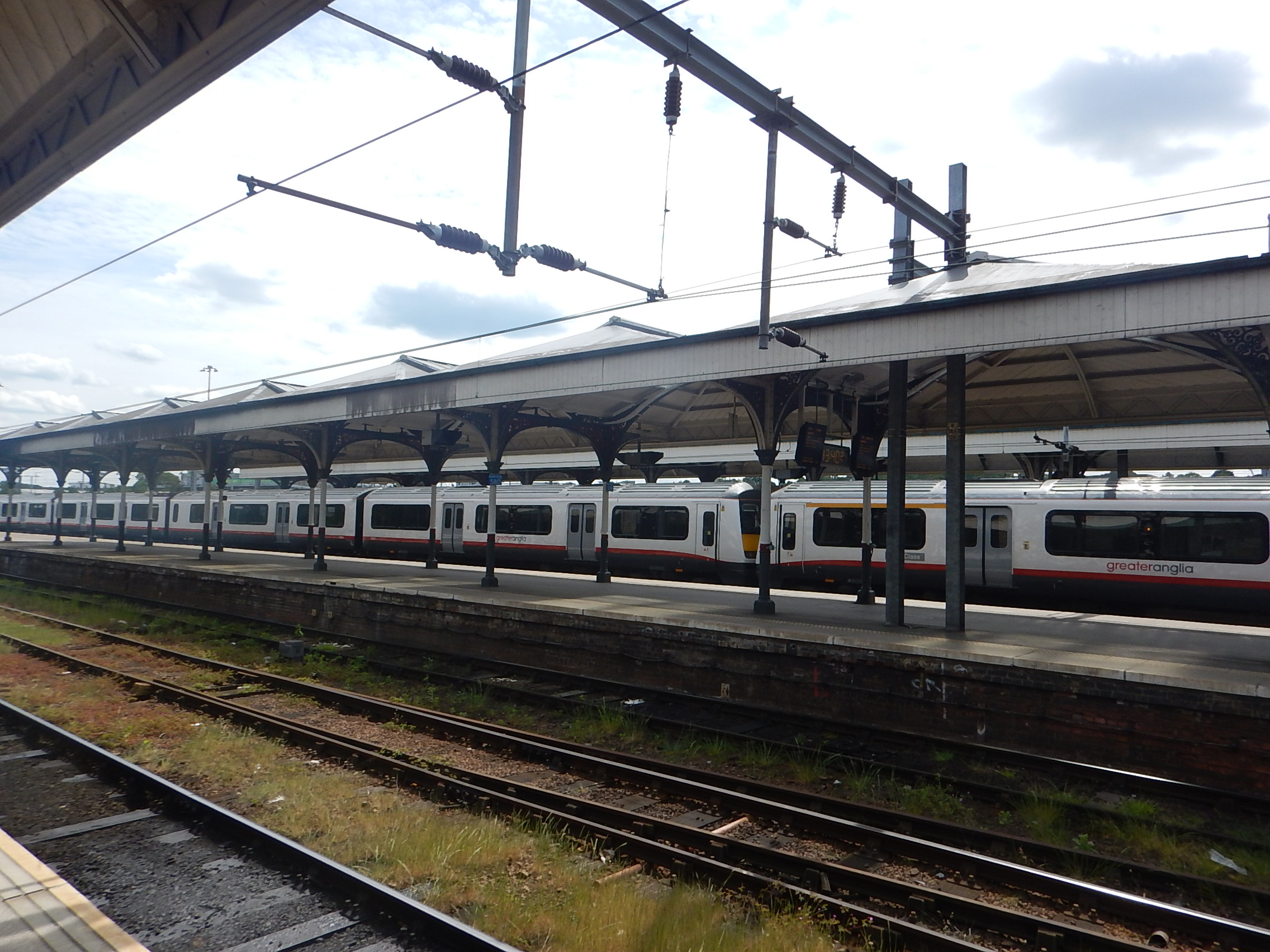
It looks to me that Greater Anglia have a creditable back-stop, if there should be any unforeseen problems with the new trains.
But it also shows that the stopping service that follows the Norwich-in-Ninety service can be run by a 100 mph electric multiple unit.
This would surely release Class 745 trains to run more fast services.
An Improved Ipswich And Norwich Service
Greater Anglia have said that there will be three tph between London and Norwich and that one may or will be run the new Class 720 trains.
The only section of the Great Eastern Main Line, that won’t have four tph will be between Ipswich and Norwich. So could we see a 100 mph local service between two rivals.
Yesterday’s Class 321 Renatus did Norwich to Ipswich in forty-one minutes.
- The route is fully-electrified.
- Class 720 or Class 321 Renatus trains could be used.
- Trains would stop at Diss, Stowmarket and Needham Market stations.
- The rail line is not busy North of Stowmarket.
- The bottleneck of Trowse bridge South of Norwich is to be replaced.
Running four tph between Ipswich and Norwich would be a lot more affordable, than improving the capacity on the mainly single-carriageway A140.
Would Faster Running Be Possible North Of Ipswich?
There are two major problems on the Great Eastern Main Line to the North of Ipswich.
- Trowse Bridge to the South of Norwich.
- Haughley Junction, where the Cambridge and Norwich routes divide to the North of Stowmarket.
Both projects have been kicked into the long grass more times than most, but it does look, that these two bottlenecks could be fixed in the next few years.
I also observed the following between Ipswich and Norwich.
- The line wasn’t busy North of Stowmarket.
- The train had no difficulty maintaining 100 mph.
- The quality of the overhead electrification gantries might suggest a need for replacement.
- There are some level crossings, that have no place on a 100 mph main line.
Would it be advantageous to update the line, so that higher speeds were possible?
I suspect that both the Class 745 and Class 720 trains could handle perhaps 110 mph with modifications, that are proven or planned with similar trains.
Conclusion
I had an exhilarating ride yesterday and it is a foretaste for the greatest improvement in transport for East Anglia in my lifetime.
The First Norwich To London Service In Ninety Minutes
These pictures show the arrival of the first Norwich-in-Ninety service in Liverpool Street


Looking at Real Time Trains, it appears the train left Norwich at 0900 and arrived in Liverpool Street at 1030.
Normal services take three or four minutes under two hours, so ninety minutes with a Class 90 locomotive, eight Mark 3 coaches and a driving van trailer isn’t bad!
The Norwich-In-Ninety Timetable
The Norwich-In-Ninety trains are now visible on the National Rail timetable.
London To Norwich
Norwich-In-Ninety trains leave London at 11:00 and 19:00!
The current times of the 11:00 train are as follows.
- Liverpool Street – 11:00
- Colchester – 11:46
- Manningtree – 11:55
- Ipswich – 12:07
- Diss – 12:36
- Norwich – 12:50
Those of the faster train are.
- Liverpool Street – 11:00
- Ipswich – 11:55
- Norwich – 12:30
I can remember in the 1960s, the diesel service was advertised as two-hour two-stop between London amd Norwich.
Norwich To London
Norwich-In-Ninety trains leave Norwich at 09:00 and 17:00!
The current times of the 09:00 train are as follows.
- Norwich – 09:00
- Diss – 09:17
- Stowmarket – 09:29
- Ipswich – 09:41
- Manningtree – 09:52
- Colchester – 10:02
- Chelmsford – 10:21
- Stratford – 10:45
- Liverpool Street – 10:55
Those of the faster train are.
- Norwich – 09:00
- Ipswich – 09:33
- Liverpool Street- 10:30
Note that the current Southbound services are slower than those going North.
The Current Linespeed
For part of my trip back from Ipswich today, I was following the linespeed using the Speedview App on my phone.
- Between Kelvedon and Hstfield Peverel the train averaged around 100 mph.
- It then slowed to 60 mph through Chelmsford.
- By Ingatestone, it was up to 90 mph, before slowing for 60 mph through Shenfield.
- There seemed to be some checking from a slower train, but at places into Liverpool Street it was up to 80-90 mph.
The Norwich-In-Ninety improvements certainly seemed to have helped.
It certainly left me with the feeling that the elderly Class 90 locomotive and Mark 3 carriages could achieve Ipswich to Liverpool Street in around an hour.
The Future
These four services are probably just the start. These four services can probably be achieved with one train.
- Leave Norwich at 09:00 and arrive in Liverpool Street at 10:30
- Leave Liverpool Street at 11:00 and arrive in Norwich at 12:30
- Leave Norwich at 17:00 and arrive in Liverpool Street at 18:30
- Leave Liverpool Street at 19:00 and arrive in Norwich at 20:30
Although, Greater Anglia will be running the initial service with Class 755 trains, the company has ten Class 745 trains on order.
The only thing so far disclosed, is that the Liverpool Street and Norwich service will go to three trains per hour (tph).
It should also be said, that the design of the new trains and their power, should make station stops much faster.
But what pattern of stops will be performed by the three trains?
Could London Overground Extend To Hertford East Station?
London Overground’s Future Plans
This table summarises London Overground’s improvements and future plans
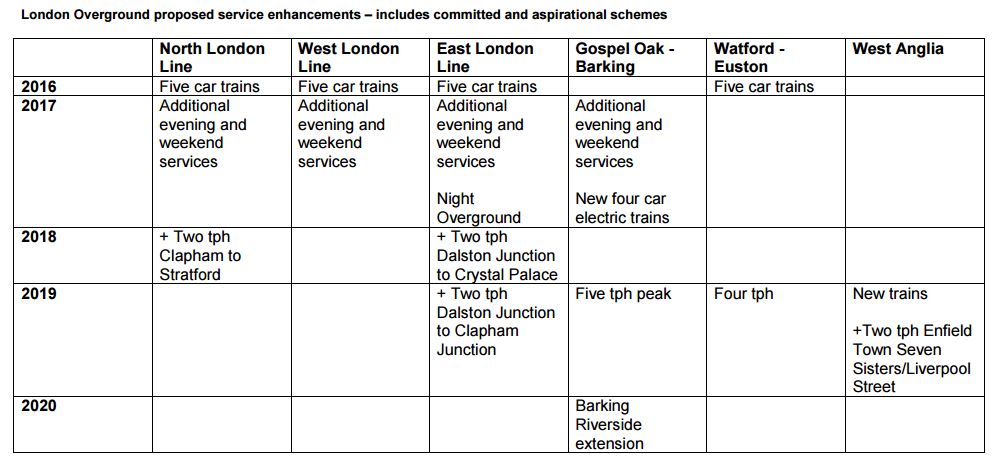
Note that in 2019, it is proposed that two extra trains per hour (tph) are added to services between Liverpool Street and Enfield Town stations.
I was also told at the weekend, a strong rumour, that in 2020, London Overground will be taking over the following services.
- Northern City Line services between Moorgate and Gordon Hill, Hertford North, Stevenage and Welwyn Garden City.
- Services to Hertford East station.
The first has been mooted for some time, but is supposedly stalled because of differences between Chris Grayling and Sadiq Khan. The second was rather a surprise.
So what will be the result of the Hertford East services being the responsibility of the London Overground?
Greater Anglia’s Services
Greater Anglia‘s current services along the West Anglia Main Line (WAML) are as follows.
- Two tph between Liverpool Street and Hertford East stations.
- Two tph between Stratford and Bishops Stortford stations.
- Two tph between Liverpool Street and Cambridge/ambridge North stations.
- Four tph between Liverpool Street and Stansted Airport.
In the past Greater Anglia have run Stansted services to and from Stratford and have said they may do so again.
This means that Greater Anglia run ten tph along the WAML between Tottenham Hale and Broxbourne stations.
Compare this with the measly two tph, that run between Edmonton Green and Cheshunt stations using the alternative Southbury Loop. The only other movements on this line appear to be a few empty stock movements and freight trains. But not many!
Judging by some of the empty stock movements, I suspect that Greater Anglia have problems positioning their extra trains before and after the Peak.
Rolling Stock To Hertford East
Currently, Greater Anglia run eight-car Class 317 trains to Hertford East station. These are 160 metres long and seat nearly 600 passengers in two classes.
Their new Class 720 trains come in two sizes.
- Five cars – 122 metres long, seating 540
- Ten cars – 243 metres long, seating 1100
Could it be that the five-car trains are too small and the ten-car trains are too long for the platforms on the Hertford East Branch?
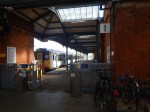
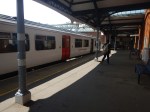
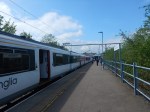
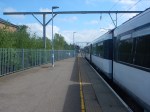
These pictures show that the platforms at Hertford East station are just long enough for two four-car Class 317 trains working as an eight-car formation. I doubt that a ten-car Class 720 train will fit these platforms and it appears that lengthening the platforms could be difficult.
On the other hand, London Overground’s four-car Class 710 trains are the same length as Class 317 trains.
So could it be that Greater Anglia would prefer that they didn’t have a service to Hertford East station?
Liverpool Street Or Stratford?
Crossrail will have one big effect on the planning of services on the WAML and the Lea Valley Lines, in that the new line will call at both Liverpool Street and Stratford stations, when it eventually opens.
Connectivity
It will be a two-stop journey between the two stations, which in addition are both well-connected to the Underground.
There is very little difference in connectivity between the two stations.
Capacity
Liverpool Street is getting to be full and given more services will be run along the Great Eastern Main Line, it could do with some capacity enhancement.
Stratford though has only two platforms connected to the WAML.
But there is the little-used High Meads Loop under the Eastfield Shopping Centre, which has been used in the past to turn Stansted Express trains, when they served Stratford.
Loops like this can easily handle at least 12 tph, as they do in Liverpool with the Wirral Line.
The High Meads Loop was well-designed to accept a lot of trains.
- It is double-track.
- Both tracks have a platform at Stratford capable of accepting a twelve-car Class 745 or Class 720 train.
- Both platforms are wide and step-free with lifts.
- The driver doesn’t have to change ends, when using the loop, so the loop will be efficient.
- An extra stop could be added at Stratford International station.
It is London’s forgotten terminal station.
Operators Would Get Extra Capacity
The two train operators; London Overground and Greater Anglia would gain extra capacity in London.
Travellers Would Choose
If travellers were able to have a choice of London terminals, I suspect that most would choose the one they liked best, but because of Crossrail, it wouldn’t matter if they ended up at the wrong terminal.
Sorting Out West Anglia Main Line And Lea Valley Lines Local Services
I know there needs to be a bit of a sort-out on the WAML to run four tph between Stratford and Meridian Water stations, but could something more radical be on the cards.
Reasonable objectives based on London Overground’s principles would see the following stopping services.
- Four tph between Seven Sisters and Cheshunt stations via Edmonton Green station.
- Four tph between Seven Sisters and Enfield Town stations
- Four tph between Tottenham Hale and Cheshunt stations via Waltham Cross station
- Four tph between Cheshunt and Hertford East stations.
At the Northern end of the route, there would be three terminal platforms controlled by London Overground, one at Cheshunt and two at Hertford East.
The Aventra Effect
The high-performance Aventras, used by London Overground and Greater Anglia, are ready for digital signalling and designed around fast station stops.
The trains should be able to stop at all stations and maintain the current timetable on the route.
So the timetable could become more passenger friendly, with everything station getting four tph in both directions!
Broxbourne Station Could Be Key
The key at the Northern end could be Greater Anglia’s Broxburne station.
- It has four platforms.
- There would be space for an extra platform and/or a turnback for trains from the South.
- Overground services to and from Hertford East station will call.
- It is planned to be the terminal of Crossrail 2.
Services between Liverpool Street and Stratford stations and Bishops Stortford, Cambridge and Stansted Airport generally stop at Broxbourne.
So could we see cross-platform interchanges between London Overground’s local services calling at all stations to London and Greater Anglia’s fast services?
The Hertford East Difficulty!
At present one difficulty, is that the Hertford East Branch can only handle three tph, which it does in the Peak, so running the required four tph might need dualling the single-track section through Ware station.
These pictures show Ware station and the level crossing.
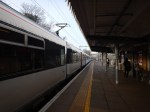

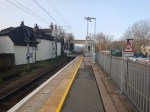


Note.
- The platform can accept a twelve-car train.
- There would be space to install a second platform.
- To the East the single track becomes double after the bridge at the end of the platform and is double all the way to the WAML.
- To the West the single track becomes double after the level crossing at the end of the platform and is double all of the way to Hertford East station.
Laying a second track and adding a second platform at Ware station, is probably the ultimate solution, to provide four tph all day between London and Hertford East.
But I also feel that with precision driving, the nimble Aventras will be able to do four tph, with a procedure something like this.
- The level crossing closes to road traffic.
- A Westbound train arrives in the station and an Eastbound train stops at a signal at the end of the Eastbound track from Hertford East station.
- When the Westbound train has unloaded and loaded the passengers, it leaves the station and takes the Westbound track to Hertford East station.
- When the Westbound train has safely passed the stationary Eastbound train, the points are changed and the Eastbound train moves into the station.
- The level crossing opens to road traffic.
There would be four level crossing closures per hour, which is the same as now, but they could be slightly longer.
I suspect there is a better absolutely safe operating procedure than my naive example.
Eight Tph At Cheshunt Station
As eight tph will be going South from Cheshunt station; four each via Edmonton Green and Waltham Cross, Broxbourne station could turn any that couldn’t be handled at Cheshunt and Hertford East stations.
So we might see the following Northern terminals, if the four tph can run to Hertford East station.
- Four tph at Hertford East; two via Edmonton Green and two via Waltham Cross.
- Two tph at Cheshunt via Edmonton Green
- Two tph at Broxbourne; via Waltham Cross.
All stations between London and Hertford East will get four tph.
Cheshunt station needs a certain amount of rebuilding to make it step-free and possibly remove the level crossing.
A step-free station is essential.
- The station is not a sleepy rural halt.
- Changes between trains from the North to London Overground services mean crossing the footbridge.
- It would give pedestrians, wheelchair users, buggy pushes and others an easy way across the railway, when the level crossing in closed.
Southbound trains from Cheshunt could be.
- Two tph from Cheshunt via Edmonton Green
- Two tph from Hertford East via Edmonton Green
- Two tph from Broxbourne via Waltham Cross
- Two tph from Hertford East via Waltham Cross
Northbound trains from Cheshunt could be.
- Four tph to Hertford East.
- Two tph to Broxbourne.
Judicious timing of Northbound trains could mean that passengers arriving via Edmonton Green at Cheshunt could change to a Hertford East train by walking across the platform.
There are a lot of possibilities to get the best connectivity at the Northern end.
The Southern End
At the Southern End, there will be the following services.
- , Tottenham Hale station will receive four tph from Cheshunt.
- Seven Sisters station will receive four tph from Cheshunt and four tph from Enfield Town.
Both stations will be able to send trains to either Stratford or Liverpool Street.
Seven Sisters Services
Seven Sisters station is easier to sort.
- Half of each group of trains go in each direction.
- Four tph go direct to Liverpool Street stopping at all stations en route.
- Four tph go to Stratford via South Tottenham and Lea Bridge stations.
,Trains to Stratford should turn in the High Meads Loop under Eastfield.
South Tottenham Interchange
This map from carto.metro.free.fr shows the lines at South Tottenham station.
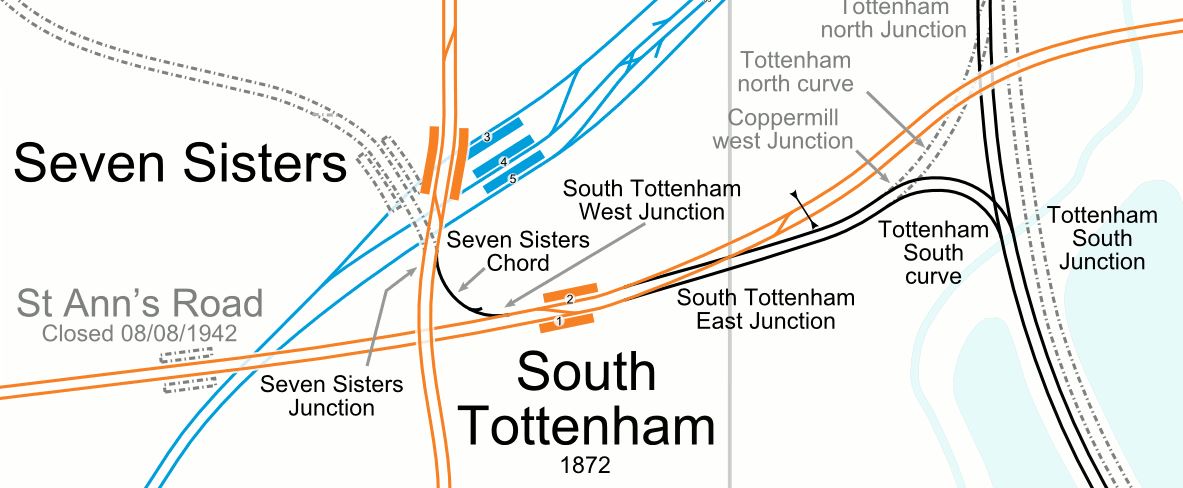
Note.
- The orange line going across the from left to right is the Gospel Oak to Barking Line
- The blue line is the Victoria Line.
- The orange line going down the map is the Lea Valley Line, between Liverpool Street in the South and Cheshunt and Enfield Town stations in the North.
- The single-track; Seven Sisters Chord, which connects the two Overground lines.
- The black line going down the map on the right is the WAML, between Stratford and Lea Bridge stations in the South and Tottenham Hal station in the North.
What is not shown on the map is the massive double-ended Crossrail 2 station, that will link South Tottenham and Seven Sisters stations, which are about five hundred metres apart.
This Google Map shows the area of the two stations.
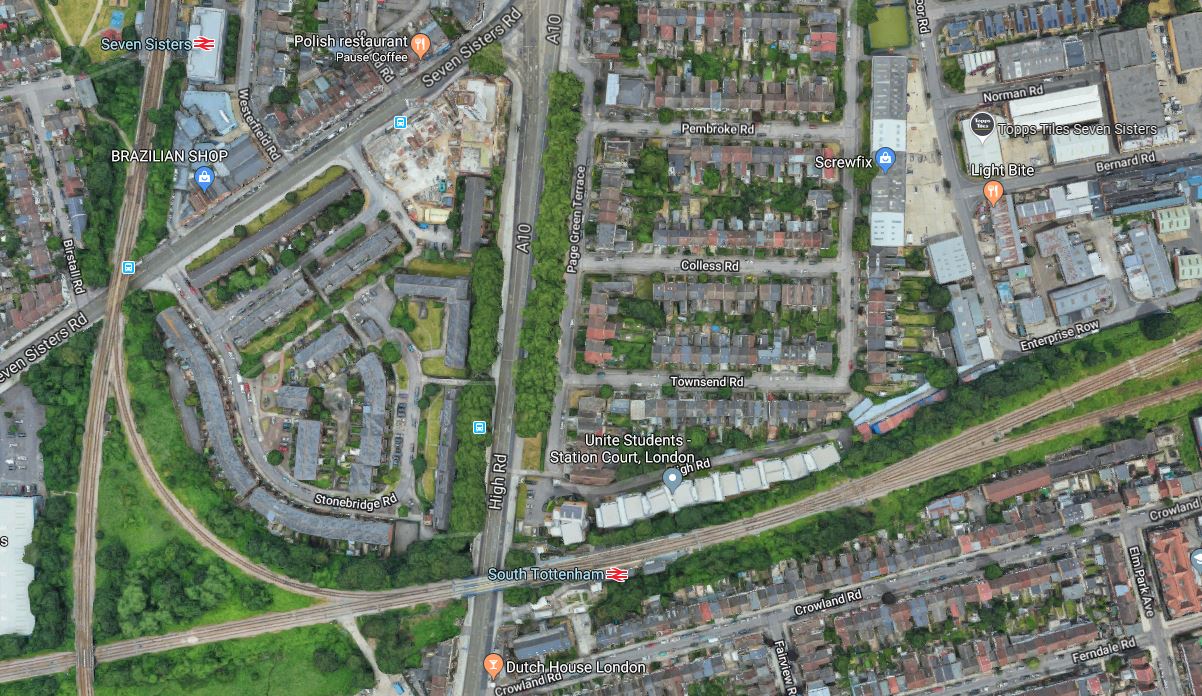
Note how much green space there is alongside the tracks.
If four tph went via South Tottenham and Lea Bridge stations, this would mean that South Tottenham station has the following services.
- Four tph to Barking
- Four tph to Gospel Oak
- Four tph to Stratford
- Two tph to Enfield Town
- Two tph to Broxbourne, Cheshunt or Hertford East.
Timings could be arranged to give a user-friendly interchange at South Tottenham station, which is a step-free station.
Note that it is probably likely, that the Seven Sisters Chord shown in the first map, would need to be improved.
But there is certainly enough space to do it properly!
Tottenham Hale Services
These are trickier, but I believe they could be sorted if the new third track from Meridian Water station was used exclusively for Southbound services going to Stratford.
This would mean that platform usage at Tottenham Hale station would be as follows.
- Existing Platform 1 – Services to Liverpool Street station.
- Existing Platform 2 – Services to Cheshunt, Broxbourne, Stansted Airport and Cambridge.
- New Platform 3 – Services to Stratford station.
Platforms 1 and 3 would be a cross-platform interchange to allow passengers to change terminal.
Splitting Of Stratford And Liverpool Street Services
Stratford and Liverpool Street services would split somewhere North of the new Meridian Water station.
Services to Liverpool Street would include.
- London Overground – Two tph from Cheshunt, Broxbourne or Hertford East.
- Greater Anglia – Two tph from Cambridge/Cambridge North
- Greater Anglia – Four tph from Stansted Airport.
This is much the same as the current timetable, with a change of operator on the Hertford East service.
Services to Stratford would include.
- London Overground – Two tph from Cheshunt, Broxbourne or Hertford East.
- Greater Anglia – Two tph from Bishops Stortford.
If all these services stopped at Meridian Water, Northumberland Park, Tottenham Hale and Lea Bridge stations, the STAR service has been implemented.
These Stratford services would be turned in the High Meads Loop.
As there would be four tph coming to Stratford from Seven Sisters station, this would mean that eight tph were being turned in the loop.
I can see two problems with this arrangement.
- The merging of Northbound trains South of Tottenham Hale station could be tricky.
- The Cambridge and Stansted expresses use the same route to Liverpool Street as London Overground’s Chingford services, as they do now!
Both problems could be lessened by perhaps running half of the Cambridge and Stansted services to Stratford.
This would mean the following.
- Five tph that served the WAML would use Liverpool Street station.
- Seven tph that served the WAML would use Stratford station.
- Eleven tph would need to be turned in the High Meads Loop.
Trains on the High Mead Loop would be as follows.
- London Overground – Two tph to Enfield Town
- London Overground – Two tph to Broxbourne, Cheshunt or Hertford East via Edmonton Green
- London Overground – Two tph to Broxbourne, Cheshunt or Hertford East via Waltham Cross
- Greater Anglia – Two tph to Bishops Stortford
- Greater Anglia – One tph to Cambridge/Cambridge North
- Greater Anglia – Two tph to Stansted Airport
It could be that the expresses could use one track of the High Meads Loop, with the local services using the other.
I also think, that there is sufficient capacity in the High Meads Loop to terminate all services on the WAML at Stratford.
But would that be a step too far?
Possibly for some passengers, but I suspect it would be liked by train operators.
Services Between Tottenham Hale And Broxbourne
Currently, the following services run between Tottenham Hale and Broxbourne stations on the WAML.
- Two tph between Liverpool Street and Hertford East stations.
- Two tph between Stratford and Bishops Stortford stations.
- Two tph between Liverpool Street and Cambridge/Cambridge North stations.
- Four tph between Liverpool Street and Stansted Airport.
This gives a total of ten tph in both directions.
If you go to my first scenario of providing four tph to Cheshunt/Broxbourne/Hertford East, this gives the following services between Tottenham Hale and Broxbourne stations.
- Two tph between Liverpool Street and Hertford East stations.
- Two tph between Stratford and Bishops Stortford stations.
- Two tph between Liverpool Street and Cambridge/Cambridge North stations.
- Four tph between Liverpool Street and Stansted Airport.
- Two tph between Stratford and Broxbourne stations.
The extra service between Stratford and Broxbourne is to ensure that all stations on the route get four stopping services, of which two tph go to either Liverpool Street or Stratford at the Southern end.
This gives a total of twelve tph in both directions.
By adding just two tph, there is a vastly improved stopping service along the WAML, with all stations getting at least a four tph service.
Could The West Anglia Main Line Handle Twelve Tph?
In 2020, Greater Anglia will be running Class 745 and Class 720 trains on this route.
- They will both be 100 mph trains.
- They will have fast station dwell times.
- They may even have level access between platform and train, which will help speed boarding.
- They will have a quality Driver Assist System.
- Electronic in-cab digital signalling is a possibility.
- The WAML may allow some 100 mph running.
- Removing the remaining level crossings would surely speed up services.
The Greater Anglia trains will be limited stop and most will only stop at Tottenham Hale, Cheshunt and Broxborne.
London Overground will also be running Class 710 trains, which will be faster than current trains, with very good dwell times.
So I expect that with new trains, some improvement to the infrastructure, the following will be possible.
- Four tph, which stop at all stations between Tottenham Hale and Broxbourne.
- Six tph, which are limited stop expresses, only stopping at Tottenham Hale and Broxbourne and a couple of other occasional stations.
- Time saving for all services.
- I suspect that the current Stratford to Bishops Stortford service will become limited stop North of Meridian Water station.
It would hopefully be a timetable, that appealed to both passengers and train companies.
Services At Meridian Water
Meridian Water station has been promised four tph to Stratford, that call at Northumberland Park, Tottenham Hale and Lea Bridge stations.
So what services will call at Meridian Water station, in the scenario I have outlined, that follows from four tph between London and Hertford East being transferred from Greater Anglia to London Overground.
It could be something like this.
- Two tph to Hertford East, calling at all stations.
- Two tph to Bishops Stortford, calling at selected stations.
- Two tph to Cheshunt or Broxbourne, calling at all stations.
- Four tph to Stratford, calling at all stations.
- Two tph to Liverpool Street, calling at all stations.
It’s certainly better and more comprehensive than promised.
As Meridian Water will be such an important station, could some of the Cambridge and Stansted services call?
Four-Tracking Of The West Anglia Main Line
This project is needed to both increase capacity to Cambridge and Stansted Airport and in the future for Crossrail 2, which will reach as far as Broxbourne station.
But it will be a very disruptive project, not just for rail users, but for road users, when they close several level crossings.
The Underused Southbury Loop
The limited triple-tracking around Tottenham Hale station has been moderately disruptive at weekends and services have run using the Southbury Loop.
The Southbury Loop is underused and I believe that if services were increased permanently on the diversion route, that it would have the beneficial effects on the WAML.
Extra services could be added to the existing double-track route.
Between Cheshunt and Broxbourne
There is one section that could be easier than most to four-track and that is the section between Cheshunt and Broxbourne stations.
This Google Map shows the line North of Cheshunt station.
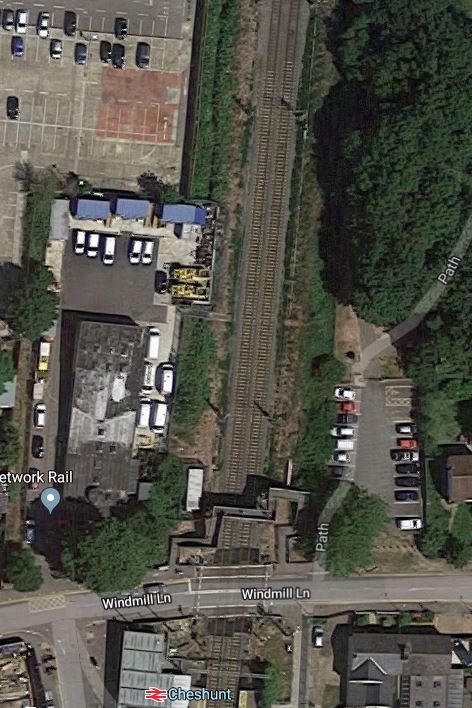
I have flown my helicopter along this route and just as in the map, the two-tracks sit on a wide site, with space for extra tracks.
I am fairly certain,that four-tracking this section would not be difficult.
South Of Cheshunt
If the Southbury Loop were to be used to handle some trains, I think the four-tracking could be done in a more relaxed series of small projects over a longer period of time.
There are various problems.
- Waltham Cross station
- Enfield Lock station and level crossing.
- Brimsdown station and level crossing.
But South from Ponders End station should be a lot easier,
- There are no buildings in the way.
- There will already be a third-track between Tottenham Hale and Meridian Water stations.
- Northumberland Park and Meridian Water stations will be fourth-track ready.
I very much feel, that the four-tracking can be done piecemeal without too much disruption to rail pr road traffic.
Other Issues
Over the years, other issues have been raised with the WAML and Crossrail 2.
A Turnback At Enfield Lock Station
I’ve read in a couple of places, that there could be a bay platform at Enfield Lock station, which could turnback trains to the South..
Under the current plans for the STAR service, this will terminate at Meridian Water station and I’ve heard station staff, say it will be a bi-directional shuttle between Tottenham Hale and Meridian Water stations.
The bi-directional shuttle would.
- Not be using the new infrastructure in a worthwhile manner.
- Bring more passengers to the overloaded Victoria Line.
- Not take passengers to the transport hub at Stratford with Crossrail.
- Not be an efficient use of a train and crew.
I also think, it would struggle for passengers until the building of housing at Meidian Water gets under way.
But supposing, two tracks were built North from Meridian Water to Enfield Lock station, where there would be a bay platform.
- A fourth track would need to be added alongside the third-track between Lea Bridge and Meridian Water stations.
- Another platform would be needed at Tottenham Hale station.
- There is a lot of space on the Eastern side of the WAML, between Meridian Water and Ponders End station.
- Two extra tracks through Brimsdown station, should be possible with the purhase of some low-grade commercial property.
Note that currently a train from Enfield Lock to Stratford takes twenty-four minutes, if it stops at the little-used Angel Road station.
If a train turned in the High Meads Loop at Stratford, it could be back at Enfield Lock within the hour.
- Four tph would be possible.
- This would provide a much needed service for all those who do and will live, work and enjoy themselves allow the Lea Valley.
- Four trains would be needed for a four tph service.
I can understand, why Enfield Lock station has been talked about as a place for a possible bay platform.
There would also be the possibility of extending to Enfield Lock, without closing the level crossing at the station, if a step-free bridge were to be provided.
The station could become a valuable interchange between Greater Anglia’s Bishop’s Stortford services and the four tph to Stratford, stopping at all stations.
Eventually, though, the level crossing will be removed and four tracks will be extended Northwards.
Hackney Downs Issues
If as I proposed the following trains run through Seven Sisters station.
- Two tph between Liverpool Street and Cheshunt/Broxbourne or Hertford East.
- Two tph between Stratford and Cheshunt/Broxbourne or Hertford East.
- Two tph between Liverpool Street and Enfield Town.
- Two tph between Stratford and Enfield Town.
This means that Hackney Downs would have the following services.
- Two tph between Liverpool Street and Cheshunt/Broxbourne or Hertford East.
- Two tph between Liverpool Street and Enfield Town.
- Four tph between Liverpool Street and Chingford.
Would it not be more efficient, if all of these services used the slow tracks into Liverpool Street?
This would give the expresses exclusive use of the fast lines into Liverpool Street.
An Alternative Strategy
Suppose Greater Anglia were to acquire some eight-car trains, then they could carry on as normal.
They wouldn’t actually change the order, but shuffle some of the stock to create eight-car trains.
As the Class 720 trains are cut-and-paste, they can put any number of trailer and motor cars between the two driver cars, a motor car and a pantograph car.
As Greater Anglia could need perhaps ten eight-car trains, this would be
- Driver cars – 20
- Pantograph cars – 10
- Motor cars – 10
- Intermediate cars – 40
The right number of cars can be found in six ten-car trains and four five-car trains..
Have Greater Anglia purchased a set of ten- and five-car trains, that can also be run as a sub-fleet of eight-car trains?
Conclusion
This post has been speculation on a rumour.
But I now believe that Hertford East services can be run under two different methods.
Transfer To The London Overground
The service could transfer to the London Overground.
- London Overground have trains suitable for the service and Greater Anglia doen’t!
- Greater Anglia services may be simpler to operate.
- Ware station needs to be rebuilt to enable a decent service and Funding the work might be easier for London Overground in partnership with Hertfordshire County Council, than for Greater Anglia.
- Large numbers of stations in the London Borough of Enfield get a four tph service.
- By using the Southbury Loop, extra services can be run, without adding to traffic on the West Anglia Main Line.
In a few years time operation of the West Anglia Main Line would be very different.
The Class 710 Trains Can Be Shuffled Into An Eight-Car Sub-Fleet
This is the carry-on as before solution and is possible by just shuffling the required number of trains.
Where The City Of London Leads The Rest Will Follow!
The City of London is a unique Local Authotity, in that very few people live in its area.
C and I used to live in the Barbican with our three boys. It was a very different experience to living anywhere else I’ve lived.
It still functions today as housing and many have lived in the Estate for longer than forty years.
It was one of the first high-quality Local Authority housing schemes in London and it showed if you built quality it worked.
From what I’ve seen elsewhere, other Local Authorities and Housing Associations are building high quality homes for rent.
The City is now tacking another problem in a radical way.
This article on the BBC is entitled The Politics Of Pedestrianisation.
Read the article, of which this is an extract.
Next week, the local authority will take another step towards a bold, radical plan to change the streets in the Square Mile over the next 25 years.
Some streets could be closed to motor vehicles during rush hour and there could be zero emission zones.
There will also be a 15mph speed limit across the district.
The local authority wants to cut the number of vehicles by a quarter by 2030.
The City has consulted workers and residents.
The article says this about the survey.
It found 98% of people travel to the area by walking, cycling or public transport, while 84% think pavements are too crowded.
Four in five people think traffic levels in the City are too high, with 67% saying it contributes to poor air quality, while 59% said it creates an unpleasant street environment.
The authority said it listened to workers and businesses and has to deliver what they want to remain competitive – especially in a post-Brexit world.
It also said it must improve the area to appeal to business and wants to change the priority completely, giving more space to pedestrians and cyclists.
But black cab drivers don’t like it. Surprise! Surprise!
Steve McNamara of the Licensed Taxi Drivers’ Association (LTDA) says pedestrianisation is being dreamt up by middle-class blokes who don’t realise how the milk for their caramel lattes is delivered.
“They are strangling the best city in the planet and they don’t realise people need to have goods and services delivered,” he said.
He thinks the march to pedestrianisation will kill The City.
But I do like it! Look at these pictures I took in the City at about two in the afternoon.
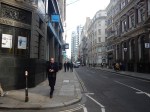


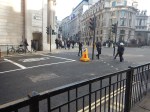

The banning of all vehicles except cyclists and buses has cleared the area around Bank, where it is now a pleasure to walk.
I was actually walking to and from Bank to Leadenhall Market, where I go sometimes for a pleasant lunch in Leon
A year ago, walking would have required a lot of traffic-dodging!
It looks to me, that in a few years time, the City of London will be a square mile of tower blocks and historic alleys and buildings.
- It will be criss-crossed by cycle and pedestrians routes.
- Two or three major routes, will survive for buses and taxis.
- Around the City will be the ring of stations; Aldgate, Bank, Barbican, Blackfriars, Cannon Street, City Thameslink, Fenchurch Street, Liverpool Street, Monument, Moorgate, St. Pauls and Tower Hill.
- The massive Bank and Moorgate/Liverpool Street stations in the heart of the action, will be two of the largest Metro stations in the World.
The City of London will become the Gold Standard for historic cities.
Other UK cities and parts of London like Oxford Street will surely follow.
I do find it strange that the other two big cities in the UK, where walking is pleasant in the centre are Glasgow and Liverpool. Like the City of London, they have underground railways and a river
How Will Greater Anglia/London Overground Use The Third Track On The West Anglia Main Line?
This morning as I often do, I took the 11:00 train between Stratford and Enfield Lock stations.
I like to have a look at progress on STAR, which involves the following.
- A five and a half kilometre third track to the East of the current two tracks of the West Anglia Main Line between Lea Bridge and Angel Road stations.
- A third platform and station improvements at Tottenham Hale station.
- A third platform, removal of a level crossing and complete rebuilding of Northumberland Park station.
- Building of a completely new three-platform station at Meridian Water to replace the current inadequate Angel Road station.
This Google Map shows the location of Meridian Water station with respect to Tesco Extra and IKEA in Glover Drive.
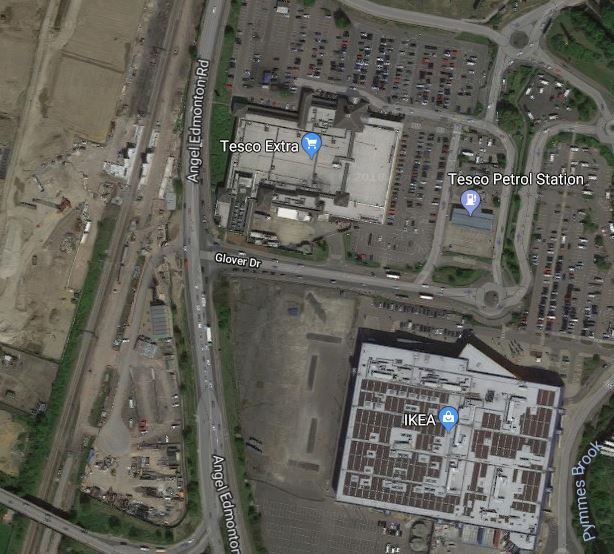
You can just see the concrete foundations of the station and its platforms alongside the West Anglia Main Line to the West of the Tesco Extra.
In Meridian Water Station – 14th June 2018, I show pictures of the station just over two months ago.
There has been steady and worthwhile progess since.
- Meridian Water station now has platforms under construction.
- Northumberland Park station looks like it could be ready before Spurs’ new stadium.
- The lift towers for the footbridge at Tottenham Hale station are being erected.
- I estimate about seventy percent of the third track has been laid.
- All the electrification gantries seem to have been erected and there are even some overhead wires.
The target for finishing the works is said to be May 2019 and I suspect that is achievable.
Use Of The Third Track
It certainly looks like the third track will be ready, so how will it be used?
The Northern End
At the Northern end, the third track appears to finish in a bay platform at Meridian Water station.
Once Angel Road station is closed and reduced to rubble, there would be plenty of space to add a junction, so that trains going South towards Stratford, could use the third track.
This would surely ease operation of the West Anglia Main Line.
Meridian Water Station
Meridian Water station appears to be being built as a three-platform station with provision for a fourth.
From various drawings and notes on the Internet it looks like there will be two platforms on the West Anglia Main Line and a separate bay or through platform to the East.
This map from carto.metro.free.fr shows the relationship of Angel oad and Meridian Water station.
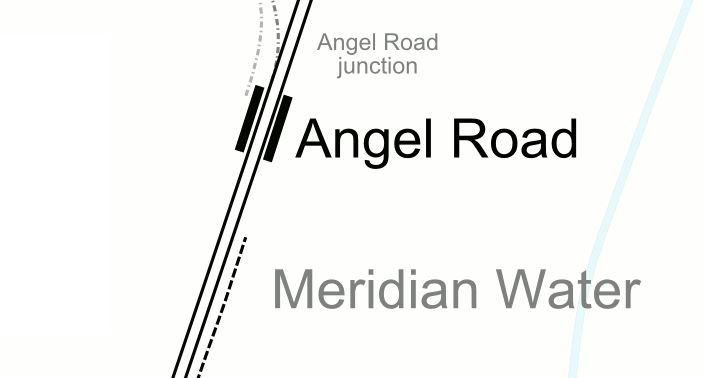
The dotted line on the map is the third track.
I took these pictures from a slow train through the station.

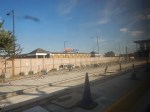
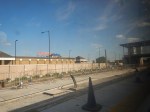

It looks very much like a through platform is being created.
I feel that access to this platform will be in two ways.
- From the North via a junction with the Southbound track of the West Anglia Main Line. This junction could be to the North the current Angel Road station.
- From the South using the new third track.
This would mean that no trains will have to cross the West Anglia Main Line using a flat junction.
I don’t believe that trains can run bi-directionally on the third track, as there is not enough time in an hour for four trains to shuttle between Lea Bridge and Meridian Water.
So that means all services calling at Meridian Water will go further up the Lea Valley to turn back.
Using The Third Platform At Tottenham Hale Station
I think it is likely that the current two platforms will be used as follows.
- Platform 2 – Northbound trains
- Platform 1 – Southbound trains to Liverpool Street
It would be logical that the new third platform would handle Southbound trains to Stratford.
As Platform 1 and the new platform share an island, passengers will have a step-free cross-platform interchange, if they need to go to the alternative destination.
The following journey times should be noted.
- Tottenham Hale to Stratford currently takes 14 minutes
- Tottenham Hale to Liverpool Street currently takes between 14 and 17 minutes
- Liverpool Street to Stratford will take eight minutes on Crossrail
I suspect a lot of passengers will change to a direct train.
It could also mean that an ideal service would see the same frequency of trains at both platforms.
The Southern End
At the Southern end, the third track joins the West Anglia Main Line going towards Stratford, but there is also a crossover to allow trains coming from Stratford to use the third track.
Is The Third Track Going To Be Bi-Directional?
Loops like this third track are often signalled to be bi-directional, to ease operation. But as I said earlier, I think the third track is too long to operate in that way all the time with passenger services.
What Will Be The Operating Speed Of The Third Track?
I have watched the third track being constructed and it is totally new.
- All bridges have been replaced with new structures.
- The track is fully electrified.
- There appear to be no junctions, except at the two ends.
Everything certainly looks professional to my untrained eye.
The operating speed will probably be determined by the time set for the driver to take the train between stations on the line.
But the track has surely been designed to minimise the time between Meridian Water and Stratford.
Could The Third Track Be Extended Northwards?
The length of the third track is 5.5 km.
Could the third track be extended to the North?
If Crossrail 2 is built, there will be a need to make the route four tracks.
- Two fast tracks for the expresses between London, Stansted and Cambridge.
- Two slow tracks for Crossrail 2 as far as the terninus at Broxbourne.
These are my observations
- Looking from both a train and on Google Map, it appears that it will be a tight fit to squeeze in two tracks.
- There is the serious problems of the two level crossings at Brimsdown and Enfield Lock stations.
- Waltham Cross station seems very tight too.
But I do think, that with a clever redesign at the three troublesome stations, that a third track, but not necessarily a fourth can be squeezed in as far as North as Broxbourne, which would be another 11.2 miles.
Although in places, like these pictures taken just South of Tottenham Hale station show, there may be plenty of space for two tracks.
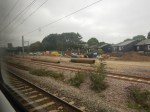
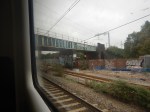
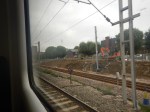
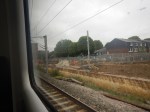
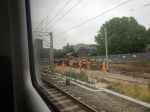
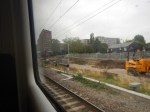
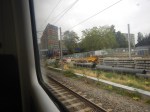
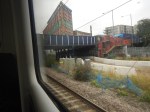
I suspect that to put in the fourth track will mean that the bridge at Ferry Lane will need to be rebuilt.
But it does appear that in building the third track, the builders are making sue there is space for a fourth track to be added in a few years.
Currently, How Many Calls Are There At Each Station?
These figures are calculated from the current timetable.
Lea Bridge
- Two trains per hour (tph) – Stratford to Bishop’s Stortford
Two tph stop in both platforms.
Tottenham Hale
- Two tph – Liverpool Street to Hertford East
- One tph – Liverpool Street to Cambridge
- One tph – Liverpool Street to Cambridge North
- Four tph – Liverpool Street to Stansted Airport
- Two tph – Stratford to Bishop’s Stortford
Ten tph stop in both platforms.
Northumberland Park
- Two tph – Stratford to Bishop’s Stortford
Two tph stop in both platforms.
In addition, eight tph pass through both platforms without stopping.
Meridian Water
- Two tph – Stratford to Bishop’s Stortford
Two tph stop in both platforms.
In addition, eight tph pass through both platforms without stopping.
Ponders End
- Two tph – Liverpool Street to Hertford East
Two tph stop in both platforms.
In addition, eight tph pass through both platforms without stopping.
Brimsdown
- Two tph – Liverpool Street to Hertford East
Two tph stop in both platforms.
In addition, eight tph pass through both platforms without stopping.
Enfield Lock
- Two tph – Liverpool Street to Hertford East
- One tph – Stratford to Bishop’s Stortford
Three tph stop in both platforms.
In addition, seven tph pass through both platforms without stopping.
Waltham Cross
- Two tph – Liverpool Street to Hertford East
- Two tph – Stratford to Bishop’s Stortford
Four tph stop in both platforms.
In addition, six tph pass through both platforms without stopping.
Cheshunt
- Two tph – Liverpool Street to Hertford East
- One tph – Liverpool Street to Cambridge
- One tph – Liverpool Street to Cambridge North
- Two tph – Stratford to Bishop’s Stortford
Six tph stop in both platforms.
In addition, four tph pass through both platforms without stopping.
Broxbourne
- Two tph – Liverpool Street to Hertford East
- One tph – Liverpool Street to Cambridge
- One tph – Liverpool Street to Cambridge North
- Two tph – Stratford to Bishop’s Stortford
Six tph stop in both platforms.
In addition, four tph pass through both platforms without stopping.
Harlow Town
- One tph – Liverpool Street to Cambridge
- One tph – Liverpool Street to Cambridge North
- Two tph – Liverpool Street to Stansted
- Two tph – Stratford to Bishop’s Stortford
Six tph stop in both platforms.
In addition, two tph pass through both platforms without stopping.
Bishop’s Stortford
- One tph – Liverpool Street to Cambridge
- One tph – Liverpool Street to Cambridge North
- Two tph – Liverpool Street to Stansted
- Two tph – Stratford to Bishop’s Stortford
Four tph stop in both platforms.
Two tph would terminate at the station.
In addition, two tph pass through both platforms without stopping.
A Summary Of Current Services
This is summary of stops at the selected stations.
- Lea Bridge – 2 tph
- Tottenham Hale – 10 tph
- Northumberland Park – 2 tph
- Meridian Water – 2 tph
- Ponders End – 2 tph
- Brimsdown – 2 tph
- Enfield Lock – 3 tph
- Waltham Cross – 4 tph
- Cheshunt – 6 tph
- Broxbourne – 6 tph
- Harlow Town – 6 tph
- Bishop’s Stortford – 6 tph
Note.
- To say the least service is a bit patchy, with some stations getting a much better service than others.
- London Overround, Merseyrail and others feel that a service of four tph is highly desirable and attracts passengers.
The service definitely needs improvement.
STAR Services
It is certainly intended that four tph, will be run between Stratford and Meridian Water stations calling at Lea Bridge, Tottenham Hale and Northumberland Park stations.
Current Services
Currently, this service is provided at a frequency of two tph by Greater Anglia, who extend the service to Bishop’s Strortford station.
There are various ways that this could be increased to four tph
Possible Northern Terminals
As I said earlier to avoid train-slowing flat junctions, STAR services must terminate North of Meridian Water station.
I think there are these possibilities.
- Bishop’s Stortford, which currently handles two tph in the bay platform 3.
- Broxbourne which is a large station with 8 platforms and has been earmarked as the terminal for Crossrail 2.
- Hertford East has platform space, but there may not be the capacity for the trains on the Hertford East Branch.
Passenger numbers will drive the choice, but I suspect all three terminals have their merits.
In the following sub-sections I’ll look at each terminus.
Two Extra Trains To Bishop’s Stortford
I will assume these services will call at the same stations as the current two trains.
This is summary of stops at the selected stations.
- Lea Bridge – 4 tph
- Tottenham Hale – 12 tph
- Northumberland Park – 4 tph
- Meridian Water – 4 tph
- Ponders End – 2 tph
- Brimsdown – 2 tph
- Enfield Lock – 4 tph
- Waltham Cross – 8 tph
- Cheshunt – 8 tph
- Broxbourne – 8 tph
- Harlow Town – 8 tph
- Bishop’s Stortford – 8 tph
Note.
- Enfield Lock now has the preferred four tph.
- Ponders End and Brimsdown probably need more services.
- Are there too many services at Harlow Town and Bishop’s Stortford?
But generally, it is a better distribution than now!
Two Extra Trains To Broxbourne Or Hertford East
I will assume these services will call at the same stations as the current two trains, that run between Stratford and Bishop’s Stortford.
This is summary of stops at the selected stations, which will be the same for both destinations.
- Lea Bridge – 4 tph
- Tottenham Hale – 12 tph
- Northumberland Park – 4 tph
- Meridian Water – 4 tph
- Ponders End – 2 tph
- Brimsdown – 2 tph
- Enfield Lock – 4 tph
- Waltham Cross – 8 tph
- Cheshunt – 8 tph
- Broxbourne – 8 tph
Note.
- Enfield Lock now has the preferred four tph.
- Ponders End and Brimsdown probably need more services.
- There will be no increase in frequencies North of Broxbourne.
Operational needs and passenger numbers will decide if these are better destinations.
Use Of The High Meads Loop At Stratford
The High Meads loop under the Eastfield Shopping Centre was designed to turn trains.
This map from carto.metro.free.fr shows the loop.

On the map it is the horeshoe-shaped double track shown in black.
- , It goes through Platforms 11 and 12 in Stratford station.
- Currently, Platform 11 is used exclusively as a terminal for the two tph between Stratford and Bishop’s Stortford.
- Currently, Platform 12 is not used and the track is used to take trains to and from the Orient Way sidings
- Both ends of the loop join together just to the South of the Orient Way sidings and Lea Bridge station.
- In the past it has been used to turn Stansted Expresses, which used Platform 12 according to the signs still in place.
- I believe it would be possible to build a platform on the loop to serve Stratford International station and the Northern part of the Olympic Park.
In my view it is wasted fully-working infrastructure.
The Wirral Line Loop Under Liverpool
The most important rail loop in the UK is the loop of the Wirral Line under Central Liverpool.
- The loop is single-track with three single-platform stations
- This loop handles fourteen tph.
- The loop is built for full-size trains.
- Trains take eight minutes to go round the loop from Liverpool James Street station and fourteen minutes from Birkenhead Hamilton Square station on the other side of the Mersey.
It was built in the early 1970s and I’m sure the designers of the High Meads Loop were influenced strongly by the track layout in Liverpool.
The Wirral Line Loop showcases the major examples of this type of track layout.
- The driver just keeps driving and doesn’t have to change ends.
- A single terminal platform can handle a maximum of perhaps 4-6 tph, whereas a single platform on a loop can handle at least 14 tph.
- Stations can be provided at several places on the loop, where they are needed.
A loop is a very fast and simple way to turn trains.
Time Saving At Stratford Using The High Meads Loop
The 06:34 from Bishop’s Stortford stops at Tottenham Hale at 07:29, Lea Bridge at 07:33 and Stratford at 07:43.
The train then forms the 08:04 from Stratford, which stops at Lea Bridge at 08:10, Tottenham Hale at 08:18 and terminates at Bishop’s Stortford at 09:02.
So the train has taken thirty-seven minutes between the two calls at Lea Bridge station on a modern double track railway.
If the train loaded and unloaded passengers at Platform 11 at Stratford, I suspect that this time could be reduced to under twenty minutes, if the train continued round the High Meads Loop.
Even if there was an extra station on the loop to serve Stratford International station and the Northern part of the Olympic Park, I suspect that a saving on twenty minutes could be made.
Greater Anglia would be a big beneficiary. Currently the train leaves Bishop’s Stortford at 06:34 and arrives back at 09:02, which means a total trip time of 148 minutes for an out-and-back journey with ten intermediate stops both ways.
With a bit of time saving and the new Class 720 trains, I suspect that with the turnround time at Bishop’s Stortford added in, that a train could do the full trip within two and a half hours.
This would mean that ten trains would be needed for a four tph service between Stratford and Bishop’s Stortford.
Take off the twenty minutes saved by the High Meads Loop and the minutes saved by the new trains and I believe that well-driven trains could do the full trip in two hours
This would mean that eight trains would be needed for a four tph service between Stratford and Bishop’s Stortford.
Stansted Airport To Stratford
How much time would be saved if Stansted Airport trains went to Stratford and used the High Meads Loop?
The fastest trains take forty-seven minutes between Liverpool Street and Stansted, with about fourteen minutes needed for the short stretch between Liverpool Street and Tottenham Hale.
Using the High Meads Loop at Stratford would probably mean a similar journey time, as from Liverpool Street, but there would be other advantages, disadvantages and score draws.
- Both platforms used by Stansted Expresses would be step-free.
- Train tracks to Stratford are probably less likely to delay.
- Walking routes at Stratford might be shorter.
- Both Liverpool Street and Stratford will be served by Crossrail.
- Stratford could have links to Highspeed services to Kent.
Greater Anglia would be a big winner, as they would have a better train utilisation.
What Length Of Trains Could Use The High Meads Loop?
The only restriction will be the length of platforms at Stratford, Lea Bridge and Tottenham Hale.
Without getting my tape measure out, I suspect they are all capable of taking a twelve-car Class 317 train, which is around 240 metres long.
Ten-car versions of Greater Anglia’s new Class 720 trains are 243 metres long.
I would be very surprised if the platforms couldn’t accept these long trains.
What Would Be The Ultimate Capacity Of The High Meads Loop?
Consider.
- The Wirral Line Loop under Liverpool handles fourteen tph.
- More complicated tunnels under London like Crossrail, the East London Line and Thameslink are planned to handle 24 tph.
- Modern digital signalling will be applied in the next couple of decades to the West Anglia Main Line.
Consider.
- The Southbound third track and the route to Stratford from Lea Bridge can probably easily handle fifteen tph or a train every four minutes.
- Platform 11 at Stratford with perhaps some escalators, could probably handle fifteen or even twenty tph, as do stations like Canada Water and several stations on Thameslink and the Wirral Line.
- Northwards from Stratford, there is probably a total limit of twelve tph along the Lea Valley, that could be increased by removing level crossing and modern signalling.
I suspect that the ultimate capacity is way in excess of the number of services that need to be run from Stratford up the West Anglia Main Line.
Using The High Meads Loop To Take Pressure From Liverpool Street
Liverpool Street is crowded.
- Some platforms can’t accept full length trains.
- West Anglia services crawk between Liverpool Street and Tottenham Hale at a speed of not much more than 40 mph at times.
- The two operators; London Overground and Greater Anglia want to add additional services to the station.
- c2c also want to serve the station, as they have capacity problems at Fenchurch Street.
However, future developments will make Stratford a viable alternative to Liverpool Street.
- Crossrail will provide a high-capacity service linking both stations to the Canary Wharf, Heathrow and the West End.
- Better access to the Central Line will happen.
- Stratford has access to the important Jubilee Line.
- Stratford will be able to take advantage of Docklands Light Railway developments.
- Tottenham Hale station will have better interchange to the Victoria Line.
So why not move some services from the West Anglia Main Line to the High Meads Loop?
What Services Could Be Transferred From Liverpool Street To The High Meads Loop?
At present, all stopping trains between London and Bishop’s Stortford, start from Stratford and I can see this continuing after the third track opens.
I could also see extra services on this route to deliver the promised four tph to Meridian Water and Nothumberland Park.
Four tph can probably use Platform 11 st Stratford, but looking at the smooth unhurried operation of the Wirral Line Loop at Liverpool, I suspect that the High Meads Loop will be used.
Looking at all the other services between Liverpool Street and Tottenham Hale, only the two tph between Liverpool Street and Hertford East, stop at another station, which is South of Tottenham Hale.
So it would probably not be sensible to transfer theseHertford East services to the High Meads Loop, but it might be a good idea to add two tph all day between Stratford and Hertford East, to create a four tph service to Hertford East with two tph from both Southern terminals.
Some services between Liverpool Street and Cambridge and between Liverpool Street and Stansted might be augmented with more services or moving the services to the High Meads Loop at Stratford.
I would suggest that about half the services went to Liverpool Street and terminated as they do now and the rest used the High Meads Loop.
This would mean that those, who’d caught the wrong train or changed their destination, could just change at Tottenham Hale by walking across the island platform.
I was on a train going South to Liverpool Street recently, when I changed my mind and transferred to a Stratford train. As I inew a Stratford train was close behind, I only had to wait a few minutes.
Note that, if there are six trains on both branches, then the maximum wait would be ten minutes.
Examining A Possible Timetable
This is definitely my speculation, but I am trying to show what is possible!
I also very much believe that Network Rail, Greater Anglia and London Overground will come up with something much better.
A Few Rules
I am using these rules to guide me in my thinking.
- All trains going to Stratford use the High Meads Loop and Platform 11 at Stratford.
- No station gets an inferior service to that it gets at the present time.
- All Southbound trains for Stratford use the new third track between Meridian Water and Lea Bridge Junction.
I think that this could be a good mix of services.
- One tph Liverpool Street to Cambridge
- One tph Liverpool Street to Cambridge North
- Two tph Liverpool Street to Hertford East
- Four tph Liverpool Street to Stansted
- Four tph Stratford to Bishop’s Stortford
- Two tph Stratford to Hertford East
- Two tph Stratford to Stansted
Note.
- Greater Anglia have said they will run a Stratford to Stansted service from 2019.
- The two extra Stratford to Bishop’s Stortford and Hertford East services will have similar calling patterns to the existing services.
- Eight tph goes to and from both Liverpool Street and Stratford.
- Currently, eight tph run between Tottenham Hale and Liverpool Street.
- Based on the my observations of the relaxed operation of the Wirral Line Loop under Liverpool, I feel the capacity of the High Meads Loop could be as high as sixteen tph.
- Calling patterns will be adjusted to improve frequencies at Ponders End and Brimsdown stations
- The only other passenger trains on the route are two tph between Stansted Airport and Cambridge.
The number of trains running on each section of track would be as follows.
- Eight tph – Liverpool Street to Tottenham Hale
- Eight tph – Stratford to Tottenham Hale – Southbound trains use the third track where is has been added.
- Sixteen tph – Tottenham Hale to Broxbourne – Southbound trains use the third track where is has been added.
- Twelve tph – Broxbourne to Bishop’s Stortford
- Eight tph – Bishop’s Stortford to Stansted Airport
- Six tph – Stansted Airport to Cambridge
I’m not sure if this would be achievable, but there are several double-track main lines in the country, that handle at least sixteen tph.
Extra Services On The Lea Valley Routes Of The London Overground
The London Overground services from Liverpool Street to Cheshunt and Enfield Town have the following characteristics.
- A frequency of two tph.
- Extra peak hour services.
- Both services pass through Hackney Downs and Seven Sisters stations.
London Overgriound probably want to add two extra tph to both routes to increase the frequency to four tph. Unfortunately, the crowded lines South of Seven Sisters and a full Liverpool Street station, probably make this difficult.
Look at this map from carto.metro.free.fr, which shows the lines South of Tottenham Hale and Seven Sisters stations.
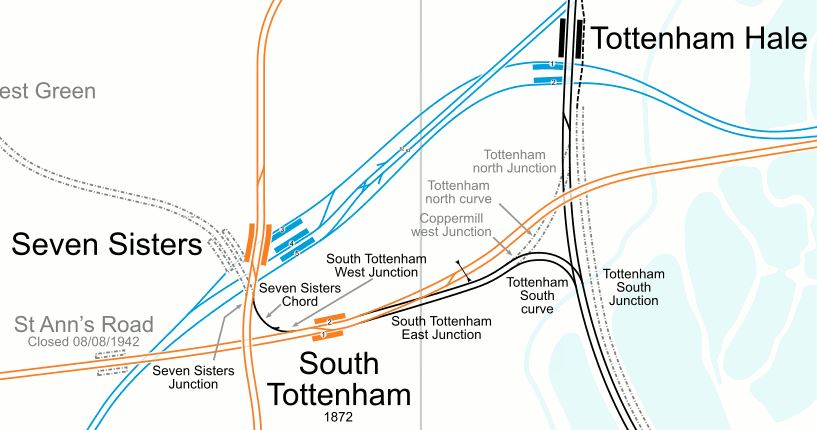
South Tottenham station is on the Gospel Oak to Barking Line, with the following connections.
- At the Western end of the station, the Seven Sisters Chord connects the station to the Lea Valley Line to Cheshunt and Enfield Town.
- At the Eastern end of the Tottenham South Curve connects the station to the line to the High Meads Loop at Stratford.
Would it be possible to run the extra two tph from both Cheshunt and Enfield Town to the High Meads Loop?
If it is possible, then the following frequencies will be achieved.
- Four tph between Cheshunt and Edmonton Green
- Four tph between Enfield Town and Edmonton Green
- Eight tph between Edmonton Green and Seven Sisters.
- Four tph between Seven Sisters and Stratford.
But more importantly, it will create more routes for East London’s Duckers-and-Divers to challenge the clock.
- Large parts of Enfield and Haringey now get a direct connection to Stratford.
- The new White Hart Lane station will have a direct connection to Stratford.
- Stratford to stations on the Gospel Oak to Barking Line is now just a step-free change at South Tottenham station.
I also wonder how many new sites for housing will become viable because of all the new transport links.
Future Developments
There are several developments planned or proposed, that will affect traffic on the West Anglia Main Line.
Track Improvements
The mainly two-track West Anglia Main Line has a maximum operating speed of 100 mph, but travelling the line over the last few days, at times we were only travelling at about 50 mph for long periods.
So I suspect that the average operating speed could be increased.
There are also several level crossings, including those at Brimsdown, Enfield Lock and Cheshunt on the busiest Southern section of the route..
Digital Signalling
Modern digital signalling on the West Anglia Main Line must allow more trains to be squeezed into the timetable.
New Trains
The current trains that work the West Anglia Main Line are Class 379 and Class 317 trains.
Both trains are 100 mph trains although the Class 317 trains are now nearly forty years old.
They are being replaced with Class 720 and Class 745 trains, which although they are also 100 mph trains, may offer advantages, because they are newer designs.
- Better acceleration and smoother regenerative braking.
- Easier passenger entry and exit.
- Shorter dwell times at stations.
- Better passenger comfort and facilities.
But crucially, they will be able to take advantage of the modern digital signalling.
I think it is very likely that the new trains will speed up services on the West Anglia Main Line.
I also think that the combination of digital signalling and new trains, that are capable of using it, will allow higher frequencies of trains to be run on the West Anglia Main Line.
A Possible Pattern Of West Anglia Line Services
Could we see the following in the future?
- London Overground services on the Lea Valley Lines use Liverpool Street, as they do now.
- Greater Anglia services on the West Anglia Main Line to Bishop’s Stortford, Cambridge, Hertford East and Stansted Airport are split between Liverpool Street and Stratford.
- Stratford services use the High Meads Loop and stop at either Platform 11 or 12 at Stratford.
It would certainly increase terminal capacity at the Southern end of the West Anglia Main Line and free up platform space in Liverpool Street.2 ru
.Conclusion
I wouldn’t be surprised to see the following.
- Twenty tph up and down the West Anglia Main Line.
- Direct services up the West Anglia Main Line to Norwich via Cambridge using bi-mode Class 755 trains.
- Extra services between Stratford and Cambridge, Hertford East and Stansted.
- Services are adjusted so that each station South of Broxbourne gets four tph or more.
Note that I haven’t mentioned adding a fourth track.
I believe that my calculations show it might not be needed to achieve the required intensive service on the West Anglia Main Line.
Constipation At Liverpool Street Station
My bus got struck in traffic at Liverpool Street station yesterday. So I walked.
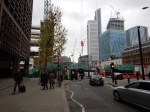
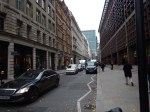
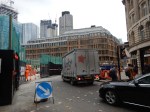
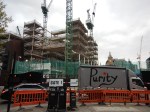
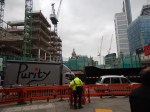
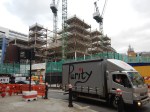
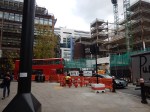
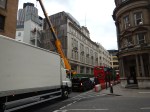
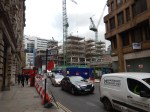
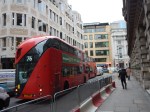

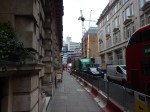
Crossrail construction is the problem, so hopefully time will cure it.
London’s First Underground Roller Coaster
This picture shows a cross-section of the massive Liverpool Street Crossrail station, which will connect Moorgate and Liverpool Street stations when it opens in December 2018.
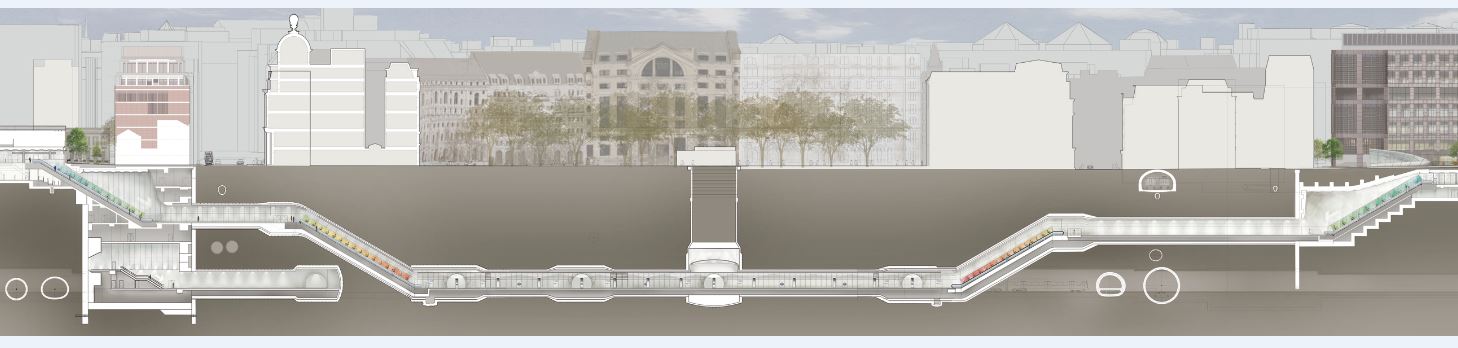
Note.
- Moorgate station is on the left.
- Liverpool Street station is on the right.
- In the middle looking like a giant juicer is the ventilation shaft in Finsbury Circus.
- The Crossrail tunnels, which consist of two running tunnels and a pedestrian walkway between them are at the deepest level.
- There are escalators and lifts all over the place.
Suppose you are walking from street level at Liverpool Street station to street level at Moorgate station in heavy rain and you don’t want to get wet.
You would take the following route.
- Enter Liverpool Street Underground station.
- Take the escalators down from street level to the intermediate level.
- Walk along the passage and take the escalators down to the Crossrail level.
- Walk along the central pedestrian walkway between the two Crossrail running tunnels.
- Take the escalators up to the Intermediate level.
- Take the escalators up to street level in Moorgate Underground station.
You would actually walk a shorter distance, than you do now, as the four escalators would carry you forward.
In Liverpool Street Crossrail Station Disentangled, I showed this schematic of the station complex.
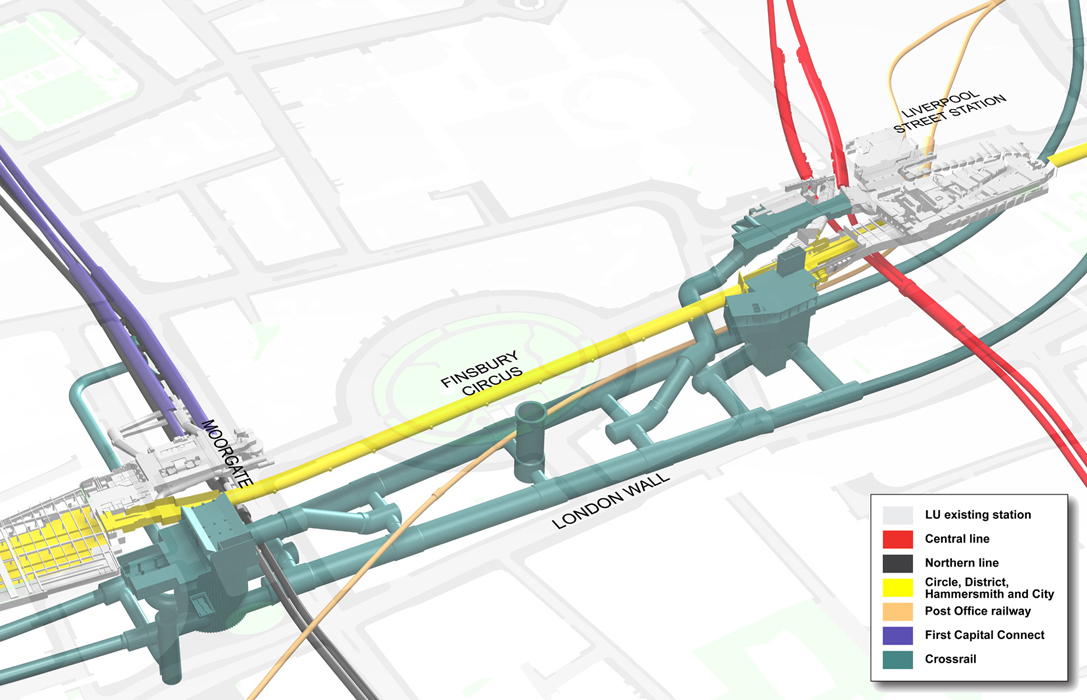
Note how the Northern Line passes through Moorgate station and the Central Line passes through Liverpool Street station, both at right-angles to Crossrail.
This image enlarged from the first shows a cross-section of Moorgate station.

Note the two circles under the escalator, which I suspect are the tunnels for the Northern Line.
There is probably some intricate spaghetti at this end of the station connecting the Bank branch of the Northern Line to Crossrail, in addition to the escalators.
But it means that if you want to go from Liverpool Street station to the Northern Line, you’ll descend to Crossrail and then ascend to the Northern Line.
This will be probably easier than the current long walk and the escalator descent at Moorgate station.
This image enlarged from the first shows a cross-section of Liverpool Street station end of the Crossrail station.
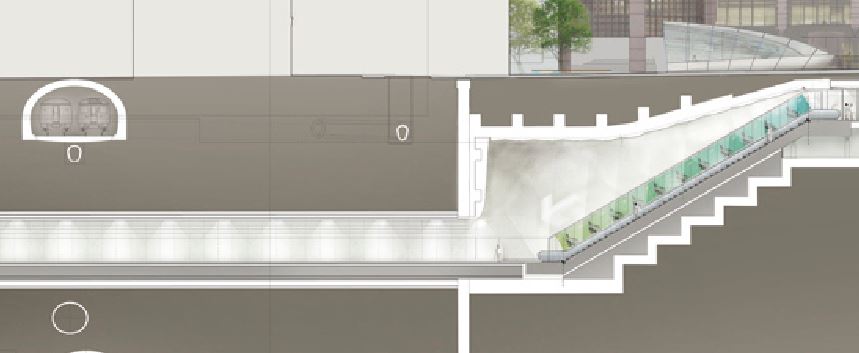
Note.
- The glazed entrance to the station.
- The Central Line tunnels.
Again, I suspect the spaghetti is intricate.
But from the schematic it would appear there’s a good link from the central tunnel to the Central Line.
Conclusion
I hope the signage and information will be good.
17 Tube Stations That Face Chronic Overcrowding If Crossrail 2 Is Stopped
The title of this post is the same as that of an article in today’s Standard.
This is the first two paragraphs.
Hundreds of thousands more Londoners will suffer chronic overcrowding on the Tube if Crossrail 2 does not go ahead, it was claimed today.
Transport for London released a list of 17 Underground stations that could buckle under the strain of too many commuters within a few years.
It then lists the stations.
- Euston
- King’s Cross St. Pancras
- Liverpool Street
- London Bridge
- Victoria
- Waterloo
- Finsbury Park
- Stockwell
- Stratford
- Oxford Circus
- Highbury & Islington
- Clapham Common
- Clapham North
- Clapham South
- Holborn
- Warren Street
- Leicester Square
It then quotes Caroline Pidgeon, who obtained the list, as follows.
Overcrowding on the Underground is already a daily battle, with many passengers facing regular delays to simply get through barriers at stations.
Unless Crossrail 2 is built these delays will increasingly build up until drastic measures are necessary at 17 key Tube stations, not to mention Clapham Junction railway station.
“Planning ahead for Crossrail 2 is not an optional extra for London’s transport network but of vital importance to keep London moving.
She has certainly highlighted a serious problem.
Call For Crossrail 2
Two years ago to the day, I wrote a post called Call For Crossrail 2 in response to a letter in The Times, from a wide cross section of business leaders calling for a start to be made on the line.
In the post, I talked about improving various stations, just by building Crossrail 2, so in the following notes on the list of crowded stations, I will refer to this post several times in the following.
Euston
Euston tube station is a particular problem in that in the next decade or so, the following will or could happen.
- HS2 will arrive at the station.
- Euston main line station will be rebuilt.
- Crossrail 2 will pass under the station.
- A connection will be created to Euston Square station for the Circle and Metropolitan Lines.
- There might even be an extension of the Docklands Light Railway to Euston.
- Step-free access must be added for all platforms.
Hopefully, the rebuilding for whichever comes first of HS2 or Crossrail 2, will make provision for even the most fanciful of expansions.
One Transport for London engineer told me that one of the main reasons for building HS2 and terminating it at Euston, is to be able to sort out the dreadful Euston tube station.
Kings Cross St. Pancras
Kings Cross St. Pancras tube station had a pretty good makeover around the time of the 2012 London Olympics, but it does suffer congestion and travellers have to walk long distances.
The Wikipedia entry for Kings Cross St. Pancras tube station has a section for Crossrail 2. This is said.
Since 1991, a route for a potential Crossrail 2 has been safeguarded, including a connection at King’s Cross St Pancras and Euston, forming the station Euston King’s Cross St Pancras. The proposed scheme would offer a second rail link between King’s Cross and Victoria in addition to the Victoria line. The locations for any new stations on the route will depend on the loading gauge of the final scheme. In the 2007 safeguarded route, the next stations would be Tottenham Court Road and Angel.
There is also a proposal to reopen the closed York Road tube station. In the Wikipedia entry for York Road station under Proposed Reopening, this is said.
One of London’s largest redevelopment projects, King’s Cross Central, began construction in 2008 across the road from the station. Islington council and Transport for London commissioned a study in 2005 to consider the possible reopening of the station. At the same time, however, it was recognised that other transport priorities reduced the likelihood of such a project moving forward in the near future. The site would need extensive overhauls to bring the station up to modern day standards, at a cost estimated at £21 million in 2005. Local political groups have been keen to see the station reopened in order to reduce passenger congestion at King’s Cross St. Pancras and to encourage development in the surrounding community. The Islington Liberal Democrats advocated the reopening of the station in their 2006 local election manifesto, and at least one candidate for the Islington Conservative Party similarly campaigned for the station to be reopened. However, to date, the reopening proposal has not been taken forward.
I wonder if York Road tube station will ever be reopened.
Liverpool Street
The Liverpool Street station complex will be even bigger and busier after Crossrail opens.
The main difference will be that the current Shenfield Metro will now disappear into the ground at Stratford and go under Central London to Heathrow and Reading.
Crossrail 2 will effectively channel the Lea Valley services, that current go into Liverpool Street station under London to emerge in the Wimbledon area.
Effectively, Crossrail and Crossrail 2 major effect on Liverpool Street station are to free up capacity in both tracks and platforms, thuis allowing more longer distance services to use the station.
London Bridge
London Bridge station is being rebuilt and expanded, but little seems to be planned for London Bridge tube station to cope with more passengers.
In Call For Crossrail 2, I said this about Crossrail 2 and the Northern Line.
Crossrail 2 will have interchanges with the Northern Line at Angel, Kings Cross St. Pancras, Euston, Tottenham Court Road, Tooting Broadway and possibly Clapham Junction. So it looks like that Crossrail 2 will certainly make journeys easier for users of the Northern Line.
This should mean that travellers on the Northern Line will be able to avoid a congested London Bridge tube station.
Victoria
Victoria tube station is being extended and rebuilt, which should result in sufficient capacity for more than a few years.
In Call For Crossrail 2, I said this about Crossrail 2 and the Victoria Line.
Crossrail 2 will effectively by-pass the central part of the Victoria Line as the two lines connect at Tottenham Hale, Seven Sisters, Kings Cross, Euston and Victoria.
This should take some of the pressure from Victoria tube station.
Waterloo
Waterloo tube station is a very busy tube station, as it has to cope with all the passengers using Waterloo station.
Crossrail 2 will allow passengers to bypass Waterloo, when travelling to and from Central London.
However, three major improvements will be delivered this year.
- The old Eurostar platforms are being brought back into use.
- Extra capacity is being added to the Underground station.
- I also think that when they have completed the improvements at the Bank end of the Waterloo and City Line.
- Will improvements follow at the Waterloo end?
I think Waterloo shouldn’t be judged until the current round of work is completed.
Finsbury Park
Finsbury Park station is a station that suffered badly when the Victoria Line was tunnelled through in the 1960s.
Lifts are being installed, but extra services will be added.
- Thameslink will call regularly at the station.
- The services on the Northern City Line will become the Great Northern Metro with an increased frequency.
Crossrail 2 will provide relief for Finsbury Park, as it provides a by-pass for the Victoria Line.
But the station needs to have quite a bit of rebuilding.
Stockwell
Stockwell tube station is where the Victoria and Northern Lines meet South of Victoria.
This map from carto.metro.free.fr shows the lines at Stockwell station.
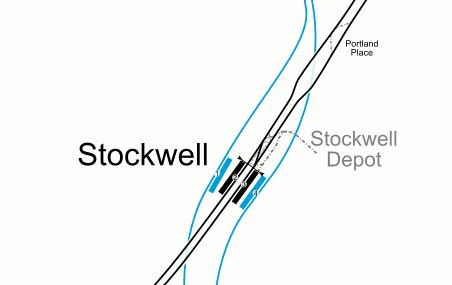
I’m not sure how Crossrail 2 helps here, but I suspect Transport for London hope that the new line will divert passengers away from Stockwell.
Stratford
Stratford station is another station that will be partially bypassed by Crossrail 2.
I do think that after Crossrail opens, that changes will be made at Stratford station to perhaps move some Liverpool Street services to Stansted and Cambridge.
This would bring more services to some not very busy platforms.
In West Anglia Route Improvement – The High Meads Loop, I described how it might all work.
This map from carto.metro.free.fr shows the lines in this area.
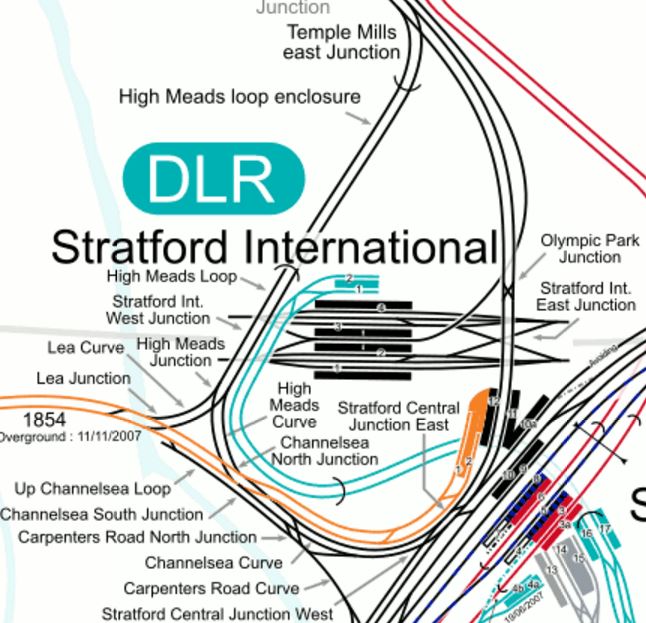
Trains from Cambridge and Stansted would arrive at Temple Mills East Junction and would go round the High Meads Loop dropping and picking up passengers in Platforms 11 and 12 bwfore returning North.
An extra platform could even be added to serve services in Stratford International station.
The tunnels under the platforms at Stratford station would probably need improvement, but who knows how Eastenders will duck and dive after Crossrail opens.
As an example, passengers from Shenfield to Canary Wharf will probably use the cross-platform change at Whitechapel station, rather than pick up the Jubilee Line or the DLR at Stratford.
Oxford Circus
Oxford Circus tube station has needed improvement for years.
Crossrail will give some relief, as there will be new additional entrances to Tottenham Court Road and Bond Street stations closer to Oxford Circus.
I did look at what might happen in What Will The Elizabeth Line Do For Oxford Street?.
I came to this conclusion about Crossrail 2 and Oxford Street.
Crossrail 2 has just one interchange in the Oxford Street area at Tottenham Court Road station.
I would be very surprised in that in the massive rebuilding of the current station for Crossrail, that provision hasn’t been made to connect to Crossrail 2.
There have been surface issues around the station concerned with Crossrail 2, but given good planning of the project, I feel that the building of Crossrail 2 would only effect the area in a similar way to the replacement of a major block on Oxford Street.
Crossrail 2 will have two major effects.
- It will bring large numbers of visitors to the Oxford Street area.
- Just as Crossrail and the Central Line will work as a high-capacity pair, it will work closely with the Victoria Line to relieve that line.
This leads me to the conclusion, that the wider Oxford Street area needs to be and will be pedestrianised.
In some ways preparation for the pedestrianisation has already started by reorganising the buses.
Oxford Circus tube station is also high on Transport for London’s improvement list.
This map from carto.metro,free.fr shows the lines through the station.
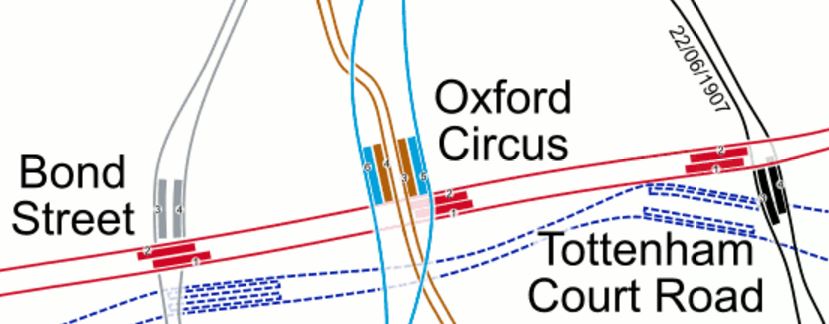
I suspect that if developers were interested in rebuilding any of the buildings on the South side of Oxford Street or perhaps even around the BBC to the North, that there could be arm-twisting and deal-making to sneak new entrances into Oxford Circus tube station.
Highbury & Islington
Highbury & Islington station, is one of my local ones and it is getting some much-needed improvement.
- The Northern City Line will be getting frequent new Class 717 trains to create the Great Northern Metro.
- Highbury Corner will be remodelled to improve pedestrian access to the station.
- Bus and taxi access is being improved..
But nothing has been announced about improving the chronic access to the two deep-level lines at the station.
Speaking to staff at the station, they feel that a solution is possible, using the second entrance on the other side of the road.
In some ways the Great Northern Metro with its cross-platform interchange with the Victoria Line could be the saviour of this station, as it gives direct access to the City and to Crossrail at Moorgate station.
One of London’s forgotten lines could be riding to the rescue.
Clapham Common
Clapham Common tube station is one of my least favourite. This picture shows why.
It’s downright dangerous now, so when the Northern Line frequency is increased will the station cope?
Clapham North
Clapham North tube station is another dangerous island platform.
But at least the station has escalators.
In A Journey Round The Clapham Stations, a post I wrote in December 2015, I said this.
Having seen Clapham North and Clapham Common stations today, I do wonder if a diversion could be dug as at Angel, Bank and London Bridge, to create safe new stations. This new tunnel could surely be part of the works to add step-free access to one or both stations and connect the tunnels to Clapham High Street station.
What with the Northern Line Extension to Battersea, the rebuilding of Bank and Camden Town stations and all the resignalling of the past few years, the Northern Line could at last be fulfilling its potential.
This could go a long way to sorting the problem of the Clapham stations.
Clapham South
Clapham South tube station is not as bad as the other two Clapham stations discussed earlier.
Crossrail 2 may reduce the level of overcrowding on the Northern Line trains through the three Clapham stations, as passengers could change at Balham or Tooting Broadway stations to and from the new high-capacity line.
However, nothing short of some serious building work will solve the island platform problems at Clapham Common and Clapham North stations.
Holborn
Holborn tube station is very busy, but is one that could benefit from Crossrail, due to that line’s relationship with the Cerntral Line.
Crossrail 2 will certainly benefit the station, as it will relieve the pressure on the Piccadilly Line.
But Transport for London have published plans to add a second entrance and full step-free access. This is a 3-Dview of the plans.

Note the second entrance will be in Procter Street.
The only problem is that it could be 2021 before a decision is made.
However as a Piccadilly Line station, Holborn will benefit from the New Tube For London, before the upgrade.
Warren Street
Warren Street tube station is another Central London station on the Victoria Line, that could benefit from Crossrail 2’s duplication of the Victoria Line.
Leicester Square
Leicester Square tube station is just one stop on the Northern Line from the major new interchange of Tottenham Court Road station, which will be served by both Crossrail and Crossrail 2.
The station has needed more capacity since I first used it in the 1950s.
It needs step-free access.
This map from carto.metro.free.fr shows the lines around Leicester Square station.
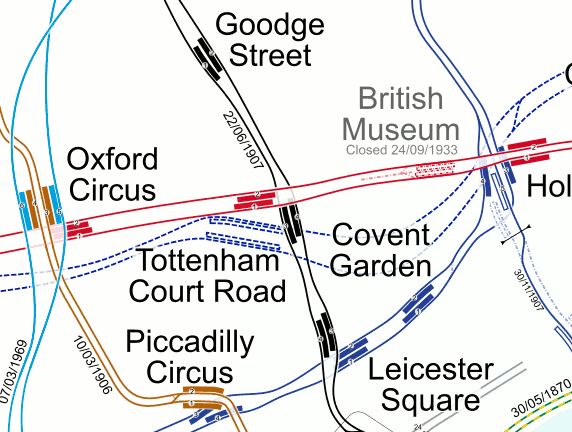
There is quite a tight knot of stations, of which only Tottenham Court Road has both escalators and lifts, although Goodge Street and Covent Garden have lifts only.
Leicester Square is an unusual station in that both the Northern and Piccadilly Lines are accessed by short passages and a short staircase from a fair-sized lobby at the bottom of a long set of escalators.
Clapham Junction
Clapham Junction station is the only non-Underground station in the seventeen stations named, where overcrowding could become chronic if Crossrail 2 is not built.
It is the busiest station by number of trains in Europe, so it must be difficult to keep on top of increasing numbers of passengers.
In the Wikipedia entry for the station under Future Proposals, this is said.
In 2007 the alignment of one of the two variants of Crossrail 2, that via the station rather than Putney and Wimbledon, was safeguarded. The Department for Transport and Transport for London continue to discuss proposal for a Clapham Junction Northern Line extension and its London Underground alignment has been legally reserved through Battersea Park, and would connect Clapham Junction to the London Underground for the first time.
Government and Network Rail funding for in the early 2010s of £50 million of improvements was granted. This comprised an upgrade to the main interchange: new entrances and more retail.
Surely something needs to be done, if Crossrail 2 is not built.
My proposals would include.
- Developing the West London Line services.
- Extending the Northern Line from Battersea Power Station station.
- Improving the frequency of trains into Waterloo.
- Make the station subway step-free.
There may be a need for more platforms, but the London Overground found this difficult.
This map from carto.metro.free.fr shows the platforms in the station.
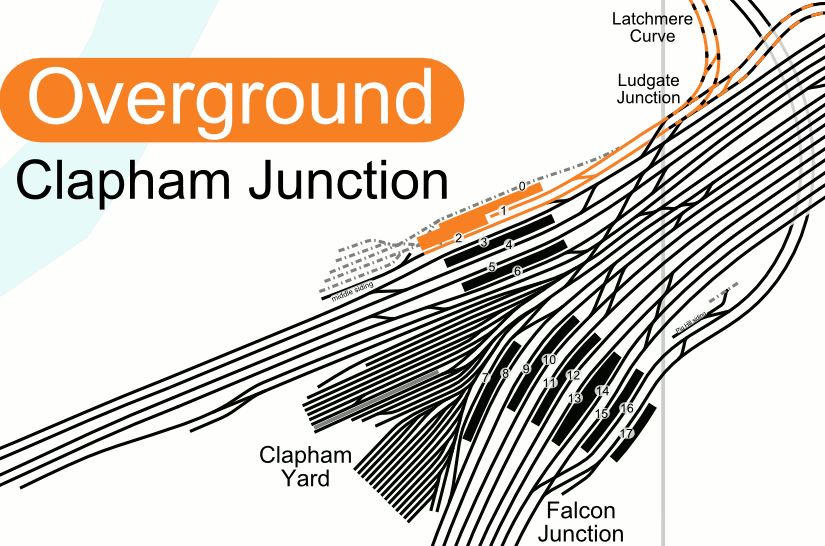
Simple it isn’t!
Conclusions
It surprised me how many of these stations will need substantial building work to cure the overcrowding.
Note.
- Every Victoria Line station between Oxford Circus and Finsbury Park is on the list.
- Four Northern Line stations between Stockwell to Clapham South is on the list.
- I think this shows how the designers of the Northern and Victoria Lines didn’t expect the traffic the lines now handle.
But overall, I think it shows how when you design a station, you don’t cut corners.
I also think to blame all these problems on the uncertainty about Crossrail 2, is probably a bit strong.
Consider.
- Liverpool Street will probably have enough capacity when Crossrail opens, especially as the station will incorporate Moorgate and be substantially step-free.
- The new London Bridge effectively adds high-frequency rail lines to Blackfriars, Cannon Street, Charing Cross and St. Pancras and when Thameslink and Southeastern are fully developed, the station will cope.
- Victoria shouldn’t be judged until the current upgrade is complete.
- Waterloo shouldn’t be judged until the current upgrade is complete.
- Finsbury Park shouldn’t be judged until the current upgrade is complete.
- Stratford will probably have enough capacity when Crossrail opens, especially as the station is substantially step-free.
- Oxford Circus should see improvement when Crossrail opens, especially as there’ll be new step-free entrances to Tottenham Court Road and Bond Street, that will be closer to Oxford Circus, than the current stations.
- Highbury & Islington should see marginal improvement, when the Northern City Line is updated.
However, nothing short of substantial construction will sort Euston, Clapham Common, Clapham North, Holborn, Leicester Square and Clapham Junction.
Close Up To A Class 345 Train At Liverpool Street Station
These pictures of a Class 345 train, were taken in Liverpool Street station.




I also had a chat with a group of drivers.
- The drivers find the trains well-built, quiet and fast.
- One driver said they were effectively two half trains.
- Drivers seemed enthusiastic or jealous depending if they’ve driven one.
- Greater Anglia’s drivers were crawling all over the cab!
- There is masses of space under the trains.
- They are virtually silent as they move off!
The services start on Tuesday, the 23rd of May.
 The Anonymous Widower