Ambitious £3bn Pumped Hydro Project At Loch Ness Moves Forward
The title of this post is the same as that of this article on Sustainable Times.
These are the two introductory paragraphs.
A £3 billion pumped storage hydro (PSH) project near Scotland’s iconic Loch Ness is one step closer to becoming a reality. Glen Earrach Energy (GEE) confirmed on April 25th that it has officially submitted the planning application for its ambitious 2gw scheme.
If greenlit, this project would represent nearly three-quarters of the total PSH capacity planned for Loch Ness, contributing 34 GWh of the region’s 46 GWh storage goal. But it’s not just the storage that stands out. This development would also account for two-thirds of the generating capacity, all while using just half of the water previously considered. To put it into perspective, the project’s capacity would be on par with the combined output of around 800 onshore wind turbines scattered throughout the Highland Council area.
Note.
- The generating and pumping capacity for this ambitious scheme is given as 2 GW. Only three in China and one in the United States are larger.
- The storage capacity of 34 GWh will make it the largest in the UK, possibly the second largest in Europe to Ulla-Førre in Norway and one of the ten largest in the world.
- A projected 10% reduction in the UK grid’s carbon footprint is claimed.
- The cost of three billion is high, but compare that with the tens of billions quoted for the 3.26 GW Hinckley Point C.
The Glen Earrach scheme is not short on superlatives and the article in Sustainable Times is worth a thorough read.
Fifth Hydro Project Proposed At Loch Ness, is based on a BBC article of the same name.
These were my thoughts in the related post.
The Existing Hydro Schemes On Loch Ness
According to the BBC article, there are two existing hydro schemes on Loch Ness.
- Foyers is described on this web site and is a reasonably modern 305 MW/6.3 GWh pumped storage hydroelectric power station, that was built by SSE Renewables in the last fifty years.
- Glendoe is described on this web site and is a modern 106.5 MW conventional hydroelectric power station, that was built by SSE Renewables in the last twenty years.
Foyers and Glendoe may not be the biggest hydroelectric power stations, but they’re up there in size with most solar and onshore wind farms. Perhaps we should look for sites to develop 100 MW hydroelectric power stations?
The Proposed Hydro Schemes On Loch Ness
According to the BBC article, there are four proposed hydro schemes on Loch Ness.
- Coire Glas is described on this web site and will be a 1.5GW/30 GWh pumped storage hydroelectric power station, that is being developed by SSE Renewables.
- Fearna is described on this web site and will be a 1.8GW/37 GWh pumped storage hydroelectric power station, that is being developed by Gilkes Energy.
- Loch Kemp is described on this web site and will be a 600MW/9 GWh pumped storage hydroelectric power station, that is being developed by Statera.
- Loch Na Cathrach is described on this web site and will be a 450MW/2.8 GWh pumped storage hydroelectric power station, that is being developed by Statktaft.
In addition there is, there is the recently announced Glen Earrach.
- Glen Earrach is described on this web site and will be a 2GW/34 GWh pumped storage hydroelectric power station, that is being developed by Glen Earrach Energy.
Note.
- The total power of the seven pumped storage hydroelectric power stations is 4.76 GW.
- The total storage capacity is 89.1 GWh.
- The storage capacity is enough to run all turbines flat out for nearly nineteen hours.
I estimate that if 2 GW/34 GWh of pumped storage will cost £3 billion, then 4.76 GW/89.1 GWh of pumped storage will cost around £7-8 billion.
Cloiche Onshore Wind Farm
This document from the Department of Business, Industry and Industrial Strategy lists all the Contracts for Difference Allocation Round 6 results for the supply of zero-carbon electricity.
The largest onshore wind farm in the Allocation Round, is the Cloiche wind farm, which has this web page,which is entitled Onshore Wind Projects , on the SSE Renewables web site.
It is the only project on the page and these two paragraphs describe its location and capacity.
The proposed 29 turbine Cloiche Wind Farm is located on the Glendoe and Garrogie Estates, adjacent to the operational Stronelairg Wind Farm and Glendoe Hydroelectric Scheme and approximately 11 kilometres (km) to the south-east of Fort Augustus in the Great Glen, in the Monadhliath mountain range.
It is anticipated that the wind farm will generate approximately 130.5MW.
This Google Map shows the location.
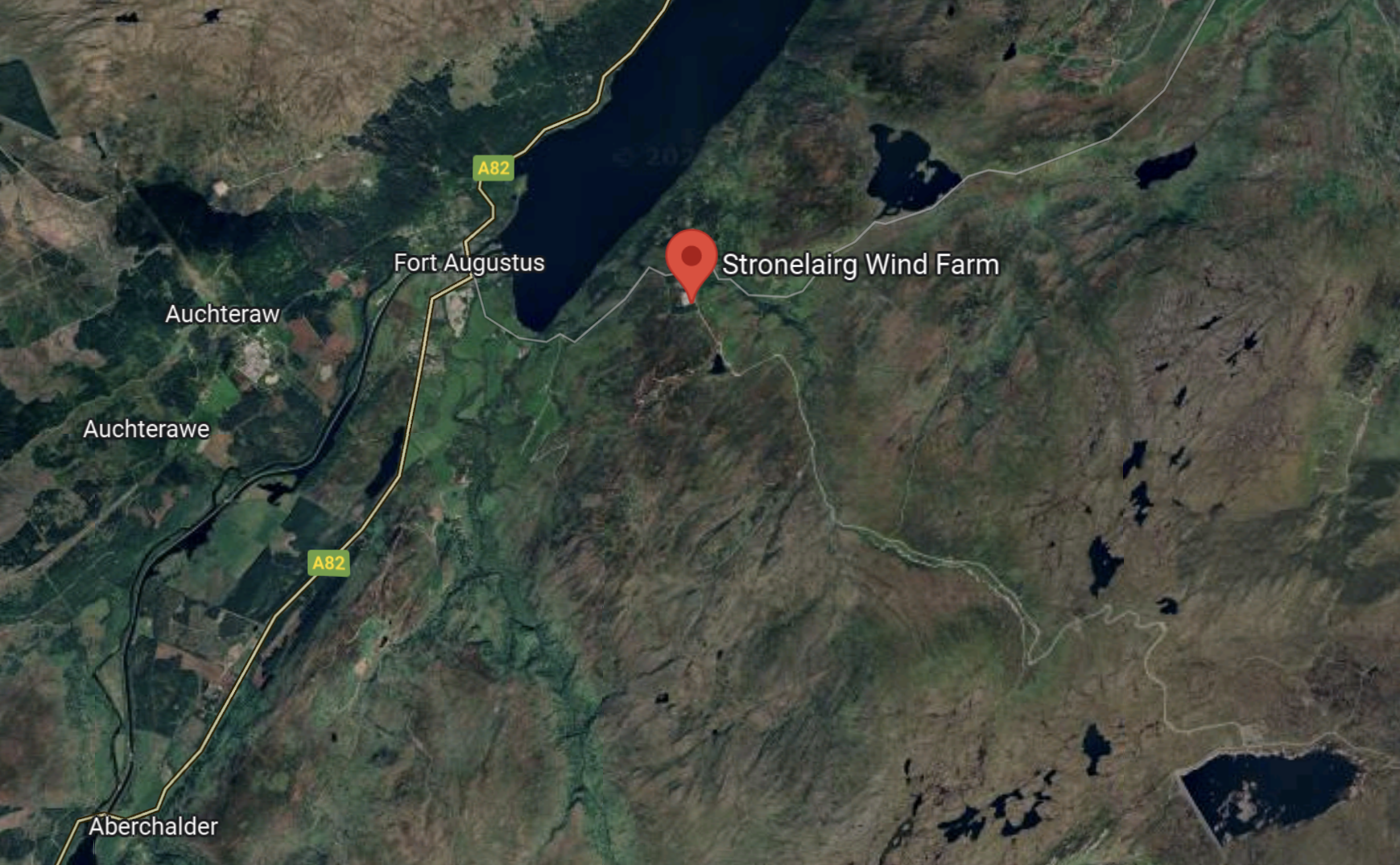
Between the village of Fort Augustus and the Stronelairg wind farm, lies the Southern end of Loch Ness.
In the South-East corner of the map, there is a large lake, which is shown in more detail in this Google Map.
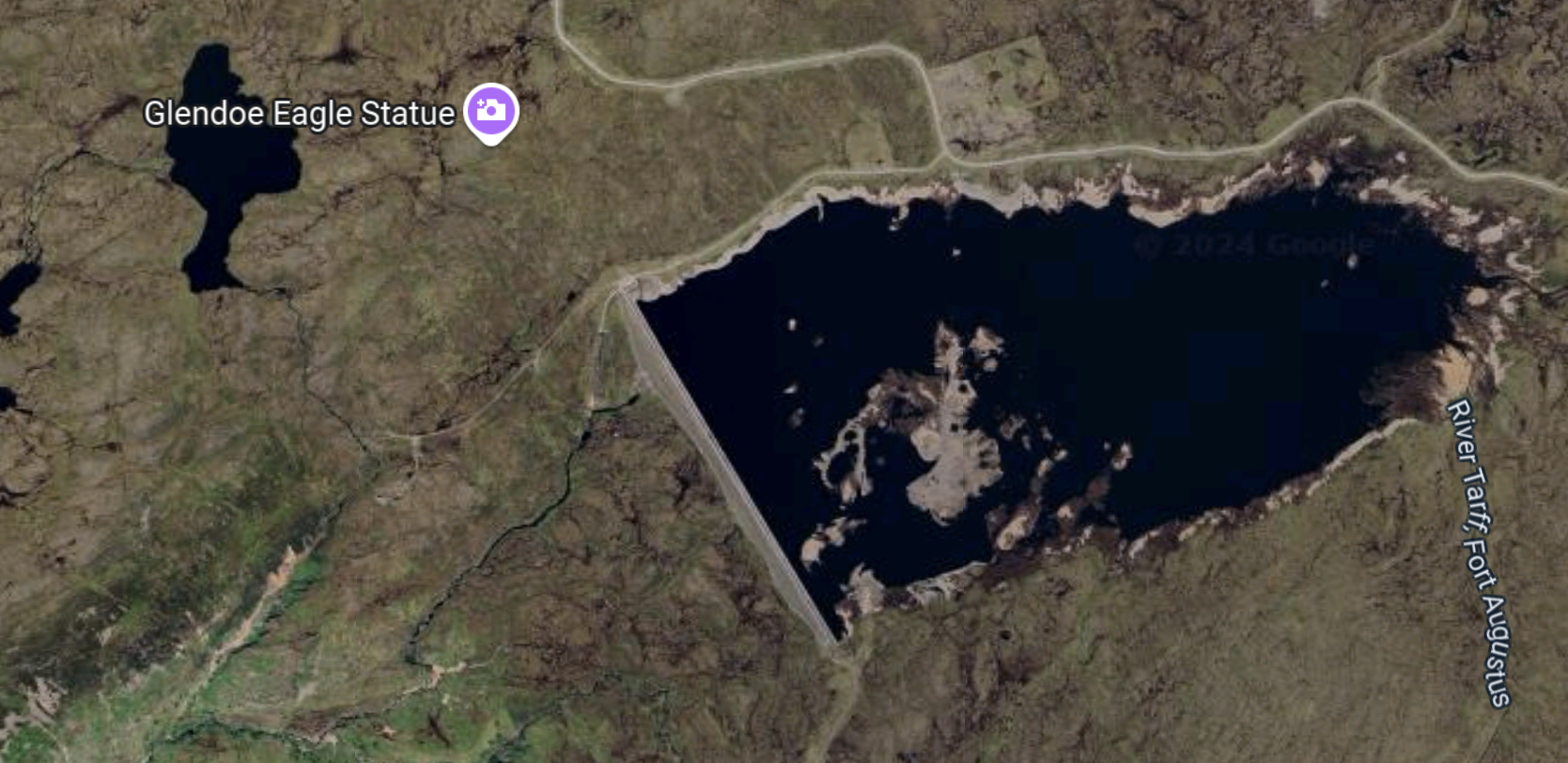
This is the Glendoe Reservoir for the Glendoe Hydro Scheme, that was built in the early years of this century, by damming the River Tarff.
The dam is clearly visible at the Western end of the Reservoir.
The Glendoe Hydro Scheme was opened in 2009 and has a generation capacity of 106.5 MW.
The planning and building of the scheme are described in this Wikipedia entry and the entry is well worth a read.
Stronelairg Wind Farm
Stronelairg wind farm, Cloiche wind farm and the Glendoe Hydro Scheme are all projects, that were or will be developed by SSE Renewables.
Stronelairg wind farm has 66 turbines and a total installed capacity of 228 MW.
It has a web page on the SSE Renewables web site.
These two paragraphs describe the location of Stronelairg wind farm.
Stronelairg sits at an elevation of around 600m above sea level in the Moadhliath Mountain range making it one of our windiest wind farms.
It sits within a natural bowl on a plateau, set well back from Loch Ness meaning that no turbines are visible from the main tourist routes in the area. Stronelairg is also located adjacent to our 100MW Glendoe hydro scheme and so the construction teams were able to use the hydro infrastructure as do our operational teams now.
Stronelairg wind farm appears tobe a powerful asset, hidden in the mountains.
Three Co-located Assets
As Cloche wind farm, will be adjacent to the operational Stronelairg Wind Farm and Glendoe Hydroelectric Scheme, these three energy producing assets, will be close together.
- Cloiche wind farm – 130.5 MW
- Stronelairg wind farm – 228 MW
- Glendoe Hydroelectric Scheme – 106.5 MW
Note.
- This is a total power of 465 MW.
- This would be equivalent to a medium-sized gas-fired power station.
- All three assets could use the same grid grid connection and other facilities.
It could be considered a 358.5 MW wind farm, backed by a 106.5 MW hydro power station.
When there is a shortage of wind, the Glendoe Hydroelectric Scheme could step in, if required.
Conclusion
Onshore wind, backed up by hydroelectric schemes would appear to be a good way to create reliable hybrid power stations.
Do any other schemes in Allocation Round 6, involve combining onshore wind with existing hydro schemes?
Fifth Hydro Project Proposed At Loch Ness
The title of this post. is the same as that of this article on the BBC.
This is the sub-heading.
The local community is to be asked for its views next week on plans for a new hydro-electric scheme at Loch Ness.
These three paragraphs introduce the new scheme.
Glen Earrach Energy’s, external (GEE) pumped storage hydro project is the fifth hydro scheme proposed for the Loch Ness area.
The company said its project on Balmacaan Estate would create clean energy while protecting the environment, and create 600 on-site jobs.
But concerns have been raised about the number of planned schemes, with Ness District Salmon Fishery Board worried about the effect on wild fish.
The project has a web site, which has a section entitled About The Project, where this is said.
Glen Earrach Energy, which means “Valley of Spring” in Gaelic, stands at the forefront of energy innovation. The Pumped Storage Hydro (PSH) project, located at Balmacaan Estate, Scotland, is a critical component for achieving a net-zero grid by 2030.
The project prioritises environmental preservation and biodiversity enhancement while achieving outstanding efficiency in energy storage and generation.
This ensures a healthier and more sustainable balance between harnessing natural energy resources and the maintenance and reinforcement of the surrounding ecosystem.
Note.
- It doesn’t say, but it looks like Glen Earrach Energy aim to complete the project by 2030.
- Glen Earrach Energy also seem to be playing a strong environmental card.
But nothing is said about the size of the project.
This article on Business Insider, which is entitled £3 billion Loch Ness Hydro Project Plans Unveiled, does give some details.
- Potential Investment – More than £2 billion
- Output – 2 GW
- Storage Capacity – 30 GWh
- The project could create at least 600 on-site construction jobs in Scotland over a six-year period, plus many thousands more locally in the supply chain.
It is larger, than SSE’s flagship Coire Glas pumped storage hydroelectric power station, which is planned to be a 1.5 GW/30 GWh station, at the other end of the Great Glen.
I have some thoughts.
The Existing Hydro Schemes On Loch Ness
According to the BBC article, there are two existing hydro schemes on Loch Ness.
- Foyers is described on this web site and is a reasonably modern 305 MW/6.3 GWh pumped storage hydroelectric power station, that was built by SSE Renewables in the last fifty years.
- Glendoe is described on this web site and is a modern 106.5 MW conventional hydroelectric power station, that was built by SSE Renewables in the last twenty years.
Foyers and Glendoe may not be the biggest hydroelectric power stations, but they’re up there in size with most solar and onshore wind farms. Perhaps we should look for sites to develop 100 MW hydroelectric power stations?
The Proposed Hydro Schemes On Loch Ness
According to the BBC article, there are four proposed hydro schemes on Loch Ness.
- Coire Glas is described on this web site and will be a 1.5GW/30 GWh pumped storage hydroelectric power station, that is being developed by SSE Renewables.
- Fearna is described on this web site and will be a 1.8GW/37 GWh pumped storage hydroelectric power station, that is being developed by Gilkes Energy.
- Loch Kemp is described on this web site and will be a 600MW/9 GWh pumped storage hydroelectric power station, that is being developed by Statera.
- Loch Na Cathrach is described on this web site and will be a 450MW/2.8 GWh pumped storage hydroelectric power station, that is being developed by Statktaft.
In addition there is, there is the recently announced Glen Earrach.
- Glen Earrach is described on this web site and will be a 2GW/30 GWh pumped storage hydroelectric power station, that is being developed by Glen Earrach Energy.
Note.
- The total power of the seven pumped storage hydroelectric power stations is 4.76 GW.
- The total storage capacity is 85.1 GWh.
The storage capacity is enough to run all turbines flat out for nearly five hours.
Could Glendoe Be Updated To Pumped Storage?
The Wikipedia entry for the Glendoe Hydro Scheme mentions pumped storage several times.
In Glendoe Hydro Power Station, I estimate that a Glendoe pumped storage scheme could be perhaps 50 % bigger than the system at Foyers.
I feel that if more storage capacity is needed in the Highlands, then Glendoe could be converted to pumped storage.
The Creation Of The Coire Glas Monster
Loch Ness is probably most famous for the mythical monster, but it is about to be joined by a man-made monster of a different kind.
To the South-West of Loch Ness lies Loch Lochy.
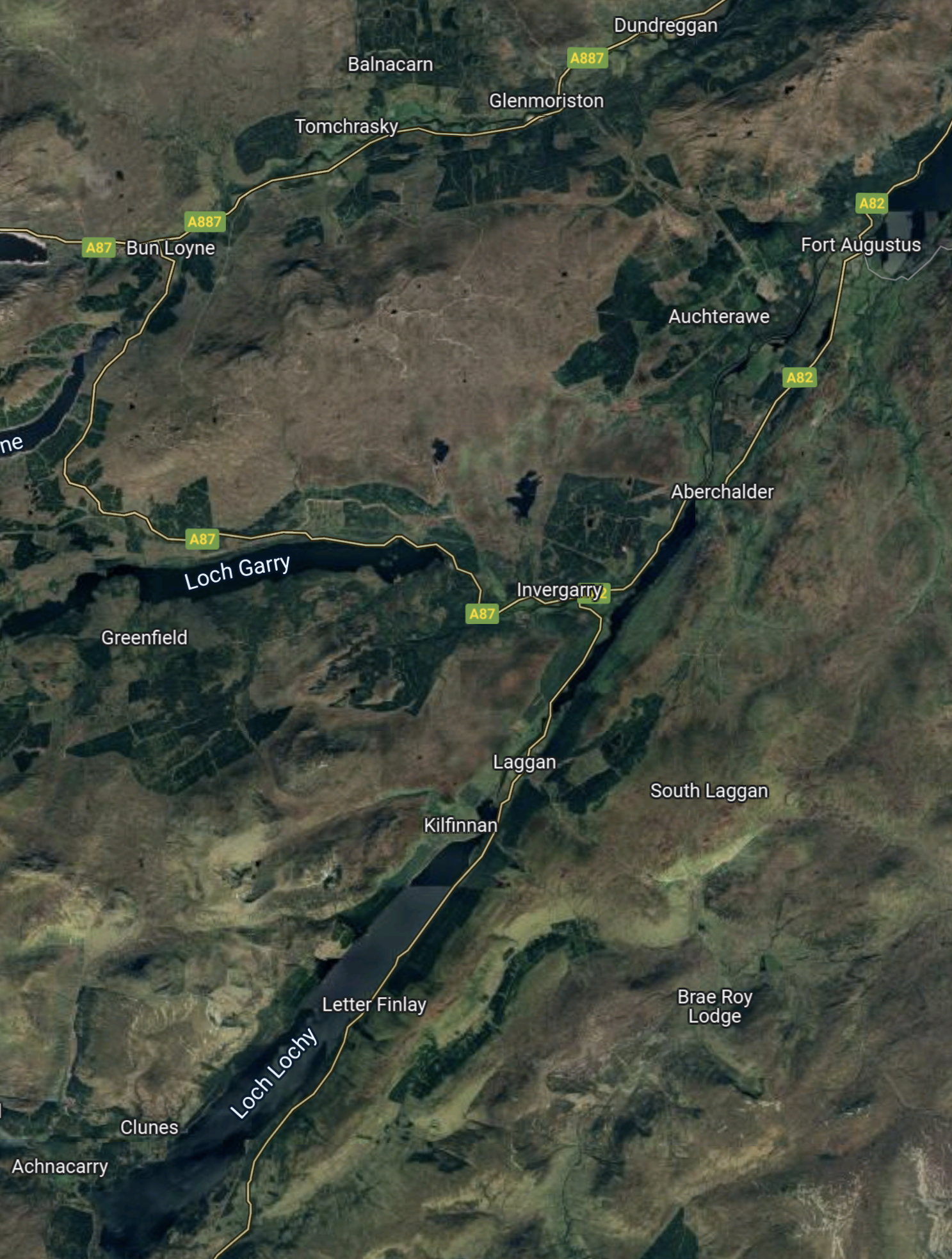
This Google Map shows the South-Western part of the Great Glen, which runs diagonally across the Highlands from Fort William in the South-West to Inverness in the North-East.
Note.
- Fort Augustus in the North-East corner of the map, is at the South-West end of Loch Ness.
- In the South-West corner of the map, Loch Lochy can be seen.
- To the North-West of Loch Lochy, there are mountains.
This second Google Map shows Loch Lochy and the mountains.
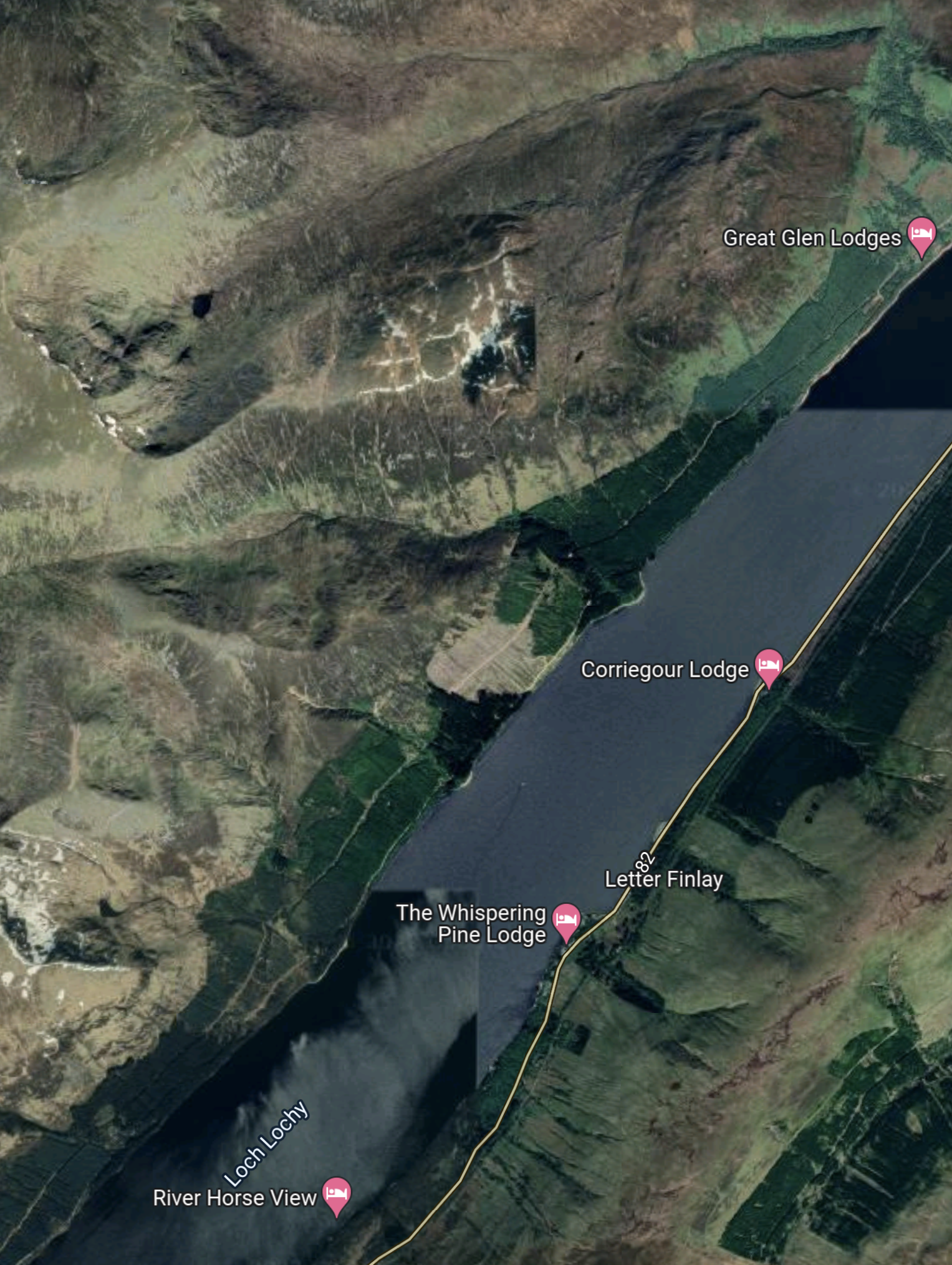
SSE plan to create a pumped storage hydroelectric power station called Coire Glas.
- Loch Lochy will be the lower reservoir.
- The upper reservoir will be in the mountains to the North-West of the loch.
- Energy will be stored by pumping water from the lower to the higher reservoir.
- The power station will be able to provide 1.5 GW of electricity.
- The upper reservoir will be able to store enough water to generate 30 GWh of electricity.
If that isn’t a monster of a power station, I don’t know what is! It has more than three times the storage capacity of both Dinorwig or Cruachan.
This article on Utility Week, which is entitled Inside £1bn Pumped Hydro Plans To ‘More Than Double’ Britain’s Electricity Storage, gives more details.
This is the sort of heroic engineering, that will defeat Vlad the Mad and his bloodstained gas.
Loch Kemp Pumped Hydro
Loch Kemp Is a smaller loch just to the East of Loch Ness.
This Google Map shows Loch Kemp in relation to Loch Ness.
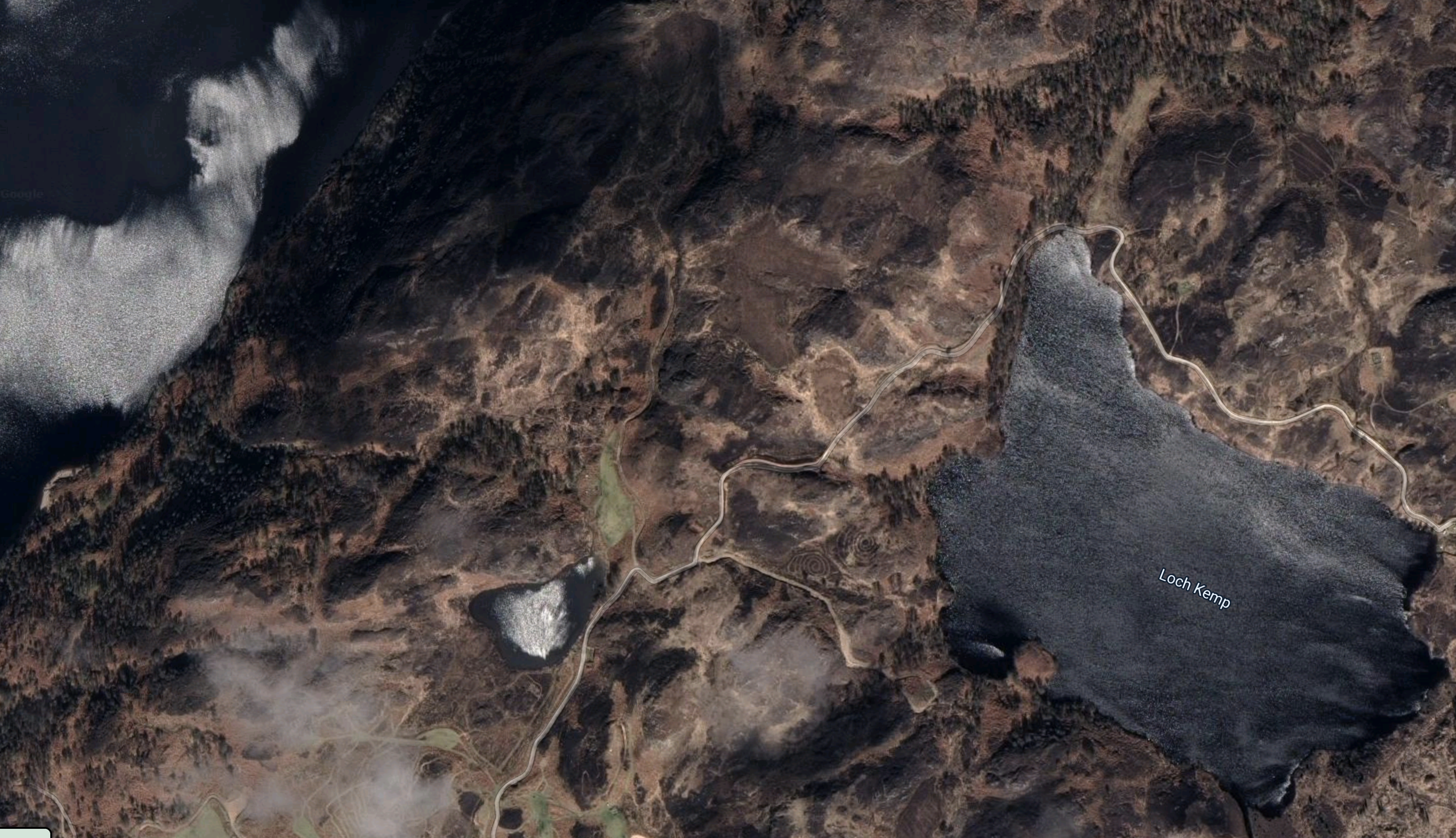
Note.
- Loch Ness is in the North West corner of the map, with partial cloud cover.
- Loch Kemp is in the South East corner of the map.
The proposed Loch Kemp pumped hydro scheme will have these characteristics.
- Loch Kemp will be the upper reservoir.
- Loch Ness will be the lower reservoir.
- The power station will be on the banks of Loch Ness.
- The power station will be designed to fit into the environment.
- Eight dams will be built to enlarge Loch Kemp.
- Trees will be planted.
- Output of the power station will be 300 MW
- Available storage could be 9 GWh.
The station will have almost as much storage capacity as Electric Mountain, but that power station has an output of 1.8 GW.
In Glendoe Hydro Power Station, I wrote about the Glendoe Hydro Scheme.
- It is a 100 MW hydroelectric power station
- It has the highest head at 600 metres of any power station in the UK.
- It opened in 2009, making it one of the newest hydroelectric power stations in the UK.
- The actual power station is in an underground cavern.
- The dam and power station have been designed to be hidden from view.
This Google Map shows the location of Glendoe power station to the South of Loch Kemp.
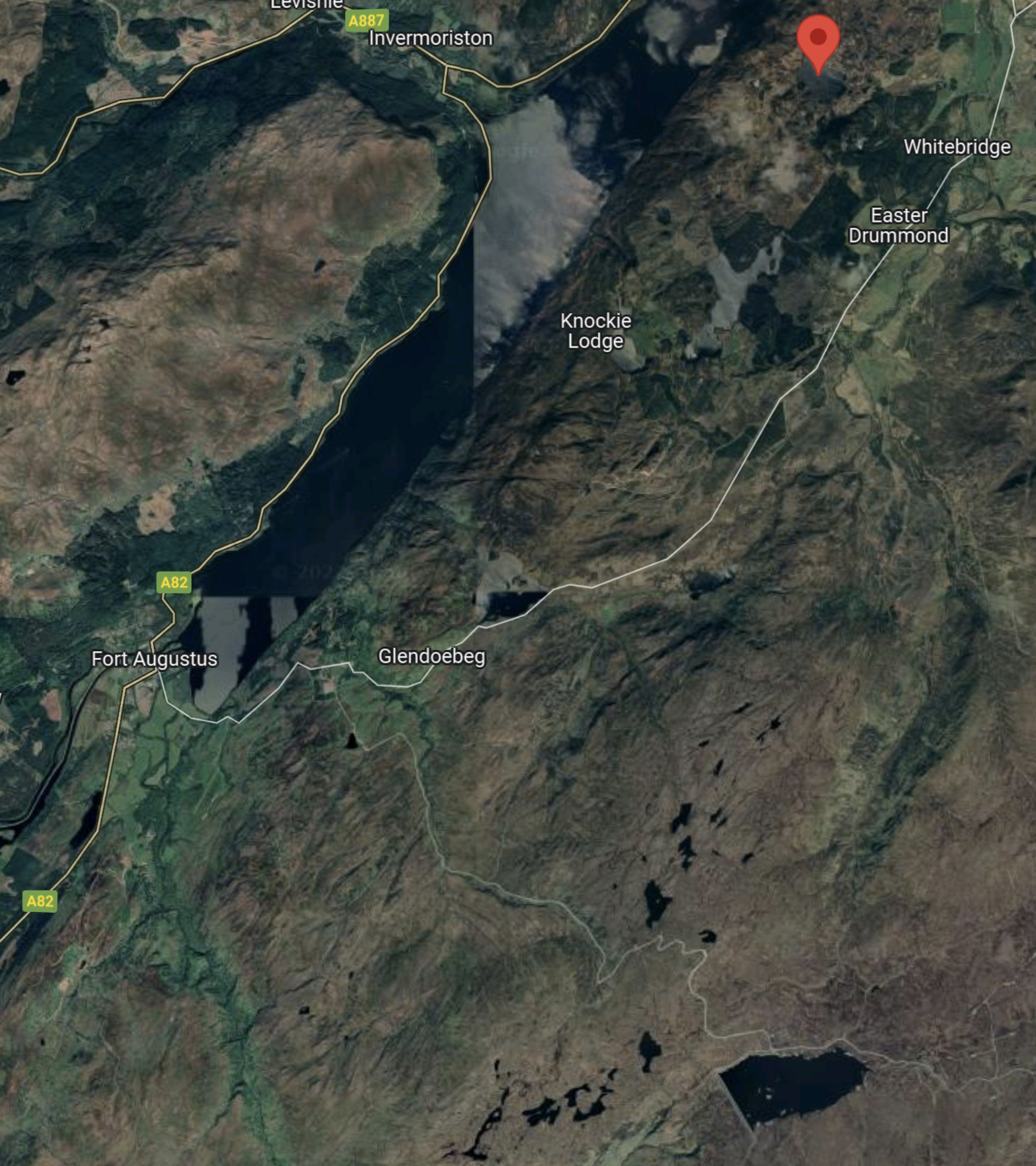
Note.
- The red arrow indicates Loch Kemp.
- The loch in the South East corner is the reservoir that feeds Glendoe power station.
- Fort Augustus is at the Southern end of Loch Ness.
This Google Map shows the Northern end of Loch Ness.
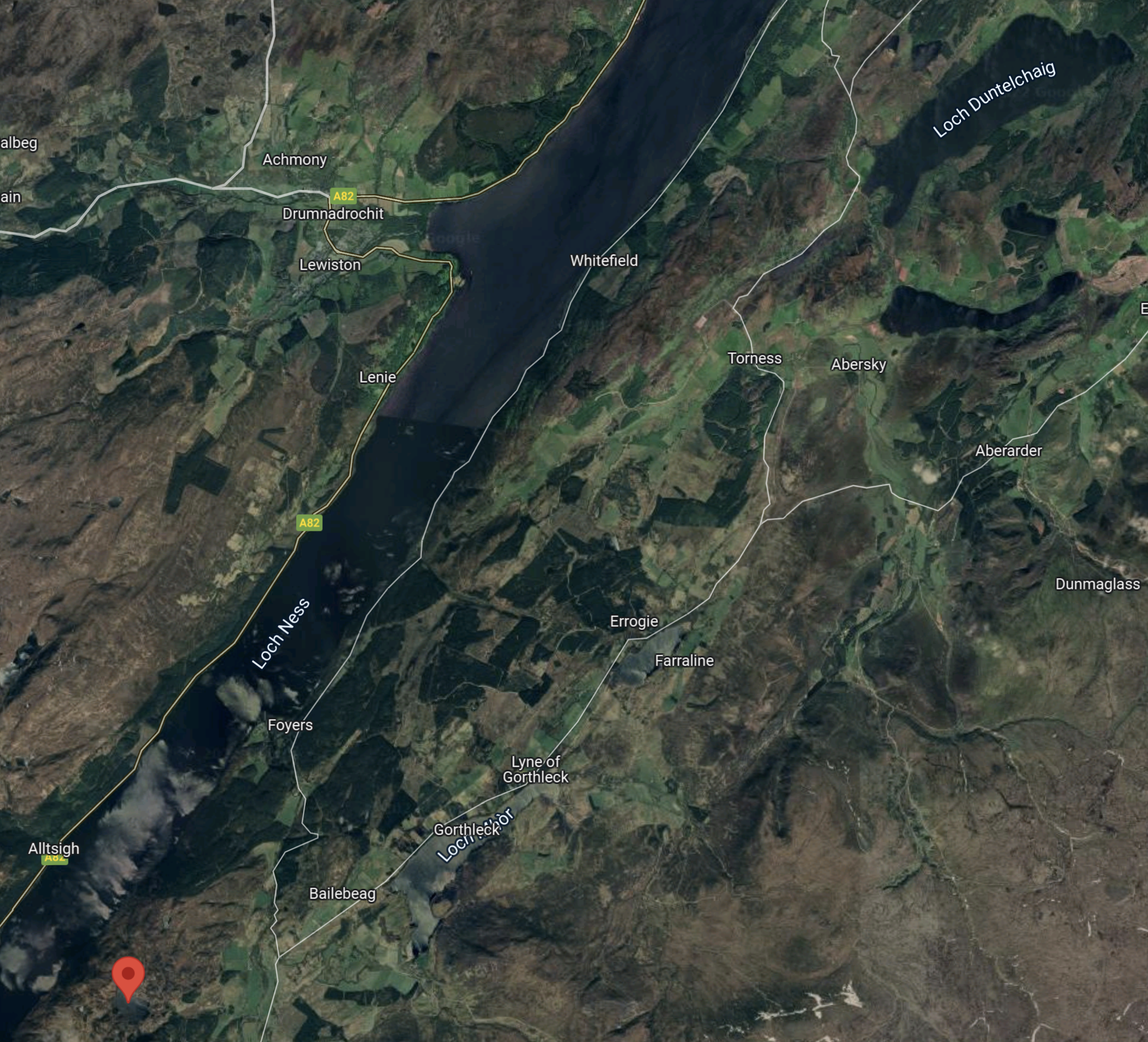
Note.
- The red arrow indicates Loch Kemp.
- Foyers, which is a short distance to the North West, is the site of the Foyers pumped hydro scheme. I wrote about this scheme in The Development Of The Foyers Pumped Storage Scheme.
- Loch Duntelchaig, in the North-East corner of the map, is being used as the upper reservoir of the Red John pumped hydro scheme. I wrote about this project in Red John Pumped Storage Hydro Project.
On the East side of Loch Ness there seems to be four substantial hydro-electric schemes.
In order from South to North these schemes are.
Glendoe
Glendoe is a modern 100 MW hydroelectric power station, that opened in 2009.
In Glendoe Hydro Power Station, I felt it might be possible to expand Glendoe into a pumped hydro scheme, with upwards of 10 GWh of storage.
Loch Kemp
Loch Kemp is a proposed 300 MW/9 GWh pumped hydro storage station.
Foyers
Foyers is an existing 300 MW/10 GWh pumped hydro storage station.
Red John
Red John is a proposed 450 MW/2.8 GWh pumped hydro storage station, which has received planning permission.
These four power stations could be summarised as follows.
- Glendoe – 100 MW/10 GWh
- Loch Kemp – 300 MW/9 GWh
- Foyers – 300 MW/10 GWh
- Red John – 450 MW/2.8 GWh
Note.
- Totals are 1150 MW and 31.8 GWh
- Foyers was converted from a conventional hydroelectric power station, that was opened in 1895 to a pumped hydro storage station.
- If Foyers can be converted, why can’t Glendoe.
A very large pumped storage station of four separate units, can be built on the East side of Loch Ness.
Conclusion
This is only on the East side of Loch Ness, so if the West side can be similarly developed, Loch Ness could be developed into a real Loch Ness monster with over 60 GWh of pumped hydro storage.
Repurposing The Great Glen Hydro-Electric Scheme
The Great Glen hydro-electric scheme was built in the 1950s and early 1960s, by the North of Scotland Hydroelectric Board.
- The scheme is now owned by SSE Renewables and has a page on their web site.
- There are six individual power stations; Ceannacroc, Livishie, Glenmoriston, Quoich, Invergarry and Mucomir.
- There are five dams; Cluanie, Loyne, Dundreggan, Quoich and Invergarry.
This map from the SSE Renewables web site shows the layout of the dams and power stations.
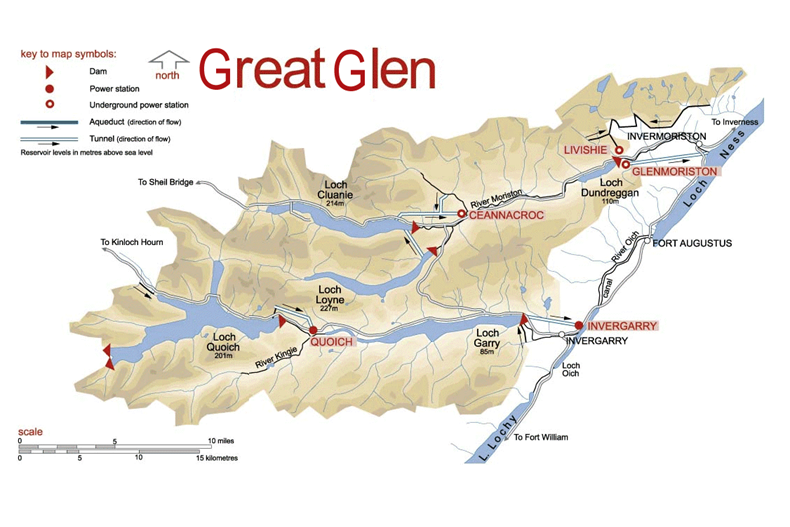
The sizes of the power stations in the scheme are as follows.
- Ceannacroc – 20 MW
- Livishie – 15 MW
- Glenmoriston- 37 MW
- Quoich – 18 MW
- Invergarry – 20 MW
- Mucomir – 1.7 MW
This gives a total power of 112.7 MW.
This Google Map shows the same area as the SSE Renewables Map.
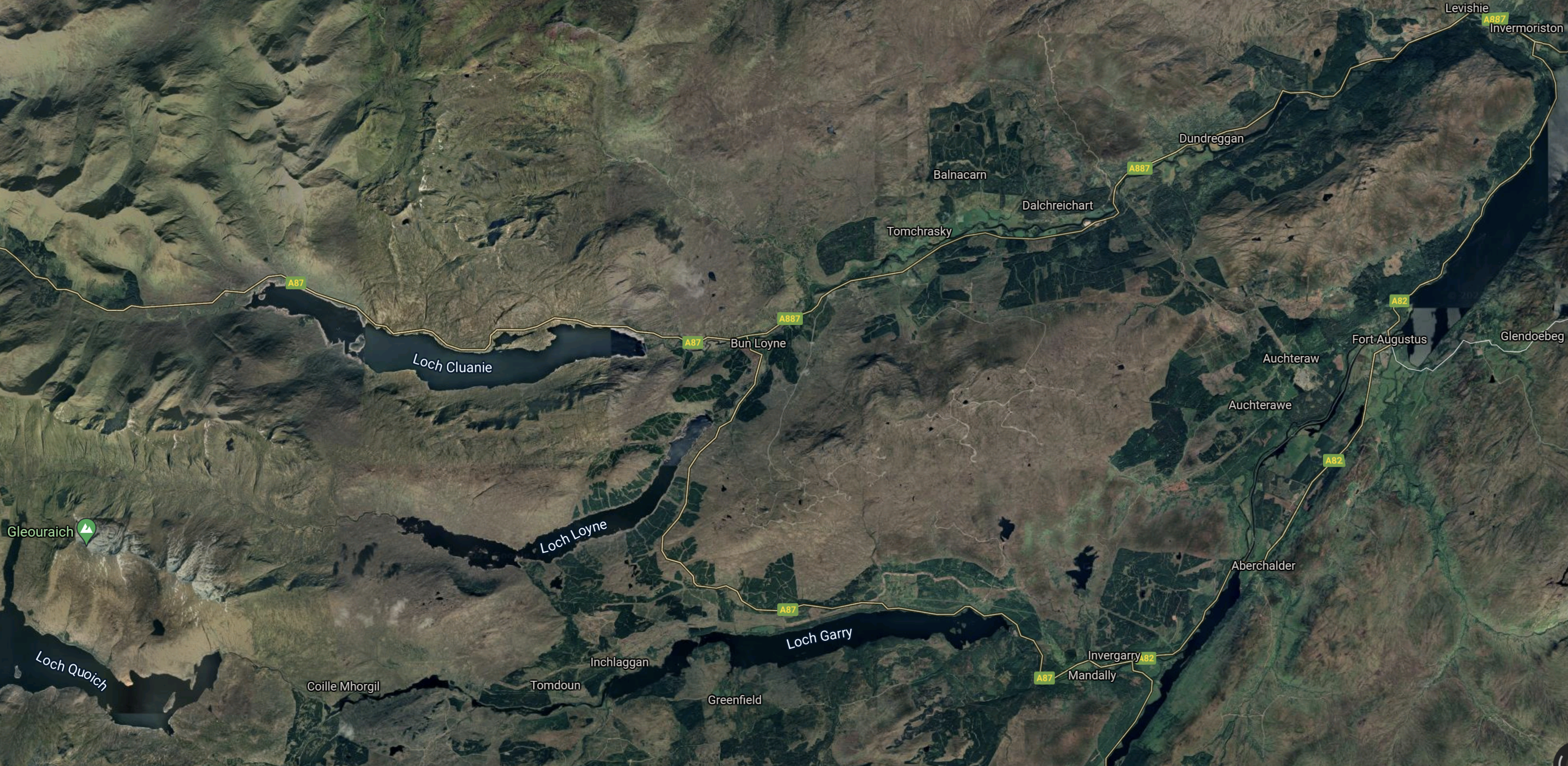
Note.
- Loch Quoich is in the South-West corner.
- To the East of Loch Quoich is Loch Garry and to the North-East is Loch Loyne.
- Loch Cluanie is to the North.
- Invermoriston is in the North-East corner.
The scheme also includes three underground power stations and several miles of tunnels.
Strathclyde University And Pumped Storage Power For Scotland
This page on the Strathclyde University gives a list of the pumped storage potential for Scottish hydrogen-electric dams and power stations.
These figures are given for the dams and lochs in the Great Glen scheme.
- Invergarry – 22 GWh
- Glenmoriston- 41 GWh
- Quoich – 27 GWh
It would appear that based on research from Strathclyde University, that the Great Glen scheme could support up to 90 GWh of pumped storage.
Water Flows In The Great Glen Scheme
Looking at the SSE Renewables map of the Great Glen scheme, water flows appear to be as follows.
- Loch Quoich to Loch Garry via Quoich power station.
- Loch Garry to Loch Oich via Invergarry power station.
- Loch Loyne to Loch Dundreggan via River Moriston.
- Loch Cluanie to Loch Dundreggan via Ceannacroc power station and River Moriston.
- Loch Dundreggan to Loch Ness via Glenmoriston power station.
All the water eventually flows into the sea at Inverness.
Refurbishing And Repurposing The Great Glen Scheme
Perhaps as the power stations are now over fifty years old, one simple way to increase the generating capacity of the Great Glen scheme, might be to selectively replace the turbines, with modern turbines, that can generate electricity more efficiently.
I suspect that SSE Renewables have an ongoing program of improvements and replacements for all of their hydro-electric stations in Scotland. Some turbines at Sloy power station have already been replaced with larger ones.
Adding Pumped Storage To The Great Glen Scheme
I would assume that the water to pump uphill at night or when there is a surplus of electricity will come from Loch Oich or Loch Ness.
Some power stations like Glenmoriston and Invergarry might be updated to both generate electricity or pump water up hill, as is required.
Conclusion
There would appear to be up to three schemes, that could each add around 30 GWh of pumped storage.
One advantage is that the waters of Loch Ness can be used for the lower reservoir.
A Possible Balmacaan Pumped Storage System
This article on Power Technology is entitled SSE Proposes Loch Ness Hydro Power Plant.
These are the first three paragraphs.
Scottish and Southern Energy (SSE) has begun consultations to develop a 600MW hydro electric power plant on the shores of Loch Ness in Scotland.
SSE proposes to build a pumped storage scheme on the Balmacaan Estate between Invermoriston and Drumnadrochit.
The plan also includes construction of a dam and a new reservoir at Loch nam Breac Dearga, north-east of Invermoriston, according to Inverness-courier.co.uk.
This Google Map shows the location of Loch nam Breac Darga.
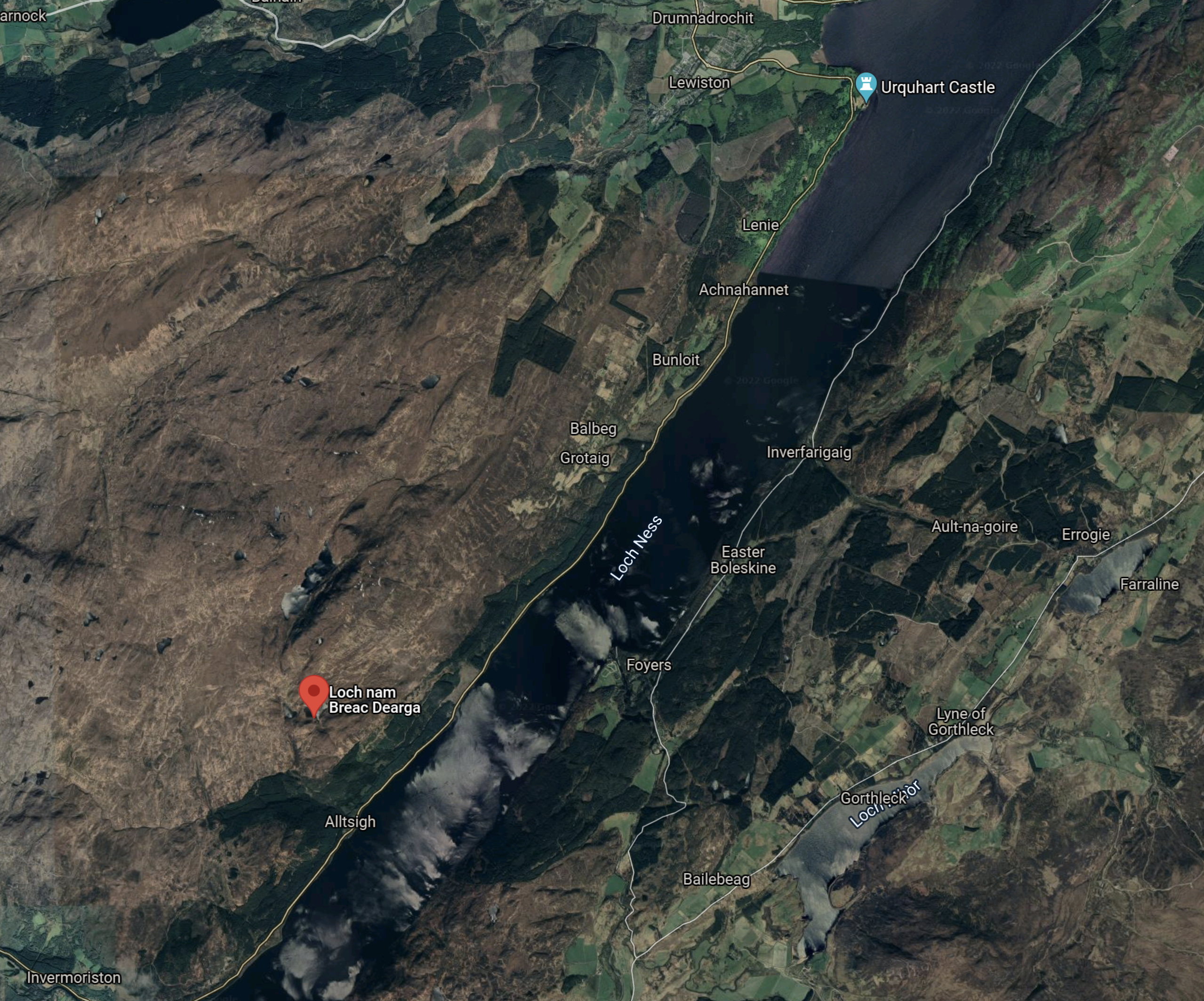
Note.
- Loch Ness runs diagonally across the map.
- Invermoriston is in the South-West corner of the map.
- Loch nam Breac Darga is marked by the red arrow and is 452 metres above sea level.
- Drumnadrochit is at the North of the map, just to the West of Urquhart Castle.
- The Foyers Pumped Hydro scheme, which I wrote about in The Development Of The Foyers Pumped Storage Scheme is on the opposite bank of Loch Ness from Loch nam Breac Darga.
This could be Scotland’s largest hydro-electric plant.
I can’t find a value for the amount of energy that can be stored, but I suspect it could be in the order of 15-20 GWh.
The stories about this project seem to be thin on the ground, so could it be that this project has been placed on the back burner by SSE.
Red John Pumped Storage Hydro Project
When I wrote ILI Group To Develop 1.5GW Pumped Storage Hydro Project, I noticed that they were also developing a scheme called Red John near Inverness.
The title of this post is the same as that of this article on Power Technology.
I have also found a web site for the project, which is part of the ILI Group web site.
- The scheme has an output of 450 MW.
- The storage capacity is 2,800 MWh or 2.8 GWh.
- The scheme has planning consent.
- The project is budgeted to cost £550 million.
- The construction program indicates that the scheme will be completed by the end of 2025.
This paragraph from this article on Water Power and Dam Construction, describes the head and tail ponds.
The Red John project will be located on the eastern shore of the north end of Loch Ness in the Highlands of Scotland. Loch Ness is to be the tail pond for the project, with the head pond to be newly constructed. It will use the natural topography between Loch Duntelchaig, Loch Ashie and Loch na Curra and Lochan an Eoin Ruadha, from where the development gets its Red John name.
This Google Map shows the area.
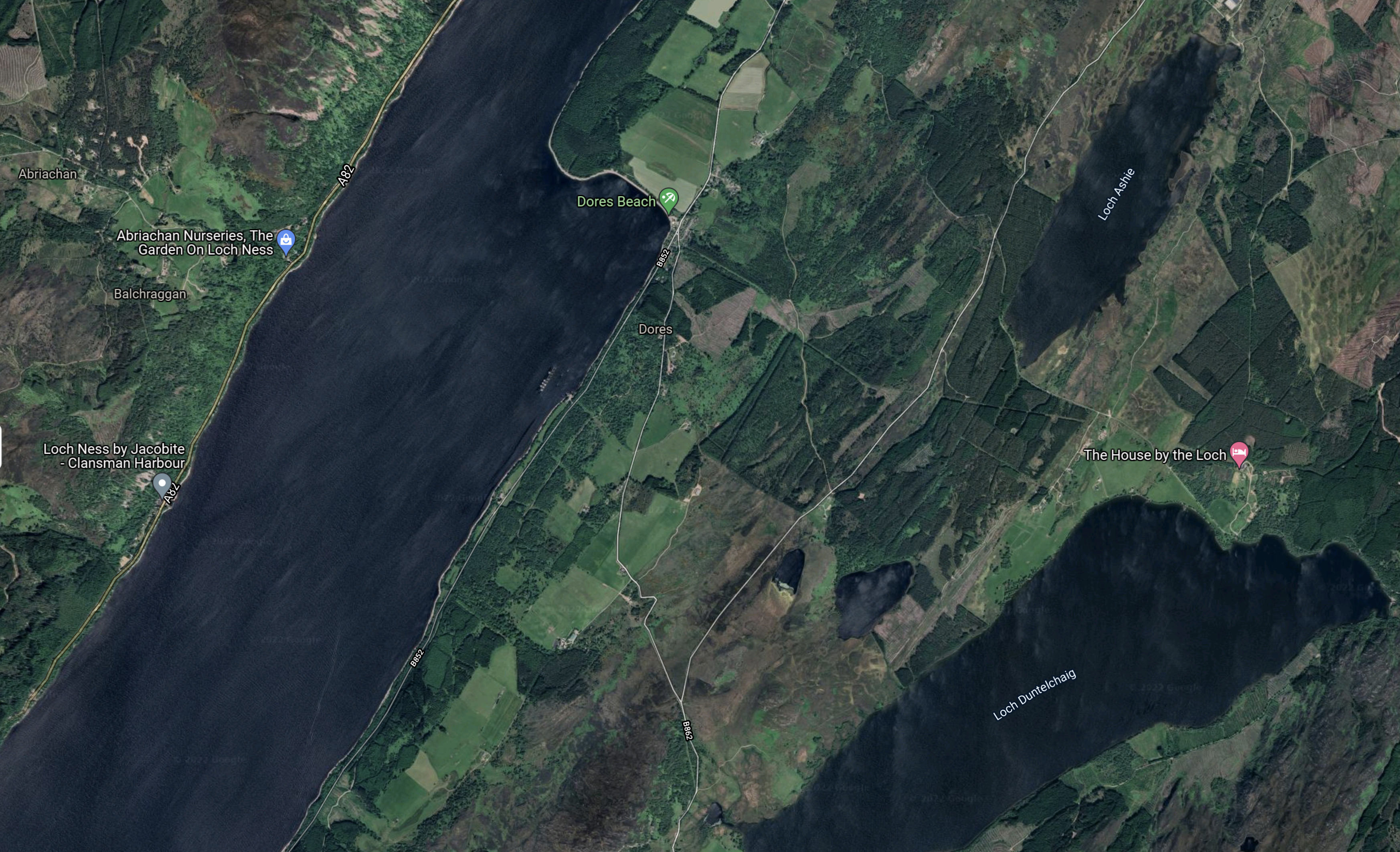
Note.
- Loch Ness is in the West.
- Loch Ashie is in the North.
- Loch Duntelchaig is in the East.
This second Google Map shows the area between Lochs Ness, Duntelchaig and Ashie in more detail.
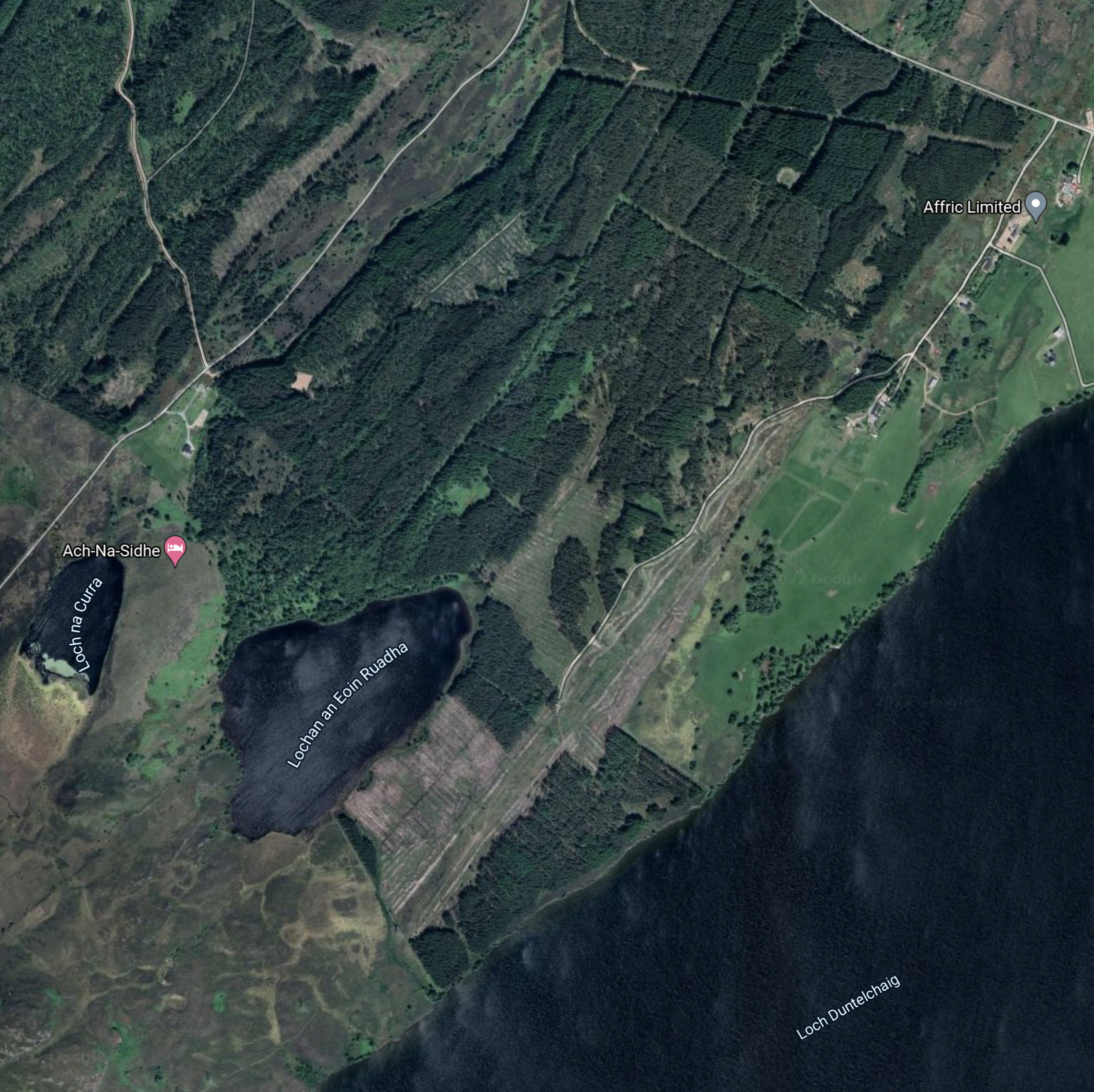
Loch na Curra and Lochan an Eoin Ruadha are now named and can be picked out in the previous map.
It looks like there will be a lot of heavy construction works to create the head pond.
Conclusion
This scheme has the output of a large gas-fired power station for just over six hours.
The finances must add up, as no-one would back a scheme like this if they didn’t get an adequate return on their money.
 The Anonymous Widower