Silvertown Tunnel Easing Congestion, TfL Says
The title of this post, is the same as that of this article on the BBC.
This is the sub-heading.
Transport for London (TfL) has shared the first insights about the impact on traffic of the new Silvertown Tunnel, as part of commissioner Andy Lord’s latest report to the TfL Board.
These two initial paragraphs gives a summary of about three weeks traffic.
Analysis of data between 21 April and 11 May shows the Silvertown and Blackwall tunnels are being used by an average of about 88,000 vehicles on a typical weekday. Of these, about 20,000 are using the Silvertown Tunnel.
Before the tunnel opened on 7 April, about 100,000 vehicles used the Blackwall Tunnel on weekdays.
TfL are claiming that this 12,000 drop in traffic is helping to ease congestion.
Logically, a drop in traffic will ease congestion, but the BBC article also says this.
However, it said it was aware of some increased traffic volumes at other river crossings, including the Woolwich Ferry.
The only other river crossings in the area are the Rotherhithe Tunnel and the Woolwich Ferry, both of which are free to all users.
So is the drop in traffic through the Blackwall and Silvertown Tunnels, due to drivers objecting to paying a toll and taking a free route instead?
On The Buses
The BBC article says this about bus passengers.
Mr Lord’s report also provided ridership data about the three bus services that operate through both tunnels: the new Superloop SL4, the extended route 129 and the 108, which already ran through the Blackwall Tunnel before 7 April.
Across the routes there is a daily average of more than 20,000 passengers making use of these services, of which typically about 7,000 are crossing the river using one of the two tunnels. In March 2025, there were about 2,700 crossings a day made using route 108.
The increase in bus passengers is not surprising.
Before the opening of the Silvertown Tunnel, there was just this bus service through the Blackwall Tunnel.
- London Bus 108 – Stratford and Lewisham via North Greenwich.
This has now been joined by, these bus services through the Silvertown Tunnel.
- London Bus 129 – Great Eastern Quay and Lewisham via City Airport and North Greenwich.
- London Bus SL4 – Canary Wharf and Grove Park via East India, Blackheath and Lee.
Note how the buses call at rail stations, an airport and other important traffic interchanges.
In Could The Silvertown Tunnel Handle More Buses?, I asked if buses through the Silvertown Tunnel should be increased?
Given that traffic through the combined Silvertown/Blackwall complex has dropped by 12,000 vehicles per day, that must leave space for a few buses or coaches.
- Assuming, that one bus or coach takes up the space of four cars, that would be space for 3,000 buses/coaches per day.
- Also assuming the bus and coach services are run on a twenty-four hour basis, that would be 125 buses/coaches per hour.
If the bus and coach services ran every ten minutes, that would say, there is space in the tunnel for up to a dozen new bus or coach routes.
There could develop a virtuous circle and feedback loop, which drives the tunnel to a state of equilibrium, where traffic grows through the tunnels, until it is maximised.
Consider.
- Research shows a bus route from A to B through the tunnel would attract passengers.
- Drivers and their passengers decide that on balance a bus ride is more convenient, no slower and more affordable than driving.
- Congestion charges and other charges for non-electric vehicles will play their part.
- Green issues will also will play their part.
- Fewer cars will use the tunnels.
- Increasing tunnel charges will only drive more car users to the buses.
- More free space in the tunnel, will allow more bus and coach routes.
- More bus and coach routes will attract drivers from their cars.
Eventually, equilibrium will be reached.
A similar effect happens, when a new bypass is opened and as if by magic it fills up.
When it happens with train services I call it, London Overground Syndrome.
On Your Bike
The BBC article says this about cyclists.
There is also a cycle shuttle service, enabling cyclists to take their bikes free of charge on a bus through the Silvertown Tunnel. TfL said some 100-150 people were using it on a typical day.
While this is below its capacity, TfL believes usage will grow as cyclists adapt their routes to benefit from this safer crossing option.
When I used to cycle around London in the 1970s, I never cycled under the Thames, but I did generally cycle as fast as I could across the city. I wouldn’t have put my bicycle on a free bus.
So, is this why the cycle shuttle service is below capacity?
The BBC article says this.
TfL believes usage will grow as cyclists adapt their routes to benefit from this safer crossing option.
I believe, that if TfL should ever charge for the cycle shuttle service, they’d kill it.
In my opinion, they’d be better off providing secure bike parking, but even some of that seems lightly used.
Tunnel Performance
The BBC article says this about tunnel charging and performance.
TfL said it intended to publish quarterly factsheets on the operational performance of the tunnels’ toll scheme.
This will include information about how many people pay the charge, the compliance rates for vehicles using the tunnels and the number of Penalty Charge Notices that are issued.
The first of these factsheets will be published later this year, but initial data shows that compliance has steadily increased, with about 90% of motorists either paying a charge or benefiting from an exemption.
Surprisingly, so far, I haven’t met anybody who has driven through the Silvertown Tunnel, except for a couple of bus drivers.
Is The Silvertown Tunnel A Silver Elephant?
I have been through the Silvertown Tunnel several times now and every time the bus has never really slowed for lots of traffic.
I went through this morning on Easter Sunday and these pictures show all the other traffic I saw.
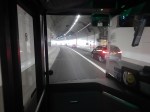
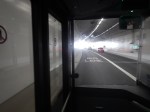
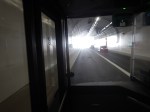
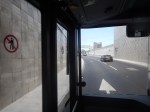
Note.
- I was sitting in the front passenger seat of a 129 bus, which is on the left of the bus.
- We were going from South to North through the Silvertown Tunnel.
- I could read the driver’s speedometer and it showed within a mile per hour of thirty all the way.
- We were passed by only one car in the tunnel.
- There were about a dozen passengers on the lower deck of the bus.
- I didn’t check how many were on the top deck of the bus.
Even on an Easter Sunday, I would have thought the service would have been busier.
Is The Silvertown Tunnel A Silver Elephant?
There are two answera to this question.
- Yes – A lot of money has been spent for just a few cars and bus passengers to have an easy ride through the tunnel.
- No – As traffic is flowing freely through the tunnel, it shows the tunnel is doing its job and freeing up traffic in East London.
But whatever view you take, a lot of money has been spent for a small number of vehicles and passengers to pass through the tunnel.
I also suspect very little extra revenue is being generated.
The Jubilee Line Was Busy
The complete route I took this morning was as follows.
- Home To Angel – 38 bus – Not very busy.
- Angel to London Bridge – Northern Line – Not very busy.
- London Bridge to North Greenwich – Jubilee Line – All seats taken.
- North Greenwich to West Silvertown – 129 bus – Not very busy.
- West Silvertown to Canning Town – Docklands Light Railway – Not very busy.
- Canning Town to Canada Water – Jubilee Line – All seats taken.
- Canada Water to Dalston Junction – Overground – Not very busy.
- Dalston Junction to Home – 30 bus – Not very busy.
Note.
- Only the sections on the Jubilee Line were really busy, with all seats taken.
- London Bridge, Stratford and Waterloo stations on the Jubilee Line are also busy National Rail stations.
- London Bridge, Canada Water, North Greenwich, Canning Town and Stratford all have large modern well-designed bus stations within easy walking distance of the Jubilee Line.
- Given, that there is now a charge to cross the river, have a lot of people decided to take the Jubilee Line rather than their car to go to the O2 at North Greenwich and the Olympic Park and Eastfield at Stratford?
I strongly feel, that more capacity is needed on the Jubilee Line, as no matter what time I use it, I never seem to get a seat.
Taking The Dover Road
This Google Map shows how the A2 ( the Dover Road) links up with the Silvertown and Blackwall Tunnels.
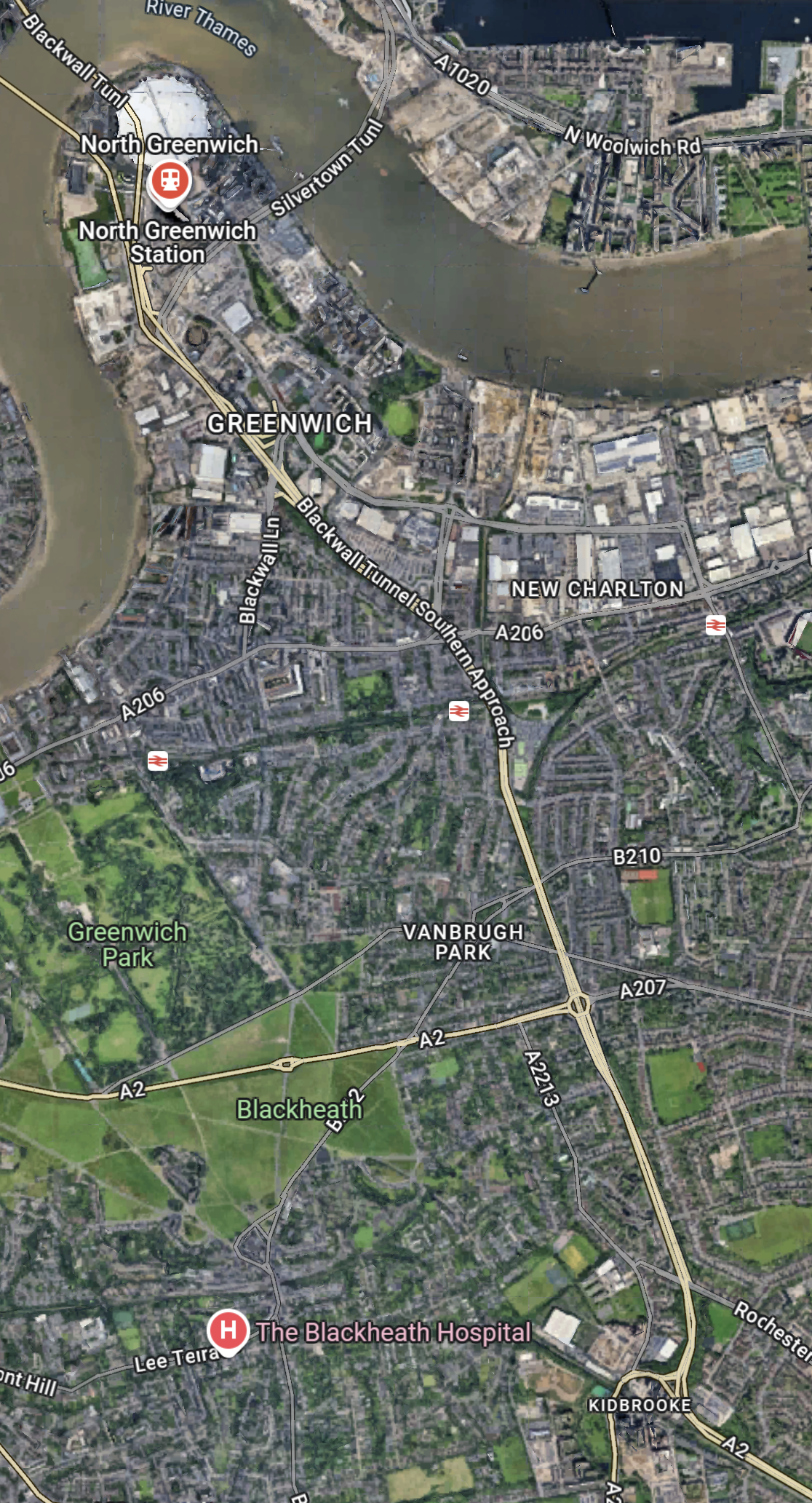
Note.
- The O2 in the North-West corner of the map, with North Greenwich station in red under it.
- The Blackwall Tunnel crosses the river to the North-West of the O2.
- The Silvertown Tunnel crosses the river to the East of the O2.
- Running diagonally across the map is the Blackwall Tunnel Southern Approach, which also serves the Silvertown Tunnel.
- The station to the West of the Southern Approach is Westcombe Park station.
- Click the map to show it to a larger scale.
This second Google Map shows the O2, North Greenwich station and the approaches to both tunnels.
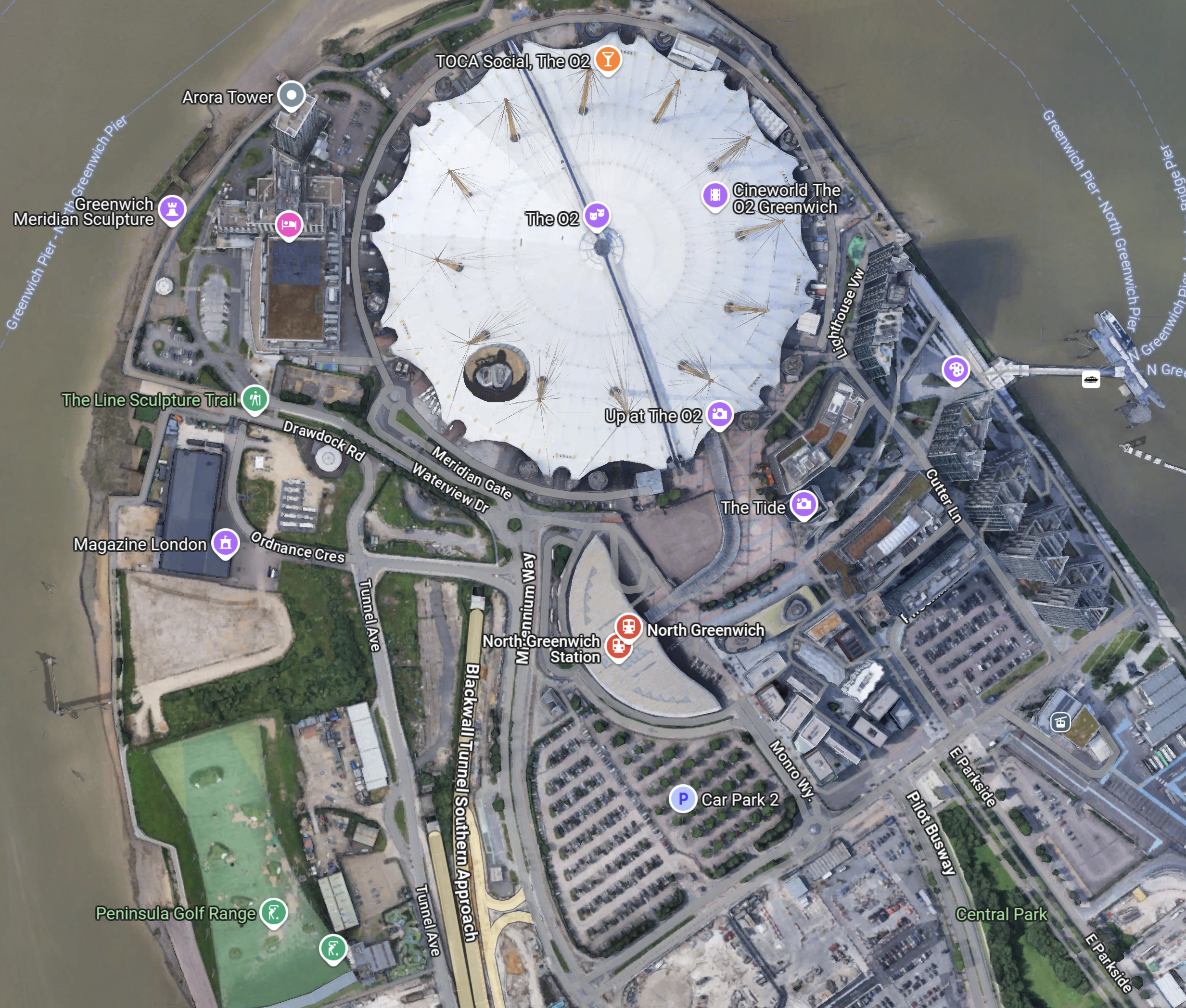
Note.
- The half-moon-shaped building is North Greenwich station.
- The tunnel approaches are rather complicated, but seem to be working well.
- There is lots of car parking.
- The Blackwall Tunnel Southern Approach leaves the tunnles in a Southerly direction.
- Click the map to show it to a larger scale.
This third Google Map shows how the A2 (Dover Road) and A20 (Folkestone Road) link up to the Blackwall Tunnel Southern Approach.
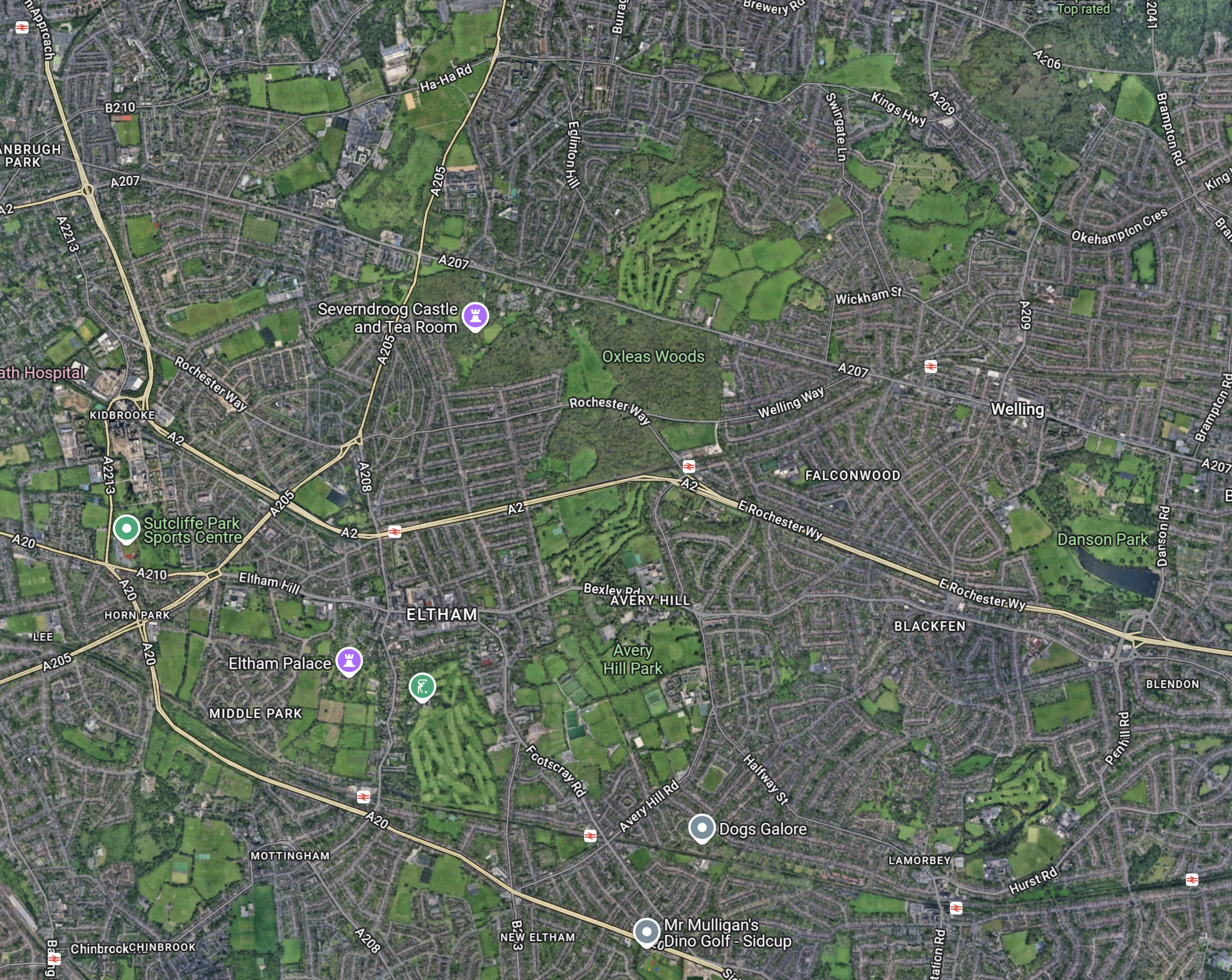
Note.
- The station in the North-West corner of the map is Westcombe Park.
- The road running diagonally South-East from the corner is the Blackwall Tunnel Southern Approach.
- The Blackwall Tunnel Southern Approach then turns East to join with the A2 (Dover Road).
- The Blackwall Tunnel Southern Approach also links up with the A20 (Folkestone Road) , which is the other road running diagonally at the bottom of the map.
In some ways, I am rather surprised at how little traffic is passing through the tunnels given this double dual-carriageway/motorway connection to East Kent, the Channel Tunnel and the Continent. It also has a double connection at both the A2 and A20 to join the M25.
Perhaps, it does mean that the charges are frightening drivers away.
The Roads To The North
This Google Map shows the main approach road to the Blackwall Tunnel.
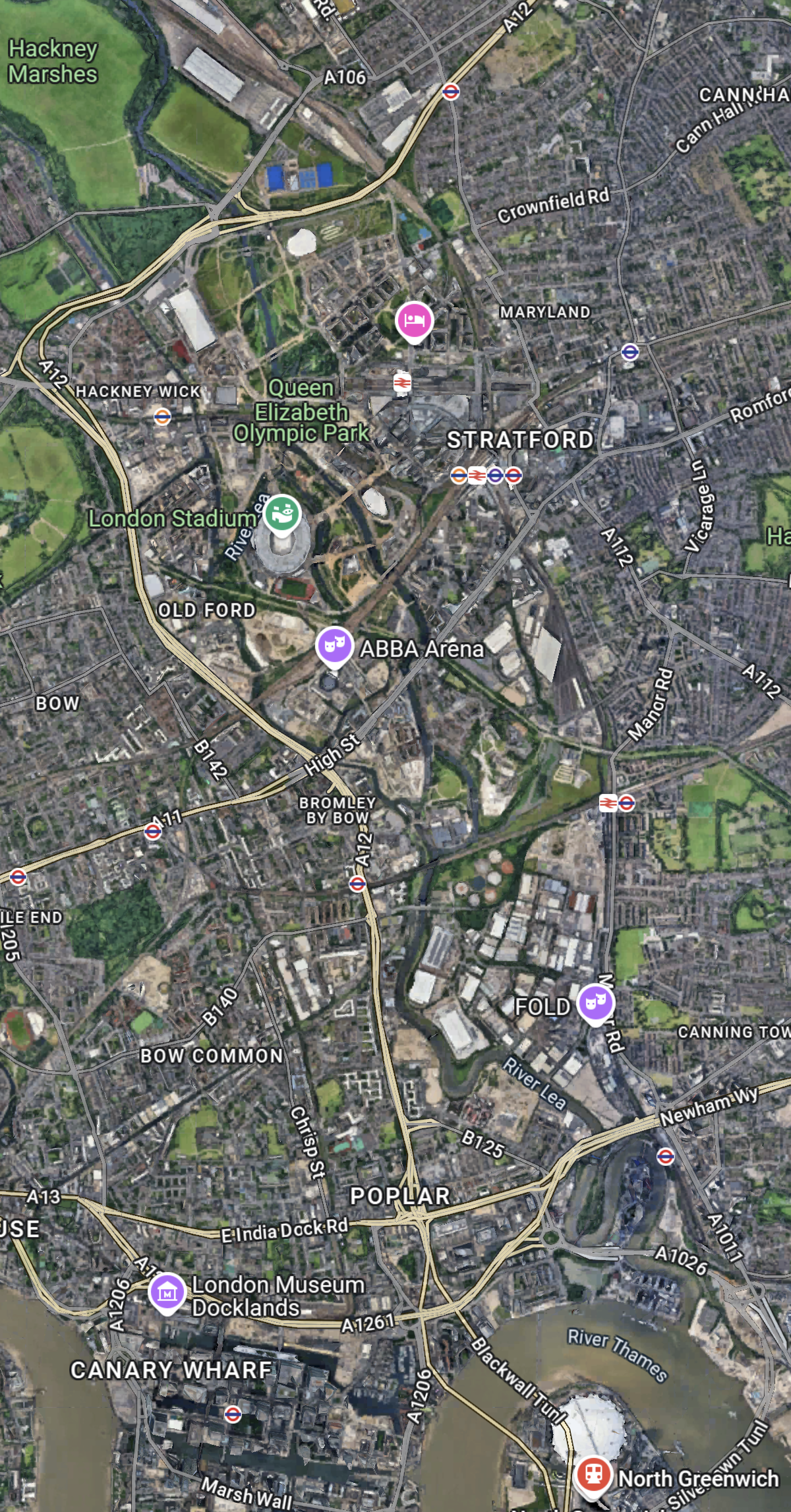
Note.
- The O2 and North Greenwich station in the South-East corner of the map.
- The Blackwall Tunnel crosses the river to the North-West of the O2.
- The A12 dual-carriageway runs North up the Lea Valley through Hackney.
- There is a dual-carriageway/motorway box formed by the M11 in the West, A12 in the East, M 25 in the North and A 406 in the South to speed traffic on its way, including to the two main routes to the North; the M1 and the A1.
I have lived for thirty years of my life in North London, and I feel, that although the roads to the North of London could be improved, I don’t suspect they are the reason drivers are not using the Silvertown and Blackwall Tunnels.
I would suspect that drivers don’t like or trust the charging system, or could it be that the public transport system in London and especially the East of London is too good?
But we do need to increase the capacity of the Jubilee Line either directly or would a high-capacity bus-route shadowing the line, be able to add the extra capacity needed?
Blackwall Tunnel On A Sunday Morning
This morning, as it was a Sunday, I checked out Blackwall and Silvertown Tunnels for traffic for free, using my Freedom Pass.
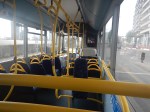

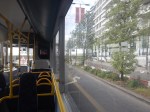
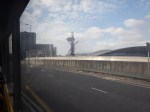

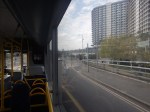
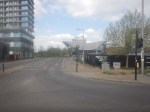
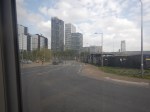
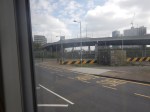
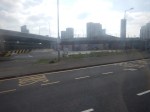
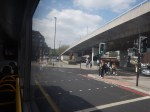

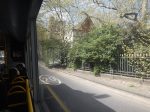

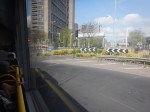
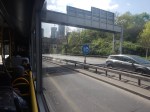
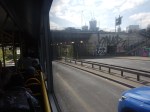
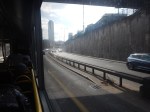
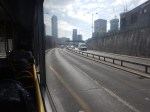
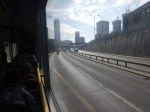
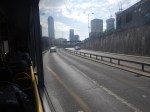
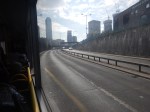

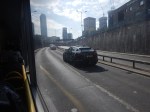
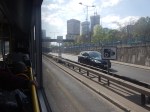
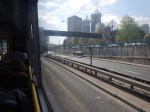
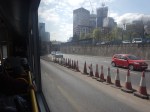
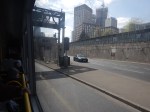
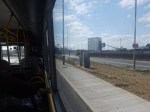
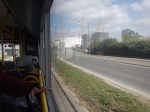
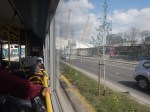
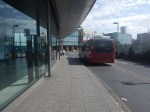
These pictures were taken, on my route South to North Greenwich station.
Note.
Checking The Traffic In The Blackwall Tunnel
In A Return Journey Through The Silvertown Tunnel On A 129 Bus, I observed that there wasn’t much traffic in the Silvertown Tunnel, but that it might be in the Blackwall Tunnel.
So this morning, I went through the Blackwall tunnel to check and took these pictures.
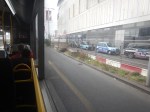
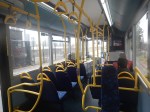
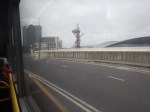
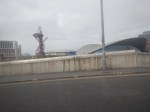
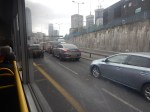
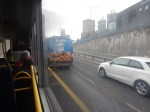
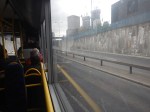
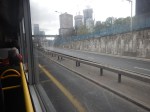
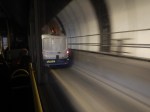
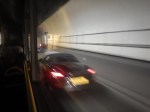
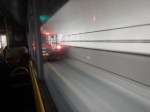
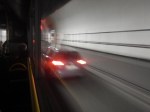
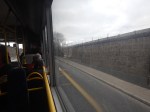
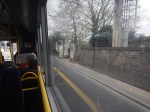
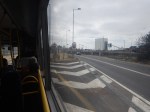
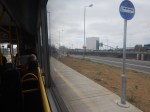
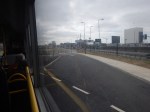
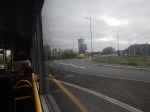
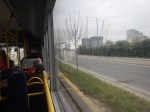
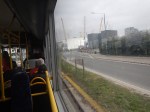
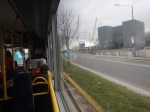
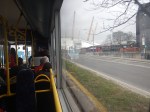
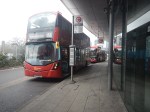
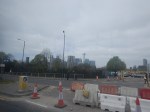
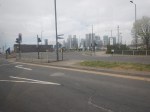
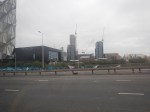
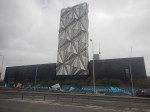
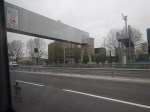
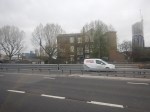
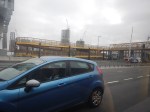
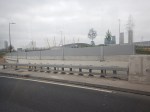
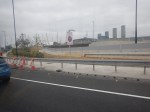
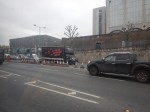
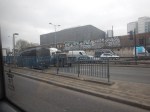
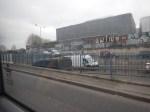
Note.
- I caught the 108 bus from bus stop F, which is opposite the taxi rank at Stratford station.
- The bus went round parts of the Olympic Park to pick up passengers.
- There was quite a bit of traffic slowing my journey before the Blackwall Tunnel.
- I went Southbound first in the modern tunnel buiult in the 1960s.
- I turned round at North Greenwich station, as the bus was crowded and I wanted a good seat from on return, from which to take pictures.
- I came back in the Northbound tunnel, which dates from the 1890s.
But I achieved my objective and found that the Blackwall Tunnel was taking more vehicles than the Silvertown Tunnel. Even the buses were taking more passengers!
I have further thoughts.
I Don’t Like The Blackwall Tunnel
Consider.
- We were going to my Uncle Bert’s house in Broadstairs one day, when I was about eight.
- In those days of the 1950s, there was only one bore of the tunnel and we got stuck in it, for a couple of hours.
- I don’t remember using the tunnel again and I suspect we probably used Tower or London Bridge.
The last time I used it in a car, was coming back from Gatwick to when we lived just North of Ipswich and the Dartford Crossing was blocked. So I cut through South-East London, drove through the Blackwall Tunnel and up the A12.
If I Was A Driver I’d Probably Take The Silvertown Tunnel
Unless of course there was a problem!
Should There Be Limits To The Type Of Vehicles Allowed In The Blackwall And Silvertown Tunnels?
When the Silvertown Tunnel opens in 2025, the tunnel and the nearby Blackwall Tunnel will be tolled.
But will there be any restrictions on the vehicles that can use the tunnels, other than those that apply to the Blackwall Tunnel at the present time, which are detailed in Wikipedia.
The tunnels are no longer open to pedestrians, cyclists or other non-motorised traffic, and the northbound tunnel has a 4.0-metre (13.1 ft) height limit.
Note.
- I suspect that pedestrians, cyclists or other non-motorised traffic will also be banned from the Silverton Tunnel.
- But the height limit will be relaxed for the Silverton Tunnel to allow large trucks and double-deck buses to use the tunnel.
According to this web page, which is entitled the Silvertown Tunnel Bus Network Proposals, the planned buses through the tunnel include.
- 108 – As now, with a minor route change.
- 129 – As now, but extended from North Greenwich station to Great Eastern Quay.
- X329 – An express bus from Grove Park station to Canary Wharf, which runs non-stop through the Silvertown Tunnel.
Note.
- The 108 goes through Blackwall and is a single decker bus.
- The 129 and the X329 will go through Silvertown and could be double decker buses.
- There appears to be no mention of any provision for cycles.
- I would assume wheelchairs, buggies and cases will be accommodated as they are on current London buses.
I also think, that the buses must be zero-carbon, which would mean battery-electric or hydrogen.
In Hydrogen-Powered Vehicles And Trains In Tunnels, I looked at the feasibility of running hydrogen buses through the tunnel and came to this conclusion.
I am confident, that we will achieve a safety regime, that allows hydrogen-powered vehicles and trains to be certified to pass through tunnels.
The great advantage of hydrogen buses on the three routes would be that they would probably only need to be filled up once a day, but electric buses might need constant charging.
Provision For Cycles
I think it is essential to have provision for cycles across the river.
- Folded cycles can be taken almost anywhere on London’s transport system.
- Non-folding cycles can be taken most places on London’s transport system, but the hours are restricted.
- There’s always the Woolwich Ferry.
- Given that the 108 bus seems to weave its way through the East End, I suspect that this bus couldn’t be longer to carry cycles.
I have seen double-deck buses, with provision for cycles at the back of the lower deck in Europe.
- Perhaps buses like these, could be used on the 129 and X329 routes.
- A search of the Internet found some buses in East Yorkshire with provision for two standard cycles.
- The 129 bus could ferry bikes between North Greenwich station and a convenient stop on the North side of the river.
- The X329 bus could ferry bikes over the non-stop section of the route between the Sun in the Sands and Leamouth roundabouts.
There could be shorter routes adding extra capacity between the stops, where bikes are loaded and unloaded.
Large Trucks Through The Tunnel
If buses become zero-carbon through the Blackwall and Silverton Tunnels, then why shouldn’t large trucks be zero-carbon?
I think this could be the carrot combined with free passage for zero-carbon vehicles that could clean up Central London’s polluted air.
Smaller Vehicles
Why not gradually reduce the size of vehicles going through the tunnels that must be zero-carbon?
Conclusion
The Silvertown and Blackwall Tunnels can be used as the drivers to clean up Central London’s air.
Silvertown Tunnel Bus Network Proposals
This web page is the Silvertown Tunnel Bus Network Proposals.
These proposals are made.
- A new high frequency, limited stop service between Grove Park and Canary Wharf referred to in this consultation as route X239
- To extend route 129 (Lewisham – North Greenwich) north across the river to Great Eastern Quay via the Royal Docks development zone
- A minor change to route 108 so that it uses the new Millennium Way slip road to exit the Blackwall Tunnel southbound
- We are also seeking your views on route options for three sections of routes 129 and X239.
It looks like route 108 will continue to use the current stop.
The proposals include this map.
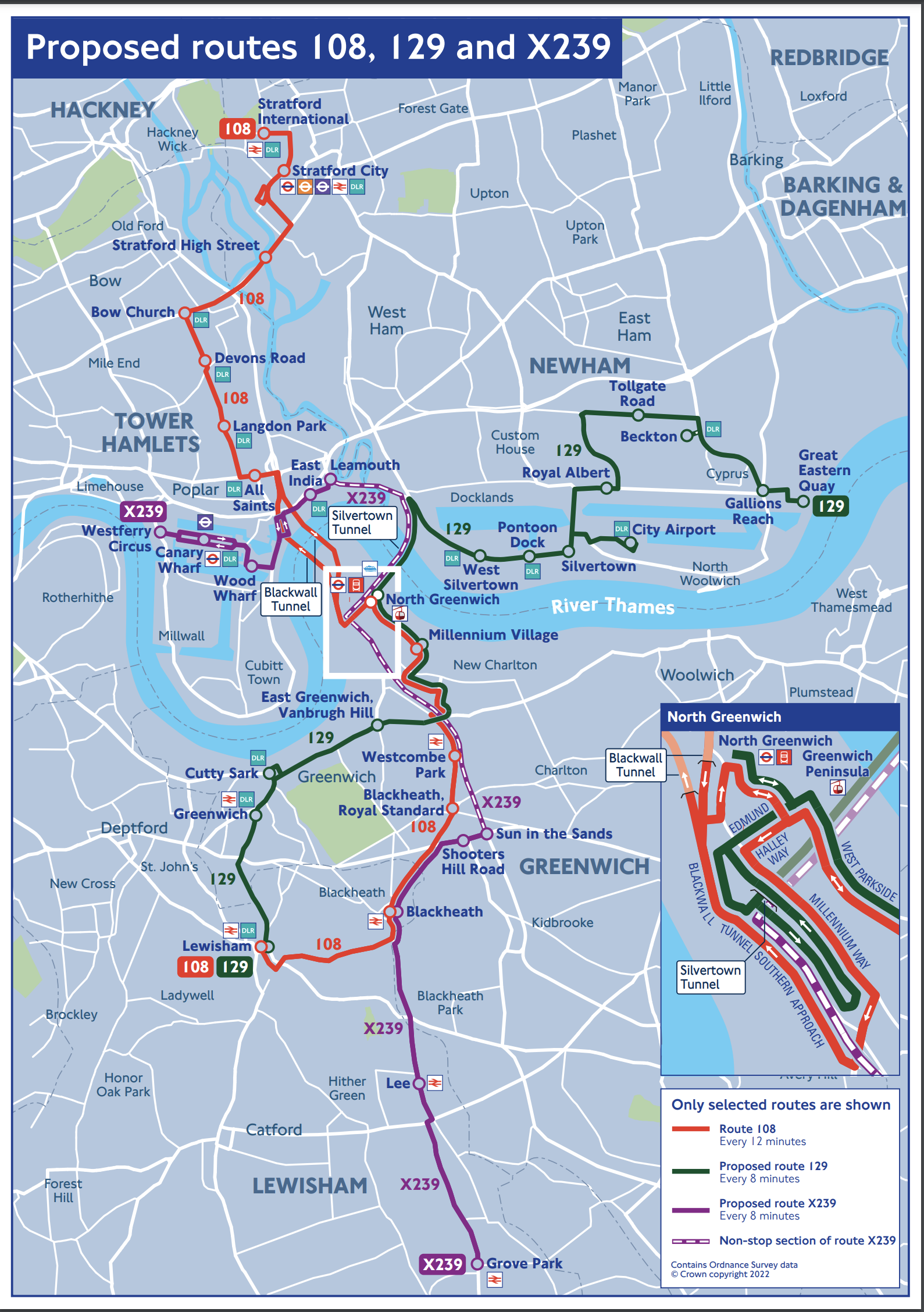
I copied this map from the TfL web site, as they don’t provide one for people who want or need to use it.
These are my observations.
The 108 Bus
The 108 seems to be more or less as now and will be continue to be run by a single-decker bus, as double-decker buses can’t use the Blackwall Tunnel.
North of the Thames, the 108 calls at these stations.
- Stratford International for DLR and National Rail.
- Stratford for DLR, Central, Elizabeth and Jubilee Lines, and National Rail.
- Bow Church for DLR
- Devons Road for DLR
- Langdon Park for the DLR
- Bazely Street (All Saints) for DLR
South of the Thames, the 108 calls at these stations.
- North Greenwich for the Jubilee Line.
- Westcombe Park for National Rail
- Blackheath for National Rail
- Lewisham for DLR and National Rail
Note.
- It is possible to go between Lewisham and Stratford on the DLR with a change at Canary Wharf.
- It is possible to go between North Greenwich and Stratford on the Jubilee Line.
- Westcombe Park station is on the Greenwich Line.
I would wonder, if many people use this bus route for long distances.
The 129 Bus
Note.
- The 129 appears to connect Lewisham and Greenwich to the City Airport and the Becton branch of the DLR.
- Many journeys on the 129 bus, might be easier using the DLR, with a change at Westferry or Poplar, which is probably what travellers do now.
- The 129 bus is shown on the map with a stop at Silvertown. Does that mean that it could connect with a Silvertown station on the Elizabeth Line?
- As the 129 bus will pass through the larger Silvertown Tunnel, it could be a double-decker route, instead of the current single-decker.
North of the Thames, the 129 calls at these stations.
- Gallions Reach for the DLR
- Beckton for the DLR
- Royal Albert for the DLR
- London City Airport for the DLR
- Silvertown
- Pontoon Dock for the DLR
- West Silvertown for the DLR
South of the Thames, the 129 calls at these stations.
- North Greenwich for the Jubilee Line.
- Cutty Sark for DLR
- Greenwich for DLR and National Rail
- Lewisham for DLR and National Rail
Would improvements and a frequency increase to the DLR and the building of Silvertown station, mean that changes to the 129 bus route, would not be so important?
The X329 Bus
Note.
- Canary Wharf must be served and starting at Westferry Circus is probably a good choice.
- But is Grove Park station, the ideal Southern terminal?
- Not stopping the X329 bus at North Greenwich is probably correct, as North Greenwich station is a large Jubilee Line and bus interchange close to the O2.
North of the Thames, the X329 calls at these stations.
- Canary Wharf for DLR and Elizabeth and Jubilee Lines
South of the Thames, the X329 calls at these stations.
- Blackheath for National Rail
- Lee for National Rail
- Grove Park for National Rail
Note.
- Blackheath station is on the Bexleyheath and North Kent Lines.
- Lee station is on the Dartford Loop Line.
- Grove Park station is on the South Eastern Man Line.
- Grove Park has a bus station, where there could be space for a battery charger for electric buses.
The X329 seems to have been partly designed on the premise, that an express bus should be run through the Silvertown Tunnel. But it does connect four of the rail lines going into London terminals to Canary Wharf.
Silvertown Station For London City Airport
Silvertown station would more than double the number of stations with easy routes to the London City Airport.
The Elizabeth Line would enable the direct connection that is needed to Canary Wharf, the City of London, Heathrow, Liverpool Street and Paddington stations and the West End.
- A single change at Abbey Wood, would give access to much of Kent.
- A single change at Farringdon, would give access to Thameslink services and Gatwick and Luton airports.
- Around 2030, a single change at Old Oak Common, would give access to High Speed Two services.
- A single change at Paddington, would give access to Wales and West services.
- A single change at Whitechapel, would give access to the great circle of the London Overground.
I believe the case for a Silvertown station with at least a good walking route to the London City Airport is strong, and the station would be a marvellous asset for Silvertown and the Airport.
Is This The Worst Bus Stop In London?
This article on MyLondon is entitled The ‘Creepiest’ London Bus Stop Hidden At The Bottom Of A Dark, Grimy Staircase In East London.
I just had to go and take a look at the bus stop.

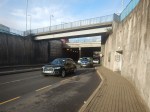
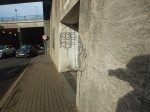
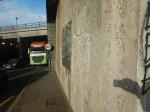

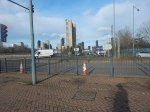
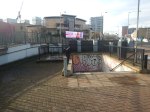
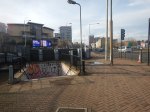
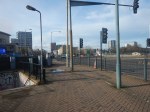
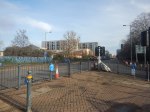
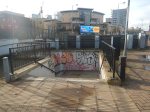
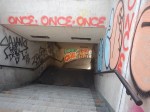
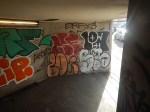
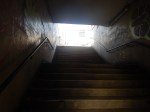
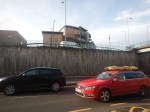

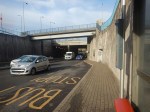
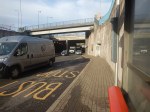
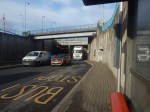

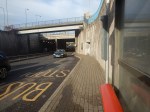
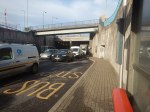
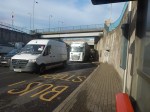
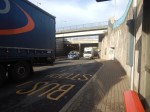
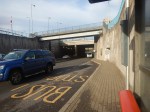
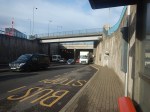
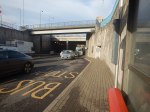

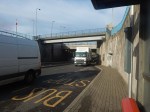
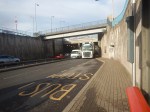
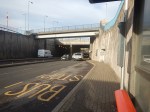
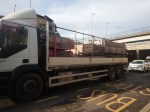
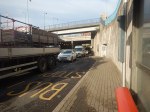
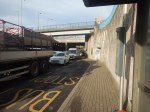
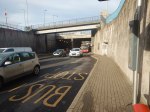
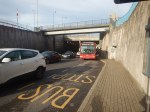
Note.
- The bus stop is on the road leading to the modern Southbound tunnel.
- There were a surprising number of full-size articulated trucks.
- The traffic was moving fairly slowly.
- The pollution was bad, but I’ve been in worse.
The stairs were covered in graffiti, but they appeared to have been swept recently, as there was only a small amount of litter and that was mainly a few leaves.
This Google Map shows the junction and the position of the bus stop.
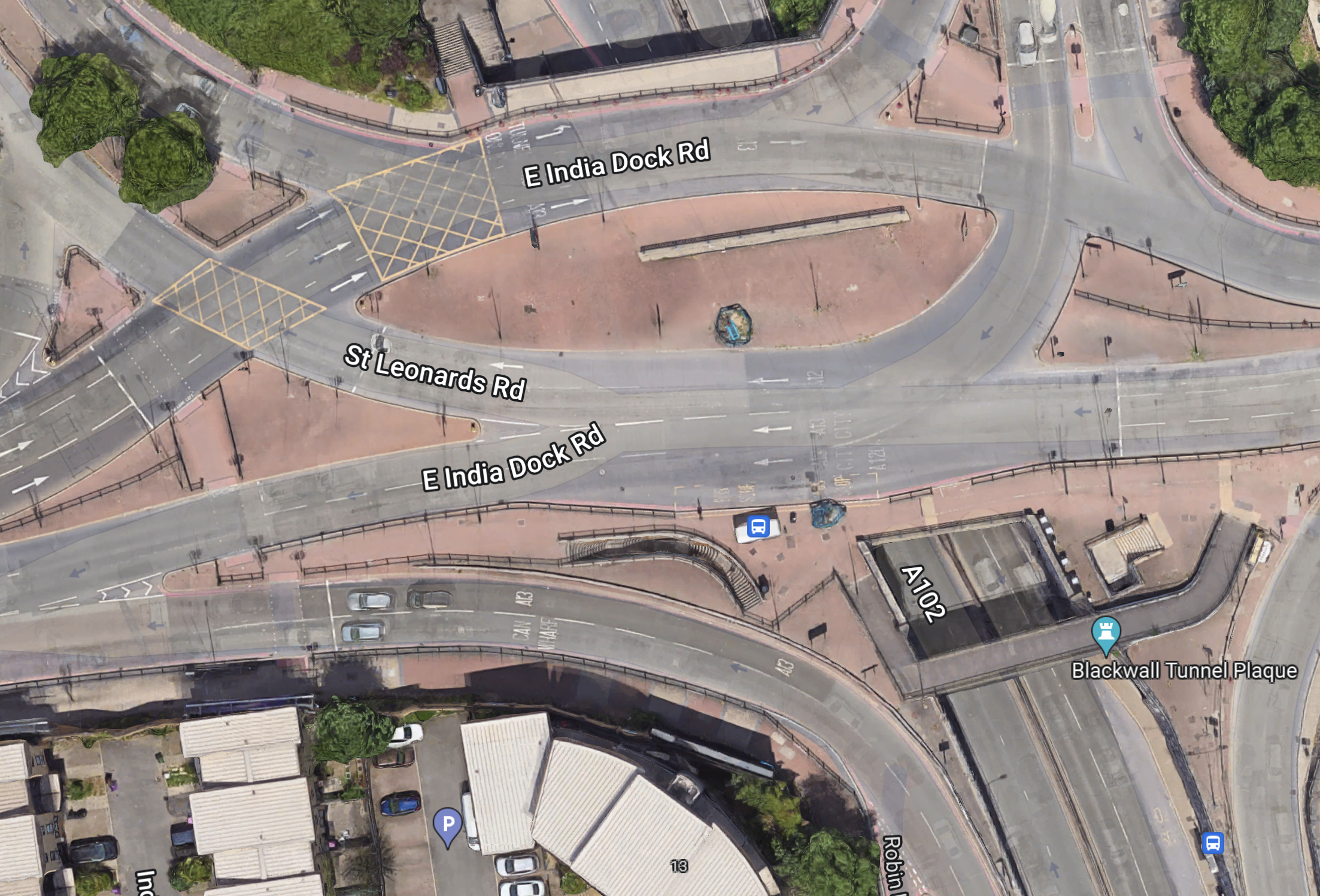
The bus stop is in the bottom-right corner of the map.
 The Anonymous Widower