Crossrail In Docklands
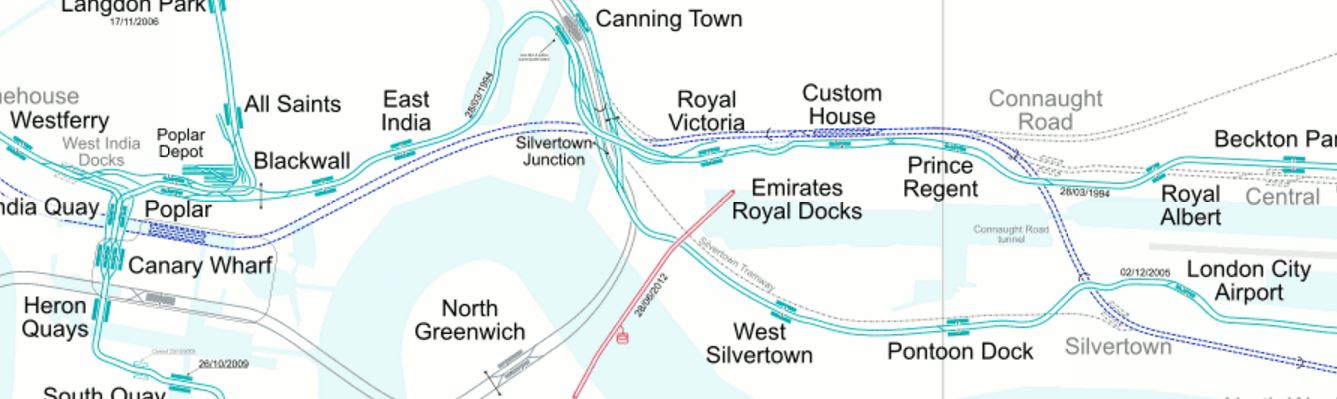
This map from carto.metro.free.fr shows the route of Crossrail through Docklands.
Crossrail In Docklands
Cossrail is shown in a blue-purple colour and it goes horizonrally across the map.
The Crossrail stations in the area are as follows from West to East.
Whitechapel
Whitechapel station is off the map to the west.
I have included it, as it will be Crossrail’s Jewel In The East and the most important interchange for the line in East London.
- It links both eastern branches of Crossrail to the Metropolitan and District Lines.
- It provides an interchange to London’s important but sometimes forgotten East London Line.
- An extended Whitechapel station would provide much better access to the East of the City of London.
But perhaps more importantly, Whitechapel is the reversal station for passengers travelling between one Eastern branch of Crossrail and the other.
Canary Wharf
Canary Wharf station is Lord Foster’s architectural set piece for the line, which is probably more about showing off, shopping and leisure, than transport.
I have my worries about this station, in that interchange between Crossrail and the Jubilee Line and the DLR, may turn out to be long walks interspersed with a couple of long escalators.
I also think that many passengers for Canary Wharf will prefer to come to the area on the light and airy Docklands Light Railway, rather than on a deep, dark line with no views. Cinderella always comes out on top, as that’s where she belongs.
But then this station wasn’t designed for the needs of normal passengers.
I think that when Trip Advisor and other sites, start to rate Crossrail that this station will not be liked, except by those who live and work in the area.
Custom House
Custom House station is being built primarily to serve the Excel Exhibition Centre and the surrounding area.
But it will also provide a valuable easy connection to the Docklands Light Railway, which is lacking at Canary Wharf
Silvertown
Silvertown station is not planned, but the site has been safeguarded, so that it can be built when required.
I think it will be built in the next few years.
- It would link Crossrail to the London City Airport.
- It would give London City Airport a direct connection to Heathrow and a one-change connection to Gatwick.
- It would link Crossrail to the Southern branches of the DLR.
- Hopefully connections would be better than at Canary Wharf.
But the building of this station, will be mainly driven by the developments to the south of the Royal Docks.
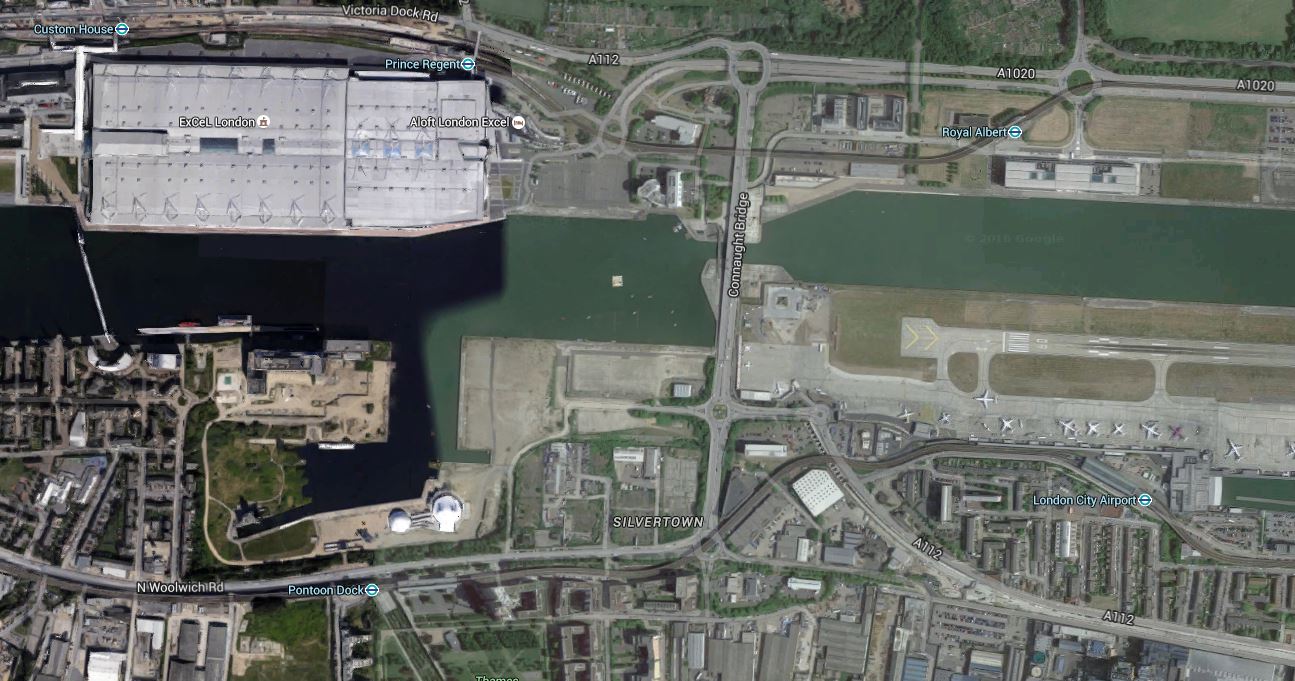
This is a Google Map of the area, which shows the North and South entrances to the Connaught Tunnel, which takes Crossrail under the Docks.
The Route Of The Connaught Tunnel
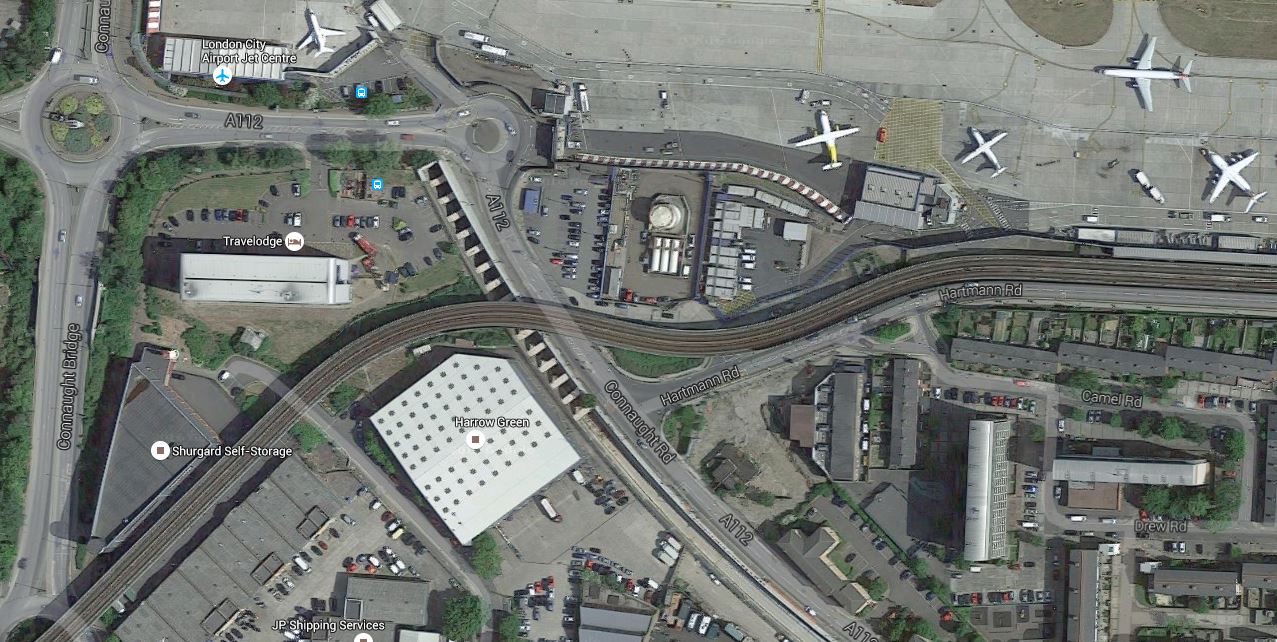
This second Google Map, shows the Southern entrance to the Tunnel in detail.
Silvertown Station Site
The proposed Silvertown station would be in this area. As to the precise location, I can’t find any information.
Woolwich
Woolwich station is to the east of Docklands on the South bank of the Thames.
It has been built solely to serve the new housing on the Royal Arsenal site and has very poor connectivity with other rail lines.
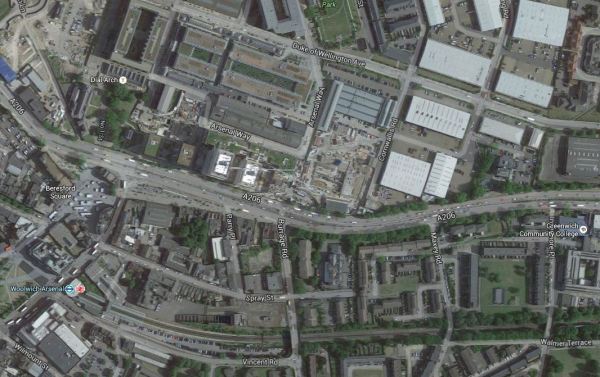
This is a Google Map of the area.
Woolwich Stations
Note Woolwich Arsenal station and the co-located DLR connection to the South West of the map.
Woolwich station is somewhere underneath the blocks to the North.
There is certainly a need to create a decent walking route in the area.
Conclusion
Looking at these stations, it strikes me that although connectivity between Crossrail and other lines is there, it is not of the best at some stations.
Scoring them out of ten, I would give scores as follows.
- Whitechapel – 10
- Canary Wharf – 4
- Custom House – 8
- Silvertown – 7
- Woolwich – 3
Obviously, when the line opens, good design may improve matters.
But I do feel that building Silvertown station would make the whole line a lot better.
Is A Rail War Starting To London’s Airports?
The following sections sum up the rail services to the various London airports.
London City Airport
London City Airport may only be small, but some people use it a lot. I never have, but that’s not for dint of trying. It’s just that if I include all the factors, by which I choose a flight, it hasn’t come out top yet!
London City Airport is only on the Docklands Light Railway, but when Crossrail is open and Bank station has been fully upgraded in 2021, it will be a relatively easy airport through which to travel.
Crossrail passes very close to the Airport and passive provision has been made for a Silvertown station that could be connected to the Airport. At present, the Docklands Light Railway provides enough capacity.
Eurostar
Eurostar is the cuckoo in the nest and should be included, as it will offer rail services to a couple of European Airports.
By the early 2020s, there will be new direct or single-change services to France, Germany, The Netherlands and Switzerland.
I also suspect that one of the first extensions of Crossrail will serve Ebbsfleet International station, so it will give a lot more passengers easy access to European services.
Gatwick Airport
This year the rail links to Gatwick Airport are getting a major upgrade.
- The current unsuitable Class 442 trains used on Gatwick Express, are being replaced with new Class 287/2 trains, designed for the route.
- The current mixture of Thameslink Class 319 and Class 387 trains are being replaced with new higher capacity walk-through Class 700 trains.
- Gatwick Airport station was redeveloped with new buildings and two extra platforms under two years ago.
- Gatwick Airport has now been brought into London’s Oyster and contactless ticketing area. This report in Rail Technology Magazine gives more details.
And increasingly, as the next few years roll on, various developments will or could happen.
- Thameslink and particularly London Bridge station will have greater capacity.
- Thameslink will add many direct trains to new destinations like Cambridge, Stevenage and Peterborough.
- Thameslink and other developments, will mean that nearly all stations East of the Midland Main Line, will have access to Gatwick Airport through with only a single change at a convenient interchange like Bedford, Cambridge, Farringdon, Finsbury Park, Luton, Peterborough or Stevenage.
- The dreadful links to the Thameslink platforms at St. Pancras, from some other lines at Kings Cross and St. Pancras will be improved.
- An IPEMU variant of the Class 387 Gatwick Express could easily reach Reading on an hourly-basis, to give single-change access between Gatwick Airport and Wales and the West.
- The East Coastway and West Coastway routes could be extended to Ashford and Bournemouth respectively, improved with more and faster trains and a better interchange to Gatwick services at Brighton.
But I believe that what would transform train services to Gatwick, is when the whole of the area from Weymouth and Reading in the west to Ramsgate in the East becomes part of London’s Oyster and contactless bank card ticketing area.
Heathrow Airport
Heathrow Airport will have to wait until December 2019 before it gets any more capacity to Central London, in the shape of Crossrail.
Until then, it will have to make do with the current services.
- The very crowded and slow Piccadilly Line.
- The infrequent Heathrow Connect.
- The overpriced and much unloved Heathrow Express.
But there are serious problems.
- The rail lines into the airport are designed to maximise revenue for Heathrow, rather than the convenience of passengers.
- Crossrail hasn’t been designed to serve Terminal 5 directly. How daft is that?
- Links to the West are atrocious and rely on going into London and out again. Gatwick has better links to Reading!
- As I wrote in Heathrow Express And Crossrail, Heathrow and TfL are still arguing about access for Crossrail into Heathrow.
- Boris has indicated that Freedom Passes will be allowed on Crossrail to Heathrow.
- Heathrow Express will be killed by Crossrail, if Heathrow allows it to serve the airport.
- Gatwick, Luton and Stansted Airports will become part of London’s Oyster and contactless bank card ticketing area. Will Heathrow?
- Improved rail links and services at Gatwick, Luton and Stansted Airports will make these airports more attractive for a lot of passengers than Heathrow.
On top of all this, Heathrow needs Crossrail to give the Airport connectivity to large parts of the South East, the West Coast Main Line and HS2.
I think all candidates for the next London Mayor, will be playing the anti-Heathrow card frequently and with immense relish.
In the end Heathrow will have to accept the following.
- The closure of Heathrow Express.
- Full access of Crossrail directly to all terminals, at an agreed price with TfL.
- Oyster and contactless bank card ticketing.
- A rail link from the West, under probably Network Rail, Great Western and TfL control.
If they don’t like it, then I’m sure Gatwick, Luton and Stansted Airports will take up the slack.
Luton Airport
Luton Airport is in some ways the joker in the pack, but also it has plans to expand, as is reported in this article in the Daily Mail, entitled Luton Airport reveals plans for direct rail line that would cut train journey from central London to just 20 minutes.
In Will Bombardier Develop The Ultimate Airport Train, I discussed Luton Airport in detail and came to the conclusion that if Bombardier Class 387/2 trains as used on the Gatwick Express were fitted with an IPEMU capability, they could easily use terminal platforms without electrification in a tunnel under the Airport.
Whether they will or not, I don’t know, but there is scope for very affordable solutions to providing a fast rail link into Central London.
Luton Airport is closer than Gatwick is to Central London, so I would expect that Oyster and contactless bank card ticketing, would not be a problem.
Southend Airport
Southend Airport is the newest of London’s airports. I know it well from my days as a pilot and occasionally use it on trips to the Netherlands on easyJet.
Operationally for airlines, Southend Airport’s location, close to the Essex Coast is ideal, as it is away from other airports and pilots can get planes in to and out of the airport without too much delay. Also, flights coming in from the East have an uncluttered approach, over the sea and marshland. I once came in to the airport on a flight from Schipol and was on the train from Southend Airport station to Central London, within an hour of boarding the flight in The Netherlands.
I can understand why the Roskill Commission recommended that London’s new airport should be built on Maplin Sands.
This airline-friendly location could drive growth at the airport, especially if the airport keeps its reputation for fast passenger handling.
The Airport talks about handling two million passengers by 2020 and I can’t feel that this is unreasonable.
What could help passenger growth is that there is plenty of scope for making rail trips to Southend Airport easier, especially for Southend’s typical traveller with just hand-baggage and perhaps a wheeled case.
At present Southend Airport and Southend Victoria have three services to and from Liverpool Street per hour, which stop at all stations between Shenfield and Southend Victoria and then just Stratford and Liverpool Street. This is a recent upgrade, as Wikipedia says one train stops at all stations.
Journey times are as follows.
- Liverpool Street – 64 minutes – Just four minutes longer than Stansted.
- Stratford – 57 minutes
- Shenfield – 27 minutes
Capacity isn’t a problem as all stations can take eight-car trains.
The airport station is very close to the terminal and is fully step-free. Incoming passengers from the London direction, don’t even have to cross the railway to get to the terminal.
Crossrail and the new East Anglia franchise will certainly have effects, some of which have already happened.
- Between Shenfield and London there will be at least eight high-capacity Crossrail trains per hour.
- Will Crossrail run on a twenty-four hour basis?
- Shenfield will have Oyster and contactless card ticketing. Will this go all the way to Southend Victoria?
- Shenfield will be Freedom Pass territory.
- Will Norwich-in-Ninety improvements mean that times between Shenfield and London are reduced?
- Will more of the longer distance services to East Anglia, stop at Shenfield for interchange with Crossrail?
I suspect that the answer to the two last questions, will be yes. This improved connectivity and reduced journey time, would mean that a lot of places in East London, Essex and East Suffolk, would be just one change at Shenfield away from Southend Airport.
I wouldn’t be surprised to see some upmarket trains between Southend Victoria and Liverpool Street, with a four trains per hour frequency. Partly, this will be driven by the airport, but also by the competition for passengers between the two companies running services to Southend.
Stansted Airport
Stansted Airport is currently served by the adequate but slow Stansted Express.
Stansted Airport is owned and operated by the ambitious Manchester Airports Group and I can’t see them sitting idly by, whilst Gatwick and Luton expand into their market. After all, they have resources that other airports in the South East lack; space and spare capacity on the current runway.
The rail links need improvement and these will or could happen in the next few years.
- The West Anglia Main Line will be developed and given four tracks between at least Broxbourne and Lea Bridge stations, with higher speed limits.
- There will be a higher frequency for Stansted Express trains into Liverpool Street.
- Stansted Express will serve Stratford several times an hour.
- Stansted Airport station will gain a second tunnel and platform.
- There will be an improved service between Stansted and Cambridge.
- Stansted Airport will become part of London’s Oyster and contactless bank card ticketing area.
The service between Cambridge and Stansted is a truly inadequate, single train per hour to and from Birmingham via Peterborough and Leicester.
I believe that when the new East Anglian franchise is awarded, the route north from Stansted will see the greatest improvement. Note that Thameslink will have four trains per hour to Cambridge going through London of which two will go all the way to Gatwick Airport and Brighton.
I wouldn’t be surprised to see two half-hourly services added to the airport.
- Stansted Airport to Peterborough via Cambridge, Cambridge North and Ely.
- Stansted Airport to Norwich via Cambridge, Cambridge North and Ely.
Even if the current Birmingham service was cut back, this would still give four trains per hour between Stansted Airport and one of its most important catchment areas.
Note how Cambridge North station, which serves the North of the City and the Cambridge Science Park, will be given good rail links.
In Better East-West Train Services Across Suffolk, I wrote about a radical idea of Network Rail to create a much improved service between Peterborough and Ipswich, based on a rebuilt Newmarket station.
But who knows, what will actually happen? I don’t!
But whatever happens to the North of Stansted Airport, the rail links to the airport will be much improved by 2020 or so.
Road Improvements
Road improvements will not be numerous, but one new road will effect the use of airports.
If a new Lower Thames Crossing is built, it could make driving to Gatwick, Stansted and Southend Airports easier and some travellers will shun Heathrow.
On the other hand, if it wasn’t built, it might favour other airports.
Conclusion
All of London’s six airports, except probably London City will be seeing large investments in rail infrastructure, stations and trains in the near future.
Heathrow won’t like it, but I think the political consequences for the major parties of a new runway at Heathrow will make it unlikely that Heathrow gets another runway.
But given the rail infrastructure, I suspect that the other airports will take up the increased traffic for several years.
Gatwick, Luton and Stanstead will get very much improved services and I think Southend could become a Luton in the East.
As passengers will get increasingly savvy as to the routes they use, it will be very difficult to predict how the transport pattern to London’s Airports, will look say in 2025.
I’ll finish by listing some ideas I’ve read over the years.
- The Windsor Link Railway to connect Heathrow to the Great Western Main Line via Windsor.
- A Heathrow Hub station at Iver linked to Heathrow.
- Reopening the line from Bishops Stortford to Braintree via Stansted Airport and Dunmow.
- Extending the Chingford Branch past Chingford to Stansted Airport.
- Creating a Southend Metro to connect the two main Southend stations to Southend Airport.
- Extending some Crossrail trains to Southend Victoria.
There’ll be others and some might even be built.
The DLR Reaches Stratford International
Today the DLR was opened to Stratford International station. So I went for a ride and took a few pictures.
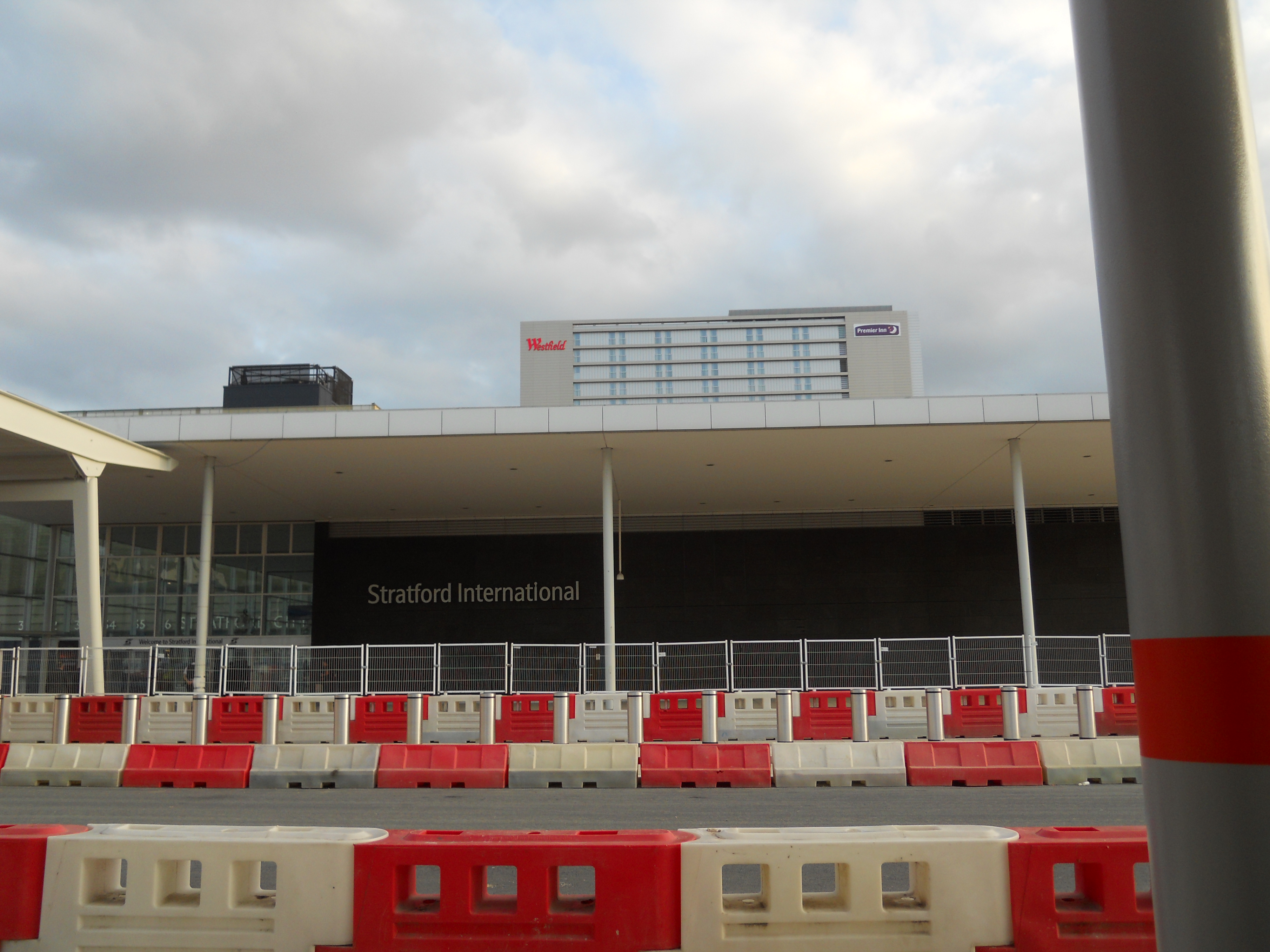

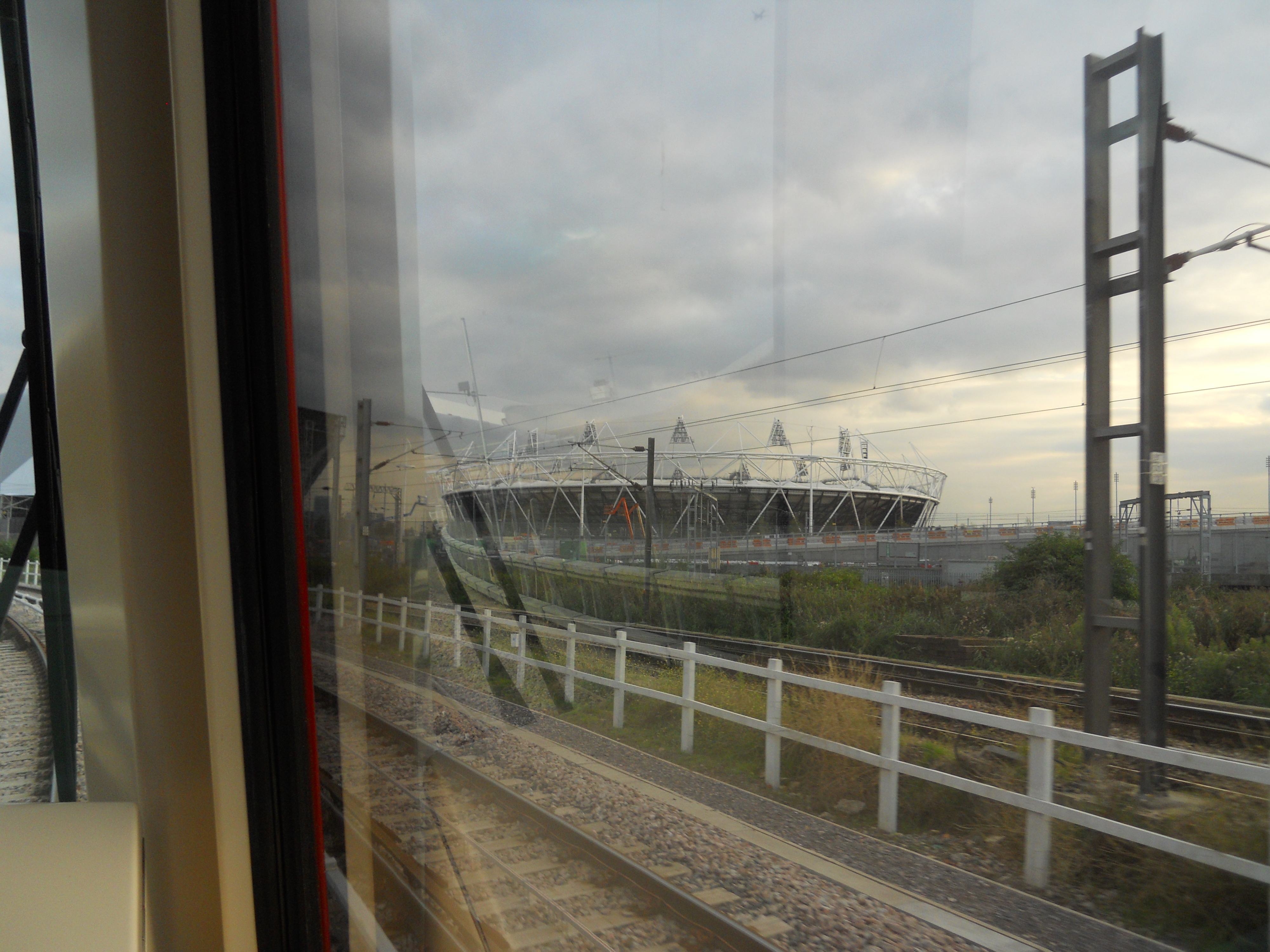


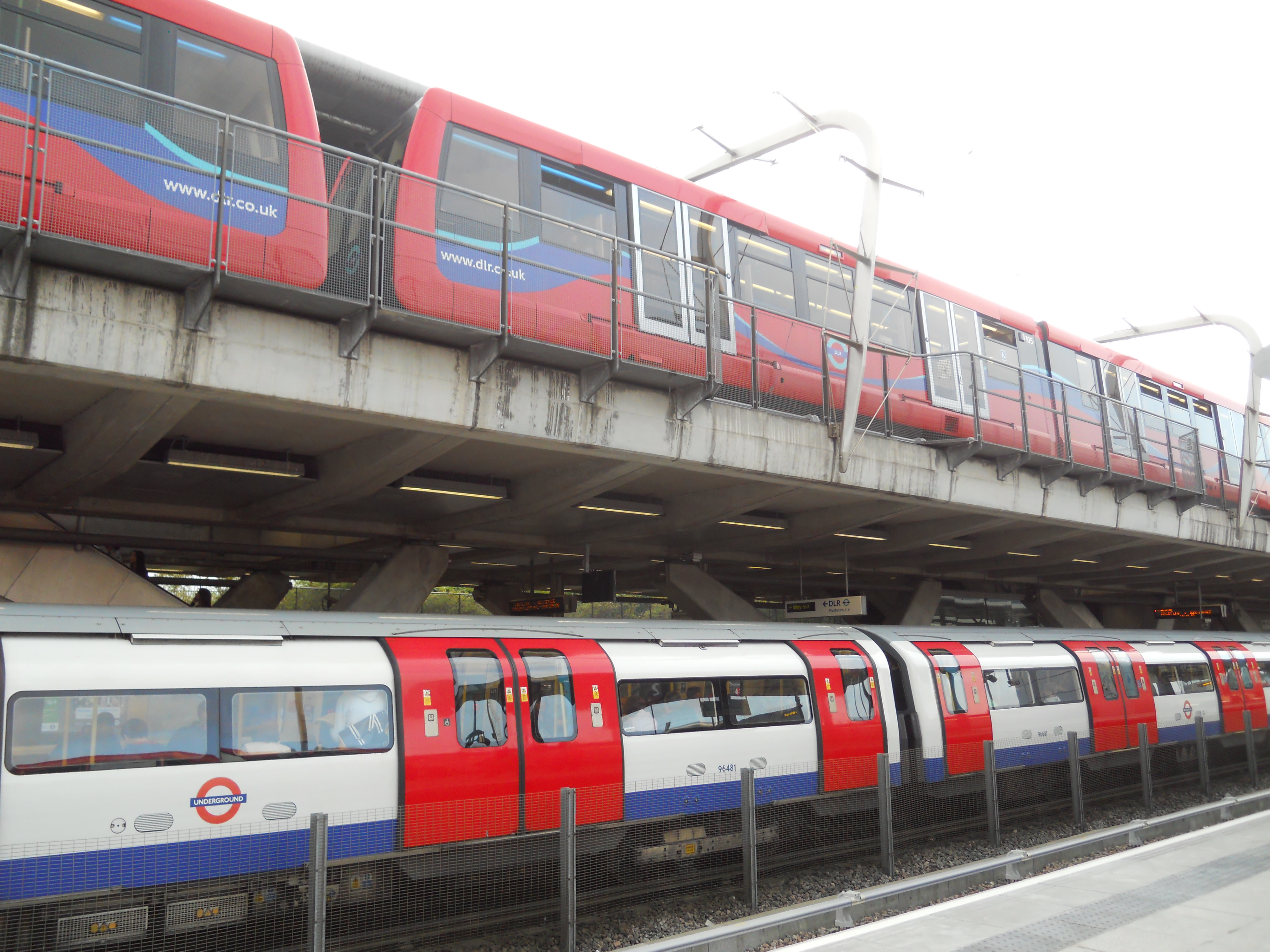
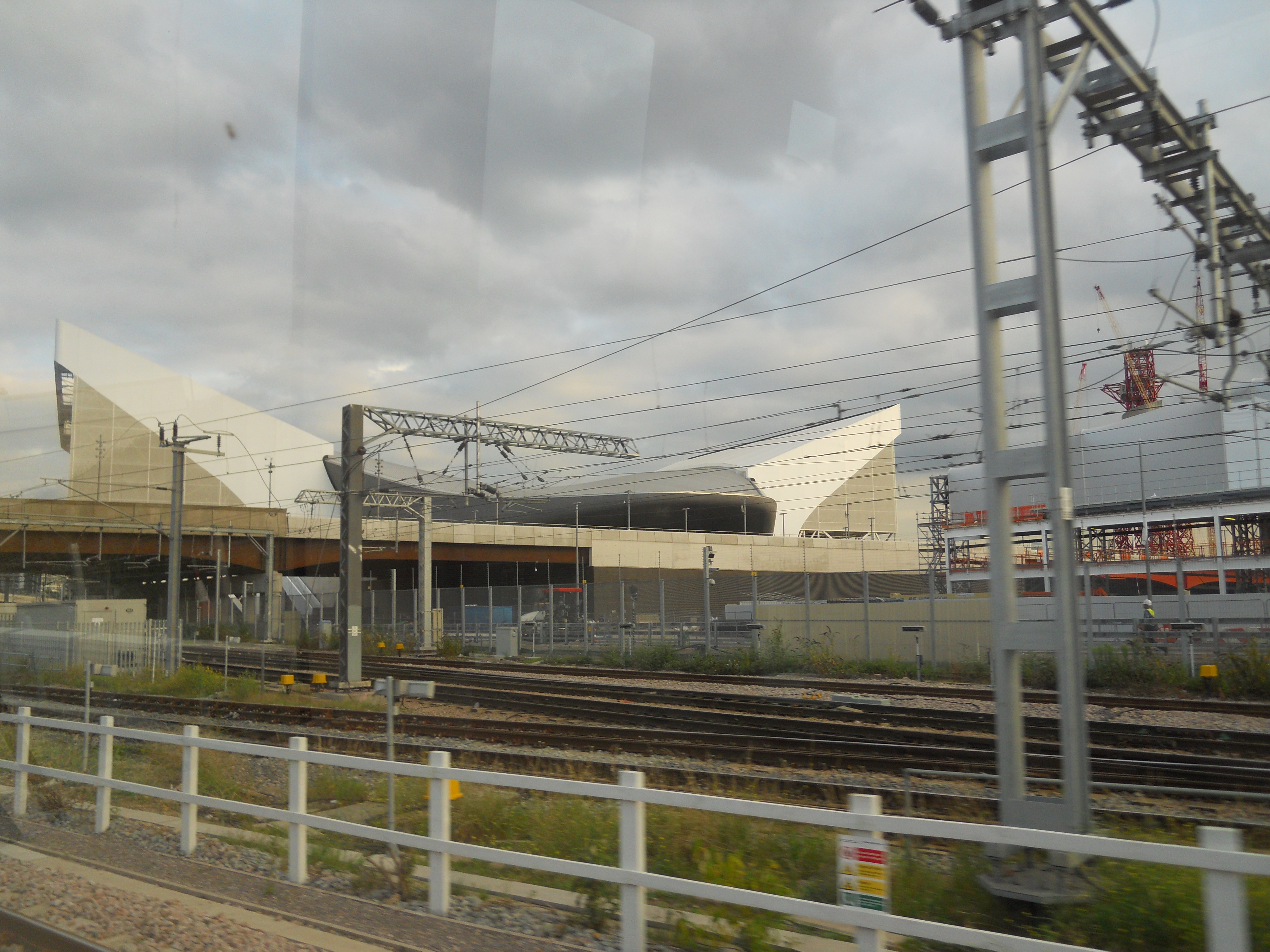
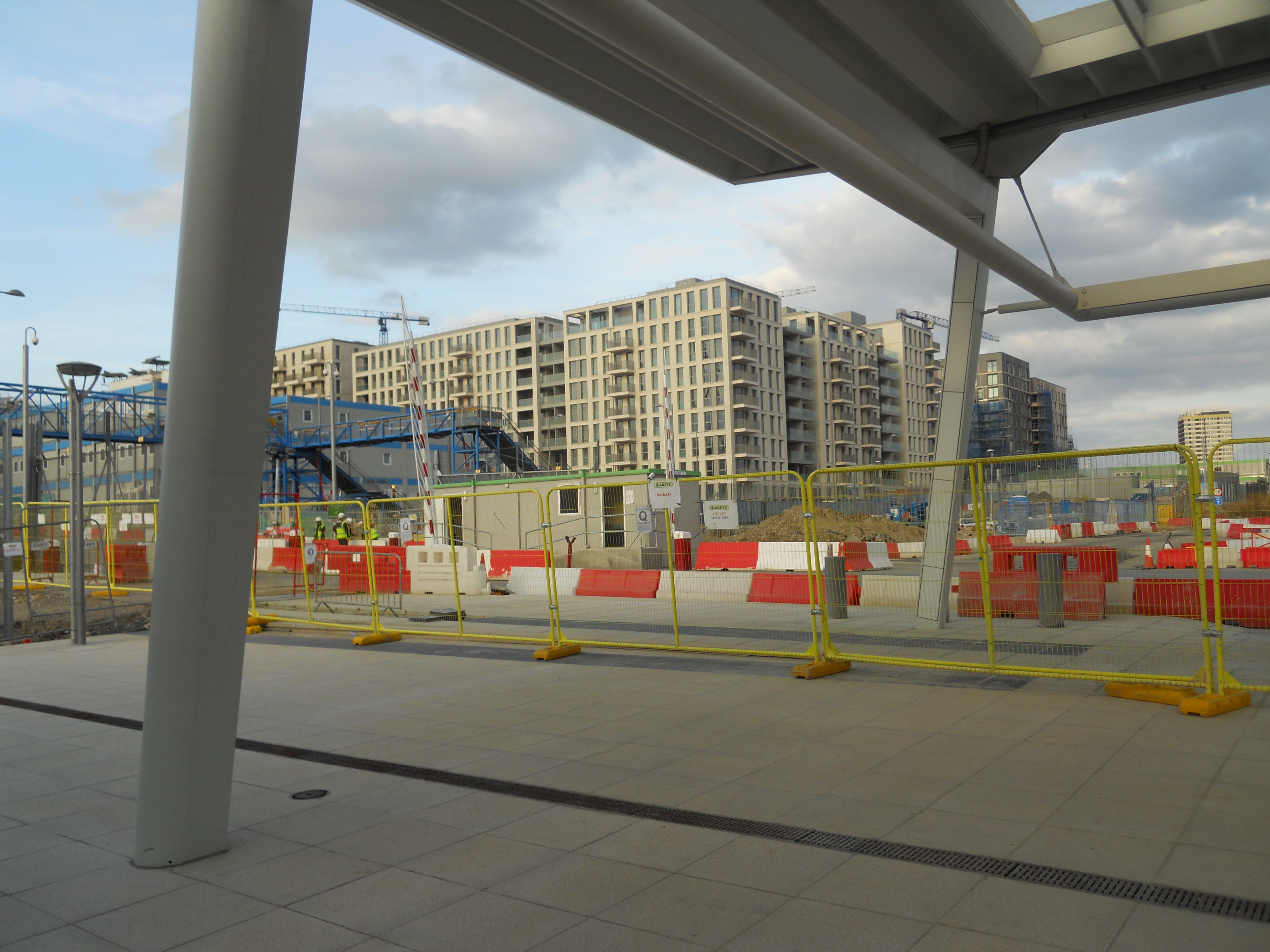
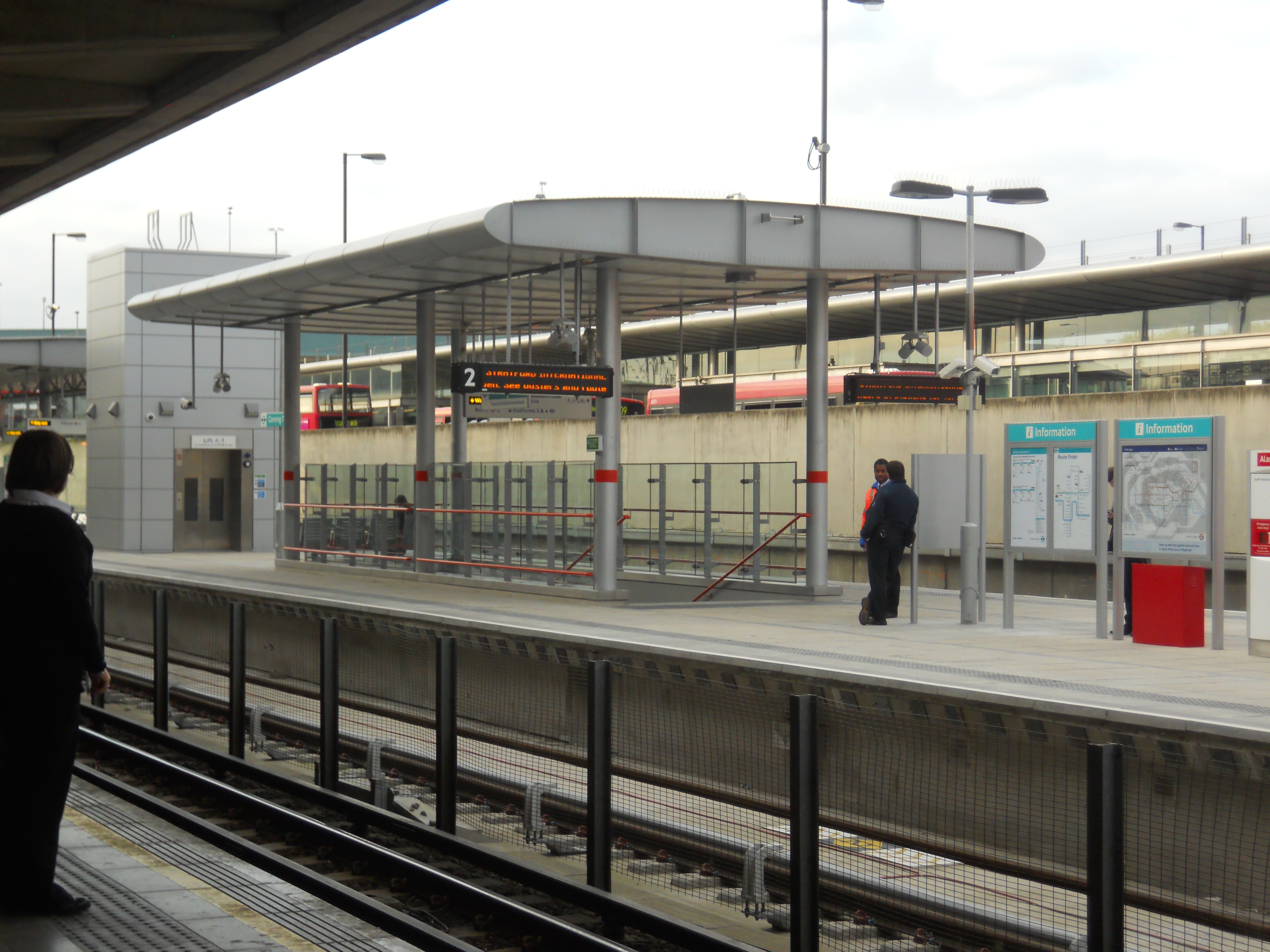

It is an impressive line.
One thing that it does is to create a step-free route from stations on the North London line to the London City Airport, with a single change at Stratford.
I also joked with one of the staff about tourists coming to Abbey Road station to see the crossing. Nothing surprises her!
So How Good Is The Overground?
The London Underground is known all over the world and compares well with systems in many cities. It has its problems, but it doesn’t have some of those of say Rome or New York.
Now the Underground has an upstart little brother in the shape of the Overground, which has been in operation for the last couple of years.
Like their middle brother, the Docklands Light Railway, the Overground has been built on the cheap, by reusing old railway lines, tunnels and other infrastructure and then adding new trains and rebuilt stations.
But just as with the DLR, it has been a formula that has worked. The Overground has just one major tunnel, which for an urban railway must be a world record. But what a tunnel, with more history than many museums, as the Thames Tunnel is thought to be the first tunnel built under a navigable river and was built by Marc Brunel and his son Isambard Kingdom Brunel, in the first half of the nineteenth century.
The Overground currently consists of five lines, with a sixth due to open in late 2012. I use the North London Line and the East London Line often as much as seven or eight times a week, as Dalston Junction and Dalston Kingsland stations are within walking distance from where I live.
I like the lines, as the new trains are comfortable with plenty of space for parcels and bikes and they generally run to time. Only once have I had trouble and that was on the North London Line, where I suspect that a delay of twenty minutes or so was caused by a freight train, that shares that line was running late.
The lines also compare well with the previous lines, one of which I described here. But then those lines as I remember them were last upgraded in the 1950s or even earlier.
The Overground also reaches a lot further and in time it will reach all round London and to the lines to Southampton and Portsmouth and eventually HS2 to Birmingham and the North. In a few weeks the North London Line will have a new link at Stratford for HS1 and the London City Airport.
In some ways the Overground and especially the North London Line is unique in that it is a siteseeing railway, which links tourist sites like Kew Garden, Hampstead Heath, Brick Lane, Camden Market and Crystal Palace with a ride that in places gives superb views of the city.
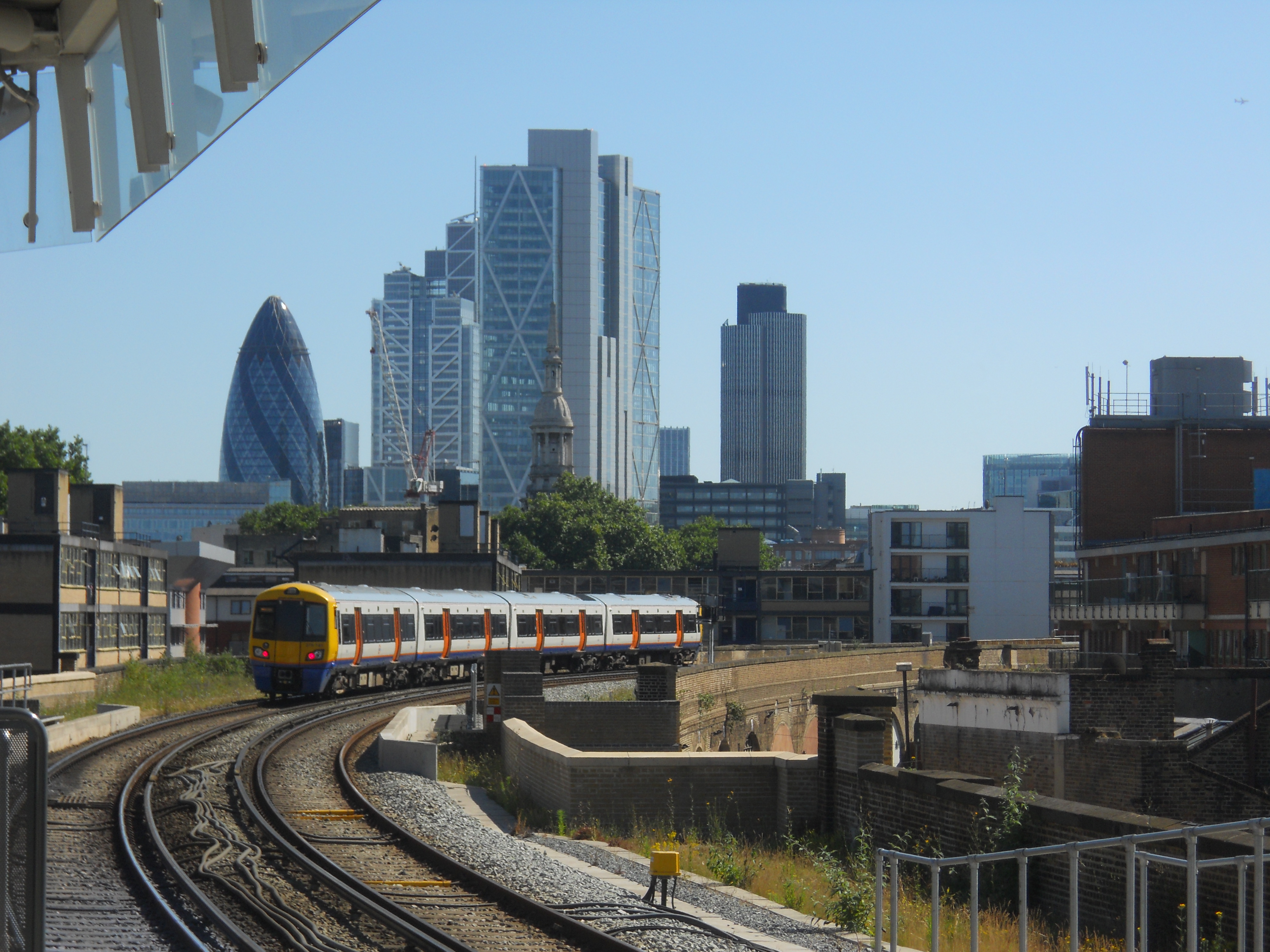
Overground Train on the Embankment South of Hoxton Station
This picture taken of a train on the embankment just south of Hoxton station, shows how the Overground is part of the city in a way that the Underground never can or will ever be.
Several people riding the line have told me has got them their first or a better job and reports have appeared showing that the Overground has improved job prospects and property prices, and even reduced crime. I’ve also heard the latter from a Police Sargeant.
But this is one of the reasons you improve the transport infrastructure, as properly done it makes peoples lives better.
But it is not all good.
The trains can get overcrowded at times and the platforms in places may not be capable of being lengthened, although adding more carriages to the trains might be fairly easy.
Connections to the Underground need to be better and the lack of a Central line connection at Shoreditch HIgh Street is the most glaring. Hopefully Crossrail at Whitechapel will resolve this problem, but will this new line put more pressure on the East London Line?
I do also think that the freight use of the North London Line might get to be a serious problem, especially if trains get larger and more frequent as more containers move off the roads to rail.
Docklands Light Railway to Woolwich Arsenal
I’ve always liked the DLR and today I took a trip to the furthest station of the railway in the South East of London; Woolwich Arsenal.
I’d been to Pontoon Dock station before to visit the Thames Barrier and also to London City Airport. But I hadn’t been as far as Woolwich. In fact the nearest I’d ever got to Woolwich was on occasional trips on the Woolwich Ferry.
 The Anonymous Widower